
Nissan Maxima buyer's guide
Nissan Maxima (1981–2001) — Maxima: what's listed, and what they sell for.
Years: 1981–2001 · Models: Maxima
Overview and history
The Nissan Maxima is the longest-running nameplate in this part of the market, and for most of its life it occupied a position nobody else quite copied: a family sedan built and priced like a family sedan, but engineered — deliberately, and marketed shamelessly — as a sports car with four doors. Nissan said so on the car itself. Third-generation cars carried a small "4DSC" decal in the rear window, short for Four-Door Sports Car, and for once the slogan was not a lie. A Maxima of the right year gives you a strong V6, a proper manual gearbox if you hunt for one, front-wheel drive you can use in winter, and running costs closer to a Camry than to the European sports sedans it was benchmarked against. That is why the early cars are becoming collectible now, and why the good ones are getting hard to find.
The name began as a trim, not a model. Nissan's rear-wheel-drive 810 became the Datsun Maxima for 1981, and the badge outlived the numbers around it: the cars were sold as Nissans outright from the mid-1980s, built first in Japan and, from 2003, at Smyrna, Tennessee. Across this guide the line runs through six generations, and they do not all want the same buyer. The first cars are rear-wheel-drive, straight-six machines with more in common with a period Z-car than with anything front-drive. The second generation switched to front-wheel drive and a V6. The third — the 1989 to 1994 car — is the one enthusiasts mean when they say "Maxima" with feeling. The fourth, from 1995, introduced the all-aluminium VQ V6. The fifth added power and polish, and the sixth, from 2004, grew into a larger, plusher, automatic-only car that traded the sports-sedan brief for near-luxury cruising.
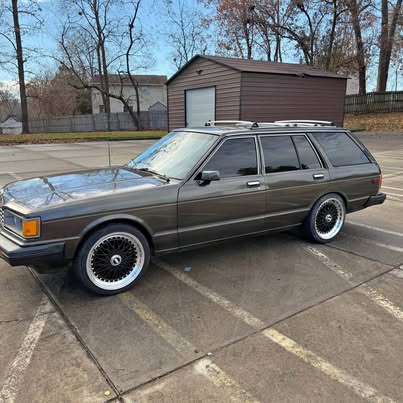
Understand that arc before you buy, because the market lumps all of these under one name and prices them as if they were interchangeable. They are not. A 1992 SE with the VE engine and a five-speed manual is a sought-after driver's car. A 1996 GLE automatic is a comfortable, durable used sedan that happens to share its badge. A 1983 wagon draws a crowd at a cars-and-coffee precisely because almost none survive. Each is a legitimate thing to want — but the inspection, the parts hunt and the money you should pay all change depending on which Maxima you are actually looking at.
The other thing to understand is how these cars were used. Maximas were bought as daily transport, driven hard in all weathers, serviced at quick-lube intervals once they were cheap, and traded down through owners who each had less money for maintenance than the last. The survivors divide sharply: a thin top layer of cherished, documented, often enthusiast-owned cars — disproportionately the manual SE models — and a deep pool of tired examples whose V6 still runs sweetly while everything around it quietly gives up. The engine is rarely what kills a Maxima. Rust, a failed automatic, deferred suspension work and a fried electronic module are what kill them, in roughly that order, and this guide is organised around that reality.
High volume cuts both ways. Parts, knowledge and used spares are plentiful for the mainstream generations in a way they never are for a low-production European rival — but nobody saved these cars on purpose, and the attrition has been silent and enormous: the manual third-generation SE, the early VQ cars in good colours, the unmolested fifth-generation six-speed are no longer cars you can assume will be listed again next month in better condition. Buy the best example of the generation you actually want, when you find it.
The models
Six generations fall inside this guide's span, and within each the trim ladder matters as much as the year. Nissan's letters are consistent enough to learn once: GXE is the comfort trim — softer suspension, more equipment, automatic almost always. SE is the sports trim — firmer suspension, a rear spoiler, white-faced gauges in the nineties cars, and, crucially, the trim where the manual gearbox and the stronger engine were offered. GLE, added in the nineties, sits above GXE as the luxury trim — leather, automatic climate control — and is automatic-only. Remember this rule: the badge tells you the trim, but the engine and gearbox are what you are actually buying, and Nissan frequently sold the same trim with two different engines in the same year. The 1992–94 SE is the sharpest example, and the difference is the whole car.
| Model | Years | Engine | Output | Built | Character |
|---|---|---|---|---|---|
| Maxima (810) sedan and wagon | 1981–1984 | 2.4 six (L24E); 2.8 diesel six (LD28) | 120 hp petrol | Japan; rear-wheel drive | The Datsun-era original; wagon is the rarity |
| Maxima GXE / SE (PU11) | 1985–1988 | 3.0 V6 (VG30E) | 152–157 hp | Japan; front-wheel drive arrives | Compact, light, the first V6 Maxima |
| Maxima GXE / SE (J30) | 1989–1994 | 3.0 V6 (VG30E; VE30DE in 1992–94 SE) | 160 hp; 190 hp VE | Japan; high volume | The "4DSC" — the enthusiast benchmark |
| Maxima GXE / SE / GLE (A32) | 1995–1999 | 3.0 V6 (VQ30DE) | 190 hp | Japan; high volume | The VQ arrives; lighter, quicker, simpler |
| Maxima GXE / SE / GLE (A33) | 2000–2003 | 3.0 V6 (VQ30DE-K); 3.5 V6 (VQ35DE from 2002) | 222 hp; 255 hp | Japan; high volume | More power, more weight, more electronics |
| Maxima SE / SL (A34) | 2004–2005 (to 2008) | 3.5 V6 (VQ35DE) | 265 hp | Smyrna, Tennessee | Bigger, automatic-only, luxury-first |
(Outputs are period SAE net figures for US-market cars. Per-trim production totals are not reliably published, so the table describes origin and layout rather than inventing figures; total Maxima production across all generations runs into the millions.)
The first generation (1981–84). Sold first as the Datsun 810 Maxima and then under the Nissan name as the badges changed over, these are rear-wheel-drive sedans and wagons sharing their straight-six architecture with the period Z-car line. The petrol engine is the fuel-injected L24E; a diesel six, the LD28, sold in small numbers to buyers chasing economy. Period novelties included a voice-warning system that announced an open door or low fuel in synthesised speech — charming now, and worth checking still works, because a talking 1983 Maxima is a party trick that genuinely adds to the car. These are thin on the ground in any condition, and the wagon is the body everyone wants.
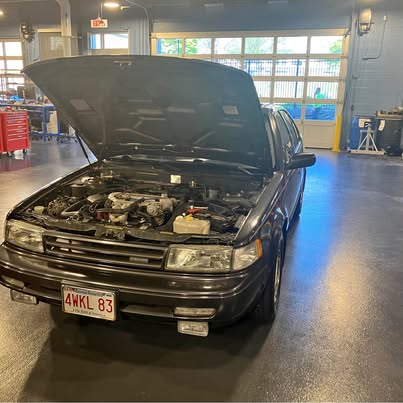
The second generation (1985–88). The PU11 moved the Maxima to front-wheel drive and the VG V6, shrinking the car slightly while making it quicker and far more modern inside. GXE cars leaned into electronics — digital instrumentation and an electronic-touch climate panel on well-optioned examples — while the SE kept analogue gauges and the sporting brief. A five-speed manual was available and transforms the car. These are the cheapest route into Maxima ownership that still feels like a classic rather than a used car.
The third generation (1989–94). The J30 is the high-water mark. Bigger, sleeker, and developed with genuine sports-sedan intent, it carried the "4DSC" branding and earned it: independent suspension all round, four-wheel disc brakes, and in the SE, from 1992, the VE30DE engine described in the next section, with a viscous limited-slip differential on manual cars. GXE cars kept the older VG engine and a softer brief, and many were sold with the optional digital dash and keypad entry — period theatre that is now a repair liability. If you buy one Maxima after reading this guide, the smart money says it will be from this generation.
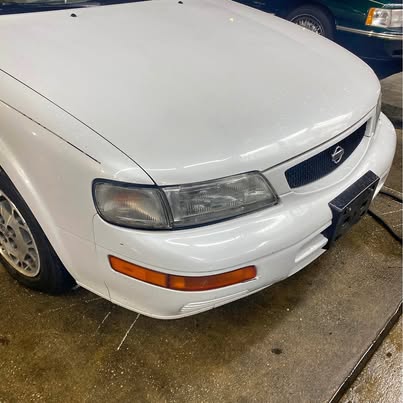
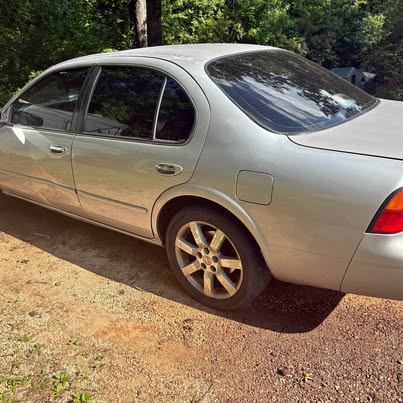
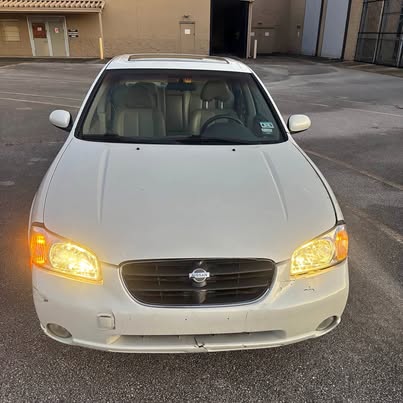
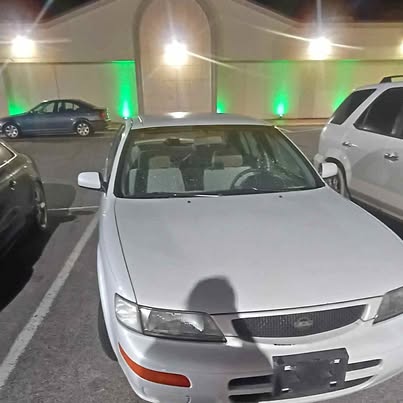
The fourth generation (1995–99). The A32 was a deliberate simplification: lighter than the car it replaced, styled more conservatively, and powered across the whole range by the new VQ30DE. Every trim got the good engine — there is no slow A32 — and the SE with the five-speed manual is a genuinely quick car that weighs usefully less than everything that came after. These are the Maximas that built the VQ's reputation for going 200,000 miles, and they are the value sweet spot of the whole line: modern enough to drive anywhere, old enough to feel mechanical.
The fifth generation (2000–03). The A33 restyled the A32 formula with a longer body, a plusher cabin and, for 2000–01, a revised VQ30DE-K making 222 hp. The headline arrived for 2002: the 3.5-litre VQ35DE with 255 hp, and in the SE a six-speed manual with a helical limited-slip differential — the fastest Maxima yet. In practice the A33 also introduced the electronic failure modes that dominate the problem-areas section, and it is a heavier, more insulated car than the A32. Buy it for the powertrain, inspect it for the electronics.
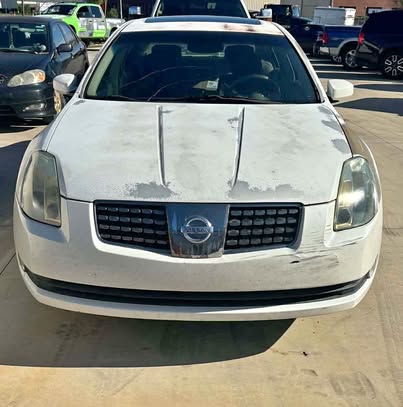
The sixth generation (2004–05 in our listings; the run continued to 2008). The A34 moved production to Tennessee, grew again, and changed the brief: no manual gearbox at all, a standard VQ35DE at 265 hp, a fixed glass "SkyView" roof panel on most cars, and trim renamed SE and SL. It is a handsome, fast cruiser and the least sporting Maxima since the eighties — which is not an insult if cruising is what you want. The early A34s now sit in the same classifieds, at the same money, as the nineties cars; just know you are choosing between two different ideas of what a Maxima is.
Engines and gearboxes
Four engine families power the cars in this guide, with almost nothing in common beyond six cylinders and a Nissan badge. Learn which one is in the car in front of you first: each has its own service clock, its own characteristic failure, and its own sound when healthy.
The straight six and the VG V6: L24E, LD28 and VG30E
The first-generation cars use the L24E, a 2.4-litre overhead-cam straight six with electronic fuel injection, descended from the engine that made the original 240Z's reputation. It is simple and understressed in Maxima tune: it should start cleanly, idle with a faint six-cylinder thrum, and pull without drama. Its enemies are age rather than design — perished vacuum hoses upsetting the early injection, tired ignition components, and cooling systems run on plain water. The LD28 diesel six is slow, exceptionally durable, and now so rare that any buying decision is really about whether you want the curiosity; diesel-specific parts and knowledge are thin, so buy one as a novelty with eyes open, not as cheap transport.
The VG30E powered every Maxima from 1985 to 1994 in GXE trim, and the SE until 1991. It is a 3.0-litre, single-overhead-cam-per-bank V6 with an iron block and alloy heads — heavier than what followed, and deliberately conservative; output was 152 hp in the earliest cars, rising to 160 hp in the third generation. Two facts define VG ownership. The first is that it is a timing-belt engine in a range where everything later uses chains, and belt service is the moment to renew the water pump, tensioner and front seals together. Treat an undocumented belt as an immediate job, at roughly $600–1,100 at a shop with the pump included — a belt that fails through age rather than mileage is the classic way these engines get hurt. The second fact is the exhaust manifold studs: VG engines are known for broken rear studs, announced by a ticking or chuffing on a cold start that quietens as the manifold expands and seals with heat. Listen at the back of the engine from stone cold. A tick that fades in two minutes is very likely a stud or a manifold gasket, not a lifter — and the repair, at roughly $400–900 depending on how many studs shear on removal, is an access fight rather than a parts bill. Lifter tick that persists when hot usually responds to correct oil and a proper flush history; a VG that ticks loudly at all temperatures needs investigation, not optimism.
Otherwise the VG is stout. Oil leaks from cam covers and the front crank seal are normal at this age and cheap; coolant leaks from the small hoses under the intake are the item to hunt, because a slow weep cooks quietly until it becomes an overheating event. A healthy VG's temperature gauge rises to the middle and stays there, in traffic, air conditioning on. Anything else is a cooling-system negotiation.
The VE30DE: the enthusiast engine
For 1992 to 1994, SE cars received the VE30DE — a 3.0-litre V6 sharing its displacement with the VG and almost nothing else: double overhead cams per bank, four valves per cylinder, a variable intake system, coil-on-plug ignition and 190 hp at a 6,600 rpm redline the VG cannot approach. It is chain-driven, and it is the reason the third-generation SE is the collector car of the range: revvy, characterful, and matched in manual form to a viscous limited-slip differential.
The VE has one signature fault, and every buyer must know it by name: the VTC assemblies — the variable timing control cam sprockets — wear internally and begin to clatter, classically a loud ticking from the top of the engine at idle and light load that changes with rpm and can sound alarmingly like bottom-end trouble. It is not bottom-end trouble: the mechanism is wear in the spring-and-gear arrangement inside the sprocket that controls cam phasing, and the noise is the assembly taking up its own slack. Owners distinguish it by location (top of the engine, one bank usually worse) and by oil pressure and performance remaining normal. The honest fix is replacement VTC assemblies — parts availability is now the whole question, and a documented replacement is worth real money. Budget $1,000–2,000 for a proper specialist resolution if parts can be sourced, and treat a seller who calls the clatter "they all do that" as half right: many do, and it still costs money to silence. A VE that is quiet and pulls hard past 5,000 rpm is the most desirable powertrain in this guide; one that clatters and has no paperwork is a project priced as a gamble.
Failed coil packs give a misfire under load that comes and goes with heat — swap coils between cylinders and see whether the misfire code follows the coil; that test, not parts-shotgunning, is how you price it. And a VE that has been run low on oil shows it first in valvetrain noise that does not settle.
The VQ30DE and VQ30DE-K: the engine that made the legend
The VQ30DE arrived with the fourth generation in 1995 and powered every A32 and the 2000–01 A33. It is an all-aluminium, double-overhead-cam, 24-valve 3.0-litre V6 making 190 hp in the A32 and, in the revised VQ30DE-K form with its variable intake manifold, 222 hp in the A33. Where the VG is iron and caution, the VQ is light, free-revving and famously durable — an engine family that spent a decade collecting industry awards, and in the Maxima it routinely outlasts the car around it. It uses timing chains, not a belt, which removes the VG's service cliff; chains on a well-oiled VQ30 are a life-of-engine item, and that qualification — well-oiled — is the whole story. Its enemies are neglect, heat and its own ancillaries, in that order.
Start with the ancillaries, because they generate most of the misdiagnosis. The VQ30 uses individual ignition coils, and coil failure is the commonest cause of a misfiring Maxima of this era: a stumble under load and a code pointing at one cylinder. The distinguishing test is the coil swap — move the suspect coil, clear the code, see whether the fault follows. A seller who has replaced "all six coils and it still misses" is describing a different fault, usually wiring, an injector, or compression, and the price should reflect the mystery. Next, the mass airflow sensor: a failing MAF gives hesitation, surging and lean codes that owners routinely blame on fuel pumps; it is testable against live data or by substitution, and cleaning only helps when the element is dirty rather than electrically tired. Third, the knock sensor, buried under the intake manifold: it fails with age and heat, the ECU pulls timing in response, and the car feels strangled and thirsty without ever misfiring. The part is cheap; the access is the labour, at roughly $300–600 fitted. A VQ30 that feels flat but smooth, with a knock-sensor code stored, is often one labour bill away from feeling like a different car.
Idle quality has its own culprit: the idle air control valve and its passages carbon up, giving a hunting or stalling idle. Cleaning helps when the valve is merely dirty. On the 2000–01 A33 this component becomes much more serious — see the problem-areas section, where a failed IACV can take the engine computer with it. On the A32, idle faults are almost always maintenance, not money.
Mechanically, judge a VQ30 by three things. Oil history: the engine tolerates mileage superbly but not low oil — a dipstick at the bottom of the range plus a rattling start points to chain tensioner wear from oil starvation, and a VQ that rattles from the front cover for more than a second or two after start needs its guides and tensioners priced in, roughly $1,200–2,200 as a front-cover job. Cooling: plastic-tank radiators age out and water pumps weep; overheating a VQ warps expensive aluminium, so any temperature-gauge adventure on the test drive is a walk-away or a serious price cut, never a shrug. Smoke: a blue puff on a cold start that clears is valve-stem seals, tolerable and fixable; blue smoke under sustained load is rings, and then you are buying an engine rebuild attached to a sedan.
The VQ35DE: more of everything, including appetite
The VQ35DE — 3.5 litres, 255 hp in the 2002–03 A33 and 265 hp in the A34 — is the VQ30's bigger brother: more torque everywhere, a stronger top end, and a greater appetite for oil and for timing-chain hardware. The chain point inverts the VQ30's reputation. On the 3.5, worn timing-chain guides and a stretched secondary chain are a known age-and-mileage failure, announced by a whining or buzzing that rises with rpm — owners compare it to a supercharger whine the car does not have — or by a rattle from the front cover. The mechanism is the plastic guide faces wearing through until the chain runs on metal and the tensioner reaches the end of its travel. The repair is a major front-of-engine job, roughly $1,500–2,500 at a shop, and it is the first thing to listen for on any VQ35 car, from cold, with the bonnet open and the seller quiet.
Oil consumption is the second VQ35 theme. Healthy examples use little; tired ones can consume noticeably between services, through ring wear and PCV-system condition. Check the level before the test drive and look for the honest answer in the service file. A VQ35 that needs a quart every thousand miles is not automatically a reject, but it must be priced as an engine with a known appetite — and it sharpens the chain-guide question, because an engine run low on oil wears its guides faster. Avoid the cars showing both faults. Everything said about VQ30 coils, MAF sensors and cooling applies here with interest; judge a VQ35 at motorway merge speeds, where flat spots and chain whine are unmistakable, rather than at idle, where even a worn one sounds smooth.
Gearboxes
Manuals. Five-speed manuals were offered on SE cars (and, in the earlier generations, more widely) through 2001, and a six-speed manual joined the SE for 2002–03. These are the gearboxes enthusiasts want, and they are fundamentally strong: the test is synchromesh, especially second gear on a fast change and third on the overrun, plus clutch behaviour. A clutch that bites high with little travel left is at the end of its life — roughly $700–1,200 fitted, because the layout makes it a subframe-and-box-out job. Manual cars from 1992–94 (VE) and 2002–03 (VQ35) carry limited-slip differentials — viscous in the earlier car, helical in the later one — and an LSD car is worth a premium you should verify is real: check the gearbox code on the identification plate against the LSD specification for the year, because trunk badges have been swapped onto open-diff cars before now. Neglected gear oil gives a notchy change that fresh oil often cures; budget the change, not the gearbox, unless the synchros crunch with warm oil.
Automatics. The great majority of Maximas — and every A34 — are four-speed automatics (a five-speed automatic appears on later A34s). The Nissan four-speed is a conventional torque-converter box that rewards fluid changes and punishes neglect slowly. Judge it by three behaviours: engagement of Drive and Reverse from cold should be prompt and without a bang; upshifts should be clean, without the rev flare that means a clutch pack is slipping; and the 2–3 shift under load shows wear first. Dark, burnt-smelling fluid on the dipstick — these boxes still have one — plus any flare is a rebuild conversation at roughly $1,800–3,200, which on a cheap Maxima exceeds the value of the car and is precisely why automatic condition, not engine condition, prices most of the cars in our listings. A box that shifts well with clean fluid is a genuine asset, and the fluid is cheap insurance to renew on any car you buy, at roughly $150–300. Do not let a seller call any Maxima automatic "sealed for life" — the fluid in a twenty-year-old box is twenty years old whatever the brochure said.
Problem areas
A Maxima rarely fails all at once; it fails by accumulation. The sections below follow the systems in the order they should influence your price: rust first, because it is the only fault that cannot be undone at any sensible cost, then structure and running gear, then the electrical faults that separate the generations, then the interior evidence of how the car has been lived with.
Rust and the body: the map
Maximas were well protected by the standards of their day, which means they rot later than their eighties and nineties contemporaries — and that when they do rot, buyers who learned on other cars look in the wrong places and miss it. Work through the car in this order.
The lower radiator core support (A32 and A33 above all). This is the Maxima's signature structural fault and the single most important check on a 1995–2003 car. The radiator sits in a support panel low at the front, directly in the spray thrown up by the front wheels, and the panel rusts from the bottom edge upward until the radiator is effectively resting on corrosion; in advanced cases the support separates and the radiator drops slightly. Get low, look up at the bottom of the radiator from beneath the bumper, and prod the support's lower rail. Surface rust is normal; a support you can flex, flake or push a screwdriver through is a welding job — a replacement section welded in runs roughly $600–1,200 — and a reliable indicator that the rest of the underside has been salting away for years. A seller who has replaced the support and can show the invoice has done you a favour twice: the job is done, and the car was owned by someone who fixed structure rather than cosmetics.
Sills, floor and the rear of the car. The sills rot at their rear ends, where rear wheel spray lands, and at the jacking points, where decades of lifts have cracked the underseal and let water into the seam. Press hard along the sill, look at it from underneath, and be suspicious of fresh black underseal localised exactly at the sill ends. Floor pans are comparatively strong, but the seams and the spare-wheel well tell the truth: lift the trunk carpet and the spare, and look for the tide mark of a leaking trunk seal or rear light gasket. Rear wheel arches bubble at the lip where the panels meet and trap mud; run a fingertip around the inside of the arch lip, because the rust starts on the hidden face and the paint bubbles last. On the earliest cars, add the full eighties checklist — front inner wings, battery tray area, door bottoms with blocked drain holes, and the base of the windshield.
The front subframe and suspension mounting points. The engine and front suspension hang from a subframe that bolts to the body, and both the subframe and its mounting areas corrode, particularly on salt-belt A32 and A33 cars. Heavy scaling or perforation near the control-arm mounts is not cosmetic; replacement subframes come from donor cars that may be little better, and the labour makes it a $800–1,600 conversation. This is the strongest argument in this guide for paying for a lift inspection: from the ground, you cannot see the surfaces that decide whether a cheap Maxima is a bargain or a parts car.
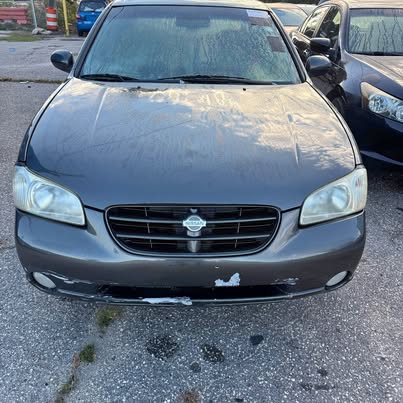
Paint and accident evidence. Nissan's nineties clearcoat fails on horizontal surfaces — roof, bonnet, trunk lid — peeling in sheets on cars that have lived outside in southern sun. It is cosmetic, it is honest, and it is preferable to a cheap respray over everything, which hides arch rust, filler and mismatched panels under one shiny coat. Check panel gaps, look for overspray on window rubbers and light seals, and run the cloth-wrapped magnet along the rear quarters and arch lips. None of this condemns a car at Maxima money; all of it belongs in the price.
Suspension, steering and brakes
The Maxima's chassis is conventional — MacPherson struts at the front across every front-drive generation, and at the rear either a torsion-beam arrangement or, on the third-generation car, a more elaborate linked setup, with the sixth generation moving to a multi-link rear. Conventional means diagnosable, and the faults are the familiar ones, with two Maxima-specific emphases.
Struts and the front-end knock. By twenty years old, assume the struts are tired unless invoices say otherwise: the test is a drive over broken pavement at low speed, listening for the hollow knock of worn strut mounts and top bearings as much as for bounce — the mounts crack and knock over sharp edges while the damper still controls the car, which is why a bounce test alone under-diagnoses them. A full set of quality struts with mounts runs roughly $900–1,600 fitted and transforms a Maxima; budget it into any car without proof. Control-arm bushings and ball joints wear together, pricing a front-end refresh at roughly $400–800 a side done completely. Sway-bar end links are the cheap knock everyone chases last: a light rattle over small bumps that vanishes on smooth roads, $100–250 a pair fitted, and the first thing to replace before condemning anything expensive.
Steering. The racks are hydraulic throughout our span, and they leak — from the rack seals and the high-pressure hose — slowly, for years, onto the subframe. Check the fluid level and colour, look for wetness at the rack boots, and feel for the notchiness at parking speeds that means the pump has been run dry. A rack replacement is roughly $700–1,300 fitted; a hose is a fraction of that, and telling the two apart — clean the area, top up, see where fresh fluid appears — is worth ten minutes. On the road the steering should be light and free of a dead band at centre; a dead band plus uneven front tyre wear is alignment compensating for worn joints, and the joints, not the alignment, are the bill.
Brakes and the rear caliper trap. Front brakes are straightforward and cheap. The rear calipers on the nineties cars incorporate the parking brake mechanism inside the caliper, and they seize — the piston corrodes, the brake drags or stops working, and the parking brake goes vague at the same time. The test is in the inspection section: after a drive, compare rear wheel temperatures by hand — a hot rear wheel against a cool one is a dragging caliper. A pair of rear calipers with pads and discs runs roughly $450–800 fitted. ABS wheel-speed sensors fail with age and corrosion at the hub; a sensor is a modest part, but diagnose first, because the same lamp covers pump and module faults that are not modest. Brake pipes corrode along the rear of the car and the sills — on a lift, follow them with a torch, because a pipe that fails on the drive home converts a bargain into a recovery truck.
Electrics and electronics: where the generations divide
Pre-1995 cars fail electrically in analogue ways. The third-generation GXE's optional digital dashboard fades, flickers and dies as its power supply and solder joints age; specialists can rebuild them, at roughly $300–600, but a GXE whose dash is dark is a car whose mileage and fuel level you cannot read, and it should be priced as such. The same generation's Bose audio uses amplifiers at the speakers, which fail one corner at a time — a car with sound from two speakers has two amplifier rebuilds in its future. Keypad entry panels, power aerials and window regulators all wear; test every window from every switch, because a regulator is $150–350 a door fitted and there are four doors. On the eighties cars, the electronic-touch climate panel and the earliest cars' voice-warning system either work, and add charm and value, or they do not, and you live without them.
The A33 introduces the one fault in this guide that can destroy real money. On 2000–01 cars, the idle air control valve can fail electrically and send its failure back into the engine control unit, damaging the ECU's driver circuit for the valve. The sequence owners report is an idle fault, a valve replacement, and the fault returning — because the new valve has been damaged by the already-faulty ECU, or the ECU by the original valve. The correct repair addresses both together, and specialist ECU repair runs roughly $400–900 on top of the valve. The pre-purchase defence is specific: insist on a long hot idle and repeated restarts, watch for flare, hunting or stalling, and treat any stored idle-control fault code as a four-figure negotiation, not a shrug. This fault alone is why many experienced buyers prefer the 1996–99 A32 or the 2002–03 A33 over the 2000–01 cars at the same asking price.
Across all the VQ cars, add the alternator: VQ alternators live low at the front of the engine in the road spray and fail as a no-charge event rather than a gradual fade — a battery light plus a voltage check settles it in a minute, and replacement is roughly $350–650 fitted. Starters on the A32 warn you first, as a slow, laboured crank on a good battery. Air conditioning is period-typical: a system blowing cold with a documented recent service is worth money, because recommissioning a dead system — compressor, receiver-drier, seals, gas — runs $800–1,500. Test it on every viewing, in every month, exactly as you test the heater.
Interior, trim and the evidence of a life
Maxima interiors wear honestly, and they are among the best evidence you get. The driver's seat bolster — cloth on SE cars, leather on GLE and SL — wears through first; leather cars crack on the driver's cushion and the steering wheel's rim splits. A worn driver's seat beside a mint passenger seat is normal arithmetic for a high-mileage car; a worn passenger and rear seat suggest family or taxi duty the mileage may not fully confess. Seat heaters fail at the element — test them, because the repair is a seat-out trim job. Headliners sag on nineties cars that have lived in heat; a pinned headliner is a $300–600 retrim waiting, and it tells you the car lived outside.
Dashboard tops crack on sun-state cars and console plastics go brittle, and the small breakages are revealing collectively: a cabin full of them is a cabin nobody cared about, and that attitude will have extended to oil changes. Trim is mostly durable and available used, so interior condition should move your price by hundreds, not thousands — with two exceptions: a third-generation SE's specific seats and trim, and any car's original, uncracked dashboard, are genuinely hard to replace like-for-like. Judge the interior last — but on the best cars, judge it seriously.
How to inspect one
Allow an hour, bring a torch, a cloth-wrapped magnet and — for any VQ car — a basic code reader; stored fault codes are part of the car's testimony, and a seller who will not let you read them has answered a question. Insist on a cold engine when you arrive: manifold studs, chain rattle, cold-start smoke and slow cranking only testify before the car has been warmed up for you.
- Start with the paperwork and the identity. Match the VIN on the title to the plate at the base of the windshield and the sticker on the driver's door jamb. Confirm the engine matches the badge and the year: a 1992–94 SE should carry the VE engine with its coil-on-plug covers, not the VG; a 2002–03 car should be the 3.5. Read the service file for the items this guide flags — timing-belt invoices on a VG car, chain or VTC work on a VE or VQ35, fluid changes for the automatic. A thick file on a Maxima is worth real money because so few cars have one.
- Cold start, bonnet open, seller quiet. Listen at the front cover for chain rattle lasting beyond a second or two (VQ cars), at the top of the engine for VTC clatter (a 1992–94 SE), and at the back of the engine for the cold tick of a broken exhaust stud (VG cars) that should fade as heat builds. Watch the exhaust: a blue puff that clears is stem seals; continuing smoke is not. A laboured crank on a charged battery is the starter asking to be priced in.
- Idle, hot and cold, for longer than feels polite. Let the car idle through a full warm-up. It should settle and hold without hunting, flaring or stalling, including at full steering lock with the air conditioning on, loading the idle control system. On a 2000–01 car this step is the whole negotiation: repeat two or three hot restarts, and treat any idle misbehaviour or stored idle fault code as the ECU-and-valve pairing fault from the problem areas until a specialist proves otherwise.
- Read the codes and the fluids. Pull stored and pending codes: a knock-sensor code on a VQ30 explains a flat car and is a labour bill, not a disaster; misfire codes send you to the coil-swap test; lean codes point at the MAF and vacuum leaks. Then check the engine oil level and condition before the drive — low, black and thin is a maintenance verdict — and the automatic's fluid on its dipstick, which should be red-pink and sweet, not brown and burnt.
- Under the front: the radiator support test. Get low and inspect the lower radiator core support on any 1995–2003 car: prod its lower rail, look for flaking, flex and separation, and check the radiator sits level and firm. Then look behind the front wheels at the subframe and its mounts. Perforation in either ends the viewing at driver money — the car may still be worth project money, but the price conversation restarts from there.
- Sills, arches and trunk. Press along both sills, especially the rear ends and jacking points; run a fingertip inside each rear arch lip; lift the trunk carpet and spare wheel and look for water marks, rust and a damp smell. Run the magnet over the arch lips, rear quarters and lower doors. Fresh localised underseal at a sill end is a question the seller needs to answer with an invoice or a torch-lit look underneath.
- The test drive: gearbox first. Fifteen minutes minimum, including a motorway merge. In an automatic, judge engagement from cold, the cleanliness of every upshift, and specifically the 2–3 shift under load — flare or a bang there is the rebuild announcing itself. In a manual, make fast changes into second and third, listen for synchro crunch, and feel where the clutch bites. A car that will not be driven hard on the test is a car being protected from its own evidence.
- The test drive: engine under load. A VQ of either size should pull cleanly and eagerly to the redline without hesitation, surging or misfire; flatness without misfire codes is the knock sensor or MAF story from the engines section. A VE car should rev like it means it past 5,000 rpm. A VG car should feel torquey and unstressed rather than fast. Any whine that rises with rpm in a VQ35 car is the chain guides until proven otherwise — drive in a lower gear at steady rpm and listen with the radio off.
- Brakes and the rear-wheel temperature test. Brake firmly from speed twice: the car should stop straight, the pedal firm and high, with no judder. Afterwards, hold a hand near each rear wheel: one noticeably hot wheel means a dragging, seizing rear caliper. Test the parking brake on a slope while you are there.
- Steering, suspension and noise. At parking speed, turn lock to lock: notchiness or groaning is the pump-and-rack story; check the fluid when you stop. Over broken pavement at low speed, listen for strut-mount knocks and the light rattle of sway-bar links. On a smooth road at speed the car should track straight with no dead band at the wheel centre. Uneven front tyre wear plus a dead band means joints first, alignment second.
- Every electrical item, without exception. All windows from all switches, mirrors, locks, seat motors and heaters, the blower on every speed, air conditioning genuinely cold, heater genuinely hot, every warning light present at key-on and absent when running — a missing ABS or airbag bulb is a seller's trick as old as the bulb itself. On a GXE with the digital dash, confirm it is legible in daylight. On a Bose car, fade the sound to each corner and listen for the dead amplifier.
- Stance and interior, last. Stand back: a Maxima should sit level, arch gaps matched side to side; a nose-down or corner-down car is telling you about the springs and struts you priced in step 10. Then sit in every seat, feel for collapsed foam, check the driver's bolster against the passenger's, and look at the headliner and dashboard. Finish by re-checking oil and coolant levels after the drive — what a car consumes and leaks in an hour is the most honest service history it owns.
Values
The build's market block beneath this guide carries the live numbers — what is listed now, and what recorded sales have achieved — and this section exists to teach you how to read them, because the Maxima market punishes anyone who reads a single median and stops thinking.
The first lesson is that "Maxima" is six markets wearing one name. A first-generation wagon, a manual third-generation SE, a tidy A32 driver, a VQ35 car with its chain guides done and a cheap A34 with needs are not points on one price curve; they are separate small markets with separate buyers, separated by generation, engine and gearbox far more than by mileage or colour. Compare a car against its own generation and trim, or do not compare it at all.
The second lesson is the condition spread, which on Maximas is wider than on almost any rival, because the same mechanical package exists in cherished and in ruined states at every age. The honest driver with a full file, a sound radiator support and a quiet cold start sits at the top of its generation's range and deserves to. The car beneath it — same year, same badge, cleaner photographs — may carry a perforated support, a flaring automatic and an idle fault, and its correct price is a fraction of the first car's. On this model, the spread between a good car and a bad one is not a negotiation detail; it is most of the money. Price the faults you found in the inspection, at the job costs quoted in this guide, and subtract them without apology. A seller who has genuinely fixed the generation's signature faults, with invoices to prove it, has already spent the money you are trying not to spend — the one premium in this market that is rational to pay.
The third lesson concerns asking and achieved prices. Maximas are frequently listed by sellers who price from sentiment or from the cost of the last repair, and the cars sit; the achieved market, visible in the recorded sales beneath this guide, is set by buyers who inspected underneath. Manual SE cars and the best third-generation examples are the exception — there, genuine scarcity means good cars achieve their money quickly, and hesitation costs you the car. Know which side of that line your target sits on: for a mainstream automatic GLE, time and inspection are your leverage; for a documented 1993 SE five-speed, the car itself is the leverage.
Finally, the project-versus-driver gap. A non-running or structurally rusty Maxima is worth its parts and its potential, which on a mainstream car is very little, because the repair bills in this guide — automatic rebuild, chain guides, structural welding, air-conditioning recommissioning — stack past the value of a finished car with surprising speed. The arithmetic only works on cars with a scarcity premium at the end of it: the early wagon, the VE manual, the six-speed 3.5. For everything else, the cheapest Maxima to own is the most expensive one you can find that needs nothing — and even that car is not expensive. The good cars are still priced like used sedans, and they will not be forever.
Parts and ownership
The Maxima is one of the easiest nineties cars in this guide's world to keep, precisely because Nissan built so many and because the aftermarket followed the volume. The car rewards an owner who does the deferred-maintenance catch-up once, properly, and then simply drives it.
Easy: service items for every engine — filters, plugs, belts on the VG, coils for the VQ cars — brake discs, pads and calipers, struts, mounts, control arms, radiators and cooling hoses, alternators and starters for the volume generations, exhaust systems, and most sensors including the MAF and knock sensor. Order today, fit this weekend, at ordinary-car money. Used parts support is deep for the A32 and A33: doors, glass, lamps, seats and switchgear circulate constantly from cars being broken for the structural faults above — the one useful consequence of the rust problem.
Harder and dearer: VE-specific parts top the list — VTC assemblies and VE engine internals are where the enthusiast car's rarity lives, and sourcing them is a forum-and-specialist exercise measured in weeks, not days. The 2000–01 ECU is a specialist repair rather than a shelf part. Third-generation digital dashboards and Bose amplifiers are rebuild-not-replace items. Early-car trim, first-generation body panels and LD28 diesel components are genuinely scarce. A34 electronics and the glass roof's seals are dealer-and-specialist territory: a leaking SkyView seal diagnosed early is a seal; diagnosed late, it is a headliner and a carpet set as well.
Running costs. Budget the first year honestly. A Maxima bought at the sharp end of the market will typically want the catch-up list — fluids including the automatic's, ignition consumables, tyres, and the struts or calipers the inspection found — and at shop rates that is real money before you improve anything, which is why the values section argues for buying the sorted car. Thereafter the proposition inverts: a VQ Maxima in good order is an economical motorway car with ordinary service costs, insurance in line with any mainstream sedan of its value, and no scheduled belt or chain service hanging over it. The VQ engines were tuned with premium fuel in mind and give their best on it, though they run safely on regular with the knock sensors pulling timing. Cars that have sat need the standard recommissioning liturgy: fuel system cleaned, brake hydraulics inspected end to end, every fluid changed, and tyres judged by date code rather than tread.
Finding your people. The Maxima has one of the longest-running owner communities of any Japanese sedan — the Maxima.org forums have archived two decades of fault-finding on exactly these cars, including the VTC, IACV-ECU and radiator-support faults above, usually with photographs and part numbers. For a buyer, that archive is a pre-purchase tool: search the fault you found on the test drive before you negotiate, and you will usually find its true cost stated by someone who paid it.
Which one to buy
- The all-rounder: 1995–99 A32, SE or GLE. The VQ30 at its lightest and simplest, every trim with the same strong engine, parts everywhere, and none of the A33's electronic traps. A sorted A32 is the Maxima most buyers should actually buy.
- The enthusiast's car: 1992–94 SE with the VE30DE and the five-speed manual. The "4DSC" in its full form — limited-slip differential, 190 hp, a 6,600 rpm redline. Verify the VTC history and the gearbox code, pay for the best one, and do not expect the next listing to be better.
- The value buy: 1989–91 SE or a tidy GXE. The third-generation shape and chassis with the simpler VG engine — cheaper than the VE cars, honest, and durable, provided the timing belt is documented or immediately renewed.
- The cruiser: 2004–05 A34 SE or SL. The most comfortable and the fastest in a straight line, automatic-only and unapologetic about it. Buy on chain-guide quietness, oil history and gearbox behaviour, and enjoy the one Maxima that feels like a luxury car.
- The sleeper: 2002–03 SE six-speed. The 3.5 with the helical limited-slip and the manual box — the quickest Maxima of the classic span and still priced as a used sedan because most buyers do not know what it is.
- The conversation piece: 1981–84 sedan or wagon. Rear-wheel drive, straight six, and in wagon form genuinely scarce. Buy the best body in existence rather than the cheapest car, because panels and trim, not mechanicals, are the whole game at this age.
And the rule that overrides all of the above: buy the least rusty car with the quietest cold start, in the generation you actually want. Gearboxes can be rebuilt, coils and sensors are weekend jobs, and even chain guides are a priceable repair — but a perforated radiator support and subframe mean the car has been dissolving for years, and no invoice makes a dissolved structure original again.
Listed now
On Classic Listings today: 5 cars are listed here; 2 for sale and 3 marked sold; average asking price $2,850; asking range $2,200 to $3,500; sold cars average $4,867.
See the 5 Maxima cars currently listed.
The market — recorded sales
Recorded-sale figures: 3 recorded sales · median $5,200 · range $2,101 to $7,300 (May 2024 – May 2026)
Based on 3 recorded sales — too few for a benchmark value.
| Date | Car | Sale price | Source |
|---|---|---|---|
| May 26, 2026 | 1991 Maxima | $2,101 | Cars & Bids |
| Dec 30, 2025 | 1989 Maxima | $5,200 | Cars & Bids |
| Oct 13, 2025 | 1987 Maxima | $7,300 | Cars & Bids |
Dates are the sale date where the source states one; otherwise the date the sale was recorded here.
For sale now
$3,500Expand
$2,200