
Nissan Pathfinder buyer's guide
Nissan Pathfinder -- the model's own buyer's guide: variants, values and what to check.
Years listed: 1989-2001 · Series: Pathfinder
# Nissan Pathfinder — Buyer's Guide
Overview and history
The Pathfinder is not one truck but three, wearing one name across the years this guide covers. Learn to separate them before you learn anything else, because almost every piece of advice — what rusts, what breaks, what a part costs, what the truck is worth — changes completely at the two generational breaks. The first truck, coded WD21 and sold from the 1987 model year through 1995, is a body-on-frame two- and four-door SUV spun off Nissan's Hardbody pickup: ladder frame underneath, torsion-bar front suspension, a live rear axle on coil springs, and a choice of four-cylinder or V6 power. The second, coded R50 and sold from 1996 through 2004, abandons the frame entirely for a unibody shell, keeps the live rear axle, gains a proper five-door family-wagon brief, and becomes the suburban Pathfinder most people picture. The third, coded R51 and launched for 2005, goes back to a separate frame — a version of Nissan's F-Alpha truck platform shared with the Frontier pickup — adds independent rear suspension and a third row of seats, and grows into a genuinely large seven-seat wagon. This guide scopes honestly to what the classic and used market actually trades: late WD21s, the full R50 run, and the early R51s. The crossover Pathfinder that arrived for 2013 is a different species altogether and is not covered here.
The WD21 arrived when the SUV was still a truck with a roof. Nissan took the Hardbody's frame and running gear, fitted a wagon body — two doors first, a four-door from 1990 — and aimed it at the Toyota 4Runner and the Jeep Cherokee. It earned its reputation the honest way: the mechanical package was pickup-tough, the V6 was smooth by the standards of the day, and the truck tolerated neglect, towing and trail use that would have killed a lesser vehicle. Plenty were worked to death as family haulers, winter beaters and hunting trucks, which is why survivors now split sharply between cherished, garaged originals and thoroughly consumed examples whose asking prices differ far less than their remaining life.
The R50 of 1996 was Nissan following the market upmarket. The unibody made it quieter, roomier and better-riding; the styling went soft and rounded; the trim ladder climbed from XE through SE to a leather-lined LE that chased the luxury buyer — Nissan even spun the same shell into the Infiniti QX4. What it lost was the WD21's shrug-off-anything frame, and what it gained, as the salt-belt years have since proved, was a structural rust problem of a completely different and more dangerous kind, covered in detail in the problem areas below. A mid-cycle refresh, sold as the 1999.5 and running to 2004, brought tidier styling and, from 2001, the engine the R50 always deserved: the all-alloy VQ35DE V6, which transformed its performance.
The R51 of 2005 swung back to truck architecture just as the market began swinging away from it. Frame underneath, a big 4.0-litre VQ40DE V6 up front, five-speed automatic, independent suspension at both ends and seven seats: on paper it is the most capable Pathfinder of the three, and as a tow vehicle and family hauler it is. It also carries the single most expensive known failure mode in this entire guide — a radiator fault that can destroy the automatic gearbox — which is preventable if you catch it and ruinous if you don't. That one inspection point, more than any other, decides whether an early R51 is a bargain or a trap.
Hold three facts in mind throughout. First, every generation was built in large numbers and sold on price against Toyota, so condition now varies enormously and the badge alone tells you nothing. Second, these are old trucks whose newest example here is old enough to vote; you are buying the previous owners' maintenance decisions, not Nissan's engineering. Third, the Pathfinder's virtues — simplicity, toughness, cheap parts, real low-range four-wheel drive — are exactly the virtues that survive age well, provided the structure underneath is sound. Structure first, mechanics second, cosmetics last: that order runs through everything that follows.
The models
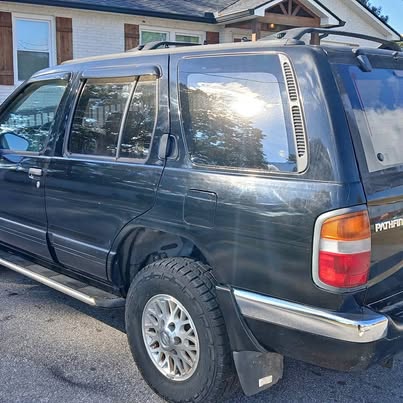
The range is simple once you lay it out by generation, because Nissan kept the same trim ladder — XE, SE, LE — across all three trucks, with the XE as the workhorse, the SE as the sporting or off-road-flavoured middle, and the LE as the leather-and-everything flagship. Engines, not trims, are what really separate one Pathfinder from another, so read the table by its engine column first.
| model | years | engine | output | built | character |
|---|---|---|---|---|---|
| Pathfinder XE/SE (WD21, 2-door) | 1987–1995 | Z24i 2.4 four, later KA24E 2.4 four | 106 hp, later 134 hp | — | The basic truck; light, simple, slow |
| Pathfinder XE/SE/LE (WD21) | 1987–1995 | VG30i, later VG30E 3.0 V6 | 145 hp, later 153 hp | — | The classic Hardbody-era Pathfinder; the one to have |
| Pathfinder XE/SE/LE (R50) | 1996–2000 | VG33E 3.3 V6 | 168 hp | — | Smooth, torquey, leisurely; the suburban original |
| Pathfinder XE/SE/LE (R50, 1999.5 facelift) | 1999.5–2004 | VG33E 3.3 V6 to 2000, then VQ35DE 3.5 V6 | 168 hp, then 240 hp | — | The facelift shell; two very different trucks by engine |
| Pathfinder SE/LE (R50) | 2001–2004 | VQ35DE 3.5 V6 | 240 hp | — | The quick R50; effortless motorway pace |
| Pathfinder XE/SE/LE (R51) | 2005–2012 | VQ40DE 4.0 V6 | 270 hp | — | Back on a frame; seven seats, serious towing ability |
| Pathfinder SE/LE (R51) | 2008–2012 | VK56DE 5.6 V8 | 310 hp | — | The rare V8; outside the early-truck pool, thirsty and quick |
A note on the empty "built" column: Nissan published sales in aggregate and never released a clean, trustworthy production breakdown by trim and engine for these trucks, and the figures that circulate online conflate markets and model years. Rather than print numbers that cannot be verified, this guide leaves them blank. What is not in doubt is scale: all three generations were mass-market trucks built in the hundreds of thousands over their runs, which is why parts supply, covered later, remains as good as it does.
Within the WD21 run, the changes that matter are the four-door's arrival for 1990, the replacement of the early throttle-body-injected engines by multi-point versions — the VG30E V6 from 1990 is the one you want — and a dashboard and trim refresh for 1993 that modernised the cabin. Two-door WD21s are the rarest survivors and the most collectible shape, but check any two-door carefully: many were bought cheap, lifted, and used hard off-road in the 2000s when values bottomed out.
Within the R50 run, the dividing lines are the 1999.5 facelift — revised nose, tail and interior, recognisable by its cleaner headlamps and updated grille — and the 2001 engine change, when the VQ35DE replaced the VG33E and lifted output by more than forty per cent at a stroke. A 2001-onwards R50 is a materially faster, more relaxed truck than a 1996–2000 one, and the market knows it. The Infiniti QX4, sold alongside from 1997 to 2003, is mechanically an R50 in a tailored suit: same shell, same engines, plusher trim, and worth considering in exactly the same inspection terms if you find one wearing Nissan money.
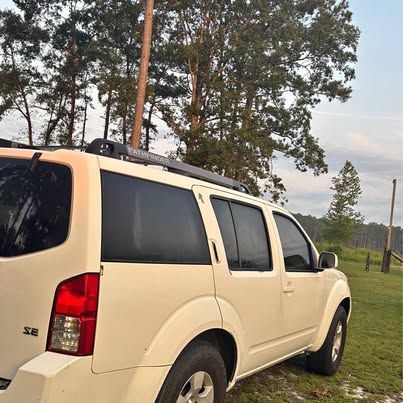
Within the R51 run, the early trucks of 2005–2007 — the ones this guide centres on — come in XE, SE and LE with the VQ40DE as the only engine; the VK56DE V8 arrived for 2008 and is rare. Four-wheel drive on the R51 is a part-time system with low range on most trims, with an automatic mode on higher specifications. Watch for one naming trap: the full-size Armada was badged "Pathfinder Armada" for its first year, 2004, but it is a Titan-based truck that shares nothing with the R51 — if a listing's photos show a much larger vehicle with a V8, you are looking at an Armada whatever the title says.
Trim traps recur across all three generations. Badges are cheap and old trucks get re-badged, re-trimmed and re-engined: an LE badge on a cloth-seated truck, or a V6 badge on a four-cylinder WD21, means a previous owner has been decorating, and the VIN plate and the engine in front of you outrank the tailgate every time. Equally, a high trim level is not a condition grade — an LE's leather, sunroof and climate control are simply more systems to be broken at this age, and a plain XE that has been serviced beats a neglected LE on every measure that matters.
Engines and gearboxes
The four-cylinders: Z24i and KA24E
The WD21's base engine began as the Z24i, a 2.4-litre single-cam four with throttle-body injection and about 106 hp, and became the KA24E for 1990 — still 2.4 litres and single-cam, but with multi-point injection and a healthier 134 hp. The KA is the better engine in every way: it starts cleaner, pulls harder, and its timing chain — note, chain, not belt — is long-lived provided the oil has been changed, because the chain's guides and tensioner are oil-fed and wear rapidly in an engine run on sludge. Guide wear announces itself as a rattle from the front cover for a second or two on a cold start, progressing to a constant clatter; ignore it long enough and the chain can chew through the front cover into a coolant passage, mixing oil and coolant without the head gasket being at fault — a classic KA misdiagnosis. A front-cover and chain-kit job runs roughly $700–1,400 in parts and labour at an independent shop. In truth, though, the four-cylinder Pathfinder is a compromised truck: the body is heavy, the gearing is tall, and motorway work is a noisy, foot-to-the-floor exercise. Buy one for its simplicity and lightness as a trail toy if you must, but the V6 is the correct engine for this body, and the market prices four-cylinders accordingly.
The VG V6s: VG30 and VG33E
The engine that made the Pathfinder is the VG, Nissan's first mass-produced V6: a 60-degree, iron-block, alloy-head design with a single overhead cam per bank and, in the WD21, first throttle-body injection as the 145 hp VG30i and then multi-point injection as the 153 hp VG30E. For the R50 it grew to 3.3 litres as the VG33E, with 168 hp and a fat, lazy torque curve that suits the truck's character perfectly. These are fundamentally strong, understressed engines that tolerate high mileages well, and their known weaknesses are specific, well understood and mostly cheap if caught early.
The first is the timing belt. The VG is an interference engine: if the belt breaks, pistons meet valves and the repair becomes a cylinder-head job. The belt, tensioner and water pump — the pump is driven behind the covers and is sensibly changed with the belt — form one job, roughly $600–1,100 at an independent, and the service interval is around 105,000 miles on the VG33E and shorter on earlier VG30s. A truck with no documented belt history needs the job priced into the deal on day one, whatever the seller says about it "looking fine" — belts are not judged by looking.
The second is exhaust manifold stud failure, the VG's signature fault and so common it gets its own full treatment in the problem areas below. The third is the distributor on the VG33E, whose internal bearing wears and whose optical sensor fouls: symptoms range from a chirping noise at idle through random cutting out to a no-start that comes and goes with temperature. A rebuilt or new distributor runs roughly $250–500 in parts. The fourth is the knock sensor, buried in the valley under the intake manifold on the VG33E: when it fails the ECU retards the timing to protect the engine, the truck goes flat and thirsty, and the fault code it stores often does not light the dashboard warning lamp, so a sluggish VG33 with no obvious fault is a knock-sensor suspect until proven otherwise. The sensor itself is cheap; reaching it is an intake-off job, roughly $400–800 in labour, which is why so many trucks simply live with it — and why a full-throttle test drive tells you more than the dashboard does.
The VQ V6s: VQ35DE and VQ40DE
For 2001 the R50 received the VQ35DE, the 3.5-litre all-alloy, twin-cam, four-valves-per-cylinder V6 from Nissan's celebrated VQ family: 240 hp, a timing chain instead of a belt, and a transformation in performance — this is an engine that makes the R50 feel a decade younger. The VQ40DE in the R51 is its bigger brother, a 4.0-litre development with 270 hp and the torque to move a much heavier truck and a serious trailer without strain. Both are strong engines with two specific, well-documented weaknesses you must know by name.
On the VQ35DE in the R50, the danger is the intake power-valve screws. Inside the intake manifold, butterfly plates on a shaft meter airflow, and the small screws retaining those plates were insufficiently secured at the factory. They can work loose with age and vibration and be drawn into a cylinder, where a screw bouncing on a piston crown scores the bore and can wreck the engine outright. The fix — removing the manifold, and thread-locking or peening every screw — is cheap insurance, roughly $300–600 in labour if the manifold comes off cleanly, and the first question to ask any VQ35 R50 seller is whether it has been done, with paperwork. An undocumented truck is not a reason to walk away, but it is a job to schedule immediately, not eventually.
On the VQ40DE, the weakness is the secondary timing-chain tensioner guides. The plastic-faced tensioner shoes wear through, the secondary chains begin running metal-on-metal, and the engine develops a distinctive whine that rises with revs and is often mistaken for a supercharger or an alternator bearing. Caught at the whine stage, the repair is a front-cover-off chain and guide replacement, roughly $1,200–2,200; ignored, chain failure on an interference engine ends the engine. Listen for it on every R51 test drive, from cold, with the radio off and the bonnet up. Both VQs also use oil in old age — a quart between changes on a high-mileage VQ35 is common and tolerable, but check the level before the test drive, because an engine presented two quarts low is telling you how it has been kept. Ignition coils fail one at a time on both engines and cause a single-cylinder misfire that a code reader identifies in minutes; budget roughly $80–150 per coil fitted and treat a misfire as a negotiation point, not a catastrophe.
Gearboxes and transfer cases
The manual option, where it survives, is the one to want for longevity. WD21s came with a five-speed manual — the FS5W71C behind the four-cylinder and the stronger FS5R30A behind the V6 — and R50s offered a five-speed manual on XE and SE trims, though the overwhelming majority of R50s, and every truck in the pool behind this guide, are automatics. The manuals are tough, their clutches last well, and their only common needs are a tired clutch slave cylinder and notchy synchromesh on a truck that has been rushed. The R51 dropped the manual for the US market entirely.
The automatics are the RE4R01A four-speed in the WD21 and R50, and the RE5R05A five-speed in the R51. The RE4R01A is a conventional, well-proven unit whose life is decided by fluid and heat: it wants its correct Nissan Matic fluid, changes at sensible intervals, and an auxiliary cooler if the truck tows. Most failures trace back to overheated, oxidised fluid on a truck that towed in overdrive — on the test drive, a healthy box shifts cleanly and promptly hot and cold, with no flare between gears and no thump into drive. A rebuild runs roughly $2,000–3,500. The RE5R05A in the R51 is stronger and smarter, but it is the victim, not the villain, of this guide's most expensive fault: the radiator cross-contamination covered in the problem areas, which destroys it from the inside with coolant. A contaminated RE5R05A is a $3,000–5,000 problem by the time the box is rebuilt or replaced and the cooling system is renewed, which is why the radiator check dominates R51 inspection.
Transfer cases are Nissan's TX10 part-time unit on the WD21 and R50 — a proper chain-driven case with 2WD, 4WD high and a low range of roughly 2.6:1 that makes these trucks genuinely capable off-road — with an all-mode automatic variant on LE-grade R50s that can be left engaged on tarmac. The R51 uses a similar part-time system with low range, with an auto mode on higher trims. The rules are the same for all: the case must engage and disengage promptly, low range must select without grinding protest, and any chain rattle under load in 4WD means a stretched chain and a case-out repair. A truck whose 4WD has never been exercised can have seized actuators and linkages from disuse, so engage everything on the test drive, on a loose surface, and confirm the dashboard lamps tell the truth.
Problem areas
Rust and structure: three trucks, three different failures
Rust is the Pathfinder's defining problem, but it is not one problem — each generation fails structurally in its own way, by its own mechanism, and you inspect each differently.
On the WD21, the structure is a separate ladder frame, and the frame is where the truck dies. Surface rust on a frame is cosmetic; the killer is perforation, and it concentrates where the design traps mud and road salt: the rear frame rails over and behind the rear axle, the spring and suspension mounting points, the crossmembers, and the frame horns at the very back. The mechanism is simple and relentless — the boxed and channel sections fill with wet debris through their drain holes, the debris holds brine against the steel through every winter, and the rail rots from the inside out, so a frame can look presentable on its outer face while a screwdriver pushes through its inner wall. Test it with a small hammer and a screwdriver, not your eyes: sound steel rings and resists, rotten steel flakes, crunches and gives. Pay the same attention to the body the frame carries — rocker panels, the bottoms of the front fenders, the rear wheel arches, the floor under the rear seat and the fuel-filler surround all go — but remember the hierarchy: body rust on a WD21 is repairable panel work, frame perforation is a welding project or a death sentence, and the difference between a cheap truck and a free truck is which one you are looking at. Frame repair by a competent welder runs roughly $800–2,500 depending on how many sections need plating, and a truck needing it in several places at once is a parts truck.
On the R50, there is no frame to save you: the unibody shell is the structure, and its signature failure is one of the most serious corrosion defects fitted to any vehicle in this guide. In salt-belt states, corrosion attacks the front strut housing — the pressed-steel tower the front suspension strut bolts to, low in the engine bay where it catches everything the front wheel throws up. As the housing perforates and weakens, it can shift and corrode through to the point where it interferes with and damages the steering column shaft passing nearby, degrading steering and, in the worst documented cases, separating the steering connection. Nissan recalled 1996–2004 Pathfinders and Infiniti QX4s in the salt-belt states for exactly this, inspecting the strut housing and fitting reinforcement or, where the corrosion was too far gone, buying trucks back. The mechanism matters for your inspection: this is not rocker-panel rust you can see from the kerb. Open the bonnet, look down at both strut towers and the surrounding housing with a torch, and look again from underneath with the wheel turned. Flaking, bubbling or perforation around the strut housing on an R50 is not a negotiation point — it is a walk-away, because you cannot plate your way back to a sound steering geometry cheaply, and a recall inspection record in the truck's history is a document worth real money. Beyond the towers, R50s rust in the rocker panels, rear wheel arches, the tailgate's lower edge and seam, the floor at the rear footwells, and the rear suspension mounting points in the shell; probe all of them, and treat shiny underseal on a rust-belt truck as a question, not an answer — fresh black coating over rot is the oldest trick in the cheap-truck trade.
On the R51, the return to a separate frame was a return to the WD21's rules: inspect the rails, crossmembers and body mounts as you would any framed truck, with the rear rails and the areas around the independent rear suspension's subframe mounts first. Early R51s have had two decades of winters by now, and a frame that has been perforated is as terminal here as on a WD21. The body itself holds up better than the R50's, but check the tailgate, the wheel arches and the bottoms of the doors, and look hard at any truck with a tow bar fitted and a life story that involves boat ramps — launching boats dips the rear of the truck in salt water, and the rear frame and wiring suffer for it.
The VG exhaust manifolds and studs
Every VG-powered Pathfinder — WD21 VG30 and R50 VG33 alike — will at some point present you with this fault, so learn its sound. The cast-iron exhaust manifolds expand and contract with every heat cycle, and they move against the cylinder head on their steel studs. Over thousands of cycles the manifolds warp fractionally, the load concentrates on the end studs, the studs fatigue and snap flush in the head, and the joint begins to blow. The symptom is unmistakable once you know it: a sharp ticking or chattering from the top of the engine on a cold start, loudest under load, which fades as the manifold warms, expands and partially reseals itself. Sellers will call it a lifter, a "sticky valve" or "they all do that" — the last of which is nearly true and entirely beside the point, because a blowing manifold costs fuel, fails emissions inspections in states that test for it, and only gets worse.
The test that settles it: start the truck stone cold, bonnet up, and listen at each bank while a helper blips the throttle. A manifold blow ticks in time with one cylinder's firing and localises to the manifold joint; lifter noise is a lighter, more general top-end clatter. Look, too, for black soot streaks on the manifold and head at the joint, and feel — carefully, from cold — for puffs of exhaust at the joint. The repair is manifold removal, extraction of the broken studs — the awkward part, often an engine-out or head-off escalation when a stud refuses — new studs and gaskets, and ideally a skimmed or replacement manifold so the new studs are not loaded the same way. Budget roughly $500–1,200 per bank at an independent, more if studs have to be drilled. A truck that ticks cold and goes quiet warm has the fault in its early, cheapest stage; one that ticks constantly has been left, and you should ask what else was left with it.
The R51 radiator fault and the VQ40 timing chains
The R51's defining fault deserves the plainest language in this guide. The automatic gearbox's fluid is cooled by a cooler tube inside the radiator's bottom tank. On 2005–2010-era trucks, that tube can crack with age and thermal cycling. Engine coolant and transmission fluid then mix in both directions: coolant enters the gearbox, where its glycol attacks the friction material of the clutches and the internal seals, and ATF enters the cooling system, where it swells rubber hoses and shows as a pink, frothy contamination — the "strawberry milkshake" — in the coolant reservoir and on the transmission dipstick. The gearbox does not fail politely: shuddering, slipping, harsh shifts and then loss of drive follow, and by the time symptoms are obvious the box usually needs a rebuild or replacement, the radiator needs replacing, and the whole cooling system needs flushing. Nissan extended warranty coverage on the radiator assembly for affected trucks, but at the age of the early R51s now, assume you are on your own.
The inspection is two minutes long and non-negotiable. With the engine cold, open the coolant reservoir: the coolant should be clean green or blue, with no pink froth, no oily film, no mayonnaise. Then pull the transmission dipstick: the fluid should be clear red to brownish-red, never pink, never milky, never opaque like a milkshake. Either sign means contamination has occurred, and a truck showing it needs a gearbox, not a discount. The prevention, on a clean truck, is equally well established: replace the radiator pre-emptively — roughly $300–700 fitted for a quality unit — or bypass the internal cooler for an external one, a modification many owners have done; ask any R51 seller directly whether the radiator is original, and treat "original radiator, never touched" on a high-mileage truck as deferred risk you are being handed, priced accordingly.
The VQ40DE's second fault, introduced in the engines section, lives here too because it is a buying decision: the secondary timing-chain tensioner shoes wear through, the chain runs on the metal tensioner beneath, and the engine whines in proportion to revs. Diagnose it by elimination — remove or slacken the accessory drive belt briefly and the whine from an alternator or idler disappears, while the chain whine, coming from behind the front cover, does not. A whining R51 is not a walk-away if the price reflects a $1,200–2,200 chain job, but it is never "just a belt," whatever the seller says.
While you are in the R51's engine bay: the fuel level sender is a known weak point across the R50 and R51, failing to a gauge that reads empty, full, or wanders — Nissan extended coverage on senders for some years, and a lying gauge on a test drive is a sender until proven otherwise, roughly $300–600 to put right with the tank dropped or accessed. Crankshaft and camshaft position sensors on the VQ engines fail with heat and age, causing hot no-starts and cutting out that mysteriously cure themselves as the engine cools; they are cheap parts, and a seller's story about a truck that "sometimes won't restart at the gas station for ten minutes" is describing one.
Suspension, steering and brakes
The WD21 rides on torsion bars at the front and a coil-sprung live axle at the back, located by links. Torsion bars sag with age — a nose-down WD21 needs its bars wound up or replaced, and a truck cranked to the maximum to clear big tyres has no droop left and rides terribly. Front ball joints, tie-rod ends and the steering centre link wear on a truck steered by a recirculating-ball box; check for play by rocking the steering with the engine running while a helper watches each joint in turn, because the box itself also develops play that is adjustment, not replacement. Idler arm wear is the classic WD21 wander cause. Expect to spend roughly $400–900 refreshing a tired front end, and treat it as normal old-truck consumption rather than a defect — but price it in.
The R50 pairs front struts with a coil-sprung live rear axle on a five-link layout, and its signature handling fault comes from the rear: the rubber bushings in the rear suspension links perish and soften, the axle begins to steer itself fractionally over bumps and in crosswinds, and the truck develops a loose, swaying, "the back end is wandering" feel at highway speed that owners chase through tyres, alignments and shocks without curing it, because the cause is twenty-year-old rubber in the links. On the test drive, a straight, calm highway run tells you: an R50 that needs constant small corrections and feels unsettled by lane changes and truck wash has tired rear link bushings until proven otherwise. A full set of links or bushings runs roughly $400–1,000 fitted, and a sorted R50 tracks straight and calm — the contrast is obvious once you have driven both. Front struts and their top mounts tire normally; the strut housing rust covered above is the structural matter, separate from the damper itself.
The R51 is independent at both ends and the most refined of the three, but it is also the heaviest, and it consumes front wheel bearings, ball joints and suspension bushings at a rate that surprises owners coming from the older trucks. Listen for a speed-dependent hum that changes as you load the suspension in gentle curves — that is a wheel bearing, roughly $250–450 a corner fitted. On all three generations, brakes are conventional discs with rear discs or drums by trim and year, and the checks are the usual ones: pedal feel, straight-line stopping without pull, handbrake holding on a slope, and hard brake lines inspected for corrosion along the frame or floor, because a rusted-through brake line on a salt-belt truck is a when, not an if, and line replacement is a $300–800 job depending on how many are rotten.
Four-wheel-drive hardware needs its own paragraph. On part-time systems, the front hubs, actuators and transfer-case linkage seize from disuse on trucks that have lived on tarmac; on the all-mode systems, electronic actuators fail expensively and quietly. A stretched transfer-case chain rattles under load in 4WD and slips with a bang under real strain. Any of these turns "4WD works fine" into a claim you verify yourself, on gravel or dirt, in high and low range, before money moves.
Electrics, interior and everything else
None of the three generations is an electrical nightmare, but age writes its own list. Window regulators fail — a slow or crooked window on any door is a regulator or a tired motor, roughly $150–350 a door fitted. Sunroofs on LE models leak from blocked drain tubes into the headlining and pillars; water stains at the front corners of the headlining are the tell. Air conditioning on a twenty-year-old truck is a system, not a switch: if it does not blow cold, the honest assumption is a compressor, condenser or leak diagnosis at $400–1,200, not "just needs a recharge," a phrase that has never once fixed a leak. On the WD21, the dashboard cracks, the seat foams collapse and the rear hatch struts die; on the R50, the CD changers, climate displays and power aerials fail; on the R51, the third-row and powered tailgate hardware on high trims adds its own list. Test every switch, because the seller has priced the truck as if they all work.
Finally, the paperwork faults that are really truck faults. Mileage on these trucks is often genuinely high and sometimes not genuine at all: a worn pedal rubber, shiny steering wheel and collapsed driver's seat bolster on a supposedly low-mileage truck contradict the odometer, and title brands — salvage, rebuilt, flood — follow a truck forever and halve its value. Flood history matters doubly here: a flooded unibody R50 rots from inside its sills and floor seams in ways no inspection fully clears. Check the title status before you fall for the truck, not after.
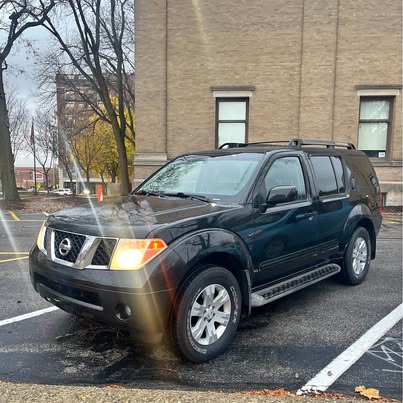
How to inspect one
Inspect in this order: structure, the generation-specific killers, then everything else. Take a torch, a small hammer, a magnet, a code reader if you have one, and insist on a cold engine — a seller who has warmed the truck up for you has hidden the cold-start evidence this checklist depends on.
- Paperwork first. Match the VIN on the title to the plate on the dashboard and the door sticker. Confirm the title is clean, not salvage or rebuilt, and that the year and engine on paper match the truck in front of you — remember the traps: a 1995 is a WD21, a 1996 an R50, and a "Pathfinder Armada" is not a Pathfinder at all. Walk away from paperwork problems before you invest an hour in the truck.
- Cold start, bonnet up, radio off. Start it stone cold and listen for the first thirty seconds. A sharp ticking that fades as it warms is the VG manifold-stud blow from the problem areas; a whine rising with revs on an R51 is the VQ40 timing chain; a second or two of chain rattle on a four-cylinder is worn KA guides. Watch for blue smoke on start-up (valve seals), white smoke that persists (coolant), and any warning lamp that fails to light with the ignition — a missing lamp is a removed bulb until proven otherwise.
- The structure, underneath. Get under the truck with the torch and hammer. On a WD21 or R51, tap and probe the frame rails — rear sections, crossmembers and suspension mounts first — remembering that inside-out rot hides behind a clean outer face. On an R50, go straight to the front strut housings from above and below: perforation there ends the inspection on the spot. Then rockers, arches, floor seams and brake lines on any generation.
- R51 only: the two-fluid check. Cold coolant reservoir and transmission dipstick, exactly as the problem areas describe. Clean coolant, clear red ATF: proceed. Pink froth or milkiness in either: the gearbox is contaminated, and you are done — no price fixes that truck cheaply.
- Under the bonnet, engine warm. Look for oil in the VG's valley and around the valve covers, coolant crust at hose joints and the water pump weep hole, soot streaks at the exhaust manifold joints, and bodged wiring. Check the oil level and colour before the drive — low, black oil is a maintenance confession. On a VQ35 R50, ask for evidence of the power-valve screw fix; on any VG, ask for the timing-belt receipt and its date and mileage.
- Fluids all round. Engine oil, coolant, brake fluid, power-steering fluid and — where a dipstick exists — transmission fluid. Dark, burnt-smelling ATF in an RE4R01A or RE5R05A means a hard, hot life; budget for a fluid change at minimum and listen harder on the drive. Low brake fluid with worn pads is normal; low brake fluid with new pads is a leak.
- The drive: gearbox and transfer case. From cold, the automatic should engage drive and reverse promptly, shift without flare or thump, and hold gears without hunting. Drive it until fully hot — some faults only appear hot. Then find gravel or dirt and work the 4WD: high range, low range, back to 2WD, confirming the lamps and the mechanical engagement agree, and listening for chain rattle under load.
- The drive: the R50 rear-end test. On a straight highway stretch at cruising speed, relax your grip fractionally and feel for the wander described in the problem areas — constant small corrections, a sway when a truck passes or the lane changes. That is rear link bushings, and it is a priced repair, not a character trait.
- Steering, suspension and brakes. Rock the steering and watch for play at the joints; drive over broken pavement and listen for knocks from ball joints, links and strut mounts; brake firmly from speed and demand a straight, pull-free stop and a firm pedal. Test the handbrake on a slope. On an R51, listen in gentle curves for the hum of a dying wheel bearing.
- Every electrical item, one by one. Windows, locks, mirrors, sunroof, air conditioning front and rear, heated seats, lights, wipers, washers, the fuel gauge's honesty against the seller's claimed fuel level. A lying fuel gauge on an R50 or R51 is the known sender fault. Nothing here is expensive alone; together they are your negotiation list.
- Interior and water evidence. Lift mats, feel carpets for damp, look at the headlining's front corners for sunroof-drain stains, smell for mildew. Damp in an R50's sills and floor is structural information, not upholstery information. Check the spare wheel well for water and rust, and confirm the jack and tools exist.
- History and the second look. Read whatever service records exist for the pattern, not the stamps: regular oil changes and the big jobs — belt, radiator, chains — documented with dates. Then walk around the truck once more in silence and ask yourself the only question that matters: is this a truck whose previous owner fixed things, or deferred them? Every step above has been answering it.
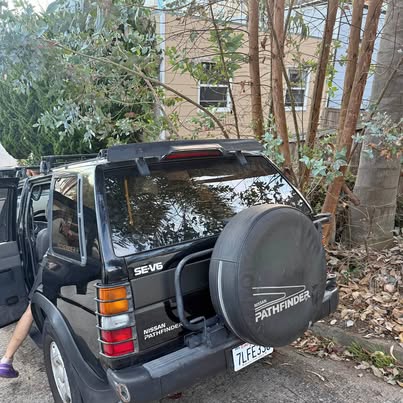
Values
The Pathfinder market is a condition market, not a badge market, and the first thing to understand is how wide the spread is inside a single model year. A rust-free, documented, well-kept truck and a rust-belt example with a blowing manifold and a deferred timing belt can share a year, a trim badge and even a colour, and they are not the same vehicle at any price — the honest one is cheap transport for years, the other is a queue of repairs wearing a truck's shape. The listings summary beneath this guide shows you the current asking landscape; read it as a map of sellers' hopes, and remember that asking prices on old trucks are opening bids. Achieved prices settle where the inspection evidence says they should, which is why two trucks advertised side by side at similar money routinely sell far apart once buyers have been underneath both.
Generation shapes the market more than age does. The WD21 has crossed into genuine classic territory: two-doors and clean four-door V6s with sound frames attract buyers who want the truck specifically, and good ones have stopped depreciating. The R50 sits in the value trough — old enough to be cheap, modern enough to be usable daily — with the 2001-onwards VQ35 cars commanding a clear premium over the VG33 cars for their performance, and salt-belt structural history discounting a truck more than any mechanical fault. The early R51 is the family-hauler bargain of the three on paper, seven seats and real towing ability for money that buys far less elsewhere, but its value hinges entirely on the radiator question: a truck with a documented radiator replacement or a clean bill on the two-fluid check is worth meaningfully more than an identical truck on its original radiator, because every informed buyer prices the risk in.
Within a generation, the premiums follow usability. Four-wheel drive is worth more than two-wheel drive everywhere except the driest states; the V6 is worth more than the four-cylinder in a WD21 by a wide margin; a manual gearbox, rare as it is, finds its own keen buyers; and an LE's leather adds little over a tidy SE unless every electrical extra demonstrably works. Colour and cosmetics move prices at the margins. Documentation moves them at the core: a folder containing the timing-belt receipt, the radiator invoice, the chain repair or the recall inspection is the single strongest value signal a seller can present, and its absence on a truck old enough to need all four is itself information.
The project-versus-driver gap is where buyers most often misjudge this market. A project Pathfinder is only cheap if the structure is sound and the faults are the bolt-on kind — bushings, brakes, a distributor, a set of manifold studs. A project whose discount comes from frame perforation, strut-housing corrosion or a contaminated gearbox is not a project at all; it is an expensive truck purchased in instalments, and the correct comparison is never the asking price against a good truck's asking price, but the asking price plus the true repair total against it. Negotiate from the inspection list, item by item, with the big-ticket generation-specific jobs named and priced from your own research. Sellers of honest trucks expect it. Sellers who resist a cold start, a look underneath or the two-fluid check are telling you the truck's real value themselves.
Parts and ownership
Ownership is where the Pathfinder's mass-market origins pay you back. Nissan built these trucks in huge numbers, the mechanical package changed slowly, and the parts industry responded accordingly: service items, brakes, suspension components, filters, ignition parts and cooling components are available from every major supplier, usually on next-day delivery, and at prices that undercut the European classics badly. A full brake refresh with discs, pads and flex hoses typically runs $250–500 in parts; suspension wear items are individually cheap, with ball joints, links and bushings mostly in the $30–120 range per piece; radiators, water pumps, alternators and starters are all pattern-available for $100–300. The VG's timing-belt kit with tensioner and pump is a $150–300 parts purchase, the labour being the larger half of that job, and VQ ignition coils, sensors and senders are commodity items.
The friction points are trim and generation-specific body parts, not mechanics. WD21 two-door body panels, glass and interior trim are increasingly hunted in the used market as the trucks thin out; R50 unibody repair panels exist but a structurally rotten shell is an economic write-off regardless, because the labour to weld a unibody exceeds the truck's value in a way a framed truck's never quite does. R51 body and interior parts remain plentiful in salvage yards, which are the standing resource for all three generations: these trucks were common enough that breakers hold deep stock, and a morning's calling will source most things. Infiniti QX4 parts interchange with the R50 more often than the parts counters admit — the shell and running gear are the same, and only trim and badging differ.
Running costs are honest-truck costs. Fuel economy is the one you cannot fix: expect the VG trucks to drink like the 1990s SUVs they are, the VQ35 to do slightly better while going much faster, and the VQ40 R51 to be the thirstiest of all, especially towing. Budget for it with your eyes open, because no tune-up transforms any of them. Tyres in the stock sizes are cheap and widely available; resist oversizing, which stresses steering, gearing and fuel consumption for looks alone. Insurance is generally modest, registration costs vary by state, and none of the three generations demands specialist maintenance — any competent independent shop knows the VG and VQ engines, and the factory service manuals are widely available for owners who work at home. The ownership discipline that matters is a short list: oil on schedule, coolant fresh, the timing belt or chains attended to on evidence rather than hope, the R51's radiator treated as a service item, and rust washed off the underside through winter and inspected every spring. Do those things and a Pathfinder is one of the cheapest routes into a genuinely capable classic truck. Neglect them and it becomes, in the order this guide has given you, a rusty one, a ticking one or a milkshake one.
Which one to buy
- The classic buy: a WD21 V6 four-door, 1990–1995, VG30E. The original Pathfinder in its best form — framed, simple, handsome, and appreciating when the frame is sound. Buy the best-documented, driest-state example you can find and keep it that way.
- The value buy: an R50 with the VQ35DE, 2001–2004. The facelift shell with the engine it always deserved, sitting in the market's trough. Strut housings first, power-valve screw evidence second, rear link bushings third — clear those three and it is a modern-feeling truck for old-truck money.
- The family buy: an early R51, 2005–2007, VQ40DE. Seven seats, a frame, real towing ability. Only buy one that passes the two-fluid check with clean coolant and clear fluid, and treat a documented replacement radiator as the best money a previous owner ever spent on your behalf.
- The trail buy: a WD21 two-door or a manual-gearbox R50 SE. Lighter, simpler, low range fitted, and cheap enough to use as intended. Accept the cosmetic scars; verify the frame, the transfer case and the front-end wear items instead.
- The cautious buy: an R50 with the VG33E, 1996–2000. Slower than the VQ cars and thirstier than its performance justifies, but mechanically the simplest of the unibody trucks, with no power-valve screws to fear. The strut-housing check still decides everything.
- Avoid: any R50 with perforated strut housings, any R51 showing pink in either fluid, and any framed truck whose rails your screwdriver enters. These are not projects at any price a private seller will accept, and the market always contains another Pathfinder.
The overriding rule: buy the structure, then the paperwork, then the truck — a sound frame or shell with the generation's big jobs documented is worth more than any trim level, any colour and any mileage claim, and a Pathfinder that fails its generation's signature check is not cheap at any price.
See the 7 Pathfinder cars currently listed.
For sale now
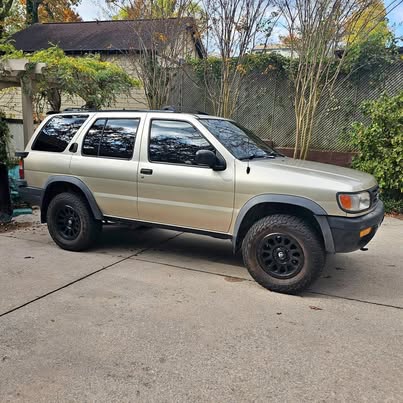 $11,000
Expand
What they sell for: Pathfinder sale prices.