
Nissan Xterra buyer's guide
Nissan Xterra -- the model's own buyer's guide: variants, values and what to check.
Years listed: 2001-2003 · Series: Xterra
# Nissan Xterra — Buyer's Guide (First Generation, WD22)
Overview and history
You are not buying a crossover. The first-generation Nissan Xterra, built from the 2000 to the 2004 model years under the internal designation WD22, is a pickup truck with a wagon body bolted to a separate ladder frame, and everything good and bad about it follows from that one decision. Nissan takes the D22 Frontier compact pickup — its frame, front suspension, engines, gearboxes and transfer case — and replaces the cargo bed with an enclosed five-door body carrying a distinctive stepped roof, a raised rear seating position and a roof rack you can actually load. The result is deliberately crude in the places a crossover is refined, and deliberately strong in the places a crossover is fragile.
Nissan launches the Xterra for the 2000 model year, builds it at Smyrna, Tennessee, alongside the Frontier, and aims it at buyers who find the Pathfinder too polished and too expensive. The marketing leans on mountain bikes, kayaks and mud, but the engineering underneath is honest: body-on-frame construction, a torsion-bar independent front suspension, a leaf-sprung live rear axle, part-time four-wheel drive with a proper low range, and engines already proven in trucks and vans for years. Nothing in the driveline is new, and that is the point: you inherit the Frontier's parts bin, service knowledge and reputation for surviving neglect.
The range develops in two clear phases. The 2000 and 2001 cars wear the original blunt front end with rectangular lamps, and offer two engines: a 2.4-litre four and a 3.3-litre V6. For 2002 Nissan facelifts the nose with rounder lamps and a new grille, revises the dashboard, and adds the headline act — a supercharged version of the V6, badged SC, one of very few factory-supercharged SUVs of its era. The facelifted cars run to 2004, when the wholly different second-generation Xterra replaces the WD22 with a larger platform, a 4.0-litre V6 and a different set of problems entirely. Keep that generational boundary clear, because the internet does not: the radiator-and-transmission failure and timing-chain-guide wear that dominate Xterra horror stories belong to the 2005-onwards car, not to anything in this guide.
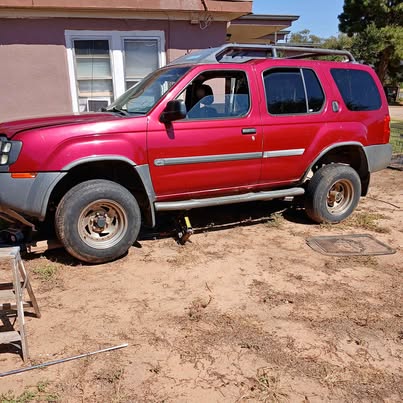
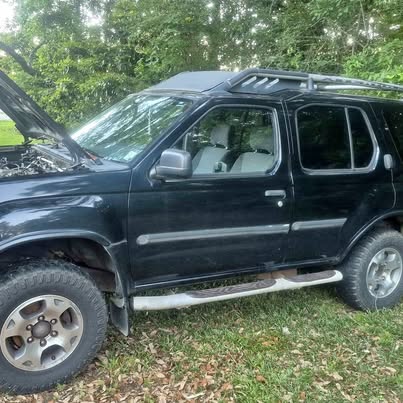
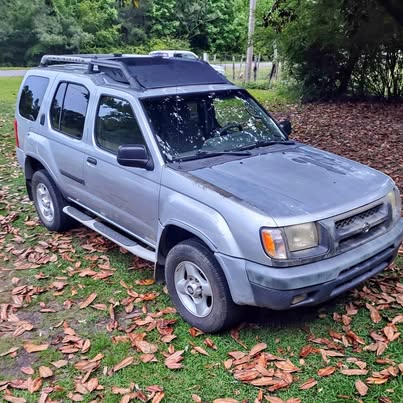
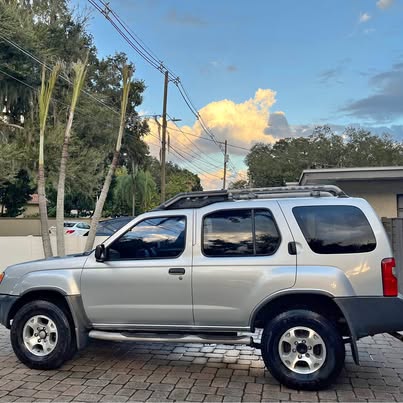
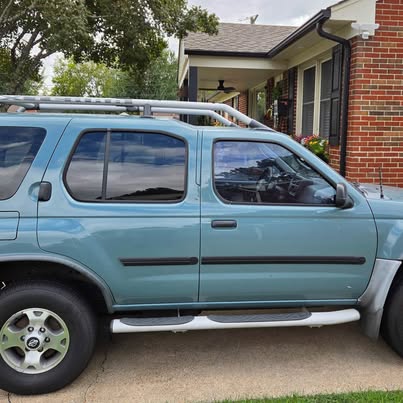
On this site the Xterra pool is small and tightly scoped, and you should read this guide through that lens. The pool holds six first-generation records — five offered for sale and one recorded as sold — spanning the 2000, 2001 and 2002 model years: one 2000 car, three 2001 cars and two 2002 cars. Every one of the six is an automatic, every one comes through Facebook Marketplace, and the cars sit in Alabama, Texas, California, Florida and Virginia. The colours in the pool — grey, black, silver, gold and a turquoise car in Virginia — are a fair sample of the early palette. So the pool shows you the pre-facelift and first facelift years, in automatic form. It does not show you a manual car, a supercharged SC, or a 2003–2004 example, and where this guide covers those variants it does so from general model knowledge, not from the pool.
Why buy one now? Because the WD22 occupies a niche that no longer exists: small enough to thread down a trail and park in a city, simple enough for a competent home mechanic to service almost entirely with hand tools, and tough enough that a well-kept example still works as a daily driver, farm truck, beach vehicle or mild overland build. It is also old — the youngest first-generation car is now more than two decades old — so you are buying condition, maintenance history and the state of a steel frame, not a model year or a badge.
The models
The first-generation range is simpler than a period brochure makes it look. Strip away the option packs and you have three trim levels — XE, SE and, from 2002, SC — two engines in the early cars and three thereafter, two-wheel drive or part-time four-wheel drive, and a five-speed manual or four-speed automatic gearbox. The four-cylinder engine sits at the bottom of the range in two-wheel-drive XE trim only; the V6 does all the serious work, appears in every trim, and takes four-wheel drive with either gearbox — the combination most buyers, then and now, actually want.
| Model | Years | Engine | Output | Built | Character |
|---|---|---|---|---|---|
| XE 2.4 | 2000–2004 | KA24DE 2.4-litre four | 143 hp | Smyrna, Tennessee | The basic two-wheel-drive truck; light, simple, slow |
| XE V6 | 2000–2004 | VG33E 3.3-litre V6 | 170 hp (180 hp 2003–04) | Smyrna, Tennessee | The working Xterra; manual or automatic, 2WD or 4WD |
| SE V6 | 2000–2004 | VG33E 3.3-litre V6 | 170 hp (180 hp 2003–04) | Smyrna, Tennessee | Better trim, sunroof and equipment; the comfortable pick |
| SC | 2002–2004 | VG33ER 3.3-litre supercharged V6 | 210 hp | Smyrna, Tennessee | The facelift flagship; real extra pace, real extra thirst |
Production figures for individual WD22 variants were not published by Nissan in a form you should rely on, so this guide prints none rather than inventing them. Survival, not original scarcity, governs how hard a variant is to find today: four-cylinder and two-wheel-drive cars survive in small numbers because cheap trucks get used up, and supercharged cars were always the minority of production.
The XE is the entry point, and you should not apologise for it. In four-cylinder form it is a two-wheel-drive utility vehicle with steel wheels, cloth trim and very little to go wrong. In V6 form it becomes the enthusiast's quiet favourite: the same engine, frame and four-wheel-drive system as the expensive cars, less weight, fewer electrical toys, and usually a lower asking price because the badge carries no glamour.
The SE is the trim most buyers chose new and the trim that dominates the surviving pool — the SE Sport Utility 4D designation appears repeatedly among this site's six records, on both a 2001 car in Alabama and a 2002 car in Texas. You get alloy wheels, a sunroof on many cars, better audio, power equipment and fog lamps. None of that changes the mechanical inspection by one item, but two SE features add checks of their own: sunroof drains block and leak into the headlining, and the extra electrical equipment gives an ageing truck more ways to present a dead window motor. Buy the SE for comfort, but inspect it as an XE with additions.
The SC, sold from 2002 to 2004, is the facelift's flagship and the variant most often misdescribed in adverts. It carries the supercharged VG33ER engine, a unique front bumper treatment, 17-inch wheels and distinguishing badging. It is genuinely quicker than the naturally aspirated V6 and genuinely thirstier, and it demands premium fuel. It is also the variant where identity checks matter most, because an SC badge, a bonnet scoop or a seller's description proves nothing: the supercharger itself, sitting on top of the engine in place of the ordinary intake plenum, is the only evidence that counts.
Two-wheel drive versus four-wheel drive is the other great divide. Two-wheel-drive cars are lighter, simpler and cheaper to run, and in the Sun Belt states where most of this site's pool sits — Texas, Florida, Alabama, California, Virginia — they meet most owners' real needs. Four-wheel-drive cars carry the transfer case, front differential, locking hubs and front driveline that give the Xterra its off-road ability, and every one of those components is an inspection item and a potential bill. Do not buy a four-wheel-drive car whose system the seller cannot demonstrate working: a transfer case that has sat in two-wheel drive for fifteen years may have seized linkages and perished seals waiting for the first time you ask it to work.
Model years divide by the 2002 facelift more than by anything else. A 2000 or 2001 car has the original front end, the earlier dashboard and no supercharged option; a 2002 car gains the new nose, revised interior and access to the SC trim, and in the pool the two 2002 cars — an SE in Texas and an XE in California — show both ends of the facelift range. The 2003 and 2004 cars, absent from the pool, bring the naturally aspirated V6 to 180 hp and revised exhaust manifolds, which matter to the problem-areas section. None of these differences outweighs condition: a rust-free, belt-documented 2000 XE is a better purchase than a neglected 2002 SC every day of the week.
Engines and gearboxes
Three engines power the first-generation Xterra, in two families with opposite characters. The KA24DE four is a chain-driven, twin-cam engine that asks little and gives modestly. The VG33 V6 is an older, belt-driven, single-cam design that gives its best work at low revs, tolerates abuse, and carries the model's one genuinely expensive service obligation: the timing belt. The supercharged VG33ER is that same V6 with a Roots blower bolted on top, inheriting every V6 service item and adding a few of its own. Establish which engine you are standing in front of before you discuss price, because running costs, performance and the failure list all change with the engine code.
The KA24DE 2.4-litre four
The KA24DE is a 2,389 cc inline four with a cast-iron block, an alloy head, double overhead camshafts, four valves per cylinder and sequential multi-point fuel injection. In the truck tune fitted to the Frontier and Xterra it produces 143 hp, with torque matched to its intended work: pulling a relatively light two-wheel-drive truck around town and along the highway without drama. Do not confuse this rating with the higher outputs quoted for the same engine code in Nissan's passenger cars; the truck version is tuned for torque and durability, and a seller quoting car figures is quoting the wrong specification sheet.
The KA's great virtue is its timing drive. A roller chain, tensioned by an oil-pressure-assisted tensioner, drives the camshafts, and there is no scheduled chain replacement: the chain is designed for the life of the engine. That single fact removes the first-generation Xterra's largest deferred-maintenance risk from a four-cylinder purchase. Chains do eventually stretch and guides wear on very high-mileage engines, presenting as a rattle from the front cover on cold start that fades as oil pressure builds, but you are listening for wear, not facing a deadline. The rest of the engine is equally conservative: shim-over-bucket valve actuation that rarely needs attention, and an iron block that shrugs off overheating episodes that warp alloy-block engines — though you still treat any overheating history as a head-gasket question, because the alloy head remains the vulnerable half of the partnership.
On the road the four-cylinder Xterra is adequate and nothing more. It cruises comfortably and returns the best fuel economy in the range, but it does not tow heavy loads happily, works hard on long grades with a full cabin, and was never offered with four-wheel drive, so if your use involves trails, snow or a boat ramp, the four is the wrong engine no matter how clean the example. As a cheap, simple runabout it makes a rational case that collapses the moment you need traction or towing.
Servicing a KA24DE is ordinary work: oil and filter at sensible intervals, reachable spark plugs, and an air filter that clogs quickly in dusty use. Budget for a clutch on manual cars at high mileage, sagging engine mounts, and oil weeps from the valve-cover gasket and front crank seal. A four-cylinder car with a dry engine bay, a quiet cold start and clean coolant has very little hidden in it.
The VG33E 3.3-litre V6
The VG33E is the engine that defines the first-generation Xterra. It displaces 3,275 cc, uses a cast-iron block and alloy heads, a single overhead camshaft per bank operating two valves per cylinder, and multi-point fuel injection, with ignition by a single distributor — a detail that matters, because that distributor returns in the problem-areas section. Output is 170 hp in the 2000–2002 cars, rising to 180 hp in the 2003–2004 cars, with 202 lb-ft of torque delivered low in the rev range. Those numbers feel stronger than they read, because the VG makes its torque where a truck needs it: pulling away, climbing, and holding a gear off-road at walking pace. It is understressed, and understressed is exactly what you want in a twenty-year-old engine.
The VG family's defining service fact is the timing belt. A toothed belt drives both camshafts and the water pump, the engine is an interference design — if the belt fails, pistons and valves collide — and Nissan's replacement interval is 105,000 miles. There is no warning light and no visual shortcut: a belt that looks acceptable can be at the end of its life, and the only evidence that counts is a dated, mileage-stamped invoice from a credible shop. Treat an undocumented belt on a car past the interval as a bill you already owe, and do the water pump, tensioner, idlers, camshaft and crankshaft seals and thermostat while the front of the engine is apart, because the labour is the expensive part and every one of those components lives behind the same covers. This is not preventative enthusiasm; it is the arithmetic of doing the job once.
Around that central obligation, the VG33E is a forgiving engine. Hydraulic valve lash adjusters mean no valve-clearance ritual. The bottom end has an excellent record and tolerates high mileages on ordinary oil, and the management is old enough that a basic code reader answers most diagnostic questions. Two components deserve naming now because they dominate the V6 problem list later: the knock sensor, buried in the valley under the intake manifold, where its failure is cheap in parts and expensive in labour; and the distributor, whose internal bearing and camshaft-position sensor wear with age and heat. Neither is a reason to avoid the engine. Both are reasons to test a specific car properly.
Fuel economy is the VG's honest weakness: poor in town, mediocre on the highway, worse with the automatic, larger tyres or a loaded roof rack, and no modification changes that materially. What the V6 gives you in exchange is availability — most Xterras built carry it — four-wheel-drive availability, towing ability adequate for small trailers within the rated limits, and an engine any independent shop in America already knows.
The VG33ER supercharged V6
For 2002 Nissan adds the VG33ER: the same 3.3-litre V6, fitted with an Eaton Roots-type supercharger driven by belt from the crankshaft and mounted on top of the engine, with premium fuel required. Output rises to 210 hp and torque to 246 lb-ft, and the character changes more than the numbers suggest: the blower delivers boost from low revs, so the SC pulls from a standstill and up a grade with an urgency the naturally aspirated car never manages, accompanied by a distinct supercharger whine under load that is normal — and diagnostic, because a blower that rattles, grinds or sounds dry at idle is telling you its bearings or coupler are worn.
The identity check is simple and you must perform it, because SC badges and bonnet scoops are cheap and engines are not. Open the bonnet. On a genuine VG33ER you see the supercharger itself: a substantial ribbed alloy casting sitting centrally on top of the engine, with its own drive belt and pulley at the front, in place of the naturally aspirated engine's intake plenum. If you see an ordinary plenum and no blower, the car is a VG33E whatever the tailgate says, and you price it as one. The SC's unique front-end treatment and 17-inch wheels are corroboration only. The blower is the fact.
Supercharging changes three ownership equations. First, fuel: the SC requires premium and consumes more of it, so its running costs are the highest in the range by a clear margin. Second, the knock sensor becomes a performance component: on the VG33ER, a failed knock sensor causes the management to cut boost and retard timing, so an SC that feels no quicker than a standard V6 is very often an SC with a dead knock sensor, not a dead blower — the test that distinguishes the two is a code read, which costs almost nothing, before anyone quotes you for supercharger work. Third, the blower itself is a service item over a long life: its internal oil and bearings age, and a noisy unit is a specialist repair or exchange unit rather than a driveway job. None of this disqualifies the SC — it remains the most characterful first-generation Xterra — but it demands the most rigorous inspection and the most honest fuel budget.
Gearboxes and the part-time four-wheel-drive system
Two gearboxes serve the whole range. The five-speed manual is a conventional, robust truck gearbox with a heavy, deliberate shift; it suits the V6's torque, it is the trail driver's choice for its engine braking and low-speed control, and its wear points are ordinary — a clutch that wears with use, synchromesh that tires first on second gear, and a release bearing that changes its noise as you press the pedal. The four-speed automatic is fitted to every car in this site's pool, and to most Xterras: a conventional torque-converter automatic with overdrive and a strong durability record when its fluid has been changed. Its enemies are heat and neglect. Dark, burnt-smelling fluid, delayed engagement of drive or reverse from cold, flaring between shifts or a shudder under load are all warnings; an automatic that shifts cleanly hot, engages promptly cold, and runs on red rather than brown fluid is generally sound. A fluid-and-filter service on an unknown automatic is cheap insurance in the $180–$320 range, and you should budget it into any purchase.
Four-wheel-drive cars use a part-time system, and the words part-time carry an instruction: the front and rear axles are locked together when four-wheel drive is engaged, with no centre differential, so you engage it only on surfaces that let the tyres slip — dirt, gravel, sand, snow, mud — and never on dry tarmac, where the transmission winds up and components strain. The transfer case is a chain-driven, two-speed unit with a floor-mounted lever offering two-wheel-drive high, four-wheel-drive high and four-wheel-drive low, the low range multiplying torque by roughly two and a half times for crawling and steep descents. A lever that engages each range cleanly is healthy; one that refuses low range, or a case that jumps out of gear, points to worn linkage, low fluid or internal wear, in ascending order of expense. Front hubs lock to connect the front wheels to the driveline; automatic hubs are fitted to many cars and manual hubs to others, and either fails the same way — it stops engaging, leaving you with a spinning front driveshaft and no drive to the wheels, discovered at the worst possible moment. Test hub engagement on a loose surface as part of any inspection.
Two myths need correcting here, explicitly. First, the first-generation Xterra has no all-wheel-drive mode: if a seller describes one as all-wheel drive, they misunderstand the vehicle, and you should wonder what else they misunderstand. Second, the catastrophic radiator fault in which coolant mixes with automatic transmission fluid — the failure that destroys gearboxes on the 2005-onwards second-generation cars — is not a first-generation fault, and you should not let anyone discount or inflate a WD22 on the basis of a different generation's defect. Judge the automatic in front of you on its fluid, its shift quality and its service history.
Problem areas
Every first-generation Xterra is now an old truck, and old trucks do not fail randomly: they fail at the same points, in roughly the same order, for reasons you can understand and test for. Rust decides whether a car is worth saving at all. The V6's service and sensor problems decide what it costs to make it trustworthy. The suspension and steering decide whether it drives as it should. Nothing here is exotic — but the cumulative bill for a neglected example easily exceeds the value of the truck, so you assess each item on the specific car rather than assuming a previous owner has dealt with it.
Rust: the frame, the rear of the body and the hatch
Start underneath, because the ladder frame is both the Xterra's strength and its most serious rust liability. The frame is a fully boxed steel structure, and in the dry states it survives beautifully — most of this site's pool sits in Alabama, Texas, California, Florida and Virginia, which is in your favour. But boxed sections trap mud and road salt against their inner faces, and a frame that looks sound from outside can be thinning from inside, particularly around the rear spring hangers, the crossmembers, the areas beside the fuel tank and the front sections where road spray concentrates. Surface rust — orange discolouration, light scaling that leaves solid metal under a wire brush — is normal at this age. Structural rust is different: flaking in layers, metal that dents under a screwdriver's pressure, holes at hanger mounts or crossmember ends. That is a car you walk away from, because frame repair at this value is specialist fabrication work in the $1,500–$3,500 range per serious area. The test is physical: get under the truck with a torch and a screwdriver, probe firmly, and refuse any viewing where the seller will not let you do so.
The body rusts in its own predictable places, and the rear of the truck leads the list. The tailgate — the rear hatch — collects water around its lower seam, handle and licence-plate area, and rusts from the inside outward, so bubbling paint along the hatch's lower edge means the seam behind it is already established corrosion, not a stone chip. Open the hatch and inspect the seam, the hinges and struts, and the load-bay floor beneath the carpet, where water entering past a perished hatch seal ponds unseen. The same inside-out pattern attacks the lower edges of all four doors, the sills below them — partly hidden by the side steps fitted to many cars, which trap dirt against the sill and must be looked behind, not just at — the rear wheel arches, and the bottoms of the front wings behind the wheels. Bubbling at an arch lip or door bottom is a repair panel and paint, typically $450–$900 per panel done properly; perforation spreading across several panels on one car is a pattern, and patterns tell you the whole shell is tired.
Do not neglect the smaller corrosion points, because they are the ones that strand you. Fuel-tank straps corrode and can eventually let the tank shift. Brake lines rust where they are clipped and where mud packs around them; a line that weeps is a line about to fail, and a full re-line in modern copper-nickel is a $600–$1,200 job. The spare wheel, slung under the rear floor on a winch, seizes in its carrier so reliably that you should treat a spare you cannot lower as a spare you do not have — and check the tyre itself, which is frequently the original. Finally, look at the bolted joints you will one day need to undo, because on a rust-belt truck the difference between a two-hour job and a two-day job is whether the fixings come apart; a car that has lived in the states represented in this pool will generally treat you far better here than one imported from the salt belt.
The VG33 V6: exhaust manifolds, timing belt, knock sensor and distributor
The cast-iron exhaust manifolds of the VG33E crack, and on the early cars you should treat cracking as the default expectation rather than a possibility. The mechanism is thermal cycling: the manifold heats and cools through thousands of cycles, the casting fatigues, and cracks develop, most often on the passenger-side manifold around the centre ports. The symptom is unmistakable once you know it — a ticking or light tapping from the top of the engine on a cold start, loudest under load, which fades as the engine warms and the expanding metal closes the crack. That fade is the diagnostic trap: view a V6 car warm and you hear nothing, and discover the truth on the first cold morning you own it. Always start a VG33E from stone cold, stand at the passenger-side wing with the bonnet open, and listen for the first sixty seconds. A cracked manifold is not an engine-health emergency, but it is an emissions-test failure in strict jurisdictions, it can falsify oxygen-sensor readings, and replacement is real money: the labour and the near-certain seized, snapping studs put a professional job in the $700–$1,400 range per side. The 2003–2004 cars received revised manifolds that improved matters, one of the few mechanical arguments for the later cars. Aftermarket tubular headers eliminate the cracking design but bring fitment and emissions questions, so establish what is fitted before you value a car that has them.
The timing belt is covered as a service obligation in the engines section; here it belongs as a failure mode. A belt past its 105,000-mile interval owes you no warning, and when it fails — or strips teeth and jumps timing — the interference VG33 bends valves, and a top-end rebuild in the $1,800–$3,200 range lands on a truck whose whole value may be of that order. The conclusion is simple: an undocumented belt converts a cheap Xterra into a gamble, and the correct response is proof of replacement, a price that fully reflects an immediate belt service, or a different car. Note the water pump, which the belt drives: weeping from its drain hole, bearing roughness or coolant staining down the front of the engine puts it on the replacement list, and since the belt must come off to reach it, the two jobs are always priced together.
The knock sensor is the VG33's most disproportionate fault. The sensor itself is an inexpensive piezoelectric device that listens for detonation and tells the management to retard ignition timing when it hears it. On the VG33 it lives in the valley between the cylinder banks, underneath the intake manifold, so replacing it means removing the manifold and everything attached to it: a part costing very little sits at the bottom of a labour bill in the $650–$1,100 range at a shop. When it fails, the management defaults to retarded timing. On a naturally aspirated car the result is a sluggish, flat-feeling engine and a stored fault code — annoying, not dangerous. On the supercharged VG33ER the same failure also triggers a boost cut, which is why a slow SC is a knock-sensor suspect before it is a supercharger suspect. Relocation kits that move the sensor to an accessible position on top of the manifold are a pragmatic fix you will encounter on enthusiast-owned cars. Either way, a code read on any V6 car is a five-minute test that prices this fault before you buy.
The distributor completes the V6 quartet. Its internal bearing wears and its camshaft-position sensor degrades with heat and age. Symptoms arrive as an intermittent misfire, a stumble or stall when hot, a no-start that mysteriously resolves as the engine cools, or camshaft-position codes. The distinguishing test is pattern: a distributor fault follows engine temperature, worsening hot and easing cold, whereas a fuel-delivery fault follows load and tank level. Replacement units run $220–$420 for the part, fitting is straightforward, and the repair is permanent in a way that cleaning and hoping is not. Add the ordinary age items — valve-cover gaskets weeping oil onto the exhaust, a sticking thermostat, coolant hoses and a radiator now two decades old, and a fuel-sending unit whose gauge readings drift or fail, a known Nissan weakness of the period — and you have the complete V6 picture: a strong engine surrounded by a known, priceable list of ageing components.
The KA24DE four: fewer faults, the same age
The four-cylinder car escapes the belt, its manifolds largely escape the V6's cracking pattern, and there is no buried valley sensor. Its list is shorter but not empty: timing-chain wear rattles at cold start and deserves a mechanic's ear if it persists when warm; the front crank seal and valve-cover gasket weep; engine mounts sag; and the clutch on manual cars is judged by bite point and slip under load in a high gear. Its exhaust manifold can crack too, but incidence is lower and the part is cheaper to reach. Buy a KA car on the same evidence as a V6 car, minus the belt invoice and the cold-start manifold listen.
Suspension, steering and brakes: the wear underneath
The front suspension is the Frontier's torsion-bar independent layout: double wishbones, with the torsion bars acting as the springs. Its wear points are the ball joints — upper and lower, the lowers carrying the load — the wishbone bushes, the anti-roll-bar links and the shock absorbers. Worn ball joints are the safety item: they announce themselves with clonks over sharp bumps and play you can feel with the wheel jacked up and rocked, and a joint that separates in service takes the wheel's location with it, so any car with detectable lower-ball-joint play needs the joint before it needs anything else. A full front-end refresh is $900–$1,800 in parts and labour at an independent, and it transforms a vague, wandering truck. Ride height is adjustable at the torsion-bar adjusters, so a nose sitting low has often simply sagged, which a reset and alignment corrects.
The steering is a recirculating-ball system with a steering box, centre link, idler arm and tie rods, chosen for strength off-road rather than precision. Wear accumulates across every joint in that chain, and the symptom is free play at the wheel — a dead zone either side of straight-ahead in which the wheel moves and the road wheels do not. Isolate it methodically: with the engine running and an assistant rocking the wheel through the play, watch each joint in turn and find where motion enters and does not leave. The idler arm and centre link are the usual culprits; the box itself can be adjusted within limits, and a worn box is the expensive end of the range. A truck that steers with an inch of slack, wanders on the highway and clonks over bumps is not showing you character — it is showing you a four-figure suspension-and-steering bill itemised by symptom.
At the rear, leaf springs carry the live axle, and they sag. A truck that sits tail-down, bottoms over bumps loaded, or shows a broken leaf in the pack — sight along the spring from the side, checking for a snapped shorter leaf — needs spring work, with replacement packs in the $500–$950 range fitted. Rear shock absorbers are cheap and frequently original, which means frequently doing nothing at all. The axle itself suffers mainly from neglected oil and leaking pinion or half-shaft seals; a whine that rises with road speed and changes on the overrun points to worn bearings or gears and warrants a specialist opinion. Brakes are conventional — front discs, rear drums — and the inspection is conventional too: disc thickness, pad material, drum and shoe condition, perished flexible hoses, and a pedal that is firm and high. A long, spongy pedal on a truck with rusty lines returns you to the corrosion section: bleed the system only after you know the lines are sound. The handbrake must hold the truck on a slope in both directions; one that pulls to the top of its travel and barely holds usually needs adjustment and rear-brake service, occasionally a stretched or seized cable.
Four-wheel-drive hardware, electrics and the interior
On a four-wheel-drive car, add the driveline to your fault list. The transfer case should engage high and low ranges cleanly and stay engaged; front CV boots split and throw grease, after which the joint follows; front differential and transfer-case oils are routinely never changed, so their condition is a proxy for the whole car's maintenance. Automatic locking hubs that fail to engage, or engage with a bang and release randomly, are a known ageing point, and many owners pre-empt them with manual hubs — a modification to welcome rather than fear, provided both sides match and the seller demonstrates them. A four-wheel-drive system you cannot test because the seller will not leave tarmac is a system you must price as unproven.
Electrics on the WD22 are simple and fail in simple ways. Window regulators and motors die, the blower-motor resistor pack fails and takes the lower fan speeds with it — a fan that works only on its highest setting is the classic signature — and the fuel gauge misbehaves as the sender ages. The air conditioning deserves a direct test: a system that blows warm may need only a re-gas in the $150–$280 range, or a compressor and condenser in the $800–$1,400 range, and only a gauge test distinguishes them, so never accept "just needs a top-up" as a diagnosis. Inside, the cloth and hard plastic wear honestly: driver's seat bolster wear matches mileage, the headlining sags, sunroof drains on SE cars block and stain that headlining, and the load floor should be checked for water damage from a leaking hatch seal. None of these items stops a purchase. Together they are your negotiation list, and on a cheap truck they are often worth more in aggregate than the mechanical items.
How to inspect one
Inspect an Xterra in a fixed order, from the evidence that cannot be disguised to the impressions that can. Paperwork first, cold engine second, underside third, test drive last. Insist on a cold engine — a seller who has warmed the truck up before you arrive has hidden the manifold tick, the chain rattle and the cold-start behaviour in one move, and you should rearrange the viewing rather than proceed. Allow an hour. Take a torch, a screwdriver for probing the frame, a magnet for body filler, a code reader, and a friend to rock the steering wheel while you watch.
- Start with the paperwork. Match the VIN plate at the base of the windscreen and the driver's door label to the title. Then hunt for one document above all others on a V6 car: the timing-belt invoice, dated and mileage-stamped, from the problem-areas section. No invoice means no belt, whatever the seller says a previous owner told them.
- Confirm the engine's identity. Open the bonnet and establish what you are buying. A supercharged VG33ER shows its Eaton blower on top of the engine; an ordinary plenum means a VG33E; a single cylinder head and four plug leads' worth of architecture means the KA24DE. Price follows identity, never badging.
- Start it from stone cold and listen. Stand at the passenger-side wing of a V6 for the first minute: a ticking that fades as it warms is the cracked exhaust manifold from the problem areas. On a four, listen for front-cover chain rattle that outlasts the first seconds. Watch the exhaust for blue smoke at start-up and for white vapour that does not clear.
- Read the codes. Plug in your reader even if the check-engine light is off; stored and pending codes survive a cleared light. A knock-sensor code on a V6 prices the manifold-off job from the problem areas; camshaft-position codes on a VG33 point at the distributor. Note every code and price it before you negotiate.
- Work through the engine bay. Check oil level and condition, coolant colour and level — rusty coolant means a neglected cooling system — and look for valve-cover weeps, perished hoses, a weeping water pump and cracked drive belts. Remove the oil filler cap and look for mayonnaise-like emulsion, which suggests condensation on a short-trip car or, with other symptoms, head-gasket trouble.
- Get underneath and probe the frame. With the torch and screwdriver, work along both frame rails, the crossmembers, the rear spring hangers and the area beside the fuel tank, exactly as the rust section maps them. Firm probing distinguishes surface rust from structural thinning. Then follow the brake lines along the frame and check the fuel-tank straps.
- Walk the body rust map. Hatch lower seam and load-bay floor under the carpet, all four door bottoms, sills behind the side steps, rear arch lips, front wing bottoms. Run the magnet over arches and sills; a magnet that falls away is pointing at filler. Check panel gaps and overspray for old accident repairs.
- Test the spare and the hatch. Lower the underfloor spare with its winch; if it will not move, price the seized carrier and a tyre. Open and close the hatch, check the struts hold it, and inspect the seal and the load floor for the water staining the problem-areas section describes.
- Shake down the front suspension and steering. Jack each front wheel and rock it at twelve-and-six and at three-and-nine o'clock, feeling for ball-joint and bearing play. Then, engine running, have your friend rock the steering through its free play while you watch the centre link, idler arm and tie rods isolate where the motion is lost.
- Check the rear and the brakes. Sight along the leaf-spring packs for a broken leaf, compare ride height side to side, bounce each corner to judge the dampers, and inspect front discs and pads through the wheels. Press the brake pedal hard and hold it: it must stay firm and high.
- Test-drive with intent. Drive from cold, on mixed roads, for at least twenty minutes. The automatic must engage drive and reverse promptly and shift without flare or shudder, cold and hot; the manual must take every gear cleanly with a clutch that bites mid-travel and does not slip in a high gear at low revs. Listen for axle whine on the overrun, feel for wander and steering slack at highway speed, and brake firmly from speed: the truck must stop straight, with no pull and no pedal pulsation.
- Engage four-wheel drive and test every electrical item. On gravel or dirt — never dry tarmac, for the wind-up reason the engines section explains — engage four-high and four-low, confirm the hubs take up drive, and listen for transfer-case protest. Then work through windows, blower on every speed, air conditioning for genuinely cold air, sunroof if fitted, lights and wipers. Finish by re-checking for fresh leaks under a now-hot engine.
A car that fails on frame structure, belt evidence or gearbox behaviour is one whose price must fall by the full cost of the cure — or one you leave for someone else.
Values
This section deliberately carries no figures, because the market summary and recorded-sales information published alongside the guide carry the current numbers, refreshed as listings change; any figure printed here would be stale before it was useful. What does not go stale is how to read those numbers.
Condition spreads on a first-generation Xterra are wide — wider, proportionally, than on almost any newer vehicle — because the model spans the full distance from a tired, rusty parts truck to a cherished, documented, trail-ready example, and both extremes wear the same badges. When you compare the figures in the market block, compare like with like: engine, drive configuration and trim move the value, but the frame's condition and the timing belt's paperwork move it more. A V6 car with a documented recent belt service, a clean frame and a working four-wheel-drive system sits in a different market from an identical-looking car with none of those things, and the gap between them is the cost of the work, transferred from seller to buyer. Learn to price the work first, using the ranges given throughout this guide, and the asking figures will sort themselves.
Asking and achieving are different numbers on these trucks. The pool on this site comes entirely through marketplace listings, and marketplace asking figures for old trucks are routinely optimistic: sellers price the truck they remember, not the one in the driveway. Achieved figures follow evidence. A car with invoices, a clean cold start and a demonstrably working driveline sells close to its ask because the buyer is not pricing in unknowns. A car with no paperwork, a warm engine at viewing time and a list of small faults sells for whatever remains after the buyer subtracts every one of those unknowns, with a margin for the ones not yet found. As a seller, documentation is the cheapest value you can add. As a buyer, uncertainty is the discount you are owed.
Variant premiums are real but modest, and they follow usability rather than rarity. Four-wheel-drive V6 cars command the strongest demand because they are the Xterra most people picture. The supercharged SC carries a premium among enthusiasts that evaporates if the blower or knock sensor cannot be verified — an SC in poor health is worth less than a healthy naturally aspirated car, because its faults cost more. The SE's equipment adds a little over an equivalent XE; the four-cylinder and two-wheel-drive cars sit at the accessible end of the market, which is precisely their appeal. No first-generation Xterra is a blue-chip collectible: the honest case for these trucks is value in use, not appreciation.
The project-versus-driver gap is the final lesson. A non-running or structurally rusty Xterra is worth only a fraction of a driving one, and the fraction is smaller than sellers expect, because the costs that separate the two — belt service, manifold work, suspension refresh, rust repair — are dominated by labour that does not shrink just because the truck was cheap. The rational purchases are at the two ends: a sound driver you maintain, or a genuinely cheap project bought knowing the full list. The irrational purchase is the middle car, priced like a driver and needing project work.
Parts and ownership
Owning a first-generation Xterra is a mainstream exercise, not a specialist one, and that is a large part of its appeal. The truck was built in volume in the United States, shares its mechanical core with the D22 Frontier pickup, and sits squarely inside the American aftermarket's coverage. Mechanical parts — service items, suspension, steering, brake and cooling components, exhaust sections — are available from national chains and online suppliers, usually from stock, at mass-market prices. The VG33's service items, from timing-belt kits with water pump in the $260–$420 range for parts to distributor units and knock sensors, are catalogue items everywhere, and the KA24DE's parts are, if anything, easier.
The friction points are specific. Body and trim parts are the tightening supply: tailgates, hatch glass and seals, interior trim, sunroof components and roof-rack parts are no longer in production, and you source them from breakers, enthusiast classifieds and remaining dealer stock. A rust-free hatch is worth taking when you find one, even speculatively. Supercharged-model parts sit between the two worlds: shared engine components are easy, but blower-specific items are specialist or used-supply, and an exchange blower is a significant purchase whose need you should verify with the knock-sensor code test before committing. Four-wheel-drive hardware is well covered, helped by Frontier commonality, and off-road accessories enjoy an active aftermarket because the enthusiast community modifies these trucks constantly.
Running costs divide into the predictable and the self-inflicted. Predictable: fuel, which the V6 consumes heavily and the SC more heavily still on premium; tyres in common sizes at ordinary prices; modest insurance for a low-value old truck; and routine servicing any independent shop can perform — budget a few hundred dollars a year for fluids, filters and plugs, plus a reserve for the age-related repairs the problem-areas section lists. Self-inflicted: deferring the timing belt, ignoring a cracked manifold until an emissions test forces the issue, and letting early frame surface rust become structural for want of cleaning and protective treatment in the $200–$450 range. The Xterra rewards the owner who spends steadily and punishes the one who spends never, then all at once.
Do the simple work yourself if you are so inclined. The engine bays are spacious, the components reachable, and the community documentation — factory service manuals, forum write-ups accumulated over two decades, Frontier crossover knowledge — is deep. A home mechanic can realistically handle servicing, brakes, suspension components, the distributor and most bolt-on repairs, which changes the ownership arithmetic considerably: several labour-heavy jobs in this guide become parts-only costs on your own driveway. The exceptions are rust fabrication, air-conditioning refrigerant work and automatic-gearbox internals, which remain professional territory. Keep every invoice, photograph the frame once a year, and your Xterra will be the easy-to-sell example with paperwork when the time comes.
Which one to buy
Buy on condition first, specification second, and year last of all.
- The all-rounder: a V6 XE or SE with four-wheel drive and the automatic gearbox. This is the specification of every car in this site's pool and the centre of the market: the strong engine, the durable gearbox, real off-road and winter ability, and equipment enough for daily use. Find one with a documented timing belt and a clean frame and you have the Xterra most buyers should own.
- The trail pick: a V6 four-wheel-drive car with the five-speed manual. Engine braking, low-speed control and one less system to overheat on a climb. Harder to find, worth the search if the truck's life is dirt rather than commuting, and the specification to verify most carefully for clutch wear and hub engagement.
- The value buy: a two-wheel-drive XE, four-cylinder or V6. The cheapest route into the model, the simplest to own, and entirely sufficient for road use in a mild climate — the profile of the early cars in this pool. You give up four-wheel drive and, in the four-cylinder car, towing ease; you gain the lowest purchase and running costs in the range.
- The character pick: a 2002–2004 SC. The supercharged car is the most entertaining first-generation Xterra and the one enthusiasts will ask about. Buy it only with the blower verified on top of the engine, the knock sensor proven by a code read and a test drive that feels genuinely quicker than a standard V6, and a fuel budget written for premium.
- The later-car pick: a 2003–2004 naturally aspirated V6. Absent from this site's current pool, but worth knowing: the small power increase and the revised exhaust manifolds address two items in this guide's problem list, and these are the youngest, generally freshest first-generation cars. They command a premium over a 2000–2001 car that is justified only when condition matches the year.
The overriding rule: buy the frame and the paperwork, not the badge, the colour or the year — a rust-free, belt-documented Xterra of any trim is worth more than a neglected example of the trim you wanted, every single time.
See the 3 Xterra cars currently listed.
What they sell for: Xterra sale prices.