
Nissan Xterra buyer's guide
Nissan Xterra (2000–2001) — Xterra: what's listed, and what they sell for.
Years: 2000–2001 · Models: Xterra
Overview and history
The Nissan Xterra is the last of a particular kind of American-market SUV: a body-on-frame, pickup-based wagon built for people who actually intended to leave the pavement, sold at a price an ordinary buyer could reach, and deliberately kept simpler than the Pathfinder above it. It was introduced for the 2000 model year, built in Smyrna, Tennessee, and stayed in production through 2015 in two generations. The first, internal code WD22, ran from 2000 to 2004. The second, code N50, ran from 2005 to 2015. They share a name, a silhouette and a philosophy. Almost nothing underneath is interchangeable, and the two generations fail in completely different ways, so decide which philosophy suits you before deciding which individual car to buy.
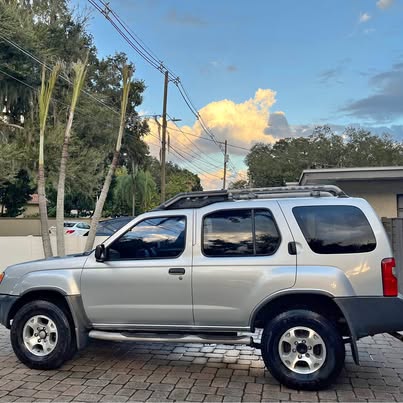
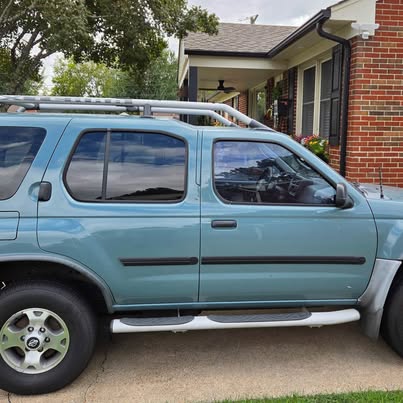
The name came from the XTERRA off-road triathlon series Nissan sponsored, and unlike a lot of lifestyle marketing, the hardware broadly matched the claim. The first-generation car is a Frontier pickup with a wagon body, part-time four-wheel drive with a proper low range, a live rear axle on leaf springs, torsion-bar front suspension, and a raised roof over the rear seats that gave it its stepped, stadium-seating profile. That raised roof was not decoration: the rear bench sits higher than the front seats, rear headroom is generous, and the shape identifies an Xterra from fifty yards.
The second generation kept the stepped roof and the tailgate bulge for a first-aid kit, but grew in every dimension and moved to Nissan's F-Alpha frame, shared with the Frontier, Pathfinder, Titan and Armada. One engine replaced three, power rose by half again, and an Off-Road trim, later renamed PRO-4X, added a locking rear differential, Bilstein dampers, skid plates and hill-descent control. It is a more capable and more comfortable vehicle. It also carries the single most destructive fault in this guide, the radiator and transmission cooler failure covered in the problem areas section, and no buyer of a 2005 to 2010 automatic should read any other section first.
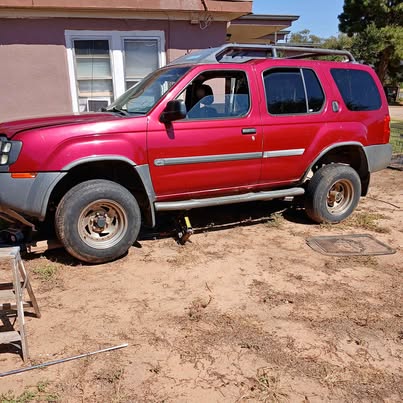
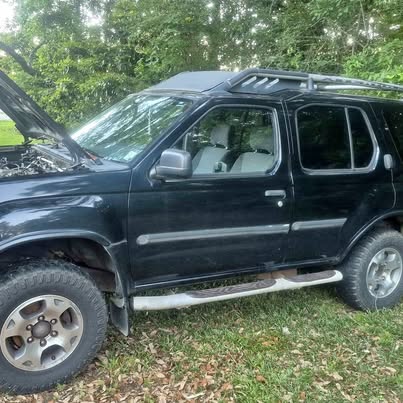
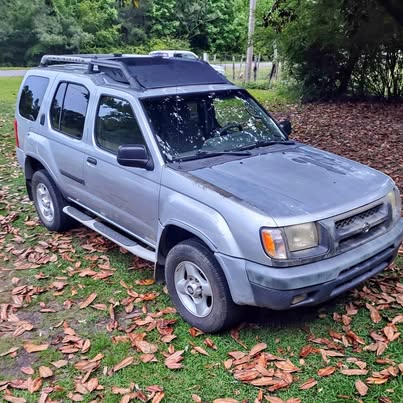
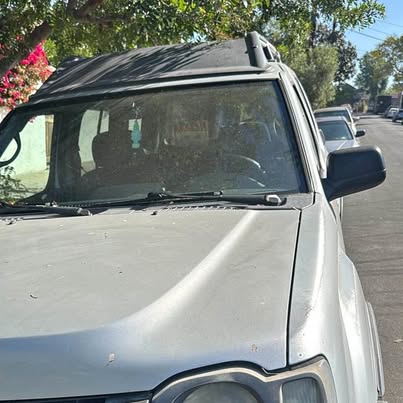
Why buy one now? Because the Xterra does most of the work of a Toyota 4Runner of the same year without the premium that badge now commands, which is why it became a default recommendation for overlanders, rural buyers and anyone needing a winter vehicle that is not a crossover. The cars on this site illustrate the bottom of the market: the store currently tracks six Xterras, five for sale and one sold, all first-generation cars from 2000 and 2002, all sourced from Facebook Marketplace. That small, early-car sample is not the shape of the national market, which is dominated by second-generation cars, but it shows where the cheapest entry point lies.
The Xterra was discontinued after 2015 with no direct replacement in North America, as buyers moved to crossovers and a heavy framed vehicle grew expensive to keep compliant. Nothing that replaced it does the same job, which is why good PRO-4X cars have firmed while ordinary examples remain cheap. Buy carefully: a cheap Xterra with a contaminated transmission or a rotten frame is not a bargain at any price.
The models
There are two generations and, within each, a ladder of trims that matters less for luxury than for hardware. On a first-generation car the badge decides the engine and whether a supercharger is involved. On a second-generation car every vehicle has the same engine, and the badge decides the off-road hardware and the axle. Read the trim as a hardware code, and always verify the hardware itself, because badges are cheap, tailgates get swapped, and twenty years of owners have misdescribed these vehicles in every possible combination.
| Model | Years | Engine | Output | Built | Character |
|---|---|---|---|---|---|
| XE 2.4 | 2000-2004 | 2.4 four (KA24DE) | 143 hp | Not reliably published by trim | The simple base car; light, slow, cheapest to run |
| XE V6 | 2000-2004 | 3.3 V6 (VG33E) | 170 hp | Not reliably published by trim | The ordinary first-generation Xterra most buyers meet |
| SE | 2000-2004 | 3.3 V6 (VG33E) | 170 hp | Not reliably published by trim | Better trim and equipment on the same V6 hardware |
| SE Supercharged | 2002-2004 | 3.3 V6 supercharged (VG33ER) | 210 hp | Not reliably published by trim | The quick first-generation car; premium fuel, more to feed |
| X, S and SE | 2005-2015 | 4.0 V6 (VQ40DE) | 261 hp | Not reliably published by trim | The second-generation ladder; same engine throughout |
| Off-Road | 2005-2010 | 4.0 V6 (VQ40DE) | 261 hp | Not reliably published by trim | Locker, Bilsteins, skids; the serious trail trim |
| PRO-4X | 2011-2015 | 4.0 V6 (VQ40DE) | 261 hp | Not reliably published by trim | The Off-Road successor and the collector pick of the range |
Nissan has not published a trustworthy production split by trim, so the built column says so rather than inventing figures. Total production across both generations is in the hundreds of thousands; rarity by trim is a matter of survival and specification, not tiny factory numbers. Treat any seller quoting a precise low figure for an ordinary trim with suspicion.
First generation, 2000 and 2001. The launch range was XE and SE. The XE could be had with the 2.4-litre KA24DE four-cylinder, almost always with rear-wheel drive, or with the 3.3-litre VG33E V6. The SE was V6 only and better equipped. Four-wheel drive, available on V6 cars, is the version most buyers want; a two-wheel-drive Xterra is a serviceable wagon but gives up the main reason to buy a framed Nissan instead of a crossover. The early cars have the plainer, squared-off front end, are the cheapest Xterras of all now, and are the most likely to have been worked hard and maintained on a budget.
First generation facelift, 2002 to 2004. For 2002 Nissan restyled the nose with rounder headlamps, reworked the dashboard, and introduced the supercharged VG33ER, identifiable by the functional bonnet scoop and badging. Power rose to 210 hp and torque to 246 lb-ft, at the cost of premium fuel and a supercharger that will eventually want a rebuild. Our own listings include both a 2000 car and a 2002 car: they look different at the front, but the frame, suspension and most of the inspection is identical. Do not pay a facelift premium for condition the car does not have.
Second generation, 2005 to 2015. The ladder became X, S, SE and Off-Road, with SE later dropped and PRO-4X replacing Off-Road for 2011 onward. All have the VQ40DE. All were offered with a five-speed automatic, and a six-speed manual was available on selected trims and years, most consistently on S, Off-Road and PRO-4X four-wheel-drive models. The manual car is the connoisseur choice for a reason beyond driving pleasure: it cannot suffer the radiator cross-contamination failure that destroys automatics, because there is no transmission cooler circuit in the radiator to leak. That fact should shape shortlists. Off-Road and PRO-4X cars add an electronically locking rear differential built around a Dana 44 variant axle, Bilstein dampers, skid plates, hill-descent control, larger all-terrain tyres and, on PRO-4X, roof-mounted off-road lamps. Check the locker engages, the skid plates are present, and the Bilsteins are not leaking.
The trap of the badge. Appearance and utility packages change nothing mechanically. A base car dressed with PRO-4X wheels, stickers and a roof basket is still a base car with an open rear differential. Verify the locker switch, the axle, the skid plates and the build plate before paying a PRO-4X price, exactly as you verify the supercharger by opening the bonnet before paying a supercharged price. A scoop with a normally aspirated VG33E under it means a swapped bonnet, a swapped engine, or a story that needs explaining.
Engines and gearboxes
The four-cylinder: KA24DE
The KA24DE is the engine almost nobody shopping for an Xterra thinks they want, and in the right circumstances it is the most sensible engine in this guide. It is a 2.4-litre, double-overhead-cam, sixteen-valve four-cylinder with an iron block and an alloy head, a design Nissan used across the 240SX, the Altima, the Frontier and a long list of work vehicles, which means parts, knowledge and used engines are everywhere. In the Xterra it produces 143 hp at 5,200 rpm and 154 lb-ft of torque at 4,000 rpm. Those figures were modest in a vehicle of this weight when the car was new, and they are modest now. A KA-powered Xterra is slow up a grade, busy at highway speed and not the tow vehicle of the range. What it gives back is simplicity. There is no timing belt to change, the engine uses a timing chain, there is no supercharger, the engine bay is roomy enough to work in, and fuel consumption is the least punishing of any Xterra, though least punishing is a relative term in a brick-shaped framed SUV.
Judge a KA24DE on oil consumption, chain noise and overheating, in that order. A rattle from the front of the engine at cold start that fades as oil pressure builds can be a worn tensioner or guides beginning; a rattle that stays is chain work, realistically $700 to $1,400 fitted. These engines can consume oil at high mileage without smoking dramatically, so read the dipstick against the service history rather than trusting a clean exhaust. Overheating is the real killer: coolant loss with no visible leak, bubbles in the expansion tank, or oil and coolant mixing point to a warped head and a head gasket job at roughly $1,200 to $2,000 with machining, which only makes sense on a vehicle whose frame justifies it. If your use is a cheap runabout in a mild climate, a sound KA car is honest transport. If you need to tow, climb or merge with confidence, buy a V6 and accept the fuel bill.
The 3.3 V6s: VG33E and supercharged VG33ER
The VG33E powered most first-generation Xterras and defines the ownership experience. It is a 3.3-litre, single-overhead-cam-per-bank, twelve-valve V6 with an iron block, producing 170 hp at 4,800 rpm and 200 lb-ft at 2,800 rpm. It does not rev with enthusiasm, but torque arrives low, it tolerates neglect better than most, and a well-kept example will run far beyond 200,000 miles. The defining service fact is that it drives its camshafts with a timing belt, not a chain, and it is an interference design: if the belt breaks, pistons meet valves and a cheap SUV becomes an engine rebuild. Nissan's interval is 105,000 miles. On a twenty-year-old vehicle the belt is either documented as done within interval, with an invoice naming the belt, tensioner and ideally the water pump, or it is due now, whatever the seller says. Budget $700 to $1,200 for belt, tensioner, idlers and water pump together, and do the pump while the front of the engine is apart because the labour overlaps. A seller who has genuinely done this work will have the invoice.
Two VG33 foibles follow from its layout and are covered as faults in the next section: the camshaft-driven distributor bearing wears, and the knock sensor, buried under the intake manifold, fails and is expensive in labour to reach. On the road, a healthy VG33E pulls steadily from low revs and does not tick loudly once warm. Exhaust ticking worst at cold start and fading as the engine warms is more often a cracked manifold or broken studs than valve gear, a distinction worth money, so listen cold, not after a seller has warmed the car for your arrival.
The supercharged VG33ER, offered from 2002, adds an Eaton M62 Roots-type supercharger and raises output to 210 hp at 4,800 rpm and 246 lb-ft at 2,800 rpm. It requires premium fuel. It transforms the car from adequate to genuinely willing, particularly for towing and at altitude. The costs are real: fuel consumption worsens, a supercharger rebuild or exchange unit is realistically $800 to $1,800 before fitting, and the knock sensor matters even more because the management pulls timing back sharply when it cannot trust the knock signal, leaving owners chasing a power loss that is actually a protective strategy. A supercharged car that feels no quicker than a standard V6 has something wrong, most often knock sensor, boost control or a tired supercharger. Never buy one on a warm engine and a short drive: cold start, a full-load pull, and a listen for whine turning to rattle are the tests that sort it.
The 4.0 V6: VQ40DE
The second generation has one engine, a good one with two specific weaknesses. The VQ40DE is a 4.0-litre, double-overhead-cam, twenty-four-valve V6 with an alloy block and heads, derived from the VQ35 and stroked for truck duty, producing 261 hp at 5,600 rpm and 281 lb-ft at 4,000 rpm. It is stronger than either first-generation V6 everywhere, smoother, and makes the later car a confident tow and highway vehicle. It drives its camshafts by chain, so there is no belt interval, but the chain system is the first weakness. On 2005 to 2010 cars in particular, premature wear of the secondary chain guides and tensioners, linked to chains with sharp link edges cutting into the plastic guides, produces a supercharger-like whine that rises with engine speed, often from around 60,000 miles onward. Left alone, the guides wear through and the chains run metal to metal. The fix, chains, guides and tensioners with the front of the engine stripped, is realistically $1,800 to $3,200 at a shop. Listen for it cold and warm, bonnet open, engine revved gently. A whine that tracks revs exactly is this until proven otherwise, not an alternator and not a characteristic.
The second weakness is not in the engine but in the radiator in front of it, and it destroys the automatic transmission. That is the SMOD failure, given its own treatment in the next section. Judge a VQ40DE on cold-start chain noise, oil consumption, catalyst codes and overheating evidence. These engines eat catalytic converters when misfires have been ignored, and a catalyst code can be a $900 to $1,800 per bank conversation for quality parts fitted. A healthy VQ idles almost silently, pulls hard to the red line, and shows no whine and no warning lights a seller explains as a sensor that just needs clearing. Clearing a code does not clear the fault, and a code reader in your pocket is standard equipment for inspecting one.
Gearboxes, transfer cases and drive
First-generation cars use a five-speed manual or the four-speed RE4R01A automatic, a conventional Jatco torque-converter box with a sound reputation when its fluid has been changed. Second-generation cars use a six-speed manual or the five-speed RE5R05A automatic, also a Jatco design, and the transmission destroyed by SMOD when the radiator cooler lets go. On any automatic, the fluid tells the story: it should be red to reddish-brown. Dark brown, burnt-smelling fluid means a hard life. Pink, opaque, strawberry-milkshake fluid means cross-contamination and a transmission being destroyed, and the inspection stops there until you have priced a transmission. Shifts should be firm and free of flare, and engagement of drive and reverse should be prompt without a thump. A manual should engage every gear cleanly, with second-gear synchromesh first to show wear, and a clutch that bites mid-travel without judder or slip under load.
Four-wheel-drive Xterras use a part-time system with two-wheel drive, four-wheel drive high and low range. It must not be used in four-wheel drive on dry pavement, where wind-up makes the steering fight and the tyres chirp, a behaviour sellers sometimes present as a fault and sometimes as normal character. Test it on gravel or dirt, engage low range, and listen for chain noise or jumping out of gear. Front hubs on first-generation cars can be automatic or manual locking, so establish what is fitted and that both sides work. A tow package car should have the correct receiver, wiring and, on automatics used for towing, an auxiliary transmission cooler, which on a second-generation car also changes the SMOD calculation, so inspect exactly how it has been plumbed.
Problem areas
Every Xterra you will look at is between ten and twenty-six years old, was bought by people who intended to use it hard, and has usually passed through at least one ownership that maintained it on price. That makes the inspection a sorting exercise between wear you can price and damage you cannot undo. Work through this section in order: the second-generation transmission failure first, because it alone can exceed the value of the vehicle, then the first-generation belt and manifold issues, then the chassis and body issues both generations share. Our current brief carries no photo-note aggregates for this model, so no incidence figures are claimed here; the failures described are the documented patterns for the model, and your job is to test for each one on the car in front of you.
SMOD: the radiator and transmission cooler failure, 2005 to 2010 automatics
This is the centrepiece of Xterra buying and the reason the second-generation automatic has a reputation out of proportion to the rest of the vehicle, which is largely strong. SMOD stands for strawberry milkshake of death, the name owners gave to the fluid the failure produces, and the name is a diagnostic tool: once you have seen the colour and consistency described, you will recognise the failure in seconds.
The mechanism. On an automatic second-generation Xterra, transmission fluid is cooled by a heat exchanger built into the bottom tank of the radiator. Coolant surrounds the exchanger on one side of a metal wall and transmission fluid passes through it on the other. On radiators fitted to roughly the 2005 to 2010 model years, that wall can crack, a defect Nissan faced extended warranty action and extensive owner litigation over. The two fluids then mix in both directions. Coolant in an automatic transmission is catastrophic and fast: it attacks clutch friction material, degrades seals, corrodes valve body components and destroys the fluid's ability to lubricate and transmit hydraulic pressure. The transmission shudders, flares, slips and overheats, and by the time symptoms are obvious while driving, the internal damage is usually already done. Transmission fluid in the coolant coats the radiator and cooling passages, reduces cooling efficiency and leaves an oily pinkish residue in the expansion tank.
The strawberry-milkshake test. Do this before you test-drive any 2005 to 2010 automatic, and do it cold. Open the radiator cap on a cold engine only, never a hot one, and look at the coolant and the underside of the cap. Healthy coolant is translucent and you can see through it. Contaminated coolant is pink, opaque and thickened, the colour and consistency of a strawberry milkshake. Check the expansion tank for the same opacity and an oily film. Then check the transmission fluid. The RE5R05A dipstick is secured by a bolt on many installations, so bring the socket or ask the seller to release it, and read the fluid on a white paper towel. Healthy fluid is red and translucent; contaminated fluid is pink, milky and opaque, identical to what is in the radiator because it is literally the same mixture. Either location showing milkshake means contamination has occurred. There is no mild case worth gambling on at retail money, because the sample tells you mixing has happened, not how much clutch material has already been lost. Ask directly whether the vehicle has ever had a radiator failure, a transmission shudder or a rebuild, and ask for the invoice. A car with a documented replacement transmission and new radiator, fitted after a failure and flushed properly, can be a rational buy. A car currently showing milkshake is a transmission rebuild plus radiator plus flushing, realistically $3,500 to $6,000 all-in, and should be priced as a project or walked away from.
The years and the radiator identity. The risk concentrates in the 2005 to 2010 model years with the original or an early-pattern replacement radiator. Later cars, broadly 2011 onward, had a revised design and are not known for the same failure rate, but not known is not immune on a fifteen-year-old vehicle with an unknown replacement radiator in it. What matters is the radiator actually in the vehicle: look for its part number label, note evidence of replacement, and ask for the invoice. A documented recent revised radiator, fitted as prevention on a car whose fluids are clean, is the strongest position a buyer of an at-risk year can be in. A car still on an original radiator in the risk years, with clean fluids today, is not contaminated, but its first job is already decided.
The bypass versus replacement decision. Owners have two preventive routes. The bypass reroutes the fluid lines so fluid no longer passes through the radiator cooler at all, running only through the external air-to-oil cooler. It is cheap, typically $30 to $150 in hoses and fittings plus an hour or two of labour, and it eliminates cross-contamination completely because the two fluids no longer share a component. Its costs are functional. The radiator cooler does two jobs: it cools hot fluid and warms cold fluid to operating temperature in winter, so a bypassed vehicle in a cold climate can shift harshly when cold, and a bypass relying on a small factory external cooler can under-cool the transmission when towing in hot weather. Better bypass installations add a generously sized aftermarket external cooler. The replacement route fits a new, revised-design radiator and keeps the factory plumbing as designed, realistically $600 to $1,200 fitted, preserving both warming and cooling while removing the defective component. For a vehicle you intend to keep, tow with, or use in real winters, replacement is the better engineering answer. For a cheap trail vehicle in a warm climate, a properly executed bypass with an adequate external cooler is defensible, provided it is disclosed and neatly plumbed. What is not defensible is doing nothing on an original radiator in the risk years and hoping.
Manual cars and later cars. A six-speed manual second-generation Xterra has no transmission fluid circuit through the radiator and cannot suffer this failure. That immunity is a major part of the manual car's value and should be stated plainly to any buyer cross-shopping the two. On 2011 to 2015 automatics, still inspect the fluids exactly as described, because radiators get replaced with unknown parts, old stock exists, and the test costs you two minutes and a paper towel.
First-generation engines: belt, manifolds, distributor and knock sensor
The VG33E timing belt is covered in the engines section and repeated here because it is the first pricing item on any first-generation viewing. No invoice, belt due. An interference engine with an unknown belt is not a small service item to mention at the end of a negotiation, it is the negotiation, at $700 to $1,200 fitted with the water pump. While the front of the engine is apart, front crank and cam seals are cheap insurance against oil leaks that otherwise require the same strip to reach.
Exhaust manifolds crack on VG33 cars, particularly the right-hand manifold, and their studs corrode and snap. The symptom is ticking from the engine bay loudest at cold start under load, quietening as the manifold expands and partially seals its own crack. Confirm it cold. Replacement with studs and gaskets runs roughly $600 to $1,400 a side depending on how many studs break. This is not usually a walk-away fault. It is a price fault, and an emissions fault in jurisdictions that test for exhaust leaks.
The distributor on VG33 engines wears its bearing and its internal sensor degrades with heat. Symptoms are hot-start failure, a stall once fully warm that restarts after cooling, a flickering tachometer, and eventually a no-start with no spark. A quality replacement is $250 to $500 in parts plus fitting and timing; cheap unbranded units have a poor reputation. The myth to correct: a VG33 that stalls warm is not automatically a fuel pump car. Test spark before buying a pump.
The knock sensor sits under the intake manifold in the valley, a cheap part in a place requiring intake removal to reach, which turns it into a $600 to $1,200 labour-led job. Failure sets a code, commonly P0325 or P0328, and the management retards timing protectively, leaving a normally aspirated car flat and gutless and a supercharged car feeling as though the supercharger has been removed. Some owners relocate the sensor to an accessible bracket, which restores access but changes its ability to hear true knock; know if a car has been modified this way and judge it as a modification, not a factory repair. On any VG33 viewing, a code check for knock sensor codes plus a full-load drive is mandatory.
Fuel delivery faults complete the first-generation list. The fuel sending unit and its connector at the tank corrode, a problem significant enough to have been subject to recall action on certain years in road-salt states, giving an erratic or dead gauge and in worse cases pump power loss. Test the gauge against known fuel added, ask about recall completion, and look underneath at the tank straps and filler neck. A pump and sender job is $400 to $900 fitted, more if the tank or lines need renewal.
Second-generation engines and cooling beyond SMOD
The VQ40DE timing chain guide wear described in the engines section belongs here as a priced fault: a rev-tracking whine on a 2005 to 2010 car is a $1,800 to $3,200 chain, guide and tensioner job and it should come straight off the asking price or be documented as done with an invoice listing the parts. Do not accept an additive, a thicker oil or a statement that they all do that. They do not all do that. A quiet VQ40 is quiet.
Catalytic converters fail on high-mileage VQ40 cars, often as the downstream result of misfires, oil consumption or rich running that was driven on for months. Codes for catalyst efficiency below threshold, rattling from a broken substrate, and a sulphurous smell under load are the signs. Because the front converters are integrated with or close-coupled to the manifolds on these installations, parts quality matters and cheap converters have short lives. Budget $900 to $1,800 per bank fitted for quality parts and treat a car needing both banks plus the upstream cause fixed as a serious negotiation. The upstream cause is part of the job: fitting new converters to an engine still misfiring is buying the same failure twice.
Cooling systems on both generations suffer ordinary age: radiator seams weep, water pump bearings develop play, thermostat housings leak, heater hoses harden, and on second-generation cars the plastic heater hose inlet fittings become brittle and can break, dumping coolant quickly. Any Xterra that has overheated needs the reason established, not just the gauge watched on a short drive. Check the coolant for oil and the oil for coolant on every car, not only the SMOD-risk automatics.
Chassis, frame, suspension and steering
An Xterra frame is strong and it still rots, particularly where roads are salted, or on vehicles used off-road and put away muddy. Corrosion attacks from inside the rails as well as outside, around spring hangers, crossmember junctions, body mounts and the rear rails. Surface scale is normal and treatable. Perforation, layered flaking, soft metal under a screwdriver prod with permission, and holed spring hangers are structural and should end the viewing unless you are buying a parts vehicle at a parts price. Check around the fuel tank, the spare wheel carrier and the body mounts, whose rubber perishes and whose bolts seize. Frame repair is more feasible than on a unibody, but it is priced per car and rarely makes sense on an ordinary example when a solid one exists. A lift inspection, $100 to $200, is the best money in the whole purchase, and a seller who refuses one on a twenty-year-old framed truck has given you information.
First-generation front suspension is independent with torsion bars. Bars sag and get wound up until no adjustment is left, ball joints wear, bushings perish, and the centre link and idler arm develop play that presents as a vague, wandering front end no alignment will cure. Rock each front wheel, feel for play, and judge whether the vehicle tracks straight or hunts. A front-end refresh is $800 to $1,800 plus alignment. Rear leaf springs on both generations flatten, lose a leaf or crack at the eye; a vehicle sitting low at the rear, leaning, or bottoming with a bang is describing springs and dampers, not character. Replacement leaf packs are $400 to $900 in parts plus fitting, and seized shackle bolts can turn a simple job into cutting and fabrication on a salt-belt car.
Second-generation rear axles deserve a specific check. Cars with the Dana 44 variant axle, principally Off-Road, PRO-4X and manual cars, are known for axle seal leaks driven in part by a clogged axle breather that pressurises the housing and pushes oil past the seals onto the brakes. Look inside each rear wheel for oil, ask if the breather has been cleaned or relocated, and budget $500 to $1,100 for seals, bearings and brake work if a side is wet. The standard C200 axle is not immune to seal and bearing wear either. Brakes are conventional and cheap in parts; what you are judging is neglect, seized calipers, scored discs, perished hoses and a parking brake that will not hold on a slope. A full hydraulic and friction refresh is $800 to $1,600 at a shop.
Body, interior and electrics
Body corrosion follows the water and the stone chips. Check door bottoms, rear arches, sills, the tailgate bottom and hinges, the roof around the rack mounts, the windshield surround and, on first-generation cars, the seams around the stepped roof. Faded plastic cladding is cosmetic. Bubbling under paint on a sill or arch is not, because it usually marks metal thinning from behind. Run a magnet wrapped in cloth over arches and lower doors to find filler, and check panel gaps and overspray for accident damage. A bent frame horn or repaired core support changes the value and must be priced as such.
Inside, the interior is durable rather than luxurious, which favours the buyer. Driver's seat foam collapses, fabrics split at the entry bolster and headliners sag, none of which stops the vehicle working. What matters is function: heater and air conditioning, blower on all speeds, every window and lock, the four-wheel-drive selector and its confirmation light, the rear wiper, and on second-generation cars the locker switch, hill-descent function and every warning light proving out at key-on and extinguishing after start. Air conditioning that does not blow cold is most often a leak at the condenser, hoses or compressor seals, $400 to $1,200 depending on component. Do not pay a with-air-conditioning price for a promise that it just needs a recharge. If it held gas, the seller would have done it.
Electrically, both generations fail in ordinary ways: alternators, starters, batteries, corroded ground straps causing intermittent faults, window regulators, and on second-generation cars the IPDM, the intelligent power distribution module, whose relay failures can cause stalling or a no-start that mimics a fuel fault. A car that stalls and restarts is not a car to buy on trust; assume professional diagnostic time at $150 to $300 before any part is bought. Water leaks from windshield seals, roof rack fixings and door membranes wet the carpets, and wet carpets mean the floor and body mounts are living damp. Lift every carpet you can and smell the vehicle shut up in the sun. A musty Xterra is a leaking Xterra until proven otherwise.
How to inspect one
Allow ninety minutes, arrive when the engine is cold, and bring a torch, a code reader, a white paper towel, a magnet wrapped in cloth, a tyre pressure gauge and the socket needed to release a bolted transmission dipstick on a second-generation automatic. If the car passes your inspection, pay for a lift inspection before money changes hands. On a framed vehicle of this age, that lift hour is where the purchase is actually decided.
- Start with the paperwork and the identity. Match the vehicle identification number on the title to the dashboard plate and the door jamb label. Establish the generation and trim from the vehicle itself rather than the advertisement, and ask for invoices by name: timing belt on a VG33 car, radiator and transmission work on a second-generation automatic, chain work on a VQ40 car. A dated invoice file changes the value of the car. Oil change receipts answer none of the three big questions.
- Do the strawberry-milkshake test first on any 2005 to 2010 automatic. Cold engine, radiator cap off, coolant and cap inspected, expansion tank inspected, transmission fluid on the dipstick wiped onto the white towel, exactly as described in the SMOD section. Pink and opaque in either system ends the normal inspection. Either walk away, or reprice the vehicle openly as a transmission rebuild plus radiator plus flushing, with the seller understanding that is what you are doing and why.
- Cold start and listen. Insist the engine has not been run that day. A VG33 car should start without excessive cranking and without a cloud of smoke. Listen for exhaust manifold ticking while it is still cold, because the crack seals as it warms and the fault hides. A VQ40 car should be listened to for the rev-tracking whine of worn secondary timing chain guides, at idle and as you raise the revs gently with the bonnet open. A KA24 car should be listened to for front-of-engine chain rattle that persists beyond the first seconds. Note any warning light that fails to illuminate at key-on, which can mean a bulb or a circuit has been tampered with, as carefully as any light that stays on.
- Read every fluid. Engine oil, coolant, brake fluid, power steering fluid and, on an automatic, transmission fluid colour, level and smell. Smell the oil for fuel and look at the coolant for oil. A vehicle whose fluids are all at the wrong level and colour has been maintained by nobody, and every other answer the seller gives should be discounted accordingly.
- The belt question on a first-generation V6. Ask for the timing belt invoice and read its date and mileage against the 105,000-mile interval. No invoice means the belt is due, as the problem areas section explains, and the price includes the belt, tensioner and water pump job in full. In the engine bay, check the manifolds for soot tracks marking a leak and note every hose and belt you can see.
- Underneath, on a lift if at all possible. Torch along both frame rails, prod spring hangers, crossmember junctions, body mounts and the rails behind the rear axle, and distinguish surface scale from layered flaking and perforation. Look at the fuel tank and straps, the spare wheel carrier, the brake and fuel lines, and the inside of each rear wheel for the axle seal leak described in the chassis section. A uniform coat of fresh black underseal over everything on a vehicle being sold that week is a question, not an answer.
- Suspension and steering by hand. Rock each front wheel for ball joint, bearing and steering play. On a first-generation car, remember the centre link and idler arm before condemning a steering box. Check ride height at all four corners, look along the rear leaf springs for a flattened or broken leaf, and bounce each corner to judge the dampers. Price what you find from the chassis section, do not wave it away as age.
- Body, doors and tailgate. Run the magnet over sills, rear arches and lower doors. Open every door and the tailgate, feel along door bottoms for bubbling, lift the carpets for damp, and check roof rack mounts and the windshield surround. On a car sold as a PRO-4X or as supercharged, verify the hardware now, locker switch and axle, skid plates, supercharger under the bonnet, because this is where badge claims are settled by looking.
- The test drive, at least twenty minutes. Start on a loose surface if one is available and engage four-wheel drive high and low, listening for transfer case noise under load. On the road, an automatic should shift firmly without flare, shudder or a long delay into reverse, symptoms that on a second-generation car send you straight back to step 2 and the SMOD section. A manual should take every gear cleanly; test second-gear synchromesh and clutch slip under load in a high gear. Brake hard from speed, feel for pull and judder, and hold the vehicle on a slope with the parking brake alone.
- Heat, load and electrics at the end of the drive. With the engine fully hot, let it idle and watch the temperature gauge, then work the heater and blower on every speed and the air conditioning for genuinely cold air. Work every window, lock, light, wiper and washer, and on a second-generation car engage the locking differential on a loose surface. A vehicle that overheats or stalls hot is describing the distributor, cooling and IPDM faults from the problem areas section, and none is priced on a seller's reassurance.
- Plug in your code reader last, after the drive. Read stored and pending codes, not only the ones lighting the dashboard, looking specifically for knock sensor codes on a VG33 car, catalyst codes on a VQ40 car, and transmission codes on any automatic. A vehicle whose codes have just been cleared will often show incomplete readiness monitors, which tells you clearing happened. Match every code to a priced job before you offer.
- Decide on condition, not on story. Total the priced faults you actually found, belt, manifolds, chains, converters, springs, brakes, air conditioning, against the asking price and the next best car you can buy. The Xterra rewards buying the solid frame and the documented big jobs. It punishes paying full money for a story about work there is no invoice for.
Values
The build appends the current market figures for this model beneath this guide, computed from the listings and recorded sales the site tracks, and those figures are where you should take your numbers from. This section teaches you how to read them, because the Xterra market is one where a single average or median figure, read on its own, will mislead you more than it helps you.
Start with the condition spread, which is wider than on almost any comparable vehicle. At the bottom sit parts vehicles, non-runners, cars with a contaminated or failed transmission, and vehicles with perforated frames. They are not cheap transport, because the repair that makes them transport costs more than the difference to a running car. Above them sit honest working vehicles with high mileage, cosmetic wear, deferred small jobs and a solid frame. This is the heart of the market and where value is best, provided the big documented jobs for the generation, belt, radiator prevention or chain work, have been done with invoices or are priced in. At the top sit the cars the market has begun to collect rather than merely use: late PRO-4X cars, manual second-generation cars, and clean supercharged first-generation cars. The PRO-4X premium is a hardware premium, paid for the locker, axle and suspension, and it survives because converting a standard car costs more than the difference. The manual premium is a risk premium as much as a driving one, because the manual car is immune to the best-known catastrophic failure in the range.
Geography moves the price as much as specification. A salt-belt vehicle with a thinning frame is worth materially less than the same vehicle from a dry state, because the frame decides whether every other repair is worth doing. Our current listings illustrate how local the cheap end is: the six cars the store tracks come from Alabama, Texas, California, Florida and Virginia, all early first-generation cars, usually bought within a short drive of home after a physical inspection. Transporting a cheap Xterra far rarely makes sense. Transporting a rust-free, documented late PRO-4X can.
Asking and achieved prices diverge predictably. Sellers of ordinary cars ask for good-example money and negotiate down toward condition over weeks. Sellers of good PRO-4X and manual cars know the audience is small but informed and concede less. Auction results reward presentation, documentation and underside photographs, and punish any hint of transmission trouble or frame corrosion severely, because the informed bidder prices the worst case. Compare like with like on generation, transmission and trim before comparing mileage: a first-generation automatic and a second-generation manual are effectively two different markets sharing a name.
The project-versus-driver gap is the final lesson. A transmission-failed second-generation car is not worth a small discount off a driver. It is worth a driver price minus the full retail cost of the transmission work, the radiator, the flushing and the diagnostic risk, and sellers who price it otherwise are asking the buyer to subsidise the failure. The same logic applies in miniature to a first-generation car with an undocumented belt and two ticking manifolds. Add the jobs at retail. If the arithmetic does not work, buy the better car, because in this market the better car is almost always the cheaper one by the end of the first year.
Parts and ownership
The Xterra is one of the easier framed SUVs of its era to keep, because it shares so much with high-volume Nissan trucks. First-generation parts interchange widely with the Frontier and, for the VG33 engine, with other applications of the same engine family. Second-generation parts interchange with the Frontier and Pathfinder of the same years and, for many frame components, with the wider F-Alpha family. A vehicle built in the hundreds of thousands in Tennessee is not one you wait months for a service part for.
Easy and cheap: service filters, plugs, brake discs, pads, calipers and hoses, dampers, ball joints, steering links, bushings, water pumps, alternators, starters, exhaust sections in standard form, leaf springs and shackles, radiators including the revised second-generation design, and glass rubbers and door seals. Most of this is order today and fit this weekend at prices close to ordinary modern truck money, from Nissan, from the major aftermarket brands, and from a healthy used supply.
Harder and dearer: a quality rebuilt automatic transmission after a SMOD failure, realistically $2,800 to $4,500 for the unit before fitting, radiator and flushing; VQ40 chain, guide and tensioner sets fitted at $1,800 to $3,200; catalytic converters of a quality that lasts, $900 to $1,800 per bank fitted; a rebuilt VG33ER supercharger at $800 to $1,800 before fitting; locking differential and Dana 44 variant axle parts specific to Off-Road and PRO-4X cars; and rust-free tailgates and panels in the correct colour. None of this is unobtainable. All of it rewards buying a car that does not need it.
Running costs. Fuel is the headline and there is no honest way to soften it. A first-generation V6 returns figures in the mid to high teens per gallon in mixed use and worse in town or towing. The supercharged car is thirstier and wants premium. The second-generation car is a little better on a highway run and a little worse everywhere else. Even the four-cylinder car is not economical in any absolute sense. Budget for truck fuel consumption or buy a different vehicle. Servicing is conventional: oil and filter every 5,000 miles or so at this age, transmission fluid changed on a documented schedule with the correct specification, transfer case and differential oils renewed, coolant kept fresh, which on a second-generation car is also part of radiator health, and on a VG33 car the belt treated as a calendar item as well as a mileage item, because a belt that has sat for a decade is aged even at low mileage. Insurance is generally in line with other SUVs of similar value, with agreed-value cover worth discussing for a good PRO-4X or supercharged car.
Ownership reality. Expect the first year to cost more than every year after it. Catching up deferred maintenance on an honestly bought Xterra, fluids throughout, brakes renewed where needed, a belt or radiator prevention job depending on generation, aged tyres, and the small electrical and seal jobs every old truck carries, realistically runs $1,500 to $4,000 at independent rates, less if you do your own work, which these vehicles reward because access is good and the workshop knowledge base is deep. A sorted Xterra is a daily vehicle, a winter vehicle, a modest tow vehicle and a trail vehicle in one purchase. An unsorted one is all four jobs arriving at once.
Which one to buy
- The all-rounder: second-generation S or SE automatic, 2011 to 2015, with a documented radiator history. Strong VQ40, civilised cabin, later radiator design, in the trim that costs least. Verify the fluids and the frame and you have the most Xterra for the money.
- The safest buy: second-generation six-speed manual, any year. Immune to SMOD by design and nicer to drive. Pay a fair premium for a good one. It is cheaper than a transmission.
- The trail pick: Off-Road or PRO-4X, verified by hardware. Locker, Dana 44 variant axle, Bilsteins and skid plates, confirmed on the vehicle, not just on the badge. The PRO-4X is also the car most likely to hold its value.
- The value buy: first-generation VG33E, 2002 to 2004 facelift, four-wheel drive, with a documented timing belt. Simple, tough and cheap to keep by framed-SUV standards. The belt invoice is the whole negotiation.
- The character buy: supercharged SE, 2002 to 2004. The quickest first-generation car, bought with premium fuel, supercharger health and the knock sensor all priced in, and only after a cold start and a full-load drive.
- The honest runabout: KA24DE four-cylinder, rear-wheel drive. Buy it knowingly for simple local work in a mild climate, at a four-cylinder price. Do not buy it to tow or to climb.
- The one to avoid at retail money: any 2005 to 2010 automatic showing pink fluid, or priced as though its original radiator were not a known risk. Either the prevention or the repair is documented, or the price reflects the full job.
And the rule that overrides all of the above: buy the solid frame and the documented big job, in the generation and transmission you actually want. Transmissions can be rebuilt, belts and chains fitted, manifolds replaced, all at prices you can plan for. A rotten frame ends the vehicle's life, and an undocumented failure history on a second-generation automatic is a bill already written, waiting for your name on it.
Listed now
On Classic Listings today: 3 cars are listed here; 0 for sale and 3 marked sold; sold cars average $3,767.
See the 3 Xterra cars currently listed.
The market — recorded sales
Recorded-sale figures: 3 recorded sales · median $3,600 · range $500 to $7,200 (Nov 2024 – Nov 2026)
Based on 3 recorded sales — too few for a benchmark value.
| Date | Car | Sale price | Source |
|---|---|---|---|
| Nov 14, 2026 | 2001 Nissan Xterra SE Sport Utility 4D | $500 | |
| Apr 6, 2026 | 2002 Xterra | $3,600 | Cars & Bids |
| Jan 26, 2026 | 2003 Xterra | $7,200 | Cars & Bids |
Dates are the sale date where the source states one; otherwise the date the sale was recorded here.