
Pontiac Star Chief Convertible buyer's guide
Pontiac Star Chief Convertible -- the model's own buyer's guide: variants, values and what to check.
Years listed: 1956-1965 · Series: Full Size
Overview and history
The Star Chief is the Pontiac that carries the division from the flathead era into the Wide-Track era, and you shop for one across three distinct cars wearing one name. From 1954 to 1958 it is Pontiac's flagship trim and then its flagship line, the car that launches the division's overhead-valve V8. From 1959 to 1964 it is the long-wheelbase luxury Pontiac, sitting above the Catalina and below the Bonneville, built around the 389 and the Wide-Track chassis. From 1965 to 1966 it is a handsome, well-equipped sedan line living in the Bonneville's shadow, renamed Star Chief Executive for its final year and then replaced by the Executive. Same badge, three personalities, and the inspection logic differs for each, so settle which car you are looking at before you settle anything else.
The name arrives for 1954 on the top of the Chieftain range: a Star Chief rides a longer wheelbase than the standard Chieftain, carries more chrome, a richer interior and, in its first year only, the old 268-cubic-inch straight-eight. That first year is a bridge car and the market treats it as one. The car the name is really about arrives in 1955, when Pontiac replaces the flathead with the Strato-Streak V8, an all-new overhead-valve engine that grows relentlessly over the next four years — 287 cubic inches, then 317, then 347, then 370 — while the styling turns to the Silver Streak era of side spears and, for 1957, the fuel-injected Bonneville that starts life as a Star Chief sub-series. If you want the fifties Star Chief at its most collectible, you are in this window, and the convertibles and two-door hardtops are the cars everyone else wants too.
The second act opens in 1959. Pontiac widens the track by roughly five inches, splits the grille, drops the body over the wheels and calls it Wide-Track, and the whole division's fortunes turn. The Star Chief settles into a defined slot: Catalina mechanicals and the 389 V8, a longer 124-inch wheelbase shared with the Bonneville, plusher trim and interiors, and a body-style range that narrows towards sedans and hardtops as the Bonneville takes the convertibles and the glory. This is the connoisseur's Star Chief — the same engineering that makes a 1959 to 1964 Bonneville desirable, in a car the market has always priced a step behind it.
The third act, 1965 and 1966, brings the stacked-headlamp, coke-bottle restyle and the Turbo Hydra-Matic gearbox, and quietly ends the story: for 1966 the car is badged Star Chief Executive, and from 1967 the Executive name replaces Star Chief altogether. A 1965 or 1966 car gives you the most modern driving experience of the three acts — the best gearbox, the strongest brakes, the easiest parts situation — in the least collectible wrapper, which is exactly the combination a value buyer exploits.
Correct the founding myth now, because it distorts prices. The Star Chief is not a Chevrolet with better trim, and it is not a cut-price Bonneville. It shares GM's B-body architecture and Fisher bodies with its sister divisions, but the engine is Pontiac's own — no Chevrolet, Buick or Oldsmobile V8 of this era interchanges with it in any meaningful whole-engine sense — and from 1959 its wheelbase and interior are its own proposition. Never let a seller price it off Bonneville comparables without the Bonneville equipment to match.
The pool you shop from today is thin and skewed, and this site's own store shows the shape of it: six Star Chiefs spanning 1955 to 1965 — two 1955 cars and one each from 1956, 1957, 1960 and 1965 — with automatics dominating, exactly as they do in the wider fleet. Four are currently for sale and two are recorded sold. Treat that as a snapshot of how these cars surface — a fifties car here, a sixties car there, long gaps between — rather than a market you can wait out. When the right year and body style appears in sound condition, the decision is about that car, not about the next one.
The models
Lay the range out by its three acts and the confusion disappears. Act one, 1954 to 1958: Star Chief begins as the flagship Chieftain derivative and becomes a full line, with two-door and four-door hardtops — called Catalina in this period, which is a body-style word, not yet a model — four-door sedans, a convertible, and the Safari wagons. Act two, 1959 to 1964: a sedan-and-hardtop luxury line on the 124-inch wheelbase, the convertible gone to Bonneville. Act three, 1965 to 1966: sedans and hardtops again, the range topped and then renamed by the Executive badge. Read the table with that structure in mind, and read the note under it before you quote any production figure back to a seller.
| Model | Years | Engine | Output | Built | Character |
|---|---|---|---|---|---|
| Star Chief (Chieftain flagship) | 1954 | 268 cu in straight-eight | 127 hp | A single bridge year; the minority of Chieftain-range production | The last flathead Pontiac flagship; a pre-war driving experience in a fifties body |
| Star Chief V8 line | 1955 | 287 cu in Strato-Streak V8 | 173–180 hp | The volume fifties car, across sedan, hardtop, convertible and Safari wagon | The first V8 flagship: modern engine, ball-joint front end, 12-volt electrics |
| Star Chief line | 1956 | 317 cu in V8 | 192–227 hp | Volume production; convertibles and hardtops a minority of it | The 1955 formula with more power and the Strato-Flight gearbox arriving |
| Star Chief line, incl. Bonneville sub-series | 1957 | 347 cu in V8 | 252–290 hp; Bonneville fuel injection 310 hp | Bonneville convertible: 630, one per dealer | The fifties peak: Tri-Power arrives, fuel injection makes headlines, styling at its richest |
| Star Chief line | 1958 | 370 cu in V8 | 255–310 hp | A recession-year range; Bonneville splits away as its own line part-way through the story | One-year styling, one-year parts headaches, strong engines |
| Star Chief (Wide-Track) | 1959–1960 | 389 cu in V8 | 245–348 hp | The volume luxury Pontiac of the Wide-Track launch years | Split grilles, X-frame, the 389 in its first and most flamboyant setting |
| Star Chief (Wide-Track) | 1961–1964 | 389 cu in V8; 421 optional later | 230–370 hp depending on tune and engine | Steady sedan-led production; hardtops the minority | The sober connoisseur car: Bonneville wheelbase, Catalina running gear, better value |
| Star Chief / Star Chief Executive | 1965–1966 | 389 cu in V8; 421 optional | 256–376 hp depending on tune and engine | The final two years; Executive badging replaces the name for 1967 | The most modern drive of the run and the easiest ownership, in the least hyped wrapper |
A note on the Built column, because this guide does not invent figures. Pontiac production survives in aggregate and by body style in ways that do not give a clean, verifiable per-trim count for most Star Chief years, and the numbers repeated in adverts vary too widely to print as fact. What is reliable is the ordering: sedans dominate every year, hardtops are the minority, convertibles exist only in the fifties line and are scarce, wagons are scarce in every year, and the 1957 Bonneville convertible's 630 is the one small figure that is genuinely documented because Pontiac built one per dealer. Verify any car's identity from its plates and stampings, never from a seller's rarity claim.
The 1955 and 1956 cars are the honest fifties buy. The 1955 brings the 287 V8, ball-joint front suspension and 12-volt electrics in one step, wrapped in the first of the Silver Streak-era bodies, with two-tone paint and the illuminated Indian-head bonnet ornament. The 1956 repeats the formula with the 317 engine and more chrome. Body styles run from the four-door sedan through the Catalina hardtops to the convertible and the two-door Safari wagon — Pontiac's answer to the Nomad, and now very scarce. A fifties Star Chief in a two-door body is a genuinely collectible car; the four-door sedan is the same engineering for notably less money and is the value route into the act.

The 1957 car is the fifties peak and priced like it. The 347 engine, available Tri-Power carburation and the one-year styling make it the year collectors name first, and the Bonneville convertible spun off it, with Rochester fuel injection and a 630-car run, is a museum-grade machine you will not meet in ordinary shopping. Judge ordinary 1957 Star Chiefs on their own merits and refuse to pay a Bonneville halo tax on a sedan. The 1958 car is the odd one: one-year-only styling and trim, a strong 370 engine, and a parts situation measurably worse than 1957's, because so much of the brightwork fits nothing else. Price that in.
From 1959 the range rationalises. The Catalina becomes the entry model on a 122-inch wheelbase; the Star Chief and Bonneville share the 124-inch wheelbase and the plusher interiors; the Star Chief offers four-door sedans, two-door and four-door Vista hardtops and the Safari wagon, and leaves the convertible to Bonneville. The 1959 and 1960 cars carry the flamboyant split-grille styling and the X-frame chassis; the 1961 restyle is slimmer; 1962 to 1964 cars are the most resolved of the act. Through all of it the proposition stays constant: the long-wheelbase ride and the good interior without the Bonneville's price or its convertible glamour.

The 1965 and 1966 cars close the range in the stacked-lamp body, the Turbo Hydra-Matic finally giving the big Pontiac a gearbox as good as its engine. For 1966 the car is the Star Chief Executive — check the badging and the paperwork agree, because sellers describe these cars both ways. There is no 1967 Star Chief: a car advertised as one is an Executive, and the difference matters to what you pay.
Engines and gearboxes
One engine architecture carries almost the whole story: Pontiac's overhead-valve V8, introduced for 1955 at 287 cubic inches and enlarged by bore and stroke changes until it reaches 389 cubic inches for 1959 and a 421 flagship option in the sixties. These are all the same basic block design, with the same strengths and weaknesses — but do not let anyone tell you the engines are interchangeable in a buying sense. A 287 car and a 389 car drive differently, cost differently to rebuild, and sit in different markets. Before the V8, there is one year of straight-eight, in its own subsection because it shares nothing with what follows.
The 268 straight-eight: 1954 only
The 1954 Star Chief's 268-cubic-inch flathead straight-eight is the last of a line Pontiac had built since the thirties: side valves, a long iron block and about 127 horsepower pushing a heavy car. In use it is turbine-quiet at low speed, pulls cleanly from idle, and runs out of breath exactly where a V8 is waking up. It is also a simple ownership proposition: no overhead-valve gear to wear, and a cooling system sized generously for the power it makes.
Its weaknesses are age weaknesses. The long head and block make head-gasket sealing a recurring theme, and a warped head on an engine this long is a machine-shop job, not a skim-and-go. The six-volt electrical system cranks slowly when hot. Parts support is thinner than for the V8s — the straight-eight world is a pre-war world of specialists and old stock. Budget a full professional rebuild in the $6,000–$9,000 range if the engine is tired, and understand that you will never recover it in the car's value; buy the best 1954 you can find, because a cheap one is the most expensive route to the same place.
The Strato-Streak V8s: 287, 317, 347 and 370, 1955 to 1958
The 1955 Strato-Streak 287 is a thoroughly modern engine for its moment: overhead valves with ball-stud rocker gear, hydraulic lifters and 173 horsepower with a two-barrel carburettor or 180 with a four-barrel. For 1956 the bore grows and you get the 317, rated from 192 to 227 horsepower. For 1957 the stroke grows to give the 347, from 252 horsepower up to 290 with Tri-Power, and the Bonneville's fuel-injected version makes 310. For 1958 the engine becomes the 370, 255 horsepower in cooking form and up to 310 with Tri-Power or injection. Every step is the same story: the basic block takes the enlargement easily, torque arrives early and stays late, and these engines pull a two-ton Pontiac with an ease the straight-eight never approaches.
In service the fifties V8s are tough, understressed engines whose enemies are heat, old oil and neglect rather than design. The cooling system is the first interrogation point: radiators were sized for period traffic, cores silt up over seventy years, and an engine that runs hot cooks its valve seals, its transmission fluid and eventually its head gaskets. The valve gear wears at the rocker balls and pushrod tips on engines that have missed oil changes, giving you a top-end tick that is wear, not adjustment, because the hydraulic lifters take up clearance automatically. Correct that myth when you meet it: a noisy hydraulic-lifter Pontiac is not asking for a valve adjustment, it is telling you about wear, low oil pressure or a collapsed lifter, and each is a diagnosis, not a tune-up.
Identity matters because swaps are common and invisible to a casual look. The engine number and code are stamped on a machined pad at the front of the right-hand bank, beside the water pump, and the code letters tell you the original application, year and transmission pairing. Read and photograph them before money moves: a 1957 Star Chief carrying a 389 is a fine driver and a misdescribed collectible, and you pay for it as the former. Pontiac Historical Services — PHS — can supply the factory build record for most cars of this era from the VIN, and on any high-value fifties car that document is the cheapest certainty you will ever buy.
The 389 and the 421: 1959 to 1966
For 1959 Pontiac bores the 370 out to create the 389, and the 389 becomes the defining American V8 of the next decade — the engine of the GTO as well as of every full-size Pontiac in this guide. In Star Chief service it is deliberately unstressed: a two-barrel version around 245 horsepower for 1959 and 1960, settling to the 230 to 283 horsepower range in the early sixties, and 256 horsepower in base 1965 form, with four-barrel versions up to around 325 horsepower. The 421, offered as the prestige option from the early sixties and in High Output Tri-Power form up to 376 horsepower, is the same architecture enlarged further, with four-bolt main bearing caps in its stronger versions. In a Star Chief a 421 is rare, desirable and frequently faked by badge and air cleaner alone — the engine code on the front pad settles it, always.
The 389's character is torque: a long, flat delivery from just off idle that suits the automatic gearbox and the long wheelbase perfectly. Its specific weaknesses are few and knowable. The timing chain drives the camshaft from a sprocket that on many sixties Pontiacs uses nylon teeth moulded over the metal gear; the nylon hardens, cracks and sheds teeth with age and heat, the chain goes slack, valve timing wanders and the debris falls into the sump. An engine with a rattling front cover at idle, unstable ignition timing on a strobe, or no record of a chain change is asking for the job: a timing chain and sprocket set is a $600–$1,100 fitted job, and it is cheap insurance against a jumped chain. The two-piece rope rear main seal weeps on almost every engine of the family — a few drops on the garage floor are normal for the design, a spreading puddle is not — and a modern replacement seal fitted during other work runs $500–$900 in labour-dominated cost. Pontiac V8s also run their water pump with a divider plate whose clearance to the impeller decides cooling efficiency; a car that overheats at idle but cools at speed often has plate clearance or a corroded plate, not a failed pump, and the fix is plates and adjustment at $250–$500 rather than a radiator.
Oil pressure tells you the bottom end's story: a healthy 389 shows strong pressure hot at cruising speed, and a gauge that sags at hot idle alongside a faint deep knock under load is worn bearings announcing themselves. A professional rebuild of a 389 runs $5,500–$9,500, which is why the engine's condition, verified by a compression test and an oil-pressure reading with a mechanical gauge, matters more than any other mechanical fact on a sixties car. Budget a compression and leak-down test at $150–$300 in a pre-purchase inspection and treat the results as the engine's verdict.
Carburation and the fuel-injection myth
Most Star Chiefs breathe through a single Rochester or Carter carburettor — a two-barrel on base engines, a four-barrel Carter AFB or Rochester 4GC on stronger ones — and these are well-understood, fully rebuildable instruments. A professional rebuild runs $350–$650, and the faults that send owners chasing ignition parts — hot-start flooding, a flat spot off idle, a hanging fast idle — are carburettor faults nine times out of ten: perished accelerator-pump leather, a sunk float, warped air-horn castings, and choke mechanisms seized in whatever position they last moved.
Tri-Power is the glamorous option: three Rochester two-barrels on a dedicated manifold, the centre carburettor doing all ordinary running and the outer pair opening at large throttle openings — by vacuum linkage on most years, mechanically on the last. Set up correctly it is reliable, economical at cruise and spectacular at full throttle. Set up badly, it floods, flat-spots and drinks fuel. The distinguishing checks are mechanical: the end carburettors' throttle plates must seal completely at idle — hold them to the light, because an end carburettor passing air leans the idle no adjustment will cure — and the linkage must open the ends fully without binding. A full Tri-Power system professionally rebuilt and set up runs $900–$1,600, and a correct setup on a car whose build record proves it left the factory with one adds real value; the same setup added later adds driving pleasure and almost nothing else, so pay accordingly.
Now the myth, corrected plainly: Pontiac fuel injection exists, on the 1957 and 1958 Bonneville only, using a Rochester mechanical system related to the Corvette's Ramjet. No Star Chief sedan, hardtop or wagon was factory-built with fuel injection, and the genuine Bonneville units are so rare and so often removed in period — many were replaced with carburettors by dealers when owners tired of the running costs — that a claimed injected Star Chief is a Bonneville, a conversion, or a mistake. Establish which before you value it.
Gearboxes: manual, Hydra-Matic in three forms, and Turbo Hydra-Matic
The standard gearbox across most of the run is a three-speed manual with synchromesh on second and third, column-shifted, with overdrive offered in the fifties as a rarely taken option. It is a sturdy, simple box whose faults are the usual ones — worn synchromesh showing as a graunch on fast changes into second, a clutch that is a $700–$1,200 fitted job, and column linkage bushes whose wear makes selection vague long before the box itself is tired. A four-speed manual appears on the sixties option lists and is vanishingly rare in a Star Chief; a claimed four-speed car needs its build record checked, because conversions from Catalina and Grand Prix donors are common. Almost every Star Chief you will ever see is automatic, in one of four forms, and knowing which form is in front of you is essential because they differ completely in behaviour, strength and rebuild cost.
The Dual-Range Hydra-Matic, in the cars through 1955 and in refined Strato-Flight form from 1956 to the early sixties, is the original GM four-speed automatic: a fluid coupling rather than a torque converter, and shift quality that depends entirely on correct band and throttle-pressure adjustment. A good one shifts firmly, with a characteristic double change at light throttle that is normal and not a fault. A bad one flares between ratios, bangs into gear, or creeps and shudders — and the cause is as often maladjustment or perished seals as hard wear. These boxes need a genuine Hydra-Matic specialist; a rebuild runs $2,800–$4,500. From the early sixties the Catalina line takes the three-speed Roto Hydra-Matic — the Slim Jim — but the Star Chief, as the senior car, keeps the four-speed Super Hydra-Matic, and that is a point in the Star Chief's favour you should verify and value: the Roto's harsh first-to-second change and its fragility behind a torquey V8 are problems the Star Chief largely avoids.
For 1965 the Turbo Hydra-Matic 400 replaces everything: a three-speed torque-converter automatic of legendary strength, smooth in operation, and rebuildable anywhere for $1,800–$3,000. Its presence is the single biggest mechanical argument for the 1965 and 1966 cars. Whichever box a car carries, interrogate it the same way: fluid bright red and sweet-smelling, shifts at consistent speeds hot and cold, no delay engaging drive or reverse, no flare under load. Brown, burnt-smelling fluid is a rebuild negotiation, not a service item.
Problem areas
Everything in this section follows one rule: on a Star Chief, structure decides value, mechanics decide cost, and trim decides whether you can ever finish the car. The engines and gearboxes are rebuildable at known prices; the chrome, the pot metal and the one-year body panels are what can make a cheap car unfinishable.
Rust: the map
Start underneath, because the Star Chief's rust map is consistent across its three acts and the expensive places hide. The floor pans rust from both sides — road salt below, wet carpet above, fed by leaking windscreens and heater matrices — and the worst of it sits under the front footwells and beneath the rear seat, where you cannot see it without lifting carpet. Prod with a blunt screwdriver: sound metal rings and resists, laminated metal crunches. The trunk floor rusts over the fuel tank and around the spare-wheel well, and on wagons the rear load floor and tailgate aperture are structural suspects. A floor and trunk repair done properly, with pans welded in rather than plated over, runs $1,500–$4,000, and plated-over repairs are the single most common dishonesty in this market.
The rocker panels — the sills — carry both structure and appearance. They rust from the inside out, fed by blocked drain holes, and the first external sign, a paint blister ahead of the rear wheel, means the inside is far worse. Press hard along the sill's underside and look for filler dust in the seams. Sill replacement runs $1,000–$2,500 per side. Door bottoms rust where the skin folds over the frame; front fenders rust behind the wheel where mud packs against the inner brace; the cowl and A-pillar bases rust where the windscreen seal fails, and that rust is structural and expensive, a $2,000-plus repair before paint. On convertibles, add the top well and the reinforced floor sections around the top mechanism.
Chassis rust divides by era. The fifties cars and the 1961-onwards cars use a perimeter-style frame that rusts at the rear kick-up over the axle, at the body mounts and inside the front crossmember, and body mounts themselves perish, letting the body sit down on the frame with doors that no longer align. The 1959 and 1960 cars use GM's X-frame, which has no side rails: strong in torsion when sound, but its central cruciform traps mud and rusts from inside, and a rotten X-frame is a car you walk away from, because repair sections do not exist and fabrication is coachbuilder money. On any car, look inside the frame rails with a torch and mirror; surface scale is normal, flaking lamination and holes are terminal.
Engines and cooling in service
The V8 family's failure modes are covered in the engines section; what follows is how they present on a car you are inspecting. Overheating is the master symptom, because so many paths lead to it and so much damage follows from it. A silted radiator, a slipping fan clutch on later cars, a collapsed lower hose, retarded ignition timing, a lean carburettor and the water-pump divider-plate clearance described earlier all give you a gauge that climbs in traffic. The distinguishing discipline is sequence: verify the gauge against an infrared thermometer on the thermostat housing before you condemn anything, because sender and gauge faults are common and free to check. An engine with a history of overheating needs compression and leak-down tests before purchase, full stop — the heads and gaskets tolerate one serious overheat and resent two.
Oil leaks map the engine's service life. The rope rear main seal weeps, as described. The valley cover gasket, under the inlet manifold, leaks oil that runs down the back of the engine and is misdiagnosed as the rear main seal weekly — the distinguishing test is a clean engine, a short drive and a torch: valley oil starts high and forward of the flywheel housing, rear-main oil starts low and inside it. Rocker-cover gaskets harden and leak onto the exhaust manifolds, giving you the hot-oil smell sellers call character. None is expensive in parts; all are labour, $200–$600 per source, and together they are your evidence of whether the engine has been maintained or merely topped up.
Fuel-system age is the third theme. Every rubber hose is suspect, the mechanical fuel pump's diaphragm hardens and can leak fuel into the sump — check the dipstick for a fuel smell and an oil level that rises — and the steel tank rusts from inside on cars that sat with part-full tanks, shedding rust that blocks filters and fills float bowls with sediment. A tank clean or replacement runs $400–$900, and a car that dies after twenty minutes and restarts when cool is telling you about fuel starvation or a failing coil, distinguishable by whether it restarts with a splash of fuel down the carburettor throat. On a car that has sat for years, budget for the whole chain — tank, lines, pump, carburettor rebuild — as one job in the $1,200–$2,200 range, because doing it piecemeal means doing it repeatedly.
Gearbox and driveline
In problem terms, adjustment and seals cause most automatic complaints and hard-part wear causes the expensive ones. A Hydra-Matic that flares on one change only, worse cold, is usually a band adjustment or a perished servo seal; a box that flares on every change, or slips under load in top, is worn internally and is a rebuild. The front pump seal and cooler lines leak with age, and a Hydra-Matic run low on fluid destroys itself quickly, so check the level before the test drive, not after. The Turbo Hydra-Matic fails differently: vacuum modulator diaphragms split and the box draws fluid into the engine — white smoke and a falling fluid level with no external leak is the signature — and governor gear wear gives you a box stuck in first. Both are cheap fixes, $100–$400, on an otherwise strong unit.
Behind the box, the propshaft's universal joints wear and announce themselves as a clonk on taking up drive and a vibration that arrives at one road speed and leaves at another; a joint is a $150–$300 fitted job. The rear axle whines on overrun when the pinion bearings wear and howls under load when the crown wheel and pinion are worn or badly set; bearing noise is a $600–$1,200 repair, a full axle rebuild $1,200–$2,200. Limited-slip Saf-T-Track axles, where fitted, chatter on tight turns when their clutch plates wear or the wrong oil goes in; the correct additive cures the oil problem for a few dollars and does nothing for worn plates. Check for axle oil at the rear brake backplates: a failed half-shaft seal soaks the brake shoes, and the first symptom is a rear brake that grabs.
Suspension, steering and brakes
The front suspension divides at 1955: the 1954 car uses kingpins, which wear at their bushes and demand regular greasing — a kingpin and bush set is a $600–$1,100 fitted job and slack shows as camber change when you rock the wheel at twelve and six o'clock. From 1955 the cars use ball joints, upper and lower, tested by the same rock with the load taken off the joint correctly. Worn ball joints on a two-ton car are a safety item, not a negotiation point: a full front-end refresh — ball joints, bushes, tie-rod ends, idler arm — runs $900–$1,800 and transforms a vague car, so price a sloppy front end as that bill, not as a mystery.
Springs sag, most visibly at the rear, and a car sitting low at the back needs springs, not adjustment: a set of coil springs runs $400–$800 fitted, and air shocks fitted to disguise sag are a confession, not a cure. Shock absorbers are conventional and cheap, $200–$450 a set fitted. The steering is a recirculating-ball box with power assistance on most cars: boxes wear at the centre of travel, giving you a dead band at straight-ahead, and power pumps leak at their shaft seals and sing when low on fluid. A rebuilt steering box runs $450–$850 exchange. Judge the whole system on the test drive: a good Star Chief tracks straight hands-off, returns to centre cleanly, and has no more than an inch or two of free play at the wheel rim.
Brakes are drums all round for the entire run, power-assisted on most cars, and they define the driving experience more than any other system. The faults are maintenance faults: cylinders that weep and contaminate shoes, hoses that perish internally and act as one-way valves — the brake that stays on and cooks is usually a hose, not a cylinder — and self-adjusters, where fitted, seized so that pedal travel grows. The master cylinder is a single-circuit unit on every Star Chief: a failure anywhere loses all braking, and many owners fit a dual-circuit conversion for safety at $400–$800 fitted. Treat that conversion as a legitimate, value-neutral improvement on a driver and ask whether it has been done. A full brake overhaul — cylinders, shoes, hoses, hardware — runs $800–$1,500. The parking brake cables seize on cars that never use them; test it on a slope.
Interior, trim and the chrome problem
This is where Star Chiefs are won and lost as purchases, because the mechanical parts exist and much of the trim does not. The fifties cars carry enormous quantities of brightwork: the Silver Streak mouldings running over the bonnet and boot on 1955 and 1956 cars, heavy die-cast grille and bumper components, star emblems, and side spears that change by year and by body style. Die-cast — pot metal — chrome pits from within as the casting corrodes under the plating, and pitted pot metal cannot be polished back; it must be stripped, repaired and re-plated by a specialist, at $300–$1,500 per significant piece, with grilles and bumpers running far beyond that. Re-chroming a whole fifties car's brightwork to show standard is a $6,000–$15,000 commitment. Count the trim, check every piece is present, and price missing or badly pitted die-cast as the project's defining cost, because reproduction support for Star Chief-specific trim is thin compared with the Chevrolet lines of the same years.

The sixties cars are kinder: more stainless and aluminium, less pot metal, and interiors shared more widely across the full-size range. Even so, year-specific pieces — 1959 and 1960 dash components, 1965 and 1966 seat patterns — take hunting. Interiors follow the usual rules: leather and Morrokide vinyl split at the stitching, headlinings sag and stain from roof leaks, and the clear plastic steering wheels of the late fifties and early sixties crack in sunlight, with restoration a specialist job at $600–$1,200. A complete retrim in correct materials runs $4,000–$9,000. The correct buying conclusion is unfashionable and true: a mechanically tired car with a complete, sound interior and trim is a better purchase than a strong runner missing its brightwork, because engines are priced and trim is hunted.
Electrically operated comforts — power windows, power seats, air conditioning — fail by standing still. Window motors seize, switches corrode, seat transmissions gum up; factory air conditioning uses a large Frigidaire compressor that is rebuildable, but the system will need seals, a receiver-drier and a refrigerant decision, at $800–$2,000 to recommission properly. Test every switch on the car, twice, and treat a bank of dead accessories as a wiring and labour bill, not a fuse.
Electrics
The 1954 car is six-volt, slow-cranking and dim-lit, and many have been converted to twelve volts — a conversion that is fine when done completely, with starter, charging system, bulbs, gauges and radio all addressed, and a source of endless faults when done in part. Ask which, and look for the alternator that gives a full conversion away. From 1955 the cars are twelve-volt with a generator; from the early sixties an alternator replaces it. Generators charge poorly at idle and their regulators drift; the test is charging voltage at the battery, around 13.8 to 14.4 volts at a fast idle with loads on. Regulators, brushes and a generator rebuild at $250–$500 solve most period charging complaints.
Wiring on all of these cars is cloth- and early plastic-insulated, un-fused in several circuits by modern standards, and modified by seventy years of owners. The fire risk is real and specific: chafed insulation where the harness passes through the bulkhead, amateur accessory wiring tapped into unfused feeds, and headlamp switches carrying full current and running hot. Inspect the harness where you can see it, smell for hot insulation after the test drive, and budget a replacement harness at $600–$1,200 in parts for any car whose wiring frightens you — it is cheaper than a fire. Gauges fail by sender first and instrument second; test the temperature gauge against the thermometer check described earlier. The Wonder Bar signal-seeking radio and other period accessories are specialist-rebuild items, $300–$700, and their absence or silence is a minor deduction, never a deal-breaker.
How to inspect one
Inspect in this order, because the early steps can end the inspection and save you the later ones. Take a magnet, a torch, a blunt screwdriver, an infrared thermometer and a friend. Allow two hours. A seller who will not allow the cold start, the lift or the test drive has answered your most important question already.
- Start with identity, before you fall for the car. Read the VIN plate — on the driver's door hinge pillar on fifties cars, in the door jamb area on sixties cars — and the Fisher body tag on the cowl, which gives you the style, trim and paint codes. Confirm the year, body style and original colours match the car in front of you, and confirm a fifties Catalina hardtop is being sold as what it is: a Star Chief body style, not the later Catalina model. On any valuable car, order the PHS build record from the VIN and compare engine and options against it.
- Read the engine stampings. The code on the pad at the front of the right-hand bank, beside the water pump, identifies the engine's year and application. A 389 in a fifties car, or a 389 wearing 421 badges in a sixties car, is a swap or a dressing-up exercise — fine in a driver, fatal to a premium price. Photograph every stamping.
- Walk the body with the magnet, working low: sills, door bottoms, lower front fenders behind the wheels, the quarters ahead of the rear wheels, exactly the rust map in the problem areas section. Note where the magnet weakens and where filler edges show in raking light. Check door shut-lines — a body settled on perished mounts closes badly everywhere, while accident damage usually closes badly in one place.
- Get underneath, on a lift if at all possible. Prod the floors, trunk floor edges, sill inners and body mounts with the blunt screwdriver. On a 1959 or 1960 car, spend your time inside the X-frame's cruciform and rear arms with torch and mirror; on any other year, work the frame's rear kick-up and front crossmember. Flaking lamination or holes in the frame end the purchase.
- Open everything and look in the hidden wet places: under the carpets in the front footwells, under the rear seat, in the spare-wheel well, and, on a convertible, in the top well. Damp, tide marks and fresh carpet over old underlay tell you the leaks are current. On a wagon, lift the load-floor panels and inspect the tailgate aperture.
- Cold-start the engine — stone cold, your hand on the manifold first. A healthy Pontiac V8 fires quickly, settles to a clean idle as the choke comes off, and shows no blue smoke beyond a single puff. Sustained blue smoke is valve seals or rings; grey-black smoke and a rich smell send you to the carburettor checks. Listen for a front-cover rattle that points to the timing chain, and for a top-end tick that, on hydraulic lifters, means wear rather than adjustment.
- Check the fluids as evidence. Oil: level, fuel smell on the dipstick, mayonnaise under the filler cap. Coolant: rusty water instead of coolant dates the last proper service. Transmission fluid: bright and sweet is serviceable, brown and burnt is a rebuild negotiation. Brake fluid: dark fluid and a low level on a single-circuit system demand a full brake inspection before the car moves far.
- Verify cooling with numbers. Run the engine to full temperature, then read the thermostat housing with the infrared thermometer and compare it with the gauge. Watch the gauge in a five-minute idle after a drive: creeping temperature points you through the sequence in the problem areas section, and any car that overheats on inspection gets compression and leak-down tests or gets left.
- Test the gearbox through its full repertoire. From cold: engagement of drive and reverse without delay or a bang. On the road: every shift, hot and cold, at light and full throttle, noting flare — revs rising between ratios — on the Hydra-Matics, and on a Turbo Hydra-Matic car, kickdown and a check for the white smoke and falling fluid level that betray a split vacuum modulator. On a manual car, test second-gear synchromesh with a fast change.
- Drive the chassis. On a flat, straight road, release the wheel briefly: the car should track true. Feel for the steering's dead band at centre, listen for knocks over broken surfaces that locate worn ball joints, kingpin bushes or perished mounts, and brake firmly from speed twice — the second stop tells you about fade and about a hose acting as a one-way valve. Note rear-end noise separately on drive and on overrun; the pattern distinguishes bearings from gear wear.
- Work every electrical item, twice: lights, indicators, wipers, heater fan, gauges, radio, power windows, seat and top on cars that have them, and the air conditioning's clutch engagement. Then check charging voltage at the battery at a fast idle with the lights on. A bank of dead accessories is a wiring budget, as the electrics section sets out.
- On a convertible, power the top through two full cycles and inspect the mechanism, the well and the header seal; on a wagon, open and close the tailgate both ways and check the rear window's operation. A top frame with bent bows or a dead pump is a four-figure conversation.
- Finish with the paperwork and the trim count. Build record against car, title against VIN plate, service history against the fluids you have just read. Then walk the brightwork piece by piece, pricing pitted pot metal and missing year-specific trim from the interior and trim section, because that total — not the engine's — decides whether this car can be finished for sane money.
Values
The build beneath this guide carries the current numbers — the cars listed now and the recorded sales — so this section teaches you how to read them, because with a model built across twelve years and three generations, a single price line tells you almost nothing until you know which Star Chief it describes.
The first discipline is to segment before you compare. A 1957 convertible, a 1961 four-door sedan and a 1966 Star Chief Executive are three different markets sharing a nameplate, and averaging them produces a number that is wrong for all three. When you read the listings and the recorded sales, filter by act first — fifties, Wide-Track, final years — then by body style, then by engine, and only then by condition. Within each segment, the spread between the best and the rest is wide, wider than for the equivalent Catalina, because Star Chief buyers pay for originality and completeness of trim in a way Catalina buyers, shopping a more plentiful car, do not have to.
Body style drives the fifties market completely. Convertibles sit at the top by a large margin, two-door hardtops follow, Safari wagons have their own small and keen following, and four-door sedans trail by enough that they are the rational buyer's route into a fifties Star Chief: same engine, same chassis, same chrome bill if you restore it, which is precisely why you buy a sedan finished rather than a sedan to finish. In the sixties segments the hierarchy flattens: hardtops ahead of sedans, the 421 and Tri-Power options commanding real premiums when the build record proves them, and paperwork mattering more with every step up, because a dressed-up car is indistinguishable from a genuine one until the stampings and the record are checked.
Condition is where the money actually moves. The gap between a project and a driver in this market is not a discount, it is a different purchase: a project Star Chief carries the chrome and trim exposure described in the problem areas section, and a car missing its brightwork or wearing rotten sills can absorb more than its finished value before it turns a wheel. Read asking prices with that in mind. Sellers anchor on the best comparable they can find — usually a fifties convertible or a restored hardtop — regardless of the car in the garage, so the recorded sales, not the listings, are your evidence of what the market pays, and the gap between the two is widest on over-described sixties sedans and narrowest on genuinely rare fifties body styles. Long time on the market at a firm price is information: it usually means the market has already inspected the car and declined it at that number.
Two negotiation realities close the section. First, documentation is worth money in your hand: a car with its PHS record, matching stampings and a history file removes the identity risks this guide keeps returning to, and paying a premium for that certainty is rational. Second, the cheapest Star Chief in any segment is usually the most expensive one to own, because every system on these cars is rebuildable at a price and the prices add up faster than the discounts do. Buy on structure, completeness and proof, and let the asking price be the last thing you negotiate, not the first thing you shop by.
Parts and ownership
Ownership of a Star Chief is a study in two supply chains. The mechanical supply chain is excellent: the Pontiac V8 is one of the best-supported American engines of its era, with specialists such as Butler Performance and a wide network of Pontiac-specific vendors stocking everything from gasket sets and timing chains to complete rotating assemblies, and the full-size Pontiac hobby — organised around clubs including Pontiac-Oakland Club International — keeps knowledge as available as parts. Engine, gearbox, brake, suspension and steering components are routine purchases; none of these will stop a project.
The trim supply chain is the opposite. Star Chief-specific brightwork, die-cast pieces, year-specific interior fabrics and one-year 1958 components were made in far smaller numbers than the Chevrolet equivalents and were never reproduced in depth. Your sources are donor cars, swap meets, specialist breakers and patience. This asymmetry should shape how you buy: mechanical faults have prices, trim faults have timelines, and a car can wait years for a grille. Join the club and the forums before you buy, not after — the wanted-ad culture in this hobby moves rare pieces between members long before they reach open sale.
Running costs follow the big-American pattern. Fuel consumption sits in the low-to-mid teens per gallon in mixed use, worse for Tri-Power cars driven as Tri-Power invites. Insurance on agreed-value classic policies is modest for sedans and hardtops, more for convertibles. Storage matters more than mileage: these are long cars — measure your garage, because a Star Chief is a few inches longer than the Catalina of the same year — and a car stored damp loses its floors and interior faster than a car driven regularly in the dry. Budget an annual allowance for fluids, ignition consumables, tyres by age rather than tread — a set of correct-size tyres runs $700–$1,400 depending on whitewall specification — and one rolling system refresh a year.
Servicing is within the home mechanic's reach for everything except the Hydra-Matic gearboxes and final paint and chrome. The engines reward simple disciplines: oil and filter every 3,000 miles or annually, coolant renewed on schedule rather than topped up forever, leaks fixed when they appear rather than lived with, and the timing chain treated as a service item on any engine of unknown history. Keep a file: every invoice, every stamping photograph, the build record. On a car whose value turns on identity and originality, the file is part of the asset, and the next buyer will pay for it exactly as you should.
Which one to buy
Match the act to the use, then buy the best structure and trim your budget reaches:
- The fifties experience: a 1955 or 1956 Catalina hardtop or convertible. The first V8 cars give you the Silver Streak styling and full chrome-era theatre at prices a step below the 1957 peak — and every mechanical part is easy. Buy the convertible for open-air value retention, the hardtop for the same look with a roof and a smaller bill.
- The collector's pick: a 1957 Star Chief, two-door hardtop or convertible, with Tri-Power proven on the build record. The peak fifties year, the strongest following, the best chance your restoration money survives in the value. Provenance is everything here: no record, no premium.
- The value buy: a 1962 to 1964 Star Chief four-door, sedan or Vista hardtop. Bonneville wheelbase and interior, the 389 in its most developed form, the Super Hydra-Matic rather than the Catalina's Roto box, and a market that prices these cars as used Pontiacs rather than icons.
- The driver's pick: a 1965 or 1966 Star Chief Executive. The Turbo Hydra-Matic, the best brakes of the run, the easiest parts situation and the most modern road manners, in the wrapper collectors overlook. If you intend to cover distance, this is your car.
- The wagon hunter's pick: a Safari, fifties two-door or sixties four-door, bought on completeness alone. Wagons are scarce, their rear body and trim unique, and a complete one is worth travelling for; an incomplete one is a parts search measured in years.
- The brave pick: a 1958, bought knowingly. One-year styling you either love or do not, a strong 370, and a trim hunt that will test you. Buy it finished, or very cheaply indeed.
The overriding rule: buy the car with the soundest structure and most complete trim, in whichever act your budget reaches — a Star Chief's engine can always be rebuilt at a known price, but its sills, frame and die-cast chrome decide whether it can be finished at all.
See the 2 Star Chief Convertible cars currently listed.
For sale now
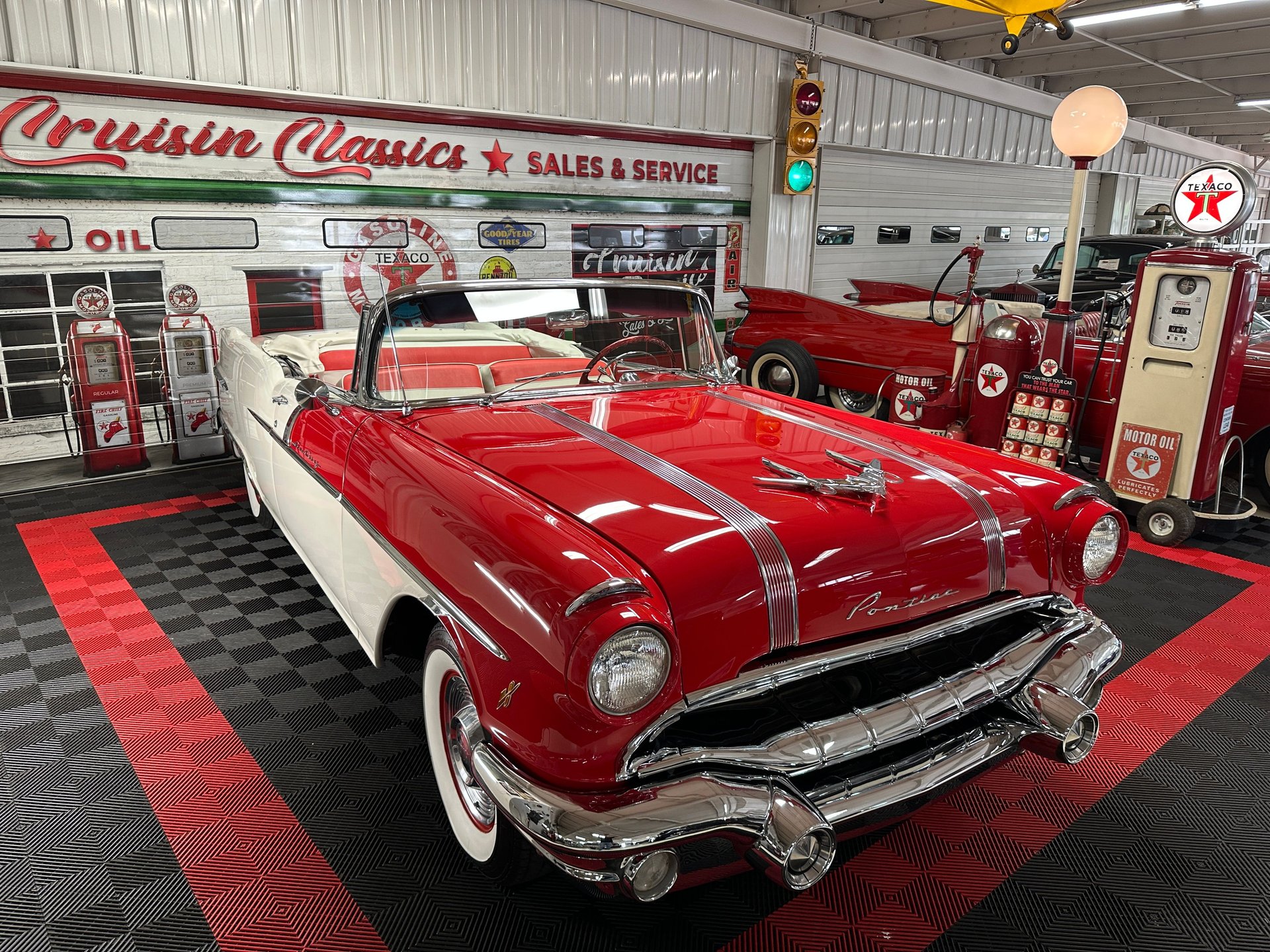 $59,995 · 226% above typical
Expand
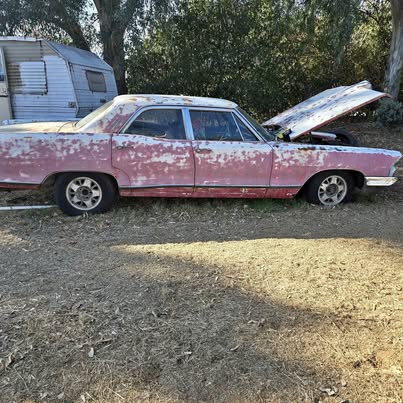 $1,000 · 95% below typical
Expand
What they sell for: Star Chief Convertible sale prices.