
Pontiac Ventura buyer's guide
Pontiac Ventura -- the model's own buyer's guide: variants, values and what to check.
Years listed: 1961-1972 · Series: Full Size
# Pontiac Ventura — Buyer's Guide
Overview and history
The first thing you have to settle, before you look at a single panel gap, is which Ventura you are actually buying. Pontiac uses the name for two completely different cars, and sellers — innocently and otherwise — blur them together. Get the family wrong and every parts book, every value comparison and every piece of advice you are given afterwards is wrong with it.
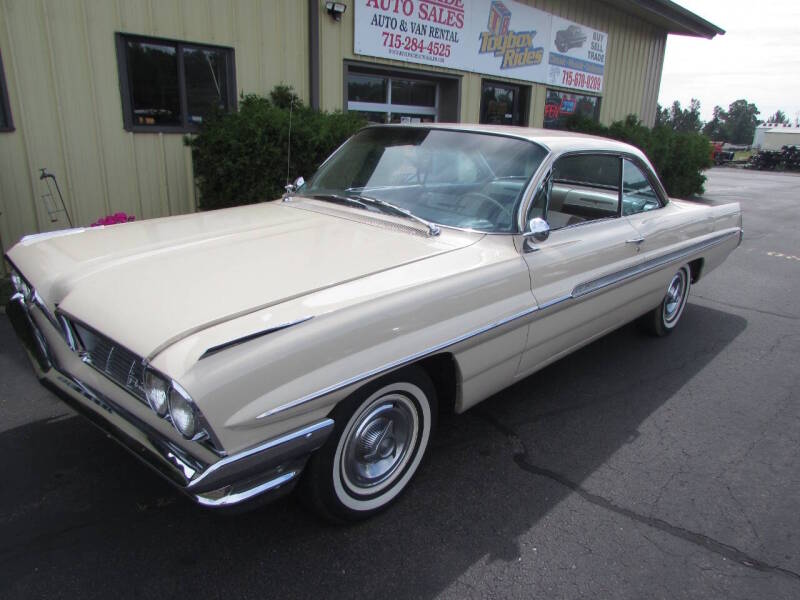
The original Ventura arrives for 1960 as the smart, sporty version of Pontiac's full-size Catalina. Pontiac is in the middle of its Wide Track era, the cars are big, low and confident, and the Ventura sits above the Catalina with richer trim, upgraded interiors and the same 389-cubic-inch V8 power. For 1960 and 1961 it is effectively its own series: two-door and four-door hardtops with distinctive rooflines, the 1961 two-door wearing the famous "bubble top" — a slim-pillared glasshouse with a huge curved back window that collectors chase today. From 1962 the name steps back to being a Ventura option package on the Catalina, and it stays that way through 1970. A mid-1960s "Ventura" is therefore a Catalina with the Ventura trim — a full-size Pontiac in every mechanical respect, sharing its chassis, engines and body panels with the Catalina and, in broad terms, with the Bonneville below the waistline trim. You buy one for the same reasons you buy any big early-1960s Pontiac: presence, torque, comfort and styling, and you inspect it like the full-size car it is.
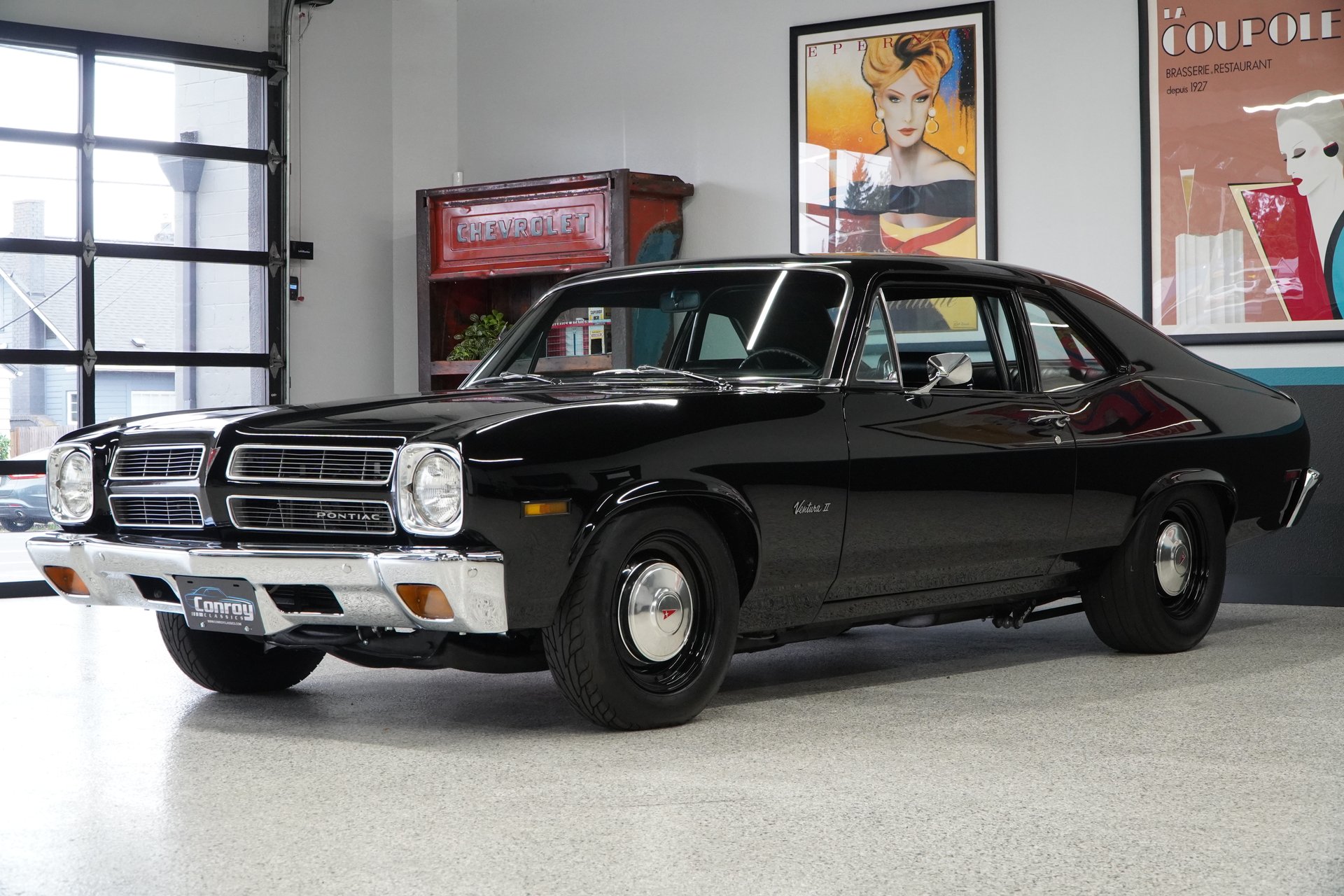
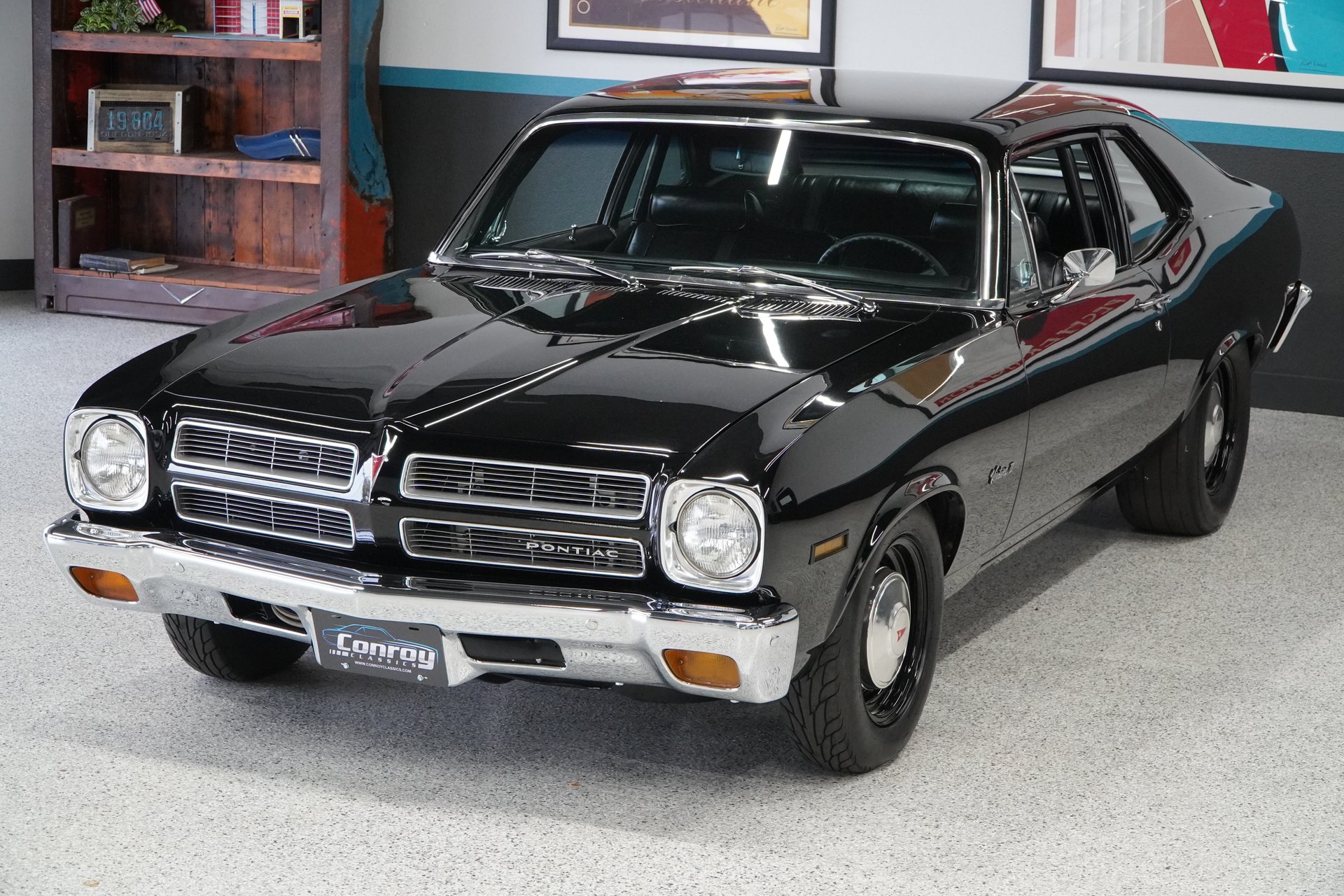
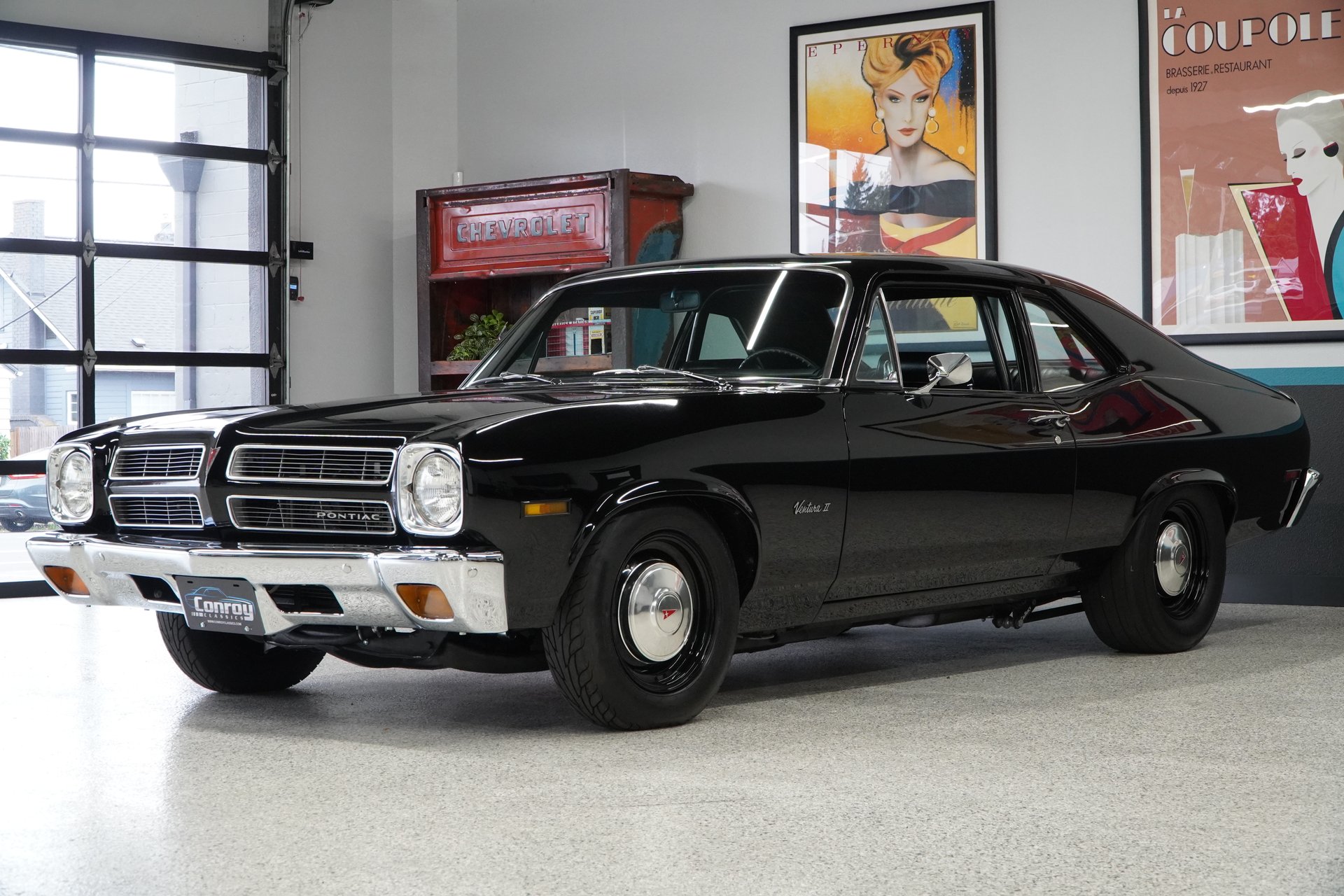
Then Pontiac revives the name on something utterly different. The 1971 Ventura II is a compact built on General Motors' X-body platform — the structure under the Chevrolet Nova, the Oldsmobile Omega, the Buick Apollo (later Skylark) and, from 1973, Pontiac's own car with a hatchback option. It is a unitised car with a bolt-on front subframe, a live rear axle on leaf springs, a straight six as standard and small V8s as options, sold as a two-door coupe, a four-door sedan and, from 1973, a three-door hatchback coupe. The Sprint package adds stripes, wheels and trim in the junior-muscle idiom, and for 1974 alone the GTO — Pontiac's most famous badge — is an option package on the Ventura hatchback and coupe. Production runs to 1977, after which the Phoenix replaces it.
So there is no single "Ventura character." There is a big, glamorous early-1960s cruiser, a decade of well-trimmed full-size family cars wearing the badge as an option, and a light, simple 1970s compact that shares its bones with the Nova. What unites them is honesty: none of them pretends to be exotic, all of them are conventional GM engineering of their day, and all of them reward the same buying discipline — identity first, structure second, mechanicals third, cosmetics last. This guide treats the families separately wherever they differ, because they differ in almost everything except the script on the fender.
One more warning belongs up front. Because the later car shares so much with the Nova, and the early car shares so much with the Catalina, both attract badge engineering in the classifieds. A Catalina becomes a "Ventura," a plain Ventura II becomes a "Sprint" or even a "GTO" with decals and a shaker scoop. The checks that settle identity — cowl tag, VIN, engine stampings, build documentation — are covered in the inspection section, and you do them before you negotiate, not after.

The models
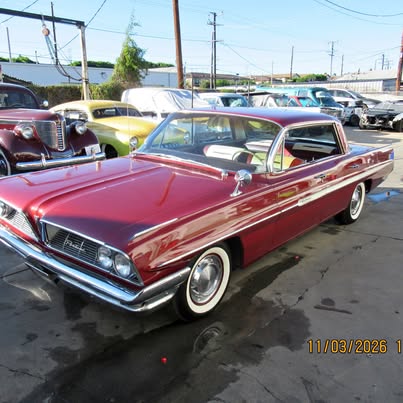
Start with the full-size cars. The 1960 Ventura comes as a two-door hardtop (the Vista coupe style) and a four-door hardtop, riding the Catalina's 122-inch wheelbase, with the 389 V8 as standard equipment and interiors a clear step above Catalina money: Morrokide vinyl and cloth combinations, deeper carpeting, extra brightwork. The 1961 car keeps the formula on the new, crisper 1961 GM B-body shell — the year of the bubble top two-door, the split grille and the cleanest flanks of the era. These two years are the collector Venturas. Everything about them — roof pressing, glass, trim — is specific, and specific means expensive to put right if it is missing or rotten.
From 1962 to 1970, "Ventura" on a build sheet means the Ventura option on a Catalina: upgraded interior trim, badging and brightwork on two-door hardtops, four-door hardtops, sedans and, in some years, the Safari wagon. The car underneath follows the Catalina year by year — the stacked-headlight 1965 restyle, the fastback two-door hardtops of 1967–68 (the shape you see in project-car form below), the increasingly formal cars of 1969–70. Engines follow Catalina practice too: the 389, then the 400 that replaces it for 1967, with the larger 421 and later 428 available in the earlier and later years respectively. You do not value these cars as a separate model line; you value them as Catalinas with a desirable trim option, and you verify the option from the cowl tag and paperwork rather than from the badges, because badges unbolt.
The compact family is simpler to map. The Ventura II launches for 1971 as a two-door coupe and four-door sedan. The base engine is a 250-cubic-inch Chevrolet-built straight six; a 307 and then 350 V8s sit above it. The Sprint option — offered through the run — is a dress-up and handling package: stripes, styled wheels, sport mirrors, upgraded trim, sometimes a floor shift; it does not bring a unique engine, so a Sprint is worth a modest premium for originality, not a muscle-car premium for performance. For 1973 the range gains the hatchback coupe, whose folding rear seat and big tailgate make it genuinely the most practical classic in this whole guide, and the Ventura gets the federally mandated impact bumpers that change its face. The 1974 GTO package, available on the coupe and hatchback, brings a 350 V8, a functional shaker scoop on many cars, dual exhausts, stripes and GTO badging; it is a real, documented package and a real trap, because everything visible about it bolts onto a plain Ventura in an afternoon. For 1975 the car is restyled with a more formal nose and rectangular headlamps on upper trims, the range is renamed simply Ventura (the "II" disappears), and an SJ package takes the luxury-trim role. The last cars are built for 1977.
| Model | Years | Engine | Output | Built | Character |
|---|---|---|---|---|---|
| Ventura hardtops (own series) | 1960–1961 | 389 V8 | c. 230–348 hp gross, by carburation | Not reliably published by body style | The collector cars; 1961 bubble top is the icon |
| Catalina with Ventura option | 1962–1970 | 389 / 400 / 421 / 428 V8 | Varies by year and tune | Sold as Catalina production; no separate Ventura count | Full-size cruiser with the smart trim; value it as a Catalina-plus |
| Ventura II coupe / sedan | 1971–1977 | 250 six; 307 / 350 V8 | c. 100–200 hp net, by year and engine | Volume X-body production alongside the Nova family | Light, simple compact; the usable everyday classic |
| Ventura II hatchback | 1973–1977 | 250 six; 350 V8 | As coupe | A minority of Ventura II production | The practical one; check the hatch structure hardest |
| Ventura Sprint | 1971–1976 | Six or V8, as ordered | As base car | Option package; no separate reliable count | Stripes-and-trim junior sport; premium only if documented |
| Ventura GTO | 1974 only | 350 V8 | c. 200 hp net | One-year package; verify from paperwork | The last GTO of the original era — and the most cloned |
Treat any production figure a seller quotes you for a specific Ventura body style with suspicion unless it comes with a printed source. Pontiac's surviving records, accessible through Pontiac Historical Services (PHS) for many years of production, settle what a specific car was built as; total-line figures for the Ventura option years were never broken out the way modern sellers pretend. The table above deliberately leaves those cells honest rather than impressive.
Engines and gearboxes
The Pontiac 389 V8 (1960–1961, and the Ventura-trim years that follow)
The early Ventura's engine is Pontiac's own V8 in its 389-cubic-inch form — the engine that powers everything from the Catalina to the early GTO, which is why this family has such a deep knowledge base behind it. It is a conventional overhead-valve V8 with a cast-iron block and heads, hydraulic lifters, a single two-barrel or four-barrel carburettor on most cars, and the famous Tri-Power triple two-barrel set-up on the high-output versions. Period gross outputs run from the low-230s for the economy-tune two-barrel cars to around 348 horsepower for the hottest Tri-Power combinations, with the common four-barrel cars in the 280–303 horsepower region. Do not get hung up on the number a seller quotes: compression ratio, camshaft and carburation all vary, gross ratings flatter every engine of the era, and what you feel in the car is the 389's torque — strong, lazy and available from walking pace.
In service the 389 is a tough engine with known habits. The timing chain stretches with age and mileage, and a slack chain retards the cam timing and makes an otherwise healthy engine feel flat and run hot; you check it by rocking the crank pulley against the distributor rotor movement, and you budget for a chain-and-gears set on any car without a receipt for one. The rear main seal is a rope-type seal on early engines and weeps with age — a damp bellhousing bottom is normal patina, a steady drip that spots the drive overnight is a seal job, and modern replacement seals improve matters but rarely make an old Pontiac bone dry. Valve-cover and valley-pan gaskets harden and leak oil onto the exhaust manifolds, which sellers describe as "it just smells a bit when it's hot"; the smell is oil burning off the manifold, and the fix is gaskets, not an engine rebuild. The Rochester carburettors — the 2GC two-barrel and the 4GC or Carter AFB four-barrels — suffer the universal old-car fuel problems: perished accelerator-pump cups (a hesitation as you open the throttle), warped air-horn castings on the four-barrel that leak internally and cause rich running and hot-start flooding, and choke mechanisms that seize in whatever position they were left. Tri-Power adds linkage and three carburettors to keep in synchronisation; a properly set-up Tri-Power is reliable, but a neglected one gives you vacuum leaks at three throttle shafts instead of one, and the centre carburettor does nearly all the ordinary driving work, so wear concentrates there.
Cooling is the system's weak link on the big cars, because a 389 in a full-size engine bay with a marginal radiator, a collapsed lower hose or a fan clutch that no longer engages will creep up in traffic while cruising perfectly at speed. That pattern — fine at 50 mph, anxious at idle — points at airflow and radiator capacity, not at the water pump sellers love to replace first. Oil pressure should be strong hot at idle; a Pontiac that shows flickering low pressure hot, with a rattle on start-up that takes seconds to quieten, is showing you bearing wear, and no oil grade fixes it.
From 1962 the Ventura-trim Catalinas use the same Pontiac V8 family as it evolves: the 389 to 1966, the bored-out 400 from 1967, and the big 421 (to 1966) and 428 (1967–69) options. Everything said above about chains, seals, carburettors and cooling applies unchanged, because the architecture is unchanged. Identification is by the stamped engine code on the pad at the front of the block beside the timing cover, cross-checked against the year and the car's paperwork — you never accept "it's a 421" from a seller without reading that pad, because the blocks look alike and the price difference does not.
The Chevrolet 250 straight six (Ventura II base engine)
The compact's standard engine is not a Pontiac engine at all. It is Chevrolet's 250-cubic-inch overhead-valve straight six, the same engine that powers base Novas and half the light trucks in America, and that is good news: it is one of the simplest, best-supported engines you will ever own. A single-barrel Rochester carburettor, a cast-iron head with integral intake manifold, seven main bearings and hydraulic lifters. Output in the early 1970s net-rating era is around 100–110 horsepower depending on year, which sounds feeble and feels merely adequate — the car is light, the gearing is sensible, and a healthy six cruises happily.
Its failure modes are few and honest. The integral intake manifold means a cracked or warped manifold is a head job, not a manifold swap. Exhaust manifolds crack, particularly around the centre ports where the heat-riser valve lives, and the heat riser itself seizes — shut, it cooks the intake and causes icing and stumbling in cold weather; open, it just delays warm-up. The single-barrel Rochester Monojet floods on hot restart when its needle valve wears, and the cure is a carburettor rebuild kit and a float-level check, not a new carburettor. Valve seals harden and give the classic puff of blue smoke on start-up after sitting, which then clears — distinguish that from constant smoking under load, which is rings and bores and a different conversation. Side-cover and pushrod-cover gaskets leak oil down the block. That is nearly the whole list. A six-cylinder Ventura II that starts, idles cleanly, holds temperature and does not smoke under load is a known quantity, and the engine will outlast the body if you change its oil.
The small V8s: 307 and 350 (Ventura II)
Above the six, the Ventura II offers V8 power from across the GM empire, and this is where your identity checks matter most, because "350 V8" on a Ventura II can mean engines from different GM divisions in different years — Chevrolet, Pontiac and Buick all supply 350s to GM compacts across the 1970s as corporate engine sourcing takes hold, and the engines share nothing but the displacement number. Ancillaries, distributors (front on a Buick, rear on Chevrolet and Pontiac), oil-filter position and parts ordering all differ. The stamped codes and casting numbers settle which engine a car actually has, and on a car whose engine has been swapped — extremely common in Nova-family cars — they settle what it has now, which is what you are buying.
The 307, where fitted in the early years, is Chevrolet's small-bore small-block: unstressed, smooth, and prone to the standard small-block Chevrolet wear pattern of tired valve seals (start-up smoke), a stretched nylon-toothed timing chain that can jump a tooth on a high-mile engine, and soft camshaft lobes on neglected oil. The 350s are the performance choice, with the 1974 GTO package's 350 rated around 200 horsepower net with dual exhausts. By the mid-1970s these engines run low compression, air pumps, EGR valves and a thicket of vacuum hoses; the mechanical core stays durable, but the emissions hardware perishes — cracked vacuum lines cause lean stumbles and failed idle quality that sellers blame on the carburettor, and a methodical hose-by-hose replacement with the under-bonnet vacuum diagram as your map cures most of it. The Rochester Quadrajet fitted to many V8 cars is an excellent carburettor when its throttle-shaft bores are tight and a misery when they are worn, because air leaks in around the shafts lean the idle mixture unpredictably; the test is to wiggle the primary throttle shaft — visible play means the baseplate needs bushing, a specialist job that transforms the car.
Across all the Ventura II engines, the cooling system is sized for the six and marginal for a V8 in a hot climate with air conditioning: check that the fan shroud is present (it is often discarded, and without it the fan pulls air from around the radiator instead of through it), that the radiator is the correct multi-row unit, and that someone has not "fixed" overheating by removing the thermostat, which makes warm-up worse and tells you the real fault is still in there.
Gearboxes
Full-size cars come with a three-speed manual as the nominal base (rarely ordered and rarer now), the four-speed manual in tiny numbers on early cars, and — in the overwhelming majority — Pontiac's automatic: the four-speed Super Hydra-Matic on the earliest cars and the three-speed Turbo Hydra-Matic 400 from the mid-1960s. The Turbo 400 is one of the strongest automatics ever built; its wear shows as delayed engagement into drive or reverse when cold (hardened internal seals — a rebuild, not an adjustment), flared 2–3 shifts, and dark, burnt-smelling fluid. The earlier Super Hydra-Matic has a distinctive shift feel with a noticeable coupling fill; parts and rebuild knowledge for it are specialist territory now, so a car with one that shifts cleanly and quietly is worth more than the same car with one that "just needs adjusting."
The Ventura II uses the standard GM compact menu: three-speed manual with column or floor shift, a four-speed manual (Saginaw, with the Muncie on some higher-output applications) on V8 coupes, the two-speed Powerglide automatic on the earliest, cheapest cars, and the Turbo Hydra-Matic 350 as the normal automatic. The brief's own listing pool reflects this spread, with automatics dominating. The Turbo 350 is durable and cheap to rebuild; check for a slipping 2–3 shift under power, a whine in first, and a speedometer drive that leaks at the tailhousing. The Powerglide is nearly indestructible but makes a six-cylinder car very slow and a V8 car thirstier than it should be — drive one before you decide you can live with two ratios. On manual cars, the clutch linkage on X-bodies is mechanical and wears at every pivot, giving a vague, low pedal that owners misdiagnose as a worn clutch; and the Saginaw four-speed's synchromesh, second gear especially, tells you the truth about how the car has been driven — a box that crunches into second hot and cold has lived hard.

Problem areas
Rust: the full-size map
On a 1960–70 full-size Ventura, rust is the purchase decision; everything else is a negotiation. These are separate-chassis cars, so you assess two structures: the body, and the perimeter frame underneath it. Start with the frame, because frame rust is the one finding that ends most purchases. The rear frame rails, where they kick up over the axle and run to the back bumper, trap mud inside and rot from the inside out; so do the boxed sections beside the rear wheels and the front crossmember area under the radiator. Prod with a screwdriver — with the seller's permission — and look for flaking, swelling and previous plate repairs. Surface rust on a frame is normal and treatable. A rail that flexes, crunches or has been patched with flat plate welded over rot is a car you price as a parts source or walk away from, because proper frame repair on a full-size convertible-era chassis is fabrication work at fabrication prices, typically several thousand dollars per side once the body is lifted, and it is rarely invisible afterwards.
The body rots in a predictable order. Front fenders go behind the wheel opening and at the lower rear edge where they meet the door. The rocker panels — sills — rust along their length, worst at the ends, and on hardtops the sill is a structural member for the door aperture: a car whose doors drop when opened and whose sills crunch under a jack placed at the factory jacking point has sill work in its future, and sill replacement with proper inner and outer panels runs into four figures per side before paint. Floor pans go under the carpets where water from leaking windscreens and heater cores has sat, so you lift carpets or at least press firmly through them feeling for give, and you inspect from underneath for the fibreglass and pop-rivet repairs that hide rot for exactly one selling season. The trunk floor rusts around the wheel tubs and at the lowest point under the mat, fed by leaking rear-window seals on hardtops — the rear window channel is a water trap on all these cars, and rust bubbles below the back window on a bubble-top 1961 mean the channel underneath is worse, with the added pain that the glass and its seals are among the hardest parts of that car to source. Doors rot at the bottom seam. The cowl and the bases of the A-pillars rot where leaves collect, and that rust is expensive because it is structural, hidden and surrounded by glass and trim.
Two full-size specifics deserve emphasis. First, the 1961 bubble top's glass is effectively irreplaceable at sensible money: a cracked or delaminating back window on a car that is otherwise sound is a serious value deduction, because you may wait years for a good used one. Check the glass as carefully as the frame. Second, convertibles are not part of the Ventura story in the way they are for Bonneville, but hardtops share the convertible's weakness for water management: every seal on a pillarless hardtop is a compromise, and a car that has lived outside will have wet floors at some point. Judge by what the water has done, not by whether it has ever leaked — it has.
Rust: the X-body map, subframe and hatch
The Ventura II rots differently, because its structure is different: a unitised body with a separate front subframe bolted on through rubber mounts. The subframe itself rusts at its rear mounting points and around the steering-box and suspension pickups, and the body-side mount boxes rust where the bolts pass through, so the subframe sags and the front-end alignment will not hold. Get underneath and look at all four subframe mounts; perished rubber is a cheap fix, rusted mount boxes are welding, and a subframe that has shifted shows itself in uneven front panel gaps and a steering wheel that will not centre. Budget from a few hundred dollars for mounts and hardware to well into four figures if the body-side structure needs fabrication.
The shell's classic X-body rot spots mirror the Nova's, because the pressings are shared. Rear leaf-spring front mounts: the spring hanger boxes in front of the rear axle rust and tear, and a car whose rear springs are starting to poke through the trunk floor or whose axle sits visibly off-square has structural rust, full stop — this is the X-body equivalent of the full-size frame rail, and it is the first place you look. Rear wheel arches and the quarter panels behind them bubble from trapped mud on the inner lip. The trunk floor rots around the fuel tank and at the seams to the wheel tubs. Floor pans go under the driver's feet and under the rear seat where the back window has leaked. The cowl sides and the lower windscreen frame rust where the plenum fills with leaves, and water then runs down inside the A-post into the sill — a wet driver's carpet on a Ventura II is a cowl or screen-frame investigation, not a door-seal purchase. Doors rot at the bottom skin seam, front fenders at the lower rear corner, and the battery tray area takes acid damage that eats into the inner fender.
The hatchback adds its own traps. The hatch aperture is a huge hole in the shell; the hinges, the gas-strut mounts and the latch area all work hard, the seal is long and perishes, and water that gets in runs into the rear quarters and the spare-wheel well. Open the hatch, check it stays up (weak struts are cheap; torn strut mounts are welding), lift the carpet in the well, and look at the rear panel around the tail lights, which rusts from inside as the hatch seal leaks. A hatch car with a dry, straight rear end is genuinely the pick of the compacts; a hatch car with a rotten well and quarters is a coupe's worth of welding with worse parts availability.
Engines, cooling and fuel systems
The engine-specific wear is covered in the engines section; what follows is the cross-cutting failure layer you find on both families. Fuel systems suffer most from modern ethanol-blended fuel in cars that sit. Rubber fuel hoses perish and crack — any Ventura still on old hose needs every flexible line replaced as a first-week job, because a split feed line over a hot exhaust is a fire, not a breakdown. Fuel tanks rust internally on cars stored part-full, shedding flakes that block filters and needle valves and produce the maddening fault of a car that runs for twenty minutes and starves; the test is to look in the tank with a torch or pull the filter and cut it open. Mechanical fuel pumps lose their valves and give weak delivery at high demand while idling perfectly. On the big cars, the fuel sender units fail and the gauges lie; on the compacts, the same, plus perished filler-neck hoses that smell of fuel after a fill and leak on left-hand corners.
Cooling faults follow the pattern set out earlier: radiators silted to half capacity, hoses soft or oil-contaminated, heater cores leaking into the passenger footwell (a sweet smell and a misting windscreen on a warm engine is a heater core until proven otherwise, and on the full-size cars the core is a dashboard-deep job that turns a cheap car into an expensive weekend). Heater control valves seize. On air-conditioned cars — common on full-size cars, rarer on compacts — assume the system needs a full recommission with seals and a receiver-drier unless you are shown it blowing cold, and price a conversion and recharge accordingly, typically several hundred dollars and upward depending on the compressor's health.
Oil leaks deserve a calm read rather than panic. Old GM engines weep: rocker covers, timing covers, rear mains, oil-pressure sender switches (a sender that leaks through its terminal gives a frighteningly large puddle from a cheap part). The skill is distinguishing weepage, which you monitor, from pressure-fed leaks that lose a quart between fuel stops, which you fix. Clean the engine, drive it, then look — in that order — because a leak's highest wet point is its source, and sellers' steam-cleaned engine bays exist precisely to deny you that evidence.
Suspension, steering and brakes
Full-size Pontiacs use coil springs all round with a live rear axle, and the wear list is conventional: sagging rear coils (the car sits tail-down and the headlights point at the sky), worn ball joints and idler arms that give vague steering and feathered front tyres, perished control-arm bushes, and leaking shock absorbers. The steering boxes wear at centre, and because these cars spend their lives at centre, the play concentrates exactly where you drive; an adjustment that removes it without binding lock-to-lock is legitimate, a box adjusted tight at centre that binds at the ends is worn out. The optional eight-lug aluminium wheels on early-1960s cars are beautiful and a specialist subject: the drums are integral with the wheel, they must be true, and damaged or corroded eight-lugs are expensive — check for cracks around the lug holes and budget accordingly if a car wears them. Brakes on the early cars are drums all round, single-circuit on the earliest: budget for a full hydraulic overhaul — cylinders, hoses, lines — on any car without recent receipts, because sixty-year-old brake pipes are a safety item, not a patina item. Front disc conversions are common and, done properly with a dual-circuit master cylinder, a genuine improvement; done cheaply with mismatched parts they are a liability you inherit.
The Ventura II front suspension lives in the subframe: coil springs, upper and lower arms, and wear that shows as inside-edge front tyre wear and a car that wanders over bumps when the subframe has shifted or the arm bushes have gone. Rear leaf springs sag, break a leaf (look along the pack for a snapped short leaf) and wear their eye bushes, producing axle tramp under power and clunks over bumps. Manual steering on six-cylinder cars is heavy at parking speeds but honest; power steering pumps whine when worn and the pressure hoses perish. Brakes are front disc and rear drum on most V8 cars and many sixes by the mid-1970s, drums all round on the cheapest early cars; the rear drums self-adjust only when the car reverses and brakes, which preserved cars rarely do, so a long pedal is often adjustment, not failure. The single most common X-body brake fault is the same as every old GM car: seized rear wheel cylinders weeping into the drums, found by pulling a drum or by the damp backing plate that gives it away.
Interior, trim and electrics
Interiors decide what these cars cost you after purchase, because mechanical parts are plentiful and trim is not. On the early full-size cars, the Morrokide vinyl splits at the seams and at the driver's bolster, door cards warp where water has passed tired window seals, and headlinings sag or tear at the bows. Reproduction seat covers exist for the popular body styles; correct-pattern material for a one-year Ventura trim often does not, so a car with a sound original interior — even a faded one — is worth real money over a car with a wrong, shiny, generic retrim. Brightwork is the other wallet item: the long side spears, the pot-metal grille and tail-panel pieces pit and blister, and rechroming pot metal properly costs hundreds of dollars per piece. Count the trim, because a missing 1961-specific spear or emblem can take a season to find.
On the Ventura II, the interior is Nova-grade vinyl and it ages the same way: dash pads crack in the sun (a cracked pad is cosmetic, but replacements in the correct colour are not always available), seat vinyl splits on the driver's cushion, and the headlining in hatch cars sags onto your head. The good news is that the X-body reproduction industry, built on the Nova, covers most of what you need — carpets, seat covers, door panels for common years and colours. The bad news is that Ventura-specific badges, grille pieces and tail panels are not Nova parts, and used ones are the only supply.
Electrically, both families suffer the standard old-GM pattern: earth straps corrode and produce haunted behaviour — dim lights, slow cranking, gauges that wander — that owners chase through expensive components before cleaning a ten-dollar strap. Alternator and regulator faults overcharge and boil batteries or undercharge and strand you. Power windows on full-size cars slow to a crawl as the motors and mechanisms gum up; a window that moves with assistance is a strip, clean and lubricate, while one that is dead with a clicking relay is a motor. Vacuum-operated headlamp doors are not a Ventura feature, but vacuum accessories and the heating and ventilation controls on later compacts use vacuum motors whose diaphragms perish, leaving flaps stuck and controls that hiss. Wiring bodges are the real enemy: every Scotchlok connector and unfused accessory wire you find is a future fault, and a car with an untouched harness is worth a premium you will appreciate at midnight in the rain.

How to inspect one
Work in this order, and do not let a seller rearrange it. The sequence puts the cheap, decisive checks first, so you can walk away from a structurally finished car before you have spent an hour falling for its engine note.
- Settle the identity before anything else. Read the VIN and the cowl tag, and compare them with the title. On a full-size car, decide whether it is a 1960–61 Ventura series car, a Catalina with the Ventura option, or a Catalina with badges — the cowl tag and, for documented certainty, a Pontiac Historical Services report settle it. On a compact, decode the VIN's engine digit and confirm the car is a Ventura and not a rebadged sibling, and treat any Sprint or GTO claim as unproven until paperwork proves it. A mismatch between paperwork and car ends the inspection here.
- Read the engine, cold. On the full-size cars, find the stamped code pad at the front of the block and check the engine is the Pontiac V8 the car claims — especially any claimed 421 or Tri-Power car. On a Ventura II, identify which division's V8 (or six) is actually fitted by its distributor position, casting layout and stampings; an engine swap is not a fault, but you pay for the engine that is there, not the one in the advert.
- Do the structural pass underneath. Full-size: frame rails at the rear kick-up, boxed sections, front crossmember — prod for rot, as in the rust section. Compact: subframe mounts and mount boxes, then the rear leaf-spring front hangers. Either car that fails here is priced as a project or not bought at all.
- Work the body rust map. Sills (jack the car at the factory point and watch for flex and crunch), floor pans through the carpets, trunk floor and — on the hatchback — the spare-wheel well and hatch strut mounts. Bubbles below the rear window on a hardtop mean channel rust underneath; on a 1961, inspect the bubble-top glass itself for cracks and edge delamination at the same time.
- Check panel fit and trim completeness. Pillarless hardtops and X-bodies both show shifted structure in their gaps. Then count the brightwork: side spears, grille and tail pieces, Ventura scripts, Sprint or GTO pieces. Missing model-specific trim is a cost and a delay, so list it before you talk money.
- Start it from stone cold, and insist on cold. A car presented warmed-up is hiding its start-up behaviour. Watch for the six-cylinder's and small-block's puff of blue (valve seals) versus continuous smoke (rings), listen for the Pontiac's start-up rattle that takes seconds to fade (bearing wear), and watch oil pressure come up and stay up as it warms.
- Test the cooling system in its weak condition. Let it idle after the drive, not before: temperature creep at idle with stability at speed points to radiator and airflow, as the problem areas explain. Check the fan shroud is present on a compact, squeeze hoses, look for the sweet smell and screen misting that betray the heater core.
- Drive it far enough to get everything hot. Twenty minutes minimum. Feel for the automatic's cold-versus-hot shift quality — delayed engagement, flared shifts — the manual box's second-gear synchromesh, steering play at centre, brake pull, and axle tramp or clunks from worn leaf-spring bushes on the compact.
- Test every electrical consumer, one by one. Lights, wipers, heater fan at all speeds, power windows if fitted, gauges against reality (a fuel gauge that lies is normal; an oil-pressure gauge that lies is not). Haunted behaviour on several systems at once means earth straps first, components later.
- Inspect the fuel system as a fire risk, not a detail. Smell for fuel at the filler neck and under the car, look at every flexible hose for cracking, and ask when the tank was last cleaned or replaced. Budget hose replacement on any car regardless of the answer.
- Assess the interior against parts reality. Original and sound beats retrimmed and wrong. On the compact, confirm the Ventura-specific pieces are present; on the early car, confirm the trim pattern is the car's own and the seat material is either original or correctly reproduced.
- Price the car from your list, not from the seller's story. Add the structural work at welding prices, the trim at search-and-wait prices, and the mechanical work at the job ranges in this guide. The car that survives all twelve steps with a short list is the car to buy — whichever family it belongs to.
Values
Read the Ventura market as two markets that happen to share a name, because a price that is strong for one family tells you nothing about the other. The listings and recorded-sales block beneath this guide shows you the current spread for each; what follows is how to interpret what you see there.
The early full-size cars trade in the wider early-1960s Pontiac market, alongside Catalinas and Bonnevilles. Within it, the hierarchy is driven by roofline and specification rather than by the Ventura badge alone. The 1961 bubble-top two-door hardtop sits at the top, because the shape is famous, the production window is one year, and the glass and trim are hard to replace. Other 1960–61 hardtops follow, then the Ventura-trim cars of the middle 1960s, which are valued as the Catalinas they fundamentally are, with a premium only when the trim option is documented and the car is a desirable body style — a fastback two-door hardtop in a good colour with the larger V8 will always find buyers faster than a four-door sedan in beige with the base engine, and the gap between them is wide. Condition spreads values more than specification does at this level: a structurally sound, honestly presented driver is worth a large multiple of a shiny car with plated-over frame rails, because the expensive work on these cars is welding and chrome, not engine building.
The compact cars trade in the Nova's shadow, and that shadow sets both a floor and a ceiling. A Ventura II is worth less than the equivalent Nova in the same condition, not because it is a lesser car — mechanically it is the same car — but because the Nova market is deeper and more competitive. That discount is the Ventura's gift to a buyer: you get X-body usability, parts support and performance potential for noticeably less than the Chevrolet-badged equivalent, provided the Ventura-specific trim is present, because a Ventura II missing its own grille and badges drifts towards parts-car money in a way a Nova does not. Documented Sprint cars earn a modest premium; documented 1974 GTO-package cars earn a real one, and undocumented ones earn none, however convincing the decals look — the paperwork is the value.
Across both families, the project-versus-driver gap is the number that matters most in practice. A project Ventura of either family is worth only a fraction of a driving car, and the fraction is smaller than sellers assume, because the restoration costs — structure, paint, trim, glass — are the same whether the finished car is a Ventura or a more fashionable badge, while the finished value is lower. That arithmetic means projects only make sense bought cheaply, with the structure already sound, or as a labour of love entered into with open eyes. Asking prices, finally, run ahead of achieved prices across both families, most obviously on cars described with the vocabulary of rarer models — Tri-Power, GTO, bubble top — applied loosely. Pay for the car the documents and the stampings describe, at the level the condition you inspected supports, and let the recorded sales beneath this guide, rather than the classifieds' optimism, anchor your sense of where money actually changes hands.
Parts and ownership
Ownership splits cleanly by family. The Ventura II is one of the cheapest classics in this guide's whole programme to keep, because the Nova industry carries it. Mechanical parts — suspension, brakes, steering, engine internals for the Chevrolet engines, gearbox parts, cooling, exhausts — are available off the shelf from multiple suppliers at ordinary prices, and most jobs are within the scope of a competent home mechanic with a factory shop manual: the X-body is a simple car, designed to be serviced by the dealer network of 1971 with hand tools. Body and interior reproduction follows the Nova pattern for shared pressings and common colours. Where you pay the Ventura tax is on the Pontiac-specific layer: grilles, tail panels, badges, scripts and Ventura-only trim are used-parts-only, so you buy good examples when you see them rather than when you need them, and you treat the pieces on your car as assets.
The full-size cars are a different ownership proposition. The Pontiac V8 is superbly supported by the Pontiac hobby — engine parts, including for the 389 and its successors, are reproduced and stocked by Pontiac specialists, carburettor rebuilders know the Rochesters and the Tri-Power intimately, and the GTO market's gravity pulls supply with it. Chassis and brake parts are available, though you will order rather than collect. The pain points are body, glass and trim: panels are largely a used and repair-section economy, the 1961 bubble-top glass is a search measured in seasons, pot-metal rechroming is a specialist cost you cannot shortcut, and correct interior materials for one-year trims may require a trimmer working from your surviving original as the pattern. None of this makes the early cars unreasonable to own — thousands are kept exactly this way — but it does mean the purchase inspection carries the ownership experience: a complete, sound car is a hobby, and an incomplete one is a correspondence course.
Running costs are honest on both. The big cars use fuel at the rate a large-displacement V8 in a heavy car always has, and they need their chassis greased, their points and carburettors kept in tune, and their drum brakes adjusted and inspected on schedule. The compacts are lighter on fuel (the six genuinely economical by period standards), lighter on tyres and brakes, and undemanding beyond routine servicing, oil discipline for the small-blocks' timing chains and valve seals, and rust prevention — cavity wax in the sills, spring hangers and subframe, and clear drain holes, repeated annually if the car lives outside. For either family, join the marque community: the Pontiac Oakland Club and the X-body forums hold the interchange knowledge — which Nova part fits, which Catalina trim crosses over — that turns a parts hunt into a phone call. Insure on an agreed-value basis once the car is sorted, keep the PHS documentation and your inspection notes with the car's file, and drive the car regularly; both families deteriorate faster standing still than they wear out moving.
Which one to buy
- The collector buy: a 1961 Ventura two-door bubble top. The icon of the name — one-year roof, Wide Track presence, 389 power. Buy the best glass, structure and trim you can find, verify the car thoroughly, and accept that you are paying for shape and scarcity, not speed.
- The grand tourer: a 1960 Ventura hardtop or a mid-1960s Ventura-trim Catalina with the larger V8. The same full-size virtues with less of the bubble-top premium. A documented 421 or 428 car with a sound frame and a complete interior is the sweet spot of the big-car range.
- The value buy: a Ventura-trim Catalina four-door or a fastback project with a sound frame. The market prices sedans and projects down hard; if the structure and glass are good and the price reflects the welding it does not need, you get the full-size experience for the least money in this guide.
- The all-rounder: a 1971–72 Ventura II coupe with a 350 V8. Pre-impact-bumper looks, Nova mechanicals, real pace with the right axle ratio, and parts from any catalogue. The best driving-per-dollar Ventura of any year.
- The practical classic: a 1973-on Ventura II hatchback. The folding seat and tailgate make it a classic you can actually use for the hardware-store run. Buy on hatch structure, strut mounts and a dry spare-wheel well above all else.
- The first classic: a six-cylinder Ventura II coupe or sedan. Cheap to buy, cheap to run, almost impossible to break mechanically, and slow enough to keep a new enthusiast out of trouble while they learn old-car craft on the body and brakes.
- The badge buy, with paperwork: a documented 1974 Ventura GTO. A genuine one-year piece of Pontiac history and the last of the original GTO line. Without PHS or build-sheet proof, it is a Ventura with decals and you pay Ventura money only.
The overriding rule: buy the structure and the documents, whichever Ventura you choose — a sound frame or sound spring hangers, complete model-specific trim and glass, and paperwork that proves the badge, are worth more than any engine option, any colour and any seller's story, because those are the three things money cannot quickly buy back.
See the 3 Ventura cars currently listed.
For sale now
 $85,900 · 175% above typical
Expand
 $39,999 · 28% above typical
Expand
 $23,500
Expand
What they sell for: Ventura sale prices.