
Porsche 928 buyer's guide
Porsche 928 -- the model's own buyer's guide: variants, values and what to check.
Years listed: 1983-1986 · Series: 928
# Porsche 928S — Buyer's Guide
Overview and history
The 928S is the car that turns the original 928 from an interesting idea into a serious one. When Porsche launches the 928 in 1977, it is not a warmed-over 911 and it is not meant to be. It is a front-engined, V8-powered grand tourer designed in the belief that the rear-engined car will eventually be legislated or refined out of existence: water-cooled, transaxle-balanced, hatch-backed, and built to cross a continent at speed in quiet comfort. The engineering is brave and the reception is strong — the 928 is European Car of the Year for 1978, the only sports car ever to take that award — but by the end of the seventies the first cars are beginning to feel exactly what they are: a 4.5-litre car of about 240 horsepower carrying a lot of weight, a lot of equipment and a lot of expectation. Rivals are faster. Porsche's answer, for the 1980 model year in Europe, is the S.
What the S badge means is more of everything that matters. Capacity rises from 4.5 to 4.7 litres, European output to a headline 300 PS. The car gains the aerodynamic furniture that becomes its signature — a deep front spoiler and a black rear spoiler on the hatch — along with wider wheels and tyres, uprated brakes and suspension tuning to match. In North America the S arrives later, for the 1983 model year, in emissions-tuned 4.7-litre form, and then changes character again for 1985, when American cars receive a 5.0-litre, 32-valve version of the V8 that the rest of the world does not get in this body until the S4. That split — European 4.7, American 4.7, American 5.0 — is the single most important thing to understand about the 928S, and this guide returns to it repeatedly, because two cars wearing the same badge can have different engines, different injection, different service risks and different value.
You buy a 928S today for reasons that have little to do with the spec sheet: a big, lazy, torquey V8 up front, near-perfect weight distribution from the rear transaxle, a cabin that still feels like a design study, and high-speed stability that surprises modern drivers. A sorted 928S is not a sports car in the 911 sense; it is faster across real roads than its reputation suggests, and far more relaxing. You also buy it knowing the trap: the cheap 928 is the most expensive kind. These were costly, complex flagships when new, they are forty years old now, and almost everything that goes wrong goes wrong because a previous owner deferred the service that would have prevented it. The belt service history is the car. Everything else in this guide is detail underneath that sentence.
Scope this guide honestly against the site's own pool. The pool behind this page is small — five records, four offered for sale and one recorded sold — spanning 1983 to 1986, with cars in Florida, Rhode Island, Virginia and California, in reds, blues and greys including Meteor Metallic, Quartz Gray Metallic and Ruby Red Metallic. Automatics outnumber the manual, which matches production reality. Five cars are a flavour of the market, not a census, so the knowledge that follows covers the full 928S run, and uses the pool only for what five cars can honestly show.

The models
The 928S is not one car, and the first job in front of any example is establishing which one you are actually looking at. Production runs from the 1980 model year to 1986, but the badge covers two engine sizes, two valve-train layouts, three injection philosophies and two distinct markets whose cars were built to different regulations and feel different on the road. Work through the variants in order and the range makes sense.
| Model | Years | Engine | Output | Built | Character |
|---|---|---|---|---|---|
| 928S (Europe, first series) | 1980–1983 | 4.7-litre M28 V8, 16-valve, K-Jetronic | 300 PS | Part of 61,056 all-928 production; no clean factory split by sub-type is published | The raw S: highest compression, mechanical injection, the lightest-feeling of the S cars |
| 928S (Europe, second series) | 1984–1986 | 4.7-litre M28 V8, 16-valve, LH-Jetronic | 310 PS | As above | The developed S: electronic injection, better economy and manners, the strongest 16-valve car |
| 928S (North America) | 1983–1984 | 4.7-litre M28 V8, 16-valve, electronic injection, emissions equipment | 234 hp | As above | Softer tune, lower compression, still torquey; the value entry into S ownership |
| 928S (North America) | 1985–1986 | 5.0-litre M28 V8, 32-valve, LH-Jetronic | 288 hp | As above | Effectively an early S4 engine in the S body; smoother, faster, and an interference engine — belt discipline becomes critical |
The European first-series car is where the S story starts. Capacity grows from the 4.5, compression is high by modern standards, and Bosch K-Jetronic continuous mechanical injection — the CIS system carried over from the original car — meters the fuel. You get a car that feels keen and slightly edgy, with the spoilers, wider 16-inch wheels and firmer suspension marking it out from the base 928. For 1984 the European car is updated: LH-Jetronic electronic injection with an air-mass meter replaces the CIS, output edges up to 310 PS, and the whole car feels more finished — better cold running, cleaner part-throttle behaviour, improved economy. Anti-lock brakes become available in this period and are near-universal by the end of the run; check the individual car rather than assuming.
The North American story runs two years behind and then overtakes. The S does not reach the United States until 1983, by which time emissions and fuel-economy rules have taken their cut: the American 4.7 runs lower compression, full emissions equipment and 234 hp. Read that figure carefully before you dismiss the car. The torque survives far better than the headline power, the gearing is chosen for American roads, and in ordinary driving an American 4.7 feels muscular rather than slow — it is only at the top end, against a European car, that the deficit shows. Then, for 1985, North America gets its own upgrade: a 5.0-litre engine with four valves per cylinder, double overhead camshafts per bank and 288 hp. European buyers do not see this engine in a 928 until the restyled S4 of 1987. The American 1985–86 car is therefore a genuine hybrid in the range — early S body, late engine — and it is arguably the most interesting 928S of all, provided you respect what the 32-valve head does to timing-belt risk, which the problem-areas section covers in full.
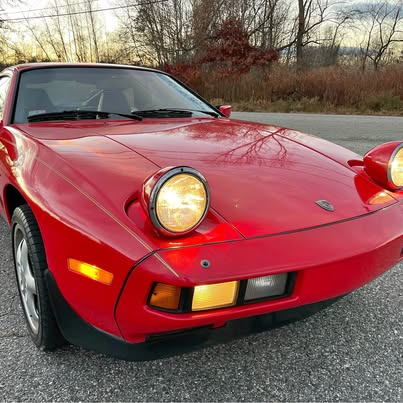
Identity checks matter because badges migrate and sellers describe optimistically. A true S, against a base 928, carries the front and rear spoilers — the rear one is the distinctive black lip on the hatch — and the 4.7 or, in America, 5.0 engine; a base car wears neither spoiler as standard and is a 4.5. Against the later S4, the S keeps the early body: no flared rear arches, no smooth S4 nose and tail treatment, no S4 rear wing, and pop-up headlamps in the early front panel shared with the first cars. Do not rely on the badge on the tail or on a seller's description. Read the engine number, stamped on the block, and decode its type against the M28 variants in the next section; read the VIN and the option sticker; and confirm the engine in the car is the engine the car was built with. A '928S' that turns out to be a base 928 with spoilers added is a different car at a different value, and an S4 engine transplanted into an early shell raises questions no seller's enthusiasm should answer for you.
Trim follows Porsche practice of the period: a generous standard specification — leather, air conditioning, electric windows and seats on most cars — over a long options list, so no two cars are quite alike. Interiors range from black leather to the famous chequered Pascha cloth of the early cars, which now carries a period premium among the committed. Sunroof cars are common; the mechanism is part of the inspection, not a bonus to be taken on trust. Wheels should be the correct 16-inch designs for the year — the flat 'phone dial' and manhole-cover styles are the period fittings — and a car on later or oversized wheels is not automatically bad, but price the correction and wonder what else was changed for fashion rather than for the car.

Engines and gearboxes
The M28 V8: one family, three personalities
Every 928S is powered by a member of the M28 family: Porsche's first production V8, an all-alloy, water-cooled, 90-degree V8 with a single overhead camshaft per bank in 16-valve form, driven — along with the water pump and auxiliaries — from the front of the crankshaft by one very long toothed belt. The architecture is consistent across the S range, which is why the family confuses buyers: the same basic block and layout serves a 300 PS European CIS car, a 234 hp American emissions car and a 288 hp 32-valve car, and the differences live in capacity, compression, camshafts, injection and cylinder heads rather than in anything you can see at a glance. Learn the three personalities separately.
The European 4.7 is the enthusiast's reference. At 4,664 cc, with a compression ratio around 10:1 in first-series form, it makes its 300 PS with a willingness that surprises drivers who expect a lazy GT engine. K-Jetronic CIS is a purely mechanical-hydraulic system: fuel is delivered continuously, metered by an air-flow sensor plate and a fuel distributor, with a warm-up regulator shaping cold enrichment. There is no ECU to fail, which its defenders cite often, but there is a great deal of precision plumbing to drift out of adjustment, and the system's behaviour depends on fuel pressure, vacuum integrity and the condition of components most owners have never heard of. The second-series European car keeps the capacity and raises output to 310 PS, but swaps CIS for Bosch LH-Jetronic: electronically controlled port injection, metered by a hot-wire air-mass sensor, with a proper engine-management ECU. It starts better, idles better, cruises more economically and diagnoses more rationally. If you are choosing between European cars on merit rather than originality, the LH car is the easier engine to live with and to have fixed.
The North American 4.7 of 1983–84 is the same architecture deliberately softened: lower compression, milder cam timing, full emissions control including catalytic converter and air injection on the relevant years, and electronic injection in place of the European CIS. The 234 hp headline understates the car less than the forums claim — peak torque remains substantial and arrives early — but the engine feels happiest in the middle of its range rather than at the top, and it responds noticeably to being decoked, correctly timed and freed of forty years of vacuum leaks and tired sensors. Treat a flat, reluctant American 4.7 as a car with faults to find, not as the model's natural character.
The North American 5.0 of 1985–86 is a different top end on the familiar bottom end: capacity rises to just under 5.0 litres and the heads carry four valves per cylinder with double overhead camshafts per bank — still driven by that single long belt, which now has far more to do and far more to destroy if it fails, a point the problem-areas section makes at the length it deserves. Output is 288 hp, delivery is smoother and freer-revving than any 16-valve car, and the LH-Jetronic management is the most sophisticated fitted to an S. This is the engine that carries the model into the S4 era, and in an S body it gives you most of the later car's pace with the earlier car's looks. It is also the least forgiving of neglected maintenance in the whole S range.
Across all variants, the healthy M28 has a character you should learn before you judge an individual car. It starts promptly, hot or cold. It idles evenly at a low, unhurried beat with no hunting and no intermittent miss. It pulls cleanly from low revs without flat spots, and revs to the red line — around 6,000 rpm depending on variant — without distress. Oil pressure is strong, with confident pressure at hot idle and a prompt rise with revs. The exhaust note is a muted burble at idle that hardens with load; a chuffing or ticking that rises with revs points at manifold or gasket trouble, and a regular metallic tick from the top end points at tappet or cam questions — the 16-valve engines use hydraulic lifters that should be silent once oil pressure is up, so persistent top-end noise after warm-up is a finding, not a characteristic.
Gearboxes: the dogleg manual and the Mercedes-derived automatic
Porsche offers the S with two gearboxes, and the market's long-standing preference is visible in the site's small pool, where automatic cars outnumber the manual. Both gearboxes live at the back of the car — see the transaxle discussion below — and both are strong designs whose problems come from age, fluid neglect and the components around them rather than from inherent weakness.
The manual is Porsche's own five-speed transaxle, the G28 family, and its defining feature is the dogleg first gear: first sits down and to the left, out of the main H, with second and third in a straight vertical plane for fast cross-country work. If you have never used a dogleg box, your first drive will include at least one attempt to pull away in third; that is normal, and it is not a fault. What is a fault is the classic wear pattern of this gearbox. Porsche fits Borg-Warner-type synchromesh from the start of the S era, a significant improvement over the earliest 928 boxes, but second-gear synchro wear remains the box's signature age problem: a crunch or baulk selecting second, worst when cold and worst on the downchange, that improves as the oil warms. Budget a gearbox refresh at specialist money — realistically $2,500–5,000 once removal, parts and labour are counted — if the change is poor in every gear, but a car that is merely slow into second when stone cold may stay that way, unchanged, for years. Clutch condition is part of the same judgement: the clutch lives at the front, with the engine, not with the gearbox, and its release mechanism and the driveshaft connection behind it are covered under the torque-tube heading in Problem areas, because on a manual 928 the clutch, the shaft and the crankshaft thrust bearing form one mechanical story.
The automatic is a Mercedes-Benz-derived unit, adapted by Porsche and mounted as a transaxle. Early S automatics use a three-speed version; from the 1984 model year the four-speed becomes standard, and it fills most of the market and most of the site's pool. It suits the car better than purists admit: the V8's torque fills the ratios, kickdown is decisive, and a healthy four-speed changes smoothly under light throttle and crisply under load. What kills these gearboxes is heat and old fluid. A car whose fluid is dark, burnt-smelling or of unknown age is spending its gearbox life; fluid and filter service is cheap insurance at a few hundred dollars and should be among the first jobs on any purchase. Slipping on upchanges, delayed engagement of drive or reverse, and flaring between ratios move the gearbox from the 'service it' column to the 'budget a rebuild' column — $3,000–6,000 at a specialist who knows the unit. Manual cars carry a value premium, but do not let the market talk you out of a good automatic: condition for condition, a sorted automatic S is the better buy for most drivers, most of the time.
The transaxle layout and the torque tube
The 928's party piece is its layout: engine in front, gearbox and final drive combined in a transaxle at the rear, and the two connected by a slim driveshaft running at engine speed inside a rigid torque tube through the centre of the car. The result is weight distribution close to 50:50 and the neutral, unflustered balance every road test of the period remarked on. The rear suspension completes the picture with the Weissach axle, a semi-trailing-arm design whose geometry is arranged to toe the outside rear wheel in under lift-off, countering the trailing-throttle oversteer that caught out drivers of lesser cars. It works, and a 928S on correct alignment and fresh rear bushes still feels modern in the way it changes direction.
The layout's costs are concentrated in the torque tube and its bearings, and in the way the driveshaft's thrust loads are managed at the crankshaft — both covered as problem areas below. The summary: the shaft's bearings are a service item on a forty-year-old car, and a driveline rumble that tracks engine speed rather than road speed is the tube introducing itself. Rebuilding the tube is a known specialist job, typically $1,500–3,000 with labour. None of this should frighten you off the model; it should focus you. The transaxle layout is why the car drives as it does, and its service items are finite, understood and priced — provided you buy a car whose previous owners treated them as service items rather than surprises.

Problem areas
Timing belt, tensioner and water pump: the discipline that decides these cars
Everything in this section matters, but this subsection matters most, because the M28's timing belt is the single component whose neglect can write off an engine, and because the belt's service history is the most reliable predictor of how the whole car has been kept. Understand the design first. One very long toothed belt, running around the front of the engine, drives both camshafts — two on a 16-valve engine, four on a 32-valve — plus the water pump, with the oil pump and auxiliaries in the same front-of-engine world. The belt is long because the engine is wide and the cams are far apart, and a long belt stretches, wears its tensioner and punishes imprecision in a way a short belt on a small engine does not.
Porsche's service expectation is replacement at intervals of roughly four to five years or around 45,000–60,000 miles, whichever comes first — and on a forty-year-old car the time interval, not the mileage, is the one that bites, because belts age, harden and lose teeth sitting in a garage just as surely as they wear on the road. A car offered with a belt 'done 30,000 miles ago' and no date is a car with an undone belt: 30,000 miles can mean fifteen years. What you need, in writing, is a date, a mileage and an invoice that shows the whole job — belt, tensioner service or replacement, idlers, and the water pump — because the water pump is driven by the belt, lives behind it, and is false economy to leave: a pump that seizes or leaks takes the belt with it, and the labour to reach either component is most of the cost of doing both. A full belt, tensioner and pump service at a knowledgeable specialist runs roughly $2,000–3,500 depending on variant and region. That figure, quoted against any car without proof of a recent job, is your first negotiation number and your first post-purchase booking.
The interference question divides the range, and you must know which side your car sits on. The 16-valve engines — all the 4.7s, European and American — are generally regarded as non-interference: if the belt fails, the engine stops, valves and pistons do not meet, and the repair is the belt job itself plus the tow. Do not treat that as permission. A belt that jumps teeth rather than snapping can still bend the picture, a neglected engine may have other damage waiting, and 'non-interference' has a way of being repeated by sellers precisely when the belt is overdue. The 32-valve 5.0 in the 1985–86 American cars is an interference engine, full stop: belt failure or a serious jump bends valves across four camshafts' worth of valves, and the repair is a top-end rebuild at $6,000–12,000 or more — frequently more than the margin between a cheap car and a good one. On a 32-valve car with no belt proof, you are not buying a car with a service due. You are buying a gamble with the engine as the stake.
Tension is the subtler half of the discipline. The factory tensioner is a mechanical-hydraulic device whose condition matters as much as the belt's: a tensioner past its best lets the belt run slack, and a slack long belt whips, wears its guides, and can jump. Belt tension is set with a dedicated gauge — the Porsche 9201 tool procedure — and 'tight enough by feel' from a generalist workshop is not a service, it is a story. Ask who did the job as well as when. An upgraded aftermarket tensioner conversion, widely fitted and well regarded, replaces the original with a more modern self-adjusting design borrowed from later Audi practice; a car wearing one, correctly installed, is not a deviation to mark down — most specialists regard it as the best reliability modification you can make to an M28. While the front of the engine is apart, camshaft seals, the crankshaft front seal and the rollers are the associated renewals, and oil from tired front seals onto a new belt shortens the belt's life — another reason the invoice's detail matters more than its headline.
Learn the symptoms of a belt drive in trouble. A whine or chirp from the front of the engine that tracks revs, a slapping or ticking at idle from the belt covers, and any belt dust or fraying at a cover edge are stop-and-investigate findings. So is coolant weeping from the water pump or pooling under the front of the engine after a run. None of these is a haggling point to be waved through with a discount. On this engine, they are the early chapters of the most expensive story the car can tell.
Torque tube, thrust bearing and the manual car's driveline
The second structural story of the 928S is the driveline between the engine and the rear transaxle, and it is the manual cars that carry its sharpest edge. Recall the layout: a slim shaft inside the torque tube transmits drive at engine speed from the clutch at the front to the transaxle at the rear. The shaft runs in bearings — typically three — pressed into the tube, and after forty years those bearings are a wear item regardless of mileage. Their failure announces itself as a rumble, growl or vibration that follows engine speed, present in neutral with the clutch engaged, changing or disappearing when you press the clutch and the shaft stops. That test — engine-speed noise that the clutch pedal switches on and off — separates torque-tube bearings from wheel bearings and road-speed noises, and it costs you nothing to perform on any inspection. A tube rebuild with new bearings is specialist work at roughly $1,500–3,000; the parts are available, the knowledge is available, and the job is finite. What is not finite is ignoring the noise until a collapsing bearing damages the shaft or tube.
The thrust-bearing issue is the one that separates informed 928 buyers from everyone else, and it applies above all to manual cars. On a manual 928, the clutch release mechanism loads the driveshaft, and the shaft's forward thrust is ultimately taken at the crankshaft's thrust bearing. If the shaft's clamping and splined connections wear or are incorrectly set, the shaft can migrate and press continuously against the crankshaft, wearing the thrust bearing and increasing crankshaft end float. Left alone, the wear progresses to the bearing's housing in the block itself — at which point the conversation changes from bearings to engines. The check is simple, quick and decisive: crankshaft end play is measured with a dial gauge at the front pulley, and it should be within a tight factory tolerance measured in tenths of a millimetre; a figure clearly beyond tolerance, or a car whose seller refuses the check, ends the negotiation for a manual car until an engine specialist has priced the reality. Automatic cars are not immune to thrust questions — the torque converter and flex-plate arrangement has its own wear modes, and cracked flex plates and worn converter drive plates appear on neglected automatics — but the classic, engine-threatening thrust-bearing wear is the manual car's disease, and it is checked, not guessed.
The clutch itself, on a manual car, is a twin-disc arrangement on the early cars and a substantial job in labour terms because of where everything lives: clutch replacement with the associated release components, shaft inspection and a thrust check typically totals $2,500–4,500, which is precisely why the jobs belong together. A manual car with a recent, invoiced clutch, a measured thrust figure in the file and a quiet torque tube has had its driveline story told and paid for. A manual car with none of those is carrying three open questions at once, and its price should say so.
Rear suspension and the Weissach axle complete the driveline picture. The geometry that makes the car safe depends on rubber bushes that are now decades old; perished rear bushes do not just add play, they defeat the toe-control effect the axle was designed around, and the car can feel nervous in exactly the lift-off situations the design was meant to tame. Bush renewal and a proper four-wheel alignment — by a workshop that knows the 928's settings and has the patience to free seized adjusters — transforms tired cars, at roughly $800–2,000. Front suspension follows the same logic: ball joints, track-rod ends and dampers are conventional and available, and a 928S that wanders, crashes over bumps or wears its front tyres unevenly is asking for this work, not displaying character.
Electrics: the central-electric panel and forty years of connections
Ask experienced 928 owners what actually stops these cars, day to day, and electrics outrank every mechanical system on this page. The design is not fragile so much as concentrated: almost everything electrical routes through the central-electric panel — the fuse and relay board that lives in the passenger footwell, under a cover, where it collects decades of heat cycles, damp from any water leak above it, and the attentions of previous owners who added alarms, stereos and immobilisers with varying skill. Corrosion and heat damage on this panel, tired relays and cracked solder in the components plugged into it produce the model's signature faults: intermittent everything. Windows that work on Tuesdays. A fuel pump that cuts out hot. Cooling fans that run late or not at all. Instruments that lie.
Work the system in the order a specialist works it. First, grounds: the 928 depends on a network of earth straps and ground points — engine to body, battery to body, and clusters serving the panel and the engine management — and a remarkable share of 'component failures' on these cars are ground failures wearing a disguise. Cleaning and renewing grounds is cheap, unglamorous and transformative, and a seller who has done it can usually show you the invoice among the others. Second, the 14-pin connector in the engine bay, which carries key circuits between the body harness and the engine: its pins corrode, spread and overheat, and it is a known source of no-start and charging faults that masquerade as starter or alternator failure. Third, the components themselves: the alternator works hard in a hot engine bay, starters suffer heat soak and produce the classic hot no-crank that resolves after twenty minutes' cooling, and the ignition and injection relays are old enough to be replaced on suspicion at trivial cost.
The test that distinguishes causes, across most 928 electrical complaints, is substitution and measurement rather than parts-shopping: swap the relay with an identical known-good one before condemning the pump it feeds; measure voltage at the component during the fault before condemning the component; wiggle-test the harness at the 14-pin connector and the panel while an assistant watches for the fault to come and go. A car maintained by that method feels it immediately — everything works, decisively, at the same time. A car presented with 'little electrical quirks, they all do that' is presenting its previous owner's method, and you should price a specialist's diagnostic time — budget $500–1,500 to sort a neglected car's core electrics — into the purchase.
Body electrics decide how the car feels to live with. The pop-up headlamp mechanism should raise both lamps together and park them flush; one lazy lamp is a linkage or motor bill in waiting. Window motors slow with age; the sunroof mechanism strips its drive components. Climate control depends on vacuum actuators, solenoids and a control head, all of which age, and 'the air-con just needs a regas' is a claim to verify with gauges and a leak test — a full recommission with compressor and actuator work can reach $2,000–4,000, while a sound system needing only refrigerant service is a few hundred. Test every switch on the inspection, in sequence, and write down what does not work while the seller watches.
Cooling, fuel and the systems that punish neglect quietly
The M28 makes its power in a crowded, hot engine bay, and the cooling system has no spare capacity for neglect. The radiator is large but old: original cores block internally and lose efficiency invisibly, so a car that runs at the top of the gauge in traffic may need a radiator — $600–1,200 for a quality replacement — rather than the thermostat it will inevitably be offered with. Electric fans and their control circuits are part of the electrics story above; a fan that never cuts in is an overheating engine on a timer. Coolant hoses are numerous, some shaped and model-specific, and a full renewal is a known preventive job at $500–1,000. The water pump's other face, beyond the belt drive, is leakage and bearing play, both checkable by looking for staining around the front of the engine. Head-gasket failure is not a signature M28 weakness, but sustained overheating warps alloy heads on any engine, so the temperature behaviour on a long test drive is evidence about the car's past as much as its present.
Fuel systems split by injection type. CIS cars live or die on fuel pressure and cleanliness: the fuel distributor, warm-up regulator and injectors are precision hydraulic components that gum up in storage and wear in use, producing the classic CIS symptoms of hot-start trouble, uneven idle and flat spots that owners chase through the ignition system for months. The distinguishing test is a fuel-pressure gauge set — system and control pressure measured cold and warm against specification — and a specialist who reaches for the gauges before the parts catalogue is the specialist you want. Rebuilding CIS components runs from a few hundred dollars per component to $2,000-plus for a comprehensive refresh. LH-Jetronic cars are more conventional: the air-mass meter, throttle switch, temperature sensors and ECU are the suspects, the fuel pump and its relay are age items on every variant, and perished rubber fuel lines are a fire risk that outranks every other job on this page — forty-year-old high-pressure fuel hose is replaced on sight, before the car is driven anywhere. Budget $300–800 for a full fuel-hose renewal and treat any seller's shrug about original fuel lines as a serious mark against the car's maintenance.
Power steering and brakes are conventional systems with age problems rather than design problems. Steering racks leak from their seals and are rebuildable at $600–1,200 exchanged; a groaning pump usually wants fluid and a reservoir filter before it wants replacing. Brakes on the S are strong four-piston fixed-calliper equipment for the period; the age faults are seized callipers, perished flexible hoses, corroded hard lines and — on ABS-equipped later cars — wheel sensors and wiring. A full brake refresh runs $1,200–2,500 and is among the most satisfying money you can spend on the car, because the S stops as well as it goes when the system is right.
Interior, body and the galvanised shell
The 928's body is one of its quiet strengths. The shell is steel, extensively galvanised for its era, with aluminium doors, bonnet and front wings to save weight — which is why a 928S does not rust like a contemporary Italian or British GT. Rust is therefore a finding with a meaning: where it appears, it usually indicts accident repair, blocked drainage or long outdoor storage rather than the design. Check the specific places. The battery box and its surrounding structure, where acid and standing water conspire. The sill ends and jacking points, and the subframe and suspension mounting areas, which are steel and load-bearing. The rear hatch surround and the spare-wheel well, where water sits after seal failure. The bottoms of the steel rear quarters and around the rear lamps. Any bubbling on the aluminium panels is not rust — aluminium corrodes differently, as white, powdery oxidation under the paint, usually from stone-chip damage or poor previous repair — and it needs a body shop that understands aluminium rather than a filler-and-paint merchant. A genuinely rusty 928S is rare enough that its presence should make you suspect the car's whole history, and walk away unless the price truly reflects structural work at $2,000–5,000 and up per significant area.
The interior is where deferred maintenance shows most visibly, because Porsche built these cabins from good materials that age in specific ways. Leather shrinks. It shrinks on the dashboard top, pulling at the stitching and opening gaps at the vents; it shrinks on seat bolsters and door cards; and the rear seats and parcel area, baked by sun through that huge hatch glass, suffer worst in hot-climate cars. Dash retrimming in leather is a $1,500–3,500 job done properly; seat retrimming to match runs similar money per pair, which is why a car with a genuinely good original interior is worth a premium you can calculate rather than guess. The instrument pod — the whole binnacle moves with the steering column adjustment, a 928 signature — cracks and warps in the sun, and its printed-circuit instruments develop the intermittent faults covered in the electrics section. Headlinings sag. The Pascha cloth, where fitted, wears on the driver's bolster and is now difficult to match exactly; originality collectors prize it, everyone else should check they can live with it.
Trim completeness is the other interior test. Switches, vents, console components, seat motors, the rear blind and hatch trim, tool kit and spare — a 928 interior is a large collection of model-specific parts, most available but few cheap, and a car missing a scatter of them consumes weekends and money in $50 and $150 increments until you stop counting. Sit in the back, unlikely as it sounds: you are checking the hatch struts, the rear trim, and the sun damage where it actually happens. Then operate the seats in every direction, because a seat that does not move is a motor, a switch or a memory unit, and each has a price.

How to inspect one
Work in this order. Each step settles questions the later steps depend on, and several steps exist purely to apply the tests the problem-areas section explains.
- Start with the paper, not the car. Read the service file before you touch anything, looking for one invoice above all: timing belt, tensioner and water pump, with a date inside the last four to five years. Note the clutch, torque-tube and thrust-bearing evidence on a manual car, and the automatic's fluid history on an auto. A thick file in date order is the strongest single predictor of a good 928S; a folder of oil changes and nothing else is a warning wearing a costume.
- Confirm the identity. Decode the VIN, read the engine number and match the engine type to the year and market — 4.7 16-valve, or the 5.0 32-valve in a 1985–86 American car. Confirm the S equipment is factory: front and rear spoilers, correct wheels, correct brakes. A car that is not what its badge claims is priced from this moment as what it actually is.
- Cold start, from outside the car. Insist the engine is stone cold when you arrive. Watch for blue smoke at start-up — a puff that clears is age; a cloud that persists is oil consumption with an address. Listen for belt-area whine, chirp or slap at the front of the engine, and top-end ticking that should fade as oil pressure rises. Note how it idles once settled: even and low, or hunting and lumpy.
- Do the clutch-pedal driveline test. With the engine idling in neutral, listen for rumble or growl from the centre of the car, then press the clutch and listen again. Noise that stops with the pedal down is the torque tube and its bearings introducing themselves, priced in the problem-areas section. On a manual car, this is also the moment to ask, directly, when crankshaft end float was last measured — and to arrange the dial-gauge check if the answer is a blank look.
- Work every electrical item, in sequence. Windows, sunroof, seats in all directions, mirrors, both headlamps up and down, wipers and washers, heater and air conditioning through their ranges, all instruments and warning lamps, central locking, hatch release. Write failures down as you find them. One failure is a job; a pattern of failures is the central-electric panel and grounds story, and it reprices the car.
- Read the engine bay like a document. Look for perished or original fuel hoses — a stop-everything finding if they are old and cracked. Check coolant condition and level, oil condition on the dipstick and under the filler cap, power-steering fluid colour, and the state of the 14-pin connector and visible wiring. Fresh undertray-style cleanliness over old leaks is cosmetics; staining, weep marks and tide lines are evidence.
- Get underneath, or get the car on a lift. This inspection is incomplete from the kerb. You are looking at the torque tube and transaxle for leaks, the steering rack for fluid, the exhaust for condition, the sills, jacking points, battery box and subframe mounts for the rust the body section maps, and every rubber bush you can see for perishing. Photograph what you find; the lift hour is the best money in the whole purchase.
- Drive it long enough to get it properly hot. Twenty minutes minimum, including town traffic and open road. Watch the temperature gauge's behaviour in both, listen for fans cutting in, and note oil pressure hot at idle at the end of the drive. A car that is only offered for a five-minute run is a car whose hot behaviour is not for sale, and you should wonder why.
- Test the gearbox as the problem-areas section describes. Manual: every gear, up and down, with attention to second-gear synchro cold and hot, clutch bite and any judder, and noises on the overrun. Automatic: engagement of drive and reverse from rest, smoothness under light throttle, firmness under load, kickdown, and any flare or slip between ratios. Then check the fluid colour and smell when you return.
- Test the brakes and steering from speed. The S should pull up straight and hard with a firm pedal; pulling, pulsing or a long pedal each have named causes and prices. Steering should be weighted, precise and quiet — groans suggest pump and fluid, looseness suggests rack and joints, and a car that feels nervous when you lift off at speed is telling you the rear bushes have stopped doing the Weissach axle's work.
- Audit the interior as a parts list. Sit in every seat, operate everything again from inside, inspect the dash top and rear trim for shrinkage and sun damage, lift the hatch on its struts, and check for the tool kit, spare and manuals. Price the missing and the damaged now, from the figures in the problem-areas section, while the seller can still hear the total.
- Finish with the numbers conversation, informed. Add the belt service if unproven, the driveline items your tests flagged, the electrical list and the interior corrections — then compare the total, plus the asking figure, against the price of the best car you could buy instead. That comparison, not the discount you negotiate, decides whether this is the right 928S. If the arithmetic fails, walk away politely; the model rewards patience and punishes optimism, in that order.
Values
The market for the 928S is best understood as a market in condition and paperwork rather than in model years, and the recorded-sales and listed-now material published beneath this guide is the place to read its current numbers. What that material cannot show you — and what decides real transactions — is the spread inside any single variant. Two cars of the same year, same engine and same colour can sit far apart in achieved value because one carries a decade of specialist invoices and the other carries a decade of intentions. On this model, more than on most, the file is a component of the car, and buyers who understand the model pay for it as surely as they pay for paint or leather.
Variant premiums follow knowledge. The European 310 PS cars and the American 32-valve cars attract the informed end of the market, because their performance is the fullest expression of the S idea; the American 4.7, long dismissed on a headline power figure its torque contradicts, remains the thoughtful buyer's opening, and its discount against the others buys a great deal of recommissioning. Manual cars command a premium over automatics in most exchanges, and the premium has a habit of exceeding the difference in driving pleasure for most owners — which is another way of saying the automatic is where value hides, provided its service history is real. Originality carries weight that grows with the car's condition: matching engine, correct wheels, unmolested engine bay, preserved Pascha or leather, and a colour the market loves — the reds and the metallic greys and blues travel well — all support the top of any variant's range, while modifications, colour changes and missing trim pull a car down it quickly.
The project-to-driver gap is the defining shape of this market. A neglected 928S is not cheap transportation waiting for a service; it is a deferred-maintenance account with a balance, and the balance — belt service, driveline work, electrical sorting, interior correction — routinely approaches or exceeds the gap between a project and a sorted car. That is why the strongest examples make their money calmly and the weakest change hands repeatedly at figures that look like bargains each time. Asking and achieved figures part company most widely at the optimistic end, where sellers price the badge and buyers price the invoices. Negotiate from evidence: the inspection list, the dated file, the costed jobs. On this model, you are not arguing about the car — you are arguing about who pays for its last ten years.
Parts and ownership
Owning a 928S is a specialist-supported exercise, and the support is genuinely good. Porsche's own classic programme supplies a surprising breadth of parts, the independent specialist network in North America and Europe knows the car deeply, and the consumables that decide reliability — belts, tensioner components, water pumps, filters, brake parts, suspension rubber — are available at prices that reflect a flagship's quality rather than a rarity's ransom. Engine and gearbox internals remain obtainable through specialists and the used market, CIS and LH-Jetronic components can be rebuilt by firms that do nothing else, and the shared knowledge base — club registers, technical archives, a generation of documented repairs — means there is no fault on this page that you will be the first owner to meet.
Budget ownership as the flagship it is. Annual servicing at a specialist, with the fluids and filters done properly, sits in the region of $600–1,200 depending on what the year brings; the four-to-five-year belt, tensioner and pump service at $2,000–3,500 is the calendar's anchor cost; insurance on agreed-value classic terms is usually reasonable for a car of this profile; and fuel consumption is a period V8's — expect the teens in town and the low twenties on a run, better in the LH-injected cars, and plan journeys accordingly. Storage matters more than mileage: a dry garage, a battery maintainer, regular use rather than occasional heroics, and an annual underside wash and inspection do more for a 928S than any product you can buy for it. Cars that are used monthly, all year, are consistently the cars that work.
Choose your specialist before you need one, on evidence: a workshop that owns the belt-tension gauge and uses it, that measures crankshaft end float on manual cars without being asked, and that reaches for fuel-pressure gauges on a CIS car before quoting for parts. Join the club and the register — the community is knowledgeable and brutally honest about values, exactly the company a new owner needs. Keep every invoice, in order. You are not just maintaining a car; you are maintaining the document the next buyer will pay for as part of it.

Which one to buy
- The all-rounder: a second-series European 4.7 with LH-Jetronic, or the best-documented car of any variant you can find — the developed 16-valve engine, the full performance, and the simplest risk profile in the range.
- The connoisseur's pick: a 1985–86 North American 5.0-litre 32-valve car with a belt service you can date — the S4's engine in the early body, bought with your eyes open about interference-engine discipline.
- The value buy: a North American 4.7 automatic with a thick file — dismissed for a power figure its torque makes irrelevant, and the cheapest route into a genuinely sorted S.
- The driver's pick: any manual car that passes the thrust-bearing measurement with a recent clutch and a quiet torque tube — the dogleg box and the balance are the 928 experience at its purest, and the checks make it a pick rather than a punt.
- The one to avoid: any car, of any variant, whose belt history is a story rather than an invoice — and doubly so if it is a 32-valve.
The overriding rule: buy the service history, not the car — a documented 928S at a strong price is cheaper than an undocumented one at any price, because on this model the file is the car.
See the 17 928 cars currently listed.
For sale now
$14,000Expand
What they sell for: 928 sale prices.