
Porsche 928 buyer's guide
Porsche 928 -- the model's own buyer's guide: variants, values and what to check.
Years listed: 1987-1991 · Series: 928
Overview and history
The Porsche 928 S4 is the point where Porsche's front-engined V8 grand tourer stopped being an experiment and became a finished car. The original 928, launched in 1977 and European Car of the Year in 1978, had been conceived as a possible successor to the 911 — a quieter, safer, more luxurious flagship for a decade Porsche expected to legislate the rear-engined car out of existence. That never happened, but the 928 outlived the politics: it ran for eighteen years, and the S4, built from the 1987 to the 1991 model years, is the version most experienced buyers regard as the sweet spot of the whole run — the mature engine, the resolved styling, and none of the extra weight and complexity that crept in at the very end.
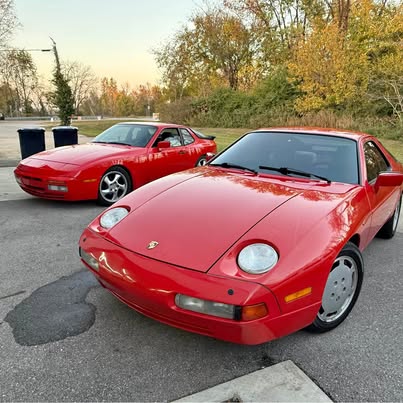
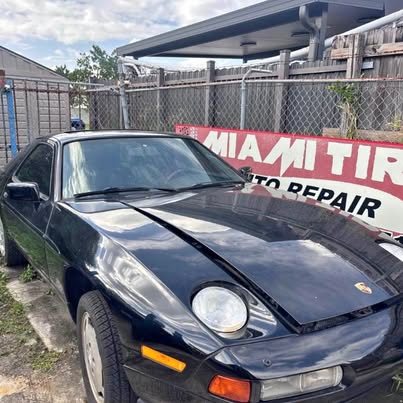
A note on scope. This guide is about the S4 specifically, not the whole 928 line — the earlier 928, 928 S and 928 S2, and the later GT and GTS, have their own companion guides and appear here only where they help you place an S4 or avoid buying one misdescribed as something else. Our own listings pool for the S4 is small: 4 cars, all 4 for sale, all from Facebook Marketplace, split evenly between 1988 and 1989 — 2 from each year. All 4 are automatics, which fairly reflects how S4s were bought new in the United States. The colours in that pool of 4 are 2 in Red, 1 in Tan and 1 in Black; the cars sit in Indiana, Washington, Texas and Florida. Treat those numbers as a snapshot of a thin market, not a census: a sample of 4 can be moved by a single car.
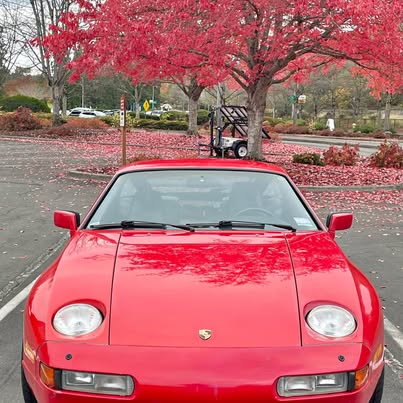
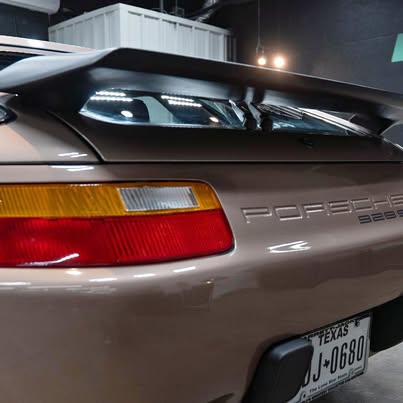
What Porsche changed for the S4, over the 928 S2 it replaced, was substantial in both directions — looks and lungs. The body received the most thorough facelift of the 928's life: a smoother, re-profiled nose with the driving lamps and indicators integrated into the bumper moulding, revised sills, teardrop-shaped door mirrors in place of the earlier flag mirrors, and at the rear a proper raised spoiler above a reworked tail panel with a full-width reflective strip between the lamps. The effect is of a car that has been in a wind tunnel and come out tidier — which is exactly what happened. Under the bonnet sat a heavily reworked V8: still 5.0 litres, but now with four valves per cylinder, double overhead camshafts per bank, and 316 hp — clear water between the S4 and every 928 before it. This was not a facelift with a badge. It was a new top half of the engine in a reshaped body.
The layout underneath was the 928's signature and the S4 kept it intact: engine in the front, gearbox in the back, the V8 driving through a rigid torque tube to a transaxle between the rear wheels. The resulting weight distribution is close to 50:50, which no conventional front-engined car of the period could match — and it is why a 928 feels so different from a Corvette or an XJS of the same age: neutral, planted, unhurried even when travelling very fast. At the rear, the famous Weissach axle's geometry toes the outside rear wheel in under lift-off and braking, countering trailing-throttle oversteer. It works: an S4 is one of the most stable fast cars of the 1980s, in the wet included.
In period, the S4's rivals were the Jaguar XJS, the BMW 6-series and latterly the 850i, the Mercedes-Benz SL and SEC coupés, and — in the United States — the Corvette, which cost half as much and went nearly as fast. The Porsche was the expensive, engineered answer: aluminium doors, bonnet and front wings to keep weight off the nose, a galvanised steel monocoque that has aged far better than most 1980s bodies, and a cockpit interior whose binnacle moves with the adjustable steering column so the instruments are never masked. It was also a car designed to be used daily and driven across continents, and that is how the survivors have mostly lived — which cuts both ways for a buyer. A well-kept S4 is a genuinely modern-feeling classic. A neglected one is a deferred-maintenance iceberg, because almost nothing on this car is cheap, and almost everything on it was designed to be serviced on schedule by people who did.
That is the one-sentence summary of this entire guide: the S4's engine and structure are exceptionally durable, and the difference between a good one and a ruinous one is the service history — above all, documented timing-belt work.
The models
There is only one S4, but there are five model years of it, two gearboxes, one very rare stripped-out relation, and two neighbouring models — the GT and the GTS — that sellers routinely blur into it. This section untangles them.
| Model | Years | Engine | Output | Built | Character |
|---|---|---|---|---|---|
| 928 S4 (manual) | 1987–1991 | 5.0 V8 32v (M28.41/42) | 316 hp | see text | The enthusiast's S4; a small minority of production |
| 928 S4 (automatic) | 1987–1991 | 5.0 V8 32v (M28.41/42) | 316 hp | see text | The GT as most were bought; the core of the market |
| 928 Clubsport (CS) | 1988–1989 | 5.0 V8 32v | 316 hp | about 27 | Lightweight, manual-only; a collector car, not a variant to stumble into |
| 928 GT | 1989–1991 | 5.0 V8 32v | 326 hp | limited run | Manual-only, sportier; the S4's sharper brother, not an S4 |
| 928 GTS | 1992–1995 | 5.4 V8 32v | 345 hp | 2,904 total 928 GTS | The wide-body finale; a different car and a different price class |
A word of honesty about the "Built" column: Porsche did not publish a clean S4 production split that a buyer's guide can quote with confidence, and total 928 production across all variants from 1977 to 1995 was about 61,000 cars. Anyone who gives you a precise S4 build figure to the unit is repeating a number neither of you can verify. What matters for buying is the shape of the market: the S4 was a low-volume, high-price car, the great majority of US-delivered cars were automatics, and manuals are scarce enough that their rarity is itself a pricing factor, covered in the Values section.
The S4 itself (1987–1991). Every S4 carries the same fundamentals: the 4,957 cc 32-valve V8 rated at 316 hp, the facelifted body with the raised rear spoiler, and the transaxle layout. Model-year changes were evolutionary — alarm and locking logic, air-conditioning components and interior trim all saw running changes — and by 1990–1991 the S4 benefited from everything Porsche had learned in the first three years. Year-for-year a later S4 is marginally the safer purchase, but condition and history outweigh model year by an order of magnitude. A documented 1987 car beats a shiny, history-free 1991 car every time.
Manual or automatic is the great divide, and it gets its own treatment in the engines and gearboxes section below. For identification: the manual is a five-speed with a dog-leg first gear (first is back and to the left, out of the main H), and the automatic is a four-speed. In our own pool of 4 S4s, all 4 are automatics — 4 of 4 — which exaggerates the real split only slightly; in the US market the automatic was always the majority choice, and a genuine manual S4 is the car other 928 owners ask about at fuel stations.
The Clubsport (1988–1989) is the S4's rare lightweight relation and the one most likely to be misrepresented in an advert, in both directions. Porsche built the 928 CS as a homologation-flavoured exercise: manual gearbox only, the same 316 hp engine, but with weight stripped out — lighter seats, reduced sound deadening and trim, no rear wiper, no air conditioning on most, and forged lightweight wheels. Production was tiny, around 27 cars, all for Europe. The traps are symmetrical: an ordinary S4 dressed with Clubsport wheels and a badge is not a Clubsport and never will be, and a genuine CS is a collector proposition that should come with factory documentation proving it, because nothing about a stripped interior and a missing rear wiper is hard to fake. If a seller offers you a "Clubsport" at an S4 price, you are looking at a replica; at a Clubsport price, the burden of proof — build sheet, option codes, provenance — is entirely theirs.
The GT (1989–1991) arrived midway through the S4's life as the driver's 928: manual only, a small power increase to 326 hp from revised engine management and exhaust, firmer suspension, wider rear wheels, and — on later cars — the PSD limited-slip differential described below. The GT is not an S4 trim level but a separate model with its own premium, and it matters here for one reason: a manual S4 is not a GT and must not be priced as one. Check the model designation on the paperwork and the build sticker, not the seller's enthusiasm. The GTS (1992–1995) closed the 928 story with a 5.4-litre engine, flared rear arches and 345 hp; it is mentioned only to be excluded — nothing in this guide's S4 advice should be read across to it.
Finally, the identity checks that settle what an S4 actually is. The VIN decodes the model year and market; the build sticker (in the boot, and duplicated in the service book) carries the engine and gearbox codes and the factory option list; and the engine type is in the M28.41/42 family for every S4 — the manual and automatic cars carry the two codes between them. A claimed S4 should show the facelift body, the 32-valve engine with its wide, flat intake plenum (next section), and paperwork that agrees with both. Where any one of the three disagrees with the others, price the car as what the weakest evidence says it is.
Engines and gearboxes
The 5.0-litre 32-valve V8: M28.41/42
One engine serves the whole S4 range, and it is a thoroughbred. The M28 family began life in 1977 as a 4.5-litre, single-overhead-cam, two-valve V8 — all-alloy, 90 degrees between the banks, deliberately understressed. For the S4, Porsche rebuilt the top end completely: new heads with double overhead camshafts per bank and four valves per cylinder — 32 valves in all — driven by a single very long toothed belt at the front of the engine. Displacement is 4,957 cc from a 100 mm bore and 78.9 mm stroke. Compression is 10.0:1; fuel and ignition are managed by Bosch LH-Jetronic with a hot-wire air-mass meter alongside EZK electronic ignition with knock sensing — sophisticated management for 1987 — and the rated output is 316 hp at 6,000 rpm with 317 lb-ft (430 Nm) of torque at around 3,000 rpm. That torque figure, and where it arrives, is the engine's personality: not a peaky motor that needs revving, but a big, quiet wave of thrust from fast-idle speeds upward — precisely what a grand tourer wants.
Recognising the engine matters, because the 32-valve top end is what separates an S4 from an earlier, cheaper 928 S2 wearing an S4 badge. The giveaway is the intake: the 32-valve engine breathes through a broad, flat, cast plenum in the valley of the V, with cam covers either side carrying the full width of the four-cam layout. The earlier 16-valve engines look visibly narrower and busier. If a claimed S4's engine looks like the early car, walk the paperwork back to the start, because one of them is lying.
In service, a healthy M28.41/42 starts promptly hot or cold, idles smoothly without hunting, pulls without hesitation from 2,000 rpm to the red line, and shows no blue smoke on start-up, under load, or on the overrun. Oil pressure is strong; there is no top-end clatter beyond a momentary whisper at a cold start. These engines are genuinely long-lived — 200,000 miles is unremarkable on a maintained car — because the bottom end is generously proportioned and never highly stressed in road use. What kills them is almost never wear. It is the timing belt, which earns its own treatment in Problem areas because it is the single most important mechanical fact about buying this car: the 32-valve M28 is an interference engine, the belt also drives the water pump, and a belt that lets go takes valves, and usually pistons, with it.
Two smaller engine characteristics catch buyers out. The first is oil consumption: a quart in 600–1,000 miles can be within factory tolerance, particularly on cars used gently, and is not by itself a death sentence — but it must be a known, stable figure from the owner's records, not a discovery you make on the drive home. Judge the pattern (smoke, plug condition, leak-down numbers if you commission them), not the dipstick alone. The second is the hydraulic lifters' dependence on oil quality and pressure: neglected oil turns a silent top end into a ticking one, usually worst at cold start and fading as pressure builds. A car that ticks loudly and continuously when hot is telling you about its service history in the most literal way.
Fuel is premium, always — the knock-sensing ignition will protect the engine on lesser fuel by retarding timing, at the cost of the performance you paid for. Expect consumption in the mid-teens in town and the low twenties on a highway run.
Gearboxes: the five-speed manual and the four-speed automatic
The S4's gearbox lives at the back of the car, in unit with the final drive, at the far end of the torque tube — so shift quality is also evidence about the tube and its bearings, covered as a problem area below.
The five-speed manual (G28 family) is the enthusiast's choice and the market's rarity. Its gate is a dog-leg: first sits down and to the left, on its own, with second through fifth in the conventional H above it — a racing pattern that puts the gears you use most (second and third) directly opposite each other. It confuses every first-time driver for exactly one journey and then makes complete sense. A good G28 changes cleanly in all gears, with synchromesh that survives a brisk change into second from cold; a worn one crunches second, then third, and baulks at first at a standstill. The clutch is hydraulic and moderately heavy — correct for the car — and judder on take-up points at the clutch or torque-tube area rather than driver error. Manual cars carry a premium and a warning in equal measure: they were bought by drivers and driven as drivers drive, and a manual S4 with a tired second-gear synchro faces a transaxle-out rebuild at specialist prices, realistically $4,000–7,000 done properly. Test second gear, cold, three times, before you fall for the car.
The four-speed automatic is the gearbox in the overwhelming majority of S4s — all 4 of the cars in our pool have it — and it suits the car better than purists admit. It is a robust four-speed unit (Porsche's A28 family, developed from Mercedes-Benz practice, which is why its behaviour feels so similar to a period Mercedes automatic) with an old-school torque-converter character: smooth, unhurried changes that firm up under load, and a kickdown that works best when you commit to it fully. In an S4 the automatic is not the slow option in any sense that matters on the road — the V8's torque fills in every gap the gearing leaves — and for cross-country work it is arguably the correct gearbox. Judge it on three things: the quality of the 2–3 change under load (the first place wear shows), the delay and thump engaging reverse (a long pause and a clunk is wear, not character), and the fluid — red and sweet-smelling on the dipstick, not brown and burnt. A full rebuild is a $3,500–6,000 event at a specialist, so a box that flares between gears is a price negotiation measured in thousands, not a quirk.
The differential and PSD. Standard S4s drive through an open differential or a conventional limited-slip depending on specification and market — check the build sticker rather than assuming. The headline system arrived at the end of the S4's run and belongs properly to the GT: PSD, Porsche Sperr Differential, an electronically controlled limited-slip differential that uses the ABS wheel-speed sensors and a hydraulic actuator to vary the locking effect from open to nearly fully locked, anticipating wheelspin rather than merely reacting to it. On any car that has it, the PSD warning lamp must light with the ignition and go out, and the system must show no stored faults on a diagnostic read. Any seller description of an S4 as "PSD-equipped" needs the build sticker to back it up, because most S4s do not have it. Do not pay a GT-style premium for a system the car never had.
Problem areas
The S4's problem areas divide into one item that can destroy the engine in a second, a handful of systems that degrade expensively if ignored, and the usual corrosion and trim issues in milder form than most 1980s cars suffer. Work through them in the order below — that is the order of financial consequence.
The timing belt, the water pump, and the service that prices the car
Everything in this subsection is the same job viewed from different angles, and it is the first thing to establish on any S4 — before the test drive, before anything.
The 32-valve M28's camshafts — all four — and its water pump are driven by one long toothed belt at the front of the engine. The engine is an interference design: valves and pistons occupy the same space at different times, and the belt keeps those times apart. If it breaks or jumps teeth, valves meet pistons: up to 32 bent valves, damaged pistons, two heads off, and a rebuild bill that starts around $8,000 and can comfortably double — on a car whose whole value may be in that range. There is no warning and no luck involved; there is only the belt's age and condition.
Porsche's own service interval for the belt was generous by modern standards — inspection-based, with long mileage allowances — and the specialist consensus formed over thirty years of these engines is stricter and is the one to buy by: replace the belt on time as well as mileage, roughly every 5 years or 60,000 miles, whichever comes first, and treat any car whose belt age is unknown as a car whose belt is due today. Rubber ages in a garaged car exactly as it does in a driven one, and the classic S4 disaster is the low-mileage, long-stored car whose 15-year-old belt lets go on its new owner's first enthusiastic drive. Low mileage does not protect the belt. It endangers it.
The economics follow from the access. The belt job is a front-of-engine strip-down — hours of skilled labour before any part is bought — so the rational service replaces everything in the belt's path while it is open:
- The water pump. It is driven by the belt, its bearing and seal live in the belt run, and a pump that seizes or sheds its impeller can take the belt with it. Fitting a new belt against an old pump is false economy of the purest kind; the pump is replaced with the belt as a matter of course, and any invoice that shows a belt without a pump should prompt the question why.
- The tensioner and idlers. The original tensioner is a hydraulic/mechanical device whose condition is judged at the service; worn rollers and a tired tensioner are replaced at the same time. There is also a well-regarded aftermarket conversion (the so-called "Porken" tensioner, adapting a modern Audi-style automatic tensioner to the 928) that many specialists fit for a more consistent, self-adjusting belt tension than the original design maintains between services. A car wearing one is not a modification to worry you — it is a sign the last belt service was done by someone who knew the car's weak points.
- The front seals. Camshaft and crankshaft front seals are accessible during the job and are cheap insurance against oil reaching the new belt — oil contamination is a belt-killer in its own right.
Budget the full belt-and-pump service at a knowledgeable independent specialist at roughly $2,500–4,500 all-in, depending on how much of the supporting cast needs replacing. That figure is the single most useful number in S4 ownership: it is the price of converting the car's biggest risk into a known quantity, it recurs on a five-year cycle, and a car that has just had it done — with an itemised invoice naming the pump, tensioner and rollers — is worth a tangible premium over an identical car that has not. Conversely, "the belt was done a few years ago" with no invoice is worth nothing at all. The invoice is the service. No invoice, no credit: price the job into your offer.
One related check completes the picture. The belt can be inspected — the upper covers come off and the belt's condition, tension and the state of the pump and rollers can be assessed by a specialist in an hour — and on any car with an undocumented belt, paying for that inspection before purchase is money well spent. Ask about the water pump's provenance too: pumps vary in quality, and a belt service done cheaply with a poor pump has had the risk rearranged, not removed.
The torque tube and transaxle
The driveshaft inside the torque tube is carried on bearings that wear with age and mileage. The symptoms arrive gradually: a hum or rumble that follows engine speed rather than road speed, a vibration in a particular rev band felt through the seat and gear lever, sometimes a rattle at idle that disappears as revs rise. Because the shaft spins at engine speed with the gearbox at its far end, torque-tube bearing wear is routinely misdiagnosed as a gearbox fault, an engine-mount fault, or "they all do that." They do not all do that. A quiet car is quiet.
The repair is a significant job — transaxle out, tube apart, bearings pressed, shaft alignment set up properly. Budget roughly $2,000–4,000 at a specialist including the wear items disturbed along the way. It is not a reason to reject a car outright — it is a known, bounded job — but it must be priced in, and the test is easy: hold the car at steady speeds in the 2,500–3,500 rpm band in a high gear and listen and feel. The tube announces itself there if it is going to announce itself at all.
The transaxle itself is durable in both forms; its enemies are old fluid and neglect. Automatic cars want fluid and filter changes on a sane interval whatever the period's sealed-for-life claims said, and dark, burnt fluid on the dipstick is a service-history verdict as much as a gearbox one. Manual cars wear synchromesh, second gear first, as described above.
Engine mounts belong here because their symptom is a driveline one. The M28 sits on hydraulic mounts that collapse with age, letting the engine sit low enough for the oil pan to near the steering rack and shifting the whole drivetrain's geometry. The check is visual — a specialist knows the correct engine height — and the fix, roughly $600–1,200 the pair fitted, transforms cars whose owners had blamed the gearbox or the tube. On any S4 with a driveline vibration, mounts are checked before tubes are condemned.
Electrics: the central electric panel and the grounds
If the timing belt is the S4's acute risk, its electrics are the chronic one — and the good news is that they are chronic in a diagnosable, fixable way, because the failure points are known and concentrated.
The centre of the system is the Central Electric (CE) panel — the fuse and relay board in the passenger footwell, under the carpet and a cover board. Everything electrical in the car passes through it, and its enemies are water and time. Water arrives from a leaking windscreen seal or a blocked sunroof drain and tracks exactly where you would least want it; time corrodes the fuse contacts and relay sockets until resistances build, voltages drop, and systems fail in combinations that look random: windows and sunroof together, fans and wipers, gauges that die and resurrect. The classic S4 electrical fault is not a failed component — it is a component receiving 9 volts through a corroded panel and behaving accordingly.
The discipline this imposes on a buyer is specific. First, lift the passenger carpet and look at the CE panel on every viewing. Corrosion, green bloom on the contacts, water staining and a smell of damp are all findings; a dry, clean panel is one of the best signs a 928 can show you. Second, work every electrical consumer on the car — windows, sunroof, mirrors, seats, fans on all speeds, wipers and washers, lights, hatch release, the instrument cluster's full sweep — because the pattern of what works and what does not is the diagnosis. Third, know that the cure is usually labour, not parts: cleaning and re-tensioning fuse contacts, renewing relays (standard types, and cheap), and repairing the water's entry point. A specialist electrical sort-out runs $500–2,000 depending on how far the corrosion has travelled; a car needing a replacement panel is rarer and dearer, and is a car whose water leak has been running for years.
Grounds are the CE panel's partner in crime. Corroded ground points around the body and engine produce the same family of ghosts: dim or flickering lights, slow windows, wandering gauges, intermittent no-crank. The main engine-to-body ground strap and the battery terminals are the first suspects in any "electrical gremlin" story, and cleaning grounds is the cheapest hour of labour in 928 ownership. The myth to correct here is the one that says 928 electrics are hopelessly unreliable. They are complex — the car was a flagship — but the architecture is conventional, the diagrams exist, the specialist knowledge is deep, and most faults trace to the panel, the grounds, the relays, or a switch, in that order. What is unreliable is a car whose footwell has been wet for a decade. Buy the dry one.
Two named systems deserve their own lines. The instrument cluster develops faults with age — failing solder joints and capacitors show as dead or intermittent gauges — and specialist cluster repair is a few hundred dollars, not a catastrophe. And the alarm and central locking on later cars can immobilise a car whose door-lock microswitches have failed; verify the locking works from both doors and the hatch, and treat an alarm fault on a viewing as a genuine finding, not a shrug.
Cooling, air conditioning, and the heat problem
A 5.0-litre V8 in a low, sleek nose is a cooling challenge Porsche solved with a large radiator, electric fans, and very little margin for neglect. The system's age enemies are the radiator itself (plastic end tanks, a core that silts up), the thermostat, the fan control and its temperature switches, the coolant hoses, and the water pump covered above. An S4 that holds a steady temperature in traffic on a hot day, fans cycling correctly, has passed a real examination; a car whose gauge climbs at idle, or whose fans run constantly or never, has a bill in preparation — and overheating a 32-valve M28, alloy heads on an alloy block, is how warping and head-gasket work enters the conversation. A cooling-system refresh (radiator, thermostat, switches, hoses as needed) runs roughly $1,000–2,500. On the test drive, use the air conditioning as a cooling test as well as a comfort one: full A/C load in traffic is the hardest work the cooling system ever does.
The air conditioning itself is period R12 equipment on early cars, with R134a conversions common and of variable quality. Test it properly cold on a warm day; a weak system may need anything from a recharge to a compressor and condenser, and the honest spread of A/C recommissioning is $500–2,500. On a car you intend to use as a GT — the entire point of an S4 — working air conditioning is not optional, and its absence is priced accordingly.
Suspension, steering and brakes
The S4's suspension — double wishbones at the front, the Weissach layout at the rear — is durable in structure and perishable in rubber. By now every original bush, ball-joint boot and damper is either replaced or due, and the difference between a car on fresh bushes and dampers and one on originals is the difference between the steering feel the car was praised for and a vague, crashing approximation of it. Budget a full refresh — dampers, bushes, mounts, alignment — at $2,500–5,000, and read a recent invoice for that work as one of the strongest value signals a car can carry: it is money the previous owner spent that you will otherwise spend yourself.
Specific checks: the power-steering rack leaks from its seals and high-pressure hose, and a groaning pump or heaviness at parking speeds points there first — rack work runs $800–1,800. A car that has never had a four-wheel alignment in your seller's ownership should get one on yours, because the rear toe settings are the whole point of the Weissach design. Brakes are big, effective four-piston fixed-caliper discs whose enemies are those of standing cars: seized pistons, perished flex hoses, lipped and rust-banded discs. A full brake refresh is $1,000–2,000 and, like the belt, a recommissioning certainty on any car that has sat.
Body, rust, and the aluminium panels
Here the S4 is genuinely better news than most of its contemporaries. The monocoque is galvanised steel, and structural rust of the kind that writes off a 1980s Mercedes or Jaguar is uncommon on a 928 that has lived a normal life. Uncommon is not unknown, and the places to look are where water sits: the sill ends and jacking areas, the floor edges, around the windscreen and rear hatch seals, the battery area, and the bottom of the spare-wheel well. Lift the boot carpet and look. Surface corrosion on suspension components is normal and cosmetic; perforation in the shell is a negotiation or a walk-away, as on any car.
The panels are the subtle part. The doors, bonnet and front wings are aluminium, hung on a steel car, and they create two buyer traps. The first is repair quality: aluminium panels are often replaced rather than straightened after parking damage — panel gaps and paint texture that change at the front wings or doors are telling you a story, and the magnet in your pocket confirms which panels are aluminium (it will not stick). A steel front wing on an S4 is a replacement panel from an accident repair until proven otherwise. The second trap is paint: aluminium and steel age paint differently, so a resprayed S4 can show a two-tone effect between the front panels and the shell in certain lights, most visibly on red cars — and 2 of the 4 cars in our pool are red. On a red S4, view the car in flat, overcast light and walk around it slowly; mismatched panels are a repaint to price, not necessarily a car to reject.
The hatch seal deserves a line of its own: the rear hatch glass is huge, its seal perishes, and water that enters there runs into the boot and toward the spare wheel well. Damp in the boot of a 928 is a hatch-seal conversation first and a rust conversation second. The pop-up headlamps, a 928 signature, must rise together, evenly, and park flush — a lazy or lopsided lamp is usually the linkage or the motor, a few hundred dollars, but a lamp that will not rise is a roadworthiness failure and a night-time problem.
Interior and trim
The S4's cabin is one of its glories — deeply bolstered seats, that tilting instrument binnacle, thick leather on most cars — and its condition is a service-history document in its own right: interiors this well made only deteriorate when cars are left in the sun or used carelessly.
Leather and seats. The seat bolsters, driver's side first, wear and crack; the electric seat mechanisms (motors, switches, memory on later cars) fail one function at a time, and a seat that will not adjust is a fault in its own right. Test every direction of both front seats. Re-trimming a pair of 928 seats properly is $2,000–4,000; a good original interior is worth paying for because it cannot be recreated at the price difference.
The dashboard and trim. Sun is the enemy: dashboards crack along the top, the covering shrinking and splitting, and a cracked dash is a dashboard-out repair that owners defer forever — price it at $1,000–2,500 to do properly, or accept it as the car's visible flaw. Headlinings sag. The climate-control panel's sliders wear, and the vacuum-operated heater and A/C flap actuators develop leaks that present as air coming from the wrong vents or a system that will only demist — a classic 928 fault whose cure is dash-deep labour to reach cheap rubber diaphragms.
The odometer carries a specifically 928 trap: it is driven by a small plastic gear that strips with age, so a car can be driven for years with a dead odometer while the speedometer works perfectly. Mileage claims therefore stand or fall on the documentary record — service stamps, inspection records, invoices with mileages — never on the odometer alone, and a car whose recorded mileage has flat-lined in the paperwork has a true mileage that is unknown. Buy it as unknown, at an unknown-mileage price.
How to inspect one
Allow two hours, not one — the S4 has more systems to exercise than most classics, and the electrical workout alone takes twenty minutes. Bring a torch and a magnet wrapped in cloth. If the car passes you, the pre-purchase inspection that matters is a specialist one, on a lift, with the timing-belt question answered — on an S4 it is the best $250–400 you will ever spend, because the belt's condition is the car's condition.
- Paperwork first, and the belt invoice above all. Match the VIN to the title and the car's plates. Then go straight to the service file and find the timing-belt invoice: belt, water pump, tensioner and rollers, itemised, dated, with mileage. No invoice means the job is due today — carry the $2,500–4,500 figure from the problem-areas section into every price conversation from this point. While you are in the file, read the mileages across the years of invoices for the odometer-gear trap: a mileage that stalls in the paperwork means an odometer that stopped, and a true mileage you do not know.
- Identify the car. Facelift nose with integrated lamps, raised rear spoiler, teardrop mirrors, and under the bonnet the wide, flat plenum of the 32-valve engine. Check the build sticker in the boot against the car: engine family M28.41/42, gearbox type, options. A car that fails this step is not an S4 and is not priced further as one.
- Cold start, from outside the car. Insist the engine is stone cold. Watch for blue smoke at start-up, listen for top-end ticking that should fade within seconds as the hydraulic lifters fill, and note the idle quality once it settles — hunting or surging points at the engine management or an air leak, not at "character."
- The passenger footwell. Before the test drive, lift the passenger-side carpet and inspect the Central Electric panel: dry and clean is the pass; corrosion, green bloom or water staining reprices the car's electrics on the spot. Smell the carpet — damp here explains electrical faults everywhere.
- Every electrical consumer, systematically. Windows, sunroof, mirrors, both seats in every direction, fans on all speeds, wipers and washers, all lights including the pop-up lamps rising together and parking flush, hatch release, central locking from both doors, and the full instrument cluster — every gauge alive, every warning lamp lighting at ignition and extinguishing after start. On a PSD-equipped car (build sticker first), the PSD lamp joins this check. Write down every failure; the pattern is the diagnosis and the total is the negotiation.
- Under the bonnet, engine warm. Oil level and condition, coolant level and colour, and a look at the front of the engine for oil reaching the belt area from the cam and crank seals. Check the engine's sit: a motor visibly low or tilted is showing you collapsed mounts. Inspect the coolant hoses by hand — soft, swollen or crunchy are all findings.
- Underneath, on the lift. Sills and jacking points, floor edges, spare-wheel well from below, steering rack boots and leaks, suspension bushes, brake disc faces and flex hoses, and the transaxle for fluid weeps. The galvanised shell should make this the least frightening step — perforation anywhere structural is the exception that ends the inspection.
- The magnet walk. Around the aluminium panels — bonnet, doors, front wings, where the magnet must not stick — and the steel shell, where it must. A steel front wing, or filler anywhere, is accident history to be explained. On a red car, do the paint-match circuit in flat light now, panel by panel, aluminium against steel.
- The test drive: gearbox and tube. Fifteen miles minimum, mixed roads. In an automatic, judge the 2–3 change under load and the pause-and-thump into reverse afterwards; in a manual, test second-gear synchromesh cold three times. In either car, hold 2,500–3,500 rpm in a high gear and listen for the torque tube's hum or vibration band. Then brake firmly from speed: straight, silent, no judder.
- The test drive: temperature and air. In traffic, with the air conditioning on full, watch the temperature gauge for ten minutes. It should settle and stay, fans cycling. Then judge the A/C's cold honestly — on a southern car this step and step 9 are the whole ballgame. Check the heater and vent flaps too: air only from the demister vents is the vacuum-actuator fault from the interior section.
- Stance and steering. Park on level ground and stand back. The S4 should sit level and even; a corner down is a spring or a mount. Steering should be precise and quiet over bumps — knocks and vagueness are the suspension-refresh invoice introducing itself.
- Interior last, seats first. Sit in the driver's seat and work every adjustment. Check the dash top for sun cracks, the headlining for sag, the bolster leather for wear-through, and the boot for damp. A dry boot, a clean CE panel and a belt invoice is the S4 trifecta — a car that shows you all three is a car whose owner understood the assignment.
Values
The figures that matter for this model are computed from this site's own listings and recorded sales, and they sit below this guide — the listed-now summary and the market block are refreshed every time the site rebuilds, so use them rather than any number quoted elsewhere. What follows is how to read them, with a warning specific to this model: our S4 pool is 4 cars. A sample that small has no meaningful median — it has four individual cars, conditions and sellers, and a single exceptional or desperate listing will drag any computed figure violently. Read the range, read the cars, and distrust any single headline number for the S4 more than for almost any other model in this programme.
The structure of S4 value, underneath the noise, is a ladder of four rungs made of paperwork and specification rather than year or colour.
The manual premium is real and it is the biggest single specification effect. Manual S4s were a small minority of production, they are the cars the enthusiast market wants, and they carry a substantial premium over an equivalent automatic — substantial enough that the gearbox question should be settled before any other in a valuation. Our pool, all 4 cars automatic, shows you the volume end of the market; manuals trade in a thinner, dearer market of their own. The premium is not infinite, though: it attaches to a car whose synchromesh and clutch are healthy, and a manual needing the gearbox work priced in the engines section gives much of it back.
The belt service is the second rung, and it is nearly as powerful. A car with an itemised, recent belt-and-pump invoice is worth close to the cost of that service more than an identical car without one — because the buyer of the undocumented car must spend it immediately, and both sides know it. This is the rare case where a service genuinely adds its cost to the value, because it removes a risk that can total the engine.
Condition and originality form the third rung. The spread between the best and worst S4 is wide — wider than the spread between model years, colours or mileages — and it is driven by the interior's originality, the paint's honesty across the aluminium and steel panels, and the state of the suspension and electrics. A car needing the full recommissioning suite (belt, brakes, bushes, electrical sort-out) is carrying five figures of catch-up work, and the market prices it accordingly.
The fourth rung is the special cars, and it is a different market. A genuine Clubsport is not a dearer S4 but a collector car priced against other collector cars, and the GT similarly trades above the S4 on its own scarcity. Neither should be used to value an ordinary S4, and an ordinary S4 must never be valued as either — the identity checks in The models section exist precisely because these gaps are where misdescription lives.
Two reading cautions apply to every figure the market block shows you. These are asking prices, not achieved prices, and the S4 — a car with a devoted but small buyer pool — is a model where sellers routinely test the market high and wait; where auction results exist, they are the corrective, and they usually sit below the asking figures. And the project-versus-driver gap on an S4 is a cliff, not a slope: because the catch-up costs are fixed and large, a non-running or long-stored S4 is worth a small fraction of a sorted driver, and "buy cheap, fix it myself" only works if your labour is free. For everyone else, the most expensive S4 is the cheapest one, bought twice — once at purchase, once at the specialist.
Parts and ownership
The S4 sits in the middle of the classic-Porsche support world: not as effortlessly supplied as a 911 of the same age — nothing is — but far better supported than its low production numbers suggest, because Porsche Classic actively supplies the transaxle cars, the specialist scene in the US and Europe is deep and knowledgeable, and the model's following has kept remanufacture of its known weak points commercially worthwhile.
Easy: service consumables (filters, plugs, auxiliary belts), brake discs, pads and caliper rebuild kits, dampers and standard suspension bushes, coolant hoses, thermostats, radiators, CE-panel relays and fuses, and most LH-Jetronic engine sensors. Order today, fit this week, at prices that are Porsche prices but not absurd ones.
Harder and dearer: timing-belt components are available but the job is labour — the $2,500–4,500 figure in Problem areas is mostly time plus the pump and tensioner hardware. Torque-tube bearings and the labour around them, instrument-cluster rebuilds (specialist, a few hundred dollars), CE panels in good used condition, PSD components for the few cars that have them, interior trim in original materials, crack-free dashboards, and the aluminium panels themselves — a good-used aluminium front wing or door is a hunt, not an order, which is another reason the magnet walk in the inspection matters. The aftermarket helps where it counts: the uprated belt-tensioner conversion, rebuilt clusters and remanufactured steering racks all exist because the specialist scene made them exist.
Running costs. A sorted S4 is a realistic regular-use classic — that was its design brief — but budget like an adult. Fuel in the mid-teens around town and low twenties on the highway, premium always. Insurance in line with the car's value. An annual specialist service, and a sinking fund for the five-year belt cycle: owners who put the belt money aside monthly never face the bill as a crisis, and owners who do not sell the car with the belt due — which is how the undocumented cars in the market got that way. First-year catch-up on a neglected-but-honest car runs $3,000–7,000, before the belt if the belt is also due; on a car that has sat for years, add the full recommissioning list — fuel system cleaned end to end (modern ethanol fuel attacks period rubber and varnishes tanks), every brake component inspected, all fluids renewed. Buy the car in regular use over the car that has been asleep, at a higher price, every time — the S4 punishes storage more than it punishes mileage.
The ownership upside deserves the last word here, because it is why people put up with the rest: this is a 150 mph, air-conditioned, leather-lined grand tourer with 50:50 balance, galvanised bodywork, an engine that will outlast its owner, and one of the great V8 soundtracks at a volume civilised enough to cross a continent with. Sorted, it is not a car you endure for the hobby. It is a car you use.
Which one to buy
- The all-rounder: a 1990–1991 automatic with a full history. The last of the run, the detail improvements baked in, the gearbox the car was mostly built with, and — if the belt invoice is recent and itemised — the lowest-risk S4 ownership there is.
- The enthusiast's buy: a manual S4, any year, bought on its synchromesh. The dog-leg five-speed transforms the car's character and the market knows it, so you will pay the premium — pay it for a car whose second gear is silent from cold, and walk from one that crunches, however rare the seller says it is. Another will come.
- The value buy: a 1987–1989 automatic with paperwork. The early facelift cars are mechanically the same proposition as the late ones and trade softer; our own pool is exactly these — 1988 and 1989 automatics, 2 of each — and a documented example is the cheapest honest route into a 32-valve 928. The discount belongs to the market's year-snobbery, not to the car.
- The collector car: a genuine Clubsport or GT — bought as what it is. Both are wonderful, both are dear, and both demand factory documentation before any premium is discussed. Never pay for either badge on an S4's paperwork.
- The one to avoid: the stored car with no belt history, at any price that tempts you. Long storage is the S4's worst environment — belt ageing, brake seizure, fuel varnish, CE-panel damp — and its low odometer is the trap, not the prize.
And the rule that overrides all of the above: buy the service history, then the car. On most classics you buy the body and fix the mechanics; on an S4 the body is galvanised and the mechanics are strong, and the whole game is the paperwork — a recent itemised timing-belt service, a dry central-electric panel, a file that proves the mileage. A documented S4 is a durable, usable GT. An undocumented one is a $2,500–4,500 bill with a car attached, and possibly a $15,000 one. The history is not part of this car's value. On this model, the history is the value.
See the 20 928 cars currently listed.
What they sell for: 928 sale prices.