
Saab 900 Convertible buyer's guide
Saab 900 Convertible -- the model's own buyer's guide: variants, values and what to check.
Years listed: 1983-1993 · Series: 900
Overview and history
The Saab 900 Turbo is the car that taught the world turbocharging could be a road-car virtue rather than a racing gimmick. Other makers had bolted turbochargers to cars before Saab — usually to make a fast car faster, briefly, before something melted. Saab's insight, arrived at in Trollhättan in the late 1970s, was the opposite: a small turbocharger, blowing modest boost into a modest engine, to give a sensible front-wheel-drive family car the overtaking punch of something much larger, without the weight or thirst of a big engine. That idea — downsizing, a generation before the word existed — is why the classic 900 Turbo matters, and why good ones are now bought deliberately.
The story starts with the Saab 99. Saab had been building quirky, aerodynamic, front-drive cars since 1947, but the 99 of 1968 was its first modern car: a slant-four engine (developed from a Triumph design, then comprehensively re-engineered by Saab), front-wheel drive, a roll-cage-strong shell and a hatchback variant, the Combi Coupé, that made it genuinely versatile. In 1977 Saab showed the 99 Turbo, and in 1978 it reached buyers — one of the first turbocharged production cars sold in meaningful numbers, and the car that put a boost gauge into ordinary showrooms. Its 145 hp felt like a magic trick in an era of strangled, emissions-choked engines.
The 900 followed in 1978, for the 1979 model year. It was not a clean-sheet car: a 99 grown longer in the nose and wheelbase to meet American crash expectations and take more equipment, with a new, more spacious interior — but the same basic architecture underneath. Engine mounted longitudinally and canted at 45 degrees, driving the front wheels through a gearbox mounted underneath it; double-wishbone front suspension; a beam rear axle; and that upright, aircraft-influenced styling with the wraparound windscreen, the front-hinged clamshell bonnet, and the ignition key between the front seats, locking the gear lever rather than the steering column. Almost everything eccentric about a classic 900 is there for a stated engineering reason, and almost everything expensive about one follows from the same decisions.
The 900 Turbo arrived for 1980 and became the flagship. Over fourteen years Saab refined it in the ways that matter: APC boost control in 1982, listening for knock and trimming boost so the engine ran safely on variable fuel; the sixteen-valve B202 in 1984, which transformed the top of the range; the convertible in 1986, built in Finland, which gave the range a second, glamorous career; and a tail of special editions — SPG, Aero, Carlsson, Turbo S — now the collector end of the market. Hatchback and saloon production ended in 1993; the convertible carried into 1994 while the GM-era "NG900" took over the hatchback role. Total classic 900 production was just over 900,000 cars; Saab never published a clean turbo-only split, and any seller quoting you an exact turbo figure is inventing it.
That 1993/94 crossover matters directly to anyone shopping the listings on this site. A 1994 900 Turbo must be identified by shape, not by year: the classic convertible sold alongside the new-generation hatchback for a season, and the two cars share nothing but the badge. The classic car has the upright wraparound screen, the clamshell bonnet, the longitudinal engine and the key between the seats; the NG900 has a transverse engine and GM switchgear. This guide covers the classic car — the "OG900" in enthusiast shorthand. Of the nine 900 Turbos currently listed here, all nine are Facebook Marketplace cars, six manual and three automatic, the years run 1986 to 1994, and convertibles dominate the pool — five are badged as convertibles, two as hatchbacks — representative of what survives in America: the open car was the US-market darling, and it was garaged accordingly.
What you are buying, in a good one, is a car of real dual character: off boost a calm, torquey, immensely strong Swedish family car with the best seats of its era; on boost — a soft, rising whoosh rather than a kick — a long-legged, elastic surge that still feels modern. It is also a car with structural rust traps and a gearbox that must be judged, not assumed.
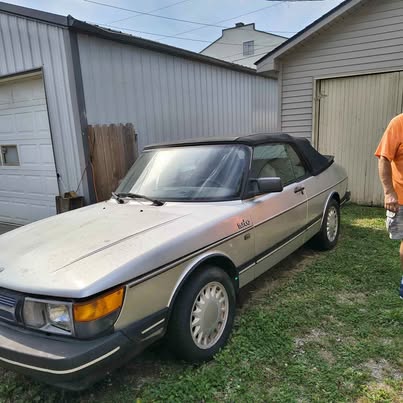
The models
The classic 900 range is wide — three- and five-door hatchbacks, two- and four-door saloons, the convertible, and engines from a carburetted 100 hp single-carb car to the last 185 hp specials — but this guide concerns the turbocharged cars only. Within that, the divisions that matter are three: eight-valve versus sixteen-valve, standard versus high-output (SPG/Aero/Turbo S) tune, and open versus closed body. Learn those three axes and every badge Saab ever applied falls into place.
| Model | Years | Engine | Output | Built | Character |
|---|---|---|---|---|---|
| 900 Turbo (8-valve) | 1980–1989 | 2.0 four (B201), turbo, APC from 1982 | 145 hp | Part of the 900 family total; no factory turbo-only split published | The original: characterful, simpler, the connoisseur's early car |
| 900 Turbo 16 | 1984–1993 | 2.0 four (B202), 16v, turbo, intercooled | 175 hp (160 hp US federal) | Part of the family total | The definitive classic Turbo: faster, smoother, better supported |
| 900 Turbo S / Aero | 1984–1993 (Europe) | B202 turbo, higher boost tune | 175–185 hp | Part of the family total | Body kit, lowered chassis, the European flagship |
| 900 SPG | 1985–1991 (US) | B202 turbo, SPG tune | 160 hp, rising to 175 hp late | Low thousands per year for the US; no clean factory total | The American Aero: the most collectible US-market variant |
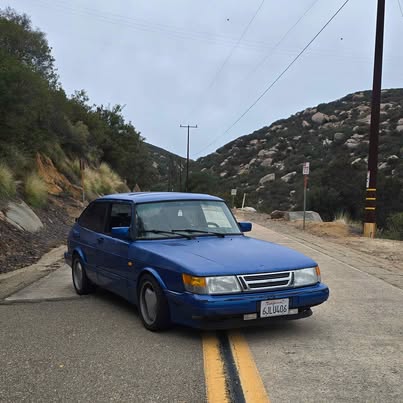
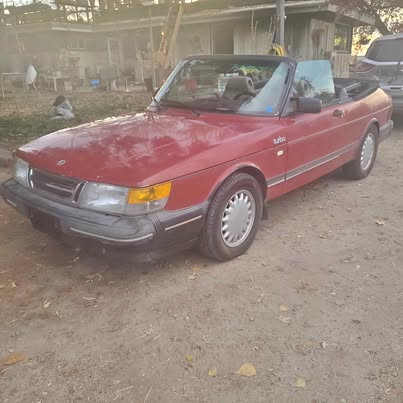
| 900 Turbo Convertible | 1986–1994 | B201 to 1988, B202 thereafter | 145–175 hp | Roughly 49,000 convertibles of all engines | The lifestyle flagship; US-market survivor pool is mostly this car |
| 900 Carlsson | 1990–1992 (Europe/UK) | B202 turbo, 185 hp tune | 185 hp | Limited run, a few hundred for the UK | Named for rally driver Erik Carlsson; rare and serious |
| 900 Ruby | 1993 (UK) | B202 turbo, 185 hp tune | 185 hp | 150 for the UK | The British run-out special, Ruby red with colour-coded kit |
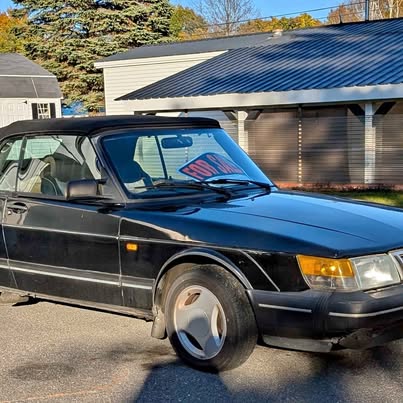
| 900 Commemorative Edition | 1993 hatch, 1994 convertible (US) | B202 turbo, 185 hp tune | 185 hp | Small numbered US run | The American farewell: black, tan leather, numbered plaque |
(Outputs are period DIN figures for European cars; US federal cars were rated lower — 160 hp for the Turbo 16 — because of catalyst and calibration differences. Saab published production by the 900 family rather than by turbo variant, so the built column gives the figures that are genuinely documented and says so elsewhere.)
The eight-valve Turbo (1980–89). The original formula: the B201 slant-four, single overhead camshaft, Bosch K-Jetronic continuous injection on most markets and a Garrett turbocharger. From 1982 APC (below) protected it and let Saab raise boost; an intercooler arrived mid-decade on many markets. These are the most charismatic classic Turbos — boost builds with a period rush, the note is gruffer — and the simplest to understand. They are also the oldest, the rustiest on average, and the least powerful. In the US the eight-valve soldiered on alongside the sixteen-valve into the late 1980s, so American buyers meet it often.
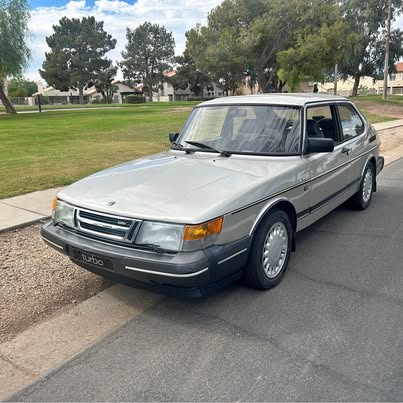
The Turbo 16 (1984–93). The car most people mean by "900 Turbo". The B202 added a sixteen-valve, twin-cam head, an intercooler as standard, Bosch LH-Jetronic electronic injection and, in later years, Saab's red direct-ignition cassette. Output, refinement, economy and durability all stepped up together. If you are buying a classic Turbo to drive rather than to curate, this is the centre of the market, and the model the engines and problems sections of this guide weight most heavily.
SPG and Aero (1985–91 US; Aero in Europe). The Special Performance Group package for America — Aero in Europe — combined the strongest readily available tune with a lowered, stiffened chassis, three-spoke wheels, extended wheel-arch and sill bodywork and, usually, leather. It is not a trim package: the springs, dampers and anti-roll bars are its own, and the driving difference is real. It is also the variant most often faked, because the kit and wheels bolt onto any three-door — the identity checks are in the inspection section. A genuine, documented SPG or Aero is the blue-chip classic Turbo.
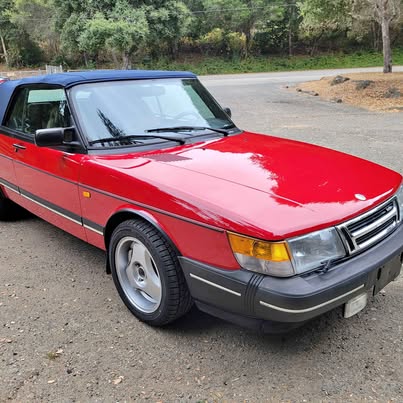
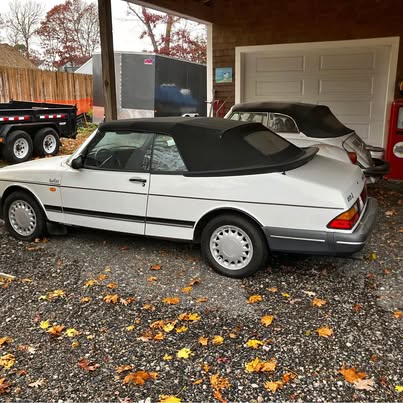
The convertible (1986–94). Conceived for America, shown as a concept in 1983, in production from 1986 and built by Valmet at Uusikaupunki in Finland. The conversion was done properly: reinforced sills, floor and screen surround, a power hood with a heated glass rear window on most cars, and the full Turbo mechanical package. Early cars are eight-valve; from the late 1980s the sixteen-valve became standard in most markets. The convertible outsold expectations, survived the hatchback by a model year, and dominates today's US survivor pool — five of the nine cars listed here. Its inspection adds a second car on top of the closed car's list: hood, frame, motors, seals and the structural price of cutting the roof off a shell that now rusts.
The specials: Carlsson, Ruby, Commemorative Edition, Turbo S. Saab closed the run with high-boost editions — the 185 hp tune, achieved with a revised APC calibration (the enthusiast "red box") and trim to match. The UK Carlsson (named for Erik "on-the-roof" Carlsson, Saab's rally legend) and the 150-car Ruby are European rarities; the American Commemorative Edition of 1993 (three-door) and 1994 (convertible) is the US equivalent, in black with tan leather and a numbered plaque. These cars trade on documentation: the tune can be retrofitted to any Turbo 16 in an afternoon, so the premium belongs only to a car whose identity is proven.
Saloons and five-doors. Turbos were also sold as four-door saloons and five-door hatchbacks — the value corner of the classic Turbo world: same mechanicals, less scene tax, often gentler lives, and a four-door Turbo 16 is a genuinely usable family classic. They are scarce in the listings here, but judge one by exactly the same mechanical and rust rules.
Engines and gearboxes
The eight-valve turbo: the B201
Every classic 900 Turbo runs a development of the same engine, and the eight-valve is where it starts. The B201 is a 1,985 cc iron-block four, its bank canted 45 degrees to fit under the low bonnet, with an alloy single-cam head and a chain-driven camshaft. The design descends from the Triumph slant-four Saab built under licence and then re-engineered so thoroughly that by the 900 era it is a Saab engine in truth. In turbo form it runs a low compression ratio (around 7.2:1 on early cars), a Garrett T3 turbocharger and boost that, on the original 1980 cars without APC, was controlled by a simple wastegate and the driver's sympathy.
Fuel metering on most eight-valve Turbos is Bosch K-Jetronic — continuous mechanical injection, a fuel distributor metering against airflow. It rewards cleanliness and punishes neglect: the warm-up regulator controls cold enrichment and system pressure, and when its bi-metallic strip ages, the car runs rich when hot or lean when cold in ways owners misdiagnose for years. The distinguishing test is a fuel-pressure gauge, not parts-swapping: system and control pressures against the book figures settle, in twenty minutes, arguments that forums sustain for months. A K-Jetronic car that starts instantly hot and cold has been looked after; budget a specialist session, a few hundred dollars, for one that does not.
The turbocharger itself is the least of your worries if the oil has been changed. Early cars ran an oil-cooled Garrett; water-cooled centre housings arrived mid-decade and extended turbo life considerably. The failure mode is bearing wear from cooked oil — the turbo sits high, heat-soaks after shutdown, and oil sitting in a hot housing carbonises. Symptoms: blue smoke on start-up that clears, smoke on the overrun, a whine that changes pitch with boost. A rebuilt turbocharger, fitted, is a $900–1,800 job; the discipline that prevents it — synthetic oil, changed on time, thirty seconds of idling before shutdown after hard use — costs nothing, and a seller who describes it unprompted has owned the car literately.
APC: the system that made Saab turbos work
APC — Automatic Performance Control — arrived in 1982 and is the single most important system on a classic Turbo. Its job: run as much boost as the fuel in the tank and the conditions of the moment allow, and no more. A knock sensor on the block listens for detonation; the APC control unit (under the rear seat on early cars, in the engine bay later) responds by pulsing a solenoid valve that bleeds pressure away from the wastegate actuator, trimming boost in fine steps rather than the crude all-or-nothing of a simple wastegate. Base boost — the mechanical floor, wastegate only — is roughly half of full boost, and that fact gives you the best diagnostic on the car: a Turbo that boosts only to the middle of the gauge's yellow zone and no further is running on base boost, which means APC has withdrawn — for a reason. The reasons, in order of frequency: a failed or disconnected knock sensor or its wiring, a dead APC solenoid valve (the three-way valve on the radiator crossmember or inner wing, clicking audibly at idle when healthy on later cars), split vacuum hoses, a faulty pressure transducer, or genuine knock from stale fuel, wrong plugs or a coked engine. None of these is expensive — hoses and a solenoid are tens of dollars, a control unit a few hundred used — but a car sold as "never boosted right, probably the turbo" is usually an APC car asking for an afternoon's diagnosis. Never accept a turbo replacement quote on a base-boost car until APC has been ruled in or out.
The gauge itself is part of the test. On a healthy car the needle sweeps smoothly into the yellow and kisses the edge of the red at full throttle in third and fourth. A needle that flutters suggests a leaking hose or tired wastegate diaphragm; one that sails deep into the red means someone has been adjusting — check for a manual boost controller or a wound-up wastegate rod, and price the unknown history accordingly. The red-box APC units of the 185 hp specials are genuinely different calibrations, identified by casing and part number; a red-painted standard box is a known fraud.
The sixteen-valve: the B202
The B202 of 1984 kept the block, the slant and the chain drive, and replaced the top end with a proper sixteen-valve, twin-overhead-cam head with hydraulic tappets, and the fuel system with Bosch LH-Jetronic electronic injection (LH 2.2, then 2.4 and 2.4.2, with Lucas CU14 on some late UK-market cars). An air-to-air intercooler became standard. The result — 175 hp in European non-catalyst form, 160 hp in US federal trim, with a broad, flat torque curve peaking around 2,800 rpm — is one of the great road-car engines of its decade: quieter, cleaner, keener to rev and, in service, longer-lived than the eight-valve. Timing chains on the B202 are a 150,000-mile-plus item when oil has been changed, but guides and tensioners wear, and a rattle from the front of the engine on a cold start that persists beyond a few seconds is a chain service — a front-of-engine job in the $800–1,500 range — not a characteristic.
Two B202 systems deserve specific attention. The first is ignition: from the late 1980s, many cars carry Saab Direct Ignition — the red DI cassette on top of the cam cover, containing four coils and using the spark plugs themselves as combustion sensors. When it works it is superb; when it fails it fails suddenly and completely, usually hot, and the car simply stops. A failing cassette often warns first with misfires under boost. Cassettes run a few hundred dollars; the ownership rule is absolute — a DI car should carry a known-good spare in the boot, and a seller who produces one is revealing literacy. Cars without DI use a distributor with a Hall sensor, whose failure produces the same sudden death; the spare to carry there is the ignition amplifier module. The second system is the idle plumbing: the B202 breathes through a web of small vacuum hoses and an idle control valve that sticks with age, producing the classic hunting idle. Hoses are consumables — a full set is cheap — and a car whose owner has replaced them in silicone has spent money in the right place.
Head gaskets deserve a measured word. The B202 can weep oil from the front corner of the head gasket — common, a nuisance, not a death sentence — and can fail properly between cylinder and water jacket, usually after an overheating episode rather than spontaneously. The tests are in the inspection checklist: cold coolant hoses squeezable, not drum-hard; no oily film in the expansion tank; and a chemical block test for any car using coolant with no visible leak. A head gasket job done properly, with a head skim and new bolts, is a $1,200–2,200 specialist job — significant, negotiable, not fatal.
The crankshaft pulley is the B202's other signature trap. The harmonic balancer is a bonded two-piece pulley, and the rubber bond delaminates with age: the outer ring walks, belts squeal (the classic complaint is a chirping or squealing on start-up misdiagnosed as a belt), charging and cooling suffer, and in the worst case the ring migrates into the timing cover. Paint a line across the pulley faces before a test drive; if the line has broken when you return, the pulley is slipping and needs replacement — a few hundred dollars in parts, and a job that must not be deferred.
Gearboxes: the gearbox under the engine
The classic 900's transmission is its most unusual feature and its most consequential inspection. The gearbox sits underneath the engine — engine and gearbox oil are separate, but the gearbox forms the bottom of the powertrain — and drive reaches it from the crankshaft by a primary drive of chains (a triplex chain on most cars) at the front of the engine, behind the clutch. Yes, the clutch is at the front, by the radiator; yes, the engine is in backwards by every other maker's convention, crank pulley against the bulkhead. The arrangement gave Saab its short overhang, crash structure and weight distribution. It also means gearbox work is specialist work, and the manual gearbox — a Saab-built four-speed on the earliest Turbos, then a five-speed — is the powertrain's known weak link when power and neglect combine.
Judge a manual gearbox on three things. First, noise: the pinion bearings are the classic wear item, their symptom a whine rising with road speed in the higher gears, most audible on a light throttle at 40–60 mph. A whining box lives on borrowed time — a rebuild is a $1,500–3,000 specialist job, engine and gearbox out together — and "they all whine" is true only of boxes that are all wearing out. Second, gear retention: a box that jumps out of gear on the overrun, classically fifth or second, has worn engagement dogs or selector forks and needs the same rebuild. Third, reverse: unsynchronised and often reluctant, but a car that crunches violently into reverse is describing clutch drag or selector wear, not charm. Synchromesh wear shows first on second, cold. The primary-drive chains stretch and rattle at idle in neutral with the clutch up, silencing when it is pressed — a moderate job in itself, but a car needing chains and pinion bearings together is a powertrain-out negotiation.
The clutch is hydraulic and, thanks to the front-mounted layout, comparatively accessible — a half-day job for a specialist, typically $600–1,100 fitted. Failure modes are conventional: slipping under boost in fourth (test it exactly there), dragging from a tired slave or master cylinder, a spongy pedal from perished flex hoses. Gearbox oil matters: Saab specified engine oil (10W-30) in the manual box for much of the run, but what counts is that it has been changed at all — a box run low destroys its pinion bearings, and that is where the whine is born.
The automatic is a Borg-Warner Type 37 three-speed, in the same under-engine position, and better than its reputation: strong, simple and well matched to the turbo's torque, at the cost of performance and character. Three of the nine cars listed here are automatics. On test it should engage drive and reverse promptly when cold, shift without flaring, and not hunt at a cruise. ATF is the tell: bright red and sweet-smelling is cared-for; dark and burnt is a rebuild negotiation. A manual conversion is commonly done, but budget it honestly — gearbox, clutch, pedal box, hydraulics and labour make it a four-figure project, not a weekend swap.
Final drive and traction need one honest paragraph. A classic Turbo puts up to 185 hp through the front wheels with an open differential on most cars. Torque steer is present but civilised when the front suspension geometry and bushes are fresh, and alarming when the control-arm bushes and ball joints are tired — chassis wear masquerades as a character flaw on these cars, and the fix is bushes, not acceptance. When the double-wishbone front end is right, the car steers with a precision its 1978 origins do not predict.
Problem areas
A classic 900 Turbo divides into a car that is expensive to fix and a car that is cheap to fix, and the dividing line is not where most buyers look. The mechanical systems — turbo, injection, ignition, even the engine itself — are durable, diagnosable and supported by specialists who know them. The structure is the opposite story: the shell is strong, but it rusts in two places that are structural in the truest sense — where the front suspension bolts on, and where the driveshafts pass through the body. A Turbo with a tired turbocharger is a negotiation; a Turbo with rotten suspension tunnels is a parts car wearing a price tag. Learn the rust map first; everything else is priced against it.
Rust: the map
The front driveshaft tunnels and lower control-arm mounts — the killer. This is the check that decides a classic 900. The driveshafts pass through tunnels in the inner front wings, and the lower control arms mount to the body in the same neighbourhood. Road spray, salt and trapped mud rot the tunnel tops and the mounting points from inside the arch, hidden behind the shafts and under underseal. When this area goes, the front suspension is quite literally detaching from the car, and repair means fabricating structural sections with the suspension stripped — realistically $2,000–4,000 for both sides done properly, if the surrounding metal gives the welder something to work with. Inspect it properly: full lock both ways, torch in hand, looking at the tunnel tops and the metal around every control-arm bolt. Surface rust is common and treatable; flaking, holed or plated metal ends the conversation at driver money. Sellers rarely photograph this area. Ask them to.
Inner front wings, battery tray and the crossmember under the radiator. The engine bay's flat surfaces hold water and battery acid. The battery tray (right side of the bay) rots through and takes the inner wing beneath it; the front crossmember and the panel under the radiator corrode where stone chips and coolant leaks feed them. None of this is as fatal as the tunnels, but all of it is welding, and a bay that is freshly painted black throughout is a bay someone wants you to admire rather than inspect.
Rear wheel arches and the rear axle mounts. The rear arches rot at their lips and, more seriously, where the beam axle's trailing links and spring seats meet the body. Prod around the axle mounting points in the rear wells and check the boot (trunk) floor above them from inside: soft rear axle mounts are the rear-end equivalent of the tunnel problem. The spare-wheel well collects water from failed hatch or boot seals and perforates quietly; on hatchbacks, check the boot floor corners where they meet the rear panel.
Door bottoms, hatch and bonnet edges. The doors are big, and their bottoms rot from inside when the drain holes block — look along the lower edge and inside the shut, and listen for the crunch of filler when you press. The hatch rusts around its window aperture and lower edge; the bonnet at its leading corners. Cosmetic-structural rather than fatal, and panels can be found, but a set of doors and a hatch in paint is a four-figure bill, so price it.
Windscreen surround and the convertible's screen frame. The wraparound screen's surround rusts under its seal, fed by water trapped at the corners; the giveaway is rust staining or bubbling at the screen corners and water in the footwells after rain. Repair means screen out and fabrication — a $800–2,000 job depending on spread. On convertibles the screen frame is also a structural member, and the same check applies with doubled seriousness.
Floors, sills and jacking points. The 900's sills are less notorious than some rivals' but they carry the jacking points and, on the convertible, a much larger share of the shell's stiffness. Press along them, jack the car at each point (with permission) and watch for flex or creaking — the sill-jack test from the inspection section. Convertible sills were reinforced from the factory; a soft convertible sill is a structural repair on the car that can least afford it.
Sunroof drains and footwell water. Many Turbos carry a steel sunroof. Its drains block, water overflows into the headlining and footwells, and the resulting floor rust is blamed on everything except the cause. Wet carpets on a sunroof car mean: clear the drains, then lift the carpets and check the floor and the bulkhead sound-deadening, which holds water like a sponge and rots the floor from above, invisibly.
Engine, turbo and ancillaries
The engines themselves are the strong suit — but their ancillaries have a known cast list. Vacuum hoses perish wholesale: a classic Turbo has dozens of small-bore hoses governing boost control, idle, the distributor advance on eight-valves and the cabin's own vacuum systems, and a car on its original hoses will have several split or collapsed. Symptoms scatter — erratic idle, base boost only, cruise control dead, heater controls lazy — and the cure is a methodical hose replacement, cheap in parts and an afternoon in labour. The APC solenoid and knock sensor are covered in the engines section; treat base-boost-only running as an APC diagnosis, not a turbo diagnosis.
Cooling protects everything else. Radiator cores block with age and scale, the electric fans depend on a thermoswitch and relays that fail silently, and the thermostat is a service item owners skip. A Turbo that runs hot in traffic is telling you the margin is gone, and on a turbocharged engine with an alloy head, one serious overheat is how head gaskets happen. Budget a cooling refresh — radiator, thermostat, hoses, fan switch, coolant — at $500–1,000 on any car without documented recent work, and treat it as insurance. The heater matrix (core) is the notorious job: it leaks into the footwells (sweet smell, misting screen, damp carpet), and replacement is a dashboard-out ordeal quoted in the high hundreds to low thousands in labour. A car with a bypassed heater — looped hoses in the bay — has had the leak and not the fix; in a Saab, of all cars, a working heater is not optional, so price the real job.
Water pumps differ by engine. On the eight-valve B201 the pump is driven internally and its failure can be an engine-out-scale event on neglected cars; listen for bearing growl and check for weepage and coolant loss with no external leak. On the B202 the pump is a conventional external unit and a moderate job. Either way, coolant loss is never "they all do that" — find where it goes.
The turbocharger fails by oil, as described: smoke on start-up and overrun, oil in the intercooler hoses (a film is normal; puddles are not), shaft play you can feel at the compressor wheel with the intake hose off. Oil leaks are endemic and mostly harmless in origin — cam cover, distributor O-ring on eight-valves, crank seals, the oil pressure sender — but they matter because they hide the level: a Turbo that is run low on oil kills its turbo and its gearbox pinion bearings in that order. Engine mounts, particularly the front hydraulic mount, collapse with age and oil contamination, producing a clonk on take-up and a vibration at idle; budget them as consumables on an unrestored car.
Gearbox, clutch and driveline
This section is short because the engines section made the main points, and it is repeated here because it decides money. The manual gearbox's pinion bearing whine is the single most expensive common fault on a classic Turbo: it is progressive, it does not heal, and the repair is a powertrain-out rebuild. Price any whining car as a car plus a $1,500–3,000 rebuild, or walk away. Jumping out of gear and crunching synchromesh on second are the same negotiation. Primary-drive chain rattle at idle is lesser but real, and a car needing chains usually needs the clutch inspected at the same time, which softens the labour overlap. Driveshaft CV joints click on full lock when worn — a moderate, conventional job — and their boots split and take the joint with them, so check boot condition as a predictor. The automatic's enemies are old fluid and heat: burnt ATF, delayed engagement and flaring shifts mean a rebuild in the low thousands, and there are fewer specialists who know the Borg-Warner Type 37 well, so a good automatic with documented fluid changes is worth more than the market usually credits.
Suspension, steering and brakes
The front suspension is double-wishbone, sophisticated, and dependent on ball joints and bushes that are now all old. Ball joints wear and clonk; control-arm bushes perish and let the geometry wander — felt as tramlining, uneven tyre wear and the torque-steer exaggeration described earlier. A full front-end refresh is a $1,000–2,000 specialist job and transforms the car; conversely, a Turbo that steers sweetly has usually had it done, which is information about the whole car's maintenance. Rear dampers and spring seats tire, and soft beam-axle bushes let the rear steer itself over bumps. The steering rack leaks from its seals into its gaiters — check them for fluid swelling — and a PAS pump whine at full lock is usually fluid level or a perished feed hose before it is the pump.
Brakes divide by year in a way buyers must know: on cars up to 1987 the handbrake acts on the front wheels, through the front calipers, and front calipers with a healthy handbrake mechanism are the more expensive kind; from the 1988 model year (with the change to the later rear axle and the 4x10⁸ wheel bolt pattern, replacing the early 4x114.3) the handbrake moved to the rear. Front-handbrake cars with a weak handbrake usually need caliper rebuilds, not cable adjustment. Calipers seize on little-used cars generally; budget a brake refresh — discs, pads, flex hoses, fluid, caliper pistons freed or rebuilt — at $600–1,200 on any car that has sat, and treat spongy pedal travel as a stop-and-fix, not a test-drive-and-see.
Interior, convertible top and electrics
The interior's signature failure is the headlining: the fabric is foam-backed, the foam turns to dust, and the lining descends onto the occupants — every unrestored classic 900 has it or is about to. Re-trimming is a known job, a few hundred dollars in materials with a trimmer, and on a hatchback the board comes out through the hatch. Treat it as a certain cost, not a haggle. Dashboard tops crack in sun-state cars — and the listings here include Arizona, California and Colorado cars, so look — starting around the speaker grilles and defroster vents; good uncracked dashes are scarce and priced accordingly. Seat upholstery splits on the driver's bolster, but the famous Saab seats themselves — among the best ever fitted to a production car — rarely fail structurally.
On the convertible, add the hood itself: fabric that is shiny, split at the folds or shrunk so the front rail fights the header is a replacement, $1,500–3,000 fitted for a quality top, and the rear window's condition is part of that judgment. The power mechanism should run the full cycle smoothly without groaning or one-sided lagging; a top that needs helping by hand has frame or motor wear. Check the folding well for water and every seal — a convertible that leaks is a car you will stop driving. The rear side window regulators are a convertible-specific wear item.
Electrics are fundamentally sound and plagued by age at the edges: earth points corrode (the main engine-bay earths first), producing haunted behaviour across unrelated systems; window regulators slow and strip; central locking actuators fail one door at a time; cruise control dies of vacuum and switch faults rather than electronics. The ignition switch and gear-lever lock between the seats are Saab-specific wear items — a car reluctant to release its key needs the console mechanism serviced. None of this is expensive individually; a car with all of it is a car whose owner stopped caring, which is the real datum.
How to inspect one
Work in this order: structure first, powertrain second, everything else after. A classic Turbo fails its inspection in the wheel arches or not at all.
- Start with identity. Read the VIN plate and confirm the car is what it claims: a classic 900 (longitudinal engine, key between the seats) rather than a 1994 NG900 wearing the same name, and — on an SPG, Aero or special edition — that the paperwork, trim and equipment agree with each other. On a claimed high-output car, look for the red-cased APC unit and check its part number rather than its paint.
- The tunnel test, before anything else. Torch in hand, front wheels on full lock each way (or wheels off if the seller agrees): inspect the driveshaft tunnels, the inner wings around them and every lower control-arm mounting point. Flaking, holes or plating here ends the viewing at anything above parts money. This is the rust section's first item, and it outranks everything below.
- Cold start, from stone cold. Insist on it. A healthy car starts promptly, settles to a steady idle without hunting, and shows no blue smoke beyond a wisp. Chain rattle that persists, a hunting idle (vacuum hoses, idle valve) or heavy start-up smoke (turbo seals, valve seals) are all priced in the problem sections.
- Coolant forensics. With the engine cold, squeeze the top hose: it should be soft. Drum-hard cold hoses suggest combustion gas pressurising the system. Check the expansion tank for oil film or emulsion, then run the car to temperature and watch the gauge and fans. Any doubt gets a chemical block test before money moves.
- The boost test. On the road, third or fourth gear, full throttle from low rpm: the gauge should sweep smoothly to the edge of the red zone and the car should surge, not merely accelerate. Base boost only (needle stopping mid-yellow) means APC has withdrawn — diagnose the solenoid, knock sensor and hoses before believing any turbo story. Note smoke behind you on boost and on the overrun after.
- The clutch test, in the same pull. Full boost, fourth gear, low rpm is where a marginal clutch slips — revs rising without matching road speed. Then check engagement of first and reverse at a standstill: baulking and crunching point to clutch drag or selector wear.
- The gearbox listen. At 40–60 mph on a light throttle, listen for pinion whine rising with road speed; coast in gear and check no gear jumps out on the overrun; make several second-gear changes, up and down, cold and hot. Whine plus jumping out is a rebuild-priced car.
- Steering and suspension judgement. Drive over broken surfaces for clonks (ball joints, mounts), brake firmly from speed for pull or judder, and let go of the wheel briefly on a straight, empty road: a car that wanders or darts under power has tired bushes, not character. Check rear tyre wear patterns for axle-mount trouble.
- The sill-jack test. Using the car's own jack at each jacking point in turn, raise the car slightly. A sound sill takes it silently; creaking, visible flex or a folding point settles the sills — the same test, with the same meaning, as the rust section describes. On a convertible, also open and close both doors with one front wheel raised on a kerb: doors that bind are describing shell flex and sill condition.
- Convertible cycle test (open cars). Run the hood down and up twice, fully. It should move evenly, without groaning, lagging on one side or needing a hand. Inspect the fabric at the folds, the rear window, the folding well for water, and the seals. Then the hose test if the seller permits: water over the hood and screen frame, looking for footwell and boot leaks.
- Electrical sweep. Windows (all, including convertible rear quarters), central locking, sunroof if fitted, cruise, heater fan on all speeds, heated seats if fitted, every gauge — and the DI question: if the car has the red ignition cassette, ask when it was last replaced and whether a spare travels with the car. Check for the sweet smell of heater-matrix coolant and misting on the inside of the screen with the heater hot.
- Paperwork and the pulley line. Service history is unusually informative here: regular oil changes are the difference between a 250,000-mile engine and a dead turbo, so weight a folder of invoices over a stamped book with gaps. Before you finish, paint-pen a line across the crank pulley faces (with permission), drive, and re-check: a broken line is a delaminating harmonic balancer. Finally, re-read the seller's claims against the car — on SPGs and specials, the car that survives this list with its identity intact is the car the premium belongs to.
Values
The classic 900 Turbo market is a condition market wearing a model market's clothes, and the computed listings summary beneath this guide will show you the current numbers — your job is to know what spreads them. Two cars with the same year, badge and mileage can sit a full condition class apart because one has sound suspension tunnels and a silent gearbox and the other has neither, and neither fact appears in an advert headline. Read every asking price as a claim about structure and powertrain first, paint and trim a distant second.
The spread runs like this. At the bottom are the project cars: runners with rust in the tunnels or arches, whining gearboxes, tired hoods on convertibles — cars whose purchase price is the smaller half of what they will cost. Above them, the honest drivers: structurally sound, mechanically maintained, cosmetically lived-in, the cars this guide is really written for. At the top, the preserved and the special: low-mileage sixteen-valve cars, documented SPGs and Aeros, the numbered specials, and convertibles with unmarked hoods and full histories. The gap between project and driver is wide but bridgeable with money; the gap between driver and preserved is mostly originality, which money cannot retrofit, and that is why the top cars keep their premium even when a restored driver looks shinier.
Variant premiums are real but specific. The sixteen-valve engine out-earns the eight-valve in the same body, because it is faster, smoother and easier to live with — except at the very early, very original end, where a 1980–82 pre-APC or early-APC car has pioneer value to the Saab faithful. The SPG and Aero premium is the largest in the range and the most abused: it belongs to verified cars only, and a kitted standard car is worth standard money plus the kit's second-hand value, not a penny of the badge premium. Convertibles carry a premium over hatchbacks in the American market — the listings here, five convertibles among nine cars, reflect a survivor pool the US created by buying the open car new in numbers Europe never matched — but a convertible with a dead hood or soft sills gives the premium back in repair bills. Automatics are discounted against manuals across the board, which makes a good automatic Turbo 16 convertible the rational value buy of the whole range for someone who wants the car rather than the spec sheet. Saloons and five-doors sit at the value end for the same reason: identical mechanical merit, thinner demand.
Asking and achieved prices part company in predictable places. Sellers ask preserved money for driver cars on the strength of paint; the market pays for tunnels, gearboxes and paperwork. A car advertised for months at a strong price is usually a car whose inspection disappoints — the Saab community is small and knowledgeable — while a correctly priced, structurally honest car sells fast and quietly. The legitimate negotiation levers are inspection findings with real job costs attached (a pinion-bearing rebuild, a hood replacement, a heater matrix), not generic age. Buy the car the evidence supports, at the condition class the evidence puts it in, and the numbers below will make sense rather than merely being believed.
Parts and ownership
Owning a classic 900 Turbo is easier than owning most European performance cars of its era, and harder than owning a contemporary American one — the difference is geography and community rather than the car itself. Saab Automobile went bankrupt in 2011, but the parts operation passed to Orio and still supplies a surprising depth of factory stock, while the specialist ecosystem — Saab-only firms in the US, a dense breaker and remanufacturer network in the UK and Scandinavia — covers most of the rest. Service items, brakes, suspension wear parts, ignition cassettes, clutch kits and most consumables are available off the shelf at sane prices; body panels, convertible trim, uncracked dashboards and good used gearboxes are the hunt.
Wear-item economics are friendly: clutch kits, brake components, ball joints, bushes and dampers are all stocked or reproduced at sane prices, and the Garrett turbochargers are rebuildable by any competent turbo shop. The expensive scarcities are structural and cosmetic — the tunnel sections are typically fabricated by the welder rather than bought, which is why this guide prices fabrication labour rather than panels — and gearboxes: good used five-speeds are getting hard to find, another reason a silent gearbox is worth paying for.
The ownership rhythm is simple and non-negotiable. Oil and filter every 5,000 miles or annually at most, with quality synthetic oil — this one habit governs the life of the turbocharger, the timing chains and the gearbox pinion bearings simultaneously, which tells you how much of this car's reliability is a single decision repeated. Gearbox oil changed on a schedule, not on a whim; coolant fresh and the cooling system refreshed preventatively; vacuum hoses treated as a consumable set. Driven like that, a B202 is a 250,000-mile engine and the cars are famous for interstellar mileages — the Saab community's high-mile clubs are full of 900s — but the mileage is a consequence of the maintenance, not a property of the badge, so a high-mileage car with invoices beats a low-mileage car with none.
Daily usability is the classic Turbo's party trick, and why so many are kept as real cars rather than ornaments: hatchback load space that swallows furniture, orthopaedically serious seats, a heater designed for a Scandinavian winter, and all-weather security that made the car's snow-belt reputation. Running one asks for a Saab-literate mechanic for powertrain work (the under-engine gearbox defeats generalists' assumptions) and for the community: the clubs and forums hold the diagnostic knowledge — APC fault trees, DI cassette lore, rust-repair photo essays — that no manual ever printed. Budget an annual specialist service, join the club, carry the spare cassette, and the car will do the rest.
Which one to buy
- The all-rounder: a sixteen-valve Turbo 16 three-door, manual, 1989–93. The definitive classic Turbo in its stiffest shell, with LH-Jetronic injection, the best parts support in the range and performance that still feels ample. Buy on tunnels and gearbox, in that order.
- The open-air buy: a Turbo 16 convertible, 1990–94, manual if you find it, automatic at the discount if you do not. The car the American survivor pool is made of — five of the nine listings here are convertibles. Judge the hood cycle and the sills as hard as the engine, and remember a 1994 car must be identified as a classic by its shape, not assumed from its year.
- The value buy: a Turbo 16 saloon, five-door or automatic convertible with full history. Identical mechanical merit at a discount the spec-sheet market imposes and the driving does not justify. The automatic is strong and suits the engine's torque; the discount is your repair fund.
- The collector buy: a documented SPG (US) or Aero (Europe), or a numbered Commemorative Edition. The premium is real and durable, but it lives entirely in verification — suspension, trim, APC identity and paperwork. An unverified "SPG" is a standard car with a body kit and should be paid for as one.
- The purist buy: an early eight-valve Turbo, 1980–84. Slower, gruffer, rarer in good order, and the closest thing to the 99 Turbo's original idea. Buy the best shell in existence and accept the pace.
- The project buy: only a car whose tunnels are sound. A Turbo needing a turbo, a clutch, a headlining and a hood is a project; one needing its suspension mounts fabricated is how parts cars happen.
The overriding rule: buy the structure and the gearbox, and let everything else be negotiable. Turbochargers rebuild, cassettes swap, headlinings re-trim and hoods re-cover — but rotten suspension tunnels and a whining pinion bearing are the two bills that exceed the value of the car they are attached to. A sound, silent-gearboxed Turbo at a fair price is never the wrong classic 900.
See the 8 900 Convertible cars currently listed.
For sale now
 $7,000
Expand
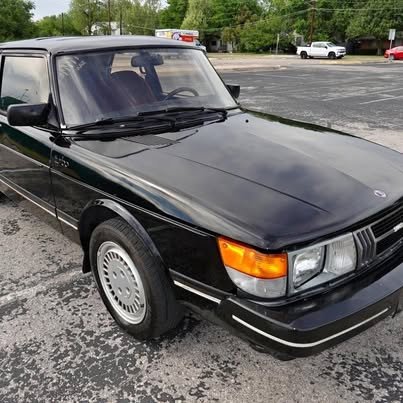 $8,950
Expand
What they sell for: 900 Convertible sale prices.