
Saab 900 buyer's guide
Saab 900 -- the model's own buyer's guide: variants, values and what to check.
Years listed: 1983-1998 · Series: 900
# Saab 900S — Buying Guide
Overview and history
The Saab 900S is not one car. It is a badge worn by two completely different automobiles, and the first job in buying one is knowing which of them you are standing in front of. From the late 1970s to 1993 the 900S is the middle trim of the classic 900 — the long-bonnet, upright-windscreen car with its engine mounted backwards and lengthways, driving the front wheels through a gearbox that sits underneath it. From 1994 to 1998 the 900S is the naturally aspirated version of the New Generation 900, a transverse-engined car built under General Motors ownership on a heavily reworked Opel-derived floorpan. They share a name, a grille shape, a hatchback silhouette in some versions, and almost nothing else. A part, a fault, or a price that applies to one tells you nothing about the other.
The classic car comes first in this guide because it came first in history and because it is the one most buyers mean. The 900, launched for 1979, was Saab's deep rework of the 99: longer in the nose for crash structure, with a new cabin, new front suspension, and the same basic idea of a slant four-cylinder engine canted over at 45 degrees, clutch at the front, gearbox in the sump area below, chain primary drive between them. It was an expensive, eccentric, exceptionally durable way to build a front-wheel-drive car, and it made the 900 feel like nothing else on the road — heavy, deliberate steering, a flat cornering stance, and a structure that shrugged off winter in a way few contemporaries could match. The Turbo took the glory and the posters. The 900S took the volume: it was the car for the buyer who wanted the structure, the seats, the hatch and the winter ability without turbo running costs, turbo insurance, and turbo temptation.
In the American market the 900S was always the non-turbo car: first an eight-valve, then from the mid-1980s a sixteen-valve, and for its last three classic years a larger 2.1-litre sixteen-valve. In Britain and parts of Europe the same badge took a twist at the end of the classic run, when 900S came to mean a light-pressure turbo car with no intercooler and modest boost. That single fact explains a large share of confused adverts, wrong parts orders, and disappointed journeys to view cars, and this guide returns to it repeatedly: on a classic car, open the bonnet and establish what is actually fitted before you believe the badge.
The New Generation car, sold from model year 1994, kept the 900 name but changed the engineering wholesale. The engine sits across the car, the gearbox hangs on its end in the conventional modern way, and the structure and electrics owe as much to GM's European parts system as to Trollhättan — though the engines are developments of Saab's own four-cylinder family and the car feels recognisably Saab from the driver's seat. In the United States the NG 900S is the 2.3-litre naturally aspirated car; in Europe the badge also covered a 2.0-litre car. Turbocharged NG cars are badged SE in most markets, so an NG 900S should never have a turbo under its bonnet — if it does, you are looking at a rebadged SE, an engine swap, or a listing error.
Why buy the S at all, when the Turbo exists? Because the S is the honest version of the idea: simpler, cheaper to insure, easier on its gearbox — a point that matters enormously on the classic car — and in the real world of commuting, winter driving and long ownership it gives you most of what makes a 900 a 900. What it asks in return is that you buy it on condition. These are old cars now, and the difference between a good one and a bad one has almost nothing to do with mileage or badge and almost everything to do with rust, gearbox health, and whether the last owner fixed things properly or cheaply.
The models
Start with the split, because every other distinction follows from it. The classic 900S runs from the start of the 1980s to 1993, with convertibles and late hatchbacks built into 1994 in some markets as old stock cleared. The NG 900S runs from 1994 to 1998, when the car was facelifted, re-engineered in over a thousand details, and renamed the 9-3 — at which point the 900S badge dies. A 1994 car therefore needs its generation established before anything else: a 1994 classic convertible and a 1994 NG hatchback are both real, both wear 900 badges, and they share almost no parts.
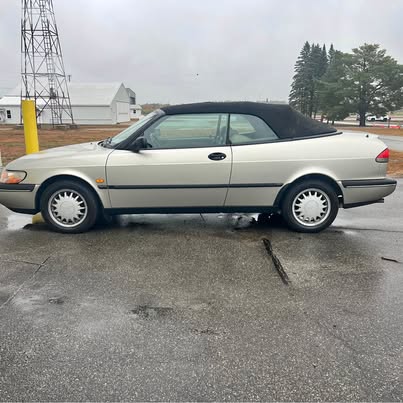
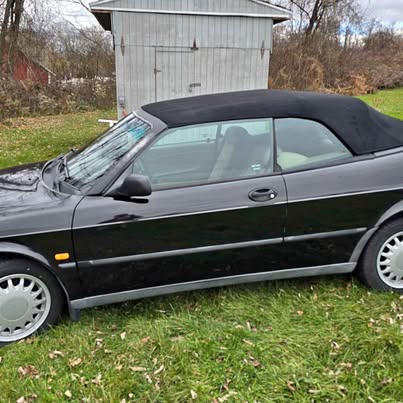
Within the classic range, body style is the first sort. The three-door hatchback is the archetypal 900: vast load bay, seats folding to a genuinely flat floor, the silhouette everyone pictures. The five-door adds family practicality at a small cost in shell stiffness. The two-door and four-door saloons, built in smaller numbers, are stiffer, quieter, and now rarer. The convertible, launched in 1986 and built by Valmet at Uusikaupunki in Finland, is a separate case: expensive new, a full four-seat cabin, and its own structure, roof mechanism, and rust and trim problems, all covered later in this guide. Classic convertibles were mostly Turbos when new; a classic 900S convertible is a comparatively gentle and rare thing.
Trim on the classic S sits in the middle of the range: cloth or, on later cars, leather; electric windows and central locking on most later cars; air conditioning on most American-market cars. Dealers specified cars loosely and thirty years of ownership has mixed interiors freely, so judge the car in front of you, not the brochure.
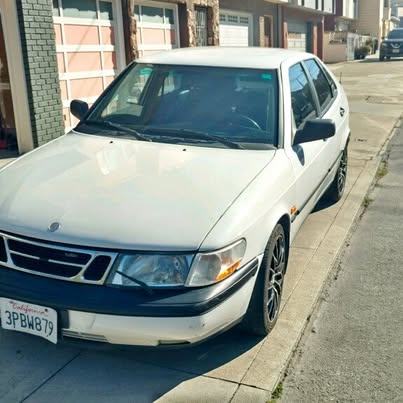
The NG range is simpler in shape and fussier in detail. Bodies are three-door and five-door hatchbacks and a two-door convertible, again Valmet-built; there is no NG saloon. The 900S sits below the SE: no turbo, usually cloth trim, and manual air conditioning rather than automatic climate control on many cars, though plenty of S cars were optioned up when new. The convertible is again the glamour version with the most complicated mechanism to keep alive — the NG roof is fully electric, with motors and microswitches doing work that hydraulics did on the classic car, and it fails in more various and more baffling ways.
Model years matter in specific, checkable ways. On the classic car: the 1985 model year brings the sixteen-valve engine to the American S, transforming its performance and its refinement; 1987 brings the facelift with sloped headlamps, integrated bumpers and the handbrake moved to the rear wheels, which also changes brake and wheel fitments; 1991 brings the 2.1-litre engine to the American S and anti-lock brakes become common. On the NG car: 1994 and 1995 are the launch years with the cable-operated clutch that gives so much trouble; the clutch becomes hydraulic during the run and the later cars are the easier ownership proposition; 1998 cars benefit from a series of small production fixes and are the closest relatives of the early 9-3 that followed.
| Model | Years | Engine | Output | Built | Character |
|---|---|---|---|---|---|
| Classic 900S 8v | 1980–1985 approx. | 2.0 B201 eight-valve, K-Jetronic | Around 110 hp in US tune | Volume trim of the early range | Simple, torquey, slow by modern standards, the easiest classic S to keep |
| Classic 900S 16v | 1985–1990 | 2.0 B202 sixteen-valve, LH injection | Around 128 hp in US tune | The mainstream classic S | The sweet spot: real performance, no turbo stress on the gearbox |
| Classic 900S 2.1 | 1991–1993 | 2.1 B212 sixteen-valve | Around 140 hp in US tune | Final classic S saloons and hatches | Strongest non-turbo classic; watch head gaskets closely |
| Classic 900S LPT (UK/Europe) | 1989–1993 approx. | 2.0 B202 light-pressure turbo | Around 145 hp | Sold alongside full-pressure Turbos | Not non-turbo at all: modest boost, no intercooler, a different buying case |
| Classic 900S Convertible | 1986–1993 | 2.0 16v, later 2.1 | As the hatchbacks | Low-volume Valmet build | Four real seats and a proper boot; roof and scuttle condition decide value |
| NG 900S 2.0i (Europe) | 1994–1998 | 2.0 B204I sixteen-valve | Around 130 hp | European base car | Adequate rather than quick; the plainest NG to run |
| NG 900S 2.3i (US) | 1994–1998 | 2.3 B234I sixteen-valve | Around 150 hp | The standard American S | Balance-shaft smoothness and real torque; the NG S to have |
| NG 900S Convertible | 1994–1998 | 2.0i or 2.3i by market | As the hatchbacks | Valmet-built throughout | Electric roof theatre and electric roof bills in equal measure |
Production figures for the S specifically are not cleanly published — Saab reported by range and body far more readily than by trim — so treat any seller quoting an exact build number with polite scepticism unless they can show a source. The shape of the range is known: classic 900 production across all versions ran to just over 900,000 cars, NG 900 production to roughly 273,000, with the S a core trim in both. Rarity claims for ordinary S cars are almost always nonsense; the genuinely uncommon ones are classic two-door saloons, late 2.1 cars in good order, and manual NG convertibles.
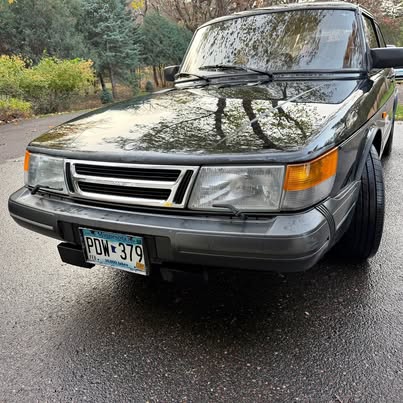
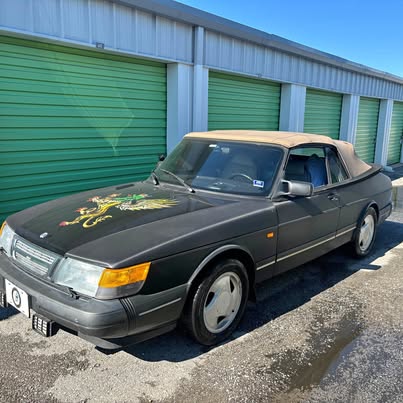
One last identity trap covers both generations: badges migrate. Turbo badges get added to S cars and NG SE cars get described as S cars by sellers who do not know the range. The badge is the weakest evidence on the car — the engine, the instruments (a classic Turbo or LPT carries a boost gauge; a non-turbo S does not) and the VIN plate do the settling, in the order the inspection section gives you.
Engines and gearboxes
The classic eight-valve: B201 and Bosch K-Jetronic
The first 900S engine is the eight-valve slant four, coded B201 in its 900 form: 1,985 cc, single overhead camshaft, two valves per cylinder, and the whole unit canted 45 degrees to the right and installed back to front, with the clutch at the front of the car and the flywheel effectively behind the radiator. Fuel is delivered on most cars by Bosch K-Jetronic continuous mechanical injection — a system with no ECU in the modern sense, in which a flap lifted by incoming air meters fuel continuously to all four injectors. It is robust, well understood, and intolerant of neglect in specific ways. The warm-up regulator controls cold-running mixture and drifts with age, giving hard hot starting and lumpy cold running that sellers love to describe as character. The fuel accumulator loses pressure overnight, so a car that needs long cranking after standing but starts instantly when warm is usually accusing the accumulator or the pump check valve, not the starter. Injector spray patterns degrade rather than fail, which is why an eight-valve that runs but feels flat and drinks fuel often needs its injectors tested on a bench rather than another round of ignition parts.
Power is modest — around 110 hp in American tune — but delivery suits the car: torque arrives low, gearing is long, and the eight-valve pulls a loaded hatchback up a long grade without drama. It is also the toughest classic engine in ordinary use, with a timing chain that usually outlasts the sixteen-valve's and a bottom end that rarely gives trouble if the oil has been changed. Its vices are cam cover and crank seal leaks, an appetite for fresh vacuum hoses — a split hose on a K-Jetronic car is a running fault, not a cosmetic one — and the habit of presenting five small cheap faults at once, together making the car feel far worse than it is.
The classic sixteen-valves: B202, B212, and the LPT exception
The sixteen-valve engine, coded B202, arrived in the Turbo first and reached the American 900S for 1985. It keeps the same block architecture, the same slant, the same backwards installation, and adds a double-overhead-cam sixteen-valve head with hydraulic tappets and electronic fuel injection — Bosch LH 2.2, later LH 2.4, on most cars, with Lucas CU14 fitted to some British-market cars. Output is around 128 hp in American tune, and the change in character is bigger than the number suggests: the sixteen-valve revs, where the eight-valve pulls. It wants 3,500 rpm on a hill where the older engine was content at 2,500, and in return it cruises faster, overtakes properly, and returns similar economy driven gently.
Two sixteen-valve weaknesses dominate buying conversations, both covered in depth in the problem areas: the head gasket, failing most characteristically between cylinder and waterway or externally at the front of the head, and the timing chain, whose tensioner and guides wear until a cold-start rattle lasting seconds becomes one lasting a minute — the point at which you are on borrowed time. Neither fault is a reason to reject a car; both are reasons to price it honestly, and both are routinely botched by people who do not know that head bolts, chain kit and seals are a package, not a pick-and-mix.
For 1991 the American S grew to 2,119 cc as the B212, achieved with a larger bore, and output rose to around 140 hp. The 2.1 is the best non-turbo classic engine to drive — stronger everywhere, no peakier — and the most head-gasket-prone of the three, a combination that has followed it ever since. If you are viewing a 2.1, the cooling system evidence matters more than the test drive: a clean header tank, a fan that cuts in and out, hoses of consistent age, and no history of mystery coolant loss are worth more than a strong pull through third gear.
Then the exception, and it matters. In Britain and some European markets, the late classic 900S is not naturally aspirated at all: it is the light-pressure turbo, using the B202 turbo engine at low boost, without an intercooler, producing around 145 hp, with a boost gauge in the cluster and APC boost control in simplified form. It drives like a strong 2.1 with better mid-range and it carries turbo buying checks — oil feed and return condition, turbo shaft play, APC solenoid behaviour — that the non-turbo cars do not need. American buyers importing cars, and anyone buying from a listing written by a seller copying a British description, must establish which car they have. The boost gauge settles it in five seconds: no classic non-turbo S has one.
The NG engines: B204I and B234I, Motronic, and balance shafts
The NG 900S engines descend from the same Saab four-cylinder family but sit across the engine bay, lean the other way in spirit, and are managed entirely differently. The European 2.0-litre B204I makes around 130 hp; the American-market 2.3-litre B234I makes around 150 hp and adds the smoothness that defines the car, helped by twin balance shafts running in the block. Both are sixteen-valve, double-overhead-cam units with hydraulic tappets. Crucially for diagnosis, the naturally aspirated NG cars do not use Saab's Trionic engine management or the famous red Direct Ignition cassette — those belong to the turbo cars. The S uses Bosch Motronic management with a distributor-based ignition system on most versions, which means its ignition faults are old-fashioned ones: cap, rotor arm, leads, coil, and crank sensor, in roughly that order of frequency and ascending order of awkwardness.
The balance shafts generate the NG S's signature expensive noise. They are chain-driven, and the balance chain, guides and tensioner wear alongside the main timing chain. A diesel-like rattle from the timing end of a cold 2.3 that fades as it warms is chain wear announcing itself; left alone it progresses to jumped timing and bent valves, because these are interference engines. The correct fix is a full chain kit, and a proper job typically runs $900–1,800 at an independent specialist. A seller who calls the rattle normal is telling you he has decided not to pay that bill — do not agree to pay it for him at full asking price.
Oil condition is the other NG engine sermon. A fine sump strainer and small oilways punish extended oil intervals with sludge that first shows as a flickering oil light at hot idle and ends as a seized engine. The later 9-3 turbos made this infamous, but the NG S is built the same way: evidence of oil changes at 5,000 miles or less, in writing, is a genuine value-adder, and a car with no oil history should be bought as if a sump drop and strainer clean — a $250–450 job — is already scheduled.
Gearboxes: the classic chain-drive manual, the Borg-Warner automatic, and the NG boxes
The classic gearbox is the car's defining mechanical relationship and its defining weakness. The manual box — four speeds on the earliest cars, five speeds on almost everything you will actually find — sits underneath the engine and is driven from the crankshaft by a primary chain case at the front of the car, with three primary gear ratio options across production that affect cruising revs. The box itself is fundamentally sound in design and marginal in one bearing: the pinion bearing in the final drive wears, announces itself as a whine on drive and a changed whine on overrun, worst in the higher gears, and progresses to failure that takes the whole gearbox with it. Turbo torque accelerates it; the S's gentler output is precisely why S gearboxes live longer, and why a quiet S box is a real asset. A proper rebuild by a Saab specialist, with the pinion bearing, synchros as needed, and seals, typically costs $1,800–3,000 plus removal and refitting labour if you are not doing it yourself. Against that, a whining box priced as a healthy box is the single most expensive mistake a classic 900 buyer can make.
The classic automatic is the Borg-Warner Type 37 three-speed, also mounted under the engine and chain-driven. It is smooth, slow, saps the eight-valve's limited performance noticeably, suits the sixteen-valve better, and is durable if its fluid has been changed and its kickdown cable correctly adjusted — a maladjusted cable mimics internal failure so convincingly that cars have been sold cheap over a ten-minute adjustment. Check for flare between second and third and for delayed reverse engagement from cold; both suggest wear rather than adjustment.
Clutch work on a classic car is a pleasure unique to the design: the clutch sits at the front of the engine and can be changed with the engine in the car. A full clutch kit fitted typically runs $600–1,000, and the hydraulic slave cylinder should be renewed with it as a matter of course — a car that has just had a clutch but not a slave has a second bill already written.
The NG boxes are conventional transverse units. The five-speed manual is a Saab-built unit of F25 family design whose linkage wears into vagueness long before the box itself wears out, so a sloppy gearchange is usually a linkage refresh — $150–400 — rather than a gearbox. Its notorious partner is the clutch actuation: 1994 to roughly 1996 cars use a cable clutch that stretches, creaks, and breaks its self-adjuster. The later hydraulic conversion is the fix, typically $500–900 fitted. The NG automatic is the Aisin-Warner 50-42LE four-speed, smooth and long-lived on fluid changes and expensive only when neglected. Budget $200–350 for a fluid and filter service if the history is silent, and walk away from a car whose automatic already flares or thumps when hot.
Problem areas
Rust: two different maps for two different cars
Rust kills more 900S cars than any mechanical fault, and the two generations rust in different places for different reasons, so learn the map for the car in front of you.
On the classic car the structure to fear is at the front, where the driveshafts pass through the inner wings. The front crossmember and the driveshaft tunnels — the reinforced boxes either side of the engine bay through which the shafts run — rot from the inside, fed by road salt, trapped mud, and the heat of the engine bay drying the outside while the inside stays wet. By the time bubbling shows on the outer wing, the tunnel beneath can be lace. Get under the car, or get it on a lift, and look at the tunnels, the crossmember ends, and the floor above them with a torch and a screwdriver used as a probe, with the owner's permission. Surface rust here is normal and treatable. Softness, holes, or previous plating that rings hollow is structural work: proper tunnel and crossmember repair with the engine or shafts disturbed as needed typically costs $1,200–2,500 per side at a welding shop that knows the cars, and a car needing both sides plus sills is a restoration project whatever the advert says. The test that settles the sills on any classic 900 is the jack test: jack the car at the sill jacking points, one corner at a time, and watch the door gaps and listen. A sound shell lifts silently and the doors still open and close. A tired shell creaks, the gap at the top of the door changes, and the door strikes its catch as it closes.
Behind the front wheels, work backwards: the bottoms of the front wings behind the wheel, the sill outers (especially where the plastic trims trap mud on later cars), the rear wheel arches — where the inner and outer skins meet and where every classic 900 eventually bubbles — the floor of the boot or hatch load area around the spare wheel well, and the bottom edges of the doors and tailgate. Convertibles add the scuttle and windscreen frame, where water sits under the seals, and the hood well behind the rear seat. None of these rearward areas is usually structural in the way the front tunnels are, but arch and sill work done properly, with metal cut out rather than filler over rust, runs $600–1,500 a side painted, and done cheaply it lasts one winter. The rule for classic rust is simple: front structure decides whether you buy the car at all; everything else decides what you pay.
The NG car rusts like the 1990s GM-era car it is: less dramatically, in more familiar places, with better factory protection that is now simply old. Rear arches and sill ends go first, fed by arch liners trapping grit. The front strut towers are the structural check — look from the engine bay and from under the arch, because a tower plated once, badly, will be plated again at your expense. Subframes corrode, particularly the front subframe's rear and its mountings; renewal with used parts typically runs $700–1,400. The tailgate, door bottoms, and on convertibles the windscreen frame and hood well complete the map. Because the NG's panels were galvanised, visible rust is a stronger statement about neglect than the same rust on a classic: where the protection has failed, look for accident repair or a life lived by the sea.
One rust-adjacent structure check belongs to the NG alone and is serious enough to name separately: the front bulkhead. On right-hand-drive cars especially, but on any hard-used early car, the bulkhead can crack around the steering rack mounts and the clutch cable bracket, flexing as the steering is worked. The test is in the inspection section — an assistant turns the wheel against resistance while you watch the rack and pedal box for movement — and a cracked bulkhead is a specialist weld repair, typically $800–1,600, or a reason to walk away. Saab issued reinforcement procedures in period; a car with documented bulkhead work done properly is a better buy than a car whose owner has never heard of the issue.
Engines, cooling, and the head gasket question
Every classic sixteen-valve conversation reaches the head gasket, so learn its actual behaviour. The B202 and especially the B212 gasket fails in stages. The earliest sign is often external: a weep at the front corner of the head-to-block joint, staining the front of the block, which can weep for years without progressing. The serious failures are internal — combustion gas into the waterway, pressurising the system, blowing coolant from the header tank, showing as bubbles in the tank and a chemical block test turning yellow; or waterway to oilway, mayonnaising the filler cap in a way that must be distinguished from the harmless condensation emulsion short winter journeys put on a healthy engine's cap. The tests are cheap and decisive: a cooling system still pressurised overnight is guilty, and coolant that disappears with no external leak is going somewhere. A gasket job done properly — new bolts, gasket set, chain inspected while access is free — typically costs $900–1,600 at an independent specialist. Done cheaply with the chain ignored, it is half a job.
The rest of the classic cooling system is age-driven: radiators silt and weep, water pumps growl, thermostats stick, and fan switches fail, usually discovered in your first traffic jam. A needle that sits rock-steady just below the middle, with the fan cycling, marks a system that has been maintained as a system.
The NG engines' mechanical troubles centre on the chains and the sump, both introduced in the engines section. Add three more. The crank position sensor fails with heat, classically as a car that cuts out when hot, restarts when cool, and stores a fault that points everywhere except the sensor; the part is cheap, access is not. The throttle body and idle control on Motronic cars gum up, giving a hunting or stalling idle that a proper clean and a new set of vacuum hoses cures more often than any electronic part does. And the exhaust manifold and its studs crack and snap on high-mileage cars, announced by a ticking from cold that fades as the manifold expands — a $400–800 repair if studs cooperate, more if they do not. Oil leaks on NG cars concentrate at the cam cover, the crank seals, and the oil pressure switch, and are messy rather than fatal, but a 2.3 that leaks and rattles and has no oil history is stacking three bills into one car.
Gearboxes, clutches, and driveshafts
The classic gearbox whine presents in a specific way, and it is worth learning how not to be fooled. Pinion bearing wear whines under load in fourth and fifth from around 40 mph, changes pitch with throttle, and changes character on the overrun. It is not the wheel bearings (those follow road speed and change as you steer load side to side) and not the primary chains (those rattle at idle from the front of the engine). A car can cover many thousands of miles on an early whine, which is why sellers call it normal. It is not normal; it is a meter running — budget the rebuild cost from the engines section against the price, or buy a different car. Other classic gearbox faults are more benign: worn second-gear synchromesh when cold, a reverse that crunches if hurried (the box selects reverse through the ignition-lock mechanism, so a car that will not release its key often has lock and linkage wear, not gearbox failure), and tired engine mountings that make every change feel worse than it is. New mountings transform a car for $200–450 and should be suspected before the gearbox is condemned.
Driveshafts on the classic car use inner tripod joints running in cups on the gearbox; wear shows as vibration under load at motorway speed, clicking on lock from the outer joints, and — the subtle one — a shudder under acceleration that disappears the instant you lift off. The job is messy and typically $400–800 a side fitted. The NG car wears its conventional shafts conventionally, but worn inner joints on an automatic shudder under load in a way routinely misdiagnosed as torque converter failure, at ten times the price. Test on a hill, in a high gear, at steady throttle before anyone sells you a converter.
Suspension, steering, and brakes
The classic front suspension is a double-wishbone design of real quality, and its wear items are ball joints — two per side, loaded so that play is a safety item, not a rattle — wishbone bushes, and the steering rack, which wears in the straight-ahead position and knocks over rough ground. Power racks leak with age; a rebuild or quality exchange unit fitted typically runs $600–1,100. The rear beam axle on links and a Panhard rod lasts well; its bushes perish and the axle can corrode at the spring seats. The handbrake changes sides at the 1987 facelift — early cars brake the front wheels, later cars the rear — so a weak handbrake is usually a seized caliper or stretched cable, but order parts by year, not by hope.
The NG car uses MacPherson struts and a torsion-beam rear axle, and wears in the standard 1990s pattern: strut top bearings that creak on lock, drop links that knock, bushes that soften into vagueness, and rear axle bushes whose failure gives a wandering feel and uneven rear tyre wear. None of it is expensive individually — budget $150–400 per corner area as items arise — but a car needing all of it drives badly enough to misjudge the whole model. Brakes on both generations are cheap discs; the real question is the pipes. Steel pipes corrode and hoses perish, and a full copper-nickel renewal is a $500–1,000 job a careful owner may already have done — look for bright copper along the floor as a sign of conscientious ownership.
Electrics, interiors, and roofs
Classic electrics are simple in design and tired in execution. The faults are connection faults: earth points corroding (the main engine strap and the dashboard earths cause more phantom faults than any component), fusebox terminals relaxing, and fuel pump and ignition amplifier connectors suffering heat. Central locking motors fail one door at a time, and a window that groans and slows is announcing a worn regulator, not a motor. The headlining is the signature interior failure: its foam backing disintegrates with age, the cloth sags, and every classic 900 either has a sagging headliner, a replaced one, or one held up by pins and optimism. A proper retrim typically costs $400–800 at a trimmer. Dashboard tops crack in hot climates, seat foams collapse so you sit in the seat rather than on it, and damp carpets mean water — blocked sunroof drains at the front, tailgate and rear light seals at the back, a failed hood or its seals on a convertible.
NG electrics fail in more electronic ways. The SID dashboard display loses pixels line by line until messages are guesswork; repair services exist, typically $100–250, and a fully working SID on a high-mileage car usually means someone has already paid. Climate panels lose their displays the same way, and worn ignition switches give intermittent no-crank faults that mimic immobiliser failure. The convertible roof is the summit of NG electrical grief: motors, latches, microswitches and a control unit that must agree in sequence, any one of which can stop the cycle half-folded. A roof that completes its cycle slowly but completely is healthy; one that needs helping hands at a point has a named fault at that point; one sold as needing only a fuse needs a full cycle demonstrated before you believe it. Tonneau motors and gears are the classic failure, typically $500–1,000 repaired with uprated parts. The classic convertible's electro-hydraulic roof is simpler: leaking rams and hoses, a tired pump, fabric shrunk and torn at the folds. A new hood fitted in quality material typically costs $1,200–2,200 on either generation, so price any convertible with a tired roof accordingly.
How to inspect one
Inspect in this order, cold car first — do not let the seller warm it up before you arrive, because a warm engine hides the chain rattle, cold-start faults and gearbox noises this checklist exists to find. Bring a torch, a cloth-wrapped magnet for filler detection, and a friend whose only job on the test drive is to listen.
- Establish the generation and the identity before anything else. Classic or NG? Look at the engine: lengthways and slanted with the clutch at the front means classic; across the bay means NG. On a classic car, check for a boost gauge in the cluster — if one is fitted, the car is a Turbo or an LPT, not a non-turbo S, whatever the badge and the advert say. On an NG car, look for the turbocharger and intercooler plumbing; a genuine NG S has neither, and an NG car with them is an SE in disguise. Record the VIN and the engine code and compare them with the paperwork.
- Do the cold start yourself, bonnet up, standing at the engine. Listen for the first five seconds: a brief chain rattle that dies as oil pressure builds is wear to note; a rattle that continues is the timing chain section's warning made audible, on either generation. Watch for blue smoke (valve stem seals or, on a turbo car you have just discovered, turbo seals), smell for fuel, and watch the temperature gauge begin its climb.
- Work the cooling system evidence while the engine warms. On a classic sixteen-valve especially, look for staining at the front corner of the head joint, check the header tank for bubbles, oil film, or rusty water, and confirm the fan cuts in. A car that passes a block test you perform yourself is worth more than a car with a folder of assurances.
- Go underneath, or get the car on a lift, and spend your longest single block of time on structure. On a classic car this means the driveshaft tunnels and front crossmember from the rust section, probed, not glanced at, then sills, rear arches, and boot or load floor. On an NG car it means strut towers, subframes and mountings, sill ends and rear arches. Surface rust is a negotiation point; soft metal in a classic tunnel or an NG tower is the end of the viewing.
- Perform the sill-jack test on a classic car: jack at each sill point in turn, watch the door gaps, and open and close each door with that corner lifted. Creaking, moving gaps, or a door that will not latch cleanly tells you the shell has lost stiffness to rust, and no mechanical excellence elsewhere compensates.
- On an NG car, perform the bulkhead test: engine off, assistant in the driver's seat turning the steering firmly lock to lock against resistance while you watch the steering rack mounts and the pedal area from the engine bay. Visible flexing or movement at the rack is the bulkhead crack from the problem areas, live in front of you. Note it, price it, or walk away.
- Check the gearbox on the road, in a set order. On a classic manual, accelerate steadily in fourth and fifth from 40 mph and listen for the pinion whine, then lift off and listen for the change; engage reverse from rest and feel for jumping out or refusal; test second gear synchromesh with a brisk cold change. On an automatic of either generation, demand a fully hot test: flare, thumps, delayed reverse, or converter shudder when hot are the faults that cold fluid hides.
- Test the clutch as a system. On a classic car, check the biting point and the pedal feel — the engine-in-situ clutch job is cheap by classic-car standards, but the slave cylinder should have been done with it, so ask. On an early NG car with the cable clutch, feel for creaking, notchiness, and a pedal that sits oddly high or low; price the hydraulic conversion if any of those are present.
- Drive for the chassis, not the engine. Find rough ground: classic ball joint and rack wear knocks and wanders; NG strut bearings creak on lock and drop links knock. Brake firmly from speed twice — pulling, vibration, or a sinking pedal each names a different fault. Check the handbrake on a slope, remembering pre-1987 classics brake the front wheels and later cars the rear.
- Cycle every electrical item, in daylight, without apology. Windows, sunroof, locking door by door, mirrors, heated seats, air conditioning (cold air at the vents, not a promise), and on an NG car the SID and climate displays, pixel by pixel. On a classic car, feel under the carpets for damp; on any car, a sagging headliner is a priced job, not a surprise.
- If it is a convertible, run the roof through two complete cycles, down and up, unaided, and time it. Classic hydraulic roofs should move smoothly and evenly, with no leaks at the rams; NG electric roofs should complete the sequence including the tonneau without hesitation or help. Inspect the hood well and the boot for water afterwards, and examine the fabric at the folds, where both generations wear through first.
- Finish with the paperwork. Service history here means oil history above all: NG cars need evidence of short oil intervals, classic cars need evidence that gearbox oil, coolant and brake fluid have been changed at all in the last decade. Check the VIN against the title and the engine against step 1, and walk away from any car whose story needs the phrase they all do that, sir to cover a fault this guide has named and priced.
Values
The build below this guide carries the live numbers for the 900S — what is listed now and what recorded sales show — and those numbers are the ones to negotiate from. This section teaches you how to read them, because the 900S market punishes buyers who read a single figure and stop.
The first thing the numbers will show you is a wide condition spread, and the spread is the market working correctly. A 900S is not a collectible priced by rarity; it is a usable old car whose value is set almost entirely by how much of its known work has already been done. At one end sit the project cars: rusty classic hatches with whining gearboxes, NG cars with chain rattle and no oil history, convertibles with dead roofs — worth their usefulness as parts and potential, whatever their sellers think the best advertised car proves. At the other end sit the genuinely sorted cars, whose premium buys the absence of four-figure bills, not the presence of shine. When you compare two cars at very different prices, list the named jobs each still needs, at the costs given in this guide, and add them to the cheaper car. Done honestly, that arithmetic closes most of the apparent gap.
The second thing to understand is the generation split in demand. Classic cars carry the stronger and more durable following: the classic 900 has an established enthusiast base, the Turbo halo lifts the whole range, and a good classic S is an accepted, welcome car in that world. NG cars trade in a thinner, more purely practical market — bought as interesting daily drivers and cheap convertibles rather than as classics — which means NG prices respond more to season (convertibles in spring, hatchbacks in autumn) and less to enthusiasm. Within the classic range, body style moves value more than specification: convertibles at the top when the roof and scuttle are right, three-door hatches next on the strength of the silhouette, saloons carried by rarity rather than demand, and five-doors as the honest value end. Within the NG range, the 2.3 manual cars are the keen driver's pick and the convertibles again lead, but an NG automatic hatchback in plain specification is one of the cheapest ways into a well-built modern classic anywhere — and priced as the utility it is.
Third, read asking prices against achieved prices with the marque's habits in mind. Saab sellers are disproportionately long-term owners, disproportionately attached, and disproportionately optimistic at first advertisement; cars sit, prices soften, and the achieved figure is often set in the second month, not the first week. The pool of good cars at any moment is small, while the project end is always deep. Never pay sorted money under time pressure for a car you have not inspected cold, and never assume a cheap car is a bargain until the structure and the gearbox or chains have passed their tests — in this market the discount on a bad car rarely covers the cost of making it a good one.
Finally, the premiums worth paying are specific: documented structure work with photographs from before the paint, a gearbox rebuild or chain kit from a named Saab specialist with an invoice, a recent roof on a convertible, and unbroken oil history on an NG car. The premiums not worth paying are also specific: low mileage on a car that has sat (sitting is a fault generator on both generations — seals, brakes, tyres, fuel system and roof all deteriorate at rest), rare colour on an ordinary car, and originality claims on cars whose badges and specification do not survive step 1 of the inspection. Buy the car the evidence describes, at the price the evidence supports.
Parts and ownership
A 900S of either generation is a realistic car to own and run without a specialist on retainer, provided you accept two ground rules: you will buy some parts from the Saab-specific supply chain rather than a general motor factor, and you will find your specialist before you need him, not after.
The supply picture divides by generation. Service parts for both — filters, brakes, dampers, belts, water pumps, clutch kits — remain widely available and sensibly priced. Classic engine and gearbox internals are supported by a mature specialist trade: chain kits, gasket sets, gearbox bearings, primary chains and rebuilt racks are all obtainable, and used parts are plentiful. Classic trim is the tightening constraint: dashboard tops, seat fabrics, headlining material, hood components and unbroken plastic trim in the right colours now take time and forum knowledge to source, so a classic with a complete, uncracked interior holds value in its cabin as much as in its metal. Classic body panels are largely a used-parts market, with repair sections for the known rust areas available from specialists.
NG parts benefit from the GM connection and suffer from its ending. Mechanical parts shared with the wider GM and Aisin supply world — the automatic gearbox internals, brake and suspension consumables, many engine ancillaries — are easy. Saab-specific electronics are the constraint: SID and climate displays are a repair-not-replace proposition through the established pixel-repair services, roof control components and tonneau motors are specialist or used items, and some NG-specific trim and switchgear is simply no longer made. None of this stops ownership; all of it argues for buying an NG car whose electronics and roof work today, rather than one whose do not, because the fix is a search as well as a bill.
Running costs are honest. Fuel economy is period-normal: a gently driven classic sixteen-valve returns high twenties to low thirties per gallon on a long run, the eight-valve and automatics less, the NG 2.3 similar. Insurance is generally kind — the S badge sits well below the Turbo cars in either generation, a real recurring saving. Tyres are in common sizes. The costs that actually bite are the deferred-maintenance bills priced throughout this guide — chains, gearbox, structure, roof — which is why the buying strategy for this model reduces to paying for them once, in the purchase price, rather than repeatedly in your ownership.
The knowledge base is a genuine asset: the classic 900 is one of the best-documented enthusiast cars of its era, and the NG car shares that community plus standard fault-code reading for its Motronic management. A home mechanic can handle most routine work on either car — on the classic, remember that everything is backwards, the clutch is at the front, and access is often better than it first looks. Hand to a specialist without embarrassment: the classic gearbox rebuild, structural welding to the front tunnels or the NG bulkhead, and NG roof diagnosis.
Store the car dry if you can. Both generations tolerate winter use better than damp storage: salt washes off, but a classic parked on wet grass loses its tunnels in a few seasons, and a damp-stored NG convertible loses its roof electronics in one. Used regularly and serviced on time, a 900S is a 250,000-mile design of car. Most you view were not treated that way; your job is to find the ones that were.
Which one to buy
- The all-rounder: a classic 900S 16v three-door hatchback, 1987 or later. Facelift brakes and lights, real performance, the vast hatch, and the gentlest life for the gearbox of any classic with this pace. Buy on tunnels, gearbox quietness, and headlining, in that order.
- The value buy: an NG 900S 2.3i five-door with a manual gearbox and full oil history. The thinnest market and the most car: balance-shaft smoothness, modern safety and brakes, and running costs no classic can match. A late car with the hydraulic clutch is the easiest 900S ownership of all.
- The traditionalist: a classic 900S 8v. The simplest classic of all, K-Jetronic and a single cam, slow and unstressed and nearly unburstable if the vacuum hoses and the warm-up regulator are right. Buy it for what it is, not as a cheap route to Turbo performance, which it will never have.
- The strongest classic: a 1991–1993 900S 2.1. The best non-turbo classic drive, with the head gasket question priced into the deal and the cooling system evidence checked twice. A sorted 2.1 is a genuinely quick, genuinely usable car.
- The open car: a classic 900S Convertible for structure and roof, or an NG Convertible for mechanism and value. Classic cars are rarer and more sought after in S form; NG cars are cheaper and more complicated. In both cases the roof cycle and the hood well decide the car.
- The import to verify: a British or European classic 900S. Establish whether it is the light-pressure turbo before you value or insure it — the boost gauge settles in seconds what the badge cannot.
The overriding rule: buy the structure and the evidence, not the badge, the mileage, or the shine — on a 900S, in either generation, a quiet gearbox or a fresh chain kit, solid tunnels or towers, and written oil history are worth more than any other single thing the seller can show you.
See the 9 900 cars currently listed.
For sale now
$2,900Expand
$2,390Expand
What they sell for: 900 sale prices.