
Shelby Cobra buyer's guide
Shelby Cobra (1962–1967) — Cobra, Cobra 427, 427 Cobra, Cobra 289, 289 Cobra, Daytona Coupe: what's listed, and what they sell for.
Years: 1962–1967 · Models: Cobra, Cobra 427, 427 Cobra, Cobra 289, 289 Cobra, Daytona Coupe
Overview and history
The Shelby Cobra is the most copied car in the classic market, and that single fact shapes everything about buying one. Between 1962 and 1967, Shelby American built roughly a thousand original Cobras in partnership with AC Cars of Thames Ditton, England — an aluminium-bodied British roadster chassis wrapped around a Ford V8, exactly as Carroll Shelby pitched it to AC in 1961 when the supply of Bristol engines for the AC Ace was drying up. The first car, CSX2000, received a Ford 260 V8 in February 1962. The formula that followed — 289 small-block, then the 427 big-block, then the Daytona Coupe that beat Ferrari to the 1965 FIA GT championship — is covered in the models section below, and it made the Cobra a legend within three years of its birth.
The legend is also the problem. Original production ended in 1967, but Cobra-shaped cars never stopped being built. Shelby himself restarted production in the 1990s with the CSX4000 continuation series, built in Las Vegas by the re-formed Shelby American. Around that grew a replica industry that is now far larger than the original run ever was: Factory Five, Superformance, Backdraft, Kirkham, ERA and dozens of smaller makers have produced Cobra replicas and component cars in the thousands, and they are still producing them. Our own listings tell the story plainly. We currently track 92 Cobras, with listing years running from 1962 to 2010 — yet only about a thousand originals exist in total, worldwide, and most of those are accounted for in the Shelby American Cobra Registry kept by the Shelby American Automobile Club (SAAC). The overwhelming majority of cars advertised as a "1965 Cobra" or a "1966 Cobra 427" are continuations or replicas titled under the year of the design they copy, not the year they were built.
So this guide is really two guides in one. The mechanical car — Ford small-block or FE big-block, four-speed gearbox, a simple tube chassis — is straightforward, tough and well supported, and most of this text applies to a good replica exactly as it applies to an original. The buying question that decides what a Cobra is worth, however, is identity: is this car an original CSX2000- or CSX3000-series car with a documented place in the Registry, a Shelby-built continuation with a CSX4000-series number, a licensed replica from a known maker, or an anonymous home build wearing a famous shape? Those four cars can look near-identical in photographs and sit at utterly different levels of the market. Read the identity material in the problem-areas section before you read anything else twice — on a Cobra, the chassis number is the car.
One more consequence follows. Because the bodies are aluminium or glassfibre rather than steel, the usual classic-car rust story barely applies to the shell — in the 40 Cobra listings we have photo-checked in detail, rust was mentioned once. The steel chassis underneath still rusts, the Ford engines wear like any other Ford V8, and replica build quality varies from superb to dangerous. But the forensic examination a Cobra needs starts with paperwork and stampings, not with a magnet.
The models
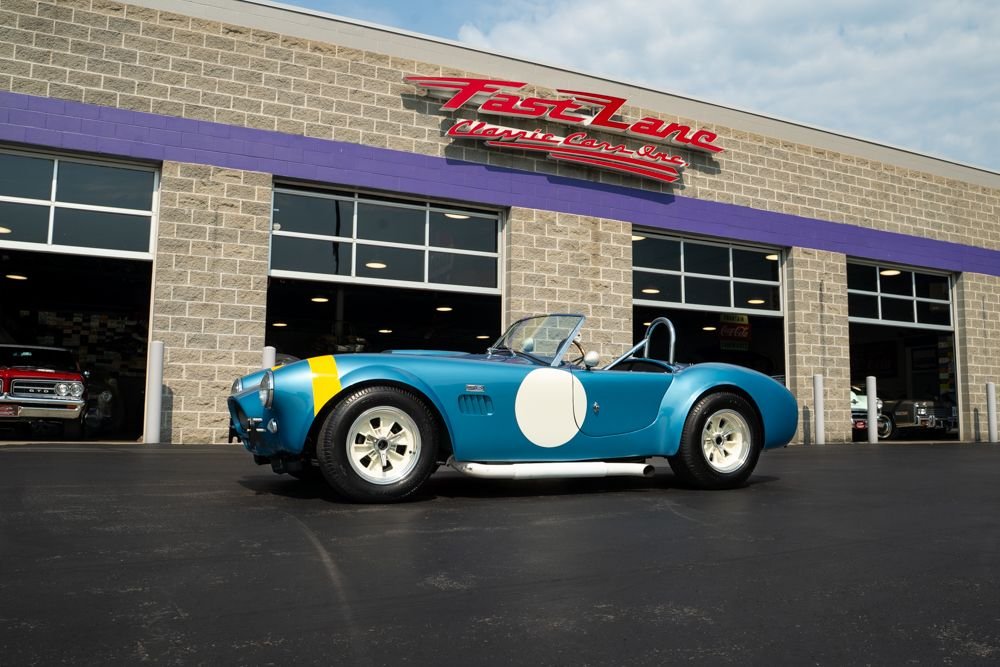
Every original Cobra is a two-seat open roadster except the six Daytona Coupes. The range divides cleanly into two chassis generations. The leaf-spring cars (CSX2000 series, 1962–65) carry transverse leaf springs front and rear on the AC-derived chassis and take the 260 and 289 small-blocks. The coil-spring cars (CSX3000 series, 1965–67) were designed around the 427 FE big-block, with a stronger chassis, wider track and coil springs all round. Continuation and replica cars copy one or the other shape, most often the wide-body 427.
| Model | Years | Engine | Output | Built | Character |
|---|---|---|---|---|---|
| 260 Cobra | 1962–1963 | 4.3 V8 (Ford 260 Hi-Po) | about 260 hp | 75 | The original formula; historic, the softest performer |
| 289 Cobra | 1963–1965 | 4.7 V8 (Ford 289 Hi-Po) | 271 hp | 580 | The balanced classic; leaf-spring, the sweet spot to drive |
| 289 FIA / competition | 1964–1965 | 4.7 V8 (289, race tune) | 306–390 hp | Handful of team cars | Le Mans and USRRC racers; provenance is everything |
| Daytona Coupe | 1964–1965 | 4.7 V8 (289, race tune) | about 385 hp | 6 | The Ferrari-beater; all six survive, museum-grade |
| 427 Cobra street | 1965–1967 | 7.0 V8 (427 side-oiler or 428 Police Interceptor) | 425 hp (427) / 355 hp (428) | Bulk of 348 CSX3000 cars | The icon; brutal, wide-body, coil-spring |
| 427 S/C | 1965–1966 | 7.0 V8 (427 side-oiler) | about 485 hp claimed | 31 | Semi-competition; the most valuable production Cobra |
| CSX4000 continuation | 1990s–present | Buyer-specified Ford V8, usually 427 FE or stroker Windsor | Varies by build | Ongoing, several hundred | Shelby-built in Las Vegas; a real Shelby, not a 1960s car |
| Replica / component cars | 1980s–present | Usually Ford 302/351W, stroker Windsor or FE | Varies widely | Thousands | Factory Five, Superformance, Backdraft, Kirkham and others |
A note on the 427 street row, because it is the most misrepresented line in the whole Cobra story: a substantial number of street cars left Shelby with the 428 Police Interceptor engine instead of the 427 side-oiler — same FE family, longer stroke, hydraulic lifters, roughly 355 hp, and fitted because it was cheaper and more tractable. The cars were never badged differently and were sold as 427 Cobras. The total CSX3000 production of 348 cars covers street, S/C, competition and 428-engined cars together. Only the engine itself — casting numbers, the side-oiler's screw-in core plugs and cross-bolted main caps — settles which engine a given car carries, and the price difference between a genuine side-oiler car and a 428 car is large. Outputs above are period gross ratings; treat all period Cobra horsepower claims, especially S/C figures, as approximate.
The small-block cars. The 260 (75 cars) is the historically important one and the least exciting to drive — the engine is a Fairlane V8 in a high state of tune rather than a purpose-built performance unit. The 289 that replaced it in 1963 is the connoisseur's Cobra: the K-code Hi-Po 289 with solid lifters, 271 hp in a car weighing around 2,300 lb, on a chassis that talks to you. Early leaf-spring cars steer through a worm-and-peg box; later cars gained rack-and-pinion steering, which is the single biggest drivability upgrade in the small-block range. Street 289s wore wire wheels or the handsome Sunburst alloy wheels; competition cars — the FIA roadsters and the USRRC team cars — added flared arches, cut-back doors and side pipes, and it is their look that half the replica industry copies.
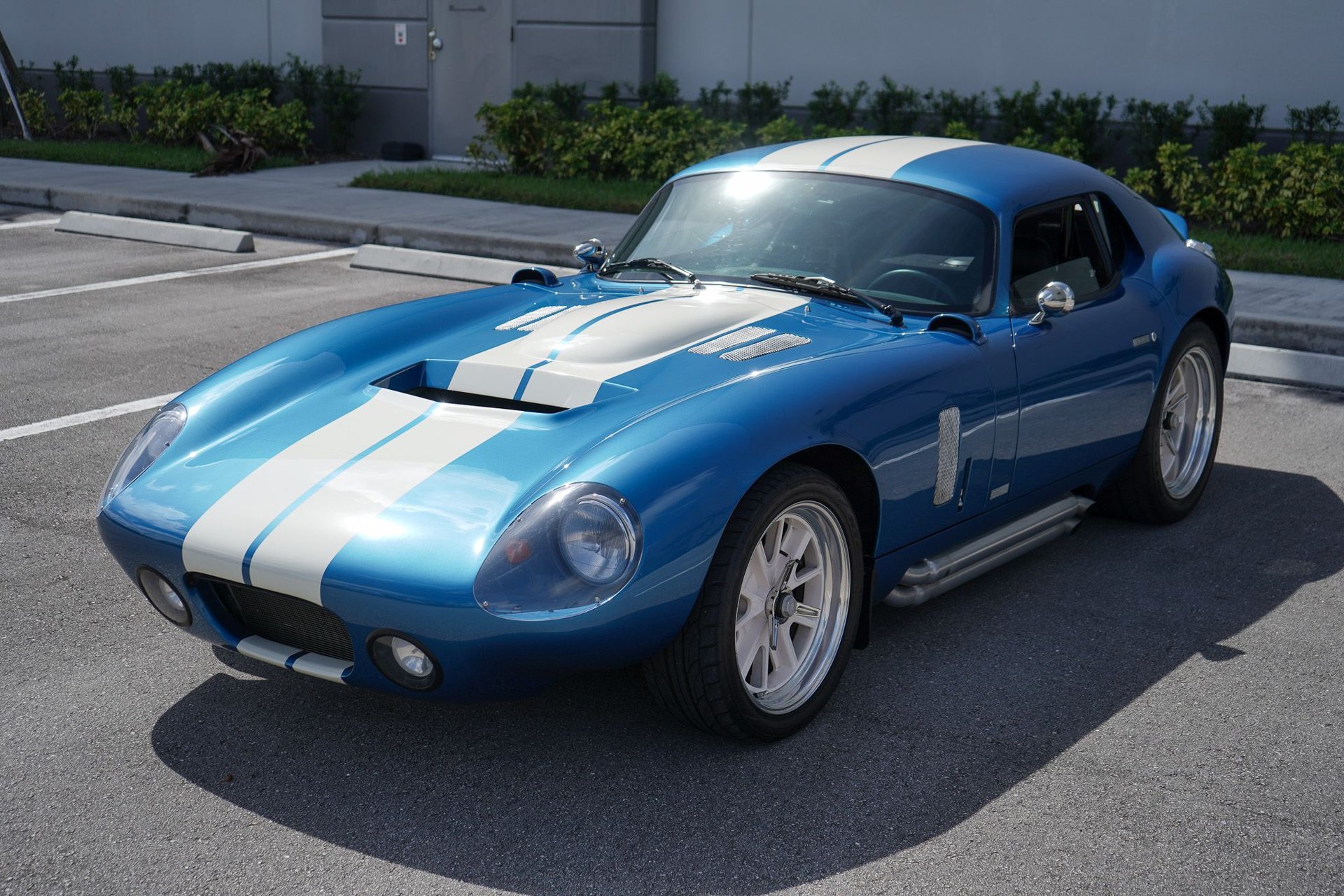
The Daytona Coupe. Peter Brock's closed coupe on the 289 chassis was built for one job: enough top speed to beat the Ferrari 250 GTO on the fast European circuits. Six were built — one body fabricated at Shelby's Venice, California shop and five in Italy — and the type won the GT class at Le Mans in 1964 and the FIA GT championship in 1965. All six are accounted for and effectively never trade openly. Any Daytona Coupe offered to you is a continuation or replica unless a Registry entry says otherwise — which, for a buyer, makes the shape wonderfully usable: Superformance and Shelby continuation Daytonas deliver the experience without the impossibility.
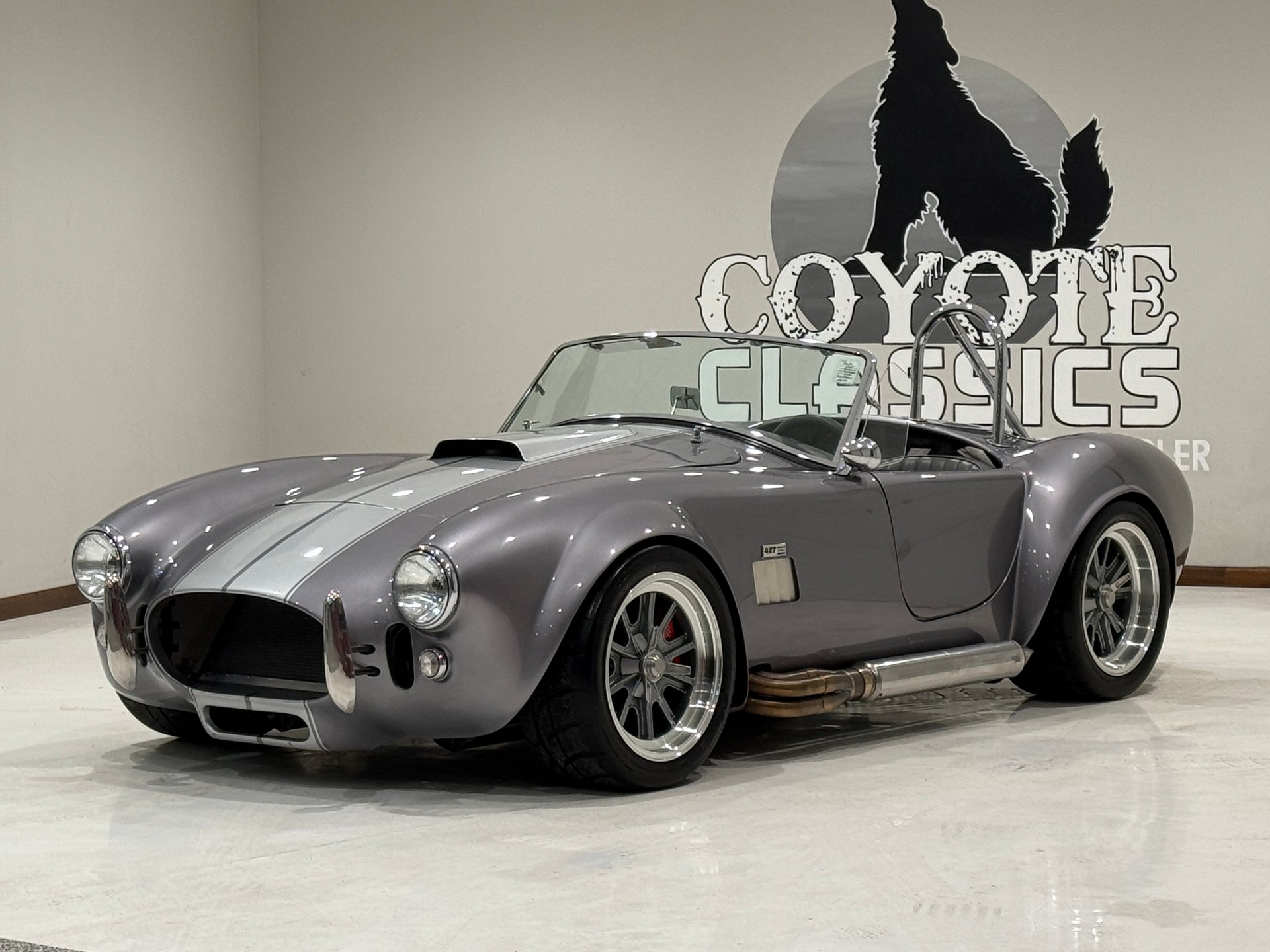
The big-block cars. The 427 programme nearly broke Shelby American: Ford's computer-assisted chassis redesign (the work of Ford engineer Klaus Arning) produced the 4-inch-tube coil-spring chassis, but the car missed its planned production-racing homologation and most S/C production was diverted into street trim. The result is the definitive Cobra in the public imagination — massively flared, side-piped, and violently fast even by modern standards. The S/C (semi-competition) cars, 31 of them, are unsold competition cars finished to a road specification, and sit at the very top of the original-Cobra market. Ordinary street cars divide by engine, as above: side-oiler 427, or 428. Know which you are buying.
Continuations and replicas. Shelby's own CSX4000 series (from the 1990s, Las Vegas) continues the serial sequence and is built to the original drawings, in glassfibre or aluminium, usually with a 427 FE or a stroked Windsor installed by the selling dealer. The CSX7000 covers the 289 FIA shape, the CSX8000 the leaf-spring 289 roadster, and the CSX6000 the coil-spring small-block variants. These are genuine Shelby products with genuine CSX numbers — but they are modern cars, and the market prices them as the best of the replicas, not as 1960s originals. Below them sits the replica field proper, covered maker by maker in the problem-areas section, because with replicas the maker and the individual builder matter more than the badge on the nose — and most replicas wear a Cobra badge their maker never had the right to fit.


Engines and gearboxes
The small-blocks: Ford 260 and 289 Hi-Po
Both leaf-spring engines are Ford Windsor small-blocks, and both are fundamentally ordinary production engines in a high state of factory tune — which is the best news a Cobra buyer gets, because parts, knowledge and machine shops for the Windsor are everywhere.
The 260 (4.3 litres) is the Fairlane V8 developed into a high-performance unit for the first 75 cars: higher compression, a solid-lifter camshaft, a four-barrel carburettor and about 260 hp. It is a sweet, revvy engine but the least torquey Cobra motor, and originality is its whole value — a 260 Cobra with its correct engine is a museum-grade artifact, while the same car with a later 289 swapped in has lost the thing that made it rare. Check the engine is the car’s own before paying 260 money.
The 289 Hi-Po — Ford’s K-code — is the definitive small-block: 271 hp gross at 6,000 rpm, solid lifters, screw-in rocker studs, a dual-point distributor, a Holley four-barrel on an aluminium intake, and a bottom end built for revs. In competition tune, with Weber 48 IDA carburettors on the FIA cars, the same engine made well over 300 hp and in full race trim approached 390 hp. Its character defines the leaf-spring Cobra: it wants to be revved, the solid lifters want their clearances checked as a routine service item, and a healthy one pulls hard and clean to 6,000 rpm with a hard, mechanical edge to the exhaust note. Failure modes are standard Windsor: worn cam lobes and lifters if the oil has been neglected, tired valve springs on a car that has sat, and overheating from a silted radiator rather than any design flaw. A full rebuild of a 289 by a competent Ford shop is roughly $7,000–12,000 depending on specification — real money, but a known quantity, and the engine is never the reason to reject a small-block car.
What does catch buyers out is specification drift. Sixty years on, many 289s wear later heads, hydraulic cams, electronic ignition and modern carburettors. On a driver that is all fine — arguably an improvement. On a car priced for originality it is a deduction, and the casting numbers and date codes on the block, heads and intake are how you tell. The same applies in the replica world, where “289” in a listing can mean anything from a genuine K-code to a stock 1980s 302 with a Cobra air cleaner on top.
The big-blocks: 427 side-oiler and 428 Police Interceptor
The CSX3000 cars were built around Ford’s FE big-block, and two different FEs went into street cars. Telling them apart is a core Cobra skill, because the cars were sold under one name and the engines differ in value, character and cost.
The 427 side-oiler is the racing engine: 7.0 litres, cross-bolted main bearing caps, a forged crank, and an oil gallery running along the side of the block that feeds the main bearings first — the “side-oiler” name, and the reason the engine survived Le Mans in the GT40. In street Cobra trim it wore a single Holley four-barrel (about 410 hp) or dual quads (rated 425 hp); S/C cars were quoted around 485 hp. Look for the screw-in freeze plugs on the side of the block and the cross-bolt heads visible along the oil pan rail — a centre-oiler 427, a 390 or a 428 dressed with 427 valve covers will not have them. This matters because FE blocks are visually near-identical and “427” valve covers fit all of them: the classic Cobra trap is a car — original 428 street car or replica — priced as a side-oiler on the strength of its rocker covers. Casting numbers on the block (look for the C5AE/C6AE-era 427 castings and a 1965–67 date code), the bore (a true 427 measures 4.23 inches; a 428 measures 4.13 with a longer stroke), and expert verification settle it.
The 428 Police Interceptor is not a bad engine — it is a torquier, lazier, hydraulic-lifter motor that is arguably better suited to street use, and Shelby fitted it to a large share of later street cars because Ford supplied it cheaper. It makes its roughly 355 hp low in the rev range and asks less of the driver. But it is not a 427, it was never the competition engine, and an original car with a 428 is worth materially less than the same car with a side-oiler. Neither Shelby nor the market will let you argue otherwise, so price the engine that is actually in the car.
FE ownership realities are shared. These are heavy iron engines in a light car with a small radiator: cooling in traffic is the standing issue, managed on good cars by a correct shroud, a healthy water pump and often a modern electric fan — ask how the car behaves in a summer queue, and test it. Flat-tappet cams in both 427 and 428 want oil with adequate zinc (ZDDP); modern low-zinc oils have wiped lobes on FEs, so ask what oil the car runs on and walk away from a shrug. Exhaust manifolds and side pipes run extremely hot and age accordingly. A quality FE rebuild is a $10,000–18,000 job at a specialist, and a genuine side-oiler block alone is a five-figure component — which is why engine identity, again, is money.
Replica engines are a separate census. Most component cars run Windsor power — a 302 (5.0) from a Mustang donor, a 351W, or a stroked 408/427-cubic-inch Windsor wearing 427 badges — or an FE built from a 390 or a modern aftermarket block. A stroked Windsor is lighter than an FE, makes comparable power and is cheaper to live with; it is the rational choice in a replica and no disgrace. The disgrace is only in the describing. Judge a replica’s engine as what it measurably is: displacement from the build sheet, specification from the invoices, condition from a compression test and an oil-pressure gauge that reads honestly hot.
Carburettors, induction and exhaust
Street small-blocks run a single Holley four-barrel; competition 289s run four Weber 48 IDAs, which are magnificent when set up and miserable when not — budget specialist time, not parts, for a Weber car that runs badly. Big-blocks run one or two Holleys; dual-quad setups (the famous “turkey pan” airbox sits over them on S/C cars) are thirsty and sensitive to float levels and heat soak. On any Cobra, old fuel, perished rubber fuel lines and ethanol-attacked carburettor internals are the default recommissioning list after storage. Side exhausts are a Cobra signature and a genuine ownership factor: they are loud enough to set off car alarms, they burn legs — yours, your passenger’s, a bystander’s — and original-style steel pipes rust from the inside while stainless replacements change the note. Check the pipes for internal rot by tapping along their length and listening for the thin, papery note of perforated metal.
Gearboxes and drivetrain
Original small-block cars use the Borg-Warner T-10 four-speed manual, an aluminium-case box with a characteristically mechanical change; synchromesh wear on second gear is its standard age fault. The big-block cars use Ford’s cast-iron Toploader four-speed, close- or wide-ratio, one of the strongest manual gearboxes of the era — a Toploader that whines in every gear or jumps out of third is simply worn out, and a rebuild runs roughly $2,000–3,500. No original Cobra was sold with an automatic or a five-speed; either in a car claiming originality ends the conversation about originality, though both are common and legitimate in replicas, where the Tremec five-speed (T-5, TKO or TKX depending on era) is the default fitment and suits the car beautifully.
The differential on original cars is a Salisbury 4HU limited-slip unit — the Jaguar-pattern axle — in a ratio chosen for the engine: tall for the 427 street cars, shorter for competition. Half-shafts, splined hubs and knock-off wheels need respect: the splines wear, and a worn spline lets a knock-off wheel work loose, which is why the inspection below has you check spinner tightness and look for fretting on the hub splines. Replica drivetrains vary by maker — Factory Five cars are built around Mustang running gear, Superformance around its own chassis with Ford or BMW-sourced components depending on model, Backdraft around BMW-derived suspension — so on a replica, identify the donor architecture and you have identified your parts book.


Problem areas
Everything else in this guide is ordinary classic-car buying. This section is not. A Cobra concentrates more identity fraud, honest confusion and well-meaning mythology into one model name than any other car in our listings, and the financial distance between the categories is enormous — the same photographs can describe an original worth a fortune, a Shelby continuation worth a fraction of it, or a replica worth a fraction of that. Work through the identity material first, then the physical car.
Identity: originals, continuations, replicas and “air cars”
The serial numbers. Original Cobras carry CSX chassis numbers: CSX2000–CSX2589 covers the leaf-spring small-block cars (with competition and export variations inside the sequence), and CSX3001–CSX3360 the coil-spring big-block cars. The number is stamped into the chassis and appears on the chassis plate and the title, and every original car’s number, specification and ownership history is recorded in the SAAC World Registry of Cobras. That Registry is the court of final appeal. A car whose number is not in it, or whose Registry entry describes a different car, is not an original Cobra whatever the seller says — and a seller of a genuine car will expect you to check, because the entry is his car’s single biggest asset. The mirror-image trap also exists: the so-called “air car”, where a crashed or destroyed original’s number — sometimes little more than paperwork and a plate — is applied to a newly built car. Air cars have been litigated in the Cobra world for decades. If the history has a gap, a rebuild with no photographs, or a chassis that looks suspiciously new for its claimed life, involve a marque expert and SAAC before money moves, not after.
Title year proves nothing. In most US states a replica or continuation is titled by the year it replicates, by its engine year, or by a special-construction process, depending on the state and the era of the build. Our own listings run to 2010 for exactly this reason — and plenty of cars titled “1965” were built in 2005. The title tells you what the state calls the car. The chassis plate, the maker’s serial number and the build documentation tell you what the car is. Never let a title year stand in for a build year in your own mind or in a negotiation.
Continuation cars. Shelby’s Las Vegas-built CSX4000 (427 shape), CSX6000, CSX7000 (289 FIA shape) and CSX8000 (leaf-spring 289) cars are real Shelbys with real CSX numbers in the modern sequence, sold as rolling chassis or completed cars through Shelby dealers, with the engine installed by the dealer or owner — which is why a continuation’s specification varies and why its paperwork should include the Shelby American invoice and the engine build sheet. Be clear-eyed about the early-1990s history: the first CSX4000 cars were launched amid a claim that they were completed from leftover 1960s chassis, a claim that did not survive scrutiny — the cars are 1990s builds, and the market prices them that way. A continuation is the best-built “replica” most buyers can purchase, with a genuine Shelby serial and genuine Shelby support. It is not a 1960s car, and any seller blurring that line is telling you how the rest of the negotiation will go.
The replica makers, ranked by what the market respects. Kirkham Motorsports builds aluminium-bodied cars in Utah (with bodies fabricated in Poland) to a standard many judges rate above the originals, and Kirkham components underpin many Shelby continuations; a Kirkham is the connoisseur’s replica. Superformance builds the MkIII in South Africa as a complete rolling chassis, sold through dealers, licensed by Shelby — consistent factory quality, Ford V8 installed by the dealer, and the strongest resale in the glassfibre field. Backdraft Racing likewise sells factory-built rolling chassis with BMW-derived suspension and modern road manners. Factory Five Racing sells component kits built by the owner or a hired builder around Mustang donor parts — the most numerous replicas of all, and the most variable: a professionally built Factory Five is a good car, and an amateur one is exactly as good as the amateur. ERA, Unique Motorcars and a long tail of defunct makers (Contemporary, Shell Valley, West Coast Cobras and others) fill out the field; orphan makes are not bad cars, but parts and knowledge get thinner. The rule that governs all of them: with replicas you are buying the individual build, not the brand — two cars from the same kit, built by different hands, are different cars at different prices, and the build documentation is the difference.
Badges and shapes prove nothing. Cobra badges, “427” side emblems, FIA flares, quick-fill caps and side pipes are all available by mail order and are fitted to everything. A narrow-body car can be an original 289 or a kit; a wide-body side-piped car can be a budget component build or an S/C. Shape is styling. The chassis number, the maker’s plate and the paperwork are the identity — everything else is costume.
Chassis, body and structure
The original chassis is a steel ladder of two large main tubes — 3-inch diameter on leaf-spring cars, 4-inch on the coil-spring 427 chassis — with the body a hand-formed aluminium skin over a light steel tube framework. Each element has its own failure mode.
Chassis rust and damage. The main tubes rust from the inside out, fed by water entering at the ends and sitting in the low points, and accident damage hides under the body — a Cobra that has been raced, and many have, may carry repaired tubes, replaced outriggers or a straightened front clip. Rust appeared in the photo notes of only 1 of the 40 Cobra listings we examined in detail, but that reflects what listing photographs show: sellers photograph paint, not tube interiors. On inspection, get the car on a lift, tap the main tubes along their length with a small hammer and listen for the dead note of thin metal, and probe the spring mounts, the front crossmember area and the rear bulkhead tubes. Structural tube repair on an original is specialist fabrication, priced per car and easily into five figures; on a replica it can be worse, because some kit chassis use thin-wall tubing and amateur welds throughout — grade the welds as you go, because on a home-built chassis the welding is the engineering.
The aluminium body. Original and Kirkham/Shelby-aluminium panels dent if you look at them hard, corrode where they meet steel (galvanic corrosion at the body-to-chassis contact points, showing as white powder and bubbling along the lower edges), and demand a genuine aluminium panel-beater for repair — a craftsman charging specialist hourly rates, with a single wing repair after a parking dent realistically $1,500–4,000. Glassfibre replica bodies are the opposite bargain: cheap to repair ($500–1,500 for comparable local damage at a glassfibre shop), immune to corrosion, but prone to stress cracking around the windscreen posts, door hinges and bonnet edges, and to star-crazing under the paint if the gelcoat was thin. Judge glassfibre by its cracks and its panel fit; judge aluminium by its dents, its corrosion at the seams and the quality of previous repairs, which on a hand-beaten body are part of the car’s honesty.
Suspension and steering wear. Leaf-spring cars wear their spring eyes, shackles and the transverse spring leaves themselves — a sagging, crabbing leaf-spring car usually wants spring work, not just bushes. Coil-spring cars wear rose joints and bushes in the double-wishbone suspension, and both generations wear the Salisbury differential’s limited-slip plates, announced by chatter on tight turns. Steering boxes on early cars and racks on later ones both develop play that sellers describe as “character”; on a car this light and this fast, slack steering is a defect to price, not a trait to accept. Knock-off wheel splines, covered in the engines section, belong on this list too: worn splines are a safety item, full stop.
Replica build quality: the car-by-car lottery
Because so many Cobras for sale are replicas, their specific failure pattern deserves its own space. It is not design failure — the good designs are proven — it is build variance.
Cooling. The replica builder chose the radiator, the fan, the shroud and the plumbing, and chose how well to bleed the system. Marginal cooling is the most common replica defect: a car that is fine at 60 mph and boils in traffic. The test is in the inspection section, and it is non-negotiable in a warm climate.
Wiring. Kit wiring ranges from a factory loom (Superformance, Backdraft) to a home-spliced donor harness (older kit builds). Look behind the dashboard: a tidy, labelled, fused loom is the signature of a careful builder, and a nest of scotch-lock connectors is the signature of every electrical fault you will chase for the next two years. Lucas-pattern switches and Smiths-style gauges on replicas are reproductions of varying quality; test everything, twice.
Suspension set-up. A kit car’s alignment, corner weights and ride heights were set by its builder, or never set at all. A Cobra that darts, trams and lifts a wheel is usually not a bad chassis — it is an unaligned one. Budget a specialist set-up ($400–800 for alignment and corner-weighting) into any replica purchase and you will often transform the car.
Fit, finish and weather gear. Door gaps, bonnet fit, windscreen rake and the fit of the soft top and side curtains vary enormously and are expensive to improve after the fact. Most Cobras leak in rain and mist up instantly; that is true of originals too and is not a defect. What is a defect is a top that cannot be erected at all, missing side curtains, or a tonneau that does not fit — replacements are available but the labour of fitting them to an individual hand-built body is yours.
Mechanical wear: engines, brakes and the heat problem
The Ford engines wear as covered in the engines section — Windsor parts cheap and everywhere, FE parts dearer, side-oiler parts dearest. The Cobra-specific mechanical issues are three. Heat: the engine bay is small, the exhausts run inside it and through the footwells, and cockpit heat soak is universal — check the footbox insulation and be honest with yourself about summer driving in a car whose sills contain exhaust pipes. Brakes: original cars use Girling disc brakes, strong when maintained; the standing faults are seized calipers and a perished flexible hose set after storage, and a full hydraulic refresh runs roughly $1,200–2,500 with labour. Pedal feel on any Cobra should be firm and high; a long pedal on a light car is never “just how they are”. Storage damage: Cobras are fair-weather cars that sit for months, and sitting kills fuel systems, brake hydraulics, tyres and batteries in that order — damage or deterioration showed in the photo notes of 4 of our 40 examined cars, and the recommissioning budget for a long-slept car of any category is realistically $3,000–7,000 before it is trustworthy, whoever built it.

How to inspect one
Allow two hours, not one — a Cobra inspection is half paperwork audit, half mechanical examination, and the paperwork half comes first because it decides what you are even looking at. Bring a torch, a small hammer for the chassis tubes, a magnet (for the chassis, not the body), and a camera.
- Classify the car before you touch it. Original, Shelby continuation, named-maker replica or anonymous build? Ask the seller to state the category plainly, then ask for the evidence: the CSX number and SAAC Registry entry for an original, the Shelby American invoice for a continuation, the maker’s plate and build book for a replica. A seller who will not state the category is telling you the category.
- Read the stampings, not the badges. Find the chassis number where it is stamped into the frame and match it against the chassis plate, the title and the paperwork. On an original, the number must sit inside the known CSX sequences and match the Registry description of that car — engine type, colour history, competition record. On a replica, find the maker’s own serial plate (Superformance, Backdraft, Factory Five and Kirkham all number their cars) and call or write to the maker if the number raises questions.
- Audit the paper trail. Build sheets, engine invoices, dyno sheets, restoration photographs, prior titles and previous sale listings. For replicas, the build book is the car’s service history and its value in one folder — a replica with a complete build book and a replica without one are different propositions at any price. Photograph every document.
- Settle the engine’s identity. On an FE car, look for the side-oiler evidence from the engines section — screw-in core plugs, cross-bolted mains, block casting number and date code — and refuse to pay side-oiler money for valve covers. On a small-block, read the casting numbers and decide whether you are looking at a genuine Hi-Po, a period-correct standard engine or a modern crate motor. All three are fine at the right price; only one is fine at the highest price.
- Cold start, then watch and listen. Insist on a stone-cold engine. A Windsor should start readily and settle; an FE should show strong oil pressure immediately. Blue smoke on start-up that clears is valve seals; smoke that stays is deeper. Listen for solid-lifter clatter that is even (normal on a Hi-Po) against a single loud tick (a worn lifter or rocker, and a negotiation point).
- The chassis on a lift. This is the structural step, and it decides whether you continue. Tap the main tubes along their full length for the dead note of internal rust, examine the spring mounts and outriggers, grade the welds on a replica chassis, and look for repaired accident damage under fresh paint or underseal. Perforated main tubes on any Cobra are a specialist fabrication conversation — walk away unless the price already assumes it.
- Body material and condition. Establish what the body is actually made of — tap panels, inspect the underside edges and the engine-bay side of the panels, where aluminium shows its folded edges and glassfibre shows its matting. On aluminium, hunt the white corrosion at steel contact points and price dents at panel-beater rates. On glassfibre, hunt stress cracks at the windscreen posts, hinges and bonnet corners. Do not let a magnet anywhere near this judgement: neither material is magnetic, and sellers know buyers who think otherwise.
- Cooling under provocation. Drive the car until it is fully hot, then let it idle for ten minutes and sit in slow traffic if you can. The temperature gauge should stabilise, not climb. A Cobra — above all a replica, where the cooling system was the builder’s choice — that cannot idle hot in the seller’s own driveway will not survive your first summer queue. This single test rejects more replicas than any other.
- The test drive. Fifteen minutes minimum, on roads with bumps. A Cobra should feel light, direct and violently willing; what you are hunting is slack — steering play, spline knock from worn knock-off hubs, differential chatter on tight turns, a second-gear synchro crunch on the T-10 or Toploader. Brakes: firm, high pedal, straight stop from speed, no judder. Check spinner tightness when you return, and look for fresh fretting dust at the hub.
- Heat and electrics in the cabin. After the drive, feel the footwells — some heat is universal, but melted-carpet heat means missing insulation and side-pipe proximity problems. Work every switch, gauge, light and the heater fan. On a replica, open the fuse box and look behind the dash if the seller permits: the wiring standard you see is the build standard everywhere you cannot see.
- Weather gear and finish. Erect the soft top, fit the side curtains, check the tonneau. On a hand-built body these were fitted to this car or they were not, and refitting is labour you will pay for. Walk the panel gaps and the paint in flat light: glassfibre star-crazing and aluminium repair ripples both hide in showroom lighting and announce themselves outdoors.
- Price the category, then the car. Only now think about money. Establish the market level for the category you proved in step 1, then adjust for the engine you proved in step 4, the structure you proved in step 6 and the cooling you proved in step 8. If the asking price assumes a higher category than the evidence supports, the negotiation is not about condition — it is about identity, and it ends with the seller’s documents or your departure.

Values
The build’s market block beneath this guide carries the current listing figures for Cobras, broken down as far as the data allows. Read it with the category structure firmly in mind, because no model line in the classic market has a wider spread between its floor and its ceiling — the gap between a home-built replica and a competition-history original is not a percentage, it is a different market that happens to share a silhouette.
Start with the tiers, in descending order. Original cars with SAAC Registry entries sit at the top, and within them competition history is the great multiplier: a Daytona Coupe or a team 289 with Le Mans history is effectively priceless in normal market terms, an S/C leads the production cars, and a documented street 427 with its correct side-oiler leads the cars a buyer might realistically find. Below the originals, the 289 leaf-spring cars trade on balance, usability and the same Registry provenance. Shelby continuation cars form the next tier — a genuine Shelby serial, factory build quality and strong dealer support, priced as the finest modern interpretation rather than as history. Named-maker replicas follow, in roughly the order the problem-areas section ranked them: aluminium Kirkhams at the head, factory-built Superformance and Backdraft cars behind, then the kit-built field, where the individual build book moves a car up or down a full level on its own.
Three reading rules apply to every figure in the block. First, asking prices on Cobras are aspirational more often than on almost any other model, because so many sellers price the shape and the title year rather than the category — auction results, where replicas in particular trade in volume and in public, are the honest cross-check, and a wide gap between the asking market and the auction market for lookalike cars is the norm, not an error. Second, the engine is a price tier of its own: on originals, a correct side-oiler against a 428, and on replicas a documented FE or stroked Windsor build against an anonymous donor engine, each move value by a step that dwarfs any colour or trim consideration. Third, provenance documents are value, literally: a Registry entry, a Shelby invoice, a maker’s build book or a famous prior owner can each be worth more than a repaint and an engine rebuild combined, because they are the one thing about a Cobra that cannot be bought later.
The project-versus-driver gap follows the same logic. A cosmetically tired but correctly identified car with sound structure is the rational buy at every tier — the mechanical recommissioning costs are knowable and largely Ford-priced. A shiny car with an identity problem is the irrational one at any figure, because no amount of spending converts it into the category its price assumes. Negotiate on evidence: every missing document, every unproven claim and every failed test in the inspection is a priced item, and on a Cobra the seller, not the buyer, carries the burden of proof.
Parts and ownership
Ownership divides by category just as value does. The mechanical core of every Cobra — original, continuation or replica — is Ford, and Ford support is the easiest in the classic world. Windsor and FE service parts, gaskets, water pumps, starters, alternators and ignition components are available from mainstream suppliers at ordinary prices; Holley carburettor parts are universal; Toploader and T-10 rebuild kits are stocked by transmission specialists; Tremec parts for replica five-speeds are current-production items. Budget the standing recommissioning items as you would on any Ford V8 of the period, with the FE premium applied where the engines section noted it.
Easy: all Ford engine service and most hard parts, carburettor kits, brake pads and hydraulic components for the common calipers, tyres in the common replica sizes, electrical service items, glassfibre repair materials, and — for the named replica makers still trading — maker-supplied body, trim and chassis parts, with Superformance and Factory Five both running proper parts operations.
Harder and dearer: genuine side-oiler blocks and heads, correct Hi-Po 289 components with the right casting dates, Girling brake parts in original specification, Salisbury 4HU differential internals, magnesium Halibrand wheels (which need specialist crack-testing and care, and should never be powder-coated by a shop that does not understand magnesium), original Lucas switches and Smiths instruments in working order, and correct knock-off hubs and spinners — pattern sets are available for roughly $1,200–2,500 a set, but spline quality varies and a cheap spinner on a worn hub is a safety issue, not a saving. Aluminium body repair is the standing specialist cost: a proper panel-beater’s hourly rate, applied slowly, which is why small dents on an aluminium car are priced so differently from the same dent in glassfibre.
Running a Cobra. A sorted car is a realistic fair-weather regular: fuel consumption ranges from merely heavy in a small-block to spectacular in a dual-quad 427, insurance is category-dependent (agreed-value cover on an original is a specialist conversation; replica cover is routine but must describe the car honestly as a replica or continuation, or the policy is built on sand), and servicing is within the ability of any good Ford-experienced independent. The ownership costs that catch people are the Cobra-specific ones: side pipes and their heat, tyres in wide 1960s sizes, the first-year catch-up on a car that has sat — the $3,000–7,000 recommissioning range from the problem-areas section — and storage, because a car with no roof worth the name and an aluminium or hand-finished body wants a dry garage, not a carport. Join the SAAC if you buy an original or continuation; join the maker’s owner community if you buy a replica. In both cases the registry and the forums know more about your specific car than any generalist mechanic ever will.
Which one to buy
- The original to drive: a leaf-spring 289 Cobra. The balanced car — light, revvy, rack-and-pinion in later form, with full Registry provenance and the gentlest running costs of any original. If you can buy one original Cobra to use rather than to vault, this is it.
- The icon: a street 427 with its correct side-oiler verified. The definitive Cobra experience, at the definitive Cobra price. The verification is the purchase: block castings, Registry entry, engine originality. A 428-engined street car is a fine Cobra at 428 money — never at side-oiler money.
- The collector car: a 427 S/C or a competition 289. Bought on history, not condition. These are provenance purchases that happen to include a car; buy the file first and the metal second.
- The smart Shelby: a CSX4000 or CSX7000 continuation. A genuine Shelby serial, factory build quality, modern support and the full experience, without original-car money or original-car anxiety. The connoisseur’s way to drive the shape hard and often.
- The value buy: a factory-built Superformance MkIII or Backdraft. Consistent build quality, strong resale for a replica, dealer support — the replica purchase with the fewest unknowns, priced by engine and specification rather than by story.
- The enthusiast’s project: a well-documented Factory Five or Kirkham. A Kirkham if the budget reaches — the finest replica made. A Factory Five only with its build book: the book is what separates a good car from a lottery ticket.
- The shape for its own sake: a Daytona Coupe continuation or replica. Six originals exist and you will not be offered one. The continuation and Superformance coupes are superb cars that deliver Brock’s silhouette honestly, in their own category.
And the rule that overrides all of the above: buy the identity you can prove, at the price of the category the evidence supports. Engines can be rebuilt, chassis can be repaired, paint can be renewed — but a Cobra’s category is fixed the day it was built, and no restoration, badge or title year will ever move it. Pay for the car the documents describe, and you will own the right Cobra at the right money, whichever tier it sits in.
Listed now
On Classic Listings today: 32 cars are listed here; 31 for sale and 1 marked sold; average asking price $98,304; asking range $42,495 to $239,000; sold cars average $78,900.
See the 32 Cobra cars currently listed.
The market — recorded sales
Recorded-sale figures: 8 recorded sales · median $297,000 · range $59,900 to $1,290,000 (Nov 2024 – Nov 2026)
Based on 8 recorded sales — too few for a benchmark value.
| Date | Car | Sale price | Source |
|---|---|---|---|
| Nov 19, 2026 | 1965 Cobra 289 - CSX2439 | $1,290,000 | Dealer |
| Nov 19, 2026 | 1965 Cobra - CSX Dragonsnake | $750,000 | Dealer |
| Nov 19, 2026 | 1965 Cobra CSX1000 | $490,000 | Dealer |
| Nov 19, 2026 | 1965 Cobra CSX 427 S/C - Phantom Cobra | $395,000 | Dealer |
| Nov 19, 2026 | 1965 Cobra 50th Anniversary | $199,000 | Dealer |
| Nov 19, 2026 | 1965 Cobra | $114,950 | Dealer |
| Nov 19, 2026 | 1965 Cobra Rts | $59,900 | Dealer |
| Nov 18, 2026 | 1965 Cobra | $78,900 | Dealer |
Dates are the sale date where the source states one; otherwise the date the sale was recorded here.
For sale now
 $42,495 · 70% below typical
Expand
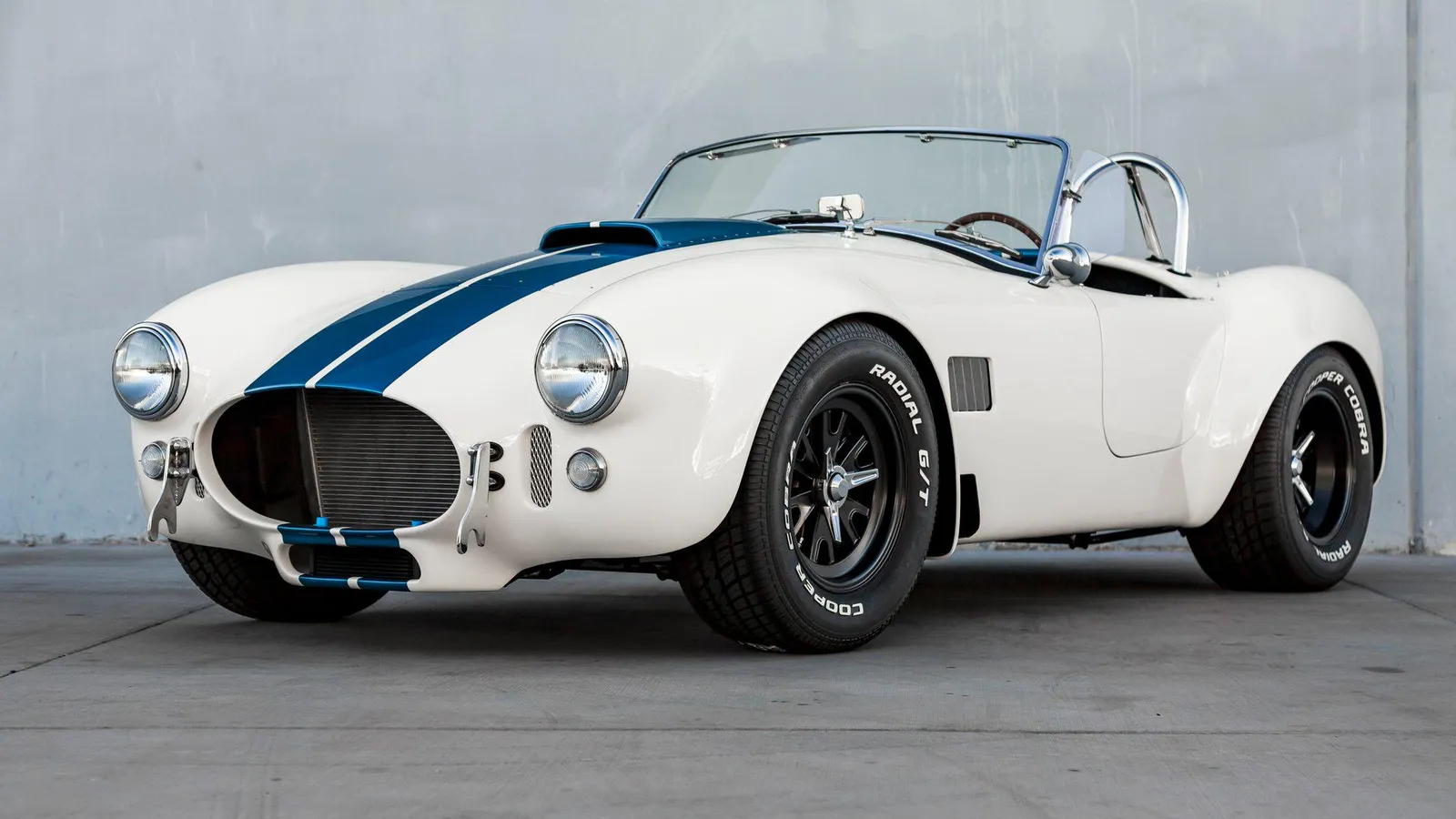 $99,800 · 30% below typical
Expand
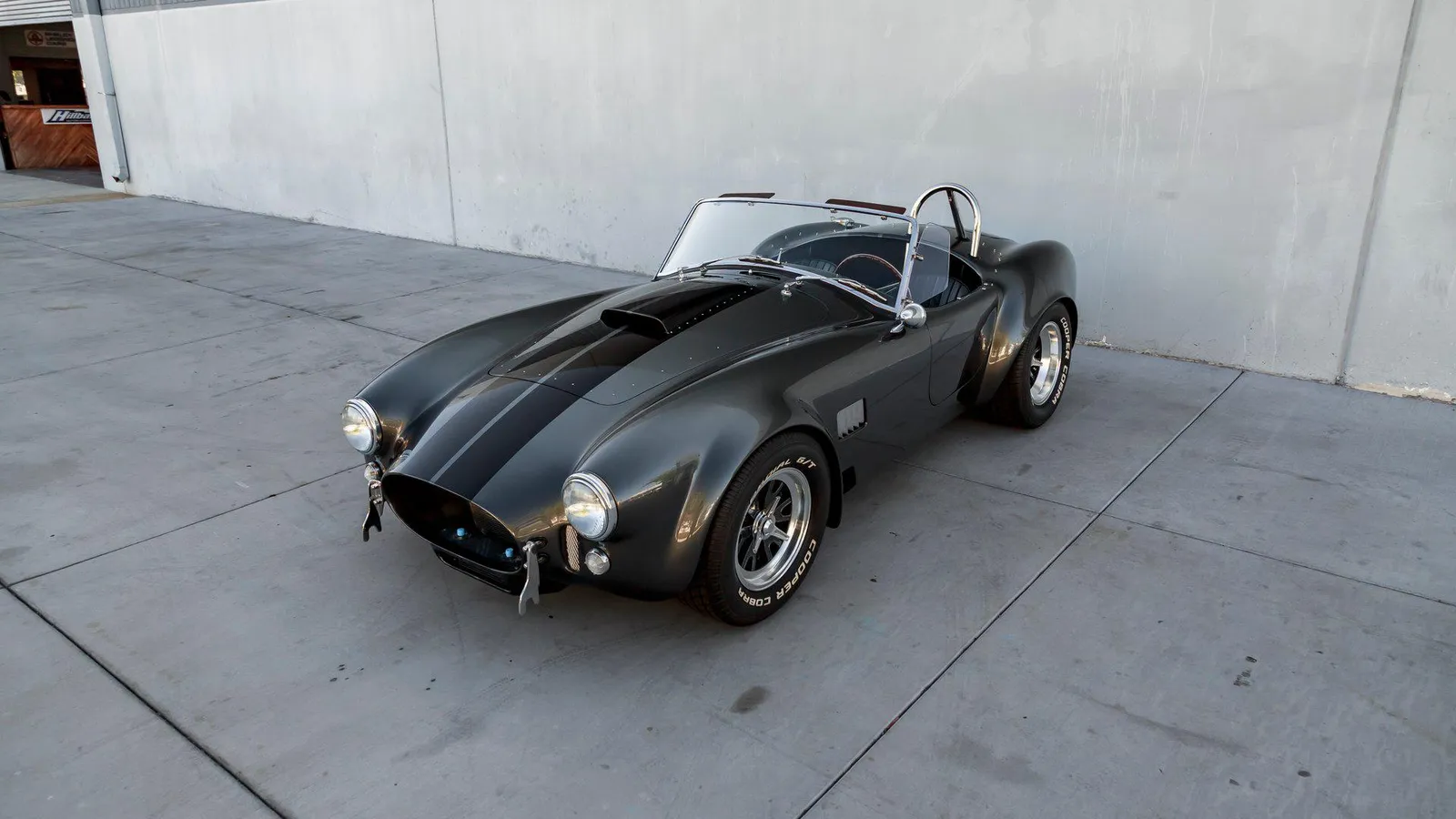 $97,800 · 31% below typical
Expand
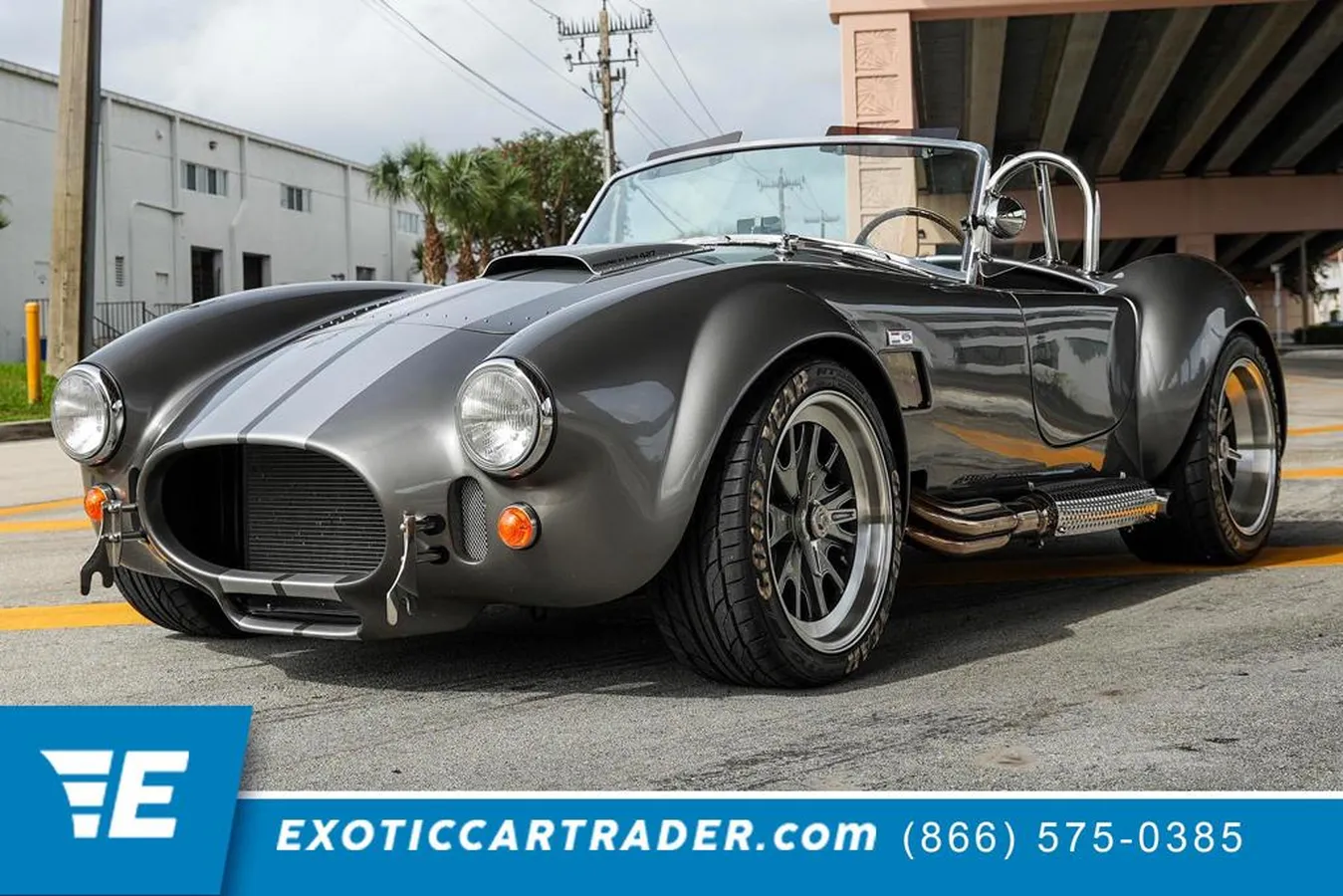 $94,999 · 33% below typical
Expand
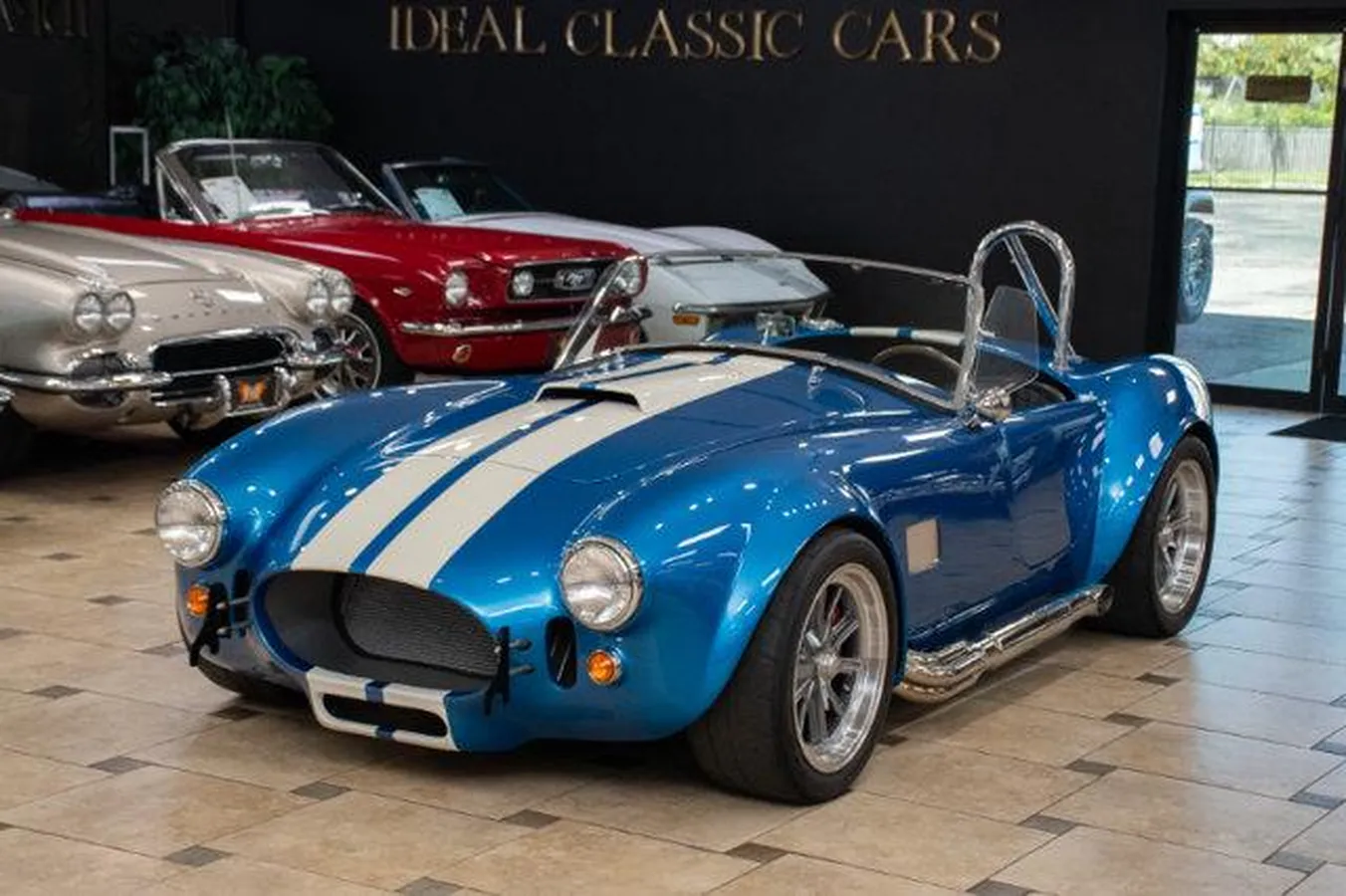 $89,983 · 37% below typical
Expand
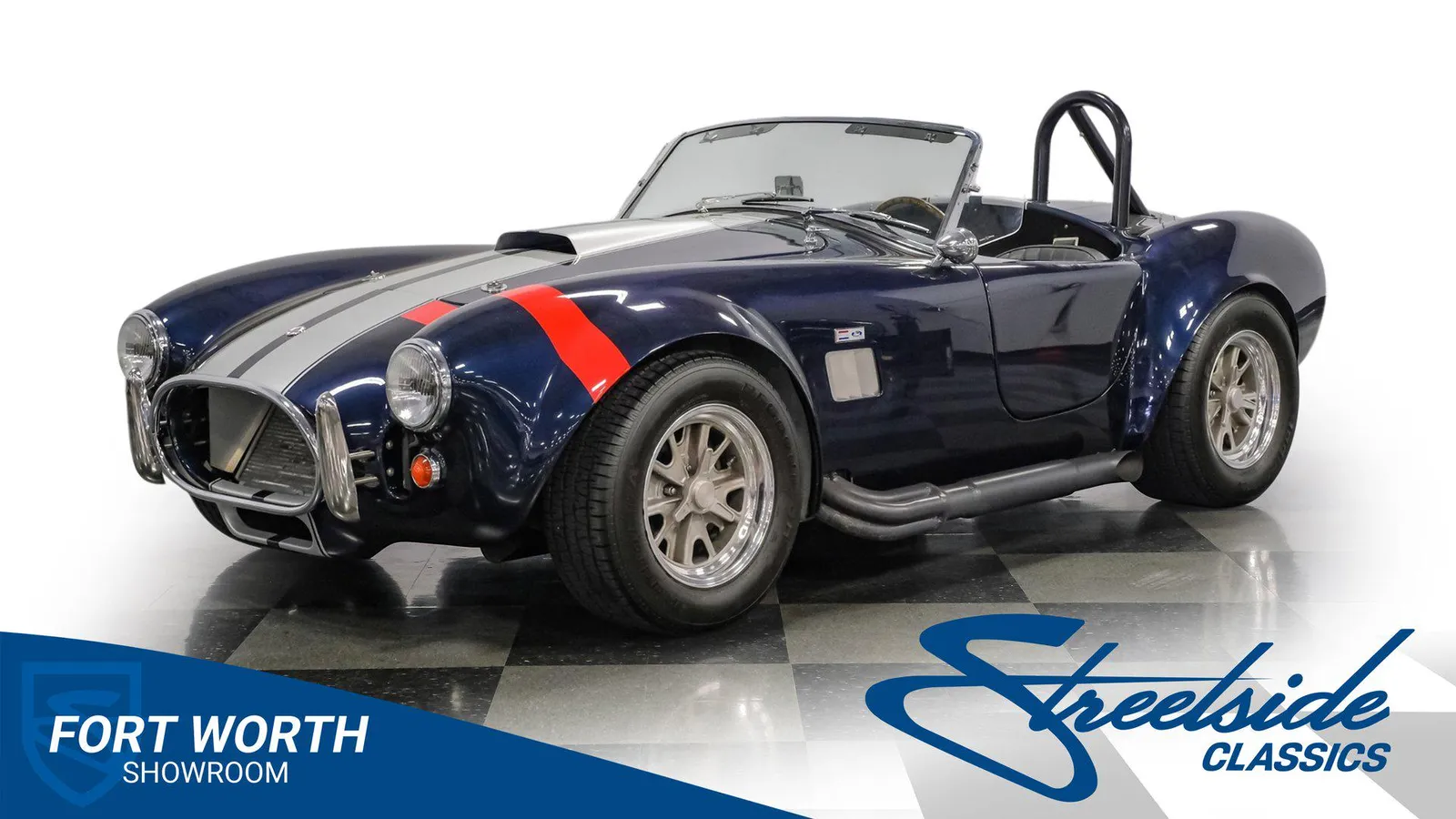 $79,495 · 44% below typical
Expand
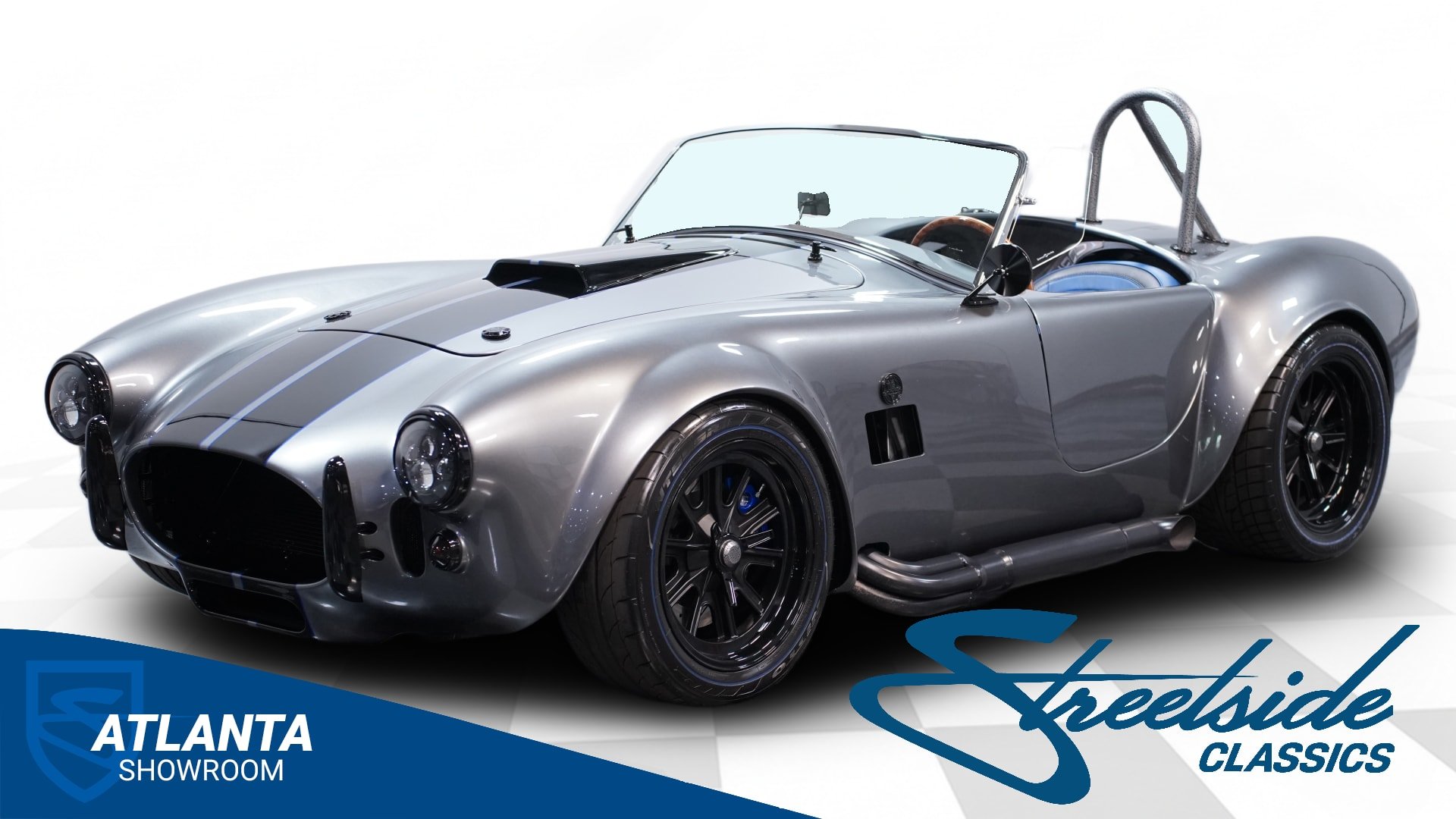 $72,995 · 49% below typical
Expand
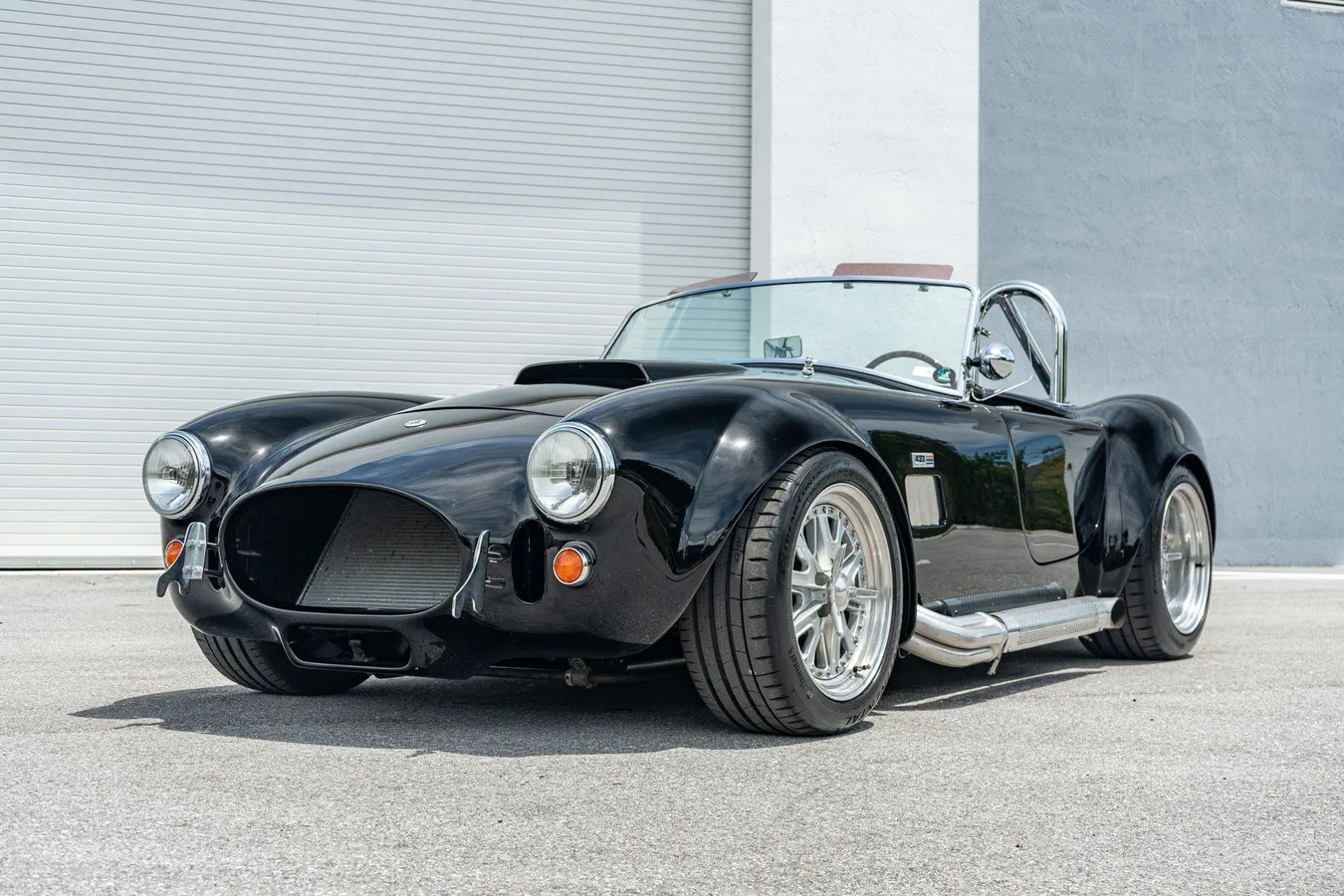 $71,000 · 50% below typical