
Shelby GT350 buyer's guide
Shelby GT350 (1965–1970) — GT350, GT 350, GT350H: what's listed, and what they sell for.
Years: 1965–1970 · Models: GT350, GT 350, GT350H
Overview and history
The Shelby GT350 is the car that turned Ford's Mustang from a secretary's runabout into a racing weapon — and it is also one of the most faked, cloned and misrepresented names in the entire classic market. That second fact shapes everything about buying one. With a Mustang fastback, a set of stripes and a confident story, almost any 1960s Mustang can be made to look like a GT350 in photographs. Only a small, documented population actually is one: roughly seven and a half thousand GT350s were built across the original 1965–1970 run, against millions of ordinary Mustangs. So this guide spends as much time on identity — serial numbers, registries, hidden stampings and paperwork — as on rust and engines. On a GT350, authentication is not a preliminary chore before the real inspection. Authentication is the real inspection, because the premium over a good Mustang exists only if the car is what its badges claim.
The story starts with Carroll Shelby. Shelby American, working out of its Venice, California shops and bankrolled by Ford after the success of the Cobra programme, was handed a simple brief in 1964: make the new Mustang eligible for, and competitive in, Sports Car Club of America B-Production racing. Ford shipped K-code Mustang fastbacks — the high-performance 289 cars, with the solid-lifter Hi-Po V8, four-speed manual gearboxes and 9-inch rear axles — from its San Jose plant to Venice, where Shelby's crew stripped weight, reworked the suspension, tuned the engine and rebuilt the car to a specification of Shelby's own devising. The result, announced for 1965, was the GT350: the name, by Shelby lore, chosen because the car was about 350 feet from his office when someone asked what to call it, and because if the car was good the name did not matter and if it was bad the distance did not either.
The 1965 car was barely civilised: fastback only, Wimbledon White with Guardsman Blue stripes, a stripped interior, a fibreglass hood with a functional scoop, a Detroit Locker rear axle that clunked its way around corners, side-exit exhausts, and no back seat in the earliest specification — the spare sat where the seat had been, partly to satisfy the racing rulebook's idea of a two-seater. Alongside the street cars Shelby built a short run of R-models: full competition cars with Plexiglas windows, racing fuel cells and engines tuned harder still. They did what they were built to do — GT350s won the SCCA B-Production national championship in 1965, 1966 and 1967, beating Corvettes in the class Ford cared about. That record is the foundation of the car's value today, and why the earliest cars, above all genuine R-models, sit at the top of the market.
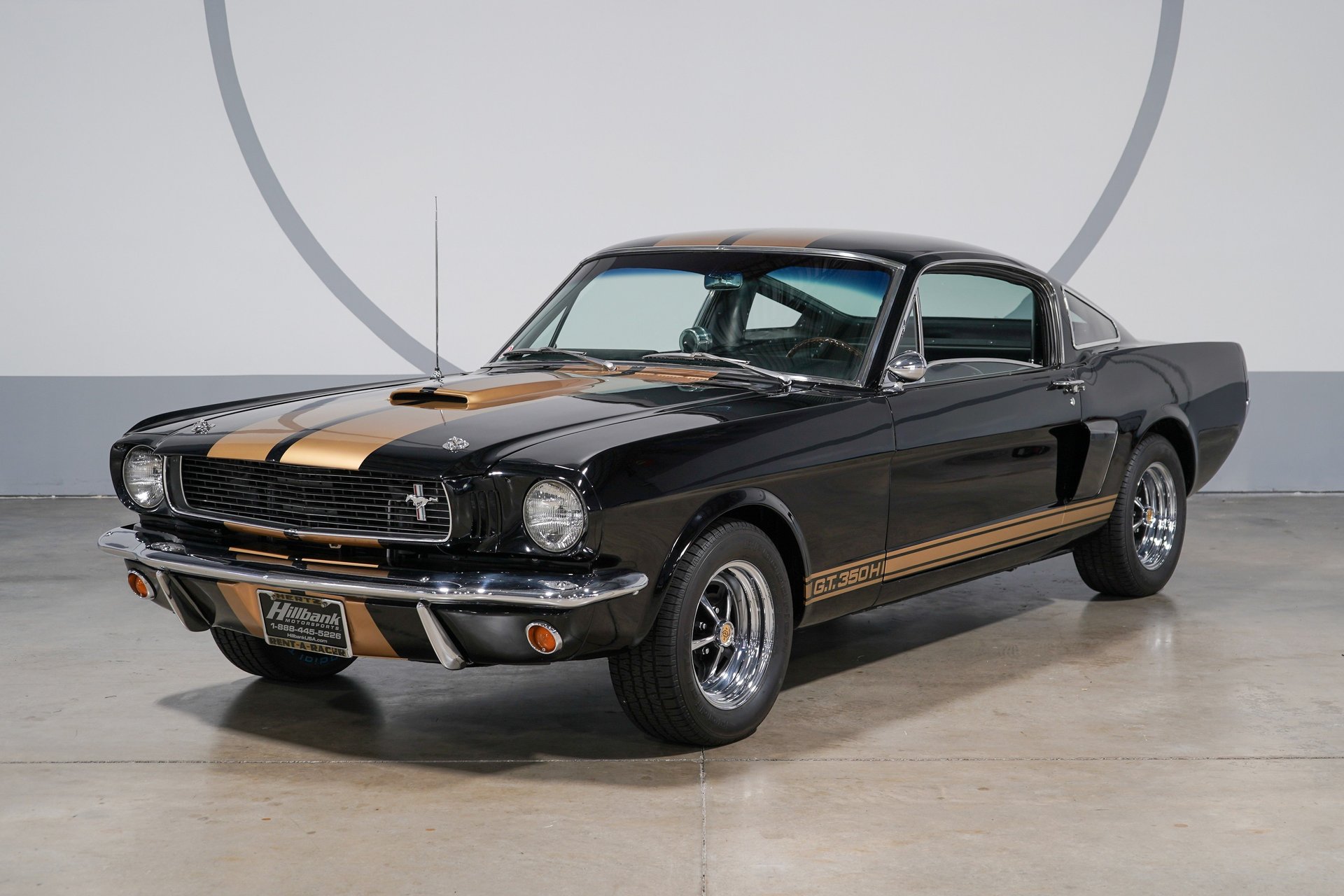
From 1966 the car began its long march toward civility, and each step defines a different buying proposition. The 1966 GT350 gained a back seat, more colours and an optional automatic, because most buyers wanted the image more than the ordeal. About a thousand 1966 cars went to Hertz as the GT350H — the famous Rent-A-Racer, mostly black with gold stripes — a chapter so colourful that Hertz cars now carry their own premium and their own authentication traps. For 1967 the Mustang was restyled, larger and heavier, and the GT350 with it: a longer fibreglass nose, inset driving lamps, a ducktail rear and, alongside it, a big-block brother, the GT500. Production moved during 1967 from Venice to Ionia, Michigan, where A.O. Smith handled conversions. For 1968 Ford took effective control, a convertible joined the range, and the car became the Shelby Cobra GT350 — increasingly a Ford product with Shelby branding. The 1969 cars were restyled again, with a 351 in place of the 302; unsold 1969 cars were re-serialised and sold as 1970 models, after which the programme ended at Shelby's own request.
The name did not stay dead. Shelby American revived it in 2011 as a post-title supercharged conversion of the 5.0-litre Mustang GT, and Ford took it in-house for 2015–2020 with the Shelby GT350 and GT350R — Ford products, powered by the 5.2-litre flat-plane-crank Voodoo V8. Both revivals are covered in the models section, because confusing the three populations is an expensive beginner's error. But be clear about this guide's pool: the cars in our own listings are the 1965–1970 originals, and the inspection, rust and authentication advice that follows is written for those cars first.
One more framing fact. These were low-volume, hand-finished cars built by a racing shop, and they have lived hard lives: raced, rented, modified, restored, and often restored again. Documentation varies from a complete registry-verified paper trail to nothing at all, and values vary accordingly by multiples, not percentages. The buyer's job is to establish, in order: what the car is, what it has been, and what it needs — because the first answer prices the other two.


The models
The GT350 range is best understood as six model years of continuous drift — from racing car with number plates to grand-touring Mustang with a famous name — plus the Hertz variant that cuts across 1966 (and reappears in spirit in 1969), plus the two modern revivals. Body styles were fastback only for 1965–67; a convertible was offered for 1968–70, and a small number of 1968 convertibles account for an outsized share of the fraud in the market, for reasons the authentication section explains. Production figures below are the widely published Shelby American totals; where a year's split between variants is genuinely uncertain, the table says so rather than inventing precision.
| Model | Years | Engine | Output | Built | Character |
|---|---|---|---|---|---|
| GT350 (street) | 1965 | 289 Hi-Po V8, Holley 4-barrel | 306 hp | about 520 | The raw original; stripped, loud, Locker axle |
| GT350R | 1965–66 | 289 Hi-Po V8, race-tuned | about 350–360 hp | 37 | Full competition car; the blue-chip Shelby |
| GT350 | 1966 | 289 Hi-Po V8 | 306 hp | about 1,370 | Civilised a notch; back seat returns, colours arrive |
| GT350H (Hertz) | 1966 | 289 Hi-Po V8 | 306 hp | about 1,000 | Rent-A-Racer; mostly black and gold, mostly automatic |
| GT350 | 1967 | 289 Hi-Po V8 | 306 hp | 1,175 | The restyle year; last of the 289 cars, Shelby-built feel fades |
| GT350 | 1968 | 302 V8, hydraulic lifters | 250 hp | about 1,650 | Ford-run car; fastback and convertible, softer tune |
| GT350 | 1969 | 351 Windsor V8 | 290 hp | about 1,085 | Ford-designed restyle; Ram Air standard |
| GT350 | 1970 | 351 Windsor V8 | 290 hp | about 600 | Re-serialised unsold 1969 cars; the end of the line |
| GT350 (Shelby American revival) | 2011–14 | 5.0 Coyote V8, supercharged options | 430–624 hp | small hundreds | Post-title conversion; a modern collectible, a different market |
| GT350 / GT350R (Ford) | 2015–20 | 5.2 Voodoo V8, flat-plane crank | 526 hp | about 23,000 total run | Ford Performance car; track tool, six-speed manual only |
(Period outputs are the manufacturers' gross ratings for the early cars, which flatter them by modern net standards; the 1968 figure fell as much because Ford quoted the softer hydraulic-lifter 302 honestly as because the car was slower. Treat every period horsepower number in this guide as a period claim, useful for comparing Shelby variants with each other, not with modern cars.)
1965: the street car and the R-model. The street GT350 is the connoisseur's car because it is the least compromised: aluminium T-10 four-speed on most cars, Koni dampers, lowered front suspension pickup points (the famous Shelby drop, which corrected the Mustang's geometry), override traction bars, a Detroit Locker, a wood-rimmed wheel, a dash pod with proper gauges, and an engine lifted from 271 to 306 hp with a high-riser intake, a Holley 715-cfm carburettor, Tri-Y headers and that side-exit exhaust. The R-model took the formula to the track: about 37 built across 1965–66, and a genuine R is a museum-grade asset whose authentication belongs in expert hands before any money moves. If you are offered an R-model at street-car money, you are not being offered an R-model.
1966 and the Hertz cars. The 1966 car kept the mechanical recipe but added the things buyers asked for: a rear seat, a choice of colours (Sapphire Blue, Ivy Green, Candy Apple Red and Raven Black joined the white), quarter windows in place of the fastback's extractor vents, a standard tachometer pod retained, and the option of a three-speed automatic. The Detroit Locker gave way to a quieter limited-slip on most street cars. The GT350H is the famous sub-variant: Hertz ordered roughly a thousand cars for its rental fleet, the great majority black with gold Le Mans stripes, most with automatic gearboxes — a deliberate choice, as renters and clutches were a poor mix. The folklore is true in outline: cars came back from weekends with signs of competition use, and a handful were famously returned with rather more wear than a holiday produces. For the buyer, the Hertz car is a double-edged proposition — a documented H car has a story no ordinary 1966 car can match, but precisely because the premium exists, ordinary black 1966 cars acquire gold stripes and Hertz claims with depressing regularity. The registry knows which serial numbers Hertz took. Believe the registry.


1967: the restyle. The 1967 Mustang grew, and the GT350 with it: a longer, more aggressive fibreglass front end with two inset high-beam lamps, a ducktail spoiler in the fibreglass decklid, wide Cougar tail lamps and side scoops feeding the rear brakes. Underneath it was still the 289 Hi-Po recipe at 306 hp, but heavier and increasingly a styling product. Production moved mid-year to A.O. Smith in Ionia. The 1967 car is many people's visual favourite, and the first year for which Ford's production records — available today as Marti Reports — give you an independent factory paper trail to set against the Shelby records.
1968: the Ford car. For 1968 the programme became Ford's in everything but name: A.O. Smith built the cars in Michigan to Ford's direction, the engine became the new 302 with hydraulic lifters and a milder tune rated at 250 hp, power steering and power brakes became common, air conditioning was offered, and a convertible joined the fastback. A Paxton-supercharged option existed on paper and in a tiny handful of cars; treat any claimed factory supercharged car as an authentication case, not a listing description. The 1968 cars are the most usable of the originals — and the least Shelby in feel, which is exactly the trade the market prices.
1969–70: the 351 cars. The final restyle was Ford's own, longer and heavier again, with a full-width grille, NACA hood ducts and the 351 Windsor V8 with Ram Air, rated at 290 hp; Shelby himself was barely involved. The 1970 models are unsold 1969 cars given new serial numbers under federal supervision, with a blacked-out hood and a front chin spoiler as the visible tells. They are not lesser cars for it — but a seller who does not disclose that his 1970 car began life as a 1969 car is telling you something about the rest of his description.
The revivals. The 2011 Shelby American GT350 was a post-title package: you bought a Mustang GT, shipped it to Las Vegas, and Shelby American supercharged and reworked it, with outputs from 430 hp to 624 hp. They are rare and documented by Shelby American's own modern registry, but they are modified modern cars, not 1960s Shelbys. The 2015–2020 Ford Shelby GT350 is different again: a factory Ford Performance model with the 5.2-litre Voodoo engine, a flat-plane crankshaft, an 8,250 rpm redline and a six-speed manual as the only gearbox, the GT350R adding carbon-fibre wheels and aero. Ford built them in the tens of thousands; they carry Ford VINs, not Shelby serial plates, and their buying questions — Voodoo oil consumption, warranty engine replacements — belong to modern-car buying. Both appear here so nobody pays an original-car premium for one, or dismisses one as a clone of the other.


Engines and gearboxes
The 289 Hi-Po: 1965–1967
Every 1965–67 GT350 carries the same heart: Ford's K-code 289-cubic-inch (4.7-litre) High Performance V8, reworked by Shelby. In Ford tune the K-code was already the serious Mustang engine — solid mechanical lifters, a high-lift camshaft, free-breathing exhaust manifolds, a dual-point distributor with no vacuum advance, a 600-cfm Autolite carburettor, stronger connecting rods, thicker main-bearing caps and a quoted 271 hp. Shelby's changes were bolt-on but well chosen: a Cobra high-riser aluminium intake manifold, a Holley 715-cfm four-barrel carburettor (the famous List 3259 unit on early cars), Tri-Y exhaust headers feeding a low-restriction system, a finned aluminium Cobra sump with greater oil capacity, Cobra-script valve covers and an open-element air cleaner. Quoted output rose to 306 hp, and the engine kept the K-code's defining character: it is a revving engine, happiest above 3,500 rpm, with a lumpy solid-lifter idle and valve clearances that need setting as routine maintenance — about every 6,000–10,000 miles in period practice, and a check any neglected car is overdue.
Judging one starts with identity, because a 289 is a 289 to look at and the Hi-Po internals are invisible. A genuine K-code block carries the VIN derivative stamped into it — on these cars, the partial Ford VIN stamped on the passenger side of the block, just above the oil pan rail near the starter — and that stamping should correspond to the car's Ford serial number. Casting dates on block, heads and intake should precede the car's build date by a plausible few weeks. Hi-Po heads carry distinctive features a specialist can verify (screw-in rocker studs, cast spring pockets, the casting numbers), and the correct carburettor, distributor and exhaust manifolds are all dated, coded parts. A car missing its original engine is not a bad car — many were raced and re-engined in period — but it is a differently priced car, and the discount should be agreed on evidence, not discovered after purchase.
On the road, a healthy 289 Hi-Po starts readily, ticks over with an unmistakable mechanical chatter from the solid lifters, pulls cleanly through a strong midrange and revs to its 6,000-plus rpm capability without smoke or distress. The failure modes are conventional small-block Ford, plus neglect: worn valve guides and stem seals give blue smoke on start-up and on the overrun; a flat or worn camshaft lobe (the solid-lifter cam lives or dies on oil quality and clearance discipline) gives a dead cylinder and a popping through the carburettor; and overheating in traffic is the classic Shelby complaint, because the early cars run a modest radiator with an engine that makes real heat — check that the fan, shroud and radiator are correct and that the temperature gauge's story stays believable on a long idle. Oil pressure should be strong; a hot idle figure that collapses points to bearing wear, and a bottom-end rebuild on a Hi-Po, done properly with correct parts, runs roughly $6,000–12,000 at a specialist — a figure to hold against any car that sounds tired, because sellers routinely describe bearing wear as character.
The R-model engines were the same architecture tuned harder — ported heads, a wilder camshaft, a larger carburettor and outputs quoted around 350–360 hp — and almost no statement about an R engine should be taken on trust. Registry and expert verification first; the engine second.
The 302 and the 351 Windsor: 1968–1970
The 1968 GT350's 302-cubic-inch V8 is a different proposition: a hydraulic-lifter engine in a mild state of tune, rated at 250 hp, built for smoothness and emissions compliance rather than revs. Torquier at low speed than the 289, quieter, easier to live with — and noticeably less exciting, which is the honest summary of the whole 1968 car. Its checks are those of any period Ford small-block: oil consumption and smoke, timing-chain slack (front-cover rattle, wandering timing marks), and leaks from rocker covers, sump and rear main seal. One specific caution: because the 302 looks ordinary, ordinary it often is — replacement 302s and even 289s and 351s wander into these cars across fifty years, so casting numbers and date codes matter here just as much as on a 289 car.
The 1969–70 cars use the 351 Windsor — a taller-deck, longer-stroke small-block rated at 290 hp in GT350 tune with Ram Air induction feeding through hood scoops, and an aluminium intake manifold on Shelby specification. It is a strong, understressed engine with the best low-speed torque of any original GT350, and the same family weaknesses: rear-main and sump leaks, timing-chain wear by 100,000 miles, and cooling systems that suffer when the large 1969 nose and air conditioning load the radiator. A correct Ram Air setup — the vacuum-operated flapper hardware in the hood and the sealed air-cleaner assembly — is valuable and frequently missing or incomplete; price its absence, because assembling a correct system from parts is a slow hunt, not a catalogue order. Budget roughly $800–1,800 in parts alone for a complete, correct Ram Air hardware set when pieces surface, before any refinishing.
For completeness, the modern engines briefly. The 2011 car's supercharged 5.0 Coyote needs documented Shelby conversion paperwork and supercharger service history. The 2015–20 Ford car's 5.2 Voodoo — flat-plane crank, 526 hp, 8,250 rpm — has known questions around oil consumption, with some early engines replaced under warranty, so ask for service records and whether the engine is original. Neither overlaps with the originals; do not let a seller blur the generations.
Gearboxes and axles
The gearbox story mirrors the civilising arc. The 1965 cars use the Borg-Warner T-10 four-speed manual, most with aluminium cases — light, close-ratio and correct for the car, with a characteristic whine and a second-gear synchromesh that wears first. During 1966 production Shelby changed to Ford's own Toploader four-speed, cast-iron cased and famously strong, and the Toploader serves the later manual cars as well. Judge any four-speed on synchromesh (second gear on a fast downchange tells the truth), on jumping out of gear under load (worn detents and bearings), and on noise in neutral that vanishes with the clutch down (input bearing). A full rebuild of a T-10 or Toploader by a specialist runs roughly $1,500–3,000 plus removal and refitting; the T-10's correct aluminium case and dated tags are part of a 1965 car's originality, so a swapped Toploader in an early car — a common, sensible period modification — should still be disclosed and priced.
The automatic arrived for 1966 as a heavy-duty Ford C4 three-speed, and most Hertz cars and a large share of later production took it. The C4 is a good, simple gearbox: changes should be firm and prompt, with no flare on the 2–3 shift and no delay engaging drive or reverse from cold. A C4 rebuild is ordinary classic-Ford money, roughly $1,200–2,500 fitted, so an automatic fault is a negotiation point rather than a walk-away — but on a Hertz car the gearbox is also an identity point, because the great majority of H cars were automatics, and a manual H car needs its paperwork to be very good indeed.
At the rear, every original GT350 uses Ford's 9-inch axle, the strongest unit Ford made. The 1965 cars carry the Detroit Locker — a mechanical locking unit that clicks, clunks and unloads abruptly, behaviour that is correct for the part and alarming if nobody warned you; later street cars use the gentler Equa-Lok limited-slip. Check for axle whine on a light throttle at 40–50 mph, pinion-seal leaks, and the correct ratio: GT350s were geared short for acceleration, and a car that cruises suspiciously quietly may have been re-geared — no crime, but it should be disclosed. The traction bars (override on 1965 cars, underride from 1966) are Shelby-specific hardware whose presence is another small originality tell.

Problem areas
Everything in this section follows from one fact: a GT350 is a Mustang underneath, with Mustang rust, Mustang wear and Mustang parts prices — carrying a Shelby premium that can multiply the car's value several times over an identical-condition Mustang. So the problems divide into two kinds. There are the problems the car has, which are mostly ordinary and fixable. And there is the problem of whether the car is a GT350 at all, which is neither. We take identity first, because it outranks everything else: a rusty genuine car is a project; a sound fake is a Mustang with expensive stripes, and no amount of mechanical excellence changes that.
A note on our own evidence before the detail. We have examined the sellers' photo sets for 168 GT350s in detail. Rust is mentioned in the notes for only 10 of those 168 cars, and visible damage in just 8 — figures that say more about how these cars are now kept and presented (restored, garaged, auction-prepped) than about how they were built. A 1960s Mustang shell rusts enthusiastically, and the absence of rust in a listing photograph is evidence of restoration or of photography, not of immunity. Inspect for the rust anyway; on the minority of cars that are genuinely unrestored, it is all still there waiting.
Authentication: the clone problem
Start with how a genuine car identifies itself. Every 1965–70 GT350 carries two identities. The first is its Ford serial number: the cars began life as Mustangs, and the Ford VIN follows Mustang practice — stamped on the driver's side inner front wing (visible in the engine bay, in a cut-out in the wing's top edge), on the driver's door data plate, and in partial form on the engine block of K-code cars. The second is its Shelby identity: Shelby American assigned its own serial number — the SFM number on 1965–66 cars (SFM5S followed by three digits, for example, decodes as Shelby Ford Mustang, 1965, Street) and a Shelby-format number thereafter — carried on an aluminium Shelby VIN plate riveted to the driver's side inner wing, directly over or beside the Ford stamping. That physical arrangement is the first test: on a genuine car the Shelby plate is present, correctly formatted for the year, riveted as the factory riveted it, and — critically — the Ford number it partially covers can still be verified, because Shelby stamped the Ford number in a second location and the two must correspond to the same car in the records. A plate with fresh rivets, a plate whose number format belongs to another year, or a seller who will not let you verify the Ford number beneath and beside it, are all stop signs.
The second test is the registry. The Shelby American Automobile Club (SAAC) maintains the registry of original cars, built from Shelby American's own production and shipping records, and a car's registry entry records its original specification, its shipping destination and, for many cars, a chain of known owners and events. Before buying any original GT350, the car's Shelby number goes to the SAAC registrar for the year in question, and what comes back is compared against the car in front of you: engine, gearbox, colour, options, dealer. For 1967 and later cars, Ford's own records add a second, independent witness: a Marti Report, built from Ford's production database, confirms the underlying Mustang's build — its engine code, gearbox, axle, colours, options and build date — and that underlying car must be the right kind of Mustang (a K-code for 1965–67; the correct engine codes thereafter) built at the right plant at the right time. A GT350 whose Ford identity is a low-performance car, a coupe rather than a fastback where the year demands a fastback, or a car built months after the Shelby number's recorded production, is not a GT350 with a story. It is a clone with a plate.
Know the standard clone recipes, because you will meet them. The commonest is the tribute: an honest Mustang dressed in Shelby panels and stripes — no fraud until a later seller's description quietly upgrades it. Next is the rebody and the tag swap: a genuine Shelby number and plate transferred to a better or different Mustang shell, sometimes after the original was wrecked or rusted beyond saving. The metal tells on these cars — the hidden Ford stampings, the sheet-metal date codes, the welds where Shelby's own modifications (suspension pickup relocation on early cars, traction-bar brackets, export brace fittings) were made in period rather than last year. Fresh welds where factory welds should be sixty years old, and panel date stamps that postdate the car's supposed build, are the physical signatures. Finally there is the outright invented car: a reproduced Shelby plate (they are available, which is precisely the problem), a number picked from a gap in the sequence, and a story. The registry check kills this category outright, which is why sellers of invented cars resist it so creatively. Treat any resistance — "the paperwork is coming", "the previous owner verified it" — as the answer to the question you were asking.
Two special cases deserve their own warnings. The Hertz cars: because a documented GT350H carries a premium and most H cars were black automatics, the market contains black 1966 automatics wearing gold stripes and Hertz narratives their serial numbers do not support; SAAC's records identify the Hertz numbers precisely. And the 1968 convertibles: Shelby built a limited number, Mustang convertibles are plentiful, and converting one into a convincing other is a known recipe — the 1968 convertible is the single configuration here where a first-time buyer should not proceed without a marque specialist's written opinion. The same caution applies to any claimed R-model, Paxton-supercharged car, or 1965 car claimed to retain its original engine: the rarer the claim, the more of the burden of proof sits with the seller. A specialist authentication inspection costs a few hundred dollars — against premiums measured in tens of thousands, the best-value line item in the entire purchase.
Rust: the Mustang map
Underneath the Shelby hardware, the shell is a 1960s Mustang unibody, and it rusts in the Mustang places, in a predictable order. Work through it as a map, because on these cars rust is not only a repair bill — it is also identity evidence: a shell too rusty to be the car it claims to be is sometimes how a rebody starts.
Floor pans and torque boxes. The floors rot from the inside out, fed by leaking windscreens, leaking cowl vents and wet carpets. Lift every carpet. The front torque boxes — the structural boxes where the front subframe rails meet the sills, behind the front wheels — are the critical structural item: they carry suspension and steering loads, they trap mud, and they rot invisibly until the car is on a lift with the front wheels off. Perforated torque boxes are structural welding, not patching; a floor-and-torque-box campaign on a fastback, done properly with the car braced, runs roughly $3,000–7,000 fitted and painted underneath, and it is the job that most often turns a cheap Shelby into an expensive one. The cowl deserves its own test: pour water into the cowl grille (or ask the seller to) and watch the footwells — a leaking cowl side panel drips straight onto the floor and the driver's feet, and the proper repair is dashboard-out, cowl-apart work that owners defer for decades.
Sills, rails and the rear. The rocker panels (sills) on a fastback are structural, and they rot at the rear where the quarter panel meets them. The front frame rails rot around the bumper mounts and the steering box area; the rear rails rot around the spring hangers. At the back, the trunk floor rots over the fuel tank and around the rear valance, the drop-offs either side of the trunk floor dissolve, and the rear quarters bubble behind the wheels where the inner wheelhouses have gone first — visible paint bubbles over a rotten wheelhouse means both panels, not one. Battery-tray acid damage in the engine bay eats the right-hand inner wing apron beneath the battery, exactly where a buyer should also be reading serial stampings, which is a further reason to look there slowly. A magnet wrapped in cloth, a torch, and a screwdriver for prodding (with permission) find most of it; a lift finds the rest.
The Shelby fibreglass. Each year's Shelby panels add their own failure modes. The 1965–66 fibreglass hoods crack around the scoop and the hinge and latch points, and warp with heat and age. The 1967–68 long fibreglass noses and decklids crack at their mounting points, fit badly after any front-end impact, and hide steel damage beneath them — a 1967 car with a perfect nose and crooked panel gaps has had the argument in the wrong order. Fibreglass repair is specialist work; a damaged 1967 nose cone repaired and painted properly runs roughly $1,500–3,500, and correct replacement panels vary in quality from excellent to unusable, so original fibreglass in sound condition is a genuine asset worth paying for.
Suspension, steering and brakes
The Shelby suspension recipe — lowered front pickup points, stiffer springs, Koni dampers, a thicker front anti-roll bar, traction bars — means a GT350 should feel taut, direct and slightly unforgiving. A car that wallows or wanders is telling you its Shelby hardware has been replaced with standard Mustang parts, worn out, or both; budget accordingly, because Konis, correct springs and a proper geometry setup (the Shelby alignment settings differ from stock Mustang settings, and a shop that aligns it as a Mustang gives you a Mustang) are a real bill: a full front-end refresh runs roughly $2,000–4,000 fitted. Steering boxes wear at centre; a rebuild runs roughly $600–1,200. Check the export brace and Monte Carlo bar — their absence on an early car is a question, and their mounting points crack on cars driven hard or crashed.
Brakes on the early cars are front discs with rear drums, with a proportioning valve and (from 1966) a servo on most cars; 1967-onward cars follow Mustang practice with power front discs common. The checks are the usual ones for a car that may have sat: seized calipers, perished flexible hoses, a master cylinder weeping into the servo, and discs scored and lipped. A full hydraulic refresh — calipers rebuilt, hoses, master cylinder, fluid — runs roughly $800–1,800. The metallic-lining rear drums of the early cars are a period detail; a car converted to ordinary linings stops slightly worse and is worth slightly less to a purist, and neither fact should surprise you after the test drive.
Interior, trim and the small Shelby hardware
Interiors follow Mustang practice — vinyl trim that survives well, seat foams that collapse, carpets that fade — with Shelby-specific items layered on top, and it is the Shelby items that cost. The 1965–66 dash pod with its Stewart-Warner gauges, the wood-rimmed steering wheel, the correct wheels and Cobra centre caps, the Shelby sill plates, the glovebox-door signature (genuine period signatures exist; so do thousands of later ones, and a signature adds value only with provenance) — each is a line item a clone wears as costume and an original car wears as evidence, priced accordingly when missing. A correct wood-rimmed wheel alone is a four-figure part in good order.
Convertibles (1968–70) add the usual soft-top checks — frame alignment, hydraulic rams and pump, a top that fits the header rail — plus the roll bar Shelby fitted to convertibles, whose mounting should be inspected like any structural fitting. Air conditioning, power steering and brakes on later cars are Ford systems at Ford parts prices. Electrics throughout are simple Ford, and the faults are earths, switches and amateur alarm and stereo installations from the 1980s; a car whose wiring is unmolested under the dash is worth a quiet premium, because unpicking someone else's electrical creativity is hourly-rate work.

How to inspect one
Allow half a day, not an hour: time for the paperwork and registry conversation (started before you travel), for the car cold and on the ground, and for the lift and the test drive. Bring a torch, a magnet wrapped in cloth and a specialist's phone number. On a car at this value, a paid inspection by a Shelby-literate inspector is not an optional extra; it is the standard of care, and this checklist decides whether a car earns one.
- Paperwork and registry first, before you travel. Get the Shelby serial number and the Ford VIN from the seller, run the SAAC registry check for the car's year, and order the Marti Report on any 1967-or-later car. Compare what comes back — original colour, engine, gearbox, selling dealer — with the seller's description. A mismatch you find from your desk costs nothing; the same mismatch found after a flight costs a trip.
- The plates and stampings in person. Find the Shelby VIN plate on the driver's inner wing and the Ford stamping beside it, the door data plate, and the second Ford stamping. Check the rivets, the number formats for the year, and that every number agrees with the paperwork from step 1. Photograph all of them. A seller who hovers, hurries you or explains why a stamping cannot be viewed has failed the car at this step, whatever follows.
- Cold start. Insist the engine is stone cold. A 289 Hi-Po should fire readily, idle with the solid-lifter chatter described in the engines section, and show strong oil pressure. Blue smoke at start-up that clears is valve seals; smoke that stays is deeper. Listen for a dead cylinder (cam lobe), front-cover rattle (timing chain on a 302 or 351) and bearing knock in the first seconds before oil pressure builds.
- Engine identity while it warms. Read the casting numbers and dates you can reach, check for the partial VIN stamping on a K-code block, and inventory the Shelby hardware: correct carburettor, intake, headers, sump and valve covers on an early car; complete Ram Air hardware on a 1969–70 car. Note every substitution in writing — each one is a price conversation, and the list is your evidence.
- The cowl and floor test. Pour water into the cowl grille and watch both front footwells. Then lift the carpets: floors, seat risers and the tops of the torque boxes. Damp, fresh underseal under carpets, or daylight anywhere are all findings. This is the Mustang rust map from the problem-areas section, starting where the water starts.
- On the lift: structure. Torque boxes first, then front rails, sills, rear rails and spring hangers, trunk floor and drop-offs from below. Prod with the screwdriver where the seller allows. Read the underseal as on any old car: patchy and honest is factory; a fresh uniform coat over everything, applied for the sale, is a question. Perforation in torque boxes or rails is structural money — reprice or walk.
- Body, gaps and fibreglass. Walk the car slowly in good light. Check the fibreglass hood or nose for cracks at the mounts and scoop, the decklid fit on 1967–68 cars, door gaps, and magnet-test the steel quarters, sills and lower doors for filler. Look down each flank for ripples. On a convertible, operate the top twice and watch the frame fold evenly.
- Suspension and steering. Rock each front wheel for bearing and ball-joint play; bounce each corner and watch the Konis control it in one return. Check that the Shelby hardware is present — export brace, Monte Carlo bar, traction bars, correct anti-roll bar — and look for cracked mounting points. Excess steering play at centre is a box rebuild priced into the offer.
- The test drive. Twenty minutes minimum, including a freeway stretch. A manual car should take second gear cleanly on a brisk downchange and stay in gear on the overrun; a C4 automatic should shift firmly with no flare. The 289 should pull hard past 4,000 rpm; the 351 should pull from everywhere. Brake firmly from speed twice — the car must stop straight, twice in a row. Note axle whine at a light throttle and any Locker clunks from a 1965 car, which are correct behaviour, not faults.
- Heat and electrics. Let it idle hot after the drive and watch the temperature gauge stay honest — overheating in traffic is the early cars' known weakness. Work everything: lights, wipers, washers, heater blower on all speeds, gauges, horn, and on later cars the windows, air conditioning and top hydraulics. Check the charging gauge or lamp behaves.
- Interior and the small hardware. Sit in every seat. Inventory the Shelby items from the problem-areas section — dash pod gauges working on an early car, correct wheel, correct road wheels, sill plates, belts — and price what is missing as parts, because on this car the small hardware is neither small nor cheap. Check the headlining, convertible top condition and the trunk: spare, jack, and the trunk floor under the mat.
- Close the identity loop. Set your photographs of the plates and stampings beside the registry entry and the Marti Report, line by line. If everything agrees, commission the specialist inspection and negotiate on the mechanical findings. If anything disagrees, the disagreement is what you are pricing — and the correct price for an unexplained disagreement is the price of the Mustang underneath.

Values
The build below this guide carries the live numbers — the cars currently listed and the recorded sales — so this section teaches you how to read them, because on a GT350 the spread inside a single model year is wider than the spread between model years, and a median read carelessly will mislead you more than no number at all.
The first driver is identity, and it is not a gradient. A registry-verified car with matching Ford and Shelby numbers sits in one market; a car with an unexplained identity gap sits in another, much lower one, no matter how good it looks, because the next buyer will apply the same discount you should. Between those poles sit the honestly diminished cars — a genuine Shelby with a replacement engine, a genuine car rebodied in period with the work documented, a genuine car whose colour was changed — each priced by how completely the paper trail explains the metal. When you compare recorded sales, compare like with like on this axis before you compare condition at all.
The second driver is year and specification, in a stable order the market has held for decades. The 1965 cars lead the street-car market, with genuine R-models in a class of their own above them; the 1966 cars follow, with documented Hertz cars earning their premium inside the year; 1967 cars trade on their looks and their position as the last of the 289s; and the 1968–70 Ford-era cars sit below the Venice cars, with convertibles and well-optioned examples closing some of the gap. Within any year, a four-speed manual out-earns an automatic in the early cars, original colours out-earn colour changes, and an original engine out-earns everything else on the specification sheet. The modern cars are separate markets entirely: the Ford-built 2015–20 cars behave like modern performance cars with a cult following, and the 2011 Shelby American conversions like low-volume modern collectibles — neither should be averaged into an original car's value, nor the reverse.
The third driver is condition, expressed as the project-versus-driver-versus-show gap, which on this name is unusually wide. A project GT350 is not a cheap GT350; it is a Mustang restoration at Shelby parts prices with an authentication file to rebuild, and it looks like a bargain only until the torque boxes, the fibreglass and the missing dated components are added up. The driver-quality middle is where most honest trading happens: verified cars, presentable, mechanically sorted, wrong in the small ways fifty years guarantees. The top of the market — matching numbers, documented history, correct down to the carburettor tag — is thin and competitive, because those buyers are purchasing certainty as much as car.
On negotiation: asking prices on original Shelbys are frequently set by hope, by the most expensive comparable a seller can find, or by what the car owes him, and achieved prices for all but the best cars sit visibly below them. Your leverage is the inspection file: a registry discrepancy, a list of substituted components, a torque-box repair estimate from a real shop — these move prices, because they will face the seller again with the next buyer. Conversely, a verified, correct car priced fairly does not stay available while you wait for the market to soften; the supply of documented cars only shrinks.
Parts and ownership
The GT350's great ownership advantage is its Mustang foundation. Service items, brake parts, suspension wear components, cooling parts, glass, seals and most mechanical components are ordinary classic-Mustang stock: available from a deep bench of US suppliers, priced at Mustang money, and understood by any competent classic Ford shop. A sorted GT350 is a realistic car to run: small-block Ford reliability, a national club scene, and an events calendar built around exactly these cars. In our photo examination, the pattern matched that story — these are now overwhelmingly kept, garaged, maintained cars, not the street-parked survivors of cheaper classics.
The costs concentrate, predictably, in the Shelby layer. Dated, coded, correct components — the List 3259 Holley, Hi-Po heads and distributor, the aluminium T-10 case, correct Konis, original fibreglass, the dash pod gauges, the wood-rimmed wheel — range from dear to genuinely scarce, and the market in them is expert and unforgiving: a part described as correct should arrive with its codes photographed, because reproductions now fool a listing photograph. The first year with a driver-quality car realistically absorbs a few thousand dollars in deferred maintenance — fluids, hoses, brake hydraulics, tyres (aged tyres are the commonest finding on auction-bought cars) and the tune-up work a Hi-Po is owed. Recommissioning a stored car — fuel system cleaned end to end, hydraulics inspected, seals assessed — is several thousand at a shop before anything is improved.
Specialist support is strong but geographically uneven. SAAC's network, the marque registrars and a handful of respected Shelby shops are the centre of gravity for authentication and high-end work; for routine care, a good classic Mustang shop suffices, provided it understands the solid-lifter valve-clearance discipline on the 289 cars and the Shelby alignment geometry. Insurance should be agreed-value from day one, and the file — registry correspondence, Marti Report, invoices, photographs of every stamping — kept with the car and added to as you go. On a GT350 the file is an asset class of its own: cars with deep files sell faster and stronger than identical cars without them.
Running one is straightforward. The early cars are loud, hot in traffic, heavy-steered at parking speeds and utterly charismatic; the later cars trade charisma for usability in even steps. Fuel consumption is period V8 — mid-teens miles per gallon driven gently, considerably fewer driven as intended. Cars that sit deteriorate in the usual ways, and one Shelby-specific way: provenance fades as owners and paperwork part company, so drive the car and keep the file current.
Which one to buy
- The purist's car: 1965 GT350. The original, the rawest and the most valuable street car. Buy the best-documented example you can reach, accept the Locker, the noise and the austerity as the price of the real thing, and have it authenticated by an expert before money moves.
- The all-rounder: 1966 GT350. Nearly all of the early character with a rear seat, colours and a little mercy. The deepest market of the early cars, and the one most buyers should start their search with.
- The story car: 1966 GT350H. A documented Hertz car is rolling folklore with a premium to match. Registry verification is not optional, and genuine Hertz history with honest wear beats a cosmetically perfect car with a thin file.
- The looker: 1967 GT350. The most dramatic styling of the run and the last of the 289s. Watch the fibreglass nose and value the Marti Report.
- The usable classic: 1968 GT350 convertible. The softest, most civilised original — power assists, an open top, the 302's easy manners. Also the most cloned configuration here: specialist authentication first, enthusiasm second.
- The value buy: 1969–70 GT350. The 351's torque, the lowest entry point into a genuine original Shelby, and a market that forgives the Ford-era provenance. A verified 1969 fastback is the cheapest honest way into the name.
- The modern alternative: 2015–20 Ford GT350. If what you want is to drive — hard and often — the Voodoo car delivers more performance than any original at a fraction of the price. Buy it as the modern Ford it is, with modern checks: oil-consumption history and service records.
And the rule that overrides all of the above: buy the paperwork first and the car second — a verified Shelby with needs beats a beautiful question mark at any price. Engines can be rebuilt and torque boxes welded, but a GT350 whose identity does not survive the registry check can never be made into a GT350 at all, and the next buyer will price it as a Mustang — exactly as it should have been priced to you.

Listed now
On Classic Listings today: 55 cars are listed here; 3 for sale and 7 marked sold; average asking price $130,028; asking range $120,594 to $139,990; sold cars average $162,786.
See the 55 GT350 cars currently listed.
The market — recorded sales
GT350 Classic Listings Index: $149,000 — based on 67 recorded sales, Nov 2024 – Nov 2026.
Change vs the prior 24 months: -11% (n=29 then, n=67 now).
Recorded sales: 67 · Total recorded sale value: $10,577,541 · Lowest sale: $3,547 · Top sale: $625,000 · Most recent sale: $299,000 (Nov 19, 2026)
| Date | Car | Sale price | Source |
|---|---|---|---|
| Nov 19, 2026 | 1965 GT 350 | $299,000 | Dealer |
| Nov 19, 2026 | 1967 Mustang GT350 Fastback | $289,000 | Dealer |
| Nov 19, 2026 | 1967 GT 350 | $239,000 | Dealer |
| Nov 19, 2026 | 1966 GT 350 | $229,000 | Dealer |
| Nov 19, 2026 | 1969 GT 350 | $219,000 | Dealer |
| Nov 19, 2026 | 1967 GT 350 | $209,000 | Dealer |
| Nov 19, 2026 | 1966 GT 350 | $200,000 | Dealer |
| Nov 19, 2026 | 1967 GT 350 | $199,000 | Dealer |
| Nov 19, 2026 | 1969 GT 350 | $189,000 | Dealer |
| Nov 19, 2026 | 1967 GT 350 | $180,000 | Dealer |
| Nov 19, 2026 | 1966 GT 350 Hertz | $179,000 | Dealer |
| Nov 19, 2026 | 1967 GT 350 | $179,000 | Dealer |
| Nov 19, 2026 | 1969 GT 350 Convertible | $179,000 | Dealer |
| Nov 19, 2026 | 1966 GT 350 Hertz | $175,000 | Dealer |
| Nov 19, 2026 | 1966 Shelby Mustang GT350H Fastback | $175,000 | Dealer |
| Nov 19, 2026 | 1967 GT 350 | $175,000 | Dealer |
| Nov 19, 2026 | 1966 GT 350 Hertz | $169,000 | Dealer |
| Nov 19, 2026 | 1967 GT 350 | $169,000 | Dealer |
| Nov 19, 2026 | 1969 GT 350 Convertible | $169,000 | Dealer |
| Nov 19, 2026 | 1969 Mustang Shelby GT350 Convertible | $164,500 | Dealer |
| Nov 19, 2026 | 1966 GT 350 Hertz | $159,000 | Dealer |
| Nov 19, 2026 | 1968 GT 350 Convertible | $149,000 | Dealer |
| Nov 19, 2026 | 1968 Shelby Mustang GT350 | $149,000 | Dealer |
| Nov 19, 2026 | 1968 GT350 Convertible | $147,500 | Dealer |
| Nov 19, 2026 | 1967 GT 350 | $145,000 | Dealer |
Dates are the sale date where the source states one; otherwise the date the sale was recorded here.
For sale now
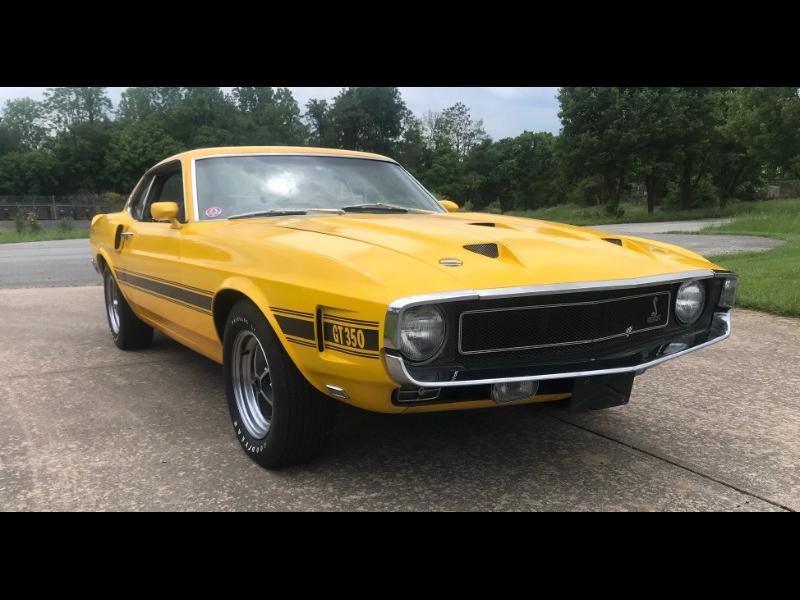 $129,500 · 19% below typical
Expand
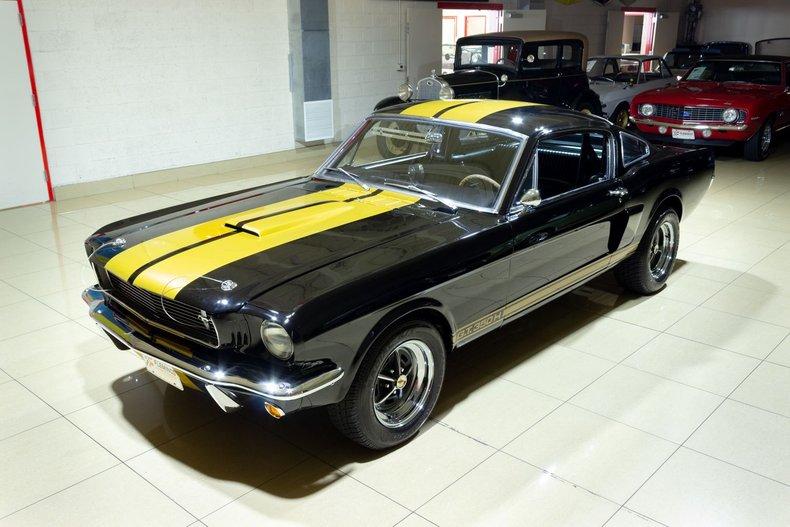 $120,594 · 24% below typical
Expand
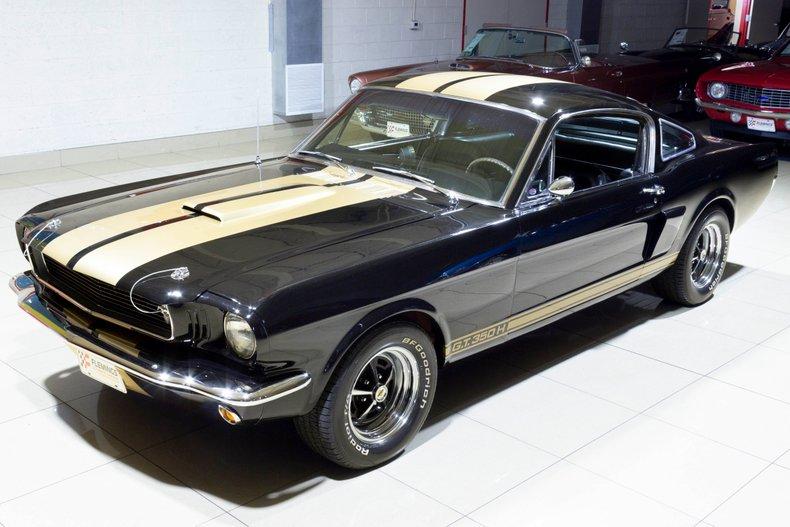 $139,990 · 12% below typical