
Shelby GT500 buyer's guide
Shelby GT500 (1967–1970) — GT500, GT 500, GT500KR: what's listed, and what they sell for.
Years: 1967–1970 · Models: GT500, GT 500, GT500KR
Overview and history
The Shelby GT500 is the big-block answer to a question Carroll Shelby had already answered with a small block. His GT350 of 1965–66 had turned the Mustang into a sharp, loud, race-bred coupe — too narrow an idea, by 1967, for the market Ford wanted. The Mustang had grown for 1967: longer, wider, heavier, and designed from the start to take Ford's FE big-block V8s. Shelby's response was the GT500: the same formula of fibreglass panels, suspension work, distinctive trim and a serialised Shelby identity, wrapped around a 428-cubic-inch V8 and aimed as much at the boulevard as at the racetrack. It outsold the GT350 from the moment it arrived, and defined what a Shelby Mustang meant to most buyers ever after.
That origin matters to you as a buyer, because a GT500 is two cars at once. Underneath sits a production Mustang, with a Ford VIN, Ford running gear and Ford rust habits. Over it, Shelby — first Shelby American in California, then, from 1968, Ford itself through Shelby Automotive and the A. O. Smith plant in Ionia, Michigan — added the panels, badging, performance hardware and, crucially, a second identity: a Shelby serial number, recorded in a registry that survives today. The Ford underneath decides whether the car is sound. The Shelby layer decides whether it is real, and what it is worth.
Production ran for four model years, 1967 through 1970, and the last of them barely counts as a separate year at all: the 1970 cars are unsold 1969 cars, updated with a front chin spoiler and black bonnet stripes, given new VINs under federal supervision, and sold on. The name then slept for more than three decades before Ford revived it — first for the supercharged S197 cars of 2007–2014, built by Ford's SVT division with Shelby's name under licence, and again for the 2020–2022 S550 car with its 760 hp supercharged 5.2-litre Predator V8 and dual-clutch gearbox. Those modern revivals are genuine Shelbys of their kind, and this guide touches on them where the distinction matters, but they are modern performance cars bought on condition, mileage and service history. The cars in our listings pool — and the cars this guide is really about — are the 1967–1970 originals, and for them the buying questions are older and harder: is it a real Shelby, is the engine the one it was born with, and how much of the car underneath is still Ford steel rather than rust and filler?

The arc of the four years is one of Ford taking over. The 1967 cars were finished in Shelby American's plant by the Los Angeles airport, and feel the most hand-made: inboard driving lamps in the grille (moved outboard on later cars when regulations objected), fibreglass bonnet and boot lid, an integral roll bar with inertia-reel shoulder harnesses, and a cabin that is Mustang with Shelby intent laid over it. For 1968 production moved to Michigan, Ford took control, the car became plusher and heavier, and mid-year the GT500KR — King of the Road — replaced the original 428 with the 428 Cobra Jet. The 1969 car was a restyle on the longer, wider 1969 shell with no remaining pretence of being a competition car: no roll bar, a luxurious interior, five NACA ducts in a fibreglass bonnet, fibreglass front wings. It is the most comfortable original GT500 and, to many eyes, the most dramatic — and the one where the gap between a real car and a well-dressed Mustang fastback is easiest to hide and most expensive to discover late.
One more piece of context. A few thousand were built, they were bought by people who used the performance, and a great many were modified, raced, crashed, re-engined or parted out when they were merely old Mustangs. The registry knows many survivors in detail, and the market is full of restored examples whose history is a chain of restorations rather than careful owners. Buy the car in front of you, verify it against the records, and treat any seller who discourages verification as having answered your most important question already.
The models
Every original GT500 is a big-block car. There is no six-cylinder or small-block GT500, no GT500 hardtop coupe in production (Shelby built experimental cars, including the 1967 coupe known as Little Red, but production cars were fastbacks and, from 1968, convertibles), and no factory four-door or wagon, whatever a listing's body-style field says. If the car in front of you does not start life as a 1967–1970 Mustang fastback or convertible with an FE big block, it is not a GT500.
| Model | Years | Engine | Output | Built | Character |
|---|---|---|---|---|---|
| GT500 | 1967 | 428 Police Interceptor V8, twin four-barrels | 355 hp (gross, under-rated) | 2,048 | The original; most Shelby-built, most raw |
| GT500 | 1968 (early) | 428 Police Interceptor V8, single four-barrel | 360 hp (gross) | part of 1,124 GT500s | Transitional; Ford-built, plusher, heavier |
| GT500KR | 1968 (from April) | 428 Cobra Jet V8, ram air | 335 hp (gross, deliberately under-rated) | 1,571 | King of the Road; the famous one |
| GT500 | 1969 | 428 Cobra Jet V8, ram air | 335 hp (gross, under-rated) | part of 1969–70 total | The restyle; comfort first, drama intact |
| GT500 | 1970 | 428 Cobra Jet V8, ram air | 335 hp (gross, under-rated) | 286 re-serialled 1969 cars | A 1969 car with a 1970 VIN; buy it as such |
(Period outputs are Ford's published gross figures and need reading with suspicion in both directions: the 1967 twin-carburettor 428 was widely understood to make around 400 hp in truth, while the Cobra Jet's published 335 hp was an insurance-friendly fiction for an engine that made comparable power with far stronger torque delivery. Production totals are the commonly published Shelby registry figures; individual-year splits for 1969 and 1970 are entangled precisely because the 1970 cars began life as 1969 cars.)
The 1967 GT500. The purest statement of the idea, and fastback only. The 428 wears two Holley four-barrels on an aluminium medium-riser intake, the front end an extended fibreglass nose and bonnet, the tail a fibreglass boot lid with integral spoiler and wide Cougar-sourced tail lamps, and the cabin the roll bar, harnesses and gauges a standard Mustang lacked. Ten-spoke aluminium wheels were the signature option. If you want the car Shelby's own organisation built, before Ford softened the edges, this is the only year that fully qualifies — and the year where originality of the Shelby fibreglass and trim matters most, because so much of it was unique to a single year.

The 1968 GT500 and GT500KR. Ford's takeover year. Convertibles joined the range, lamps and trim were revised for federal rules, sequential Thunderbird tail lamps replaced the earlier units, and the interior became a deluxe Mustang cabin with Shelby dressing. Early cars carried a single-four-barrel 428 Police Interceptor. The car that matters arrived in April 1968: the GT500KR, King of the Road, carrying the new 428 Cobra Jet — 427-style low-riser heads, a 735 cfm Holley, a functional ram-air bonnet and an advertised output lower than the engine it replaced, which fooled nobody then and should fool nobody now. The KR also brought reinforced shock towers and staggered rear shocks on four-speed cars. A KR convertible is the rarest regular-production combination of the run, and prices itself accordingly.


The 1969–1970 GT500. The final original. Built on the 1969 Mustang SportsRoof (and as a convertible), it is the longest and heaviest GT500, with fibreglass front wings, a bonnet carrying five NACA ducts — three feeding the engine bay, two extracting from it — and a front end sharing almost nothing with a standard Mustang. All cars use the 428 Cobra Jet, with the Super Cobra Jet available via the Drag Pack option (3.91 or 4.30 gearing), adding an oil cooler and stronger internals described in the engine section. There was no KR badge for 1969; the Cobra Jet was simply the GT500 engine. The 1970 cars are, mechanically and bodily, unsold 1969 stock, updated and re-serialled — documented factory history, not a defect, but it means a 1970 car's build records are 1969 records, and any seller presenting a 1970 as a distinct, improved model is selling you a story.

The modern revivals, briefly. Ford revived the name for 2007–2014 on the S197 — a supercharged 5.4-litre V8 (500 hp at launch), replaced for 2013–14 by a 5.8-litre version rated at 662 hp — and again for 2020–2022 on the S550, with a supercharged 5.2-litre V8 rated at 760 hp and a seven-speed dual-clutch gearbox. They are fast, well-documented modern cars: Ford VINs decode directly, build data is obtainable, and the clone problem is a badge-and-bodykit problem, not a six-figure identity problem. Everything after this section — registries, hidden VINs, FE casting numbers, unibody rust — is written for the 1967–1970 cars.
Engines and gearboxes
The 428 Police Interceptor: 1967 and early 1968
The first GT500 engine is a Ford FE-series big block in Police Interceptor tune: 428 cubic inches (7.0 litres), a cast-iron block and heads, hydraulic lifters, and — in the 1967 Shelby installation — two Holley 600 cfm four-barrel carburettors mounted inline on an aluminium medium-riser intake manifold, under an oval aluminium air cleaner that has become one of the most reproduced objects in the Mustang world. Ford rated the package at 355 hp. Nobody who has driven a healthy one believes the figure was optimistic; if anything it was chosen to keep the car insurable and to keep Ford's own performance hierarchy tidy. Expect strong, lazy torque from idle, a willingness to rev that surprises people who expect a truck engine, and fuel consumption in single figures around town and low teens on a run if you can resist the second carburettor opening, which you will not.
Mechanically, the FE is a tough, well-understood engine whose faults are ordinary — good news, because ordinary faults have ordinary prices. The bottom end is strong; the exhaust manifolds are restrictive cast iron and crack with heat cycling; and the engine is physically enormous in a Mustang bay, which makes every job slower than the same job on a small-block car. A correct engine carries the right casting numbers and date codes for the car's build date, and this is where value lives. A service-replacement block, a 390 dressed as a 428, or a later truck FE under Shelby valve covers is a perfectly usable engine and a five-figure deduction — and the only way to know is to read the numbers in person, with a torch and a mirror. The stroke is the mechanical tell between a 390 and a 428, which look alike from outside; a seller who will not let you verify stroke, casting and date is asking you to pay 428 money on trust.
Twin carburettors double the tuning work and the fault-finding. The pair must be balanced, the linkage must open the secondaries progressively and evenly, and fifty years of heat and ham-fisted adjustment leaves most sets needing a proper rebuild rather than a tweak: budget roughly $800–1,600 to have both carburettors rebuilt and set up by someone who knows Holleys, plus the intake-off labour if the manifold gaskets are weeping, as they usually are. The classic symptoms are a flat spot as the secondaries open (linkage and accelerator-pump adjustment, usually, not the carburettor bodies), fuel smells after a hot shutdown (heat soak and percolation, worse on modern ethanol fuel), and a rich idle that no mixture screw cures (warped metering blocks and worn throttle shafts drawing air). None of it is exotic. All of it is priced into a car that "just needs a tune."
Early 1968 GT500s simplified the induction to a single Holley four-barrel on an iron intake — a little less theatre, a little more civility. Treat them exactly as a 1967 mechanically, and do the numbers anyway: the next buyer will check this least-collected variant just as hard as you should.
The 428 Cobra Jet and Super Cobra Jet: KR, 1969 and 1970
The Cobra Jet is the engine the GT500 is remembered for, and it is a different engine in character, not just in name. Ford built it as a production drag-racing package: a 428 block with strengthened internals, cylinder heads derived from the low-riser 427 with large ports and valves, a 735 cfm Holley four-barrel, a cast-iron intake manifold heavy enough to anchor a boat, and — in Shelby installations — a functional ram-air system sealing the air cleaner to the bonnet scoops, with a vacuum-operated flapper that should still move. Published output was 335 hp, a figure arrived at for insurance and racing-classification reasons; period road tests and the car's performance suggest something around or above 400 hp with torque to match. In a GT500KR or a 1969–70 car it gives effortless, elastic performance: the car is not frantic, it is simply very fast everywhere, and it will spin its rear tyres in the lower gears on demand for as long as you are foolish enough to demand it.
Identification is a checklist, and you should work it literally. A Cobra Jet has the ram-air assembly; 427 low-riser-style heads with their casting numbers (C8AE-H is the commonly correct head casting for a production Cobra Jet); a specific harmonic balancer and, on Super Cobra Jet cars, a visibly different, counterweighted balancer because the SCJ used heavier Le Mans connecting rods and a different balance; and an engine oil cooler mounted ahead of the radiator on Drag Pack / SCJ cars. The air cleaner, the ram-air seal and the flapper are frequently missing, replaced or reproduced — present and original is a plus, absent is a negotiation, reproduction passed off as original is a character reference for the seller. Budget roughly $500–1,200 to source and fit correct ram-air components if they are missing, and far more if you insist on date-correct originals.
The Super Cobra Jet deserves its own paragraph because the premium is real and the faking is easy at a glance. Choosing a 3.91 or 4.30 rear axle on a 1969–70 car triggered the Drag Pack, and with it the SCJ package: the oil cooler, Le Mans rods, a forged-piston, strengthened bottom end specification shared with the Police Interceptor tradition, and that external counterweight on the balancer that a knowledgeable eye can spot in seconds. The balancer, the cooler and its plumbing, and the axle ratio on the car's build record must all agree. One of the three is a story; all three, plus paperwork, is a Super Cobra Jet.
On the road, a Cobra Jet should start readily hot or cold, idle with a lumpy beat at around 700–800 rpm, show strong oil pressure (FE gauges are optimistic; judge by behaviour, or a mechanical gauge) and pull without detonation on modern premium fuel. Detonation on a car set up for period fuel is common and curable with timing and mixture, but ignored it will destroy pistons in an engine whose correct parts are no longer cheap. Budget for a proper set-up on any car you buy: carburettor rebuild ($450–800 for the single Holley), ignition overhaul, and a cooling overhaul if the gauge has a story to tell. Hydraulic lifters mean silence is expected — a ticking FE is reporting a worn rocker shaft, a collapsed lifter or low oil pressure, in ascending order of expense. A full rebuild to correct specification runs roughly $10,000–18,000 at a good shop; a Cobra Jet rebuild with date-correct parts hunting runs more, and takes longer.

Gearboxes: Toploader four-speed and C6 automatic
Two gearboxes were offered, and the split in our listings pool reflects the real market: manual and automatic cars both survive in large numbers, and neither is automatically the valuable one — originality to the car's build record beats gearbox preference every time.
The manual is Ford's Toploader four-speed, close-ratio in most Shelby applications, with a Hurst shifter from the factory on later cars and Ford's own shifter earlier. The Toploader earned its name honestly: it is one of the strongest production four-speeds of the era, with a top-loading case, and a healthy one shifts cleanly, stays in gear on the overrun, and whines only faintly in the indirect gears. Second-gear synchromesh wears first, exactly as on every hard-used manual of the period, and a box that jumps out of gear under load is a rebuild, roughly $1,800–3,200 with the box out, plus clutch ($600–1,100 fitted) and any flywheel work. Check the gearbox's tag and case numbers against the car: Toploaders were swapped between Mustangs for decades, and a wide-ratio box from a lesser car changes both the driving experience and the value. Staggered rear shock absorbers on 1968-and-later four-speed cars were Ford's fix for axle tramp under the Cobra Jet's torque; if a four-speed KR sits on unstaggered, undamaged original mounts, ask why.
The automatic is Ford's C6 three-speed, the heavy-duty box behind FE engines across the Ford range. A C6 is close to indestructible in normal use and cheap by Shelby standards to rebuild — roughly $1,500–2,800 with converter — but judge it on behaviour: engagement should be prompt and firm, upshifts should not flare, and kickdown should arrive without a two-second committee meeting. Brown, burnt-smelling fluid on a car with no service record means the rebuild is yours to buy. Originality matters here too: a big-block C6 is FE-specific in case and bellhousing pattern, and a small-block-pattern box adapted to fit is a deduction and a question.
One trap applies to both gearboxes: Drag Pack cars carry deep axle ratios that make motorway cruising a noisy, thirsty affair (a 4.30 car turns roughly 3,500 rpm at motorway speed on period tyre sizes), and a previous owner may have swapped the axle for a taller ratio without telling the speedometer — or you. Verify speed against a phone GPS on the test drive and reconcile it with the axle tag and the build sheet. A mismatch is not a walk-away; an unexplained mismatch is information about how the car has been kept.
Problem areas
Everything distinctive about a GT500's problems comes from its double nature. The Mustang underneath rusts like a Mustang, wears like a Mustang and was modified like a Mustang. The Shelby layer adds three problems no ordinary Mustang has: an identity that is worth forging, fibreglass that is worth reproducing, and an originality premium large enough to reward almost any deception that survives a casual viewing. Work through the car in that order — identity first, structure second, mechanics third — because the expensive mistakes are all in the first two.
A note on our own evidence, honestly stated. We have photo-checked 185 GT500s in detail for this site, and explicit rust mentions appear in the notes for only 5 of those 185 cars, with damage mentioned for 3 and leaks for 1, and no smoke mentions at all. Read that correctly: it does not mean GT500s do not rust. It means the cars that reach the market today — most of them restored, many of them auction-presented — have had their rust dealt with, hidden, or photographed around. The inspection below is written for the car as a fifty-five-year-old Mustang unibody, because that is what it is, whatever its recent cosmetic history.
Identity: clones, tributes, re-stamps and swapped tags
This is the GT500's defining problem area, and it is not close. A standard 1967–1970 Mustang fastback is worth a fraction of a genuine GT500 in the same condition, every panel and badge needed to dress one as a Shelby is reproduced, and the conversion has been performed competently — and incompetently, and fraudulently — for forty years. Your defence is not expertise in fibreglass weave. It is the records, and they are unusually good for an American car of this era.
The two numbers. A genuine car carries a Ford VIN and a Shelby serial number, and both must check out, together. The Ford VIN decodes the year, the assembly plant, the body style and the engine code — a GT500's Ford VIN carries the big-block engine code appropriate to its year — and it appears not only on the paperwork and the visible plate but stamped into the tops of the inner front wings, under the outer wings, where a re-badged Mustang cannot easily fake it. On 1968 and later cars there is also the dashboard VIN plate, visible through the windscreen, as federal law began to require. The Shelby serial number appears on the Shelby plate riveted to the driver's side inner wing in the engine bay (1967 cars carry a distinctive stamped plate; later cars carry the Shelby Automotive tag) and its format is year- and model-specific: a 1967 serial encodes the model, the engine and transmission, and a consecutive unit number; a KR's paperwork and serial must say KR, not merely GT500. The consecutive unit number is the thread that ties the car to the Shelby American Registry, maintained by the Shelby American Automobile Club (SAAC), which holds production records, original dealer and owner information, and decades of subsequent history for most cars. A registry lookup — and, for a serious purchase, a written report from a marque expert who knows the registry — is not an optional extra on a GT500. It is the purchase.
The supporting records. A Marti Report, drawn from Ford's production database, confirms or destroys a car's Ford-side identity: original engine, gearbox, axle, colours, options, build date and selling dealer. Between the Marti Report and the SAAC registry, a genuine car has nowhere to hide and a fake has nowhere to stand. Insist on both, then check the metal against them: colours under later paint (boot, under carpets, door shuts), options present or absent, component build dates in the right window. A car whose paperwork is perfect and whose metal disagrees was assembled around a paperwork identity — the most expensive kind of fake.
The tells, in the metal. Learn the hardware a tribute often gets wrong because it is invisible: export brace arrangements differ by year; 1967 cars have the roll bar with inertia-reel harnesses and specific trim; shock-tower reinforcements and the staggered shocks on later four-speed cars should be present; period fibreglass is hand-laid and imperfect in characteristic ways, where modern reproductions are often too good, in the wrong material, or both. None of these alone proves a car, but a car failing three of them while its seller waves a shiny serial plate is telling you its story. Plates can be reproduced and re-riveted: check the rivets, the plate's wear against the car's, and the inner wing beneath for witness marks of a previous plate.
Details sell tributes and expose them: lamp placement, grille mesh, bonnet pins, badge fonts and fibreglass edges are all reproduced and all checkable against known-original cars in the registry's photographs. Photograph every detail of a car you are considering and compare it, coldly, before you compare prices.
Rust: the Mustang map
Under the Shelby panels sits a unitary Mustang body with no separate chassis, and its rust map is the Mustang rust map, unchanged by the badges. Structural rust is the second great value-killer after identity, and on a convertible it is the first, because the convertible's strength lives entirely in the floor, torque boxes and inner rockers that rust takes first.
The cowl. The most expensive common rust on any 1967–1970 Mustang, and the one most often hidden. The cowl vent chamber in front of the windscreen drains through small outlets that block with leaves and debris; water then stands in the chamber and rots its floor, and every subsequent rain pours water through the heater and onto the front carpets. The test takes a minute: pour water into the cowl grille and watch where it emerges — it should run from the drains behind the front wheels, not drip inside the car onto the footwells. Cowl repair means removing the front wings and cutting into the chamber, roughly $2,500–5,000 done properly with paint, and it is routinely disguised with sealant that lasts one winter. Wet front carpets, a musty smell and rust staining below the dash are the circumstantial evidence; the water test is the proof.
Floors, torque boxes and frame rails. Lift the carpets. Floor pans rot from inside (cowl water, heater cores, window seals) and from outside (salt, trapped mud), and the torque boxes — the structural junctions at the front and rear of the rockers — rot with them. Front rails, especially around the steering box mounts and crossmember, and rear rails around the spring hangers complete the structural set. Prod with a screwdriver, with permission; tap and listen for the change from ring to thud. Floor pans are a known job (roughly $1,200–2,500 a side fitted); torque boxes and rails are fabrication and alignment work, priced per car, and a car needing all of it is a restoration project whatever its paint says. Fresh, uniform black underseal over everything, applied the week before sale, is a cover-up until proven otherwise.
The outer skin. Front wing bottoms behind the wheels, door bottoms (drain holes block, doors fill, the bottom seam bubbles from inside), rear arches and quarters, the boot floor and spare-wheel well (rear window and boot seals leak directly into it), the battery tray and the inner wing beneath it. On a Shelby, add the fibreglass interface points: where glass panels meet steel — the 1969 front wings' mounting flanges, the tail panel, the scoop mountings — water traps corrosion in the steel beneath, hidden by the panel itself. A magnet reads filler depth across steel; it tells you nothing on fibreglass, which is why a Shelby's steel is checked twice as carefully.
Convertibles. Everything above, harder: the inner rockers and torque boxes are the convertible's spine. A car that flexes visibly over rough ground, whose doors change their shut as it is jacked, or whose top frame no longer meets the windscreen evenly is describing structural loss, at structural money. Never buy a GT500 convertible without a lift inspection — no exceptions.

Fibreglass, trim and the Shelby-specific hardware
Period Shelby fibreglass was a production compromise: light, fast to make, and finished to a standard that would embarrass a modern kit car. Expect, on original panels, some waviness, visible mat texture in unpainted areas, stress cracks radiating from mounting bolts and bonnet-pin holes, crazing in the gel coat under the paint, and edges that are hand-trimmed rather than die-perfect. The failure mode to price is not cosmetics — a specialist can refinish fibreglass for roughly $800–2,000 a major panel including paint blending — it is replacement passed off as original, and steel underneath damaged by decades of water trapped at the mounting points. Bonnet fit deserves a minute of its own: 1967 and 1969 bonnets are long, lightly built and prone to bowing and to cracking around the scoop and duct apertures; a bonnet that sits proud in the middle or flexes alarmingly when raised is normal-ish, a bonnet with fresh filler across its leading edge is a repair you should price.
Trim is where restoration budgets quietly double. Year-correct items — 1967 inboard lamps and grille, KR rocker stripes in the correct font, 1969 scoops and badging, correct tail lamps per year, Shelby steering wheels, gauge clusters, roll bars and harness hardware — range from reproduced-and-reasonable to effectively unobtainable except as good used originals. Inventory a car against its year before you value it: a car missing three year-specific items is not "mostly complete," it is a parts hunt measured in years, and the hunt should be the seller's discount, not your hobby. Correct MagStar or ten-spoke wheels in correct sizes are a real value item; generic period-style wheels are a deduction disguised as a feature.
Suspension, steering and brakes
The running gear is Mustang heavy-duty, and its wear is honest and diagnosable. Front suspension is double wishbones with coil springs on the upper arm; Shelby cars received revised springs, a thicker anti-roll bar and adjustable shock absorbers on early cars (Koni units were a Shelby signature). Wear concentrates in upper control-arm shafts and bushings, ball joints, spring perches and the steering box, which develops play at centre that adjustment only partly cures. A full front-end refresh runs roughly $1,500–3,000 fitted; a steering box rebuild $400–800. At the rear, leaf springs sag and bushings perish, and on four-speed Cobra Jet cars the staggered-shock arrangement should be present and undamaged — axle tramp broke parts in period, and bent shock mounts or a twisted housing show you a car's youth.
Brakes are front discs and rear drums, power-assisted on most cars, and adequate when maintained — which, after decades of sitting, they are not. Seized calipers, perished hoses, a tired master cylinder and a rusted hard-line set are the standard recommissioning list, roughly $1,000–2,200 for a full hydraulic refresh. Judge the pedal and the discs, not the seller's assurance: a car that has stood wears a rust band on every disc and a handbrake that barely holds, and both are bargaining counters, not surprises.
Cooling is a system-level weakness. An FE makes a great deal of heat, a Mustang bay gives it little room, and a Shelby nose gives the radiator a smaller, more obstructed mouth than a standard Mustang's. Marginal radiators, tired fan clutches, missing shrouds and silted blocks combine into the classic GT500 temperature gauge that climbs in traffic. The fix is systematic — radiator recore or correct replacement ($600–1,200), shroud present and sealed, correct fan and clutch, hoses and thermostat renewed — and a car "solved" with an electric fan and a prayer usually still has the silted block. Test it in traffic on the viewing, not on your first drive home.
Colour is evidence, and worth a sentence of its own: a colour such as 1968's one-year Sunlit Gold is confirmed or denied by the Marti Report in one line, and painting a car in a colour it was not born in makes its paperwork argue with its metal. The discount for a colour change on a Shelby is real — spend a seller's, never your own, by accident.
How to inspect one
Allow half a day, not an hour. Bring a torch, a magnet wrapped in cloth, a screwdriver for prodding (with permission), a mirror on a stick for casting numbers, a jug of water for the cowl test, and a phone for photographs and GPS speed-checking. If the car passes you, pay for a lift inspection and a marque-expert identity check before money changes hands — the cheapest insurance in the whole purchase.
Stand back first, before the checklist: stance, panel alignment and silhouette. A GT500 should sit level and purposeful. Sag at the rear is leaf springs; a twist in the stance is structure; either is a price conversation that starts here, not after you have fallen for the engine note.
- Paperwork and identity, before the car. Order the Marti Report from the Ford VIN and check the SAAC registry entry for the Shelby serial. Compare both with the title, the seller's documents and each other: year, plant, body, engine code, colours, options, build date, consecutive unit number. A seller who cannot or will not supply the VINs in advance, for a car at this value, has ended the inspection early — believe him.
- The numbers on the car. Find the Shelby plate on the driver's inner wing and read its wear as carefully as its digits. Find the Ford VIN on the dashboard plate (1968 on) and the visible inner-wing stamping, and — with the seller's cooperation — establish that the hidden inner-wing stampings agree. Photograph every number. Any grinding, re-stamping, fresh rivets or a plate whose patina disagrees with its surroundings stops the inspection until a marque expert has seen it.
- Cold start. Insist the engine is stone cold. An FE should catch readily, smoke at most a brief puff (valve stem seals weep on standing; a blue haze that clears in seconds is a seal conversation, smoke that persists under load is rings and money), and settle to an even, lumpy idle. Listen for a ticking valvetrain, a deep knock in the first seconds (bearing wear showing before oil pressure builds) and exhaust manifold leaks ticking at the heads.
- Engine identity and health. With the mirror and torch, read the block and head casting numbers and date codes and reconcile them with the build date from step 1: a Cobra Jet should show its correct head castings, its ram-air assembly and flapper working, and — if it claims Super Cobra Jet — the counterweighted balancer and oil cooler from the engine section. Check the oil for fuel smell and milkiness, the coolant for oil and rust, and every hose for the softness of age. Numbers that do not reconcile do not make the car bad; they make it cheaper, by a lot, and only if everything else passes.
- The cowl test. Pour the jug of water slowly into the cowl grille in front of the windscreen. It must emerge behind the front wheels. Water dripping into either footwell is a failed cowl — the $2,500–5,000 repair from the rust section — and it also means the front floors and the heater have been drinking rain, so look for their damage next and price all of it together.
- Under the car. On the lift, work the rust map in order: front frame rails and crossmember, torque boxes front and rear, floor pans and their seams, inner and outer rockers, rear rails and spring hangers, boot floor from below. Prod, tap, and read the underseal as you go — honest and patchy is factory; fresh, uniform and recent over everything is a question. On a convertible, add the jack test: doors opening and closing cleanly as each corner is lifted, or structural flex priced as structural repair.
- Body and fibreglass. Magnet over every steel panel, feeling for the dead pull of filler. Then judge the fibreglass as fibreglass: stress cracks at mounts, gel-coat crazing, repairs at the bonnet's leading edge and duct apertures, fit that is period-plausible rather than modern-perfect. Check the steel beneath every mounting flange you can reach, and count missing or wrong year-specific trim items — it is a number with a dollar sign in front of it.
- Interior and equipment. Sit in the driver's seat and judge the padding, not the covering. Check the roll bar and harness hardware where fitted, the gauge cluster's originality, the steering wheel's correctness for the year, and a convertible's top-frame alignment. Work everything electrical: lamps including the Shelby driving lamps, sequential tail lamps where fitted, windows, blower on all speeds, washers, horn, radio. A car where everything works has been used and maintained — still the best single predictor of a good Shelby.
- The test drive. Twenty minutes minimum, including traffic (for the temperature gauge), a fast road and rough surfaces. A four-speed should shift cleanly into second when cold and stay in gear on the overrun; a C6 should engage promptly and shift without flare. Check the speedometer against GPS and reconcile any error with the axle ratio on the paperwork — Drag Pack gearing explains a busy engine and a lying speedometer; nothing explains a seller who mentioned neither. Brake hard from speed, twice: straight, no judder, no pull.
- Heat, idle and leaks, after the drive. Park it hot and let it idle. Watch the temperature for five minutes — the traffic test from the problem areas, concluded. Look under the car for fresh drips and identify each by colour and position: engine oil at the rear main is an FE rite of passage and a known bill; coolant at the front footwells' underside loops back to step 5; fuel anywhere ends the drive and starts a hose-and-line renewal before the car moves again.
- Stance and structure, revisited. Stand back again: level, straight flanks, even arch gaps, doors that shut with the same sound on both sides. Photograph the car in profile from both sides — stance faults you talked yourself out of in person are obvious in a photograph.
- The expert check. If the car has passed steps 1–11, commission the two independent verifications before completion: a marque expert's identity opinion (registry-based, in writing) and a lift-based structural report. Neither is a formality. On a car whose value is its identity, the expert opinion is part of the asset you are buying — the next buyer will ask you for it.
The finished inspection should leave you with a folder the seller never sees in a listing: every number plate, every casting, every rust-map location, hot and cold. If your folder is thinner than the seller's photo set, you have not inspected the car — you have admired it.
Values
The build below this guide carries the live market — what is listed now, and what recorded sales have achieved — and that block, refreshed at every build, is where the numbers live. This section teaches you how to read it, because on a GT500 the spread inside a single model year is wider than the spread between model years, and a median read without the condition story will mislead you in both directions.
Start with the condition spread, which on these cars is three spreads stacked. The first is identity: a registry-verified, numbers-matching car, a genuine car with a replacement engine, and a tribute occupy three different markets sharing one silhouette, and only the first belongs in a GT500 median at all. If a listing looks like a bargain against the market block, the first hypothesis is never that you have found one; it is that the car belongs to a different one of those markets. The second spread is structure: a car with a sound original unibody and one restored over replaced floors and torque boxes can present identically in photographs and differ by more than the metalwork's cost, because original structure is the one thing a restoration cannot put back. The third is completeness of the Shelby layer: correct fibreglass, trim, wheels and hardware, present and original, against reproductions and missing year-specific pieces. Price each spread separately before you let a single asking figure impress you.
Premiums follow documentation and rarity in that order. The GT500KR carries a premium over a standard 1968 car because the Cobra Jet is the better engine and the name is famous; a KR convertible carries the rarity premium of the lowest-production regular combination. The 1967 cars carry a premium for being Shelby American-built, which is a real distinction and a finite one — it does not survive a wrong engine or a doubtful serial. Super Cobra Jet / Drag Pack cars carry a premium that is entirely paperwork-dependent: the hardware is checkable in minutes, as the engine section describes, but the premium is only bankable when the build record agrees. Colour changes, non-original gearboxes and replacement blocks all discount, in roughly ascending order of severity in that list's reverse: a colour change is a preference, a gearbox swap is a deduction, a wrong engine in a big-block Shelby is a re-pricing of the whole car.
Asking and achieved prices part company on Shelbys in a specific way. Sellers price the story — the famous previous owner, the restoration totalled from invoices, the one-of-few combination assembled from the options list — and auctions, where most recorded sales in our market block happen, price the car. Restoration cost is not value: a car restored at great expense over a doubtful shell is worth what a doubtful-shelled car is worth, plus something for the new parts, and that gap is the most common source of stale, over-asking listings in this market. Projects obey the same logic from below: the gap between a project and a finished car looks like profit, until the missing Shelby pieces, the engine's unknown internals and the structure's unknown extent consume it and charge interest. Buy a project only when its identity is verified and its structure honestly assessed — those two, not its price, decide whether it was cheap.
Negotiation, finally, is an evidence exercise. The Marti Report, the registry entry, the casting numbers you photographed, the cowl test the car failed: each verified fact moves the price, and unverified claims — "matching numbers" asserted but not shown, "rust-free" asserted but not lifted — move nothing. The best-documented cars in the market block often look expensive and are usually the cheapest to own.
Parts and ownership
A GT500 is two parts supplies wearing one badge. The Mustang underneath is one of the best-supported classics in the world: Ford built Mustangs by the million, the reproduction industry serves them comprehensively, and almost every mechanical, structural and trim part for the base car is available new, today, at prices that will make a European-classic owner weep. The Shelby layer is the opposite: low original volumes, year-specific parts, and a reproduction market that is good on the visible items and thin on the invisible ones.
Easy: everything Mustang. Service items and ignition parts; FE internals in standard specification, including Cobra Jet service parts through the performance trade; Toploader and C6 rebuild parts and specialists; brake hydraulics; suspension bushes, joints, springs and dampers; floor pans, torque boxes, rails and most structural panels; glass, rubbers and weatherstrips; standard interior trim. Order today, fit this weekend, at prices close to modern-car money. This is the car's great practical virtue: a GT500 can be kept running, properly, almost anywhere in North America, by any shop that knows old Fords.
Harder and dearer: everything Shelby. Correct fibreglass in period construction (reproductions exist; originals are a hunt); year-specific lamps, grilles, badges and stripes in correct form; 1967 interior and roll-bar hardware; KR-specific items; correct wheels in correct sizes; ram-air assemblies and their seals and flappers in original form; date-coded engine components — heads, intakes, carburettors, distributors — where originality is being restored rather than merely claimed; and convertible-specific Shelby trim. None of it is impossible. All of it is priced by scarcity, and a car bought cheap for want of these pieces is usually bought twice.
Running costs. Budget honestly for the first year, because the pattern across the market is deferred maintenance on cars that were assets first and automobiles second. Catching up a running car — full fluid and filter service, ignition overhaul, carburettor set-up, brake hydraulic inspection and renewal as needed, cooling system brought to specification, tyres replaced on age rather than tread (check the date codes; a GT500 on fifteen-year-old tyres is a museum exhibit, not a car) — runs roughly $2,500–5,500 at a good shop before you improve anything. Recommissioning a car that has sat for years runs $5,000–10,000: the fuel system cleaned end to end (modern ethanol fuel attacks period rubber and leaves varnish in tanks, lines and carburettors), every brake component inspected, all seals and hoses renewed, and the FE's cooling system rebuilt as a system. Fuel consumption is what a 7.0-litre V8 promises: single figures in town, low teens cruising, and a Drag Pack car's deep gearing makes it worse at speed. Insurance through a classic policy, with an agreed value supported by your registry and expert documentation, is straightforward — and that documentation requirement is one more reason the paperwork folder from the inspection is an asset, not a chore.
Use the car: FEs that sit grow leaks, carburettors that sit grow varnish, and unibodies in damp storage rust as fast as unibodies driven in rain. A dry garage, a battery conditioner, fuel stabiliser for winter and a monthly run to full temperature keep a sorted car sorted. And document its numbers, keep the documentation separate from the car, and give your insurer the registry references — a GT500 is a high-value, easily trailered, internationally saleable car. It costs an afternoon, once.
Which one to buy
- The original: 1967 GT500. Shelby American-built, twin carburettors, fastback only, the most characterful and the most hand-made. Buy it if the Shelby story is the point — and verify its fibreglass and trim originality hardest of all, because that is where its premium lives.
- The famous one: 1968 GT500KR. The Cobra Jet, the name, the ram air, in fastback or convertible. The KR premium is real and justified by the engine; it is justified only on a registry-verified KR, so the paperwork is not a step in buying one, it is the purchase itself.
- The value buy: early 1968 GT500. The Police Interceptor car under Ford management: same silhouette, most of the performance, the least collector heat of any original. A sound, verified early 1968 is the cheapest honest route into a big-block Shelby.
- The grand tourer: 1969 GT500. The longest, plushest, most dramatic-looking original, with the Cobra Jet as standard and the best ride of the four years. If your use is distance and occasions rather than garage-or concours, this is the pick — and its fibreglass front end makes the structure-and-panels inspection the longest of any year.
- The connoisseur's footnote: 1970 GT500. A 1969 car with a documented second birth, bought knowingly at 1969 specification and a small discount for the story you will explain at every sale. Buy one because you like the story, never because a seller presents it as a rarer model.
- The modern alternative: 2007–2014 and 2020–2022 GT500. If what you actually want is the performance, modern Shelbys deliver multiples of it with Ford-decodable identity. A different purchase, not a lesser one — but do not judge one by this guide's checks.
And the rule that overrides all of the above: buy the verified car — registry-checked, Marti-confirmed, numbers-matching in the metal — in the soundest shell you can find, in whichever year you can afford. Engines can be rebuilt, fibreglass refinished and trim hunted, at prices you can plan for. An identity that does not check out, and a unibody that has lost its structure, are the two things money cannot put back — and on a GT500, they are what the car is worth.
Listed now
On Classic Listings today: 59 cars are listed here; 2 for sale and 11 marked sold; average asking price $170,300; asking range $165,600 to $175,000; sold cars average $213,371.
See the 59 GT500 cars currently listed.
The market — recorded sales
GT500 Classic Listings Index: $175,000 — based on 67 recorded sales, Nov 2024 – Nov 2026.
Change vs the prior 24 months: +12% (n=39 then, n=67 now).
Recorded sales: 67 · Total recorded sale value: $11,938,362 · Lowest sale: $48,500 · Top sale: $350,000 · Most recent sale: $350,000 (Nov 19, 2026)
| Date | Car | Sale price | Source |
|---|---|---|---|
| Nov 19, 2026 | 1967 GT500 Fastback | $350,000 | Dealer |
| Nov 19, 2026 | 1968 GT500KR Convertible | $299,000 | Dealer |
| Nov 19, 2026 | 1967 Mustang GT500 Fastback | $259,900 | Dealer |
| Nov 19, 2026 | 1968 Shelby Mustang GT500KR Convertible | $249,000 | Dealer |
| Nov 19, 2026 | 1968 Mustang GT500KR Fastback | $225,000 | Dealer |
| Nov 19, 2026 | 1968 Mustang GT500KR Convertible | $186,400 | Dealer |
| Nov 19, 2026 | 1967 GT 500 | $185,000 | Dealer |
| Nov 19, 2026 | 1967 Shelby Mustang GT500 Fastback | $185,000 | Dealer |
| Nov 19, 2026 | 1967 GT 500 | $179,000 | Dealer |
| Nov 19, 2026 | 1967 GT 500 Project | $175,000 | Dealer |
| Nov 19, 2026 | 1969 Mustang Shelby GT500 | $175,000 | Dealer |
| Nov 19, 2026 | 1968 GT 500 | $159,000 | Dealer |
| Nov 19, 2026 | 1967 GT 500 | $155,000 | Dealer |
| Nov 19, 2026 | 1969 GT 500 | $139,000 | Dealer |
| Nov 19, 2026 | 1969 Shelby Mustang GT500 Fastback | $134,500 | Dealer |
| Nov 19, 2026 | 1970 Mustang GT500 Fastback | $130,000 | Dealer |
| Nov 19, 2026 | 1968 GT 500 convertible | $119,000 | Dealer |
| Nov 19, 2026 | 1969 GT 500 | $115,000 | Dealer |
| Nov 19, 2026 | 1969 GT500 | $110,500 | Dealer |
| Nov 19, 2026 | 1968 Shelby GT 500 - JUST | $99,500 | Dealer |
| Nov 19, 2026 | 1967 GT 500 | $99,000 | Dealer |
| Nov 19, 2026 | 1970 GT 500 | $79,500 | Dealer |
| Nov 19, 2026 | 1969 GT 500 | $57,000 | Dealer |
| Nov 9, 2026 | 1967 GT500 | $300,000 | Bring a Trailer |
| Nov 8, 2026 | 1968 Mustang GT500KR Convertible | $142,000 | Dealer |
Dates are the sale date where the source states one; otherwise the date the sale was recorded here.
For sale now
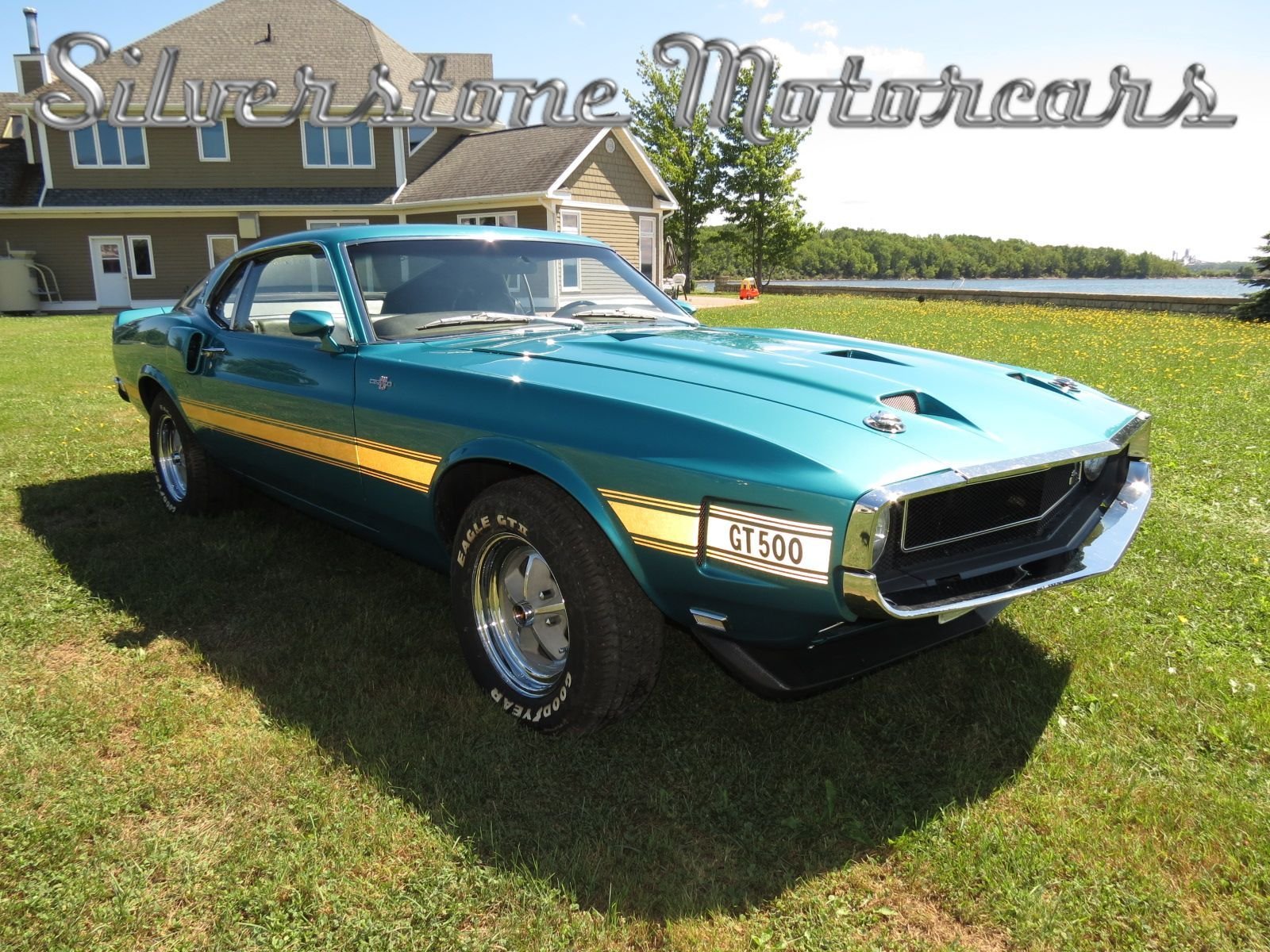 $175,000 · 13% above typical
Expand
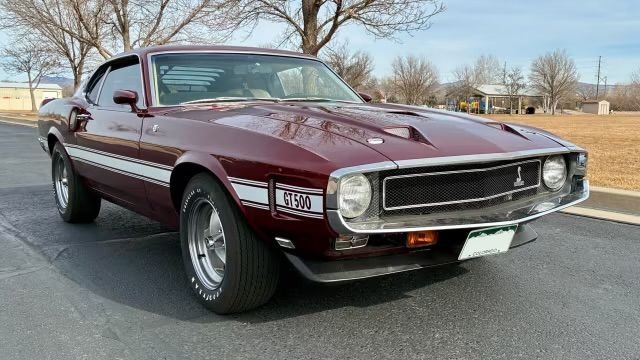 $165,600 · 7% above typical