
Toyota Corolla buyer's guide
Toyota Corolla (1968–2001) — Corolla: what's listed, and what they sell for.
Years: 1968–2001 · Models: Corolla
Overview and history
The Toyota Corolla is the best-selling nameplate in automotive history, and for the first half of its life almost nobody thought of it as a classic at all. That is precisely what makes buying one now interesting. The early cars were bought to be used up, the middle cars to be handed down, and the later cars in this guide were bought as appliances. Survival, not specification, is the story. A Corolla still straight, original and rust-free in 2026 has beaten odds its makers never set for it, because Toyota built tens of millions on the assumption that most would be scrapped without ceremony.
The car was launched in Japan in November 1966, under chief engineer Tatsuo Hasegawa. The first Corolla, the E10, was a rear-wheel-drive sedan and coupe with a 1.1-litre pushrod four, the K engine, a floor-mounted gear lever when Japanese rivals still used column change, MacPherson struts at the front and leaf springs at the rear. It reached the United States for 1968 — the start of the range this guide covers — as an inexpensive, well-finished alternative to a Beetle or a domestic compact that felt a size larger and cruder. The formula never really changed: conventional engineering, finished properly, priced honestly, improved a little every four years.
Work through the generations as a buyer meets them. The E20 of 1970 gained the 1.6-litre option that made the car viable on American freeways. The E30 of 1974 to 1979 added liftback and wagon shapes and five-speed gearboxes. The E70 of 1979 was the last mainstream rear-wheel-drive Corolla: square-cut, simple, and in America mostly powered by the 1.8-litre 3T-C. The wagon in the photographs below is that car, and it is now genuinely scarce, because wagons worked for a living.
In 1983 the range split, and the split defines everything after it. The volume E80 cars went front-wheel drive with transverse A-series engines. The sporting coupes stayed rear-wheel drive as the AE85 and AE86, and the AE86 — the Corolla GT-S in America, with the twin-cam 4A-GE — became a drifting and racing icon whose fame now washes back over the whole nameplate. Do not let it wash over a buying decision for an ordinary sedan: an AE86 is a different car, market and inspection from a front-drive E80, and sellers of ordinary cars trade on the confusion. This guide covers the mainstream cars that fill the listings: sedans first, wagons and coupes where they matter, GT-S and XRS as the exceptions.
From there the line runs straight. The E90 of 1987 to 1992 rounded the styling, spread fuel injection and offered the All-Trac four-wheel-drive wagon. The E100 of 1992 to 1997 grew into a small family car, with the 1.8-litre 7A-FE as the American mainstay. The E110 of 1997 to 2002 brought the all-alloy ZZ engine. The ninth generation, the E120 and its American E130 form, ran from 2002 and is covered here to 2005: taller, quieter and safer, with a timing chain again, and, in the XRS, a high-revving 1.8 with variable valve lift.
Two facts shape the market. From the mid-1980s most American Corollas were North American built — at the NUMMI plant in Fremont, California, and later at Cambridge, Ontario — so a Japanese-built VIN is a talking point, not a quality verdict. And the automatic took over: by the generations that dominate today's listings, the overwhelming majority are automatic sedans in silver, grey, white or beige, and a manual, a wagon, a coupe or a bright colour is rare for supply reasons alone.
On the road, no mainstream Corolla is fast and none is meant to be. What a good one does is start, steer, stop and cool its cabin with a completeness period rivals rarely matched, and do it again tomorrow. Judge one on condition, originality and evidence of care. The rest of this guide is about where that evidence hides.
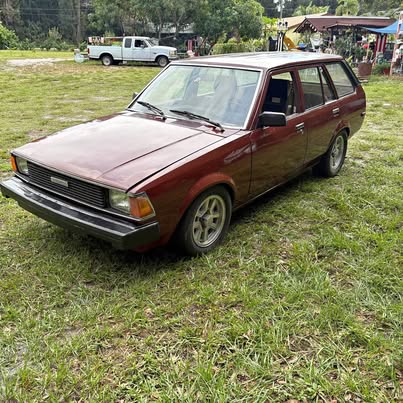
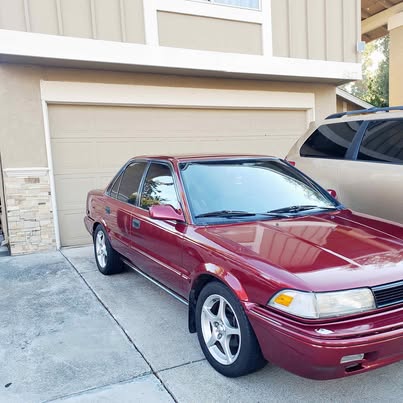
The models
Every Corolla badge decodes the same way: trim tells you the equipment, the generation tells you the car. In America the ladder ran from a base car — simply Corolla, then CE or VE — through DX, to LE as the well-equipped car, with S added from the ninth generation as a sport-styled trim that, XRS apart, changed skirts and seats rather than speed. No trim letter means a different shell. The shell, engine family and year are what you are buying; the badge is furniture.
The table covers the cars an American buyer will actually meet. Outputs are period American figures, SAE gross on the earliest cars and SAE net thereafter, so do not compare a 1970 figure directly with a 2000 one. Toyota published cumulative nameplate totals, but not a reliable American built figure for every trim, so the Built column says so plainly rather than inventing a precise figure for a DX sedan.
| Model | Years | Engine | Output | Built | Character |
|---|---|---|---|---|---|
| Corolla 1100 / 1200 (E10, E20) | 1968–1974 | 1.1 / 1.2 four (K, 3K), carburettor | about 60–73 hp | Not published by trim | The pioneer; tiny, simple, now a hobby car only |
| Corolla 1600 (E20, E30) | 1971–1979 | 1.6 four (2T-C), carburettor | about 75 hp | Not published by trim | The freeway-capable early car; SR5 coupe is the find |
| Corolla sedan and wagon (E70) | 1979–1983 | 1.8 four (3T-C), carburettor | about 75 hp | Not published by trim | Last rear-drive mainstream car; wagon leads the market |
| Corolla coupe AE86 GT-S | 1984–1987 | 1.6 twin-cam four (4A-GE), injection | 112 hp | Not published by trim | The icon; rear-drive, high-revving, priced as an icon |
| Corolla sedan (E80) | 1983–1987 | 1.6 four (4A-C), carburettor | about 74 hp | Not published by trim | First front-drive car; light, simple, now very scarce |
| Corolla sedan (E90) | 1988–1992 | 1.6 four (4A-F / 4A-FE), carb. then injection | 95–105 hp | Not published by trim | The rounded car; GT-S coupe and All-Trac wagon at the edges |
| Corolla sedan and wagon (E100) | 1993–1997 | 1.6 (4A-FE) / 1.8 four (7A-FE), injection | 105 / 115 hp | Not published by trim | The small family car; 1.8 DX and LE are the sweet spot |
| Corolla sedan (E110) | 1998–2002 | 1.8 four (1ZZ-FE), injection | 120–125 hp | Not published by trim | The alloy-engine car; check oil consumption before anything |
| Corolla sedan (E120 / E130) | 2003–2005 in this guide | 1.8 four (1ZZ-FE), injection | 130 hp | Not published by trim | Taller, safer, chain-driven; S is trim, XRS is the real sport |
| Corolla XRS | 2005–2006 | 1.8 four (2ZZ-GE), injection, variable lift | 170 hp | Not published by trim | Six-speed manual only; the modern GT-S in spirit |
The early rear-drive cars, 1968 to 1979. Buy these as classics, not transport. The K-engine cars are charming and slow in a way modern traffic punishes; a 1.6 2T-C car, above all the SR5 coupe, is the usable early Corolla. Coupes, liftbacks and two-doors carry the interest. Parts thinking matters more here than later: mechanical parts are easy, body and trim are the hunt.
The E70, 1979 to 1983. The last of the simple cars — pushrod engine, live rear axle on leaf springs in the wagon, a carburettor you can rebuild on a kitchen table — in a body modern enough to use. Coupes and liftbacks are desirable; the wagon is the utility classic; the sedan is the value way in. All of them rust, and the rust section is written with this generation at the front of the mind.
The front-drive changeover, 1983 to 1992. The E80 sedan is a good car almost nobody preserved, so condition is everything. The E90 is the better buy: fuel injection arrived during its run, the 4A-FE is one of Toyota's most durable fours, and the range quietly included the AE92 GT-S coupe, front-drive with the 130 hp 4A-GE, and the All-Trac wagon, with full-time four-wheel drive and a parts appetite out of proportion to its size. An All-Trac is a commitment. A plain E90 sedan is the opposite.
The family-car generations, 1993 to 2002. The E100 standardised the formula American buyers wanted: the 1.8, an automatic, air conditioning, a sedan body, and a wagon until 1996. The E110 kept the formula and changed the engine to the alloy 1ZZ-FE, gaining refinement and a timing chain, but gaining, on early cars, the oil-consumption fault described below. That one fault is the difference between the E110 being the default recommendation and a car to buy only with evidence. Read the dipstick and the service history, not the badge.
The ninth generation, 2003 to 2005. Taller seating, better crash structure, and a clean split into transport — CE, LE and the sport-styled S, all on the same 130 hp 1ZZ-FE — and the XRS, a genuinely different drive: the 2ZZ-GE revs past 8,000 rpm and the six-speed manual is mandatory. An S is a trim package. An XRS is a model. Verify an XRS by engine and gearbox, never by badges alone: the premium rides on hardware a photograph of the outside cannot prove.
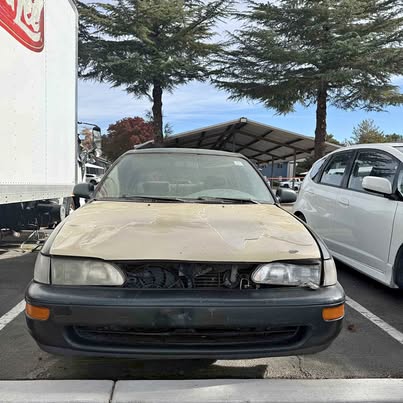
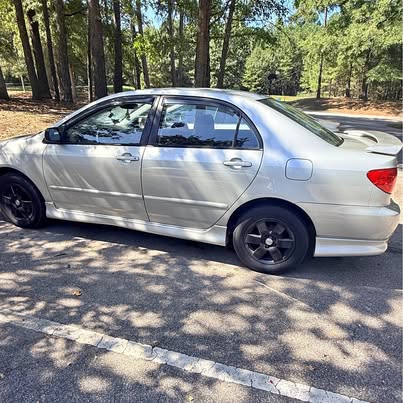
Engines and gearboxes
The pushrod engines: K, T and 3T-C
The engines that built the reputation are the least sophisticated in this guide, and in some ways the easiest to live with now. The K family — 1077 cc in the E10, growing through 1166 cc 3K — is a pushrod four with a timing chain, a single Aisan downdraft carburettor and points ignition on early cars. The T family, above all the 1588 cc 2T-C and the 1770 cc 3T-C of most American E70s, is the same idea larger: pushrods, chain drive, iron block and head, and a tolerance for neglect that borders on indifference. A healthy car starts with a little choke, ticks over with a sewing-machine clatter that is normal, and pulls without fuss.
What kills them is rarely the bottom end. It is the periphery, after fifty years. Carburettor faults come first: worn throttle shafts draw air and make the idle hunt, the automatic choke sticks, and the accelerator pump diaphragm hardens and gives a flat spot owners blame on ignition. A car that starts cold, idles fast, then settles is behaving; a car that needs throttle to start hot is telling you about fuel percolation, a sinking float or a choke that never opens. Points close up and make the car gutless at speed; many cars have electronic ignition, a good conversion when neatly done and a nuisance when it is a mystery box in a tired loom. Timing chains stretch and rattle but rarely fail. Valve clearances tighten when neglected and burn an exhaust valve — a compression test, all cylinders even and roughly 150 to 180 psi, settles the question faster than listening.
Oil leaks are a condition of ownership: rocker-cover gaskets, fuel-pump gasket, crank seals. Judge them by quantity, not presence. A weep is period normal; a car that needs oil between fuel stops has rings, guides or a blocked crankcase breather pressurising the seals — and the breather check costs nothing, so do it before pricing an engine. Cooling matters more. A temperature gauge that climbs in traffic and falls on the move is an airflow or fan problem; overheating under load is a radiator, head-gasket or timing problem, and the distinction is worth money.
The A engines: 4A-C, 4A-F and 4A-FE, 7A-FE and 4A-GE
The A family is the engineering heart of the front-drive Corolla. The design is consistent: iron block, alloy head, a toothed timing belt driving overhead camshafts, and, in twin-cam cars, four valves per cylinder when rivals sold two. The single-cam 4A-C that launched the E80 is carburetted and almost forgotten. The 4A-F and injected 4A-FE of the E90 and E100 are the durability benchmark, with a service life past 250,000 miles that is routine when oil and belt have been changed. The 7A-FE is a stroked 1.8 version — not a different engine to own, just a better one to drive, with torque where the 1.6 needs revs.
The timing belt is the family's one scheduled threat, and it is a kind one. The 4A-F, 4A-FE and 7A-FE are non-interference designs: a snapped belt stops the engine but does not bend valves, so a failure is a tow and a belt job, roughly $450 to $900 fitted with a water pump, rather than a cylinder-head rebuild. That does not make neglect free: a belt of unknown age is a breakdown of unknown date, and tensioner bearings growl before they seize. Ask for the belt invoice, look for the date sticker many shops fit on the timing cover, and price the job into any car without evidence. Owners work to around 60,000 to 90,000 miles or six years; rubber ages whether the miles accumulate or not, which is why a low-mileage garage car can need a belt sooner than a commuter.
Two A-engine faults present as something worse. The distributor leaks oil from its shaft seal — first onto the engine, then into the cap, where it causes a misfire under load that looks like failing leads or a weak coil. Pull the cap on any car with a load misfire; oil inside is the diagnosis, and seals are cheap. Second, exhaust manifolds crack on short-journey cars and tick loudly when cold, quietening as the metal expands. A cold tick that fades in two minutes is usually the manifold, not valve gear — these engines use shim-adjusted valves that rarely make noise — and a manifold is a $300 to $700 job, not an engine verdict. Oil consumption on a high-mileage A engine is usually valve-stem seals, announced by blue smoke on start-up and overrun; smoke under load with low compression is rings, a different conversation.
The twin-cam 4A-GE lives by different rules. In the AE86 GT-S it makes 112 hp in American form, revs to 7,500 rpm, and uses Toyota Variable Induction — T-VIS, butterfly valves that change the intake tract with revs; later front-drive GT-S form made around 130 hp. It is still a belt-driven A engine, and in its common forms also non-interference, but it punishes short-journey sludge and cooling neglect. Check that T-VIS operates and that the oil is clean rather than merely topped up. A standard, documented 4A-GE is worth more than a modified one with no paperwork, every time.
The ZZ engines: 1ZZ-FE and 2ZZ-GE
The E110 of 1998 changed the Corolla's engine completely. The 1ZZ-FE is an all-alloy 1.8 with a timing chain, four valves per cylinder, and, from the 2000 model year, VVT-i variable valve timing on the intake camshaft. It is lighter, quieter and more economical than the 7A-FE it replaced, and in the ninth-generation cars, at 130 hp, it is also quicker than any mainstream Corolla before it. In ordinary service it is a 200,000-mile engine. It has, however, the single most important fault in this entire guide, and it belongs to the early cars.
On 1998 to 2002 engines in particular, the pistons' oil-control ring drain holes are small and coke up, especially on short-journey cars with stretched oil intervals. The rings stop draining, oil is burned, and consumption climbs — a quart in a thousand miles, then worse — while the car still runs sweetly and shows no leak. Left alone, the engine runs itself low, the oil-fed chain tensioner and VVT-i suffer, and the eventual failure is presented as sudden when it was anything but. There is no roadside test that proves the ring pack. Do evidence work instead: read the dipstick and note whether the oil is suspiciously fresh and full for the sale; look for consumption complaints or a later piston or engine replacement in the history — Toyota addressed the fault with revised pistons; check the tailpipe for oily soot; and ask directly, then watch whether the answer matches the invoices. A car with documented revised pistons beats a lower-mileage car with no story. Budget an oil-burning 1ZZ as an engine job — $2,500 to $4,500 for a quality used or rebuilt unit fitted — not a top-up habit.
The chain drive changes the maintenance question rather than removing it. The chain, guides and hydraulic tensioner wear with oil quality and mileage: a rattle for a second at cold start is the tensioner taking up; a rattle that stays is wear. VVT-i faults announce themselves with a check-engine light, a rough idle and camshaft-timing codes a seller may clear before your visit — read codes before and after the test drive, because a cleared code that returns is a diagnosis the seller has already paid to learn. Accessory belts, tensioner bearings and water pumps are ordinary jobs, $250 to $600 depending on what is combined.
The 2ZZ-GE in the XRS shares only a displacement: variable valve timing and lift — VVTL-i — switches cam profile at high revs, and the redline passes 8,000 rpm. It wants premium fuel and clean oil; lift bolts and cam lobes wear on cars that live at the changeover point. Test the changeover on the drive: the engine should pull cleanly through it with a distinct hardening of note and pace. A stumble, a check-engine lamp or flatness at high revs is a lift, oil-pressure or control fault needing specialist diagnosis, not a discount guess.
Gearboxes
The manual gearboxes are the Corolla's quiet strength. Early cars use four- and five-speed units; front-drive cars use the C-series transaxles — C50 and C52 five-speeds behind most A engines, related units behind the ZZ cars, and a six-speed in the XRS. Second-gear synchromesh is the wear point on every one, tested by a brisk cold change down from third; a crunch that disappears when warm is wear to price, a crunch in every change is a rebuild, roughly $1,200 to $2,500 fitted with a clutch. Clutches are light, long-lived and cheap — $600 to $1,100 fitted for most generations — and judder is usually an oil-contaminated plate, a tired release bearing or engine mounts. Linkage bushes perish and make a precise box feel vague; that is a $50 parts answer to a problem sellers call character.
Automatics took over the American market, and they are mostly Aisin-built units of real durability: three-speeds behind early front-drive cars, then the four-speed A131L and A240 series behind A engines, and the A246 and related four-speeds behind ZZ cars. The test is consistent: fluid red to light brown, never burnt-smelling; delay engaging drive or reverse from cold, flare between second and third, or a thump when hot means low fluid, overdue service, or wear. A fluid service is $180 to $350 and cures neglect more often than folklore admits, but it does not cure burnt fluid and slipping clutches, and a rebuild at $2,200 to $3,800 must be priced against the whole value of a middle-generation car. A documented fluid history is worth paying for, and a box already rebuilt by a named shop carries paperwork worth more than a low odometer reading.
One gearbox trap spans the range: never read specification off the lever or the seller's description. Trim swaps, engine swaps on the early cars, and plain listing errors mean a claimed five-speed, a claimed XRS six-speed or a claimed manual conversion must be verified in the car — count the gears on the drive, read the identification plate, and match the engine number to the model described in the models section. The hardware settles it. The advertisement does not.
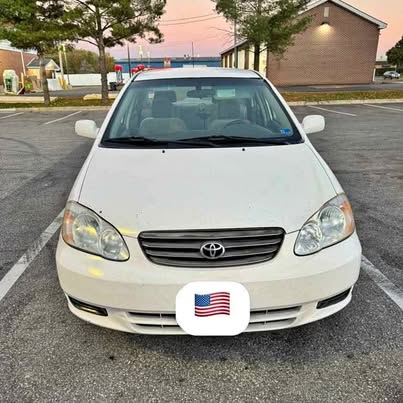
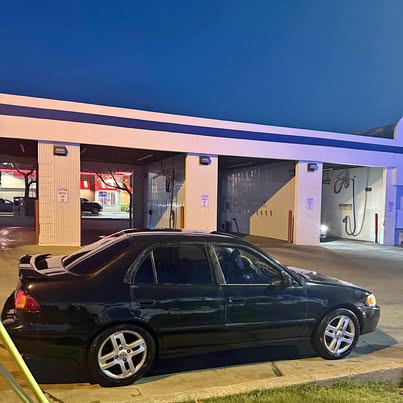
Problem areas
A Corolla rarely fails all at once. It declines in layers — a seal here, a bush there, rust that was a bubble last year — and because each layer is cheap, owners defer all of them until the car is tired everywhere at once. Your job is to count the layers. One or two is a weekend. Six is a restoration wearing a daily driver's clothes. Body comes first below, because it is the only layer money cannot reliably reverse.
Rust: the map
Rust is a generation question before it is a car question. The pre-1980 cars rust like most 1970s Japanese cars, which is to say eagerly and structurally, because the steel was thin, the factory protection was minimal and the cars were cheap enough to live outside. The E70 improved matters a little. The front-drive cars from the E80 onward are progressively better protected, and by the E100 and E110 the shell is rarely the problem in a dry state — but in the salt belt, brake pipes, subframes, suspension arms and sill ends still rot on cars whose painted panels look clean, and that inversion, shiny on top and crusty underneath, is the characteristic trap of the later cars.
Work the early cars in this order. Rear wheel arches and outer sills go first; press along the sill, look inside the arch with a torch, and treat fresh black underseal on one side only as a confession. Floor pans follow, fed by windscreen-seal leaks and blocked sill drains; lift every carpet you are allowed to lift and prod the seams — surface scale is treatable, a screwdriver that goes through is a welding bill, realistically $800 to $2,000 a side for sills done properly with paint. The tailgate and rear panel on wagons and liftbacks trap water around the window seal and lamp gaskets, and a wagon tailgate is model-specific metal that cannot be borrowed from a sedan, so a rotten one is a parts hunt, not a panel order. Door bottoms, bonnet edges, battery tray and front valance rarely kill a car alone, but together they tell you whether it lived garaged or in a field. On any rear-drive car, get underneath or pay for a lift: chassis rails, spring hangers and the front crossmember are structural, and perforation there moves the car from project to parts unless the price already says so.
On front-drive cars, change the emphasis. The painted shell usually survives; the bolted and piped underneath does not. Check the front subframe and its mounts for scaling and perforation, especially on salt-belt E110 and ninth-generation cars, where a subframe can be condemned while the body shines. Check brake and fuel pipes along the floor — a weeping pipe is a safety job, $300 to $800 for a set made and fitted, and a pipe already replaced in sections tells you the rest are due. Check sill ends and jacking points by using them: a sill that crunches as the car lifts on its own jack points has answered the question, the same test the Mercedes guides use on a W108, scaled down to thinner metal. Check rear arches and the fuel-filler neck, and on wagons the rear strut towers and load floor. A cloth-wrapped magnet over arches, sill ends and door bottoms still earns its place: filler over a rusted arch is the commonest cosmetic lie in the listings, because an arch is cheap to fill and expensive to weld properly.
Read paint as evidence, not beauty. One repainted panel is parking history. A whole car in fresh paint with no photographs of the work is a question: good restorations document themselves. Mismatched orange peel, overspray on rubbers and a boot floor in a different shade are the tells that cost nothing to spot.
Suspension, steering, brakes and wheels
The suspension is conventional in every generation and wears conventionally. The difference between a tight Corolla and a tired one is almost entirely rubber and dampers. Struts that have lost their gas make the car float and dive; bounce each corner and look for oil weeping down the strut body. Worn lower-arm bushes and anti-roll-bar links knock over broken surfaces, a noise buyers should price as a set, $250 to $600 fitted. Rear beam bushes on front-drive cars perish and let the back end steer vaguely in crosswinds; the car feels nervous rather than broken, and the fix is bushes, not alignment folklore.
Steering tells mileage honestly. Rack play — a dead band either side of centre with a knock when you rock the wheel — is wear in the rack or its inner joints; inner joints are modest, a rack is $600 to $1,200 fitted. Power-steering pumps whine on full lock when fluid is old or low, so top up and retest before pricing a pump. On rear-drive cars, idler and centre-link wear gives the same vague, wandering feel; rock the wheel and watch which joint moves first.
Brakes are front discs on everything here, with rear drums on most mainstream cars. The parts are cheap, which is why neglected brakes are such a useful character test: a seller who has not spent $300 on brakes has not spent it anywhere else either. Seized drum self-adjusters give a long pedal and a weak handbrake; seized caliper slide pins give uneven pad wear and a pull under braking. A full hydraulic refresh is $600 to $1,400 at a shop, and it is the first money almost every newly bought Corolla needs. Judge discs for a rust lip and scoring, not just thickness, on any car that has sat.
Wheels and tyres date a car's real life: four mismatched budget brands is deferred maintenance made visible. Check the spare and whether the jack is present. Wheel bearings hum rather than knock, rising with road speed and changing note as you load the car side to side in a gentle weave; a front bearing is $250 to $500 a side fitted, and a hum a seller calls tyre noise should be tested exactly that way.
Drivetrain wear beyond the engine room
Constant-velocity joints on front-drive cars click on full lock when worn, and split gaiters are the warning — a gaiter is $150 to $300 fitted, a joint or shaft after the grit has done its work is $300 to $650 a side, so a split gaiter found at inspection is money saved. Engine mounts sag and tear, shown as a thump on take-up and a gear lever that moves under power; $300 to $700 for the set a tired car needs. Exhausts rot from the rear forward on short-journey cars. Catalytic converters on ZZ cars attract theft as well as failure; a car suddenly loud underneath has often been cut, and a quality replacement is $500 to $1,200, so look underneath before the test drive.
Air conditioning deserves a specific test because it decides summer usability and sellers describe it optimistically: run it for five minutes, confirm the vent air is genuinely cold rather than merely cool, and listen for rapid, short compressor cycling, which suggests low refrigerant. A regas is $120 to $250; a compressor, condenser and dryer done properly is $900 to $1,800, and on a middle-generation car that difference is the negotiation.
Interior and trim
Corolla interiors wear their mileage honestly, because the materials were good but not luxurious. On early cars the dashboard cracks in sun states, seat vinyl splits at the driver's bolster, and door cards warp from failed window seals; 1970s trim, above all coupe and SR5 trim, is the scarcest parts category in this guide, and a complete uncracked early interior is worth a premium no mechanical rebuild can recreate. Sit in the driver's seat, not the passenger's: it collapses first, and once you can feel the frame, the job is foam and trim together.
On the mass generations, the tells are smaller and just as reliable. Headlinings sag on heat-lived E100 and later cars. Window regulators slow and then strip; test every window to the bottom and back. Blower resistors fail one speed at a time — a blower that works only on full speed is the resistor, a cheap part, not the motor — and heater matrices leak into the front footwells, announced by a sweet smell, misting glass and damp carpet. Wet front carpets on a front-drive Corolla should start a heater and windscreen-seal investigation, not a rust panic.
None of this is expensive alone. Added up on a car that also needs brakes, bushes and a belt service, it is how a cheap Corolla becomes an average-priced one by the end of its first year — the arithmetic the Values section asks you to do before you bid, not after.
Electrics
Most electrical faults are age faults, not design faults. Alternator brushes and regulators wear, giving a charge light that glows at idle and brightens with revs; batteries die from age and are blamed on everything else, so test the battery before diagnosing the car. Starter motors click on hot restarts when their solenoid contacts wear — a cheap contact-kit repair, misdiagnosed as a battery fault often enough that it is worth naming. Central locking actuators tire one door at a time, and electric aerials seize.
The check-engine light is the electric that matters on injected cars. On A-engine cars a lit lamp usually means what it says — an oxygen, temperature or pressure sensor, most of them $150 to $400 diagnosed and fixed. On ZZ cars the VVT-i and lift controls depend on oil pressure and clean oil as much as on wiring, and a seller who has cleared codes has cleared evidence. Read codes before and after the drive on any car from 1996 onward; a car with the readiness monitors not ready has recently been cleared, and recently cleared means ask why.
Corrosion at earth points and green fur on battery terminals account for most remaining strangeness: dim lights, intermittent accessories, wandering gauges. All are cheap to fix and tedious to find, and a car where everything electrical works has usually been used and maintained rather than stored and forgotten — the best single sign there is on a car of this class.
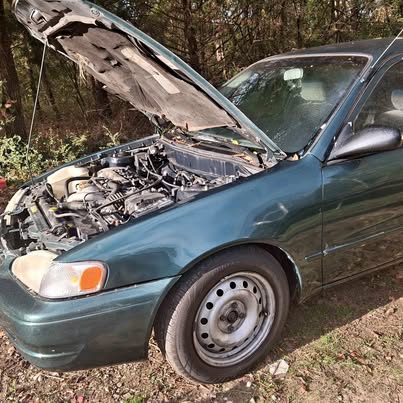
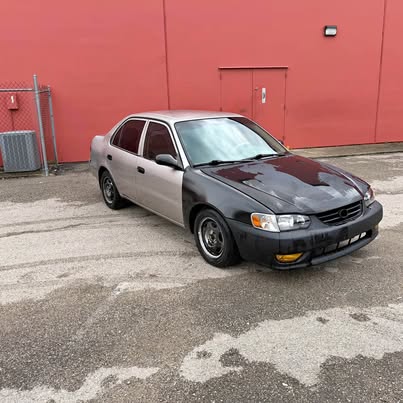
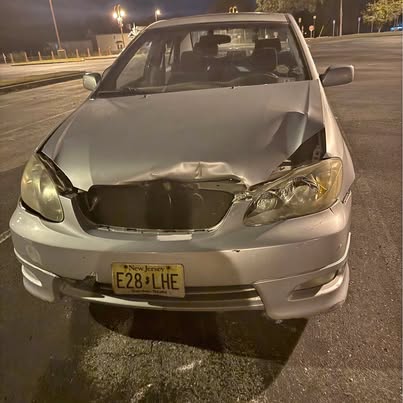
How to inspect one
Allow an hour, bring a torch, a cloth-wrapped magnet and a basic code reader for any car from 1996 onward. Insist on a cold engine — half the tests below only work cold — and if the seller has warmed the car, note it and, on a car you otherwise want, come back. On any rear-drive or salt-belt car, pay for a lift inspection before money changes hands; the fee is small against even one structural surprise.
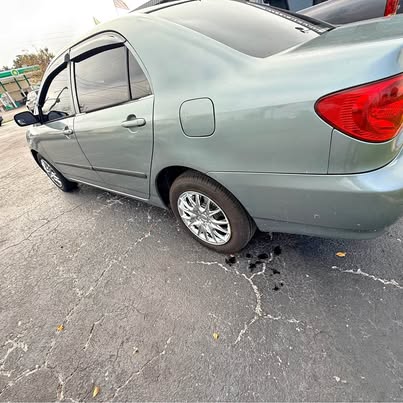
- Start with identity and paperwork. Match the VIN on the title to the plate or stamping on the car — the windscreen-base plate and driver's door label on later cars, the engine-bay plate on early ones — and match the engine to the badge using the models section: a claimed XRS must carry the 2ZZ-GE and a six-speed manual, a claimed GT-S the 4A-GE, whatever the body kit says. Then read the history file before you touch the car. Belt invoices on A-engine cars, oil-consumption or engine-work invoices on early ZZ cars, and automatic-fluid changes are each worth real money; a thick file changes what every later step means.
- Cold start. From cold, a carburetted car should start with choke and settle as it warms; an injected car should start at once and idle evenly. Watch for blue smoke at start-up, which points to valve-stem seals, and listen for a timing-chain rattle on ZZ cars that lasts more than a second, and for the cold exhaust tick of a cracked manifold on A-engine cars, which should fade as the manifold expands.
- The dipstick and filler cap. Read the oil level, its colour and its story. On a 1998 to 2002 1ZZ car this is the step that prices the car: oil suspiciously fresh and full on a car with no recent service invoice may be a top-up for the sale, so check the tailpipe for oily soot and ask the consumption question from the engines section directly. Milky residue under the filler cap on a car that does short journeys can be condensation; the same residue with coolant loss is a head-gasket conversation. Smell, level and history together — never one alone.
- Underneath, in rust order. Torch along both sills and press them, check jacking points by the sill-jack test from the rust section where the car's own jack allows it, then floors, arch lips, and on early cars the chassis rails, spring hangers and crossmember. On front-drive cars, move straight to subframe, brake and fuel pipes, sill ends and rear strut towers. Perforation in structural metal ends the inspection at project money or ends it altogether; scale and surface rust are a price discussion.
- Boot, load area and spare. Lift the spare and any boards or mats. Water staining, a damp smell and rust in the well corners mean a window, lamp or boot seal leak that has been running for seasons, and on a wagon, check the tailgate seal, the load floor and the rear towers together — the wagon rust map in the problem areas is written around this step.
- Body and gaps with the magnet. Run the magnet over arch lips, sill ends, lower doors and, on early cars, the front valance. Check panel gaps for accident history, door bottoms for bubbling, and paint match panel to panel in daylight. Count the cosmetic jobs honestly: one panel is history, a car that needs paint, arches and a tailgate is three bills, not one.
- Suspension and steering by hand. Bounce each corner and look at the struts for oil. Rock each front wheel top to bottom and side to side for bearing and joint play, turn the steering lock to lock listening for rack knock and pump whine, and look at the CV gaiters on front-drive cars while the wheels are turned — a split gaiter found now is the cheap version of the job in the problem areas.
- The test drive, fifteen minutes minimum. Town work, a freeway stretch and a rough surface. A manual should change cleanly into second cold and hot; an automatic should engage drive and reverse without delay, change without flare, and not thump when hot. The car should brake straight with no judder, track straight hands-off, and show no bearing hum that changes note as you weave gently. A misfire under load on an injected car — think distributor oil on an A engine — and any stumble at the lift changeover on a 2ZZ are named faults from the engines section, not mysteries to accept.
- Heat, cooling and air conditioning. Let the car idle hot. The temperature gauge should sit steady; a gauge that climbed in traffic points back to the fan and radiator tests in the engines section. Run the air conditioning for five minutes and judge the vent air honestly — genuinely cold or not. Run the heater on every blower speed, and note a sweet smell or misting glass as the heater-matrix warning from the interior section.
- Electrics and codes, completely. Work every window, lock, light, washer, wiper and blower speed. On a 1996 or later car, read codes now and again after the drive, and check the readiness monitors: not ready means recently cleared, and that belongs in the negotiation. A simple sensor code is a price point; a cleared VVT-i code that returns is a diagnosis.
- Interior, from the driver's seat. Sit in the driver's seat first and feel for a collapsed cushion and a split bolster, then every other seat. Check headlining, dashboard cracks on sun-state cars, seat-belt fray and retraction, and look under the front carpets for damp, reading it as the heater and seal question from the problem areas rather than assuming floor rust on a later car.
- Stance and the walk-away photograph. Stand back and look at the car level from all four sides. A Corolla should sit even; a sagging corner is a spring or strut, a tail-down wagon is springs or a life of overload, and ripples down a flank are accident history your magnet may have missed. Take the photograph from ten paces anyway. Stance and gap faults you talked yourself out of in person are obvious in a picture that evening, and on a car built in the millions, walking away is a real option — the next one is already listed.
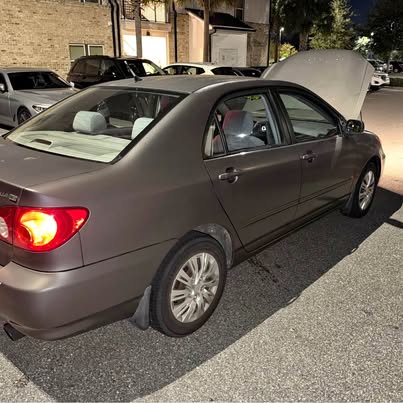
Values
The build's market block beneath this guide carries the current numbers — what is listed now and what recorded sales show — and this section is about how to read them, because a Corolla market is really several markets wearing one badge, and a single median across them misleads in both directions.
At the top sit the cars whose supply is genuinely closed: the AE86 GT-S, clean early coupes and SR5s, straight E70 wagons and, increasingly, unmodified XRS and front-drive GT-S cars with manual gearboxes. These trade as collector cars. Condition, originality and documentation move their prices by multiples, a modified car is worth less than a standard one unless the work is documented and reversible, and asking prices run ahead of achieved prices by the widest margin in this guide, because every seller of a sporting Corolla has read about the best one ever sold. Read the recorded-sales evidence, not the listings, for these cars, and expect to pay for history as much as for metal.
In the middle sits the honest heart of the market: E90, E100, E110 and ninth-generation sedans in good, documented, rust-free condition. Here the spread is driven by evidence, not rarity. A car with a belt or engine history, cold air conditioning, four matched tyres and a shell that passes the underneath inspection is worth a clear premium, and the gap is roughly the cost of creating the evidence yourself — the right way to value it. Mileage matters less than the market pretends: a documented high-mileage car serviced on time is usually a better purchase than a low-mileage car that has sat, because sitting attacks belts, brakes, seals, tyres and fuel systems all at once.
At the bottom are project cars, and the trap is specific: because the cars were cheap and plentiful, a project is rarely worth restoring in money terms unless it is a closed-supply car from the top. A rusty E100 sedan, an oil-burning 1ZZ car, or a slipping automatic can each absorb more than a good example costs, while remaining an ordinary sedan. As parts cars or winter cars bought with open eyes they have a clear role — but price a project against the finished car's realistic achieved value, not against what tidy ones are advertised for.
Three premiums are real. A manual gearbox, where most survivors are automatic. A wagon, coupe or other closed body style, where sedans dominate. And a dry-state, fully documented history, on any car at all. Three premiums are not real, however often they are asked: a sport badge on a standard engine, in particular the ninth-generation S; a low odometer with no history file; and fresh paint with no invoices for the metal underneath. Negotiate on evidence from the inspection — a belt with no invoice, an automatic with no fluid history, a subframe photographed on a lift — because sellers respond better to specifics than to general claims that the price is too high.
Parts and ownership
The Corolla is one of the best-supported inexpensive classics you can own, with one divide: mechanical parts are easy for almost every generation, while body and trim get harder the older and rarer the body style. Toyota built the cars in enormous numbers and the aftermarket followed the volume. A mainstream sedan from the 1990s onward can be run as a real car, serviced anywhere, with no parts strategy at all.
Easy: service items for every generation — filters, plugs, belts, hoses and thermostats; brake discs, drums, pads, shoes, calipers and hydraulics; suspension bushes, links, struts and springs; CV shafts and gaiters; clutches and clutch hydraulics; alternators, starters and batteries; exhaust systems in standard form for the mass generations; water pumps, radiators and fan motors; window regulators and blower resistors for the later cars. Most of this is order today, fit this weekend, at prices close to modern-car money, and much of it is shared with other Toyotas of the period, which is why it stayed available.
Harder and dearer: early body panels, above all wagon tailgates, liftback glass and seals, coupe trim and SR5 instruments; uncracked early dashboards; 4A-GE and 2ZZ-GE parts in standard specification, because the tuning market consumed the supply; All-Trac drivetrain parts, increasingly a used-parts hunt; air-conditioning parts for the oldest cars; and quality catalytic converters for ZZ cars, where cheap replacements light the lamp they were bought to extinguish. All of it rewards joining the owners' clubs and forums before you need the part, because Corolla knowledge is deep, specific and freely shared.
Running costs. Fuel economy is a Corolla virtue in every era, and the ZZ cars are the most economical of all when driven gently — noticeably less so when an XRS is driven as its engine invites. Insurance is ordinary except for an AE86 or a modified car. Any good independent can service one; a Toyota specialist earns his fee on 4A-GE and 2ZZ-GE diagnosis and early ZZ oil-consumption assessment, because he has seen the pattern before.
The budget line that catches new owners is the first year. Catching up deferred maintenance on a running, honest Corolla — belt service, brakes, fluids, bushes, four matched tyres — honestly costs $800 to $2,500 before you improve anything, and recommissioning a car that has sat runs $1,500 to $3,500. Modern fuel attacks old rubber, so a stored carburetted car wants fuel lines, pump diaphragm and tank checked before its first long run. Buy a car in regular use over a sleeping one, keep the oil changed on time — on a ZZ car, check it between changes as a habit — and a Corolla will do what it was designed to do: disappear into your life as the car that always works.
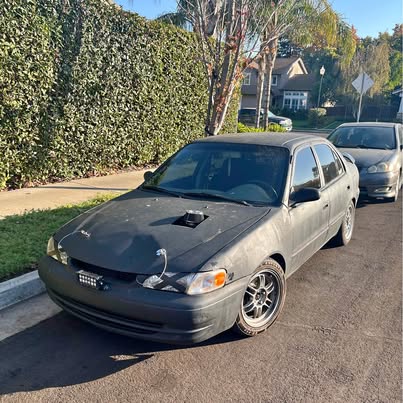
Which one to buy
- The all-rounder: E100 1.8 DX or LE, 1993 to 1997. The 7A-FE engine, fuel injection, real family-car space, the best balance of parts ease, durability and price in the guide. Buy the best-documented, least rusty one you can find and drive it without ceremony.
- The value buy: E90 sedan with the 4A-FE. Injection, the durability benchmark engine, and prices that still assume nobody wants one. A sorted E90 with a belt invoice is the cheapest honest Corolla ownership there is — just make sure the belt bill is in the file, not in your future.
- The classic buy: E70 wagon or coupe, 1979 to 1983. The last rear-drive mainstream car, simple enough to maintain at home, and scarce in straight order. Buy on shell condition above everything; a 3T-C can be rebuilt, a rotten wagon tailgate and rear arches cannot be ordered.
- The modern classic: ninth-generation CE or LE with a manual gearbox. Chain-driven engine, modern safety, air conditioning that works, and a manual that lifts it out of the automatic crowd. The sensible car for a buyer who wants to use a classic daily without thinking about it.
- The driver's car: XRS, or a 4A-GE GT-S. The XRS for a modern, high-revving, six-speed car with a documented lift system and clean oil history; the AE86 GT-S only with open eyes, verified identity and a collector budget, because it trades in a different market from every other car in this guide.
- The connoisseur's car: All-Trac wagon. Full-time four-wheel drive, genuine rarity and real all-weather ability, bought by someone who has read the parts section and accepts the hunt. Wonderful when right, and not a first Corolla.
And the rule that overrides all of the above: buy the least rusty, best-documented car you can find, in the specification you can live with. Specification was never scarce — Toyota made millions of every one. Evidence is scarce: a belt invoice, an oil history, a subframe that passes on a lift. Pay for evidence, and the car will pay you back in the only currency it ever promised, which is starting every morning for years.
Listed now
On Classic Listings today: 15 cars are listed here; 7 for sale and 8 marked sold; average asking price $2,708; asking range $750 to $5,800; sold cars average $7,881.
See the 15 Corolla cars currently listed.
The market — recorded sales
Recorded-sale figures: 8 recorded sales · median $7,000 · range $700 to $22,000 (Nov 2024 – Nov 2026)
Based on 8 recorded sales — too few for a benchmark value.
| Date | Car | Sale price | Source |
|---|---|---|---|
| Nov 14, 2026 | 1997 Toyota Corolla | $950 | |
| Nov 14, 2026 | 1994 Toyota Corolla Sedan 4D | $1,300 | |
| Nov 14, 2026 | 1999 Toyota Corolla L Sedan 4D | $700 | |
| Sep 8, 2026 | 2001 Corolla | $6,800 | Cars & Bids |
| Apr 20, 2026 | 1998 Corolla | $7,200 | Cars & Bids |
| Feb 4, 2026 | 2005 Corolla | $13,000 | Cars & Bids |
| Jan 15, 2026 | 2005 Corolla | $11,100 | Cars & Bids |
| Sep 23, 2025 | 1986 Corolla | $22,000 | Cars & Bids |
Dates are the sale date where the source states one; otherwise the date the sale was recorded here.
For sale now
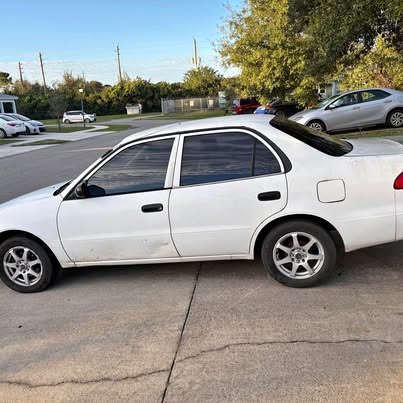 $900
Expand
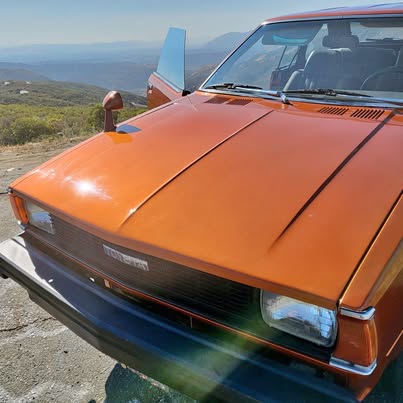 $5,800
Expand
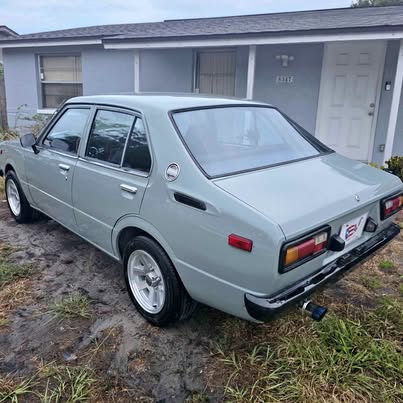 $10,500
Expand
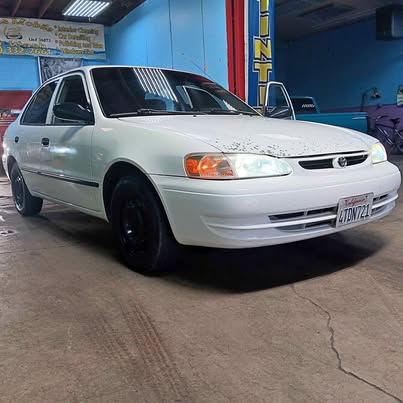 $3,800
Expand
$2,700Expand
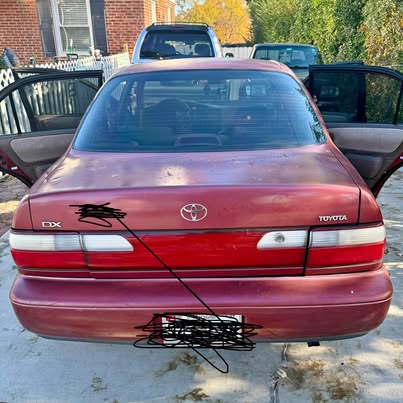 $2,300
Expand
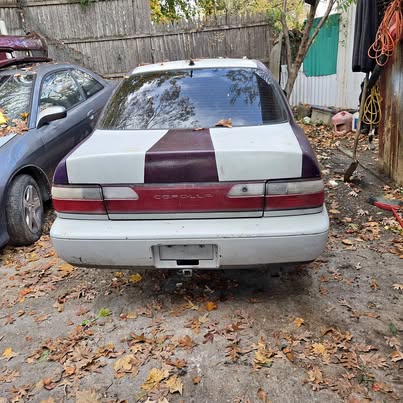 $750