
Acura RSX buyer's guide
Acura RSX (2002–2006) — RSX, RSX Type S: what's listed, and what they sell for.
Years: 2002–2006 · Models: RSX, RSX Type S
Overview and history
The Acura RSX is the car that closed a chapter. Sold in North America for just five model years, 2002 to 2006, it was the successor to the Integra — the coupe that had carried Acura's sporting reputation since the brand launched — and when Acura killed it after 2006, without a replacement, the line that began with the first Integra in 1986 simply ended. There has never been another small Acura coupe. That short, finite life is now the core of the car's appeal: every RSX is a DC5-chassis Honda, built in Suzuka, Japan, powered by a 2.0-litre K-series four, and the newest example you will ever find is a 2006 car. Scarcity is built in.
Underneath, the RSX is the fourth-generation Honda Integra — it wore the Integra name in Japan and Australia, and RSX badges only in North America, where Acura was moving its whole range to letters. The DC5 was an all-new platform, shared in spirit with the seventh-generation Civic, and it represented a deliberate change of direction from the DC2 Integra it replaced. The double-wishbone front suspension that enthusiasts worshipped on the old car gave way to MacPherson struts, the B-series engine gave way to the all-new K-series, and the raw, tinny, go-kart character of the Integra gave way to something stiffer, quieter, safer and more grown-up. Period reviewers praised the refinement and mourned the edge in roughly equal measure, and that argument has followed the car ever since.
Time has settled the argument in the RSX's favour, for two reasons. The first is the K-series engine itself. The K20 turned out to be one of the great production four-cylinders — strong, free-revving, enormously tunable and, in stock form, durable well past 200,000 miles when the oil has been changed. The second is the Type S. The high-output version, with its true performance i-VTEC, its 8,000 rpm appetite and its six-speed manual, is a genuinely serious front-wheel-drive performance car, and it was the closest thing North America ever got to the Japanese-market Integra Type R that Honda refused to export. The DC5 Type R stayed in Japan. The Type S is what we got, and good ones are now hunted.
The car's history since production ended defines today's market, and you need to understand it before you look at a single listing. Through the late 2000s and 2010s the RSX was the cheap, obvious first performance car for a generation of young modifiers, and it was modified accordingly — lowered, boosted, swapped, raced, crashed and parted out in large numbers. Clean, unmodified cars were consumed by the same market that made the model famous. The result, twenty years on, is a two-tier supply: a long tail of tired, altered, high-mileage cars, and a thin layer of preserved originals — disproportionately late Type S cars kept by older owners — that the collector and enthusiast market now competes for. Almost everything in this guide follows from that split. With an RSX, you are rarely buying transportation. You are auditing a car's past.
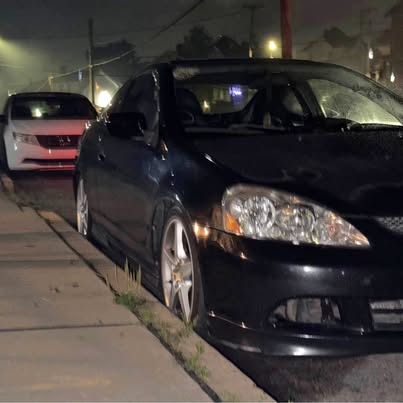
The fundamentals, though, remain Honda fundamentals. This is a front-wheel-drive, three-door hatchback coupe — the hatch matters, and makes the RSX more useful than its silhouette suggests — with a chain-driven twin-cam engine, a manual gearbox in most of the cars you will consider, and parts and knowledge shared with the Civic Si and the wider K-series world. Rust is a secondary issue rather than the existential one it is on older classics. What kills RSXs is not corrosion but consumption: hard use, deferred maintenance on two specific wear items — the timing-chain tensioner and the gearbox synchros — and modification done cheaply and reversed badly. All three are detectable on a viewing, if you know where to look. That is what the rest of this guide is for.
The models
The RSX range is the simplest in this entire guide series: two models, one body, one engine size, five years. Every RSX is a three-door hatchback coupe on the DC5 platform. The choice is between the base RSX and the RSX Type S, and between the original 2002–04 cars and the facelifted 2005–06 cars. That is the whole matrix — which makes the differences that do exist unusually important, because sellers blur them constantly.
| Model | Years | Engine | Output | Built | Character |
|---|---|---|---|---|---|
| RSX (base) | 2002–2006 | 2.0 four (K20A3), economy i-VTEC | 160 hp | approx. 65,000 US sales | The sensible car; five-speed manual or automatic |
| RSX Type S | 2002–2004 | 2.0 four (K20A2), performance i-VTEC | 200 hp | approx. 30,000 US sales | The enthusiast car; six-speed manual only |
| RSX Type S | 2005–2006 | 2.0 four (K20Z1), performance i-VTEC | 210 hp (201 hp, 2006 SAE rating) | approx. 15,000 US sales | The finished article; facelift, shorter gearing, the one to have |
(US sales figures are approximate, rounded from period reporting — total RSX volume in the United States was roughly 111,000 cars across the five years. Outputs are the period SAE net figures quoted at launch; the K20Z1 did not lose power for 2006 — the SAE J1349 rating method changed, and the same engine was re-certified at 201 hp. A seller who tells you the 2005 is "the powerful year" is quoting paperwork, not hardware.)
The base RSX. The base car is better than its reputation as the consolation prize suggests. Its K20A3 makes 160 hp — the same output as the old Integra GS-R's B18, in a stiffer shell — and it came with a five-speed manual or a five-speed automatic with manual override. Equipment was generous for the class: air conditioning, cruise control, a sunroof, alloy wheels and, on most cars, cloth seats, with leather available. The base car on the manual gearbox is a sweet, light, economical daily driver that happens to share its bones with a performance car. The automatic base car is the least loved RSX of all, and priced like it — which, if you simply want a well-made hatchback coupe, makes it the value in the range. What the base car is not is a cheap Type S: the engine's whole top end, the gearbox, the brakes and the suspension tune all differ, and no bolt-on closes the 40 hp gap honestly.
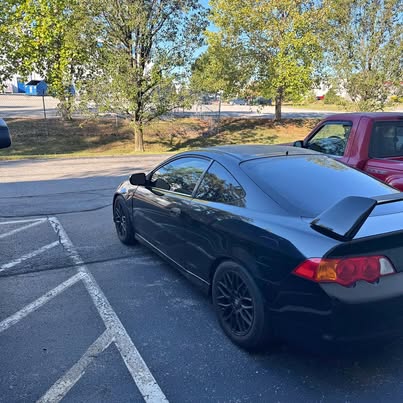
The Type S, 2002–04. The Type S is a different proposition: 200 hp from the K20A2, a close-ratio six-speed manual as the only gearbox, bigger front brakes, firmer suspension, 16-inch alloys, a Bose audio system with a boot-mounted subwoofer, leather-trimmed sport seats and a rear spoiler. There was no automatic Type S, ever — a claimed automatic Type S is a base car with badges, and you will meet them. An optional dealer-installed A-Spec package (and an earlier Factory Performance package) added a firmer suspension kit, 17-inch wheels, a body kit and a taller rear wing; genuine A-Spec suspension parts are desirable, the wing is a matter of taste.
The facelift, 2005–06. For 2005 Honda revised the whole range: restyled headlamps and tail-lamps, new bumpers and sills, more sound deadening, revised suspension geometry and spring and damper rates, and a lower ride height. The Type S gained most: the K20Z1 engine with Type R-derived camshafts and intake and exhaust revisions for 210 hp, a shorter 4.764 final drive in place of the earlier 4.389, 17-inch wheels with 215/45 tyres in place of 16s, and a standard decklid spoiler. These are the best RSXs to drive and the most collectible, and they carry the premium to prove it. The base car continued to the end with the K20A3, also facelifted in appearance.
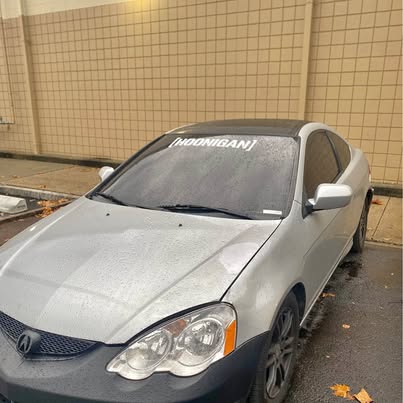
What North America never got. Japan's DC5 Integra Type R — 220 hp K20A, limited-slip differential, Recaro seats, Brembo brakes, a seam-welded-feeling shell — was never sold here. That has two consequences for a buyer. First, genuine Type R parts (the aluminium bonnet, the intake manifold stamped PRC, the differential) circulate in the US used-parts market and appear on modified cars, where they are worth money if real. Second, the US Type S has no limited-slip differential, and sellers who describe one as fitted are either mistaken or describing an aftermarket Quaife or similar unit — which, if genuinely present and documented, is a plus, not a problem. Just make them prove it.
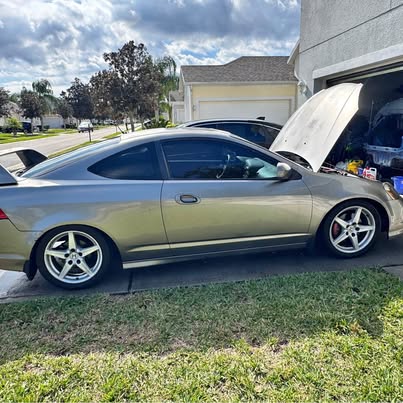
Engines and gearboxes
The base engine: K20A3
Every RSX engine is a K20: a 1,998 cc, all-aluminium, double-overhead-cam, 16-valve four with a timing chain — no belt, ever, on any RSX — and Honda's i-VTEC system. But i-VTEC is a brand name covering two very different systems, and the base car's version is the economy one. Understanding that difference is the single most useful piece of RSX knowledge there is, because it explains why the two cars feel unrelated.
The K20A3 in the base RSX runs what is effectively VTEC-E. Below roughly 2,200 rpm the engine breathes through one intake valve fully and the second barely cracked open, which tumbles the charge and lets the engine run cleanly and economically at light load; above that point both valves open fully. There is variable timing control (VTC) on the intake camshaft, which phases the cam by up to 25 degrees, but there is no high-lift, long-duration cam lobe waiting up the rev range — no step, no surge, no 6,000 rpm transformation. The result is 160 hp at 6,500 rpm and 141 lb-ft of torque at 4,000 rpm, a 6,800 rpm redline, a 9.8:1 compression ratio and a diet of regular fuel. It is a smooth, willing, thoroughly modern economy-performance engine — the same unit, in essence, as the contemporary Civic Si hatchback's — and in the light base car with the manual gearbox it is entirely adequate. Just do not buy one expecting the Type S experience at a discount.
In service the K20A3's great virtue is that it is understressed. It does not consume oil the way hard-used high-output K20s can, it tolerates indifferent fuel, and its failures are the family failures covered in the problem areas — chain tensioner wear, oil leaks from the VTEC spool valve and valve cover, a sticking idle air control valve, a failed knock sensor — rather than anything specific to the tune. Valve clearances are mechanically adjusted and Honda calls for inspection at around 110,000 miles; a top end that ticks loudly when cold and never quiets is telling you that job has been skipped, and a full clearance adjustment is a $300–550 job at an independent, more at a dealer.
The Type S engines: K20A2 and K20Z1
The Type S engines are the real i-VTEC: variable valve timing and lift on both camshafts, plus VTC phasing on the intake cam through a 50-degree range. Each cam carries three lobes per pair of valves — two mild outer lobes and one wild centre lobe — and at the switchover, around 5,800 rpm on the K20A2, locking pins slide across the rocker arms and the valves follow the centre lobe. You feel it as a distinct hardening of the note and a second wind that carries to the redline. This is the engine the DC5's reputation rests on, and a healthy one is unmistakable: clean idle, a sharp throttle, and a top end that pulls harder at 7,500 rpm than most engines do at their peak.
The 2002–04 K20A2 makes 200 hp at 7,400 rpm and 142 lb-ft at 6,000 rpm, on an 11.0:1 compression ratio, with a 7,900 rpm redline, and requires premium fuel. The 2005–06 K20Z1 keeps the same architecture and adds the Japanese Type R's camshaft profiles, a Type R-pattern short intake manifold, a larger throttle body inlet and exhaust revisions, and is rated 210 hp at 7,800 rpm with a slightly higher working range — re-rated to 201 hp for 2006 purely because the SAE changed its measurement standard. In the car, the Z1's advantage is real but modest: a little more top end, and gearing (below) that keeps it on the boil more of the time. Both engines share the same appetites and the same weaknesses. They use oil when driven as intended — a quart between changes on a hard-driven, high-mileage A2 is common and not by itself a death sentence, but a seller who has never checked the level between services is a red flag, because these engines die of oil starvation, not of wear. They also spin an oil pump and bearings that tolerate no neglect: any history of the oil light flickering, any bottom-end knock at hot idle, any metallic glitter in drained oil — walk away. A replacement used K20A2 or Z1 is a $1,500–3,000 proposition before labour, and the supply of good, unabused ones shrinks every year precisely because the tuning world wants them too.
Identity is checkable, and on a Type S you must check it. The engine code is stamped on a flat pad on the front of the block, visible with a torch past the exhaust manifold side of the bay — read K20A2 or K20Z1 with your own eyes, matching the car's year. K24 swaps and K20/K24 hybrid ("frankenstein") builds are common in this world and can be excellent engines, but a car sold as an original Type S with a K24A from a TSX or an Accord under the bonnet is worth materially less than claimed, and a base car with a Type S engine swapped in is a modified car, priced as one, however well it drives. While you are in the bay, look at the ECU's world for signs of Hondata K-Pro or an aftermarket tune — a USB cable disappearing into the glovebox, a non-standard ECU case by the passenger footwell, readiness monitors that will not set. A tuned car is not automatically a bad car. An undisclosed tuned car is a dishonest sale.
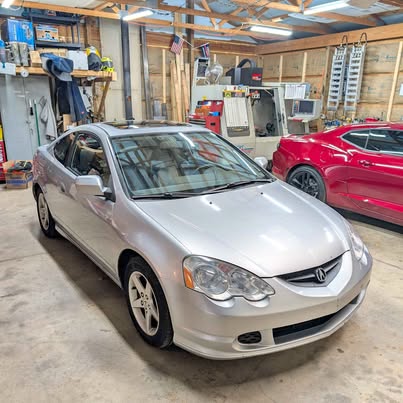
Gearboxes: five-speed, six-speed and the automatic
The base car's five-speed manual is a conventional, sweet-shifting Honda box with well-chosen ratios and a light clutch. It suffers a mild version of the family's second-gear synchro wear (below) but is generally the most trouble-free gearbox in the range. The five-speed automatic offered on the base car only — a conventional torque-converter unit with a manual shift gate — is durable if its fluid has been changed, sluggish if it has not, and defines the least valuable RSX variant. Test it for flare on the 2–3 shift and a delayed, thumping engagement of reverse from cold; a fluid change with the correct Honda ATF is cheap ($150–250), a rebuild is $1,800–2,800, and on an automatic base car that arithmetic often exceeds the car's margin over scrap.
The Type S six-speed is the gearbox everyone wants, and the one that needs the closest inspection in this entire guide. It is a close-ratio manual with triple-cone synchros on the lower gears, cable-operated, with a short, mechanical throw that is a joy when healthy. Its known weakness is synchro wear, concentrated on second and third gear. Second-gear trouble shows as a grind or crunch on the fast 1–2 shift, worst when cold, easing as the oil warms — owners call it the second-gear grind, and it has been documented on these boxes since the cars were nearly new. Third-gear trouble shows differently: a notch or wall as you push the lever home, and on worn boxes a tendency to pop out of third under load. Honda eventually issued updated synchro and gear-set parts for the later K-series six-speeds, and a properly rebuilt RSX box with updated components is better than new — a $1,500–2,800 job including removal, or $2,200–3,500 with a clutch done at the same time, which it should be. Fresh, correct fluid (Honda MTF, or the GM Synchromesh friction-modified fluid the community swears by) can mask mild wear for a viewing. So test the box cold, within the first minutes of the drive, with deliberate fast shifts into second and third, before the oil is warm and forgiving. A grind you can feel through the lever on a cold box is real money off, or a walk-away if the seller prices the car as perfect.
Clutches on manual cars are a wear item with a 100,000-mile-ish life in mixed use and a much shorter one in launched, modified service. A replacement clutch kit fitted runs $900–1,500. Judge bite point (high and vague is worn), judder pulling away (oil contamination or a warped disc), and slip in a high gear at full throttle on the test drive. Also squeeze the clutch pedal for the classic K-series creak and click from the plastic clutch master cylinder — annoying rather than fatal, a $250–450 fix with the cylinder and fluid — and check the pedal bracket area for the cracked welds that hard use can start.
Problem areas
Everything in this section is drawn from marque knowledge of the DC5 and the wider K-series family — the wear patterns that repeat on these cars wherever they surface. The RSX does not have a long list of exotic failure modes. It has a short list of well-understood ones, plus one overwhelming contextual risk that no other section can price for you: twenty years of owners, many of whom modified, raced or neglected the car. Work the systems in order, then do the forensics.
Timing chain, tensioner and top-end wear
The K-series is chain-driven, and the chain itself usually lasts the life of the engine. The tensioner and guides are the wear items. The chain tensioner is a small oil-pressure-assisted ratcheting plunger on the front cover, and as the chain stretches microscopically and the tensioner's ratchet teeth wear, the system develops slack that announces itself as a distinct rattle from the front of the engine for one to three seconds on a cold start, fading as oil pressure builds. A brief start-up rustle on a 150,000-mile car is common; a pronounced, repeatable cold-start rattle that lasts several seconds, or any rattle at hot idle, means the tensioner, guides and usually the chain are due — and the stakes are higher than the noise suggests, because a badly slack chain can jump a tooth, at which point a Type S's valves meet its pistons and a $1,000 job becomes a $3,000 engine. Budget $600–1,200 for a tensioner and guides with labour, $900–1,800 for the full chain kit done properly with the front cover resealed. Ask directly when the chain set was last touched; on a car past 150,000 miles with no record, price the job into your offer whether or not you can hear it yet.
Closely related is the VTC actuator on the intake cam sprocket, which can develop internal wear and rattle on start-up in the same way — the two noises are easily confused, and the honest diagnostic is a mechanic with K-series experience and a stethoscope, not a guess. Oil leaks cluster in predictable places: the VTEC spool valve gasket at the back of the head (a cheap part, $150–300 fitted, that dribbles oil down onto the exhaust side), the valve cover gasket and spark plug tube seals, the front crank seal, and the oil pan, which is sealed with Hondabond rather than a gasket and weeps with age. None is fatal; together they tell you how the car has been kept. Two electronic failures are near-universal K-series experiences. The knock sensor, buried under the intake manifold, goes brittle with heat cycles and throws a P0325 code, sometimes with a cracked connector that crumbles in your hand — $300–600 fitted, the manifold has to come off. And the idle air control valve, on the throttle body, gums up and produces the classic hunting idle, surging between roughly 1,000 and 2,000 rpm at a standstill — cleaning sometimes cures it, a replacement valve is a $250–500 job. A car that idles rock-steady at around 750 rpm, hot, with the air conditioning cycling, has passed a test many RSXs fail.
Oil consumption deserves its own paragraph because it is the Type S's quiet killer. High-mileage K20A2 and K20Z1 engines burn oil — worn rings and valve stem seals after years of 8,000 rpm service — and because the engine gives no warning until the level is low, the damage is done by owners who assume a Honda never needs checking between changes. Ask the seller, straight out, how much oil the car uses and when they last topped it up. A vague answer on a 180,000-mile Type S is information. Blue smoke on a cold start that clears points to stem seals; smoke under hard acceleration, and a sooty tailpipe with a wet, oily residue, points to rings. Either way, an engine that needs a quart every 500 miles is living on borrowed time, and a compression and leak-down test — an hour of shop time, $150–250 — is money well spent before buying any high-mileage Type S.
Gearbox synchros, clutch hydraulics and mounts
The six-speed's synchro wear is covered in the gearbox section above; treat this as the pricing summary. Second-gear grind and third-gear notchiness or pop-out are the two signatures, both are worst cold, and both are synchro wear, not adjustment — there is nothing to adjust. Fresh fluid can soften the symptoms for weeks, which is why a seller's "just changed the gearbox oil" on a car with a notchy change is a prompt to test harder, not a reassurance. A rebuild with updated synchro components runs $1,500–2,800; a used replacement box is $600–1,200 before labour and is a lottery, because most used boxes have the same wear. The five-speed in the base car wears its second-gear synchro too, more gently. On both boxes, check the gear lever for slop from worn shifter cables and bushings — cheap parts, and a common source of a vague change that sellers blame on the box itself.
Engine and gearbox mounts are the other driveline wear item, and they interact with everything. The K-series sits on fluid-filled and rubber mounts that tear with age and torque; the front mount goes first. Symptoms are a clunk on throttle application and lift-off, excessive engine rock you can see with the bonnet open and an assistant blipping the throttle, and — the Type S signature — axle tramp and wheel hop on a hard launch. A full set of quality mounts fitted runs $500–1,000. Budget urethane or solid mounts in a modified car cure the hop and transmit a buzz through the whole shell at idle; know which you are buying, because a car that vibrates at traffic lights is usually telling you about its mounts, not its engine.
Steering rack, power steering and front suspension
The RSX uses hydraulic power steering — a conventional pump, rack and pinion — and the rack is the car's best-known chassis weakness. Two complaints dominate. The first is a creak or groan from the steering at parking speeds, worst when cold and dry, which traces to the rack guide and internal wear in the rack itself; the second is play and knocking over broken surfaces from worn inner tie-rod joints, which live inside the rack gaiters and are invisible on a casual look. Grab each front wheel at nine and three o'clock and rock it with the steering unlocked: play with a clunk you can feel is tie-rod or rack wear, and a remanufactured rack fitted and aligned runs $700–1,400. Power steering pumps whine when their inlet O-ring hardens and lets air in — a trivially cheap part that sellers mistake for a dying pump — and the high-pressure hose weeps at its crimps with age. A full lock-to-lock sweep, stationary, engine running, listening for groans, whines and notchiness, takes thirty seconds and prices the whole system.
The front suspension's change from the Integra's double wishbones to MacPherson struts gave the DC5 its enduring handling criticism — geometry that loses camber under roll — but as a used buy the struts are a virtue: simple, cheap to refresh, and free of exotic wear. What wears is predictable: front lower control arm compliance bushings crack and split (visible with a torch, car on a lift), ball joints develop play, anti-roll bar links knock, and strut top mounts groan on lock. A front-end refresh of bushings, links and joints is a $600–1,200 job, not a catastrophe. At the rear, the double-wishbone suspension's bushings last better, but check the trailing areas and subframe for salt-belt corrosion, and check all four wheel bearings for the droning hum that rises with speed — a rear bearing is a $250–450 job per side. Cars lowered on cheap coilovers or cut springs — you will meet many — ride badly, chew through tyres unevenly and hide all of the above behind a stance. Uneven tyre wear across any axle is a printout of the suspension's health: read the tyres before you read anything else.
Air conditioning, electrics and safety systems
Honda's K-series-era air conditioning has a signature failure and the RSX shares it. The compressor clutch relay sticks or the compressor itself fails internally — the community calls the catastrophic version black death, because a disintegrating compressor fills the whole system with dark debris, at which point the condenser, expansion valve and lines must be replaced or flushed along with the compressor. A full system renewal runs $1,000–1,800; a compressor and relay alone, caught early, $600–1,000. Test the air conditioning on every viewing, whatever the weather, and insist on genuinely cold air at idle, not just at speed. A seller who says the system "just needs a recharge" is describing a leak he has not fixed; systems that hold their charge do not need recharging.
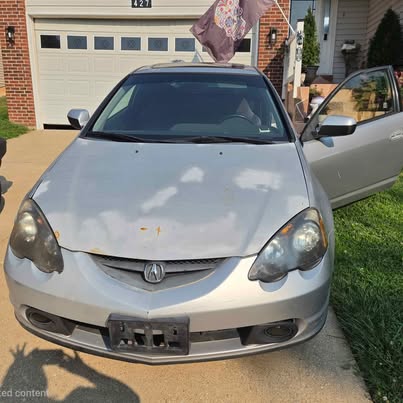
The electrical list is short and mostly cheap: door lock actuators buzz and die (a Honda rite of passage, $150–300 per door fitted), window regulators slow and fail, the blower motor resistor takes speeds off the fan one by one, and headlamp lenses haze yellow — polish them for pennies, replace them for $200–400 a pair. Two safety items need active checking rather than passive noting. First, the Takata airbag recall touched the RSX range: driver and passenger inflators were recalled in waves, and any car whose recall work was never done is carrying a known-dangerous part. Run the VIN through the NHTSA recall lookup before you buy — it takes two minutes — and treat an open airbag recall as a must-fix, free at a dealer, not a bargaining chip. Second, the SRS warning light: a lit SRS lamp on a K-series-era Honda commonly traces to a seat-belt buckle switch or the occupant position detection sensor in the passenger seat, and diagnosis plus parts runs $200–600. A car with the SRS light on has no functioning airbag system until it is fixed, so price it as such — and be suspicious of any car where the SRS bulb appears to have been removed rather than the fault repaired. The bulb must light at key-on and go out; watch for it.
Body, water leaks and modified-car forensics
Structurally, the DC5 shell is strong and rusts far less than the Hondas of the decade before it — galvanised panels and a 2000s build standard saw to that. In the salt belt, though, twenty winters still tell: inspect the rear wheel arches at the lip, the sills behind the front wheels, the front and rear subframes and their mounting points, brake lines, and the floor around the spare wheel well. Surface rust on subframes is cosmetic; perforation at a mounting point is a structural conversation. Panel fit and paint are your accident record, because many RSX crashes were repaired outside insurance. Honda fixed a VIN label to every major panel at the factory — front wings, doors, hatch, bonnet, bumpers. A panel missing its label, or carrying a different VIN, has been replaced. Walk the car and read them all; it takes three minutes and tells you more than any vehicle-history report about where the car has been hit.
Water finds two ways in. The tail-lamp gaskets perish and let rain straight into the spare wheel well — lift the boot floor on every car, because a rusty well or a tide mark is this leak's signature, and the gaskets are a $50–100 fix that owners ignore for years. Sunroof drains block and wet the headliner and A-pillars. Hatch struts weaken until the hatch needs propping — trivial, but a useful tell of general upkeep. The rear wiper, washer and hatch wiring in the hinge gaiter all age; test them.
Then, the forensics — because on this model the previous owners are a system in themselves. Work through a modified or formerly modified car in this order. Cold-air intakes: the popular long-tube intakes place the filter low in the bumper, where it can ingest water in deep puddles and hydraulically lock the engine — ask about intake type on any car with a non-standard filter, and be wary of a car whose engine was "replaced last year" without paperwork. Engine management: a Hondata K-Pro or similar ECU, a non-standard idle, a raised rev limit or disabled monitors means the engine has lived a tuned life; readiness monitors that will not complete will also fail you an emissions inspection in many states, which becomes your problem at registration. Exhausts: a race header deletes the catalytic converter — check a converter is physically present, because replacing one is $400–1,000 and its absence is an emissions failure and, in some states, a legal problem for the seller that becomes yours. Suspension: cut springs, sleeve coilovers and stretched tyres signal a car set up for appearance; rolled and pulled arch lips crack paint and start rust. Interior swaps: Type R Recaros and JDM clusters (reading in kilometres) are common and legitimate if disclosed; a mileage story that does not match the wear on the driver's seat bolster, the steering wheel and the pedals is not. None of this condemns a car by itself — a carefully built, honestly described RSX can be a fine buy. What condemns a car is modification the seller does not mention. On a DC5, you are buying the previous owners as much as the car, and the forensics above are how you interview them.
How to inspect one
Allow an hour, bring a torch, a tyre tread gauge and a phone for the recall check, and arrange the viewing so the engine is stone cold when you arrive — half of this checklist only works cold. A pre-purchase inspection on a lift at a Honda-savvy independent ($150–250) is worth it on any Type S and any car you cannot get underneath.
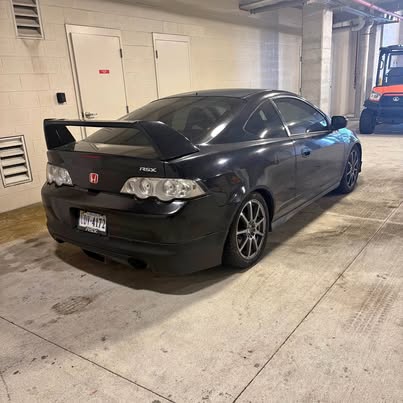
- Paperwork and identity first. Match the VIN on the title to the plate at the base of the windscreen and the door-jamb sticker. Run the VIN through the NHTSA recall lookup on your phone and confirm the Takata airbag recall shows completed. Then walk the car reading the factory VIN labels on the bonnet, both front wings, both doors, the hatch and both bumpers — a missing or mismatched label marks a replaced panel, and the seller should be able to explain each one.
- Cold start, bonnet up. Start the engine from cold and listen at the front cover for the timing-chain tensioner's rattle — one to three seconds of rustle is age; a loud, sustained rattle is the chain job from the problem areas, priced in. Watch for blue smoke at start-up (stem seals) and check the idle as it warms: hunting between 1,000 and 2,000 rpm is the idle air control valve; a rock-steady 750 rpm is what you want.
- Read the engine code. With a torch, find the stamp on the front of the block and confirm it matches the car: K20A3 for a base, K20A2 for a 2002–04 Type S, K20Z1 for 2005–06. Any other code — K24 anything, or a K20A3 in a car badged Type S — reprices the car on the spot. While the bonnet is up, look for the forensics: non-standard intake plumbing, an aftermarket header (and whether a catalytic converter survives downstream of it), a USB cable or non-standard ECU, urethane mounts, and oil weeping from the VTEC spool valve at the back of the head.
- Oil, honestly assessed. Pull the dipstick. Low oil on a Type S is a serious mark against the owner, not just the car — these engines burn oil and die when it is not topped up. Ask how much the car uses between changes and watch how the seller answers. Black, gritty oil on a car "just serviced" ends the conversation about maintenance history.
- The gearbox test — cold, immediately. Drive away gently, then, while the gearbox oil is still cold, make several deliberate, brisk shifts into second and into third. A crunch on the cold 1–2 or a wall, notch or pop-out on third is the synchro wear from the problem areas, at its most honest before warm oil and a seller's recent fluid change can mask it. Repeat the shifts fully warm at the end of the drive; a box that is bad cold and fine warm is still a worn box, merely a cheaper one to live with.
- Clutch and mounts. Note the bite point — high and vague means worn — and test for slip at full throttle in fourth gear from low revs. Pull away briskly once: judder suggests disc contamination, and axle tramp or a clunk on lift-off points to the torn front mount. A full-throttle run to the redline in second and third also proves the VTEC changeover on a Type S: you should feel and hear the step at around 5,800 rpm. No step, no deal at Type S money until a mechanic explains why — a dead VTEC solenoid, low oil pressure or a base engine are the usual answers.
- Steering, lock to lock. Stationary, engine running, sweep the wheel slowly from lock to lock. Groaning or creaking is the rack guide and rack wear; whining is the pump drawing air past its inlet O-ring; notchiness is a rack on its way out. Then rock each front wheel at nine and three o'clock for inner tie-rod play. On the road, the steering should self-centre cleanly and track straight on a level surface with your hands light on the wheel.
- Suspension and tyres. Read all four tyres first: uneven wear across an axle is the suspension's confession — inner-edge wear at the front suggests bushing or alignment trouble, and any car on cut springs or bargain coilovers should be assumed to need alignment and bushing work. Bounce each corner, listen for knocks over broken surfaces on the drive, and check for the speed-related drone of a worn wheel bearing on a quiet stretch.
- Air conditioning and electrics, all of them. Demand genuinely cold air at idle. Work every window, both door locks (listen for the dying actuator's buzz), the sunroof, the blower on every speed, the rear wiper and washer, and the hatch release. At key-on, watch the SRS lamp light and extinguish — a lamp that never lights is a removed bulb and a hidden fault; a lamp that stays on is a system that will not protect you until it is repaired.
- Water and the hatch. Lift the boot floor and the spare wheel: rust, a tide mark or standing water is the tail-lamp gasket leak, small money but a reliable witness to how the car has been kept. Check the hatch struts hold the hatch fully open unassisted. Look at the headliner edges and A-pillar trims for sunroof-drain staining.
- Underneath, or pay for a lift. Subframes and mounting points, sill ends, rear arch lips, brake lines, the exhaust's full length (and the converter's presence), and the front lower control arm compliance bushings with a torch. Salt-belt cars earn their discount here. Perforation at a subframe mount is the closest thing a DC5 has to a walk-away structural fault.
- The history, weighed last. Service records on a K-series car should show oil changes at sensible intervals and, past 150,000 miles, ideally a timing-chain set, a clutch and synchro or fluid history for the gearbox. A thick, boring file of oil changes is the best single predictor of a good RSX. A car with no history can still be right — but it must be priced as the gamble it is, and steps 2 to 6 are how you shorten the odds.
Values
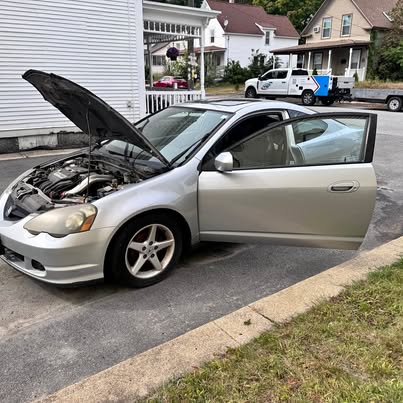
The figures that matter for this series are computed from this site's own listings and recorded sales, and they sit below this guide — the listed-now summary and the market block are refreshed every time the site rebuilds, so use them rather than any number quoted elsewhere. What follows is how to read them.
The RSX market splits cleanly in two, and the split is not really about the badge. The first market is the ordinary used-car market: base cars, automatics, high-mileage Type S cars with needs — bought as cheap, interesting transport and priced against Civics and Celicas of the same age. The second market is the enthusiast market: manual Type S cars, above all unmodified, lower-mileage, late cars, bought by people who know exactly what a DC5 is and how few clean ones survive. The two markets barely overlap, and the same model can sit in either depending entirely on condition, originality and history. That is why the spread within a single model year is so wide, and why headline figures for "an RSX" mean almost nothing until you know which market the individual car belongs to.
Originality is the premium driver, and it compounds. A facelift Type S with its original engine, its factory panels all carrying their VIN labels, no ECU history and a documented service file is the blue-chip RSX, and the enthusiast market prices it accordingly — these are the cars that have begun appearing in collector-auction results alongside the Integra Type Rs they once lived in the shadow of. Each step away from that specification costs real money: a rebuilt gearbox with updated synchros is forgivable and even reassuring, a declared quality modification is a matter of taste, but an engine swap, a missing converter, a respray in a non-factory colour or a rebuilt title moves a car from the enthusiast market back into the transport market at a stroke. Base manuals occupy the honest middle: no collector premium, but a clean, original one is increasingly hard to find precisely because nobody preserved them, and tidy examples have quietly firmed. The automatic base car is the floor of the range and likely to stay there.
Two cautions apply to every figure below. Asking prices in the enthusiast tier are aspirational as often as they are realistic — sellers of clean Type S cars routinely test the market well above achieved levels, and the auction record, where a model trades regularly, is the corrective. And the sample sizes here are small: the RSX was a low-volume car when new and the surviving clean stock is smaller still, so a single exceptional or desperate listing moves a median violently. Read the range, not the headline, and read any individual car against the condition spread: the cheap cars at the bottom of every row share the same story — miles, modification, or both. A mid-priced car with original panels and a boring history file is almost always better value than the cheapest Type S you can find.
Parts and ownership
The RSX is one of the easiest modern classics to keep, because it sits at the centre of the largest Honda tuning and maintenance ecosystem ever built. The K-series engine family powered the Civic Si, the TSX, the Element, the Accord and the CR-V in various forms, and the trade that grew up around swapping and tuning those engines means knowledge, tooling and parts for a DC5 are everywhere. Acura dealers can still supply a surprising amount, Honda specialists are in every state, and nothing about routine RSX ownership requires a marque guru.
Easy: everything service-related — filters, plugs, belts for the accessories, brake discs and pads, clutches, wheel bearings, suspension bushings and links, radiators, alternators and starters — plus the K-series wear parts this guide has priced as it went: timing-chain kits, tensioners, idle air valves, knock sensors, spool-valve gaskets and lock actuators. The used market is deep too, because so many cars were modified or broken for parts: panels, lamps, seats and trim circulate constantly, and a facelift car's 17-inch Type S wheels or a set of A-Spec parts are findable with patience.
Harder and dearer: genuinely clean, unmodified Type S gearboxes (most used boxes carry the same synchro wear as the one you are replacing), K20Z1 engines with provable history, rust-free tailgates and panels in the salt belt, the Bose subwoofer and amplifier components, and original, uncut wiring looms — a loom butchered by a decade of alarm, audio and ECU work is the hidden tax on many modified cars, and sorting one is labour, not parts. The Japanese Type R parts that circulate — Recaro seats, the PRC intake manifold, limited-slip differentials — are worth verifying carefully before paying Type R money, because replicas and lesser-market parts are common.
Running costs. A sorted RSX is cheap, honest transport: the base car returns economy-car fuel figures on regular fuel, the Type S asks for premium and driven gently can still better 30 mpg on a highway run, and insurance sits in line with other coupes of the age and value — though young drivers will find the Type S rated as the performance car it is. Servicing is ordinary Honda servicing at ordinary Honda prices, with two RSX-specific budget lines: keep a reserve for the timing-chain set on any car past 150,000 miles without a record of one, and treat gearbox oil changes with the correct fluid as a fixed ritual, not an optional extra — fresh fluid is the cheapest synchro preservation there is. The first-year catch-up on a neglected car — chain set, clutch, a synchro rebuild deferred into a fluid change and a prayer, mounts, an air-conditioning compressor — is where RSX ownership gets expensive, and it is entirely avoidable by buying the maintained car in the first place. Rust protection is the other ownership habit worth forming in the salt belt: wash the underside through winter, keep the rear arch lips clean, and a DC5 shell will outlast several more owners.
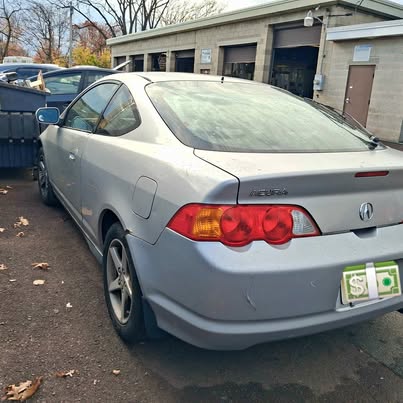
Which one to buy
- The one to have: 2005–06 Type S. The K20Z1, the short final drive, the 17-inch wheels and the facelift's chassis revisions make the late Type S the best RSX to drive and the most collectible. Buy the most original one you can find, verify the engine code, and pay for history.
- The value enthusiast buy: 2002–04 Type S. Ninety percent of the experience for meaningfully less money, with a more relaxed cruise from the longer final drive. The same synchro, chain and forensics checks apply — at this age, condition separates good buys far more than model year does.
- The honest daily: base RSX, manual. Light, economical, understressed and far less likely to have been modified or thrashed than any Type S. A clean base manual is the RSX for someone who wants the car, not the badge — and the market still prices it as the consolation prize, which is your opportunity.
- The bargain: base RSX, automatic. The least loved RSX is a well-made, well-equipped hatchback coupe for Civic money. Test the gearbox's shifts carefully, budget a fluid change, and do not expect it to appreciate — buy it to use it.
- The project to take on: a modified Type S with paperwork. A declared, documented build — quality parts, a known tuner, receipts for everything — can be excellent value, because the market discounts modification even when it was done well. The same car without paperwork is not a project; it is an investigation.
And the rule that overrides all of the above: buy the previous owners, not the specification. On a DC5, engines, synchros, chains and racks are all fixable at prices you can plan for — but a car that has been starved of oil, launched on a worn clutch, tuned without knowledge and crashed without record carries that history in every system at once. The least modified, best documented RSX you can find, in whichever specification your budget reaches, is the right car — and on this model more than most, a boring history file is the most exciting thing a seller can show you.
Listed now
On Classic Listings today: 15 cars are listed here; 0 for sale and 7 marked sold; sold cars average $15,615.
See the 15 RSX cars currently listed.
The market — recorded sales
Recorded-sale figures: 7 recorded sales · median $14,800 · range $7,500 to $23,100 (Oct 2024 – Oct 2026)
Based on 7 recorded sales — too few for a benchmark value.
| Date | Car | Sale price | Source |
|---|---|---|---|
| Oct 23, 2026 | 2003 RSX | $22,500 | Cars & Bids |
| Oct 13, 2026 | 2005 RSX | $17,000 | Cars & Bids |
| Sep 28, 2026 | 2005 RSX | $14,800 | Cars & Bids |
| Jul 14, 2026 | 2002 RSX | $7,500 | Cars & Bids |
| Jul 7, 2026 | 2005 RSX | $14,000 | Cars & Bids |
| Apr 29, 2026 | 2005 RSX | $23,100 | Cars & Bids |
| Nov 24, 2025 | 2005 RSX | $10,405 | Cars & Bids |
Dates are the sale date where the source states one; otherwise the date the sale was recorded here.