
BMW 5 Series buyer's guide
BMW 5 Series -- the model's own buyer's guide: variants, values and what to check.
Years listed: 1992-2001 · Series: E34
# BMW 525iT (E34 Touring) — Buyer's Guide
Overview and history
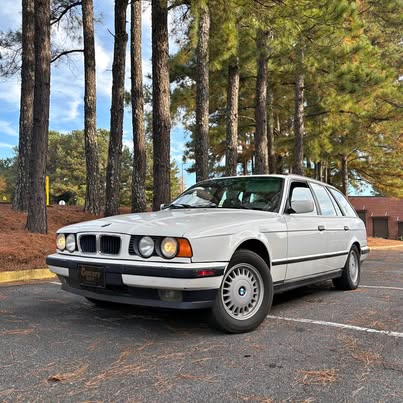
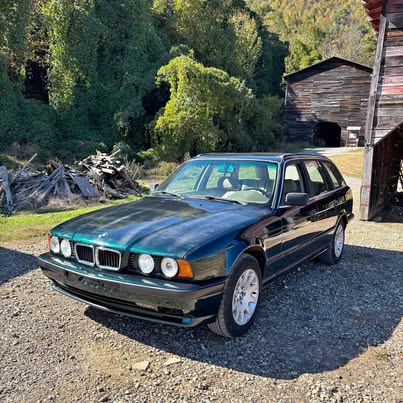
You are looking at the first wagon BMW ever sells as a 5 Series, and still the one many enthusiasts mean when they say "Touring" without qualification. The E34 sedan launches in 1988, but the estate — BMW calls it the Touring, hence the small "T" in 525iT — does not arrive until September 1991, shown at Frankfurt and on sale in the United States for the 1992 model year. That gap matters to you as a buyer: the Touring is not a sedan with a box grafted on by a converter. BMW designs the shell in-house, builds it at Dingolfing alongside the sedan, and engineers the rear half properly — a stiffer rear structure, a split-folding rear seat, a flat load floor, and a tailgate whose glass opens separately from the gate itself, a feature you will use constantly and test obsessively before you buy, for reasons the problem-areas section makes clear.
The car you get in America is deliberately narrow in specification, and that narrowness is your friend. BMW of North America sells exactly two E34 Tourings: this 525iT with the 2.5-litre M50 straight six, and, for 1994 and 1995 only, the 530iT with the 3.0-litre M60 V8. There is no diesel, 518i, 520i, all-wheel-drive 525iX or M5 Touring in the official US range — grey-import M5 Tourings exist in the country now, but they are individual imports of a hand-built car of which BMW M builds just 891, not a variant you cross-shop by accident. Total E34 Touring production across every engine and market comes to 124,656 cars, a small fraction of the generation's run, and the US 525iT is a small fraction of that fraction. BMW never publishes a clean, separate US 525iT sales total that the literature agrees on, and you should distrust any seller who quotes you a precise one; what you can say honestly is that American buyers of the early 1990s buy SUVs and minivans instead, the wagon is a slow seller when new, and survivors are genuinely uncommon today.
What the car does, it does with a particular balance you feel within a mile. The M50 six is smooth in the way only a straight six is smooth, the steering is hydraulic and talks to you, the ride is firm but long-legged, and the load bay swallows furniture, dogs and bikes in a way no E34 sedan attempts. It is also a car from the last years before BMW electronics grow truly complicated — complicated enough to reward inspection, simple enough that you can still understand every system on it from this guide and a workshop manual. Buy the right one and you own the definitive usable classic BMW wagon. Buy the wrong one and you own a cheap shell wrapped around five separate deferred-maintenance bills, each of which the following sections itemise.

The models
The US 525iT range is refreshingly short, and you should learn it whole, because nearly every identity trap with this car consists of a seller blurring one of its three simple boundaries: the VANOS changeover of September 1992, the arrival of the V8 530iT alongside it, and the fact that no US 525iT ever leaves the factory with a manual gearbox.
For its first American year, 1992, the 525iT carries the original M50B25: a 2,494 cc iron-block, aluminium-head straight six with four valves per cylinder, double overhead camshafts, a timing chain and fixed valve timing. From September 1992 production — the 1993 model year in the US — BMW substitutes the M50B25TU, the TU standing for Technische Überarbeitung, or technical revision, centred on single VANOS, BMW's first variable valve timing system. Compression rises slightly and the torque peak arrives lower, but peak power does not change, and anyone who tells you the VANOS car is "the fast one" is selling you a myth the engines section corrects properly. What does change, year by year, is equipment: the 1994 cars gain a passenger airbag, the 1995 cars gain the wider kidney grille previously reserved for the V8 models, gathered side skirts and a tidier, richer standard specification. The huge dual-panel glass sunroof is standard US Touring equipment throughout, as is rear self-levelling suspension — you never need to ask whether a US car has them; you only need to ask whether they still work.
Trim in the American sense barely exists. You choose colours and a short options list — leather upholstery (many cars carry durable vinyl, which wears its age honestly and is no disgrace), heated seats, an on-board computer, a CD changer, roof rails. There is no Sport package or factory limited edition for the US 525iT; badges claiming otherwise are decoration added by a previous owner, and you price the car as the standard Touring it is.
| Model | Years | Engine | Output | Built | Character |
|---|---|---|---|---|---|
| 525iT | 1992 | M50B25, 2,494 cc straight six, fixed timing | 189 hp at 6,000 rpm, 181 lb-ft at 4,700 rpm | US total not separately published; all-market E34 Touring production 124,656 across all engines | The original: simplest engine, no VANOS unit to rattle or reseal, slightly peakier delivery |
| 525iT (VANOS) | 1993–1995 | M50B25TU, 2,494 cc straight six, single VANOS | 189 hp at 5,900 rpm, 184 lb-ft at 4,200 rpm | US total not separately published; see above | The all-rounder: fuller mid-range, later equipment, the deepest pool of survivors |
| 530iT (sibling — not a 525iT) | 1994–1995 | M60B30, 2,997 cc V8 | 218 hp at 5,800 rpm, 214 lb-ft at 4,500 rpm | US total not separately published; V8 Tourings are the minority of US imports | Faster and thirstier, with a different gearbox, different failure modes and a different price conversation — decode the VIN before you pay 525iT money or 530iT money for the wrong car |
Read the "built" column as a lesson in honesty rather than a gap. European production is well documented in aggregate — 124,656 Tourings in total — but BMW's American reporting splits wagon figures inconsistently, and the precise US 525iT count quoted on forums varies because it is reconstructed, not published. Treat any exact figure a seller gives you with suspicion, and treat the car's own VIN plate, build date and engine as the only production facts that matter.
Two further variants exist only as descriptions in adverts, and you will meet both. The first is the manual 525iT. BMW builds manual 525i Tourings for Europe in quantity, but every US-market 525iT leaves Dingolfing with the four-speed automatic; an American car with three pedals is a conversion using sedan parts, full stop. A good conversion is the most desirable driving specification this car comes in, and the engines and gearboxes section tells you exactly how to judge one — but you judge it as a conversion, you check it as a conversion, and you pay for the quality of the work rather than for a factory rarity that does not exist. The second phantom is the "M5-style" car wearing M badges, throwing-star wheels or an S38 engine swap. Swaps are a real and sometimes wonderful part of this car's culture, but a swapped car is a project with a parts list, not a model, and it belongs in a different negotiation.

Engines and gearboxes
The M50B25: the iron-block six in its first form
Every US 525iT starts life with the same basic engine, and it is the right engine for the car. The M50 is BMW's first modern four-valve six: a cast-iron block carrying an aluminium cylinder head, double overhead camshafts driven by a duplex timing chain, four valves per cylinder operated by hydraulic lifters, individual ignition coils for each cylinder, and Bosch Motronic M3.1 engine management with a hot-film air mass meter. In 2,494 cc form — 84 mm bore, 75 mm stroke — it produces 189 hp at 6,000 rpm and 181 lb-ft of torque at 4,700 rpm on a 10.0:1 compression ratio. On the road this is an engine that spins to its 6,500 rpm redline with a hard, clean howl, idles almost silently when the ancillaries are sorted, and asks for revs rather than surfing on torque. In a wagon weighing roughly 3,700 lb with an automatic gearbox, performance is brisk rather than quick — period tests put the sprint to 60 mph in the high eights — but the delivery is so willing that you rarely feel short-changed.
The M50's reputation for durability is earned, and you should understand where it comes from so you can spot the cars that forfeit it. The iron block is massively over-built for 189 hp, the chain drive eliminates the timing-belt roulette of the older M20 engine, the hydraulic lifters eliminate valve adjustments, and the bottom end almost never gives trouble at any mileage you will encounter, provided the engine has had oil in it and has never been cooked. That proviso is the whole story of M50 buying: the engine's enemies are not internal wear but heat arriving from outside, through a cooling system built partly from ageing plastic that lets go suddenly and warps the aluminium head on an iron block that does not warp with it. A single serious overheat is the event that turns a 250,000-mile engine into a parts engine, because the head lifts, the gasket fails between cylinders or into a waterway, and the repair — head off, skim, pressure-test, new gasket set, new head bolts, and the cooling system renewed while access is easy — runs $2,000–3,500 done properly at a specialist, on a car whose seller is often asking not much more than that for the whole wagon. When you test-drive, the temperature gauge is therefore not an instrument you glance at; it is the instrument you watch, and the inspection section gives you the drill.
Day to day, a healthy early M50 starts from cold without extended cranking, settles to a steady idle around 700 rpm with no hunting, and pulls cleanly through the light-throttle zone around 2,500–3,500 rpm where tired coils, a split intake boot or a failing air mass meter first show themselves. Coil packs crack with heat cycles and cause a misfire that feels like a gearbox shudder at light load; a set of six is a $250–450 parts bill and an hour of your time, which is why you distinguish it from transmission trouble before you negotiate, not after. The valve cover gasket hardens and weeps oil onto the exhaust side and into the spark plug wells — budget $150–300 in parts and labour to renew it with the plug-well seals — and the oil filter housing gasket leaks at the front of the block in a way sellers love to describe as a rear main seal, a $30 gasket hiding behind several hours of labour at $400–700 all-in. Neither leak condemns a car; both are evidence about whether the previous owner fixed small things or ignored them, and on this model the small things are the biography of the big ones.
The M50B25TU and single VANOS: what the revision actually does
From September 1992 the engine gains a hydraulic vane unit on the nose of the intake camshaft, driven by engine oil pressure and switched by a solenoid under the Motronic's control: single VANOS. It advances and retards intake cam phasing across a fixed range — it does not vary lift, and it does not work on the exhaust cam; that dual, continuous system belongs to later engines. Compression rises to 10.5:1, peak power stays at 189 hp, arriving 100 rpm earlier at 5,900 rpm, and peak torque edges up to 184 lb-ft but arrives at 4,200 rpm instead of 4,700 rpm, with a visibly fatter curve through the 2,000–4,500 rpm band where an automatic wagon actually lives. On the road the TU car feels less like a faster car and more like a less busy one: it changes down less often on grades, pulls a gear higher out of slow corners, and cruises with a calmer engine note. If you drive both versions back to back and come away convinced the VANOS car has twenty extra horsepower, you have felt torque curve shape, not output — the myth matters because sellers price it, and you should not.
VANOS brings two ownership items the early engine does not have. The first is noise: a worn unit rattles — a coarse, diesel-like clatter from the front of the valve cover, most obvious at idle and on the overrun around 2,500 rpm. The mechanism is wear in the unit's piston seals and bearing play in the vane assembly, not imminent engine death; the engine runs happily for years with the noise, but the correct fix, a rebuilt unit or a seal-and-bearing kit fitted with the cam timing locked and reset, runs $500–1,100 at a specialist. The second is oil delivery: the VANOS feed depends on clean oil and a healthy check valve in the filter housing, so a TU car with a rattling unit and a sludged filler cap is telling you its oil history in one glance. Neither issue should scare you off the later cars, but both belong in your budget from the first viewing, not your surprises file.
One more TU trap catches buyers who shop by model year alone. The changeover is a production date, September 1992, not a calendar-year boundary. For a US purchase you need one visual check, covered in the inspection section: the VANOS unit is a visible bulge on the front of the valve cover over the intake cam, and the plain early cover is flat. Look, and you know which engine you are buying, whatever the advert says.
Gearboxes: the GM automatic, and the manual conversions
Every US 525iT leaves the factory with the same gearbox: a four-speed automatic, BMW designation A4S 310R, built by General Motors in Strasbourg and known in GM's own catalogue as the 4L30-E. It is a conventional torque-converter automatic with electronic control, a lock-up converter clutch, and Sport and Manual modes selected from the console switch beside the lever — the "M" mode holds gears for hills and snow starts rather than turning the car into anything sporting. In period this box is the weak point in the car's character rather than its reliability: four ratios spaced for economy blunt the M50's enthusiasm, and kickdown takes a breath before it arrives. In old age the box develops a specific set of behaviours you can test for. Cold shifts should be prompt and clean; a long, sliding 2–3 change, a thump into reverse after a pause, or a converter that shudders at steady light throttle around 40–50 mph each point at wear or tired fluid rather than adjustment, because there is almost nothing to adjust. BMW sells this generation of automatic under a "lifetime fill" philosophy, which in practice means most cars run far too long on their original fluid; a box that shifts well at 150,000 miles on documented fluid changes at sensible intervals is a genuinely better buy than a low-mileage box on its factory fill, and a fluid and filter service at $250–450 is the cheapest insurance you can buy in the first month of ownership. A failed box is not the end of the car — rebuilt and used units exist — but at $2,200–3,800 fitted for a rebuild, it is a negotiation, not a footnote.
The manual question is where this model gets interesting, and where you must be most rigorous. Because BMW never sells a manual 525iT in America, every three-pedal car you meet is a conversion, and conversions divide cleanly into the ones built from a complete donor and the ones assembled from optimism. The correct donor is the US E34 525i sedan or the E36 325i, which supply the five-speed gearbox — the ZF S5D 310Z in most M50 applications, with the Getrag 260 in earlier sedan donors — plus the pedal box, clutch hydraulics, shifter linkage, front driveshaft section and the matching differential ratio the automatic car does not carry. A complete conversion also deals with the details that separate craft from bodgery: the cruise cut-out on the clutch pedal, the reverse-light wiring, the starter interlock, and the warning lights persuaded to stay dark honestly rather than by removing bulbs. Drive a converted car exactly as you would a factory manual, then add conversion-specific tests: the clutch should take up smoothly with no judder from a mismatched flywheel, every gear should engage from cold, the shifter should not sit at a drunken angle in its gate, and the car should cruise at 70 mph without sounding a thousand revs busier than the automatic car you drove last week. A well-documented conversion by a known specialist adds real value to a 525iT — it is the car BMW should have sold — while an undocumented one is worth no more than the automatic car it started as, minus a discount for every shortcut you find.
Finally, the sibling you must not confuse it with. The 1994–95 530iT carries the M60B30 V8, a five-speed ZF 5HP18 automatic and a completely different risk profile — Nikasil bore wear on early US-fuel cars, valley-pan and intake gasket leaks, and V8 thirst. Count cam covers, decode the VIN, and never let a seller's casual "it's the six, no, the V8, whichever" survive into a bill of sale.
Problem areas
The cooling system: plastic, age and the one overheat that matters
If you read one section twice, read this one. The M50's cooling system is a good design executed partly in materials with a fifteen-year design life, on cars now past thirty. The radiator carries plastic end tanks crimped to an aluminium core, and its upper hose neck — the short spigot the top hose clamps to — grows brittle with heat cycles until it snaps cleanly off, usually under pressure at motorway load, dumping the coolant in seconds. The expansion tank, also plastic, yellows, crazes and splits at its seams. The thermostat housing on early cars is plastic and warps; the water pump on early cars carries a plastic impeller that cracks, slips on its shaft or disintegrates, at which point the gauge climbs while the cabin heater — your earliest warning channel — blows cold. The viscous fan clutch loses its charge and freewheels when the engine needs it most, in traffic; the electric auxiliary fan depends on a resistor pack that fails and takes low speed with it; and every hose and heater valve is the same age as the car. Any one of these failures is survivable if you stop immediately. The destruction happens in the two minutes after you decide to nurse it home: the aluminium head expands faster than the iron block, the gasket's fire rings lose their seal, combustion gas enters the water jacket, the remaining coolant is pushed out, and the head warps beyond a light skim. The M50 does not forgive this once, let alone twice.
Your defence is to treat the cooling system as a single consumable assembly with a known price, and to price every car you view as if it needs it. A full preventive renewal — radiator, expansion tank and cap, water pump with a metal or composite impeller, thermostat and aluminium housing where the car still has plastic, the main hoses, and fresh coolant — runs $700–1,400 in parts depending on brand choices, and $1,200–2,200 fitted at a specialist. Against that, a car with dated receipts for exactly this work inside the last five years is worth real money over an identical car without them, whatever the seller thinks the value lives in. On the viewing, you work the evidence in order: coolant that is clean and at the mark in a translucent tank, not brown sludge in a tank gone opaque; a radiator neck with no hairline cracks and no crystalline coolant crust; a fan clutch that resists a rolled-up newspaper test on a warm engine rather than spinning freely; hoses that are supple rather than rock-hard or spongy; and a heater that blows properly hot at idle, because a heater that fades at idle and returns with revs is describing an airlock, a failing pump or combustion gas in the system, in ascending order of expense. The distinguishing test for the worst case is a chemical block test — the fluid that changes colour in the presence of exhaust gas in the coolant — and on any car with an unexplained coolant history you insist on it, or on a cold-start pressure test, before money moves. A seller who refuses a block test on a car with a new expansion tank and fresh coolant is telling you why the tank and coolant are new.
While you are in the engine bay, deal with the M50's supporting cast of leaks and wear, each cheap alone and demoralising in aggregate. The oil filter housing gasket weeps at the block face; the power steering hoses sweat Pentosin that owners mistake for engine oil; the intake boot cracks on its underside pleats and admits unmetered air, producing the hunting idle sellers blame on "needing a tune-up"; and the idle control valve gums up and sticks, which a careful clean often cures for free. None is a walk-away fault. All of them together, on a car whose cooling system is also original, describe an owner who has stopped spending — and that owner is the most reliable predictor of an expensive first year.
The Touring rear: dual-panel sunroof, tailgate and its wiring
Everything that makes the Touring a Touring lives behind the rear seats, and everything back there is now old in ways the sedan never suffers. Start at the top. The dual-panel sunroof is a vast two-piece cassette running most of the roof's length: the front panel tilts and slides, the rear panel tilts, a single motor and cable drive orchestrates both, and the assembly drains through four tubes that exit at the pillars. Its failure modes layer on each other. The drains block with leaf debris, at which point water that should exit at the sills fills the cassette channels and overflows into the headlining, the A-pillar trims and eventually the footwells — wet front carpets in a Touring are a roof-drain diagnosis until proven otherwise, not a windscreen one. The seals perish and whistle, then leak. The cable drive wears, the panels lose synchronisation, and one panel sits a millimetre proud or refuses its last inch of travel; forcing it bends drive components that were never strong. A cassette that works smoothly, quietly and in sequence, with dry headlining edges and clear drains you test by pouring a cup of water into each corner channel and watching it exit briskly behind the front wheels and ahead of the rear wheels, is worth money. A dead or sealed-shut roof — and you will meet cars whose owners have sealed them with silicone and pulled the fuse, presented as a feature — is a $800–2,000 specialist repair if the cassette is salvageable, and a great deal more if it is not, so price it as broken, because it is.
The tailgate is two closures in one pressing, and you test both as separate machines. The full gate hinges at the roof and lifts on gas struts; the glass hinges separately at the top of the gate, releases from its own switch and the remote, and lifts on its own smaller struts. Struts are consumables — $60–150 a pair for the gate, less for the glass — and a gate that drifts down onto your head is an annoyance, not a diagnosis. The diagnosis lives in the hinges, because every electrical service for the rear passes through wiring looms that flex at the gate hinges each time the gate or glass opens: the rear wiper and washer, the heated rear window, the number plate lamps, the central locking actuator, and the glass release solenoid itself. The conductors work-harden inside intact-looking insulation and fracture one strand at a time, which is why the classic Touring electrical complaint is intermittent and positional — the wiper works with the gate shut and dies half-open, the glass pops open over bumps as a chafed wire shorts to its neighbour, the plate lamps flicker. Sellers blame the wiper motor, the switch or the battery, in that order, and are usually wrong three times. The test that settles it is positional: run the wiper, defroster and lamps, then open the gate in stages and watch for the function that changes with gate angle. The repair is a loom repair at the hinge — $300–800 in labour depending on how much of the harness is rebuilt — and it recurs where a previous repair used stiff wire or crimp joints that concentrate flex at a new point. Budget for it on any car, and never let anyone sell you a wiper motor before the loom has been proven.
Under the load floor, finish the rear with the unglamorous checks. The spare wheel well collects water from failed gate seals and rusts quietly from the inside; lift the spare and look. Damp or tide-marked load-area trims tell the same water story as the headlining, and a dead rear washer is usually its pump or the same hinge loom, not the jet. Work the split rear seat: it should fold flat without a wrestling match, and the luggage cover cassette should retract evenly — a cover that sags has usually lost a spring end, a small part that is increasingly hard to source and disproportionately annoying to live without.
Self-levelling suspension, and the suspension and steering under the rest of the car
US Tourings carry standard rear self-levelling — BMW calls it LAD — and it is the system sellers understand least and describe worst. There are no air springs and no compressor, whatever the advert claims. The system is hydraulic: a tandem power steering pump, sharing Pentosin CHF fluid with the steering, feeds a pair of levelling struts through a mechanical regulating valve linked to the rear anti-roll bar. At the rear sit two spherical accumulators, steel spheres divided by a diaphragm with nitrogen gas on one side; the gas charge is the system's spring assistance and damping reserve. As load goes into the bay, the valve admits pressure, the struts extend, and the car returns to level; as the nitrogen charge bleeds away over the years — it always does — the spheres go solid, and the rear ride turns harsh and crashy over small bumps while the levelling itself may still appear to work. That distinction matters: a car can sit level and still ride terribly, because levelling is the valve's job and ride quality is the spheres'. The bounce test tells you — push each rear corner down hard and feel for hydraulic harshness and a wooden rebound rather than a damped one — and the overnight test tells you more: a car that sinks at the rear over 48 hours has a leak, internal in a strut or external at a pipe, union or the valve, and Pentosin weeping anywhere along the rear pipe runs is visible as dark, oily wetness that never dries.
Costs here reward honesty. Accumulators run $300–600 a pair fitted; a leaking levelling strut is $400–800 a side where available, with rebuilt units from European specialists filling the gap; corroded pipework is labour, $500–1,200 depending on how far the rot has run. The alternative — deleting the system for conventional Touring springs and dampers with the hydraulic loop correctly bypassed at the pump — is a legitimate path at $600–1,200 all-in, and a properly deleted car rides well; what you must not accept is the half-delete, standard dampers fitted while the valve, dead spheres and pressurised pipework remain in circuit to leak at leisure. Whichever state the car is in, check the Pentosin reservoir first: low fluid means steering and levelling are drinking from the same shrinking cup, and a pump run dry is how the whole system dies at once.
The rest of the chassis is pure E34, which means a front end of genuine brilliance and scheduled wear. The front suspension is a MacPherson strut layout with separate upper thrust arms whose large rubber bushes are the most famous wear item on the car: when they tear, the car develops a shimmy under braking from 50–60 mph that owners misdiagnose as warped discs for years, because the braking load is what twists the perished bush and lets the wheel steer itself. The test that separates them is in the inspection section, but the principle belongs here — a shimmy that arrives with light brake pressure at speed and vanishes as you brake harder is bushes until proven otherwise, while a judder through the pedal at all pressures is discs. Lower control arm ball joints, tie rod ends, the centre drag link and the steering idler all wear on the same schedule, and the steering box itself develops centre play that a careful adjustment partially redeems; a full front-end refresh with quality arms, bushes and links runs $900–1,800 in parts and transforms a vague car, which is why so many sellers do half of it — one side, or arms without alignment — and why you ask for the invoice, not the assurance. At the rear, the semi-trailing arm layout rides on a subframe whose mounting bushes tear and let the axle steer passively over bumps, and the small pitman-arm links — the "dog bones" — wear and knock over rough surfaces. Rear wheel bearings drone, and dampers all round are usually a decade past their best. None of this is exotic; all of it is in the price negotiation, itemised.
Rust and body: the honest map
The E34 is one of the better-protected BMWs of its era, with extensive galvanising, and a Touring from a dry state can be astonishingly clean at thirty years old. Rust, when it comes, follows a map you can walk with a torch and a magnet in ten minutes. The jacking points and the sill sections around them crush and then rot, because the factory jack and thirty years of tyre-shop lifts bend the seam and crack the coating; the sill-jack test in the inspection section is the structural check that matters most on this car. Front wing bottoms behind the front wheels trap mud against the sill end and bubble from inside. Door bottoms hold water when their drain holes block, and bubble along the lower edge. The tailgate — unique to your car, expensive to replace, and washed by every mile of road spray — rots along its lower edge, around the glass aperture where the seal chafes the paint, and around the handle plinth; a tailgate with filler in its lower rail is a recurring expense, not a repair. The spare wheel well rusts from standing water, as covered above. Fuel and brake pipes corrode along the floor, and the rear subframe mounting points deserve a look on any salt-state car — structural, hidden and cheap to check while the car is in the air. Surface rust on suspension arms and subframe paint is cosmetic and universal; blistered, holed or previously patched sills, gate and wing bottoms are the negotiation. A magnet that falls off a sill, filler dust in the seams, and fresh underseal applied only where you would look first are the three oldest tricks in the classic-car book, and this model attracts all three precisely because clean shells are worth real money.
Electrics, interior and the small systems that decide whether you love the car
The E34's electrical architecture works by relay and module rather than by network, which makes it diagnosable with a multimeter and patience — and gives it a handful of signature faults. The lamp control module, the LKM, develops cracked solder joints and begins reporting failed bulbs that work, or dropping a headlamp beam intermittently; a resoldered or exchange module at $100–300 sorts it, and the check-control display's bulb warnings should be believed only after you have walked around the car and looked. The general module and relay module under the rear seat govern central locking, windows and the sunroof, and their electrolytic capacitors age out, producing locking that cycles on its own, windows that work in the morning and not the afternoon, and sunroof behaviour that seems possessed; a rebuilt module is a $150–350 exchange. The fusible link in the main battery feed — the battery lives under the rear seat on six-cylinder cars — cracks with age and causes total, intermittent electrical death that owners chase through alternators and ignition switches; it costs almost nothing and should be your first check on any car with a history of cutting out electrically. Power seat mechanisms twist rather than fail outright: the flexible drive cables stretch unevenly, one side of the seat back drives and the other lags, and the backrest reclines into a spiral — the "seat twist" — cured by shortening and re-seating the cables at $200–500 in labour if you do not do it yourself. Door cards delaminate as their vinyl shrinks, a cosmetic fault on nearly every car that is expensive to make perfect and cheap to make presentable; headlinings sag, especially on cars whose roof cassettes have leaked; and the ventilation system adds perishing foam seals, a tired blower final stage that leaves you with one fan speed or none, and heater valves that stick and give you full heat or none on one side. Test every switch, every window, every lock and both seat motors on the viewing, not because any single fault is fatal, but because the count of working small things is the most honest condition report the car will ever give you.
How to inspect one
Work this list in order, on a car that starts cold, with the seller's permission to drive it for at least half an hour including a motorway stretch. Bring a torch, a magnet wrapped in cloth and a notebook; the car will tell you everything, but only in sequence.
- Start with identity, before you fall for anything. Decode the VIN plate and the door-jamb build sticker, confirm the build date against the September 1992 VANOS changeover, and confirm the car is a 525iT and not the V8 530iT — count the cam covers under the bonnet and check the engine designation matches the paperwork. A mismatch here ends the inspection or restarts the negotiation, your choice, but it never gets ignored.
- Open the bonnet and look at the front of the valve cover. A pronounced bulge over the intake cam means the VANOS TU engine; a flat cover means the early M50B25. Then read the cooling system as the problem areas teach: coolant colour and level, radiator neck, expansion tank condition, hose suppleness, and any crust that betrays a past leak.
- Start the engine from stone cold and stand at the front. Listen for VANOS rattle on the TU engine, timing-chain clatter that should vanish within seconds as the tensioner fills, and any deep knock that does not. Watch the temperature gauge begin its climb and note how long the idle takes to settle evenly.
- Test the heater early and at idle. Demand full heat with the engine warm and idling; heat that fades at idle or a gauge that creeps in traffic is the cooling system confessing, and it outranks everything else on your list. Leave the car idling while you do the next steps and watch that gauge.
- Work the dual-panel sunroof through its full sequence, twice. Both panels should move smoothly and seal flush. Pour a cup of water into each drain corner and confirm it exits briskly at the sills; check the headlining edges and A-pillar trims for tide marks while you wait.
- Stand at the rear and test the tailgate as two machines: the glass on its own release, then the full gate. Run the rear wiper, washer, heated window and number plate lamps, then repeat with the gate half-raised — any function that changes with gate angle convicts the hinge wiring looms described in the problem areas, whatever the seller says about wiper motors.
- Check the self-levelling suspension cold, then again after the drive. The car should sit level side to side; bounce each rear corner and feel for the wooden harshness of dead accumulator spheres. Look underneath for Pentosin weeping along the rear pipework, and check the shared power-steering reservoir level under the bonnet.
- Do the sill-jack test. Raise the car at each factory jacking point in turn, or better, get it on a lift: the sill should take the car's weight without cracking, crunching or flex, and each door should still open and close cleanly with that corner lifted. A sill that crunches has already given you its answer.
- Walk the rust map with torch and magnet: sill ends, front wing bottoms, door bottoms, tailgate lower rail and glass aperture, spare wheel well with the spare lifted out, and the floor pans from underneath. Separate cosmetic surface rust from blistered or patched structural metal, and write down which you find where.
- Drive the car and hunt the thrust-arm shimmy. Brake lightly from 55–60 mph: a shake through the steering that light braking triggers and firmer braking calms points to perished thrust-arm bushes, while pedal judder at every pressure points to discs. Note steering centre play, any wander over bumps from tired rear subframe bushes, and knocks from the rear pitman-arm links.
- Test the gearbox as the car will live with it. On an automatic, demand prompt cold shifts, a clean 2–3 change, no pause-and-thump into reverse, and no converter shudder at a steady 40–50 mph cruise. On a converted manual, work every gear from cold, feel the clutch take-up for judder, check the shifter sits true in its gate, and confirm motorway revs are sane — then check the clutch cruise cut-out and reverse lights work, because those are the fingerprints of a careful conversion.
- Finish with the small-things census and the paperwork, together. Every window, lock, seat motor and fan speed; the check-control warnings verified against the actual bulbs; then the service file, where you look for dated evidence of a cooling-system renewal, gearbox fluid changes and accumulator or loom repairs — the three bills this model reliably generates. A thick file covering those three beats a low odometer reading every time.

Values
You read this market differently from the sedan's, and the difference starts with supply. The Touring is the scarce body style bought by the most committed owners, which produces a small market with a wide condition spread and few truly comparable sales in any season. Two cars that look identical in a listing thumbnail — same year, same colour, similar odometer readings — routinely sit at opposite ends of the value range once you stand in front of them, because on this model the money is never in the headline specification. It is in the three histories the inspection section teaches you to verify: whether the cooling system has been renewed as an assembly or patched piece by piece, whether the Touring-specific systems at the rear — the roof, the gate looms, the self-levelling — work today rather than worked at some point in the past, and whether the shell is honestly clean along the sill and tailgate map. A car with all three histories right is the expensive car, and it is usually the cheap one to own. A car with none of them right is the cheap car, and it is usually the expensive one.
Within that spread, the premiums arrange themselves predictably. A well-executed manual conversion carries the clearest premium, because it transforms the driving car and good conversions are scarcer than Tourings — but the premium belongs to documented conversions from complete donors, and it evaporates, correctly, when the work is undocumented or half-finished. The VANOS cars carry a modest premium over the 1992 cars, driven more by later equipment and younger average condition than by any performance difference; do not let a seller price the valve cover as if it were a different engine, because the engines section shows you it is not. Colour moves money only at the margins, and a genuinely rust-free shell from a dry-climate life carries a premium that survives every other negotiation, because it is the one thing on the car you cannot buy later at any sensible cost.
The project-versus-driver gap is where this market most often misleads newcomers. A non-running Touring looks like the same bargain a non-running sedan would be, and it is not: the wagon adds its own recommissioning list — roof drains and seals, gate looms, levelling hydraulics that have sat still for years — on top of the standard cost of waking any old car, and the Touring-only parts are the slowest and dearest to source. Price a project as a shell plus an engine plus a list, never as a driver minus a discount. At the other end, be honest about the ceiling: the 530iT and the imported M5 Touring occupy the glamorous end of E34 wagon money, and a standard 525iT trades in its own bracket beneath them — which is precisely why the best six-cylinder Tourings remain buyable by people who intend to use them. Negotiate from the inspection list, item by item. Sellers of these cars are usually enthusiasts who know exactly what they have not fixed, and the negotiation that works prices the car in front of you, not the rarity story around it.
Parts and ownership
You run a 525iT today on a parts ecosystem that is better than the car's rarity suggests, because the wagon shares almost everything ahead of the rear seats with one of the most common classic BMWs in the world. The sedan's production volume carries the mechanical catalogue with it: M50 service parts — filters, coils, gaskets, sensors, water pumps, radiators — are available from BMW, from the original-equipment suppliers, and from a competitive aftermarket, at prices that make a mockery of the car's premium image. A full service is a $120–250 parts exercise at home; brake discs and pads are $250–450 an axle set in quality brands; the front suspension refresh every car needs is $900–1,800 in parts and the single best money you can spend on a tired example. BMW Classic still supplies a surprising depth of E34 catalogue, breakers in the US and Europe hold deep sedan stock, and the knowledge base — manuals, wiring diagrams, twenty-five years of forum archives — is as complete as for any car of the era.
The Touring-specific parts are where you plan rather than assume. Tailgate glass, gate seals, the luggage cover cassette, load-area trims, the sunroof cassette and its seals, levelling struts and accumulators, and rear lamp units are wagon-only, lower-volume and increasingly the preserve of breakers and European stockists; none is unobtainable, but lead times stretch and prices harden, and a car with its Touring hardware complete and working is worth its premium for this reason alone. Accumulators remain available at $150–300 each, with rebuilt levelling struts sourced from European specialists when new stock dries up; sunroof seals reward ordering before you need them rather than after a leak has stained a headlining. The ownership rule follows directly: when you find a Touring-specific part your car will need at a fair price, you buy it and shelve it.
You want an independent BMW mechanic who knows the E34 era — not merely a modern BMW shop whose diagnostic world begins with the next generation — and you budget for the car as a classic that happens to be usable daily: an annual service, a rolling programme of the renewals this guide itemises, and a reserve for the one system a year that asks for real money. Fuel consumption in mixed use sits in the low twenties per gallon for the automatic car, insurance on classic terms is straightforward, and community support — the BMW CCA, the E34 forums and registries, the wagon groups where conversion knowledge lives — is deep and genuinely expert. If you want a wagon that asks nothing of you, buy a newer one; if you want the last wagon BMW builds to this standard of simplicity, you are already looking at it.

Which one to buy
- The all-rounder: a 1993–1995 VANOS car with a documented cooling-system renewal, working roof, gate and levelling, and a service file that names dates rather than telling stories. This is the deepest pool, the easiest ownership and the car most buyers should hold out for.
- The purist's pick: a clean 1992 non-VANOS car. You give up nothing in performance that matters, you delete the VANOS unit from your worry list entirely, and the early cars reward the buyer who values simplicity over equipment.
- The driver's car: a manual conversion built from a complete sedan donor, with the paperwork to prove it and the detail work — cruise cut-out, reverse lights, correct differential — finished properly. Drive it against an automatic car before you pay the premium, and pay for the conversion's quality, not its story.
- The value buy: a cosmetically tired but structurally honest automatic car with its Touring systems working and its cooling history documented, bought at project money and improved as you drive it. The shell and the systems are the value; paint and door cards are negotiable.
- The car to walk away from: any Touring with a crunched sill on the jack test, a sealed-shut sunroof described as a feature, or a seller who refuses a cold start, a block test or a lift. Rarity does not repair structure.
The overriding rule: buy the shell and the systems, in that order — a rust-free Touring with a working roof, gate and levelling is the right car even with a tired engine, because everything mechanical on a 525iT can be renewed with sedan parts and known money, while the wagon's own body and hardware cannot.
See the 13 5 Series cars currently listed.
What they sell for: 5 Series sale prices.