
BMW 5 Series buyer's guide
BMW 5 Series -- the model's own buyer's guide: variants, values and what to check.
Years listed: 1994-2001 · Series: E34
Overview and history
You are looking at the smallest V8 BMW sold in America in the 1990s, and one of the most misunderstood badges in the whole 5 Series story. Read the badge carefully, because 530i means three different cars depending on where and when you find it, and only one of them is the subject of this guide. This guide covers the American-market E34 530i of 1994 and 1995: a 3.0-litre V8 car, built as a sedan and as a Touring wagon, offered with a five-speed manual gearbox or a five-speed automatic. Every car in the pool this guide was prepared from is one of those cars — five E34s, four from 1994 and one from 1995, three of them Tourings and two of them sedans — so the scope here is deliberately narrow and honest.
The cars this guide does not cover deserve a paragraph, because sellers blur them into the same listings. The first 530i is the American E12 of 1975 to 1978, a fuel-injected 3.0-litre six built around the M30 engine, famous for its thermal reactors — exhaust aftertreatment chambers that ran extremely hot, cracked manifolds and cooked underbonnet components. It shares nothing with the E34 except the badge. The second impostor is closer: in Europe, the early E34 530i of 1988 to 1990 is also a six-cylinder car, using the last development of the M30 — a European-import E34 wearing this badge is a straight-six until you prove otherwise. BMW also reuses the name on six-cylinder cars in the 2000s. None of those cars has the engine, problems or buying logic you are about to read. When a listing says 530i, your first job is to establish which 530i it is — and on an American 1994 or 1995 car, the answer is settled by lifting the bonnet and counting to eight.
Why does the V8 car exist at all? By the early 1990s BMW wants a V8 across the range to answer Mercedes-Benz and the Japanese luxury brands, and develops the M60, an all-alloy, quad-cam, 32-valve V8 in two sizes: 3.0 litres for the 530i and 4.0 litres for the 540i and 740i. The E34 is in its last years — production runs from 1988 to 1996 — and the V8 cars arrive for 1994 as a final enrichment of the range rather than a new beginning. That timing shapes everything about buying one now: a mature, well-understood shell, a short-run V8 fitted to a small minority of the cars built, and one historic engine-block controversy that still decides value today. You are buying the cheapest route into a modern-feeling, V8-engined, rear-drive BMW of exceptional build quality — provided you buy the right block, in the right body, with the cooling system and front suspension already sorted or honestly priced.
The character is what keeps people loyal. The E34 is the last 5 Series designed in the upright, slim-pillared BMW idiom: four round headlamps, deep glass, and a cockpit with clear orange-lit instruments, superb seats and materials that wear their thirty years better than almost anything built since. The V8 changes the six-cylinder car's voice and manners more than its speed — a 530i is plainly slower than a 540i, but smoother, with a muted burble and effortless mid-range torque. In the Touring, it gives you something rarer still: a V8 wagon with a dual-panel sunroof and self-levelling rear suspension, from the brief period when BMW of North America would sell Americans such a thing at all.
Correct the founding myth now, because it comes up in every conversation about this car: the M60 V8 has no timing belt and no VANOS variable valve timing. It drives its four camshafts by chain, with fixed valve timing. A seller describing a belt service or a VANOS rattle on a 530i is describing a different BMW engine and telling you they do not know the car in front of you. The chain is rarely the problem on an M60; the block material, cooling system, intake sealing and the valley between the heads are where your attention belongs.

The models
The American range is refreshingly small. For two model years, 1994 and 1995, you can buy a 530i sedan or a 530i Touring, each with the same M60B30 V8, each with a five-speed manual as the sporting choice or a five-speed automatic as the volume choice. There is no coupe, no convertible and no factory six-speed car. That last point matters: the store data behind this guide records two cars described with six-speed gearboxes, and BMW never built one. A six-speed E34 530i has received the Getrag six-speed from a 540i as a conversion — popular and, done properly, desirable — or its listing data is simply wrong. Either way, you verify it on the ramp and in the paperwork, never from the listing text. The same scepticism applies to any 530i described as a 4.0: the badge is a cheap plastic part, and the engine under the bonnet is the identity.
| Model | Years | Engine | Output | Built | Character |
|---|---|---|---|---|---|
| 530i sedan | 1994–1995 | M60B30 3.0 V8, 32-valve | 215 hp | Not published as a clean, separately verifiable US figure; a small minority of late E34 production | The discreet V8 saloon: manual cars are the enthusiast find, automatics the common car |
| 530i Touring | 1994–1995 | M60B30 3.0 V8, 32-valve | 215 hp | Not published as a clean, separately verifiable US figure; scarcer than the sedan in US service | The V8 wagon: self-levelling rear suspension and dual-panel roof as standard theatre, and standard liability |
A word on that Built column: BMW production information does not give a clean, publicly verifiable split of American 530i production by body and gearbox worth printing as a precise figure, and advert numbers vary too much to quote as fact. What is reliable is the ordering: the automatic sedan is the most common configuration, the manual sedan uncommon, the Touring scarce in either gearbox, and the manual Touring the car other enthusiasts ask you about at fuel stations. Treat any seller's precise production claim — "one of 300" and its cousins — as marketing until documentation supports it.
The sedan is the straightforward car: a conventional boot, coil-sprung rear suspension, and the full E34 saloon experience — quiet, solid and slightly formal. It is the easier car to own because it lacks the Touring's signature complications, and the easier car to find unmodified, because wagons attract projects. If your aim is simply the small M60 in the best E34 you can find, start with sedans and let a Touring prove it deserves to displace one.
The Touring is the charismatic car, and the pool behind this guide leans into it: three of the five cars are wagons, all presenting as enthusiast cars rather than untouched originals. The wagon gives you a useful load bay with a separately opening rear glass hatch, a standard dual-panel panoramic sunroof, and self-levelling rear suspension — BMW's LAD system, which holds the tail at height under load using hydraulic accumulators fed from the power-steering circuit. Every one of those features is a pleasure when it works and a bill when it does not, and the problems section treats each in detail. Tourings also lived the harder life in American service: family cars, dog cars and ski cars, bought by people who used the space. A Touring with a clean load bay, a working roof and a level stance at rest has been looked after. One sagging at the rear, with a stained headlining and a tailgate that only opens one way, is showing you its maintenance history before you have turned the key.
Trim follows late-E34 American practice rather than named sub-models: leather, electric front seats, automatic climate control on most cars, airbags, anti-lock brakes and an on-board computer are the furniture to expect, with heated seats and a CD changer as the usual options. For 1995 you also see the wider kidney grille and revised bonnet the last E34s wear — a useful dating cue in photographs, though never a substitute for the build date on the door jamb label. Do not pay a premium for a trim badge. Pay it, if at all, for the manual gearbox, the Touring body, documented engine-block replacement, and condition you can verify.
One more identity trap, the most expensive in this guide. Because the 3.0 and 4.0 M60 engines are externally near-identical and the 540i is the more valuable car, the 530i world contains both honest 4.0-litre swaps wearing 530i badges and dishonest badge swaps wearing 540i claims. Neither is settled by the badge, the engine cover or the seller's word: the engine and casting numbers settle what the engine is, and the VIN settles what the car left the factory as. A documented M60B40 conversion in a tidy Touring can be a wonderful car bought knowingly at 530i money. The same car sold as an original 540i is a fraud problem, not a bargain.

Engines and gearboxes
One engine does all the work in this guide, and one controversy dominates it. Learn the engine first as a piece of engineering, then learn the block question until you can perform the check yourself, because on a 530i the block is the value.
The M60B30: a small, sophisticated V8
The M60B30 is a 2,997 cc V8 with an alloy block and heads, four chain-driven camshafts, four valves per cylinder with hydraulic lifters, and Bosch Motronic fuel injection with a hot-film air mass meter. In American tune it produces 215 horsepower at 5,800 rpm and 214 lb-ft of torque at 4,500 rpm. Those figures explain the car's personality: the little V8 loves to rev by V8 standards, makes its best progress in the upper half of the tachometer, and is sweetest held between 3,000 and 6,000 rpm in a manual car — which is why the gearbox choice transforms it, and why a gently driven automatic can feel merely adequate while the same engine with a manual feels alive. It is not a lazy, torque-rich motor in the American mould, and judging it by a low-speed, top-gear pull misjudges it.
In service, the top end of the M60 is fundamentally durable: the chain drive lacks the guide-rail appetite of the later M62 V8, hydraulic lifters stay quiet on clean oil, and outright mechanical failure of a maintained engine is uncommon. What the M60 does instead is leak, ingest unmetered air, and cook its ancillaries. Valve cover gaskets harden and weep oil into the spark plug wells. Intake gaskets and idle-control plumbing admit air the mass meter never measured, and the engine answers with a lumpy idle owners chase for months. The crankcase ventilation plate at the back of the intake manifold — the PCV plate, with its internal diaphragm — splits and produces rough idle, whistling noises, oil consumption and, in advanced cases, blue smoke that looks exactly like worn bores. That resemblance matters, because the cheap plate and the catastrophic bore wear present as cousins, and the tests that separate them are set out below.
Two underbonnet checks belong to this engine alone. The first is the oil pump: on early M60s its mounting bolts can work loose — in the worst cases backing out into the sump — and the first symptom is flickering oil pressure at idle. Any 530i with an oil-pressure story needs the sump dropped and the bolts checked and thread-locked before it needs anything else; roughly $400–800 at an independent, and cheap insurance on any car of unknown history. The second is the valley pan, the cover sealing the coolant valley between the heads, under the intake manifold. Its gasket fails with age, weeping coolant that drips from the back of the engine and masquerades as a rear main seal or head gasket leak. Replacement means removing the manifold, which is why the sensible owner does the valley pan gasket, intake gaskets, PCV plate and every valley coolant hose as one job: budget $900–1,800, against the false economy of paying the same manifold-off labour three times in three years.
Nikasil and Alusil: the block question
Now the subject that defines this model. The M60's cylinder bores are not fitted with conventional iron liners. On the original production blocks, the bore surface is Nikasil — a nickel and silicon-carbide coating applied directly to the alloy block. Nikasil is an excellent bore surface in most of the world. In the United States in the early 1990s, however, much of the petrol on sale carries a high sulphur content, and sulphur in combustion attacks the Nikasil coating. The coating erodes, compression falls, and the engine develops the syndrome owners still describe with dread: rough and hunting idle, hard starting, oil consumption, loss of power, and eventually an engine that will not hold a clean idle at all because one or more cylinders can no longer seal. BMW's answer, after considerable pressure, is a warranty programme that replaces failed Nikasil blocks with Alusil blocks — an alloy in which silicon particles in the bore surface itself do the work, immune to the sulphur problem — and later production engines are built in Alusil from the start. BMW also extends engine warranty coverage on the affected cars to six years or 100,000 miles, a programme that is long expired and relevant to you now only as history to look for in a car's paperwork.
Understand what this means today, because the folklore gets it wrong in both directions. The first error is panic: American fuel sulphur levels have fallen dramatically since the 1990s, so the chemical attack that killed these blocks in period is largely historical. A Nikasil engine that starts cleanly, idles smoothly and passes a compression or leak-down test today has demonstrably survived; walking away from an excellent car on the word Nikasil alone is folklore, not engineering. The second error is complacency: some engines were replaced with second-hand units of unknown origin, and some cars had their symptoms masked and sold on. A seller's "it's the good block" is worth nothing in either direction. You establish the block by number and by test.
The number check is physical. The block casting number is stamped on the side of the block, low on the right-hand side in the region of the starter motor, and you read it from underneath with a torch and, ideally, a phone camera, on a car that is safely raised. The casting numbers most widely documented for the M60 are 1725970 for the Nikasil block and 1725963 for the Alusil replacement and later production block. Treat those digits as your primary identifier, clean the area before you conclude a number is absent, and photograph what you find: a seller who knows these cars will not be offended, and a photograph protects you both. The test check is functional, and it outranks the number when the two disagree, because blocks have been swapped in both directions over thirty years. A compression test across all eight cylinders, followed by a leak-down test on any low cylinder, tells you the truth about bore sealing that no casting number can: even, healthy compression with low leak-down past the rings means the bores seal, whatever the block is made of. Low compression that improves dramatically with a spoonful of oil down the plug hole points to bore and ring sealing; low compression unchanged by oil points to valves. On a V8 with a suspected bore problem, pay for the leak-down test before you pay for the car. It costs a fraction of one percent of an engine replacement, which — sourced used, swapped and refreshed — runs into the $3,500–7,000 range all-in, and rather more if you insist on rebuilding what you have.
One more distinction, because it separates the two great M60 idle-and-smoke causes. A failed PCV plate makes a healthy engine idle badly and smoke; a failed bore makes an engine idle badly and lose compression. The compression test divides them: strong, even compression with a rough idle is an intake, ignition or PCV problem, fixable for hundreds; uneven compression confirmed by leak-down hissing into the crankcase is bore wear, a thousands problem. Never let anyone sell you an ECU, injectors or a "tune" for a 530i that has not had a compression test. The test is the diagnosis.
Gearboxes: the five-speeds, and the six-speed that never was
The manual gearbox is a five-speed unit from BMW's Getrag and ZF ecosystem of the period, conventional, strong, and matched to a dual-mass flywheel and a hydraulic clutch. Its virtues are a precise, mechanical shift and ratios that let the little V8 live in its happy band. Its age faults are equally conventional: worn synchromesh on second gear when rushed cold, a tired shift linkage that makes the gate feel vague long before the gearbox itself is worn, a release bearing that rattles until you press the pedal, and a dual-mass flywheel that chatters at idle and judders on take-up as its damping wears. A linkage refresh — a few hundred dollars — transforms most "worn gearbox" cars. A clutch and dual-mass flywheel together are a $1,400–2,400 job at an independent, and a car that needs both needs them priced into the deal.
The automatic is the ZF five-speed, BMW's A5S 310Z, the 5HP18 in ZF's own nomenclature: a torque-converter automatic with electronic control and adaptive shift logic. It suits the sedan's relaxed brief and is the gearbox most American 530is have. It was sold in the era of "lifetime fill" fluid, a claim to treat as period marketing rather than engineering: the survivors that shift best today are the ones whose fluid and filter were changed anyway. A healthy 5HP18 shifts cleanly when cold, does not flare between ratios and engages reverse promptly. Warning signs, in escalating order: delayed engagement when cold, a flare on the two-to-three shift, shuddering at cruising speed as the lock-up clutch struggles, and any transmission programme warning in the check control. Rebuild or replacement runs roughly $2,500–4,500 fitted — a value-defining figure: an automatic 530i with a sick gearbox is a parts-priced car, however shiny the paint.
And the six-speed. BMW fits the Getrag six-speed manual to the 540i, not to any factory 530i. Because the swap uses factory parts, converted cars exist and circulate, and two of the five listings behind this guide claim six speeds. Judge such a car as a conversion: ask whose flywheel and clutch it uses, whether the driveshaft, linkage and differential are the matching 540i pieces, and who did the work. A documented conversion by a known specialist is a feature; an undocumented six-speed is a question the seller must answer with evidence, and "it came like that" is not evidence.

Problem areas
An E34 530i rarely fails in one dramatic place. It declines by accumulation — a cooling system at the end of its life, a front suspension quietly out of bushes, an intake that leaks air at four points at once — and the art of buying one is pricing the accumulation honestly. Work through the systems in this order: engine ancillaries and cooling, suspension and steering, body and rust, interior and electrics. The block question from the engines section stands above all of it.
The cooling system, intake and engine ancillaries
Treat the cooling system as a single consumable assembly with a service life, not as parts to replace one failure at a time. The radiator's plastic end tanks and neck embrittle until the neck snaps or the seam weeps, characteristically on the first hot day of summer. The water pump, thermostat housing and expansion tank age in the same way, the viscous fan clutch loses its drive so the fan freewheels when the engine most needs airflow, and the electric auxiliary fan dies silently through its resistor pack. The mechanism of destruction is always the same: a marginal system holds temperature on a test drive, fails under sustained load in your ownership, and an alloy V8 that overheats warps heads. So your rule is documentary and physical: receipts showing radiator, pump, thermostat, tank and hoses replaced as a programme in recent years, and under the bonnet, clean coolant, no crust at hose joints, no stop-leak residue, and a fan clutch that resists when hot and stopped. A full preventive refresh runs roughly $900–1,600 fitted. It is the best money you can spend on this car, and a seller who has just done it has saved you from spending it.
The intake and sealing faults present as an idle tremor you can feel through the seat and see in the tachometer needle, hunting when cold, a stumble as you open the throttle, or a stall as you dip the clutch for a junction. The causes, in test order, are split intake gaskets and hardened sealing rings, perished vacuum and idle-control hoses, the failed PCV plate diaphragm, and tired coils or oil-fouled plugs from leaking valve cover gaskets. The distinguishing tool is a smoke test: a workshop smoke machine fed into the intake reveals every unmetered-air leak as a visible wisp, and it is the most cost-effective diagnostic hour you can buy on an M60, typically $100–200. Budget $600–1,200 for a proper intake reseal with the PCV plate. Valve cover gaskets alone are a $350–650 job, worth doing for the plug wells alone, because oil standing in a well kills the coil above it and gives you a misfire that moves from cylinder to cylinder as coils are swapped in confusion.
Ancillaries finish the picture. The power-steering system also feeds the Touring's self-levelling suspension, so leaks matter twice: inspect the pump and the high-pressure hose, which weeps at its crimps, and note that LAD cars use the specific hydraulic fluid marked on the reservoir cap — the wrong fluid swells the wrong seals. A charging light glowing faintly at idle, or a new battery in a car with no other recent work, is a question, not an answer. An air-conditioning system that blows cold but has no service history should be budgeted as a $600–1,200 recommission rather than assumed healthy. Centre and rear silencers rot from the inside on short-trip cars, and a booming note the seller calls sporting is often simply a holed box — listen from cold, from outside the car.
Front suspension, steering, rear axle and the self-levelling Touring
The E34 front suspension is a MacPherson strut design with a BMW twist: each side uses two lower links, a control arm and a thrust arm, the latter angled to resist braking forces and located by a large fluid-filled bush. That thrust-arm bush is the most famous wear item on the car. When it perishes, the wheel moves fore and aft under braking, and the car develops the signature E34 shimmy — a steering-wheel shake in a speed band around 50 to 60 mph, worst under light braking, fading as you accelerate through it. Owners blame wheel balance for years. The settling test costs nothing: brake gently from 60 mph and feel for shake absent at steady speed, then inspect the bushes with a pry bar. A pair of thrust arms or bushes is a $400–800 job fitted and aligned, and it transforms the car. Ball joints, anti-roll bar links and track-rod ends wear in the same window, and the honest assumption on an undocumented car is that the whole front end wants a refresh: budget $1,200–2,200 for arms, bushes, links and alignment done as one programme.
Steering is by recirculating-ball box, not a rack. A small amount of free play at the straight-ahead is design, not defect; a quarter-turn of vagueness is not. The centre drag link and idler arm bush wear and add looseness no adjustment of the box will cure, and an over-tightened box feels notchy and wears faster. On the test drive feel for play before the wheels answer, notchiness at centre, and groaning at parking speeds that points to fluid, pump or air. The rear semi-trailing-arm suspension is durable, but its subframe bushes and the small pitman-arm links — the dog bones — perish and let the rear axle steer the car gently over bumps: if the tail wags once after a lane change or a crest, suspect those bushes before the dampers, which are in any case usually tired by now on any car without receipts.
On the Touring, add the LAD self-levelling system, and learn its stance test: the car should sit level at rest after standing overnight. A tail that sits low in the morning and pumps itself up after starting points to leaking accumulator spheres — the nitrogen-charged balls whose bladders fail with age, after which the ride also turns harsh because the gas spring is gone — or a weeping levelling valve. A tail that sits high and rides like a truck points the other way. Accumulators are a known consumable, roughly $400–700 the pair fitted. Many Tourings have had the system deleted for conventional springs and dampers. A deletion is not automatically a defect — done completely, with the pump circuit properly addressed, it drives well — but it must be disclosed, and an originality-minded buyer prices a deleted car below one whose LAD works. Look underneath: the accumulators and valve are visible, and their absence answers the question.
Brakes are conventional discs all round; your concerns are age, not design — perished hoses, seized caliper pins, corroded hard lines over the rear subframe, and decade-old fluid. A car that stops straight and hard from 60 mph with a firm pedal has passed the test that matters; the fluid change it needs costs under $150.

Rust, body and the Touring's roof and tailgate
The E34 is one of the better-protected BMWs of its era, with galvanised panels in key areas. Do not let that reputation lower your guard: thirty years defeats factory protection in predictable places, and plastic trim hides the worst of them. The sills wear full-length covers concealing the jacking points and structure behind a tidy face: inspect from underneath at the pinch welds and jack points, press along the sill bottom edge for the crunch of filler, and open each door to check the bottom edge and inner skin, where E34 doors bubble from the seam outward. Front wings rust behind the wheel and at the bottom rear corner; rear arches bubble at the lip, especially on Tourings that have lived loaded; the fuel filler area, the sedan's boot floor and spare-wheel well, and the Touring's tailgate lower edge all reward a torch and a magnet. A magnet that holds weakly over an arch or sill is finding filler, and filler is a price conversation. Proper sill and jack-point welding runs roughly $800–2,000 a side depending on how far the rot has travelled once the cover comes off — and a seller who will not let you look underneath is asking you to buy the one part of the car you cannot judge from photographs.
Water is the Touring's second enemy, arriving through the roof. The dual-panel sunroof drains through four hoses that block with leaf debris until rainwater overflows the cassette and runs down the pillars into the footwells and headlining: staining at the headlining edges, damp front carpets and a musty smell on a dry day are the signatures. The mechanism — cables, guides, motor — wears and jams, usually with the front panel part-open, and repairs run from a drain clearing for a few hundred dollars to a cassette-out rebuild for $1,000 and more. Test the roof through its full travel twice and listen for strain. The sedan's single roof drains by the same principle. On both bodies, lift the boot or load-bay floor: water in the well means rear light, tailgate or rear screen seals, and rust follows water with complete reliability.
The Touring tailgate fails electrically in a way that imitates five separate faults. Its wiring — wiper, washer, heated screen, locking, plate lights, glass release — passes through a harness at the hinge, and thirty years of opening and closing break the conductors inside their insulation. Symptoms arrive one at a time: a wiper that parks where it likes, a glass hatch that will not pop. Repair is by splicing in new wire lengths, a $300–700 job at an independent or an afternoon of skilled DIY. Test every tailgate function individually, including the separately opening glass, and treat any dead function as harness until proven otherwise. The gas struts are cheap and universally tired; a gate that will not stay up is a $50 fix and a useful tell that small jobs have been deferred.
Panel fit closes the body story: the E34 was built straight, so a proud bonnet or overspray on a window rubber is evidence of repair, not period tolerance, and a missing VIN sticker or a DOT-R label on a panel means it has been changed.
Interior, electrics and the details that date a car
The E34 cabin is a highlight and a minefield of small, characterful failures. Start with the door cards, because this generation is famous for them: the vinyl shrinks with heat and age and pulls away from the card, leaving a baggy, delaminated panel that is surprisingly involved to put right. Re-gluing works briefly; a trimmer's re-cover or a good used card, at $150–400 a door, is the durable fix. Treat it as cosmetic leverage, not a walk-away — but note that a car with four perfect door cards has usually been garaged and cherished, and the rest tends to match. Headlinings sag as the foam backing disintegrates, worst on Tourings; a re-trim is $400–800. Leather cracks on the driver's bolster first: surface crazing you can feed and live with, splits through to the foam mean a re-trim at $300–600 a seat.
The power seats contain the E34's party trick: seat twist. Motors drive the backrest through flexible cables whose outer sheaths shorten with age, until one side is driven and the other is not, and the backrest winds itself into a spiral. The fix — shortening the sheath or replacing the cable — is well documented at $100–300 fitted per seat, but a twisted seat in a for-sale car tells you the owner stopped fixing small things, the single most predictive observation you can make about an E34. While you sit there, run every seat adjustment, both mirrors, all four windows and the sunroof twice.
Electrics beyond the cabin follow a well-made car ageing at its joints. The lamp control module develops dry solder joints and produces phantom bulb-failure warnings; re-soldering or a used module cures it for $50–250. The instrument cluster's capacitors age and give you gauges that die and revive; a rebuild is $200–450. The main fusible link — a strip fuse in the feed near the battery, which lives under the rear seat — cracks with vibration and produces the most alarming symptom in the catalogue: a car that loses all electrics intermittently, cuts out, then behaves perfectly for a week. It costs a few dollars, and knowing it exists saves you from condemning a good car or buying a bad one's mystery. Lift the rear seat base on inspection regardless: corrosion and previous owners' wiring adventures live there. Heater faults centre on the dual heater valves, which stick and give you one hot side and one cold side, and the blower's final stage; budget $300–900 for a typical climate recommission.
Finish with the small print. Central locking should work from both front doors and the boot or tailgate. The check-control display should run its test without a litany of complaints. The odometer reading should match the wear on the pedal rubbers, the wheel rim and the driver's seat — though on a car of this age, condition outranks mileage anyway. A car whose small things work is a car whose big things were probably serviced; that sentence, applied ruthlessly, sorts the E34 market better than any mileage cutoff.
How to inspect one
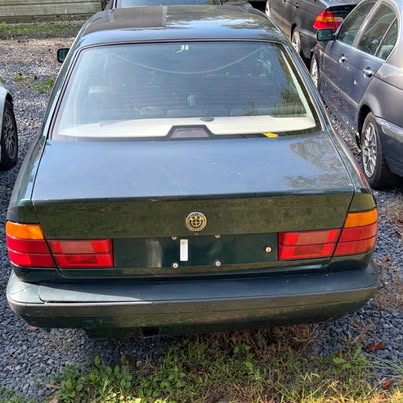
Inspect in this order: paperwork and identity, cold engine, underbonnet, block and bores, underside and sills, suspension and steering on the road, gearbox from cold, Touring systems if applicable, electrics and cabin, and finally the money conversation. Do not let the seller warm the car up before you arrive. Half of what you need to know about an M60 announces itself in the first ninety seconds from cold.
- Start with the paperwork and the identity, before the car. Match the VIN on the title to the plate at the base of the windscreen and the door-jamb label, and note the build date. Look for engine-block paperwork above all: a BMW warranty replacement record or an Alusil engine invoice is the most valuable single sheet a 530i can carry. Then read the history for this guide's pattern — cooling components replaced as a set, automatic fluid changes, thrust-arm bushes, valley pan or intake work — because a history naming these jobs was written by someone who knew the car.
- Cold start, standing behind the car. The engine should fire promptly, settle to a slightly raised cold idle and clean up as it warms. Blue smoke that clears in seconds suggests valve-stem seals or PCV oil; smoke that persists is a compression conversation. A rattle for a second at start-up is common; a rattle that stays is not. Watch the exhaust for coolant sweetness and the ground for fresh drips, and listen for the exhaust note of a holed silencer while the system is cold and honest.
- Idle quality with everything loaded. Turn on the air conditioning, the heated rear window and the lights. A healthy M60 holds a near-steady idle with a faint tremor. Hunting, surging or a needle that swings points to unmetered air — intake gaskets, hoses or the PCV plate — and a misfire you can feel as a rhythmic thump points to a coil or an oil-fouled plug. Neither is a walk-away; both are priced jobs, and both are reasons the compression test in step 5 is not optional.
- Under the bonnet, systematically. Read the coolant level and colour, look for crust at every hose joint, check the radiator neck and tanks for hairline cracks, and test the viscous fan clutch on a hot, stopped engine: it should resist turning. Pull the dipstick for oil condition, open the filler for emulsion that suggests short trips or worse, and inspect around the plug wells for the oil weep of dying valve cover gaskets. Confirm the power-steering fluid type from the reservoir cap and follow the high-pressure hose for crimp leaks.
- The block and the bores — the decisive step. With the car raised and safe, find and photograph the block casting number low on the right side near the starter, distinguishing the Nikasil casting from the Alusil casting as set out in the engines section. Then, whatever the number says, arrange a compression test on all eight cylinders and a leak-down test on any that read low. Even compression plus a smooth idle closes the block question. Uneven compression with leak-down air audible in the crankcase reopens it at full price, and you either walk away or renegotiate the car as an engine-swap project.
- Underside, sills and structure. With the car raised, work along both sills behind their covers, test the jacking points, and inspect the wing bottoms, subframe mounts and front footwell floors. Follow the brake lines over the rear subframe. Look for the valley pan's calling card — coolant staining down the back of the block — and for sump weeps. Surface rust on subframes is normal; perforation in sills, jack points and floors is structural money.
- The suspension and steering road test. Drive through the 50 to 60 mph band, hands light, then brake gently within it: the shimmy that appears under braking and not at cruise is the thrust-arm bush test from the problem areas, performed live. At parking speeds, wind the steering lock to lock and listen for groans; on the move, feel for notchiness at centre and play before the wheels answer. Over a broken surface, listen for tired links and ball joints; over a crest, feel for the single tail-wag of worn rear subframe bushes and dog bones.
- The gearbox, from cold, in full. In a manual car, engage every gear at rest and on the move, rush second gear once when cold to test its synchromesh, feel the clutch's bite point and listen for release-bearing rattle and dual-mass chatter at idle in neutral. In an automatic, insist on the first drive being from cold: engagement of drive and reverse should be prompt, the two-to-three shift should not flare, and light-throttle cruising should not shudder as the converter locks. Any check-control transmission warning ends the discussion until it is diagnosed with the gearbox's own fault memory read.
- If it is a Touring, test the Touring. Judge the stance after the car has sat: level is correct. Load weight into the bay and watch the system recover height after starting. Run the dual sunroof through full travel twice and inspect the headlining edges and front footwells for water staining. Then work the tailgate list one function at a time — wiper, washer, locking, number-plate lamps and the separately opening glass — because each dead function points at the hinge harness, and the count of dead functions is the size of that bill.
- Cabin and electrics sweep. Run both front seats through every adjustment and watch the backrests for twist. Operate all windows, mirrors, locks and the sunroof twice. Demand heat on both sides of the cabin, then cold, and confirm the blower at every speed. Read the check-control display, watch the gauges for flicker over bumps, and lift the rear seat base to inspect the battery, the fusible link's home and the floor beneath for corrosion or water.
- The second drive and the hot restart. After at least twenty minutes of mixed driving, park, switch off, and restart after five minutes of heat soak. A hot restart that cranks long, an oil-pressure light that lingers, or a temperature needle that has crept in traffic each indict the systems this guide has flagged. Check for fresh drips where you park, re-inspect the expansion tank level, and confirm the auxiliary fan cuts in with the air conditioning at idle on a warm day.
- Price the car you have actually inspected. List, in writing, every fault with its job cost from this guide: cooling refresh, intake reseal, thrust arms, accumulators, harness repair, door cards. A seller facing an itemised, realistic list negotiates differently from one fielding a vague complaint that the car is old. Then apply the final section's rule: condition and documentation outrank mileage, colour and badge, every time.
Values
The market material published alongside this guide — the current listings and the recorded sales collected below it — carries every number, and this section deliberately carries none. Its job is to teach you how to read those numbers for this specific car, because the 530i market is wide, thin and easily misread.
The first thing to understand is the spread, and what drives it. The distance between the cheapest and dearest 530i is not mainly about age, mileage or colour; it is about the accumulation this guide has catalogued. At the bottom sit cars with an unresolved block question, a tired cooling system, a shimmying front end and an empty folder — cars one hot afternoon away from a bill exceeding their purchase price. At the top sit documented cars: Alusil by number or warranty record, a cooling system replaced as a programme, a refreshed front suspension, a Touring whose roof works and whose tail sits level. Between those poles, the same year and mileage can honestly describe cars of entirely different value, and asking figures only become meaningful once you have placed each car on that condition axis with your own inspection. Read the recorded sales, not just the asks: in a thin market, asking prices are opinions, and achieved figures are the only evidence of what buyers paid for which condition.
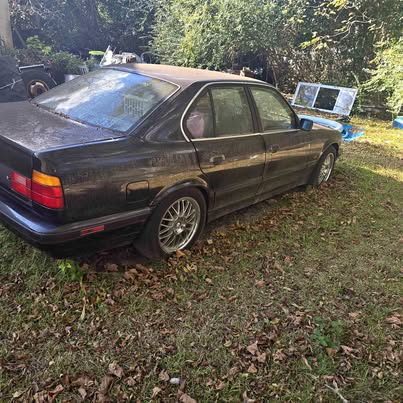
Premiums attach to four things, and you should be able to justify each before you pay it. The manual gearbox carries one because it transforms the engine and is uncommon. The Touring body carries one because it is scarce, charismatic and useful — though a Touring with a dead roof, a sagging tail and a failed harness should trade at a discount to a sorted sedan, and wagon romance should not reverse that logic. Documented Alusil status carries one because it removes the model's signature uncertainty, and the paperwork is the premium: an undocumented claim deserves no money. Finally, originality with maintenance outranks modification. Period tuner equipment — the AC Schnitzer presentation on one car pictured here is the example — adds value only when genuine, complete and documented, and subtracts it for the buyer who wanted a standard car, so compare modified cars only with each other.
The project-versus-driver gap is the sharpest feature of this market. A project 530i is cheap to buy and expensive to recommission in exactly the sequence this guide sets out: cooling, intake, suspension, then the Touring systems, then cosmetics. Add those job costs honestly and many projects cost more, finished, than buying the sorted car — before you value an hour of your own time. The exception is the buyer who does the work personally and enjoys it, for whom a structurally sound, good-block project is the rational buy of the whole market. In negotiation, remember that the pool of buyers for a V8 E34 is small, knowledgeable and patient, and a car unsold through a season is usually telling you its price is wrong, not that its audience is missing. Your leverage is the itemised inspection list from step 12. Your discipline is to remember that another 530i exists — the range is uncommon, not rare — and that the most expensive version of this car is always the wrong one bought in a hurry.
Parts and ownership
Owning an E34 530i in the 2020s is an exercise in pleasant logistics. The E34 was built in large numbers worldwide, the specialist trade around it is mature, and parts divide into three tiers clear enough to plan around. Tier one is the consumable mainstream — filters, brakes, suspension arms and bushes, water pumps, radiators, thermostats, hoses, coils, gaskets and seals — comprehensively served by the German parts houses at prices that make modern-car owners jealous. The M60's service items are shared with the 540i and the V8 7 Series, which keeps them in production. If you can wait two days for a parcel, you can maintain this car's mechanical core almost indefinitely, and routine service is ordinary-money motoring: a few hundred dollars a year in parts if you do the labour yourself.
Tier two is the E34-specific wear catalogue, available but worth sourcing deliberately: thrust arms with the correct bushes, self-levelling accumulators and valves, sunroof cassette components, tailgate harness repair sections, heater valves, lamp modules, cluster rebuild services, door cards and seat-cable kits. Here the specialist breakers and marque forums earn their keep, and buying the correct part first time matters more than buying the cheapest. Keep a small shelf of known consumables — intake gaskets, a PCV plate, valve cover gaskets, a fan clutch — and common failures become weekend jobs instead of immobilising events. Tier three is trim and the unrepeatable: interior plastics, Touring load-bay trim, the dual-roof headlining panel, undamaged wood sets and perfect glass. These come from donor cars, they are finite, and they are why a complete, unmolested interior is worth real money. If you buy a car missing tier-three pieces, buy the pieces with the car if the seller has them; finding them later is a hobby in itself.
Running costs follow the V8 script with an E34 discount. Fuel consumption is what a 3.0-litre V8 in a heavy 1990s saloon promises: thirsty around town, respectable on a long run, and happier on the higher-octane fuel the engine was tuned around. Tyres in the original sizes are ordinary money; the non-standard wheels so many survivors wear can push you into dearer sizes, one more reason original wheels surviving with a car are worth something. Insurance on agreed-value classic policies is generally kind to the E34, which the market still files as a modern classic rather than a collectible. Find your specialist before you need one: the independent who knows the shimmy is a bush, the smoke is a plate and the block is a number will save you the cost of the garage that diagnoses by replacement. And join the owner's community for its archive: every fault in this guide has been photographed, measured and fixed by someone who wrote it up, and on a thirty-year-old BMW that archive is a workshop manual that talks back.
One ownership habit outweighs the others: cooling-and-oil discipline. Change the oil on time, because the lifters, chain tensioner and PCV system live or die by oil cleanliness. Treat any temperature-gauge excursion as a stop-now event, because the alloy engine forgives overheating exactly once less often than you would like. Exercise the Touring's roof and tailgate monthly so harness faults announce themselves one at a time. And keep the folder: on a model where documentation is a priced option, every receipt you file is one the next buyer will pay you for.
Which one to buy
Every variant of this car is the same engine in the same shell, so your choice is made by body, gearbox and evidence — in that order, and always after the block and cooling questions are answered. The picks:
- The all-rounder: a manual 530i sedan with documented Alusil status and a replaced cooling system. The driver's car without the Touring's complications, in the body that lived the easiest life. If one car in the market deserves your full budget, it is this one.
- The charismatic buy: a 530i Touring with a working dual roof, a functioning self-levelling system and a complete tailgate. The V8 wagon is the car people cross the country for, and a sorted one justifies the journey. Buy the systems, not the silhouette: a Touring whose roof, level ride and harness all work is worth substantially more than the same car with any two of them dead.
- The value buy: an automatic sedan in honest, documented condition. The market undervalues the automatic because enthusiasts chase manuals, yet the ZF suits the car's relaxed character and the engine's smoothness flatters it. A well-kept automatic with a serviced gearbox and a full cooling history is the most car per unit of money in this guide.
- The project buy: a structurally sound Touring or sedan with a proven-good block and a long fault list. For the buyer who wields the spanners, this is the rational route in — provided the sills, jack points and floors are sound and the compression test is clean. Faults you can unbolt are negotiable; rust and bores are not.
- The conversion, bought knowingly: a documented six-speed or 4.0-litre swapped car at 530i money. Judged as engineering, some of these are the best-driving E34s of all. Judged as a purchase, they are worth what a 530i is worth plus the quality of their paperwork, and never what the badge they aspire to is worth.
The overriding rule: buy the block, the cooling system and the folder — the body style and the gearbox only choose which good car you get, and no colour, mileage figure or seller's story outranks a compression test, a casting number and a stack of receipts.
See the 13 5 Series cars currently listed.
What they sell for: 5 Series sale prices.