
BMW 535i buyer's guide
BMW 535i -- the model's own buyer's guide: variants, values and what to check.
Years listed: 1985-1992 · Series: E28
Overview and history
The BMW 535i is the top of the ordinary 5 Series range in two successive generations, and the same idea in both: BMW's big six-cylinder engine — the M30, a 3.4-litre overhead-cam straight six that BMW built, in one form or another, from 1968 to 1994 — installed in the company's mid-size sedan with the best trim, the best brakes and the longest standard equipment list BMW offered short of an M car. If you are shopping the badge, you are really shopping two different cars that share an engine family and a nameplate, and the first job of this guide is to keep them separate in your mind.
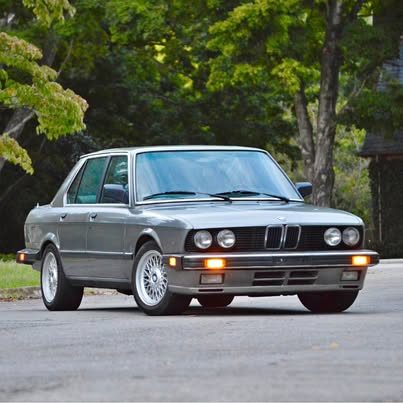
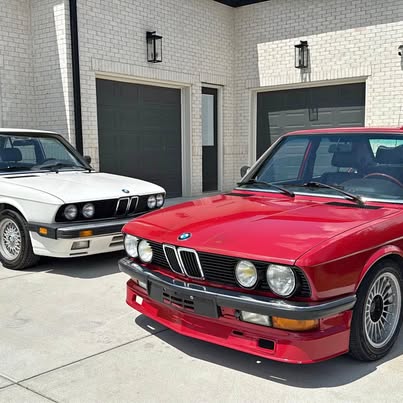
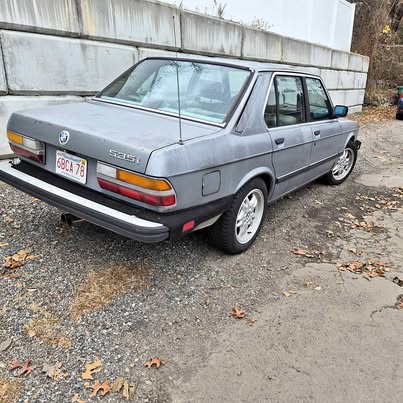
The first 535i is the E28, sold in the United States for the 1985 to 1988 model years. The E28 was the second-generation 5 Series, a car styled under Claus Luthe with clean, upright lines, a high boot and the shark-nose front that defines BMWs of the period. The 535i replaced the short-lived 533i as the flagship of the range: more displacement, Bosch Motronic engine management, bigger brakes and standard equipment that included air conditioning, power windows and, on most US cars, leather. It was an expensive car — the six-cylinder flagship of a range that topped out below the 7 Series — and it was bought new by people who maintained cars properly, which is why so many survive.
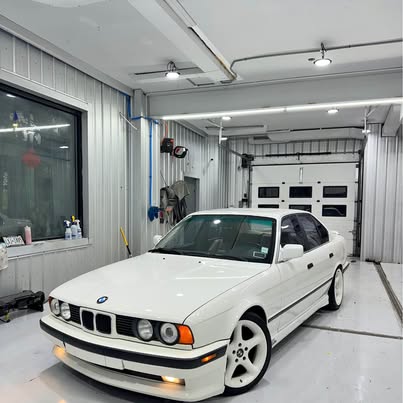
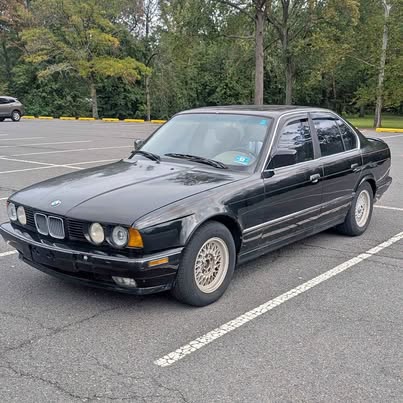
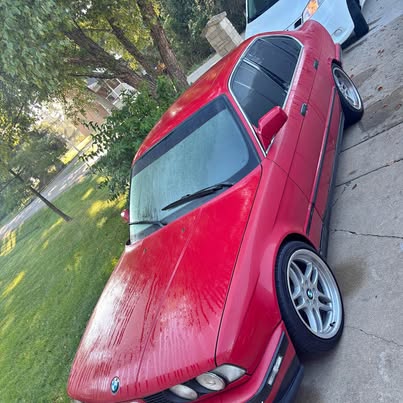
The second 535i is the E34, sold in the United States for the 1989 to 1993 model years. The E34 third-generation 5 Series is a bigger, heavier, far more modern car: stiffer shell, much better rust protection, a cabin that still feels contemporary, and the same M30 six in its final and strongest production form. Where the E28 feels like a very good 1970s car that was refined into the 1980s, the E34 feels like the first modern BMW — because underneath, it largely is.
Both cars were assembled in Germany and sold in the US only as four-door sedans. There is no factory 535i wagon and no 535i coupe; a seller offering one is offering a conversion or a misbadged car, and the VIN settles it — a 525i Touring or a 635CSi (the E24 coupe, which shares the engine) is not a 535i variant.
Our current listings make the split plainly: we track six 535is for sale as this guide is written, three E28s and three E34s, spanning 1986 to 1992, and four of the six are manual-gearbox cars — a proportion that tells you something true about who kept these cars and who sells them now. The market for the 535i is an enthusiast market. These were never the cheapest 5 Series, they were never bought as appliances in the way a 528e or a 525i often was, and the survivors skew towards the specification enthusiasts want: the big engine, and very often three pedals.
What defines the buying decision today is not the badge but the usual pair: rust and deferred maintenance, in that order — with the twist that the two generations distribute the risk differently. The E28 is the rust risk: a 1980s shell with 1980s protection, now forty years old. The E34 is the maintenance risk: a more complex car whose cooling system, front suspension bushings and heater core all come due at the age every survivor has now reached. The M30 engine itself is the strongest part of either car. Buy the shell and the history; the engine will almost always repay you.
The models
One badge, two generations, and one special edition. Everything sold in the United States as a 535i is in this table; the European M535i is included because cars are occasionally imported and advertised alongside US cars, and you need to know what it is and is not.
| Model | Years | Engine | Output | Built | Character |
|---|---|---|---|---|---|
| 535i (E28) | 1985–1988 | 3.4 six (M30B34), Motronic | 182 hp (US) | — | The original: light, direct, the driver's 5 Series |
| 535is (E28) | 1987–1988 | 3.4 six (M30B34), Motronic | 182 hp (US) | — | Sport seats, spoilers, limited-slip; a trim-and-chassis package |
| M535i (E28, Europe) | 1985–1987 | 3.4 six (M30B34), Motronic | 218 hp | — | European flagship; M-Technic body kit, no US sales |
| 535i (E34) | 1989–1993 | 3.4 six (M30B35), Motronic 1.3 | 208 hp (US) | — | The modern one: stronger, quieter, heavier, better protected |
(BMW did not publish clean per-variant production figures for the US 535i lines, so the Built column is left blank rather than filled with numbers we cannot stand behind. Total production of all E28s was 722,328 and of all E34s 1,333,412; the 535i was a small, top-of-range slice of each. US outputs are SAE net figures for catalyst cars. The European M535i's 218 hp is the DIN figure for the non-catalyst engine — the same engine in the same state of tune as the European 535i, which the US never got.)
The E28 535i (1985–88). The car that starts the story. At roughly 3,100 lb it is light by modern standards, and it drives like it: the steering is a recirculating-ball box rather than a rack, but it is accurate, the semi-trailing-arm rear suspension is honest about what it is doing, and the M30's torque arrives low and stays. US cars came on Michelin TRX metric tyres as standard — a period trap covered in the problem areas, because the tyres are now scarce and expensive and most cars have been converted to conventional 15-inch wheels. Nearly everything about the E28 is simpler than the E34 that followed, and nearly everything about its body is more vulnerable.
The 535is (1987–88). Not a faster car — the engine is identical — but the one collectors ask for. The is package added sports seats (the single best reason to want one; the standard E28 comfort seats are flat and unsupportive), front and rear spoilers, uprated suspension, a limited-slip differential and alloy wheels in place of the TRX metrics on many cars. Because the premium rides on the package, verify it: sport seats and spoilers can be retrofitted to a plain 535i in an afternoon, and the VIN decode and the differential are what settle originality. A real 535is with its limited-slip intact is the most collectible US E28 short of the M5.
The E34 535i (1989–93). The same recipe in a car a full generation more modern. The M30B35 makes 208 hp, the shell is dramatically stiffer and better protected against rust, the brakes are bigger, ABS is standard, and the cabin is quiet at speeds where an E28 is busy. It is also roughly 300 lb heavier, and it feels it: the E34 is a fast, composed tourer where the E28 is a sports sedan. US sales ended after 1993, when the V8 530i and 540i took over the top of the range — so a US E34 535i advertised as a 1994 or later car is misdescribed, whatever the seller believes.
What the badge does not cover. The 533i (1983–84) is the E28 535i's direct predecessor with a 3.2-litre version of the same engine — a fine car, but a different model. The 528e is the economy E28 with the small eta engine and nothing in common mechanically beyond the shell. The 525i is the E34's volume model with the smaller M20, then M50, engine. And the E34 M5 — 3.6-litre S38 engine, a wholly different price class — is sometimes optimistically cross-advertised. Check the VIN and the engine before you price any car wearing a 535i badge: a car with an M20 or M50 under the bonnet is a 525i whatever the boot lid says.
Engines and gearboxes
The M30 "big six": one engine, two states of tune
Every 535i ever sold carries the M30, and understanding this engine is most of understanding the car. It is a single-overhead-cam, two-valve-per-cylinder inline six with a cast-iron block and an aluminium head, chain-driven camshaft, seven main bearings and a production life that ran from the 1968 E3 sedans to the last E32 and E34 cars of 1994. In the 535i it displaces 3,430 cc — 92 mm bore, 86 mm stroke — which is why pedants call it a 3.4 wearing a 3.5 badge. They are right, and it does not matter: what matters is that this is one of the most durable engines BMW has ever built, an engine that routinely covers 250,000 miles and more on its original bottom end when the oil has been changed, and whose failures in old age are almost never the engine's core wearing out. They are the failures of the systems around it — cooling, oiling to the camshaft, and engine management — each covered below and again in the problem areas.
M30B34 (E28, 1985–88). The US-market engine runs an 8.0:1 compression ratio for catalyst fuel and makes 182 hp at 5,400 rpm with 214 lb-ft of torque at 4,000 rpm. European non-catalyst cars, including the M535i, run higher compression and make 218 hp — a difference you can feel but not one you can easily retrofit, since it is in the pistons. Management is Bosch Motronic: a single ECU controlling fuel and spark, metering air with a flap-type air-flow meter, the big aluminium box with the spring-loaded vane that sits in the intake tract on the driver's side of the engine bay. There is no distributor advance curve to set and no carburettor to balance; there is a throttle switch, a coolant temperature sensor, an idle control valve and a pair of flywheel reference sensors, and the engine's good manners depend on all of them.
M30B35 (E34, 1989–93). The final development of the M30 and the one to have on paper: revised head and manifolds, 9.0:1 compression, Motronic 1.3 management with better idle control and diagnostics, 208 hp at 5,700 rpm and 225 lb-ft at 4,000 rpm. It is smoother and stronger everywhere, and it pulls the heavier E34 to roughly the performance the B34 gives the lighter E28 — which is to say, brisk rather than fast by modern standards, with the delivery doing the entertaining: a straight six that is torque-rich from 2,000 rpm and genuinely musical from 4,500 to the redline. The B35 kept the flap-type air-flow meter to the end of production — the M30 never got a modern hot-film mass-air sensor — so the air-flow meter's wear track is a service item on both generations, not just the early cars.
What a healthy M30 sounds and feels like. Cold start on the button, a fast idle that settles as it warms, no chain rattle beyond a second or two at start-up, an even idle with no hunting, and clean pulling power with no flat spot as the air-flow meter's flap sweeps its track. Blue smoke on start-up after sitting is valve stem seals — a known, priceable job. Blue smoke under load is rings or bores, and on an M30 that usually means the engine has been overheated or run on filthy oil, because the bottom ends do not simply wear out. A top-end tick that rises with revs points at the camshaft and its oil supply — the single most 535i-specific engine fault there is, and it gets its own entry in the problem areas.
The overheating rule. Both engines carry an aluminium head on an iron block, and the M30's head is long. Overheat one badly and the head warps; overheat one severely and it can crack, typically around the valve seats and combustion chambers. The engines do not overheat on their own — they overheat because a forty-year-old cooling system was neglected: a viscous fan clutch that no longer locks up, a water pump with a wobbling bearing, a radiator furred with scale or, on the E34, a plastic radiator neck waiting to snap. Every part of that chain is cheap compared with a head. When you assess any 535i, you are really assessing whether the cooling system has been maintained ahead of failure or run to it — the receipts for a radiator, pump, fan clutch and thermostat in the last decade are worth more than a compression test on a car with none.
Gearboxes: Getrag five-speed and ZF 4HP22
The manual is a Getrag five-speed (the 260-series box in these cars), overdrive fifth, and it is the gearbox the market wants: four of the six 535is in our current listings are manuals, and manual cars carry a clear premium in both generations. It is a strong box with a deliberate, slightly heavy change that should engage every gear cleanly, hot or cold. The synchromesh to test is second gear, downshifting from third at speed — a crunch that a double-clutch avoids is worn second-gear synchro, a gearbox-out job realistically in the $1,500–3,000 range rebuilt and fitted, and a legitimate negotiating point rather than a walk-away. Clutch judder from a standstill is usually an oil-contaminated or worn plate or a tired dual-mass arrangement where fitted; budget a clutch job at $800–1,400 in parts and labour. The shift linkage wears and goes sloppy long before the box itself does — a wand-like lever is bushes and a selector rod, a few hundred dollars, and it transforms the car.
The automatic is ZF's 4HP22 four-speed in both generations — hydraulically controlled in the E28, in electronic-hydraulic 4HP22EH form with a sport/economy mode switch in most E34s. It suits the E34's touring character well and the E28's less so, which is part of why automatics are the cheaper cars. A healthy 4HP22 changes smoothly and promptly, kicks down without a flare, and engages reverse without a long pause or a thump. The failure pattern to know is specific: the A-clutch pack at the front of the box wears, and its signature is slipping or flaring on take-off and, in advanced cases, a car that creeps or stalls oddly. One piece of period workshop wisdom is worth repeating verbatim in effect: never hold a 4HP22 car on the throttle at high revs in Park or Neutral — with a worn A-pack, the clutch drags and burns in exactly that situation, and a box that was coping can be finished by a careless emissions test or an enthusiastic seller demonstrating the engine. Fluid and filter changes were not in BMW's US service schedule the way they should have been; a box with documented fluid services at sensible intervals is a different proposition from a sealed-for-life survivor. A rebuild at a ZF-literate specialist runs roughly $2,500–4,000; general transmission shops often know the 4HP22 well because ZF sold it to half the European industry.
The driveline behind both boxes is shared and gives shared symptoms. The rubber flex disc (the guibo) at the gearbox output cracks with age and gives a thump on take-up and a vibration under load; the centre support bearing for the two-piece propshaft sags and lets the shaft drum at speed; both are inspection items with parts in the low hundreds and labour to match. A limited-slip differential was standard on the 535is and optional elsewhere — check for the tag on the differential cover and verify by VIN decode, because a limited-slip is worth money and an S tag added to an open differential later is a known small fraud.
Problem areas
Everything in this section applies to cars now between thirty-three and forty-one years old, and it is organised the way you should organise your thinking: the body first, because the body is what writes a 535i off; then the cooling system, because cooling neglect is what kills the engine; then the one engine fault specific to this model; then the chassis; then the cabin and electrics, where the bills are smaller but relentless. Our current listings sample is small — six cars, three of each generation — so this section makes no statistical claims from it. What follows is the accumulated failure record of two of the best-documented BMWs of their era, and it is consistent: a 535i with a sound shell and a maintained cooling system is a durable car, and one without those two things is a project wearing a driver's clothes.
Rust: the map
The E28 was built before BMW took rust seriously at the design stage, and it rusts the way 1980s German sedans rust: from the seams and traps outward, in places a casual look never reaches. Work through it in this order.
Jacking points and sills. The structural check that decides the car. The E28's sill structure carries the jacking points, and the area around each point traps road dirt and water. Prod around all four jacking points with a screwdriver (with the seller's permission) and press hard along the sills; softness, crunching or a jacking point that flexes when the car's own jack lifts the corner is structural rust, and sill and jacking-point repair done properly — cut out, fabricated, welded, painted — runs roughly $1,000–2,500 a side. Fresh black underseal along the sills of a car being sold is a question, not an answer.
Floor pans and the bulkhead. Water gets in past perished windscreen and rear-window seals and the heater plenum, then sits under the carpets. Lift the carpets in all four footwells. Surface rust is a treat-and-seal job; perforation is panel work, and floor rust on an E28 rarely travels alone — read it as a marker for the whole shell and for how the car has been stored.
Front wings, inner arches and the battery tray. The tops and trailing edges of the front wings rot where mud packs behind the wheel, and the inner wing around the battery tray suffers acid damage from below the battery: lift the battery or at least rock it and inspect the tray edges and the metal beneath. A tray is cheap; the inner-wing repair underneath a neglected one is not.
Boot floor and spare wheel well. The rear window seal and boot seal leak, and the water collects under the spare wheel. Lift the wheel and the mat on every viewing. Staining is a clean-out job; a holed well is a panel replacement, and it tells you the seals have leaked for years — which sends you back to the floor pans with fresh suspicion.
Sunroof cars. Most US 535is have a sunroof. Blocked drain tubes rot the roof skin around the aperture and the A-pillars from inside, and a stained headlining at the corners is the tell. Check the drains run clear and budget accordingly; a roof skin repair is paint-shop money on top of welding.
The E34 is a different proposition. BMW galvanised much of the shell and sealed it properly, and a well-kept E34 can be genuinely sound at an age where an E28 is a welding diary. But "better protected" is not "immune": the E34's map is the bottom edges of the doors, where the lower trim strip traps moisture against the skin and rust starts under the trim — run a fingertip along the bottom edge of every door and feel for bubbling; the sill covers, which are plastic and hide the structural sill beneath them, so prod at the jacking points and look at the sill ends where the covers stop; the bottoms of the front wings behind the wheels; and around the fuel filler and the boot floor on salt-state cars. Our listings reflect the geography: the six cars currently on the site sit in Tennessee, New York, Illinois, Massachusetts and New Jersey — five of the six in states that salt their roads, which is the normal shape of the US 535i market and a reason to inspect every car as a salt-state car until its history proves otherwise.
Cooling system and the cylinder head
This is the section that protects the engine, and it applies identically to both generations with one E34 addition. The M30's cooling system was adequate when new and is marginal when neglected, and neglect is the default state of a cheap old BMW.
The viscous fan clutch is the classic failure. It should lock up as under-bonnet temperature rises and drive the fan hard; a worn clutch freewheels, airflow at idle and in traffic collapses, and the temperature gauge climbs exactly when the car is standing still. The test is in the inspection section: a fan you can stop easily with a rolled newspaper on a hot engine, or one that never roars when the car is heat-soaked, is a dead clutch. Replacement is a few hundred dollars fitted — and a car that has been run hot repeatedly because of one is a head-gasket negotiation.
Water pump, thermostat and hoses. Pump bearings wobble and weep from the drain hole; thermostats stick; hoses perish from the inside. None is expensive. All are cheap insurance that a good history file shows done together, as a system, rather than one at a time as each failed.
The E34 radiator adds a failure the E28's largely metal radiator does not have: plastic end tanks and a plastic inlet neck that age, embrittle and snap — often at the hose connection, often at speed, dumping the coolant in seconds. On any E34, squeeze and inspect the neck, look for the chalky whitening of heat-cycled plastic, and treat an original radiator as a consumable that is due. An aluminium replacement radiator is a popular permanent fix and a selling point when documented. The expansion tank and its cap age the same way.
Consequences. A temperature gauge that has ever been in the red is a question the seller must answer with invoices. The M30 head gasket fails as a consequence of overheating more often than as a primary fault: the signs are coolant loss with no visible leak, mayonnaise emulsion under the oil filler cap (distinguish from short-trip condensation, which clears on a long run), pressurised hoses from cold, and bubbles in the expansion tank. A head-gasket job at a specialist runs roughly $1,500–2,500 with the head skimmed and checked; a cracked head is a replacement-head conversation on top of that. Price any 535i with an unknown cooling history as if the system needs a full refresh — radiator, pump, clutch, thermostat, hoses, roughly $800–1,800 in parts and labour depending on generation — because on the evidence of the survivors, it usually does.
Camshaft oiling: the banjo bolt fault
The M30's camshaft is fed oil by a spray bar — a tube running the length of the head above the cam, fed through two hollow banjo bolts. Those bolts work loose. It is the model's signature mechanical fault: the bolts back out a fraction at a time, oil pressure to the spray bar drops, and the cam lobes at the ends of the bar — furthest from the feed — starve first. The result is scored, worn cam lobes and followers, a top-end tick that becomes a rattle, and eventually a misfire and lost performance as valve lift disappears.
The fix, done before the damage, costs almost nothing: remove the rocker cover, check and re-torque the banjo bolts with threadlocker (later bolts and drilled, lockwired bolts are the permanent cure), and confirm the spray bar's holes are clear. Done after the damage, it is a camshaft and follower set plus labour, roughly $1,200–2,500 depending on how much of the top end needs renewal. The buying test is simple and is step 4 of the inspection: listen to the top end at a hot idle, and on any car you are serious about, have the rocker cover lifted and the cam lobes looked at. A seller with M30 experience will not blink at the request — the check is famous. Worn lobes you can feel with a fingertip as a ridge at the edge of the lobe. A car with a quiet top end and a receipt showing the bolts checked is worth a premium over a ticking car at any price difference smaller than the cam job.
Two related top-end notes. Valve clearances are set with shims-and-eccentrics on the M30's rocker shafts — a periodic manual adjustment, not hydraulic self-adjustment — so a car with no record of clearances ever being checked will be noisy and down on performance in a way owners mistake for wear. And the timing chain is a single-row chain that stretches slowly and lasts well; a start-up rattle that fades is the tensioner filling, a rattle that persists is a chain and guide conversation in the $800–1,500 range, and a skipped chain service at very high mileage is the one route by which an M30 bottom end gets hurt — bent valves from a jumped chain are a head-off job.
Front suspension, steering and the driveline
Both cars use MacPherson struts at the front and semi-trailing arms at the rear, with recirculating-ball steering — but they wear differently, and each generation has a signature chassis fault.
The E34 shimmy. The famous one. Wear in the front thrust-arm (upper control arm) bushings produces a steering-wheel shimmy that arrives at roughly 50–60 mph and worsens under braking — drivers describe it as a wheel wobble that no balancing cures, because it is not the wheels. The bushings are a service item at this age; the accepted upgrade is the heavier 750iL bushing pressed into the 535i arm. A full front-end refresh — thrust arms, control arms, tie rods, centre link, idler arm — runs roughly $1,200–2,500 in parts and labour and transforms the car; a car that has just had it done, with receipts, is worth real money over a shimmying one. Test on the drive: hold 55 mph on a smooth road, then brake gently from 60 and feel for the shake building through the wheel.
Steering boxes and idler arms, both generations. Recirculating-ball boxes wear play into the straight-ahead position, and the idler arm bushing on the opposite side of the centre link wears with it. Some play adjusts out at the box; a box adjusted tight to hide wear binds off-centre, which you feel as a steering wheel that does not want to return. Waggle the wheel at rest with the engine running: more than an inch or so of free movement at the rim before the road wheels answer is wear to price. Boxes are rebuildable; budget $600–1,200 for a rebuilt box fitted if adjustment cannot save it.
Rear suspension. Semi-trailing-arm bushes and subframe mounts perish, and on the E34 the rear pitman arms (the "dog bones" that control toe) wear and let the rear steer itself over bumps. Clunks from the rear over broken surfaces and a vague, wandering feel at speed are the symptoms. Subframe bush renewal is labour-heavy — budget $800–1,500 for a rear-end bush refresh done completely, not piecemeal.
Driveline. As covered in the gearbox section: guibo flex disc cracking (a thump on take-up, vibration under load), centre support bearing sag (a drone and drumming at cruising speed), and differential mount wear. All are visible on a lift and all are cheap in parts; their presence tells you the car has been run on a budget, which is information about everything else.
Brakes. Discs all round on both cars (the E28 535i upgraded the range to rear discs), ABS on later E28s and all E34s. The systems are conventional and the parts cheap; what you are judging is the recommissioning state — seized calipers, perished flex hoses and grooved discs on a car that has sat are a full hydraulic refresh at $800–1,800, and an ABS light on an E34 that the seller calls "just a sensor" needs the code read, because the pump and control unit are the expensive version of that sentence.
Interior, electrics and the small expensive things
E28 dashboards crack. Essentially all of them, across the top, from sun. A crack-free dash is rare enough to be a selling point; a cracked one is the car's normal state and should be priced as such rather than treated as a defect the seller must answer for — replacement dashes are effectively unobtainable new, and the realistic options are a cover, a used dash of unknown remaining life, or living with it. Judge the rest of the cabin on its own merits: the sport seats in the 535is hold up well and are worth recovering (a professional retrim of a pair in leather runs well into four figures), the standard comfort seats go flat and unsupportive, and headlinings sag.
The service-interval board (E28). The E28's instrument cluster carries a small board powered by rechargeable batteries that drive the service-interval lights. The batteries leak with age and corrode the board, producing dead or lying gauges, phantom service lights and intermittent everything. Replacement batteries or a battery-less board conversion is a known, moderate-cost fix ($200–500 depending on who does it), and cluster weirdness on an E28 should be priced as this before it is priced as anything worse.
E34 cluster capacitors and the light control module. The E34's cluster has its own version: electrolytic capacitors dry out and the gauges and warning displays misbehave or die in sections — again a known board-level repair, not a new cluster. The light control module (LKM) develops cracked solder joints and generates false bulb-failure warnings; a resoldered or exchanged module is a few hundred dollars. Neither fault is a walk-away; both are negotiating facts.
E34 seat twist. The power seats in the E34 (and its E32 sister) develop a famous fault: one side of the seatback stops reclining while the other side continues, twisting the backrest. The cause is mechanical and almost elegant — the flexible drive cables' housings effectively shorten with age, pulling the cable out of engagement with the gearbox on one side. The fix is to shorten the housing or re-seat the cable, an hour or two of labour and no parts of consequence. A twisted seat on a viewing is therefore a discount, not a disaster — but check both seats, in every direction, because seat motors and switches add up if the fault turns out to be electrical after all.
Door brakes and window regulators (E34). The door check straps ("door brakes") tear their mountings out of the door shell, announced by a loud crack as the door opens and a door that swings free. The repair is a reinforcement plate and welding inside the door — moderate money, and it should be checked on all four doors. Window regulators and their sliding clips wear; a slow or tilted window is a regulator job in the $250–500 range per door at a shop.
Heater cores and blower motors, both generations. The heater core lives deep behind the dashboard in both cars, and it fails by leaking: the tells are a sweet coolant smell in the cabin, a windscreen that fogs with a greasy film, and damp in the front footwells (which you will already have checked for rust — now you know the other reason they get wet). Core replacement is a dashboard-out job, roughly $1,200–2,500 in labour-heavy cost on either car, on a part that costs little. The E34's heater valves and auxiliary pump add their own smaller failures — heat on one side only, or heat that will not shut off. Early E34s use an electronic blower final stage (the "sword") that fails and takes the blower speeds with it; later cars use a conventional resistor pack. A dead blower on an early E34 is usually the sword, a few hundred dollars and an awkward hour, not the motor.
Air conditioning. US cars were all air-conditioned and all left the factory on R12 refrigerant. Most survivors have been converted to R134a, with varying quality; ask what was done, because a conversion that consisted of new fittings and a prayer leaves a weak system, and compressor, condenser and evaporator work on either generation runs from several hundred dollars to well past $1,500 for a full recommission. Test the air conditioning on every viewing, in winter too — it also proves the auxiliary electric fan runs, which the cooling system depends on in traffic.
The TRX trap (E28). US E28 535is were delivered on Michelin TRX tyres in the metric size 200/60 VR 390, on metric wheels that accept nothing else. TRX tyres are still made in small batches and cost several times what a modern 15-inch tyre costs, with a fraction of the grip. Most cars now run conventional 15-inch wheels, which is the sensible answer — but if the car in front of you still wears its TRX wheels, price the conversion (period-correct 15-inch wheels and tyres, $800–2,000) into the deal. If it wears fresh TRXs, a previous owner spent real money keeping it original — a character reference for the rest of the car.
How to inspect one
Allow at least an hour, bring a torch, a magnet wrapped in cloth, a screwdriver for prodding (with the seller's permission) and a rolled-up newspaper — it has a job in step 7. If the car passes you, pay for a lift inspection before money changes hands; on a 535i it will pay for itself.
- Start with the paperwork and the VIN. Match the VIN on the title to the plates on the car, and decode it: the decode settles the generation, the original engine and the original specification — including whether a 1987–88 E28 is a genuine 535is and whether the car left the factory as a manual. Ask for the history file. On these cars a thick folder of invoices is worth more than any single mechanical check, because it answers the cooling-system question and the banjo-bolt question before you ask them.
- Cold start. Insist the engine is cold when you arrive. An M30 should start at once, hold a fast idle and settle as it warms. Watch for blue smoke at start-up (valve stem seals, priceable) and listen for a timing-chain rattle that outlasts the first seconds (the chain and tensioner conversation from the problem areas).
- Identify the generation and the engine in front of you. E28 or E34, M30B34 or M30B35, flap-type air-flow meter present and connected. If the engine is a small six — an M20 or M50 — the car is a 525i wearing a 535i badge, whatever the seller says, and the conversation changes completely.
- The top-end check. At a hot idle, listen over the rocker cover for ticking that rises with revs — the banjo-bolt camshaft wear from the problem areas. On any car you are serious about, ask for the rocker cover to be lifted (or have your inspector do it) and look at the cam lobes: scoring you can feel as a ridge with a fingertip means the cam job goes into the price. A quiet top end plus a receipt for the bolts being checked is the best engine news a 535i can give you.
- Under the car. Torch along both sills and prod the jacking points (E28 especially), the floor seams, the subframe mounts and, on an E34, the sill ends behind the plastic covers. Perforation at jacking points or sills is structural. Read the underseal as you go: patchy and honest is age; a fresh, uniform black coat over everything on a car being sold is a question, not an answer. This step decides whether you continue at all.
- Boot and floors. Lift the spare wheel and the boot mat: water staining or perforation in the well means leaking rear seals, which sends you to lift all four carpets and prod the floor pans. On an E34, run a fingertip along the bottom edge of every door for bubbling under the lower trim. On an E28, check the battery tray and the front wing tops while you are walking around.
- The cooling system, in full. With the engine hot, try to stall the fan with the rolled newspaper: a fan that stops easily is a dead viscous clutch. Squeeze the top hose — it should be firm with pressure, not rock-hard from cold (head-gasket gas) and not soft and empty on a hot engine. Look at the E34's radiator neck for chalky, heat-cycled plastic. Check the expansion tank level and look for bubbles with the engine running. Then check the cabin for the heater core's signature: sweet smell, greasy fogging on the windscreen, damp front footwells.
- Body and gaps. Run the magnet over the sills, arches, lower doors and wing tops — filler announces itself. Check panel gaps and paint match for accident history, and look down each flank for ripples. Count the trim: brightwork, badges and E34 lower door trims are the pieces that are missing, and they add up.
- The shimmy test and the steering. On the drive, hold 50–60 mph on a smooth road, then brake gently: the E34 thrust-arm shimmy builds through the steering wheel if the bushings are gone. At rest with the engine running, waggle the wheel and judge the free play before the road wheels answer. In both generations, note clunks from the rear over bumps (subframe and pitman-arm wear) and any thump on take-up (guibo and centre bearing).
- The gearbox test. Manual: downshift third to second at speed — a crunch that double-clutching avoids is second-gear synchro, priced as a rebuild conversation. Automatic: changes should be prompt and clean, kickdown without flare, reverse without a long pause or a thump. And remember the 4HP22 rule from the gearbox section: do not rev the engine hard in Park or Neutral on an automatic car, yours or the seller's.
- Electrics and the cabin, everything, once. Every window, every seat direction (watch for the E34's seat twist), the blower on every speed (the early E34's sword final stage), the air conditioning and the auxiliary fan, the sunroof and its drains if fitted, all lights (false bulb warnings on an E34 point at the LKM, a known fix), and every gauge — cluster weirdness on an E28 is the service-interval board's batteries until proven otherwise. Test the heater for heat on both sides.
- Interior last. Sit in every seat. E28: price the dashboard honestly — cracked is normal, crack-free is a bonus — and feel the seat pads for collapse. E34: check the headlining for sag and the door cards for shrinkage pulling them away from the window seals. A sound, original interior is the hardest thing on either car to recreate, so weight it heavily — and then re-read the rust notes from step 5 before you negotiate, because on a 535i the body outranks everything you found after it.
Values
The market block beneath this guide carries the current numbers — what is listed now, and what recorded sales have achieved — and it is refreshed from our own listings at every build, so this section deliberately carries no prices of its own. What it can teach you is how to read those numbers, because the 535i market has a shape, and the shape is stable even as the figures move.
The condition spread is the whole story. The gap between the cheapest and the dearest 535i on the market at any moment is not really a gap between models — it is a gap between a rusty, deferred-maintenance car and a sorted one, and it is wider than the gap between the generations. A cheap 535i is cheap for the reasons the problem areas describe, and the arithmetic of sills, a camshaft, a cooling system and a heater core will carry a bargain up to the price of a good car without ever giving you the good car's history. Read every low asking price as a list of jobs the seller has chosen not to do.
Generation and gearbox set the bands. Within the same condition, the market pays for the manual gearbox first — in both generations, and by a margin that reflects how these cars are actually used by the people who buy them now. The E34 and the E28 sit closer than you might expect: the E34 is the more usable car and the E28 the more collectible shape, and the two effects roughly cancel. The clear premium car is the E28 535is, paid for the package — seats, spoilers, limited-slip — and paid only when the package is verified, because a plain 535i with spoilers added is a plain 535i. A genuine European M535i, when one surfaces in the US, prices on rarity and on the stronger non-catalyst engine, and it deserves the same VIN-level scrutiny as any premium claim.
Asking prices are aspirations on this model. These are enthusiast cars sold largely by private sellers (every car in our current listings is a Marketplace sale), and private sellers of old BMWs anchor on the best car they have seen advertised rather than on achieved results. The recorded-sales figures in the market block are the corrective: compare asking prices against them, and expect a negotiation gap on any car that has sat listed for months — and little or no movement on a manual car with a real history file, because sellers of those know what they have.
Project versus driver. A non-running or long-stored 535i is not a discounted driver; it is a different purchase. Recommissioning a stored car means the fuel system cleaned end to end, every brake component inspected or renewed, all fluids and seals, tyres, and then the cooling system refresh the car needed before it was parked. The market prices projects accordingly, and so should you: the saving against a running, driving car has to cover the recommissioning with money left over for the surprise the car has not told you about yet — and there is always one.
What holds value. Originality of specification (verified, not claimed), the manual gearbox, a history file that shows the known faults addressed rather than discovered, and a shell that has never needed structural welding. What destroys it is equally consistent: rust repairs done cosmetically, an undocumented engine or gearbox swap, and a TRX-wheeled E28 priced as though the wheels were a feature rather than a bill. Buy the car whose file answers the questions in this guide before you ask them; it will cost more on the day and less every year after.
Parts and ownership
The 535i is one of the best-supported BMWs of its era to keep, for a structural reason: the M30 engine and its running gear were shared across an enormous family — the E3 and E9 cars before it, the E12, E23, E24, E28, E32 and E34 ranges around it — and BMW built the engine for twenty-six years. The specialist trade is deep, the knowledge base is deeper, and very little on either car is truly unobtainable. What varies is price and labour, and the pattern is the same as on every car in this programme: the mechanical parts are reasonable, and the body, trim and dashboard-deep jobs are where the money goes.
Easy: service items, filters, plugs, ignition consumables, brake discs, pads, calipers and hoses, water pumps, thermostats, viscous fan clutches, hoses, suspension arms and bushings (including the 750iL thrust-arm bushing upgrade for the E34), steering linkage parts, guibos and centre bearings, clutch kits, exhaust systems in standard form, glass rubbers and most seals. Order today, fit this weekend, at prices close to modern-car money — the M30's production volume is still working in your favour.
Harder and dearer: camshafts and followers when the banjo-bolt damage is done (the parts exist; it is the labour and the while-you-are-there list that builds the bill), cylinder heads in uncracked condition, ZF 4HP22 rebuilds at a specialist, heater cores on either car (cheap part, dashboard-out labour), E34 radiator and expansion-tank renewal done properly, crack-free E28 dashboards (effectively a used-part lottery), 535is sport-seat retrims, E34 door shells and lower trims in the right colour, sunroof panels and seals, and metric TRX tyres for an E28 kept on its original wheels. A quality repaint of either car starts in the same five-figure territory as any classic of the size — which is why this guide keeps saying to buy the body.
Running costs. A sorted 535i is a realistic regular-use classic. Fuel consumption sits in the high teens to low twenties (miles per US gallon) depending on gearbox and use; servicing is well within any competent independent BMW specialist's scope, and much of it — valve clearances, the banjo-bolt check, cooling-system renewal — is satisfying owner-level work with a workshop manual. The budget line that catches new owners is the first year: catching up deferred maintenance on a running car honestly runs $2,000–5,000 before you improve anything, and recommissioning a car that has sat for years runs $4,000–8,000 at a shop. The ownership rule that keeps these cars cheap to keep is preventive: the cooling system refreshed on schedule rather than on failure, the camshaft bolts checked at every rocker-cover removal, and the car used regularly — M30s that are driven stay healthy, and 535is that sit develop the sitting-car list (seized brakes, perished rubber, varnished fuel systems) on top of everything else.
Which one to buy
- The all-rounder: E34 535i with the five-speed manual. The strongest engine in the best-protected shell, modern enough to use daily, old enough to be simple. If you want one 535i to drive everywhere, this is it — ideally one with the front-end refresh and the radiator already done, on receipts.
- The driver's car: E28 535i manual. Lighter, rawer and more talkative than the E34, and the purest expression of what a big-six BMW sedan was. Buy it on the shell: at forty years old, the rust map in this guide is the whole decision.
- The collector car: 535is. The package car, and the US E28 the market will keep rewarding — provided the VIN decode and the limited-slip verify the package. A documented, original 535is is the one 535i you buy partly as an asset.
- The value buy: E34 535i automatic. The market discounts the automatic, and the 4HP22 suits the E34's touring character honestly well. A clean, rust-free automatic E34 with a cooling-system file is the cheapest route into a genuinely good 535i — just service the gearbox and never rev it in Neutral.
- The brave buy: the project. Either generation, bought knowingly — rust priced as welding, storage priced as recommissioning, and the total kept below the price of the sorted car it can become. The M30 forgives a great deal; a rotten shell forgives nothing.
And the rule that overrides all of the above: buy the least rusty car with the thickest history file, in the generation and gearbox you can live with. Camshafts, cooling systems, bushings and heater cores are all fixable at prices you can plan for. A rotten E28 shell or a neglected E34 with every big job outstanding costs more to put right than the finished car will be worth — and a documented car that has had the known faults fixed is worth its premium every single time.
See the 103 535i cars currently listed.
For sale now
$6,500Expand
What they sell for: 535i sale prices.