
BMW E36 M3 Coupe buyer's guide
BMW E36 M3 Coupe -- the model's own buyer's guide: variants, values and what to check.
Years listed: 1988-2026 · Series: E30
Overview and history
The BMW M3 began as a racing car that happened to carry number plates, and every generation after it has been negotiating between that origin and the realities of a road car people drive to work. Understanding that negotiation is the whole of buying one well. An M3 is not simply a faster 3 Series: it is a 3 Series re-engineered by BMW Motorsport — BMW M GmbH, as the division was later renamed — around a specific engine, a specific chassis brief and, in the early cars, a specific rulebook. The parts that make it special are the parts that cost money when they wear, and the parts sellers most often misdescribe. This guide exists to separate the two.
A note on scope, stated plainly at the start. The cars in this site's own pool for this guide are, at the time of writing, five cars — and all five are E36-generation M3s, from the middle generation covered here. Of those five cars, two are 1995 coupes, one is a 1997 coupe, and the remaining two are 1998 cars, one a sedan and one a convertible; four of the five are manuals and one is an automatic, and all five come through Facebook Marketplace sellers, spread across South Carolina, Florida, Texas, New York and Ohio. That is a small sample — five cars is a snapshot, not a census — but it is a representative one for the American market as it actually trades today, because the E36 is the M3 that ordinary money buys, the one that appears in private listings rather than auction catalogues. So this guide is weighted accordingly: the E36 gets the deepest treatment, because it is the car you are most likely to be standing in front of. But an M3 buyer cross-shops generations constantly — the same money touches a tired E46 and a good E36, and the E30 is the reference point every seller invokes — so the E30 that started the line, the E46 that perfected the straight-six formula and the V8 E9x cars that ended the naturally aspirated era are all covered honestly here, with their own inspection canons, even though none appears in the current pool of five.
The story starts with the E30. In the mid-1980s BMW wanted to race the 3 Series in Group A touring car competition, and Group A demanded production: build enough road cars, with the racing car's essential hardware, and the racing car is legal. The result, shown in 1985 and on sale in Europe from 1986 — reaching the United States for the 1988 model year — shared remarkably little with the standard E30 beyond its basic silhouette and doors. The wheel arches were flared to cover wider track and rubber; the windscreen was bonded in, the boot lid raised, the rear window angle altered — aerodynamic changes, not styling ones. Under the bonnet sat the S14, a four-cylinder built for racing: a block derived from the M10 family, topped with a four-valve head in the spirit of the M88 straight six from the M1. It revved, and it demanded to be driven the way a racing engine demands to be driven. In the DTM, at Spa and the Nürburgring, the E30 M3 became one of the most successful touring cars ever built. That record is not background colour: it is why the badge carries weight, and why every later M3 has been judged against a homologation special it could never quite be.
The E36 M3 of 1992 — 1995 in the United States — was a deliberate change of direction. No rulebook required it. BMW built the car the market asked for: a fast, refined, everyday-usable coupe (and later sedan and convertible) with a straight six, real torque and motorway manners the E30 never pretended to. Europe got the full Motorsport engine, first the 3.0-litre S50 and then the 3.2-litre S50 with double VANOS and individual throttle bodies. The United States got a different, simpler and cheaper engine in the same spirit — a decision this guide returns to in detail, because the US–Euro gap on the E36 is the single most misunderstood thing about the model, and it cuts both ways: the American car is less exotic than sellers imply and better than European snobbery allows.
The E46 M3 (2000 in Europe, 2001 in the US, through 2006) reunified the formula: one engine worldwide, essentially — the S54, 3.2 litres, individual throttle bodies, a rev limit around 8,000 rpm. Coupe and convertible only, with a six-speed manual or BMW's SMG II automated manual. The E9x cars (2008–2013) broke the pattern entirely: a 4.0-litre V8, the S65, in a three-body range — E90 sedan, E92 coupe, E93 convertible — with a dual-clutch gearbox alongside the manual. After them the M3 name went turbocharged and sedan-only, the coupe becoming the M4; those cars are outside this guide's scope and pool.
What unites the four generations is a buying logic opposite to most classics. These are not fragile cars, and they are not simple ones: their engines contain specific, known, expensive wear items — rod bearings, VANOS units, throttle actuators — whose failure is a matter of mileage and maintenance rather than luck, and their bodies rust and crack in specific, inspectable places. That is good news: a car whose faults are catalogued is a car you can inspect rationally. Verify the expensive items with evidence — invoices, tests, your own eyes under the car — and price whatever you cannot verify as if it needs doing. The seller's adjectives are not evidence. On an M3, they never are.
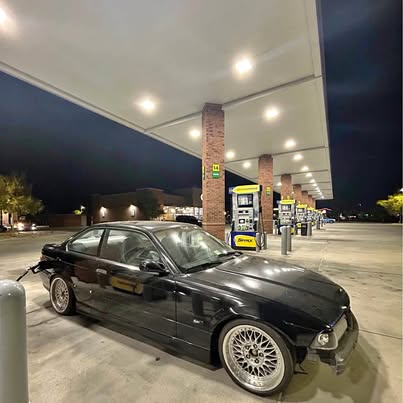
The models
Four generations, four different answers to the same question. Read this section as a map before a catalogue: the generations do not substitute for each other, prices do not move together, and the right car depends entirely on which answer you actually want.
| Model | Years | Engine | Output | Built | Character |
|---|---|---|---|---|---|
| E30 M3 (US) | 1988–1991 | 2.3 four (S14) | 192 hp | part of ~17,970 all E30 M3 | The homologation car; revs, rarity, racing record |
| E30 M3 Sport Evolution | 1990 | 2.5 four (S14) | 235 hp | 600 | The E30 flagship; adjustable spoilers, the collector peak |
| E36 M3 (US, 3.0) | 1995 | 3.0 six (S50 US) | 240 hp | US E36 total ~18,961 coupes/sedans/conv. combined era | The analogue American M3; manual coupe is the pick |
| E36 M3 (US, 3.2) | 1996–1999 | 3.2 six (S52) | 240 hp | see above | More torque, OBD-II, sedan and convertible join |
| E36 M3 (Euro) | 1992–1999 | 3.0/3.2 six (S50) | 282–316 hp | part of ~71,000 all E36 M3 | The full Motorsport engine; imports, verify carefully |
| E46 M3 | 2001–2006 | 3.2 six (S54) | 333 hp (US) | ~85,000 all E46 M3 | The six-cylinder peak; coupe, manual, the modern classic |
| E90 M3 sedan | 2008–2011 | 4.0 V8 (S65) | 414 hp | part of ~66,000 all E9x M3 | The V8 in the practical body; rarest E9x shape in the US |
| E92 M3 coupe | 2008–2013 | 4.0 V8 (S65) | 414 hp | see above | The volume V8 car; DCT or manual |
| E93 M3 convertible | 2008–2013 | 4.0 V8 (S65) | 414 hp | see above | Folding hardtop; heaviest, softest brief |
(Outputs are period figures: US cars in SAE net horsepower, European E36 figures quoted in the DIN-derived numbers BMW published at the time. Production totals are the commonly documented factory figures for each generation as a whole, rounded where sources differ slightly; treat any seller's claim of a precise build count for a sub-variant with suspicion unless it comes with documentation.)
The E30 (1986–1991). One body style in the US — the two-door coupe — plus a tiny number of convertibles built for Europe (786 in total, which makes any "factory E30 M3 convertible" offered cheaply a car to verify forensically). The flared arches, raised boot and bonded screen are the identity, and identity is exactly what to check: the E30 premium means ordinary E30s have been dressed up for decades. A real car carries the S14, the correct chassis number sequence and the M3's specific panels in steel. Evolution models — Evo I, Evo II and the Sport Evolution — were European-market cars; any in America arrived as imports, and their paperwork is part of their value. The E30 is a collector car now, bought on originality and history.
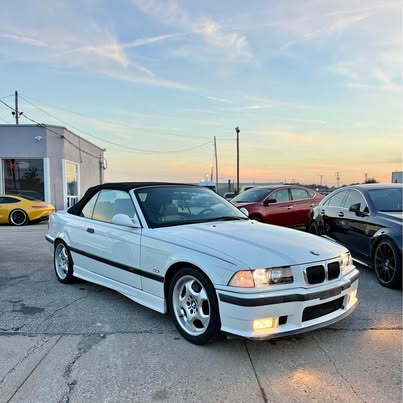
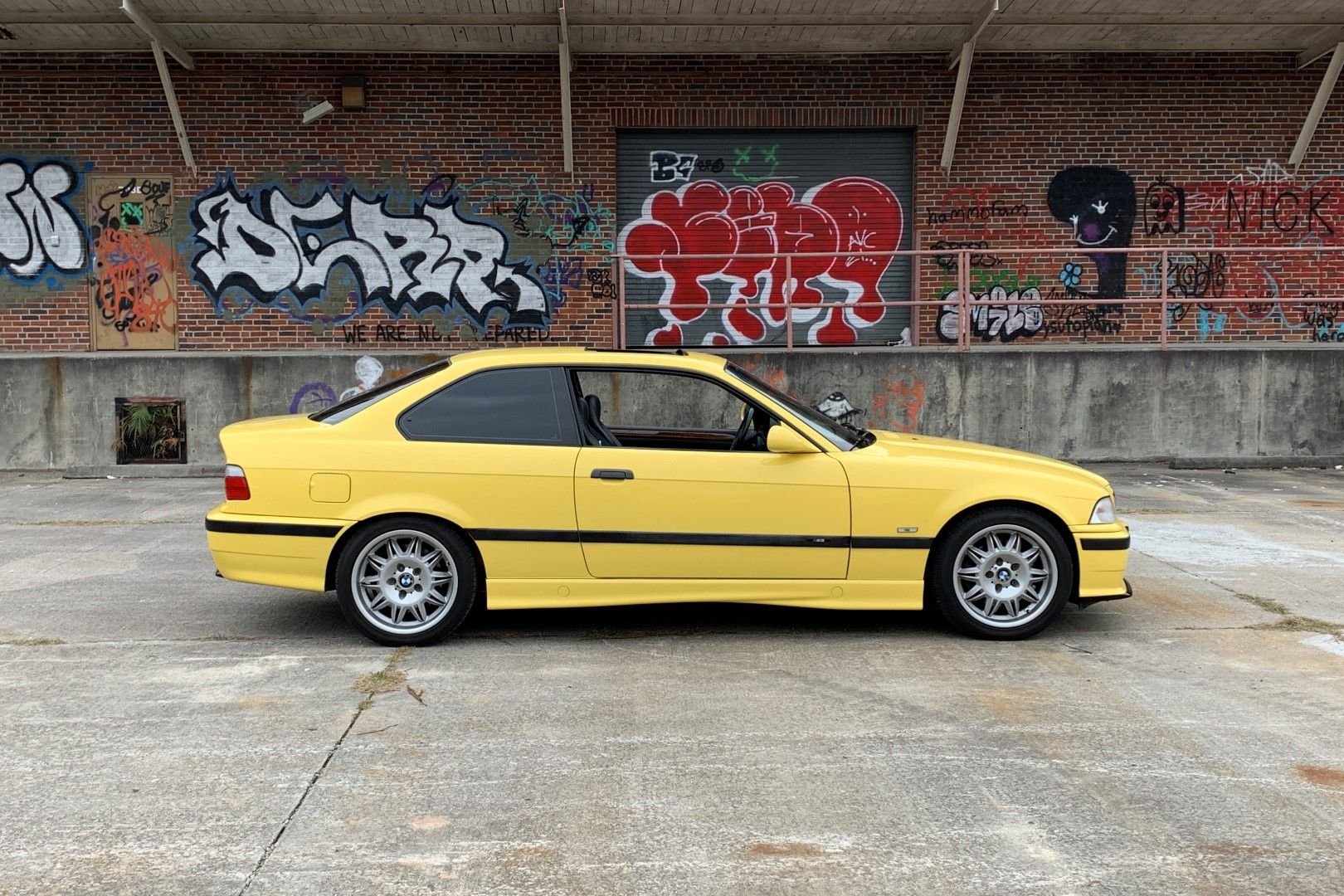
The E36 (1992–1999; US 1995–1999). The pool generation, and the most varied. In America the range runs: coupe (1995–99), sedan (1997–98 only), convertible (1998–99 only). The 1995 cars are 3.0-litre, OBD-I and coupe-only; from 1996 the 3.2 S52, OBD-II, and the wider range. Special US cars: the 1995 M3 Lightweight — a stripped, aluminium-doored coupe built in very small numbers, around 120, with a tall rear wing and a parts kit supplied in the boot for the owner to fit — is the one E36 America got that Europe envies, and it is forged accordingly: verify any claimed Lightweight against its VIN and specification without exception. Europe's specials — the M3 GT, the GT-R, the late GT2/Imola Individual — are import-only curiosities in the US. Note what the pool itself shows: of the five cars in this site's sample, three are coupes, one is the two-year-only sedan and one is the convertible — a fair miniature of the American market, where the coupe is the default, the sedan is the connoisseur's practical pick and the convertible is the cheapest way in for reasons the problem-areas section explains.
The E46 (2001–2006). Coupe and convertible, one engine, two gearboxes. The car to understand precisely is the coupe with the six-speed manual. The Competition Package (ZCP in the US, 2005–06) brought CSL-derived brakes, quicker steering and 19-inch wheels; the true CSL — lightweight, carbon roof, 360 hp — was never sold in America, so a "CSL" in a US listing is a tribute, a clone or a grey import, each priced differently. SMG cars dominate the listings; the gearbox section explains why the market discounts them and when that discount is an opportunity.
The E9x (2008–2013). Sedan (E90, to 2011), coupe (E92, to 2013) and folding-hardtop convertible (E93). One engine, the S65 V8; manual six-speed standard, seven-speed dual-clutch (DCT) optional and common. The Competition Package arrived for 2010. European limited editions — the GTS coupe above all — were not US cars. The E93 is the heavyweight of the family and the cheapest; the E90 sedan, especially with the manual gearbox, is the sleeper, built for fewer years and in smaller numbers than the coupe American buyers picture when they picture this generation.
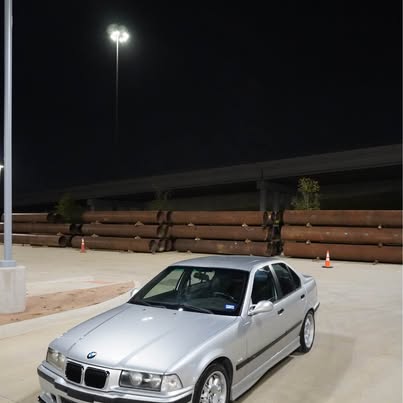
Engines and gearboxes
The S14 four: E30
The S14 is a racing engine in the literal sense — designed for Group A, built in small numbers, and happiest between 5,000 and its redline near 7,300 rpm in standard 2.3 form. In US specification it produces 192 hp with a catalytic converter; European cars made a little more, and the evolution engines more still, the 2.5-litre Sport Evolution reaching 235 hp. It has individual throttle bodies, a mechanical-feeling appetite for revs and almost no low-down torque by modern standards — below 4,000 rpm it is a pleasant four-cylinder; above it, it is the car its reputation describes.
Ownership turns on three disciplines. First, valve clearances: the S14 uses shim-adjusted clearances that drift with mileage, and a top end that has not been checked in years announces itself with noise and lost performance — ask when the clearances were last done, and treat "never, in my ownership" as a priced job, not a shrug. Second, the throttle bodies and their linkage: worn bodies and sloppy linkage give an uneven idle and fluffy response that owners chase through sensors for months. Third, the timing chain and its tensioner and guides: a rattle from the front of the engine on start-up that does not fade is chain-system wear, and on an interference engine of this value it is dealt with promptly or not at all. Oil consumption on a hard-used S14 is not automatically doom — these engines used oil in period — but blue smoke under load is ring or bore wear, and an S14 rebuild is a specialist, five-figure conversation. Buy the engine's history file as much as the engine.
The American sixes: S50 (US) and S52, E36
Here is the gap, stated fairly. When the E36 M3 came to America in 1995, BMW North America judged — correctly, commercially — that the European S50's price would kill the car in the US market. So the American car received an engine built from the regular production six architecture: a bored and stroked, single-VANOS (intake-side variable timing), single-throttle-body engine producing 240 hp — the 1995 3.0-litre, generally called the S50 in US usage (its full designation is S50B30US), replaced for 1996 by the 3.2-litre S52, still 240 hp but with meaningfully more torque and a broader back to it. These are excellent engines: tough iron-block sixes, closely related to the M50/M52 family, that pull from low revs in a way the European engine does not, take mileage well, and cost ordinary money to maintain by M standards. What they are not is the European engine. A US E36 advertised with European output figures, individual throttle bodies or a "Euro motor" is either swapped — a real thing, done both well and badly, and priced on documentation — or misdescribed. The engine number and a look under the bonnet settle it in one minute: one throttle body and a plastic intake manifold on a US car; six throttle bodies and a very different top end on a European S50.
The US sixes' own canon is short and manageable. VANOS wear gives a diesel-like rattle from the front of the engine around 2,000–3,000 rpm and a soft midrange; seals and a rebuilt unit are a known, bounded job. Valve retainers on early 1995 S50s are a documented weakness — the early retainer design can fail at sustained high rpm, dropping a valve; many cars have been updated, and the paperwork either shows it or the risk is priced in. Oil pump nuts on the S52 are a known forum-era concern — the nut can back off; a car with an oil-pressure light flicker is stopped, not driven home. Beyond that: cooling, which gets its own full treatment in problem areas because on the E36 it is a system-wide age issue rather than an engine fault, and the ordinary discipline of oil, plugs and filters. A US E36 six with 150,000 miles and a real history file is a better buy than a 90,000-mile car with none, and it is not close.
The European S50: E36 imports
For completeness, because they appear in US listings as imports and engine swaps: the European S50B30 (3.0, 282–286 hp depending on source convention) and S50B32 (3.2, up to 321 hp) are true Motorsport engines — individual throttle bodies, double VANOS on the 3.2, and an appetite for maintenance to match. The 3.2's VANOS is more complex and expensive than the American unit, valve clearances are a shim job, and parts come through specialist channels at specialist prices. A genuine Euro-engined car is a wonderful thing; an undocumented one is a parts puzzle wearing a premium. Documentation is the entire negotiation.
The S54: E46
The S54 is the S50 idea taken to its limit: 3.2 litres, an iron block chosen for strength at extreme piston speeds, individual throttle bodies, double VANOS, and 333 hp in US form at 7,900 rpm. It is one of the great engines — and it has the most consequential inspection canon of any engine in this guide.
Rod bearings. The S54's connecting-rod bearings are a wear item at performance-car mileages, a fact BMW effectively acknowledged with an early production recall on 2001–02 cars for bearing-related failures. The mechanism is plain: high rpm, high bearing loads, and bearings whose clearance and coating spec leave little margin for tired oil or extended intervals. Worn bearings announce themselves late — by the time there is audible knock, the crankshaft is usually involved. The rational buyer's position, now standard in this market: either the history file shows a recent bearing replacement with the invoice naming the job, or you budget the job — realistically $2,500–4,000 at an independent specialist, parts and labour — into the purchase and do it immediately. An oil analysis showing elevated copper and lead is the one test that can argue a set of bearings is currently healthy; a seller's assurance cannot.
VANOS. The S54's double-VANOS unit wears its hub bolts, its oil pump disc tabs and its seals; symptoms run from rattle to timing faults to a flat, noisy top end. Rebuilt units and uprated parts exist and the job, done completely with the associated hardware, is a four-figure specialist item. As with bearings: invoice or budget.
The rest is more ordinary: throttle actuator and idle control maintenance, valve clearances on a shimmed top end that need periodic checking, cooling-system age (shared with the E36 story below), and an engine that rewards the correct oil — the specified 10W-60 — changed far more often than the dashboard service indicator suggests. An S54 run on the indicator's long intervals by a succession of owners is precisely the car the bearing paragraph is about.
The S65 V8: E9x
The S65 is a 4.0-litre, 8,250-rpm V8 derived from the M5's V10: individual throttle bodies, double VANOS, 414 hp, and a soundtrack no later M3 attempts. It is also, in one specific respect, the S54 story repeated. Rod bearings are the S65's defining ownership issue — the same tight-clearance, high-load mechanism, the same late announcement, the same rational response: documented replacement, a clean oil analysis, or the job budgeted from day one at a similar four-figure cost to the S54's. Do not let a V8's smoothness talk you out of this; the failure mode does not care how the engine feels at idle.
Second, throttle actuators: the S65 has two electronic throttle actuators whose internal plastic gears wear, producing limp mode, fault codes and a car that will not rev. Rebuilt and uprated-gear units exist; replacing both is the standard cure and is, again, a four-figure job at shop rates — check for fault history and ask directly whether they have been done. The idle control valve is a smaller, cheaper known item with similar limp-home symptoms. Beyond those: the S65 is a strong engine, thirstier than any six here by a wide margin, and sensitive to the same oil discipline. Cold-start behaviour is a useful tell — a healthy car starts cleanly, idles through its cold-start routine and settles; hesitation, hunting or codes on a cold start are the actuators or idle valve introducing themselves.
Gearboxes
Manuals. Every generation offered a proper manual, and the market's preference is absolute: in the pool of five cars behind this guide, four are manuals and one is an automatic — a small sample that points the same way as the whole market. E30: a five-speed; judge second-gear synchromesh and linkage slop. E36: a five-speed ZF manual, strong and pleasant; the European 3.2 got a six-speed US cars never did, so a six-speed US E36 is a swap — fine if documented. E46: a six-speed with a heavy, deliberate shift; clutch life reflects the previous owner's launch habits. E9x: a six-speed that suits the V8 better than its critics allowed. On any manual the tests are the same: cold second-gear engagement, synchro crunch on a fast 3–2 downshift, clutch bite and judder, and any whine in gear that disappears in neutral.
Automatics and automated manuals — the honest version. The US E36's five-speed automatic, mostly in sedans and convertibles, changes the car fundamentally: the S52's torque makes it a pleasant cruiser, but it is not the car the badge promises, and the market prices it accordingly — the discount route into E36 ownership, legitimate if you go in clear-eyed. The E46's SMG II is a true automated manual, hydraulically operated, with fast full-throttle shifts, clumsy low-speed manners and a pump/actuator system whose failures are four-figure events; the discount is real, manual conversions are a documented cottage industry, and an SMG car with a recent pump invoice is a rational buy. The E9x DCT is the best of the automated boxes — genuinely excellent — and the manual premium there is about feel and rarity, not avoiding a bad gearbox. On all of them: service history for the box itself, and any hesitation, flare or warning light is a specialist diagnosis before money moves, never after.
Problem areas
An M3's problems are generation-specific in their details and universal in their shape: a cooling system or a bearing set that ages on a schedule, a structure that cracks or rusts in mapped places, and an interior built from materials that were never meant to see thirty summers. Work by generation first, then by system. And hold one principle throughout: on these cars, the expensive faults are almost all checkable. The inspection section turns everything below into a sequence; this section explains what you are looking for and why it costs what it costs.
E36 cooling: the system, not a part
If you remember one thing about the E36 — the generation of all five cars in this site's pool — remember this: its cooling system is a whole-system renewal item, and a car whose cooling system has not been renewed is a car running on borrowed time regardless of how sweetly it drives on the day. BMW built the system with plastic where earlier cars used metal: a plastic thermostat housing that warps and weeps, a water pump whose early plastic impeller can crack and disintegrate, a radiator with plastic end tanks and a neck that goes brittle and snaps, and an expansion tank that crazes and splits. Each part is cheap. The failure is not, because the failure mode is overheating, and an overheated iron-block six with an alloy head is a warped head and a blown head gasket — a four-figure engine job caused by a three-figure part.
So the question on any E36 is never "does it cool today?" It is "when was the system done, and what does 'done' mean on the invoice?" Done means, at minimum: radiator, expansion tank, thermostat and housing (metal housings are the common upgrade), water pump (metal or composite impeller) and the main hoses, ideally with the plastic coolant pipes under the intake manifold considered too. A full preventive renewal runs roughly $800–1,800 at an independent — trivial against the alternative, which is why a documented renewal is worth a real premium and its absence should be priced into any offer. The tests on the day: a temperature gauge that climbs to the middle and stays there (one that sits low is a stuck-open thermostat — its own fault, not good news), no coolant crust at the radiator neck or housing joints, no sweet smell from the vents, a heater that blows properly hot, and hoses that are not rock-hard within minutes of a cold start, which is combustion gas where it should not be.
The E46 inherited the same philosophy — plastic expansion tank that splits, radiator and pump on a schedule — and the same rule applies with slightly less urgency and identical logic: invoice or budget, roughly similar money. The E9x and E30 systems are more conventionally built, but at their ages every rubber hose and every radiator is an age item on any car in this guide.
Structure: E46 subframe and boot floor, E36 mounting points
The E46 boot floor is the single most important structural check on any car in this guide. The E46's rear axle carrier (the "subframe") mounts to the floorpan at four points, and the floor around those mounts can crack and tear — a design weakness, aggravated by hard use, that BMW addressed in period with repairs and that the aftermarket now addresses with reinforcement plates welded in. The cracks begin around the mounting points, often on the left side first, hidden under underseal and visible only with the car on a lift, the area cleaned, and a strong light — sometimes only as hairlines, sometimes as torn metal with the mount pulling through. A cracked floor is not automatically a walk-away: welded repair with reinforcement is a known, complete cure, realistically $1,500–3,500 depending on extent and who does it, and a car already reinforced with documentation is arguably better than an uncracked original. But an unchecked E46 is an unknown E46, and the check cannot be done from the seller's photographs or from a kerbside crouch. Lift, light, clean eyes. This is step 4 of the inspection, and on an E46 it decides the purchase more often than the engine does.
The E36's equivalents are smaller but real. Rear shock mounts tear and knock — a clunk from the rear over bumps, visible from the boot with the trim pulled back, cheap parts, and a warning that the car has been run with dead dampers. Rear trailing-arm bushes wear and let the rear toe change under power — the car feels nervous and steers itself gently on the throttle; replacement with alignment is a few hundred dollars and transforms a tired car. Front control-arm bushes (the "lollipops") and ball joints are the corresponding front-end wear items. On the E30, add the discipline of age: front subframe and engine-mount areas, and a structure whose newest example is thirty-five years old.
Rust: the map, by generation
E30. A galvanised-era car it is not. Rust is the E30's defining condition issue, and the map is consistent: the scuttle panel below the windscreen, the front footwells and floor edges, the sills and jacking points, the rear wheel arches and the valance behind them, the boot floor and the wells either side of it, the battery tray area, the sunroof tray and its drains, and the front wings behind the wheels. Much of it hides — under the factory underseal, behind the arch liners, beneath boot trim — and the flared M3 arches make repair panels specific and dearer than standard E30 items. An E30 M3 with genuine structural rust is a restoration project priced against collector values, which can make sense; an E30 M3 with hidden rust sold as solid is the most expensive mistake in this guide. Magnet, torch, lift, and a seller who welcomes all three.
E36. Better protected and younger, and the rust is correspondingly a condition deduction rather than an existential question — usually. Check the rear arch lips, the sill ends and jacking points (crushed and torn sill metal from careless jacking is common and starts corrosion), the boot floor around the battery and spare wheel, the bottom of the doors, and the area around the windscreen frame. Cars from the salt belt — and note that the pool behind this guide includes cars listed in New York and Ohio — deserve the underside inspection their postcodes suggest: brake and fuel lines, subframe surfaces and every bolt a suspension job will need to undo. Surface rust on subframes is cosmetic; perforated sills and arches are welding and paint, priced per panel, and they compound.
E46 and E9x. The E46 rusts at the rear arch lips, the sill covers' hidden metal, the boot lid around the handle and plate lights, and front wings; the E9x is the best protected of the four and rust is rarely its story — but check arch lips and sill ends on northern cars anyway, because "rarely" is not "never" and these cars are now old enough for accident repairs to be rusting. On all four generations: fresh underseal over everything, applied recently and uniformly, is a question, not an answer — exactly as it is on every classic. Honest factory coating is patchy; concealment is tidy.
Engines: the priced wear items
This section cross-refers deliberately: the mechanisms live in Engines and gearboxes, and what belongs here is the buyer's summary. S54 (E46) and S65 (E9x) rod bearings: documented replacement or budgeted replacement, oil analysis as the only acceptable evidence of current health — reckon $2,500–4,000 a set fitted at a specialist for either engine. S54 VANOS: rattle, timing faults, invoice or budget; a complete VANOS overhaul with the known uprated hardware is a four-figure job. S65 throttle actuators: ask directly, check for stored faults, budget for both if undocumented. S14 (E30) top end: valve-clearance history, throttle-body condition, chain rattle; a full S14 rebuild is the most expensive engine event in this guide. US E36 sixes: VANOS rattle at 2,000–3,000 rpm, early-1995 valve retainers, cooling as above — the cheapest engine canon here, one of the E36's genuine virtues. None of these is a reason not to buy the generation. All of them are reasons not to pay un-done prices for un-done cars.
Suspension, steering and brakes
These are heavy, fast cars on bushes and dampers that wear like any other's, only with more expensive consequences for geometry. Across all generations: tired dampers (bounce the corners; look for leaks; a car on original dampers at 120,000 miles is riding on nostalgia), front control-arm bushes giving a shimmy under braking and vague turn-in, rear bushes giving the throttle-steer described above, and steering racks and pumps that weep. E36 and E46 cars respond so well to a full bush-and-damper refresh — realistically $1,500–3,500 depending on scope — that a tired car at the right price is a legitimate strategy: you are buying a transformation you can feel. Brakes are discs all round, generously sized, at sane money. What is not sane is corroded brake pipes — a lift-inspection line item on any northern car — or a gearbox service skipped because a previous owner treated "lifetime fill" as a promise rather than a marketing term.
Interiors and electrics
The E36 interior is the generation's weak point and the pool cars' most likely visible fault: door cards that delaminate and pull away from their fixings, a headlining that sags as its foam backing dies, a glovebox lid that sags, seat bolsters worn through on the driver's entry side, and plastic trim that cracks around its screws. None of it stops the car; all of it costs, because good used trim in the right colour is hunted and retrimming is skilled work. A sagging headliner is a few hundred dollars done properly; a full tatty interior is a four-figure programme, and it is the first thing passengers see. E46 interiors wear better — bolsters and sticky soft-touch trim coatings are the usual items — and the E9x better still. E30 dashboards crack at the top in sun states, and crack-free ones are now genuinely scarce parts.
Electrics follow the usual rule — failures at connections and known components, not in the middle of looms. E36: window regulators, the climate panel's failing capacitors (a panel that dies and resurrects is introducing itself), display fade, locking actuators, and on convertibles the fully automatic roof — motors, microswitches and tension straps whose complete health is a condition of purchase, tested through several full cycles, never one. A roof that "just needs a sensor" needs a diagnosis and a budget: roof work runs from a few hundred for straps and switches to four figures for motors, and the E93's folding hardtop multiplies that logic. E46: window regulators again, GM5 module relays behind locking faults, battery drain from a failing blower final-stage resistor. E9x: actuators as above, plus the ordinary diet of sensors and modules — which is the point: on the two newer generations, a pre-purchase scan with BMW-capable diagnostics is not optional. It is the inspection.
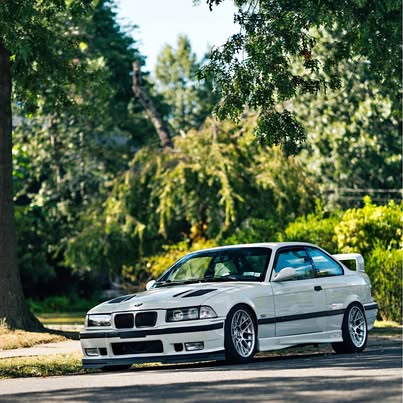
How to inspect one
Allow an hour and a half, bring a torch, a magnet in a cloth and — for E46 and E9x cars — arrange a lift and a BMW-capable diagnostic scan as part of the deal, not as an afterthought. Inspect cold: tell the seller in advance the engine must be cold when you arrive, because half the tests below are cold tests, and a seller who warms the car up "to help" has removed your best evidence. Work in this order; the walk-away faults come early and cheap.
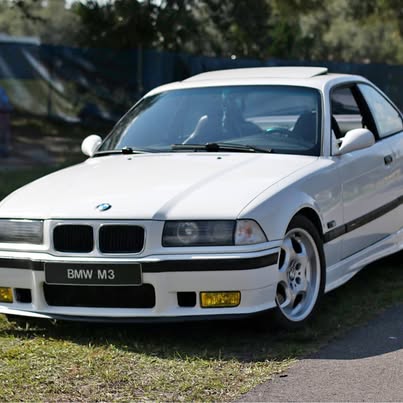
- Paperwork and identity first. Match the VIN on the title to the plate and stampings on the car. Decode it: the VIN identifies the generation, body and engine the factory fitted, and on an M3 — a badge that adds thousands to an ordinary 3 Series' value — identity is money. Confirm the engine is the engine the model section says it should be: one throttle body on a US E36 six, six on a European S50 or an S54; an S14 with its distinctive top end in an E30; eight cylinders in an E9x. Then read the history file properly. You are looking for named jobs, not stamps alone: rod bearings (S54, S65), VANOS work, cooling-system renewal (E36, E46), throttle actuators (S65), valve clearances (S14, S50 Euro, S54). A thick file with the right invoices is worth thousands and this step is where you find out whether it exists.
- Cold start. From cold, every engine here should start promptly and settle. Listen at the front of the engine for chain rattle that persists beyond a second or two (S14, and any six); listen for VANOS rattle as you hold 2,500 rpm on a US E36 six; watch the exhaust — a puff of blue at start-up that clears is valve-stem seals, blue smoke that continues under load is internal wear. On an S65, note the cold-start routine: hesitation, hunting or a warning light points at the idle valve or throttle actuators from the problem-areas section.
- The oil and coolant evidence. Dipstick: level, colour, and on any car a level that is wrong in either direction is a question. Oil filler cap: mayonnaise-like emulsion in quantity means short trips at best, coolant where it should not be at worst. Expansion tank: correct level, clean coolant, and — after the test drive — hoses that are firm but not rock-hard within minutes. On an E36 or E46, this is also where you date the cooling system visually: a chalky, crazed expansion tank and an original-looking radiator are a renewal you will be paying for, per the cooling section, so price it now.
- Underneath, on a lift if the car has earned it. On an E46 this step is the subframe check: clean the four rear carrier mounting areas, strong light, look for hairline cracks radiating from the mounts — the boot-floor test from the problem-areas section settles the car. On every generation: sills and jacking points, floor edges, E30 scuttle and boot-floor equivalents from the rust map, brake and fuel lines on northern cars, subframe surfaces, exhaust condition, and every oil leak traced to its source rather than its drip. Weeping at the sump is a gasket; oil at the back of an S54's head is a conversation. Perforation in structural metal ends the inspection for any car priced as a driver.
- The mounting-point tour. E36 rear shock mounts from inside the boot, trim back: torn rubber or cracked metal is the clunk explained. All generations: bounce each corner hard and watch it settle in one movement; look at the dampers for leaks; check ride height side to side — an M3 that lists has a spring or a story. On an E30, check the steering for the free play of a worn box and linkage rather than a rack.
- Rust, close up. Magnet along the arch lips, sill bottoms and door bottoms; fingertip along every arch lip for filler edges and bubbling; torch into the boot wells, the spare-wheel well and — on an E30 — under the boot trim and behind the rear valance. Lift the carpets where the seller allows. You are applying the rust map from the problem-areas section generation by generation; surface colour on a subframe is nothing, a soft arch lip is welding, and fresh uniform underseal is a question you ask out loud.
- Wheels, tyres and brakes. Mismatched budget tyres on an M3 tell you how the car has been maintained more honestly than any invoice summary — these cars left the factory on serious rubber and a sorted one still wears it. Check the spare, the tool kit and the jack: completeness is a proxy for care. Brake discs for lips and scoring, pads through the wheel spokes, pedal feel with the engine running, and a handbrake that holds on a slope.
- The test drive: gearbox and chassis. Fifteen minutes minimum, mixed roads. Manual: cold second gear, a brisk 3–2 downshift for synchromesh, clutch bite and judder pulling away on a hill. SMG: low-speed manners in a car park, full-throttle shifts on an open road, any hesitation or warning. DCT and automatic: smoothness both ways through the range. Then the chassis: hands-light at speed for wander (bushes), a firm brake application for shimmy and straightness, throttle on and off in a gentle corner for rear steer (trailing-arm bushes), and bumps listened to, not just felt — knocks have addresses, and the problem-areas section lists them.
- The test drive: engine. Use the whole rev range where it is safe and legal — you are buying the top half of it. An S14 should wake up above 4,000 rpm; a US E36 six should pull cleanly from 2,000; an S54 should harden in note and surge past 5,000; an S65 should simply keep coming. Flat spots, rattles under load, hesitation at a specific rpm — each maps to a named system above. Watch the temperature gauge throughout: middle, stable, unmoved by idle or load. A gauge that creeps at idle is the cooling section asking for its money.
- Heat, air and electrics. Whatever the weather: heater full hot, air conditioning full cold (where fitted), blower on every speed. Work every window twice, the mirrors, the seats, the sunroof, the lights, the washers. On a convertible — E36, E46 or the E93 hardtop — run the roof through at least two full cycles and watch every stage; a roof that hesitates mid-cycle is telling you its price. On E46 and E9x cars, this is where the diagnostic scan earns its fee: stored faults for VANOS, actuators and gearbox are read, not guessed.
- Stance and shutlines, last but visual. Stand back and look down each flank: panel gaps, paint match between panels in flat light, arch heights equal side to side, the car sitting level. Take the photograph from twenty feet that the exemplar guides always recommend — faults you talked yourself out of at arm's length are obvious in a picture. Check the boot and bonnet shutlines and the door stickers and labels that survive on an unrepaired car and vanish on a repaired one.
- Interior, honestly. Sit in the driver's seat and judge the bolster with your hand, not your hopes. E36: door cards pulled away at the edges, headlining pinned or sagging, glovebox lid drooping. All generations: does everything you tested in step 10 still work now the car is hot, and does the cabin smell of coolant, fuel or damp — three smells, three systems, all covered above. A sound original interior is the hardest thing to recreate on any of these cars; weight it as such in the offer.
Values
The figures that matter for this model are computed from this site's own listings and recorded sales, and they sit below this guide — the listed-now summary and the market block are refreshed every time the site rebuilds, so use them rather than any number quoted elsewhere. What follows is how to read them. A warning about sample size belongs first, because this model's own pool makes the point concretely: at the time of writing the pool behind this guide is five cars, all E36s. Five asking prices can sketch a market; they cannot define one, and a single exceptional or desperate listing moves a median built on five cars violently. Read the range, read the individual cars, and never let a small-sample number do the thinking the inspection section is for.
The M3 market is four markets wearing one badge, and they barely speak to each other. The E30 is a collector market, priced on originality, evolution specification and documented history, where the spread between a correct car and a merely shiny one is the widest in this guide and auction results, not asking prices, carry the truth. The E46 is a maturing modern-classic market: manuals ahead of SMGs, coupes ahead of convertibles, documented bearing and subframe work a visible premium because the market has learned to price the jobs this guide prices. The E9x is the newest and most volatile: the last naturally aspirated M3, a V8, with a growing following — and a rod-bearing question that splits listings into documented and undocumented with a price gap to match. And the E36 — the pool's generation — is the value market: the car money buys to drive, where the US–Euro engine distinction confuses asking prices in both directions, automatics and convertibles sit at a discount to manual coupes, and condition and cooling paperwork move money more than mileage does.
Three reading rules apply across all four. First, asking is not achieving: private-platform asking prices routinely sit above where cars change hands, because every seller prices against the best listing they have seen rather than the average car they own; recorded sales are the corrective. Second, the condition spread within a variant dwarfs the spread between variants — a sorted S52 coupe is worth more than a tired example of a nominally dearer model, and the cheapest row for any variant is almost always a car with a named job outstanding from the problem-areas section. Third, documentation is a priced feature: bearings done, floor reinforced, cooling renewed — each removes a four-figure uncertainty, and the market pays for removed uncertainty. Negotiate from the inspection, item by item, with job costs attached; a seller with a genuinely sorted car will recognise the method, because it is the same one that prices their car up.
Parts and ownership
Parts support for these four generations is strong and stratified: the newer the car, the more supply runs through BMW's own network and the big specialists; the older, the more it runs through a mature reproduction and enthusiast trade that exists because the E30 M3 became valuable enough to sustain it.
Easy: service items for all generations — filters, plugs, belts, brake discs and pads, dampers and bushes (standard E36/E46 fitments especially), cooling-system components for the E36 and E46 (the whole renewal kit is a catalogue order), clutch kits, exhausts in standard form, and the wear hardware this guide keeps naming: shock mounts, trailing-arm bushes, control-arm bushes. The US E36 sixes are the cheapest engines here to feed, sharing architecture and many parts with the ordinary production sixes.
Harder and dearer: S14 engine internals and E30 M3-specific body panels (the flared arches are not standard E30 pressings); European S50 VANOS and throttle hardware in the US; S54 and S65 rod bearings as a labour event rather than a parts problem; SMG hydraulic pumps and actuators; convertible roof motors and mechanisms, E93 hardtop hardware most of all; crack-free E30 dashboards; E36 interior trim in the less common colours; and any M-specific panel after accident damage. BMW's classic parts programme supports the older cars better than most manufacturers manage, but "supported" and "cheap" are different words, and on M cars they usually are.
Running costs. Budget the first year as a catch-up year, because it almost always is: an E36 bought without recent paperwork wants its cooling system, a bush refresh and a full service — a programme in the low thousands of dollars; an E46 wants its bearing/VANOS/subframe position established, either invoices or a larger four-figure programme; an E9x the same for bearings and actuators; an E30 a specialist's baseline inspection before any of it. Fuel: the sixes return figures in the high teens to mid-twenties depending on use, the S65 notably less — it is a 4.0-litre engine that revs to 8,250 rpm and it drinks like one. Tyres are a real budget line; correct rubber in M sizes is not bought at economy prices, and these cars are sensitive to cheap tyres in a way ordinary cars are not. Insurance follows value — agreed-value cover suits the E30 and the best E46s; the E36 remains the generation you can insure and run like a normal car. Find the specialist before you buy the car, and on S54 and S65 cars ask them about bearings before anything else — their answer tells you whether you have found the right shop.
Which one to buy
- The all-rounder: E36 coupe, manual, S52 (1996–99). The pool's own shape — three of its five cars are coupes — and the market's verdict too: the toughest engine canon here, real pace, everyday usability, parts at production-car prices. Buy the cooling paperwork with the car.
- The value buy: E36 sedan or convertible, or an automatic coupe. Same engines, same chassis hardware, visibly less money — the sedan if you need the doors (1997–98 only, so be patient), the convertible if the roof passes step 10's cycles twice, the automatic only with your eyes open about what it does to the car's character and resale.
- The driver's classic: E46 coupe, six-speed manual. The S54 at full song is the best reason here to spend more money. It is bought correctly one way: bearings documented or budgeted, VANOS documented or budgeted, boot floor inspected on a lift — then driven hard and often.
- The collector car: E30 M3. Bought on originality, identity and history file, in that order, with the rust map applied forensically. The Sport Evolution is the peak of the line and priced as such; a standard US car, correct and unmolested, is the connoisseur's version of the same idea.
- The modern car: E92 coupe, DCT or manual. The V8, the soundtrack and the most complete everyday package here — with the S65's bearings and actuators handled as the S54's are on an E46. The E90 sedan in manual form is this generation's sleeper pick; the E93 is the cheapest, for the roof-machinery reasons above.
- The project to avoid at retail money: any generation with its priced job outstanding and its price set as if it were done. An E36 with an original cooling system, an E46 with an unchecked floor, an E9x with silent bearings — each is a legitimate purchase at a project price and a poor one at a sorted price.
And the rule that overrides all of the above: buy the documented car, in the generation whose character you actually want. On an M3 the expensive truths are all written down somewhere — an invoice for bearings, a receipt for a cooling system, a photograph of a reinforced floor — or they are not true yet. Engines, bushes, roofs and cooling systems are all fixable at prices you can plan for; an undocumented car at a documented price is the one purchase here that cannot be made right afterwards.
See the 315 E36 M3 Coupe cars currently listed.
For sale now
 $47,990
Expand
 $52,990
Expand
 $234,990
Expand
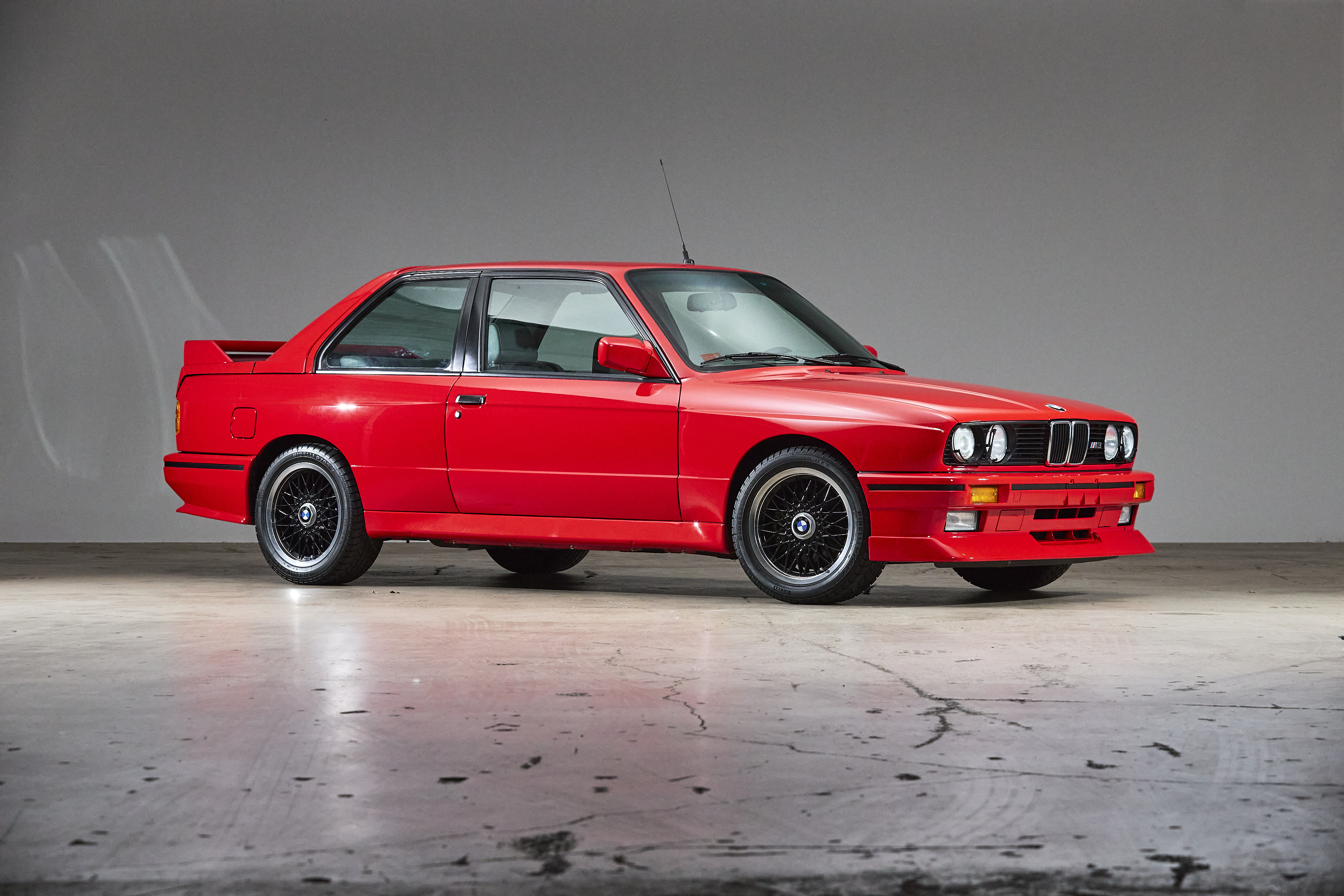 $249,990
Expand
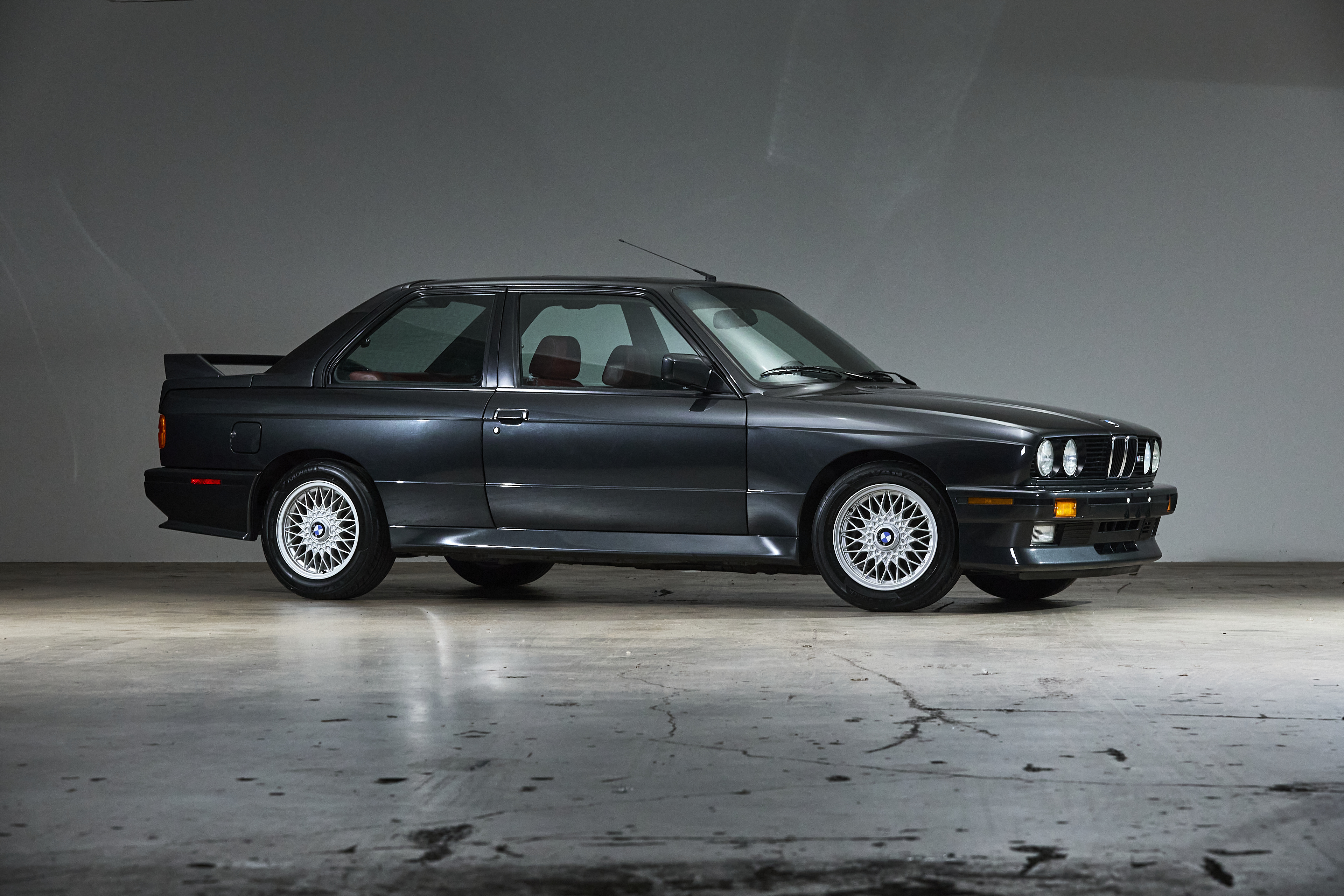 $119,990
Expand
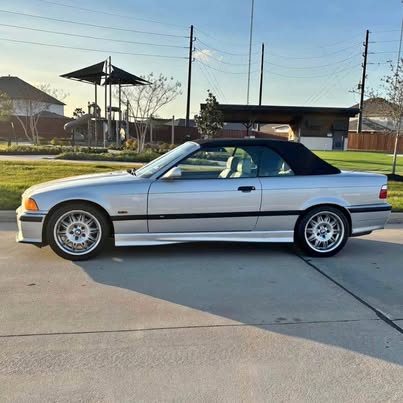 $15,500
Expand
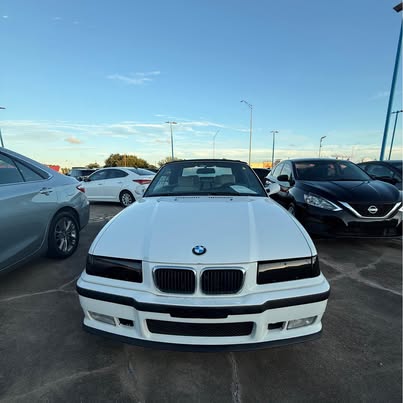 $16,991
Expand
Expand
What they sell for: E36 M3 Coupe sale prices.