
Chevrolet Impala Hardtop buyer's guide
Chevrolet Impala Hardtop -- the model's own buyer's guide: variants, values and what to check.
Years listed: 1958-1970 · Series: Impala
Overview and history
The Impala hardtop is the pillarless Chevrolet. A hardtop, in the strict sense this guide uses, has no fixed centre pillar: roll all the side windows down and the flank opens in one unbroken sweep from windscreen to rear glass. Chevrolet built that trick into two-door and four-door bodies, in Impala and Super Sport trim, from 1958 through to 1970, and this guide covers those cars across all four generations.
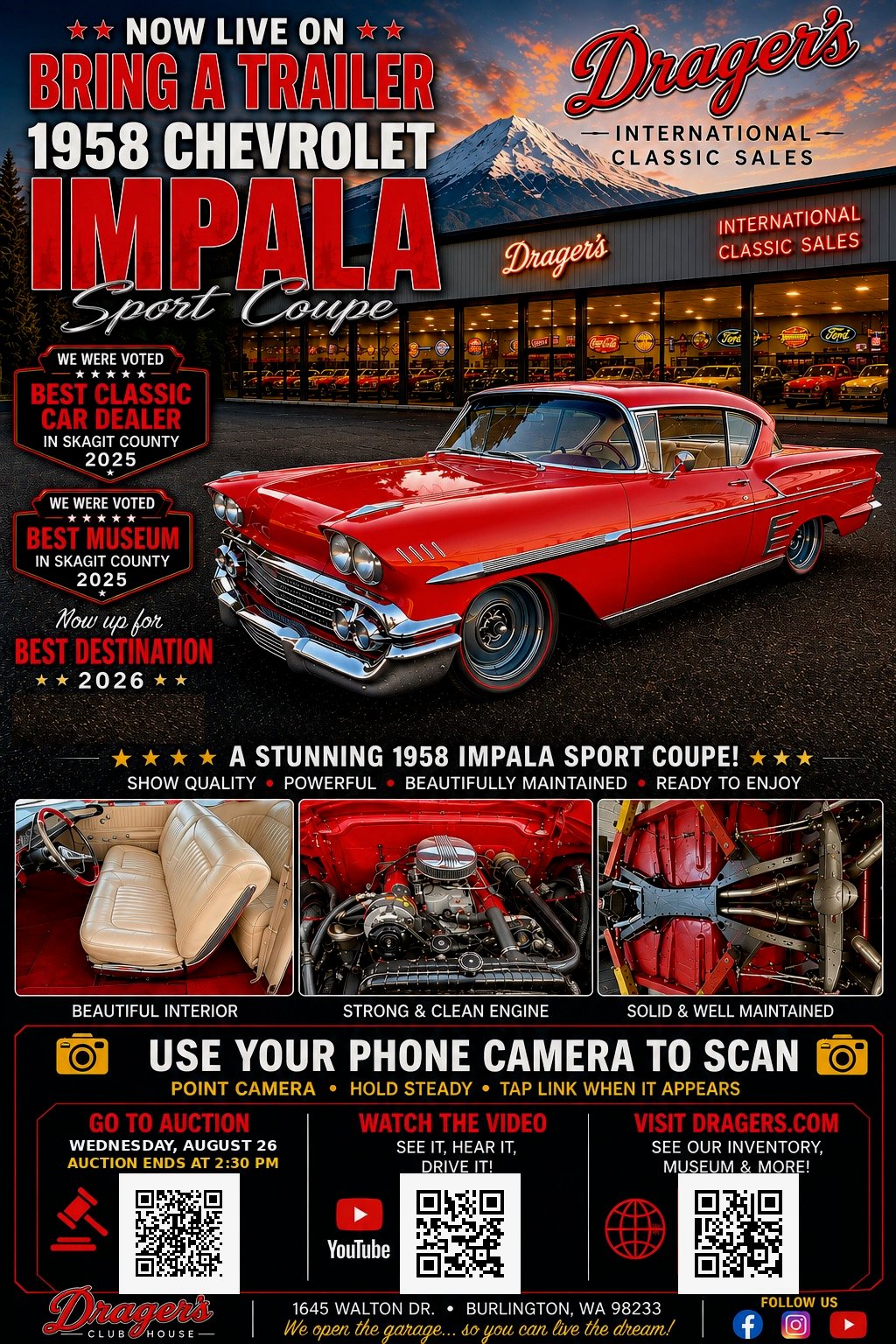
The Impala arrived for 1958 as the most expensive Chevrolet you could buy, offered only as a two-door hardtop and a convertible, sitting above the Bel Air. The styling was a one-year wonder: low, wide, heavily sculpted, with a lattice grille, quad headlamps and deeply carved rear quarters. Underneath sat the new X-frame chassis, and under the bonnet a buyer could order the new 348 cubic inch W-series V8, with triple two-barrel carburettors if the budget allowed.
For 1959 the Impala became a series in its own right, the range widened to include four-door hardtops, and the hardtop settled into its long role: the smart, formal-yet-sporting body in the middle of American family life. Through the clean-lined 1961 to 1964 generation came the thin-pillared bubble top of 1961 and 1962 and the Super Sport, first as an appearance and handling package in 1961 and then, crucially for today's buyer, as a separate series with its own VIN identity for 1964 to 1967. The 1965 redesign put the car on a new perimeter frame, gave it curved side glass and Coke-bottle haunches, and produced the best-selling Impala year of all. The hardtops that followed to 1970 grew larger and more formal, the fastback Sport Coupe of 1967 and 1968 giving way to a more upright roof for 1969 and 1970, by which time the big-block 454 had arrived.
What unites all of them is a simple mechanical truth. These are body-on-frame cars with simple, massively produced running gear and vast parts support, wrapped in large pressings that were never rustproofed to a modern standard. The engines, gearboxes and axles can almost always be fixed; the shell, the brightwork and the hardtop-specific glass and seals are where money disappears. Add one further complication: because the Super Sport premium is real and SS badges, bucket seats and consoles bolt straight into an ordinary hardtop, identity fraud is endemic. A large part of this guide, and the centrepiece of the problem areas below, is therefore about proving what a car actually is before you pay for what it claims to be.
Our own listings underline how wide the family is. We currently track 12 Impala hardtops, split evenly between cars for sale and cars recorded sold, spanning 1958 to 1970. Treat that as a flavour of the market rather than a census: in the wider world the 1965 and 1966 cars dominate survival, and genuine big-block Super Sports are the thin end of supply where verification matters most.
The models
Every Impala hardtop sits in one of four generations, and the generation matters more than the model year: frames and rust behaviour change at the generation breaks.
| Variant | Years | Body and roof | Typical engines | Character |
|---|---|---|---|---|
| First-generation hardtop | 1958 | Two-door only, one-year sculpted body, X-frame | 283 V8, 348 W-series V8 | The glamorous one-year flagship |
| Second-generation hardtop | 1959–1960 | Two-door and four-door, flat-fin styling, X-frame | 283 V8, 348 V8, 235 six | Longer, lower, wider; dramatic and rust-prone |
| Third-generation hardtop | 1961–1964 | Bubble top 1961–62, crisper roof 1963–64; four-door throughout, X-frame | 283 and 327 small-blocks, 348 then 409 W-series | The sporting generation; SS is born here |
| Fourth-generation Sport Hardtop | 1965–1966 | Two-door and four-door, perimeter frame, curved side glass | 283, 327, 396 Mark IV; SS a separate series | The volume classic; the default hunting ground |
| Fourth-generation fastback and formal cars | 1967–1970 | Fastback Sport Coupe 1967–68, formal roof 1969–70, perimeter frame | 327, 350, 396 and 427, 454 for 1970 | Bigger, torquier, more formal; the last of the line |
1958: the one-year car. The first Impala hardtop is a two-door only, and it shares almost no sheet metal with the car that replaced it twelve months later. It is the most collectible ordinary Impala hardtop of all, but one-year panels, trim and glass are correspondingly harder and dearer to replace than the equivalent parts for a 1965 car. Buy the most complete 1958 you can find; a missing-trim project is a parts hunt measured in years. The chassis is the X-frame described in the problem areas, the brakes are drums with a single-circuit master cylinder, and the desirable engines are the 348s, up to the triple-carburettor Special Turbo-Thrust. A 283 car is no disgrace, but the market pays for the W-motor, so do not let a seller price a small-block hardtop as if it were a tri-power car.
1959 and 1960: the batwing cars. The 1959 restyle stretched the car, spread the tail into the famous horizontal fins and made the four-door hardtop a core model. These are the most extrovert Impalas ever built and the most demanding to restore: huge pressings, acres of brightwork, a wraparound windscreen whose glass and seals are specialist items, and the same X-frame underneath. Engines mirror 1958. Four-door hardtops are the value entry into batwing ownership, and a good one is a great deal of presence for the money, provided the shell is sound.
1961 to 1964: the sporting generation. The 1961 car threw away the excess and started again with clean, almost European restraint. The two-door hardtop for 1961 and 1962 wears the bubble top: a slim, airy roof with a large wraparound rear window that collectors single out by name. For 1963 and 1964 the roof went crisper and more angular. Four-door hardtops run through all four years and are handsome, undervalued cars. This is also where the Super Sport story starts. In 1961 the SS was a factory option package offered on any Impala body, most famously with the new 409. For 1962 and 1963 SS remained a trim-and-equipment package, identified by bucket seats, console, engine-turned trim and badging, but not by the VIN. From 1964 the SS became a separate series, and the VIN proves it — the fact that divides the SS market in two, treated at length in the verification section below. The sporting peak is the 409 car, ideally with a four-speed manual; the sensible peak is a 327-powered 1963 or 1964 hardtop, which does everything the 409 does at road speeds for a fraction of the cost.

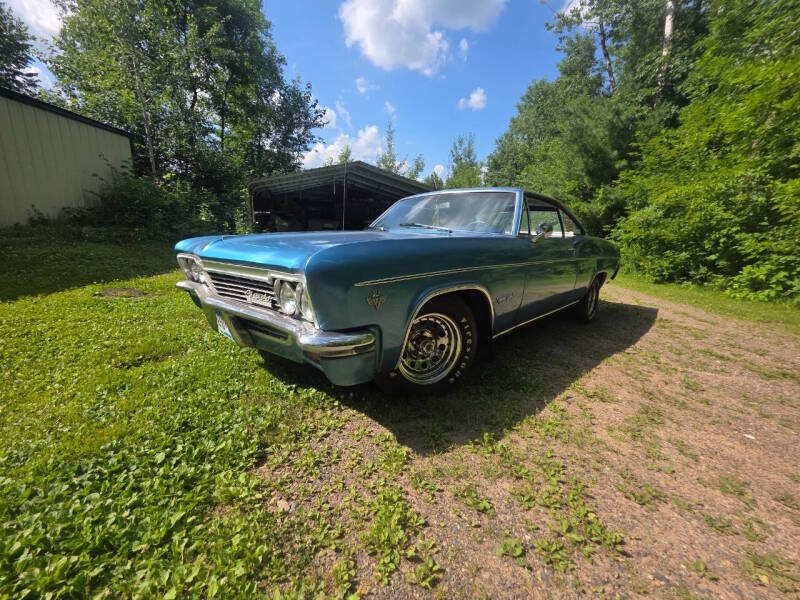
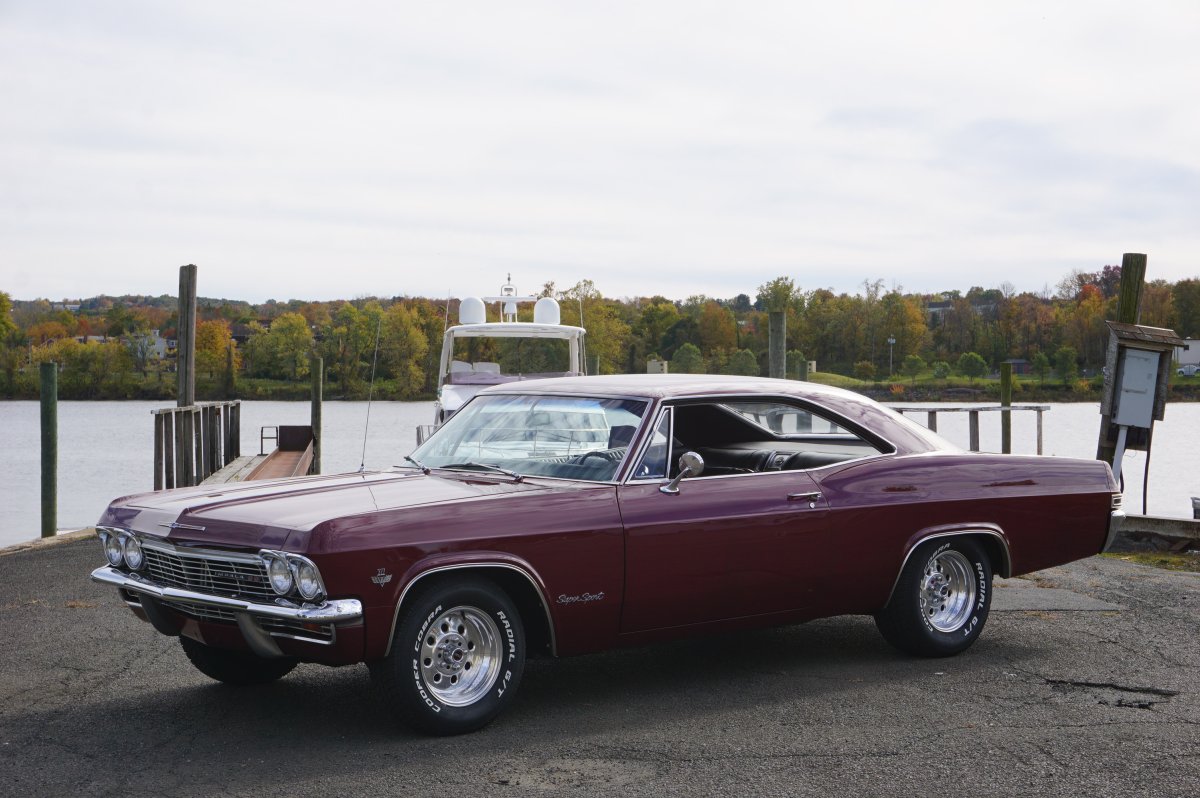
1965 and 1966: the volume classic. The 1965 redesign is the commercial summit of the nameplate, and the hardtops are the best-supported classics in this guide. Two-door and four-door Sport Hardtops share the new perimeter frame, coil springs at all four corners, curved side glass and that long, haunched profile. The SS was a separate series in both years, with standard bucket seats and a console, and the engine ladder climbed from the 283 through the 327 to the new Mark IV 396, with the 427 joining for 1966. If you want one hardtop to drive, restore with mail-order parts and sell on without drama, it is a 1965 or 1966 car: three of the twelve hardtops in our current listings are 1966 cars and two are 1965 cars.
1967 to 1970: fastback to formal. The 1967 and 1968 two-door hardtops went fastback, a long sloping Sport Coupe roof that divides opinion and photographs beautifully. The SS was still a separate series for 1967; from 1968 it reverted to an option package, joined in 1967 to 1969 by the SS427 package, identified by its paperwork and equipment rather than by a unique VIN series — a distinction sellers blur and buyers must not. For 1969 and 1970 the roof stood more upright, the cars grew heavier still, and the range topped out with the 454 for 1970, our listings including a 1970 LS5 hardtop. These late cars are the cheapest way into big-block ownership and the most comfortable cruisers of the lot, but also the heaviest and the most dependent on their power accessories all working.
Engines and gearboxes
Four engine families power the Impala hardtop, plus a six-cylinder line that many survivors still carry. Learn to identify each family on sight, because sellers misdescribe engines constantly, and the difference between a 283 and a 327, or a 348 and a 409, is money. The stamp pad and casting numbers settle every argument; the badge settles none.
The sixes and the small-block V8s: Blue Flame, Turbo-Thrift and Turbo-Fire
The economy engine for 1958 to 1962 is the 235 cubic inch Blue Flame six, an overhead-valve straight six with pre-war roots, a single-barrel Rochester carburettor and about 145 horsepower. For 1963 it was replaced by the thin-wall 230 Turbo-Thrift six, joined later by the 250, and those engines powered base hardtops to the end of the period. A six-cylinder hardtop is slow and priced accordingly, but the engines are the cheapest in the guide to rebuild and the cars often the least abused. Judge one on oil pressure and even running, and remember that a six-cylinder VIN car wearing a later V8 is an engine swap, not a discovery — price it as a swapped car.
The volume V8, and the engine most readers of this guide will end up owning, is the small-block. In hardtops it appears as the 283 Turbo-Fire (1958 to 1967, from about 185 horsepower upward), the 327 Turbo-Fire (1962 to 1968, from 250 horsepower to the realistic Impala ceiling of the 300 horsepower L74 and the 350 horsepower L79), the 307 (1968 to 1970, a 200 horsepower workhorse), the 350 Turbo-Fire (in full-size cars from 1969, the sensible choice in 250 to 300 horsepower forms) and the 400 small-block (1970 only here, a siamesed-bore torque engine that runs hotter by design and must never be confused with the 402 big-block sold in the same year).
On sight, all small-blocks look alike, which is precisely the problem. The reliable checks are the casting number at the back of the block, the casting date beside it, and the stamped assembly code on the pad ahead of the passenger-side cylinder head, whose suffix letters decode to the original displacement, output and transmission pairing. Valve covers and badges tell you nothing. On a car sold as a numbers-matching L79 or a 300 horsepower 327, those stampings are the purchase; photograph them, decode them against a published suffix list, and walk away from any seller who will not let you clean the pad and read it.
Mechanically the small-block is the toughest engine in this guide and the cheapest to put right. Expect a stretched timing chain with a worn nylon-toothed cam sprocket on later 1960s engines, which retards the cam timing and shows as a car that idles acceptably but feels flat and runs hot; a chain set fitted runs roughly $700 to $1,200 at a shop. Flat-tappet camshaft wear is the modern hazard: these engines were designed for oils carrying zinc anti-wear additive, and a steady diet of current low-zinc oil can wipe a cam lobe, announcing itself as a persistent tick and metal glitter in the oil. A cam and lifter set fitted runs roughly $1,200 to $2,500. The two-piece rear main seal weeps on almost every car that has sat — an engine-in-place seal job at $600 to $1,100, not a rebuild. Carburetion divides into the Rochester 2GC two-barrel, the Rochester 4GC and Carter AFB four-barrels of the early cars, and from the late 1960s the Rochester Quadrajet, whose classic fault is its epoxy-sealed main well plugs: they leak with age, drain the float bowl overnight into the manifold, and give a long crank and a rich puff on a hot restart that owners misdiagnose as a choke fault for years. A proper rebuild by a specialist who reseals the wells runs about $400 to $800.
The W-series big-blocks: 348 Turbo-Thrust and 409 Turbo-Fire
The 348, new for 1958, and the 409 that grew from it for 1961 are one family, instantly recognisable by their scalloped, W-shaped rocker covers — the nickname is literal. These are truck-derived blocks with the combustion chamber formed in the cylinder bore rather than in the head, and a character all of their own: torquey and lazy-revving in 348 form, and in 409 form the engine of the early Super Sport legend. The 348 spans roughly 250 horsepower in single four-barrel form to about 350 horsepower in the triple two-barrel Special Turbo-Thrust. The 409 spans 340 horsepower in the single four-barrel form most Impalas carry, through 380 and 400 horsepower versions, to the famous dual-quad solid-lifter 409 and 425 horsepower engines — almost all of which live in Super Sports, and almost all of which attract optimistic claims.
Verification is everything here, for two reasons. First, a 348 and a 409 are externally near-identical, and a 348 car rebadged as a 409 is one of the oldest tricks in this market; the block casting number and the stamp-pad suffix are the only honest answers, and the 409's larger bore cannot be seen with the engine assembled. Second, W-motor parts economics are unlike small-block economics: pistons, bearings and gaskets exist, but heads, manifolds and ancillaries are low-volume and expensive, and a correct dual-quad setup is a four-figure assembly on its own. Budget a rebuild at roughly $6,000 to $10,000 for a 348 and $8,000 to $14,000 for a 409 with head work, against $4,000 to $7,000 for a comparable small-block.
The failure modes are specific. The W engines are sensitive to neglected oil changes in the top end, where sludge starves the rocker gear; pull a rocker cover on any W car you are serious about and look. Exhaust manifolds crack with heat cycling, and correct replacements are hunted parts. The triple-carburettor 348 adds linkage wear and vacuum leaks at three throttle bodies, giving a lumpy idle and a flat spot that specialist synchronisation, at $500 to $1,000, is needed to cure. Cooling is marginal on a 409 in modern traffic with a silted original Harrison radiator; a recore runs $600 to $1,000. None of this should put you off a good W car. It should put you off an undocumented one.
The Mark IV big-blocks: 396, 402, 427 and 454 Turbo-Jet
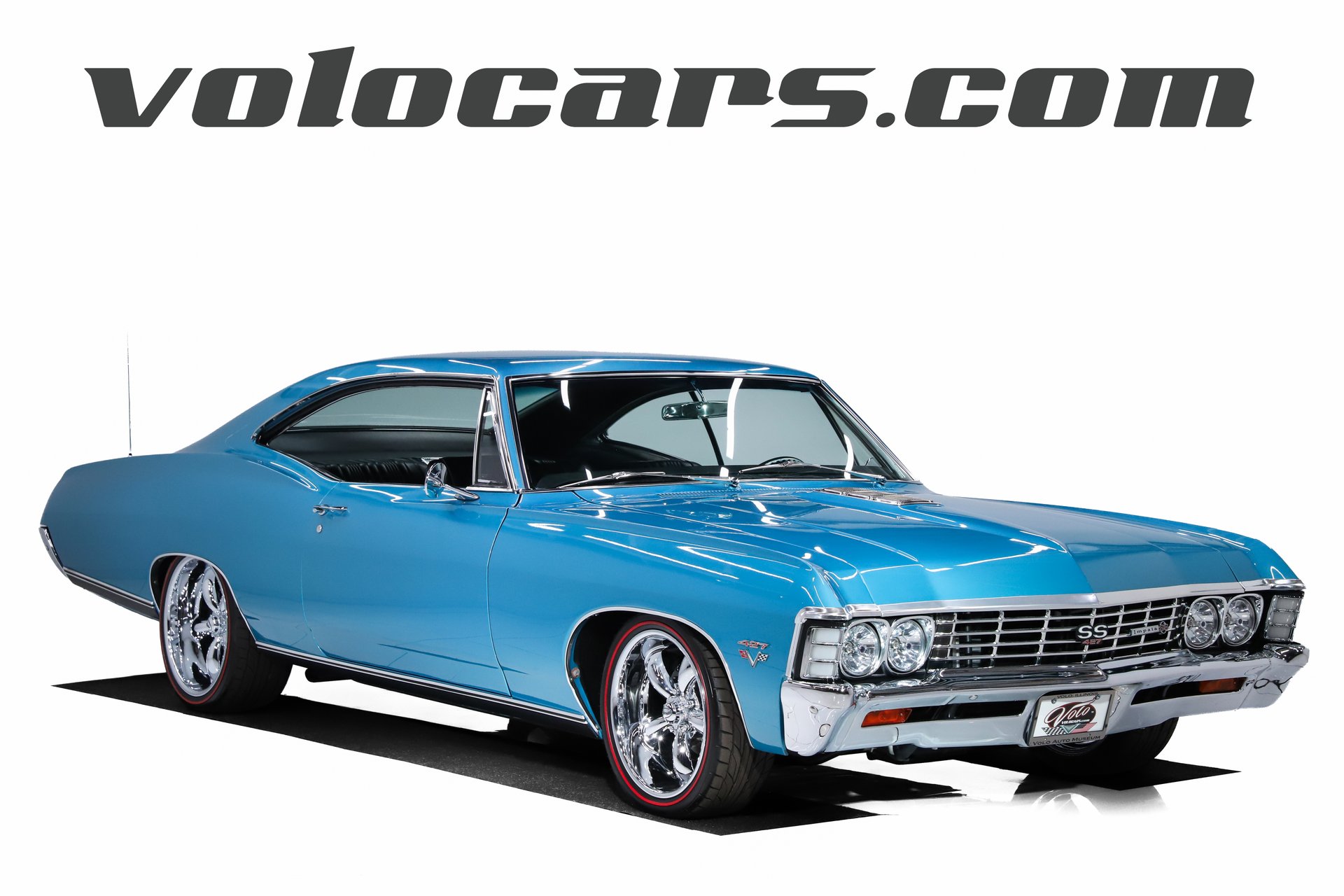
For 1965 Chevrolet replaced the W-series with the Mark IV big-block, the engine family that powered the muscle era: the 396 Turbo-Jet for 1965 to 1969 (325 horsepower in the L35 tune most Impalas carry, 375 horsepower in the solid-lifter L78 that is vanishingly rare in a full-size car), the 427 Turbo-Jet for 1966 to 1969 (335 horsepower in the hydraulic L36 form, 390 horsepower in the high-compression form fitted to a tiny number of big cars, most famously under the SS427 banner), the 402 sold and badged as a 396 for 1970, and the 454 for 1970, in the 360 horsepower LS5 form our listings record in a hardtop. Check the suffix code on any of them, because the badges and the brochures disagree often enough that only the stamp pad counts.
The Mark IV is a stronger, better-supported engine than the W it replaced, and the performance aftermarket keeps ordinary parts cheap and correct dated parts merely expensive. The characteristic faults are camshaft and lifter wear on the same low-zinc oil issue as the small-block, only dearer — a cam, lifters and timing set fitted runs roughly $1,500 to $3,000 — exhaust manifold studs that snap in the head, and on the high-compression engines a strict appetite for premium fuel: an L36 or LS5 on poor fuel will pink under load, and sustained detonation destroys ring lands. Valve stem seals harden and give the classic puff of blue smoke on start-up, clearing within seconds; smoke that persists under load is rings and bores, a rebuild at roughly $7,000 to $12,000 with machining. The distinguishing test is a compression check followed, if one cylinder is low, by a leak-down test — insist on numbers, not adjectives, on any big-block car priced for its engine.
One trap catches buyers every season. The 1970 model year offers a 400 small-block, a 402 big-block badged as a 396, and a 454 big-block, sometimes in near-identical formal hardtops. A seller calling a car a big-block car on the strength of a 400 badge is trading on the confusion. The families are visually distinct — the big-block is wider, its rocker covers broader and held by seven bolts against the small-block's four — and the casting and suffix codes remove all doubt. Learn the seven-bolt cover check; it takes five seconds.
Gearboxes
Four transmissions do almost all the work in these cars, and one famous one should be avoided. The base gearbox is a three-speed manual, column-shifted, tough, charmless and cheap to rebuild at roughly $900 to $1,600. The sporting manual is the Muncie four-speed, the M20 wide-ratio and M21 close-ratio boxes fitted to Super Sports and big-engine cars, with the heavy-duty M22 rock-crusher reserved for the highest-output applications and almost never original in an Impala — an M22 claim needs paperwork. Muncie wear shows as jumping out of gear on the overrun, graunching into second, and a whine in every gear except fourth; a rebuild runs roughly $1,800 to $3,200, and the Hurst linkage on later SS cars wears its bushings into a vague gate that a $100 bushing kit largely cures.
The automatic most early cars carry is the Powerglide, a two-speed with an iron case to 1962 and an aluminium case thereafter: slow, and deservedly reputed indestructible. Its faults are seal leaks, a worn band giving a flare on the single upshift, and a soggy feel when the linkage is out of adjustment. A rebuild is roughly $1,500 to $2,500. Avoid the Turboglide fitted to some 1958 to 1961 cars: troublesome when new and understood by almost no living transmission shop. From 1965 the Turbo Hydra-Matic arrives, the three-speed TH400 behind big-blocks and the lighter TH350 from 1969 behind small-blocks — the best automatics in the guide, rebuildable at $1,800 to $3,000. Their signature fault is a ruptured vacuum modulator diaphragm, which lets the engine suck transmission fluid up the vacuum line and burn it: white smoke owners misread as a head gasket, falling fluid level with no puddle, a soft or late shift. Pull the vacuum hose at the modulator; fluid inside it condemns the modulator, a part costing under $50. Final drive is a live axle, the 10-bolt in most cars and the stronger 12-bolt behind big-blocks, with Positraction limited-slip as an option whose clutch packs wear out by 100,000 miles; axle whine that changes on and off the throttle is pinion or gear wear, and a rear-end rebuild runs roughly $1,200 to $2,500.
Problem areas
Start with the honest evidence, because it is thinner here than the car's fame suggests. For the hardtops in our own listings we have detailed photo notes on a sample of just 6 cars: rust was noted in 2 of the 6 examined and visible damage in 1 of the 6, with no smoke or leak mentions recorded. Six cars prove nothing about a production run in the millions, and this guide does not pretend otherwise. The sections below are built on the pattern every experienced big-Chevrolet inspector works to: identity first, structure second, mechanicals third, cosmetics last — because that is the order in which mistakes become unaffordable.
Identity: Super Sport verification and the clone problem
This is the centrepiece of buying an Impala hardtop, because the SS premium is paid for a specification that can be almost entirely faked with bolt-on parts. Bucket seats unbolt. Consoles unbolt. Badges, engine-turned dash trim, wheel covers, tachometers and even complete interiors swap between an SS and an ordinary hardtop in a weekend. What cannot be swapped, short of fraud with a die grinder and a restamp, is the car's factory identity as recorded in its Vehicle Identification Number and its Fisher Body cowl tag. Read both, in person, before you discuss price.
The timeline decides what the VIN can prove. For 1961, the first SS year, the Super Sport was a factory option package available across the Impala line. The VIN identifies the car as an Impala but does not identify the SS package, and the cowl tag does not settle it either. A claimed 1961 SS — above all a claimed 1961 SS 409, among the most valuable cars in this guide — stands or falls on paperwork: a build sheet, a dealer invoice, or a documented chain of ownership back to new. Without paperwork a 1961 SS is a story, and stories are priced as ordinary Impalas. For 1962 and 1963 the position is the same: SS remained an option package, its VIN series shared with bench-seat cars, so equipment, cowl-tag trim codes and paperwork together build the case, and a correct-looking car with a build sheet outranks a shinier car with none.
For 1964 to 1967 everything changes, and this is the buyer's golden window. The Impala SS became a separate series in its own right, with its own series numbers in the VIN: the series digits distinguish an Impala from an Impala SS outright, and the body-style digits that follow distinguish the two-door Sport Hardtop from the four-door Sport Hardtop and the convertible. In plain terms: on a 1964 to 1967 car, read the VIN plate, decode the series and style, and you know whether Chevrolet built an SS or built an Impala. A hardtop of those years wearing SS trim whose VIN decodes as a regular Impala is a clone, full stop, however good the buckets look. Price it as the Impala it is, with a modest allowance for the trim if it is well done, and never as an SS. Conversely, a scruffy car whose VIN decodes as a genuine SS series car is worth restoring, because its identity survives its condition.
From 1968 the protection lapses again. The SS reverted to an option package, and the SS427 of 1967 to 1969 was likewise an option package — a big-block bundle with its own badging and a domed hood on the 1968 and 1969 cars, but no separate VIN series. For these cars you are back to the 1962 method: cowl tag, equipment, engine stampings and documents, weighed together. The SS427 is the acute case, because the premium is large and the visible differences from a 427-powered ordinary Impala are small. Treat any such car without factory documentation as an Impala with a 427 — still desirable, priced as itself.
The cowl tag, the stamped Fisher Body plate on the firewall, is your second witness, and it corroborates rather than replaces the VIN. It records the body style number, which must match the body the VIN describes; the interior trim code, which on an SS-year car should decode to bucket-seat trim, not to a bench; and the paint code, which should match the evidence of the original colour in the door shuts and under the carpets. Many plants also stamped accessory codes, but the lists vary by plant and year, and no single accessory letter proves an SS across all plants. What the tag does prove, decisively, is inconsistency: a sedan style number on a hardtop, a bench trim code in a claimed factory bucket car, a paint code contradicted by every hidden surface. Check also how the tag is attached. Factory tags sit on undisturbed rivets with aged paint continuous over tag and firewall. A tag on fresh rivets or a repainted patch of firewall has been moved — and tags get moved for one reason, which is to lend a body an identity it was not born with. The same suspicion applies to a VIN plate with disturbed rivets or a stamp pad that has been ground or restamped. On a matching-numbers big-block SS, the pad should carry the assembly suffix for the claimed engine and, on later 1960s cars where the plant applied it, a partial VIN derivative tying that block to that car. A wrong suffix is an answer, and the answer is no.
Finally, hunt for the build sheet. Chevrolet hid paper copies of the build record in the car itself — under the rear seat, above the fuel tank, inside a door panel, under the carpet — and survivors surface during restorations to this day. A legible build sheet listing the SS option or series, the engine and the trim is the single strongest document a trim-year SS can carry. Ask the seller whether one has been found.
Rust on the X-frame cars, 1958 to 1964: the map
The 1958 to 1964 cars sit on Chevrolet's X-frame, a cruciform chassis with a deep central X member and, critically, no full-length side rails between the axles. The design gave a low floor and a soft ride, at the cost of torsional stiffness, and it dictates a rust geography unlike any other car in this guide. Because the frame contributes so little along the sides, the body's own sills, floor and body mounts carry more structural responsibility than the word bodywork suggests, and rot in them is structural rot.
Work in this order. First, the frame itself: the centre of the X, where the two-piece prop shaft passes through on a centre support bearing, traps road dirt and moisture, and the front horns and rear kick-ups corrode where mud sits. Surface scale is normal; perforation at the X centre or around a body mount is fabrication work, realistically $1,500 to $4,000 for a plated repair with the body lifted and aligned, and a frame perforated in several places ends most purchases. Second, the body mounts and the floor they bolt through: the rubber perishes, the captive points tear and rust, and a car that creaks on its frame over bumps is telling you the mounts have gone; renewing torn mounting points is welding, at $800 to $2,000. Third, the floors, fed by water through the windscreen seal, the cowl vents and the hardtop seals below. Lift every carpet; the front footwells and the area under the rear seat go first. A floor pan section welded in runs roughly $600 to $1,400 a side fitted; a car needing full floors, both sills and mount repairs is a shell restoration, priced as one however shiny the top is. Fourth, the sills and rockers, both cosmetic and structural here: prod the full length and distrust fresh stone-chip. Fifth, the trunk floor and spare-wheel well, fed by the rear window channel — the bubble-top cars of 1961 and 1962 are the worst offenders in the guide for a rotted channel leaking silently into the well for decades. Lift the spare; a trunk floor replacement fitted runs about $800 to $1,800. Sixth, the lower rear quarters, the bottoms of the front wings, and the headlamp surrounds on the 1958 to 1960 cars, where layered brightwork holds water in seams no wax ever reached.
The two-piece prop shaft deserves a word here, because its centre bearing lives in the X and fails with age: a vibration at cruising speed and a rumble on take-up are its signatures, renewal runs roughly $400 to $800, and a rotten X centre cannot hold the bearing in alignment at any price.
Rust on the perimeter-frame cars, 1965 to 1970: the map
The 1965 redesign replaced the X with a full perimeter frame, side rails running the length of the car, and the rust map moves with it. The weak points are the side rails where they kick up over the rear axle, the front crossmember under the engine, and every body-mount point along the rails. Perforation in the kick-up is the perimeter car's equivalent of X-centre rot: it sits in the most highly stressed part of the rail, hidden above the axle where listing photographs never go, and a proper repair is a lift, a cut-out and a plated section at $1,200 to $3,500, with alignment checked afterwards. Prod the rails their full length, with the seller's permission, and treat any rail recently undersealed in one local patch as a confession.
The body rusts in a recognisable order. The trunk floor and well first, again fed from the rear window channel, and on the 1967 and 1968 fastbacks by the long sloping rear glass whose channel holds water against the seal. The rear quarters behind the wheels, where road spray is thrown into a closed box section. The floor pans, especially the front footwells under leaking cowl and windscreen seals. The rocker panels, full length. The bottoms of the front wings, the battery tray and the inner wing beneath it. The cowl sides and lower windscreen surround, a repair that escalates because the glass must come out. And on cars fitted with a vinyl roof, popular from 1966 onward, the roof itself: vinyl traps moisture against the steel, and bubbling under vinyl is steel perforating beneath a cosmetic skin, a glass-out repair at $1,500 to $3,500 before paint. Press gently on any bubbled vinyl and listen for the crunch.
Hardtop water paths deserve their own paragraph in both frame eras, because the pillarless design leaks by design once its seals age. Roof-rail weatherstrips seal the top of the side glass, quarter-glass and channel seals do the rest, and all of them harden, shrink and split. Water then runs inside the doors and quarters rather than outside them, rotting door bottoms from within and soaking the carpets and floor pans while the exterior still looks dry. The tests are tactile: a door whose bottom edge bubbles from the inside, a quarter glass that rattles in a perished channel, side glass that no longer meets the roof rail evenly because the regulators have worn. A full weatherstrip set runs roughly $300 to $700 in parts, and regulator repair $150 to $400 a side — but floors already rotted by twenty years of leaks are measured in welding. On a four-door hardtop, double the glass and the seals, and check the centre meeting of front and rear glass with care, because there is no pillar to hide a gap behind.
Mechanical systems: suspension, steering, brakes and driveline wear
Front suspension across all years is independent with coil springs and unequal-length arms; the perimeter cars add coil springs at the rear in place of the earlier leaf springs, and both ends wear the same way: ball joints, control-arm bushings and shock absorbers age out together, giving a car that wanders, dives and knocks over broken surfaces. Price a full front-end rebuild — joints, bushings, tie-rod ends and an alignment — at roughly $1,200 to $2,500 fitted. Rear control-arm and track bar bushings locate the axle; worn ones let the rear steer itself over bumps and under power, a squirm owners misattribute to tyres. Steering is a recirculating-ball Saginaw box, and its wear shows as a dead band at the straight-ahead that adjustment only partly cures because the wear is concentrated exactly there; a rebuilt box runs $400 to $800 exchanged, and the flexible rag joint in the column coupling perishes into visible cracks and real free play, a cheap part whose failure is not cheap in consequence, so inspect it on every car.
Brakes are the safety divide in this guide. Every car to 1966 has four-wheel drums and a single-circuit master cylinder: one hydraulic failure means no brakes. From 1967 a dual-circuit master cylinder was standard and front discs were offered; the 1967 and 1968 four-piston fixed-caliper discs are Corvette-pattern units whose bores corrode and leak, cured properly only by stainless sleeving at roughly $600 to $1,200 for the pair, while the 1969-onward single-piston calipers are cheap and ordinary. A full hydraulic refresh on a car that has sat runs $800 to $2,000 with labour and should be assumed on any dormant car before its first drive. Brake pipes corrode along the frame rails; a car on its original steel lines is due a set.
Driveline wear beyond the gearboxes centres on universal joints, axle bearings that rumble at speed and weep gear oil onto the rear brakes, and perished engine and transmission mounts that let the powertrain rock and thump on take-up. None of it is exotic; all of it is negotiable money.
Interior, trim, glass and electrics
The hardtop interior is where restoration costs ambush buyers who budgeted only for paint and chrome. Seat frames are sound, but the foam collapses, the vinyl splits along its stitching, and a full professional retrim in correct materials runs roughly $3,500 to $7,000 for SS buckets and rear seat, door cards and headlining on top — while a bench-seat car is noticeably cheaper to make right. Headlinings sag and stain from the same roof-rail leaks that rot the floors; a headlining fitted runs $600 to $1,200.
Brightwork is the 1958 to 1960 cars' special burden: those cars carry enormous quantities of stainless and chrome, some of it one-year only, and re-plating a full set of bumpers and major chrome runs $2,500 to $5,000, with pot-metal pieces pitting in a way that makes good used originals dearer than reproduction steel. Check that the trim is present before you price its restoration; a missing one-year stainless side spear is not a discount, it is a search. Glass follows the same logic. Flat glass is cheap; the wraparound windscreens of 1959 and 1960, the bubble-top rear glass of 1961 and 1962 and the curved side glass of the perimeter cars are specialist items when they exist at all, and a delaminating windscreen on an early car is a four-figure problem wearing a cosmetic disguise. Electrics are the good news: a simple 12-volt system, points ignition throughout, and faults that resolve to earths and switches. The exception is the heavily optioned late car, where power windows, power seat, air conditioning and hidden headlamps multiply the motors and vacuum actuators that can fail; air conditioning that blows warm is a recommission at $1,000 to $2,500, tested on every viewing, in every season.
How to inspect one
Allow two hours, bring a torch, a cloth-wrapped magnet and a camera, and arrange the viewing so the engine is cold on arrival and a lift is available. The order matters: identity, structure, mechanicals, cosmetics. A car that fails an early step does not earn the later ones.
- Paperwork and plates first. Match the VIN on the title to the VIN plate on the car, check the plate's rivets for disturbance, and decode the series and body-style digits before you look at anything else. On a 1964 to 1967 car claimed as an SS, the VIN series settles the claim on the spot, as the verification section explains; on a trim-year car, ask for the build sheet or invoice and note their absence in your valuation. Photograph the VIN plate, the cowl tag and the engine stamp pad; you will decode them at home, away from salesmanship.
- Cowl tag corroboration. Read the cowl tag's style, trim and paint codes against the car in front of you: hardtop style on a hardtop, bucket trim in a claimed SS bucket car, a paint code consistent with the colour hidden in the door shuts and under the carpets. Check the tag's rivets and the paint continuity over it. Any contradiction is a priced question; a moved tag on a premium car is a walk-away.
- Engine identity. Find the stamp pad ahead of the passenger-side head, clean it if the seller permits, and read the suffix against the claimed engine. Count the rocker-cover bolts — seven for a Mark IV big-block, four for a small-block — and look for the W-motor's scalloped covers on a claimed 348 or 409. An engine that is not what the badge says reprices the whole car.
- Cold start. Start the engine stone cold. It should catch promptly, show oil pressure at once and settle without timing-chain rattle or a chorus of lifter tick that does not fade. Watch the exhaust: a brief blue puff that clears points to valve stem seals; persistent blue smoke under load later is rings; white smoke with a falling transmission fluid level and no puddle sends you to the modulator test from the gearbox section — pull the vacuum hose and look for fluid inside it.
- The underside, frame first. On the lift, work the frame before the floors. On a 1958 to 1964 car, prod the X centre, the frame horns, the rear kick-ups and every body-mount area, and check the prop-shaft centre bearing for play. On a 1965 to 1970 car, prod the side rails their full length, dwelling on the kick-up over the rear axle. Perforation at a stressed point ends the inspection at the agreed structural price or ends the purchase; fresh localised underseal is treated as rot until proved otherwise.
- Floors, sills and trunk. Lift all the carpets and prod the footwells, the under-seat floor and the sill inners. Then the trunk: spare wheel out, mat up, well corners prodded, and a fingertip along the rear window channel inside for damp and scale — the leak path that rots this floor. Price what you find using the rust sections.
- Hardtop glass, seals and doors. Wind every window fully down and up. The flank should open pillarless and clean; glass should rise evenly and meet the roof rail without a gap you can push a card through. Feel the bottom edge of each door for bubbling from within, check the roof-rail and quarter seals for hardness and splits, and look at the carpet edges for water staining. This step prices the weatherstrip and regulator work — and warns you about the floors you have just checked.
- Panel fit and filler. Run the cloth-wrapped magnet over the lower quarters, sill ends, door bottoms and wing bottoms; filler announces itself where the magnet's pull fades. Sight down each flank for ripples, check that the long doors shut with even gaps, and look for overspray on rubbers that betrays a quick repaint over unrepaired metal.
- Suspension and steering by hand. Rock each front wheel top and bottom for ball-joint play and side to side for steering play, inspect the rag joint for cracks, and bounce each corner to judge the dampers. Convert what you find into the front-end figures from the mechanical section before you negotiate, not after.
- Brakes before speed. Check the pedal for height and firmness, look at every flexible hose for perishing, and identify what the car actually has: drums and a single-circuit master on a pre-1967 car are a safety budget item, and 1967 to 1968 four-piston discs are a sleeving budget item. On the drive, brake firmly from speed twice; the car must stop straight without judder, pull or a sinking pedal.
- The test drive. Twenty minutes minimum, including a highway stretch. A Powerglide car should make its single change cleanly; a Turbo Hydra-Matic should shift firmly without flare; a Muncie four-speed should hold every gear on the overrun and find second without a graunch. Listen for axle whine that changes on and off the throttle, feel for the X-frame centre-bearing vibration at cruise, and watch the temperature gauge on a big-block car in traffic.
- Accessories, electrics and interior last. Work everything: lights, wipers, heater and blower on all speeds, air conditioning if fitted, power windows and seat, hidden headlamps on late cars, horn, radio and every gauge. Sit in every seat and feel for collapsed padding, check the headlining for leak staining, and inventory the brightwork piece by piece, because on a 1958 to 1960 car missing trim is a search, not a purchase. Only now let the cosmetics influence you at all.

Values
The build's market block beneath this guide carries the live numbers for Impala hardtops, and this section deliberately carries none: prices move with the auction season and the fashion cycle, and any figure printed here would be stale before it was useful. What does not go stale is how the market is structured, and a buyer who understands the structure can read any week's numbers correctly.
The first structural fact is the condition spread, wider for this car than for almost any comparable classic because restoration cost is dominated by body, trim and chrome rather than by mechanicals. A running project with a sound frame and a tired shell, a respectable preserved driver, and a correctly restored show car are effectively three different markets sharing one model name, and the gap between the first and the third is routinely several multiples. Sellers habitually price the first as if it were the second. Your defence is the inspection arithmetic in this guide: add the welding, the trim, the retrim and the recommissioning to the asking price of any project, and compare the total with the price of the finished car. On these cars the finished car is very often the cheaper purchase.
The second fact is that identity is value, in a precise hierarchy. At the top sit documented cars: a trim-year Super Sport with a build sheet, a separate-series SS whose VIN, cowl tag and engine stampings all agree, a 409 or big-block car whose stamp pad proves its engine. Below them sit correct-looking cars without paperwork, trading at a discount that grows with the size of the claim. At the bottom, priced as what they are, sit the clones — ordinary hardtops in SS dress — perfectly enjoyable cars and a perfectly bad purchase at SS money. Read the evidence in a listing before the adjectives: a seller who photographs the VIN plate, cowl tag and stamp pad is selling a verifiable car; one who photographs none of them is asking you to fund the verification risk.
Variant premiums follow scarcity and theatre together. The 1958 car carries a one-year premium; the bubble-top roof carries one within 1961 and 1962; the 409 carries the largest engine premium of the early cars, the 427 and the documented SS427 the largest of the late cars. Two-door hardtops carry a consistent premium over four-doors in every generation, out of proportion to any difference in the driving experience, which is why this guide keeps recommending the four-door to drivers. Convertibles sit above hardtops where both exist, which makes the hardtop the rational buy within its own year.
Finally, asking prices and achieved prices part company on this car more than on most, because supply is deep and sellers anchor on the best result they have seen for the badge rather than the condition they are selling. Auction results are the more honest guide to achieved money; classified asking prices are an opening position. Negotiate from your inspection list, item by item, with the repair figures from this guide attached to each defect. A seller who has priced a car fairly will recognise the arithmetic; a seller who has priced a story will not, and that too is information.
Parts and ownership
The Impala hardtop is among the best-supported American classics in existence: Chevrolet built full-size cars in the millions and the reproduction industry has had sixty years to tool up for the demand. Ownership is a matter of knowing which third of the car is cheap, which third is available at a price, and which third you must buy already attached to the car.
Easy and cheap. Service items for every engine in this guide — filters, plugs, points, belts, hoses — plus small-block and Mark IV gaskets, seals, water pumps, timing sets and ignition parts, are next-day parts at ordinary prices. Brake hydraulics, suspension wear parts, ball joints, bushings, shock absorbers, standard exhaust systems, Powerglide and Turbo Hydra-Matic rebuild parts, glass rubbers and the common weatherstrips are all catalogued and stocked. A sorted hardtop is a realistic regular-use classic: any competent classic shop can maintain it, fuel consumption ranges from merely heavy in a small-block car to heroic in a 454, and insurance sits in line with other cars of similar value.
Available, at a price. Correct dated and suffix-coded engine components for 409, 427 and high-output 327 cars; W-series heads, manifolds and multi-carburettor assemblies; 12-bolt Positraction carriers; Muncie cases and gear sets; sleeved four-piston disc calipers; correct-pattern SS upholstery kits; and quality reproduction trim for the volume 1965 and 1966 cars. None of this stops a restoration. All of it rewards buying a car that already has it.
Buy it on the car. One-year 1958 panels, trim and brightwork; 1959 and 1960 wraparound windscreen glass; bubble-top rear glass; fastback rear glass and its channel trim; pot-metal brightwork in unpitted condition for any year; complete air-conditioning systems on early cars; and rust-free original sheet metal in any year, which no reproduction panel quite replicates in fit. The mantra of this guide is to buy the body, the glass and the trim, and fix the mechanics — with the Impala addition that you buy the identity too, because paperwork, unlike a water pump, cannot be ordered.
Running costs follow the pattern of every big classic in this programme. The first year with a neglected car is the expensive one: a brake hydraulic refresh, a fuel system cleaned end to end because modern ethanol fuel attacks old rubber and leaves varnish in tanks and carburettors, all fluids, trustworthy tyres, and the deferred ignition and cooling work. Cars that have sat need the sitting undone systematically before they need anything improved, and a car in regular use, bought at a higher price, is almost always cheaper by the second year than a sleeper bought cheaply. Storage matters more than mileage: a dry-stored hardtop is a recommissioning project, a damp-stored one is a rust project, and the two differ by an order of magnitude.
Which one to buy
- The all-rounder: 1965 or 1966 Impala Sport Hardtop, 327 and Turbo Hydra-Matic or four-speed. Perimeter frame, the best parts support in the guide, a separate-series VIN if you buy the SS, and the deepest market to buy from and sell into. If you want one Impala hardtop to drive and enjoy, this is it.
- The value buy: a four-door Sport Hardtop, any generation. The same pillarless body and engines, a heavy discount against the two-door for no dynamic reason.
- The collector car: 1958 hardtop with a 348. One-year styling, one-year parts burden, blue-chip following. Buy completeness and originality above all, and verify the engine on the stamp pad, because the premium lives there.
- The sporting car: 1962 to 1964 SS 409, or a 327 four-speed car at half the commitment. The 409 is the legend and priced like it, with paperwork worth as much as horsepower in the trim years. The 350 horsepower 327 in a 1964 SS is the thinking driver's alternative.
- The cruiser: 1967 to 1970 big-block hardtop. A 396 or 427 car, or the 454 LS5 car for 1970, with power steering, power brakes and working air conditioning. The most comfortable cars in the guide and the cheapest big-block route in.
- The first classic: a small-block 1965 to 1969 hardtop in regular use. Cheap parts, forgiving mechanicals, no identity premium to overpay for. Buy the best shell and drive it.
And the rule that overrides all of the above: buy the verified car with the soundest shell you can find, in the specification you can live with. Engines, gearboxes, brakes and seals are all fixable at prices this guide has put numbers to. A rotten frame, a rotted bubble-top channel or a cloned identity cannot be made original again at any sensible price — and checking for all three takes one careful hour.
See the 11 Impala Hardtop cars currently listed.
For sale now
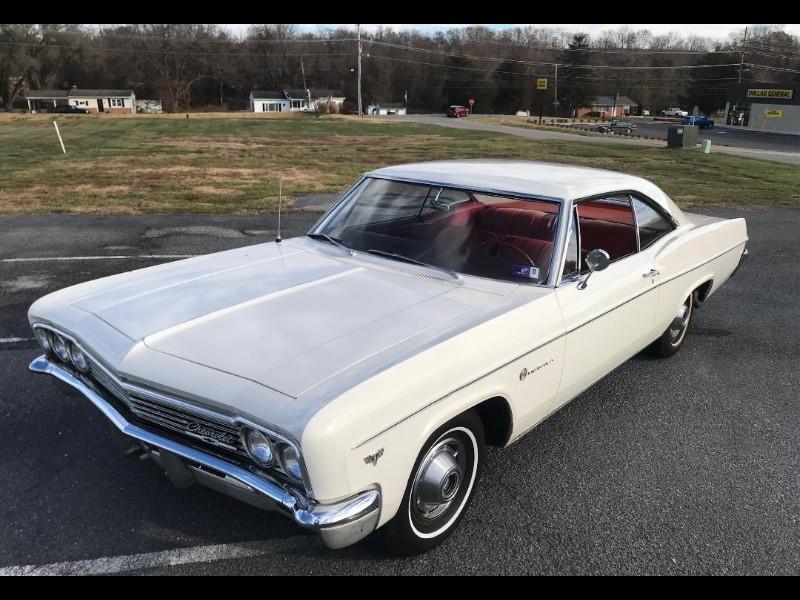 $29,500 · 7% below typical
Expand
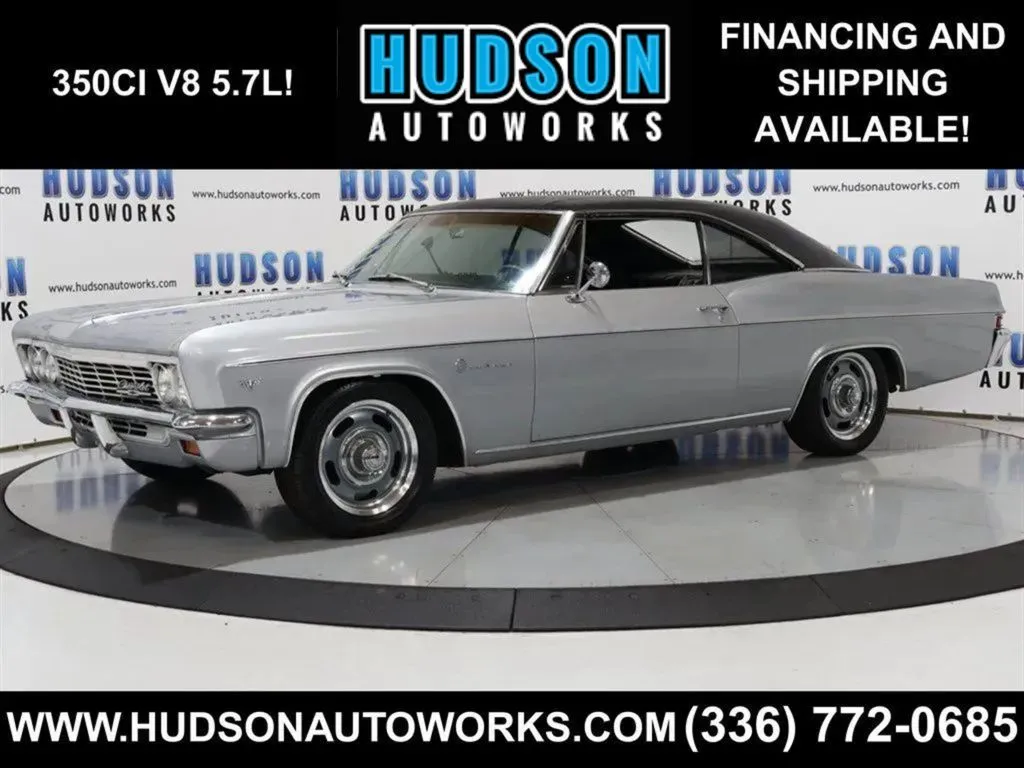 $27,693 · 13% below typical
Expand
 $34,500 · 8% above typical
Expand
 $49,500 · 55% above typical
Expand
What they sell for: Impala Hardtop sale prices.