
Chevrolet Sedan Delivery buyer's guide
Chevrolet Sedan Delivery -- the model's own buyer's guide: variants, values and what to check.
Years listed: 1934-1957 · Series: Impala
Overview and history
The Chevrolet Sedan Delivery is not a truck that looks like a car. It is a car that was built to work like a truck — a passenger-car chassis, a passenger-car nose, doors and cowl, with everything behind the front seats turned into a single enclosed cargo box: blank steel panels where a wagon's rear side windows would be, no rear seat, a flat load floor, and a single rear door for loading. Chevrolet sold it for decades to the buyers who needed exactly that combination and nothing more: bakers, florists, laundries, radio repair shops, druggists, plumbers, parts stores and travelling salesmen who wanted weatherproof, lockable carrying capacity, car manners and car running costs, and a pair of flat panel sides that doubled as a rolling billboard for the business name painted on them.
That commercial purpose explains everything about the Sedan Delivery today — its rarity, its condition profile, and the single question that dominates any purchase: is this car a factory delivery at all? Because the body was a low-volume derivative of high-volume wagons and sedans, because working vehicles were used up and thrown away rather than preserved, and because a two-door wagon can be turned into something that looks very like a delivery by filling in its rear windows, the Sedan Delivery market is a market in identity as much as in condition. A genuine, correctly documented delivery is a rare commercial survivor. A converted wagon is a custom car wearing a rare car's clothes, and it must be priced as one. This guide therefore puts identity verification at its centre, and returns to it in every section.
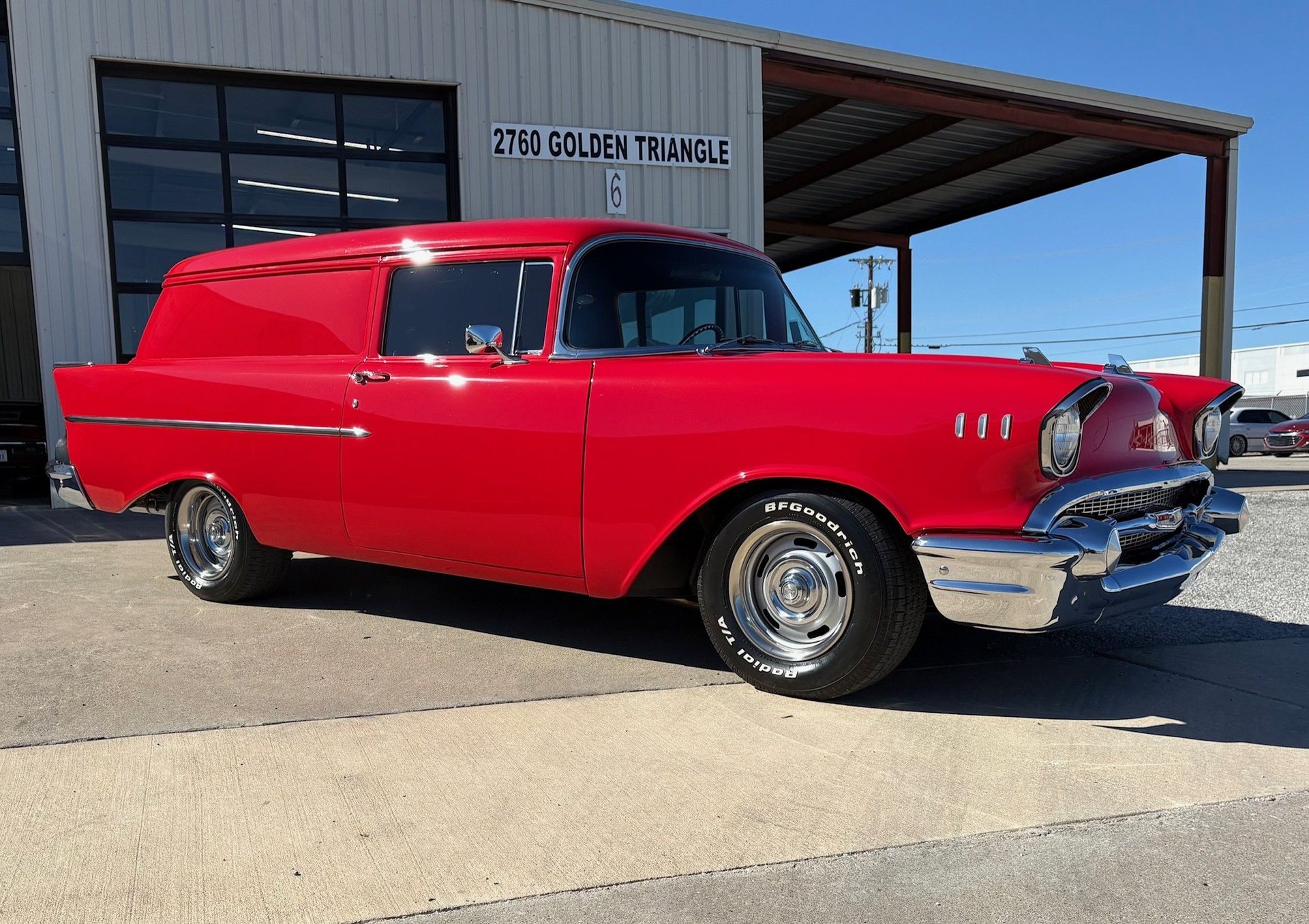
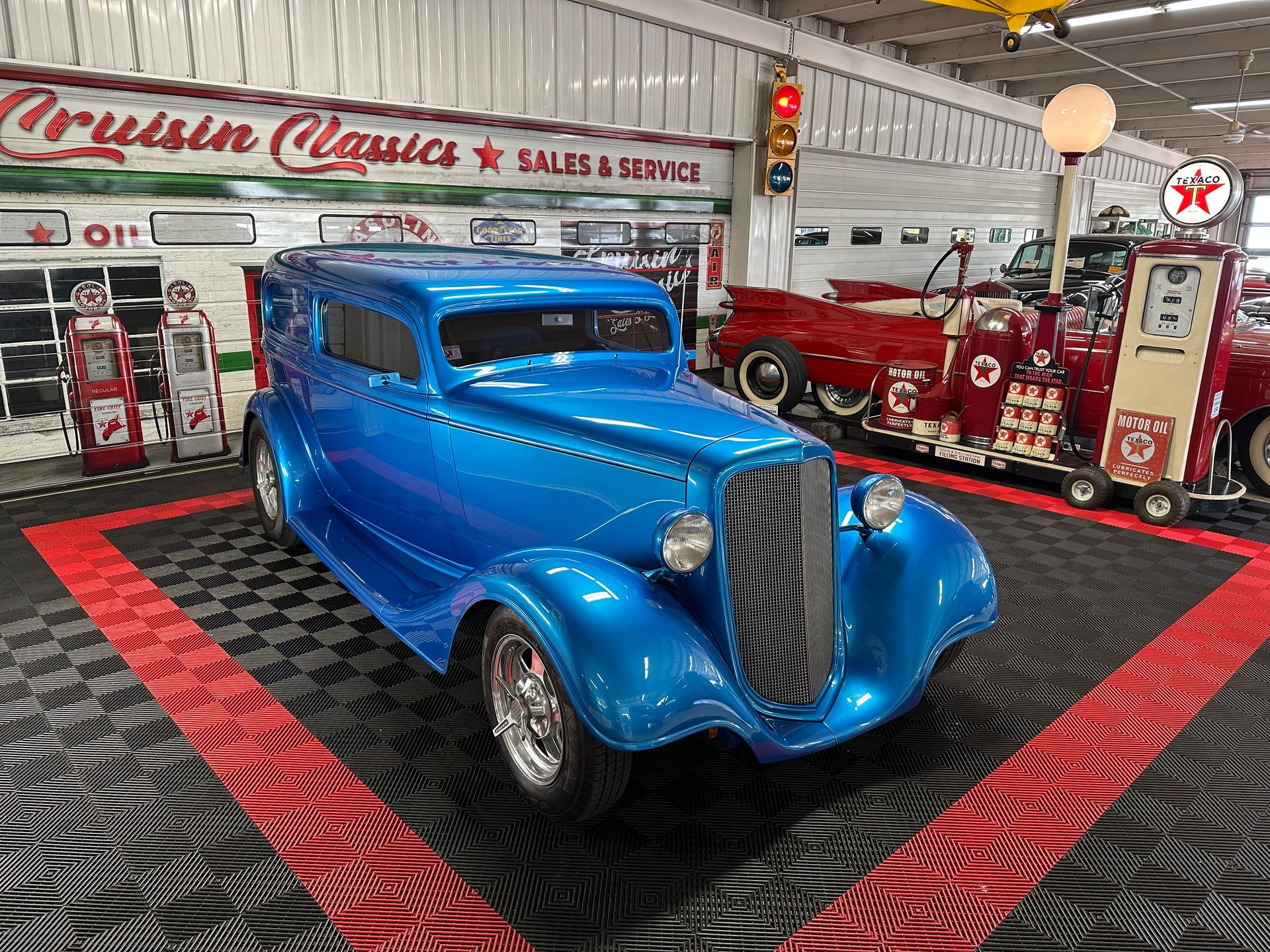
Chevrolet offered sedan deliveries from the early 1930s through to 1960, and the cars in our own listings span almost that whole arc: the store records behind this guide cover 12 cars, from a 1934 example to a 1957 Tri-Five, with the thick of them in the 1937–1957 years. The form changed with the parent range each time Chevrolet restyled its cars. The pre-war deliveries are upright, separate-fender vehicles on the Standard and Master chassis, sharing their noses with the contemporary sedans. The 1942 cars and the immediate post-war 1946–48 cars carry the last of the pre-war styling, built — in the case of the 1946 cars — as Chevrolet restarted civilian production. The 1949–52 Styleline deliveries are the first all-new post-war cars, with full-width ponton styling, and the 1953–54 cars restyle that shell in the 150-series idiom. Then come the cars most buyers picture first: the 1955–57 Tri-Five deliveries, based on the 150 two-door wagon shell, with small-block V8 power available and the cleanest panel sides Chevrolet ever drew. After 1957 the delivery moved to the Delray line for 1958 and continued in diminishing numbers to 1960, by which time the El Camino car-pickup, the panel truck and the emerging van were dividing its old job between them, and Chevrolet let it go.
Survival is the governing fact. A family sedan was garaged; a delivery was signwritten, loaded to the roof, driven by employees, parked outside the shop and sold on to another trade when the first one had finished with it. Rust, dents, worn load floors and replaced engines are not abuse on these cars — they are the job description, honestly recorded. In our own photo-checked sample — 9 cars examined in detail from the store's photo notes — rust was mentioned in the notes for 8 of the 9 cars, and damage was mentioned for 5 of the 9. Read that the right way: not as a condemnation of the model, but as the baseline expectation. You are shopping for the least-worked survivor of a working fleet, and you should be pleasantly surprised by originality rather than disappointed by wear.
The reward for that realism is one of the most characterful shapes in the classic Chevrolet world. A delivery has the stance and face of the sedan or wagon it came from, but the long blank flanks give it a presence nothing else in the range has — which is exactly why so many survivors have been street-rodded, and why the guide treats originality, modification and identity as three separate questions to answer on every car.
The models
There was never a single Sedan Delivery model in the way there is a single Bel Air or Impala. "Sedan Delivery" is a body style that Chevrolet attached to whichever passenger-car line was current, at the cheapest trim level that line offered, because commercial buyers paid for capacity, not ornament. So the range divides by era and by parent series, and the first thing to establish on any car is which parent it came from — that settles its chassis, its engine options, its trim, its cowl-tag codes and its correct details.
| Model / era | Years | Parent line | Engine (standard) | Character |
|---|---|---|---|---|
| Standard / Master delivery | 1934–1936 | Standard and Master sedans | Stovebolt six | Upright, wood-and-steel construction; very rare survivors |
| Master Deluxe delivery | 1937–1940 | Master / Master Deluxe | 216 cu in six | All-steel bodies arrive; the classic pre-war delivery |
| Special Deluxe delivery | 1941–1942 | Special Deluxe | 216 cu in six | Last pre-war cars; 1942 production cut short |
| Fleetmaster / Styleline (early post-war) | 1946–1948 | Fleetmaster line | 216 cu in six | Pre-war styling restarted; worked hard, few survive unmodified |
| Styleline delivery | 1949–1952 | Styleline (Special) | 216, later 235 cu in six | First all-new post-war shell; the archetypal early-1950s delivery |
| 150 delivery | 1953–1954 | One-Fifty | 235 cu in six | Plainest trim in the range; a true working 150 |
| 150 Sedan Delivery | 1955–1957 | Tri-Five One-Fifty | 235 six or 265/283 V8 | The collector favourite; V8 available, cleanest panels |
| Delray Sedan Delivery | 1958–1960 | Delray | 235 six or 283 V8 | Last of the line; increasingly a sideline as vans and El Camino took over |
Production figures for the delivery body were not published by Chevrolet with anything like the consistency of the sedan and coupe figures, and for most years no reliable factory total survives in the sources a buyer can check. Treat any precise "only X built" claim in an advertisement as a claim to be documented, not a fact to be repeated — the honest statement is that deliveries were a small fraction of each year's wagon output, that they were bought to be consumed, and that survival, not original production, is what makes a good one rare now.
The pre-war cars (1934–42). The early deliveries follow the sedans year for year: 1934 cars on the Standard and Master lines, the 1937 restyle that brought all-steel "turret top" construction into the range, the 1939–40 cars with their sealed-beam headlamps and column shift arriving, and the larger 1941–42 Special Deluxe-based cars. What matters to a buyer is construction and completeness. Bodies of the mid-1930s still use wood framing inside steel panels in places, and wood rot is a structural failure mode a later car simply does not have. Trim, lamps and commercial-specific parts — the rear door hardware, the load-floor fittings, the panel-side pressings — were never reproduced in depth, so a complete rough car is usually a better buy than an incomplete shiny one.
The immediate post-war cars (1946–48). Chevrolet restarted with the pre-war design warmed over, and the deliveries went straight back to work in a seller's market where any new vehicle sold instantly. These cars were bought by businesses starved of vehicles through the war years and were used accordingly. Original, unrodded survivors are genuinely scarce; most cars you meet will have later engines, later gearboxes or both, and the buying question is honesty and quality of the work rather than originality at any price.
Styleline and 150 (1949–54). The 1949 Styleline gave the delivery its first modern silhouette — low, full-width, with the cargo box fully integrated into the body rather than perched on it. The parent was the cheaper Special/Styleline line, so trim is sparse by design: painted rather than plated details in places, simple upholstery, one sun visor on some cars, rubber mats instead of carpet. Do not "correct" that sparseness when you judge a car — a 1949–54 delivery with Bel Air levels of brightwork has been dressed up, which may be fine, but it is not how it left the factory. The 1953–54 cars restyled the same basic shell and standardised the 235 cu in six in most applications. In our store's listings these middle years are well represented — 1948, 1949, 1952, 1953 and 1955 cars all appear — which matches the wider market: the post-war cars survive in larger numbers than the pre-war cars simply because more were made and they are younger.
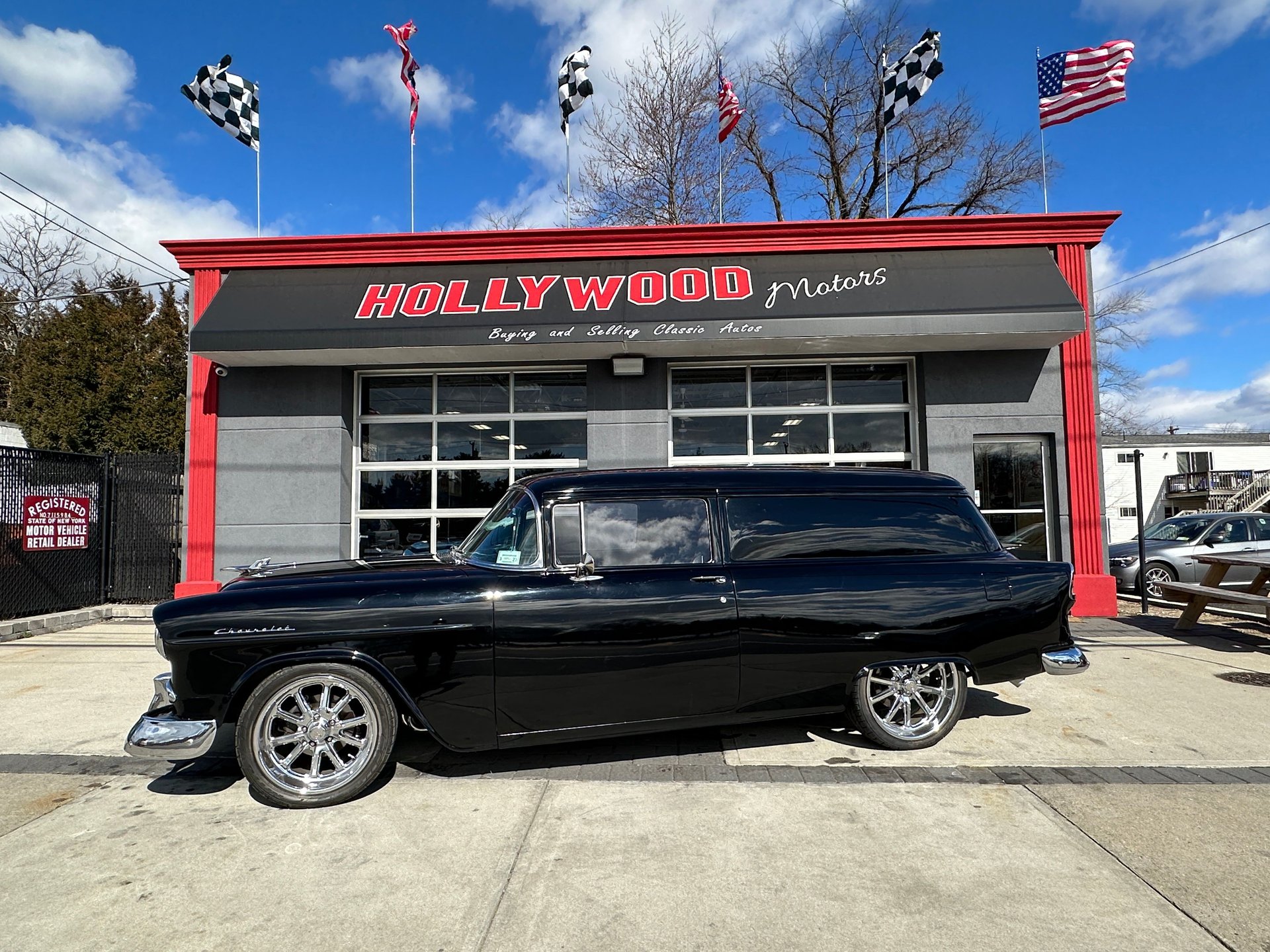
The Tri-Five cars (1955–57). The 1955 restyle is the watershed: a new chassis with ball-joint front suspension, an open driveline replacing the torque tube, and — the headline — the new small-block V8 as an option in a vehicle that had been six-cylinder-only in spirit for two decades. The delivery was based on the 150 two-door wagon, the Handyman shell, with the rear side glass replaced by steel panels and the interior stripped to two seats and a floor. The 1955 cars use the 265 cu in V8; 1956 repeats the formula with detail changes; 1957 brings the 283, the longest fins of the three years and, on the cowl tag and in the factory literature, body style 1508 — the number that becomes central in the identity section below. Tri-Five deliveries are the most sought-after, the most street-rodded, and — precisely because a 150 Handyman wagon is a valuable car in its own right and visually similar — the cars where wagon conversions most often appear.
The last cars (1958–60). For 1958 the delivery moved with the range to the new, larger body, sold in the Delray line, and continued through 1959 and 1960. By then Chevrolet's commercial buyers were migrating: the El Camino (from 1959) took the stylish light-duty work, panel trucks took the heavy work, and the forward-control van was on the horizon. The 1958–60 deliveries are rare, large and interesting, but they sit outside the main current of the market, and parts support is thinner than for a Tri-Five in every category.


Engines and gearboxes
Two engine families power almost every Sedan Delivery you will ever inspect: the overhead-valve Stovebolt six, in its successive forms, from the first cars to the last; and, from 1955, the small-block V8. Everything else — and you will meet plenty — is a swap, and should be identified and judged as one. Because deliveries were commercial vehicles, engine changes during their working lives were normal maintenance economics: when a six wore out, whatever was cheap and available went in. An engine swap done in 1975 to keep a laundry van working is part of the car's history; an engine swap done last year to make a car saleable as a "V8 delivery" is a pricing question. The casting numbers and date codes, not the seller's story, tell you which you have.
The Stovebolt six: 194, 207, 216 and 235
The early cars use the first-generation Chevrolet overhead-valve six in 194 and then 207 cu in forms — the engine that gave Chevrolet its "Cast Iron Wonder" reputation — and from 1937 the enlarged 216.5 cu in version that powered the range through the war and into the early 1950s. The 216 is the engine you need to understand in detail, because it carries a feature that surprises buyers raised on later engines: splash lubrication for the connecting rods. There are no full pressure-fed rod bearings in a 216 in the modern sense; the rods carry dippers that scoop oil from troughs in the sump, and the rod bearings are babbitt — a soft bearing metal poured or fitted as inserts ("Babbitts") rather than the steel-backed precision shells of a later engine. It works well at the speeds and loads the engine was designed for, and it imposes three buying rules. First, oil level and oil condition matter more than on any later engine: run a splash-fed engine low on oil, or on oil thinned by short-trip condensation, and the rods pay first. Second, listen at a steady fast idle and under light load for the deep, soft knock of worn babbitt — it is duller and lower in the engine than top-end clatter, and it does not go away warm. Third, a 216 rebuild is a specialist job, not a generic machine-shop job: babbitt work, dipper and trough alignment, and the correct clearances are old-engine skills, and a proper rebuild realistically runs $4,500–8,000 with the engine out, more if the crank needs serious work. Budget accordingly and value a car with documented six-cylinder engine work accordingly.
The 216's other period features follow from its era. Ignition is a conventional distributor with contact-breaker points; carburation is a single downdraft carburettor — Carter W-1 on many pre-war and early post-war cars, Rochester Model B on later ones. The Rochester B's known weakness is warpage and leakage at the air-horn joint and throttle-body wear that admits air and ruins the idle; the Carter is older, simpler and equally dependent on a clean fuel supply and a sound float. Neither is a reason to reject a car; both are reasons to test hot starting and idle quality carefully, because a single-carb six that will not idle is usually a carburettor and vacuum-leak problem, not an engine problem — and the fix is a carburettor rebuild at $250–500 rather than an engine rebuild at ten times that.
The 235 is the answer Chevrolet built to the 216's limits, and it is the six that matters most in this guide because it powers the 1953–60 cars and was retrofitted into thousands of earlier ones. Introduced in larger form for trucks and fitted to passenger cars with the Powerglide from 1950, the 235 gained full pressure lubrication and precision insert rod bearings in its definitive 1953-onwards "Blue Flame" passenger-car form — check which 235 you have, because the name covers both the earlier splash-and-babbitt truck-style engines and the later full-pressure car engine, and they are not the same purchase. A full-pressure 235 is a thoroughly modern old engine: strong seven-main-bearing crankshaft architecture in spirit if not in count (the Chevrolet six uses four main bearings — know this before you repeat bar-room claims), hydraulic lifters on most Powerglide and later car engines, solid lifters on many manual-gearbox cars, and a reputation for outlasting the body around it. Its failure modes are ordinary and diagnosable: lifter clatter from worn hydraulic lifters or low oil pressure at idle; oil leaks from the side cover, the pushrod cover gaskets and the rear main; a worn timing gear set — the camshaft gear is a fibre/composite gear driven by a steel crank gear, and a fibre gear that sheds teeth stops the engine completely and without drama, usually at low speed, which is why many owners fit later replacement gear sets pre-emptively; and cracked exhaust manifolds, especially where the heat-riser valve has seized and cooked one end of the manifold for a decade. The heat riser itself — a counterweighted flap in the exhaust manifold outlet that diverts hot gas around the intake when cold — seizes in almost every unrestored car. Seized open, it merely slows warm-up; seized shut, it overheats the intake, warps carburettor bases and cooks the manifold. Freeing or correctly disabling it is a $150–450 job depending on whether the manifold survives removal.
On any six, the inspection numbers that matter are simple: oil pressure behaviour hot (a full-pressure 235 should hold steady pressure at a hot idle, not flicker the gauge or light), coolant temperature stability over a twenty-minute drive, and the state of the oil itself — a six that has been run on splash lubrication with fuel-diluted oil shows it in the bearings, so pull the dipstick, smell for petrol, and look for the grey sheen of bearing metal in drained oil if the seller will allow a sample.
The small-block V8: 265 and 283 (and what came later)
From 1955 the delivery could be ordered with Chevrolet's new overhead-valve V8: the 265 cu in engine in 1955–56 and the bored-out 283 from 1957, continuing in the Delray cars to 1960. These are the first-generation small-blocks — the most supported classic engine in the world — and in a delivery they transform the vehicle: where a six cruises at the pace of 1950s traffic, a healthy 283 keeps up with modern traffic without effort, and parts availability goes from "specialist" to "same week, anywhere."
Period specification is modest by later standards and that is correct, not a defect: two-barrel carburettor (Rochester 2GC or Carter WGD) on most commercial builds, a single exhaust on many, hydraulic lifters, and outputs quoted in the gross terms of the day. Four-barrel and dual-exhaust versions existed in the passenger range and appear in deliveries either as rare factory orders or, far more often, as later additions — verify by casting and suffix codes before paying a premium for them. The engine number pad at the front of the block, on the deck surface ahead of the right-hand cylinder head, carries the stamped assembly code ending in a suffix that identifies the engine's original application, transmission pairing and rating; the casting number and casting date at the rear of the block identify the block itself. A "numbers-matching" claim on a Tri-Five delivery means those codes, decoded against a reliable reference, describe a 1955–57 delivery-appropriate engine built at a date consistent with the car's build — a ten-minute check that settles a four-figure premium.
Small-block failure modes in a delivery are the family's standard ones, amplified by commercial use and long standing. Rear main seal leaks (two-piece seal; a drip at the back of the sump that owners learn to live with, and an engine-out or at least gearbox-out job to cure properly, $900–1,800 in a shop). Valve stem seal hardening giving the classic puff of blue smoke on start-up after standing, then clean running — annoying, cheap in parts, and not by itself a worn engine. Flat hydraulic lifters and a wiped camshaft lobe, presenting as a rhythmic tick and one cylinder down on power, usually the product of modern low-additive oil in an engine that wants the zinc its original oil had — a cam-and-lifters job is $1,200–2,500 fitted. And the cooling system: small-blocks in Tri-Fives cool through a radiator sized for 1950s traffic, mounted ahead of a mechanical fan; a silted original radiator, a missing fan shroud and a modern traffic jam are a reliable overheating recipe, and overheating is what warps heads and blows gaskets on an engine that is otherwise nearly unburstable. Judge the radiator, shroud and hoses as part of the engine, not as accessories.
Later swaps are a world of their own. The commonest are the 350 cu in small-block (in everything), the later 305, big-block transplants in street rods, and modern LS-family engines with electronic injection in high-end builds. None of these is automatically bad — a well-engineered 350 in a 1949 Styleline rod, sold honestly as a rod like the car in our listings whose name says "Street Rod" outright, is a legitimate car. What you are pricing is the quality of the conversion: engine mounts fabricated or butchered, cooling capacity matched to the engine, front suspension and brakes upgraded to match the performance, wiring done as a system rather than as splices, and a driveline — gearbox, propshaft, rear axle — specified for the torque. A 350 on an otherwise untouched 1949 chassis with drum brakes and a tired original rear axle is not a V8 delivery; it is an unfinished project with a running engine.
Gearboxes: three-speed manual, Powerglide and the rest
The standard gearbox across almost the whole life of the delivery is Chevrolet's three-speed manual, column-shifted on most cars (the "three on the tree"), with synchromesh on second and third and a non-synchronised first that you engage at a standstill. It is a strong, simple box whose wear shows as second-gear synchro crunch on a fast change, jumping out of gear on the overrun (worn detents and bearings, often compounded by worn linkage bushes at the column — a $100–250 linkage rebuild that transforms a box wrongly condemned as worn out), and noise in all gears from bearing wear. Column linkage condition matters more than the gearbox itself on most viewings: a delivery driven by employees for thirty years has had its linkage slammed, and sloppy linkage makes every change a guess. A full gearbox rebuild runs $1,000–2,000; linkage work is the cheap first move.
The automatic story begins with the two-speed Powerglide, offered from 1950 in the passenger range and the automatic you will find in 1950s deliveries. Cast-iron Powerglides (to 1962 in passenger cars) are heavy, simple and famously durable; aluminium-case versions followed. A Powerglide has one forward shift and it should be smooth and barely noticeable; the faults to test for are delayed or slipping engagement from rest (low oil, worn bands/clutches, or a tired pump), fluid that is brown and burnt rather than red and sweet, and leaks from the selector shaft and the speedometer drive. A Powerglide rebuild is $1,800–3,200 at a transmission shop that knows the box. Note the pairing rule: Powerglide cars in the early 1950s came with the higher-output six and a different rear-axle ratio, so a car converted from Powerglide to manual (or the reverse) may carry a mismatched axle ratio that makes it feel wrong in a way sellers blame on the engine.
Later cars and conversions bring the three-speed Turbo-Hydramatic family (TH350 and TH400 in swapped cars), the overdrive automatics in modern builds, and four- and five-speed manuals in street rods. Judge them by the standard of the installation and by whether the rest of the car — brakes, cooling, axle, speedometer gearing — was converted with them. In our store's small sample the split is instructive: of the 12 cars recorded, transmissions are listed as automatic in 4 and manual in 3, with the rest unspecified — a reminder that on these cars the gearbox is whatever seventy years of owners needed it to be, and the listing line is a starting point for your own check of what is actually under the floor, not the answer.
Problem areas
Everything else in this guide is subordinate to the first subsection here. A Sedan Delivery with a tired engine is a delivery that needs an engine. A "Sedan Delivery" that began life as a two-door wagon is not a delivery at all, whatever its title, paint or price say — and the market contains converted wagons because the arithmetic invites them: a delivery is rarer than the wagon it resembles, panels are easier to fake than provenance is to check, and most buyers look at the silhouette and stop there. Do not stop there. Work the identity checks first, in the order given, and let the rest of the inspection proceed only on a car whose identity you have settled — or whose price has been reset to converted-wagon money.
Recall the store's own evidence for the general condition climate: of 9 cars photo-checked in detail, rust was noted in 8 and damage in 5. No smoke and no leaks were noted in that sample — which says more about what sellers photograph than about the cars, and is a reason to do your own mechanical checks rather than read silence as health.
Identity: factory delivery or wagon conversion — the centrepiece
What the factory actually built. A factory Sedan Delivery starts from the two-door wagon's basic shell but is not a wagon with the windows covered. The differences are structural and they are visible if you know where to look:
- The side panels are single pressings. On a factory car the blank panel behind each door is one steel pressing, flanged and joined to the roof, the door pillar, the rear pillar and the quarter panel in the factory's seams, with the same spot-weld pattern, seam sealer style and internal bracing as the rest of the shell. There is no window aperture in the pressing at all — the metal was never cut for glass. Inside the cargo area, the panel's inner face shows the factory's reinforcement pressings and access to the inner structure is as the factory left it.
- There was never a rear seat. A wagon carries rear-seat mounting points, seat-back latch hardware, rear side trim panels with window winders or their mountings, and — on most — apertures and hardware for the rear side glass. A factory delivery has a load floor, simple cargo side liners (often hardboard or plain trim), no rear-seat hardware, and no window-regulator mountings behind the front doors.
- The rear opening is delivery-specific. Factory cars load through a single rear door — on most post-war cars a one-piece liftgate hinged at the roof and held by support struts, opening the full width and height of the cargo box. Wagons load through a two-piece arrangement: an upper liftgate with glass and a lower tailgate that folds down. This is the single hardest difference to fake convincingly, and it is covered in detail in its own subsection below.
- The paperwork agrees. The cowl tag (Fisher Body tag) on the firewall carries the body style number, and that number — not the VIN, which on Chevrolets of this era identifies the series and assembly plant rather than the body style in any simple way — is the document that names the body. On the Tri-Five cars the delivery's style is 1508: a 1957 car's tag reads in the form STYLE 57-1508, alongside the body number, trim and paint codes. A 1957 two-door Handyman wagon carries a different style number (the wagon styles are in the 21xx range of the period's Fisher numbering). For 1953–54 cars and the Styleline years the delivery likewise has its own Fisher style number distinct from the wagon and sedan styles of the same year — decode the tag on the specific car against a year-correct reference, because the numbers change by year and a code remembered from a different year proves nothing. What never changes is the logic: the tag was riveted to the cowl before the body was painted, its style number names one body, and a delivery claim must start there.
How conversions are made — and how each method betrays itself. There are three common routes, in descending order of workmanship. The best conversions weld steel infill panels into a wagon's window apertures, finish them flush and paint the car; the middling ones weld or rivet panels over the apertures; the worst fill the apertures with fibreglass and filler. Each leaves evidence:
- The window flange. A wagon aperture is a flanged opening, rolled and reinforced to carry glass and rubber. Even when an infill is welded flush outside, the flange and the aperture's inner structure usually survive inside, behind the cargo liner. Pull the interior cargo side panel (or look from inside with a torch where the liner is loose) and feel the inner face of the panel: a factory panel is smooth pressing with factory bracing; a converted panel has a rectangular seam, a flange line, weld or rivet runs, or the ghost of an aperture. This is the definitive test, and a seller who will not allow a liner to be loosened has answered it.
- Filler and panel thickness. Run a cloth-wrapped magnet along the panel sides, slowly, top to bottom. On a factory steel panel the magnet's pull is even except at factory seams and bracing. Over a filled aperture the pull weakens or dies across a window-sized rectangle, and the panel sounds dull under a knuckle tap where solid steel rings. Map any dead rectangle: if it is window-shaped, window-placed and window-sized on both sides, you are looking at filled glass apertures.
- Seams, sealer and spot welds. Factory seams are regular: even spot-weld spacing, sealer applied in the factory's characteristic beads, panel gaps that match the other side. Conversion work shows grinding marks, mig-weld runs where the factory spot-welded, sealer troweled over joints it should sit inside, and — the classic tell — asymmetry: the left panel's seam pattern does not match the right's, because they were made by hand on different days.
- The rear seat that was. Look under the load floor and at the cargo floor itself for wagon hardware: seat-mount captive nuts, seat-back latch strikers, patched holes in wagon positions, rear trim screw patterns, window-winder shaft holes in the inner panels, and the wiring or hardware for a wagon's interior lamp positions. One patched hole proves nothing — working cars accumulate holes — but a pattern of holes in wagon-hardware positions is a biography.
- Glass and trim ghosts. On a painted-over conversion, low sun across the panel sometimes shows the faint rectangular witness of an aperture under filler that has shrunk with age, and door and quarter trim holes from wagon brightwork get filled and show as pimples under paint. Crouch and sight along the panel: factory pressings are straight in a way filled apertures rarely stay.
The cowl tag — read it like a document, not a decoration. Photograph the tag before you touch anything. Check that its rivets look undisturbed and period (tags are reproduced, and a fresh tag on an old cowl with new rivets is a flag, though tags are also legitimately replaced during restorations — which is itself a fact to price). Decode, for the car's exact year: the style number (delivery or not — this is the verdict line), the trim code (deliveries carry the plainest commercial trim codes; a tag decoding to a deluxe wagon trim in a "delivery" needs explaining), the paint code, and the body sequence number. Then check the tag against the car: does the paint code match traces of original colour in protected places (under the cowl, inside the cargo box, under floor coverings)? Does the trim code match surviving original trim? A tag that decodes as a delivery, on a car whose panels pass the physical tests, whose rear door is the factory pattern and whose protected-area paint matches the tag, is as settled as identity on a 1950s Chevrolet gets. A tag that decodes as a wagon settles it the other way in one line, however beautiful the panels look.
Titles and VINs — necessary, not sufficient. Check the VIN plate and any frame stamping against the title as you would on any classic, and be alert to the era's realities: titles get reissued, cars get retitled by body swaps in their past, and a title that says "delivery" records what someone told a clerk, not what Fisher Body built. The hierarchy of evidence is: cowl-tag style number and physical construction first, factory-pattern rear door second, paperwork third. When they conflict, believe the metal.
What a conversion is worth. Not nothing — a well-built converted wagon, sold honestly as a conversion or a custom, is a usable, good-looking car, and some buyers prefer a wagon's rear side glass deleted for the delivery look without caring about factory provenance. But it is worth wagon-plus-custom-work money, not delivery money, and it will be worth that every time it is sold, because the next knowledgeable buyer will run the same tests. If you buy one knowingly, buy it at that price and keep the evidence of what it is with the car.
Rust: the map of a working body
Rust is the condition issue that decides most purchases after identity. The delivery body adds two rust theatres a sedan does not have — the huge flat panel sides and the cargo box — and its working life adds a third: a load floor that carried wet, salty, chemical and abrasive loads for decades. Work the map in order.
Panel sides. The blank panels are large, flat and lightly braced, which makes them both rust-prone at their lower edges and brutally honest about repairs: any filler or waviness shows in reflected light along the flank. Rust starts at the bottom edge where the panel meets the quarter and sill structure, around the wheel-arch lip where road spray packs behind the pressing, and at any point where signwriting was sanded off and repainted thinly over the years. Sight down each side from the rear corner, in daylight, before you look at anything else on the body; a panel that ripples is a panel that has been worked on, and worked-on panels on a delivery are where conversions and accident repairs both hide. Panel repair here is coachwork, not panel-beating by numbers: cutting out and letting in steel, keeping a five-foot flat panel flat, runs $1,500–4,000 a side at a body shop, and filler-heavy cheap work reappears as mapping and cracking within a few seasons.
Sills, floors and the cargo floor. The front footwell floors and sills follow the parent car's pattern: water past the windshield seal and cowl vents sits under mats and rots the pans from the top down, while the sills rot from inside. The delivery-specific area is the load floor. Lift whatever covers it — plywood, rubber, carpet, all of them trap moisture against steel — and inspect the whole floor, especially the rear corners by the door aperture, the wheel-tub seams, and any point where cargo hardware was screwed through the floor, because every screw hole is a rust seed and a water path to the structure below. Surface rust and pitting are normal and treatable ($300–800 to clean, treat and protect properly, doing it yourself for less); perforation at the tubs or rear corners is welding ($800–2,000 for localised floor work) and perforation spreading into the rear crossmembers and body mounts is structural money, priced per car on a lift. Prod with a screwdriver, with permission: sound floor steel resists, rotten floor steel flexes and flakes.
The rear door aperture and roof rear. The liftgate opening is a giant hole in the back of the body, and its frame carries the door's hinges at the roof and its seal around the whole perimeter. Water sits in the lower aperture channel, rots the bottom of the opening and the floor edge beneath it, and leaks past a perished seal to rot the rear floor from above — a car can have a sound-looking rear floor and a rotten aperture lip that will not hold a new seal. Hinge pockets in the roof rear header rust where water tracks along the roof skin; a door that drops when opened, or whose top gap is uneven, is often telling you about the header, not the door. Header and aperture repairs are fabrication, $1,000–2,500 depending on how much structure has gone.
The parent car's standard map. Everything that rots on the equivalent sedan or wagon rots here: front fender lower rears and headlamp areas on pre-war cars; door bottoms (blocked drain holes fill the door with water — feel along every door's bottom edge for bubbling and check the drains are clear); the cowl sides and vent areas on 1949–54 cars; rocker panels, floor braces, body mounts and the lower front fenders on Tri-Fives; the battery tray and the firewall below it, rotted top-down by acid and invisible until the battery comes out. None of these alone kills a delivery; together they price the body, and the arithmetic is the same as on any classic Chevrolet — a shell needing sills, floors, a load floor and panel work is a restoration, not a driver, whatever the paint looks like in photographs.
The rear door, liftgate and cargo hardware
The rear door is both an identity witness (above) and a wear item in its own right, because it is the largest moving panel on the car and it was slammed by delivery drivers for decades.
Hinges and alignment. On the one-piece liftgate cars, the hinges are at the top, carrying the full weight of a large steel door every time it opens. Worn hinge pins and elongated holes let the door drop and shift; the test is to open the door halfway, lift it gently at its lower edge, and feel for play, then close it and read the gaps: even gaps and a seal that compresses all round are the pass mark. Hinge pin and bush work is $200–600; a door that has dropped far enough to wear its latch and aperture is a bigger conversation.
Struts and stays. The support struts or torsion/prop arrangements that hold the door up age out. A door that will not stay open unaided is not a triviality — it is a heavy steel panel that will eventually fall on someone — and replacement struts or rebuilt stays run $100–350 depending on the year's mechanism. Test by opening fully and letting go, on level ground, standing clear of the fall line.
Latch, handle and lock. Commercial handles and latches wear, get replaced with whatever fitted, and lose their keys. Operate everything: outside handle, inside release where fitted, lock with the key. A correct, working, keyed-alike rear lock is a small thing that is surprisingly hard to recreate on the pre-war and early post-war cars, where the hardware is delivery-specific and unreproduced. Budget $150–500 for latch and lock work, and more in time than money for the early cars.
The seal and water management. The perimeter seal is the cargo box's only weather defence at the rear, and a perished seal leaks straight onto the load floor — connecting this subsection to the rust map above. A new seal is cheap ($80–200); a seal channel too rotten to hold it is not. Run a fingertip around the channel and press: soft, flaking channel metal is aperture rust, priced in the rust section.
Load floor fittings and interior cargo trim. Original floors were steel, often covered from new or early in life with wood or composition covering; tie-downs, rub strips and the spare wheel mounting vary by year. What you are judging is serviceability and honesty: a floor replaced in plywood over rotten steel is a concealment, a floor replaced in steel with the rot cut out is a repair. Cargo side liners on factory cars are plain — hardboard or simple panels — and their absence is normal wear; their presence in wagon-style trimmed form with window-winder holes is an identity clue, cross-referenced above.
Chassis, suspension, steering and brakes
The delivery runs the parent car's chassis, worked harder. Pre-war cars use a beam or (from the late 1930s, depending on line) independent front suspension of the period, with lever-action shock absorbers on many; 1949–54 cars use Chevrolet's knee-action-derived independent front end with coil springs and a torque-tube driveline (to 1954) that makes rear-axle and gearbox work interdependent; Tri-Five cars use ball-joint front suspension, an open driveline and a conventional live rear axle on leaf springs — the most modern and the easiest to live with. Across all eras, the wear pattern of a commercial vehicle concentrates in the same places: front suspension joints and kingpins/ball joints from kerb strikes and overloading ($600–1,500 to rebuild a front end properly with parts and alignment), leaf springs flattened or with broken leaves from loads beyond rating (a re-arched or replacement set is $400–900 fitted), rear shock absorbers long past their best, and steering boxes worn at the centre position where a delivery spends its life ($400–900 for a box rebuild or exchange). Test steering by rocking the wheel at rest and feeling where free play lives — box, linkage or both — and by the car's behaviour over bumps: a delivery that wanders and knocks is showing you its working life in its front end.
Brakes are drums all round on everything in this guide's core years (single-circuit hydraulics on the early cars, which deserves respect and immediate attention to every hose and pipe). The standard standing-car list applies with commercial emphasis: seized wheel cylinders, perished flexible hoses, a master cylinder bypassing internally (pedal that sinks slowly under sustained pressure — the test is a full minute of firm pedal pressure at rest, engine running where there is a servo, which most of these cars do not have), and handbrake cables stretched and seized from disuse. A full hydraulic overhaul with cylinders, hoses, shoes and a master cylinder runs $900–2,000 fitted; treat any car that has stood for years as needing it until proven otherwise, and remember that a single-circuit system has no backup circuit — its condition is not a detail.
Interior, electrics and the small commercial specifics
The cab of a delivery is the plainest Chevrolet made: two seats (a single driver's seat with an optional or deleted passenger seat on some commercial builds — check what the car should have before condemning what it has), rubber floor covering, painted metal, minimal headlining over the cab only, and no trim at all in the box. Wear is honest and heavy: driver's seat springs and covering destroyed first, steering wheel rim worn smooth, pedals worn to the pattern of work boots. Re-trimming a cab to correct plain specification is one of the cheaper interior jobs in the classic world ($800–2,000 for seats and basic trim done properly) precisely because the specification is simple — unless the car is a street rod, where the interior is whatever the builder chose and is priced as custom work. What is not cheap is missing delivery-specific cab hardware on early cars: correct commercial seats, the rear-view arrangements, and original gauges and switches shared with low-trim sedans are findable; delivery-only small parts are a hunt.
Electrics follow the parent cars: 6-volt systems on everything to 1954 (with the usual rules — clean, heavy earth cables matter more than any component, slow cranking is usually cables and connections rather than the starter, and a 6-volt car that starts well hot and cold has been maintained), 12-volt from 1955. Generators (and their regulators) on the sixes and early V8s give the period failure pattern of brushes, bearings and regulator contacts; conversions to alternators are common, acceptable when done as a system, and worth checking for correct brackets and wiring rather than condemning on sight. The delivery-specific electrical check is the cargo area: interior lamp wiring, number-plate lamp wiring routed through or around the rear door (a classic chafe and failure point where the loom flexes with the door), and any period signwriting-era additions — extra lamps, later radios, trade equipment — whose wiring was added by the standards of a working shop, not a restorer. Budget $300–1,000 to sort a neglected loom's faults properly; a car where every lamp, the horn, the wipers and the gauges all work has, as always, usually been cared for in the ways that do not show.
How to inspect one
Allow two hours, not one — a delivery has all of a wagon's inspection plus the cargo box and the identity work, and identity comes first because it sets the price of everything after it. Bring a torch, a cloth-wrapped magnet, a screwdriver for prodding (with permission), a mirror on a stick, overalls, and a camera. Photograph the cowl tag before you touch anything else.
- Settle identity before condition. Photograph and decode the cowl tag for the car's exact year: the style number must be the delivery style (1508 on a Tri-Five) and the trim and paint codes must be plausible commercial codes. Then run the physical tests from the identity section — inner panel faces for window flanges and aperture seams, the magnet sweep for window-shaped dead rectangles, seam and spot-weld symmetry side to side, and a search for wagon rear-seat and window hardware patterns under the load floor. If the car fails as a wagon conversion, stop and re-price it as one before going further; do not let a good engine talk you back into delivery money.
- Match the paperwork to the metal. VIN plate and any frame stamping against the title, engine casting number, casting date and stamped suffix against the seller's claims for the engine. On a six, establish which six it is — 216 or 235, and if a 235, splash-fed early form or full-pressure Blue Flame form — because the engines section's buying rules differ completely between them. On a claimed original V8 car, the suffix code is the verdict.
- Cold start, and listen like a mechanic. Insist on a cold engine. A six should start with choke drama appropriate to its era and settle; a V8 should start cleanly. Listen for the 216's deep rod knock under light load, lifter clatter that does or does not fade, and exhaust manifold leaks ticking at the manifold face. Watch the exhaust: a puff of blue on start-up is stem seals; continuous blue under load is rings and bores; white that does not clear is coolant, and that ends the viewing until it is explained.
- The rear door ritual. Open the liftgate fully and let go (standing clear): it must stay up on its struts. Lift its lower edge gently at half-open and feel for hinge play. Close it and read the gaps and seal compression all round. Work the handle, the inside release and the lock with its key. Then look at the aperture itself — the lower channel and hinge header are the rust points from the problem areas section, and a door can be perfect on a rotten frame.
- The cargo box, stripped. Remove or lift every floor covering the seller allows. Inspect the whole load floor, rear corners, wheel tubs and every screwed-through fitting, prodding suspect areas. A floor you are not allowed to see is a floor priced as rotten. Check the inner panel faces again from inside while you are in there — this is where conversion evidence and factory bracing both show best.
- Underneath on a lift. Sills, footwell floors, floor braces, body mounts, rear crossmembers, spring hangers and the structure around the rear aperture. Perforation in mounts, hangers or crossmembers is structural money. Read the underseal as evidence: patchy, aged and honest is factory; a fresh uniform black coat over everything, applied for the sale, is a question. This step, with step 1, decides whether the car is a driver, a restoration or a parts source.
- Sight the panels in daylight. Crouch at the rear corner and sight along each flank. Ripple, filler mapping, pimples over filled trim holes and any faint rectangular ghost in low sun all belong to the identity and panel-rust sections — record them, photograph them, and make the seller explain them one by one. Then the standard body pass: door bottoms, fender lowers, battery tray (battery out or at least rocked, torch on the tray edges and the firewall below).
- Front end, steering and brakes. Rock each front wheel for joint play; rock the steering wheel and localise the free play (linkage first, box second — the cheap fix before the dear one). Check leaf springs for sag and broken leaves, lever or tube shocks for leaks and effect. Then the brake tests: pedal firm and staying firm under a full minute of pressure, hoses perished or not, handbrake holding on a slope. Price the standard hydraulic overhaul into any car that has stood.
- The test drive, loaded with questions. Twenty minutes, mixed roads. A manual car: second-gear synchro on changes both ways, jumping out on the overrun, column linkage precision. A Powerglide car: one smooth shift, no slip or delay from rest, fluid checked red and sweet afterwards. Any car: wander, knock over bumps, brake pull, temperature stability, oil pressure behaviour hot at idle (on a full-pressure engine), and charging. Deliveries are noisy, empty boxes — distinguish body boom from mechanical noise by what changes with road speed versus engine speed.
- Heat, electrics and the small things. Run the heater (where fitted) on every setting. Work every lamp including the cargo and number-plate lamps, horn, wipers, gauges. On a 6-volt car, test hot starting at the end of the drive — that is when a tired 6-volt system confesses. Check the rear-door wiring run for chafe where it flexes.
- Originality and modification audit. Walk the car against its year: trim level (plain is correct), seat provision, engine and gearbox pairing, axle ratio plausibility for the gearbox fitted, wheels and hubcaps, signwriting or its ghosts. Decide which of the three cars this is — original survivor, period-worked commercial, or street rod — because each is priced by different rules, and a car presented as the first while being the third is the commonest disappointment in this market.
- Price the whole car, not the silhouette. Total the findings in the order this guide ranks them: identity settled or not, structure, rear door and aperture, engine identity and health, then cosmetics. A delivery is bought on its box and its papers; the shiny parts are the cheap parts.

Values
The market block beneath this guide carries the current numbers — what is listed now, and what recorded sales have achieved — and it is refreshed as the market moves. This section teaches you how to read those numbers for a Sedan Delivery, because no model in the Chevrolet range punishes a naive reading of headline figures more thoroughly.
Start with the spread, which on a delivery is wider than on any sedan of the same year, and is driven by three variables that have almost nothing to do with each other. The first is identity: a verified factory delivery and a converted wagon can look identical in a listing photograph and sit in entirely different value classes, and the recorded figures mix both unless you separate them yourself. The second is originality-versus-modification: the delivery market contains two distinct buyer pools — collectors of commercial survivors, who pay for correctness, plain trim and documented history, and street-rod buyers, who pay for build quality, modern drivetrains and finish, and who discount a car for exactly the original features the first pool prizes. A car that falls between the pools, neither correct nor well built, is worth less than either, and headline medians drawn from a mixed pool conceal that completely. The third is structure: because the body is the value, a delivery with a verified sound shell, load floor and rear aperture is a different commodity from one with fresh paint over unexamined metal, and the asking figures rarely say which you are looking at.
Asking prices and achieved prices diverge on deliveries more than on mainstream classics, for a structural reason: supply is thin and sellers anchor on rarity, while the buyer pool at any moment is small and expert. Cars that are correctly identified, honestly described and structurally sound sell near their asking level because the buyers recognise them. Cars that are misidentified, over-described or merely shiny sit, and their eventual achieved figures — when they finally move — are the ones that teach you the market. When you read the recorded sales beneath this guide, weight the sales of documented cars heavily and treat any single exceptional result, high or low, as a story about that car rather than a level for the model.
Within the eras, the Tri-Five cars carry the strongest and deepest market, because they combine the most desirable parent range with V8 availability and the best parts support — a good 1957 is the blue-chip delivery. The 1949–54 cars form the honest middle: real demand, sensible money, and a market that rewards originality because so many were rodded. Pre-war cars are a connoisseur's market — thin, slow and condition-obsessed, where completeness of rare commercial parts matters more than shine. The 1958–60 cars trade in a small pool of their own. Street rods obey none of these patterns: a rod is worth the sum of its build quality and its appeal on the day, documented builds with photographs and receipts command their premium, and undocumented rods are priced on inspection alone.
The project-versus-driver gap is correspondingly steep. A project delivery is worth its identity, its shell and its rare parts, minus the very real cost of the bodywork those big flat panels demand — which is why projects look cheap and finished cars look dear, and why the gap between them is mostly panel and paint money rather than profit. Negotiate from your inspection totals, not from the asking figure: identity evidence, structural findings and the rear-door and floor work are legitimate, documentable deductions, while cosmetic wishes are not. And keep the overriding rule in view — in this market you are not really buying a car, you are buying a verified body and its papers, with a drivetrain attached. Price it that way and the numbers beneath this guide will make sense.
Parts and ownership
Ownership of a Sedan Delivery divides cleanly into two worlds: everything it shares with the parent passenger car, which is well supported, and everything that makes it a delivery, which is not. Plan your purchase around that divide and there are few surprises; ignore it and a cheap car becomes a parts hunt.
Easy — the passenger-car inheritance. Engine service parts for the 235 six and the small-block V8 are among the easiest in the classic world: gaskets, bearings, ignition, carburettor kits, water pumps, engine mounts, exhaust components. The 216 is a step harder — babbitt-era skills and parts are a specialist trade — but a known network of early-Chevrolet specialists exists and the engine is well documented. Gearbox and axle wear parts, brake hydraulics and shoes, suspension joints, steering linkage parts, Tri-Five glass for the cab, weatherstrips for doors and the cab, and most bright trim shared with the sedans are all orderable today. For a Tri-Five car in particular, the reproduction industry covers the parent car so thoroughly that a delivery owner benefits from almost all of it.
Hard — the delivery-specific body. The blank side panels, the rear liftgate and its hinges, struts, latch and lock, the load floor pressings, the cargo liners and the commercial trim specifics were made in small numbers, were never reproduced in depth, and survive only as old stock, good used parts, or fabrication. This is the section that should shape your buying: a car missing its correct rear door hardware, or with a badly damaged panel, carries a problem that money solves slowly. Hinge, latch and lock work is $150–600 in parts and labour when the parts exist; when they do not, add the time — months, sometimes — of searching the commercial-Chevrolet and early-truck communities, where delivery knowledge is concentrated. Panel fabrication is priced in the problem areas section: it is skilled coachwork, and it is the reason completeness outranks shine on these cars.
Running and keeping one. A sorted delivery is a practical classic: the drivetrains are simple, the cars are light by modern standards, and any competent classic workshop can maintain a 235 or a small-block. The ownership disciplines are the ones its working life teaches. Keep the load floor dry — the cargo box concentrates every leak at the rear, so seals, the aperture channel and floor coverings deserve an annual check, and a car stored with a damp box rots from the inside while looking fine outside. Keep a six's oil fresh and full, with the splash-fed 216 treated as the precision instrument it is. Use the car: deliveries that sit develop the standard standing-car list — brake hydraulics, fuel varnish, perished seals — faster than they develop anything from use. Budget the first year honestly: catching up deferred commercial maintenance on a running car — brakes, front end, fluids, seals, a carburettor rebuild, odds and ends of hardware — realistically runs $2,500–6,000 before any improvement, and recommissioning a long-stored car at a shop runs well beyond that. Insurance and club support follow the parent cars; the commercial-Chevrolet community is small, knowledgeable and generous with the parts leads that ownership occasionally depends on.
Which one to buy
- The collector's car: a verified Tri-Five, 1957 first. Cowl tag decoded to the delivery style, panels proven factory, 283 or a documented correct engine, structure verified on a lift. This is the blue-chip delivery — buy the best documented car you can find, because the premium for proof is smaller than the cost of discovering its absence later.
- The all-rounder: a 1949–54 Styleline or 150. The classic post-war silhouette, the full-pressure 235 in the later cars, honest money, and a market that rewards originality. The best balance of charm, usability and support in the range.
- The value buy: a sound 1955–56 Tri-Five. The same shell and running gear as a 1957 without the flagship year's following — provided the identity checks pass exactly as strictly. A verified 1955 at sensible money is the smartest purchase in this guide.
- The character buy: a pre-war car, bought for completeness. 1937–42 if you want all-steel construction, earlier if your heart is set on it and your skills (or your specialist) run to wood framing and babbitt. Completeness of commercial parts matters more than condition of paint.
- The rod, bought as a rod: a documented street rod. Like the 1949 car in our listings that calls itself a Street Rod in its name — judged on build quality, engineering and finish, bought at rod money, and enjoyed without pretending it is a survivor.
- The one to walk away from: any "delivery" whose seller will not let you decode the tag and look inside the panels. Whatever the price, whatever the shine.
And the rule that overrides all of the above: verify the body and the tag first, buy the least rusty verified car second, and let the engine come third. On a Sedan Delivery the identity is the value, the shell is the cost, and everything else — engines, gearboxes, brakes, trim — can be bought, rebuilt or replaced at prices you can plan for.
See the 10 Sedan Delivery cars currently listed.
For sale now
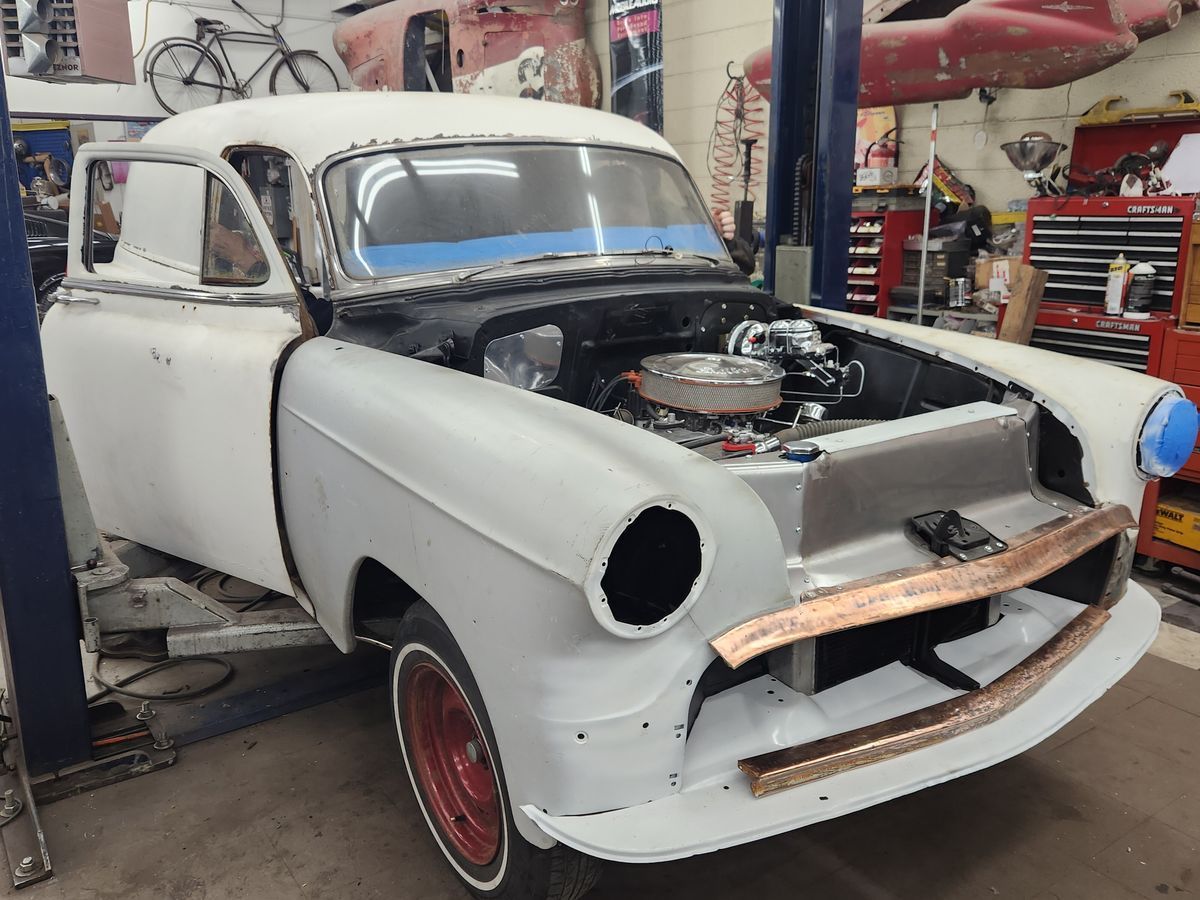 $10,950 · 65% below typical
Expand
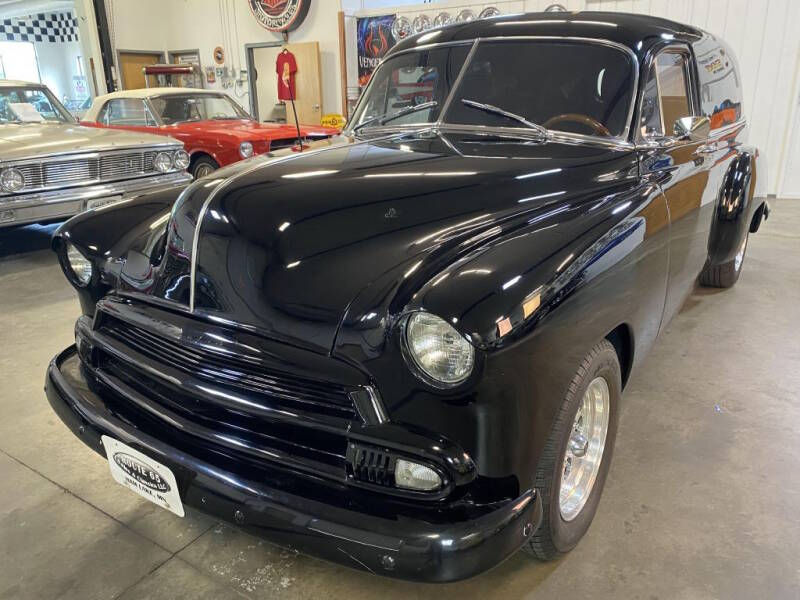 $28,990 · 7% below typical
Expand
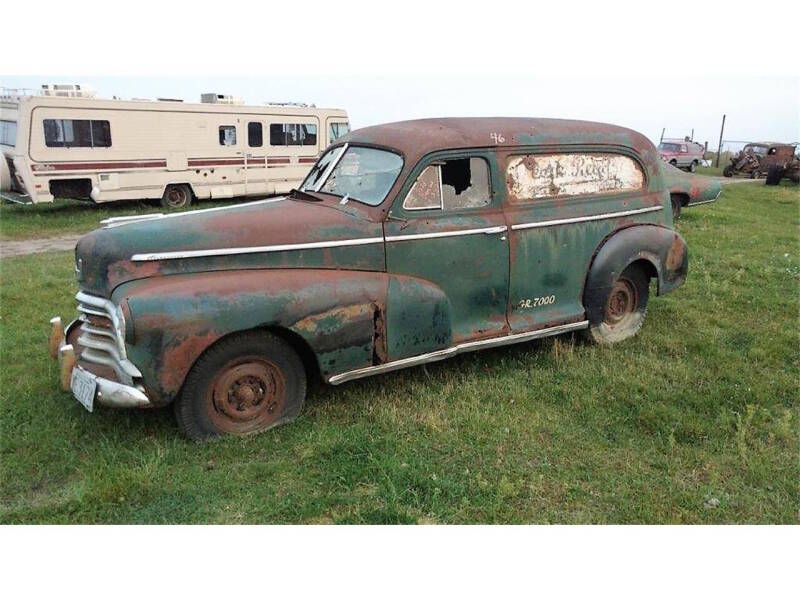 $3,600 · 88% below typical
Expand
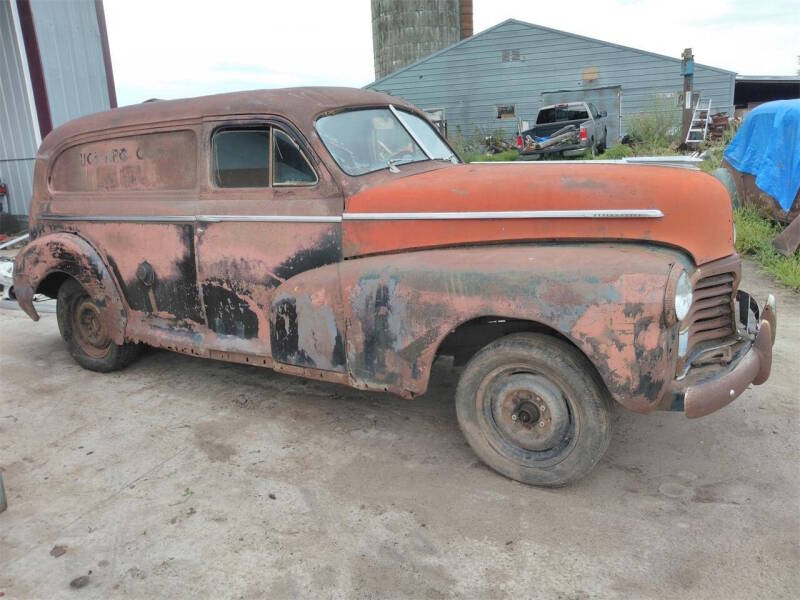 $4,000 · 87% below typical
Expand
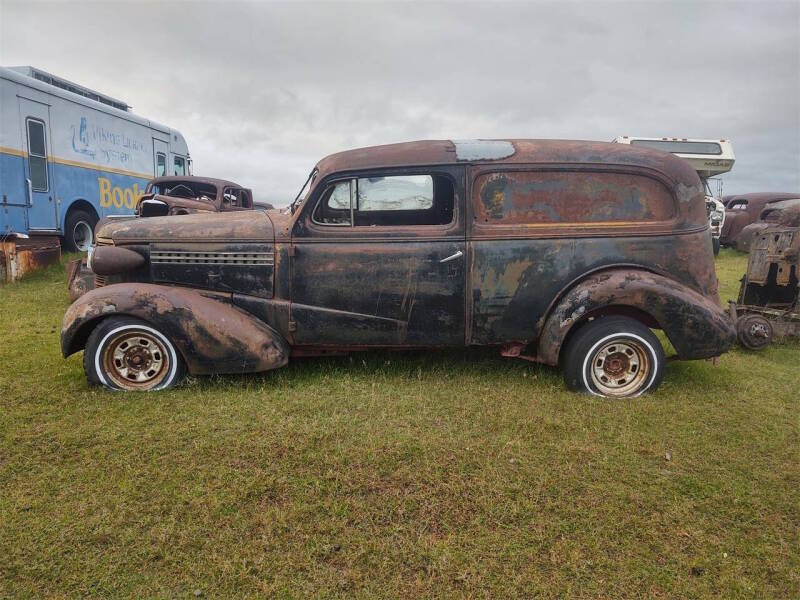 $6,500 · 79% below typical
Expand
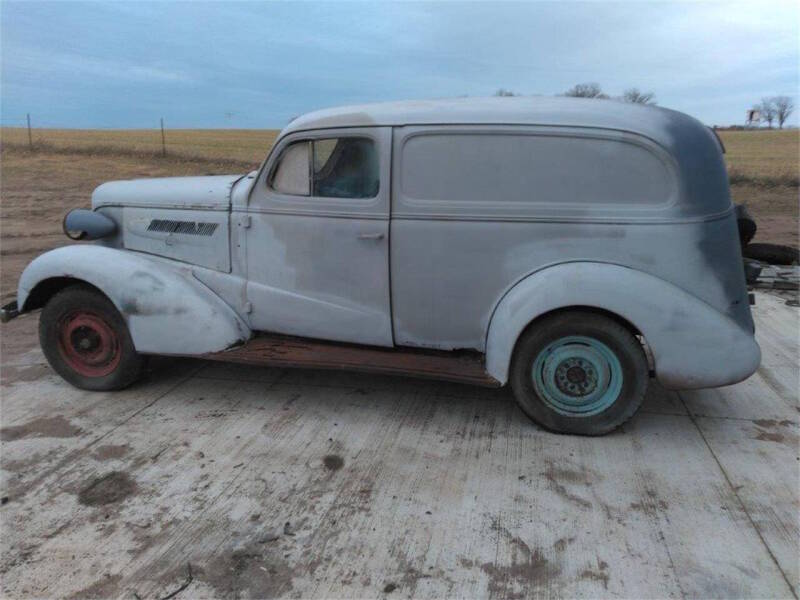 $6,500 · 79% below typical
Expand
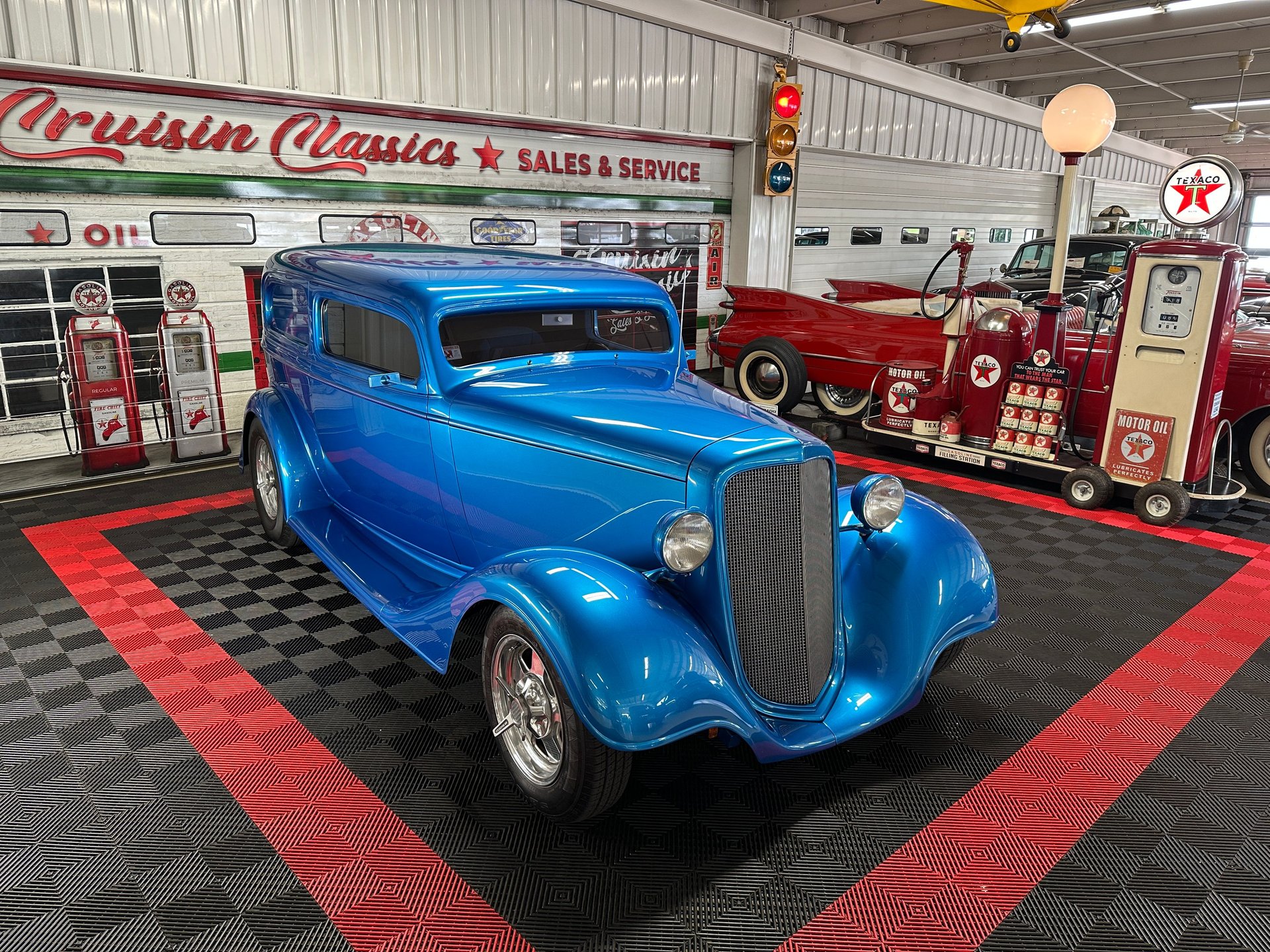 $41,995 · 35% above typical
Expand
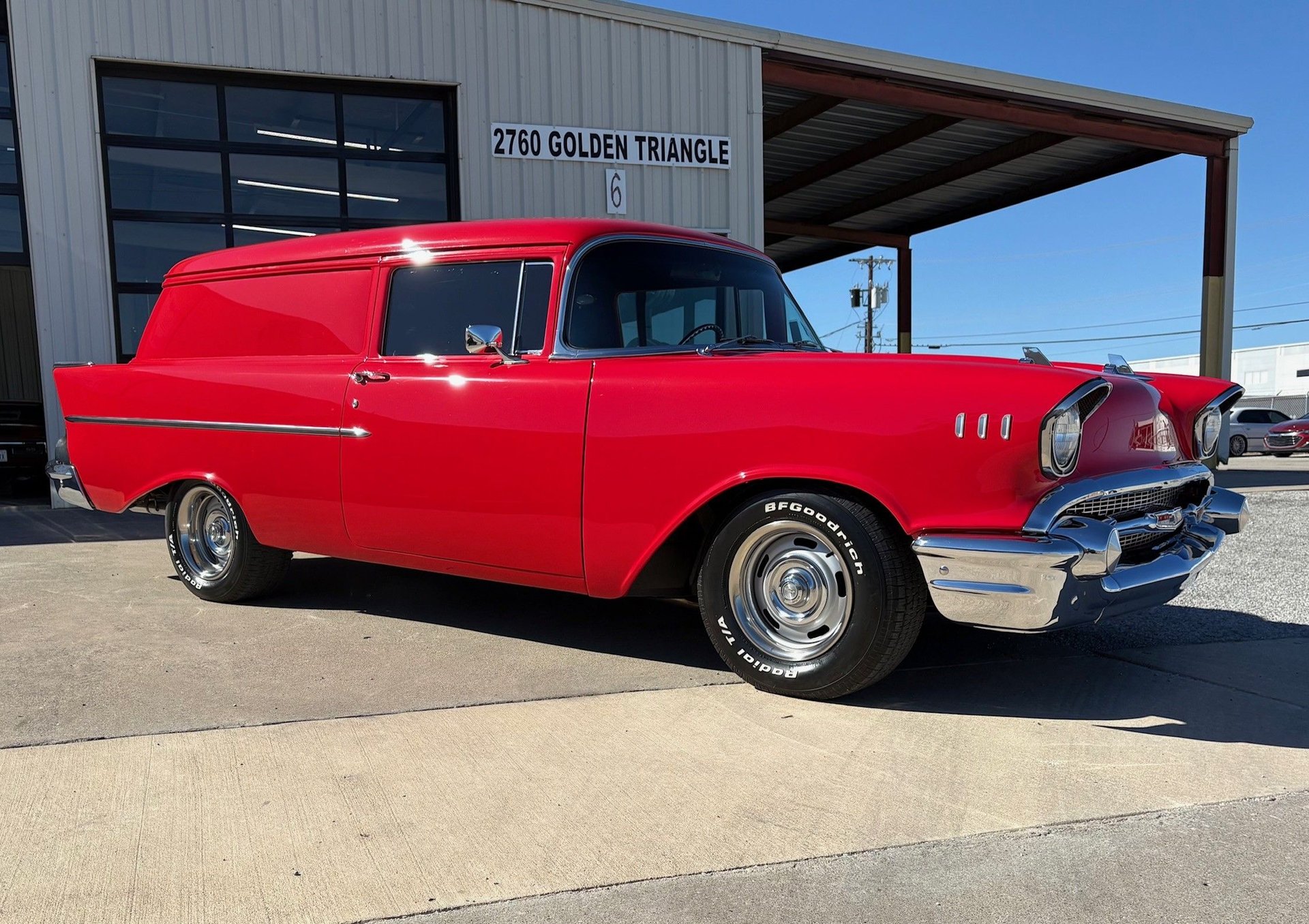 $99,995 · 221% above typical
Expand
What they sell for: Sedan Delivery sale prices.