
Ford F100 buyer's guide
Ford F100 -- the model's own buyer's guide: variants, values and what to check.
Years listed: 1953-1978 · Series: F-Series
Overview and history
The Ford F-100 is the half-ton pickup that taught America a truck could be a personal vehicle as well as a tool. Ford had built pickups since the Model T, and the post-war F-Series launched in 1948 with the F-1 as its half-ton. When the second generation arrived for 1953, the F-1 became the F-100, the numbering settled into the F-100 / F-250 / F-350 ladder that would run for decades, and the truck you are looking at was born. Production of the F-100 name itself ran from 1953 to 1983, thirty years and seven generations if you count the final downsized trucks, though the collector market concentrates overwhelmingly on the first five generations, 1953 to 1979. After 1975 the heavier-payload F-150, introduced to slip under emissions thresholds, steadily took the half-ton volume, and the F-100 faded into a base-trim role before disappearing. That history matters when you buy: a 1956 F-100 and a 1979 F-100 share a badge and almost nothing else — not the frame concept, not the suspension, not the engines, not the driving experience, and not the reasons people want them.
The first generation, 1953 to 1956, is the icon. Ford spent a then-enormous sum on the new cab — the so-called Five Star Cab in its upgraded form — with a one-piece curved windshield, a wider seat, better ventilation, and styling that finally treated the driver as a customer rather than an operator. The 1953 truck still carried the flathead V8 in its last year for Ford trucks, and for 1954 the new overhead-valve Y-block V8 and the 223 cubic inch Mileage Maker six modernised the range. The 1956 model, with its wraparound windshield and one-year-only vertical door pillars, became the most sought-after early truck of all: the hot-rodder's favourite, the cover truck, the one rendered on a thousand T-shirts. If you picture an F-100 without thinking, you are probably picturing a 1956.
Our own listings illustrate the spread honestly. The Classic Listings pool at the time of writing holds 14 F-100s, 4 currently for sale and 10 recorded sold, spanning 1953 to 1978, with the early trucks predominating — four from 1956 and three from 1953 in that small sample — and every one of the 14 coming through a dealer. That is a small, dealer-weighted sample, not the national market, but it reflects a real pattern: the 1953–56 trucks trade most visibly in the classic market, while the later trucks still change hands locally and privately in large numbers. In the five trucks in the pool with written photo examinations, rust was noted in four and visible damage in two — again a tiny sample, but entirely consistent with the wider truth of these trucks, which is that corrosion and old working damage, not mechanical failure, decide most purchases. Read the problem areas section with that in mind.
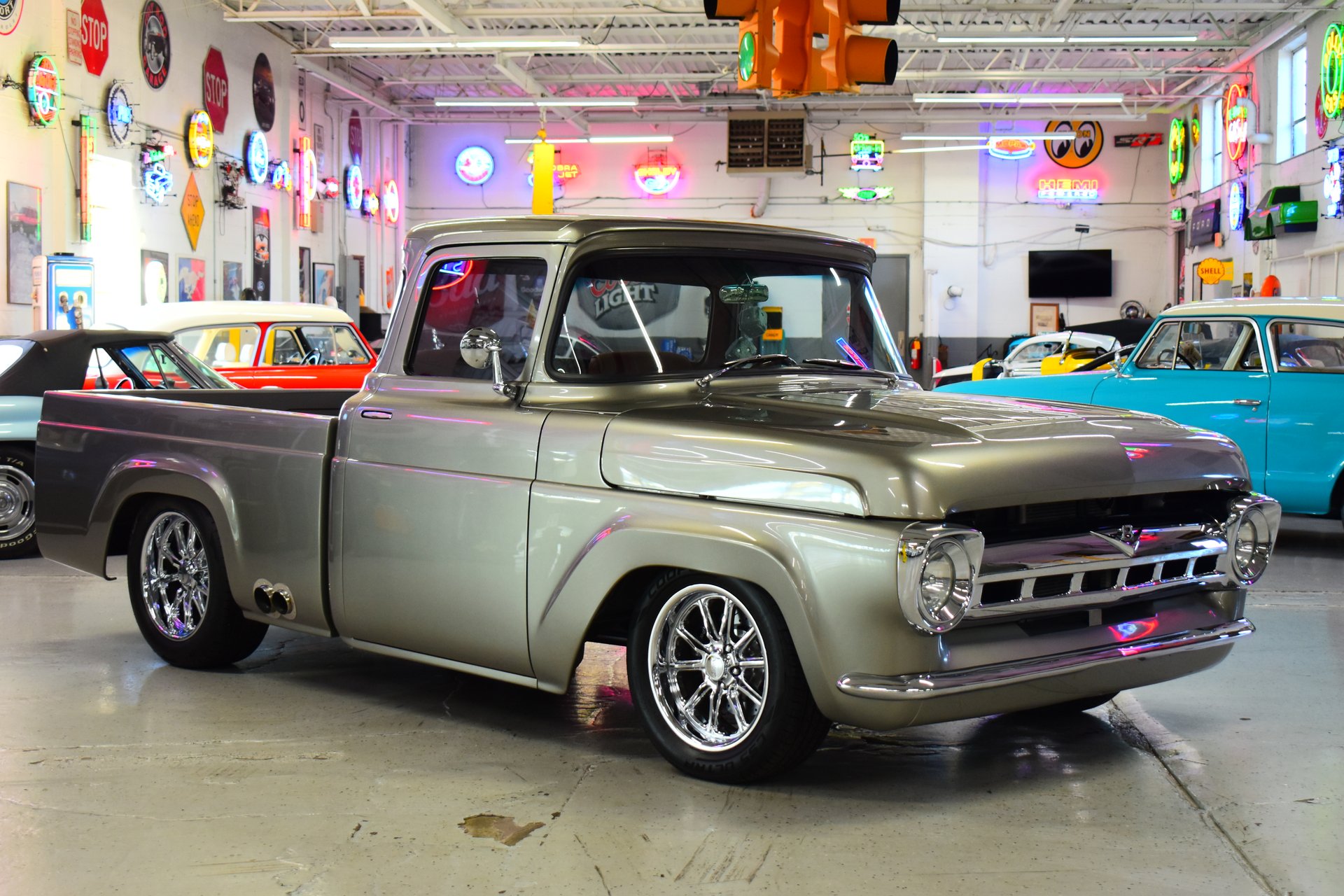
The models
Thirty years of production cannot be reduced to a single model line, so read the F-100 as six successive trucks sharing a badge. Within each generation the variables that matter are the same: cab and bed configuration, wheelbase, two- or four-wheel drive, engine, and trim level. Trim is the variable sellers most exaggerate and buyers most overpay for, because on early trucks trim was mostly brightwork and seat vinyl, while the expensive parts — frame, cab shell, bed — are common across the range. Buy the shell and the chassis first, the trim second.
| Model | Years | Engine | Output | Built | Character |
|---|---|---|---|---|---|
| F-100 (first generation) | 1953–56 | 223 six / 239 flathead V8 / 272 Y-block V8 | 101–173 hp | Very large numbers; 1956 the scarcest-feeling year | The icon; simple, pretty, the hot-rod and restoration favourite |
| F-100 (second generation) | 1957–60 | 223 six / 292 Y-block V8 | 139–212 hp | Large numbers | Bigger, more car-like; Styleside arrives; factory 4x4 from 1959 |
| F-100 Unibody | 1961–63 | 223 / 262 six / 292 V8 | 135–212 hp | A minority of 1961–63 output | Integrated cab-bed; distinctive, structurally demanding |
| F-100 (third generation) | 1961–66 | 240 / 300 six / 352 V8 | 120–208 hp | Very large numbers | Twin I-Beam from 1965 transforms ride — and front-end checks |
| F-100 (fourth generation, Bumpside) | 1967–72 | 240 / 300 six / 302 / 360 / 390 V8 | 120–255 hp | Very large numbers | The sweet spot for many: classic shape, modern manners |
| F-100 (fifth generation, Dentside) | 1973–79 | 300 six / 302 / 351M / 400 / 460 V8 | 117–220 hp (net) | Very large numbers | Biggest, most comfortable, most emissions-era complexity |
| F-100 (sixth generation) | 1980–83 | 300 six / 302 / 351W V8 | 115–150 hp (net) | Declining as F-150 took over | The last F-100; an emerging, still-affordable entry point |
First generation, 1953–56. The range was simple: a pickup in short and long form, a panel truck, and chassis-cab variants, with the pickup overwhelmingly dominant in today's market. The base engine was the 223 cubic inch six; the V8 was the 239 flathead for 1953 only, then the 239 and later 272 Y-block. A three-speed manual, column-shifted, was standard; a heavier four-speed and Ford-O-Matic automatic were options, the automatic rare and now prized by buyers who cannot or will not drive a column shift. The 1956 commands the generation's premium for its wraparound windshield and one-year details, and precisely because of that premium it attracts the most cosmetic fakery — see the rust map in Problem areas before paying 1956 money for any truck. The 1953 flathead truck has its own following as the last of an era, though the flathead's cooling and power limits make it the least usable of the early trucks in modern traffic without modification.

Second generation, 1957–60. Ford widened the cab, lowered the stance and offered two beds: the traditional Flareside and the new Styleside, whose flush sides doubled as a styling statement and a rust trap along the bed floor seams. The 223 six continued; the 292 Y-block became the main V8, and for 1958 the 352 FE appeared briefly at the top of the range. Factory four-wheel drive arrived for 1959 using a divorced transfer case and a solid front axle, and a genuine factory 4x4 of this era is a rare and valuable truck — which means conversions and badge jobs exist, so verify by VIN and by the factory front-axle and transfer-case installation, not by the seller's story. These trucks drive noticeably more like cars than the first generation and are usually cheaper than a comparable 1956, a combination that makes a good 1957–60 Styleside one of the rational buys in this guide.
Third generation and the unibody, 1961–66. For 1961 Ford integrated the cab and the Styleside bed into a single welded structure — the “unibody” pickup, marketed as the Integral Pickup. It looked superb and rode well, but heavy loads and torsional flex could distort the structure, door alignment suffered on hard-worked trucks, and the market's suspicion pushed Ford to reintroduce a separate-bed truck alongside it and then drop the unibody after 1963. Today the unibody is a legitimate collectible with a devoted following, but you must inspect it as a structure, not as a cab plus a bed: check door gaps under load, look for cracking and repair around the cab-to-bed transition, and walk away from one with rippled bed sides and doors that bind, because correcting a twisted unibody is coachwork, not panel replacement. The conventional trucks of 1961–64 used a solid front axle on leaf springs (with a Twin I-Beam-like arrangement on some earlier experiments aside, the mainstream change came in 1965), and for 1965 Ford launched Twin I-Beam: two long, overlapping I-beam axles, each pivoting from the opposite frame rail, on coil springs. It gave an independent-suspension ride with solid-axle durability, and it also introduced the radius-arm bushings, kingpin or ball-joint wear patterns and alignment sensitivities that dominate the front-end section below. The big news under the hood was the 240 and, above all, the 300 cubic inch Big Six, plus the 352 FE V8. The 1965–66 trucks are the connoisseur's pick of the sixties range: modern front suspension, the best six, classic pre-Bumpside styling.
Fourth generation, 1967–72. The Bumpside is for many buyers the definitive classic F-100: crisp styling, a wider cab, available Ranger trim with better seats and brightwork, factory air conditioning that actually works, power steering and front disc brakes arriving as options toward the end of the run (standardised progressively from 1970 onward depending on configuration — verify on the individual truck rather than assuming by year). Engines spanned the 240 and 300 sixes, the 302 small-block from 1969, and the 360 and 390 FE V8s. The Camper Special package, heavier suspension and wiring for slide-in campers, exists on F-100s as well as the heavier series and explains many trucks with unusually stiff rear springs and auxiliary wiring of variable quality. A 1970–72 Ranger short-bed with a 390 and discs is a genuinely usable classic truck; a base 1967 six-cylinder long-bed is a genuinely honest one. Both are worth more in good order than a middling example of the fashionable years.
Fifth generation, 1973–79. The Dentside grew in every dimension, gained the SuperCab extended cab in 1974 and the option of serious luxury in Ranger XLT and later Lariat trim, and lost the FE engines after 1976 in favour of the 351M and 400 modified engines and the 460 big-block. The 300 six continued as the durability champion. From 1975 the F-150 took the volume, so later F-100s are often lightly optioned base trucks — which can be a virtue: fewer systems, less weight, less to restore. Emissions equipment accumulates through the decade: EGR, catalytic converters from the mid-seventies depending on rating, air pumps, evaporative systems and a thicket of vacuum hoses whose perishing causes most of the running faults blamed on carburettors. Buy a Dentside on condition and originality of its emissions and vacuum plumbing, or accept the cost of recommissioning it properly and legally for your state.
Engines and gearboxes
An F-100 engine bay can hold anything from a 1953 flathead to a modern Coyote swap, and the first job on any viewing is establishing what is actually in front of you. Ford engine families share architecture and external features across displacements — a 360 and a 390 FE are externally identical, a 351M and a 400 likewise — so displacement claims require evidence: casting numbers, stroke measurement through a plug hole, or paperwork, in ascending order of convenience and descending order of reliability. The data plate and VIN decode the original engine; whether the original engine is still fitted is a separate question, and on a working truck a period service replacement is no disgrace. What matters is that you pay for the engine that is fitted, not the engine in the advertisement.
The sixes: 223, 240 and 300
The 223 cubic inch Mileage Maker six (1953–64 in the F-100, with the larger 262 variant in some heavier and later applications) is a simple overhead-valve six of modest output — around 101 to 139 hp across its life — and modest needs. It uses a single-barrel carburettor, breathes through a small intake, and rewards correct valve adjustment and clean cooling passages. Its weaknesses are age weaknesses: worn valve guides and hardened seals giving a puff of blue smoke on start-up, exhaust manifold cracking, and a cooling system marginal in modern summer traffic if the radiator core is original and furred. Budget $400–800 for a manifold and gasket job done properly, and treat any overheating claim of “they all do that” as a radiator and water-pump bill negotiating itself into the open.
The 240 (1965 onward) and its long-stroke brother the 300 (1965–96 in trucks, and the F-100's defining six) are the engines this guide unhesitatingly recommends for a truck you intend to use. The 300 in particular — seven main bearings, gear-driven camshaft, a torque curve that peaks low and pulls a loaded truck without drama — has a justified reputation as one of the most durable engines Ford ever made; fleet and industrial service (the same architecture powered generators, pumps and airport equipment) proved it beyond argument. Fitted with a single-barrel Carter YF or equivalent in most years, later with feedback carburettors and then injection outside the F-100's span, it asks for oil, coolant and valve-cover and pushrod-cover gaskets, which weep with age. Timing is by gear, so there is no chain to stretch; the fibre timing gear on some years can shed teeth at high age, announced by sudden non-running rather than gradual decline, and a steel replacement gear set at $300–600 fitted ends the question. Exhaust manifolds crack, especially the later split manifolds, and manifold studs snap on removal — quote any manifold job with stud extraction allowed for, $500–900 all-in. A 300 that starts cleanly, idles without a miss, shows steady oil pressure and does not pressurise its cooling system will very likely continue to do so for years. That is not a small thing in a fifty-year-old truck.
The early V8s: flathead and Y-block
The 239 flathead V8, fitted to the 1953 F-100 only, is a cultural artefact that also propels a truck. Its virtues are smoothness, sound and period correctness; its vices are well documented: cooling that depends on two water pumps and clean block passages that are rarely clean after seventy years, modest power, and a appetite for correct ignition and carburetion. A flathead truck is a hobby within the hobby. If you buy one, buy it for that, with a radiator recore ($600–1,000) and a full cooling-system overhaul in the budget, and do not believe any claim that overheating in traffic is unavoidable — a clean, correctly timed flathead with sound pumps and a good radiator copes; a neglected one does not, and the difference is money already spent or money you will spend.
The Y-block family (239, 272, 292 and 312 in passenger service; the F-100 mainly saw the 272 and 292, 1954–64) brought overhead valves, deep-skirt block stiffness and a notorious oiling quirk: the top-end oil feed passages in the block and heads sludge up on neglected engines, starving the rocker shafts, whose wear then masquerades as valvetrain failure. Rocker shaft and top-end oiling work runs $800–1,800 depending on how far the wear has travelled. Y-blocks also weep from the rear main and the valley cover, and their exhaust manifolds and crossover pipe on single-exhaust trucks crack and leak with a characteristic tick. A quiet, clean Y-block with documented top-end oil is a sweet engine; a rattly one needs the oiling question answered before any other money is spent, because a rebuild at $4,500–7,500 is the alternative.
FE V8s: 352, 360 and 390
The FE (Ford-Edsel) big-blocks — 352 (1958 and 1965–67 in trucks), 360 (1968–76) and 390 (variously available, the performance pick) — are the classic Bumpside and early Dentside V8s: deep-skirt blocks, immense low-speed torque, and thirst to match. The 360 is a destroked 390 built for truck duty and is the commonest FE in an F-100; sellers habitually describe 360s as 390s, and because the blocks are externally near-identical the only honest verifications are the stroke (3.50 inches for the 360, 3.78 for the 390, measurable through a plug hole with a rod and a dial or careful piston-stop method) or casting and date evidence weighed by someone who knows FEs. Price the truck as a 360 until the 390 is proven.
FE failure modes are specific. Exhaust manifold bolts snap — in the head, at removal, with metronomic regularity — and manifold and bolt work is $600–1,400 depending on how many extractors earn their keep. The intake manifold is a vast iron casting that forms the top of the valley and part of the head surface; it is heavy enough to injure enthusiasm and it leaks oil at the end seals, a $400–800 reseal. Oil consumption on a high-mileage FE is usually valve guides and seals first, rings second; a wet and dry compression test distinguishes them. The FE's oiling system restricts top-end flow by design and copes well unless sludge intervenes. Rebuilds cost $5,000–8,500 for a quality long engine build; against that, a compression-even, oil-tight 360 that pulls cleanly is worth more than a freshly painted unknown. Carburetion is by two-barrel Autolite/Motorcraft 2100 on most truck FEs — a simple, excellent carburettor — or a four-barrel Holley or Motorcraft 4100/4350 on higher specifications; budget $350–650 for a proper carburettor rebuild by a specialist, as opposed to a parts-store exchange of variable quality.
Small-block and late V8s: 302, 351W, 351M, 400 and 460
The 302 Windsor small-block (from 1969) is the easiest V8 to live with: light, revvy by truck standards, supported by the entire Mustang aftermarket, and cheap to rebuild at $4,000–6,500. Its truck tune is soft, which is fine; its weakness in an F-100 is simply that a small-block in a heavy truck works hard, so check for the overheating and head-gasket history that hard work plus neglected cooling produces. The 351 Windsor (later Dentsides and sixth-generation trucks) adds torque and shares the small-block virtues.
Gearboxes
Manual gearboxes dominate the early range. The standard three-speed (Ford 3.03 and related light-duty units), column-shifted, is adequate behind a six and miserable when its linkage wears — and the linkage always wears. Column-shift slop is bushings, levers and adjustment, $150–450 in parts and labour to put right, and transforms the truck; a seller's “the gearbox is tired” is often a $200 linkage verdict, and a buyer's inability to find second gear on the test drive should be priced as linkage until proven otherwise. The heavy-duty four-speeds — Warner T-18 and New Process NP435, both with a very low first gear — are near-indestructible, noisy in the manner of their kind, and identified by their shift pattern and iron cases; synchromesh is absent on first, which is correct, not a fault. A four-speed that jumps out of third on the overrun is showing worn dogs or a tired mainshaft bearing, a $900–1,800 rebuild; one that merely whines in first is being a truck gearbox. From the late seventies, overdrive manuals (the single-rail overdrive units) appear; check overdrive engagement carefully, as parts and knowledge thin out.
Automatics: the early Ford-O-Matic and the two-speed variants give way to the Cruise-O-Matic family, then to the three-speeds that matter — the C4 (light duty, behind sixes and small-blocks), the FMX (iron case, intermediate), and the C6 (behind FE, 351M/400 and 460, and the automatic this guide recommends without reservation). The C6 is one of the strongest three-speed automatics ever built, and its faults are age faults: hardened seals giving delayed engagement on a cold morning that improves as it warms (a rebuild announcing itself, $1,800–3,000 for a quality overhaul), modulator diaphragm failure drawing transmission fluid into the intake (white smoke and a falling fluid level with no external leak — a $40 part and a classic misdiagnosis), and band and servo wear showing as a flared 2–3 shift. A C4 behind a V8 in a truck that towed is working beyond its design brief; check its fluid colour and shift quality with extra care. Any automatic whose fluid is brown and burnt is negotiating a rebuild into the price whether the seller joins the negotiation or not. Later overdrive automatics belong to the sixth generation and to swaps; verify overdrive and lockup function on a long test drive, not around the block.
Problem areas
Everything in this section follows one ordering principle: structure first, because structure decides whether the truck is a vehicle or a parts source, then the systems that decide whether it drives, stops and steers. In the small photo-examined sample in our own pool — five trucks with written examinations — rust was noted in four of the five and visible damage in two. Small numbers, honestly stated, but they point the right way: on F-100s, corrosion and old working damage end more purchases than engine failure ever will. Engines in these trucks are cheap to fix relative to coachwork. Cabs are not.
Rust: the map
Ford built these trucks from good steel with minimal corrosion protection by modern standards, and they spent their lives outdoors, in fields, in salt states and under loads of fertiliser, gravel and wet equipment. Rust on an F-100 is therefore not a yes-or-no question but a map to be read in full, because the visible tenth is a reliable guide to the submerged nine-tenths only if you know where the water sits.
Start at the cab, because the cab is the truck. Cab mounts and cab corners are the signature failure: the front cab mounts sit in box sections that collect road water, the rubber mount perishes, the cab settles, and the mount and the floor around it rot together. Crouch at the front wheel and look at the mount behind it; then open the door and look at the cab corner behind the door's lower rear edge, where water thrown by the front wheel and trapped by the corner's folded seams rusts from inside out. Bubbling paint at a cab corner means perforation behind it, every time — the paint is the last thing to fail, not the first. Floor pans rot along the outer edges and around the seat and mount bolt holes; lift the mat or carpet — a seller who will not let you lift the mat has answered the question — and press firmly along the sill-side edge with your thumb. The cowl and firewall: leaves and debris enter the cowl vents, hold moisture against the cowl sides and the fresh-air vent boxes, and rot them; water then enters the cab at the front floor on rainy days, which the seller will attribute to a windscreen seal. The distinguishing test is a hose or a bucket: water poured into the cowl vent should exit at the cowl drains, not at your feet. Door bottoms fill through failed window seals and drain through holes that block; a door that sounds sloshy, or whose bottom edge is wavy with filler, needs skins or replacement — $500–1,200 per door to skin, paint and refit properly.
The bed decides the second half of the truck's value. A steel bed floor rusts along the crossmember lines, visible as parallel ridges of bubbling following the supports beneath; a wooden bed floor (fitted to many Flaresides and some Stylesides by year) rots its boards and the steel strips between them, which is cheaper to put right — boards and strips $600–1,400 in materials — than a perforated steel floor, whose replacement panel and fitting runs $1,500–3,000 painted. Bed sides rust at the stake pockets, at the lower seams where the side meets the floor, and around the wheel-arch lips where road film sits. On the 1961–63 unibody, add the cab-to-bed transition and the inner bed walls to the structural list and treat any perforation there as a structural consultation, not a panel bill. Tailgates bend, and their lower rail rusts; a straight original tailgate is worth real money, a reproduction fits variably.
The frame is the final arbiter. F-100 frames are riveted channel sections, strong and usually sound, with three habitual rot spots: the rear spring-hanger and shock-mount areas where mud packs, the mid-frame around the cab mounts and fuel tank, and — on trucks from salt country — general scaling that thins the channel flanges. Surface scale is cosmetic; flaking, laminated rust that expands the section, and perforation are rejection-grade. Tap the frame with a small hammer along its full length (with permission) and listen: a ring is steel, a crunch is a conversation you do not want to continue. Frame repair by a competent fabricator — a spring hanger section, a cab-mount outrigger — runs $800–2,500 per area welded properly; a frame rotted in several places makes the truck a donor, whatever the cab looks like, because cabs swap onto good frames more cheaply than frames are rebuilt under good cabs.
Cost the common cab repairs so you can negotiate with numbers: a cab corner, cut out and welded, $600–1,200 per side painted; a floor pan section, $700–1,500 per side; cab mount repair with the mount replaced, $500–1,000 per corner; a full cab-off rotisserie restoration of a rusty cab is $8,000 and upward in metalwork alone, which is why a genuinely rust-free cab — southwestern, garaged, verifiable — commands the premium it does. The test that settles arguments is the magnet-and-light test: a weak magnet over suspect panels (it falls off filler), a torch shone from behind panels in a dark inspection area showing pinholes as stars, and your own thumbnail in every seam. Do all three before discussing price.

Front suspension, steering and the rear axle
Pre-1965 trucks use a solid front axle on leaf springs with kingpins. Kingpin wear shows as play when you rock the front wheel at twelve and six o'clock with the weight jacked off the axle correctly, and as wandering and shimmy on the road. A kingpin and bushing job, reamed and fitted properly, is $700–1,400; add spring-eye and shackle bushings, which are always worn when the kingpins are, for $300–600 in the same visit. Leaf springs sag, crack leaves at the centre bolt, and take a set that lists the truck; replacement spring packs run $400–800 per end fitted.
From 1965, Twin I-Beam changes the checklist entirely. Each beam pivots on an axle pivot bushing at the far frame rail and locates on a radius arm running back to a frame bracket, whose large rubber bushing is the single most common F-100 front-end wear item in this guide. Perished radius-arm bushings let the beam move fore and aft, producing brake pull, clunks over bumps, wander, and tyre wear that alignment shops chase in circles if they do not know these trucks. Radius-arm bushings are $250–550 fitted and should be treated as a service item on any newly bought Twin I-Beam truck of unknown history. Axle pivot bushings wear next ($400–800, a press job), then ball joints on later trucks or kingpins on earlier Twin I-Beam variants. Coil springs sag unevenly, and because camber on a Twin I-Beam is set by ride height and beam bending, a sagged spring is an alignment fault, not just a stance fault: budget springs at $300–600 a pair fitted, and have alignment done only by a shop that understands that Twin I-Beam camber is adjusted by bending or by eccentric bushings depending on year, not by shims. The distinguishing test for the whole system is simple: drive over a speed bump at an angle, one front wheel at a time, and listen and feel for the clunk and shift of worn radius-arm and pivot bushings; then brake firmly from 40 mph and note any pull that changes side with repeated stops, which points to geometry moving under load rather than to the brakes themselves.
Steering: manual boxes wear at the sector and worm, giving play at the wheel rim beyond the roughly two inches that is period-normal; a rebuilt box is $500–900 exchanged. Power steering (Ford's own and the Saginaw-sourced systems by year) leaks from the pump, the hoses and the control valve or box seals; a full reseal and hose set is $400–900. The rag joint in the column coupling perishes and adds play that owners blame on the box — inspect it first, it is a $30 part. On 4x4s, add the Dana 44's ball joints or kingpin bearings, the steering linkage's extra joints, and the front driveshaft.
The rear axle is usually a Ford 9-inch (the great majority of F-100s) or, in some applications, a Dana 44 or the later 8.8. The 9-inch is deservedly famous: a drop-out centre section, enormous aftermarket support, and strength beyond any stock F-100 engine. Its faults are pinion seal leaks ($150–300), axle bearing wear announced by a rumble that changes on turns ($400–700 both sides with seals), and ratio changes by previous owners that make the speedometer lie — verify ratio by counting driveshaft turns per wheel turn before trusting any economy or performance claim. A limited-slip (Traction-Lok) unit that has lost its preload chatters or behaves as an open diff; clutch-pack renewal is $500–900. Gear oil dark with metal glitter means a centre-section rebuild at $900–1,600; clean oil and a quiet axle at 50 mph on a trailing throttle means leave it alone.
Brakes, wheels and tyres
Every F-100 left the factory with drum brakes all round; front discs arrived as an option and then as standard equipment progressively through the early seventies, and disc conversions on earlier trucks are common and usually welcome. Judge what is fitted, not what the year suggests. Drums: pull at least one front and one rear drum (or pay for it in a pre-purchase inspection) and look for scored drums, leaking wheel cylinders ($60–120 per corner in parts, $250–450 a pair fitted with shoes), perished flex hoses and a dual-circuit master cylinder conversion on pre-1967 single-circuit trucks — the single most important safety upgrade on an early F-100, $300–600 fitted, and its absence on a truck presented as “sorted” tells you about the sorting. Discs: check rotor thickness and runout (pulsation under braking), caliper slide function, and the proportioning valve's warning-light switch, which is how you discover that the light on the dash has been disconnected. The brake test that distinguishes causes: a pedal that sinks slowly at a standstill is a master cylinder bypassing internally; a pedal that is firm at rest but pulls under braking is a seized caliper, a collapsed hose acting as a one-way valve, or the Twin I-Beam geometry fault described above — repeat stops separate them, because a hose or caliper pull is consistent while a geometry pull varies. Parking brakes on these trucks are cables to the rear drums and are seized on a majority of survivors; freeing and renewing cables is $200–500 and is an inspection item in many states, not an optional extra.
Electrics, instruments and cab
F-100 electrics are simple, and their enemy is not complexity but sixty years of additions. The charging system progresses from generator (early trucks) to alternator with an external regulator, then to later internally regulated units; the classic faults are a regulator failing to a full-field overcharge that boils the battery, corroded grounds producing a dashboard of lies, and auxiliary wiring — trailer brakes, spotlights, camper feeds, stereos across five decades — spliced into the original loom with twist-and-tape joints. Budget $300–800 for a competent auto-electrician to audit and make safe a typical truck's wiring, and $600–1,200 for a full reproduction harness if the original is cooked; treat any sign of melted insulation at the bulkhead connector as a stop-and-fix, not a quirk. The ammeter or charge light, the fuel gauge (sending units fail to empty or to fantasy, $100–250 fitted), and the temperature gauge should all be verified against reality: a mechanical temperature gauge teed in for the test drive is the oldest trick in this guide and still the most informative.
Fuel, cooling and exhaust systems
Fuel tanks sit behind the seat in early cabs (with the sender and filler in the cab — a period arrangement modern noses notice immediately), move under the bed and to dual-tank configurations on later trucks. Every steel tank of this age carries rust scale unless it has been cleaned or replaced, and scale migrates to the pump and carburettor and produces the classic F-100 fault of running perfectly for twenty minutes and starving on a climb. The distinguishing test is the fuel filter: cut open or inspect a transparent filter after the test drive; glitter and orange dust convict the tank. A new tank is $250–500 plus fitting; cleaning and sealing an original is $300–600 and only as good as the preparation. Fuel pumps (mechanical, cam-driven) fail to weak delivery rather than to silence; test volume and pressure — roughly 4–6 psi and a pint in thirty seconds of cranking for most carburetted applications — before condemning a carburettor. Rubber fuel hose of unknown age is replaced on principle, $50–150, because ethanol in modern fuel hardens old hose from the inside.
How to inspect one
Inspect in this order, because the order is the order of expense: identity and structure first, when your enthusiasm is lowest and your judgement best, and the test drive last, when a sweet engine can no longer talk you out of a rotten cab. Take a magnet, a torch, a small hammer, a tyre gauge and a friend whose job is to watch the tailpipe and the gauges while you drive. Allow two hours for a serious truck; any seller who will not allow two hours is inspecting you, and you should let the result stand.
- Identity before everything. Decode the VIN and data plate (glovebox door or door jamb, and the frame rail, by year) and confirm the stamped frame number matches the plate. Establish the original engine, axle and colour codes, then compare them with the truck in front of you. This settles “390” claims, “factory 4x4” claims and “original short bed” claims before they are spoken — the identity checks from the models and engines sections, applied first because every later judgement prices off them.
- Frame, with the hammer. Work the full length of both rails as the rust section directs: spring hangers, cab-mount outriggers, tank area, rear shock mounts. Ring is steel; crunch ends the inspection or reprices the truck as a donor. Check also for accident repair — non-factory welds at the front horns, a replaced front clip's paint mismatch inside the engine bay — and sight along the flanks for rail straightness.
- Cab mounts, corners and floors. Open both doors, look at the front cab mounts behind the front wheels, press the cab corners, lift the mats and press the floor edges, then run the magnet-and-light test on the corners, sills and lower doors. If the cab cannot hold its mounts, nothing else matters until that bill — see the cab figures in the rust section — is in the negotiation.
- Cowl and drip rails. Pour water into the cowl vent and watch where it exits; probe the drip rails; look at the header inside the cab for staining. Distinguish cowl leaks from heater-core leaks now, on a dry day, rather than in the first rainstorm of your ownership.
- Bed and tailgate. Read the bed floor along its crossmember lines, the stake pockets and the arch lips and, on a unibody, the cab-to-bed transition and the door gaps with a heavy friend standing in the bed — gaps that move materially under load on a unibody are the structural warning from the models section made visible. Operate the tailgate; a bent gate with a rotted lower rail is a cost, not a detail.
- Cold engine, before it is started. Oil level and condition, coolant level and colour, belt and hose condition, the wiring audit with your eyes (twist-and-tape joints, melted bulkhead insulation), and the fuel filter's contents as a prediction of the tank's interior. Note every fluid level precisely; you will compare them after the drive.
- Cold start, watched from outside. Have the seller start it while you stand at the tailpipe, then at the engine. Blue smoke that clears is guides and seals; smoke that persists is rings; white smoke with a sweet smell is coolant until proven innocent; a rattle that fades in two seconds is a tired oil system, a rattle that stays is a bill. Watch oil pressure come up and note how long it takes.
- Engine health tests. Hot idle vacuum reading, then compression — all cylinders within roughly ten percent, and investigate any single low cylinder with a wet retest before accepting “it just needs a tune-up” — plus oil pressure hot at idle, a cooling-system pressure test if any overheating history exists, and the block test for combustion gas if the coolant's history is doubtful. These are the engines-section tests; do not skip them because the truck sounds sweet.
- Gearbox and clutch, stationary. Column-shift linkage slop assessed gear by gear; four-speed selection including reverse; automatic fluid colour and smell on the dipstick, and engagement delay timed from neutral into drive and reverse — a pause beyond about a second and a half, cold, is the seal verdict from the gearboxes section arriving early.
- Front end, jacked and driven. Rock the front wheels for kingpin or ball-joint play; lever the radius arms and watch their bushings while your friend rocks the truck; then, on the drive, the angled speed-bump test and the repeated-braking pull test from the suspension section, which together separate bushing and geometry faults from brake faults.
- The test drive, long enough to get everything hot. At least twenty minutes, including a climb (fuel starvation from a scaled tank shows here, and only here), a trailing-throttle descent (rear-axle whine, overrun smoke), sustained 55–60 mph (vibration diagnosis, cooling at load), and a full-lock car-park manoeuvre — steering, and on a 4x4 the hubs and transfer case in every range. Check every gauge against reality and every electrical consumer, because the cab section's faults are cheapest while they are still the seller's.
- Brakes, deliberately. Firm stops from 40 mph repeated three times (the pull-consistency test), a standstill pedal-sink test for the master cylinder, the parking brake on a slope, and a look at the flex hoses and the single-versus-dual master cylinder question on a pre-1967 truck. Price what you find using the brakes-section figures before you speak.
- Underneath, after the drive, hot. New leaks declare themselves hot: rear main, pinion seal, automatic pan and cooler lines, heater drips at the firewall drain. Compare every fluid level with step 6. A truck that used coolant on a twenty-minute drive has told you its most important secret.
- Paperwork, then the second look. Title matching the VIN, restoration photographs if restoration is claimed (the metalwork history is the value), receipts that name this truck, and invoices for any engine swap. Then walk round once more, slowly, looking only at panel gaps and reflection straightness — filler, bent unibodies and replaced clips announce themselves to a rested eye. Only then talk money, using the repair figures collected from the problem areas, item by item, rather than a single hopeful discount.

Values
The F-100 market is not one market but six, laid over each other by generation, and the first skill in reading it is refusing to average them. The market block appended beneath this guide — the current listings and the recorded sales for the trucks this site has handled — should be read generation by generation, configuration by configuration: a short-bed Styleside and a long-bed Flareside of the same year are different goods, a factory four-wheel-drive truck is a different good again, and a unibody is a different good with its own small and loyal market. When the sample for a particular configuration is thin, say so to yourself and widen the comparison by year and by condition rather than pretending a handful of trucks is a price index.
Condition spreads on F-100s are wider than on almost any classic car, because the same model year spans a field-parked project, a working farm truck, an honest driver, a patina build, a full restoration and a six-figure restomod, and listings use the same vocabulary for all of them. Learn to sort by evidence rather than adjectives: underside and cab photographs sort more honestly than exterior gloss, restoration photographs sort more honestly than restoration claims, and a truck described by its faults is almost always a better buy than a truck described by its awards. The project-to-driver gap is the defining feature of this market. A project F-100 is cheap to buy and expensive to finish, because the expensive work — cab metal, paint, chrome, interior, and the hundred small systems — costs the same on a humble truck as on a fashionable one, while the finished value does not. The driver-quality middle of the market, trucks that are structurally sound, mechanically recommissioned and cosmetically honest, is where value concentrates: you pay for work already done at the previous owner's discount, and you get a truck you can use while you improve it.
Premiums attach, in rough order, to the 1956 model year within the first generation, to short beds over long beds in every generation, to Styleside over Flareside in the later generations (the reverse holds for the earliest trucks, where the traditional bed is part of the look), to factory four-wheel drive where it is genuine and provable, to the 390 over the 360 where the 390 is proven rather than asserted, to Ranger and Ranger XLT trim in the later generations where the trim survives complete, and to originality of sheet metal everywhere — an original, unpatched cab is the single strongest value driver in the entire F-100 market, stronger than engine, trim or colour, because it is the one thing money cannot convincingly recreate. Colour changes, engine swaps and modifications discount in proportion to how completely they close doors: a reversible swap with the original engine included in the sale barely discounts at all, while a cut frame, a chopped roof or a discarded original drivetrain removes the truck from the originality market permanently, however well the work was done.
Parts and ownership
Owning an F-100 is, by classic-vehicle standards, an easy life, because the truck sits at the centre of the largest reproduction and support ecosystem in the American classic world. Ford built these trucks by the million, the mechanicals overlap with the Mustang, the full-size Fords and decades of other trucks, and the aftermarket has responded accordingly. The ownership question is rarely “can I get it?” and usually “which of the four available qualities do I want, and how long will the cheap one last?”
Mechanical parts are effectively universal. Engine internals for the 300 six, the FE, the Windsor small-blocks and the 460 are stocked everywhere, with quality ranging from reputable American and international manufacture to anonymous castings whose machining you should inspect before fitting; a full gasket set, a water pump, a carburettor kit or a clutch are same-week parts anywhere in the country. The 223 and Y-block are a step thinner — supported by specialists rather than by every parts counter, with rocker shafts, manifolds and gaskets available but worth ordering from a marque specialist who knows the top-end oiling history — and flathead parts live in their own mature hot-rod ecosystem. Gearbox and axle parts mirror the engines: C6 and 9-inch components are universal, NP435 and T-18 parts are easy, column-shift linkage parts are reproduced, and only the late overdrive manuals and the earliest Ford-O-Matic require genuine hunting. Allow $400–800 a year for the rolling consumables of a used-regularly truck — fluids, filters, ignition parts, hoses, belts, brake wear — over and above fuel and insurance, and expect an initial recommissioning year to cost several times that as the deferred items you found at inspection come due in the order you choose rather than the order they choose.
Body and trim are where the generations diverge. For the 1953–56 trucks, reproduction steel is extensive — floor pans, cab corners, steps, bed parts, fenders in steel and fibreglass — of variable fit: budget fitting time on every reproduction panel, because “bolt-on” in a catalogue means the bolt holes are approximately where Ford's were. Patch panels and glass for the second and third generations are good; unibody-specific structure is repair-by-fabrication, one more reason the unibody inspection is structural. Bumpside and Dentside sheet metal is well served, including bed floors and tailgates, though tailgate fit on reproductions still needs checking against your truck's opening before paint. Chrome and brightwork are reproduced widely; original stainless in good condition is often better than new reproduction chrome and should be polished and kept rather than replaced by default. Interior kits — seat covers in correct grain, door cards, headliners, carpets — are available for all generations at $800–2,500 for a full kit depending on trim level, with Ranger and XLT patterns the best served and base-truck plainness, paradoxically, sometimes harder to match exactly.

Which one to buy
There is no single best F-100, because the generations are different trucks for different lives. Buy by the use you actually have for it, in the generation whose structure you can verify, and let the following picks order your search.
- The icon: the 1956 F-100, short bed, V8 — the wraparound-screen truck, bought only after the full rust-map inspection, because the year's premium attracts the most cosmetic concealment in the market.
- The all-rounder: a 1970–72 Bumpside, 300 six or 360/390 V8, with front discs — classic looks, modern-enough brakes and steering, the deepest parts support, and a truck you can drive anywhere.
- The value buy: a 1957–60 Styleside or a 1965–66 Twin I-Beam truck — the connoisseur's engineering at a discount to the fashionable years, with the 1965–66 300-six truck the single most rational purchase in this guide.
- The worker: a Dentside 300-six or 400 truck, long bed, honestly presented — the most truck per unit of money in the range, with the emissions plumbing inspected as rigorously as the frame.
- The character pick: a 1961–63 unibody, structurally verified under load — a distinctive, devoted following and a truck that rewards the buyer who did the structural homework others skipped.
- The entry point: a straight, unrusted 1980–83 sixth-generation truck — the last of the line, still priced as a used truck, and the cheapest sound structure in the F-100 world.
- The one to avoid at any price: any generation, any trim, any engine, with a rotted frame or a cab whose mounts and corners have gone — the shiny project whose metal bill exceeds the value of the finished truck.
The overriding rule: buy the frame and the cab, and let the engine, the trim and the year be negotiable — a sound structure with the wrong engine is a good truck at the right price, and a rotten structure with the right engine is not a truck at all.
See the 6 F100 cars currently listed.
For sale now
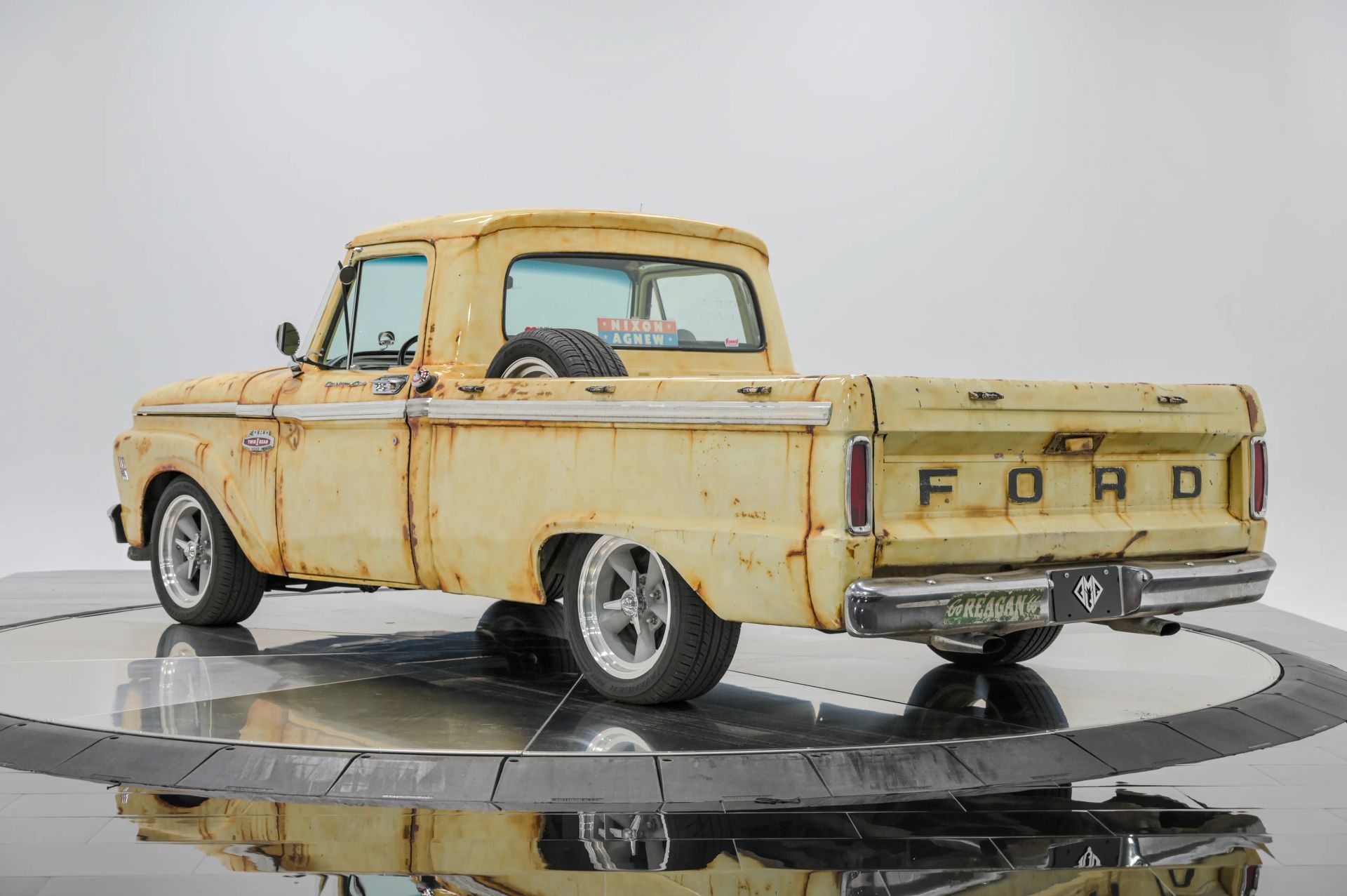 $39,100 · 16% below typical
Expand
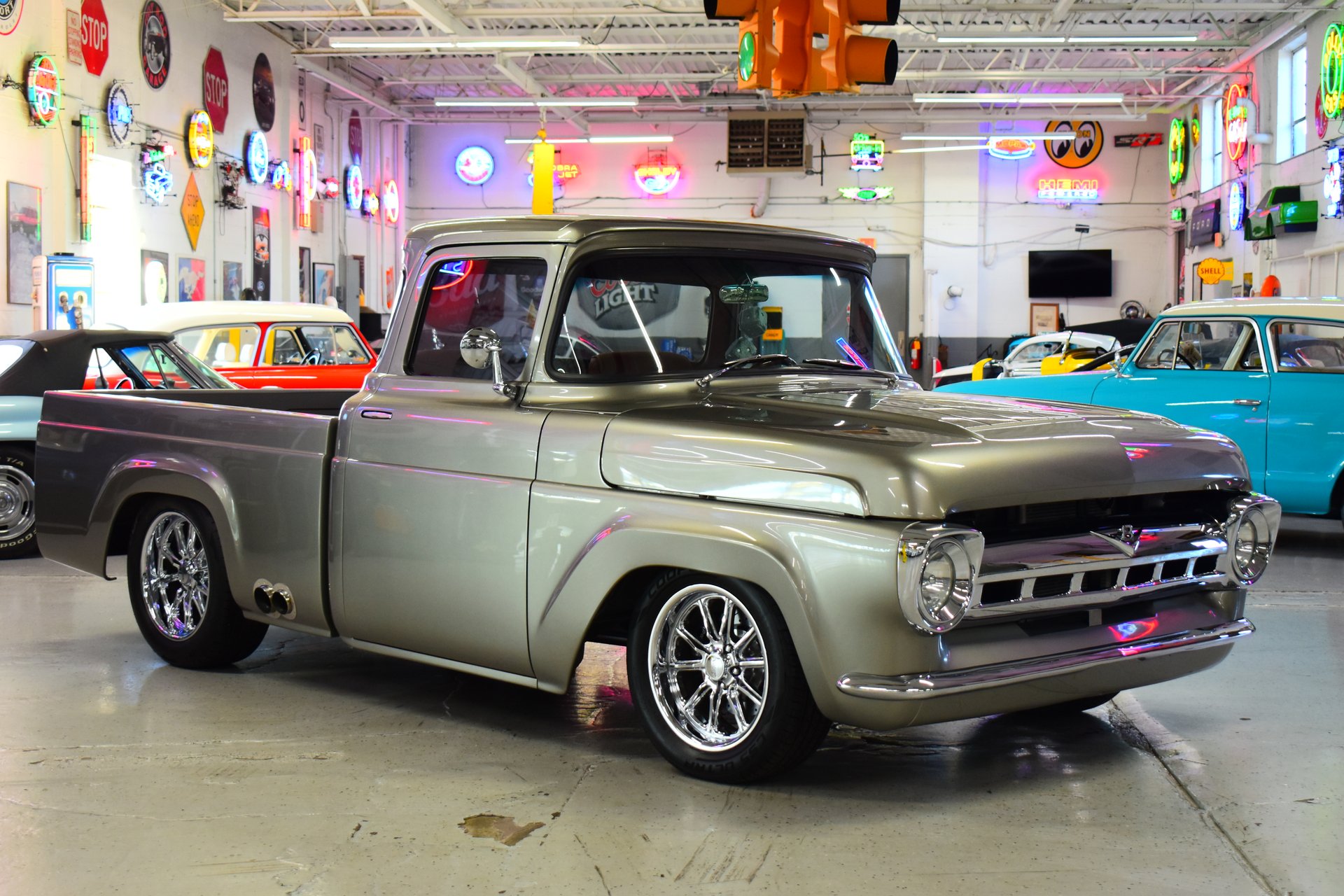 $69,995 · 50% above typical
Expand
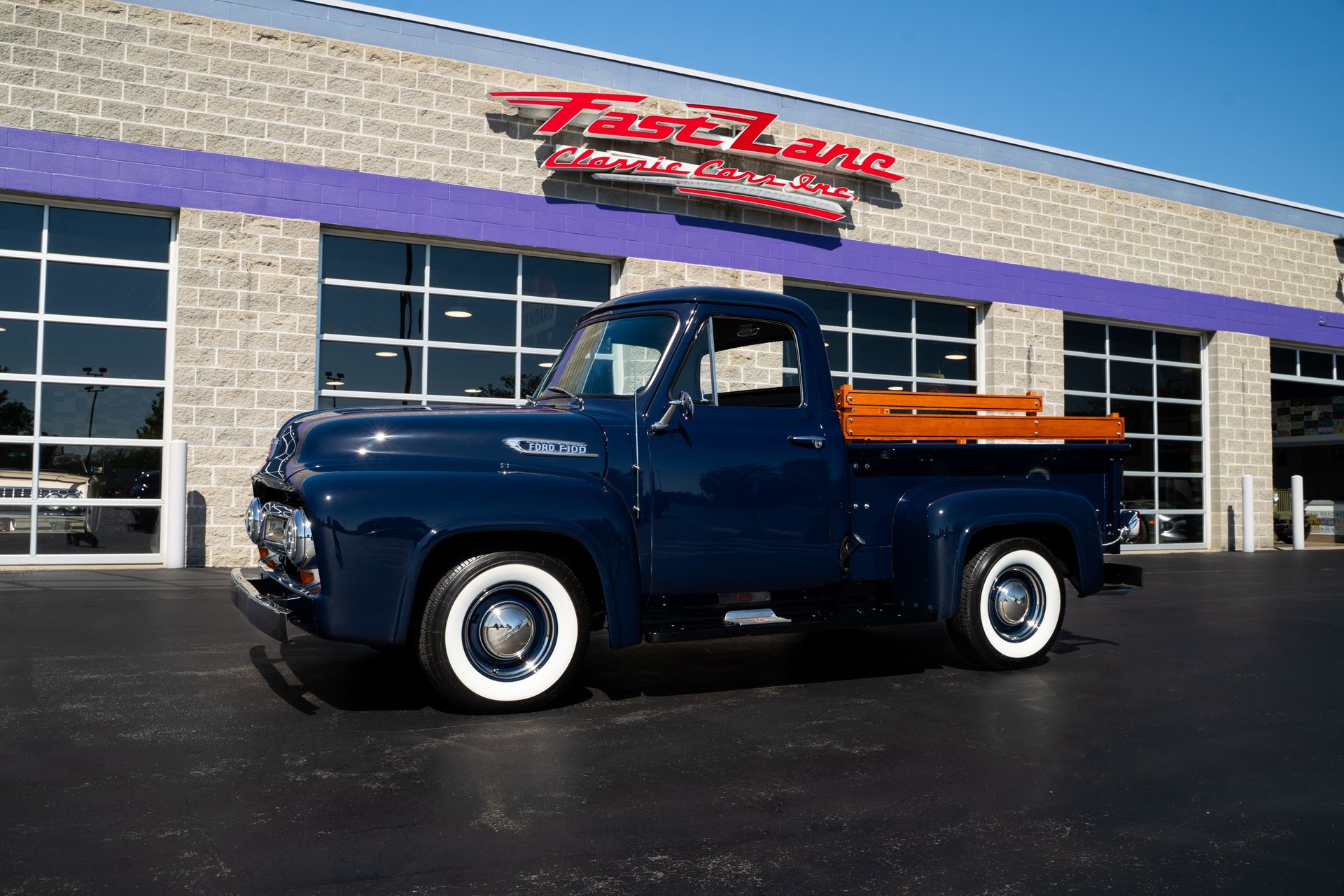 $53,995 · 16% above typical
Expand
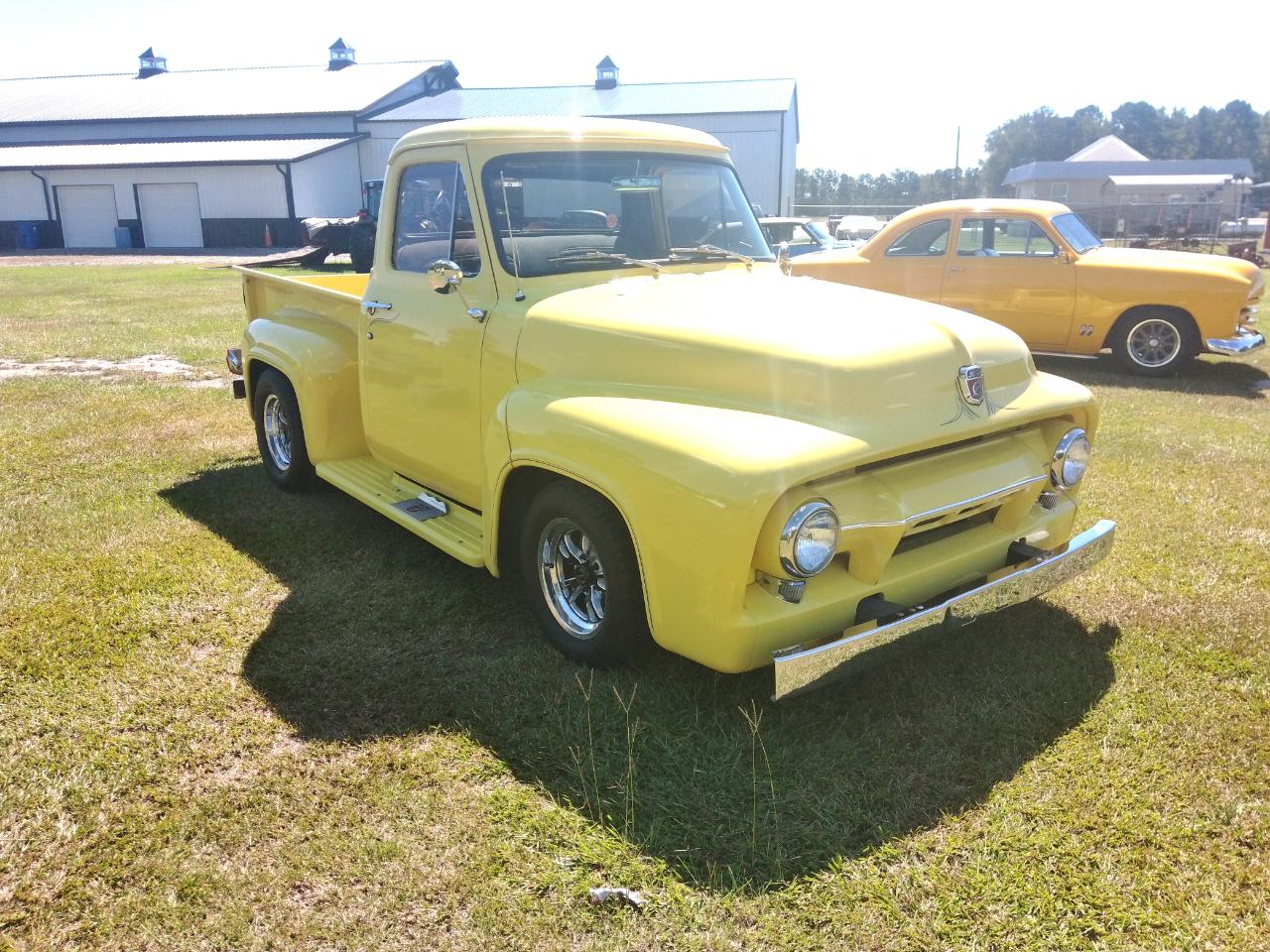 $49,995 · 7% above typical
Expand
What they sell for: F100 sale prices.