
Lincoln Mark III buyer's guide
Lincoln Mark III -- the model's own buyer's guide: variants, values and what to check.
Years listed: 1969-1969 · Series: Mark Series
# Lincoln Continental Mark III (1969–1971) — Buyer's Guide
Overview and history
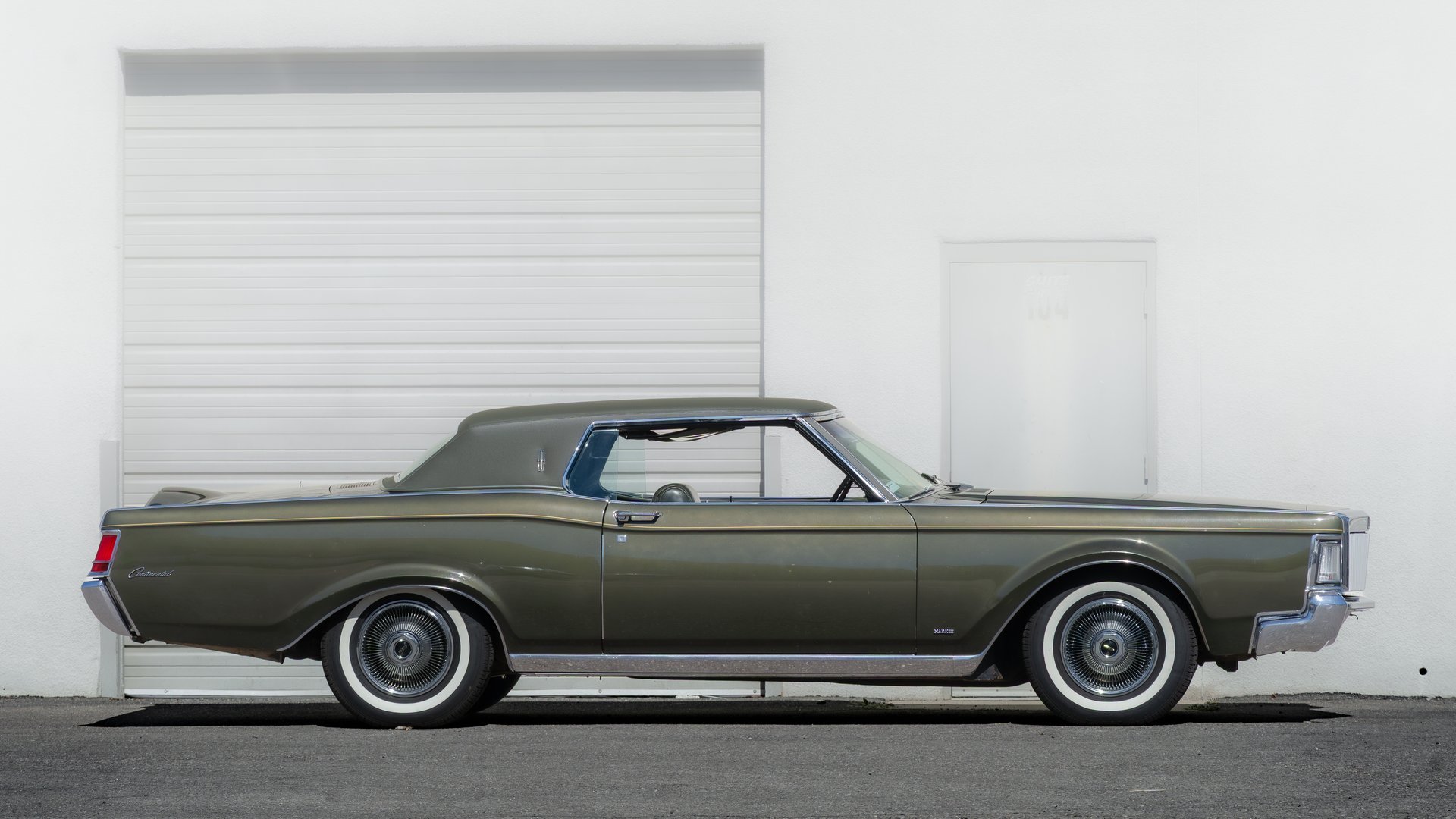
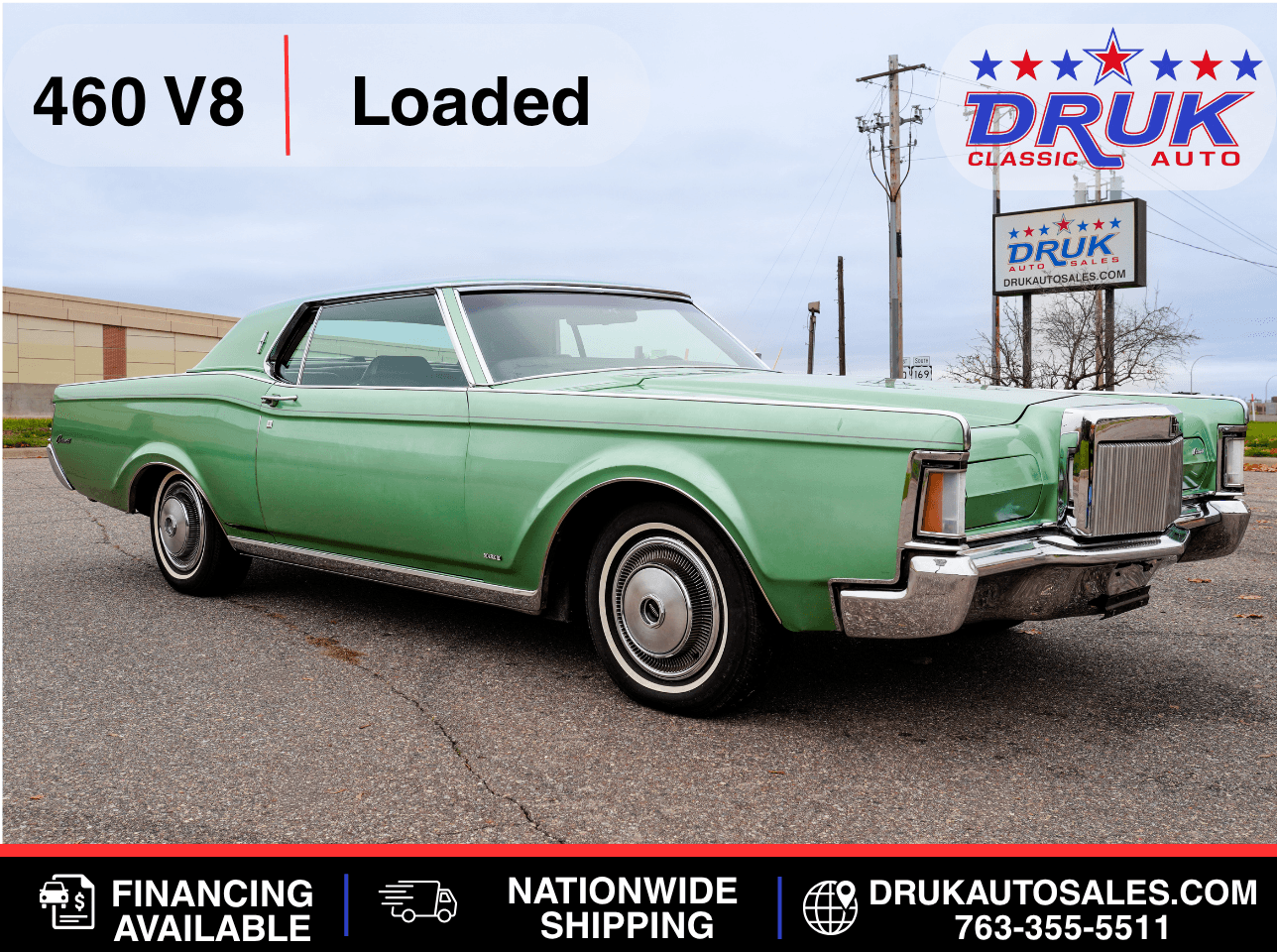
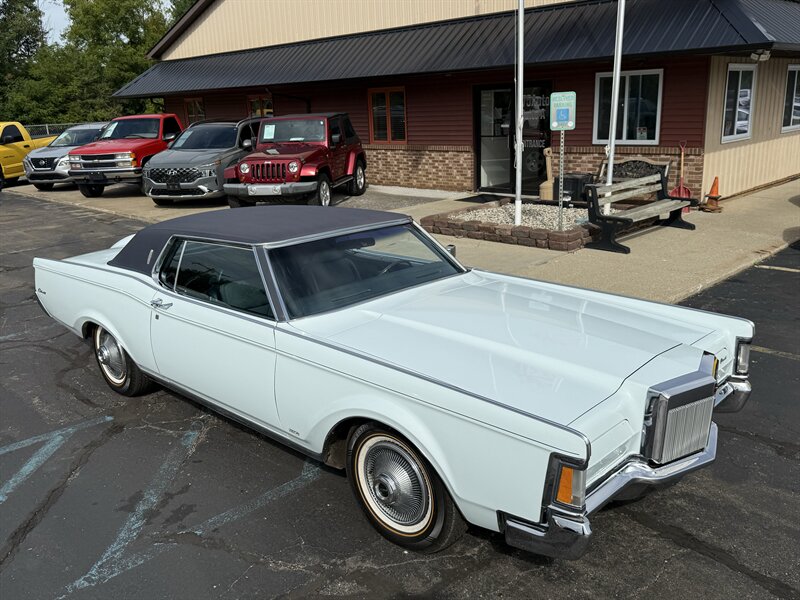
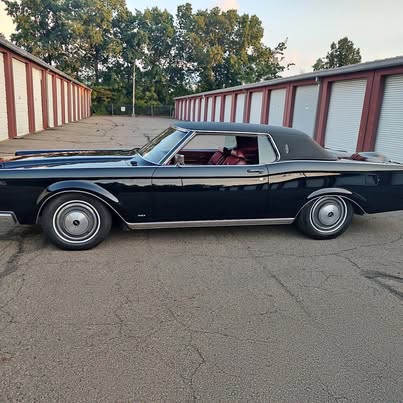
You are not looking at a trimmed-down Continental sedan with two doors removed. You are looking at the car that invents the American personal luxury coupe as Lincoln builds it for the next thirty years: a two-door hardtop coupe on a 117.2-inch wheelbase, with a very long bonnet, a short deck carrying a spare-tyre hump, concealed headlamps behind vacuum-operated doors, a near-vertical Rolls-Royce-style grille, and one engine only — Ford's new 460 cubic inch V8 — driving the rear wheels through a three-speed automatic. Lincoln introduces it in April 1968 as an early 1969 model, builds it at Wixom, Michigan, alongside the Continental and the Thunderbird with which it shares its underbody structure, and replaces it with the larger Mark IV for 1972. Total production is 79,381 cars — a small number beside mainstream Fords and a large one beside the hand-finished car whose name it revives, and both halves of that sentence matter when you buy one.
Get the identity straight before you get anything else straight, because sellers blur it constantly. The 1956–57 Continental Mark II is a different car from a different era: a separate Continental Division builds it, largely by hand, at a price that makes it the most expensive American car of its day, with a 368 cubic inch Y-block V8, restrained unadorned styling, and production of roughly three thousand cars. Your Mark III is a series-production Wixom car styled under Ford design vice-president Gene Bordinat after Lee Iacocca, then Ford president, reportedly tells the studio to put a Rolls-Royce grille on a Thunderbird. The two cars share a name, a spare-tyre hump in the deck lid, and an ambition. They share almost no parts, no construction method, and no market behaviour. A Mark III advertised as a successor with Mark II rarity, or priced as if the Mark II production figure applies to it, is being mis-sold. Correct that in your head first and the rest of the negotiation gets easier.
The same correction applies at the other end of the timeline. The famous designer editions — Cartier, Bill Blass, Emilio Pucci, Givenchy — belong to the Mark IV from 1976 and to the Mark V that follows. No Mark III leaves Wixom as a designer edition. Every Mark III does carry a clock signed by Cartier on its facia, and that clock is the seed of the later Cartier edition, but a clock is all it is. If a seller describes a 1969, 1970 or 1971 car as a Cartier Edition and asks a premium for it, you are looking at a standard Mark III with a standard clock and a non-standard price. Walk the price back or walk away.
What the Mark III does better than its rivals is make presence effortless. Cadillac's Eldorado goes front-wheel drive in 1967; the Mark III stays conventional — front engine, rear drive, body on a separate perimeter frame — and sells refinement, silence and torque instead of novelty. Period testers complain that the steering is light and the handling gives up early. They are right, and it does not matter: you buy this car because at fifty, sixty and seventy miles per hour it feels unstressed in a way few cars match, and because the styling still turns a fuel station stop into a conversation. Buy it with your eyes open about vacuum systems, hidden roof rust and fifty-year-old power accessories, and it rewards you. Buy it as a cheap way into a big badge, ignoring all three, and it punishes your wallet in small bills for years.
One structural fact shapes everything else in this guide. The Mark III is a Thunderbird underneath and a flagship on top. The shared platform keeps mechanical parts obtainable and affordable. The flagship equipment — vacuum headlamp doors and locks, automatic temperature control, power windows, seats and aerial — stacks dozens of ageing actuators, switches and rubber hoses between you and a working car. The engine almost never stops a Mark III from being bought. Dead accessories in accumulation, and rust you cannot see under a vinyl roof, are what separate a good car from an expensive lesson.
The models
There is only one body style, one engine and one gearbox across the whole run, so the model choice is really a year choice. Every Mark III is a two-door hardtop coupe. There is no convertible and no four-door Mark III — a four-door advertised as one is a Continental sedan wearing the wrong name, and you should price it as a sedan. Trim differences between years are detail differences: grille texture, side trim, wheel covers, interior patterns, and equipment moving from the options sheet to the standard list as the run progresses. Condition therefore outweighs year in a way it does not on cars with a real engine or body choice. A sound 1969 beats a tired 1971 every time, and the notes below exist so you can spot what a given car should have, not so you can chase a supposedly best year that does not exist.
| Model | Years | Engine | Output | Built | Character |
|---|---|---|---|---|---|
| Continental Mark III (early build) | 1969 model year, built from spring 1968 | 460 cu in V8, Autolite 4300 four-barrel | 365 hp gross, 500 lb-ft | 7,770 built in calendar 1968 toward a 30,858 model-year total | The launch car: cleanest trim, earliest details, head restraints arrive during the run |
| Continental Mark III | 1969 model year, built during 1969 | 460 cu in V8, Autolite 4300 four-barrel | 365 hp gross, 500 lb-ft | 23,088 built in calendar 1969; 30,858 for the model year in total | The volume first-year car; the widest choice on the market today |
| Continental Mark III | 1970 model year | 460 cu in V8, Autolite 4300 four-barrel | 365 hp gross, 500 lb-ft | 21,432 | The settled car: concealed wipers, radial tyres standard, small refinements throughout |
| Continental Mark III | 1971 model year | 460 cu in V8, Autolite 4300 four-barrel | 365 hp gross, 500 lb-ft | 27,091 | The final and best-selling year: automatic climate control standard, high-back seating, detail maturity |
Read the production table carefully, because the 1969 figure confuses sellers and auction copy alike. Lincoln launches the car so early — April 1968 — that 7,770 cars are built in calendar 1968, all sold as 1969 models, with a further 23,088 built in calendar 1969. The model-year total is 30,858. Listings quoting 7,770 as the whole 1969 production claim a rarity the car does not have. All three years are comparably available, and survival, not production, is what makes a good one scarce today: these heavy, complex, thirsty cars depreciate hard through the 1970s and 1980s, and a great many are run into the ground or parked outside under their vinyl roofs once later owners discover the accessory bills. A straight, dry, documented survivor in any year is genuinely uncommon now.
Standard equipment is generous from the start. Every car has the 460 V8, the C6 automatic, power steering, power front disc brakes with rear drums, power windows, a power front seat, vacuum power door locks, concealed headlamps, a padded vinyl roof on most cars, and that Cartier-signed clock; automatic temperature control air conditioning is fitted to most cars and standard by the end of the run. Options you actually encounter include leather upholstery, a tilt column, speed control, an AM/FM stereo radio or a Stereo-Sonic tape player, power vent windows, a power boot release, a limited-slip Traction-Lok axle, and the Sure-Track brake control system, Ford's early anti-lock acting on the rear brakes, fitted to few cars. Do not pay a large premium for an options list. Pay for options that demonstrably work, because on this car the distance between fitted and functioning is where the money goes.
Year spotting is straightforward. The 1969 car carries exposed windscreen wipers and launches on bias-ply tyres; front head restraints arrive during the first model year, so early and late 1969 seats differ and neither is wrong. The 1970 car hides its wipers under the trailing edge of the bonnet and, a genuine landmark, fits radial tyres as standard — period sources credit it as the first American production car to do so. The 1971 car makes automatic temperature control standard and moves to high-back front seating. In every year the door data plate and the vehicle identification number settle arguments: decode the year, Wixom assembly, body and engine codes before you accept any claim about what a car is, and leave alone any car whose paperwork, plate and stamped numbers disagree until the seller explains it with documents, not stories.

Engines and gearboxes
The 460 V8: Ford's 385-series in a dinner jacket
Every Mark III carries the same engine, and it is a good one to be stuck with. The 460 is the larger of the two original 385-series big-blocks — the family Ford names, by repute, for the 3.85-inch stroke of the 460 itself. Bore is 4.36 inches, stroke 3.85 inches, displacement 460 cubic inches, 7.5 litres. The block is cast iron, the heads are cast iron, the crankshaft is cast iron running in five main bearings, and the whole assembly is deliberately understressed: a single four-barrel carburettor, a mild hydraulic-lifter camshaft, a compression ratio of 10.5 to 1, and a factory rating of 365 horsepower gross at 4,600 rpm with 500 lb-ft of torque at just 2,800 rpm. Those are gross ratings, measured in the optimistic pre-1972 manner without the full production exhaust and accessory load, so do not compare them directly with modern net figures — but do not dismiss them either. What you feel from the driver's seat is the torque figure. The car weighs roughly two and a quarter tons ready to drive, and the 460 moves it without ever sounding or feeling extended. That effortlessness is the engine's whole character, and a healthy example still delivers it today.
The carburettor is the Autolite, later Motorcraft, 4300-series four-barrel, and it deserves suspicion all to itself. The 4300 is a spread-bore design that gives clean low-speed response when right and a maddening hesitation and stumble when not. The choke pull-off diaphragm perishes and the car floods or stalls through warm-up. The accelerator pump cup hardens and shrinks, so the pump shot arrives late or not at all and the car bogs as you pull away — a fault sellers routinely blame on timing or ignition. Worn float and needle valve let the fuel level drift high, and hot starting becomes a long crank with a rich smell; warped top covers let in unmetered air. All of it is diagnosable: a car that idles sweetly, pulls cleanly from rest, restarts hot after a ten-minute heat soak and shows no fuel staining has a 4300 in fair health. A car that fails those tests needs carburettor work before anything exotic, and a professional rebuild typically runs $350–$650 — budget for it on any car with a stumble rather than arguing about it.
Ignition is conventional Ford practice: a single-point distributor with vacuum and centrifugal advance. Many cars now wear a breakerless electronic conversion inside the original housing — welcome it; it removes the fastest-wearing service item while keeping the appearance stock. What matters is the advance mechanism. The vacuum canister diaphragm splits with age and the car cruises flat and thirsty; the centrifugal weights seize on a neglected distributor and the timing curve collapses. Test both with a timing light: timing should advance smoothly as revs rise with the vacuum line disconnected and plugged, and jump further when the line is reconnected to a working canister.
The cooling system works hard and forgives little. A viscous fan clutch that freewheels when hot is the classic overheat cause misdiagnosed as a blocked radiator: with the engine fully warm and switched off, spin the fan by hand — it should resist and stop quickly, not whirl freely. Radiators silt up from the bottom rows; water pumps weep from the tell-tale hole long before the bearing growls. On the test drive the gauge should rise to normal and stay there in traffic and at speed. A gauge climbing at idle and falling at speed points to airflow — fan clutch, missing shroud, silted core. A gauge climbing under load points to circulation or, worst case, combustion gas in the water, which a chemical block test on the radiator neck confirms in minutes. Head gasket failure is not a signature 460 weakness, so treat a positive test as evidence of a specific overheated engine and price the car as an engine-out job if it fails.
Two age-related mechanical jobs define 460 ownership and you should ask about both by name. The first is the timing chain set. From the factory the camshaft sprocket carries nylon teeth moulded over a metal hub, a quiet-running measure that embrittles with age and heat until teeth strip, timing jumps, and in the worst case the engine stops and valves meet pistons — the 460 is an interference risk once timing is lost badly enough. Even before failure, a stretched chain and worn teeth retard the cam timing, and the car goes gradually flat, thirsty and hard to tune. At fifty-plus years old, any 460 still on its original timing set is living on borrowed time regardless of mileage. A replacement steel timing set fitted professionally runs roughly $700–$1,300 in parts and labour, and a seller who can show a receipt for the job has saved you real money. The second job is exhaust manifold pain. The cast-iron manifolds, the right-hand one especially, crack with heat cycles and the manifold-to-head bolts seize and snap during removal, turning a gasket job into a drilling and extraction exercise. Listen cold: a ticking that is loud at a cold start and fades as the manifold expands and seals itself is a crack or a failed gasket announcing itself. Manifold replacement with a sound used or reproduction casting, including extraction labour, commonly lands between $600 and $1,400 depending on how many studs fight back.
Oil leaks and oil smoke need separating. External leaks come from the rocker cover gaskets, the intake manifold end seals, the front crank seal and the rear main seal, in descending order of cheapness; a damp engine is normal, and an engine that marks its space heavily needs the cheap seals first, not a rebuild. Blue smoke on start-up that clears within a minute points to hardened valve stem seals — common, tolerable, and fixable with the heads in place for roughly $500–$900. Blue smoke under acceleration that never clears points to rings and bores. Persistent white sweet-smelling vapour points to coolant; black smoke points back to the carburettor. A compression test and, better, a leak-down test distinguish all of these before you buy, and paying for those tests is always cheaper than discovering the answer afterwards. A full professional rebuild typically runs $5,500–$9,000 — precisely why you test rather than guess, because the rest of the car rarely justifies that bill unless the body is exceptional.
Routine health is otherwise simple: clean oil, a working positive crankcase ventilation valve, and coolant changed within the last decade. Sludge under the rocker covers and mayonnaise under the filler cap tell you the engine has been warmed through and serviced less often than the odometer suggests. Premium fuel matters: at 10.5 to 1 compression the engine is built for high-octane fuel, and pinking that persists after timing and mixture are verified means carbon build-up or overheating — investigate, do not just retard the timing until the noise stops.
The C6 automatic and the driveline behind it
There is no manual gearbox and there never was. Every Mark III uses Ford's C6 three-speed automatic, badged SelectShift Cruise-O-Matic, and it suits the car completely. The C6 is a heavy-duty unit with a cast-iron main case era reputation for strength: a torque converter, three forward speeds, a vacuum modulator that reads engine load from intake manifold vacuum, and a kickdown linkage from the carburettor. Final drive is a Ford 9-inch live rear axle with tall cruising ratios around 2.80 to 1 — some sources and cars show 2.83 — because with 500 lb-ft available the car does not need short gearing. A Traction-Lok limited-slip differential is the worthwhile option to note if a car has it.
A healthy C6 in a Mark III should be almost invisible. It engages Drive and Reverse promptly from Park without a thump or a delay, shifts up smoothly under light throttle almost before you notice, holds a gear on a hill without hunting, and kicks down one gear — or two, from top at low speed — when you ask firmly with the throttle. Learn the failure vocabulary, because each symptom points somewhere different. Delayed engagement into Drive or Reverse on a cold morning, improving as the fluid warms, points to hardened internal seals losing pressure until heat softens them: the gearbox is tired and a rebuild is in its future, typically $1,800–$3,000 professionally done with the converter. A flare — revs rising between second and third as if the box hesitates in neutral — points to band or clutch wear and adjustment limits reached. Harsh shifts at light throttle with gentle shifts under power, the reverse of normal behaviour, point to the vacuum modulator or its hose: a split modulator diaphragm also draws transmission fluid into the intake, so a car that mysteriously consumes gearbox fluid and puffs pale smoke may need a modulator costing tens of dollars, not a rebuild. Check the hose at the modulator and the fluid level and colour before condemning anything. Fluid should be red and sweet-smelling; dark brown fluid with a burnt smell on a box that still shifts well means change the fluid and filter now and shorten every future interval, while debris in the pan at that change means the wear has already happened.
The rest of the driveline is equally conventional. Worn propshaft universal joints chirp, clunk on taking up drive and vibrate at speed. The 9-inch axle is famously strong; its failures are bearing whine rising with road speed, pinion seal leaks and backlash clunks — distinguish them by whether the noise follows road speed or throttle changes. Rear brakes are drums, and a handbrake that will not hold this much weight on a slope tells you they need attention whatever the pedal feels like. Front discs do most of the work: a pulsing pedal means warped or thin discs, and replacement is comparatively cheap at $300–$600 for discs, pads and flex hoses as an axle set.
Problem areas
Vacuum-operated everything: one gas, a dozen jobs
Understand the vacuum system and you understand half of every Mark III fault list. Ford runs headlamp doors, door locks, the heating and air-conditioning distribution doors, the handbrake release on many cars, the speed control and the gearbox modulator all from intake manifold vacuum, stored in a reservoir canister in the engine bay and distributed through small rubber hoses, plastic tees, check valves and vacuum motors. When new the system is silent and reliable. At fifty years old the rubber hardens, hoses split at their ends, check valves stick, canisters rust through at their seams, and every device downstream of a leak misbehaves at once. The diagnostic principle is therefore reversed from what most buyers expect: do not price each dead vacuum device as a separate failure until you have tested the supply they share.
Start with the headlamp doors, the signature fault. Each door is worked by a vacuum motor against the headlamp switch, which is itself a vacuum valve as well as an electrical switch. With the engine running and healthy vacuum stored, both doors should rise together, promptly and evenly, and stay up with the engine off for a reasonable period. Doors that rise slowly or one at a time, wink, creep open overnight or pop up when the engine stops are showing vacuum loss, not necessarily two dead motors. The distinguishing test costs nothing: pinch off the feed hose to one motor at a time and see which side holds. A motor that holds vacuum from a hand pump is good and its supply is leaking; a motor that will not hold has a split diaphragm and needs replacement or rebuilding, typically $150–$400 per side. The headlamp switch itself leaks internally and hisses from behind the facia — put your ear to the dash with the engine off and the doors commanded down; a continuing hiss is the switch or a hose behind the dash, and dash-out vacuum work is labour-heavy even when the part is cheap.
The automatic temperature control is the vacuum system's most expensive tenant. Ford's ATC blends refrigerated, heated and fresh air through vacuum-operated doors in the heater case, directed by a control head, a temperature sensor, an amplifier and a vacuum servo. Failure presents as air only from the defroster outlets — the designed fail-safe position — or heat that will not modulate, or a system stuck on full cold or full heat. Each symptom has a chain behind it: a split hose to the servo gives you the fail-safe and nothing else; a failed sensor or amplifier gives you a system that responds but regulates wrongly; a perished servo diaphragm gives you doors that move partway and sigh. Work through it with a hand vacuum pump and gauge, section by section, before anyone sells you a compressor. The compressor side is conventional: the original system runs on R12, many survivors are converted to R134a, and a proper conversion — seals, receiver-drier, oil, charge weight and a label saying so — is a plus, while a gas-only conversion gives weak cooling and short compressor life. Compressor replacement with conversion work done correctly commonly totals $900–$1,800; full ATC diagnosis and servo replacement by a knowledgeable specialist runs $600–$1,500. A car with ice-cold, correctly modulating ATC is worth a measurable premium over an identical car with dead climate control, so test it on heat and cold alike during inspection.
Door locks are vacuum-operated too, with an actuator in each door. Slow locks, locks that work with the engine running and not after it stops, and a hiss inside a door all point to perished hoses in the door jamb looms and split actuator diaphragms. None of it is structurally serious and all of it is fiddly, because the door trim is large, brittle and held by clips that break once and are remembered forever. Budget $250–$700 for a specialist to chase lock and hose faults through both doors, or accept manual locking as many owners do — but decide which owner you are before you buy.
Rust: the map, and the vinyl-roof traps
The Mark III rusts like a large, well-painted American car of its period rusts: from the inside out, in the places water sits, and worst where trim and vinyl hide the evidence until the panel is perforated. The body sits on a separate frame, which changes the economics — floor and sill rust is repairable without writing the car off, and frame rust, while serious, is localised rather than systemic — but do not let the frame talk you into casualness. A Mark III with a rotten roof structure under its vinyl is a worse buy than a Mark III with rotten floor pans, because the roof is the panel you cannot replace from a catalogue.
Walk the map in order. The lower rear corners of the front wings, behind the front wheels, trap road spray and bubble from the bottom edge upward; open the doors and check the A-pillar bases behind them. Sills rot along their length, worst at the jacking points and where they meet the rear arch; press the inner seam hard with your thumb, and treat fresh underseal in a straight line on an otherwise honest car as a question deserving a magnet. Doors rot at the bottom seam where the skin folds over the frame and the drain holes block; a crunchy lower edge or rusty water weeping after rain means repair work at $800–$1,800 per door in metal and paint. Floor pans rot over the frame rails and at the seat mountings — check them from underneath, not by lifting carpets and hoping. The boot floor rots around the spare wheel well; lift the spare, because a damp-smelling boot has been wet via the rear window channel or the deck lid seal, which you then inspect as causes, not just the floor as a symptom. Rear quarters blister around the arch lips and lower valance, and the bright arch trim hides the first inch of it — run a fingertip inside the lip and feel for scale and filler edges.
The vinyl roof is the model's defining trap and it deserves its own paragraph of method. The padded vinyl covering is glued over the steel roof and dressed down the thick rear pillars, and water enters at the seams, at the rear window surround and at the trim clips, then sits between vinyl and steel where it cannot dry. The steel rots underneath a vinyl surface that can look presentable almost to the end. Your evidence is tactile and auditory: press the roof and pillars systematically with the flat of your hand and your fingertips, feeling for softness, crunch and local give; tap with a knuckle and listen for the change from a solid note to a dull, filled note; look for bubbling in the vinyl itself, rust staining weeping from seams, and a headlining inside that is stained or sagging at the rear corners. A car with a brand-new vinyl roof and no photographic record of the steel beneath it is a gamble, not a restoration — the honest seller of a renewed roof has pictures of bare, repaired metal, because everyone in this market knows the trap. Structural roof and pillar repair, done in metal with the glass out and the roof refinished, runs $2,500–$5,500 and upward depending on how far the rot has travelled into the rear window aperture and pillars, which is why this single check outweighs any two mechanical checks on the car. The same water path attacks the rear window channel itself: look along the bottom corners of the rear glass for bubbling under the paint and trim, and check inside the boot directly beneath those corners for the drip line.
The frame itself is sturdy but not immune. Check the side rails where they kick up over the rear axle, the body mounts and the front crossmember area. Surface scale is cosmetic; flaking, holed or thinned sections are a welding bill at $1,000–$3,000 for localised professional repair, and a reason to involve an inspector with a lift before money moves. Dry-state cars justify their popularity here — but verify the claim with documents and hidden steel, because a desert registration on a car that lived twenty years by the sea is a story, not a climate.
Power accessories, electrics and trim: the long bill
Count the electric motors in a Mark III and you count its future repair bills. Power windows, a six-way power seat, a power aerial, blower and wiper motors, washer pump and a facia full of switches — all wired in period practice, grounded through a body that may now be rusty at its earth points, and switched by contacts that have been arcing gently for five decades. The failure economics are what matter: individually, almost every accessory repair is a few hundred dollars; collectively, a car in which half the accessories are dead represents thousands of dollars and dozens of hours, and sellers know it, which is why dead accessories get described as needing a fuse.
Power windows fail in three distinct ways, and the distinction saves you money. A window dead from both its own switch and the master switch, with no sound at all, is a supply, switch or motor fault — test for voltage at the motor before buying one. A window that clicks, strains or moves an inch and stops has worn motor brushes or a regulator stiff with dried grease and worn rollers; the glass is large and heavy and the mechanism works hard. A window that drops or tilts has shed a roller or broken its regulator, and continued use bends things that were straight. Professional repair per door typically runs $300–$700. Budget per window, not per car, and test every window through its full travel — a window tested halfway is a window untested.
The power seat uses a motor, a transmission with solenoid clutches, and drive cables. A seat that moves in some directions only has usually lost one solenoid or cable, not the whole mechanism; a seat that clicks and moves in no direction has power reaching a seized transmission. Rebuilding seat transmission components runs $400–$900. Trim is the bigger financial question: dry but intact leather responds to feeding; split leather over collapsed foam needs a retrim, and a correct leather retrim front and rear is a $3,500–$6,500 job. Price a shabby interior as the retrim it needs, not the clean it might survive.
Switchgear, the clock and the radio fail by attrition. The Cartier clock stops — almost all of them have, at least once — and is repairable for roughly $150–$350 including a quartz conversion if you choose one; treat a working original as a pleasant surprise, never a value driver. Factory radios are worth repairing rather than replacing, because a modern head unit cut into the facia dates the cabin and subtracts value. Test the washers as well as the wipers, because the pump and hoses perish quietly. A power aerial that does not rise usually has a broken nylon drive cord inside the mast, a $200–$450 repair.
Chassis and steering faults are mercifully conventional. The front suspension is independent with coil springs, control arms, ball joints and an anti-roll bar; the steering is a recirculating-ball power box whose idler arm and linkage wear into vagueness long before danger. Free play beyond roughly an inch at the wheel rim, wander and clunks over broken surfaces point to idler arm, tie-rod ends and ball joints — a full front-end refresh with alignment runs $900–$1,800 and transforms the car, so regard it as foreseeable maintenance. Coil springs sag, especially at the front under the 460; a nose-down car needs springs and probably dampers, $700–$1,400 fitted as a set. Brake hydraulics age out regardless of mileage: flexible hoses crack internally and hold a caliper on, master cylinders leak into the booster, and the vacuum booster hisses and hardens the pedal when its diaphragm fails. A hard pedal with a hiss is the booster; a pedal sinking slowly at a stop is the master cylinder; a pull under braking is a caliper or a hose. A full hydraulic refresh at $800–$1,500 is among the best money you can spend on any example.

How to inspect one
Inspect a Mark III in this order and do not let a warm engine, a valeted interior or an eager seller rearrange it for you. Cold, static checks first; electrical and vacuum checks second; the road test last, when you know what you are listening for. Allow a full hour. Bring a magnet in a cloth, a torch and a hand vacuum pump if you have one — the seller who objects to any of that has answered your most important question already.
- Start with identity, not paintwork. Match the vehicle identification number to the door data plate and the title, decode the year, plant, body and engine codes, and confirm the engine is a 460 — the 429 shares the same block family and appearance, so a swapped or misdescribed engine needs casting and stroke evidence, not a visual guess. Check too that nobody is selling you a Continental sedan as a Mark III, or asking a designer-edition premium for a standard car with a Cartier clock.
- Do the vinyl-roof press test from the problem areas section before you admire anything else. Work your fingertips over the whole roof, both rear pillars and the rear window surround, feeling for softness and crunch and listening to your knuckle taps. Bubbling vinyl, rust weeping at seams or a new roof with no photographs of the metal beneath it stops the inspection from being a purchase inspection until the seller prices that uncertainty honestly.
- Walk the full rust map with the magnet and torch: front wing lower rear corners, A-pillar bases, sill seams and jacking points, door bottom seams, rear arch lips from inside the arch, boot floor under the spare, and the frame rails over the rear axle and at the body mounts. Note filler by magnet drop and by sound. Separate cosmetic blistering from structural perforation in your notes, because they price completely differently.
- Start the engine from stone cold — insist on it, and arrive early enough that a pre-warmed engine is obvious from the temperature gauge and warm hoses. Listen for exhaust manifold ticking while it is cold, watch for start-up smoke and name its colour using the engines section, and note how the choke behaves through warm-up. An engine that needs throttle nursing, stalls at the first junction or smells rich when warm has carburettor work priced into it.
- Test the headlamp doors as a vacuum system, not as a light switch. With the engine running, cycle the lamps three times: both doors should rise together, evenly and promptly. Switch off, wait, and cycle again on stored vacuum. Then listen behind the facia for the hiss of a leaking headlamp switch, and use the hand vacuum pump on each door motor if the behaviour is uneven — the motor that holds vacuum is innocent and its supply is guilty.
- Test the automatic temperature control on full heat and then on full cold, giving it minutes, not seconds, to respond. Air only from the defroster outlets is the fail-safe signature from the problem areas section. Confirm the air conditioning blows genuinely cold, ask what refrigerant the system carries, and treat a system that merely blows cool on a mild day as unproven.
- Work every power accessory through its full travel and write down each failure: all windows including the rear quarters, the power seat in every direction, the door locks with the engine running and again with it off, the aerial, wipers and washers, horn, every exterior lamp and the clock. Price the list per item using the problem areas economics — half a page of dead accessories is a negotiating instrument only if you have actually written it down.
- Check the fluids as evidence. Engine oil for level, sludge and fuel smell; transmission fluid for colour and burnt smell, remembering the modulator clue — a car consuming transmission fluid with pale exhaust smoke may have a split modulator diaphragm; coolant for rust and oil contamination; brake fluid for level and darkness. Neglected fluids contradict every claim of careful ownership.
- Get underneath, on a lift if the seller allows it and on your back with the torch if not. Read the floor pans, frame rails, brake and fuel lines, exhaust, propshaft joints, pinion seal and sumps, and check the front discs for thickness, scoring and lip. Distinguish dampness from active dripping, and confirm whether fresh underseal protects sound metal or decorates perforated metal for your visit.
- Drive the car for at least twenty minutes over mixed roads. The C6 should engage promptly, shift almost imperceptibly at light throttle and kick down cleanly; test for the flare, delay and harshness vocabulary from the gearboxes section. Note steering free play, wander, brake pull and pedal pulse, and watch the temperature gauge in traffic and at speed, separating airflow faults from circulation faults as the engines section sets out.
- Do the hot restart test that exposes the 4300 carburettor. Park after the drive, switch off for ten minutes of heat soak, then restart. A long crank, a rich cough or a stall on pulling away confirms the hot-start behaviour you are buying, and a car that restarts instantly, idles cleanly and pulls away without a stumble has passed the single most revealing test in this whole list.
- Finish with the paperwork and the arithmetic. Receipts for the timing chain set, carburettor work, climate control and roof metal matter more than a thick file of oil changes. Add the accessory list from step 7, the rust findings from steps 2 and 3 and any timing, manifold or gearbox work from steps 4 and 10 into one honest total cost of putting this car right, and compare that total — not the asking figure alone — with the next car on your list.
Values
Read the Mark III market as a condition market, not a year market. The three model years overlap so completely in specification and desirability that the spread between a tired car and an exceptional car within a single year dwarfs any spread between years. At the bottom sit the projects: cars with roof or structural rust, dead climate control, a page of failed accessories and interiors past saving. They change hands between enthusiasts and breakers, they are worth buying only at a figure that survives the repair arithmetic in the inspection section, and they are the cars most often described with the word rare. Rarity is not the constraint on a project Mark III. Repair cost is, and the market knows it, which is why project cars linger unsold at optimistic figures and move quickly at honest ones.
In the middle sits the honest driver: sound metal including a proven roof, a healthy 460 and C6, working climate control, most accessories alive, presentable paint and trim, and a history covering the timing set and the carburettor. This is where most successful purchases happen and where negotiation is most rational, because both sides can point to the same evidence. Deduct for each specific, evidenced fault — a dead window here, a tired front end there, a vinyl roof of unknown parentage above all — rather than arguing a percentage off the whole car.
At the top sit the genuine survivors and the properly restored cars: original paint or a documented bare-metal repaint over photographed sound metal, original interiors in remarkable order, every vacuum and power system demonstrably working, and low mileage supported by paperwork rather than asserted by an odometer that has almost certainly been around once on many of these cars. Top cars achieve their figures because the cost of taking a middle car to that standard exceeds the gap between the two, every time. Originality carries the premium here: an unrestored car with honest patina and full function out-earns a shinier car with a replaced interior, a colour change and a facia full of modern substitutions, because the survivor cannot be manufactured once the middle cars have been restored into sameness.
Asking figures and achieved figures part company widest at the optimistic end of the middle market, where a tidy photograph and a famous name persuade sellers that the top of the market applies to their car. It applies to the car whose roof metal is proven, whose climate control blows cold and hot on command, and whose accessory list is empty. Use the computed market summary beneath this guide as your evidence base, compare like condition with like rather than like year with like, and let cars that fail the roof test reprice themselves — patience is worth more than any single negotiation tactic, because another Mark III is always coming to market.
Parts and ownership
Ownership suits a buyer who budgets for a system, not a single car. The mechanical core is one of the best-supported American engines ever built: the 460 stays in production in cars and trucks for decades after the Mark III, so service parts — filters, pumps, ignition components, gaskets, timing sets, carburettor kits — are ordinary motor-factor items, and a professional timing set replacement at $700–$1,300 or a carburettor rebuild at $350–$650 reflects labour and familiarity, not rarity. The C6 is equally well understood by any competent automatic transmission shop, with a full rebuild at $1,800–$3,000, and the 9-inch axle is the most widely supported rear axle in American motoring. Join the marque club and the Lincoln Continental Owners Club community early: the accumulated knowledge on ATC servos, vacuum routing and trim interchange lives there, along with the members breaking parts cars, and on this model the club is a parts department as much as a social calendar.
The scarcity gradient runs from the engine bay outward. Engine and gearbox parts are easy. Chassis parts are available, with a full front-end refresh at $900–$1,800 and a hydraulic brake overhaul at $800–$1,500 the two predictable chassis bills of a first year. Body panels are the hard country: no catalogue reproduces the large pressings, so wings, doors and quarters come from donor cars, dry-state breakers and old stock, at strong money and with patience. That is the commercial reason the rust inspection matters more than the mechanical one — you can always buy a water pump this week, and you cannot always buy a sound rear quarter this year. Bright trim and the small die-cast details sit between the two: findable, increasingly expensive, and worth protecting with garaging and care.
Trim and model-specific electrical parts need a specialist mindset. Correct-grain vinyl roof material, correct interior cloth and leather, vacuum actuators, ATC components and switchgear are the province of Lincoln specialists stocking new old stock and rebuilt units — a rebuilt headlamp vacuum motor at $150–$400, ATC servo work within a $600–$1,500 system repair, and window repairs at $300–$700 per door are the realistic planning figures. None is catastrophic; all reward a car bought with the systems working over a car bought cheap with them dead, because the specialist queue is a cost no invoice shows. Keep a vacuum gauge, a hand pump and the factory shop manual in the garage and half the faults in the problem areas section become Saturday diagnosis rather than specialist bills.
Running costs are dominated by fuel and storage. The 460 drinks premium fuel — needed for its compression ratio, not for snobbery — at a rate that makes the car a pleasure vehicle by arithmetic as much as by taste. Tyres in the original sizes come from classic specialists, and a modern radial in the correct size suits the 1970-on radial chassis well. Store the car dry and under cover: the vinyl roof, rear window channel and boot floor all punish outdoor storage in exactly the places this guide calls most expensive. Insure on an agreed-value classic policy, and drive the car regularly and far enough to warm it fully — vacuum rubber, carburettor seals and brake hydraulics all last longer on a car that works than on a car that sits.
Which one to buy
Three years, one specification: a condition list wearing year labels.
- The all-rounder: a 1970 car with proven roof metal, working automatic temperature control and a documented timing chain replacement. You get the concealed wipers, the radial-tyre chassis as designed, and the settled second-year specification, and you avoid paying the final-year premium for differences you cannot feel from the driver's seat.
- The value buy: a 1969 car, early or late build, bought on metal and interior rather than on launch-year romance. The first-year cars are the most plentiful survivors, and a sound 1969 at driver money leaves you the budget to finish the accessory list properly — which is where the real value in this market hides.
- The final-year pick: a 1971 car with standard automatic climate control and high-back seating, bought only when its condition matches its price. The last year tends to be asked highest now, so make the seller prove with cold air, hot heat, working locks and photographs of roof metal that this example earns its figure.
- The specialist buy: a high-option car — leather, speed control, Traction-Lok axle, Sure-Track brakes — bought by an owner who enjoys systems and tests every option before paying for any of them. Fitted options are common; functioning options are the rarity, and the gap between the two is your negotiating ground.
- The project buy, with caution: a structurally honest car with a rotten interior or dead accessories but a proven roof, sound frame and a healthy engine and gearbox, bought at project money by a buyer with a workshop and a club membership. Never invert the formula — a shiny car over a rotten roof is not a project, it is a liability with good photographs.
The overriding rule: buy the roof, the climate control and the paperwork, in that order — a Mark III with proven steel under its vinyl, automatic temperature control that heats and cools on command, and receipts for its timing set is the right car in any year, any colour and any trim, and no cheaper car that fails those three tests is cheaper once you own it.
See the 2 Mark III cars currently listed.
For sale now
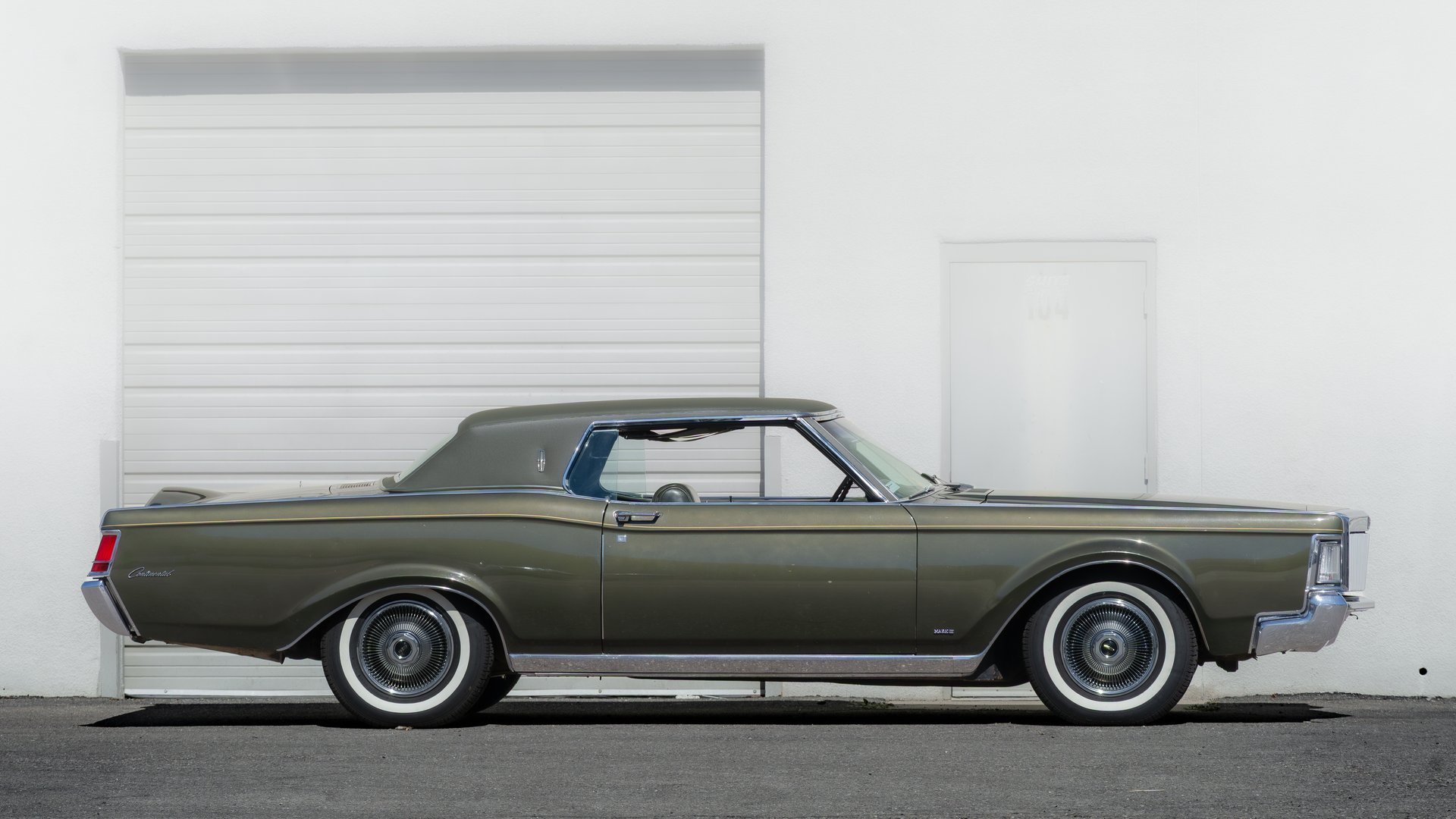 $29,995 · 54% above typical
Expand
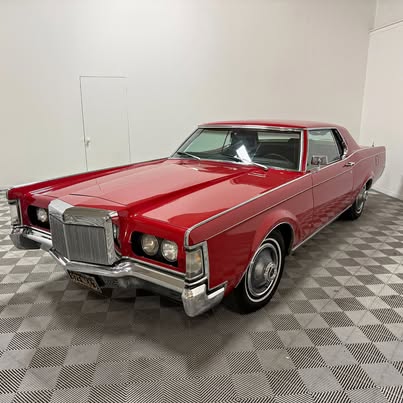 $13,900 · 29% below typical
Expand
What they sell for: Mark III sale prices.