
Lincoln mark vii buyer's guide
Lincoln mark vii -- the model's own buyer's guide: variants, values and what to check.
Years listed: 1989-1997 · Series: Mark Series
Overview and history
The Lincoln Mark VII is the Mark that broke with the barges. Every Mark before it — the Mark III, IV and V of 1968–79 — had been a vast, soft, chrome-laden coupe built on a full-size sedan's bones, and sold on presence rather than engineering. The Mark VII, launched for the 1984 model year, went the other way: it shrank onto Ford's Fox platform, the architecture under the Mustang and the Ford Thunderbird, wrapped itself in one of the most aerodynamic bodies Detroit had ever put into production, and filled the cabin and the chassis with electronics that no American car had carried before. It was, on paper and largely in fact, Lincoln's answer to the BMW 6 Series and the Mercedes-Benz SEC — a personal luxury coupe that was supposed to handle as well as it cosseted.
The engineering claims were real. The Mark VII was the first American production car with flush composite halogen headlamps, made possible by a change in federal lighting rules, and its drag coefficient — around 0.38 in standard form and lower still on the LSC — was a point of pride in an era when most American coupes were bricks. Electronic four-wheel air suspension was standard from day one: an air spring at every corner, three electronic height sensors, an engine-bay compressor and a control module that levelled the car regardless of load and lowered it slightly at highway speed. Four-wheel disc brakes were standard, and anti-lock braking — a Teves integrated system — joined the standard equipment list during the run, at a time when ABS was still an exotic option on most European cars. Inside there was an electronic instrument cluster, a trip computer, automatic climate control and, on many cars, an overhead console and keyless entry keypad on the driver's door. Ford was not dabbling; this was the most technologically ambitious American coupe of its decade.
It was launched as the Continental Mark VII — the Continental prefix the Marks had carried since the Mark III — and became simply the Lincoln Mark VII from 1986, when Lincoln tidied its naming. Production ran from 1984 to 1992 at Ford's Wixom, Michigan plant, the home of Lincoln production, and the car changed remarkably little in appearance across those nine years: a mild grille and trim tidy-up, wheel designs, and detail changes inside. Underneath, though, the range evolved in the one way that matters to a buyer today. The early cars were luxury coupes with a soft tune and a modestly powered 5.0-litre V8. The LSC — Luxury Sports Coupe — started as a handling package and became, from 1988, a genuine performance car, when it received the full 225 hp high-output 5.0 from the Mustang GT, firmer air-suspension tuning, a limited-slip axle and bigger anti-roll bars. An LSC of 1988–92 is a different animal from a 1984 base car, and the market knows it.
There was also a genuine curiosity: for 1984 and 1985 only, you could buy a Mark VII with a BMW turbodiesel — a 2.4-litre straight six bought in from Munich, aimed at buyers still scarred by fuel prices. Very few were sold, and survivors are rare enough to be conversation pieces rather than transport.
The Mark VII's replacement, the Mark VIII of 1993, was a bigger, more radical car, and for years the VII sat in its shadow — too new to be a classic, too old to be a modern car, and carrying a reputation for expensive air suspension and electronics that frightened buyers away. That reputation is only half earned. The powertrain is Mustang hardware, among the best understood and cheapest-to-run drivetrains in America. The air suspension is a known system with known failure points and a complete aftermarket behind it. What actually decides a Mark VII's fate is what decides every Fox-platform car's fate: rust in the structure, and thirty-odd years of deferred maintenance on systems the first owner never had to think about. Buy the right car and you get a quiet, handsome, genuinely quick GT for less than almost anything European of the same ability. Buy the wrong one and you will spend the difference, slowly, one air spring and one electrical gremlin at a time.
The models
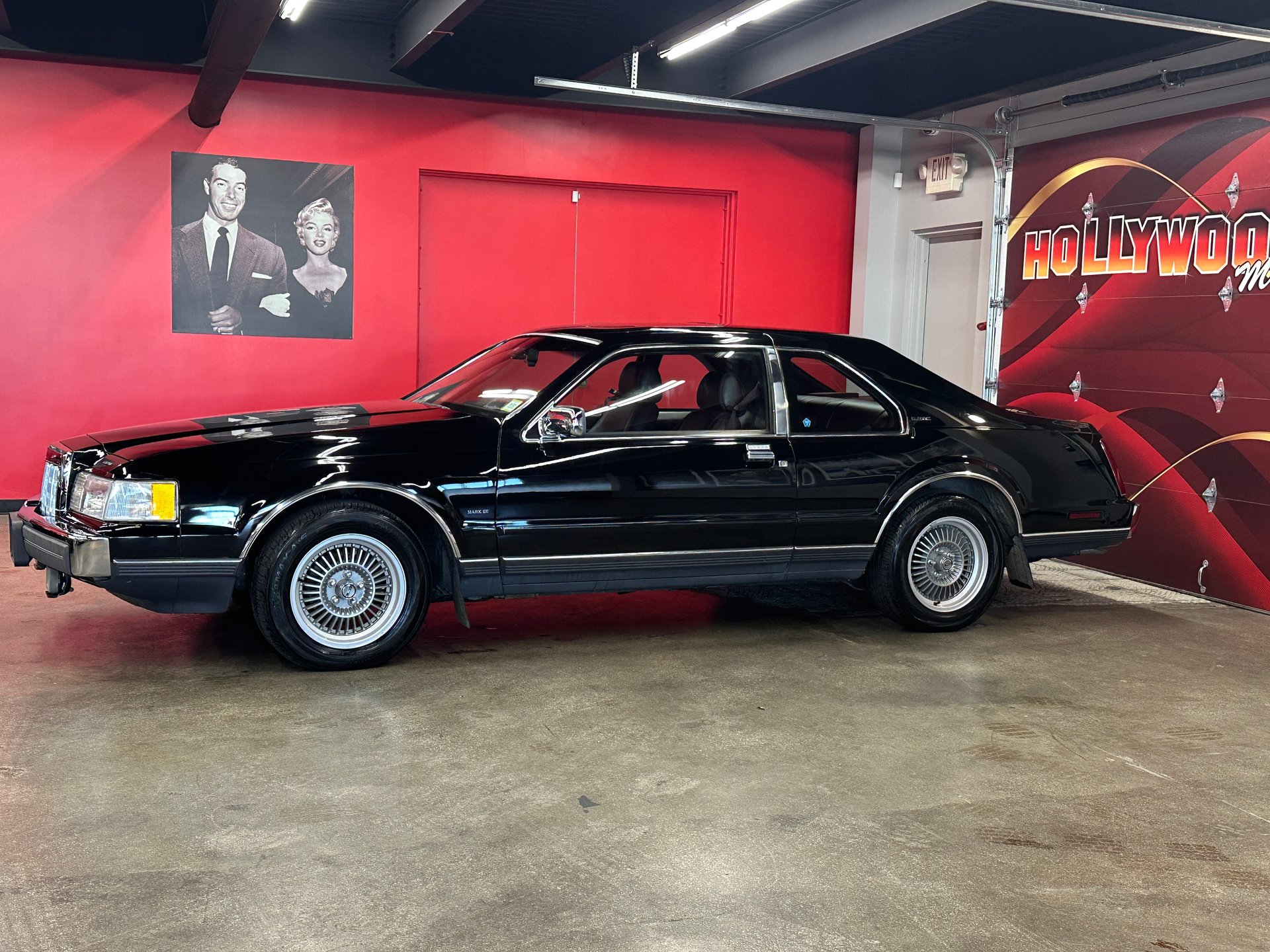
Every Mark VII is a two-door coupe on the Fox platform, with a 108.5-inch wheelbase, a 5.0-litre V8 (the short-lived diesel aside), a four-speed automatic and rear-wheel drive. There was no convertible, no sedan and — a point that still trips buyers up — no manual gearbox, ever, despite the Mustang connection. The range divides by trim and tune rather than by body: the standard car, the Designer Series cars, and the LSC.
| Model | Years | Engine | Output | Character |
|---|---|---|---|---|
| Mark VII (base) | 1984–1985 | 5.0 V8, throttle-body injection | about 140 hp | The launch car; soft tune, luxury first |
| Mark VII (base) | 1986–1992 | 5.0 V8, sequential port injection | about 150 hp | The standard coupe; quiet, tall-geared, unstressed |
| Designer Series (Bill Blass, Versace) | 1984–1992 | 5.0 V8 as base car | as base | Colour-and-trim editions; mechanics identical |
| LSC | 1984–1987 | 5.0 V8, port injection | up to about 200 hp by 1987 | Handling package first, more power each year |
| LSC | 1988–1992 | 5.0 HO V8, port injection | 225 hp | The performance Mark; Mustang GT engine, the one to have |
| Turbodiesel | 1984–1985 | 2.4 BMW turbodiesel six | about 115 hp | The rarity; economy experiment, very few sold |
The base car. The standard Mark VII is a luxury coupe in the traditional mould, just a modern one: soft air-suspension tuning, a quiet exhaust, tall gearing, deeply padded seats and every electronic toy Lincoln could fit. The 1984–85 cars use throttle-body fuel injection (Ford's CFI system) and feel adequate rather than quick; the 1986-on sequential-injection cars are smoother and a little stronger. None of them is slow in traffic, and all of them cruise superbly. What the base car does not do is handle with any intent — it was tuned for ride, and it rolls, dives and leans accordingly.
The Designer Series. Lincoln's designer editions were a Mark tradition, and the VII carried Bill Blass cars through most of the run and Gianni Versace cars in the early years. These are colour, trim and badge packages — special paint combinations, designer logos on the quarter windows and in the cabin, sometimes a different leather treatment — over entirely standard base-car mechanics. They cost more when new and are worth no premium now unless the condition is exceptional; buy one because you like the colours, and check the designer-specific trim is present, because replacing a missing logo or a worn special-order seat is a hunt through the same used-parts pool as everything else.
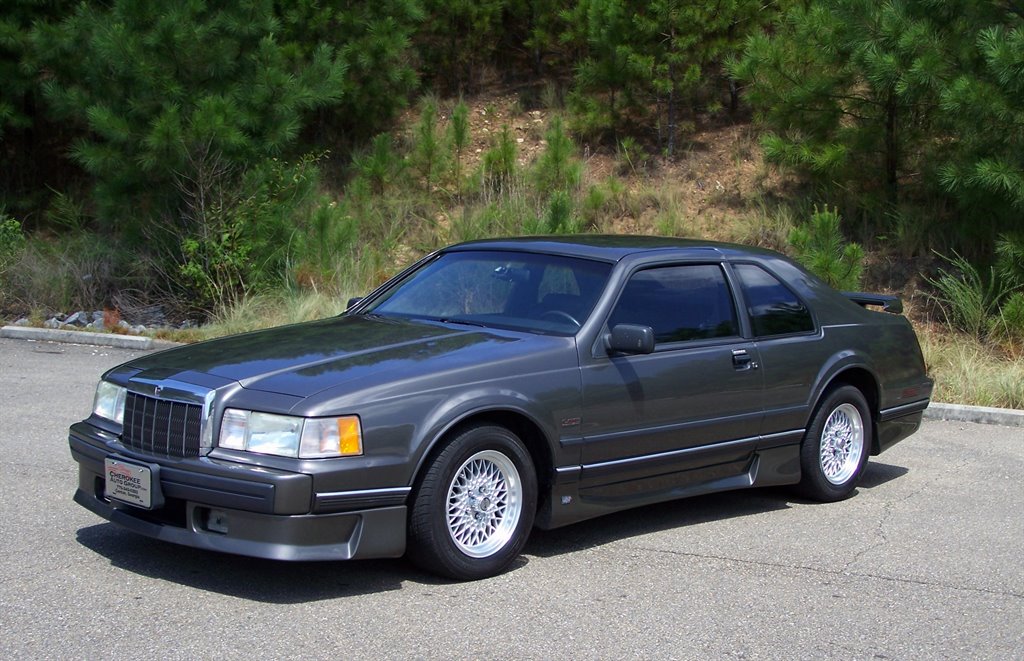
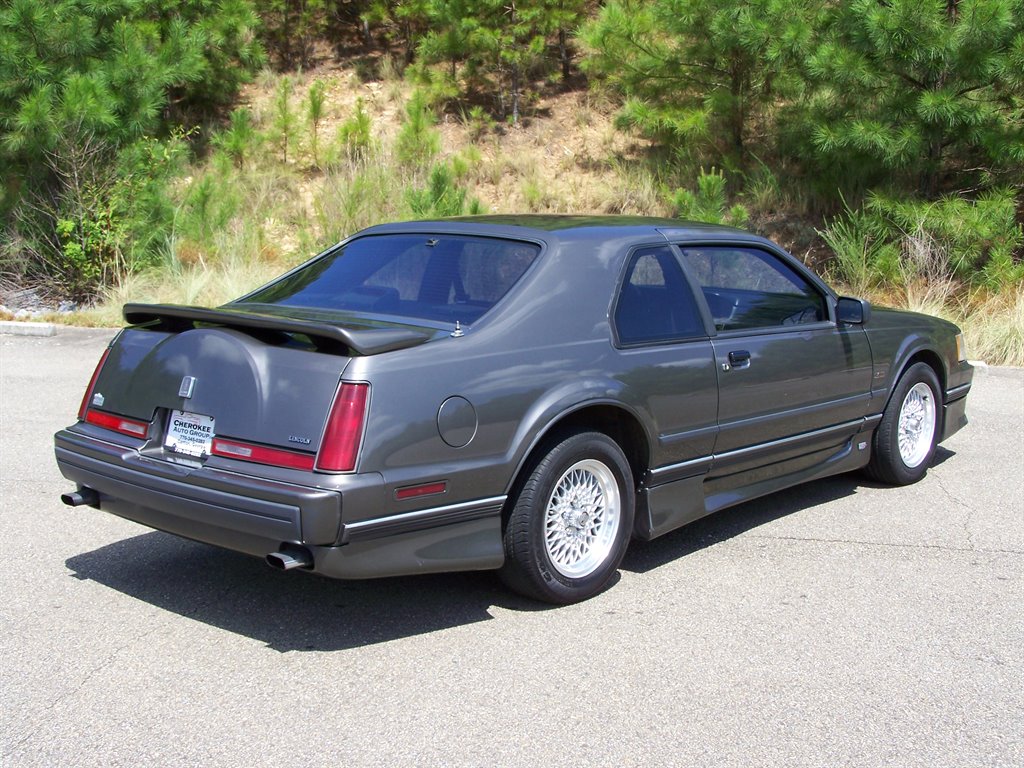
The LSC. The Luxury Sports Coupe is the car this guide keeps coming back to. From launch it meant firmer air-suspension calibration, quicker steering feel, larger anti-roll bars, a limited-slip Traction-Lok rear axle with a shorter final drive, dual exhausts and sport seats. Its power climbed year by year — and then, for 1988, Lincoln simply fitted the Mustang GT's high-output 5.0 complete: 225 hp, 300 lb-ft of torque, the better cylinder heads and camshaft, and an exhaust that actually made a noise. The 1988–92 LSC is quick by the standards of its day, handles flat enough to be entertaining, and still rides on air. It is the most collectible Mark VII, the easiest to sell on, and the one whose premium over a base car is genuinely earned. Verify it, though: LSC badges, wheels and seats all swap onto a base car in an afternoon. The checks are in the inspection section — the engine and axle codes and the suspension calibration are what make an LSC, not the lettering on the decklid.
The turbodiesel. The 1984–85 diesel used BMW's M21 2.4-litre turbocharged six and a ZF four-speed automatic in place of the Ford AOD. It was smooth, economical and slow, and American luxury buyers in the mid-1980s, burned by earlier diesel disappointments and enjoying cheap fuel again, ignored it. Production was tiny. Today a diesel Mark VII is a museum-grade curiosity: fascinating, but every engine and transmission part is a BMW or ZF part of the same vintage, with the scarcity that implies. Buy one with your eyes open and a specialist already found.
Year changes that matter. 1986 brought the Lincoln name change, sequential injection across the range and detail trim changes. The anti-lock brake system became standard equipment in the mid-1980s cars and is present on the great majority of survivors. 1988 was the big one — the full HO engine for the LSC — and from then to the end of production in 1992 the range was essentially settled: base and LSC, the LSC holding its power and equipment advantage. A driver's airbag arrived for the final years, changing the steering wheel design. When you are comparing two cars, year matters less than trim and condition, with one exception: an LSC before 1988 is a handling package with a warm engine, and an LSC from 1988 is the full performance car. Price them as the different cars they are.
Engines and gearboxes
The 5.0 V8: one engine, three states of tune
Every petrol Mark VII carries Ford's 302 cubic inch (5.0-litre) small-block V8 — the Windsor engine that powered half of Ford's range for three decades. It is an iron-block, iron-head, pushrod V8 with hydraulic lifters, and in every Mark VII tune it is understressed, long-lived and cheap to keep. A healthy one starts instantly, idles with a faint lope, pulls without smoke and holds good oil pressure. These engines routinely pass 200,000 miles in Mustang and truck service; in a Mark VII, which was usually driven gently and serviced by dealers in its early life, outright engine wear is rarely what you are buying. What differs between the cars is the fuel system and the top end, and that difference is the whole character of the car.
Throttle-body cars (1984–85). The launch engine uses Ford's CFI — central fuel injection, a single throttle body with two injectors where a carburettor would sit — and makes about 140 hp. It is simple and robust, but it is the least satisfying version: throttle response is soft, the intake arrangement limits breathing, and the under-bonnet layout with its big round air cleaner looks, and largely is, a carburettor setup with injectors. Faults are the usual early-EFI list: a tired fuel pump or clogged filter dropping pressure, a sticky idle control, perished vacuum hoses upsetting the idle, and an EGR valve carboned up. None is expensive. The honest verdict is that a CFI car is bought on condition and price, not performance.
Sequential-injection base cars (1986–92). From 1986 the base engine moved to SEFI — sequential electronic fuel injection, one injector per port, fired in sequence — with a modern plenum intake. Output was about 150 hp, but the numbers undersell the improvement: starting, idle quality, economy and drivability all stepped forward, and this is the engine the base car kept to the end of production. It uses the standard passenger-car camshaft and heads, is tuned for silence, and pulls the car along on torque.
The high-output engine (LSC, reaching full strength in 1988). The LSC's power rose through the mid-1980s, and for 1988 Lincoln fitted the Mustang GT specification complete: 225 hp and 300 lb-ft, using the E7TE truck-derived cylinder heads, a performance camshaft profile, forged pistons in the early HO years, a larger throttle body and a true dual exhaust. It is the same engine the entire Fox Mustang performance industry is built on, which is the single best piece of news in this guide: every wear part, every upgrade and every piece of knowledge for the 5.0 HO is a Mustang part, a Mustang price and a Mustang forum answer away. An HO in a Mark VII has usually lived an easier life than one in a Mustang, too — the Lincoln buyer was not, on average, doing burnouts.
The faults of the SEFI engines, base and HO alike, are shared and specific:
The TFI module. The thick-film ignition module mounted on the distributor body is the 5.0's most famous failure. Heat soaks into it from the engine, the electronics inside degrade, and the classic symptom is a car that cuts out when hot and restarts when it has cooled — or cranks with no spark at all. It was the subject of litigation against Ford and is a known, cheap part. A car that dies at operating temperature and revives twenty minutes later is describing its TFI module until proven otherwise; carry a spare and the small tool to change it, as every experienced 5.0 owner does.
Idle surge and hunting. A rolling, surging idle on a SEFI car is usually the idle air control valve gummed with oil vapour deposits, a throttle position sensor worn at its idle contact point, or a vacuum leak — in roughly that order. The PCV system feeds the problem: the small mesh screen under the PCV valve, buried at the back of the intake manifold, clogs with age, crankcase pressure builds, and oil is pushed past seals — owners chase rear-main-seal leaks that are actually a clogged screen costing very little. On any 5.0 with oil leaks and a dirty throttle body, clean the PCV screen and valve before pricing engine work.
EGR and carbon. The EGR passages in the intake clog with carbon over decades, giving a light-throttle stumble and a check-engine complaint that owners misdiagnose as ignition. The test is to apply vacuum to the EGR valve at idle: a working system stalls or stumbles the engine as the valve opens; if nothing happens, the passages, not the valve, are blocked.
The rest of the engine is conventional pushrod Ford: a timing chain that stretches gradually rather than failing, valve stem seals that harden and give a puff of blue smoke on start-up after sitting (annoying, not fatal), rear main seals that weep, and an oil pump drive and distributor gear that wear on neglected oil. Blue smoke under sustained load is rings and is the one genuinely expensive internal verdict — rare on these cars, and almost always on an engine whose oil history was a rumour.
The BMW turbodiesel (1984–85)
The diesel is BMW's M21: a 2.4-litre overhead-cam straight six with a Garrett turbocharger, indirect injection and about 115 hp, mated to a ZF 4HP22 four-speed automatic. In BMW's own cars it was a respected engine — smooth for a diesel of its era and durable if its timing belt was changed on schedule. That belt is the point: it is an interference engine, the belt interval is not optional, and on any survivor you should assume the belt is overdue unless there is an invoice. Glow plugs, the injection pump and the turbo are BMW-vintage parts; the ZF gearbox is a good unit with its own specialists. Nothing about the diesel is bad engineering — it is simply a tiny-production orphan in the American market, and it should be bought as a collectible, priced with the specialist hunt in mind.
Gearboxes
There is one gearbox story for the petrol cars: Ford's AOD, a four-speed automatic with a mechanical (non-electronic) control strategy, a lock-up arrangement built into the torque converter for the upper gears, and overdrive top. It is a smooth, quiet, long-lived box when two conditions are met — the fluid has been changed at sane intervals, and one small component is intact:
The TV cable bushing. The AOD's line pressure — and therefore its shift firmness and its survival — is governed by a throttle valve cable linked to the throttle body. The cable attaches through a small plastic bushing at the throttle linkage. The plastic ages, crumbles and falls out; the cable goes slack or detaches; line pressure collapses; and the transmission then slips its clutches and burns its overdrive band, sometimes within a remarkably short distance of gentle driving. This is the single most important mechanical check on any Mark VII. The bushing costs almost nothing, an upgraded brass replacement exists, and inspecting it takes thirty seconds: find the cable at the throttle body and confirm the bushing is present and the cable is firmly located. A car whose AOD shifts oddly, flares or has lost overdrive should be priced as a transmission rebuild — roughly $1,800–3,000 at a transmission shop — until the cable and fluid prove otherwise, because by the time the symptom shows, the damage is often already done inside.
A healthy AOD shifts almost imperceptibly at light throttle, kicks down promptly, and engages reverse without a long pause or a thump. Fluid should be red and sweet-smelling; dark, burnt-smelling fluid on the dipstick is a service history and possibly a rebuild announcing itself. The diesel's ZF 4HP22 is a separate matter — a well-regarded European automatic, judged on the same fluid-and-shift-quality rules, but serviced by ZF specialists rather than every transmission shop in town.
There was never a factory manual gearbox in a Mark VII. Because the car is Fox-platform, Mustang five-speed conversions exist in the wild and are competently documented; a converted car is a modified car, worth what its workmanship is worth, and should be inspected as a conversion — clutch, pedal box, driveshaft and speedometer drive all checked as one-off work — not as a rare factory variant. If a seller describes a manual Mark VII as factory-original, the conversation is over until paperwork appears.

Problem areas
The Mark VII's problems divide cleanly into three kinds: the air suspension, which is a system with a finite life that many cars are now living on borrowed time; the Fox-platform structure, which rusts in the same places as every Mustang and Thunderbird of the era; and the electronics, which were ambitious in 1984 and are now four decades old. The engine and gearbox, TV-cable bushing aside, are the least of your worries. Work through the systems in this order, because this is the order in which they cost money.
The air suspension: the whole system, piece by piece
Every Mark VII rides on four air springs, controlled electronically. Understand the cast of components, because each fails differently and the diagnosis is in the symptom:
The air springs themselves. At the front, the air spring is part of a strut assembly; at the rear, the springs are separate bags sitting in the suspension. The rubber bladder folds over itself as the suspension moves, and it is at that fold — the rolling lobe — that the rubber perishes, cracks and finally leaks. A bag rarely bursts; it leaks slowly, worst at the ride height where the crack sits open in the fold, which is why a car can hold its height all day at one setting and sag overnight: parked height puts the crack exactly where it leaks. The leak test is soapy water sprayed on the bag with the suspension worked through its travel — bubbles at the fold settle it. Replacement springs and struts are available from the aftermarket (Arnott is the name every owner knows) at roughly $150–350 per corner for parts, plus fitting.
The compressor and dryer. The compressor lives in the engine bay, on the left inner wing, and it is a small piston pump with a finite life that is shortened by every leak it has to feed. A healthy compressor runs briefly — to trim height after loading, or for a short run after start-up. A compressor that runs for minutes, runs every time the car stops, or sounds strained and rattly is a compressor being worked to death by a leak downstream; replacing the compressor without fixing the leak just schedules the next compressor. Figure roughly $200–400 for a replacement unit. Attached to it is the dryer, a canister of desiccant that strips moisture from the air before it reaches the bags and valves. A saturated dryer — inevitable after decades if never renewed — passes moist air into the system, corroding solenoid valves from inside and, in cold climates, freezing in lines. A dryer is cheap; its absence from a car's history is a clue about how the system has been maintained.
The solenoids and O-rings. Each spring has an electrically operated solenoid valve that opens to let air in or out, and each seals with small O-rings that harden and shrink with age. A leaking solenoid O-ring gives the same overnight sag as a cracked bag, at a fraction of the repair cost — which is why the soapy-water test goes on the solenoid seats as well as the bags before any parts are ordered.
The height sensors and the module. Three sensors — two front, one rear — tell the control module where the car is sitting. Their linkages seize, their arms bend or pop off, and the sensors themselves wear at the track corresponding to normal ride height, giving a car that hunts: pumping up, venting down, never settling. A car that kneels at one corner only, with a bag that passes the soap test, is pointing at that corner's sensor or solenoid, not at the spring. The module itself is generally reliable; it is also the part sellers blame when they have not diagnosed the sensors, bags and O-rings that actually fail. Diagnose in order of cost: leaks first, sensors second, module last.
The coil conversion question. Because a full air-system refresh costs real money, many Mark VIIs have been converted to conventional coil springs, using kits sold for exactly this car. Done well, with the right spring rates and the module's warning lamp dealt with properly, a conversion rides respectably and removes a whole system of worry. Done badly — wrong rates, tired dampers left in place, the car sitting nose-high or tail-low — it ruins the car's ride and its stance. Either way, a converted car is worth less than an equivalent car riding correctly on air, because originality is part of what the next buyer is paying for, and because the conversion is sometimes a confession that the previous owner stopped spending money. If a car is on coils, judge the conversion's quality on the test drive and the stance, and price the car as a converted car. If it is on air and the air works — silent compressor, level stance after an overnight park, no hunting — that is worth a premium, and it is the first thing to verify on any viewing.
Rust: the Fox-platform map
The Mark VII is a unibody Fox car, and it rusts where Fox cars rust. The difference from a Mustang is that the Lincoln's extra trim, sound deadening and lower-body cladding hide the evidence longer. Assume nothing from shiny paint; the checks are physical.
Front frame rails and strut towers. The engine bay's structural rails and the strut towers carry the front suspension loads, and they rot from inside, fed by road salt and trapped mud. Open the hood and look down both rails, then get under the car and prod along them. Surface scale is normal; flaking, swelling or perforation around the strut towers and the K-member mounts is structural work — fabrication and welding priced per car, and the point at which a cheap Mark VII stops being cheap.
Torque boxes and rear structure. Where the rear suspension links meet the body, the torque boxes concentrate stress and trap water. Perforation here is the rear equivalent of the strut towers: serious, structural, and largely invisible without a lift and a screwdriver. Rear subframe rails, the trunk floor around them and the spare-wheel area tell the same story — lift the trunk carpet and the spare and look.
Floors. Water enters past perished window and sunroof seals — many of these cars have a moonroof, whose drain tubes block and overflow into the headliner and pillars — and sits under thick factory sound deadening, rotting the pans from above while the underside still looks presentable. Lift the carpets. A damp smell in a closed car is a leak that has already happened, and the floor under it is the bill.
Doors, rockers and arches. Door bottoms fill with water when their drain slots block, and bubble from the bottom edge up; the rocker panels and lower rear quarters, partly hidden by the LSC's and base cars' lower trim, rot behind the cladding; rear wheel arches bubble at the lip. None of these alone kills a car, but a full set of cosmetic rust repairs plus paint is a four-figure conversation, and on a car whose structure is also going it is the pattern, not the panel, that should walk you away.
The smaller traps. The decklid around the spare-tyre hump's seams, the cowl and windshield surround, the battery tray area, and the fuel tank straps and the tank itself. And read the underside the way you would on any car of this era: honest factory coatings look patchy and dirty; a fresh, uniform coat of black underseal over everything, applied the week before sale, is a question, not an answer.
Brakes, steering and the running gear
The Teves ABS system. Most Mark VIIs carry an integrated Teves anti-lock brake unit: the master cylinder, hydraulic pump, accumulator and ABS valving in one assembly. When it works it is excellent. Its failure points are specific. The accumulator — a sphere charged with nitrogen — loses its charge over decades; the pump then runs constantly to maintain pressure and the pedal goes hard, with the brake warning lamps reporting the system's distress. The pump relay and pressure switch are the other usual suspects. The diagnostic order matters: a hard pedal with the pump running continuously is the accumulator until proven otherwise; a pump that never runs is electrical — relay, switch or the pump motor itself. Rebuilt units and accumulators exist, but this is the most expensive brake system fitted to any Fox car, and a car with both brake warning lamps lit and a rock-hard pedal should be priced with a system overhaul in mind — realistically $800–2,000 depending on which components have gone. Do not accept "the brakes just need bleeding" on a Teves car; bleeding does not recharge an accumulator.
Conventional wear. Calipers seize on cars that sit, rear calipers with their integral parking-brake mechanism are the usual offenders, flexible hoses perish, and discs wear a lip and a rust band in storage. A full hydraulic refresh — hoses, calipers as needed, fluid, pads and discs — is ordinary money, a few hundred dollars in parts, and transforms a stored car. The parking brake must actually hold; on the rear-disc cars it is part of the caliper, so a dead parking brake is a caliper verdict.
Steering and suspension joints. The rack-and-pinion steering wears its inner tie-rod joints and leaks from its seals; the Ford power-steering pump whines when worn or low on fluid, and its hoses weep. Front struts (on air cars, the strut below the air spring) and rear dampers tire with mileage, ball joints and control-arm bushes perish, and the LSC's bigger anti-roll bars eat their link bushes. None of this is exotic — it is Fox Mustang hardware at Mustang prices — but a car that needs all of it at once is a season of weekends or a four-figure shop bill, and it will drive like a boat until it is done. On the test drive, wander, knock over bumps, and a steering wheel that does not self-centre are the tells.
Electrics, climate and the cabin
The electronic dashboard and trip computer. The Mark VII's electronic instrument cluster was a headline feature and is now a service item. Capacitors age, solder joints crack, and displays dim, flicker or die in segments. Specialists rebuild these clusters; budget a few hundred dollars if yours needs it, and treat a fully working cluster, trip computer and message centre as a genuine plus on a viewing — it means someone has kept on top of the car. The analogue-cluster cars, where fitted, dodge this entirely.
Window motors and locks. Ford window motors of this era drive through three small nylon plugs inside the motor's gear housing, and the plugs crumble to gravel with age: the motor whirs, the glass does not move. The plugs cost almost nothing and the job is a door-card-off afternoon. Door lock actuators fail the same slow way, and the keyless-entry keypad — a Mark VII signature — wears its membrane and its backlight. Test every window, every lock and the keypad on a viewing; each dead one is small money but they add up, and they are leverage.
Climate control. The automatic temperature control works through vacuum and electronics, and its failures present as air from the wrong vents, no heat, or no air conditioning. The heater core is the expensive one: it lives behind the dashboard, and replacement is a dashboard-out job of many hours — a leaking core (sweet smell, misting windshield, damp passenger carpet) is a $800–1,500 shop bill for a part that costs very little, exactly the arithmetic of the W108's blower motor. The air conditioning compressor, its clutch and the accumulator/dryer are conventional Ford parts; assume any system that has sat open or unused needs seals, a dryer and a recharge before it cools, and that a seller's "just needs gas" is the beginning of the story, not the end.
Seats, headliner and trim. The power seats use Ford motors and switches that mostly survive; the leather does not — it dries, cracks on the driver's bolster first, and splits along the stitching. Under the covers the foam crumbles. A professional retrim in leather is four figures per pair of seats, so a good original interior is worth real money and a tired one is the largest single cosmetic cost on the car. Headliners sag as the foam backing disintegrates — a re-trim of the board is a known, moderate job. The simulated wood and the LSC's trim finishes are durable; what breaks is the small plastic — seat switch bezels, door pull straps, console lids — and the used-parts pool is now the only source for much of it. Sunroof cars add a motor, cables and those drain tubes to the checklist.
The alternator and charging. Ford charging systems of the era are adequate rather than generous, and the early cars' alternator wiring connectors are a known heat-and-corrosion point. A car whose lights flare and dim with engine speed, or whose cluster flickers, is asking for the charging system to be tested before any module is condemned — low and dirty voltage makes every electronic system on this car misbehave at once, and the fix is at the alternator and its grounds, not in the modules.
How to inspect one
Allow at least an hour, arrange for the car to be parked on level ground overnight if you possibly can — the air suspension tells its truth in the morning — and bring a torch, a spray bottle of soapy water, a tyre pressure gauge and a jack you trust. If the car passes you, a lift inspection before money changes hands is money well spent: the structural checks in step 5 cannot be done properly any other way.
- Start with the stance, before you touch anything. Walk up to the car as it sits. A Mark VII on healthy air suspension sits level, at even height on all four corners, after standing overnight. One corner down means a leak at that corner — bag, solenoid O-ring or a line. Both ends down means a bigger leak, a dead compressor or a car whose system has been abandoned. Photograph the stance; you will compare it after the test drive. If the car is on coil springs, note it now and price it as a conversion all the way through.
- Paperwork and identity. Match the VIN on the title to the plate at the base of the windshield and the door sticker. Confirm the car is what it is badged as: an LSC should have the limited-slip axle and, on 1988–92 cars, the high-output engine — the door sticker's axle code and the engine's specification are the evidence, not the decklid letters. A thick history file, especially one with air-suspension and transmission invoices, is worth real money on this model.
- Cold start. Insist the engine is cold. A SEFI 5.0 should fire at once and settle to a steady idle. Watch for a puff of blue smoke (valve stem seals — acceptable), sustained blue smoke (rings — walk away or price an engine), and listen for top-end rattle that does not fade. Note the idle quality for the surge test later: a rolling idle points at the idle air valve, throttle position sensor or a vacuum leak, per the engine section.
- The TV cable bushing — thirty seconds that price the gearbox. Open the hood, find the throttle body, and find the throttle valve cable where it attaches at the linkage. The plastic bushing must be present, intact and holding the cable firmly. If it is missing, crumbled or the cable is loose, the AOD has been running with low line pressure for an unknown distance: price a transmission rebuild into the car, however well it seems to shift today. This is the cheapest inspection step in this guide and the one that saves the most money.
- Under the car. On the lift: prod the front frame rails and strut towers, the rear torque boxes, the subframe rails and the floor pans along their seams. Perforation in rails, towers or torque boxes is structural — the decision point of the whole inspection. Read the underseal as you go: patchy and honest is factory; fresh and uniform over everything is a question. Check the fuel and brake lines, the tank and its straps, and look for the wet shine of fluid leaks at the rack, the transmission and the rear axle.
- The air system, functionally. Start the engine and time the compressor: a short run to trim the car is normal; a compressor that runs on and on is feeding a leak or is itself worn. Spray soapy water on each air spring, working the suspension if you can, and on the solenoid seats — bubbles find the leak the overnight sag reported in step 1. Then switch off, and if the seller allows it, leave the car while you do the rest of the inspection and re-check the stance before the drive. A system that holds height, with a quiet compressor, is a premium feature. A system that does not is a parts list: bags, O-rings, dryer, compressor, in the order the soap test indicts them.
- Brakes and the Teves test. With the engine running, press the pedal. It should be firm and progressive. A rock-hard pedal, a pump that runs continuously, or brake and ABS warning lamps lit together point at the Teves accumulator and pump circuit described in the problem areas — price the system, not a bleed. Check the discs for lips and rust bands, and confirm the parking brake holds the car on a slope.
- Body and panels. Run your eye down each flank for ripples and mismatched gaps. Feel along every door bottom for bubbling, check the drain slots are clear, look at the rear arch lips, the rocker cladding edges and the decklid seams around the spare hump. Lift the trunk carpet and the spare wheel: water staining or rust in the well means the rear seals have been leaking and the floor is the next chapter. Check the moonroof, if fitted, for operation and for water stains on the headliner — blocked drains announce themselves there first.
- The test drive. Twenty minutes, mixed roads, some highway. The AOD should shift almost imperceptibly at light throttle, kick down cleanly, and hold overdrive without flaring or hunting; engage reverse before and after the drive and note any delay or thump. The engine should pull cleanly from idle to a 4,000 rpm run without hesitation — a hot cut-out that appears mid-drive is the TFI module's signature. On the highway, note whether the car lowers and settles as the air system does its high-speed trim, and whether it tracks straight with the wheel centred. Brake firmly from speed: straight, no judder, no pull.
- Heat, idle and climate, hot. Back at base, let it idle hot. Run the climate control through every mode: heat on your feet, cold air (or at least compressor engagement and cold lines) from the face vents, defrost to the screen. Smell for the sweet taint of a heater core and feel the passenger carpet for damp. Work the blower on every speed. A car that cannot demonstrate heat has a fault you will pay dashboard-out money to fix.
- Every electrical toy, one by one. Windows up and down (a whirring motor with still glass is the nylon plugs — small money, but count them), door locks, the keyless keypad, power seats in every direction, mirrors, the electronic cluster and trip computer through their functions, lights, washers and wipers, cruise control on the drive if you can. On this car the toys are half the product; each dead one is either a negotiation point or a Saturday, and there are enough of them that the count matters.
- Interior last, and judge it hard. Sit in the driver's seat — it is always the worst — and feel for crumbled foam and split leather. Check the headliner's sag, the door cards' pulls and switches, the console plastics. A sound original interior on a Mark VII is the hardest thing to recreate and the easiest thing to undervalue in a listing's photographs. Weight it accordingly, and let it break ties between two mechanically similar cars.
Values
The Mark VII market is a condition market, and the spread between the worst and the best car wearing the same badge is wider than for almost any other American coupe of its era — because the badge covers cars that differ so much. A tired base car with sagging air suspension, a slipping AOD and a split driver's seat is a project whose repair list exceeds its finished value; a sorted 1988–92 LSC with working air, a documented engine and a clean interior is a genuinely desirable GT. The build's market block below this guide carries the current listing figures; what follows is how to read them.
Start with the hierarchy the market actually uses. The 1988–92 LSC sits at the top, and its premium over an equivalent base car is real and durable, because it is a specification premium — the Mustang GT engine, the limited-slip axle, the suspension tune — not a badge premium. The 1984–87 LSCs sit between: worth more than base cars, less than the full HO cars, and sometimes priced by hopeful sellers as if they were 1988s. Check the year before you respect the asking price. Base cars trade on condition alone. Designer Series cars trade as base cars with prettier trim; anyone asking a large premium for a Bill Blass badge is selling embroidery. The diesel is its own tiny market — rarity without demand is not value, and a diesel changes hands when the right curious buyer appears, at a price negotiated between two people rather than read off a chart.
Then apply the condition multipliers, which on this model are unusually mechanical. Working air suspension is worth money; a car on a quality coil conversion is worth less than the same car on working air and more than the same car on failed air, and a car on failed air must be priced with the full system refresh — springs, compressor, dryer, solenoids as indicted — already subtracted. The same logic applies to the AOD: a documented recent rebuild adds value, a missing TV bushing subtracts a rebuild. Rust is the third multiplier and the bluntest: structural rust moves a car from the driver market to the project market in one inspection, whatever the paint looks like.
Asking prices on these cars are optimistic as a class, because sellers price the car they remember — a flagship Lincoln — while buyers price the repair list in front of them. Achieved prices follow condition with unusual honesty. Low mileage, on this model, deserves suspicion as much as admiration: a 40,000-mile car that has sat for a decade needs its air bags, brake hydraulics, fuel system and tyres recommissioned just as surely as a 140,000-mile car needs its wear items, and the recommissioning bill arrives all at once. The sweet spot in the market is the regularly used, honestly maintained car with a history file — it will be priced above the projects and below the trailer queens, and it is the one that costs least over the first two years. Buy the file, the stance and the structure; the badge takes care of itself.
Parts and ownership
The Mark VII splits neatly into two ownership experiences. The drivetrain is Fox Mustang: the 5.0 engine in both tunes, its ignition, injection and cooling parts, and the wear items of the AOD are available everywhere, at prices set by the largest performance aftermarket in America, and any competent Ford shop already knows them. Filters, plugs, brakes' consumables, suspension joints, steering racks, alternators, starters and water pumps are order-today parts. If the Mark VII were only its drivetrain, it would be one of the cheapest classics in the country to run.
Easy: all service items; ignition parts including the TFI module; injection sensors and idle valves; brake pads, discs, hoses and calipers; ball joints, bushes and steering parts shared with the Mustang and Thunderbird; engine gaskets and seals; exhaust systems for the LSC's dual layout (Mustang-pattern parts adapt readily); tyres in the original sizes.
Harder and dearer: the air suspension's Lincoln-specific pieces — front air struts, rear bags, the compressor, dryer, height sensors and solenoids. The aftermarket, led by Arnott, covers the springs, struts and compressors well; sensors and small electrical parts are increasingly a used-parts hunt. The Teves ABS unit and its accumulator are specialist-rebuild territory. The electronic instrument cluster is a rebuild-by-post item. Interior trim, designer-edition specifics, seat leather in the correct grain, moonroof cables and the small cabin plastics are used-pool only, and the pool shrinks every year. The BMW diesel's engine parts come from the BMW classic network and the used market, at BMW classic prices.
Running costs. A sorted Mark VII is a realistic regular-use classic: fuel consumption in the mid-to-high teens in mixed driving, insurance in line with other American coupes of its value, and servicing that any independent Ford specialist can handle. The budget lines that catch new owners are the first-year catch-up — deferred air-suspension work, the AOD service and bushing, brake hydraulics, tyres aged out rather than worn out — which on a neglected car honestly runs into four figures before you improve anything, and the recommissioning of a long-stored car, where the fuel system, the Teves hydraulics and every rubber component in the air system all present their bills in the same season. The standing advice of the Mustang world applies with full force: buy a car that has been driven regularly over one that has been asleep, and keep it driven. These cars deteriorate by standing still faster than by being used.
Which one to buy
- The all-rounder: LSC, 1988–92. The full HO engine, the limited-slip axle, the firmer air tune and every toy — the complete Mark VII, and the one the market will always want back. Buy the best-documented one you can find.
- The value buy: base car, 1986–92, on working air. Sequential injection, the full luxury specification and no LSC premium. A genuinely sorted base car at base-car money is the cheapest route into everything that makes the model interesting.
- The cruiser: Designer Series. If your driving is distance and comfort, a Bill Blass car in its special colours, bought strictly on condition, gives you the full Mark VII experience with period charm the standard cars lack. Pay for the car, not the badge.
- The project with a point: LSC, 1984–87. The handling package and the rising-output engines, at prices below the 1988-on cars. Worth it if the structure is sound and the air works; you are buying the chassis and finishing the job Lincoln finished in 1988.
- The curiosity: turbodiesel, 1984–85. Buy it as a collectible with a BMW specialist's number in your phone, a timing-belt invoice demanded before purchase, and no illusions about performance or parts runs.
- The one to avoid: any Mark VII, of any trim or year, with perforated frame rails, strut towers or torque boxes — or with a dead AOD whose TV bushing is lying in pieces on the intake manifold. Both are bills that exceed the car's value, and both are visible in a one-hour inspection.
And the rule that overrides all of the above: buy the least rusty car you can find, riding level on air that works, with the history file to prove the maintenance. Engines are Mustang engines, gearboxes are fixable at known prices, and clusters and compressors can be rebuilt — but structure is forever, and on a Mark VII the stance in the listing photograph is the first page of the car's whole story.
See the 4 mark vii cars currently listed.
For sale now
 $6,200
Expand
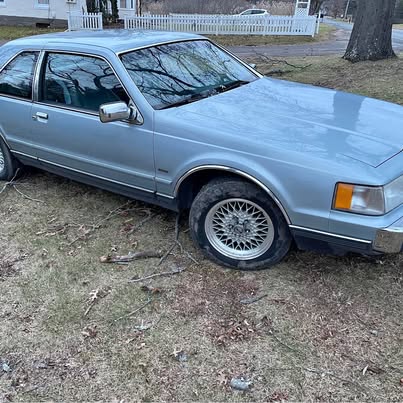 $2,500
Expand
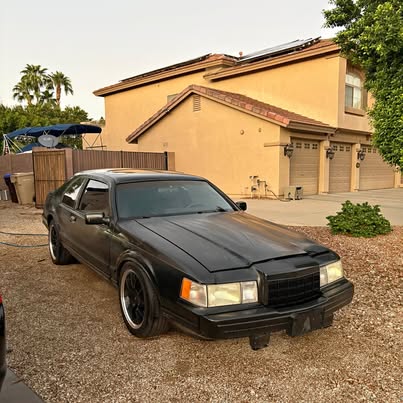 $2,500
Expand
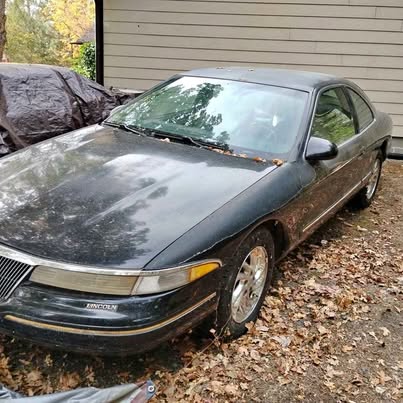 $2,425 · 70% below typical
Expand
What they sell for: mark vii sale prices.