
Lincoln mark iv buyer's guide
Lincoln mark iv -- the model's own buyer's guide: variants, values and what to check.
Years listed: 1975-1975 · Series: Mark Series
# Lincoln Continental Mark IV (1972–1976) — Buyer's Guide
Overview and history
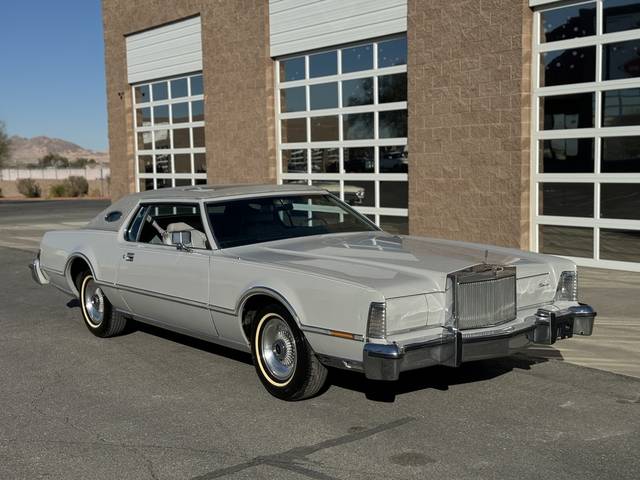
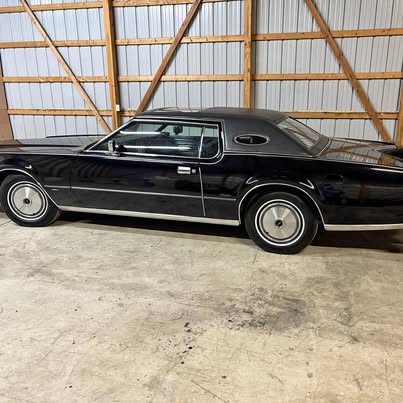
You are looking at the largest, heaviest and most theatrical personal luxury coupe Lincoln ever sold in volume, and you need to understand that as a compliment before you can buy one well. The Continental Mark IV is a two-door coupe on a 120.4-inch wheelbase and a separate perimeter frame, 223 to 228 inches long depending on model year, 79.8 inches wide, and weighing roughly 5,000 to 5,300 pounds in running order. It carries one engine only — Ford's 460 cubic inch, 7.5-litre 385-series V8 — driving the rear wheels through one gearbox only, Ford's C6 three-speed automatic. There is no sedan, no convertible, no manual, no small-engine version and no stripped fleet special. Every Mark IV that leaves the Wixom, Michigan plant between the autumn of 1971 and the autumn of 1976 is the same proposition: a Thunderbird-derived chassis under bespoke Lincoln bodywork, a vinyl roof, concealed headlamps, an upright chrome grille in the Rolls-Royce manner, a spare-tyre hump pressed into the deck lid, and an equipment list that treats power operation of almost everything as standard.
Lincoln builds the car as successor to the 1969–71 Continental Mark III, and the relationship matters, because sellers blur the two generations. The Mark IV is bigger in every dimension and — the part that decides money — a different animal under the bonnet despite sharing the engine family's name: the Mark III's 460 is a high-compression engine rated in the old gross manner, while the Mark IV's is a low-compression, emissions-era engine rated in net horsepower, and from 1975 a catalyst car on unleaded fuel. Neither is a muscle car; both are torque-rich luxury coupes, and the later one trades a measure of throttle snap for quieter, cleaner, lazier running. Buy the Mark IV for presence, silence, ride quality and visual theatre.
The production story is one of success no fuel crisis quite kills: 48,591 cars for 1972, a record 69,437 for 1973, 57,316 for 1974, 47,145 for 1975 and 56,110 for 1976 — 278,599 in total. Read those figures as a buyer. This is not a rare car, and any seller using the word rare about a standard Mark IV is selling you a story. What is rare, fifty years on, is a good one: a car whose vinyl roof has not rotted the steel beneath it, whose vacuum systems still work as a system, whose climate control still controls temperature, and whose interior has not been retrimmed in the wrong material. Survival in condition, not production scarcity, is the whole market for this car.
One more identity point, because it decides real money in the final year. For 1976 Lincoln introduces the Designer Series — coordinated colour and trim packages carrying the names Bill Blass, Cartier, Givenchy and Pucci, with the designer's signature in the opera window and a 22-karat gold-plated dashboard plaque for the first owner's name. The packages are a sensation, taking roughly a quarter of Mark IV orders in their single year on this body. They are also mechanically identical to a standard 1976 car: same 460, same C6, same chassis, same brakes. A Designer Series car earns its premium with verified identity and preserved trim, never with performance, and a car wearing designer colours without the matching signature, plaque and trim codes is a tribute, not an original. The sections that follow give you the checks that separate the two.
The models
There is exactly one body style, one engine and one transmission across all five years, so the model story is one of running changes, trim programmes and federal regulation. That does not make the years interchangeable: bumpers, brakes, carburation, ignition and equipment all change in ways you can see, feel and price, and the trim programmes of 1974 to 1976 — the Luxury Groups and the Designer Series — create the only genuine collectability tiers in the range. The table compresses the run; the text after it tells you what the table cannot.
| model | years | engine | output | built | character |
|---|---|---|---|---|---|
| Continental Mark IV | 1972 | 460 cu in 385-series V8, Motorcraft 4300 4-barrel | 212 hp SAE net | 48,591 | The pure car: slim bumpers, no catalyst, the sharpest styling and the simplest emissions plumbing of the run |
| Continental Mark IV | 1973 | 460 cu in 385-series V8, Motorcraft 4300 4-barrel | 208 hp SAE net | 69,437 | The best-seller: 5-mph front bumper and revised front bodywork, opera window now standard, otherwise the early car |
| Continental Mark IV | 1974 | 460 cu in 385-series V8, Motorcraft 4300 4-barrel | c. 220 hp SAE net (period sheets vary) | 57,316 | 5-mph rear bumper moves the tail lamps into the body; Gold and Silver Luxury Groups arrive; more sound insulation |
| Continental Mark IV | 1975 | 460 cu in 385-series V8, Motorcraft 4350 4-barrel, catalytic converter | c. 216 hp SAE net (period sheets vary) | 47,145 | The systems year: unleaded fuel, electronic ignition, four-wheel disc brakes and Hydro-Boost assistance; Lipstick and Blue Diamond editions |
| Continental Mark IV | 1976 | 460 cu in 385-series V8, Motorcraft 4350 4-barrel, catalytic converter | 202 hp SAE net | 56,110 | The finale: the most equipment, the softest state of tune, and the only year of the Designer Series on this body |
| Continental Mark IV Designer Series | 1976 | 460 cu in 385-series V8, Motorcraft 4350 4-barrel, catalytic converter | 202 hp SAE net | included in 1976 total; c. 27% of orders | Bill Blass, Cartier, Givenchy and Pucci colour-and-trim packages; signature opera windows and gold dash plaque; mechanically identical to standard |
A word about the output column: period net ratings wander by a handful of horsepower between factory sheets and reference books, because exhaust configuration and mid-year calibration changes move the printed figure without moving the car. The 212 net of 1972 and 202 net of 1976 are the consistently published bookends. What does not vary is the character: roughly 350 lb-ft of torque at low rpm, 0–60 mph in eleven to thirteen seconds, and a top speed around 110–115 mph. If a seller claims his 1974 is noticeably faster than his neighbour's 1976, he is describing state of tune, not model year.
The 1972 car is the stylist's Mark IV. It alone keeps the close-fitting bumpers of the original design, and it alone predates the catalytic converter, electronic ignition and the thickest emissions plumbing — though it is no pre-smog innocent, carrying lower compression than the Mark III engine, air injection and evaporative controls. Its opera window, the small oval C-pillar window that becomes the model's signature, is technically an option this year but is specified on almost every car built; a 1972 without one is a curiosity, not a prize.
For 1973 the federal 5-mph front bumper requirement forces revised front bodywork and a heavier bumper, and the opera window becomes standard. Equipment is already comprehensive — automatic temperature control, power windows and locks, six-way power seats, power steering, power brakes with Sure-Track, a Cartier-signed clock, cornering lamps and an automatic parking-brake release — so do not let a seller present any of it as a rare option on a mid-run car. The options that still matter to value are a power moonroof where fitted, leather in place of cloth, upgraded wheel covers, and the appearance groups below.
For 1974 a 5-mph rear bumper joins the front one and the tail lamps move into the rear bodywork — the quickest visual tell between a 1973 and a 1974. Lincoln also introduces the Luxury Group concept: coordinated colour packages, Gold and Silver for 1974, direct ancestors of the Designer Series, whose modest premium survives today only when colours and trim still match the package the car left Wixom with.
For 1975 the changes go under the skin. The car moves to unleaded fuel with a catalytic converter, the Motorcraft 4350 spread-bore carburettor replaces the 4300, electronic ignition replaces the contact-breaker distributor, and — the change you feel first — four-wheel disc brakes with hydraulic Hydro-Boost assistance replace the earlier vacuum booster and rear drums, giving late cars a firmer, more consistent pedal. Special editions multiply: the Lipstick edition, white outside with Lipstick Red interior accents, and the Blue Diamond edition are the named 1975 packages. A 1975 is the thinking buyer's hinge year: late brakes and ignition, less trim-programme theatre than 1976, and no 1972 bumper purity to pay for.
The 1976 car closes the run at the longest overall length, with the fullest equipment and the Designer Series as its headline. The four packages, precisely: Bill Blass — dark blue metallic, cream and gold pinstriping, cream Normande-grain roof, dark blue interior with cream accents. Cartier — dove grey, red and white pinstriping, matching Valino-grain roof, dove grey interior. Givenchy — aqua blue Diamond Fire, black and white pinstriping, white Normande-grain roof, aqua blue interior, lighter woodgrain trim. Pucci — dark red Moondust, silver and red pinstriping, silver Normande-grain roof, dark red Majestic cloth interior. Each carries the designer's signature in the opera window and the gold-plated dash plaque. Lincoln also offers non-designer colour editions for 1976 — Black Diamond, Jade, Lipstick and Cream-and-Gold among them — attractive cars, but not Designer Series cars whatever an advertisement says. The distinction is documented on the car itself, and the inspection section shows you where to read it.
Engines and gearboxes
The 460 V8: Ford's 385-series, built for torque and silence
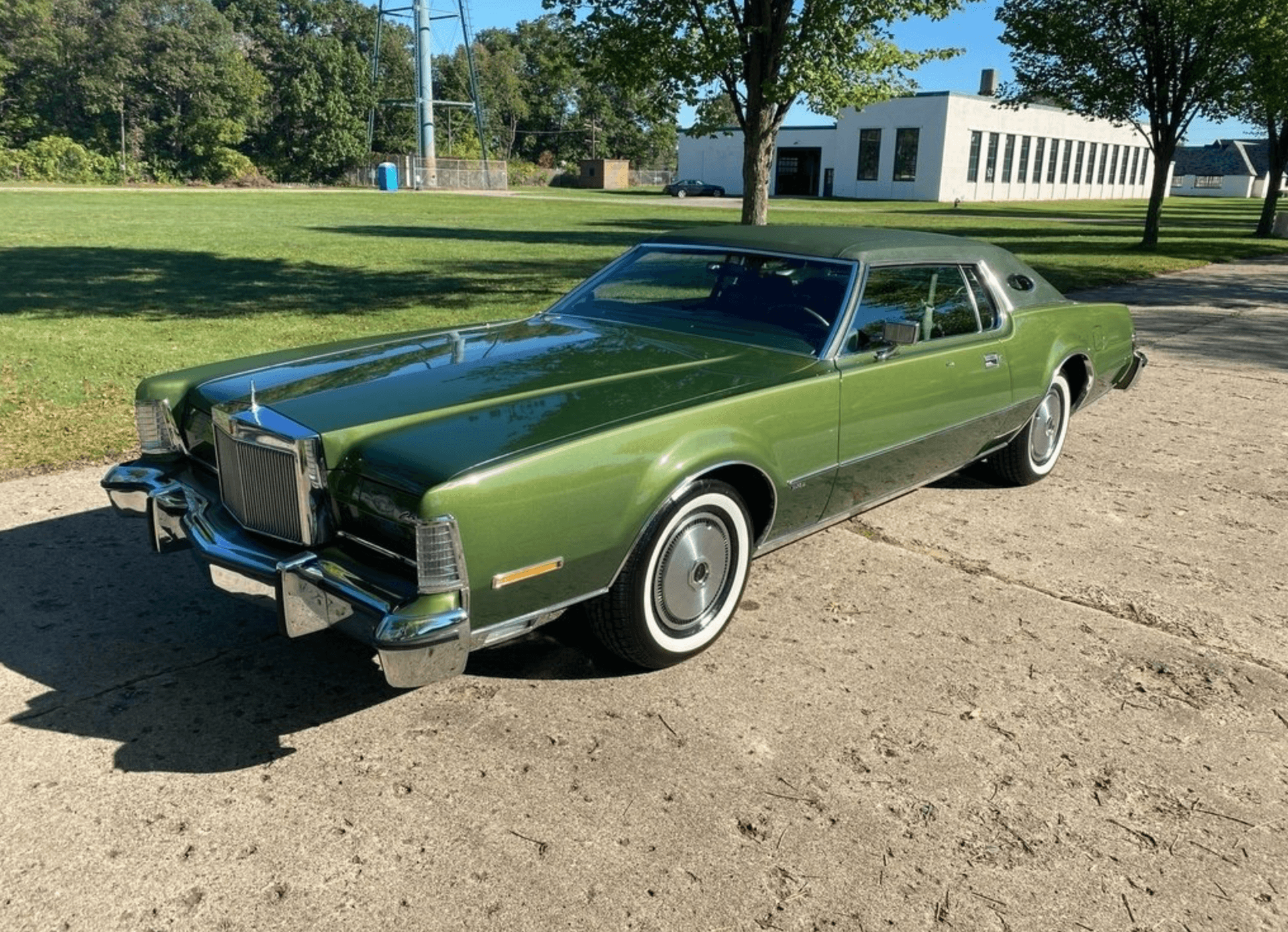
Every Mark IV carries the same engine, and understanding it starts with what it is not: not a stretched small-block, not a Lincoln-only exotic, and not a fragile emissions casualty. The 460 is the larger of the two original Ford 385-series big-blocks — the family takes its name, by long-standing repute, from the 460's own 3.85-inch stroke. Bore is 4.36 inches, stroke 3.85 inches, displacement 460 cubic inches or 7.5 litres. Cast-iron block on five main bearings, cast-iron heads, a camshaft in the block working the valves through hydraulic lifters, pushrods and stamped rockers, and a duplex chain drive. One four-barrel carburettor, one coil, one distributor, one mechanical fuel pump. It is deliberately the simplest possible architecture for its size, which is why a neglected 460 usually responds to basic recommissioning while a neglected Mark IV interior does not.
Compression is where the Mark IV engine parts company with its predecessor, and you should be able to explain it before a seller uses it against you. The Mark III engine runs 10.5:1 and is rated 365 horsepower in the old SAE gross manner. The Mark IV opens its chambers up — about 8.5:1 for 1972, about 8.0:1 from 1973 — and is rated in SAE net horsepower, measured with production air cleaner, exhaust and accessories in place. Both changes cut the printed number; only the first cuts real output, and modestly, because the engine's work is done by displacement and torque. Peak torque sits around 340 to 360 lb-ft depending on year and source, delivered between roughly 1,600 and 2,800 rpm, and a healthy example of any year pulls away with the same unhurried surge. An engine that needs revs, pings under light load on the correct fuel, or feels breathless above 60 mph is not showing model-year character. It is showing a fault — most often ignition timing, a worn timing chain, a tired carburettor or a blocked exhaust.
The bottom end is the engine's great strength; crankshafts, rods and pistons in a car that has had oil changes rarely give trouble, and the 460's truck and motorhome reputation is earned. What wears is everything hung on the long block. The factory timing set uses a nylon-toothed camshaft sprocket for quietness; the nylon hardens and sheds teeth with age, retarding cam timing progressively and then, when teeth strip, all at once. Any car without a timing-set receipt is one whose set you budget to replace with an all-steel set, at roughly $600–$1,200 fitted: the failure gives little warning, and its signature — a lazy engine whose timing will not stay where you set it — is easily misread as carburation. Exhaust manifolds crack, particularly the right-hand one, and their bolts seize; budget $500–$1,500 for manifold work, more if studs snap. Main and front cover seals weep, valve-cover gaskets leak onto the manifolds, and intake end seals shrink until oil mist coats the back of the engine and is misdiagnosed as a gearbox leak. All of it is labour-priced. Oil pressure tells the bottom end's truth in one reading: hot at idle in Drive, a healthy 460 holds steady pressure well off the stop, and a flickering warning lamp with a front-cover rattle is the classic signature of a worn engine being sold quickly. Listen at cold start for slack chain, and at hot idle for lifter tick that does not fade as the oil warms — one lifter is an annoyance, a chorus with low pressure is a worn engine.
Living with the emissions years: carburettors, ignition and plumbing
The differences between model years live in the induction, ignition and emissions equipment, and this is where your money is spent keeping a Mark IV sweet. The 1972 to 1974 cars breathe through a Motorcraft 4300 four-barrel; the 1975 and 1976 cars use the Motorcraft 4350, a spread-bore design with small primaries and large secondaries, introduced alongside the catalytic converter. Both have the same vices at fifty years old. The accelerator-pump diaphragm perishes and produces a stumble on tip-in that owners misdiagnose as ignition. Floats absorb fuel, sink, and flood the engine at hot restart. The choke pull-off fails, so the choke stays on too long cold and the engine loads up and stalls at the first junction. Ethanol attacks the older rubber and cork inside both units; a proper specialist rebuild with ethanol-resistant parts runs roughly $400–$800, and transforms a car that has been blamed on its engine. Learn the distinguishing test: a flat spot only as the secondaries open, with clean part-throttle running, points at the carburettor; a flat spot everywhere with a soft, hunting idle points at vacuum leaks first. Do not let anyone sell you a carburettor to cure a vacuum leak, or hoses to cure a sunk float.
Ignition divides the run in two. Early cars use a contact-breaker distributor; points close up, the condenser tires, the advance diaphragm perishes, and the engine starts hard hot, pings or runs flat depending on which failure arrives first. The cure is maintenance: points, condenser, rotor and cap are cheap, and the vacuum advance unit must hold vacuum from a hand pump — a split diaphragm leans the cruise mixture and removes advance, producing the highway surge blamed on the gearbox. The 1975-onwards cars use Ford's DuraSpark electronic ignition, reliable until the module overheats and fails, classically as a hot stall followed by a perfect restart twenty minutes later; a spare module in the glovebox is the oldest owner's trick there is. On any electronic car that cuts out hot, test for spark during the failure: no spark, restored when cool, is the module or pick-up; spark present points back to fuel — vapour lock or a failing mechanical pump, both common where lines run close to a very large, very hot engine.
Emissions plumbing frightens buyers unnecessarily. Depending on year you will find an air-injection pump and diverter valve, an EGR valve under the carburettor, a charcoal canister, a heated air intake with a vacuum snorkel flap, ported vacuum switches, and — from 1975 — the catalytic converter and unleaded fuel. Each device is simple; their hoses in total are not, and they all reach retirement age together. Do not demand a car with the plumbing deleted — deletion usually means faults hidden rather than cured, and it destroys originality and, in some jurisdictions, legality. Demand a car that idles steadily with the air conditioning on, pulls cleanly, and shows no capped ports or hanging hoses. An EGR valve stuck open gives a lumpy idle and junction stalls; stuck closed, part-throttle ping. Apply vacuum at warm idle: the idle should stumble as it opens; if nothing changes, the valve or its passages are carbon-blocked, a $300–$700 cleaning job. A rattling converter on a 1975–76 car means broken substrate; a legal replacement runs roughly $600–$1,400, and a blocked one strangles the engine so completely it is misdiagnosed as a failed gearbox — the car that will not pull past 50 mph with a perfect idle is telling you to check exhaust back-pressure first.
The C6 automatic and the driveline behind it
The Ford C6 is the correct gearbox for this car: a three-speed automatic with a torque converter, a single intermediate band, clutch packs for the forward and reverse ranges, a governor on the output shaft and a vacuum modulator that reads engine load from manifold vacuum. No electronics, no overdrive, no lock-up converter — and it was built in truck duty as well as car duty, which is why a C6 that has had fluid changes is rarely the reason a car is for sale. Ratios are approximately 2.46:1, 1.46:1 and 1.00:1, with final drive through the 9-inch axle in a tall cruising ratio, around 2.75:1 to 3.00:1 depending on year and specification. That is why the car turns roughly 2,500 rpm at motorway speed, and why its fuel consumption — 10 to 13 miles per gallon in real use — is a fact of ownership rather than a fault to be cured.
The C6 talks to you through its shifts; learn its language before you test-drive. Warm, shifts should be clean and barely perceptible — Ford tuned the box to disappear. A late, hard upshift under light throttle is the classic signature of a modulator vacuum fault: a perished hose, a split diaphragm, or a modulator passing fluid up its vacuum line into the manifold, where it burns as white smoke the seller will call condensation. Pull the hose at the modulator: any red fluid inside condemns it, a $30–$80 part that cures faults owners have lived with for years. A flare — revs rising between second and third — points at the intermediate band; adjustment is an external service operation, and a box responding to adjustment and fresh fluid was neglected, not dead. No reverse when cold, arriving as the box warms, means hardened internal seals and a rebuild: budget $1,900–$3,400 fitted, and treat the car as project-priced unless the rest is exceptional. Fluid should be red and smell of nothing much; brown, burnt fluid in a box that flares is a rebuild being announced.
Behind the box, a long propeller shaft runs to the Ford 9-inch axle, whose third member unbolts from the front of the housing — one of the most serviceable axle designs ever made. Worn universal joints clunk on take-up and vibrate at one road speed; they are cheap unless ignored until one fails. Axle whine at 40 to 55 mph on a light throttle, changing pitch on the overrun, is worn ring-and-pinion mesh or bearings; a centre section exchanges or rebuilds for roughly $800–$1,800 — a negotiation item, not a walk-away. On Traction-Lok limited-slip cars, chatter in tight turns usually means the clutch pack wants friction modifier or renewal. Check the axle breather underneath: a blocked breather pressurises the housing and pushes oil past the seals, manufacturing leaks no seal change will cure until it is cleaned.
Problem areas
Rust: the map, and the vinyl roof above all
A Mark IV is a body-on-frame car, which misleads buyers into thinking rust is cosmetic. It is not: the frame is rarely the problem, but the body carries the doors, the roof structure and your safety, and it has two systematic traps to inspect in order — because the first can condemn a car whose paint photographs beautifully. Add the battery tray, the boot floor around the tank straps, and a fuel tank that rusts from inside on cars stored with stale fuel — repeated fuel-filter blockages mean the tank, curable at $400–$900 fitted, and not another filter.
The roof is trap one, and the single most important inspection on any Mark IV. Every car carries a vinyl roof covering, and vinyl ages, shrinks and splits at its seams and trim clips. Water enters, is held against the painted steel by the vinyl's foam backing, and rusts the roof invisibly for years. The C-pillars and the panel around the opera window are the classic sites, followed by the roof rails and the rear window surround. Your test costs nothing: run your palm firmly over the vinyl around the opera windows, along the C-pillar bases and across the rear-window surround, feeling for the crunch, bubble and give of rust scale under the covering. Squeeze the C-pillar between finger and thumb. A sound roof feels like vinyl over steel; a rotten one feels like vinyl over cornflakes. Then look inside for water staining on the package tray and C-pillar trims, and check the boot floor, because roof water runs downhill and finishes its work there. Repairing a rotten roof properly means stripping the vinyl, welding in new metal, repainting and refitting a covering in the correct grain — both grains are reproduced, but the labour is the bill: budget $2,500–$6,000, and understand that a car needing it is worth project money however good its engine is. Correct the seller's myth explicitly: bubbling under vinyl is common, but it is not surface rust, and never only where you can see it.
Trap two is the lower body. Front wings rust behind the wheels where dirt packs against the splash panels; door bottoms rust from inside when drains block, announcing themselves as a slosh after rain and bubbling along the lower skin; sills rust beneath their bright trim — hence the suspicion of wavy sill trim; rear quarters rust around the arch lips and doglegs. The 5-mph bumper cars add a site: the pockets around the energy-absorbing bumper mounts rot behind chrome that still shines. Work with a cloth-wrapped magnet and a torch, tapping lower edges for the change from ring to thud that means filler, and lift the footwell carpet edges — a car with a leaking screen seal or air-conditioning drain fills its own floors. Frame rust is usually surface scale and rear-crossmember corrosion on salt-belt cars; perforated rails make a parts car.
Vacuum systems and automatic temperature control: one gas, a dozen jobs
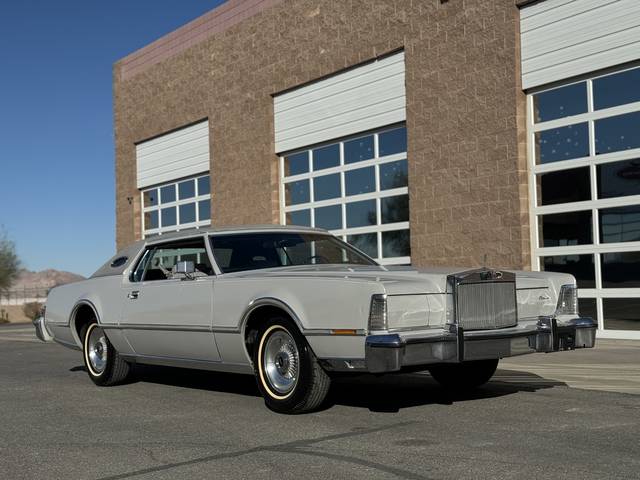
No system on this car rewards understanding more, or punishes guessing harder, than engine vacuum. A Mark IV uses manifold vacuum to operate the headlamp doors, run the automatic temperature control, power the locks on cars so equipped, release the parking brake automatically when you select a gear, and inform the gearbox modulator — all fed from reservoirs through check valves, along rubber hoses now fifty years old. When the hoses perish, the failures arrive as a committee, and the inexperienced diagnose each symptom as a separate expensive component. Think like the system: one split hose can give you headlamp doors creeping open overnight, locks working on one door, a parking brake that will not release and climate control defaulted to defrost, all on the same morning.
The headlamp doors are your free diagnostic. On a sound car they stay closed indefinitely with the engine off, open promptly and evenly when you switch the lamps on, and close together when you switch off. Doors that open unevenly, creep open after hours parked, or need revs to close report a vacuum leak or a tired actuator, not an electrical fault — the lamps are electric, the doors are pneumatic. A hand vacuum pump on each actuator settles it in minutes: it must pull the door and hold vacuum without bleeding down. Actuators rebuild or replace at roughly $150–$400 per side; the hoses and check valves behind most failures cost almost nothing but time. Beware doors wired or propped open permanently — a confession that nobody traced the leak, which is usually still feeding your other symptoms.
Automatic temperature control — ATC — decides whether a Mark IV is a luxury car or a large coupe with a fan. A dial sets a target; a sensor chain, an aspirator, a vacuum servo and a programmer blend heated and refrigerated air and choose the outlets. When it works it is superb: set 72 degrees and the car manages itself in silence. Its failures are recognisable. Air only from the defrost vents is the designed default on loss of vacuum, so defrost-only is a vacuum supply fault until proven otherwise — test vacuum at the programmer before buying one. Heat that will not turn off is classically a failed water valve or a programmer stuck at full heat; no heat with a hot engine points to an airlock, a blocked heater core or the same valve stuck the other way. The air conditioning, originally R12 and converted to R134a on most survivors, should blow genuinely cold at the centre vents on a warm day; be unimpressed by "just needs a recharge," which here means "leaks, and I have chosen not to find out where." A full ATC and air-conditioning recommission runs roughly $800–$2,500 depending on how much of the chain has failed, which is why a car demonstrated blowing hot and cold on command, through the correct vents, is worth measurably more than the same car untested. Run it to full cold, then full heat, then a mid setting, a minute at each step. The system is slow by design. It is not that slow.
Brakes, steering and suspension: stopping and steering two and a half tons
The braking system divides at 1975; know which car you are standing in front of. Early cars use front discs and rear drums with a vacuum booster, plus Sure-Track — an early anti-lock control acting on the rear brakes, with an axle sensor and a modulator — as standard. Late cars use four-wheel discs with Hydro-Boost: assistance from power-steering pump pressure, stored in a nitrogen accumulator that gives you a few assisted stops if the engine stalls. Both stop the car well when maintained, and both have signature failures you can test in a car park.
On an early car, a pedal sinking slowly at a standstill is master-cylinder seals bypassing; a hard pedal with the engine running is booster or vacuum supply; a long pedal that pumps up is air or rear-drum adjustment. Sure-Track faults present as rear-wheel lockup under firm braking or a warning lamp; the components are Lincoln-specific, diagnosis needs the factory manual's sequence, and a disabled system — hoses capped, modulator unplugged — is common and must be priced as a fault, not an upgrade. On a Hydro-Boost car, exhaust the accumulator with the engine off, then hold the pedal and start the engine: it should give slightly as assistance arrives. Kickback, brakes that grab or apply themselves lightly with the engine running, or heavy steering arriving with brake complaints all point into the shared hydraulic supply — contaminated fluid, a tired pump, a blocked return line or a failing unit — because steering and brakes drink from the same pump. Flush the power-steering fluid before condemning hardware; contamination is the commonest cause and the cheapest. A rebuilt unit runs roughly $400–$900 exchanged plus fitting, a pump $200–$450, and neither justifies "the brakes just need bleeding" on a car whose pedal feels wrong in these ways. On all cars, check hoses for cracking, rear pipes for corrosion and discs for scoring; brake neglect on a 5,300-pound car is a character reference for the whole car.
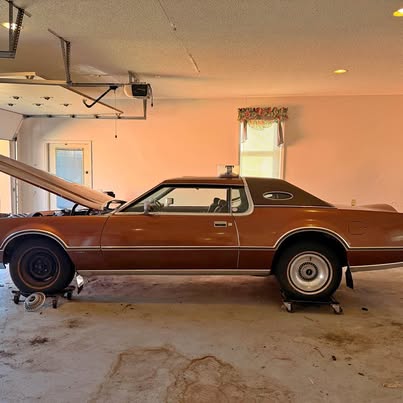
Steering is recirculating-ball with full power assistance. Wear shows as free play at the straight-ahead, measured with the engine running: more than about two inches of rim movement before the wheels answer is wear in the box, centre link, idler arm or column coupling. Pump whine means low, aerated or old fluid, and leaks matter beyond the mess — on Hydro-Boost cars the same fluid is your brake assistance. Budget $300–$800 for pump and hose work, $500–$1,200 for a rebuilt box fitted. Suspension is coil springs all round, and its enemies are weight and time: front ball joints and bushes wear into camber changes you see as uneven tyre wear and hear as knocks, and a full front-end refresh with alignment runs roughly $800–$1,800 and transforms a wandering car. Springs sag, rears first; the correct stance is the level one in this guide's profile photograph, and new shock absorbers on tired springs achieve almost nothing. The car should track straight with a light hand, ride a broken surface in one movement rather than thump-and-wallow, and settle after a speed bump without a second bounce. A car that crabs — dog-tracks from behind — has accident or frame history and needs a lift and a tape measure before it needs your money.
Electrics and power accessories: the long, itemised bill
A Mark IV's electrical system is not unreliable in design; it is simply enormous in scope and fifty years old. Power windows and locks, twin six-way power seats, a power aerial, cornering lamps, the Cartier clock, cruise control and a thicket of courtesy lamps all draw through switches, motors and connectors that live in doors and seats and get wet, hot and tired. The buying rule is absolute: test every accessory, in both directions, from every switch that controls it, and write the failures down as a priced list before you discuss price. Owners forgive a dead rear window for a decade. You are buying the bill for it.
Windows fail in patterns. One that works from the master switch but not its own has a switch or door-jamb wiring fault — the wires flex at the hinge pillar and break inside unbroken insulation, so the fault comes and goes as the door swings. A slow, straining window has a motor drawing high current through dried regulator grease; motors run roughly $100–$300 per door plus strip labour, and their plastic drive gears crumble. A window dropped into the door has shed its regulator or glass channel. Seats fail through switches, motors and drive cables; movement in some directions only is usually switch contacts or one motor, at $150–$500 per seat. The Cartier clock stops on almost every car eventually — its self-winding contacts pit — and a quartz conversion inside the original case at roughly $100–$250 is the accepted, invisible cure. Cruise control fails through its vacuum servo, dump valve and hoses, in that order, diagnosed with the same hand pump as everything else here. Alternator and starter are conventional Ford units; what is not cheap is tracing a parasitic drain through forty courtesy circuits, so price a car that flattens its battery in a parked week with an auto-electrician's day in mind, $400–$800, until the cause is found.
Interior, trim and the Designer Series identity problem
The interior is the car's glory and its second great expense. Twin Comfort lounge seats, deep carpeting, woodgrain door panels and a facia with Kashmir Walnut and Baby Burl Walnut appliqué all age in period ways: leather dries, splits along its stitching and loses dye on the driver's bolster; the Majestic and Versailles velours wear better but fade unevenly and are harder to match; dash pads crack in the sun states, door vinyl shrinks from its clips, woodgrain lifts, and bright plastic trim loses its chrome to a tiredness no polish reverses. Reproduction support is only partial — seat covers and carpets exist for standard cars, but a Designer Series interior in the correct colour and cloth can become a hunt measured in seasons. Price accordingly: a full professional leather retrim runs roughly $4,000–$8,000, a dash pad $600–$1,500, a headlining $400–$800 fitted — figures that routinely exceed the gap between a cheap Mark IV and a good one.
Which brings you to the identity problem, specific to this model. Because the Designer Series premium is real and the packages are colour-and-trim deep, cars acquire designer identities in sellers' hands that they never had at Wixom. The checks are physical, and you can perform every one in front of the car. First, the opera window carries the designer's signature on a genuine 1976 car; plain glass ends the conversation unless a documented replacement explains it. Second, the gold-plated dash plaque should be present; its absence is explainable, but it removes one witness. Third, the colours must agree with each other and with the package: a Bill Blass car is dark blue with a cream roof and a blue interior; dark blue with a black roof and a red interior is a standard car in a blue suit. Fourth, decode the data plate and trim codes before paying any special-edition premium; the codes, not the colours, are the birth certificate. Fifth, remember the calendar: the Designer Series exists only for 1976 on this body — a 1975 Cartier edition does not exist, though the Cartier clock does, and standard cars have it too. A well-kept standard car is a better purchase than a shabby genuine designer car at the same money. The premium follows the evidence, and the evidence is on the car, not in the advertisement.
How to inspect one
Inspect a Mark IV in this order, because the order is a funnel: the checks that can condemn the car come first, while your enthusiasm is still cheap, and the checks that merely price it come after. Take a torch, a cloth-wrapped magnet, a hand vacuum pump and a notebook, and write accessory failures down as you find them. Do not let the seller warm the car up before you arrive — half of this checklist only works cold.
- Start with the roof, from the problem areas section, because it settles more value than everything else combined. Palm and squeeze the vinyl around both opera windows, along both C-pillars, above the windscreen and around the rear window. Crunch, bubbling or give is rust in the roof structure, and it reprices the car as a project on the spot. Check the package tray and C-pillar trims for water staining, then lift the spare and boot floor covering to check the floor and rear corners where roof water finishes its journey.
- Work the lower body with the magnet and torch: front wings behind the wheels, door bottoms (listen for sloshing, look for blocked drains), sills beneath their bright trim, rear arch lips and the bumper-mount pockets on 1973-onwards cars. Sight along each flank for filler ripples and misalignment. A car that dog-tracks goes no further without a lift inspection.
- Read the identity before you fall for the car. Record the VIN and data-plate codes and decode year, plant, engine and trim. On any special-edition claim — Luxury Group, Lipstick, Blue Diamond or a 1976 Designer Series — check the opera-window signature, the dash plaque, and whether paint, roof and interior colours agree with the package and each other, as the problem areas section sets out. A tribute car is bought at standard-car money or not at all.
- Cold-start the engine yourself. It should fire promptly, settle to a steady idle as the choke comes off, and show no blue smoke beyond a brief puff, no persistent chain rattle and no lifter chorus. An engine that needs throttle to stay alive cold is showing carburettor choke or vacuum faults, in that order.
- With the engine idling warm, do the vacuum tour. Switch the headlamps on and off: the doors should move together, promptly, and sit flush closed. Set the climate control to full cold, then full heat, then a mid setting, a minute at each: air should arrive at the correct vents at the correct temperature — defrost-only means vacuum supply first. Work the locks and select a gear to confirm the parking brake releases. Each failure goes on the list under the vacuum system, not the individual component.
- Under the bonnet, hunt the engine's known tells: oil mist at the back of the intake manifold, weeping valve covers, a cracked right-hand exhaust manifold (a cold tick that fades as it warms), perished hoses and capped ports. Pull the gearbox vacuum hose at the modulator and look for red fluid inside it. Check coolant for oil, oil for emulsion, and hoses for the rock-hard pressurisation of a combustion leak.
- Test every electrical accessory from every switch: windows both ways, both seats in every direction, locks, aerial, boot release, cruise control on the road test, lamps including cornering lamps, and the clock. Price the failures as you go, using the problem areas ranges. This list is your negotiation; a car with a short list beats a shinier car with a long one, every time.
- Check the brakes by year. On a 1972–74 car, feel for a sinking pedal (master cylinder) or a hard pedal (booster), and ask whether Sure-Track is connected and working. On a 1975–76 car, exhaust the Hydro-Boost accumulator with the engine off, then start the engine on a held pedal and feel for assistance arriving without kickback or grab. Inspect hoses, rear pipes and discs on all cars.
- Drive at least twenty minutes, to full temperature and through every gear many times. The C6 should shift cleanly and almost invisibly warm; a flare between second and third, a late hard shift, or no reverse cold each have a named cause and price in the gearboxes section. Listen for axle whine at 40 to 55 mph on a light throttle, joint clunks on take-up, and front-end knocks over broken surfaces.
- On the same drive, judge steering and ride against this guide's profile photograph: level stance, straight tracking with a light hand, no more than about two inches of free play at the rim, no pump groan except at full lock, and one clean movement over speed bumps rather than thump-and-wallow. Uneven front-tyre wear confirms what your hands suspect about joints and bushes.
- Finish underneath, on a lift if the money is serious. Check frame rails and rear crossmember, floor pans, fuel and brake lines, the tank and its straps, the axle breather, and every bush and hose you could not reach from above. Photograph what you find; photographs are worth more in the negotiation than any opinion.
- Close with the paperwork and the arithmetic. Receipts for a timing set, carburettor rebuild, climate-control work, converter replacement on a 1975–76 car and any roof metalwork are the documents that matter; a folder of oil-change invoices on a car with a crunchy roof is decoration. Add your accessory list, rust findings and any engine or gearbox work into one honest total cost of putting the car right, and compare that total — never the asking figure alone — with the next car on your list. With a model built in these numbers, there is always a next car.
Values
Read the Mark IV market as a condition market wearing a trim market as a hat. The mechanical specification barely changes across five years and more than a quarter of a million cars, so the spread between the cheapest and dearest example on sale at any moment is driven almost entirely by three things: the steel under the vinyl roof, the completeness of the working systems, and the preservation of the interior. A car that passes the roof test, demonstrates hot and cold climate control on command, and wears its original interior in fine order sits at the top of the market for structural reasons — taking a lesser car to that standard costs more, in metalwork, system labour and trim hunting, than the gap between the two cars. Condition is not a premium on this model. Condition is the product.
Within that spread, the years and packages arrange themselves in a stable order. The 1972 car carries a design premium as the purest shape, with its close-fitting bumpers. The 1976 Designer Series cars carry the other premium, and it is an identity premium: it attaches to a verified car, with signature glass, plaque, colours and trim codes in agreement, and it evaporates — correctly — when any of that evidence is missing, because a designer package is colours and cloth and can be imitated by anyone with a paint gun and a story. The middle years and standard cars are the value ground, and the 1975 car in particular trades without either premium while offering the late brakes and ignition, which is why the canny money so often lands there. Luxury Group and colour-edition cars sit between standard and Designer values, only when their colours and trim survive as a matched set.
Asking prices and achieved prices part company in a predictable place: the optimistic middle, where a shiny respray over unexamined roof steel and an untested climate system is offered at top-of-market money on the strength of low mileage asserted by a five-digit odometer that has, on most of these cars, been around at least once. Treat every odometer reading and claim of originality as unproven unless paperwork proves it. The cars that achieve strong money are documented, demonstrated and dry; the cars that linger are priced on badge and colours by sellers who ask you not to test the systems. Let them linger. A project car — roof rust, dead systems, tired interior — is worth what its engine, gearbox and parts value support, and no more, because the restoration arithmetic on a car of this size exceeds its finished value in almost every case. Buy one only if you want the project itself.
Use the computed market summary beneath this guide as your evidence base, comparing like with like — condition against condition, verified identity against verified identity — rather than year against year. Then negotiate from your inspection list, not the advertisement: each failed system you demonstrated is a costed item, and a seller who has watched you test his car for an hour already knows it. Patience is the final lever; supply is deep, good cars surface regularly, and walking away from the wrong car at the wrong money is worth more here than any bargaining line.
Parts and ownership
Ownership divides cleanly into the mechanical car, which is easy, and the Lincoln car, which is a specialist hobby. The 460 and C6 are shared with Ford and Mercury cars, trucks and motorhomes in enormous numbers, so service parts, gaskets, ignition components, carburettor kits, pumps, starters and alternators are ordinary and sensibly priced, and any mechanic who knows older Fords already knows your drivetrain. The 9-inch axle is one of the best-supported components in the American hobby; suspension wear parts, early-car brake service parts, hoses, belts and filters are routine. Budget for an annual service, tyres in the correct whitewall style when the old ones age out — check the date codes, because a car this heavy on old tyres is a hazard whatever the tread says — and a rolling programme of rubber renewal, because hoses, bushes and seals are the car's true consumables.
The specialist layer begins with the systems that make the car a Lincoln. Vacuum actuators, ATC components, Sure-Track parts for early cars and Hydro-Boost units for late ones, power seat transmissions, window motors, the Cartier clock, correct-grain vinyl in Normande and Valino finishes, Designer Series cloths and model-specific bright trim come from Lincoln specialists stocking new old stock, rebuilt units and reproductions, with the Lincoln clubs maintaining the knowledge base that makes the systems tractable at home. None of it is unobtainable; much of it is queue-and-patience work rather than next-day delivery, which is the practical reason this guide steers you toward cars whose systems already work — you are buying the previous owner's patience as much as his car. A factory shop manual for your year, a hand vacuum pump and a vacuum gauge pay for themselves fastest; with them, half the problem areas become Saturday-morning diagnosis instead of specialist invoices.
Running costs are dominated by two honest facts. The first is fuel: consumption in the low teens per gallon at best on a run and worse in town — leaded-era cars run happily on modern unleaded with attention to valve-seat history at rebuild time, and catalyst cars must have unleaded and a functioning converter where the law requires it. The second is scale: the garage it needs, the jack that lifts it safely, the tyres it wears and the paint bill, where a quality repaint on nineteen feet of car starts firmly in five figures. Classic-policy insurance is straightforward at this production volume, with agreed values set from documented condition rather than asking prices. Driven regularly, kept dry, and serviced as a system rather than a series of emergencies, a Mark IV is a durable, simple-hearted car wearing a complicated suit. Buy the suit in good condition and the heart will look after you.
Which one to buy
- The purist: a 1972 car, for the close-fitting bumpers and the cleanest styling of the run — bought only with a roof you have felt with your own hands, because the earliest cars have had the longest time to rot under their vinyl.
- The value buy: a 1975 standard car, the hinge year with four-wheel disc brakes, Hydro-Boost assistance, electronic ignition and the catalytic converter, trading without the 1972 design premium or the 1976 designer premium while giving you the most developed mechanical specification of the run.
- The collector: a verified 1976 Designer Series car — Bill Blass for the nautical dark blue and cream, Cartier for the dove grey restraint, Givenchy for the aqua theatre, Pucci for the dark red drama — with signature opera glass, dash plaque, matching colours and decoded trim codes all present, because the premium lives entirely in that evidence.
- The driver: a 1973 or 1974 car in honest, dry, mid-market condition with a short accessory-failure list and receipts for timing set and carburettor work; the best-selling years are the easiest to find and to resell.
- The brave: a project car at genuine project money, taken on for the work itself, eyes open that roof metal, trim and system recommissioning will together exceed the finished car's value — bought for love of the process, never as a shortcut to a cheap good car.
The overriding rule: buy the roof, the systems and the interior, in that order — a Mark IV with sound steel under its vinyl, climate control that heats and cools on command, and its original interior preserved is the right car at almost any reasonable asking figure, and a car failing the first of those three tests is the wrong car at almost any price, because the engine and gearbox, the parts sellers boast about, are the cheapest and easiest things on the whole car to fix.
See the 1 mark iv cars currently listed.
For sale now
 $8,900
Expand
What they sell for: mark iv sale prices.