
Lincoln Mark V Cartier edition buyer's guide
Lincoln Mark V Cartier edition -- the model's own buyer's guide: variants, values and what to check.
Years listed: 1978-1978 · Series: Mark Series
Overview and history
The Lincoln Continental Mark V is the biggest, most unapologetic personal luxury coupe Detroit ever put into series production — and the last of its kind. Built for the 1977, 1978 and 1979 model years, it replaced the Continental Mark IV and carried the Mark idea to its absolute limit: a two-door coupe roughly 230 inches long, on a 120.4-inch wheelbase, weighing well over two tons before you added a driver, powered by a choice of two big, lazy, emissions-era V8s and trimmed like a private club. If you are standing in front of one today, understand what you are looking at. This is not a sports coupe wearing luxury clothes. It is a luxury car that happens to have two doors, and every buying decision — what to check, what to forgive, what to walk away from — follows from that.
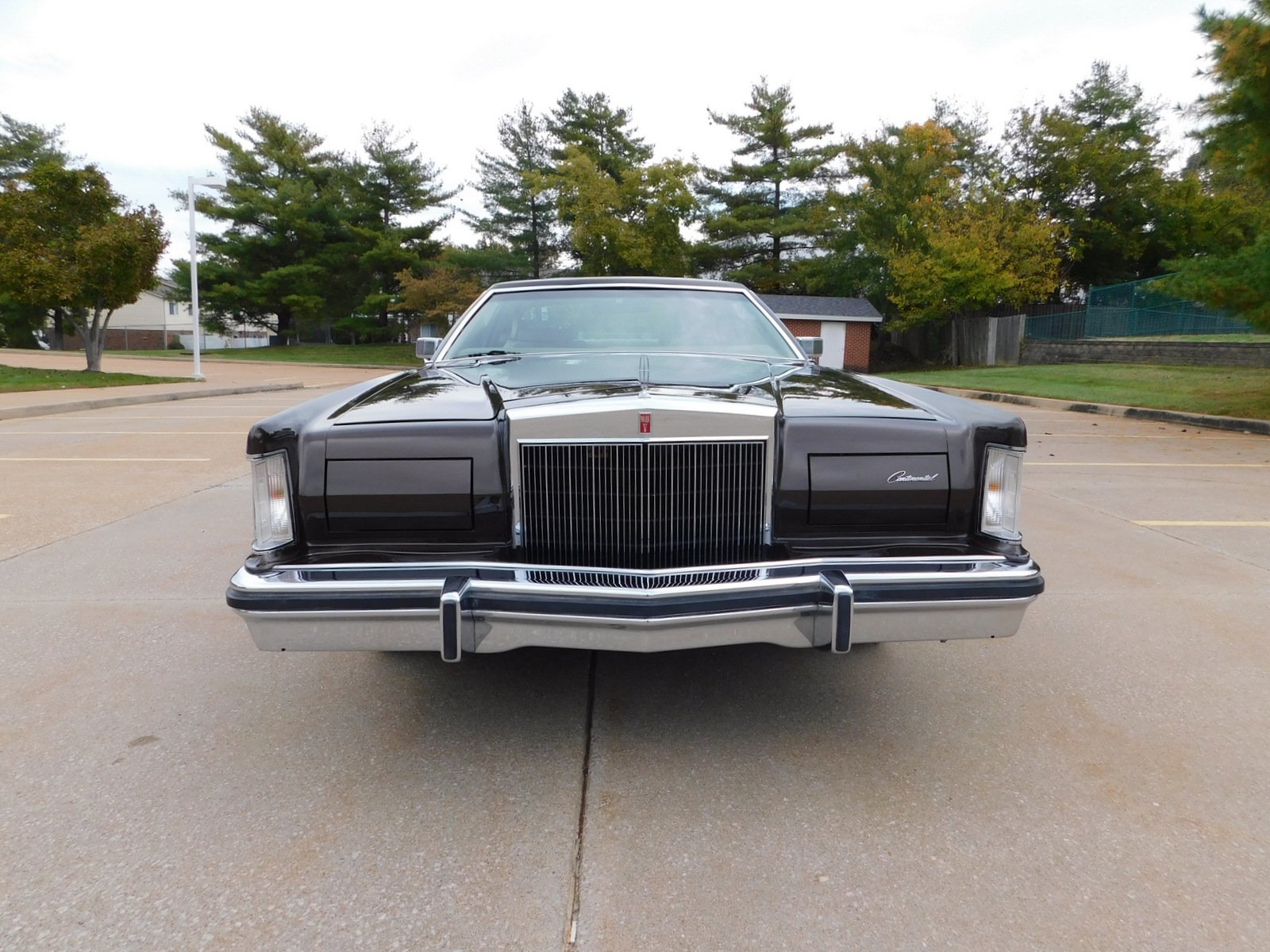
The Mark line itself needs untangling, because sellers use the names loosely. The Continental Mark III of 1968–71 revived the Mark name, the Mark IV of 1972–76 made it a volume success, and the Mark V of 1977–79 was a thorough restyle and re-engineering of the Mark IV formula on the same basic architecture: separate body-on-frame construction, a long hood, a short deck, the spare-tire hump pressed into the decklid, oval opera windows in the C-pillars, hidden headlamps behind vacuum-operated doors, and a Rolls-Royce-style upright grille. For 1980 the car was replaced by the Mark VI, a much smaller, downsized car on Ford's Panther platform. That matters for one practical reason you will meet again in this guide: a 1980 car is a Mark VI, not a Mark V, whatever the listing calls it, and it is a different car underneath — smaller, lighter, fuel-injected in some forms and built to different standards. Check the year and the shape before you check anything else. A Mark V is vast, slab-sided and sharp-edged. A Mark VI is visibly narrower and softer. They share a name and almost nothing else that affects what you should pay or what will go wrong.
Styling was the point of the Mark V, and Ford knew it. Where the Mark IV was rounded, the Mark V went crisp: sharper fender lines, a more formal roofline, vertical taillamps set into the rear fender ends, and an interior that offered — at extra cost and to great publicity — Designer Series editions styled with Cartier, Givenchy, Emilio Pucci and Bill Blass. Those four names are not trim trivia. On a Mark V they are identity, value and a verification exercise all at once, because the Designer Series cars carried specific paint, vinyl-roof, stripe and interior combinations that cannot be faked convincingly for sensible money, and because a genuine Designer Series car in its correct colours is worth meaningfully more than a standard car resprayed to look like one. The verification method runs through this whole guide: the door data plate, the trim codes and the car's own details settle every argument the seller wants to have.
The engineering, by contrast, was deliberately conservative. Underneath the styling sits a full perimeter frame, coil-spring independent front suspension, a live rear axle on coil springs, power steering so light it can be worked with one finger, power front disc brakes, and Ford's C6 three-speed automatic — the only gearbox ever offered. There is no manual Mark V, no diesel, no six-cylinder, no performance variant in the modern sense. The choice that matters mechanically is between the 460-cubic-inch V8 and the 400-cubic-inch V8, and the choice that matters historically is the model year: the 460 was progressively squeezed by emissions rules and was dropped for 1979, leaving the 400 as the sole engine for the final year. The 1979 cars are therefore all 400-powered from the factory — a claimed 1979 460 car is either an engine swap or a misdescription, and you should treat it as one of those until the engine itself proves otherwise.
Production was substantial by luxury-coupe standards — on the order of 229,000 Mark Vs across the three years, built at Ford's Wixom, Michigan plant — so this was never a rare car, and survival rather than original scarcity is what makes a good one hard to find now. These were expensive cars when new, bought by owners who generally maintained them while they were current, then passed down-market through the 1980s and 1990s as fuel prices, fashion and sheer size worked against them. Many were parked rather than worn out: garaged when the second or third owner lost interest, then left for a decade or more. That history defines today's market exactly as it does for most big American cars of the period. The mechanicals are fundamentally tough — the C6, the 460 and the 400 are all long-lived hardware — and the difference between a good Mark V and a money pit is rust, perished rubber and vacuum systems, tired interiors, and the cost of recommissioning a two-and-a-half-ton car that has been asleep. Mileage, on its own, tells you very little. A 90,000-mile car in continuous gentle use is almost always a better buy than a 40,000-mile car that sat for fifteen years.
One more piece of site evidence before the detail, stated honestly because the sample is small. On this site we currently track a small group of Mark Vs — fifteen records in total, ten offered for sale and five recorded as sold, dominated by 1979 cars with 1978 next and a pair of 1977s — and for two of those cars we have examined the sellers' photo sets in detail. Rust was mentioned in the photo notes for both of those two cars. Two cars is far too small a sample to quote as a rate, and this guide does not: treat it simply as a reminder, consistent with everything the wider Mark V experience teaches, that you go looking for rust on every single car, including the shiny ones. The sections that follow tell you where.
The models
Every Mark V is a two-door coupe on the same body and frame. There was no sedan, no convertible from the factory, and no wagon — any open Mark V you meet is a period or later aftermarket conversion, built by an outside coachbuilder, and it should be priced and inspected as a conversion, with questions about who did the work, how the body was reinforced and how the top mechanism and its seals have survived. The factory range is instead divided three ways: by model year, by engine, and by edition. The edition is where the money and the fakery both live, so learn the structure before you look at individual cars.
| Model / edition | Years | Engine | Output (period net, approx.) | Character |
|---|---|---|---|---|
| Mark V standard coupe | 1977–1979 | 400 or 460 V8 | See Engines | The base car; still lavishly equipped |
| Mark V with 460 V8 | 1977–1978 | 460 cu in V8 | Around 208–210 hp | The full-size answer; the engine most buyers want |
| Mark V with 400 V8 | 1977–1979 | 400 cu in V8 | Around 159–173 hp | Lighter, thriftier, slower; the only 1979 engine |
| Designer Series — Cartier | 1977–1979 | As ordered | As ordered | Designer trim, colours and Cartier clock; verify codes |
| Designer Series — Givenchy | 1977–1979 | As ordered | As ordered | Designer trim and colours; verify codes |
| Designer Series — Pucci | 1977–1979 | As ordered | As ordered | Designer trim and colours; often the boldest schemes |
| Designer Series — Bill Blass | 1977–1979 | As ordered | As ordered | Designer trim and colours; nautical themes in period |
| Diamond Jubilee Edition | 1978 only | As ordered | As ordered | Ford's 75th anniversary edition; heavily optioned |
| Collector's Series | 1979 only | 400 V8 | Around 159 hp | End-of-line special; among the most sought-after |
(Outputs are period SAE net figures and vary slightly by year, market and rating convention; treat them as orientation, not as a dyno promise. Production by individual Designer Series edition was a small fraction of total Mark V output, and reliable per-edition factory counts are not something a seller can invent for you — if a number is quoted, ask for its source.)
The standard car is not a poverty model. Power steering, power brakes, automatic transmission, power windows, a power seat, air conditioning and a vinyl roof were the expected equipment of the class, and most cars were ordered with far more: cruise control, tilt wheel, power door locks, AM/FM stereo with 8-track on many cars, forged aluminium or wire-style wheel covers, and leather seating surfaces on a large share of production. When you compare two cars, compare the option load as well as the condition — a standard car with cloth or vinyl trim and few options is a genuinely less desirable object than a loaded car, and the price should say so.
The model years. The 1977 car is the purest expression of the design and the year the 460 felt least strangled; it is also now the oldest and, in our own listings, the least common of the three years. The 1978 car is mechanically very similar, carries the Diamond Jubilee Edition described below, and is a sweet spot for many buyers: the 460 was still available and the car still feels like the original idea. The 1979 car is the end of the line — the 460 gone, the 400 the only engine, and the Collector's Series as the flagship edition. Do not let anyone sell you a 1979 car as a 460 car on the strength of a badge or a listing line. For 1979 the factory choice had already been made for you, and an engine swap, however well done, changes what the car is.
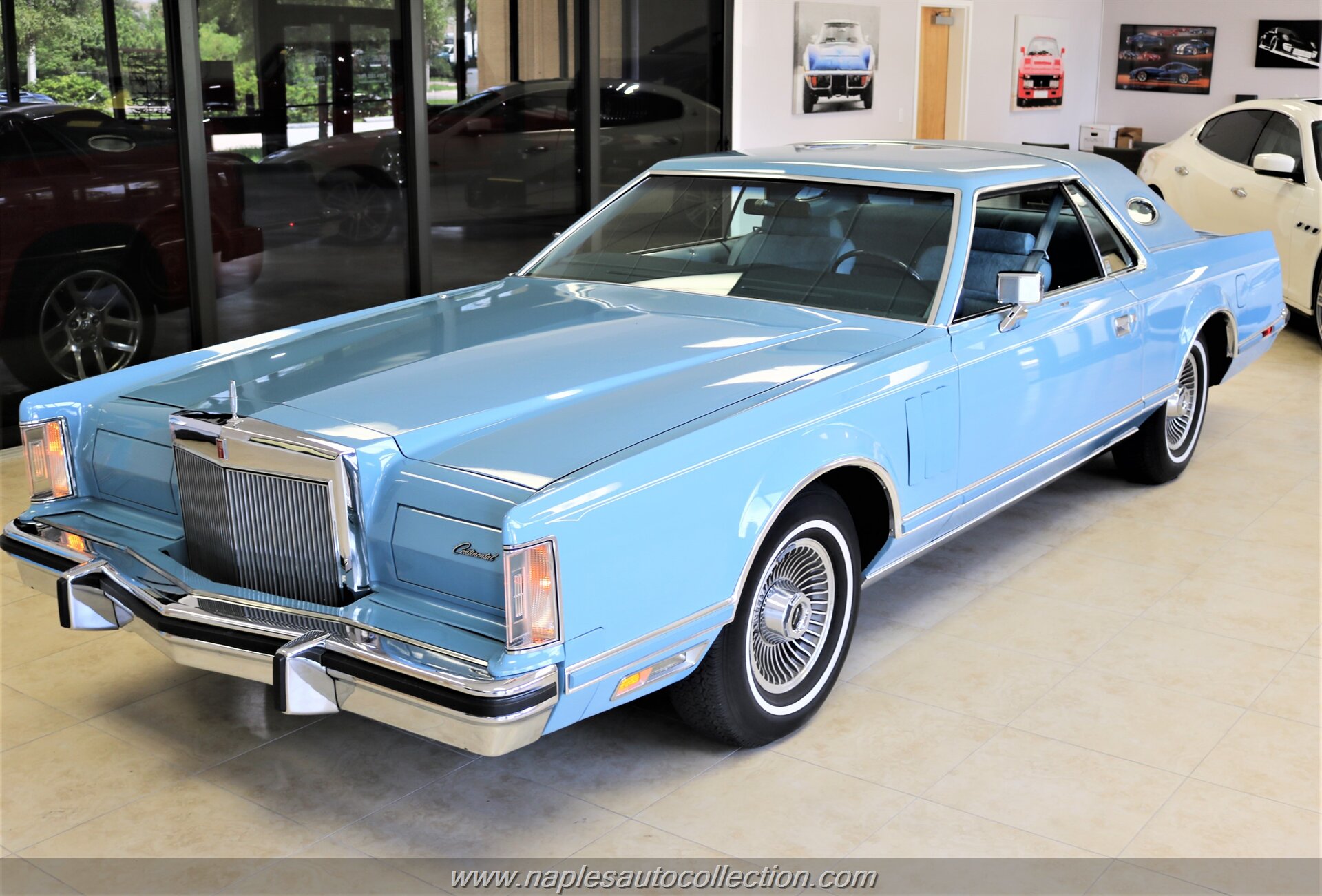
The Designer Series is the Mark V's signature feature and the part of the range that most rewards homework. Each year, four fashion houses each lent their name to a coordinated edition. The details changed year by year — which is exactly why verification matters — but the structure was constant: a designer-specific exterior colour or small set of colours, a matching or contrasting vinyl roof treatment, pinstriping, a distinctive interior in designer-specified colours and fabrics or leather, designer identification on the car (including, famously, the designer's signature worked into the opera window on Designer Series cars), and, on the Cartier edition, a Cartier clock in place of the standard clock. A genuine car is a coherent whole: paint, roof, stripes, interior, opera-window signature and trim codes all tell the same story, and the door data plate's trim and paint codes are the factory's own record of that story. A car that tells a mixed story — Designer interior in standard paint, a signature window on a car whose codes say otherwise, a Cartier badge without the rest of the package — is a car that has been assembled, retrimmed or resprayed into a claim it cannot support, and it should be priced as the standard car underneath until paperwork proves otherwise. None of this makes a standard car a bad buy. It makes an unverified Designer Series claim a bad reason to pay a premium.
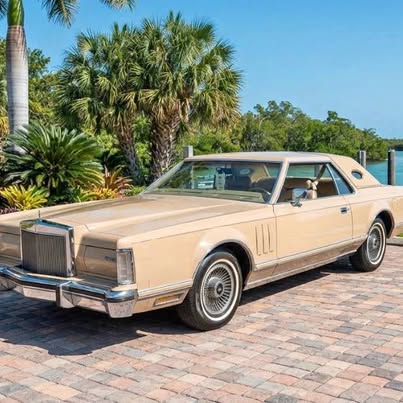
The Diamond Jubilee Edition (1978) marked Ford Motor Company's 75th anniversary and was offered on the Mark V (and the Thunderbird) as a heavily equipped special in two dedicated colours, most famously Diamond Blue and Ember Starfire, with a thick, padded vinyl roof treatment, distinctive striping, a leather interior with loose-pillow seats, and a long standard-equipment list that included many items optional elsewhere. Because the package was expensive when new, Diamond Jubilee cars tend to be loaded and — when they have survived in their original colours — recognisable at a glance. The same rule applies as with the Designer Series: the edition lives in its specific colour, roof, trim and codes together, not in a badge stuck on a gold or blue standard car. One of the cars in this site's own photo pool is presented as a 1978 Diamond Jubilee in gold, which is a useful prompt rather than a verdict: check any claimed Jubilee car against its codes and its full specification, not against its listing headline.
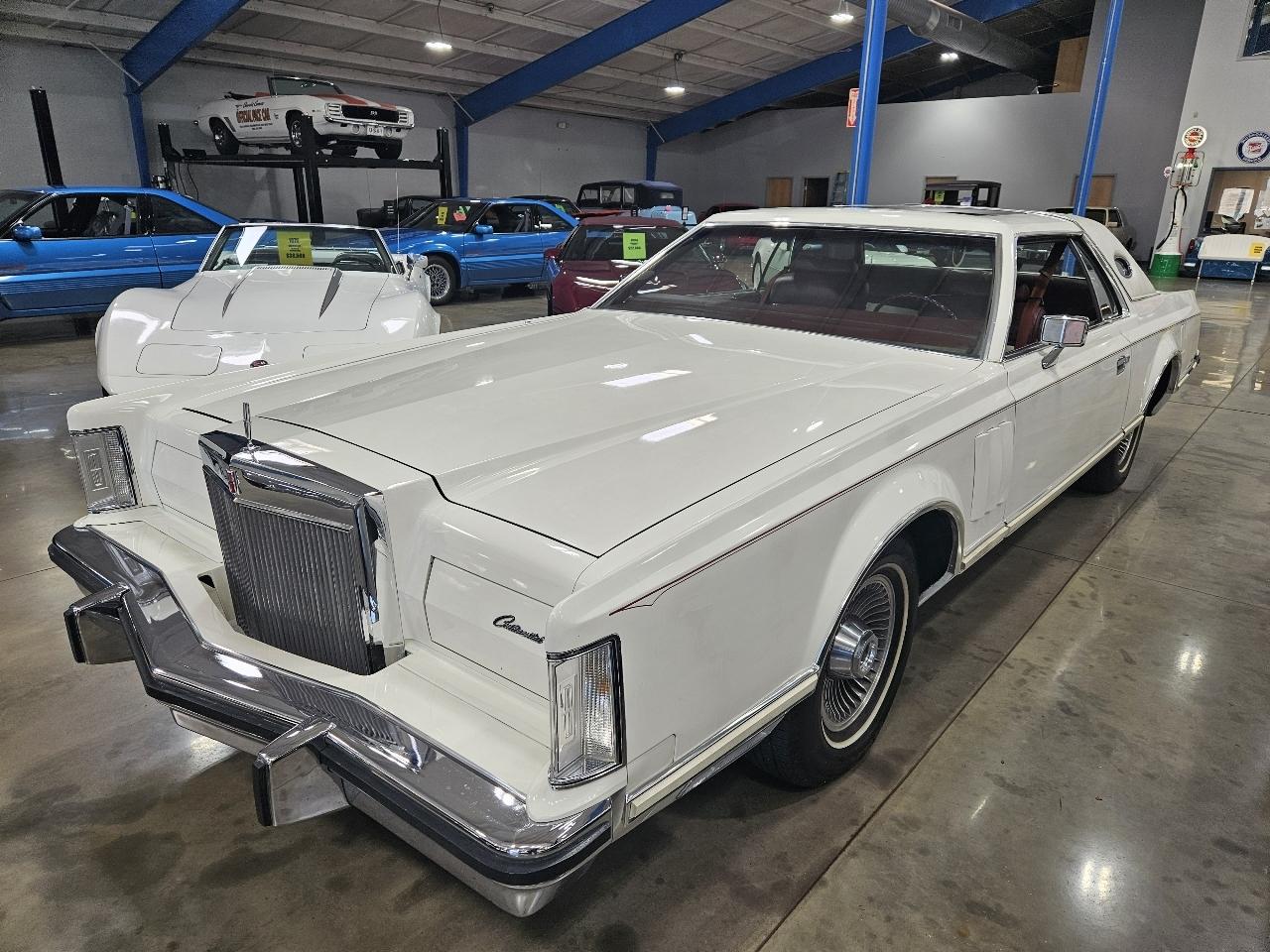
The Collector's Series (1979) closed the Mark V story. Offered for the final year in a very short list of colours — white and a dark blue metallic are the cars most often seen — it deleted the opera window in favour of a plain, padded C-pillar treatment on most cars, carried a leather interior, a distinctive grille treatment and a full load of equipment, and is generally regarded as the most desirable regular-production Mark V. That desirability cuts both ways: it is the edition most worth verifying carefully, because it is the one a seller gains most by claiming. A Collector's Series car should show its differences coherently — roof treatment, trim, colours and codes together.

What did not change across the range is just as useful to know. The body shell, frame, suspension, steering, brakes and C6 automatic are common to every Mark V; the parts and problem sections of this guide therefore apply across all three years and both engines except where a difference is called out. The differences that genuinely affect a purchase are the engine fitted, the edition claimed, the option load, and — above all — the individual car's condition and history. Two cars with the same badge can be further apart in value than a standard car and a Designer Series car in equal condition.

Engines and gearboxes
Both Mark V engines are big, iron-block, overhead-valve V8s tuned for silence and torque rather than power, strangled to varying degrees by the emissions equipment of their day, and fundamentally durable. Neither is a high-performance engine and neither should be judged as one. A healthy example of either starts promptly, idles almost inaudibly at low speed, pulls the car away without effort or drama, and cruises in near-silence. Smoke, rattles, hesitation and a lumpy idle are faults to be diagnosed, not character to be accepted — and on these engines most faults live in the fuel, ignition and emissions systems bolted to the engine, not in the engine itself. Learn to separate the two, because sellers habitually describe a carburettor or ignition fault as if it were the engine's personality, and price accordingly in whichever direction suits them.
The 460: the Lima V8
The 460-cubic-inch (7.5-litre) V8 belongs to Ford's 385-series engine family — the family enthusiasts call the Lima engines, after the Ohio plant where they were built. It is a big-block in everything but Ford's marketing language: a deep-skirt iron block, iron heads, a bore and stroke chosen for torque, hydraulic lifters, and a design that in earlier, pre-emissions form powered Lincolns and high-performance Fords with real authority. In the Mark V it was offered for 1977 and 1978 only, and in that application it made around 208–210 hp in period SAE net terms, with the figure that actually matters — torque, in the region of 350 lb-ft — arriving low in the rev range. On the road the 460 car feels exactly as the numbers suggest: it does not accelerate so much as gather way, effortlessly and almost silently, and it is the engine that suits the car's size and weight best. If your driving is American — distance, hills, air conditioning running, four people aboard — the 460 is the engine you want, and the market knows it.
Fuelling on the 460 Mark V is by a Motorcraft 4350 four-barrel carburettor, a spread-bore design built specifically for Ford's emissions-era big engines. The 4350 has a mixed reputation that is largely earned by age rather than by design. Its characteristic faults are a warped or leaking air-horn gasket surface after decades of heat cycles, a tired accelerator pump that gives a flat spot or a stumble pulling away, a choke that no longer pulls off correctly so the car idles rich and fast when warm, and vacuum leaks at its base and at the forest of small hoses around it. The distinguishing discipline is the same as on any carburetted car of the period: prove the ignition and the vacuum system first, measure before you condemn, and do not let anyone sell you a full carburettor rebuild as the cure for a perished $10 hose. A professional 4350 rebuild by someone who knows the model runs roughly $450–900; a replacement choke pull-off, accelerator-pump diaphragm or base gasket is a fraction of that, and a great many "carburettor cars" are cured at the fraction.
Ignition on both engines is Ford's DuraSpark electronic system — no points to set, which is good news — with its own known weakness: the DuraSpark ignition module, mounted where it absorbs engine-bay heat, fails with age and heat, classically as an intermittent cut-out or a no-start when hot that recovers when the car cools. A car that "sometimes just stops and then starts again later" is describing that symptom until proved otherwise; a spare module is cheap (roughly $40–90 for the part) and many experienced owners carry one in the trunk. Timing chains on the 460 deserve a specific mention. Ford used a nylon-toothed camshaft sprocket for quietness, and after forty-plus years the nylon hardens, cracks and sheds teeth, which retards the cam timing progressively and then, at the end, lets the chain jump. The early signs are a car that has gone gradually flat and thirsty for no obvious reason and ignition timing that will not sit where the book says. A steel timing set fitted as preventive work runs roughly $700–1,400 with labour, and documented replacement is a genuine selling point; an engine still on its original nylon set at high mileage or unknown history should have the job priced into your offer.
Exhaust manifolds on the 460 crack and their studs seize — a ticking on cold start that quietens as the manifold expands and seals itself is the classic announcement — and the emissions plumbing (Thermactor air injection, EGR, a thicket of vacuum hoses and thermal vacuum switches) is now old enough that its rubber and its plastic are failing as a system. Judge the system whole: a car whose smog equipment is complete and working is worth more, and is far easier to keep legal in states that test or inspect, than a car whose previous owner stripped it and threw the parts away. Reinstating missing emissions hardware can run from a few hundred dollars in hoses and valves to $1,500 or more hunting correct parts, before anyone tunes anything.
The 400: the 335-series V8
The 400-cubic-inch (6.6-litre) V8 belongs to Ford's 335-series family — the family that also produced the 351 Cleveland and 351M — and it is, in effect, a tall-deck, long-stroke member of that family built for torque and economy rather than revs. It was offered alongside the 460 in 1977 and 1978 and became the only Mark V engine for 1979. In Mark V tune it made roughly 159–173 hp net depending on year, with torque in the region of 315 lb-ft. Those figures read poorly next to the 460, and on the road the gap is real but narrower than the paper suggests around town, because both engines spend their lives at low revs and the 400's torque arrives early. Where the 400 car gives ground is at highway speed, on grades and fully loaded: it works harder, downshifts sooner and feels busier doing it. It is also the thriftier engine in relative terms — relative being the operative word in a car of this size — and the lighter engine over the front wheels.
The 400's fuelling is more modest than the 460's: a Motorcraft two-barrel carburettor (the 2150 family) on most applications, a simple and generally well-behaved unit whose age faults mirror the 4350's in miniature — accelerator-pump wear giving a pull-away stumble, choke faults giving rich running, and vacuum leaks at the base and hoses giving a wandering, lumpy idle that no idle-mixture adjustment will settle. A 2150 rebuild is cheaper than a 4350's, roughly $350–700 professionally done, and the same rule applies: hoses, vacuum and ignition first, carburettor last.
The 400 carries two engine-specific cautions that the 460 does not share to the same degree. The first is its reputation for cracked blocks in some 335-series castings of the mid-1970s — a foundry-related cracking issue in the lifter-valley area that affected certain 351M/400 blocks. Not every 400 has it, most Mark V engines have long since proved themselves by surviving, but on a 400 car with unexplained coolant loss, coolant in the oil or oil in the coolant and no head-gasket evidence to explain it, a cracked block belongs on the differential diagnosis, and a cooling-system pressure test plus an oil inspection is how you move it up or down that list. The second caution is the same timing-chain story as the 460, with the same nylon-toothed sprocket, the same gradual retardation and the same fix at similar money. Beyond those, the 400 shares the family's habits: hydraulic lifters that tick when the oil is old or the engine has sat (a tick that fades as pressure builds after a start is common on a stored car; a tick that stays at operating temperature is wear or low oil pressure and must be investigated), exhaust-manifold leaks announcing themselves as a cold tick, and a cooling system that must be in full health, because a two-barrel big car working hard on a summer grade will find any weakness in a radiator, fan clutch or hose that a gentler car would forgive.
On either engine, read the oil pressure and the temperature gauge as primary instruments, not decoration. These engines should show strong oil pressure, and a gauge that sits low at a hot idle with a mechanical rattle to match is an engine with bearing wear — an engine-out conversation in the $4,500–8,500 range for a proper rebuild, which on most Mark Vs exceeds what the car can carry financially. Blue smoke under load is rings and bore wear and belongs in the same conversation. Blue smoke only on start-up or on the overrun, fading as the car warms, points to valve-stem seals — a known, bounded job, roughly $600–1,200 depending on method and access, and not a reason on its own to reject an otherwise sound car. Learn that distinction before you view cars, because it is worth thousands of dollars in either direction.
Gearboxes: the Ford C6
Every Mark V ever built left the factory with Ford's C6 three-speed automatic. There are no exceptions to verify and no manual option to hunt for. The C6 is one of the strongest automatic transmissions Ford ever made — a heavy-duty, three-speed unit with a torque converter, used behind the biggest engines in the heaviest cars and trucks in the range — and in a Mark V that has had its fluid changed at sane intervals it is close to unbreakable in normal use. It should pull away smoothly in Drive, change up cleanly and firmly without flaring or shuddering, engage Reverse promptly, and hold the car on the converter without drama. Kickdown should be available on full throttle and should arrive as a decision, not a negotiation.
The faults to test for are the faults of age and neglect rather than design. Delayed engagement — a long pause, then a thump, when you select Drive or Reverse from cold — points to hardened seals inside the box, and it is the classic first symptom on a car that has sat. Flaring between gears, a shudder on the 2–3 change, or slipping under load points to worn clutches and bands. Any of those means a rebuild, roughly $2,200–3,800 at a transmission shop for removal, overhaul and refitting, and the C6's saving grace is that every competent automatic shop in America knows it and parts are cheap and plentiful. Fluid tells the truth cheaply: pull the transmission dipstick, and look for fluid that is red and clean-smelling rather than brown and burnt. Burnt fluid on a box that still drives well is a service overdue; burnt fluid on a box that flares or delays is a rebuild being announced. The vacuum modulator and its hose deserve a specific check, because a split modulator diaphragm lets the engine draw transmission fluid up the vacuum hose and burn it — presenting as white-ish exhaust smoke and a transmission fluid level that falls for no visible reason, two symptoms owners routinely misdiagnose as engine wear. The modulator itself is a $25–60 part and an hour's work; the test is to pull its vacuum hose and look for fluid inside it. There should be none.
Finally, set your expectations for gearing and economy correctly. The C6 has no overdrive and no lock-up converter, the rear-axle ratios are tall, and the car is shaped like a townhouse. Fuel consumption in the low-to-mid teens on a highway run and single figures around town is normal, correct behaviour for a healthy car, not a fault to be cured. A seller who promises twenty miles per gallon is selling; a buyer who expects it will be disappointed by a perfect car.
Problem areas
A Mark V fails in predictable places, and almost none of them are the engine's core or the gearbox's core. It fails at its edges: the body rusts where water is trapped by the very luxury trim that defines the car, the vacuum systems that operate its signature features perish hose by hose, the sheer weight and door length punish hinges and window mechanisms, the climate and electrical systems age into intermittency, and long storage turns every rubber component in the car into a recommissioning list. Work through this section system by system before you view a car, and take it with you when you do. As noted in the overview, rust was mentioned in the photo notes for both of the two cars on this site whose photo sets we have examined in detail — a sample of two proves no rate, but it points the same way as forty years of ownership experience: assume rust until the car proves otherwise, panel by panel.
Rust and the body: where the water sits
Rust on a Mark V follows the trim. The car was built in an era when a padded vinyl roof, heavy brightwork and sealed opera-window apertures were selling features, and each of them traps moisture against steel that was never protected to modern standards. Start where the damage is structural and work outward to where it is merely expensive.
The vinyl roof and the roof skin beneath it. This is the Mark V's signature rust trap and the check too many buyers skip because the roof "looks fine." The vinyl covering and its padding hold moisture against the roof skin, the C-pillars and the channels around the windshield and rear window, and the steel rusts underneath a covering that can look presentable while the metal below it is perforated. Feel the roof and pillars through the vinyl with your fingertips: a sound roof feels firm and smooth; a rusting roof feels crunchy, bubbled or soft in patches, particularly low on the C-pillars, around the opera window apertures and along the drip rails. Staining, lifting or bubbling of the vinyl itself is a symptom, not the disease. Putting a rusted roof right means stripping the vinyl, welding or replacing metal, refinishing and re-covering — realistically $2,500–6,000 depending on how far the rot has spread — which is why a crunchy roof on an otherwise attractive car is a price conversation, not a detailing job. On Collector's Series cars, with their padded plain C-pillar treatment, apply exactly the same test: the padding hides the same steel.
Opera windows and their surrounds. The oval opera window is set into the thick C-pillar, and its seal perishes and leaks into a pillar that has nowhere for the water to go. Look for paint bubbling around the window aperture, staining or damp on the interior sail-panel trim beside the rear seat, and a musty smell in the rear cabin. Water that has lived in the C-pillar also runs down into the rear quarter. A leaking seal caught early is a reseal; a pillar rotted through is fabrication. On Designer Series cars, remember that the designer's signature is worked into the opera window glass — replacement glass without the signature, on a car claimed to be an original Designer Series car, is a question about the car's history that deserves a straight answer.
Doors: bottoms, hinges and sheer weight. A Mark V door is enormous — long, heavy, and carrying a window, a regulator, a motor, a lock, speakers on many cars and a great deal of trim. Two failures follow. The door's bottom edge and lower skin rust where the drain holes block and the door holds water: run a fingertip along the bottom edge of each open door, feel for bubbling under the paint, and check that the drain slots are present and clear. And the hinges wear and sag under the door's weight, so the door drops, the latch strikes badly, the door needs a lift-and-slam to close and the rear edge of the door sits low against the quarter panel. Test it by lifting the open door gently at its rear edge: movement at the hinges is wear you can feel. Hinge pins and bushings are cheap parts; the labour, realignment and the paint damage a sagging door does to the sill and striker area are the real cost, typically $300–800 a side done properly, more if the door or quarter has been damaged by years of forced closing. A door that has dropped far enough to wear through paint and bend metal is telling you the car has been used hard in this one specific way for a long time.
Lower quarters, wheel arches, sills and floors. The standard big-Ford map applies, enlarged. The lower rear quarters behind the wheels trap road dirt and rot from inside; the wheel-arch lips bubble where the inner and outer skins meet; the sills and rocker panels — partly hidden by bright trim on many cars — rust along their length and at the jacking areas; and the floor pans and trunk floor collect whatever water the windshield, rear-window and trunk seals have let in. Lift the carpets where the seller permits it, lift the trunk mat and the spare wheel without exception, and press hard along the sills rather than admiring them. Floor and trunk staining is a clean-and-treat job; perforation is panel work, roughly $800–2,000 per major panel fitted and painted, and it rarely travels alone. Treat any one perforated panel as a reason to look harder at all the others, not as an isolated bargain point.
Frame and underside. The Mark V's separate frame is massively built and is not a habitual rotter in the way a unit-body car's rails can be, but frame rust is not unknown — particularly surface-to-structural corrosion on cars from salt states, around body mounts, and at the rear of the frame where road spray collects. This is why the lift inspection recommended later is not optional on a car you intend to keep: body mounts that have perished or a frame section that has thinned change the car's feel and its repair bill entirely. Read the underside coating as you would on any old car. Honest factory protection and forty years of patchiness look untidy and are reassuring. A uniform coat of fresh black underseal blown over everything the week before the sale — seams, mounts, brake lines and all — is a cover-up until the seller proves otherwise, because nobody re-underseals a sound underside as a favour to the next owner.
Brightwork and bumpers. The chrome and aluminium trim on a Mark V is extensive, and its condition is a budget item in its own right. The energy-absorbing bumpers carry aluminium and chrome surfaces that pit and peel; the grille, headlamp doors, window surrounds and side trim all pit with age and exposure. Re-plating and refinishing brightwork is priced by the piece and adds up with frightening speed — a full cosmetic refresh of tired brightwork can run into several thousand dollars — so count the bad pieces during your inspection and price them, rather than filing chrome under "cosmetics" and discovering the bill later.
Hidden headlamps and the vacuum systems
If the body is the Mark V's structural risk, vacuum is its functional one. Ford operated the car's signature features with engine vacuum stored in reservoirs and distributed through a network of small rubber hoses, vacuum motors, check valves and switches. When the car was new the system was silent and reliable. At forty-five years old, every hose in it is a suspect.
The hidden headlamps are the test everyone knows and too many people perform wrongly. The headlamp doors should open promptly and together when the lamps are switched on, close when they are switched off, and — the critical part — stay closed when the car is parked with the engine off. The mechanism is vacuum-held: engine vacuum, stored in a reservoir with a check valve, works vacuum motors at each headlamp door against spring pressure. The failure logic follows directly from that design, and it gives you a diagnostic ladder. Doors that open unevenly, slowly or one at a time point to a perished hose, a leaking vacuum motor diaphragm or a sticking pivot on the lazy side. Doors that open correctly with the engine running but creep open overnight — the car "winking" or sitting with its eyes open in the morning — point to the storage side of the system: the reservoir, its check valve or a slow leak anywhere in the circuit, because the doors default towards open as vacuum decays. Doors that will not open at all with a healthy engine point to a major leak, a disconnected or collapsed hose, or seized pivots. There is a manual override provision for raising the doors when the system fails, described in the owner's literature — a car whose doors have plainly been forced or propped has been owned by someone who fixed symptoms, and you should wonder what else they fixed that way. Repair costs scale with the diagnosis: hoses and a check valve are $50–200 in parts and an afternoon; a vacuum motor is roughly $150–350 a side sourced and fitted; the expensive version is an afternoon of your life tracing a leak through a system a previous owner has "improved" by rerouting hoses at random. Before any of it, do the cheap test: with the engine idling, listen. A hiss under the dash or in the engine bay is a vacuum leak announcing its neighbourhood.
The climate control system is the second vacuum consumer and the more expensive one to live with when it fails. The Mark V's automatic temperature control uses vacuum to operate the blend and mode doors inside a dashboard-mounted heater and air-conditioning case, governed by a control head and sensors that were sophisticated for 1977 and are unforgiving of neglect now. The characteristic failures are air delivered to the wrong outlets (defrost when you asked for face-level, or everything to the screen regardless of setting), a system stuck on full heat or full cold, and a blower that works on some settings and not others. The mechanisms separate cleanly if you test in order: vacuum supply first (hoses, reservoir, check valve — shared with the headlamp system, which is why vacuum faults often arrive in pairs), then the vacuum motors and door linkages inside the case, then the control head and its sensors. A vacuum motor or a control-head fault is a few hundred dollars; a fault that requires the dash to come apart to reach the case runs $1,200–2,800 with labour, because the part is rarely the bill — the access is. Test the climate system on every viewing, on every setting, hot and cold, whatever the weather on the day. A seller who tells you the air conditioning "just needs a charge" is describing a system that leaks: a correct charge in a sealed system does not go anywhere. Budget a leak diagnosis and repair — hoses, seals, a compressor or a condenser as found — at $600–2,000 on top of any recharge, and treat working, cold, correctly-distributing climate control as the genuine selling point it is.
The rest of the vacuum parish — cruise control, power door locks on vacuum-assisted components where fitted, the parking-brake release that lets go automatically when the car is put in gear, and the engine's own emissions vacuum circuits — all draw on the same ageing hose stock. No single one is a major bill. Together they are the reason a Mark V that has had its engine bay re-hosed systematically, with correct hose and correct routing, is worth more than one that has not: the job is $150–400 in materials and a long day, and it cures a dozen symptoms at once.
Suspension, steering and brakes
The chassis hardware is conventional, strong and cheap in parts — and punished by the car's weight and by decades of sitting. Front coil springs sag, so the nose drops and the car takes a permanent slight dive; read the stance from the side before you read anything else, and compare arch-to-tyre clearances corner to corner. Shock absorbers on a car of this weight and age should be assumed tired unless documented recent; a full set fitted is roughly $400–800 and transforms the car, so it is recommissioning money, not a negotiating weapon. Bushes throughout the front suspension and the rear axle's locating arms perish and split, giving knocks, wander and a rear end that steers the car over bumps. None of it is exotic and all of it is available, but a full bush refresh with alignment runs $800–1,800 with labour, and it belongs in your first-year budget for any undocumented car.
Steering on a Mark V is power-assisted, recirculating-ball, and deliberately light and low-geared. Judge it against its own standard, not a modern car's: some free play at the straight-ahead and very low effort are correct. What is not correct is notchiness, groaning from the pump, a heavy patch in the travel, or play so excessive the car must be herded. The wear points are the idler arm, the centre link joints, the steering box itself and a rag joint that perishes. A steering box rebuild or exchange unit runs roughly $450–900 fitted; linkage parts are inexpensive; a pump is a few hundred dollars. On the test drive, the car should track straight on a level road with your hands light on the wheel — a car that pulls is showing you alignment, a dragging brake or a tyre fault, and each of those has its own price.
Brakes are power-assisted front discs with rear drums on the majority of cars, and the system's age faults are the standard hydraulic list made heavier by the car's mass: seized or dragging calipers, perished flexible hoses, a tired master cylinder, corroded hard lines — inspect these with particular care on salt-state cars, because a burst line on a two-and-a-half-ton car is not a small event — and rear drum hardware that has not been touched in decades. A full hydraulic refresh with calipers, hoses, master cylinder and rear hardware runs roughly $900–2,000 with labour. Judge the discs for a rust band and a lip if the car has stood, test the parking brake on a slope (it is a separate mechanism and its cables seize), and treat any car that pulls, pulses or needs a second push of the pedal as a car whose brake bill is already written. Four-wheel disc brakes were available in the period on Lincolns and appear on some cars; verify what a given car actually has rather than assuming, and price rear discs' scarcer parts accordingly if fitted.
Tyres deserve their own sentence in a section about weight: a Mark V should sit on correctly load-rated tyres of the right size, in date. Old, cracked or under-rated tyres on a car this heavy are a safety defect, not a saving — budget roughly $700–1,200 for a correct new set and check the date codes on any car presented as "ready to drive."
Interior, electrics and the cost of luxury
The cabin is where a Mark V makes its case and where deferred costs hide in plain sight, because almost everything in it is powered, padded or both.
Seats and trim. The standard seats are vast, soft and trimmed in vinyl, cloth or leather depending on specification and edition, with leather the most desirable and the most perishable. Leather that has been fed and garaged survives beautifully; leather that has dried cracks at the bolsters and splits along the seams, and the loose-pillow Designer and Collector's Series seats show wear early because you sit in the pillow, not on it. Foam and padding collapse with age and use, the driver's cushion first — sit in the driver's seat, always, because it is the one that prices the retrim. A professional repair of one seat's covering and padding runs roughly $500–1,200; a full leather retrim of the interior to a proper standard runs well into five figures, which is why an original, supple, uncracked interior is the single most valuable cosmetic asset a Mark V can have. Headlinings sag, carpets fade and wear at the driver's heel, and the simulated or real wood and bright trim inserts lift and crack — all priceable, none cheap in aggregate.
Power windows and locks. Every window is powered, the mechanisms carry very large pieces of glass, and the regulators and motors wear accordingly. The classic Mark V window fault is a window that drops, sticks, tilts or refuses — caused, in ascending order of cost, by perished plastic regulator rollers and guides (cheap parts, fiddly labour), a worn regulator, or a tired motor. Test every window through its full travel, twice, and listen: a motor straining against a binding regulator is a motor you will also be buying. Figure $250–600 per door for regulator and motor work done professionally. The vent windows and their seals on cars so equipped, the power seat mechanisms (which share the era's motor, transmission and cable-drive failure modes — a seat that moves in some directions and not others is usually the drive, not the switch), and the power door locks all get the same instruction: test every function, in every direction, and price every failure you find, because "they all just need attention" is how a $2,000 electrical bill introduces itself.
Instruments, clock and audio. The Cartier clock fitted to Cartier Designer Series cars is a famous detail and a famous failure: quartz and mechanical-era clocks alike stop, and a stopped clock on a claimed Cartier car is a small but real verification point — the right clock should at least be present and correct, working or not. Gauges and warning lights on these cars are generally honest; a fuel gauge that misreads is usually the sender in the tank, and an ammeter or temperature gauge telling an unwelcome story should be believed until a mechanical gauge proves it wrong. Period radios and 8-track players are part of the car's originality and are repairable by specialists; a modern head unit cut into the dash is a deduction on an originality-led car and a convenience on a driver — decide which kind of buyer you are before it becomes an argument.
Wiring and switches in general. Fifty-year-old Ford wiring fails at connectors, grounds and switches rather than in the middle of looms. Intermittent accessories, dim lamps, a blower with a mind of its own and windows that work from one switch and not the other are connector-and-ground faults nine times out of ten: tedious to trace, cheap in parts, expensive only if you pay a shop by the hour to hunt. A car in which every electrical function works — every window, every seat direction, locks, lamps, wipers, washers, horn, cruise, climate — has almost always been a car in continuous, cared-for use, and that is the best single predictor of a Mark V that will behave. Weight it accordingly.
How to inspect one
Allow at least an hour with the car, in daylight, and bring a torch, a thin cloth for the dipsticks, and a magnet wrapped in tape for the lower panels. If the car passes your inspection, pay for a professional lift inspection before money changes hands — on a car of this size and age, with a frame, body mounts and brake lines you cannot judge from the kerb, it is the best money in the whole purchase.
- Start with the paperwork and the plates. Match the VIN on the title to the plate on the car, and read the door data plate for the paint and trim codes. Decide now what the car claims to be — standard, Designer Series, Diamond Jubilee or Collector's Series — and write down what the codes say before anyone tells you a story. The codes, the colours and the trim together settle the edition question raised in the models section; a mismatch here colours everything that follows.
- Cold start, engine cold to the touch. Insist on it. The car should start promptly, settle to a quiet idle, and show no blue smoke beyond a brief puff. Listen for a cold exhaust tick that fades as things warm (manifold, from the engines section), a timing-chain rattle, and lifter tick that should fade as oil pressure builds. Watch the oil-pressure and temperature gauges as it warms and believe what they tell you.
- The fluids tell. Pull the engine dipstick: oil that is thin, overfull and petrol-smelling points to carburettor flooding washing fuel past the rings; milky oil or coolant loss with no external leak raises the head-gasket — and, on a 400, the cracked-block — questions from the engines section. Pull the transmission dipstick too: red and clean is a serviced C6, brown and burnt-smelling is a bill being announced. Check the coolant's colour and the radiator's condition while the cap is safe to open.
- The roof, the pillars and the opera windows. Before the shiny panels, do the rust section's first test: feel the vinyl roof and C-pillars through the covering for crunch, bubbles or softness, look for bubbling around the opera window apertures, and check the interior sail panels for damp staining. A crunchy roof re-prices the car on the spot.
- Doors, sills, quarters and floors. Open each door and lift its rear edge gently to feel for hinge wear; check that it closes without a lift or a slam. Run a fingertip along each door's bottom edge for bubbling and confirm the drain slots are clear. Press hard along both sills, work the magnet over the lower quarters and arch lips, and lift the carpets where permitted. Then the trunk: mat up, spare wheel out, and look hard at the floor and well corners.
- The headlamp test, done properly. With the engine running, switch the lamps on: both doors should open promptly and together. Switch off and confirm they close. Then switch the engine off, leave the car while you do the rest of the inspection, and look again before you leave — doors that have crept open while parked have failed the reservoir and check-valve test from the problem areas, and that failure is a system diagnosis, not a quirk.
- Climate on every setting. Run the climate control through cold, hot, face, floor and defrost, and the blower on every speed, whatever the weather. Air arriving at the wrong outlets, heat that will not modulate, or a system stuck at one extreme is the vacuum-and-control-head ladder from the problem areas — and remember that "just needs a charge" means it leaks.
- Every electrical function, without exception. Every window through its full travel twice, the power seat in every direction, locks, wipers and washers, horn, lamps inside and out, cruise control if you can test it on the drive, radio, and the clock — including whether a claimed Cartier car carries the correct Cartier clock. Price each failure as you find it; they add up faster than any other list on this car.
- Underneath, or on a lift if you can arrange it. Torch along the frame, the body mounts, the brake and fuel lines, the floor and trunk undersides, and the rear of the frame where spray collects. Read the underseal as the rust section describes: honest and patchy reassures; a fresh uniform coat over everything asks a question the seller must answer.
- The test drive, at least twenty minutes. Include town work, a highway stretch and a hill if you can find one. The C6 should engage promptly, change cleanly without flare or shudder, and kick down decisively. The car should track straight hands-light, stop straight without pull or pulse, and pull without hesitation, flat spots or smoke. Note the stance and ride: a nose-down sit, knocks over bumps or a rear end that steers are the suspension findings from the problem areas, priced before you offer.
- Heat-soak restart. Back at base, switch off, wait five minutes, and restart. A hot no-start or cut-out history points to the DuraSpark module behaviour described in the engines section; a car that restarts cleanly hot, idles steadily and shows stable temperature and oil pressure has passed the test that stored cars most often fail.
- Interior last, from the driver's seat. Sit where the wear lives. Feel for collapsed padding, check the leather or trim for cracking at the bolsters and seams, look up at the headlining, and weigh what you find heavily — as the problem areas explain, the interior is the most expensive cosmetic system on the car to put right properly, and the hardest to fake.
Values
Read the Mark V market as a condition market first and a badge market second. The computed figures in the market block that accompanies this guide — what is listed now, and what recorded sales have achieved — are the numbers to work from, and this section's job is to teach you how to read them, because on a Mark V the spread between the cheapest and the dearest car wearing the same badge is enormous, and it is almost entirely explained by condition, originality and verification rather than by model year.
Start with the condition spread, which on this car is wider than on most classics of its era. At the bottom sit the stored, rusty and incomplete cars: vehicles that look like a Mark V in a photograph and are, in substance, a body-repair programme, a vacuum-system rebuild, a brake overhaul and an interior retrim waiting to be paid for in sequence. At the top sit the low-mileage, original, garaged cars with their paint, roof, trim and edition details intact and their systems working. The gap between those two poles is not a discount for cosmetics. It is the honest price of the work described in the problem areas, and the market — asking prices and achieved prices alike — reflects it faithfully when you compare like with like. Never average the two poles together and call the result the car's value.
Within that spread, the premiums attach in a predictable order. A verified special edition in its correct colours and trim — a Designer Series car whose codes, paint, roof, interior and opera-window details agree, a Diamond Jubilee in its proper specification, a Collector's Series that checks out — carries a real premium over a standard car in the same condition, because the editions are a minority of production and the correct details cannot be recreated economically. The 460 engine carries a premium over the 400 in the years where both were offered, reflecting how the cars drive rather than any difference in durability. Originality carries a premium of its own: original paint that presents well, an original uncracked interior and complete, working emissions and vacuum systems are worth more than the same items renewed, because renewal to the same standard costs more than the premium. Mileage, by contrast, is a weak signal on its own — a higher-mileage car in continuous use routinely outsells, and should outsell, a low-mileage car recommissioned from a long sleep, because the market has learned what recommissioning costs.
Asking prices and achieved prices are different animals on Mark Vs, and the gap is itself information. These are large, unfashionable-in-the-mainstream cars with a devoted but narrow buyer pool, so sellers test the market and wait, and the recorded-sales evidence that accompanies this guide is the corrective to the optimism of the listings. A car that has sat listed for a long season at an ambitious figure is telling you the market has already voted. Conversely, correctly priced good cars — the verified editions, the honest 460 cars, the original interiors — move without drama, because the buyers for them know exactly what they are looking at and how rarely it appears.
The project-versus-driver calculation deserves its own paragraph, because it is where Mark V buyers most often deceive themselves. A project car is cheap to buy and expensive to own in a specific, predictable order: body and roof first, hydraulics and recommissioning second, vacuum and climate third, interior last and largest. A driver-quality car that needs nothing structural costs more on the day and less in every year that follows. Unless you weld, or have a trusted shop and a realistic budget for the sequence above, the driver is the value buy even when its headline figure looks high against the project row of the listings — compare totals over two years of ownership, not prices on the day.
Finally, negotiate from evidence, not from enthusiasm. The inspection findings in this guide each carry a cost range, and a seller presented with a crunchy roof, creeping headlamp doors and a burnt-smelling transmission dipstick is being presented with arithmetic, not insult. Cars priced as if those findings did not exist can be negotiated to where the findings say they belong — or left for a buyer who has not done the inspection. Either outcome is the market working as it should.
Parts and ownership
The Mark V sits in the happiest parts territory an American classic can occupy: it was built in large numbers, it shares its mechanical core with the high-volume Ford and Lincoln ranges of its day, and the American aftermarket and the Lincoln specialist trade both support it actively. The mechanical car is easy to keep. The trim and edition-specific car requires patience. Price your ownership expectations accordingly.
Easy and inexpensive: engine service items for both the 460 and the 400 — filters, plugs, belts, hoses, water pumps, starters and alternators — along with DuraSpark ignition components, carburettor rebuild kits for both the Motorcraft 4350 and the 2150, C6 service and overhaul parts (every automatic shop in the country knows this gearbox), brake hydraulics and friction parts, suspension wear items, shock absorbers, steering linkage parts and tyres in the correct size and load rating. Most of it is order-today, fit-this-weekend, at prices close to modern-car money, and much of it is shared with the contemporary Ford truck and full-size ranges, which keeps it that way.
Available, at a price: vacuum motors, reservoirs and control components for the headlamp and climate systems; climate control heads and sensors, where rebuilt and exchange units circulate among specialists; window regulators, motors and the small plastic rollers and guides whose failure mimics bigger faults; power seat drive components; exhaust systems and manifolds; and good used body panels, which still surface because so many cars were built and so many have been parted out. None of this is unobtainable, but it rewards joining the owner community and learning which Lincoln specialists break cars and rebuild units, rather than expecting a single catalogue to hold everything.
Hard, and priced like it: correct Designer Series and special-edition trim — the specific fabrics, leathers, stripes and badges in the right colours for the right year — along with signature opera window glass, a correct Cartier clock, unmarked brightwork and bumper surfaces, and any vinyl-roof or padded-roof work done to a standard that matches the factory's. This is the layer where originality lives, and it is why the values section weights an intact original interior and roof so heavily: you cannot buy your way back to them at any sensible price once they are gone.
Running costs and the first year. A sorted Mark V is a realistic regular-use classic within the limits of its size and thirst: fuel consumption is heavy by any modern standard and should be budgeted as a cost of the experience, servicing is within the ability of any good independent shop familiar with American cars of the period, and insurance for agreed-value classic use is generally straightforward. The budget line that catches new owners is the same one this guide has returned to throughout — the first year of catching up. Recommissioning a car that has sat, properly and in the right order (fuel system cleaned end to end, every brake component inspected, all fluids, hoses, belts and tyres renewed, vacuum hoses replaced as a system), runs into the low thousands at a shop before you improve anything at all, and a car in continuous use with deferred small jobs will absorb a similar catch-up sum more gently. Buy the car that has been used over the car that has been asleep, keep on top of the vacuum hoses and the vinyl roof's condition, grease and inspect on schedule, and the big Lincoln will repay you by simply working — which, for a car of this ambition and age, is the whole prize.
Which one to buy
- The all-rounder: a 1978 car with the 460. The middle year keeps the big engine, avoids the first-year premium and the last-year compromise, and offers the deepest pool of good cars to choose from. In honest, verified, driver condition this is the Mark V most buyers should be hunting.
- The purist's car: a 1977 460. The first year and the least strangled tune of the big engine, in the crispest form of the design. Buy on condition and roof soundness, not on year alone — a rusty 1977 is still a rusty car.
- The collector car: a verified Collector's Series (1979) or Diamond Jubilee (1978). The editions carry the premiums because they earn them — but only when the codes, colours, roof, trim and details agree. Verification is not a formality on these cars; it is the purchase.
- The designer statement: a genuine Designer Series car in its correct scheme. Cartier, Givenchy, Pucci or Bill Blass — pick the scheme you love, then verify it like a Collector's Series and insist on the opera-window and trim details being right. A correct car is a piece of 1970s design history; an assembled one is a standard car with a story.
- The value buy: a sound 400 car, honestly described. The 400 gives up highway ease, not durability or presence, and standard cars with the smaller engine are consistently the cheapest route into a good Mark V. A well-kept 400 car beats a tired 460 car on every measure except bragging rights.
- The car to avoid at any badge: the crunchy-roofed, long-stored project without paperwork. Whatever edition it claims to be, the repair sequence in the problem areas will cost more than the finished car returns. Projects belong to welders and the patient, priced as projects.
And the rule that overrides all of the above: buy the least rusty, most original, most continuously used car you can find, in the specification you can live with. Engines, gearboxes, vacuum systems and brakes are all fixable at prices you can plan for. A rotted roof and pillars, a fabricated edition and a collapsed interior are the three things about a Mark V that money cannot put back to original — and they are the three things your inspection is designed to catch before your money does.
See the 1 Mark V Cartier edition cars currently listed.
For sale now
 $14,500 · 3% below typical
Expand
What they sell for: Mark V Cartier edition sale prices.