
Mercedes-Benz S-Class buyer's guide
Mercedes-Benz S-Class -- the model's own buyer's guide: variants, values and what to check.
Years listed: 1981-1992 · Series: W126
Overview and history
The 500SEL is two cars wearing one badge, and the first job of this guide is to keep them separate in your mind, because they share almost nothing except a name, a 5.0-litre V8, and the long-wheelbase sedan body both were sold in.
The first — and by far the more numerous — is the W126 500SEL, built from 1980 to 1991. The W126 S-Class was unveiled at the Frankfurt show in September 1979 as the successor to the W116, styled under Bruno Sacco and engineered around Béla Barényi's safety-cell principles: a rigid passenger cage, carefully deformable front and rear structures, and an offset-collision performance that was designed in from the first drawing rather than patched in later. It was the car that turned "S-Class" into a generic word for a flagship sedan, and it stayed in production for twelve years because Mercedes had got the fundamentals so completely right. The 500SEL sat at or near the top of that range for most of its life: the 5.0-litre M117 V8 in the long-wheelbase SEL shell, sold on every continent, and in period the default choice of anyone who wanted the best sedan money could buy and did not care to discuss it.
The second is the W140 500SEL, built from 1991 to 1993. The W140 was the W126's successor — bigger, heavier, quieter, and engineered with an almost defiant disregard for cost at exactly the moment the market stopped rewarding that. Its 5.0-litre engine is the M119, a completely different, four-cam, 32-valve V8, and its badge lasted only two American model years before Mercedes renamed the car S500 for 1994. A 1992 or 1993 500SEL is therefore not a late W126 with a facelift. It is the opening chapter of a different book, with different strengths, different failure modes, and a very different ownership proposition.
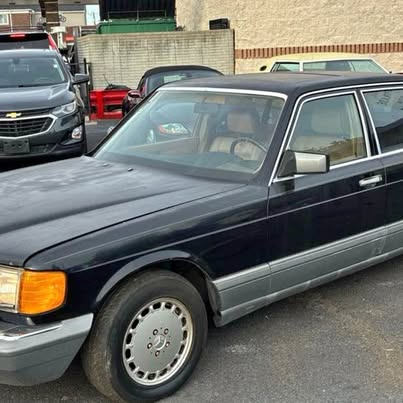
The SEL letters matter on both cars. The L denotes the long-wheelbase body: on the W126 it adds 140 mm — about five and a half inches — to the standard car's wheelbase, every millimetre of it visible in the rear doors and rear legroom. Stand beside any SEL and read the proportions before you read anything else: the rear door is longer than the front. That single observation separates a genuine SEL from a short-wheelbase SE wearing optimistic badges, and on the W126 it also separates the car Mercedes officially sold in America from the 500SE, which was a European-market model that reached the United States only as a grey import.
The American story of the W126 car needs care, because it is shorter than the European one. Mercedes-Benz of North America sold the 500SEL officially for the 1984 and 1985 model years only. For 1986 the flagship was enlarged and renamed: the 560SEL took over at the top of the US range and held the position until W126 production ended in 1991. In Europe, by contrast, the 500SEL was never dropped — it was refreshed along with the rest of the range in the autumn of 1985 and built, in improved Series 2 form, all the way to 1991. The practical consequence for an American buyer today is this: a 1984 or 1985 500SEL is almost certainly an official US-market car, while a 1986-onwards 500SEL is almost certainly a European-market car that crossed the Atlantic privately — as a grey import in period, or as a straightforward used import once it passed the 25-year exemption. Neither origin is a defect. They are different specifications, with different power outputs, different emissions equipment, and different paperwork, and you need to know which one you are standing in front of before any other judgement makes sense.
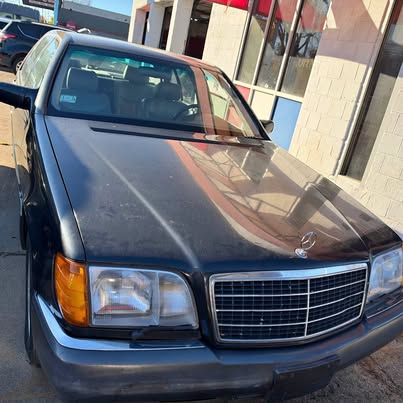
Our own listings for this model are a small but honest illustration of exactly that split: the cars we track span 1985 to 1992 and divide between W126s — including a 1985 car in Classic White and a black 1986 — and a single black 1992 car that is a W140. Three of the four sit in private, Marketplace-style hands rather than dealer stock, which is where these cars live now. The newest W126 is thirty-five years old; the W140s are past thirty. Every 500SEL you will ever inspect is an old car with an old car's needs, and it should be bought on condition, history, and the state of a known list of systems — all of which this guide works through — never on the badge alone.
What justifies the effort, on the W126 especially, is how good the best examples still are. The M117 V8 is among the most durable petrol engines Mercedes ever built. The body was protected to a standard earlier generations never enjoyed. The interior was made from thick leather, real veneer, and deep carpet that age honestly: a garaged car still feels expensive, and a neglected one cannot hide it. The W140 adds a further layer of refinement and the superb M119 engine, at the price of a further layer of complexity that this guide will not minimise. A good example of either car is a genuinely usable classic that will cross a continent in silence. A bad one is an expensive education. The distance between the two is the subject of everything that follows.

The models
There is one badge here but, in effect, three distinct cars: the first-series W126, the second-series W126, and the W140. The table below is the map. Everything after it is the detail you need to place a specific car on that map.
| Model | Years | Engine | Output | Built | Character |
|---|---|---|---|---|---|
| 500SEL (W126, Series 1) | 1980–1985 | M117.963, 4,973 cc V8, K-Jetronic | 240 hp DIN (Europe); 184 hp SAE net (US) | Part of 72,733 W126 500SELs in total | The original flagship: smooth cladding, deep bumpers on US cars, the purest Sacco lines |
| 500SEL (W126, Series 2) | 1985–1991 (Europe) | M117.965, 4,973 cc V8, KE-Jetronic | 245 hp with catalyst; up to 265 hp without | Part of 72,733 W126 500SELs in total | The improved car: ribbed lower cladding, better economy and driveability, never officially sold in the US |
| 500SEL (W140) | 1991–1993 | M119.970, 4,973 cc V8, LH-Jetronic | 322 hp SAE net (US); 326 hp DIN (Europe) | Not reliably published separately from S500 production | The technological flagship: four-cam engine, double glazing, soft-close doors, and complexity to match |
(Production total is the commonly quoted Daimler figure for the W126 500SEL across both series and all markets. Outputs are period figures — DIN for European cars, SAE net for US cars — and the gap between the two W126 columns is mostly real: lower compression and full emissions equipment cost the US car a great deal of power.)
The Series 1 W126 car, built from the start of production to the autumn of 1985, is the 500SEL in its original form. The styling is the cleanest the W126 ever wore: smooth lower-body cladding in a contrasting grey, slim rubbing strips, and — on European cars — neat, shallow bumpers. American cars are instantly recognisable and look considerably heavier, because they are: federal bumpers front and rear, sealed-beam headlamps in place of the European glass-lens units, and large amber side markers. Under the bonnet is the M117.963 with Bosch K-Jetronic mechanical fuel injection. European cars made a genuine 240 hp and were fast by the standards of 1980 — Mercedes quoted a top speed around 225 km/h. The US car, strangled to 184 hp by an 8.0:1-style low-compression tune, catalysts and air injection, is a noticeably lazier device. It is still smooth, still torquey, and still entirely adequate — but anyone who tells you a US 1984 500SEL feels like a 240 hp car has not driven the European one.
The Series 2 car arrived with the range-wide W126 refresh in the autumn of 1985, for the 1986 European model year. The visual tells are the ribbed, deeper lower cladding — the so-called "Sacco panels" in their second form — flush door handles, revised bumpers, and, inside, updated seats, a redesigned centre console, and improved switchgear. The engine became the M117.965 with KE-Jetronic, an electronically trimmed development of the mechanical system, and Mercedes offered it in two states of tune: a catalyst version at 245 hp and a non-catalyst RUF version at up to 265 hp, the most powerful 500SEL ever built. These are the best-driving W126 500SELs of all. They are also, for an American buyer, the paperwork cars: every one in the United States arrived outside the official channel. A period grey import should carry evidence of federalisation — the conversion work done to lights, bumpers, emissions and instruments on entry — and a later import under the 25-year rule should carry its customs and title trail. Gaps in that trail are not a reason to walk away from a good car, but they are a reason to price the risk and to check the VIN against the data card before money moves, because the badge on a W126 boot lid is held on by adhesive and proves nothing.
The W140 500SEL is a clean break. Sold in the United States for the 1992 and 1993 model years, it is longer, wider, and roughly 300 kg heavier than the W126 it replaced, and it was specified like a concept car that had escaped: double-glazed side windows, doors and boot lid that pull themselves shut on their latches, a cabin filter, parking-assist poles on early cars and then sensors, and an options list that ran to a refrigerator and a fax machine. Its M119 engine — four camshafts, 32 valves, variable inlet cam timing — produced 322 hp in US form and restored the performance the badge had promised since 1980, this time with federal blessing. For 1994 Mercedes inverted its naming system across the range, the letter moved in front of the number, and the identical car became the S500. There is no mechanical dividing line of any consequence between a 1993 500SEL and a 1994 S500; the badge change is a marketing event, not an engineering one, and you should cross-shop the two without prejudice.
Two identity traps apply across the whole guide. First, the 500SEL was never sold in America as a short-wheelbase car, a coupé, or an estate: anything so described is a 500SE, a 500SEC, or a misdescription, and the long rear door and the VIN decide which. The first three VIN characters and the chassis prefix do the real work — WDBCA for a US W126 sedan, with the model encoded in the following digits; a W140 carries the 140.050 chassis designation for the 500SEL on its data plate. Second, engine swaps and badge swaps both exist, because a tired 380SEL or 420SEL is worth a fraction of a 500. The engine number is stamped on the block — on the M117, on a pad at the rear of the valley on the left side; on the M119, on the block behind the left cylinder head area — and its prefix must match the model: 117.963 or 117.965 in a W126 500, 119.970 in a W140 500. A car whose engine prefix belongs to a smaller model is worth what that smaller model is worth, whatever the boot lid says.
Engines and gearboxes
The M117 in the W126: one engine, two characters
Every W126 500SEL carries a version of the M117: an all-alloy, single-overhead-camshaft-per-bank V8 of 4,973 cc, with two valves per cylinder, hydraulic tappets, and a bore and stroke chosen for torque rather than revs. It is an oversquare, lazy, massively understressed engine — the red line arrives before 6,000 rpm and the engine plainly does not care — and in good health it will outlast the car around it. Bottom-end failures on an engine that has had oil are genuinely rare. What the M117 asks in return is attention to its top end, its chain drive, and its fuel system, and those three subjects are most of W126 500SEL ownership.
The Series 1 engine, the M117.963, uses Bosch K-Jetronic — continuous mechanical fuel injection, metered by an airflow sensor plate and a cast fuel distributor, with mixture strength on US cars trimmed by a lambda sensor driving a frequency valve. There is no ECU to interrogate and no fault memory: diagnosis is done with a fuel-pressure gauge, a multimeter, and method. System pressure should sit around 5.2–5.6 bar, control pressure varies with the warm-up regulator's state, and rest pressure must hold after shutdown — a car that loses rest pressure will crank forever when hot, because the fuel in the lines vaporises, and will be misdiagnosed as an ignition fault by anyone who does not put a gauge on it. The warm-up regulator itself is the classic K-Jetronic wear item: its bi-metallic strip and diaphragm age, cold running goes rich or lean, and the symptom is blamed on the fuel distributor, which is the expensive part and usually innocent. Test control pressures cold and hot before condemning anything downstream.
The US version of the 963 adds the full federal wardrobe — catalytic converters, an air-injection pump, exhaust gas recirculation, and evaporative controls — and runs a much lower effective compression tune. That is the whole explanation for the 184 hp figure, and it has one useful consequence for buyers: the US engine is so lightly stressed that mechanical wear at a given mileage is typically less than on a hard-driven European car. The European 963, at 240 hp, is the more charismatic engine and the one period road tests praised; it is also the one more likely to have been used as intended for forty years.
The Series 2 engine, the M117.965, keeps the same architecture and adds KE-Jetronic: the mechanical system remains, but an electronic control unit now trims the mixture through an electro-hydraulic actuator on the fuel distributor, reading coolant temperature, throttle position, and a lambda sensor. It starts better, idles better, uses less fuel, and fails in one additional way — the actuator and its wiring join the list of suspects when a car hunts at idle or runs well cold and badly hot. The catalyst 965 makes 245 hp; the non-catalyst RUF version makes up to 265 hp and is the pick of the entire W126 range for response, though in America you will meet it almost exclusively in grey-import cars, and you should confirm the tune from the data card rather than the seller's memory, because the two versions look identical from the kerb.
Across all M117s, the scheduled-life item — the single most important mechanical check on the car — is the timing chain drive. The chain runs over plastic guide rails with a hydraulic tensioner. The chain itself stretches slowly and tolerantly; the rails are the problem. They embrittle with age and heat, and a broken upper rail can let the chain jump on an interference engine, which converts a service item into bent valves and a top-end rebuild. The convention is chain, rails, and tensioner at around 100,000 miles or ten years, at roughly $1,500–2,500 done properly. The viewing test is the cold start, and it must be genuinely cold — insist on it. A brief rattle while the tensioner pressurises is acceptable on a car that has been standing; a rattle that persists, or chain slap audible at idle once warm, is the drive asking for money now. Ask for the invoice. On a six-figure-mileage car with no record of the job, price it into the offer as a certainty.
The M117's other habits are cheaper. Valve-stem seals harden with age and produce the classic puff of blue smoke on start-up after standing, and on the overrun after a long downhill coast; the cure is seals, not a rebuild, and the test that separates them is a compression and leak-down check, which on a healthy bottom end will come back strong. Hydraulic tappets can tick when the oil is old or the level low — fresh oil of the correct grade silences most of them. The engine also weeps: valve-cover gaskets, the front crank seal, and the oil-pan gasket all seep with age, and a dry M117 is rarer than a damp one. Judge leaks by whether they reach the ground, not by whether they exist. Finally, the ignition system on K- and KE-Jetronic cars is conventional electronic ignition with a distributor; a car that misfires under load wants plugs, leads, cap and rotor — in that order of cost — before it wants anything exotic.
The M119 in the W140: a different species
The W140's M119.970 could hardly be more different: a 4,973 cc V8 with double overhead camshafts per bank, four valves per cylinder, variable inlet camshaft timing, and Bosch LH-Jetronic fully electronic fuel injection with a hot-film air-mass meter and individual cylinder control. In US form it makes 322 hp and 354 lb-ft of torque, and it moves a car weighing well over two tons with an ease that still surprises people who know the W126. It is one of the great production V8s — smooth, strong, and, in its bottom end, every bit as durable as the M117.
Its known weakness is not inside the engine but wrapped around it. Mercedes, in this period, used wiring insulation that biodegrades: the polymer breaks down with heat and age into a crumbly, flaking coating that lets conductors touch. On a 1992 or 1993 500SEL the engine wiring harness is the first suspect, and the throttle actuator harness runs it close. Symptoms are gloriously varied — rough idle, surging, ASR warning lights, limp-home mode, random stalling — because the fault is literally random shorts. The test is physical, not electronic: open the harness conduit at an accessible point near the engine and look at the insulation. If it flakes or cracks in your fingers, the harness needs replacement regardless of how the car happens to run that day; budget roughly $1,000–1,800 for the harness itself plus labour if it has not already been done, and treat a receipt for a new harness as one of the most valuable documents in the car's file. The same inspection applies to the starter/alternator cable run on early cars.
Inside the engine, the M119's signature fault is a light top-end tick that owners chase through lifters and oil grades. The usual cause is the camshaft oiler system: oil is fed to the cam lobes through tubes whose plastic end fittings and bridges age and break, starving individual lobes. The cure — replacement aluminium or revised tubes — is inexpensive in parts and entirely diagnosable with the valve covers off; the expensive version of this fault is the one ignored for years, where a starved lobe wears. The timing drive, by contrast, is a duplex chain and far more tolerant than the M117's arrangement, though its guides still age and a high-mileage car deserves a look through the filler cap at the visible rail and a listen on a cold start. Oil consumption on a healthy M119 is modest; smoke on start-up points to stem seals here too. Coil packs and the EZL ignition control unit are generally reliable, and when an M119 runs badly the order of suspicion should be wiring, air-mass meter, then throttle actuator — the actuator itself, an electronic throttle body tied into the ASR system, is a four-figure part to replace with a new one, with rebuilt units the usual route, so a car that idles and pulls cleanly through the ASR's full range has passed a test worth real money.
Gearboxes
There is no manual 500SEL, on either generation, from any market. Anyone advertising one is describing a conversion — which did exist in period from tuners — or an error, and either way the data card settles it.
The W126 uses the 722.3 four-speed automatic (type W4A 040), a hydraulically controlled box with a torque converter, a vacuum modulator that sets shift firmness from engine load, and one famous characteristic: in D it normally pulls away in second gear, using first only on kickdown or when the selector is moved to the lower ranges. First-time drivers regularly report this as a fault or as slowness; it is neither — it is how the car was designed to leave the line, in the interests of smoothness and traction. Judge the box instead on the quality of its shifts: changes should be firm, prompt, and consistent, with no flare (a rise in revs between ratios), no delay engaging Drive or Reverse from cold, and no thump into gear. Flare on the 2–3 change and delayed reverse engagement are the classic wear signatures, and both mean internal work. Fluid tells the rest of the story: it should be red and sweet-smelling, changed on schedule; dark, burnt-smelling fluid in a box that still shifts well is a service overdue, while the same fluid in a box that flares is a rebuild being advertised. A full rebuild by a Mercedes specialist typically runs $2,500–4,500; the modulator, its vacuum line, and the kickdown switch account for most of the faults that are not rebuilds, and all three are cheap — which is why a box that shifts harshly at light throttle but cleanly under power wants diagnosis, not despair.
The W140 uses the 722.3 family's later development, the 722.370 four-speed, still hydraulic in its control and sharing the second-gear start and most of the same judgements. It works harder — the W140 is much heavier — and it adds one electronic neighbour to be aware of: the ASR traction system and electronic throttle interact with drivability complaints in ways that can make a healthy gearbox feel guilty. A W140 that hesitates or holds gears oddly in company with an ASR light is an electronics patient first and a gearbox patient second. Fluid discipline matters even more here, whatever the period "sealed for life" mythology says: these boxes were built in an era when Mercedes still expected fluid changes, and the survivors are the ones that got them.
Problem areas
Rust: the map
The W126 was the best-protected Mercedes of its era — galvanised panels in the vulnerable areas, wax injection into the box sections, and thick factory underseal — and it rusts far less readily than a W116 or a W108. "Less readily" is not "never," and at thirty-five to forty-five years old the protection has gaps wherever it was chipped, repaired, or simply exhausted. Rust on a W126 is therefore a localised inspection, not a general impression: the car can present beautifully and still be holed in the three places that matter. Learn the map and walk it on every car.
Start at the rear window. The seal ages, water sits in the channel beneath it, and the panel below the rear screen — including the parcel-shelf structure you can inspect from inside the boot — corrodes from the inside out. Look in the boot, under the carpet and the spare wheel, and feel along the underside of the rear window frame; bubbling paint at the lower corners of the screen on the outside is the same fault announcing itself late. Water that enters here also runs into the boot floor and the rear wheelarch tubs, so a damp boot on a W126 is a symptom, never just a leak. Repair here is fabrication and welding in an awkward, visible place: budget $800–2,000 for a proper local repair with paint, more if the screen frame itself needs rebuilding.
Next, the front wings behind the front wheels, and the structure they hide. Road debris strips the protection behind the wheel, the mud trap at the bottom rear of the wing fills with wet grit, and the wing, the sill end, and the A-pillar base rot as a group. Press and tap along the bottom of each front wing and the front ends of the sills; look inside the wheelarch with a torch at the point where the inner wing meets the bulkhead. The jacking points — four of them, in the sills — are both a rust site and the test for the sills themselves: a car whose jacking point crumples, cracks the underseal in a wide radius, or lets the jack sink is telling you the sill is filler and air. Sill replacement done properly, both sides, is a $1,000–2,500-per-side conversation depending on how far the rot has travelled into the floor edges.
The third group is the wet-system traps: the battery tray and the panel beneath it (acid and water together), the sunroof tray and its four drain tubes — blocked drains fill the tray, which then overflows into the headlining and down the pillars into the footwells — and the front footwells themselves, where a leaking windscreen seal or a perished membrane behind the door cards delivers water under the carpets for years before anyone lifts them. Always lift the carpets, or at minimum press the footwell floors hard through the carpet and smell the cabin: a W126 that smells of mildew has water arriving from somewhere, and the somewhere is on this list. The front subframe and its mounting points, the rear subframe mounts, and the trailing-arm mounting areas on the bodyshell complete the structural tour — surface corrosion is normal and treatable; flaking, holed, or soft metal at a mounting point is an MoT-or-inspection failure and a welding bill, and it demotes the car from driver to project on the spot.
The W140 rusts differently, which is to say barely — its body protection was a generation better again — but it has two specific sites. The bottoms of the doors and the lower wings can bubble where the design traps moisture behind trim, and the boot-lid and rear panel seams deserve a look on cars from salted-road states. On a W140, spend the time you would have spent on rust on the systems in the sections below instead; that is where its money goes.
Suspension, steering and brakes
Both cars ride on coil springs with a double-wishbone front axle and Mercedes' semi-trailing-arm rear axle, and both were fitted, in SEL form, with hydropneumatic self-levelling at the rear: struts fed by an engine-driven pump, with nitrogen-filled accumulator spheres providing the springing compliance for the levelling circuit. The spheres are the wear item. Their internal diaphragm eventually fails, the gas charge is lost, and the rear ride turns harsh and bouncy in a way no damper test quite reproduces, often with the car sitting level and looking innocent. The bounce test at the rear corner is crude but effective — a car that jiggles and crashes over sharp edges at the back, on a system that should glide, wants spheres, at roughly $150–300 per sphere in parts plus fluid and labour. The full fluid — Mercedes hydraulic oil, ZH-M specification — darkens with age and should be flushed when spheres are done. Cars that sit down at the rear overnight but rise on starting have a levelling valve or strut seals passing internally; struts themselves are expensive, so a car that both sits level and rides softly has passed a genuinely valuable test. Front suspension wear is conventional and honest: ball joints, wishbone bushes, and the idler and tie-rod ends in the recirculating-ball steering system produce play you can feel at the wheel and hear over broken surfaces. The steering box itself can be adjusted for wear within limits; a box adjusted to the end of its travel, or leaking from its seals, is a rebuild or exchange unit. Budget $800–1,500 for a front-end refresh of joints and bushes with alignment, and treat it as normal old-flagship maintenance rather than a defect — the defect is the seller who describes a car needing it as "tight."
Brakes are strong, simple, and — from the mid-1980s — backed by ABS, standard on US 500SELs and near-universal elsewhere. The ABS system on the W126 is an early Bosch unit; a warning light that stays on is most often a wheel-speed sensor or its wiring, and least often the control unit sellers fear. On the W140, ABS is joined by ASR traction control, and the warning-light logic is correspondingly more entangled with the throttle actuator and wiring harness already covered. Calipers seize on cars that sit; discs wear; the parking brake — a drum inside the rear disc — is neglected on automatics and should be tested on a hill, because a car that will not hold on its parking brake is failing a legal requirement, not exhibiting character. Brake hoses on both generations are now old enough that any car without evidence of replacement wants a set on age alone.
The W140 front axle deserves its own warning. The car is heavy, the front suspension works correspondingly hard, and worn wishbone bushes and ball joints are the norm at mileage rather than the exception — felt as tramlining, vague straight-ahead feel, and uneven front tyre wear on a car whose tyres are not cheap. A W140 that steers sweetly has usually had money spent here recently; ask for the invoices, because the parts bill for a thorough front-end overhaul on this car runs well past the W126 equivalent.
Interior, trim and the comfort systems
A W126 cabin was the best Mercedes knew how to build, and it fails in specific, learnable places. The leather is thick and usually survives; what fails is the driver's seat — the cushion pad crumbles, the bolster wears through where a lifetime of entries has slid across it, and the horsehair-and-foam pads generally sag until you can feel the frame. Sit in the driver's seat first, on every car. A seat rebuild with new pads and local leather repair runs $600–1,200 per seat; a full professional retrim is a five-figure conversation, which is precisely why a good original interior is the hardest fault on the car to buy your way out of, and why it should anchor your valuation. MB-Tex vinyl, fitted to some European and taxi-spec cars, wears like iron and should not be read as a downgrade on a working car. The wood is real veneer on a metal backing; the lacquer crazes and lifts with heat and sun, worst on the centre console and the strip across the dash, and refinishing a full set properly is specialist work at $800–2,000. The headlining sags when its foam backing dies — a retrim is a windscreen-out job done right — and the dashboard top cracks on sun-state cars along predictable lines beside the speaker grilles and defroster vents. A cracked dash is cosmetic, expensive to fix correctly, and therefore a negotiating point rather than a walk-away.
The comfort systems are vacuum and electricity, and both age. Central locking on the W126 is vacuum-operated from an engine-driven supply with a reservoir: slow or sequential locking, or locking that works with the engine running but not after standing, is a perished diaphragm in one of the door or boot actuators, or a cracked line — cheap parts, patient diagnosis. The automatic climate control on US cars is an electronic pushbutton system whose classic faults are a failed monovalve diaphragm (heat stuck on, or absent), solder joints in the pushbutton unit that crack with thirty years of heat cycles, and a blower that works on some speeds and not others. Air conditioning on either generation will, at this age, need to be treated as a system to recommission rather than a feature to test once: a car blowing cold on the day is encouraging; the invoices for compressor, receiver-drier and hoses are the actual evidence. Electric seat switches, window regulators — the rear ones seize from disuse — and the sunroof mechanism (cables and a motor, with the drains already covered) all respond to exercise and all fail from neglect. The guiding rule for the whole cabin: everything that does not work on the day costs more than the seller's explanation suggests, and everything that does work should be exercised twice, because intermittent is the natural state of forty-year-old switchgear.
The W140 cabin adds a layer of systems that were astonishing in 1992 and are line items now. The soft-close doors and boot are driven by a pneumatic pump — the closing-assist pump, housed in the boot — whose motor and pneumatic switches wear; doors that need a slam on a car designed to pull themselves shut are advertising that pump, and rebuilt or used pumps are the usual cure at several hundred dollars. The main pneumatic system pump under the rear seat runs central locking and the lumbar supports and shares the same logic: a pump that runs long or cycles repeatedly is chasing a leak. The double-glazed side windows delaminate at their edges, milky from the corners inward; there is no cure short of replacement glass, so grade it as you would paint. The evaporator for the air conditioning is the W140's most feared job — it lives deep in the dashboard, the whole dash comes out to reach it, and the labour alone runs into the low thousands of dollars; a W140 with documented evaporator replacement has had its worst cabin bill already paid, and one with weak air conditioning and no such document should be priced as though you will pay it. Add the usual W140 electrical census — seat and mirror memory, the analogue-digital instrument cluster's capacitors, the Bose audio amplifiers whose capacitors fail into silence — and you have the real reason W140s are cheap to buy: the market is pricing this paragraph.
Electrics and the small print
What remains is common to both cars and worth a single pass. Alternators and starters are durable and conventionally priced. The W126's fuse box uses the old ceramic torpedo fuses whose ends corrode invisibly — a W126 with several unrelated electrical gremlins often wants nothing more than every fuse removed, its contacts cleaned, and fresh fuses fitted, and this thirty-minute job should precede any deeper diagnosis on a newly bought car. Earth points, especially the engine-to-body strap, corrode and produce slow cranking that gets blamed on batteries and starters. On the W140, add the biodegradable-insulation problem already described, which extends beyond the engine harness on the worst cars, and a general rule that any electrical fault on a 1992–93 car is guilty wiring until proven innocent. On both cars, the cruise control amplifier fails into intermittency, the outside-temperature display fades, and the odometer gear crumbles — which is why the mileage on any example is a claim to be corroborated by the service book and old inspection records, never a fact to be taken from the dial.

How to inspect one
Work in this order. It is arranged so the cheap, decisive tests come first and the car has to earn each next stage of your attention.
- Identity before everything. Read the VIN plate and the data plate, and confirm the car is what its badge claims: long rear doors for an SEL, chassis designation correct for the generation (a W126 car or a 140.050 W140), and an engine-number prefix that matches the model — 117.963 or 117.965 in a W126, 119.970 in a W140. A mismatch here ends the inspection or reprices the car as the model it actually is.
- Paperwork and origin. Establish which market the car was built for and, on a W126 dated 1986 or later, how it entered the United States. Look for the federalisation or import trail, the service book, and invoices — above all, on any car, an invoice for timing-chain work, and on a W140, invoices for a wiring harness and an evaporator.
- The genuinely cold start. Arrange to arrive before the car is started that day. Listen for timing-chain rattle and how long it lasts, watch for blue smoke (stem seals) or white vapour that does not clear, and note the idle — a K-Jetronic car should settle cleanly; hunting on a KE car or a W140 points at the mixture and wiring suspects in the engines section.
- The rust walk. Work the map from the problem areas: rear window channel and boot floor first, then front wing bottoms and sill ends, then the jacking points — press each one hard — then battery tray, footwells under the carpets, and the subframe mounts. Bubbling at the rear screen corners means the panel beneath is already involved.
- Under the bonnet, engine warm. Look for oil leaks that reach the ground rather than merely misting, coolant condition and level, perished vacuum hoses, and bodged wiring. On the W140, open the harness conduit and physically test the insulation with your fingers; flaking insulation outranks everything else you will find that day.
- The self-levelling test. With the engine running, note the rear ride height, then switch off and look again after ten minutes if the seller allows. Bounce each rear corner: harsh, jiggly response means accumulator spheres. A car that sits level and rides softly on the test drive has passed the expensive version of this test.
- The gearbox drive. Drive long enough for a fully warm box. Check engagement of Drive and Reverse from rest, the firmness and timing of every shift, flare on the 2–3 change, and kickdown. Remember the second-gear start is correct behaviour, not a fault. Afterwards, check the fluid colour and smell on the dipstick where one is fitted.
- Steering, suspension and brakes on the road. Feel for play at the straight-ahead, clonks over broken surfaces, tramlining (especially on the W140, where it indicts the front bushes), and pull under braking. Test the parking brake on a slope. Confirm the ABS light comes on with the ignition and goes out — a light that never appears has often been removed, which is a finding in itself.
- Every switch, twice. All windows, both directions; the sunroof through its full travel; both front seats through every adjustment; mirrors, locks, blower on every speed, and heat as well as cold from the climate system. On the W140, close each door gently and let the soft-close finish the job, and do the same with the boot lid.
- The interior verdict. Sit in the driver's seat and judge the pad and bolster honestly. Check the wood lacquer, headlining, and dash top, and on the W140 look at every side window's edges for delamination. Price what you find against the retrim figures in the problem areas, not against optimism.
- Mileage corroboration. Compare the odometer against the service book, old inspection certificates, and the wear on the driver's seat, pedal rubbers and steering wheel. The odometer drive gear on these cars fails commonly enough that an uncorroborated low mileage is a story, not a fact.
- The second visit, on a lift if it has earned one. A car that has passed steps 1–11 deserves the underside inspection: floor edges, subframe mounts, exhaust, fuel and brake lines, and the hydraulic lines of the levelling system. This is also where a specialist pre-purchase inspection pays for itself — on a W140, insist the inspector knows the harness and evaporator questions by heart.
Values
The build's market block beneath this guide carries the live numbers — what is listed now and what recorded sales have achieved — and this section is about how to read them, because the 500SEL market, across both generations, punishes anyone who reads a single figure and stops.
The first thing to understand is that condition spread, not variant spread, runs this market. These were expensive cars bought by people who could afford to maintain them, then ordinary used cars bought by people who often could not, and the survivors divide sharply into cars that never left the care of the first group and cars that spent a decade with the second. The gap between a documented, garaged, everything-working example and a cosmetically plausible car with deferred systems is not a percentage — it is a multiple — and it is wider for the 500SEL than for almost any contemporary, because the cost of closing that gap is set by the problem areas above: chain work, spheres, seats, and, on the W140, harness and evaporator. When you compare prices, you are really comparing how much of that list the previous owner has already paid for. A car with invoices for the big five is not an expensive car at a higher asking price; it is a cheap car whose bills are behind it.
Within the W126, the premiums follow specification and honesty rather than rarity. European-market cars with the full-output engine attract buyers who know the difference, and a catalyst-free Series 2 car in the strongest tune is the connoisseur's pick — but only when its import paperwork is clean, because a grey-import car with gaps in its trail gives back at resale everything its engine gained. Official US cars trade on ease: clean titles, known specification, no questions at the registration office, and for most buyers that ease is worth more than the power they are missing. Colour moves money at the margins — the sober blacks, blues and whites the cars were usually ordered in remain the easiest to sell on, and unusual period colours need the right buyer — and a genuinely low, corroborated mileage moves it most of all, which is exactly why step 11 of the inspection exists.
The W140 500SEL reads differently. Its two-year badge run makes it scarcer than the S500 that followed, but the market does not currently pay a meaningful premium for the older name, because buyers are — rationally — pricing the generation's known liabilities into every car. That cuts both ways. It means the best W140s, the ones with the harness done, the evaporator done, and a front axle that has been kept ahead of, are frequently underpriced relative to the engineering they contain; and it means the cheapest W140s are cheap for itemised, expensive reasons. In this corner of the market the asking price of a neglected car is not a bargain entry point — the recorded-sales evidence consistently shows the spread between project and sorted examples being smaller than the cost of converting one into the other.
Negotiation reality, for both generations, is that these are thin markets. Few cars are listed at any moment, they are scattered across the country in private hands, and a seller's price is often an opinion formed years ago rather than a reading of recent sales. The recorded-sales block is your counterweight: achieved prices, not asking prices, are the market. Expect a well-presented car from a knowledgeable seller to achieve close to its ask, and expect a car with an undocumented chain, dead spheres, or — on the W140 — original wiring to sit until its price reflects the work. Your strongest negotiating instrument is not a low offer; it is the inspection list, itemised, with the known costs attached to each line.
Parts and ownership
Ownership of a 500SEL is a tale of two parts counters. The mechanical car — engine internals, suspension joints, brakes, steering components, service items — is superbly supported. Mercedes-Benz Classic still supplies a remarkable proportion of the W126 catalogue, the specialist ecosystem that grew up around the M117 is deep and knowledgeable, and the sheer number of W126s built means used and pattern parts exist for almost everything at sane prices. The W140 is a decade behind on the same curve: mechanical support is good and improving, but the car was built in smaller numbers with more model-specific parts, and some electronic modules are already a repair-rather-than-replace proposition — which the specialist trade, to its credit, has answered, with rebuilt throttle actuators, instrument clusters and audio amplifiers all established routes.
Trim is where both cars tax you. Model- and colour-specific interior parts, wood sets, seat covers in the correct leather grain, and W140 double-glazed windows are the items that run out first, and the rule is absolute: buy the car with the good interior, because you cannot economically create one. Brightwork and rubber seals sit in between — largely available for the W126, patchier for the W140 — and a car with perished window and door seals will admit the water that starts the rust map all over again, so seals are maintenance, not cosmetics.
Running costs, beyond parts, are flagship-shaped and should be budgeted as such. Both engines are thirsty in town and merely moderate on a highway cruise; both cars wear large tyres, the W140's at modern sizes and prices; insurance through a classic policy is usually reasonable for limited mileage, and unreasonable the moment you present the car as a daily driver to a standard insurer. Servicing itself is straightforward for any independent Mercedes specialist — neither car needs a main dealer, and both actively punish neglect of the small schedule: oil and filter on time, gearbox fluid actually changed despite period mythology, hydraulic fluid for the levelling system renewed with the spheres, and coolant kept fresh to protect the alloy engine's internals. Find your specialist before you buy, not after: the inspection in this guide is worth twice as much performed by someone who has done the chain job before, and the ownership experience divides cleanly between people with a good specialist in the phone and people without one.
Storage matters more than mileage. These cars tolerate use beautifully and storage badly: seals dry, spheres and tyres age regardless of miles, vacuum diaphragms perish, and fuel systems gum. A higher-mileage car in weekly use with a fat invoice file is, year after year, the cheaper ownership proposition than a low-mileage car woken from a decade asleep — the recommissioning of the sleeper is a known genre of expense, and it always costs more than the estimate.
Which one to buy
- The all-rounder: a Series 1 US-market 500SEL, 1984–85, bought on condition. The official-import car with the clean title, the known specification, and the understressed engine. You give up the European car's power and gain a car you can register, insure, and sell without a single explanatory conversation.
- The enthusiast's pick: a Series 2 European 500SEL, 1986–91, with its paperwork in order. The best engine in the best-developed W126 shell, KE-Jetronic manners, and — in non-catalyst tune — the strongest performance of any W126 sedan this side of a 560. Buy the import trail as carefully as the car.
- The value buy: a documented W140 500SEL, 1992–93, with the harness already replaced. The market prices the generation's fears into every car, including the ones whose expensive faults are already fixed. A sorted W140 is more car — faster, quieter, safer — than its price suggests, provided the evaporator and front-axle invoices are in the file or in your budget.
- The project buy: only a rust-free W126 with mechanical faults, never the reverse. Engines, gearboxes, spheres and seats can all be bought back with money. A W126 holed at the rear window, sills and subframe mounts cannot, at any sum that leaves the car worth what you spent.
- Avoid: any car, of either generation, whose identity does not check out. A short-wheelbase car in SEL badges, an engine prefix from a smaller model, a W140 with flaking harness insulation priced as though it were fixed — these are not bargains awaiting research. They are other people's problems wearing a flagship's clothes.
The overriding rule: buy the invoices, not the mileage, and not the badge. A 500SEL's value lives in its documented chain, spheres, seats and — on the W140 — wiring. The car with the thickest file of specialist invoices is the best car in almost every comparison this guide can construct, and the cheapest one to own from the day it arrives.
See the 6 S-Class cars currently listed.
What they sell for: S-Class sale prices.