
Nissan Sentra buyer's guide
Nissan Sentra (1982–2001) — Sentra: what's listed, and what they sell for.
Years: 1982–2001 · Models: Sentra
Overview and history
The Nissan Sentra arrived for the 1982 model year as the replacement for the Datsun 210, and it has been in continuous production ever since — more than four decades, eight generations, and millions of cars sold in the United States alone. It is the American-market branch of the Sunny line Nissan had sold in Japan since 1966: a front-wheel-drive compact, transverse engine, MacPherson struts at the front, built to a price and engineered to a standard that embarrassed cars costing half as much again. A Sentra is not a rare car, and it was never meant to be. It was meant to be the sensible car in the driveway — the one that started every morning, used little fuel, and asked for almost nothing in return. Most lived exactly that life, and then they were used up and thrown away. The ones that survive today survive for one of two reasons: somebody loved a particular one enough to keep it, or somebody built a fast one and the enthusiast world refused to let it die.
The first generation, the B11 of 1982 to 1986, was a plain, boxy, honest car with a 1.5-litre and later a 1.6-litre four, and almost nothing to go wrong. The B12 of 1987 to 1990 was the first Sentra to look like a modern car, with the fuel-injected GA16i engine. The B13 of 1991 to 1994 is where the Sentra stopped being merely sensible and became, briefly, genuinely exciting: Nissan put its superb SR20DE twin-cam 2.0-litre into a light, stiff compact and called it the SE-R, and the SE-R still defines the Sentra for enthusiasts. The B14 of 1995 to 1999, the generation that opens the pool of cars on this site, was a deliberate step toward refinement — softer styling, a better interior, a quieter ride — with the sporting model moved out of the sedan range into the 200SX coupe, while the sedan kept the 1.6-litre GA16DE and offered the 2.0-litre SR20DE in the GLE and later the SE. The B15 of 2000 to 2006, the other generation in the pool, grew again, with a 1.8-litre QG18DE as the volume engine and the 2.5-litre QR25DE in the SE-R and the SE-R Spec V — the second great enthusiast Sentras. The B16 of 2007 to 2012 was bigger still, with a 2.0-litre MR20DE and a 200-horsepower QR25DE Spec V. The B17 of 2013 to 2019 chased fuel economy with a 1.8-litre engine and a continuously variable transmission, and is the least loved Sentra among enthusiasts — though the late SR Turbo and Nismo, with a 188-horsepower turbocharged 1.6, gave it a respectable final act. The current B18, on sale since 2020, is a handsome, well-equipped car with a 2.0-litre direct-injection engine, and one of the better-driving cars in its class again.
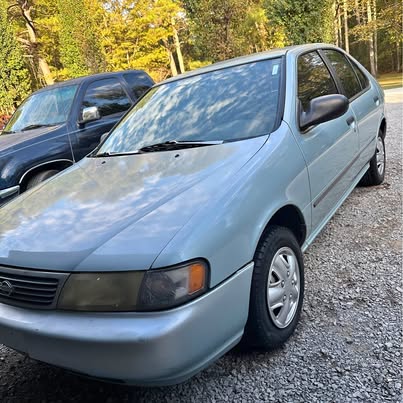
Buy a Sentra for what it is. The economy cars are good cheap transport if you buy on condition and bad cheap transport if you buy on price alone — the difference between a maintained Sentra and one that has merely been driven is about two thousand dollars of deferred work. The enthusiast cars are genuinely quick, and capable of emptying your wallet if the previous owner modified them badly. The survivors — clean, unmodified, one-owner cars — are the ones to stretch for.
The models
The range has always been built around one idea — a four-door sedan, with a coupe alongside it in the early generations and a wagon in the B13 — and the badge tells you the engine and the equipment level, not the body: a base car, a mid-range car, and a top car with the bigger engine. The enthusiast models sit outside that logic, and they are the ones to identify on sight, because a seller will call almost anything an SE-R if you are not looking closely.
| Model | Years | Engine | Output | Built | Character |
|---|---|---|---|---|---|
| B11 Sentra | 1982–1986 | 1.5 / 1.6 four (E15, E16) | 67–69 hp | High volume | The original; simple, slow, nearly indestructible |
| B12 Sentra | 1987–1990 | 1.6 four (GA16i) | 90 hp | High volume | First modern Sentra; injected, better built |
| B13 Sentra / SE-R | 1991–1994 | 1.6 four (GA16DE); 2.0 four (SR20DE) | 110 hp; 140 hp | High volume; SE-R about 12,000 | The enthusiast landmark; light, quick, collectable |
| B14 Sentra | 1995–1999 | 1.6 four (GA16DE); 2.0 four (SR20DE) | 115 hp; 140 hp | High volume | Softer, quieter, better to live with |
| B15 Sentra | 2000–2006 | 1.8 four (QG18DE); 2.0 four (SR20DE); 2.5 four (QR25DE) | 126 hp; 145 hp; 165–180 hp | High volume | The big one; SE-R and Spec V are the picks |
| B16 Sentra | 2007–2012 | 2.0 four (MR20DE); 2.5 four (QR25DE) | 140 hp; 177–200 hp | High volume | Largest, heaviest; Spec V the driver car |
| B17 Sentra | 2013–2019 | 1.8 four (MRA8DE); 1.6 turbo (MR16DDT) | 130 hp; 188 hp | High volume | Economy-first; SR Turbo and Nismo the exceptions |
| B18 Sentra | 2020–present | 2.0 four (MR20DD) | 149 hp | In production | The return to form; handsome, well sorted |
(Outputs are the period US-market figures. Production for the Sentra as a whole runs into the millions; the only figure that matters to a buyer is the SE-R one, because rarity is what makes the B13 SE-R a collector car and the ordinary B13 a cheap car.)
The B11 and B12, 1982 to 1990. Now genuinely scarce, not because they were rare but because they were used up. The B11 came as a sedan, hatchbacks, and a wagon, with a 1.5-litre E15; the B12 was a cleaner design with a 1.6-litre GA16i making 90 horsepower. Judge a survivor as a survivor, not as cheap transport: parts support is thin, the rust is usually terminal, and the value is in the originality.
The B13, 1991 to 1994. The generation that matters most to the Sentra's reputation. The ordinary sedan and coupe used the durable 1.6-litre GA16DE; the SE-R, in coupe and sedan form, used the 2.0-litre SR20DE — 140 horsepower, a 7,500 rpm redline, a viscous limited-slip differential, and four-wheel disc brakes — in a car weighing about 2,500 pounds. About twelve thousand were built, and survivors are now collectable, which means the market is full of modified and rebadged cars and the premium rides entirely on originality. A genuine SE-R has the SR20DE, the differential, and the discs; a GA16DE car with SE-R badges is a clone, and the engine code settles the argument.
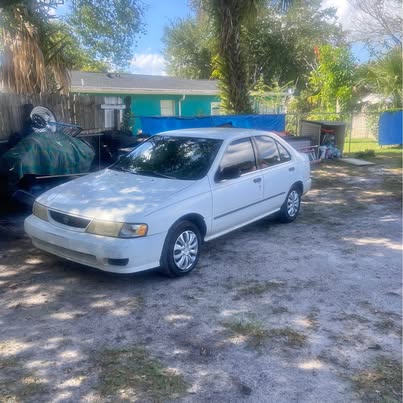
The B14, 1995 to 1999. The B14 opens the pool on this site, and it is the Sentra most buyers in this market will actually be looking at. Nissan softened everything: the styling lost the B13's crisp edges, the interior gained space, the ride got quieter and the steering lighter. The volume engine was the 1.6-litre GA16DE, now 115 horsepower, in E, XE, and GXE trim, the GXE being the well-equipped car. The sporting model moved to the 200SX coupe — a separate model in Nissan's taxonomy but the same car underneath — and the sedan got the 2.0-litre SR20DE in the GLE from 1996 and in the SE from 1998. Those SR20DE sedans are the B14s worth seeking out: the SE-R's engine in a quieter body, and almost nobody knows they exist, which keeps prices sensible. The B14 is also the first Sentra where the automatic is the default, and it blunts the little 1.6 badly: a GXE automatic is honest, cheap transport and nothing more, while an SE manual with the 2.0 is a genuinely enjoyable car for the same money.
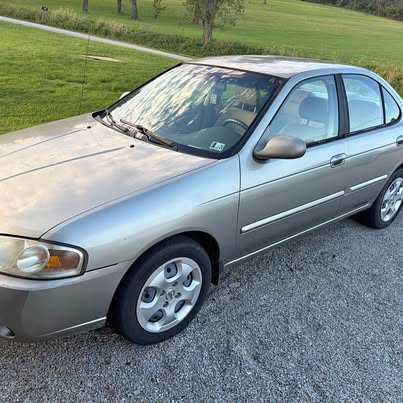
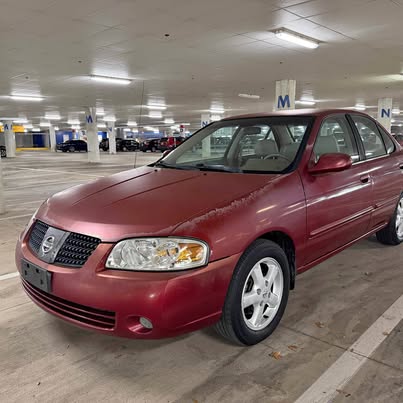
The B15, 2000 to 2006. A bigger, heavier, more American car than the B14. The base engine was the 1.8-litre QG18DE, a smooth, economical, unexciting 126-horsepower twin-cam in the XE, GXE, and later the 1.8S. The 2000 and 2001 SE used the 2.0-litre SR20DE at 145 horsepower — the last Sentra to carry it. From 2002 the SE-R took over, with the 2.5-litre QR25DE at 165 horsepower, and the SE-R Spec V, with 175 and later 180 horsepower, a six-speed manual, a helical limited-slip differential, and bigger brakes: the B15 to buy if you want the fast one. The ordinary 1.8 cars fill the pool — the 1.8S, GXE, LE, and Special Edition — roomy, comfortable sedans now old enough for every deferred-maintenance item to have come due at once. The facelift cars from 2004 are the better buy: later build, better trim, and the early QR25DE problems largely addressed.
The B16, B17, and B18, 2007 to the present. The B16 was the biggest Sentra yet, with a 2.0-litre MR20DE and a 200-horsepower QR25DE in the SE-R Spec V — a good car, largely forgotten, and good value for it. The B17, from 2013, is the Sentra at its least interesting: a 1.8-litre MRA8DE with a CVT, built for fuel economy, with soft suspension and numb steering; the exceptions are the SR Turbo and Nismo, from 2017 to 2019, with a 188-horsepower turbocharged 1.6 and a manual option. The B18, from 2020, is the recovery: a direct-injection 2.0 with 149 horsepower, a stiffer body, and independent rear suspension.
One trap runs through the whole range: the trim letters do not mean the same thing from one generation to the next — a B14 GXE is a 1.6, a B15 GXE is a 1.8, a B15 SE is a 2.0. Never buy on the badge alone; read the engine code, because the engine family tells you what you are actually buying.
Engines and gearboxes
Five engine families divide neatly in two: the ones that made the Sentra's reputation for reliability, and the ones that made its reputation for trouble. The GA16DE and the SR20DE are the engines to trust. The QG18DE is fine if it has been serviced. The QR25DE is strong, with two specific, expensive problems you must check before you buy. The later MR engines are competent, and their problems are mostly about the transmission bolted to them.
The GA16DE and the early cars: E15, E16 and GA16i
The first Sentras used the E-series engines — simple, slow, almost impossible to kill, though parts are now scarce — and the B12's GA16i, a 1.6-litre with throttle-body injection making 90 horsepower, started the GA family that would power Sentras for a decade.
The GA16DE, fitted from 1991 to 1999 in the B13 and B14, is the engine that built the Sentra's name: a 1.6-litre twin-cam four with a cast-iron block, an aluminium head, and a timing chain instead of a belt — the single most important fact about it, because a chain engine with regular oil changes will run to 250,000 miles without being opened. It makes 110 horsepower in the B13 and 115 in the B14, and is famously economical. Its weaknesses are small and cheap: a distributor that can leak oil, a weeping valve cover gasket, a throttle body that gets dirty and makes the idle lumpy, and a timing chain tensioner that can rattle on a cold start in a car run on cheap oil. None is a reason to walk away. One that starts cleanly, idles steadily, and shows no oil in the coolant is a sound engine — and on a B14 it is the engine you want, because the alternative in most B14s is the same engine with an automatic eating a third of its output.
The SR20DE: the engine that made the SE-R
The SR20DE is one of the great four-cylinder engines of its era, and the reason the enthusiast Sentras exist: a 2.0-litre twin-cam four, aluminium block and head, timing chain, designed so far beyond its output that the turbocharged version powered some of the fastest Nissans of the 1990s. In the Sentra it makes 140 horsepower in the B13 SE-R and the B14 GLE and SE, and 145 in the B15 SE. The redline is 7,500 rpm on the B13 and the power builds all the way to it — the surprise is not the speed, it is the willingness.
It is also close to bulletproof, with three known issues, none fatal. The first is oil consumption at high mileage, through worn valve stem seals and tired rings — a puff of blue smoke on a cold start and a dipstick needing top-ups. The second is the distributor, which can leak and fail, giving a misfire or a no-start fixed for a few hundred dollars. The third is fifth-gear pop-out on the B13 SE-R manual gearbox, where worn synchro and selector parts let the box jump out of fifth on the overrun — a known fault with a known fix, but a gearbox-out job, so test it on the drive and price it in. An SR20DE car with a documented history and no modifications is one of the safest enthusiast buys in the Japanese classic market; one with a cheap intake, a loud exhaust, and no paperwork has been used exactly as hard as you would expect.
The QG18DE and the QR25DE: the B15 engines
The B15's volume engine is the QG18DE, a 1.8-litre twin-cam four making 126 horsepower — perfectly adequate, economical, smooth, chain-driven, and suffering mainly from being fitted to cars whose owners stopped servicing them. Its known problems are oil burning as the miles climb, a crankshaft and camshaft position sensor pair that can fail and cause stalling (Nissan recalled cars for the crank sensor, so check it has been done), and head gaskets on cars that overheated after a thermostat or radiator failed and the driver kept going. A serviced QG18DE is a fine engine; an unserviced one will need a head gasket at $900 to $1,800 — on a car in this price range, the difference between a bargain and a mistake.
The QR25DE is a genuinely good engine with two design problems that can destroy it, and both are checkable before you buy. It is a 2.5-litre twin-cam four with an aluminium block, fitted to the B15 SE-R and Spec V from 2002 and to the B16 SE-R models, making 165 horsepower in the early SE-R, 175 and then 180 in the Spec V, and 200 in the B16 Spec V. It is torquey, flexible, and strong, and it makes the Spec V feel like a much more expensive car. The first problem is the pre-catalytic converter, built into the exhaust manifold close to the engine. When it breaks down — with age, with oil consumption, with rich running — the engine's exhaust scavenging can draw ceramic dust back into the cylinders, scoring the bores and causing catastrophic oil consumption. Nissan recalled the early cars for this. A QR25DE that burns a quart of oil in a thousand miles is not a car with worn rings; it is a car whose pre-cat has been eating its bores, and the engine is on its way out. Ask directly whether the pre-cat is original, whether the recall was done, and how much oil the car uses. The second problem is the butterfly screws. The intake manifold has secondary butterfly valves held in with small screws, and those screws can work loose, fall into the engine, and destroy a cylinder. Securing them with thread-locking compound is a well-known preventive job costing little more than a gasket set and an afternoon, and any enthusiast-owned Spec V should have had it done. Ask. If the seller has never heard of it, the car has not been enthusiast-owned, whatever the modifications suggest.
Oil consumption is the thread running through every QR25DE inspection: check the dipstick before you start the car, check the tailpipe for oily soot, and on the test drive watch the mirror on a long downhill overrun and then under acceleration — blue smoke under load is bores, and on a QR25DE bores means the pre-cat story. One that uses oil is a walk-away unless the price reflects an engine replacement, because an engine replacement on a B15 costs more than most B15s are worth.
The later engines: MR20DE, MRA8DE, MR16DDT and MR20DD
The B16's MR20DE is a reliable, chain-driven 2.0-litre making 140 horsepower; the B16 SE-R and Spec V used the QR25DE again, at 177 and 200 horsepower, and the pre-cat and butterfly-screw checks apply there too. The B17's MRA8DE is an unremarkable 1.8 making 130 horsepower — its cars are let down by their transmissions, not their engines — while the SR Turbo and Nismo used the MR16DDT, a 1.6-litre direct-injection turbo making 188 horsepower, with the usual direct-injection caveats: intake-valve carbon and a need for good oil changed on time. The B18's MR20DD, a 2.0-litre direct-injection engine making 149 horsepower, has no meaningful failure record yet.
Gearboxes
The manual gearboxes are the ones you want, and they are the minority — eleven of the thirteen cars in the pool are automatics. The five-speed in the GA16DE and QG18DE cars is light, precise, and durable, with synchromesh that wears on second gear first. The SR20DE cars use a stronger five-speed with the viscous limited-slip differential in the SE-R, whose known fault is the fifth-gear pop-out described above. The Spec V's six-speed is notchy but positive — check it for crunching into second and third when cold. A gearbox oil change is cheap insurance on any manual car you buy.
The four-speed automatic fitted to the B13, B14, and B15 is a conventional torque-converter box, and the gearbox most Sentra buyers will get. It is durable if the fluid has been changed, but it kills the small engines' performance, taking a second to change down and refusing to hold a gear. Judge it on the fluid (pink or red, not burnt-smelling), shift quality without flaring, and prompt engagement of drive and reverse without a thump. A box that flares, hesitates, or thumps is a rebuild at $1,800 to $3,000 — more than most of these cars are worth. Walk away; there are always more Sentras.
The later cars use continuously variable transmissions, and this is where the Sentra's reputation took its modern hit. The B16 offered a CVT as an option and the B17 made it standard on most models, and Nissan's Jatco-built CVTs of that era have a well-documented record of overheating, juddering, whining, and failing — sometimes before 100,000 miles — with replacement costs in the $3,500 to $5,000 range that write the car off. Nissan extended the warranty on many and settled class actions. Buying one, ask: has the fluid been changed, and how often — Nissan originally claimed it never needed changing, the specialists say every 30,000 to 40,000 miles; does it judder or whine under load; and has it already been replaced. A B17 with a documented replacement CVT is a reasonable buy; one on its original CVT at 120,000 miles with no fluid record is a gamble you do not need to take. The B18's revised CVT has a much better early record.
Problem areas
This section is written from marque knowledge and from the pattern of the cars that come to market. A B14 or B15 Sentra today is a twenty-to-thirty-year-old economy car that cost little when new, was often maintained by people who had little to spend, and is now at the age where every rubber component, sensor, and seal is past the end of its design life. The mechanical core is strong and the parts are cheap — but the list of things needing fixing is long, and the economics only work if you buy a car where somebody else has already done most of them. Assume the car needs work; your job is to find out how much, and whether the expensive items are on the list.
Rust: the map
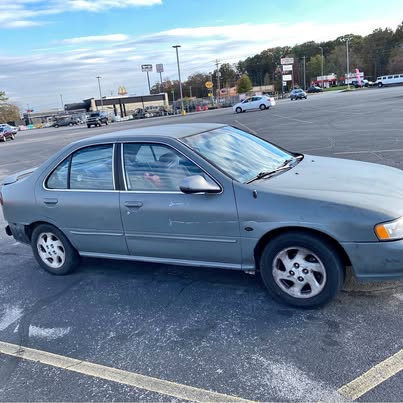
A Sentra's body was not built to survive thirty winters: the steel is thin and the factory rust protection was adequate rather than generous. In the south-east — Georgia, Florida, Alabama, Tennessee, the Carolinas — a B14 or B15 can still be structurally sound, because road salt is rare. In Pennsylvania, Maryland, Virginia, and anywhere the roads are salted, the same car will be rotten in places the seller has never looked. The pool spans both worlds, so ask where the car has lived, not just where it is now.
Rear wheel arches and quarter panels. The most common rust on a B14 and B15, and the first place to look. The arch lip traps mud and salt against the inner wing, the paint bubbles from the inside, and by the time you can see it the metal behind the lip is usually perforated. Run your fingers around the inside of the arch lip and feel for roughness and flaking. Arch and quarter repair is a cut-out-and-weld job, realistically $600 to $1,500 a side done properly with paint — on a car in this price bracket, a negotiation point rather than a repair you should plan to fund. Cosmetic filler over a rotten arch is the standard Marketplace fix, and it lasts about a year.
Sills and rocker panels. The sills are structural and rot from the jacking points inward, where the underseal gets broken and water sits. Press hard along the full length of both, look at the pinch welds for swelling, and be suspicious of fresh stone-chip on the sills of a car whose arches are bubbling — a cover-up until proven otherwise. A sill that crunches under thumb pressure needs replacing, at $500 to $1,200 a side welded and painted. Two rotten sills and two bubbling arches mean a body bill exceeding the car's value: walk away however good the engine sounds.
Floor pans and the boot floor. Water gets in through perished windscreen and rear window seals and torn door membranes, and sits under the carpets where you cannot see it. Lift the front carpets in both footwells, and lift the boot carpet and the spare wheel — the B15's spare wheel well collects water from a leaking boot seal and rots from the inside. Surface rust is treatable; holes are a welding bill and a sign the car has been wet for years.
Front subframe and suspension mounting points. This is the rust that writes a B15 off. The subframe carries the engine, gearbox, and lower suspension arms, and it rots — particularly at its rear mounting points — on cars from salt states. A rotten subframe is a structural failure that will fail an inspection and cannot be patched safely. Get under the car, or onto a lift, and look at it with a torch and a screwdriver. A used replacement fitted is $800 to $1,600, which on a cheap car ends the argument. Give the rear beam mounting points the same look, and the brake lines along the floor — a corroded line is a $150 to $400 repair and a genuine safety issue.
The smaller traps. Door bottoms, where the drain holes block and the door fills with water — run a fingertip along the bottom edge of every door and feel for bubbling. The bottom of the front wings behind the wheels. The battery tray, which rots under the battery and is invisible until you lift it out. The fuel filler neck, which corrodes and leaks fuel when you fill the tank — smell for petrol after a fill-up. None alone kills a car; together they tell you how it has lived.
Suspension, steering and brakes
The Sentra's suspension is simple — MacPherson struts at the front and a beam axle at the rear — and simple means cheap to fix and easy to judge. It also means a worn Sentra feels worn in very specific ways, and you can diagnose most of it from the driver's seat.
Front struts and top mounts. Worn struts give a car that bounces twice after a bump and crashes over potholes: push down hard on each front corner and let go — the car should rise and settle once. A knocking front end on a B15 is strut top mounts or anti-roll bar links nine times out of ten, both cheap parts at $40 to $120 each. A full set of struts fitted is $600 to $1,200; budget for it on any car over 120,000 miles on its originals.
Lower arm bushes and ball joints. Perished bushes and worn ball joints give a wander at highway speed, a knock on turn-in, and uneven front tyre wear — the inside edge worn smooth is the classic sign of an alignment long out because a bush has collapsed. Complete lower arms are cheap, $60 to $150 a side in parts; fitting a pair with an alignment is $350 to $700. Check the tyres as carefully as the car: four mismatched budget tyres with the fronts worn on one edge belong to an owner who stopped spending money some time ago.
Steering. The B14 and B15 use hydraulic power steering, and the system leaks — from the pump, from the rack, and most commonly from the high-pressure hose, which weeps and then drips onto the exhaust and smells of burning oil. Check the fluid level and look for a wet rack and wet bellows. A rack replacement is $500 to $900 fitted with a remanufactured unit. Play, a notch at the straight-ahead, or constant correction on the highway points to a worn rack or track rod ends — the ends are cheap, the rack is not.
Brakes. Discs at the front, drums or discs at the rear — the SE-R cars have discs all round, most economy cars have rear drums. Look for the evidence of neglect: discs with a deep lip and a rust band, a handbrake at the top of its travel that barely holds, a pedal that sinks under sustained pressure, and brake pipes corroded along the floor. A full refresh — discs, pads, rear shoes or pads, fluid, and flex hoses — is $400 to $900 and is the first safety spend on any car you buy.
Cooling, electrics and the engine bay
Cooling. The cooling system is what kills Sentra engines, because the engines are tough and it is not. Radiators crack at the plastic end tanks, thermostats stick, water pumps weep, and electric fans and their relays fail. A car that has overheated once has a head gasket living on borrowed time. Ask directly whether it has ever overheated, and check the coolant: clean, not rusty water, with no oil film in the expansion tank and no mayonnaise under the filler cap. Watch the gauge on the test drive, including idling in traffic afterwards — a gauge that creeps up at idle and drops when you move is a fan fault, cheap and essential to fix. A radiator is $120 to $300 in parts; a head gasket is $900 to $1,800, and the gap between those numbers is the whole argument for buying a car with a cooling-system history. The same applies to air conditioning, not a luxury in the states where these cars live: test it for five minutes on every viewing, because a compressor and condenser fitted and charged is $700 to $1,400, and sellers always describe dead air conditioning as needing a top-up.
Electrics and sensors. Nissan electrics of this era fail by component, not by wiring. Crankshaft and camshaft position sensors fail and cause stalling and cutting out when hot — a car that cuts out hot and restarts cold is describing a crank sensor until proven otherwise; the part is $40 to $120, and on the QG18DE and QR25DE it is a recall item on many cars. Mass airflow sensors give hesitation and a flat spot ($100 to $300), coil packs fail one at a time, alternators are $250 to $500 fitted, and window regulators $150 to $350 per door. All of it is diagnosable with a cheap code reader — bring one, and be suspicious of a car whose codes have just been cleared, because its readiness monitors will all read not ready.
Interior and trim
The Sentra's interior is where the car's price when new shows most clearly, and where a Florida or Georgia car's life is written largest. The plastics are hard, the seat fabrics are thin, and the sun is merciless.
Dashboard, trim and seats. The dashboard top cracks in the sun, starting at the demister vents — cosmetic, very visible, and effectively unrepairable except by replacement or a dash cap. Headlinings sag as the foam backing fails, and the standard fix is a staple gun, which tells you everything about the car's recent life; a re-trimmed headlining is $250 to $500. The blower motor resistor fails so the fan works only on its highest speed — a $30 part, and a useful tell that the owner has stopped fixing small faults. The driver's seat takes the wear: the outer bolster collapses, the fabric wears through, and the frame can crack at its mounting points, giving a seat that rocks — a safety item, not a comfort item. Used seats for the volume models are cheap, $75 to $250; the bolstered, model-specific SE-R and Spec V seats are hard to replace, so weight their condition heavily.
Water and warning lights. Wet carpets matter because they mean rust in the floor: feel the footwells and smell the car with the doors shut — a musty car is a wet car, usually from a blocked air conditioning drain, perished door membranes, or a leaking windscreen seal. Airbag lights deserve respect too: a light on means a fault, usually a clock spring or a seat sensor, $200 to $600 to repair properly. Check that it comes on with the ignition and goes out; a seller who has disabled a warning light has disabled other things too.
Modifications, identity and the enthusiast cars
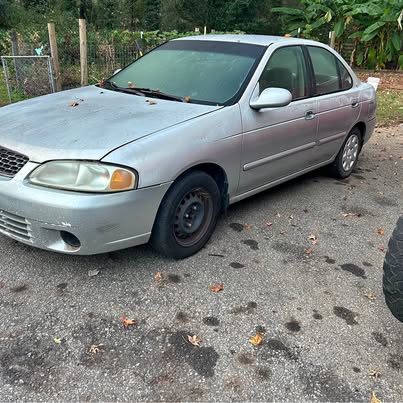
The last problem area is not a component. It is the previous owner. Sentras — and the SE-R and Spec V cars in particular — were cheap, quick, and popular with young owners who modified them, and the quality of that work ranges from excellent to dangerous. Your job on an enthusiast car is to separate the two.
Suspension and engine modifications. Lowering springs on standard dampers are the commonest modification and the commonest mistake: the car rides worse and wears its dampers and tyres out faster. Cheap coilovers are worse, and cut springs are a walk-away. Intakes, exhausts, and headers are mostly harmless, with one exception on the QR25DE: a header deleting the pre-catalytic converter is a genuinely sensible modification that protects the engine, provided the oxygen sensors were dealt with properly and the car still passes emissions. A home-built turbo SR20DE with no tuning documentation is a project, not a purchase. Nitrous, cheap piggyback controllers, and cut wiring looms are all reasons to leave.
Identity. Verify the car is what it is sold as, as step 1 of the inspection sets out: VIN plates matching the title, the engine code on the block matching the badge and the price, a Spec V carrying its six-speed manual and limited-slip differential. Salvage and rebuilt titles are common — a rebuilt title is worth a third less than a clean one — and flood history is worth checking on any car from Florida, Georgia, or the Carolinas.
How to inspect one
Allow an hour, and bring a torch, a code reader, a magnet wrapped in cloth, and a friend to watch for smoke while you drive. Sellers of cheap cars expect a quick look and a cash offer, which is why a thorough inspection pays: the findings are the negotiation. If the car passes you, an hour on a lift is worth more than any opinion, because the subframe and the sills decide whether a B14 or B15 is worth buying at all, and neither can be judged properly from a driveway.
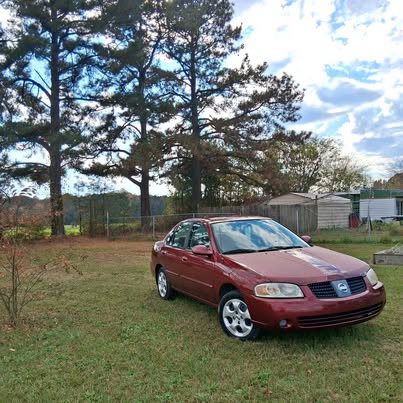
- Start with the paperwork and the identity. Match the VIN on the title to the plate at the base of the windscreen, the sticker on the driver's door jamb, and the stamping in the engine bay. Read the title status — clean, salvage, or rebuilt — and price accordingly. Then check the engine code stamped on the block against the badge: a car sold as an SE-R or a Spec V must carry the QR25DE, a B14 SE or GLE sold as a 2.0 must carry the SR20DE, and a car whose engine does not match its badge is a cheaper car than the one advertised.
- Cold start, and insist on it. A seller who has warmed the car up is hiding a cold-start fault, a rattle, or smoke. Listen: a brief timing-chain rattle that fades in a second is common; a rattle that stays is a chain and tensioner bill. Watch for blue smoke at start-up, and check that the check-engine and airbag lights both illuminate with the ignition and then go out — a light that never comes on has been disabled.
- Plug in the code reader before you drive. Read the stored codes and, just as importantly, the readiness monitors. If every monitor reads not ready, the codes have been cleared recently, and you should assume the check-engine light will be back within days of you buying the car. Note every code, and price the sensor faults from the problem areas section into your offer.
- The oil questions, engine by engine. Check the dipstick for level and colour, look under the filler cap for mayonnaise, and check the coolant for oil film and rust. On a QR25DE car this step is the whole inspection: ask how much oil it uses, whether the pre-cat is original, whether the recall was done, and whether the butterfly screws have been secured. A 2.5 that uses oil has bore damage until proven otherwise. On a QG18DE, ask about the crank sensor recall. On any engine, oil that is black, thin, and fuel-smelling has not been changed on time.
- Rust, in the order the rust section gives it. Rear arches first — fingers inside the arch lip, eyes on the bubbling above it. Then the sills, pressed hard along their full length, especially at the jacking points. Then the boot floor and spare wheel well, with the spare lifted out. Then, if you can get under the car at all, the front subframe and its rear mounting points. Run the magnet over the arches, sills, and door bottoms: filler announces itself. Perforation in the subframe or both sills ends the inspection.
- Floors and water inside. Lift the front carpets in both footwells and feel the floor and the inner sills, and smell the cabin with the doors closed. Wet carpets mean a leak and rust starting in the floor; the air conditioning drain is the first suspect on a car with a wet passenger footwell.
- The test drive, and make it a real one. Fifteen minutes minimum, with a highway stretch, a rough road, and a tight car park. The manual should engage every gear cleanly, cold and hot; test fifth gear on a B13 SE-R under load and then on the overrun, because fifth-gear pop-out only shows when you lift off. On a Spec V, work through all six gears and feel for the differential pulling the car straight out of a slow corner. Have your friend watch the exhaust as you go: blue smoke under load is bores, white smoke that does not clear is a head gasket. The automatic should engage drive and reverse promptly and shift without flaring; a CVT car should pull away without judder and cruise without whine.
- Steering, suspension and brakes. On the rough road, listen for front-end knocks — top mounts and anti-roll bar links — and for a rear drone that changes in corners, which is a wheel bearing. The steering should be light, centred, and free of play; a car that wanders has worn bushes or a worn rack. Brake hard from speed: the car should stop straight, the pedal firm and not sinking, with no judder. Check the handbrake on a slope, and look at the tyres — mismatched budget tyres with one edge worn away are a maintenance report in rubber.
- Electrics, everything, one at a time. Every window, from its own switch and from the driver's master switch. The blower on every speed — fan only on the highest speed is a failed resistor. The wipers and washers, the lights, the horn, the central locking, the boot release, the radio. Check the power steering fluid level and look for a wet rack. A car where everything works has usually been maintained; a car with four small electrical faults has usually been neglected, and the neglect will not stop at the electrics.
- Interior and history last, and weight them together. Sit in the driver's seat and rock it — movement on its mounts is a safety fault. Check the headlining, the dash top, the driver's bolster, and the boot for a spare wheel and a jack. Then read whatever history the seller has: receipts for a timing chain, a clutch, a subframe, a compressor, or a transmission are bills you will not have to pay, and a thick folder on a cheap Sentra is worth a premium. No paperwork at all is the normal state of affairs, and should be priced as the risk it is.
Values
The figures that matter for this series are computed from this site's own listings and recorded sales, and they sit below this guide — the listed-now summary and the market block are refreshed every time the site rebuilds, so use them rather than any number quoted elsewhere. What follows is how to read them, and for the Sentra that matters more than for most cars, because this is a market where the headline figure tells you almost nothing and the condition spread tells you almost everything.
The Sentra market is really two markets wearing one badge. The first is the economy-car market: the B14 and B15 sedans with the 1.6 and 1.8 engines and an automatic gearbox, which is where the current pool on this site sits — thirteen cars, all from Facebook Marketplace, all from 1996 to 2005, eleven of them automatics. There the cars are priced as transport, and the price is set by three things in this order: whether the car runs, drives, and will pass your state's inspection and emissions test; whether the air conditioning works; and whether the body is structurally sound. Specification barely matters — a well-maintained E with cold air and a sound subframe is worth more than a neglected GXE with a check-engine light, because sellers price on the badge and the mileage while buyers should price on the condition and the bills already paid.
The second market is the enthusiast market, for the SE-R, the Spec V, and the Nismo cars, and it behaves like a collector market in miniature: specification is the starting point and originality is the multiplier. An unmodified B13 SE-R with its original engine and a documented history is genuinely scarce now and priced like it, while a modified or engine-swapped example is priced like a project. A B15 Spec V with documented pre-cat and butterfly-screw work and no oil consumption commands a clear premium over an identical-looking car with no paperwork, and the B16 Spec V — the most powerful Sentra sold in America, largely forgotten — is the value car of the group. The ordinary B17's value is capped hard by its CVT's reputation: one with a documented replacement transmission is worth materially more than one on its original unit, so ask.
Two cautions apply to every figure in the block below. These are asking prices, and in the Marketplace end of the market the gap between asking and achieved is wide: sellers of cheap cars routinely ask for what they have spent or what they still owe, and a car that sits unsold for weeks is telling you the price is wrong, not that the market is slow. And the sample here is small — thirteen cars, one source, two generations, one region — so a single unusually good or desperate listing moves the median violently, and the pool cannot price a B13 SE-R or a B18 at all. Use the wider market, and achieved prices, for the enthusiast cars.
Read any individual car against the condition spread, not the median. The cheap cars at the bottom share the same story — a failed emissions test, dead air conditioning, a rotten subframe, a salvage title, an engine that uses oil — each a bill that is a large fraction of the car's value, which is why the cheapest Sentra is almost never the cheapest to own. Buy the car in the middle of the band with the receipts, because the difference between the cheapest example and a good one is smaller than the cost of turning the cheapest into a good one.
Parts and ownership
The Sentra is one of the cheapest cars of its era that you can actually run, and parts supply is the main reason: Nissan built them in enormous numbers, and many are still being broken for parts.
Easy and cheap: service items, filters, plugs, coil packs, sensors, brake discs, pads, drums, shoes and wheel cylinders, struts, lower arms, anti-roll bar links, track rod ends, wheel bearings, radiators, thermostats, water pumps, alternators, starter motors, exhaust sections, window regulators, and almost every engine part for the GA16DE and QG18DE. Order today, fit this weekend, often at prices lower than the equivalent modern-car part. Used parts are everywhere — a B14 or B15 in a self-service yard will give you seats, trim, glass, and panels for very little money.
Harder and dearer: emissions-compliant catalytic converters, air conditioning compressors and condensers fitted and charged, automatic gearbox rebuilds, CVT replacements on the B16 and B17 — expensive enough to write the car off, and the single biggest ownership risk in the range — good B15 front subframes, head gasket work, replacement QR25DE engines in known-good condition (so many have pre-cat bore damage), and enthusiast-car parts: SE-R and Spec V seats, the Spec V's six-speed gearbox and differential, B13 SE-R trim, and B11 and B12 parts of any kind, which have stopped being stocked. A quality repaint costs more than most of these cars are worth — buy the body and the history, and fix the mechanics.
Running costs. A GA16DE or QG18DE Sentra in good order is genuinely inexpensive to run: fuel consumption in the low-to-mid thirties per gallon on the highway for a manual, insurance in the lowest groups, and servicing any independent shop can do. The budget line that catches new owners is catch-up cost. A car driven for five years with nothing but oil changes will need tyres, brakes, a battery, struts, a cooling-system refresh, an exhaust section, and sensors — $1,500 to $3,500 in the first year even on a car that runs well. On a parked car, add a fuel system clean-out (modern ethanol fuel leaves varnish in the tank and injectors) and all fluids changed, and you are at $2,500 to $5,000 before you have improved anything. The purchase price is the smaller part of the decision.
Ownership in practice. These cars reward being used: a Sentra driven daily stays reliable, while one that sits for months develops seized brakes, a dead battery, and a fuel system full of stale petrol. Drive a project car every week. Keep the oil changed at sensible intervals — the GA16DE and SR20DE tolerate neglect, but their timing chains will not tolerate it forever, and a chain job at $800 to $1,400 is the price of years of cheap oil. Keep the coolant fresh, because overheating is how these engines die. And keep the paperwork, because on a car where the value is in the maintenance history, the folder you build is the value you will sell.
Which one to buy
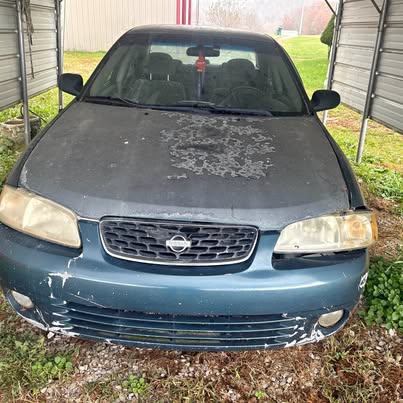
- The all-rounder: B15 1.8S or GXE automatic, facelift car from 2004 to 2006. Roomy, comfortable, economical, and the best-supported of the ordinary Sentras. Buy on subframe condition, air conditioning, and receipts.
- The value buy: B14 SE or GLE with the 2.0-litre SR20DE and a manual gearbox. The SE-R's engine in a quieter, cheaper, overlooked sedan — check for fifth-gear problems and a tired clutch, and enjoy the best-kept secret in the range.
- The enthusiast car: B13 SE-R, 1991 to 1994. The definitive Sentra, and the only one properly collectable. Verify the engine code, the differential, and the four-wheel discs, and buy the most original car you can find.
- The modern fast one: B15 SE-R Spec V, 2002 to 2006. Six speeds, a limited-slip differential, and real pace for economy-car money. Only buy one with the pre-cat dealt with, the butterfly screws secured, and no oil consumption — those three answers are the whole purchase decision.
- The forgotten bargain: B16 SE-R Spec V, 2007 to 2012. The most powerful Sentra sold in America, priced like an ordinary used car because almost nobody remembers it exists. The QR25DE checks still apply.
- The one to be careful with: B17 with a CVT. A good car let down by a transmission with a documented failure record. Buy only with a fluid-change history or a documented replacement gearbox, and price the risk in if neither exists.
- The survivor: any generation, one owner, unmodified, with a full history. The rarest Sentra of all — worth more than the market says, because it is the only kind that will not immediately ask you for money.
And the rule that overrides all of the above: buy the best-maintained Sentra you can find, in the specification you can live with. The specification is worth almost nothing and the maintenance history almost everything — a rotten subframe or an oil-burning 2.5 will cost you more than the car did.
Listed now
On Classic Listings today: 3 cars are listed here; 0 for sale and 3 marked sold; sold cars average $8,100.
See the 3 Sentra cars currently listed.
The market — recorded sales
Recorded-sale figures: 3 recorded sales · median $7,000 · range $3,300 to $14,000 (Aug 2024 – Aug 2026)
Based on 3 recorded sales — too few for a benchmark value.
| Date | Car | Sale price | Source |
|---|---|---|---|
| Aug 26, 2026 | 1983 Sentra Wagon | $3,300 | Cars & Bids |
| Jan 20, 2026 | 1992 Sentra | $14,000 | Cars & Bids |
| Sep 3, 2025 | 2004 Sentra | $7,000 | Cars & Bids |
Dates are the sale date where the source states one; otherwise the date the sale was recorded here.