
Subaru Legacy buyer's guide
Subaru Legacy (1990–2001) — Legacy: what's listed, and what they sell for.
Years: 1990–2001 · Models: Legacy
Overview and history
The Subaru Legacy is the car that took Subaru from a quirky niche maker of small all-wheel-drive wagons to a mainstream American manufacturer — and it did it without ever abandoning the formula that made it different. Every Legacy ever sold in the United States has a flat-four (or, later, flat-six) engine mounted longitudinally ahead of the front axle, driving all four wheels through a symmetrical all-wheel-drive system. No front-wheel-drive stripper defined the range's character in the way buyers remember it, no V6 ever appeared, and the wagon was never an afterthought: for most of the Legacy's life the wagon outsold the sedan in spirit even where the sedan matched it in numbers.
The Legacy was launched for the 1990 model year, developed under the codename that became the BC sedan and BF wagon, and it was a deliberate step up from the Leone/Loyale it replaced — bigger, faster, properly trimmed, and aimed squarely at the Honda Accord and Toyota Camry. It was also Subaru's rally flagship: a Legacy RS won the 1993 Rally New Zealand with Colin McRae, and the Legacy set a world speed endurance record in 1989 that Subaru advertised relentlessly. The generations covered by this guide are the first four: the original car (1990–94), the sleeker second generation (1995–99), the more refined third (2000–04) and the sharper, turbocharged fourth (2005–09). It is also the car that invented the Outback: what began in 1995 as a Legacy wagon trim package with two-tone paint became a model line in its own right, covered by its own guide, but the Outback's bones, engines and faults are Legacy bones, engines and faults, and the two markets overlap heavily.
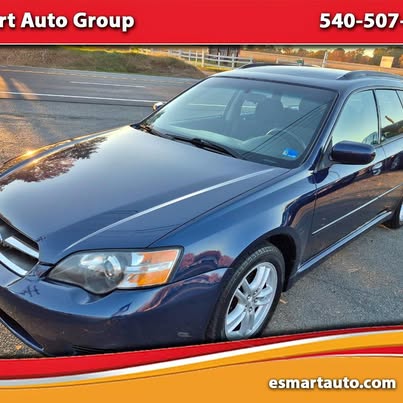
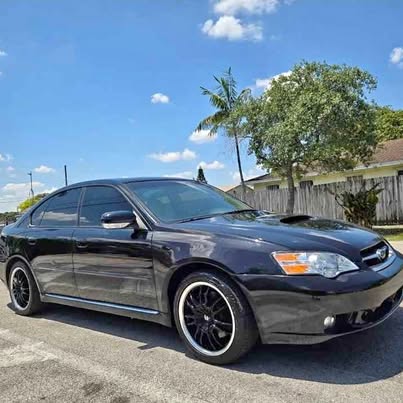
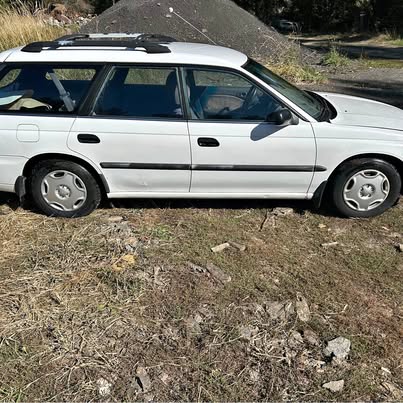
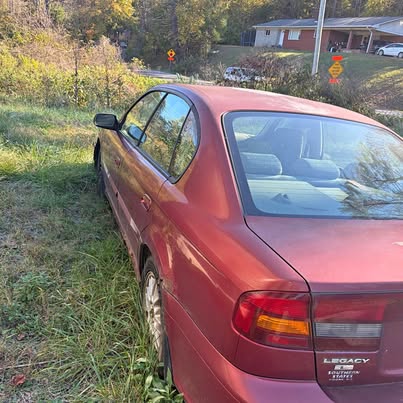
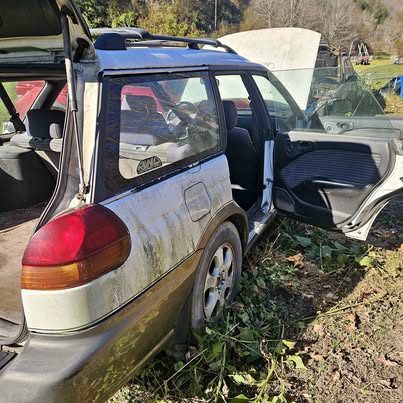
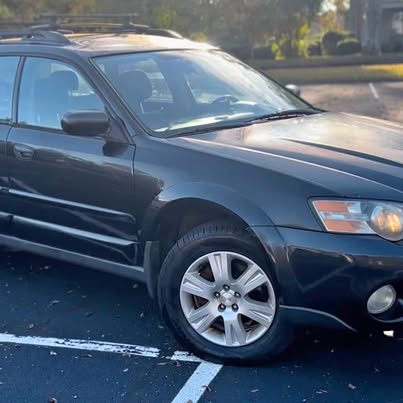
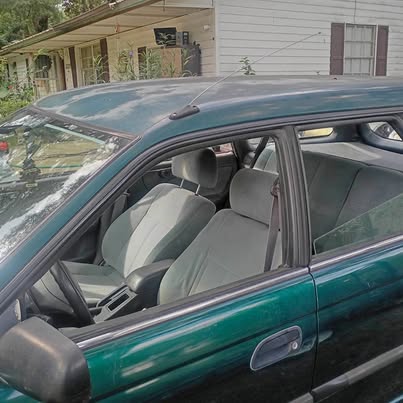
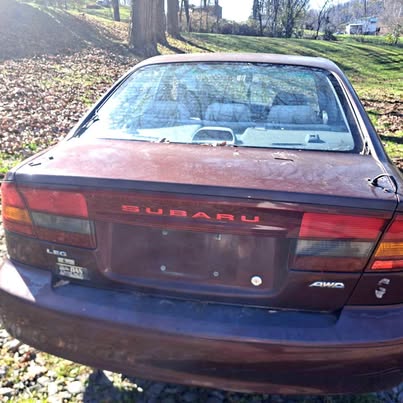
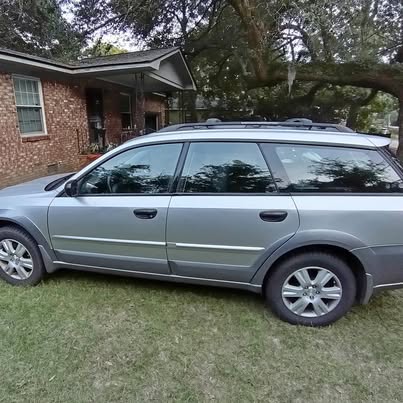
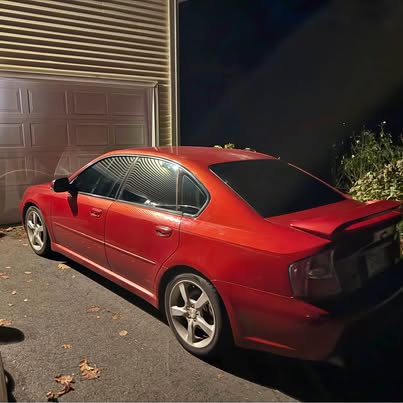
A word about the cars in our own pool, because it shapes everything that follows. We currently track 18 Legacy listings, 17 of them for sale and one sold, every one of them sourced from Facebook Marketplace, spanning 1995 to 2005 — so the pool is weighted toward the second, third and fourth generations, and toward ordinary working cars rather than showpieces. Fifteen of the 18 are automatics and three are manuals. Blue is the commonest colour (five cars), followed by silver and white (three each). But read our roster with care: the store records every one of the 18 under a single flattened label, "Legacy L Sedan 4D", while the sellers' own photographs and titles plainly show wagons, GTs and turbo cars among them. That is a listing-data defect, not a fact about the cars — and it is the single most useful lesson this guide can teach you before you spend anything. With Legacys, the label is a starting point. The VIN, the engine bay and the car itself settle what it actually is.
These were bought as durable, all-weather family transport and mostly used exactly that way — which means high mileages, salt-belt winters, deferred timing belts and, on the 2.5-litre cars, the head-gasket question that dominates every Legacy buying conversation. The good news is that the Legacy's faults are known, patterned and testable. This guide walks them in the order a buyer meets them.
The models
Every US-market Legacy is a four-door sedan or a five-door wagon, all-wheel drive, with a flat-four under the bonnet — the variations are engine, trim and intent. Trim names shifted across generations: L was the volume trim, LS and LSi added equipment in the nineties, Brighton was a stripped value model in the second generation, GT was the sporting trim throughout, and from 2005 the range was renamed around the engines — 2.5i for the normally aspirated cars, 2.5GT for the turbo. SUS (Sport Utility Sedan) was a short-lived raised sedan sold in 1999 only, an Outback in sedan clothing.
| Model | Years | Engine | Output | Built | Character |
|---|---|---|---|---|---|
| Legacy L / LS | 1990–1994 | 2.2 flat-four (EJ22) | 130 hp | High — the volume car | The original; simple, tough, non-interference engine |
| Legacy Turbo (Sport Sedan / Touring Wagon) | 1991–1994 | 2.2 turbo (EJ22T) | 160 hp | Low — a few thousand a year | Closed-deck block; the connoisseur's first-gen |
| Legacy L / Brighton | 1995–1999 | 2.2 flat-four (EJ22) | 135–137 hp | High | Second-gen value line; the head-gasket-free choice |
| Legacy GT | 1996–1999 | 2.5 DOHC (EJ25D) | 155–165 hp | Moderate | Sport trim, the engine with the internal gasket failure |
| Legacy Outback | 1995–1999 | 2.2 / 2.5 (EJ22 / EJ25D) | 135–165 hp | High | Began as a Legacy trim; spun off into its own line |
| Legacy L / GT | 2000–2004 | 2.5 SOHC (EJ251) | 165 hp | High | Third gen; GT is trim and suspension, no turbo in the US |
| Legacy 2.5i | 2005–2009 | 2.5 SOHC (EJ253) | 168–175 hp | High | Fourth-gen base car; the sensible modern classic |
| Legacy 2.5GT | 2005–2009 | 2.5 turbo (EJ255) | 250 hp | Moderate | The WRX's grown-up sibling; manual or 5-speed auto |
| Legacy spec.B | 2006–2009 | 2.5 turbo (EJ255) | 243 hp | Low — numbered run in 2006 | Six-speed manual, Bilsteins, the collector flagship |
| Legacy 3.0 R | 2008–2009 | 3.0 flat-six (EZ30) | 245 hp | Low | Late, rare six-cylinder flagship sedan |
(Subaru did not publish consistent US production by trim for these generations, so the Built column is a volume judgement, not a fabricated figure. Outputs are period US ratings; the spec.B's lower figure is the revised SAE rating, not a weaker engine.)
The first generation (1990–94). The car that started it: angular, glassy, and tougher than it looked. Most are L and LS cars with the EJ22; the Turbo — Sport Sedan and Touring Wagon — is the one collectors hunt, with its stronger closed-deck block, oil squirters and 160 hp. Rust and sheer age have thinned these drastically.
The second generation (1995–99). Rounder, quieter and bigger inside. The range splits cleanly: 2.2-litre cars (L, Brighton, LS) with the near-bulletproof EJ22, and 2.5-litre cars (GT, Outback, LSi) with the EJ25D — quicker, better trimmed, and carrying the generation's one serious engine fault. The GT's firmer suspension and quicker steering make it the driver's pick of the nineties cars.
The third generation (2000–04). A quality step: better interior, stiffer shell, standard 2.5 power across the US range. American buyers never got the twin-turbo the Japanese market enjoyed — the US GT is a trim and chassis package over the same EJ251 as the L, a fact sellers' adverts routinely blur. Six-cylinder power arrived in this generation only under the Outback badge (the H6-3.0), not on a Legacy-badged car.
The fourth generation (2005–09). The car this pool knows best, and the one that changed the Legacy's image: lighter, sharper, and finally turbocharged again in the US. The 2.5GT is effectively a WRX powertrain in a tailored suit; the spec.B (2006 on) added the STI-pattern six-speed manual, Bilstein dampers and, in its first year, a numbered production run. The 2.5i is the honest everyday car. From 2008 the 3.0 R brought the flat-six to a Legacy badge.
Engines and gearboxes
The working flat-fours: EJ22 and the naturally aspirated EJ25s
Subaru's EJ family is one architecture in several tempers, and the Legacy carried most of them. All are all-alloy, belt-driven flat-fours with the crankcase split down the middle; all want their timing belt, idlers and water pump treated as one job; and all sound — a light, even beat at idle — much the same healthy or sick, so judge them by tests, not by ear alone.
The EJ22 (1990–99) is the engine that built Subaru's reliability reputation in America: 2,212 cc, single overhead cam per bank, 130 hp in the first generation and 135–137 hp in the second. It is the Legacy engine with no characteristic fatal fault. In the first generation and through 1996 it is non-interference — a snapped timing belt is an inconvenience, not a destroyed engine — and its head gaskets are not a known failure point. What it does is leak oil with age (cam seals, crank seal, valve-cover gaskets and the rear separator plate, all covered below) and wear out its timing-belt idlers audibly before the belt itself fails. A 2.2 car with oil leaks and a recent belt is a better buy than a dry 2.5 with no history.
The EJ25D (1996–99) is the twin-cam 2.5 fitted to the GT, LSi and early Outback: 165 hp in most years (155 in 1996), noticeably torquier than the 2.2, and the source of the Legacy's head-gasket reputation. Its failure is internal: combustion gas and coolant cross between the cylinder and the water jacket, so the symptoms are overheating under load, bubbles in the expansion tank, a coolant level that falls without any drip on the driveway, and eventually a sweet smell and misfire. It does not announce itself with a puddle. The distinguishing test is in the inspection section: a chemical block test on the coolant, and an expansion tank that bubbles at a fast idle. A replacement with multi-layer-steel gaskets, heads checked and skimmed as needed, is a $1,800–3,000 job at a shop — done once, done properly, it stays done.
The EJ251 and EJ253 (2000–09) are the single-cam 2.5s of the third and fourth generations, 165 hp and then 168–175 hp. Their head-gasket failure is the opposite of the EJ25D's: external, a weep of coolant and later oil at the left-rear corner of the head joint, visible as green or crusty residue and a slow coolant loss with no overheating — for a long time. Subaru's official response in the early 2000s was a cooling-system conditioner added under a service campaign, which sealed minor weeps and extended the warranty on external leaks; treat "it has the conditioner in it" as a postponement, not a repair. The permanent fix is the same multi-layer-steel gasket job as above, roughly $1,800–3,000 fitted. These engines are interference designs: a failed timing belt bends valves, so a car at or past the 105,000-mile belt interval with no invoice is priced as a car that needs the full belt, idler, tensioner and water-pump job immediately — $700–1,200 in parts and labour at an independent.
Common to all the NA fours: a cracked knock sensor (the plastic body splits with heat cycles, the ECU pulls timing and the car feels flat — a cheap part, an easy test), cam and crank seals weeping behind the timing covers, spark-plug tube seals letting oil into the plug wells on the SOHC cars, and a rear oil separator plate — plastic on many 2.5s — that leaks down the back of the block and is routinely misdiagnosed as a rear main seal. The plate job means engine or gearbox out, $600–1,100 in labour terms, so a drip from the bellhousing area is a bargaining point with a known price, not a mystery.
The turbo fours: EJ22T and EJ255
The EJ22T (1991–94) is a legend in a plain wrapper: a closed-deck block with piston oil squirters, built for boost, producing 160 hp with no intercooler. It is the strongest bottom end Subaru sold in the period and the reason first-generation Turbos are hunted for swaps. Its faults are age faults — perished boost hoses, tired turbo oil seals showing as smoke after idle, and the same seal leaks as the EJ22 — rather than design faults. Compression and a check for shaft play in the turbo price it honestly.
The EJ255 (2005–09) powers the 2.5GT and spec.B: 250 hp, a single turbo, an intercooler under the bonnet scoop, and drive-by-wire from the start. It is a strong, willing engine with two specific traps every buyer must know. The first is the banjo bolt filter screen: the oil feed lines to the turbo and the AVCS variable-valve-timing solenoids pass through tiny mesh screens inside banjo bolts, and on extended oil-change intervals those screens clog, starving the turbo of oil until it destroys itself — often taking the engine with it via the debris. Subaru issued service bulletins shortening the recommended interval and advising screen inspection; many specialists remove the screens entirely. Ask for the service history, look for turbo replacement invoices, and treat a GT with long oil intervals and no banjo-bolt attention as a car carrying a $1,500–2,500 turbo job in waiting. The second trap is oil consumption combined with hard use: ringland failure is far less common here than on the STI's EJ257, but a modified, over-boosted GT is a known quantity in this market — check for non-standard downpipes, intakes, boost controllers and ECU tunes, and walk away from undocumented modifications. Blue smoke on a cold start that clears is usually turbo seals or valve seals; smoke under boost is the turbo itself.
A 2006-on footnote: the secondary air-injection pump and its valves (emissions equipment on later EJ255 and EJ253 cars) stick with age and moisture, throwing fault codes and sometimes filling with water. The repair is valves and pump at $400–900 in parts; it does not affect how the car drives, but it will fail an emissions inspection where one applies.
The flat-six: EZ30
The EZ30 3.0-litre flat-six (245 hp in the 2008–09 Legacy 3.0 R; earlier versions powered the Outback H6-3.0) is a different character: chain-driven (no timing belt to change), smooth, and thirsty. Its known costs are weeping timing-chain covers — a reseal is an engine-out labour bill of $800–1,500 — and coil packs that fail one at a time. It does not share the fours' head-gasket history. Six-cylinder Legacy-badged cars are rare in our pool — the six lived mainly under Outback badges — so treat any example as an individual car, judged on history rather than on a market pattern.
Gearboxes
The five-speed manual (TY-series) is the driver's choice in every generation and standard on many GTs and all early cars. It is durable if the oil has been changed, but test three things: synchromesh on the fast 3–2 downshift (the first to wear), a rumble in neutral that stops when the clutch is pressed (input-shaft bearing wear), and clutch release-bearing noise — the release bearing rides on an aluminium snout on the gearbox case that wears oval, giving a chirp and a notchy pedal; a repair sleeve kit exists and the job is $500–900 with the clutch. Clutch shudder from cold on early-2000s cars is a known flywheel/clutch-disc complaint, annoying rather than terminal. A full gearbox rebuild runs $1,500–2,500; good used boxes exist but are ageing too.
The four-speed automatic (4EAT) is the pool's default — 15 of our 18 cars are automatics — and it is a fundamentally strong box with two eras. Phase I (to about 1998) and Phase II (1999 on) differ in control and in one famous fault: 1999–2000 Phase II cars can develop a long delay engaging Drive from Park or Reverse as an internal seal shrinks with age; a delay of two or three seconds when cold that improves warm is that seal, and it progresses. Budget a rebuild at $2,200–3,500 if engagement delay, flaring between shifts or dark, burnt-smelling fluid appears. Fluid and filter services every 30,000 miles are the difference between a 4EAT at 150,000 miles and one at 250,000. Note that the automatic car has two transmission fluids to check: ATF for the gearbox, and separate gear oil for the front differential, with its own small dipstick — a front diff run dry after a seal leak whines like a wheel bearing and costs like a gearbox.
The five-speed automatic (5EAT) in the 2005-on 2.5GT and six-cylinder cars adds a manual Sportshift mode and a generally good record; harsh 2–3 shifts and torque-converter shudder at light throttle are its ageing symptoms, and it wants its fluid services on time.
And the all-wheel-drive system itself, because it differs by gearbox and the difference matters at inspection. Manual cars use a viscous-coupled centre differential: simple, sealed, and ruined quietly by mismatched tyres — a viscous unit that has been cooked by years of unequal tyre circumferences will bind and judder on full-lock turns. Automatic cars use an electronically controlled multi-plate transfer clutch (the MPT system), which has a fuse holder under the bonnet marked FWD: inserting a fuse disables the rear drive for towing and testing. A seller demonstrating the car with that fuse fitted is hiding torque bind. The tyre rule follows from both systems and it is absolute: all four tyres must match in size, model and wear, within about a quarter-inch of circumference, or the centre coupling — viscous or clutch pack — works itself to death compensating. Torque bind repair is $800–1,800 depending on system and damage; a set of four matched tyres is cheaper, which is why step 8 of the inspection starts with a tape measure, not the engine.
Problem areas
The Legacy's problem areas are unusually well mapped, because Subaru sold a great many of these cars into snowy states and kept them on the road for decades — the failure statistics are written into the survivor population. Two myths need burying before the detail. First: "all Subarus blow their head gaskets" is wrong in both directions — the 2.2's gaskets are not a pattern failure at all, while the 2.5s fail in two specific, different, testable ways (internal on the 1996–99 DOHC, external on the 2000-on SOHC) that the engines section describes. Second: no Legacy in this guide has a CVT. The continuously variable transmission arrived with the fifth generation in 2010; every automatic here is a conventional planetary gearbox, and any advert describing a 2005 car as a CVT is telling you the seller does not know the car.
Rust: the map
A Legacy's rust follows salt and trapped water, and the wagon and sedan share the map with a few wagon-only additions. Work in this order:
Rear wheel arches and the quarter-panel dogleg. The signature Legacy rot. The inner arch lip traps mud and salt against the seam where the quarter panel meets the sill — the short vertical section of arch just ahead of the rear wheel, the dogleg, bubbles first, and by the time the paint lifts the inner structure is usually involved. Press along the full arch lip with your thumb; softness or crunching under intact-looking paint means the seam is gone inside. Cosmetic arch repair with a patch panel runs $600–1,500 a side painted; a car needing both arches, both sills and subframe work is a parts car at driver money.
Rear subframe. On third-generation cars (2000–04) especially, the rear subframe that carries the rear suspension corrodes from the inside in salt states, worst around its mounting points and the lateral-link pickups. This is structural, hard to see without a lift or a good torch and mirror, and the reason the inspection insists on getting under the back of the car. Surface rust on the subframe is normal at this age; perforation, flaking layers and softness to a screwdriver prod mean replacement — a used subframe swap with fresh bushes is $800–1,600 in parts and labour, and it rarely comes alone.
Sills and rocker panels. The outer rockers rot behind the plastic covers fitted to many trims, which hide the damage until it is advanced. Rock the car by the B-pillar and listen; prod the sill seam along its length, especially ahead of the rear wheels where the arch rot and sill rot meet. Fresh black underseal blown over the sills and arches the week before a sale is a cover-up until proven otherwise — honest underseal on a twenty-year-old Subaru is patchy, chipped and dirty.
Front subframe and radiator support. The engine cradle corrodes at its rear mounts, and the lower radiator support — a thin panel that carries the radiator and takes every stone and puddle — rusts through and lets the radiator drop its alignment. Neither is exotic fabrication, but both are lift-and-welder jobs priced per car.
Front strut towers and the windscreen surround. Salt spray thrown up inside the engine bay attacks the front strut towers from underneath, worst where the tower meets the inner wing; on a hard-used northern car the metal around the top mount can thin and eventually crack. It is visible from the engine bay once you know to look — peel back any loose underseal at the tower base and prod. The windscreen surround rusts more slowly, but a car that has had a replacement screen fitted badly can trap water under the seal and bubble at the corners, and the same applies at the rear screen on sedans. Neither fault is common enough to lead the checklist, but both are expensive panel work when found, and both belong on the torch tour in step 4.
Power steering. The power-steering pump on EJ cars develops a leak at its inlet O-ring with age, drawing air into the fluid: the symptoms are a whining pump, a shuddering wheel at parking speeds and frothy fluid in the reservoir. Sellers price it as a pump or even a rack; the O-ring costs pennies and fits in half an hour, and the reservoir fluid's condition tells you whether air has been the only problem. A rack that leaks from its seals is a different and larger bill — $500–900 exchange fitted — so distinguish the two before you negotiate: air in the fluid is noise and froth, a rack leak is wet gaiters and a falling reservoir with clean, quiet fluid.
Fuel filler neck. On nineties cars the steel filler pipe behind the right-rear wheel corrodes under its plastic shield, which holds wet mud against it. Symptoms are a fuel smell after filling, an evaporative-emissions fault code and, at the end, fuel weeping at the neck. The pipe is replaceable ($250–500 fitted) but the shield must come off to see it — shine a torch up behind the right-rear wheel arch liner.
Tailgate and hatch (wagons). The tailgate rusts along its lower seam and around the number-plate lamps and handle, and the struts lose their gas and drop the gate on your head — a $40 pair of struts, and a reliable tell of a car maintained on a budget. Sedans rot instead around the boot-lid seam and under the rear window rubber. On both, lift the spare wheel: the well collects the water that gets past the rear lamp and window seals, and a rusted-through well floor tells you the back of the car has been wet for years.
Driveline, suspension and brakes
Torque bind is the driveline fault unique to this car, and the engines section explains the mechanism: mismatched tyres cook the centre coupling, and the symptom is juddering, binding and tyre-scrubbing on slow full-lock turns, as if the car resists the turn. Test it deliberately in a car park, windows down, full lock both ways. A manual car's viscous coupling that binds is a replacement unit; an automatic's transfer clutch pack can sometimes be saved with fluid services if caught early, and the duty solenoid that controls it fails on its own account — a failed solenoid typically gives bind plus a flashing AT OIL TEMP light. Neither is a fluid top-up.
Wheel bearings. Rear wheel bearings on nineties and early-2000s cars are a known wear item: a drone that rises with road speed and changes as you weave gently to load and unload each side. The pressed-in bearing is a hub-out job with a press — $300–550 a side at a shop. Do not let a seller call it "tyre noise" twice: the weave test separates the two, because tyre noise does not change with lateral load the way bearing noise does.
CV joints and boots. Front outer boots split with age and steering lock; a clicking on full lock under power is the joint already worn. A reboot caught early is $150–250; a replacement axle is $250–450 fitted, and cheap aftermarket axles are a false economy that often vibrate — original or quality remanufactured is the advice.
Suspension wear is conventional: front lower ball joints, tie-rod ends, sway-bar end links that knock over low-speed bumps, and struts tired by 120,000 miles. A full strut set fitted runs $800–1,400. Rear lateral-link bushes wear and let the rear alignment wander, showing as feathered rear tyre wear — check the rear tyres' inner edges as carefully as the fronts. On Outback-lineage cars the raised suspension adds nothing exotic; the Legacy's own failure list applies unchanged.
Brakes. Discs front and rear on most trims (some early base cars carried rear drums), and the wear pattern is seizure from standing and salt rather than design weakness: sliding pins seize, calipers stick, and the handbrake — a small drum inside the rear disc — loses its hold. A full hydraulic and caliper refresh is $700–1,500. A car that pulls under braking or shows one disc rustier than its pair has a sticking caliper, priced accordingly.
Interior, body and trim
The Legacy interior is durable cloth or leather over simple frames, and its faults are small, legible and useful as maintenance evidence. Driver's seat bolsters wear through on cloth and crack on leather; the foam underneath collapses on high-mileage cars, and a sagging driver's seat in a "120,000-mile" car that otherwise looks worn at twice that is an odometer conversation. Seat heaters fail element by element. The dashboard itself is remarkably crack-resistant compared with its contemporaries.
Sunroof drains (fitted to many GT and Limited cars) block at their four corners and overflow into the headlining and A-pillars — damp headlining edges and water in the front footwells after rain are the signs, and unblocking is compressed air and patience, not money. Wagon tailgate wiring is the classic body-electrical fault: the loom flexes where it crosses from the body into the tailgate, the conductors fatigue and break one by one, and the rear wiper, defroster, number-plate lamps and central locking on the gate die in sequence. Sellers call it a fuse. It is a loom repair — splicing in fresh wire at the hinge — at $200–450 in labour, and the test is simply to work everything on the tailgate during the inspection.
Air conditioning fades by compressor clutch gap and perished condenser fins; a regas that lasts a month is a leak, usually the condenser or a hose crimp, $300–700 to put right. Heater cores are not a pattern failure, but the blower motor wears out audibly — squeal on the lower speeds first. Power window regulators slow and die, the driver's first. None of this is structural; all of it is the evidence by which you grade how the car has been kept.
Electrics and accessories
The EJ-era Subaru electrical system is simple and its failures are age failures. Alternators wear out and announce it with a battery light that flickers at idle and lights that pulse; starter motors develop a lazy click from worn contacts, a $20 contact kit against a $250 starter. The knock sensor crack described in the engines section shows up electrically as a check-engine light with a specific code and a car that feels strangled — a code reader earns its keep on any viewing. Oxygen sensors age and cost fuel economy before they cost drivability; a pre-cat sensor is $120–250 fitted.
Headlamp lenses on the plastic-lens generations cloud over and cut night vision badly; polishing is an afternoon, replacement lamps are the permanent fix. Earth points in the engine bay corrode and produce the usual catalogue of intermittent faults — clean grounds cure more Subaru electrical gremlins than any component swap. The immobiliser and remote locking on later cars are reliable; budget for a dead key fob battery before a dead system. Finally, the AT OIL TEMP and check-engine lights are not decoration on these cars: a flashing AT OIL TEMP on an automatic means the transfer clutch or its solenoid is already in trouble, and any stored codes should be read, not cleared, before money changes hands — step 2 of the inspection.
How to inspect one
Allow an hour, bring a torch, a code reader if you have one, a tape measure and a magnet wrapped in cloth. Insist on a cold engine — half of this checklist only works cold. If the car passes you, a lift inspection is worth paying for on any Legacy: the rear subframe and filler neck cannot be judged from standing height.
- Start with the paperwork and the VIN. Every US Legacy VIN begins JF1, and the model characters in the VIN encode the generation and body — BC/BF for the first generation, BD/BG for the second, BE/BH for the third, BL/BP for the fourth, sedan before wagon in each pair. Decode them against the car in front of you: a "sedan" listing that decodes as a wagon, or a car wearing GT badges on an L's VIN, is the pool's own flattened-label problem arriving in person. Then read the service history for the three invoices that price these cars — timing belt, head gaskets, and on a GT, turbo or banjo-bolt work.
- Plug in a code reader before the test drive. Read stored and pending codes, and note a check-engine light that does not illuminate at key-on — a removed bulb is a seller's confession. A flashing AT OIL TEMP history or transfer-clutch codes on an automatic point straight at the torque-bind section.
- Cold start and the head-gasket tests. From cold, the engine should start cleanly and idle evenly. On a 1996–99 2.5 (EJ25D), watch the expansion tank at a fast idle for a stream of bubbles and use a chemical block test on the coolant — internal failure hides from every other check. On a 2000-on 2.5, get under the left-rear corner of the engine with a torch and look for the external weep: crusty coolant residue and oil at the head joint. Then check the coolant level and colour in the tank, and the oil filler cap for mayonnaise that a short cold run alone does not explain.
- Under the back of the car. Torch along the rear subframe, its mounts and the lateral-link pickups; prod for perforation. Run the same torch along both rear arch lips and the doglegs, press the sill seams, and look up behind the right-rear wheel for the fuel filler neck's condition. This step, with step 3, decides whether you continue at all.
- Trunk or load bay. Lift the spare wheel and check the well for water and rust. On a wagon, work the rear wiper, defroster, number-plate lamps and tailgate locking — the hinge-loom test from the problem areas — and feel whether the struts actually hold the gate.
- Oil leaks, identified. Look at the back of the engine and the bellhousing from below: a drip there is the separator plate more often than the rear main seal, and the two jobs price very differently. Check the cam covers and plug wells for oil, and the timing-cover seams for cam-seal weep. On a turbo car, look at the turbo oil feed line and ask directly about the banjo-bolt screens.
- Timing belt evidence. Ask for the invoice, not the assurance. A sticker on the timing cover with a date and mileage is acceptable evidence; silence at or beyond 105,000 miles means you price the full belt, idler, tensioner and pump job into the offer on any interference engine — which is every 2.5 and every 1997-on 2.2.
- Tyres and torque bind. Measure all four tyres: same make, model and size, tread depths within a whisker of each other. Then, in a car park, drive slowly on full lock both ways, windows down. Juddering, binding or scrubbing is torque bind — viscous coupling on a manual, transfer clutch on an automatic — and on an automatic, check the under-bonnet FWD fuse holder is empty; a fuse fitted means the seller already knows.
- The test drive. Fifteen minutes, mixed roads. A manual should take a fast 3–2 downshift without grinding and pull cleanly in fifth from low revs. An automatic should engage Drive and Reverse promptly — count the seconds on a 1999–2000 car — shift without flaring, and show no converter shudder at a steady light throttle. Listen on a gentle weave at 40–60 mph for the rear wheel-bearing drone that changes with lateral load.
- Brakes and suspension. Brake firmly from speed: straight, no judder, no pull. One disc rustier than its pair means a sticking caliper. Over broken surfaces at low speed, listen for end-link knocks; bounce each corner and feel for a strut that keeps travelling. Check the rear tyres' inner edges for the feathering that betrays worn lateral-link bushes.
- Heat, air and electrics. Run the heater hot and the air conditioning cold. Work every window, the sunroof if fitted (then inspect the headlining corners for drain stains), mirrors, seat heaters and every lamp. Dim or pulsing lights at idle point at the alternator; a battery light flicker confirms it.
- Interior last. Sit in the driver's seat and judge the foam and bolster honestly. Check the odometer's story against the wear — pedals, wheel, seat — because these cars cover huge mileages gracefully. A sound, original, dry interior on a Legacy is commoner than on most cars of the era, and it is the best single predictor that the rest of this list went well.
Values
The build's market block beneath this guide carries the live numbers — what is listed now and what recorded sales have achieved — and the Legacy market makes more sense once you know how to read it, because this is a market priced by invoices, not by badges.
The first driver is the head-gasket file. A 2.5-litre car with a documented multi-layer-steel gasket job, heads checked, sits in a different price class from the identical car on its original gaskets, and the gap between them is roughly the cost of the job itself — the market pays for the invoice, not for the promise. The same logic prices the timing belt: a car 20,000 miles past its belt interval with no paperwork is discounted by every informed buyer, and it should be discounted by you. On the 2.5GT, the equivalent document is the oil-service history with banjo-bolt attention; a GT with patchy oil history is priced as a turbo replacement waiting for a date.
The second driver is geography, working in both directions. Legacys concentrate in the snow belt — New England, the Pacific Northwest, the mountain states, the upper Midwest — because that is where all-wheel drive sold. Supply is deepest there, but so is salt: the typical northern car carries the arch, sill and subframe questions of the rust section, while a southern or western car with a clean underside commands a premium from northern buyers who have learned to travel for one. Our own pool shows the spread plainly, with cars listed from Florida to Idaho. Read any individual asking price against the underside first and the odometer second.
The third driver is the condition spread, which on Legacys is wider than the model spread. A worn 2.5GT and a cherished one are barely the same commodity; a manual gearbox adds a premium in every generation because so few were sold; a wagon generally out-values the equivalent sedan except in the fourth generation, where the GT sedan found its own following. The spec.B and the first-generation Turbo sit at the top of the range's collectability, the early Turbo because of its engine's reputation among builders, the spec.B because of its numbered first year and its six-speed manual. Ordinary L sedans sit at the bottom — honest transport money — and that is precisely where the value in this market lives, because the cheap cars and the good cars differ by maintenance, not by fundamental worth.
Asking prices and achieved prices diverge in the usual Marketplace way, with one Legacy-specific twist: sellers of 2.5 cars routinely price as if the head-gasket question did not exist, and buyers routinely discount as if failure were certain. The truth, established by the block test and the torch work in the inspection, is what settles the negotiation — a car that passes step 3 has evidence most sellers cannot offer, and a car that fails it has a repair bill both parties can price. Project cars — rust, a failed gasket, torque bind — change hands for a fraction of driver money and are worth it only to buyers who will do the welding or the engine work themselves; a project that needs both is a parts car whatever the advert says.
Parts and ownership
The Legacy is one of the easiest modern classics to keep, because Subaru built the same basic car in enormous numbers, kept the mechanical recipe stable across four generations, and still supports the EJ era well. The aftermarket is deep — these cars were modified, rallied and daily-driven in huge numbers — and the used-parts supply from rust-killed northern cars is a standing resource for everyone else.
Easy: service items, filters, plugs, brake discs, pads and calipers, struts, ball joints, end links, CV axles, wheel bearings, timing-belt kits with idlers and water pumps, radiators, alternators, starters, oxygen and knock sensors, clutch kits. Order today, fit this weekend, at prices close to ordinary family-car money — because that is what these parts are.
Harder and dearer: the head-gasket job done properly (parts are cheap; the $1,800–3,000 is labour, head checking and machining), an EJ255 turbocharger ($1,500–2,500 fitted, and only after the banjo-bolt screens are dealt with), a viscous centre coupling or transfer clutch pack ($800–1,800), a replacement rear subframe with bushes ($800–1,600 fitted), first-generation Turbo engine internals, spec.B-specific dampers and trim, crack-free early dashboards and uncracked early trim generally, and EZ30 timing-cover reseals ($800–1,500, labour again). Body panels are plentiful used; rust-free rear quarter cuts are the exception, and they are priced like it.
Running costs. A sorted Legacy is a realistic year-round daily: fuel consumption in the mid-to-high twenties mpg for the NA fours on a run (turbo cars and sixes in the low-to-mid twenties, and the GT wants premium fuel), servicing any competent independent can handle, and insurance in line with the car's modest values. The budget lines that catch new owners are the catch-up year — deferred belt, gasket weep, bearings, brakes and tyres arriving together on a neglected car honestly runs $2,000–4,000 — and the tyre rule: because the all-wheel-drive system demands four matched tyres, a single unrepairable puncture on a half-worn set can mean four tyres, not one. Keep the set rotated and the surprise disappears. Rust prevention is the other standing cost in salt states: an annual underside wash and wax treatment is cheap insurance against the subframe and arch bills above.
Buy the history, keep the intervals, and a Legacy will do the thing it was designed to do for another decade: start every morning, in any weather, and go.
Ownership practicalities. Factory service information for the EJ era is widely available in print and PDF, the diagnostic system on the later cars is standard OBD-II that any reader can interrogate, and the enthusiast community is large, technical and generous with documented procedures — torque-bind diagnosis, banjo-bolt screen removal and head-gasket replacement are all written up step by step by owners who have done them. Club and forum knowledge is a genuine ownership asset here, but verify any procedure against the factory manual for your exact year, because Phase I and Phase II cars differ in details that matter. Registration, title and emissions paperwork is conventional everywhere; the one administrative trap is a car whose engine has been swapped — common in this world, since EJ engines interchange readily — where the engine number no longer matches the seller's description of the car. A swapped car is not automatically a bad car, but it must be priced as the car it now is, with the swap's quality judged on the wiring and plumbing, not on the story.
Which one to buy
- The all-rounder: Legacy 2.5i (2005–09). The fourth-generation base car — modern enough to use daily, simple enough to keep, and free of the turbo's oil-feed trap. Find one with a gasket invoice and a belt invoice and you have the range's sweet spot.
- The value buy: a 2.2-litre second-generation L or Brighton wagon (1995–99). The engine with no gasket story and, to 1996, no interference worry either. Slow, honest, and the cheapest sound Legacy motoring there is.
- The driver's car: Legacy 2.5GT (2005–09), manual. The WRX powertrain without the WRX image. Buy the oil history as much as the car: documented short intervals and banjo-bolt attention, or budget the turbo.
- The collector car: Legacy Turbo (1991–94) or spec.B (2006). The closed-deck EJ22T and the numbered six-speed car are the two Legacys with a genuine scarcity story. Verify identity ruthlessly — badges migrate, VINs do not.
- The nineties pick: Legacy GT (1996–99), post-gasket-job. The best-driving early car, bought after someone else has paid for the EJ25D's internal gasket repair with multi-layer-steel parts. Without that invoice, price the job in.
- The winter tool: any third-generation L or GT (2000–04) with a sound rear subframe. The cheapest route into the refined shell — but the subframe check in step 4 is the whole negotiation on a salt-state car.
And the rule that overrides all of the above: buy the invoices, not the badge — a Legacy's value lives in its timing-belt, head-gasket and oil-service paperwork, and a plain L with those three files is worth more than a GT without any of them. Rust in the arches and subframe is the one thing paperwork cannot excuse; everything else on these cars is a priced job, not a mystery.
Listed now
On Classic Listings today: 35 cars are listed here; 1 for sale and 33 marked sold; average asking price $1,800; asking range $1,800 to $1,800; sold cars average $9,236.
See the 35 Legacy cars currently listed.
The market — recorded sales
Legacy Classic Listings Index: $9,200 — based on 33 recorded sales, Nov 2024 – Nov 2026.
Change vs the prior 24 months: — not enough earlier sales to compute a change.
Recorded sales: 33 · Total recorded sale value: $304,790 · Lowest sale: $800 · Top sale: $17,000 · Most recent sale: $800 (Nov 14, 2026)
| Date | Car | Sale price | Source |
|---|---|---|---|
| Nov 14, 2026 | 2000 Subaru Legacy L Sedan 4D | $800 | |
| Oct 29, 2026 | 1996 Legacy Wagon | $11,700 | Cars & Bids |
| Oct 21, 2026 | 2000 Legacy | $9,500 | Cars & Bids |
| Oct 7, 2026 | 1998 Legacy Wagon | $17,000 | Cars & Bids |
| Sep 25, 2026 | 1998 Legacy Wagon | $11,200 | Cars & Bids |
| Sep 23, 2026 | 2000 Legacy | $9,500 | Cars & Bids |
| Sep 11, 2026 | 1999 Legacy Wagon | $5,900 | Cars & Bids |
| Aug 19, 2026 | 1998 Legacy Wagon | $6,200 | Cars & Bids |
| Aug 12, 2026 | 2001 Legacy Wagon | $10,250 | Cars & Bids |
| Aug 10, 2026 | 2001 Legacy Wagon | $7,100 | Cars & Bids |
| Jul 17, 2026 | 1999 Legacy Wagon | $10,600 | Cars & Bids |
| Jul 7, 2026 | 2000 Legacy Wagon | $8,800 | Cars & Bids |
| Jun 29, 2026 | 1993 Legacy Sedan | $8,000 | Cars & Bids |
| Jun 23, 2026 | 1998 Legacy Wagon | $11,000 | Cars & Bids |
| Jun 8, 2026 | 2000 Legacy | $9,100 | Cars & Bids |
| May 5, 2026 | 1998 Legacy Wagon | $10,000 | Cars & Bids |
| May 1, 2026 | 1996 Legacy Wagon | $15,000 | Cars & Bids |
| Apr 3, 2026 | 2000 Legacy | $5,800 | Cars & Bids |
| Mar 25, 2026 | 2001 Legacy Wagon | $11,000 | Cars & Bids |
| Mar 20, 2026 | 1999 Legacy Wagon | $9,200 | Cars & Bids |
| Mar 18, 2026 | 1999 Legacy Wagon | $8,400 | Cars & Bids |
| Mar 6, 2026 | 2000 Legacy Wagon | $8,400 | Cars & Bids |
| Feb 23, 2026 | 2000 Legacy | $9,200 | Cars & Bids |
| Feb 17, 2026 | 1993 Legacy Wagon | $4,640 | Cars & Bids |
| Feb 13, 2026 | 1999 Legacy Wagon | $10,500 | Cars & Bids |
Dates are the sale date where the source states one; otherwise the date the sale was recorded here.
For sale now
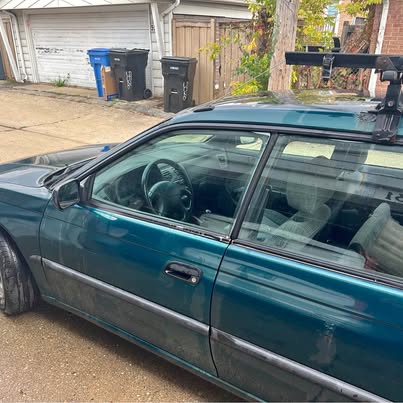 $1,800