
Subaru Outback buyer's guide
Subaru Outback (1995–2001) — Outback: what's listed, and what they sell for.
Years: 1995–2001 · Models: Outback
Overview and history
The Subaru Outback is the car that invented the crossover wagon, years before anyone used the word crossover. Take a Legacy station wagon, raise the suspension, add two-tone lower cladding, a taller roof rack, fog lamps and all-wheel drive as standard, and sell it not as a wagon and not as an SUV but as something in between. That formula sounds obvious now because every manufacturer copies it. In 1995 it was a gamble, and it saved Subaru in North America.
This guide covers the first three Outback generations sold in the United States: the original Legacy Outback of 1995 to 1999, the second-generation car of 2000 to 2004, and the third-generation car that arrived for 2005. Those are the cars in our listings pool, and they share one mechanical template: a flat-four or flat-six engine mounted longitudinally up front, symmetrical all-wheel drive, a five-door wagon body and a reputation for getting home in weather that stops everything else. The faults, engines and trim details below belong to the 1995 to 2005 cars specifically.
The Outback began as a trim level, not a model. For 1995 Subaru offered the Legacy Outback as the top, adventure-styled version of the Legacy wagon, with raised suspension, two-tone paint and standard all-wheel drive. For 2000 Subaru dropped the Legacy prefix in North America and the car became simply the Outback, a model line in its own right. A sedan version was also sold in small numbers, but the wagon is the car almost every buyer means, and it is the car this guide is about.
Subaru pitched the car, in a long-running campaign fronted by Paul Hogan, as the sensible alternative to a truck-based SUV, and the pitch worked because it was mostly true. Owners stayed loyal and kept these cars a long time, which is why the used market is full of 180,000-mile cars with a thick stack of receipts sitting next to 180,000-mile cars with no history at all. They are not the same purchase.
Underneath, the engineering is pure Subaru. The flat, or boxer, engine sits low in the chassis, which drops the center of gravity and lets the drivetrain run in a straight, symmetrical line from engine through gearbox to the rear differential. Every Outback in this guide has all-wheel drive, all the time. There is no front-wheel-drive Outback in this period and no part-time system you switch on with a lever. The differences between cars are in which center coupling the gearbox carries, which engine sits in front of it, and how the car has been maintained. That last point dominates everything else in this guide. A Subaru of this era rewards maintenance done on schedule, especially timing belts and coolant care, and punishes neglect with one famous failure, the head gaskets, in a way that makes service history worth more than low mileage, trim level or color.
Expect a practical, honest car rather than a luxurious one: durable, slightly plain interiors, some road noise, the flat-four's offbeat thrum, and highway fuel economy in the mid-twenties rather than the low thirties of a front-drive wagon, because you are turning an all-wheel-drive system all the time. In exchange you get traction you can feel from the first wet intersection and mechanicals any competent Subaru specialist understands completely.
The models
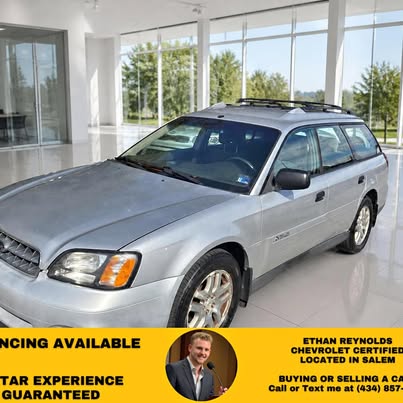
Every Outback covered here is a raised all-wheel-drive wagon built on the Legacy platform of its day. The badge on the tailgate tells you the generation and, on later cars, the engine. Read it carefully, because sellers routinely describe any raised Subaru wagon as an Outback, including Legacy wagons with aftermarket lift and Impreza-based Outback Sport hatchbacks, which are a smaller, different car and are not covered here. The full-size Outback is always Legacy-sized, with a long wagon roofline and a full-size spare-tire well. If the car in front of you looks like a compact hatchback, it is an Outback Sport, whatever the listing says.
| Model | Years | Engine | Output | Built | Character |
|---|---|---|---|---|---|
| Legacy Outback 2.2 | 1995–1996 | 2.2 flat-four (EJ22) | 135 hp | Not published separately | The original; simplest engine in the range |
| Legacy Outback 2.5 | 1996–1999 | 2.5 flat-four (EJ25D) | 155–165 hp | Not published separately | The stronger first-generation car; head-gasket watch car |
| Outback 2.5i | 2000–2004 | 2.5 flat-four (EJ251) | 165 hp | Not published separately | The volume second-generation car and the default buy |
| Outback H6 3.0 | 2001–2004 | 3.0 flat-six (EZ30) | 212 hp | Not published separately | Six-cylinder refinement; L.L.Bean and VDC trims |
| Outback 2.5i | 2005 | 2.5 flat-four (EJ253) | 168 hp | Not published separately | The cleaner third-generation base car |
| Outback 2.5 XT | 2005 | 2.5 flat-four turbo (EJ255) | 250 hp | Not published separately | The fast one; turbo pace, turbo running costs |
| Outback 3.0 R | 2005 | 3.0 flat-six (EZ30R) | 250 hp | Not published separately | The third-generation flagship six |
Subaru did not publish clean, separate US production totals for each Outback variant in this period, so the built column says so rather than inventing a figure. Judge rarity by what you actually see listed: four-cylinder second-generation cars are plentiful, first-generation cars are thinning as rust and age take them, H6 cars were always a minority, and a genuine 2005 XT with a manual gearbox is a legitimately scarce car.
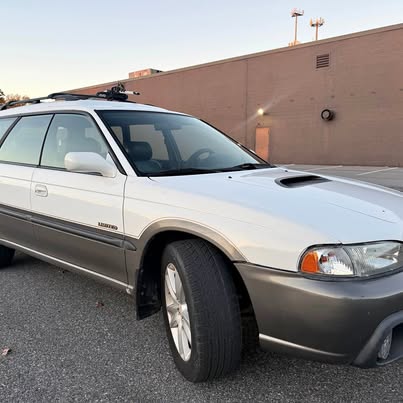
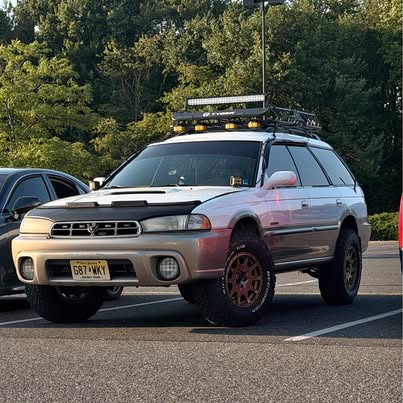
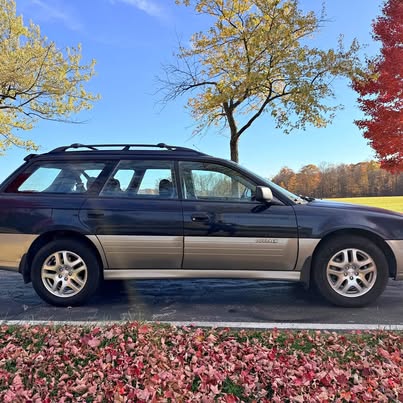
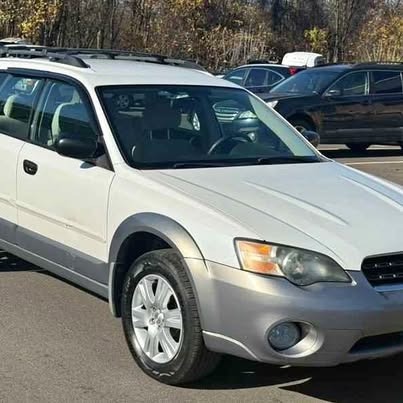
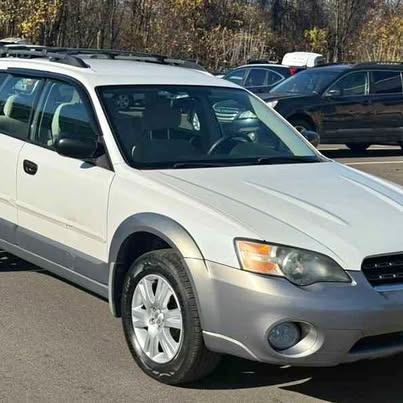
The first generation, 1995 to 1999. The original Legacy Outback is the lightest, simplest and now the oldest car here. Early cars carry the 2.2-litre EJ22, the most forgiving engine Subaru made in this era, and from 1996 the 2.5-litre EJ25D became the main engine, with more torque and a much worse head-gasket reputation, covered in detail below. The Limited added leather and cold-weather equipment: heated wiper park, heated mirrors and heated seats, which in snow country are the difference between clearing the car in two minutes and chipping at it for twenty. These cars feel narrower and more upright than what followed, and they are the easiest to work on and the cheapest to buy. Rust, not mechanics, now decides whether one is worth saving.
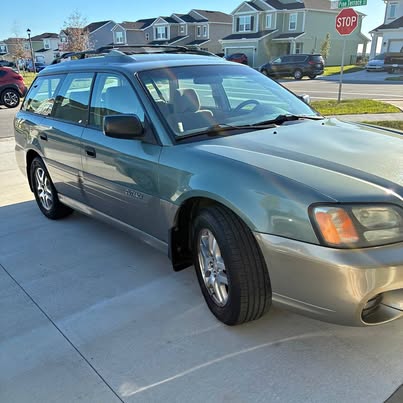
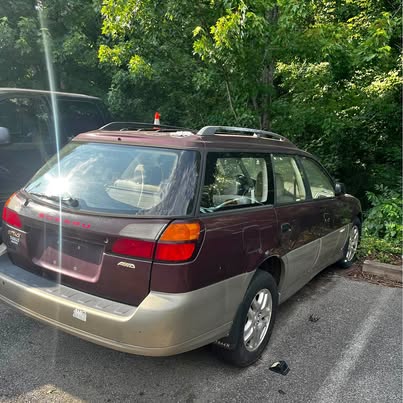
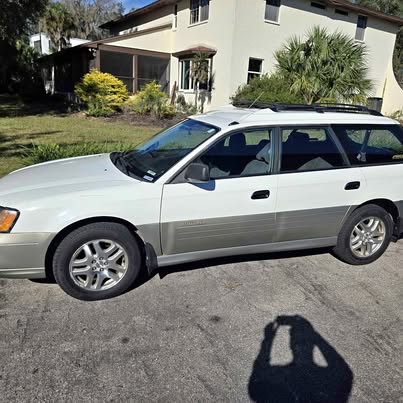
The second generation, 2000 to 2004. This is the core of the market and the car most readers will buy. The body is stiffer and better finished, the interior is a clear step up, and better crash performance arrives. The standard engine is the 2.5-litre EJ251 single-cam four at 165 hp, with a five-speed manual or four-speed automatic. From 2001 the range gains the car that changes its character: the H6 3.0 flat-six, automatic only, sold in L.L.Bean Edition form with leather and premium trim, and in VDC form with stability control and a more sophisticated all-wheel-drive coupling. The L.L.Bean is the comfort pick; the VDC is the best bad-weather car of the generation. Base and Limited four-cylinder cars remain the value center: Limited adds leather, the all-weather package and upgraded trim, and it is the trim most buyers should target, because the price difference on a twenty-year-old car is small and the equipment difference is felt every winter morning.
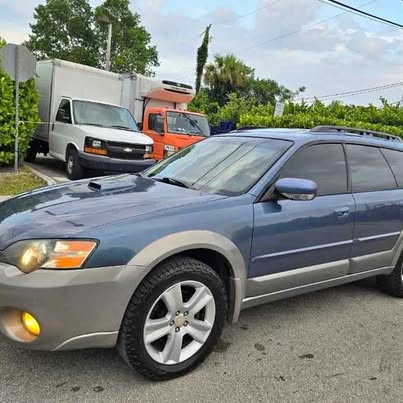
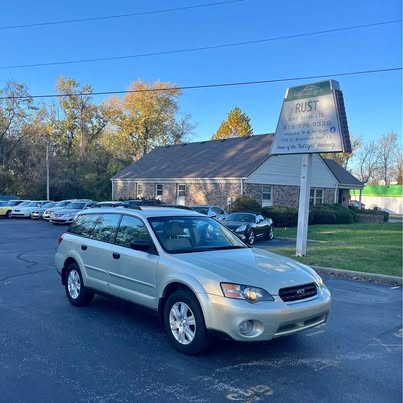
The third generation, from 2005. The 2005 car is sleeker, better finished inside and noticeably quicker across the range. The base 2.5i uses the EJ253 four at 168 hp. Above it sit the 2.5 XT, with a turbocharged 250 hp flat-four, and the 3.0 R, with a revised 250 hp flat-six and a five-speed automatic. The XT is the enthusiast's Outback, genuinely fast and offered with a manual gearbox, and it demands turbo-car maintenance discipline. The 3.0 R is the refined flagship, automatic only. Trim names multiply for 2005, so verify the engine from the car itself, not the advertisement: a turbo car has an intercooler on top of the engine with a hood scoop feeding it. A car advertised as an XT with no hood scoop is not an XT.
Engines and gearboxes
The four-cylinder cars: EJ22, EJ25D, EJ251 and EJ253
All the volume Outbacks use Subaru's EJ flat-four, mounted flat with two cylinders on each side, overhead cams driven by a single long timing belt. It is a compact, low engine with an aluminum block and heads, and its character defines the car: a slightly lumpy idle, a thrumming note under load, strong low-speed pull for its size and a willingness to run to very high mileages if, and only if, the belt and the coolant have been looked after.
The EJ22 2.2-litre in the earliest cars is the saint of the family. It makes only 135 hp, it is a non-interference design in its early form, meaning a snapped timing belt is an inconvenience rather than a destroyed engine, and it has no meaningful head-gasket problem. A tidy 1995 or 1996 2.2 car is the lowest-risk Outback there is. Its faults are age faults: cam-seal and valve-cover oil leaks, tired ignition leads and a throttle body that wants cleaning.
The EJ25D 2.5-litre dual-cam that followed in the first-generation cars is stronger, 155 hp at first and 165 hp in later tune, and it is the engine that built Subaru's head-gasket reputation. This Phase I 2.5 fails internally: combustion pressure and coolant find a path past the early composite gasket, and the classic presentation is overheating, bubbles in the coolant reservoir and exhaust gas in the cooling system, often with no external leak to see. The full mechanism and the tests are in the problem areas section, because on a first-generation 2.5 they are the purchase. Do not let a seller wave this away as internet exaggeration. It is a real, well-understood failure of this specific engine, and a car with documented replacement gaskets of the later multi-layer steel type, fitted with the heads checked and skimmed as needed, is a fundamentally different proposition from a car on its original gaskets at 150,000 miles.
The EJ251 2.5-litre single-cam in the 2000 to 2004 cars makes 165 hp and feels much the same from the driver seat, but its head-gasket failure is different in kind. This Phase II engine typically leaks externally, coolant weeping from the gasket joint at the back of the left-hand head and oil weeping on the right, rather than blowing internally and overheating. That sounds kinder, and in one sense it is: the car warns you with drips, a falling coolant level and a sweet smell after a run, instead of cooking itself without warning. Left alone, though, the coolant leak still ends in low coolant and overheating, and the repair is the same engine-out or heads-off job. From 2005 the EJ253 carries the same basic architecture with small power and refinement gains to 168 hp, variable valve lift on later related versions, and the same need to watch the gasket joints and keep the coolant fresh and correct.
Across all the fours, the service facts that price a car are these. The timing belt interval is 105,000 miles or 105 months on the later cars in this guide, and the belt job is never just a belt: a proper job replaces the belt, the idlers and tensioner, the water pump and the thermostat, and reseals the cam and crank seals while access is open. The idlers are the part that actually seizes and throws the belt. Budget roughly $900 to $1,600 for a complete belt service with pump and pulleys at an independent specialist, and treat an overdue car as one whose price must carry that job on day one. These are interference engines in 2.5 form: if the belt fails, valves meet pistons and you are pricing a rebuild, not a belt. On oil, a quart in 3,000 miles on a 180,000-mile four is common and liveable if it is stable; a quart in 1,000 miles, blue smoke that does not clear, or oil-fouled plugs point to rings and guides. A misfire on a viewing is more often old plugs, leads or a coil pack than catastrophe. Start there before you condemn the engine.
The six-cylinder cars: EZ30 and EZ30R
From 2001 Subaru offered the answer for buyers who wanted an Outback without the four-cylinder's noise and head-gasket baggage: the EZ30, a 3.0-litre flat-six. It makes 212 hp in the 2001 to 2004 cars and 250 hp in revised EZ30R form for 2005, it drives through an automatic only, and it transforms the car. It is smoother, quieter, stronger at highway speed and, crucially, it uses timing chains rather than a belt and does not share the four-cylinder head-gasket failure pattern. For a buyer who plans to keep an Outback for years and dreads the gasket job, the H6 is the rational purchase, and experienced owners know it.
The six has its own costs. It is a tighter fit in the bay, so labor times grow. It wants premium fuel in later high-output form, uses more fuel than the four in town, and its specific items are chain tensioners and guides at high mileage and drive-belt pulleys. Listen for a front-of-engine rattle on a cold start that persists beyond a second or two: the chain system wanting attention, a job in the $1,200 to $2,500 range. Check coolant and hoses as carefully as on a four; a cooked six warps its alloy heads just as readily. The difference is cause: on the four you inspect for a known gasket weakness, on the six you inspect for neglect.
The turbo car: EJ255 in the 2005 XT
The 2005 XT adds a turbocharger and a top-mount intercooler to the 2.5 four and makes 250 hp, with torque that makes the Outback feel like a tall WRX wagon. It is the fastest car in this guide by a wide margin and the most maintenance-sensitive. The turbo engine needs clean oil on short intervals, premium fuel without exception, and a cooling system in perfect order, because turbo heat punishes any weakness. Its banjo-bolt oil feed filters clog if oil changes have been stretched, starving the turbo; a turbo replacement runs roughly $1,200 to $2,200 fitted with the feed lines cleaned or replaced. Boost finds any cooling or tuning weakness, and modified cars are common. Prefer a standard car with invoices, and walk away from a cheap XT with a boost gauge, an aftermarket blow-off valve and no history: you are buying someone else's experiment. A healthy XT pulls cleanly from about 3,000 rpm with no hesitation and no smoke under boost. Blue smoke after a long idle or a whine that rises with boost both price turbo work into the offer.
Gearboxes and all-wheel drive
Three gearbox families cover the guide. Most four-cylinder cars offer a five-speed manual or Subaru's four-speed automatic, the 4EAT. The H6 cars are automatic only, and the 2005 range adds a five-speed automatic for the XT, 3.0 R and higher trims, with manual shift control. There is no continuously variable transmission in this guide; that arrives on a later Outback generation, so any listing that describes a 1995 to 2005 Outback as a CVT car is wrong about the car in front of you.
The manual is the enthusiast and economy choice, with a viscous center differential splitting torque 50 front, 50 rear and locking up as wheels slip. Judge it on clutch bite, on synchromesh into second and third when cold, and on a whine in fifth that points to worn bearings. A clutch replacement is roughly $900 to $1,500 fitted, a fair price chip on a high-mileage car if everything else is right. Many manuals also carry Subaru's hill-holder, which holds the brake on a hill start until the clutch bites; one that sticks or drags is an adjustment issue, not a gearbox rebuild.
The 4EAT automatic uses a different all-wheel-drive system: most automatic fours vary torque to the rear wheels with an electronically controlled transfer clutch pack, running mostly front-biased until slip is detected, while VDC cars use a planetary center differential with a 45 front, 55 rear default split, called VTD, plus stability control. Both suffer the same signature fault when tires are mismatched or the transfer system ages: torque bind, a tight, shuddering feeling in slow full-lock turns. A healthy car turns in a tight circle smoothly, with no hopping or groaning. The full test is step 9 of the inspection. Causes range from tires of different circumference, the most common and cheapest to fix, to a worn transfer clutch or failed duty solenoid in the tail housing, a repair in the $600 to $1,400 range. Fluid tells the truth: it should be red to light brown and smell neutral. Dark, burnt-smelling fluid plus delayed engagement means a rebuild conversation in the $2,800 to $4,500 range. Also know the FWD fuse: automatic cars have an underhood fuse slot that disables the rear drive for towing and diagnosis. A car sold with that fuse fitted is a car with its all-wheel drive switched off. Check.
Problem areas
An Outback of this era rarely fails in surprising ways. It fails in known ways, in a known order, and almost all of them can be detected on a careful viewing if you know where to look. Work through this section before you view a car and you will understand the inspection checklist that follows, because the checklist is simply this section turned into an order of operations. One warning before the detail: we have no examined-photo sample for these cars to quote incidence figures from, so this guide makes no statistical claims about how often each fault appears. What follows is the failure knowledge itself, the mechanisms, and the tests that separate a cheap fix from an expensive one.
Head gaskets and the cooling system: the defining issue
Start here, because on the four-cylinder cars this is the purchase.
Subaru's Phase I EJ25D in the 1996 to 1999 cars uses an early head-gasket design that fails internally. The gasket loses its seal between the combustion chamber, the coolant passages and the oilways, and the failure feeds on itself: combustion pressure pushes gas into the coolant, the coolant aerates and loses cooling capacity, the engine runs hot, and heat further damages the gasket and can warp the heads. The symptoms build in stages. Early on you may see only a coolant level that falls slowly with no puddle, bubbles rising in the overflow reservoir after a hard run, and a heater that blows cool at idle because gas is collecting in the system. Later comes the unmistakable stage: the temperature gauge climbing on hills or in traffic, coolant pushed out of the reservoir, and overheating that no thermostat change cures. The decisive test is chemical and mechanical, not visual. A combustion-leak tester, the blue fluid block tester held over the radiator neck, changes color if exhaust gas is present in the coolant, and a cooling-system pressure test plus a cylinder leak-down test confirm which bank is leaking. Do those tests, or pay a specialist to do them, on any Phase I car without documented gasket replacement. A seller's assurance that it has never overheated is not a test.
The Phase II EJ251 in the 2000 to 2004 cars fails differently. Its gaskets typically leak externally, coolant seeping from the lower rear corner of the left-hand head joint and oil seeping on the right-hand side. You detect it from underneath and from behind the engine: green or pink crusty residue at the head joint, a sweet coolant smell after parking, drips on the crossmember and a coolant level that needs topping up every few weeks. Subaru's own period response included a coolant conditioner additive, and a bottle of conditioner in the service history is a clue the leak was being managed rather than fixed. Managing is not fixing. An external leak that is truly minor, a faint stain with no measurable coolant loss over a long test drive and a clean pressure test, can be monitored by an owner who checks the level weekly. A leak with active dripping, crust built up along the joint and a history of top-ups is a head-gasket job that happens to be leaking outward first. Price it as a gasket job.
The job itself is the same in outline for both engines. The heads come off, are checked for flatness and skimmed if needed, multi-layer steel gaskets of the later design go on with new head bolts torqued by the full factory sequence, and while access is open you replace the timing belt set, water pump, thermostat, clutch if it is a manual, rear main seal and separator plate, and every tired hose. Done completely at an independent specialist, the full job with machining runs roughly $2,200 to $3,800. Done properly with the later gaskets, the repair lasts. Done cheaply with the old gasket type and unskimmed heads, it fails again, which is why the invoice matters more than the words head gaskets done in an advertisement. Ask which gaskets went in, whether the heads were machined, and who did the work. A receipt for gaskets alone, fitted at home with no machining record, is a question, not an answer.
The cooling system around the gaskets decides how much damage a leak does. These engines tolerate no overheating at all. The radiator is plastic-tanked and age-cracks at the top tank and inlet neck; the thermostat must be a correct-spec part, because cheap thermostats trap air and cause the very overheating owners blame on gaskets; the water pump is belt-driven, which is why it is replaced with the belt; and the system must be bled properly after any work, because an air lock gives you a cold heater and a climbing gauge on a healthy engine. On a viewing, look for the bodges that betray a car that has run hot: stop-leak flecks in the reservoir, mixed coolant colors, a removed thermostat offered as a feature, a fan wired to run constantly. Each one says the car overheated and someone hid it rather than fixing it.
Rust: the map
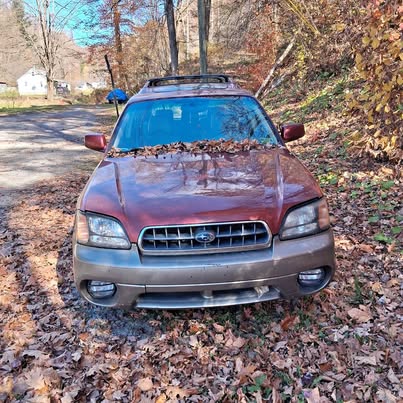
Outbacks live where roads are salted, and they are used as winter cars precisely because they are good at it. Rust is therefore the second purchase-decider after head gaskets, and on first-generation cars it is the first. The pattern is consistent.
Rear quarter panels and the rear wheel arches. The classic Outback rust starts where the rear bumper cover meets the quarter panel and around the arch lip, where mud and salt sit trapped behind the cladding. Bubbling at the arch edge or at the bumper joint means perforation is close behind, because these panels rot from the back side outward. Press along the arch and look inside the wheel well with a torch. Cosmetic arch repair with paint runs roughly $600 to $1,400 a side done properly with metal cut out and welded; filler over rust is a few hundred dollars and lasts one winter.
Rear subframe and rear suspension mounts. This is the structural check that kills cars. The rear subframe and its mounting areas corrode, especially on cars from the Northeast and Midwest, and heavy scale or perforation around the mounts is fabrication work or a subframe replacement, roughly $1,200 to $2,500 with a sound used or new subframe and labor, if the body mounting points themselves are still solid. If the body where the subframe bolts is rotten, the car is done as an economic proposition. Get underneath, or get the car on a lift, and prod. Sellers' photographs almost never show this area, and that absence tells you nothing either way. You have to look.
Rocker panels, jacking points and floor edges. The cladding also hides the rockers. Look behind the plastic, at the pinch welds and jacking points, and lift the front carpets if the seller allows it. Surface scale is normal on a twenty-year-old winter car. Soft metal, holes at the jack points and wet carpets are not. A rocker section welded and painted is roughly $800 to $1,800 a side, and like all rust work it grows once cutting starts.
The smaller traps. Door bottoms, where blocked drains let the doors hold water. The tailgate around the handle and wiper. The fuel filler neck, which corrodes, leaks fumes and throws an evaporative fault, a replacement job in the $350 to $700 range with labor. The brake lines, which run inside a rear cover where salt collects; a full line replacement in coated steel runs roughly $800 to $1,600. Read the rust as a system: a car with clean arches, a solid subframe and honest stone chips is worth substantially more than a crusty one, even with higher mileage.
Drivetrain, suspension and steering
Beyond torque bind, covered with the gearboxes above, the drivetrain faults are wear faults, and they announce themselves honestly if you listen.
CV axles and boots. Front boots split with age and steering lock, fling grease into the wheel well and then let grit destroy the joint. Clicking on full lock is a worn outer joint; a vibration under load that disappears when you lift off can be a worn inner joint. A good remanufactured or quality new axle fitted runs roughly $350 to $650 a side, and cheap axles that vibrate from new are a known false economy. Check all four boots and price split boots as axle jobs waiting to happen.
Wheel bearings. Sealed hub bearings wear and drone, a hum that rises with road speed and changes as you load the car side to side in gentle curves. Rear bearings are a press job. Replacement runs roughly $350 to $600 a corner. A car droning from two corners has a bill coming; negotiate it, because a failed bearing eventually damages the hub.
Prop shaft and center bearing. The two-piece prop shaft's center bearing and universal joints wear, giving a vibration or a clunk on taking up drive. The joints on many shafts are staked and nominally non-serviceable, so the fix is often a rebuilt shaft, roughly $500 to $900 fitted. Check for play and perished rubber at the center bearing on the lift inspection.
Suspension and steering. Struts, sway-bar links and control-arm bushings are ordinary wear items, and a tired Outback wallows, knocks over broken pavement and wears its tires unevenly. Power steering pumps whine and leak at the reservoir O-ring and hoses, usually cheap seals before a pump is needed; a pump replacement is roughly $450 to $800 fitted. Steering racks leak at the boots on high-mileage cars. None of this is exotic, but it adds up: a car needing struts, links, two bearings and four tires is not cheap even if the engine is perfect.
Tires are a system, not an accessory. All four tires must be the same make, model, size and near the same tread depth, because a circumference difference makes the center coupling work constantly and causes the torque bind described above. A car on one odd tire, or with visibly different tread depths front to rear, has been damaging its own drivetrain. Budget a full matched set, and treat the mismatch as evidence about the previous owner.
Brakes, electrics and the rest
Brakes are conventional discs, with drums on some early base cars at the rear, and they suffer the standing-car diseases: seized caliper slide pins, rusted rotors, perished flex hoses and corroded hard lines. A full brake refresh runs roughly $600 to $1,200 depending on how many calipers need replacement. ABS tone rings corrode and crack, bringing the ABS light on; diagnosis matters more than parts here.
Electrics are generally a Subaru strength, with three period exceptions. A failing alternator shows first as dimming at idle and a flickering battery light; replacement is roughly $350 to $600 fitted. Air-conditioning compressors and clutches tire, and a full revival after years of disuse runs roughly $700 to $1,500. Tired door-lock actuators and window regulators are annoying rather than expensive, typically $150 to $400 a door with labor. Test everything on the viewing. A car where everything works has usually been owned by someone who fixed things, and that pattern is worth money.
Catalytic converters and oxygen sensors age out, and a check-engine light for catalyst efficiency can mean a $700 to $1,600 exhaust-side bill if the converter itself needs replacement with a quality part. Heat-shield rattle alone is cheap and ubiquitous; learn to tell a loose-shield buzz from a converter substrate rattle. The light itself is never a diagnosis. Read the codes: on these cars they commonly point to the evaporative system, oxygen sensors, knock sensor and catalyst efficiency, and the difference between a $40 gas-cap seal and a converter is a code read and five minutes of thought. Sellers clear codes before viewings; a code that returns on your test drive was there before you arrived.
Interior, body and trim
The interior wears better than most: cloth holds up, Limited leather cracks on the driver bolster first, and the cabin rarely prices a car. The costs that do appear are blocked sunroof drains on cars with the large roofs, which pour water into the headliner and footwells and mimic a rust leak; the tailgate wiring loom, which fatigues where it flexes and takes out the rear wiper, lock and lights one by one; and sticking HVAC actuators. Wet front carpets on a rust-free car are almost always sunroof drains, air-conditioning drain or a windshield seal, each cheap next to floor welding. Check the spare-tire well too: water there points to tailgate and lamp seals.
Headlamp lenses cloud and polish back or replace at roughly $150 to $300 a side, and the two-tone cladding fades unevenly, which is cosmetic and should stay cosmetic in your valuation. Do not pay a premium for shiny cladding over an undocumented engine, and do not reject a documented car for faded plastic. You are buying an engine, a shell and a drivetrain.
How to inspect one
Allow a full hour, insist on a cold engine when you arrive, and bring a torch, a rag and a code reader if you own one. If the car passes, pay for a lift inspection and a cooling-system pressure test at a Subaru specialist before money changes hands. That hour is where the head gaskets, the rear subframe and the transfer system give up their secrets.
- Start with the paperwork and the identity. Match the VIN on the title to the plate at the base of the windshield and the sticker on the driver door jamb. Confirm the engine from the car, not the listing: hood scoop and top-mount intercooler for a turbo XT, flat-six under the hood for an H6 or 3.0 R, four-cylinder timing-belt covers for a 2.5i. Then read the history file with one question in mind: where are the timing belt and head-gasket invoices, and who fitted them. A thick file from a Subaru specialist changes the value of the car. No file on a 150,000-mile four-cylinder car means you price both jobs as your future bills.
- Cold start. With the engine stone cold, watch and listen. It should start promptly, settle to a slightly lumpy flat-four idle and show no blue smoke beyond a faint puff. A rattle that lasts more than a second suggests timing-chain wear on a six or a tired tensioner on a four. Note the coolant temperature gauge from cold; you will watch it for the whole visit. If the engine is warm when you arrive despite an agreement to view it cold, ask why, and be prepared to leave and return. Warmth hides cold-start smoke, chain rattle and slow cranking.
- Coolant forensics. With the engine cold, open the radiator cap and the overflow reservoir. The coolant should be one clean color, the level correct, and the reservoir free of oily film, rust and stop-leak flecks. Squeeze the top hose and watch for bubbles with the engine idling once warm. On a Phase I car, bubbles in the reservoir after a run plus a falling level is the internal gasket failure described in the problem areas section until a block test proves otherwise. On a Phase II car, get your torch behind the left-hand head from above and below and look for the external crust and weep at the gasket joint. Smell the reservoir: exhaust smell in the coolant is a failed test without any equipment.
- Oil and the dipstick story. Pull the dipstick. The oil should sit at the correct level, feel like oil and smell like oil, not fuel and not sweet coolant. Milky residue under the oil filler cap on a car that only does short trips can be condensation, so judge it alongside the coolant evidence, never alone. Then ask when the oil was last changed and look at the filter and the sump area for leaks: cam seals, valve covers and the rear separator plate all weep with age, and a steam-cleaned engine on a high-mileage car is a question, not a virtue.
- The timing-belt question, out loud. Ask directly: at what mileage was the belt last changed, with what parts, and where is the invoice. Look for the timing-belt replacement sticker many shops fit on the belt cover or radiator support. No invoice and no sticker means the belt is overdue in your valuation, whatever the seller believes, and on an interference 2.5 that means the full belt, pulley, pump and thermostat job goes into your offer maths from the engines section. A six-cylinder car skips this step; spend the saved worry on its chain rattle and service history instead.
- Underneath: subframe, arches and gasket joints. On the ground with a torch, and later on a lift if the car survives, work in this order: rear subframe and its mounts, rear arch lips and bumper joints, rocker pinch welds and jack points, head-gasket joints from below, axle boots, brake lines, prop shaft center bearing. Distinguish scale that rings solid from metal that gives. Perforation at the subframe mounts or soft rockers ends the inspection for most buyers.
- Tires as a drivetrain test. Read all four tires: same make, model and size, tread depths within a small margin. Measure, do not eyeball. Four matched, evenly worn tires support the seller's story. One odd tire refutes it, and you should price a full set and a transfer-system test into the car.
- The test drive, first half: engine and gearbox. Drive at least twenty minutes, including hills and a highway stretch, because head-gasket overheating shows under load, not in a parking lot. Watch the temperature gauge on every climb. A four should pull cleanly; an automatic should shift firmly without flaring or a long pause into reverse; a manual should take second and third cleanly. On an XT, feel for clean boost from 3,000 rpm with no smoke under load. Any temperature climb or coolant smell stops the drive and the negotiation until a pressure and block test have spoken.
- The test drive, second half: torque bind and bearings. In an empty lot, drive slow full-lock circles in both directions, windows down. A healthy car turns smoothly and quietly. Binding, hopping or groaning is torque bind: check tire matching first, then treat it as a transfer-system bill as priced in the problem areas section. Then listen at 40 to 60 mph for bearing drone, loading the car gently left and right, and finish with a firm brake stop: straight, without judder, pulling or a sinking pedal.
- Heat, cooling and electrics at rest. Let the car idle hot. Both fans should cycle, the temperature should sit stable, the heater should blow hot and stay hot, and the air conditioning should blow cold. Work every window, the mirrors, heated seats if fitted, the rear wiper and washer, the sunroof if fitted, and every light. Check that the check-engine light illuminates with the ignition and goes out after starting. No light at ignition means a removed bulb or a taped cluster, and that discovery ends trust in everything else the seller has said.
- Codes and the second look at fluids. Read stored and pending codes, not just active ones. A recently cleared car shows incomplete readiness monitors, which tells you codes were cleared shortly before your visit. After the drive, recheck the coolant level, look again for fresh weeps at the head joints, and recheck automatic fluid level, color and smell: after real work they tell you more than the same check cold.
- Interior and water last. Sit in every seat, operate the tailgate, fold the rear seats, and lift the spare-wheel cover. Water in the well, damp carpets or a musty smell send you back to the sunroof drains, tailgate seals and lamp seals in the problem areas section, in that order. Decide with the full list in front of you, not with the feeling of the test drive alone.
Values
The market block beneath this guide carries the current listing picture for these cars, refreshed as the listings change. Use this section to learn how to read it, because with Outbacks of this age the spread inside any single model row matters more than the row itself.
The condition spread is extreme, and it is driven by two invoices. A four-cylinder Outback with documented head gaskets in the later multi-layer steel type, a recent full timing-belt service with pump and pulleys, matched tires and a solid rear subframe is a genuinely sorted car, and sellers who have paid for that work know what they have. The same year and trim without those invoices is a car carrying several thousand dollars of probable near-term work, and it should be valued as such, however clean it photographs. When you compare listings, compare documentation first, mileage second and cosmetics third. The market often does the opposite, which is where careful buyers find their advantage: a higher-mileage car with the two big jobs invoiced is routinely the better value than a lower-mileage car with no history, and it is frequently priced as if the reverse were true.
Asking prices and achieved prices part company most at the extremes. At the bottom of the market, optimistic asking prices attach to cars with active leaks, mismatched tires and rust described as minor, and those cars sit. At the top, exceptional cars, a one-owner H6 with full history, a manual XT in standard tune, a genuinely rust-free first-generation Limited from a dry state, attract buyers who have been waiting and know the supply is thin. Between those poles, honest drivers with honest descriptions change hands without drama. Expect to negotiate hardest where the description is vaguest: a listing that cannot tell you when the belt was done is a listing that has already answered, and your offer should reflect the cost of doing it.
Variant premiums follow knowledge, not just performance. The H6 cars carry a premium with informed buyers because they avoid the defining four-cylinder repair, and that premium is rational if the rest of the car is equal. The 2005 XT carries an enthusiast premium that grows with originality and shrinks fast with modification or missing history. First-generation cars are capped by rust: a solid-shell early car is scarce and worth seeking, while a rusty one has no rarity floor, because repair costs do not care how charming the car is. Manual gearboxes add desirability for the enthusiast minority and subtract a little in the general market. Color moves these cars far less than history does.
The project-versus-driver gap is the widest judgement you will make. A non-running or overheating four-cylinder car is not a cheap Outback with a small fault; it is a shell and a drivetrain of partly unknown health around an engine that needs its most expensive repair, and it should be priced as a project in the full sense. A running car with a documented external weep that a pressure test shows to be minor sits in a different category: buy it, monitor the coolant weekly, and budget the gasket job into your first year. Place each car you see into one of those two categories with tests, not hope, and the market block below will sort itself into bargains, fair cars and traps.
Parts and ownership
The Outback is one of the easiest cars of its era to keep, because Subaru built millions of EJ-powered cars and the aftermarket followed. A good independent Subaru specialist is the single best ownership asset you can buy, and in most of the country you will find several. Join the pattern that works: one specialist who knows the car, and service done by the book and a little early.
Easy and cheap: oil, filters, spark plugs, ignition leads and coil packs, brake pads, rotors and calipers, sway-bar links, wheel bearings, CV axles of reputable quality, alternators, starters, radiators, thermostats of the correct specification, hoses, drive belts and pulleys, oxygen sensors and knock sensors, struts and shocks, and almost every routine service item. Order today, fit this week, at prices close to any mainstream car of the period. The flat-four's plugs are fiddly to reach and still a driveway job with the right extension and patience.
Harder and dearer: the head-gasket job itself, at roughly $2,200 to $3,800 done completely as described earlier, because the cost is labor and machining rather than parts. Turbochargers on the XT, at roughly $1,200 to $2,200 fitted with oil-feed work. Automatic gearbox rebuilds, at roughly $2,800 to $4,500, which is why fluid condition matters so much at purchase. Rear subframes and the labor around them. Catalytic converters of quality. Air-conditioning compressors with a full system service. Six-cylinder timing-chain work. None of these parts is unobtainable; all of them are labor-led bills, which is the recurring theme of Outback ownership. The car rarely strands you for want of a part. It presents you with jobs that take time, and time is what you pay for.
Running costs. Fuel economy in honest use sits in the low to mid twenties per gallon overall for a four-cylinder car, with the six and the turbo a few points thirstier and wanting premium fuel in later form. Insurance is unremarkable, and tires carry the single discipline that they are replaced as a matched set of four. The budget line that catches new owners is the first-year catch-up: a car bought without history commonly needs the timing-belt service, a full fluid change, plugs, filters and tires in short order, and an honest catch-up budget of $1,500 to $3,500 on top of the purchase price keeps that from becoming a grievance. Cars bought with the big invoices already paid need a fraction of that. The history file is not paperwork; it is prepaid maintenance, and it should be valued in dollars when you compare two cars.
Winter ownership is why most of these cars were bought. Wash the underside through the salt season, keep the arch lips clean, clear the door and tailgate drains each autumn, and treat any bubbling the spring it appears. Owners who do this keep solid cars in states that dissolve neglected ones.
Which one to buy
- The all-rounder: Outback 2.5i Limited, 2000 to 2004. The volume car for a reason: 165 hp, the best equipment-to-price balance in the range, plentiful parts and specialists, and a deep market to buy from. Buy it on head-gasket and belt invoices and a solid subframe, not on mileage.
- The rational keeper: Outback H6 3.0 L.L.Bean or VDC, 2001 to 2004. The flat-six removes the defining four-cylinder repair, adds refinement the four cannot match, and costs little more to buy. If you plan to keep an Outback for a decade, start here and buy the best-documented car you can find.
- The enthusiast pick: Outback 2.5 XT, 2005, manual if you can find one. Genuinely fast, genuinely scarce in standard tune, and the only car in this guide with a collector trajectory. It demands premium fuel, short oil intervals and a standard, invoiced car. A modified, undocumented XT is the one car here to walk away from at almost any price.
- The value buy: a documented EJ22 Legacy Outback, 1995 to 1996, or a high-mileage 2.5i with both big jobs invoiced. The 2.2 car is slow and simple in the best sense. The invoiced high-miler is the market's recurring mispricing: everyone else pays for low mileage, you pay for prepaid repairs.
- The flagship: Outback 3.0 R, 2005. The most refined car in the guide, with the 250 hp six and the five-speed automatic. Buy it as you would the earlier H6, on history and shell, and enjoy the quietest Outback of the era.
- The one to avoid: any four-cylinder car with overheating symptoms, stop-leak in the reservoir and no history, at any trim or mileage. The badge, the leather and the low odometer do not change what is happening inside the cooling system.
And the rule that overrides all of the above: buy the invoices and the shell, in that order, and let mileage come third. A documented head-gasket and timing-belt history on a rust-free body is worth more than 50,000 fewer miles on an undocumented car, every time, because the expensive failures here are known, priced and preventable, and the cheap car that needs them all is not cheap at all.
Listed now
On Classic Listings today: 9 cars are listed here; 5 for sale and 4 marked sold; average asking price $2,850; asking range $600 to $4,500; sold cars average $7,975.
See the 9 Outback cars currently listed.
The market — recorded sales
Recorded-sale figures: 4 recorded sales · median $7,700 · range $4,000 to $12,500 (Jul 2024 – Jul 2026)
Based on 4 recorded sales — too few for a benchmark value.
| Date | Car | Sale price | Source |
|---|---|---|---|
| Jul 29, 2026 | 1996 Legacy | $6,900 | Cars & Bids |
| Mar 24, 2026 | 2005 Outback | $12,500 | Cars & Bids |
| Feb 27, 2026 | 1999 Legacy | $4,000 | Cars & Bids |
| Sep 18, 2025 | 2005 Outback | $8,500 | Cars & Bids |
Dates are the sale date where the source states one; otherwise the date the sale was recorded here.
For sale now
 $4,500
Expand
 $600
Expand
 $3,600
Expand
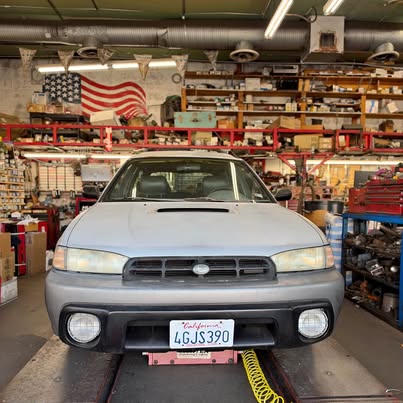 $2,699
Expand
$8,000