
Toyota Camry buyer's guide
Toyota Camry (1983–2001) — Camry: what's listed, and what they sell for.
Years: 1983–2001 · Models: Camry
Overview and history
This guide covers the classic-era Toyota Camry only: the front-wheel-drive cars built from 1983 to 2001 — the V10, V20, XV10 and XV20 generations — and it says so plainly because the name lived on long afterwards on a completely different kind of car. The Camry you will find in this site's classic listings is not the modern hybrid family sedan. It is the earlier machine: smaller, lighter, simpler, offered at various times as a sedan, a liftback, a two-door coupe and a proper station wagon, with four-cylinder and V6 engines, with manual gearboxes if you hunt, and in one short-lived form with all-wheel drive. The site's own taxonomy for the series runs from 1983 to 2005, and the current pool behind this guide is tiny and telling: 8 cars in total, all 8 listed for sale, spanning 1987 to 2004, every one of them sourced from Facebook Marketplace. Treat that sample of 8 for what it is — a snapshot of what actually survives and surfaces at the affordable end of the market, not a census of what was built. What was built was built in the millions. What survives in interesting form is another matter entirely, and that gap between production and survival is the whole story of the early Camry as a classic.
The Camry name first appeared in Japan in 1980 on a rear-drive Celica derivative, but the car this guide is about begins in 1983, when Toyota launched the V10 as a front-wheel-drive sedan and liftback to sit above the Corolla. The engineering brief was conservative in the best Toyota way: transverse engine, MacPherson struts front and rear, unit body, everything optimised for space, economy and durability rather than excitement. In the United States it replaced the rear-drive Corona and landed in a market still dominated by big domestic sedans and the Honda Accord. It won buyers the slow way — by not breaking. Through the V20 generation (1987–1991 in the US) Toyota added the two things that define the early Camry's enthusiast interest today: a 2.5-litre V6 and a station wagon body, plus the All-Trac all-wheel-drive variant. The XV10 (1992–1996) was a deliberate step up in size, refinement and ambition — wider, quieter, styled to look expensive, and developed with the same seriousness Toyota had just applied to Lexus. The XV20 (1997–2001) then cost-engineered that formula back down while keeping the size, became the best-selling passenger car in America year after year, and closed the classic era covered here.
The Lexus connection matters and is not a metaphor. The Lexus ES250 of 1990–1991 was a V20 Camry in a tailored suit — same platform, same 2.5-litre 2VZ-FE V6, richer trim — and the ES300 that followed was the XV10's sibling in the same way. When you inspect a V6 Camry you are looking at hardware Toyota trusted to carry a luxury badge, and parts and knowledge cross over more often than sellers realise. Camrys were also built beyond Japan — notably at Georgetown, Kentucky from 1988 — so the first character of the VIN tells you the origin: J for Japan, 4 for US-built. Neither is automatically better; condition decides, as it decides almost everything with these cars.
Why does an appliance become a classic? Because appliances get used up. A contemporary Mercedes or BMW was bought by someone who could afford to garage it, service it and keep it when it stopped being fashionable. A Camry was bought to commute, to haul children, to do 200,000 miles of unglamorous work — and when it finally tired, it was traded, handed down, run as a winter beater or scrapped, because for thirty years there was always another, newer Camry that did the same job better. Nobody preserved them on purpose. The result, visible in this site's pool of 8 cars, is survivor scarcity of a peculiar kind: the model is not rare, but the good early car is. A straight, unrusted V20 wagon, a manual-gearbox car that has not been modified into oblivion, an All-Trac that still has its rear drive intact — these are genuinely hard to find now, harder in some cases than cars that were rare when new. In the current pool of 8, automatics outnumber manuals 7 to 1, which matches what you will find in the wild: the manual cars exist, but you will look at a lot of automatic LE sedans before you meet one.
That is also how to set your expectations. You are not buying rarity, concours potential or an investment thesis. You are buying one of the most thoroughly engineered ordinary cars ever made, at the moment when ordinary has become interesting: honest styling, mechanicals a home mechanic can still service on a driveway, and a driving experience — light, airy, softly sprung, unhurried — that modern cars no longer offer. Buy on condition, not nostalgia, and not on mileage claims.
The models
Every classic-era Camry shares the same basic layout — transverse front engine, front-wheel drive (All-Trac excepted), four doors in the main line — so the badge, the body and the generation do the sorting. Trim language is consistent across the era: DX was the base car, LE the volume mid-trim most buyers chose, and XLE the top trim on the XV10 and XV20. The site's model roster for this series currently files everything under a single entry — Toyota Camry, shown as the LE Sedan 4D, 8 cars spanning 1987 to 2004 — which is a filing simplification, not the reality of the range: the photo pool behind the same roster contains a DX sedan, a V6 car and a Deluxe wagon alongside the LE sedans. The table below therefore lays out the range by generation and principal variant, which is how you will actually shop for one. Production was in the millions across each generation, so the Built column is deliberately qualitative: precise per-variant factory counts for US Camrys are not reliably published, and any seller quoting you an exact build figure for a trim variant is guessing.
| Model | Years | Engine | Output | Built | Character |
|---|---|---|---|---|---|
| Camry V10 sedan / liftback (DX, LE) | 1983–1986 | 2.0 four (2S-E) | about 92 hp | Very large | The original; light, simple, now very scarce in good order |
| Camry V20 sedan / wagon (DX, LE) | 1987–1991 | 2.0 four (3S-FE) | about 115 hp | Very large | The sweet-spot early car; wagon is the find |
| Camry V20 V6 sedan / wagon (LE V6) | 1988–1991 | 2.5 V6 (2VZ-FE) | about 153 hp | Large | Lexus ES250 hardware under Toyota badges; smooth, thirstier |
| Camry V20 All-Trac (LE) | 1988–1991 | 2.0 four (3S-FE) | about 115 hp | Small fraction of V20 | All-wheel drive, viscous coupling; rare then, rare now |
| Camry XV10 sedan / wagon / coupe (DX, LE, XLE) | 1992–1996 | 2.2 four (5S-FE) | about 130 hp | Very large | The plush one; bigger, quieter, the wagon years end here |
| Camry XV10 V6 (LE V6, XLE V6) | 1992–1996 | 3.0 V6 (1VZ-FE, then 1MZ-FE) | about 185–188 hp | Large | The Lexus-adjacent flagship; 1MZ cars are the ones to seek |
| Camry XV20 sedan (CE, LE, XLE) | 1997–2001 | 2.2 four (5S-FE) | about 133 hp | Very large | America's best-seller; lighter than the XV10, plainer inside |
| Camry XV20 V6 (LE V6, XLE V6) | 1997–2001 | 3.0 V6 (1MZ-FE) | about 194 hp | Large | The fastest classic-era Camry; manual V6 is the unicorn |
(Outputs are period US-market figures and vary slightly by year and emissions specification; treat them as orientation, not gospel, and check the under-bonnet emissions label on any individual car for its exact specification.)
The V10 (1983–1986). The first front-drive Camry: sedan and five-door liftback, 2.0-litre 2S-E four, five-speed manual or four-speed automatic. Light and narrow by later standards, and almost all were used up decades ago. If you find a straight one, you are buying charm and simplicity, not pace — and expect to hunt for trim and body parts rather than mechanical ones.
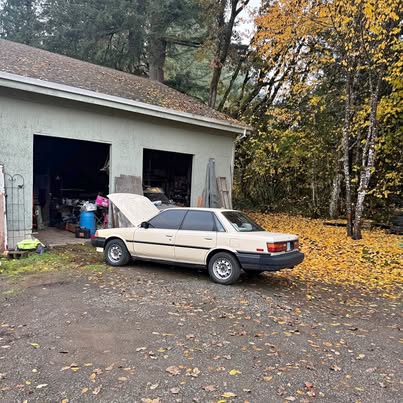
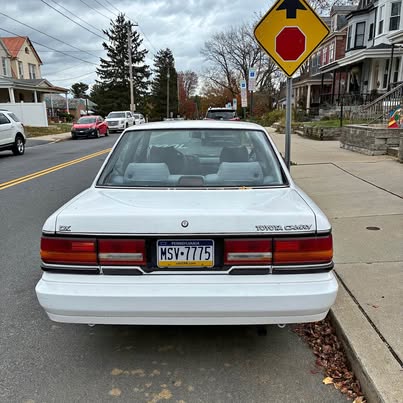
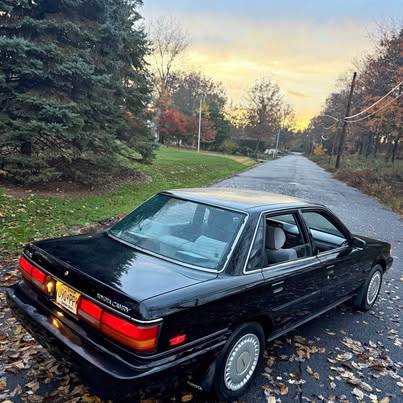
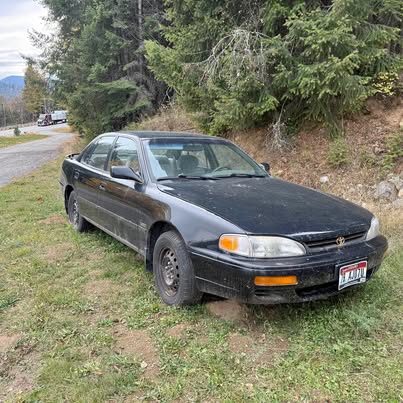
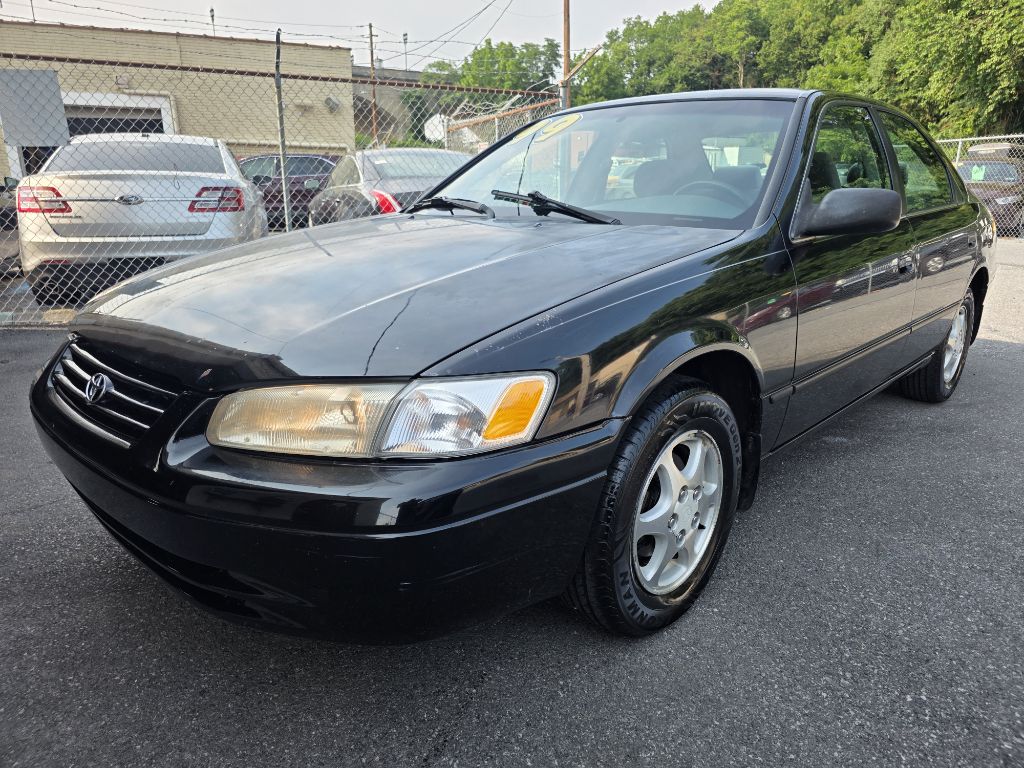
The V20 (1987–1991). The generation that made the Camry's reputation, and the core of this guide's interest. Crisp, upright styling, a genuinely spacious cabin, the 3S-FE four or the 2VZ-FE V6, and three bodies: sedan, wagon, and — under the skin — the All-Trac. The wagon is a real wagon, with a flat load floor and a tailgate, not a styling exercise. The current pool of 8 cars reaches back to exactly this generation — a 1987 LE sedan and two 1991 cars, a DX sedan and a black V6 — which is a fair picture of what still surfaces: early V20s appear, but one at a time, not in bunches.
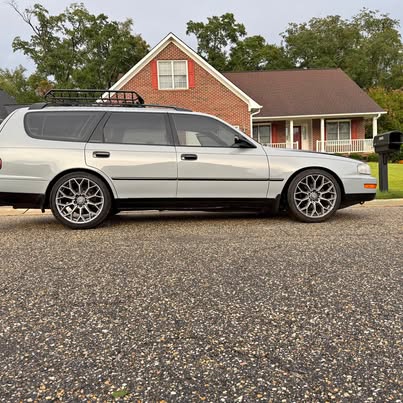
The XV10 (1992–1996). The upscale move. Everything grew: width, weight, sound deadening, equipment. The range added a two-door Camry Coupe (1994 onward, the direct ancestor of the later Solara) and kept the wagon — the last Camry wagon sold in the US. Four-cylinder cars use the 2.2-litre 5S-FE; V6 cars start with the iron-block 1VZ-FE and move to the alloy 1MZ-FE for 1994, the engine to have. A 1993 green LE sedan and a 1995 grey Deluxe wagon sit in the current pool of 8, and they represent the XV10's two natural buys: the everyday sedan and the wagon that everyone now wishes they had kept.
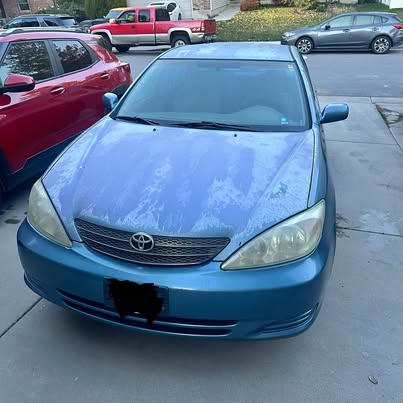
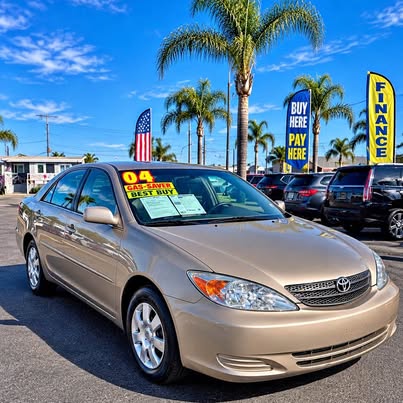
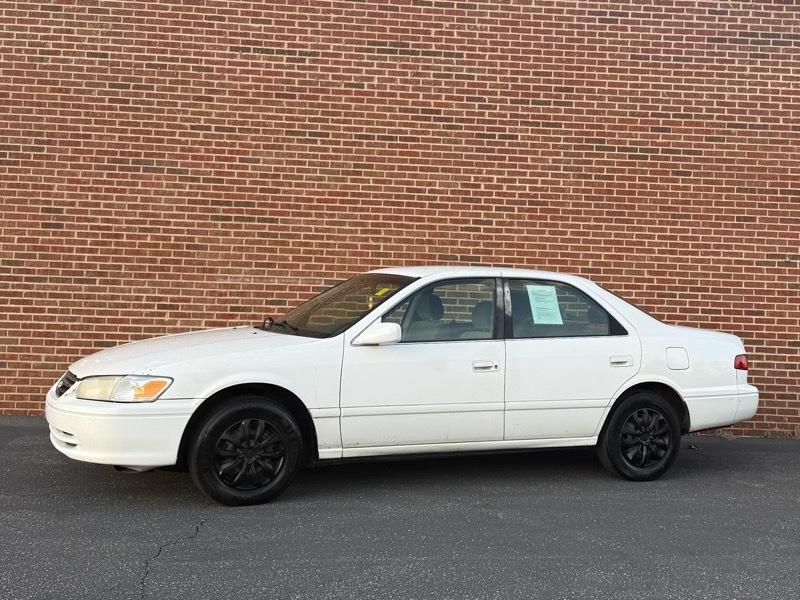
The XV20 (1997–2001). Toyota took cost and weight out of the XV10 formula without shrinking the car: a little less plush inside, a little sharper to drive, and sold in enormous numbers — the best-selling passenger car in America for much of its run. Trims simplify to CE, LE and XLE. No wagon, no coupe — the two-door became the separate Camry Solara from 1999. The pool's newest cars, the 2003 and 2004 LE sedans, belong to the XV30 generation that followed and sit just beyond this guide's 2001 line; they are not covered here beyond this note.
A word on badges and honesty. Camry badging is mostly truthful — there was never a halo model in this era for sellers to fake up into. The misdescription you will meet is gentler: a DX described as an LE, a four-cylinder headlined as "the V6 model", an All-Trac whose all-wheel drive has been partially removed and not mentioned. The checks are all in the inspection section: count the cylinders, read the VIN plate, and on an All-Trac confirm the propshaft, rear differential and rear driveshafts are physically present.
Engines and gearboxes
The fours: 2S-E, 3S-FE and 5S-FE
Three four-cylinder engines cover the whole classic era, and they are variations on one Toyota philosophy: an iron block, an alloy head, a timing belt, modest specific output and a bottom end that tolerates neglect far longer than it should have to. None of them is fast. All of them, given oil, will outlast the body around them — which is precisely why the inspection emphasis in this guide falls so heavily on the shell.
The 2S-E (V10, 1983–1986) is a 2.0-litre single-cam engine with electronic fuel injection in US form, making about 92 hp. It is the simplest engine here and the least supported: it was a transitional design, soon replaced, and while service parts remain obtainable, engine-specific spares are thinner on the ground than for the 3S family that followed. Judge a V10 on its body and trim first; the engine, if it starts cleanly, idles evenly and does not smoke, is unlikely to be the thing that stops you.
The 3S-FE (V20, 1987–1991, and the All-Trac) is the definitive early Camry engine: a 2.0-litre twin-cam (narrow-angle, economy-tuned — the FE head is built for torque and efficiency, not revs) making about 115 hp. It is famously unburstable in ordinary use. Its known habits are small and specific. The distributor sits at the back of the head and its internal oil seal hardens with age and heat, weeping oil first into the distributor cap and then down the back of the engine — misfire and oil loss from one cheap seal, and a classic misdiagnosis as a rear main seal leak, which it almost never is. The valve clearances are shim-adjusted and almost never checked, so a top-end tick on a high-mile car is usually adjustment, not damage. The timing belt is a service item — plan on roughly 60,000–90,000 miles or age alone as the trigger — and the good news is that the 3S-FE is a non-interference design: a snapped belt strands you, but it does not bend valves. While the belt is off, the cam and crank seals and the oil pump seal behind the front cover are the "while you're in there" jobs; oil misting from the front of the engine is usually that oil pump O-ring and seal, not the crank seal itself.
The 5S-FE (XV10 and XV20, 1992–2001) is the 3S concept enlarged to 2.2 litres, about 130 hp in the XV10 and about 133 hp in the XV20, with balance shafts for smoothness. It is the most numerous classic Camry engine and the easiest to live with: parts everywhere, knowledge everywhere, and the same non-interference timing belt arrangement as the 3S-FE. Its signature faults rhyme with its predecessor's — distributor and front-cover oil weeps, neglected belts, tired engine mounts that thump on take-off — plus one of its own: the exhaust manifold can crack, audible as a ticking from cold that quietens as the manifold expands and seals itself, which is why you must hear any 5S-FE from stone cold before you judge it. Oil consumption on a high-mile 5S-FE is usually valve stem seals (a puff of blue at start-up after sitting, then clean running) rather than rings; consumption plus smoke under load is the worn-engine conversation, and at Camry values that conversation usually ends with a good used engine rather than a rebuild.
One naming trap: the 4S-FE, a 1.8-litre relative of the 3S, powered smaller Toyotas and some Camry-family cars in other markets, but it is not a US classic-era Camry engine. If a seller describes a US V20 or later car as a "1.8", check the emissions label under the bonnet, which names the engine family actually fitted.
The V6s: 2VZ-FE, 1VZ-FE and 1MZ-FE
The V6 is where the Camry stops being merely sensible. All three V6s are 24-valve twin-cam designs, all are smooth in a way no four here matches, and all demand more of the buyer at inspection time, because everything on the rear bank — the one against the bulkhead — is harder to see and slower to service.
The 2VZ-FE (V20, 1988–1991) is a 2.5-litre iron-block V6 of about 153 hp, shared with the Lexus ES250. It is a sweet, free-revving engine with a timing belt (again non-interference) and one dominant ownership fact: access. The rear bank's spark plugs, cam cover and leads are reached over or through the intake plenum, so jobs that take twenty minutes on the four take an hour-plus here, and deferred jobs cluster on exactly that bank. Look for misfire under load (tired rear leads and plugs), oil weeping from the rear cam cover gasket down onto the exhaust, and a service history that actually names rear-bank work. Head gasket failure is not the epidemic on the 2VZ-FE that folklore suggests, but a car with unexplained coolant loss, a mayonnaise film under the oil cap and a history of overheating should be priced as if the worst is true until a compression or leak-down test says otherwise.
The 1VZ-FE (XV10, 1992–1993) enlarged the formula to 3.0 litres with an iron block. It is a fine engine in isolation, but it was a two-year bridge: for 1994 Toyota replaced it with the alloy-block 1MZ-FE, and the 1MZ is the better buy on parts support, performance and knowledge base. Buy a 1VZ car on condition alone, and pay no premium for it.
The 1MZ-FE (XV10 from 1994, XV20 throughout) is the engine this era will be remembered by: a 3.0-litre alloy-block 24-valve V6, about 188 hp in the XV10 and about 194 hp in the XV20, still with a timing belt and still non-interference. It is strong, quiet and genuinely quick in a XV20 — and it carries the one serious question in this whole guide, which deserves a careful statement rather than a slogan.
The 1MZ sludge question, stated carefully. In the late 1990s and early 2000s, some 1MZ-FE engines (and the related 5S-FE in smaller numbers) suffered oil gelling — sludge — severe enough to block oil pickup and destroy engines, and Toyota ultimately ran an extended goodwill programme covering certain years and models, the XV20 Camry V6 among them. The careful version of the story is this: the engines that sludged were overwhelmingly engines whose oil had been changed late, infrequently or not at all, in an engine with a relatively small oil capacity, high under-bonnet temperatures and a PCV system that does not forgive neglect; engines with documented, frequent oil changes do not sludge. It was never a case of every 1MZ being doomed, and it is not a reason to avoid the engine — it is a reason to inspect for it specifically. The inspection is cheap and conclusive enough: pull the oil filler cap and look at the underside and down into the cam area with a torch (black, tarry deposits rather than a clean golden-brown varnish are the warning), pull the dipstick and judge the oil's condition and level, and above all read the service history — a 1MZ with oil-change receipts at sensible intervals throughout its life has answered the question, and a 1MZ with no history at all has answered it the other way. A front cam cover removed for a look inside settles it completely and is a reasonable pre-purchase request on a dearer car. Sludge remediation on a mildly affected engine (repeated short-interval oil changes, PCV valve replacement) is maintenance money; a sludged engine with low oil pressure or bottom-end noise is an engine replacement, and at that point the car must be priced as a shell with a parts problem. Do not let a seller wave the issue away, and do not wave a good, documented car away because of it either.
Later XV20 V6s add variable valve timing (VVT-i) on some versions from 1999. On any 1MZ, also budget for the ordinary: timing belt and water pump together (the pump lives behind the belt drive — replace them as a pair, $700–1,200 at a shop), cam cover gaskets weeping with age, and knock sensors that can trigger a fault light on XV20 cars — annoying, diagnosable, and not an engine verdict.
Gearboxes
The automatic is the default Camry gearbox and, in the current pool of 8 cars, the near-universal one: 7 automatics to 1 manual. The four-speed automatics across these generations (the A140 family in the V20 and XV10, the A541 family behind the XV20 V6, with related units behind the XV20 four) are conventional torque-converter boxes and among the most durable automatics Toyota ever fitted — but "durable" has a condition attached, and the condition is fluid. Toyota's service expectations assumed fluid changes that many owners never did, because the cars kept shifting acceptably on old fluid until, quite suddenly, they didn't. Judge an automatic on three things: fluid colour and smell on the dipstick where one is fitted (pink-red and neutral is health; brown and burnt is a negotiation), shift quality from cold (clean, prompt changes with no flare between ratios and no delayed engagement of drive or reverse on a cold morning), and behaviour at full temperature after a proper drive, because a box that is sweet cold and slips hot has told you its future. A fluid and filter service on a merely neglected box is $200–400 and can transform it; a rebuild or quality used replacement is a $2,000–3,200 conversation at a shop — so the test drive, not the seller's assurance, prices the gearbox.
The manual is the rarity and, for the enthusiast buyer, the prize. Five-speed manuals (the S51 family behind most fours, the stronger E153 behind the XV20 V6) were offered on four-cylinder cars in every generation here and, briefly and very rarely, behind the XV20's 1MZ-FE V6 — the manual V6 XV20 is the unicorn of this guide, a car Toyota built in tiny numbers for buyers who essentially had to order the combination on purpose. Manuals judge like any manual of the era: second-gear synchromesh goes first (a crunch on a fast change into second, cold, that improves warm is wear, not driver error), clutch bite point and judder tell you the clutch's remaining life (a replacement is a $800–1,400 shop job), and sloppy shift feel is usually linkage bushes — cheap parts, transformed feel. The All-Trac's drivetrain is its own case: a full-time all-wheel-drive system with a viscous-coupled centre differential, sold only with the 3S-FE in the V20. It works invisibly when healthy. Its risks are age and deletion — worn viscous couplings, tired rear differential bushes, and cars converted to front-drive by removing the propshaft after a failure. There is no dashboard light that will tell you the truth; the lift check in the inspection section will.
A final gearbox myth to bury: there is no "sport" automatic or hidden performance variant in this era, whatever a listing claims. Trim badges describe equipment, not drivetrains. The fast classic Camry, such as it is, is a manual V6 — and if the car in front of you is not one of those few, no badge on its boot lid makes it one.
Problem areas
A Camry rarely fails the way a fragile classic fails. It does not usually present you with one dramatic, expensive breakdown. It presents you with twenty years of small deferrals — a belt not changed, a seal left weeping, a drain hole left blocked — and the buyer's job is to add them up honestly. Work through the car by system, in this order: shell first, because the shell is the one thing you cannot economically replace; then suspension and brakes, the consumable chassis; then the interior and electrics, where these cars quietly perish from the inside out.
Rust: the map
Toyota's rust protection on these generations was good for its era — better than most European contemporaries — and that is exactly the trap. Because a Camry does not dissolve on schedule like a 1970s car, buyers skip the forensic examination they would give an older classic, and the rust that is there goes unpriced. These cars are now 25 to 40 years old. They rust. They just rust in specific, learnable places, and mostly from the inside out, driven by blocked drains and trapped road salt rather than thin steel.
Rear wheel arches and sill ends. The first place to kneel. The rear arch lip traps mud against the inner arch, and the sill's rear end — where it meets the arch — is the classic perforation point on V20 and XV10 cars from salt-belt states. Press firmly along the arch lip and the last twelve inches of each sill, and look inside the arch with a torch for bubbling on the inner skin. Surface blistering on the lip is cosmetic and treatable; softness at the sill end is structural welding, realistically $800–2,000 a side done properly with paint, and it rarely comes alone.
Subframes and suspension mountings. The item that actually ends classic Camrys in the salt belt. The front subframe and, on XV10 and XV20 cars especially, the rear subframe and its mounting points corrode where road salt sits in the pressings; the rear trailing-arm and lateral-link mountings on the body are the other structural check. This is lift work, not driveway work: you cannot judge a rear subframe from a photograph, and sellers' photo sets almost never include the underside. A perforated subframe is not automatically a walk-away — good used subframes exist and the swap is labour, not fabrication, at roughly $600–1,500 fitted with a used unit — but a car whose body mounting points have gone soft around the subframe bolts is a parts car, whatever its mileage.
Floors, boot floor and the spare wheel well. Water gets in through perished tailgate and boot seals (wagons suffer worst), tired rear lamp gaskets and, on XV10s, a sunroof drain problem covered below — and it collects in the spare wheel well and under the rear carpet. Lift the spare wheel on every viewing. Staining and surface rust are a clean-and-treat afternoon; a perforated well is a panel job, and it tells you the seals have been leaking for years, which reframes every other claim the seller makes about garaging.
Door bottoms, bonnet and tailgate edges. The drain slots at the bottom of each door block with wax and debris, the door fills from the bottom seam, and the first sign is paint bubbling along the lower edge — run a fingertip along every door bottom and feel for it, then check the slots are clear. Wagon tailgates rust around the window seal and the number-plate lamps. None of this kills a car alone; all of it prices the paintwork honestly, because a quality repaint starts around $6,000–10,000 and no classic Camry's value survives that bill unless you are doing it for love.
The northern-car rule. The current pool of 8 cars is geographically scattered — Colorado, Utah, California, Idaho, Oregon and Pennsylvania among the states named — and that scatter is your reminder that a Camry's rust risk follows its life, not its badge. A Pennsylvania or Idaho car that has done twenty winters needs the full lift examination; a lifelong California car may need almost none. Ask where the car has lived, not just where it is listed, and be suspicious of a fresh, uniform coat of black underseal applied over everything the week before sale — seams, brake pipes and all. Nobody re-underseals a sound underside for your benefit.
Suspension, steering and brakes
The chassis layout never changed across the era: MacPherson struts at both ends (the rear struts located by lateral links), front disc brakes with rear discs on higher trims and drums on base cars, and power steering throughout. Everything in this section is consumable, available and comparatively cheap — which makes chassis condition the most negotiable part of any purchase, because you can price every fault in it to the dollar.
Struts, mounts and bushes. Original struts are long dead on any car that still wears them; tired replacements announce themselves as float over undulations, nose-dive under braking and a crashy ride over sharp edges. Front strut top mounts knock over low-speed bumps and are the first suspect for a front-end clunk — before you condemn anything expensive. Rear lateral-link and trailing-arm bushes perish and let the rear axle steer itself slightly, felt as a vague, wandering rear end in crosswinds and visible as uneven rear tyre wear. A full refresh — struts, mounts, the tired bushes, alignment — is $1,200–2,500 at a shop with mid-range parts, and it transforms these cars; budget for at least part of it on any purchase.
Steering. The racks are durable; the leaks are not. Power steering fluid weeps from the pump's seals and the high-pressure hose with age, and the reservoir level tells the story at a glance — low fluid plus a groan at full lock is a pump-and-hose conversation ($300–700), not a rack. A rack that leaks from its end seals is a replacement or rebuild at $600–1,100 fitted. Play in the steering on a high-mile car is more often worn inner tie-rod ends and that tired rear-bush wander than rack wear; diagnose in that order.
Brakes. Judge the system, not the pedal. Cars that have sat — and cheap Camrys sit a lot between owners — grow rust-banded discs, seized slide pins on the front calipers (uneven pad wear is the tell) and perished flexible hoses. Rear drum cars need the shoes and the self-adjusters checked, because a handbrake that barely holds on a drum car is usually adjustment and corrosion, not cable stretch. A full hydraulic refresh — discs, pads, hoses, fluid, freed calipers — is $600–1,200 in parts and labour and is the single best safety spend on any newly bought example. ABS was optional or trim-dependent through much of the era; where fitted, a warning light that stays on is usually a wheel sensor or a cracked reluctor ring, diagnosable and rarely catastrophic, but price it rather than ignoring it.
Wheels and tyres. Base cars wore steel wheels with covers that vanish; alloys corrode at the bead and leak slowly. More important is tyre age: a low-mileage Camry on ten-year-old tyres is a $500–800 tyre bill wearing a disguise. Read the date codes on all four — and check the spare, which on a wagon may be the original from the 1990s.
Interior and trim
If the Camry has a true perishable, it is not the engine. It is the cabin. Toyota's mechanicals were engineered for 300,000 miles; its 1990s plastics, fabrics and headlinings were engineered for a ten-year first life, and the gap between those two design horizons is where XV10 and XV20 ownership is actually spent.
Dashboards and plastics. Sun is the enemy. XV10 and XV20 dashboards crack across the top in hot-state cars, door cards warp and pull away at their top edges, and the soft-touch surfaces of XV20s go sticky with age and heat. None of this is structural and all of it is expensive to make right, because good used trim in the right colour is now the scarce part — mechanical spares are plentiful, but a crack-free XV10 dash pad or an unworn driver's door card in the correct trim colour can take months to find. Weight interior condition heavily in your valuation; it is the hardest part of the car to improve. In the current pool of 8 cars the colours run white (2 cars) and single examples of blue, tan, green, beige, black and grey — a reminder that you will usually be choosing among whatever colours survive, not ordering from a chart.
Seats and headlining. The seat fabrics are tough and the foams are tougher, but the driver's outer bolster wears through on high-mile cars and the seat mechanisms — recliners, height adjusters, the electric motors on XLE seats — seize or strip. Sit in the driver's seat and work every adjustment. Headlinings sag on all generations once the foam backing dies, worst on sunroof cars; a re-trim is $300–600 at a trimmer, a pinned-up headlining is a price chip, not a catastrophe.
Sunroofs and water. Where a sunroof is fitted, its four drain tubes are a maintenance item nobody maintains. Blocked front drains flood the footwells; blocked rears soak the boot and the spare wheel well — which is why wet carpets in a Camry should send you to the drains and seals before you assume body rot. Pour a cup of water into each corner of the open roof tray and watch for a prompt exit behind the front wheels and ahead of the rears. A drain cleared with gentle compressed air is a free fix; a headlining and carpet already ruined by years of it is not.
Air conditioning. On a US Camry, air conditioning is part of the car's core function, and a dead system is a real deduction. Compressors are durable; condensers corrode, receiver-driers saturate and seals dry out on cars that sit. A system that needs only a regas genuinely exists, but so does the seller who says "just needs a regas" about a car with a holed condenser. Test it at idle and at speed, and price a non-working system at $500–1,500 until a specialist narrows it down. V20 cars were built for R12 and most survivors have been converted to R134a — ask which, and look for the conversion fittings and label.
Electrics
Camry electrics follow the Toyota pattern of the era: sound architecture, quality switches, and failures that cluster in a short, learnable list. Central locking actuators tire one door at a time ($100–250 fitted per door). Electric window regulators fail with a crunch and a window that drops or tilts; budget $200–400 a side fitted. Instrument cluster capacitors age on XV10s, giving needles that stick, wander or revive with a tap — a known, repairable board fault, though you should still cross-check a suspiciously low odometer against service records and pedal and seat wear, because honest wear never lies. Alternators and starters are ordinary service items. The habit to test everywhere is the earth points: dim lamps, a slow crank on a good battery and intermittent accessories are corroded body earths until proven otherwise — cheap to fix, tedious to chase. A car on which everything electrical works, first press, every time, has almost always been in regular, maintained use — and regular use is the single best predictor of a good Camry there is.
How to inspect one
Allow an hour, insist on a cold engine, and bring a torch, a magnet wrapped in cloth, the oil filler cap test described in step 3, and — for any car you are serious about — the $120–180 a pre-purchase lift inspection costs at an independent shop. On a Camry that lift hour is not a formality: the rear subframe check in step 4 is the one that decides whether the car has a future, and it cannot be done from the kerb.
- Paperwork and identity first. Match the VIN on the title to the plate at the base of the windscreen and the door-jamb sticker. Read the first character — J for Japanese-built, 4 for US-built — and the engine designation on the under-bonnet emissions label, which settles four-versus-V6 arguments instantly. Ask for service records and read them for intervals, not just stamps: on a 1MZ-FE V6 the oil-change spacing in that file is the sludge verdict, as the engines section explains.
- Cold start. The engine must be stone cold — a seller who has "just warmed it up for you" has hidden the two most informative minutes of the viewing. A healthy four or V6 starts immediately, idles high briefly, then settles evenly. Listen at the exhaust manifold of a 5S-FE for the cold ticking of a cracked manifold, and watch the tailpipe: a puff of blue that clears is valve stem seals; smoke that stays is an engine conversation.
- The filler-cap and dipstick test. On any V6 — and any 5S-FE — unscrew the oil filler cap and inspect its underside and the cam area beneath with a torch. Clean golden-brown varnish is health; black, tarry sludge deposits are the gelling problem from the engines section, present in the metal. Then the dipstick: level sane, oil recognisably oil rather than black treacle or, at the other extreme, suspiciously fresh oil in a car with no recent service record — a seller who changed the oil yesterday to hide its condition has still told you something.
- Under the car — the deciding step. On the lift, work in this order: rear subframe and its body mountings, rear arch and sill ends, front subframe, floor seams, spare wheel well from below. Perforation in subframe mountings or sill ends is structural and reprices or ends the purchase; surface scale on pressings is normal and treatable. Read any underseal as you go — patchy and honest is age; a fresh uniform black coat over pipes and seams alike is a question, not an answer. On an All-Trac, this is also where you confirm the propshaft, rear differential and rear shafts are physically present.
- Fluids round. Gearbox dipstick where fitted: pink-red and sweet is health, brown and burnt is the negotiation from the gearboxes section. Coolant should be clean Toyota red or a proper replacement — rusty water means a neglected cooling system, and oil in the coolant or coolant in the oil ends the viewing until a head-gasket test says otherwise. Power steering reservoir low plus a groan at full lock prices the pump and hose work from the problem areas.
- Timing belt evidence. There is no viewing test for a timing belt; there is only evidence. Look for the replacement sticker on the cam cover or slam panel with a date and mileage, and for an invoice naming belt, tensioner and — on a V6 — water pump. No evidence means the job is due, on age alone, whatever the mileage: budget $500–900 for a four, $700–1,200 for a V6 with the pump, and say so in the negotiation.
- Body and gaps. Walk the flanks at an angle to the light. Run the cloth-wrapped magnet over the rear arches, sill ends and lower doors — filler announces itself by the magnet's weaker pull. Feel every door bottom for bubbling, open and close every door, and on a wagon work the tailgate twice and inspect its aperture seal and load floor. Count the faults; on a Camry they are priced in hundreds each, not thousands, but they add up to the car's real price.
- Interior and water. Sit in the driver's seat, work every adjustment, then lift the boot carpet and the spare wheel: damp, staining or perforation there is the seal-and-drain story from the problem areas. Press the footwell carpets for moisture, look at the headlining for sag and water marks, and if a sunroof is fitted, run the drain test — a cup of water per corner, prompt exits expected.
- Electrics sweep. Everything, first press: all four windows, central locking door by door, blower on every speed, air conditioning cold at idle, all lights, wipers and washers, instrument needles behaving. Each failure is a known part at a known price from the electrics section — list them, total them, and use the total.
- The test drive. Fifteen minutes minimum, from cold, including a highway stretch and a rough side street. The automatic should engage drive and reverse promptly when cold, change cleanly with no flare, and still do so hot at the end of the drive. A manual is judged on second-gear synchromesh and clutch bite. Listen for front top-mount knock over low-speed bumps and rear-end wander in a straight line at speed — both priced in the suspension section.
- Heat and idle. Back from the drive, let it idle for five minutes. Temperature gauge steady at the middle, fans cycling, no coolant smell, no new leaks appearing on the ground where you parked — check that ground, because a Camry that marks its spot is listing its deferred jobs for you in oil, coolant or steering fluid, each identifiable by colour and position.
- Decide on the shell, then the file. Add up what you have found in the order this guide has taught: shell and subframes first, gearbox and belt evidence second, interior and electrics third. A sound shell with a thick file and a list of small faults is the best classic Camry buy there is. A shiny car with a soft rear subframe is a parts car at any price that pretends otherwise.
Values
The figures that matter for this series are computed from this site's own listings and recorded sales, and they sit below this guide — the listed-now summary and the market block are refreshed every time the site rebuilds, so use them rather than any number quoted elsewhere. What follows is how to read them, and with a pool as small as this series' current one — 8 cars, all for sale, none recorded sold — how to read them sceptically.
A sample of 8 cannot carry a median. One exceptional car, one desperate seller or one misdescribed listing swings the numbers violently, so treat every figure in the computed block as a sketch of where sellers are asking, not a valuation of the model. That caution applies across the classic Camry market generally, because the market itself is thin at the interesting end: ordinary automatic LE sedans trade in reasonable numbers and give the figures their shape, while the cars this guide actually recommends — wagons, manuals, All-Tracs, documented V6s — change hands so rarely that each sale is an anecdote, not a data point.
Within those limits, the structure of Camry value is simple and durable. Condition does almost all of the pricing, and it does it through the shell: the spread between a rusty, deferred-maintenance car and a sound, documented one of the same year and trim is proportionally enormous, because the cheap car's rectification list — welding, belt, tyres, brakes, interior — can exceed the good car's entire asking price. Specification does the rest, in a stable order. Wagons carry a premium over equivalent sedans because everyone now wants the body Toyota stopped selling. Manual cars carry a premium over automatics despite being the cheaper car when new, because 7-to-1 automatic-to-manual ratios like the current pool's leave enthusiast buyers competing for the few. The V6 premium is real but modest, and it evaporates entirely on a car with no oil-change history — the sludge question, applied as a price. The All-Trac is the hardest to value: rare enough that sellers ask speculatively, specialised enough that the buyer pool is small, and worth its premium only with the full drivetrain present and working.
Asking prices on these cars are opening positions. The typical classic Camry is sold by someone clearing a driveway, an estate or a fleet corner, not by a dealer defending a margin, and the gap between ask and achieved is routinely wide — especially on cars that have sat listed for months, which at this end of the market usually means the shell or the file failed someone else's inspection before yours. The project-versus-driver gap follows the same logic: a non-running or long-stored Camry is worth its parts and its shell and very little more, because recommissioning — fuel system cleaned end to end, belts, brakes, tyres, every fluid — honestly runs to a four-figure parts-and-labour bill before you improve anything. Pay for the car that has been in regular use. At Camry prices, the dearest car in the listings is frequently the cheapest one to own.
Parts and ownership
The classic Camry is one of the easiest cars of its era to keep, and the reason is arithmetic: Toyota built them by the million, the mechanical specification changed slowly, and the same engines, gearboxes and suspension parts serve across Corolla, Camry, Celica and Lexus ES lines, which keeps both the new-parts trade and the breaker yards stocked.
Easy: everything service-related — filters, plugs, belts, hoses, water pumps, alternators, starters — plus brake discs, pads and calipers, struts and mounts, exhaust systems in standard form, radiators, and the wear items of the front suspension. Order today, fit this weekend, at prices close to modern-car money. The 5S-FE and 1MZ-FE in particular are supported as thoroughly as any engine of the 1990s can be.
Harder and dearer: trim, and anything generation-specific and cosmetic. Crack-free dashboard pads, door cards in the right colour, wagon tailgate hardware and seals, V20 body panels and lamp units, All-Trac-specific drivetrain parts (the viscous coupling above all — treat a tired one as a specialist rebuild, not a catalogue order), and early V10 engine-specific spares. The pattern is the reverse of many classics: the mechanical car is easy and the cosmetic car is hard, which is one more reason the buying rule below weights the interior and shell so heavily.
Running costs. A sorted classic Camry is a realistic everyday classic in a way few thirty-year-old cars are: fuel economy in the high twenties on a four-cylinder car driven gently, insurance in the ordinary classic brackets, and servicing any competent independent — or a home mechanic with a socket set and a workshop manual — can handle. The jobs that need a shop are the ones needing a lift or an alignment rack, not specialist marque knowledge. The budget line that catches new owners is the first year: catching up deferred maintenance on a running car honestly costs $1,500–3,500 before improvement, exactly as the values section warns, and the discipline that keeps a Camry cheap thereafter is the discipline its engines were designed around — oil changed on time, every time, with the belt changed on age as well as miles. Do that, and the car's famous reliability is not a reputation. It is a maintenance schedule.
Which one to buy
- The all-rounder: XV10 or XV20 LE four-cylinder. The 5S-FE sedan is the deepest pool, the easiest ownership and the best parts support in the range. Buy the soundest shell with the thickest file and drive it everywhere.
- The value buy: V20 DX or LE sedan. The earliest, simplest generation with real support behind it. A base DX with a sound body is the cheapest honest route into the early Camry — and the pool's own 1991 DX shows the specification survives.
- The enthusiast's car: XV20 V6 manual. The unicorn. Genuinely quick, genuinely rare, and worth travelling for when a real one surfaces — verified by the gear lever and the emissions label, not the listing headline.
- The family classic: XV10 wagon. The last Camry wagon, the premium body, the hardest-working inspection. Buy the best-documented one you can find and check the load floor and tailgate seals twice.
- The winter car: V20 All-Trac. All-wheel drive, Toyota durability and total anonymity. Worth its premium only with the complete drivetrain underneath it — step 4 of the inspection is non-negotiable.
- The cruiser: V6 LE or XLE, either generation. Lexus hardware and manners at Toyota money, provided the oil-change history answers the sludge question. A documented 1MZ car is the most relaxing classic in this guide.
And the rule that overrides all of the above: buy the least rusty car with the most complete service history, in the specification you can live with. Engines, gearboxes, brakes and struts are all fixable at prices you can plan for. A rotten subframe mounting or an undocumented V6 costs more to put right than the finished car will be worth — and on a car preserved by almost nobody, the survivor with a sound shell and a paper trail is the rarity worth paying for.
Listed now
On Classic Listings today: 15 cars are listed here; 8 for sale and 7 marked sold; average asking price $2,207; asking range $600 to $3,300; sold cars average $6,857.
See the 15 Camry cars currently listed.
The market — recorded sales
Recorded-sale figures: 7 recorded sales · median $7,100 · range $4,600 to $10,600 (Apr 2024 – Apr 2026)
Based on 7 recorded sales — too few for a benchmark value.
| Date | Car | Sale price | Source |
|---|---|---|---|
| Apr 27, 2026 | 1996 Camry Sedan | $7,100 | Cars & Bids |
| Apr 21, 2026 | 2001 Solara Convertible | $4,600 | Cars & Bids |
| Apr 10, 2026 | 1994 Camry Coupe | $10,600 | Cars & Bids |
| Apr 3, 2026 | 2005 Solara Convertible | $7,300 | Cars & Bids |
| Mar 26, 2026 | 1994 Camry Coupe | $5,500 | Cars & Bids |
| Feb 13, 2026 | 1990 Camry Sedan | $5,400 | Cars & Bids |
| Jan 29, 2026 | 1995 Camry Wagon | $7,500 | Cars & Bids |
Dates are the sale date where the source states one; otherwise the date the sale was recorded here.
For sale now
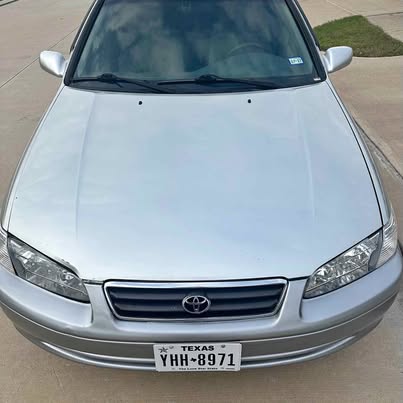 $3,300
Expand
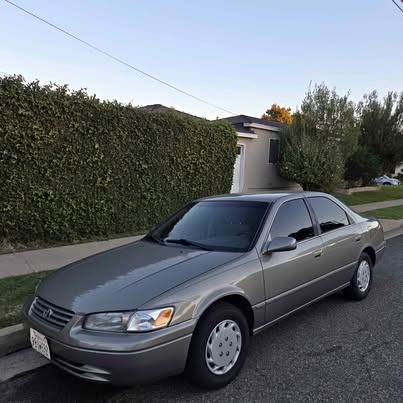 $2,900
Expand
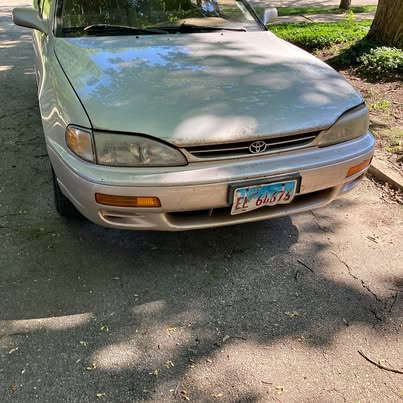 $600
Expand
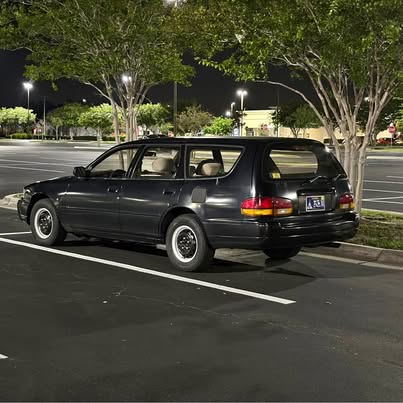 $1,234
Expand

Expand

Expand
Expand
 $2,999