
Chevrolet Deluxe buyer's guide
Chevrolet Deluxe -- the model's own buyer's guide: variants, values and what to check.
Years listed: 1937-1951 · Series: Full Size
Overview and history
You are not looking at a model in the modern sense. "Deluxe" is the trim name Chevrolet hangs on the better-equipped version of its standard full-size car for the better part of two decades, and that is exactly what makes it worth a guide of its own: for most of those years, the Deluxe is the Chevrolet most families actually bought. The base car exists to make the Deluxe look good in the showroom; the Deluxe is the one with the trim, the cloth, the heater and the resale value, then and now.
The name arrives in the mid-1930s on the Master Deluxe, the upper series above the Standard, and it runs — through Master Deluxe and Special Deluxe before the war, through the Fleetmaster interlude of 1946–48, and finally as the Styleline Deluxe and Fleetline Deluxe of 1949–52 — until the trim ladder is renamed for 1953 and the Deluxe's direct successor becomes the 210. Different bodies, different chassis and three distinct generations of styling sit under the one word, so the first job of this guide is to stop you comparing cars that share nothing but a script badge. A 1937 Master Deluxe and a 1951 Styleline Deluxe are both honest, overhead-valve, six-cylinder, torque-tube Chevrolets — the engineering bloodline is genuinely continuous — but almost no panel, and surprisingly little hardware, interchanges between them.
What does not change across the whole run is the formula, and the formula is why these cars survive in numbers. Chevrolet gives you the most modern mechanical specification in the low-price field — an overhead-valve six when Ford sells a flathead V8 and Plymouth a flathead six, hydraulic brakes from 1936, independent front suspension in some form from 1934 — wrapped in conservative Fisher bodywork and sold through the largest dealer network in America. These are not rare cars, and they were never fragile cars. They were, however, cheap cars, used hard by people who maintained them to a price, and every survivor carries seventy-plus years of that arithmetic.
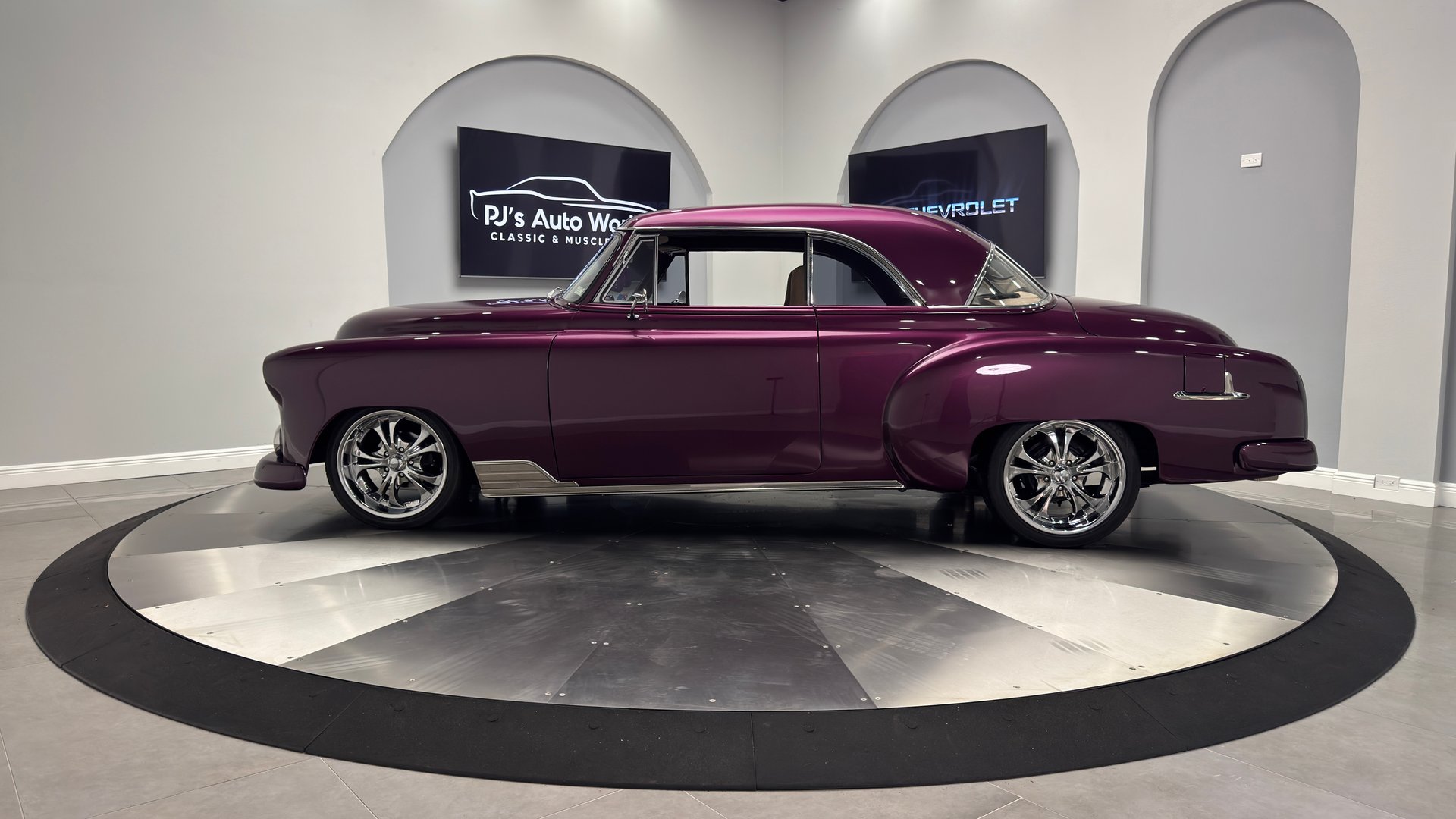
Correct the founding myth now, because it distorts every negotiation. A Deluxe is not a cut-price Bel Air and it is not a proto-Bel Air. The Bel Air begins life in 1950 as a single body style — the two-door hardtop — inside the Deluxe line, a flagship trim experiment on the Deluxe chassis. The Deluxe is the mainstream car; the Bel Air is its halo. When the Bel Air becomes a series of its own in 1953, it takes the glamour with it, and the Deluxe's successor, the 210, inherits the honest middle of the market. Judge a Deluxe as what it is: the well-trimmed volume Chevrolet of its year.
The second myth to drop is that "original" and "modified" divide neatly by asking price or by shine. The survival pool splits three ways: genuinely stock cars, often family-owned for decades; older restorations now ageing a second time; and a very large population of street rods and customs, because a 1949–52 Styleline Deluxe is one of the cheapest handsome bodies a hot-rodder can start with. The site's own current pool shows the split plainly: at the time this guide was prepared the store holds nine Deluxe records spanning 1937 to 1952 — five of them 1951 cars, plus a 1949, a 1950, a 1952 and the single 1937 — and several are openly built cars: a street rod, a street/strip hardtop, a custom. You are as likely to be offered a Deluxe with a V8 and a front clip swap as one with its Stovebolt intact, and the two cars need entirely different inspections and entirely different money logic.
That spread is why this guide spends so much of its length on identity. With a Deluxe, the badge settles almost nothing; the cowl tag, the engine number, the grille and the shape of the rear window settle almost everything. Chevrolet changed the grille and trim every year from 1949 to 1952 and built the fastback Fleetline alongside the notchback Styleline on the same floorpan. Sellers mix the years up innocently and dress Specials up as Deluxes deliberately. Neither matters if you read the car instead of the listing.
Buy the right car and it rewards you: a sorted Deluxe is a roomy, simple, charismatic car a competent home mechanic can maintain almost entirely with hand tools, backed by one of the deepest reproduction-parts industries in the old-car world. Buy the wrong car — a rusty shell under fresh paint, a tired babbitt engine sold as "rebuilt" — and the same simplicity turns against you, because the repair bills on a cheap car are the same size as on an expensive one.

The models
The range divides into three eras, and you should hold them apart in your mind because values, parts supply and faults all follow the divisions. Era one is the pre-war Master Deluxe, 1935–42, with the Special Deluxe added above it for 1940–42. Era two is the immediate post-war car, 1946–48, when the Deluxe trim level wears Fleetmaster badges and the fastback wears Fleetline badges on what is still essentially the pre-war body. Era three is the all-new post-war car, 1949–52, sold as Styleline Deluxe (notchback) and Fleetline Deluxe (fastback), with the Bel Air hardtop sitting inside the Deluxe line for 1950–52. The table below covers the cars you will actually meet in today's market; the pre-war range is summarised by its volume variants rather than every body style Chevrolet catalogued.
| Model | Years | Engine | Output | Built | Character |
|---|---|---|---|---|---|
| Master Deluxe | 1935–1942 | 216.5 cu in OHV six (206.8 before 1937) | 79–90 hp | The volume upper-series Chevrolet of the pre-war years; production in the hundreds of thousands across the run | The pre-war family car: knee-action ride, upright styling, the Deluxe trim over Standard bones |
| Special Deluxe | 1940–1942 | 216.5 cu in OHV six | 90 hp | The flagship trim for three short model years, cut off by the war | The best-trimmed pre-war Chevrolet: more brightwork, better cloth, the one pre-war collectors seek |
| Fleetmaster / Fleetline | 1946–1948 | 216.5 cu in OHV six | 90 hp | Chevrolet's post-war volume line while the industry sold everything it could build | The pre-war car warmed over; honest, dated even when new, and priced by condition alone |
| Styleline Deluxe | 1949–1952 | 216.5 cu in six; 235.5 cu in six with Powerglide | 92 hp; 105 hp (235) | The best-selling Chevrolet line of its years — Deluxe trim took the majority of Styleline production | The definitive early-fifties Chevrolet: modern slab sides, a real boot, and the trim that makes it |
| Fleetline Deluxe | 1949–1952 | 216.5 cu in six; 235.5 with Powerglide | 92 hp; 105 hp (235) | A minority of Deluxe production, falling every year as fastback fashion faded; dropped after 1952 | The fastback: the prettiest Deluxe and the least practical, with a small boot opening and limited rear headroom |
| Bel Air (within Deluxe line) | 1950–1952 | 216.5 cu in six; 235.5 with Powerglide | 92 hp; 105 hp (235) | A small flagship minority of Deluxe production | The hardtop flagship: pillarless roof, leather-trimmed cabin, and the premium the market still pays |
A note on the Built column, because this guide does not invent figures. Chevrolet's production records survive well in aggregate and badly by individual body style and trim split for several of these years, and the per-variant numbers repeated in adverts are often copied from other adverts. What is reliable — and what you actually need at the kerb — is the ordering: sedans vastly outnumber coupes, coupes outnumber convertibles and wagons, the Deluxe trim outsells the Special, and the fastback fades year by year after 1949. Treat any precise production claim in a listing as decoration until the seller produces a source.
Within the 1949–52 era, where most of your shopping will happen, Deluxe body styles are the two-door and four-door sedans, the two-door coupe (five-window Sport Coupe with a small rear seat, or three-window Business Coupe with a platform instead), the convertible, the steel-bodied station wagon, and — in the Fleetline line — the two-door and four-door fastbacks. The convertible and wagon are Deluxe-only propositions in most years: there is no cheap Special equivalent, which is part of why they command what they do. The Bel Air hardtop joins for 1950, recognisable at fifty paces by its pillarless side glass and three-piece rear window.
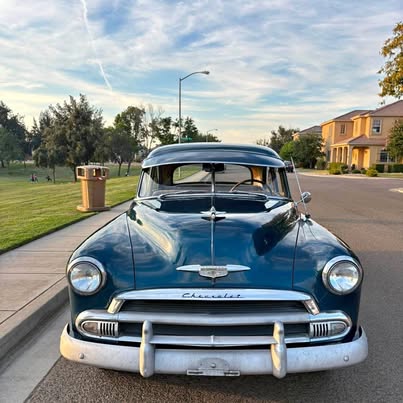
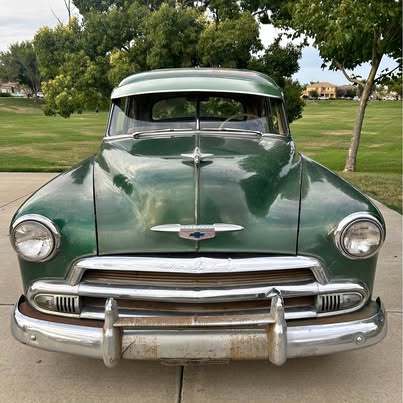
Year-spotting a 1949–52 car is a learnable skill, and you should learn it before you view, because the grille is the fastest lie detector in this market. The 1949 car has a simple horizontal grille bar with the parking lamps in pods at its ends. The 1950 grille adds a prominent centre element; the car in the photograph above is a 1950. For 1951 the grille gains the three vertical teeth below the main bar that you will see in several photographs in this guide, and the front fenders carry a longer side spear. For 1952 the teeth multiply into a fuller row and the side trim changes again. None of this is trivia: grilles unbolt and front clips swap whole, and a car wearing the wrong year's nose is telling you it has a history — accident, rust or a rodder's preference — that the price should reflect.
The pre-war cars need a different eye. The 1937–38 Master Deluxe is the sweet spot of the era for most buyers: the new 216 engine, hydraulic brakes, handsome streamlined styling with pod headlamps for '37, and — on Master Deluxe — the Dubonnet knee-action front suspension in place of the Standard's beam axle. The 1939 car restyles around a new grille and faired-in headlamps; the 1940–42 Special Deluxe adds sealed-beam lamps and the fullest trim Chevrolet offered before the war stopped production in February 1942. The 1946–48 Fleetmaster is mechanically the 1942 car returned to production, which is why it feels a generation older than a 1949 — it is one.
Two identity traps recur constantly and both are worth money. The first is the dressed-up Special: the 1949–52 Styleline Special is the same body with less trim, and adding Deluxe side spears, rocker mouldings and badges is an afternoon's work with reproduction parts. The cowl tag settles it — the trim and style numbers on the Fisher Body plate under the bonnet identify the model and original trim level, and a car whose tag says Special is a Special whatever it wears. The second trap is the swapped engine presented as original: a later 235 or even a 261 truck six drops into a 216 car with minimal evidence, and small-block V8 swaps are commoner still. Neither is a defect in itself — a well-done 235 conversion is arguably a better car — but you pay for it as a conversion, not as originality, and the engine number stamped on the pad beside the distributor is what tells you which you are looking at.


Engines and gearboxes
One engine family covers the entire guide: Chevrolet's overhead-valve straight six, the engine the hot-rod world nicknamed the Stovebolt. It is in production from 1929 to the early 1960s in steadily developed form, and every Deluxe you will ever inspect carries either the 216.5-cubic-inch version or, in Powerglide cars from 1950, the 235.5. That continuity is the model's great strength — knowledge, parts and sympathy are everywhere — and its great trap, because the family's one significant weakness, its bottom-end lubrication and bearing design in the early form, is invisible on a test drive and expensive in a workshop. Learn the split between the two bottom ends before you learn anything else in this section.
The 216.5: the babbitt Stovebolt
The 216.5 cu in (3.5-litre) six arrives for 1937, replacing the earlier 206.8, and it powers every Master Deluxe, Special Deluxe, Fleetmaster and manual-gearbox Styleline and Fleetline Deluxe through to the end of this guide in 1952. Period outputs run from about 85 hp in 1937 to 90 hp for the war years and 92 hp in the 1949–52 manual cars. It is a long-stroke, low-revving engine with a cast-iron block and head, overhead valves operated by pushrods and solid lifters, a single downdraught Carter W-1 carburettor on most cars, a six-volt electrical system and a compression ratio around 6.5:1 that will run happily on fuel far worse than anything you can buy today. Hold one structural detail above all others: the crankshaft runs in four main bearings, and the connecting rods are not fed oil under pressure at all — which brings you to the bottom end.
The bottom end is where your money lives. In the 216 — and in every 235 built before 1953 — the connecting rods are lubricated by splash and dipper: scoops on the rod caps dip into troughs in the sump and fling oil at the bearings, the main bearings are fed under pressure, and the connecting-rod bearings themselves are poured babbitt — a soft bearing metal cast directly onto the rod and cap and then machined and shim-adjusted to fit the crankpin. Understand what that means for a buyer in plain terms. There is no box of replacement bearing shells to buy. When a babbitt rod bearing wears — and it wears with miles, with dirty oil and with sustained high revs the splash system cannot feed — the repair is a specialist job: rods re-poured or exchanged for re-babbitted or insert-converted rods, crankpins measured and ground, clearances set with shims by someone who has done it before. Budget $3,500–$6,500 for a proper bottom-end rebuild by a shop that knows these engines, and treat that figure as the single most important number in this guide, because a cosmetically lovely car with a knocking, low-pressure 216 is a project wearing a driver's clothes.
The symptoms to hunt are specific. Oil pressure on a healthy 216 is modest by modern standards even when new — these engines were never high-pressure designs — so judge it comparatively: pressure that collapses to near nothing at a hot idle, a deep rhythmic knock under load that fades when you lift off (rod bearing), or a duller thud at idle (mains) are the sounds of the expensive job. Blue smoke on the overrun points at valve guides and seals; smoke under load points at rings and bores. The engine's saving grace is that it tolerates enormous wear while still starting, running and charming you on a test drive, which is precisely why sellers of tired cars love it. Compression-test any 216 you are serious about — $100–$200 inside a pre-purchase inspection — and read the plugs while they are out.
Above the block, the 216's life is simpler. The Carter W-1 is a straightforward single-barrel carburettor whose characteristic faults are a worn throttle shaft that leaks air and ruins the idle, a tired accelerator-pump cup that gives a flat spot pulling away, and a choke that sticks in the position it last enjoyed. A professional rebuild runs $250–$450; a shaft that wobbles visibly in its bore needs re-bushing, not just a gasket kit. Ignition is conventional Delco points and condenser, and half the "carburettor faults" on these cars are a burned points set and a condenser dying with heat — a $30 parts bill and twenty minutes. Valve clearances are set with a feeler gauge at the rockers; a top-end rattle on a 216 is usually honest adjustment neglected, and setting them ($150–$300 in labour) transforms the car's manners. The cooling system is a low-pressure design with a generous radiator when it is clean and a marginal one when the block's water jacket is full of seventy years of sediment — overheating on a Deluxe is almost never a design verdict and almost always a maintenance confession, and the engines section of the problem areas below takes it apart.
The 235.5: the Powerglide engine and the full-pressure fix
For 1950, Chevrolet needs an engine that suits the new Powerglide automatic, and the answer is a bored and stroked development of the same six: the 235.5 cu in (3.9-litre) "Blue Flame," rated at 105 hp, fitted exclusively to Powerglide cars in 1950–52 and identifiable by its hydraulic valve lifters — the first in this guide — and a higher compression ratio. In this guide's years it is still a babbitt-and-dipper bottom end, and everything said above about bearing wear and rebuild cost applies to it unchanged. What changes the family's story is just outside the guide's window and worth knowing because so many cars have been retro-fitted with it: from 1953 the Powerglide 235 gains full-pressure lubrication to the connecting rods and precision insert bearings throughout, and for 1954 every Chevrolet six is built that way. A 1953–54 full-pressure 235 in a 1951 car is not originality, but it is the engine Chevrolet itself arrived at, and as a conversion it removes the model's one structural weakness in a single stroke. If a seller claims a later engine, verify it the way you verify everything: the stamped engine number, and the presence of the later engine's fittings, not the valve-cover script.
The hydraulic lifters of the 1950–52 235 bring their own small liturgy. They are quiet when fed clean oil at decent pressure and they tick — loudly, at idle, worst hot — when the oil is old, thin or low, or when a lifter's check valve is fouled with varnish. A ticking 235 that quiets with an oil change was telling you about its last owner's habits; a tick that survives fresh oil on one cylinder only is a lifter coming out, a $400–$800 job. And do not judge a Powerglide car's engine by its leisurely step-off, which is the gearbox's character, not the engine's health.
Gearboxes: the three-speed, the vacuum shift and Powerglide
The standard gearbox across the whole guide is Chevrolet's three-speed Synchro-Mesh manual, column-shifted from 1939 onward (floor shift on the earliest cars), synchromesh on second and third, straight-cut first engaged at rest. It is a strong, simple box whose faults are the faults of age: worn synchro rings that crunch a hurried change into second, jumping out of gear under load, and a column-shift linkage — a long train of rods, bell-cranks and rubber bushes — whose accumulated slop makes a good box feel like a bad one. Budget linkage bushes and adjustment first ($100–$300) before you let anyone condemn the gearbox itself ($900–$1,800 rebuilt and fitted). The clutch is a conventional single dry plate; the trap is not the clutch but the labour path to it, which runs through the torque tube below.
From 1939 to the late 1940s Chevrolet fits a vacuum-assisted shift: engine vacuum does the heavy work once you nudge the lever. When it works it is fingertip-light; when its diaphragm perishes and its hoses and control valve leak — on most unrestored cars today — the shift is heavy, vague, slow and hissing. Many cars have had the system partly disconnected. Price a car on how it shifts today, and know that a proper vacuum-shift overhaul is a specialist job in the $500–$1,000 region, while a car converted to plain mechanical linkage has lost originality and gained nothing you should pay extra for.
Powerglide, offered from 1950 and available only with the 235, is Chevrolet's two-speed automatic: a torque converter and a single planetary gearset giving you Low and Drive, in a heavy cast-iron case. It is honest, durable in design and utterly unhurried — step-off is gentle because Drive starts in what is effectively a high gear and the converter does the rest. Its faults are age faults: external seals that weep and then pour, a rear pump and governor that wear, bands and clutches that slip after decades, and fluid that has been cooked by the converter's heat in slow traffic. A Powerglide that engages Drive and Reverse promptly when warm, does not flare on the (single, almost imperceptible) internal change, and is not leaving its fluid on the seller's driveway is a usable gearbox; a full rebuild by a shop that knows cast-iron Powerglides runs $1,800–$3,000 fitted. Never let a seller demonstrate a Powerglide car only from cold — cold fluid hides slip the way cold oil hides bearing knock.
Behind every gearbox in this guide sits the enclosed torque tube: the propeller shaft runs inside a rigid tube bolted to the gearbox and the rear axle, the axle is located by the tube and the leaf springs, and there is a single universal joint at the front. It is quiet and robust, and it dictates two ownership facts. First, the centre support and the joint and bushing at the front of the tube wear and announce themselves as a vibration or drone at cruising speed that wheel balancing never cures — the test is in the inspection section. Second, almost any major driveline job — clutch, gearbox removal, axle work — involves unbolting and moving the rear axle assembly backwards, which adds labour to every estimate and is why a clutch on this car ($700–$1,200 fitted) costs more than the same clutch on an open-driveline car. The system itself ran to 1954 and disappeared with the 1955 redesign; a Deluxe converted to an open driveline has usually been converted as part of a V8 swap, and should be priced as a build, not a survivor.
Problem areas
Everything on a Deluxe is fixable, and almost everything is available. That sentence has bankrupted more buyers than any rust bucket, because it invites you to wave through faults whose labour bills do not care that the car was cheap. Work through the car by system, in the order below, and price each fault as you find it. The pattern across all of it is consistent: the mechanical design is sound and long-lived, the bodies rot in predictable places, the rubber and cloth and pot-metal of the trim world age out on a schedule, and the expensive surprises are the ones hidden under paint, underseal and a seller's fresh oil change.
Rust: the map
Start with the structure, because on the 1949–52 cars the body is the car's value. These are body-on-frame cars, so rot is rarely immediately fatal the way it is on a monocoque — but the frame is a simple, thin-walled affair that rusts in its own right, and a body that has lost its mounting points and sills is a restoration, not a driver, whatever the engine does.
On the 1949–52 Styleline and Fleetline, walk this map in order. The front floor pans go first, fed by leaking windscreens, cowl vents and seventy years of wet shoes; lift the mats — never accept a car whose mats you cannot lift — and press the pan hard around the front seat mounts and toe board. The rocker panels (the sills) rot from the inside out, because their drain holes block with road dirt; bubbling at the bottom of a shiny rocker is the end of that process, not the beginning. The trunk floor follows, especially the spare-wheel well and the corners behind the rear wheels. Rear quarters blister behind the rear wheels and along the arch lip; on Fleetlines add the panel below the small rear window, where water sits. Front fenders rust at the headlamp eyebrow and at the trailing edge by the cowl. The cowl itself, around the vent and screen pillars, is the rot that matters most and shows least: water in the footwells on a car with solid floors is coming through the cowl or the screen seal, and cowl repair is fabrication, not panel-swapping.
The frame deserves its own paragraph. Check the side rails at the body mounts, the rear kick-up over the axle and the front crossmember, probing flaky underseal with a screwdriver — ask permission, and walk away from a seller who refuses it on a car at driver money. Surface rust is normal and honest; scale coming away in sheets, and rails holed at the mounts, turn a cheap car into a body-off car. Budget honestly: rockers fitted and painted run $800–$1,800 a side, floor sections $600–$1,500 a side fitted, and a car needing floors, rockers, trunk and quarters at once is an $8,000–$15,000 body programme before paint — which is why you buy the car whose rust you can see.
The pre-war and 1946–48 cars rot in the same spirit in older architecture: wood survives in some pre-war body framing and floor construction, and where it has rotted the doors sag and panel fit goes vague in a way no adjustment cures. On any pre-1949 car, shut every door twice and treat a sagging door as a structural question, not a hinge question. The 1937–38 sedans add the lower rear body and the running-board aprons, which trap mud against steel that was thin when new.
Engine wear, oiling and cooling
The babbitt bottom end is covered in the engines section; here is its companion list. Oil leaks on a Stovebolt are not a fault so much as a climate: the pushrod side cover, the valve cover, the timing cover and the rear main seal all weep with age, and a dry engine on a viewing is an engine that has just been washed. Judge leaks by rate and by destination — oil reaching the clutch through a failed rear main gives you judder and slip and turns a seal into a torque-tube-out job — and budget a full reseal at $600–$1,200 in parts and labour if the engine is coming out anyway.
Cooling is the system that kills these engines in modern use. The design copes with 1950 traffic; it does not cope with a silted block, a radiator core half-blocked with scale, a slipping water-pump bearing and a summer queue. Overheating on a 216 is doubly dangerous because the splash-fed rod bearings are the first casualties of thin, hot oil. The diagnostic order is: coolant condition and level; radiator core flow (an infrared thermometer across the core face shows cold stripes where tubes are blocked); thermostat operation; water pump play and weep; and only then head-gasket suspicion, proven by a compression test and bubbles in the header tank rather than by the seller's preferred theory. A radiator recore runs $400–$800; a water pump $150–$350 fitted; a head gasket, if it truly has gone, $600–$1,100 — and if the head is off a babbitt engine, that is the moment to measure the bottom end, because the labour overlaps and the news is better heard once.
Fuel delivery gives the classic Deluxe fault pair. The mechanical fuel pump's diaphragm tires and its valves leak back, so a car left a week cranks forever while the pump refills the Carter's float bowl — owners fit electric pumps, sometimes well, sometimes as a fire hazard wired by optimism; inspect any electric conversion as if it were your own house wiring, because it is. The Carter W-1 itself is covered above. Add the vacuum-operated windscreen wipers, driven from manifold vacuum (assisted on many cars by a vacuum section in the fuel pump): wipers that stall when you accelerate and sweep when you lift off are not broken, they are designed — but wipers that barely move at any throttle have a perished motor diaphragm or a vacuum leak that is also leaning out your idle mixture, so chase the hose before the carburettor.
Front suspension, steering, brakes and the torque tube
The front suspension splits the guide in two. The 1949–52 cars use a conventional independent layout — coil springs, unequal-length wishbones, kingpins — whose wear items are kingpin bushes (play you feel as a clonk and see as uneven front tyre wear), tired coil springs that drop the nose, and dampers that by 1949 are modern tubular telescopics, cheap and easy to replace: a full front-end refresh with kingpins, bushes and dampers runs $800–$1,600 fitted and transforms the car. The pre-war Master Deluxe instead carries the Dubonnet knee-action unit, a sealed, oil-filled independent suspension built into the front axle assembly, and it is the pre-war car's signature expense: the units wear internally, leak their oil past their seals, and develop play that no external adjustment removes. Rebuilding knee-action units is specialist work at $1,200–$2,500 the pair, and many cars have been converted — well or badly — to the later conventional front end or a modern clip. On a 1937–42 car, bounce each front corner and look for the damp, gritty evidence of a unit weeping down its own housing; budget the rebuild into any car that wanders.
Steering on all these cars is a worm-type box with a long linkage, and the honest test is free play at the wheel rim measured in inches, not impressions: more than about two inches of rim movement before the road wheels stir means wear distributed across box, idler, tie-rod ends and kingpins, and you find the culprit by having an assistant rock the wheel while you watch each joint in turn under the car. A steering-box rebuild runs $400–$800; the linkage joints are cheap individually and tedious collectively.
Brakes divide by year in a way sellers rarely volunteer. From 1936 Chevrolet uses hydraulic brakes, but through 1950 they are the Huck design — an articulated-shoe system with a reputation, earned over decades, for being fussy to adjust evenly, prone to pulling, and intolerant of worn drums and tired return springs. From 1951 the cars get modern Bendix self-energising duo-servo brakes, genuinely better and easier to keep right. Either way, after seventy years check the steel lines for corrosion (especially the run along the frame), the flexible hoses for cracking, the wheel cylinders for weeping behind their boots, and the drums for scoring. A full hydraulic overhaul runs $700–$1,400 in parts and labour. The master cylinder is single-circuit across this guide: one failed hose is a total brake failure, which is why new hoses are a first-week job on any car you buy, at $150–$300 the set fitted.
The torque tube and rear axle close the chassis. The axle itself is durable; the wear lives at the front of the tube, in the universal joint and the bushing and seal where the tube meets the gearbox. Symptoms are a drone or vibration at a steady cruise that vanishes on the overrun, and oil at the joint. The parts are modest and the labour is not, so group the work: if the axle is coming back for a clutch, do the bush, joint and seals in the same visit. Rear leaf springs sag evenly for years, then crack a leaf at the eye; worn shackle bushes let the axle steer the car subtly from the rear, felt as a wandering straight line that front-end work never quite cures.
Electrics, interior and trim
Every car in this guide is six-volt, positive... Chevrolet's six-volt system is negative-earth, generator-charged and adequate when — and only when — its cables and earth straps are fat, clean and tight. Slow cranking on a Deluxe is a cable diagnosis before it is a battery diagnosis: undersized modern replacement cables and painted-over earth points strangle a system that has no voltage to spare. A generator rebuild runs $200–$400, a regulator $60–$150, and a proper set of heavy cables $80–$180 — after which a six-volt car starts perfectly well, and anyone who tells you a twelve-volt conversion is mandatory is selling you one. Conversions are common and legitimate on rodded cars; on a stock car, price the conversion as a modification, not an upgrade.
The wiring itself is the quiet deadline. Original looms are cloth- and early-plastic-insulated, and the insulation embrittles, cracks and sheds, worst in the engine bay's heat and at every flex point. Bare copper showing at the bulkhead or behind the dash is a rewire in your future: a reproduction harness runs $400–$700 in parts and a weekend-to-$1,500 in labour depending on who fits it. Test every electrical consumer on the viewing — lights, horn, heater fan, gauges, the fuel gauge especially, whose sender and earth conspire to lie — because each dead item is a small negotiation and together they are a large one.
Inside, the Deluxe earns its name: better broadcloth or mohair upholstery than the Special, more bright trim, a proper headlining. The enemies are sun, mice and damp. Seat springs collapse on the driver's side; padding in the later cars crumbles to dust inside intact-looking covers; headlinings stain from the same cowl and screen leaks that rot the floors. A full retrim in correct-style cloth runs $2,500–$5,000; a presentable driver-grade refresh with a seat kit and carpets is $1,200–$2,500. Price interiors as a whole, not as the one torn seat you noticed.
Trim is where Deluxe ownership gets specific. The side spears, rocker mouldings, gravel guards and scripts that make a Deluxe a Deluxe are stainless and die-cast pot metal, and the pot metal pits — scripts, handles, grille surrounds — in a way polishing cannot reverse and re-plating only partly cures, at $150–$400 a piece for show-quality work. A car missing its Deluxe-specific trim is missing the point of the model, and "the trim is in a box" is a claim to verify piece by piece against the year, because 1949–52 trim does not interchange as freely as sellers hope. Convertibles add their own chapter: the power top mechanism (hydraulic-electric on these cars) must cycle fully and evenly, the top well and rear floor take the water the top sheds, and a new top fitted runs $1,200–$2,500. On a Bel Air hardtop, add the three-piece rear window's seals and hardtop weatherstrip — reproduced, but a $400–$800 set and a fiddly day to fit.
How to inspect one
Inspect in this order and do not let the seller re-order it for you. The sequence runs identity first, structure second, engine third, drive last, because each stage can end the viewing and save you the rest. Bring a magnet in a cloth, a torch, a tyre-pressure gauge, a tyre tread gauge, overalls for the floor work, and a friend whose only job is to watch joints move and lights work while you operate them.
- Paperwork and identity before paint. Match the title to the car: the serial plate on the driver's door pillar (pre-war and early post-war practice) or the plate and stampings the year uses, and the Fisher cowl tag for style and trim. A 1949–52 car whose cowl tag decodes as a Special is a Special. A title year that disagrees with the grille, trim and tag is a question the seller answers before you look at anything shiny.
- The engine number. Read the stamped pad by the distributor and decode what you can on the spot: you are establishing 216 versus 235, and original-family versus later swap. Write it down; it is your evidence in every later argument about originality and price.
- Cold start, insisted upon. Arrange it in advance and touch the exhaust manifold when you arrive. A Stovebolt that starts from cold on the choke, settles as the choke comes off and shows no blue haze at the tailpipe has passed its first audition. One that needed "warming up for you" has hidden its audition — ask yourself why.
- Oil pressure and ears, hot. After the drive in step 9, return to this: pressure at a hot idle, and your ear low beside the sump under gentle load. A deep knock that follows load is the babbitt talking (see the engines section), and it reprices the car by a rebuild, not by a haggle.
- The rust map, in order. Mats up, thumb-pressure on the front floors and toe board; rockers probed along their full length; trunk floor and spare well emptied and inspected; rear quarters and arches; front fender eyebrows and trailing edges; cowl and screen pillars for the staining that betrays leaks. The magnet tells you filler from steel on quarters and rockers; thick, dead-feeling panels low on the car are guilty until sectioned innocent.
- Frame and mounts. Torch along the rails at every body mount, the rear kick-up and the front crossmember. Probe flaky underseal with the screwdriver. A frame that fails here ends the inspection: everything else is a detail on a body-off restoration.
- Underneath the driveline. Look for the torque tube's front joint weeping, oil thrown in an arc inside the tunnel area, pinion-seal spray on the axle, and rear spring leaves cracked at the eyes. Then the brake lines along the frame — any section visibly crusted is the whole run condemned, because the rest is the same age.
- Front end and steering, static. Assistant rocking the wheel while you watch box, idler, tie-rods and kingpins in turn; then bounce each front corner. On a knee-action car, look for the unit weeping down its housing while you are there. Two inches of rim free play is your working limit; account every joint that moves late.
- The drive, long enough to get properly hot. Twenty minutes minimum: town work for the gearbox and brakes, then a steady cruise. Note the change into second at speed (synchro crunch), any gear that jumps out on the overrun, clutch judder pulling away (rear main oil is the usual author), the torque-tube drone at cruise that vanishes when you lift, and brake behaviour — a Huck car that pulls has told you its adjustment state, and a car that pulls differently each stop has told you more. On a Powerglide car, do all of this fully warm, and insist on a hot restart and a prompt engagement of Drive and Reverse at the end.
- Brakes, measured. From 30 mph, hands light on the wheel: straight, even retardation, no pedal that sinks slowly under sustained pressure (master cylinder bypassing internally), no grinding. Then the parking brake on a slope — on a torque-tube car it works on the rear wheels through cables that seize, and you want to know today.
- Electrics, everything, in daylight. Six volts hides nothing if you test it all: headlamps bright and even, indicators, horn, heater fan, wipers (remembering they slow under acceleration by design), every gauge, and the fuel gauge against what the seller says is in the tank. Slow cranking after the hot drive is your cable-and-earth test result, delivered free.
- Interior and trim census. Sit in every seat, work every window and vent, cycle a convertible top fully or a hardtop's glass through its travel. Then list the Deluxe-specific trim piece by piece — spears, rocker mouldings, scripts, gravel guards — present, correct-year, and condition. The list you make here is a parts bill; price it before you offer.
- The second cold look. Walk the car once more in silence, looking only at panel gaps, colour match panel-to-panel, and the reflections down each flank. Repainted cars declare their history in the flanks; honest cars look calm. Decide which Deluxe market you are actually in — stock survivor, older restoration, or build — and confirm the price logic matches it.
- Compression test and paperwork, before money. On any stock-engine car at real money, a compression test (plugs read alongside) is the last gate, and invoices beat recollections for engine, brake and body work alike. A "rebuilt engine" with no invoice naming the bottom-end work is an engine of unknown state, priced as such — that single rule will save you more than any other in this guide.
Values
The market block beneath this guide carries the current numbers — the cars listed now and the recorded sales — so this section teaches you how to read them, because the Deluxe market punishes anyone who reads a single figure as "the price." The spread between the cheapest and dearest Deluxe in any season's listings is not noise; it is four different markets wearing one badge, and your first task with any car is deciding which market it belongs to.
The first market is the project and parts-car tier: non-running cars, rusty cars, and cars whose babbitt engines are tired in the way the engines section describes. These change hands on the strength of their trim, glass and panels as much as their completeness, and the honest way to value one is as a body and a parts inventory minus the cost of the structural work you mapped in the inspection. The second market is the honest driver: a running, presentable sedan or coupe, stock or lightly improved, with known faults declared. This is the deepest market, the one with the most cars and the most comparable sales, and it is where the recorded-sales block below is most trustworthy. The third market is the restored and the special-bodied car — convertibles, wagons, Bel Air hardtops, the best Fleetlines, and genuinely documented restorations of any body — where condition and body style, not the badge, set the figure, and where two superficially similar cars can sit far apart because one has invoices and the other has adjectives. The fourth market is the built car: street rods and customs, valued as builds. A finished rod's figure reflects its specification and workmanship and has almost nothing to do with the Deluxe market at all; never use a rod's asking figure to justify a stock car's price, or the reverse.
Within the stock markets, the premiums are consistent and explicable. The convertible leads, followed by the Bel Air hardtop and the wagon; the Fleetline fastback carries a style premium over the equivalent Styleline sedan; coupes sit above sedans; and four-door sedans — the volume family car — are the value end of the range, which is another way of saying they are the most car for the money in this entire guide. Originality pays in a specific order: an unmodified car with its correct-year trim complete beats a shinier car missing its Deluxe brightwork, and a documented engine beats a claimed one by roughly the cost of the rebuild nobody can prove happened. Powerglide divides opinion and therefore price: expect Powerglide cars to be advertised at a premium and to sell at a smaller one.
Asking and achieved figures part company in the usual places: sellers price the restoration they imagine the car deserves; buyers price the rust map and the oil pressure they measured. The recorded sales beneath this guide are the corrective — read them by body style and condition tier, weight the recent ones, and treat a listing unsold through a season as a market verdict rather than a market level. On a Deluxe, the inspection findings are the negotiation: a measured list of priced faults moves a seller in a way a round low offer does not, because the next buyer with a magnet and a torch will find the same list.
Parts and ownership
Ownership is the Deluxe's home ground. This is one of the best-supported pre-war and early-fifties cars in existence, because Chevrolet built them in vast numbers, the hot-rod industry adopted the same years, and the reproduction trade followed both. Engine consumables, brake parts, suspension bushes, weatherstrip, glass, upholstery kits, carpets and a long list of sheet-metal repair panels for the 1949–52 cars are all in current production, and the 1937–48 cars are only a step behind, with the exceptions of knee-action internals, early trim and some pre-war panels, which live in the NOS and good-used world. Stovebolt mechanical parts — gaskets, pumps, ignition, carburettor kits, clutch — are same-week parts, not same-year parts. The babbitt bottom end is the one service that remains a craft rather than a catalogue: find your engine shop before you need it, through the early-Chevrolet club world, where the knowledge of who pours bearings well is common currency.
Running one asks for rhythm rather than money. The 216 wants its valve clearances checked, its oil changed far more often than a modern car — splash-lubricated bearings live and die on oil cleanliness — and its many grease points actually greased, kingpins included, on a schedule measured in thousands of miles. The lubrication chart in the owner's manual is not nostalgia; it is the maintenance plan, and a car whose grease nipples are painted over has been telling you its history all along. Six-volt electrics ask only for clean, heavy connections and a charged battery. Modern traffic asks two things: respect the brakes' limits, especially the Huck cars, and prefer the invisible upgrades — radial tyres in the correct size, fresh hoses and belts — before the visible ones.
Storage shapes these cars' survival more than mileage does: damp storage rots floors through carpets from the inside, while a dry barn and regular use is the kindest life a Deluxe can have — and the cars that come to market from that life are the ones to buy. Join the club scene early: the early-Chevrolet clubs hold the cowl-tag decoders, the trim-correctness knowledge and the register of which specialist to trust, and on a car where identity checks matter this much, that knowledge is a running-cost saving. Insure on an agreed value reflecting your car's actual tier, and photograph the trim census from your inspection; on a Deluxe, the brightwork inventory is a material part of the value insured.

Which one to buy
- The all-rounder: a 1949–52 Styleline Deluxe sedan or coupe, manual gearbox, honestly presented. The deepest parts support, the Bendix brakes if you choose a 1951–52, the easiest resale, and the full Deluxe experience — room, trim, torque-tube manners and all — at the market's most sensible tier.
- The value buy: a 1949–52 four-door sedan. The volume family car is the least fashionable body and therefore the most car for the money in this guide: same engine, same trim, same club welcome, and a back seat your passengers will thank you for. Buy the best one you can find rather than the cheapest coupe.
- The style buy: a Fleetline Deluxe fastback, 1949–51. The prettiest silhouette Chevrolet sold in these years. Accept the small boot and the rear headroom, check the fastback-specific rear quarters and rear-window panel twice as hard, and pay the premium only for a car whose trim is complete.
- The flagship: a 1950–52 Bel Air hardtop or a Styleline Deluxe convertible. The halo cars, priced as such. The hardtop asks for its three-piece rear window seals and hardtop glass to be right; the convertible asks for a full top cycle and a forensic look at floors and rear quarters. Either, bought well, is the Deluxe the market will always want back.
- The pre-war car: a 1937–38 Master Deluxe or a 1940–42 Special Deluxe. Choose it for the era, not as a cheap way into the model — knee-action condition and pre-war trim completeness decide the car, and a Special Deluxe with its brightwork intact is the pre-war connoisseur's pick.
- The build: a finished street rod or custom, bought as a build. Judge the engineering — clip, cooling, wiring, brakes — as you would any constructed car, demand the build documentation, and never pay a stock-car originality premium for a car whose originality is the body shell.
The overriding rule: on a Deluxe, condition and completeness outrank year, body style and badge — a solid, complete, honestly documented car in the "wrong" body style is worth more, drives better and sells easier than a rare-bodied car with a tired babbitt engine and its trim in a story instead of on the car. Buy the car the inspection describes, not the car the listing describes.
See the 7 Deluxe cars currently listed.
For sale now
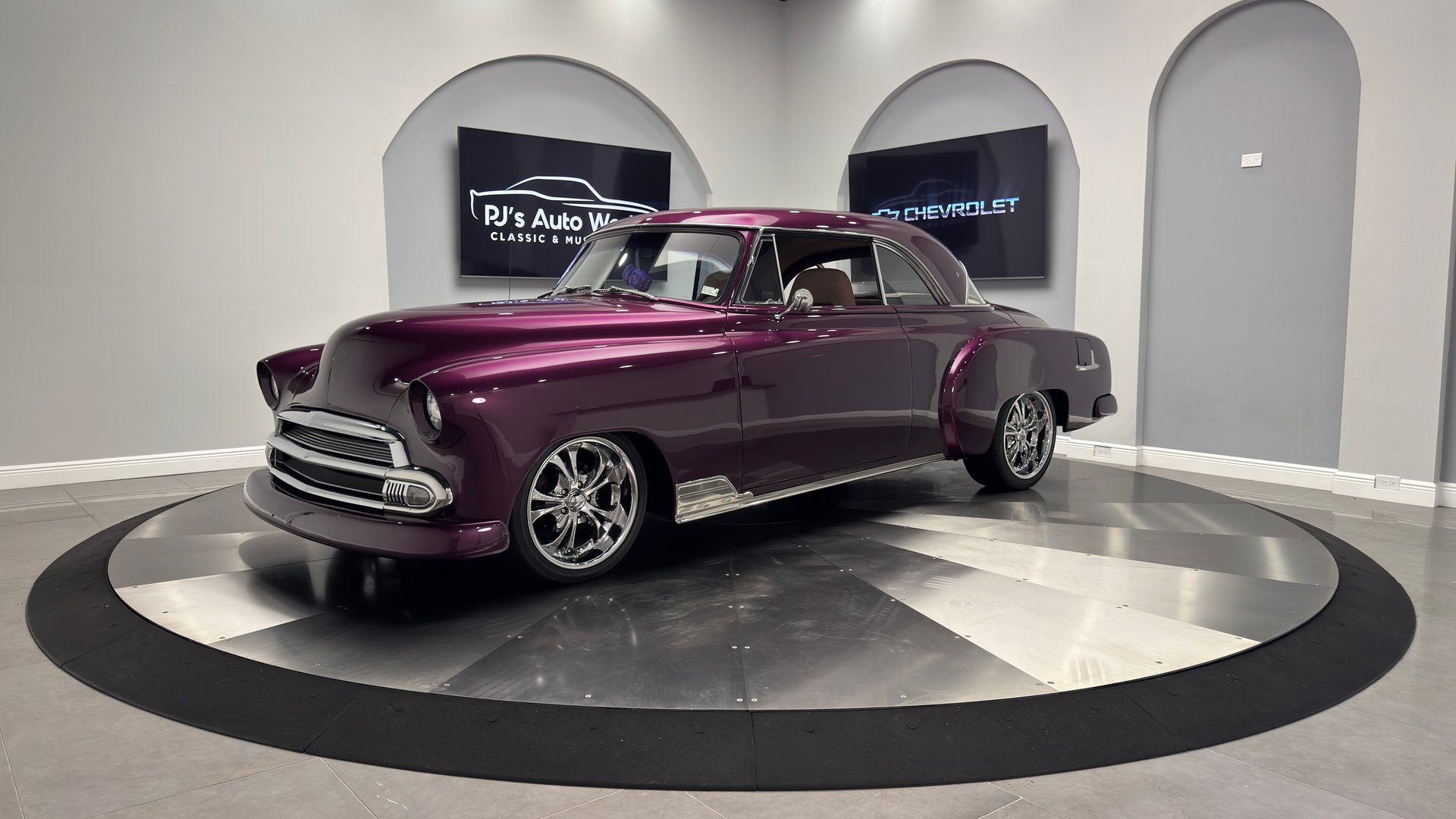 $52,900 · 49% above typical
Expand
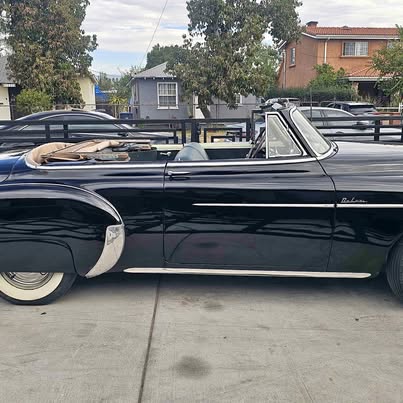 $45,000
Expand
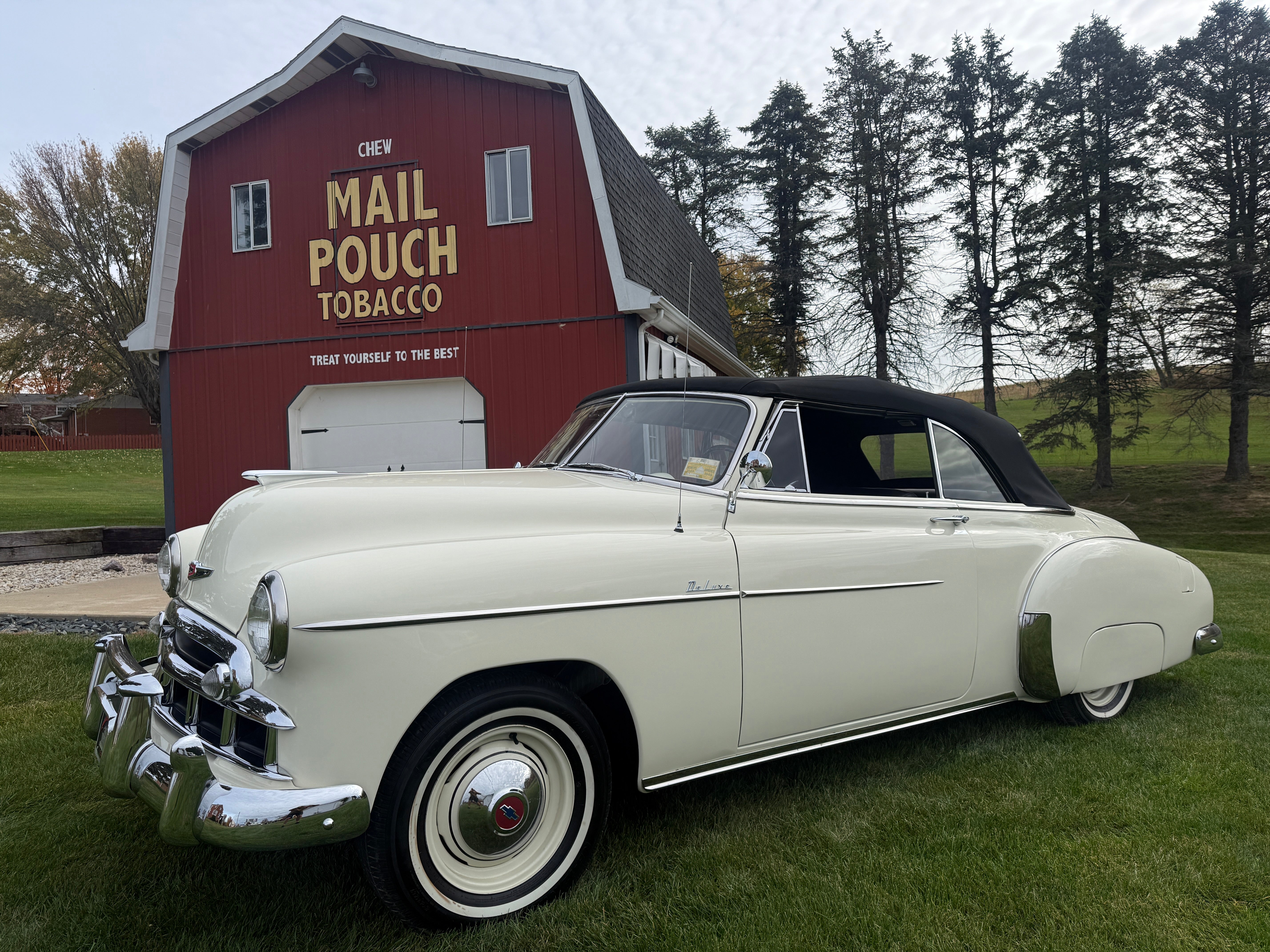 $42,900 · 21% above typical
Expand
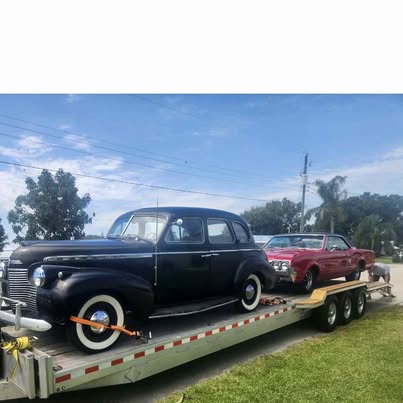 $9,500
Expand
What they sell for: Deluxe sale prices.