
Chevrolet Master Deluxe buyer's guide
Chevrolet Master Deluxe -- the model's own buyer's guide: variants, values and what to check.
Years listed: 1937-1941 · Series: Full Size
# Chevrolet Master Deluxe — Buyer's Guide
Overview and history
You are not buying one kind of car when you buy a Chevrolet Master Deluxe. You are buying into two different markets that happen to share the same steel body, and the first job in front of any example is deciding which market that particular car belongs to. In the first market sits the original pre-war Chevrolet: an overhead-valve inline six of 216.5 cubic inches, a three-speed manual gearbox, an enclosed torque-tube driveshaft, six-volt electrics, hydraulic drum brakes and, on most Master Deluxes, Chevrolet's Knee Action independent front suspension. In the second market sits the street rod: the same handsome 1937 to 1941 Fisher body, but with a later V8 under the bonnet, an automatic gearbox, a modern rear axle, twelve-volt electrics, disc brakes and air conditioning. Both kinds are legitimate things to own. They are not interchangeable, they do not fail in the same places, they do not cost the same money to put right, and a car priced as one while actually being the other is the commonest expensive mistake in this corner of the hobby.
The name itself tells you where the car sat when new. Chevrolet introduced the Master Deluxe in the mid-1930s as the better-equipped line above the plain Master, and by 1937 the formula is settled: the Master Deluxe is the Chevrolet you buy if you want the independent front suspension, the plusher Fisher interior, the fuller brightwork and the more complete instrument panel, while the cheaper Master — later called the Master 85 — makes do with less of all of it. Underneath, the two lines share the same basic engineering, because Chevrolet in this period builds one honest design and trims it up or down. That design is conservative in layout and advanced in one specific place. The layout — separate steel frame, beam rear axle on semi-elliptic springs, torque-tube drive — is conventional American practice. The advanced place is the engine. Chevrolet has bet on an overhead-valve six since 1929, when Ford still sells a flathead four and then a flathead V8 with the valves in the block. The overhead valves are why these engines breathe well, tune easily and earn their long-lived nickname: the Stovebolt Six, from the slotted bolts that hold the rocker cover and much else together.
The years that matter most to a buyer today run from 1937 to 1942, and the cars in the current listings pool sit squarely in that window — the pool behind this guide covers 1937 to 1941, with 1939 the most common year. For 1937 Chevrolet restyles the car completely, fits an all-steel Turret Top Fisher body with far less structural timber than the bodies of only a few years earlier, enlarges the six to 216.5 cubic inches and gives the Master Deluxe a new grille and flowing, separate front wings. For 1939 the styling is cleaned up again, the headlamps move into the tops of the front wings in pods, and the gear lever moves to the steering column with a vacuum-assisted shift on Master Deluxe models. For 1940 Chevrolet fits a new and much better independent front suspension in place of the original Knee Action design and introduces the Special Deluxe above the Master Deluxe, which quietly demotes your car to the middle of the range. For 1941 the wheelbase grows, the running boards largely disappear into the body sills, the headlamps are faired into the wings, and the 216 six is uprated.
The models
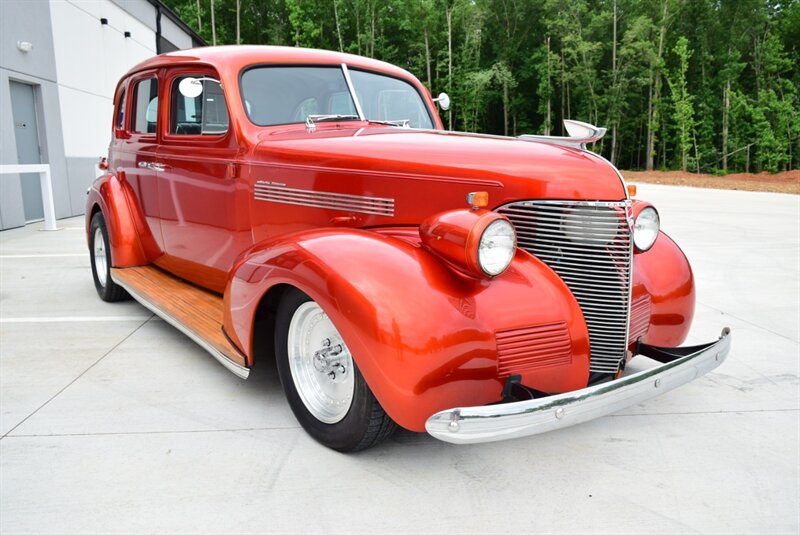
Chevrolet sells the Master Deluxe as a full range, not as a single car, and the body style matters more to value, usability and restoration cost than the model year does. Two-door and four-door sedans — Chevrolet calls the two-door the Town Sedan and the four-door the Sport Sedan — make up the bulk of production and of survivors. Coupes come in two distinct forms that sellers routinely confuse, deliberately or not. The business coupe has a single bench seat, no rear seat and a very large boot reached from outside, built for the travelling salesman whose samples live in the back. The sport coupe has a rumble seat or, in later years, small rear seats, and a shorter deck. A business coupe converted with a seat in the boot is not a sport coupe, and the body tag and the shape of the boot floor settle which one the factory built. Convertibles sit at the top of the range, with a folding top, a more complex body structure and all the scuttle and floor strength of a car that cannot rely on a steel roof.
Read the table below as a map of the range you will actually meet, not as a catalogue of everything Chevrolet ever badged this way. Production is deliberately left without a figure where Chevrolet's own reporting does not give a buyer a clean, verifiable split by body style: these were high-volume cars built across several plants, period totals are usually quoted for a whole series or a whole model year rather than for one body, and any seller who quotes you an exact, tiny production figure for a common sedan body is decorating, not informing. Rarity claims in this range belong to convertibles and genuine factory wagons, and even those you verify from the body style itself, not from a number in an advertisement.
| Model | Years | Engine | Output | Built | Character |
|---|---|---|---|---|---|
| Master Deluxe sedan (Town and Sport Sedan) | 1937–1942 | 216.5 cu in OHV six | 85 hp, 90 hp from 1941 | — | The all-rounder; roomy, common, the easiest to live with and to sell |
| Master Deluxe business coupe | 1937–1942 | 216.5 cu in OHV six | 85 hp, 90 hp from 1941 | — | Single seat, huge boot; the lightest common body and a street-rod favourite |
| Master Deluxe sport coupe | 1937–1942 | 216.5 cu in OHV six | 85 hp, 90 hp from 1941 | — | Rumble-seat or occasional-rear-seat coupe; check it is not a converted business coupe |
| Master Deluxe convertible | 1937–1942 | 216.5 cu in OHV six | 85 hp, 90 hp from 1941 | — | The premium open car; top mechanism, scuttle and floors decide its fate |
| Master Deluxe station wagon / woodie | 1937–1942 | 216.5 cu in OHV six | 85 hp, 90 hp from 1941 | — | Timber rear body; buy the wood, not the paint, and expect furniture-grade repair bills |
| Master Deluxe street rod (later conversion) | 1937–1941 bodies, built decades later | Usually a later Chevrolet V8 and automatic | Varies with the swap | — | Not a factory model at all; judge the engineering of the conversion, not the badge |
Three distinctions inside that table do real work when you shop. The first is 1937–1939 against 1940–1942. The earlier cars keep the more upright, separate-wing look, the running boards, the Dubonnet-type Knee Action front suspension and, in 1937 and 1938, a floor-mounted gear lever. The later cars look smoother and more modern, ride and steer better on their redesigned front suspension, and from 1941 give you more interior room and the stronger engine rating. Neither group is better in the abstract: you buy the early car for the pre-war look and the later car for the way it drives, and you should know which you are doing.
The second distinction is Master Deluxe against the cheaper Master and Master 85, because badges migrate. A Master Deluxe should carry the equipment that justified the name: Knee Action independent front suspension where the plain car has a beam axle in the early years, the Deluxe instrument treatment, and the Deluxe trim. A car badged Deluxe but standing on a beam front axle and wearing a plain interior is either a Master that has been dressed up or a Deluxe that has lost parts, and in either case you price it as what it is, not as what the badge says. Look at the hardware, not the script on the bonnet sides.
The third distinction is the one the listings themselves force on you. In the pool behind this guide, most cars with a transmission recorded are listed with an automatic gearbox — yet Chevrolet never fits an automatic to a Master Deluxe; the factory car is three-speed manual only, and Powerglide does not arrive in a Chevrolet until 1950. An automatic in one of these cars therefore tells you, before you have opened a door, that the drivetrain has been replaced, and almost certainly that the engine, rear axle, electrics and brakes have been replaced or altered with it. That is not a reason to walk away. It is a reason to change the questions you ask, from originality questions to engineering questions, and the engines and problem-areas sections below are written for both kinds of car for exactly that reason.

Engines and gearboxes
The 216.5-cubic-inch Stovebolt six — the engine the car was built around
Every factory Master Deluxe from 1937 to 1942 carries the same basic engine, and understanding its one deliberate weakness matters more than memorising its specification. The 216 is an overhead-valve inline six of 216.5 cubic inches — about 3.5 litres — with a bore of 3.5 inches and a stroke of 3.75 inches, a cast-iron block and head, four main bearings and a single downdraught carburettor, usually a Carter W-1. Output is 85 horsepower in the 1937 to 1940 cars and 90 horsepower from 1941, a gain that comes from detail changes to the head and compression rather than from any change in character. The engine is long, heavy, understressed and tuned for torque at low speed, which is why a healthy one pulls from walking pace in top gear and why the car feels far less elderly at the wheel than its specification suggests. Valves are pushrod-operated with mechanical tappets you adjust with a feeler gauge, ignition is by Delco-Remy coil and contact-breaker points with vacuum and centrifugal advance, and the cooling system is a conventional pressurised radiator with a belt-driven water pump and a thermostat.
Now the weakness, because it governs how you judge every original car. The 216 is a splash-lubricated engine at the connecting rods. The crankshaft's main bearings receive pressurised oil, but the big ends rely on dippers on the rod caps scooping oil from a trough, and the rod bearings themselves are poured babbitt, adjusted by removing shims. This system works perfectly well at the speeds and loads the engine was designed for, provided the oil is clean, the troughs are full, the dippers are intact and the bearing clearances are right. It does not tolerate neglect, sustained high revs, or a modern owner's assumption that any old engine can be treated like a full-pressure modern one. Babbitt also ages: it can crack, fatigue and separate from the rod after eight decades regardless of mileage, which is why an engine that runs quietly today can still be living on borrowed time if its rods have never been inspected. When you hear the phrase "these engines knock when they wear," this is the mechanism behind it — a worn or failing big end, announced first as a knock under load that disappears on the overrun, then as a knock at idle, then expensively.
The supporting systems have their own period character. The Carter W-1 is a simple, rebuildable carburettor whose usual faults are a worn throttle spindle drawing air, a perished accelerator-pump cup giving a flat spot as you open the throttle, and a needle valve that floods the engine after a hot stop. The fuel pump is a mechanical AC diaphragm pump on the side of the block, and modern fuel attacks old diaphragms and valve seals, so a pump that was fine on period fuel can deliver weakly or leak into the crankcase on today's. The six-volt electrical system, with a three-brush or regulated generator depending on year, gives slow cranking and dim lamps even when healthy by modern standards, and gives real trouble when the earth straps, battery cables and regulator contacts — all sized for six volts and therefore carrying twice the current of a twelve-volt system — corrode and add resistance. None of this is a defect in the design. All of it is a maintenance debt that a neglected car presents to you at once.
A healthy original 216 announces itself plainly. It starts from cold on the choke without prolonged cranking, idles evenly with no rhythmic knock or slap, shows steady oil pressure for its type, holds its water temperature in traffic, and pulls cleanly through the gears without a flat spot or a pinking rattle under load. It also leaves evidence: a dry underside apart from the light oil mist every engine of this age carries, clean coolant the colour of its antifreeze rather than the colour of rust, and oil on the dipstick that is oil, not grey emulsion or fuel-thinned black water. You are not looking for perfection. You are looking for the difference between an engine that has been run and maintained as a splash-oiler needs, and one that has merely been started for photographs.
Earlier and later Chevrolet sixes you will meet in these cars
Two related engines turn up often enough that you need to recognise them. The first is the earlier 206.8-cubic-inch six fitted to the mid-1930s Master Deluxes before the 1937 enlargement. It shares the family's layout and its splash-lubricated rods, produces a little less power, and matters to you mainly because an early car, or an early engine transplanted into a later car, is not quite the 216 a seller may describe. The engine number, stamped on a machined pad on the block beside the distributor, is the identity check: record it, decode it against a Chevrolet reference before you pay, and treat any engine whose number does not match the year and type claimed as a fact to price, not a detail to wave through.
The second is the 235-cubic-inch six, the 216's successor, which owners have fitted to these cars for decades because it bolts into the same space, looks almost identical at a glance and, in its later full-pressure-oiling form with insert shell bearings, removes the splash system's weaknesses at a stroke. A well-done 235 conversion is a genuine improvement in durability and is no disgrace in a driver-quality car — but it is a conversion, and it changes what the car is. You distinguish a 235 from a 216 by the engine number first, and by detail differences in the side cover, water pump and ancillary layout second; you do not distinguish it by a seller's assurance. No Master Deluxe ever left a Chevrolet plant with a V8, an automatic, disc brakes, power steering or air conditioning: every one of those features is later work, to be judged as later work.
Swapped engines — the V8s and automatics in street-rod cars
Open the bonnet of a street-rod Master Deluxe and you most often find a small-block Chevrolet V8 — a 350 above all, but also 283, 305, 327 and 383 variants — sometimes a big-block, occasionally a modern LS-series engine, and now and then a non-Chevrolet engine entirely. The engine itself is rarely the problem: a small-block Chevrolet is one of the best-supported engines on earth, and its faults are the familiar ones of any used V8, from a worn timing chain and tired valve-stem seals smoking on start-up to a carburettor or injection system that has never been set up properly. The problem in a swapped car is almost never the engine as an engine. It is the installation: the mounts welded to an eighty-year-old frame, the cooling system sized — or not — for an engine making two to four times the original power in the same engine bay, the exhaust routed past a wooden or heat-sensitive floor, the wiring added circuit by circuit over twenty years, and the front suspension asked to carry a different weight at a different ride height.
So you inspect a swap as an engineering project, not as a specification. You look for engine mounts that are fully welded, gusseted where they should be and free of cracks at the frame rails; a radiator, fan and shroud that actually fill the core support and actually keep the car cool in traffic, which you test by letting it idle after a run rather than by believing the gauge on a cold morning; fuel lines in proper pipe or rated hose, clipped, routed away from exhaust heat and entering the engine bay without chafing; and an electrical system with a coherent fuse box and relays rather than a bundle of unfused additions tapped into the original six-volt loom. You also ask the question that separates a sorted rod from a pretty one: who built it, when, and what documentation — receipts, photographs, an alignment sheet, a parts list — survives?
Gearboxes — three speeds, a vacuum assistant, and the automatics that came later
The factory gearbox is a three-speed manual with synchromesh on the upper gears, and it comes in two control forms. Cars of 1937 and 1938 shift with a floor lever, direct and pleasant when the linkage bushes are good. From 1939 the lever moves to the steering column and Master Deluxe cars receive Chevrolet's vacuum-assisted shift, in which engine vacuum does much of the work of moving the gears and the lever on the column merely selects. When the vacuum system is healthy — sound diaphragm, no split hoses, a working control valve — the shift is fingertip light. When it is not, the car gives you the system's signature faults: a shift that will not complete, a lever that kicks back, gears that engage on a trailing throttle and refuse under load, and a mysterious hissing from under the bonnet. Owners have disabled or removed the vacuum assistance on many cars, and a direct mechanical column linkage in good order is a perfectly acceptable thing to find; what you do not accept is a half-disabled system whose faults the seller calls character.
An automatic in a Master Deluxe — typically a Turbo Hydra-Matic 350 or 400, a 700R4 or 4L60-family overdrive automatic behind a V8, or a Powerglide in an older build — belongs entirely to the conversion chapter. Judge it as you judge any used automatic: fluid that is red and smells of oil rather than brown and smelling burnt, shifts that arrive promptly without flaring between ratios, an overdrive and lock-up that engage where fitted, a kickdown that works, and no delay engaging drive or reverse from cold, which is the classic first sign of hardened internal seals. Then judge the installation: a proper transmission crossmember rather than a strap, a cooler with lines routed away from the exhaust, a shifter linkage or cable that selects every position positively, and a speedometer drive that reads somewhere near the truth. A slipping or undocumented automatic conversion can cost $1,800–$3,500 to rebuild and reinstall properly, and that figure belongs in your negotiation, not in your surprises.
Problem areas
Rust, body and frame — the map that decides everything
Rust is the problem that decides whether a Master Deluxe is a car or a project, and it follows a map you can learn before you ever travel. Start with the fact that frames the whole inspection: in the examined-photo sample behind this guide, rust is mentioned in 2 of the 6 cars photo-checked, and visible damage is mentioned in 2 of the 6 as well. That is a small sample, and it counts only what photographs showed, but it matches what the design predicts — these bodies have a great many places to trap water, and most of them are hidden until the damage is well advanced.
Work the map from the bottom up, because that is where the money is. The running boards and their brackets rot where road water and mud sit against them, and a board that feels solid underfoot can be a skin of filler over a perforated support. The bottoms of the front and rear wings — fenders, in American usage — bubble first at their lowest edges, at the seams where they meet the running boards and around the headlamp pods on 1939 cars, where water thrown up inside sits in the pod joint. Door bottoms rust from the inside out: the drain holes block, water stands in the door, and the first sign is a line of bubbles along the lower edge of a door that still looks straight. The cowl sides and the lower windscreen pillars take the water that gets past perished screen rubbers, and rust there is structural as well as cosmetic, because the cowl carries the front of the body. Sills, floor pans and the boot floor follow: the floor rusts outward from the battery box area and from under the mats where condensation lives, the boot floor rusts under any spare wheel and around its seams, and on sedans the lower rear quarters and the valance below the boot lid collect everything the rear wheels throw at them.
The Fisher body itself helps and hinders you. From 1937 the body is essentially all-steel, which removes the wholesale timber-frame rot of the earlier 1930s cars — but "all-steel" does not mean no wood anywhere: you still find timber and composite material in floor sections, tacking strips, roof inserts and trim backing on cars of this period, and a soft, spongy floor edge or a door that has dropped because its hinge pillar has lost its backing is a wood-and-steel repair, not a simple weld. Test steel with a magnet wrapped in cloth so you do not mark paint: a magnet that weakens or falls over a wing edge, sill or door bottom is reading filler, and filler in a lower panel is rust that somebody has already found once.
Underneath, the frame is a sturdy riveted steel structure with boxed and channel sections, and it rusts where box sections trap mud — at the rear kick-up over the axle, around body mounting points, at the front crossmember and along any section that has sat in wet grass or on a dirt floor. Surface rust on a frame is normal and largely harmless; perforation at a body mount or a suspension pickup is a welding repair that must be done with the body supported and the alignment preserved. Straightening and properly repairing a rusted or accident-bent frame typically runs $1,500–$4,000 before any bodywork, a full sill, floor and lower-panel programme on a sedan can reach $3,000–$7,500 a side in the worst cases once paint is included, and a single wing or door skin repaired correctly sits nearer $600–$1,500. Those ranges are why the rule at the end of this guide exists: on this model, body condition outranks everything else, because everything else unbolts.
Engine, cooling and fuel — the splash-oiler's terms
The engine problems divide into the ones the design invites and the ones age adds. The design invites big-end trouble, as the engines section explains, and the test is specific. With the engine fully warm, listen at idle, then raise the speed gently and let it fall: a deep, rhythmic knock that is loudest as the engine pulls against a load — in practice, as you open the throttle from low speed in a high gear on the road — and quieter on the overrun is a big end; a lighter top-end rattle that follows engine speed regardless of load is tappets or the valve train, which is cheaper and usually adjustable. Do not let anyone diagnose either from a cold engine in a yard, because a cold splash-oiler with thick oil can hide a knock that a hot engine on thin oil announces clearly. A rebuild of a 216 with rebabbitted or converted rods, machining and bearings is skilled, specialised work, typically $3,500–$6,500 with the engine out, and the short list of machinists who still pour and bore babbitt well is a reason to ask who last had the engine apart and what exactly they did to the rods.
Cooling is the second system that punishes assumption. The radiator core is large but eighty years old in many cars, and a core that flows enough for a parade can block enough to boil on a summer grade. The water pump's bearing and seal weep, then play, then let the fan wobble towards the core. The thermostat sticks, hoses collapse internally while looking sound outside, and the block's water jacket fills with rust scale in a car that has run on plain water, which is why the coolant's colour is evidence. An original six that runs hot is usually suffering a list of small neglects rather than one failure; a V8 conversion that runs hot is usually suffering one big one — too little radiator, too little fan, no shroud — and it shows in traffic, not on the open road. A recored radiator runs roughly $500–$900, a pump $120–$300 in parts, and neither fixes a scaled block or an undersized conversion radiator, which is a $700–$1,400 fabrication-and-fitting job done properly.
Fuel faults complete the trio. Tanks rust from the inside and feed the carburettor a diet of fine rust that blocks jets and holds the needle valve open; lines perish; the mechanical pump's diaphragm fails on modern fuel, as described earlier; and the Carter carburettor's worn spindle and tired pump cup give the flat spots and hot-start flooding that owners blame on "vapour lock" as a catch-all. True vapour lock does happen on a hot day with a heat-soaked pump and lines, but it is a diagnosis of last resort: check for rust in the fuel, a weak pump delivery and a carburettor that floods before you accept it. An in-line filter full of red sediment in the engine bay is the previous owner's confession that the tank needs cleaning or replacing, a $350–$800 job with the tank out.
Front suspension, steering and brakes — Knee Action and its successor
The front suspension is the Master Deluxe's signature system and its signature expense, in two different forms. The 1937 to 1939 cars use Chevrolet's Knee Action, a Dubonnet-type independent suspension in which each front wheel is carried on a trailing arrangement inside a largely sealed unit containing the spring and a hydraulic shock absorber. When it is right, the ride is remarkably good for the period. When it wears — kingpin and link wear, tired seals, lost damping oil — the unit develops play you feel as wander and shimmy, leaks oil down its casing, and lets the wheel move in directions it should not. The units are rebuildable only by specialists with the right fixtures, parts are scarce compared with the rest of the car, and a proper pair rebuild can run $1,500–$3,000. That scarcity is why so many early cars have been converted to a later beam axle or a modern independent front clip, and why you must establish which front end a 1937–1939 car actually has before you value it: original Knee Action in good order, worn Knee Action, or a conversion, are three different cars at three different prices.
Brakes are hydraulic drums all round from the start of this period, which puts the Master Deluxe ahead of the mechanical-brake cars of its rivals — and eighty years on, the whole hydraulic system is a perishable. The single-circuit master cylinder means one failure anywhere is a failure everywhere, which is why many owners fit a dual-circuit conversion and why you should ask whether one is fitted and regard it as a safety improvement rather than a deviation. Wheel cylinders seize and leak, hoses swell internally and act as one-way valves that hold a brake on, steel lines rust from the outside in northern cars and from the inside everywhere, shoes contaminate with fluid or axle oil, and drums score and go oval, giving a pulsing pedal. A car that pulls to one side under braking is telling you about a seized cylinder, a contaminated shoe or a swollen hose on the opposite side, and the distinguishing test is to strip and look, not to adjust. A full hydraulic overhaul — master and wheel cylinders, hoses, lines as needed and shoes — runs $900–$2,000 with labour, and it is the first money you spend on any car whose brake history is a shrug.
Transmission, torque tube and rear axle
Gearbox and driveline faults are covered mechanically in the engines and gearboxes section; here the buying point is how they present and what they cost you in sequence. A car that jumps out of top gear on the overrun, crunches into second however gently you shift, or whines in every gear including top — which implicates the main bearings rather than a single gear pair — needs the box out, and on a torque-tube car the box comes out with a good deal of the driveline disturbed. Torque-tube bush and bearing wear gives a vibration that arrives at a particular road speed and a clunk as you take up drive; rear-axle wear gives a whine that changes between drive and overrun, and backlash you can feel by rocking a rear wheel with the car in gear and listening at the axle. Pinion seals leak onto the rear brakes' backing plates and, eventually, the shoes. An axle rebuild with bearings and seals runs $800–$1,600; a torque-tube overhaul is mostly labour and bushes, $400–$900, but it is labour nobody can shortcut.
Electrics — six volts, honestly assessed, and twelve-volt conversions
Original electrics are six-volt, generator-charged, with contact-breaker ignition, a voltage regulator, cloth- or early plastic-insulated wiring and earth returns through a frame and body that are now eighty years old. The faults are therefore resistance faults above all: a starter that cranks slowly because the battery cables, earth strap and switch contacts each steal a fraction of six volts the system cannot spare; lamps that dim at idle; a horn and wipers that work only with the engine revving; a fuel gauge that lies because its earth is poor. The distinguishing test is a voltmeter used as a drop tester across each cable and connection while cranking — a healthy connection drops almost nothing, a corroded one drops a volt or more — and it finds in ten minutes what a new battery, starter and generator fitted in sequence never will. Rewiring a car with a correct-pattern loom runs $600–$1,400 in parts plus fitting, and on a car with brittle, chafed original insulation it is a fire-prevention job, not a cosmetic one.
Interior, trim, glass and wood
Interiors fail by sunlight, water and mice, in that order in most climates. Mohair and cloth upholstery of the period rots along its seams and fades on the tops of the seats and the parcel shelf; a car stored with a leaking screen loses its front carpets, floor insulation and door cards to the same water that rusts the cowl, so a damp smell inside is a rust lead, not just a trimming bill. Door cards warp, window channels felt out and let glass rattle and water in, window regulators wear their teeth and drop glass, and the garnish mouldings and painted woodgrain of the dash — a Chevrolet feature of the period — crack and peel. A full retrim of a sedan in correct-style cloth runs $2,500–$5,500 with seats, cards and headlining; a driver-quality vinyl retrim costs less and is worth less at resale, which is a trade you make knowingly. Brightwork is a budget of its own: pot-metal handles, lamp rims and grille parts pit in a way chrome plate cannot hide, replating is priced per piece, and a full brightwork programme on a Deluxe, with its extra trim, can pass $2,000–$4,000.
The woodie deserves its own paragraph because its failure mode is a trade, not a system. The timber rear body rots at its joints and at every place water stands — lower rails, door bottoms, the tailgate — it loosens as joints open, and it is repaired by a woodworker making new sections and splicing them in, at furniture prices: individual structural pieces run into hundreds of dollars each, and a full structural wood rebuild is a five-figure commitment that makes a sedan's welding bill look modest. Varnish condition tells you little; a glossy woodie with soft lower rails is a bad car in good make-up. Press, probe with a blunt instrument at the joints, and open and close every timber door looking for drop and twist. Parade cars and tribute woodies built later on sedan bodies are judged by the same wood test plus one more: honesty of description, because a converted car sold as a factory wagon is a misdescription regardless of how pretty the timber is.
Modified cars — judging the conversion as a whole
Because so much of the surviving population is modified, treat "the conversion" as a problem area in its own right and grade it the way an engineer would. Cooling, wiring and fuel delivery are covered above. Add these: front clips and suspension swaps, where a later subframe or a Mustang II-type independent front end has been grafted to the frame — look for full, clean welds, correct geometry evidence in the form of an alignment printout, and steering that self-centres and does not bump-steer; brake conversions, where discs at the front demand a matched master cylinder, proportioning and a pedal ratio that gives you a firm pedal at sane effort, not a rock-hard pedal that needs two feet; air conditioning, which on a rod means a compressor, condenser in front of a radiator that was already marginal, and ducting that either works on a hot day or is ballast; and ride height, where a car lowered by heating or cutting springs, or by removing leaves, has spent its suspension travel to buy its stance and will crash through to the bump stops on roads a standard car shrugs off.
How to inspect one
Inspect in this order. Take a magnet in a cloth, a torch, a screwdriver for probing seams, a voltmeter if you can, and a helper for the steering and brake tests.
- Identity before condition. Record the body and style information from the Fisher body plate on the cowl, the serial number from the plate the factory fitted, and the engine number from the machined pad beside the distributor on a six. Check that the title matches the car in front of you, that the body style on the plate matches the body on the frame — business coupe against sport coupe, sedan against a converted wagon — and that the engine is the type the seller claims. A 235 or a V8 where a 216 is described, or an automatic in a car described as original, resets the whole negotiation.
- Decide which market the car is in. Original drivetrain, converted drivetrain, or a mixture? List engine, gearbox, rear axle, voltage, front suspension and brakes as factory or later, one by one. The mixture cars — V8 power on original brakes, twelve volts on original instruments — are where the danger and the discount both live, and you find them here, on paper, not later in a workshop.
- Cold start, from outside the car. Insist the engine is stone cold. Watch for smoke on start-up and what colour it is, listen for the big-end knock described in the problem areas as the oil circulates, note how much choke and cranking it needs, and check that oil pressure and charging arrive. A car presented already warm has had this step taken away from you; ask why.
- The rust map, bottom up. Running boards and brackets, wing bottoms and headlamp pods, door bottoms with the doors open, cowl sides, sills, floors from underneath, boot floor under the spare, rear quarters and valance. Magnet on every lower edge, screwdriver on seams and box sections, torch into the boot corners and behind the rear seat. This is the step the whole purchase turns on.
- Frame and underneath. Look along the frame for perforation at body mounts, the front crossmember and the rear kick-up, for accident ripples and for old repairs. Check the torque tube, axle and pinion for leaks, the exhaust for routing and clearance, the fuel and brake lines for rust and chafe, and count the oil leaks by source rather than as a general verdict.
- Hot engine, second start. After a run, switch off, wait five minutes and restart. Hot flooding, a starter that barely turns a hot engine, a temperature gauge that climbs at idle, and a knock that appears only now are four different faults, and the hot restart is the single test that separates them from a cold engine's good manners.
- Suspension and steering on the ground. Rock each front wheel for play, have your helper work the steering while you watch every joint, and establish which front suspension the car has — Knee Action, later independent, beam axle or a grafted clip — and whether Knee Action units leak or carry play, because that answer carries the largest single system bill on an early car.
- Brakes, standing and moving. Pedal feel and travel at rest, the handbrake holding the car on a slope, then a straight-line stop from moderate speed with your hands light on the wheel: pull, pulse, fade on a second and third application. Ask directly whether a dual-circuit conversion is fitted, and look at the master cylinder to confirm the answer.
- The road test, long enough to matter. Twenty minutes minimum, including traffic for cooling and a steady cruise for the driveline. Listen for axle whine changing between drive and overrun, torque-tube vibration at a set speed, gearbox jump-out on the overrun, vacuum-shift misbehaviour on a 1939 car, and on an automatic conversion, the quality and timing of every shift, up and down, hot.
- Electrics under load. Lamps, horn, wipers and gauges with the engine idling and then revving; cranking speed after the run; on a six-volt car, voltage-drop testing of the main cables if the cranking is lazy; on a converted car, a look at the fuse box, the alternator conversion and anything unfused added to the loom. Vacuum wipers that stall as you accelerate are period behaviour, not a fault to price.
- Interior, glass and top or wood as applicable. Sit in every seat, work every window and door from inside and out, look for the water damage that points back to screen and cowl rust, check the headlining and door cards for mouse and damp, and on a convertible work the top through its full cycle and inspect the scuttle and floors twice. On a woodie, probe the timber joints and lower rails as the problem-areas section describes, and treat soft wood as you treat rust: as structure, not trim.
- Paperwork and parts, last. Receipts for engine work — specifically what was done to the connecting rods on a 216 — for brake hydraulics, for Knee Action or front-end work and, on a conversion, for who built it and what went in. Then the spares that come with the car, the manuals, and the seller's answers written into your notes while you are still standing there. A car with a documented rod job, brakes and front end is a different purchase from the same car with none, at the same asking price.

Values
The Master Deluxe market is really the two markets of the overview wearing one price tag, and you read it correctly only if you separate them before you compare anything. Original cars are valued the way pre-war cars are always valued: body style first, condition second, originality of the major components third, and paperwork as the multiplier on all three. Convertibles and genuine woodies sit at the top of the original range because they were uncommon when new and expensive to restore now; sedans sit at the bottom not because they are worse cars but because they are the most numerous and the least costly to put right. Conversions are valued by a different logic altogether — by the quality and coherence of the build, the desirability of the components chosen, and how recently and how well the whole car was finished — and a famous name or a large engine in the specification matters less than whether the cooling, brakes and wiring were finished to the same standard as the paint.
Condition spread is wide, and it is driven by the cost structure you have already read. The gap between a project and a driver in this range is mostly a body-and-paint gap, and the gap between a driver and a genuinely finished car is mostly an everything-else gap: chrome, interior, hydraulics, front suspension and the hundred small systems that each cost a moderate amount and together cost a fortune. That is why two cars that look alike in photographs can sit far apart in any honest market, and why the cheapest route to a good Master Deluxe is almost always to buy the car somebody else has already spent that money on. A project only makes financial sense if you want the work itself, or if the body style is rare enough that finished examples seldom appear.
Asking prices and achieved prices part company in predictable places. Sellers of original cars tend to price from the best comparable they can find regardless of body style or condition, so a sedan is often offered at money that only a coupe or convertible would achieve; sellers of street rods tend to price from the cost of the build, which the market does not reimburse, because a conversion is worth what the next owner wants that combination to be worth, not what the first owner spent creating it. In both cases the negotiation reality is the same: the documented, honestly described car sells close to its asking figure, and the car with gaps between the description and the hardware absorbs the discount. Your inspection list is therefore also your valuation tool — every system you can prove is done is value, and every system described only in adjectives is a deduction waiting to be priced.

Parts and ownership
Ownership of a Master Deluxe is easy in the ways that matter and specialised in exactly three places, and knowing which is which before you buy is the difference between a car you use and a car you store. The easy part is the general ecosystem. Chevrolet built these cars in large numbers, the American pre-war hobby is deep, and the ordinary consumables of ownership — brake shoes and cylinders, hoses, belts, ignition points, condensers, plugs, carburettor kits for the Carter, fuel-pump kits tolerant of modern fuel, water pumps, thermostats, clutch parts, bearings and seals — are reproduced or held as old stock by a mature network of Chevrolet specialists, swap meets and general pre-war suppliers. Mechanical parts for the 216 are shared in large part with the Chevrolet trucks of the period, which built even more of them, and that truck overlap is a quiet blessing every time you need a gasket set or a pump.
The first specialism is the engine's bottom end. Babbitt work — pouring, boring and fitting rod bearings, and setting clearances with shims — is a shrinking trade, and the owners who thrive with a 216 know their machinist before they need him. If you plan to tour the car seriously, discuss the well-established conversion to modern insert bearings and full-pressure oiling, or the 235 route, with that machinist at leisure rather than at the roadside. The second specialism is Knee Action: on a 1937 to 1939 car the front units belong to a handful of rebuilders, turnaround is measured in their queue rather than your enthusiasm, and a spare pair of cores is worth real money at a swap meet. The third is wood: a wagon's structural timber belongs to a woodworker who understands these bodies, and the time to meet one is when you buy the car, not when a door drops.
Running one is period motoring with period rhythms, none of them onerous. You adjust tappets, grease chassis points, change oil far more often than a modern car asks — a splash-oiler rewards clean oil out of proportion to the cost of providing it — keep the cooling system on proper antifreeze mixture all year for its corrosion inhibitors as much as its frost protection, exercise the brakes and keep their fluid fresh because the single-circuit system forgives nothing, and store the car dry, on its wheels or properly supported, with the battery maintained, because most of the rust map and most of the electrical map are drawn during storage, not during use. Fuel deserves one sentence of its own: modern petrol with ethanol content attacks old pump diaphragms, carburettor parts and tank coatings, so you buy ethanol-tolerant rebuild parts, you do not leave a car sitting for a winter on a full tank of fuel you would not vouch for, and you treat a car that runs worse every spring as a fuel-system patient, not a mystery.
Which one to buy
- The all-rounder: a 1940–1942 sedan or coupe with its original 216 in documented health, the later independent front suspension and a sound, unrepaired-where-it-matters body. This is the car that does everything the model promises with the fewest specialist bills.
- The traditionalist: a 1937–1939 Master Deluxe with working Knee Action and the floor or vacuum shift as the year dictates, bought for the upright pre-war look — and bought only after the front units have been passed by someone who knows them, because they are this choice's whole risk.
- The value buy: a sound four-door Sport Sedan that the market undervalues against the coupes. You give up nothing in room, comfort or mechanical support, and you spend the saving on brakes, tyres and the car's first proper service.
- The open-air buy: a convertible with a working top, a solid scuttle and floors you have probed personally. On this body the structure is the purchase; a tired engine in a solid convertible is a better buy than a sweet engine in a flexing one.
- The street-rod buy: a documented, finished conversion — V8, automatic, brakes and cooling all to one standard, with receipts and photographs of the build — bought at the market's valuation of a finished rod and never at the builder's valuation of its cost.
- The brave buy: a genuine factory woodie with sound structural timber, or a solid-bodied project in any style whose frame and floors pass the rust map. You are buying years of specialised work with your eyes open, and the entry price must say so.
The overriding rule: buy the body and the paperwork, and let the engine be third — a Master Deluxe with a sound shell, a straight frame and proof its expensive invisible work has been done beats any shinier car that asks you to take those things on trust.
See the 7 Master Deluxe cars currently listed.
For sale now
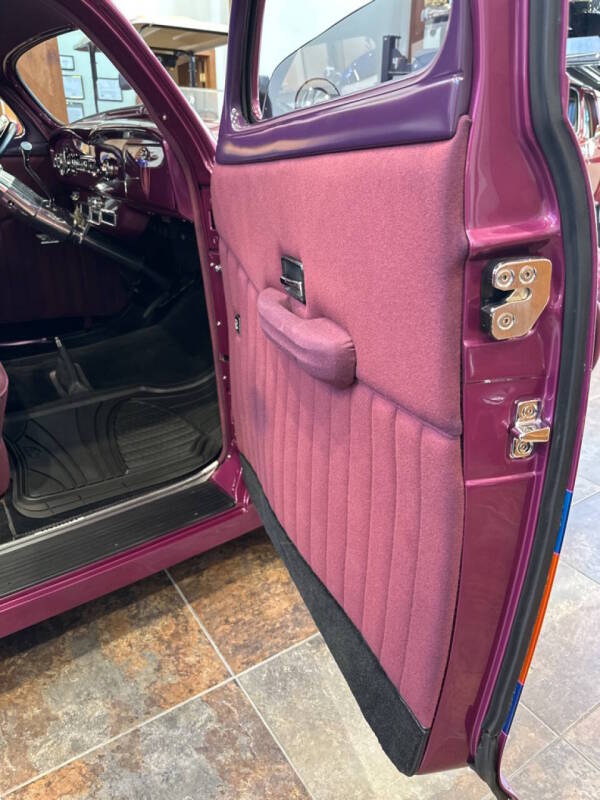 $38,541 · 12% above typical
Expand
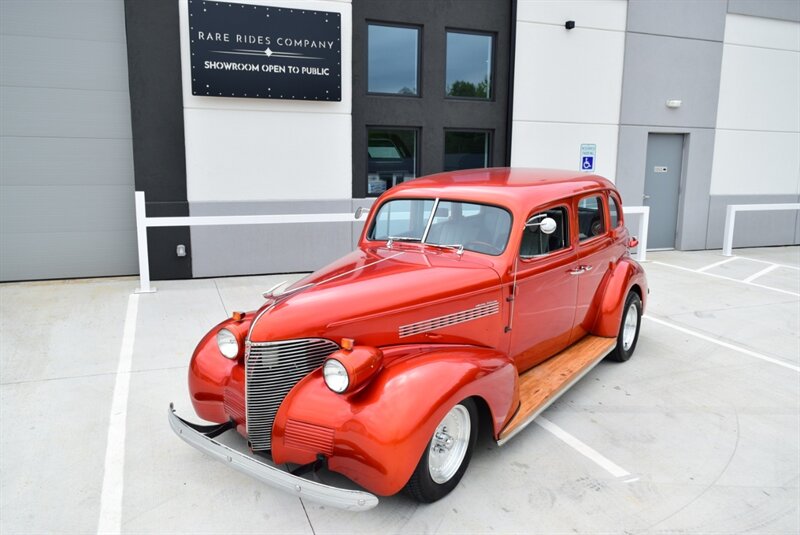 $29,995 · 13% below typical
Expand
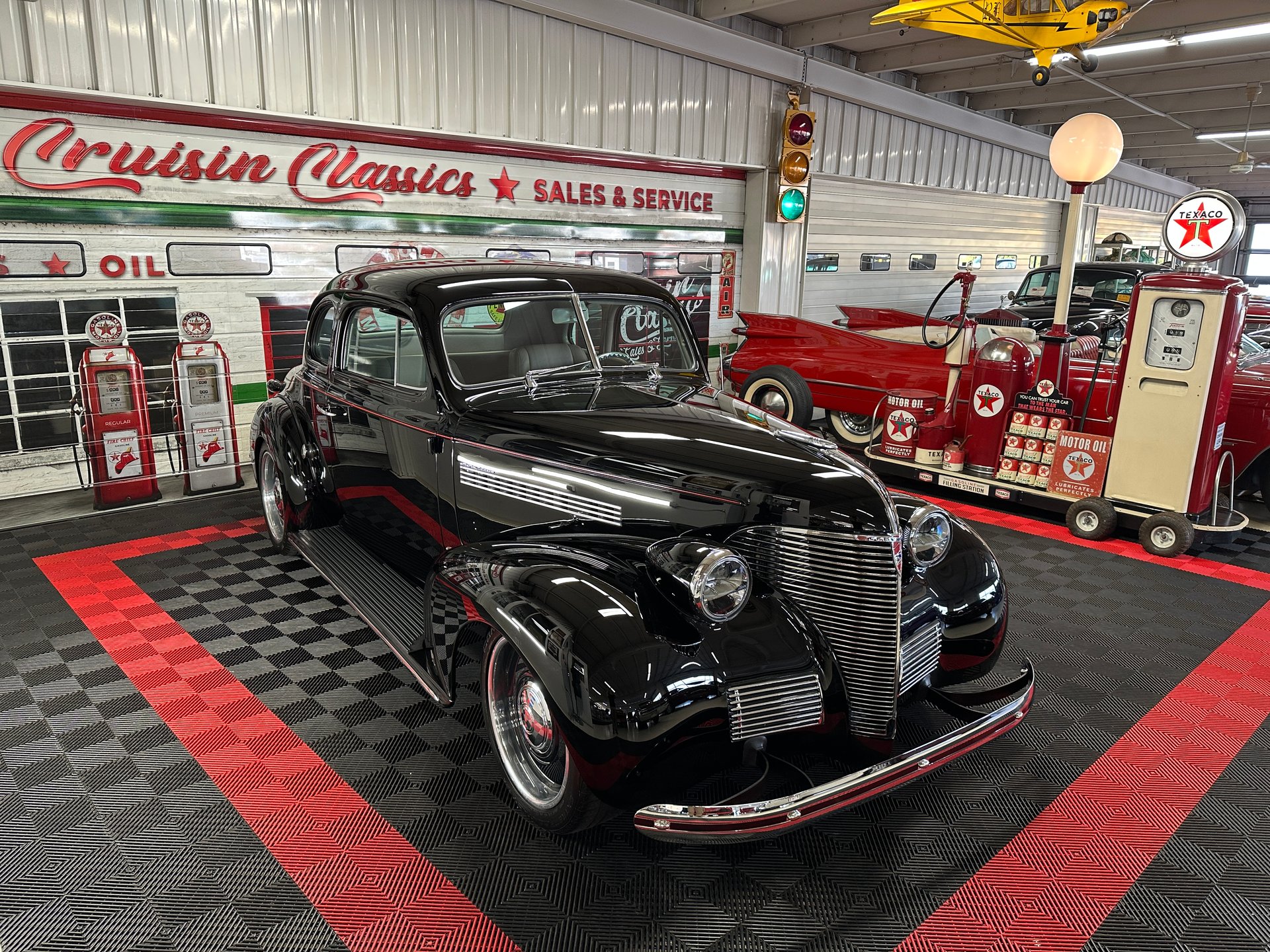 $94,995 · 176% above typical
Expand
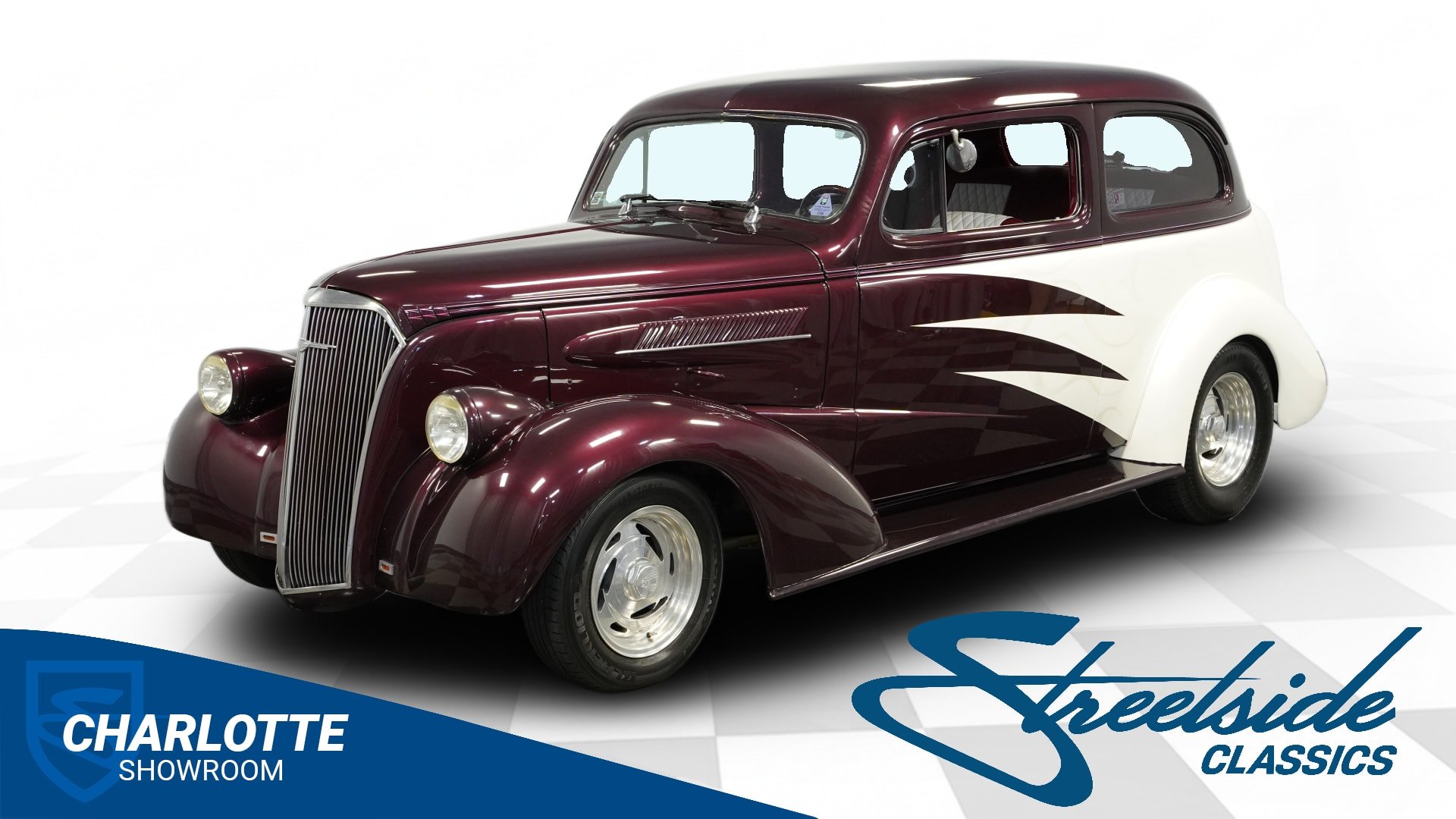 $44,995 · 31% above typical
Expand
What they sell for: Master Deluxe sale prices.