
Chevrolet Master buyer's guide
Chevrolet Master -- the model's own buyer's guide: variants, values and what to check.
Years listed: 1934-1947 · Series: Full Size
Overview and history
You are looking at the car that carries Chevrolet through the Depression and out the other side. The Master is Chevrolet's senior passenger car from 1933 to 1942 — above the cheaper Standard in the early years, then the whole Chevrolet car line once the Standard disappears — and it is the car that keeps Chevrolet ahead of Ford in the sales race for most of the decade. It does that not by being exotic but by stacking big-car features onto a low-priced chassis: an overhead-valve six when Ford sells a flathead V8 and Plymouth a flathead six, independent front suspension in 1934 when most of the industry still rides on a beam axle, hydraulic brakes from 1936, and a fully steel body from 1937. Every one of those features is also a buying question today, because each one defines a different generation of Master with a different risk profile.
Correct the naming fog first, because sellers exploit it. There is no single "Master." The name runs through at least five distinct technical eras in ten model years. The 1933 Master Eagle, Series CA, is a wood-framed, mechanically braked car on a beam front axle. The 1934 Series DA adds the Dubonnet Knee-Action independent front end. The 1935–36 Master Deluxe, Series EA/ED and FA/FD, rounds the body out, gains Fisher's steel Turret Top roof for 1935 and hydraulic brakes for 1936, but still hides structural timber under its skin. The 1937–38 cars, Series GA/GB and HA/HB, are the reset: an all-steel body with no structural wood, a new 216.5 cu in engine, and a split personality — the plain Master on a beam axle, the Master Deluxe on Knee-Action. From 1939 the base car is renamed Master 85, the Dubonnet units are gone in favour of a conventional coil-spring independent front end, the gear lever moves toward the column, and for 1940 a plusher Special Deluxe sits on top of the Master Deluxe. Civilian production ends in early 1942 as Chevrolet turns to war work. When car production resumes for 1946, the successors are called Stylemaster and Fleetmaster — related in spirit, different in body, chassis detail and identity. A postwar Stylemaster is not a late Master, whatever an advert says, and you should not pay a Master price, or accept Master parts advice, for one.
The second thing to understand is scale. Chevrolet builds these cars in the hundreds of thousands a year — 450,435 Master Eagles in 1933 alone, 452,412 Series DA cars in 1934, 846,300 Master Deluxes across 1935 and 1936 combined. The Master is never a rare car in period. What makes a specific car rare now is survival in original form. These are working cars that are used hard through the war years, run into the ground as cheap transport in the late 1940s, and then, from the 1960s onward, cut up in large numbers for street rods, because the coupe bodies are handsome and the chassis accepts a V8 easily. The result is a survivor pool with a split personality of its own: restored and original-style sedans and coupes at one end, V8-powered rods wearing Master sheetmetal at the other, and a thin middle of honest, unrestored cars. The store's own current pool shows exactly that spread in miniature — seven cars filed under Master, spanning 1934 to 1940 plus a postwar car wearing the wrong name, with original-style sedans sitting alongside a car sold explicitly as a hot rod. You decide which population you are shopping in before you compare prices, because the two populations share almost nothing except the badge.
That decision — original car or rod, wood-era car or steel-era car, Knee-Action car or beam-axle car — matters more than model year vanity or colour. A Master is a simple, rugged, home-mechanic-friendly car in any form, and the specialist trade around the Chevrolet six is one of the deepest in the pre-war hobby. But the wrong structural buy, a 1935 with rotten framing timber or a 1937 Deluxe with collapsed Knee-Action units, costs you more than the difference between a project and a driver. Read the problem areas before you fall for a grille.
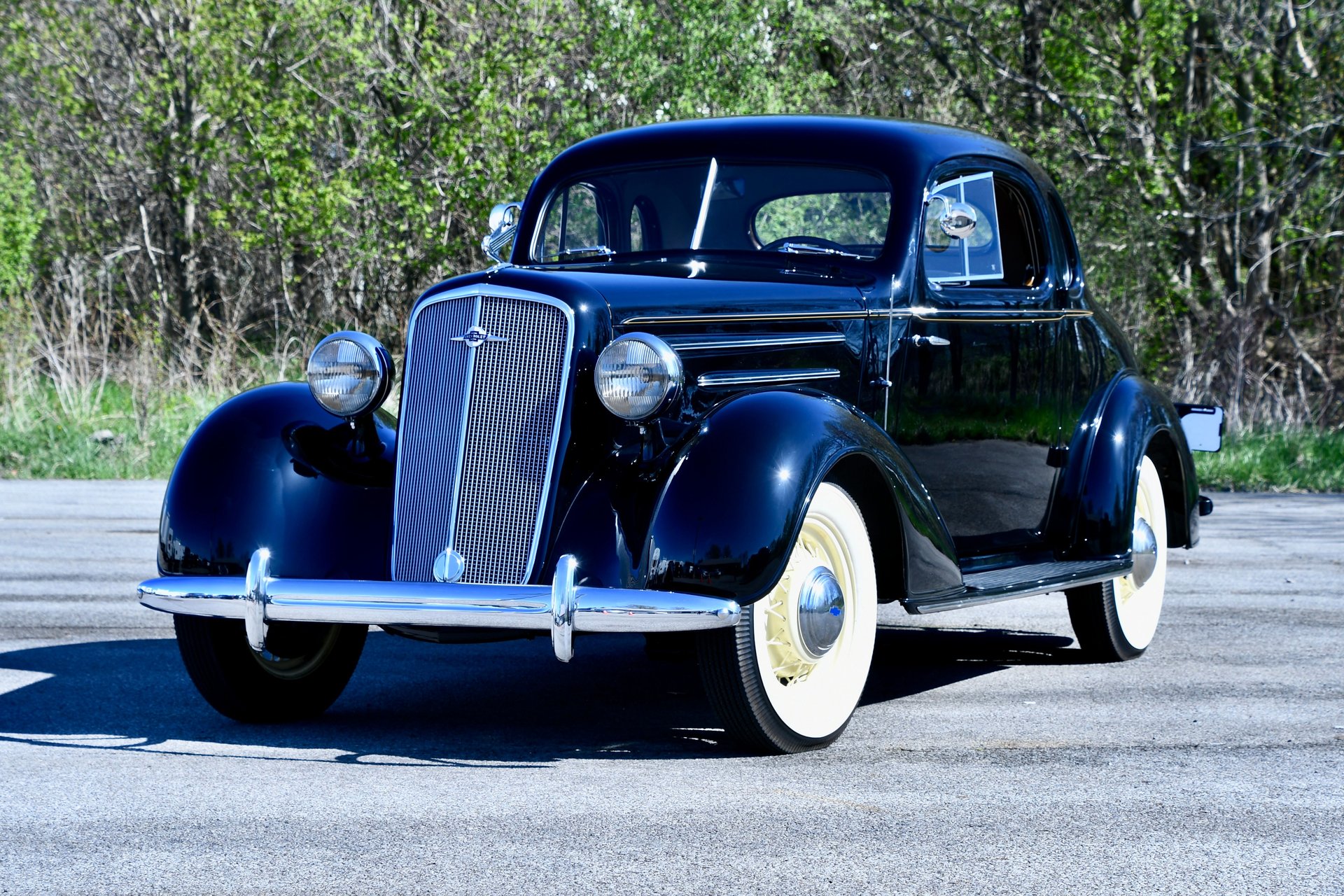
The models
The range makes sense the moment you lay it out by series letter, because Chevrolet changes the series designation every year and stamps it into the car's serial number. That is your identity tool: the letters in the serial tell you the year and the trim line more reliably than any badge a seller has screwed on. The broad arc is a two-line range — a plainer car and a Deluxe car on the same shell and the same engine — with the difference concentrated in the front suspension, the trim and the interior until 1939, after which the difference is mostly trim and equipment because the whole range shares the conventional independent front end.
| Model | Years | Engine | Output | Built | Character |
|---|---|---|---|---|---|
| Master Eagle, Series CA | 1933 | 206.8 cu in OHV six | 65 hp | 450,435 | The first Master: wood-framed Fisher body, beam axle, mechanical brakes, No-Draft ventilation |
| Master, Series DA | 1934 | 206.8 cu in OHV six | 80 hp | 452,412 | Knee-Action independent front suspension arrives as the Master's signature feature |
| Master Deluxe, Series EA (Knee-Action) / ED (beam axle) | 1935 | 206.8 cu in OHV six | 80 hp | Part of 846,300 Master Deluxes built across 1935–36 | Rounder body, steel Turret Top, rear-hinged front doors; you choose your front end by series letter |
| Master Deluxe, Series FA (Knee-Action) / FD (beam axle) | 1936 | 206.8 cu in OHV six | 79 hp | Part of the same 846,300 two-year total | One-year "fencer's mask" grille, front-hinged doors return, and hydraulic brakes at last |
| Master, Series GB / Master Deluxe, Series GA | 1937 | 216.5 cu in OHV six | 85 hp | Not split out here by trim in a form worth quoting precisely; a very high-volume year | The reset: all-steel body, new engine, new box-girder frame; beam axle on the Master, Knee-Action on the Deluxe |
| Master, Series HB / Master Deluxe, Series HA | 1938 | 216.5 cu in OHV six | 85 hp | 162,430 Master; 302,728 Master Deluxe | The same formula with a facelifted grille and hood; the Deluxe outsells the base car roughly two to one |
| Master 85, Series JB / Master Deluxe, Series JA | 1939 | 216.5 cu in OHV six | 85 hp | High volume; trim split not quoted where it cannot be verified | Headlamps move up onto the fenders, Dubonnet is replaced by a conventional independent front end, vacuum-assisted column shift offered |
| Master 85, Series KB / Master Deluxe, Series KA / Special Deluxe | 1940 | 216.5 cu in OHV six | 85 hp | High volume; three trim lines share one shell | Sealed-beam headlamps, column shift standardised, Special Deluxe becomes the plush flagship |
| Master Deluxe, Series AG / Special Deluxe, Series BG | 1941–1942 | 216.5 cu in OHV six | 90 hp | 1942 is a short, war-truncated year | Longer, lower, more integrated styling; the Master 85 is gone and the range is Deluxe-only |
Body styles repeat across the decade with period names you need to decode, because Chevrolet's words do not mean what a modern seller assumes. A Coach is a two-door sedan without an integral trunk — you reach the luggage space from inside, behind the rear seat. A Town Sedan is the two-door with a built-in trunk hump. A Sedan is the plain four-door; a Sport Sedan is the four-door with the trunk. The Business Coupe is the stark two-seater with a huge luggage deck behind it, sold to travelling salesmen and prized by rodders ever since. The Sport Coupe adds occasional rear seating — a rumble seat on the early cars, a small rear seat later. The Cabriolet is the true convertible, offered on and off through the run and always the scarcest closed-season body. From 1939 there is a Station Wagon, and throughout the late 1930s Chevrolet offers the Coupe-Pickup, a business coupe with a removable pickup box that drops into the trunk opening — a genuinely rare and useful variant now. Open tourers and roadsters are not part of the Master story; if you are offered one, you are looking at a Standard, a foreign-market car, or a special.
Two traps sit inside that table. The first is the 1935–36 front-end split: EA and FA cars carry Knee-Action, ED and FD cars carry a beam axle, and the beam-axle Deluxe is the rare car — period figures quoted by marque historians put straight-axle production at only a few thousand cars a year against hundreds of thousands of Knee-Action cars. Neither is "wrong," but they drive differently, they cost different money to put right, and the series letter is the only honest way to know which car you are standing in front of. The second trap is trim inflation. Because the Deluxe outsells the base car and carries more brightwork, base Masters acquire Deluxe scripts, Deluxe steering wheels and extra chrome over eighty years of ownership. The serial prefix — GB against GA, HB against HA, JB against JA — settles what the car leaves the factory as. Buy the car the serial describes, and treat added Deluxe jewellery as decoration, not as value.

Engines and gearboxes
Every Master leaves the factory with the same basic idea under the hood: Chevrolet's overhead-valve inline six, the engine family the hobby calls the Stovebolt. There are two displacements in the Master run, and the change between them in 1937 is the single most important mechanical dividing line in this guide. Around those two engines sits a penumbra of later swaps — the postwar 235 and the truck 261, and beyond them the full V8 conversions of the rod world — and a large part of buying a Master well is working out which engine is actually in the car, because sellers describe all of them, vaguely, as "the Chevy six."
The 206.8 cu in Stovebolt (1933–1936)
The early engine is a 206.8 cu in (3.4-litre) overhead-valve six with a cast-iron block and head, a bore of 3-5/16 in and a long 4 in stroke in a tall-deck block Chevrolet raises for this engine in 1933. Output starts at 65 hp in the Master Eagle and jumps to 80 hp for 1934, where it broadly stays — 80 hp in 1935, a nominal 79 hp in 1936 — as compression climbs through the decade from roughly 5.2:1 toward 6.0:1. A single Carter W-1 downdraft carburettor with a manual choke feeds it through a mechanical fuel pump, a Delco-Remy distributor with contact-breaker points provides the spark, and a generator — never an alternator — keeps the 6-volt system charged. The firing order, stamped into the intake side of your memory if you work on these cars, is 1-5-3-6-2-4.
The architecture that matters to you as a buyer is the oiling system, because it is shared with the later engine and it sets the maintenance culture for both. The oil pump delivers pressure feed to the main bearings, the camshaft and the overhead rocker gear, but the connecting-rod big ends are not pressure-fed at all. Each rod carries a small dipper that scoops oil from a trough in the sump as it passes, splashing oil into the bearing. It is a splash-and-dip system, adequate at the engine speeds and oil quality it is designed for, and unforgiving of two things: low oil level, which starves the dippers at exactly the moment the engine works hardest, and sludge in the troughs, which does the same thing with a full sump. The rod bearings themselves are poured babbitt — a soft white-metal lining cast directly into the rod and cap — adjusted by removing shims as they wear. There are no modern shell inserts to swap on the parts counter. When a 206 knocks, you are not buying bearings; you are buying specialist machine work.
Treat the 206 as a sweet, simple, low-revving engine with a period service rhythm: valve clearances set hot and checked often, oil changed far more frequently than a modern car asks, and a working temperature you judge by the gauge and the smell rather than by warning lights that do not exist. It pulls the car to a genuine 70 mph or so, cruises honestly at 45–55 mph, and tells you its condition through oil pressure behaviour, tappet noise and the colour of its exhaust more plainly than any diagnostic you can plug in.
The 216.5 cu in Stovebolt (1937–1942)
For 1937 Chevrolet redesigns the six around the same concept. Displacement rises to 216.5 cu in (3.5 litres) with a 3.5 in bore and a 3.75 in stroke, the crankshaft now runs in four main bearings, compression starts at 6.25:1 and rises again toward the end of the run, and output is 85 hp from 1937 through 1940 and 90 hp for 1941–42. The Carter W-1 stays. The rocker gear, the points ignition and the 6-volt electrics stay. Crucially, the dipper-and-trough rod oiling and the poured-babbitt rod bearings stay too — the 216 is a stronger, smoother development of the 206, not a modern pressure-fed engine in disguise. Correct the myth explicitly whenever a seller raises it: no Master engine, of any year, has full-pressure lubrication to its connecting rods, and no Master engine is the later "Blue Flame" unit of 1950s marketing, however often that name gets attached to any old Chevrolet six with a blue-painted rocker cover.
The 216's virtues are torque and tractability. Peak torque arrives low, the engine pulls from walking pace in top gear without complaint, and the four-main crank makes it the smoother and more durable of the two engines at sustained road speed. Its service needs mirror the 206's: hot valve adjustment — period shop figures put intakes in the region of six to eight thousandths of an inch and exhausts in the mid-teens, set hot, and a Stovebolt that clatters a little at idle is usually healthier than one adjusted silent and tight — regular oil changes, and respect for the dipper system. A healthy 216 shows even compression across all six cylinders, with the spread between highest and lowest mattering far more than the absolute number; a single low cylinder that rises with a squirt of oil in the plug hole is telling you rings, and one that does not is telling you valves.
Externally, you tell the engines apart by detail rather than by eye from ten feet. The engine number, stamped on a machined pad on the block, is the decider: its prefix and sequence place the engine's year and original application, and a number that decodes to a postwar car or a truck tells you the engine is a replacement, however original the rest of the car looks. Rocker-cover fixings, the position of the oil filler and the shape of the side cover all change across the Stovebolt family's long life and give you supporting evidence, but the pad is the verdict. Check it on every car, and check that the number has not been ground and restamped — a pad that is too smooth, too bright or unevenly surfaced is a question, not an answer.
Later sixes, swaps and identity
The swap that matters in an otherwise original car is the postwar 235. The 235 is the Stovebolt's direct descendant, visually near-identical, and from 1953–54 it exists in a genuinely full-pressure form with insert bearings — which is exactly why owners fit it. A Master with a well-fitted late 235 is a more usable car than the same Master with a tired 216, and there is no shame in it, provided it is declared and priced as what it is: a modified car, not a numbers-matching one. The 261 truck engine is the same story one step further. What you price hard is the undeclared swap, because it changes the parts you order, the clearances you set and the value of the car, all at once.
Beyond the sixes lies the rod population: small-block and big-block V8s, modern automatic gearboxes, independent front clips and air conditioning, all wearing Master sheetmetal. The store's own listings reflect it — Masters filed with automatic gearboxes and modern automatic designations that no factory Master ever carries are telling you, in the data itself, that the drivetrain is a conversion. Judge those cars as rods, by the quality of the fabrication, the cooling, the brakes and the wiring, and not by anything in the rest of this guide. A rod is not a failed original; it is a different car that happens to share a silhouette.
Gearboxes and the driveline
Every factory Master has the same gearbox layout: a three-speed manual with synchromesh on second and top, an unsynchronised first you engage at a standstill or with a practised double-declutch, and a single dry-plate clutch worked by mechanical linkage. What changes is where the lever lives. Cars through 1938 carry a floor lever, long, whippy and charming. For 1939 Chevrolet offers a vacuum-assisted column shift as an option — a small vacuum servo does the heavy work of moving the selector rods while your hand moves a light column lever — and from 1940 the column shift is the standard layout. The vacuum system is the talking point: when its diaphragm, hoses and control valve are sound it shifts with fingertip ease, and when they leak it becomes vague, slow and reluctant to find gears, which sellers then blame on the gearbox itself. Test the servo before you condemn the box; the gearbox is the stronger half of the partnership.
Behind the gearbox sits the other defining Chevrolet layout of the era: the torque tube. The propeller shaft runs enclosed inside a steel tube that is rigidly bolted to the rear axle and pivots on a ball housing at the back of the gearbox, so the tube itself locates the axle and takes the drive torque. The single universal joint lives inside that ball housing and is lubricated by gearbox oil — oil, not grease. A seal at the front of the tube keeps that oil where it belongs. When the seal fails, gearbox oil migrates down the tube into the axle, the gearbox runs low, the axle overfills and starts pushing oil past its seals onto the rear brakes, and the joint and the torque-tube bushings run dry and wear. It is one small seal producing symptoms at both ends of the car, and it is covered again in the problem areas because it fools so many first-time buyers.
The rear axle itself is a straightforward live axle on semi-elliptic leaf springs, with a hypoid final drive on the post-1937 cars. Ratios are tall by modern standards, matched to an engine that makes its torque low and its power early. None of this driveline is fragile. All of it is now eighty-plus years old, and wear shows as backlash you can feel as a clunk on take-up, whine on the overrun, and oil appearing in places oil should never be.
Problem areas
A Master's problems divide cleanly by era. Cars built before 1937 can fail structurally in a way no amount of shiny paint fixes, because their bodies are timber frames wearing steel skin. Cars built from 1937 cannot fail that way, but they concentrate their risk in the front suspension, the babbitt engine and ninety years of accumulated rust in the same predictable seams. Work through the car by system, and remember that on a car this old you are not looking for a fault-free example — you are pricing the faults you find.
Rust and the body: steel, wood and frame
Start with the distinction that decides everything. The 1937-onwards all-steel Fisher body rusts like any steel body: floor pans, the bottoms of the doors, the lower cowl sides, the trunk floor, the rear wheel arches, the panel below the rear window, the running-board aprons and the seams where the front fenders meet the cowl. None of it is exotic, all of it is visible or probe-able, and repair panels and competent fabrication cover it. Budget panel and paint work the way you would on any 1930s steel car, and distrust fresh underseal, which on these cars hides floor and sill work — good and bad — more often than it prevents anything.
The 1933–36 body is a different inspection entirely. Under the steel skin sits a framework of hardwood — sills, pillars, door frames, roof rails — screwed and jointed together, with the steel panels nailed and screwed over it. The 1935 Turret Top replaces the fabric roof insert with a steel pressing, which sellers quote as "all-steel construction." It is not. The roof is steel; the structure under the skin is still wood until the 1937 model year, and wood fails by rot and insect damage from the inside out, invisibly, wherever water has sat: the bottom of the door pillars, the sill ends, the lower door frames, the wood around the windscreen and the rear body mounts. The symptoms are all in the fit of things. Doors that sag on their hinges, doors whose gaps close at the top and gape at the bottom, a body that creaks and shifts as you drive over uneven ground, windscreen frames out of square, and screws that turn without biting are the wood telling you it has gone soft. Push a thin probe — an awl, a bradawl — into every piece of framing you can reach through the trim, under the seats and inside the door shuts. Sound hardwood resists; rotten wood lets the point sink with a soft, fibrous give. Replacing body wood is skilled, slow work: pattern-making, hardwood, dismantling the body skin without destroying it. A full re-wood runs to several thousand dollars in parts and patterns before labour, and a car needing it is a restoration project at a project price, whatever the paint looks like. The honest alternative many owners choose — fabricating the structure in steel tube, as the rod world has done for decades — suits a rod; on a car sold as original it is a modification to price, not a repair to celebrate.
The chassis under either body is a ladder frame — box-section in its later, stiffer form — and it rusts where mud packs and stays wet: the rear spring-hanger areas, the crossmembers under the body mounts, the battery tray area and the frame horns behind the front bumper. Surface rust on a frame is cosmetic. Perforation at a spring hanger or a body mount is structural, and it hides under the body where a casual look never goes. Get under the car, with a light, on every purchase. There are no exceptions to that rule at this age.
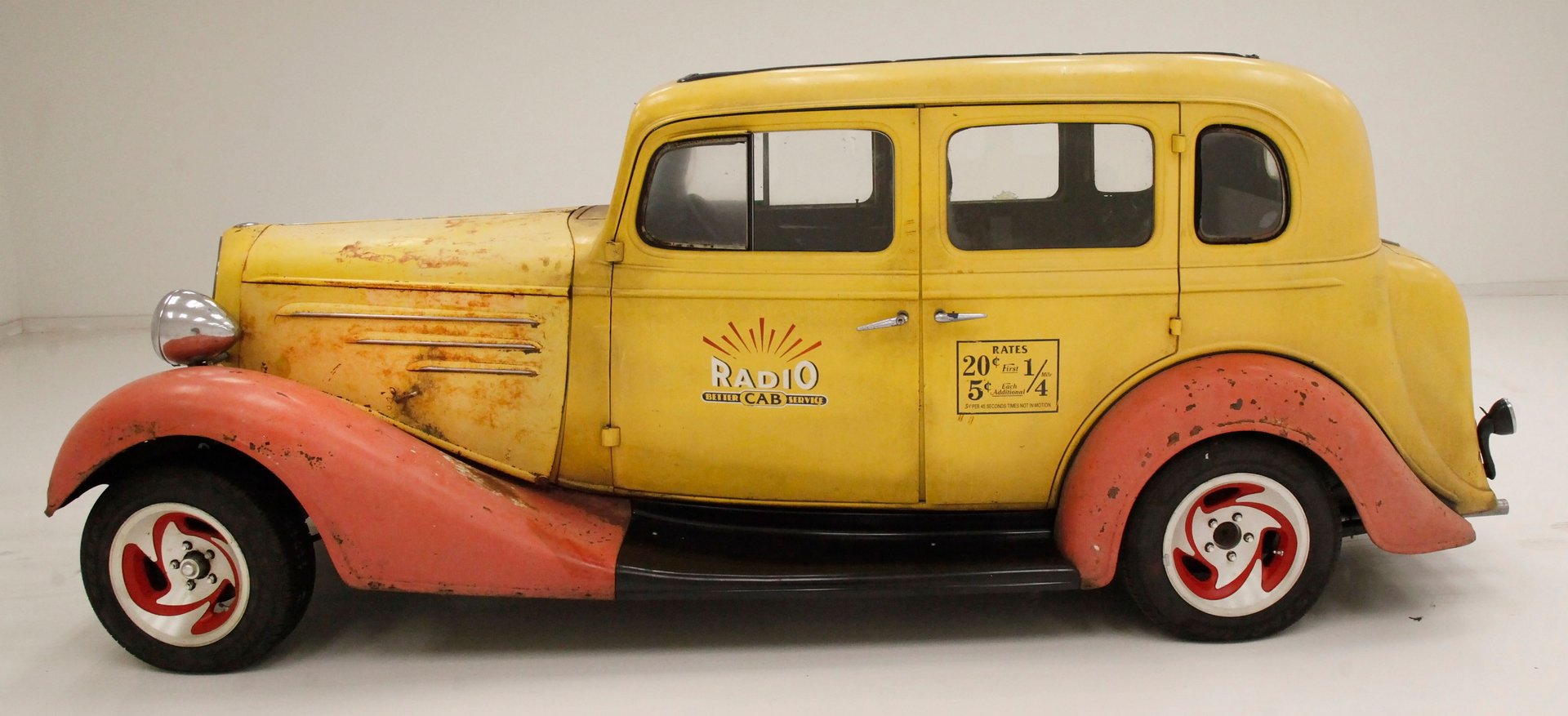
The 206 and 216 in old age
The Stovebolt fails in character, and its character is wear in a lubrication system with no margin for neglect. The headline failure is the rod bearings. Poured babbitt wears, clearances open up, and the engine develops a deep knock under load that fades at idle — the opposite pattern to a noisy tappet, and the test that separates them. Oil pressure that is healthy cold and fades as the engine warms points the same way: the pump is fine, the clearances it feeds are not. Because the rods are splash-fed, low oil level and sludged sump troughs accelerate all of it, which is why the first mechanical job on any newly bought Master is an oil change with the sump off and the troughs cleaned, before you judge the engine at all. A rebuild with re-poured or converted insert rod bearings, machined crank and fresh rings is specialist work in the region of $4,000–7,000 depending on how much machining the crank and block need; a car knocking at purchase price-minus-nothing is a car you walk away from.
Valve gear is the second wear front. The rocker shaft and rockers wear oval, the adjusters wear, and clearances wander — which is why a Stovebolt's tappet noise tells you about maintenance, not just adjustment. A valve that repeatedly closes up its clearance is receding into its seat, and on an engine designed for leaded fuel and now run on unleaded, exhaust-seat recession is the long-term wear item to watch; many engines have hardened seats fitted at rebuild, and a receipt for that work is worth money. Burned exhaust valves from tight clearances show as a chuffing misfire at idle and one low compression reading that oil does not improve.
Oil leaks are the third front, and mostly they are the car being honest rather than broken: the rocker cover, the pushrod side cover, the timing cover and the rear main seal all weep on a Stovebolt that is used, and the rear main — a rope-type seal — is a gearbox-out job to cure properly, in the region of $600–1,000 of mostly labour if you combine it with a clutch. Judge leaks by rate. A car that marks its parking space is normal; a car that needs a quart every hundred miles has a problem that is either consumption or a leak worth chasing. Smoke sorts it: blue smoke on the overrun after a downhill coast is valve guides and seals, blue smoke under load is rings and bores, and white smoke that smells sweet and never clears is coolant — head gasket or a cracked head — and that car does not get driven home.
Finally, the long-stored engine. A Master that has sat for a decade may turn freely and still carry stuck rings, a fuel system full of varnish and troughs full of sediment. Turning over is not evidence of health. Compression figures, oil pressure hot, and behaviour over a twenty-minute drive are the evidence, in that order.
Knee-Action, beam axles, steering and the rear axle
The Dubonnet Knee-Action unit is the pre-war Master's signature component and its signature bill. Each front wheel is carried on a trailing arm pivoting from a sealed, oil-filled housing that contains the coil spring and the damper in one unit, mounted at the kingpin. When it is full of oil and its seals and bearings are sound, it rides remarkably well — genuinely better than the beam axle over broken surfaces. The failure chain is always the same: the seal where the arm's shaft exits the housing hardens and leaks, the oil level falls, damping disappears first and then lubrication, the shaft and its needle bearings wear, and the wheel gains play that no alignment can set out. The car pogos over bumps, wanders, and wears its front tyres on the edges. Chevrolet asks owners to check the oil every 1,000 miles; eighty years of owners largely did not. Your tests are physical: look for oil weeping and old oil streaks down the unit, bounce each front corner and watch whether it settles in one movement or oscillates, and rock each front wheel at the top while an assistant watches the unit for movement at the shaft. Rebuilding a pair of units is specialist work with fixtures and machined bushes, roughly $1,500–2,500 a pair, and you should establish on any 1934–38 Deluxe whether the units are original, rebuilt with paperwork, converted to the later conventional layout, or simply worn out — four very different cars at four very different prices.
Do not let the Knee-Action story make you careless about the alternatives. Beam-axle Masters wear their kingpins and bushes instead, showing as wheel rock at top and bottom and a shimmy at speed; a kingpin and bush job is ordinary machine-shop work, roughly $300–600 in parts and machining plus labour, and it transforms a wandering car. The 1939-onwards conventional independent front end wears its bushings, ball joints' period equivalents and coil springs in familiar ways and is the cheapest of the three front ends to keep right — one of the strongest practical arguments for a late car. Steering on all of them is a worm-type box with a long linkage full of joints; play accumulates a little at every joint until the wheel has inches of free travel. Work through it joint by joint rather than condemning the box, which is usually the least worn part of the chain. At the back, axle wear shows as backlash clunk and whine, and oil on the rear brake backplates means axle seals — which, remember, can also be the torque-tube seal overfilling the axle from the front. Diagnose the source before you strip anything.
Brakes: mechanical and hydraulic
The brake divide falls at 1936, and it changes how you test the car. The 1933–35 mechanical system works the drums by rods and cables. It has no hydraulics to leak and no fluid to change, and a well-maintained mechanical system stops the car adequately in period terms. Its enemies are stretch, wear and unequal adjustment: cables stretch, linkage pivots wear oval, compensators seize, and the car pulls to whichever corner is doing the most work. A mechanical-brake car that pulls under braking is not "characterful"; it is telling you one wheel is barely braking. The test is a series of firm stops from 30 mph on a straight, quiet road, hands light on the wheel, feeling for pull and for a pedal — here, a linkage — that needs pumping or excessive travel. Equalising a mechanical system is patient hand work rather than expensive parts, but drums and shoes are shared with the hydraulic cars and priced the same.
From 1936 the system is hydraulic, single-circuit, with a master cylinder and a wheel cylinder at each drum. Every hydraulic weakness you know from later classics applies, doubled by age: wheel cylinders that weep and contaminate shoes, a master cylinder bore pitted by decades of moisture-laden fluid, steel lines rusted from the outside in northern climates and rubber hoses that look fine and are rotten inside, swelling shut until a brake drags or locks. Brake fluid absorbs water; on a car that sits, the system corrodes from inside while the outside looks restored. A full hydraulic overhaul — cylinders, master, hoses, lines where needed, shoes and skimmed or replaced drums — runs roughly $800–1,500 in parts and machining before labour, and it is the first money you spend on any hydraulic Master that lacks receipts for it. And keep the period limit in your head while you test-drive: even a perfect system is four small drums and a single circuit, stopping a heavy car. You drive a Master with following distance, always.
Fuel, cooling and electrics
The Carter W-1 is a simple single-barrel carburettor, and its faults are simple faults aged: a worn throttle spindle drawing air and spoiling the idle, a float needle that sticks after storage and floods the engine, an accelerator pump cup dried out by modern ethanol-blended fuel so the car stumbles on tip-in, and a manual choke that sellers "fix" by richening the idle until the plugs soot. Ethanol is the background problem for the whole fuel system — it attacks old rubber, old cork gaskets and the soldered float, and it goes stale in a vented tank over one winter. A car that runs badly after storage usually needs the tank, pump and carburettor cleaned in that order, not a tune-up. The vacuum windscreen wipers belong in this section too, because they run on inlet-manifold vacuum, often boosted by a vacuum section built into the fuel pump: wipers that stall when you accelerate are period-normal, wipers that never move mean a perished diaphragm, split hoses or a failed pump section, and each cause has a different price.
Cooling is a water pump, a belt-driven fan and a large radiator, unpressurised or lightly pressurised depending on year. Overheating on a Master is almost never the radiator alone: it is a slipping belt, a worn pump, a thermostat stuck or removed — removal is the classic bodge, and it makes warm-up worse, not better — silt in the block, or timing retarded by a worn distributor. A recore or a modern-core radiator runs roughly $600–1,000. A car that runs cool at 40 mph and boils in traffic is telling you airflow and fan; a car that heats steadily under load is telling you circulation or timing. Learn to separate them before you buy parts.
The 6-volt electrical system is the part modern drivers misjudge worst. Six volts is not a defect; it is a system that demands clean, tight, heavy-gauge connections, because the same power at half the voltage means double the current and quadruple the sensitivity to resistance. Slow cranking is almost always cables, earth straps and connections — including the earth path through a painted chassis — before it is the starter or the battery. The generator charges modestly and the system is intolerant of added loads, so cars carrying modern stereos, extra lamps and electric fans on the original generator are cars with a charging deficit designed in. A full replacement wiring harness, roughly $400–700 in parts, is the single best electrical investment in a scruffy car, because eighty-year-old cloth insulation crumbles in your hands and shorts where you cannot see it. Twelve-volt conversions are common and work, but they change every bulb, the gauges' behaviour and the starter's life, and on an otherwise original car they are a deduction, not an upgrade.
Interior, glass and trim
The interior is mohair and cloth on the sedans, leatherette in the utility bodies, wood-grain painted metal on the dash of the Deluxe cars, and it wears in the open: seat springs sag and break, mohair goes thin on the driver's cushion and shiny on the door cards, headlinings stain from roof leaks. A correct retrim in period-style cloth, with seat rebuilding, runs roughly $2,500–4,500 fitted, and the Deluxe wood-grain dash finish is specialist work to reproduce where it has flaked. Check what a shiny interior photograph hides: seat covers over collapsed springs, modern vinyl where mohair should be, a painted-over dash. None of it is fatal; all of it is money.
Glass is flat everywhere except in detail, so replacements are cut rather than ordered — cheap in principle, but the wind-up mechanisms, channels and felts are the real cost, and a window that winds stiffly today strips its regulator tomorrow. The opening windscreen on early cars and the cowl vent on later ones both leak when their seals die, and both leaks land exactly where you least want water: on the floor, and on a wood-era car, into the sill timber. Trim is the last trap. Grilles differ year by year, the 1936 grille is a one-year stamping, die-cast pieces pit and are expensive to restore, and replating a car's brightwork runs roughly $1,500–3,000 depending on how much die-cast needs repair first. A car with complete, straight, original trim is worth a real premium over a prettier car with pieces missing, because you cannot buy your way out of missing trim at any sensible price.

How to inspect one
Inspect in this order, because it puts the cheap, decisive tests first and the expensive opinions last. Take a torch, a magnet wrapped in cloth, an awl for the wood-era cars, a compression gauge if the seller allows it, and a friend to rock wheels and watch gauges. Allow two hours. A seller who will not allow the car on a jack, or the sump plug questions below, has answered your most important question already.
- Identity before condition. Read the serial number and decode the series letters against the year the seller claims — DA, EA or ED, FA or FD, GA or GB, HA or HB, JA or JB, KA or KB. Then read the engine number on the block pad and the Fisher body plate on the cowl. Three numbers that tell one story mean an honest car. A serial that decodes to a different year or trim from the advert is the misfile trap from the models section, and you reprice or walk on the spot.
- The stance test. Stand back. A Master should sit level, side to side and front to back. A corner down means a broken or sagged spring, a collapsed Knee-Action unit or, on a wood car, structure that has settled. Sight down each side for ripples and for doors that sit proud or sunken in their apertures.
- Doors and wood, 1933–36 cars. Open and close every door, lift each by its handle, and probe the sill timber, pillar bottoms and door framing with the awl everywhere you can reach, as the rust section describes. Sagging doors plus soft wood ends the inspection for an "original, restored" car — what remains is a negotiation about a project.
- Steel and floors, all cars. Magnet-test the lower doors, cowl sides, rear quarters and trunk floor edges for filler, lift the carpets and the trunk mat, and look at the floor from underneath with the torch. Then the frame: spring hangers, body mounts, crossmembers. Perforation in a panel is money; perforation at a hanger is a different conversation.
- The Knee-Action test, 1934–38 Deluxe cars. Look for oil weep at each unit, bounce each front corner and count the oscillations, then rock each front wheel at the top while your friend watches the unit's shaft for play. Repeat the wheel-rock test at top and bottom on beam-axle cars to price kingpins instead. Establish which front end the car has, and in what state, before you discuss the engine.
- Cold start. Insist the engine is cold when you arrive — a warm engine on arrival hides starting, choke and oil-pressure sins. Watch cranking speed on the 6-volt starter, watch how it catches, and watch the exhaust: blue, black or white, at start and as it warms, per the smoke map in the engine problem section.
- Oil pressure and noises, hot. Drive until the engine is fully warm, then read oil pressure at idle and at road speed. Fading hot pressure plus a load-dependent deep knock is the babbitt verdict from the problem areas. Tappet clatter alone is not a walk-away; a knock under load is.
- Compression, if allowed. All plugs out, throttle open, engine warm, valves known to be roughly in adjustment. You want even numbers across the six, within about ten percent of each other. One low cylinder gets the oil-squirt retest: rings if it rises, valves if it does not.
- Gearbox, clutch and the torque tube. Drive every gear. Synchromesh on second and top should engage cleanly; first is a standstill gear. On a 1939–40 car, test the vacuum column shift repeatedly — vagueness is the servo system from the gearbox section, not necessarily the box. Feel for backlash clunk on take-up and lift-off, then check the gearbox oil level and look for oil at the rear axle and rear backplates: the migrating-oil pattern means the torque-tube seal.
- Brakes, by year. On a 1936-onwards car, a firm pedal that stays firm, straight stops from 30 mph and no pull; budget the full hydraulic overhaul if there are no receipts. On a mechanical-brake car, the same stops test the equalisation — pull means one corner is not working, as the brake section explains. Check the handbrake holds on a slope; it works the rear brakes and tells you their state for free.
- Steering and road manners. Measure free play at the wheel rim, then drive over broken ground. Wander plus play is linkage joints accumulating, shimmy at speed on a beam-axle car is kingpins, and pogo-ing over bumps on a Knee-Action car is empty units. Each symptom has a price in the problem areas; attach the price to the car, not to your hopes.
- Paper and completeness. Receipts for engine work — specifically babbitt or insert conversion, hardened valve seats, Knee-Action rebuilds, brake hydraulics — are worth more than a shiny restoration album. Check the trim is all present, the correct grille for the year is fitted, and the tools and jack exist. Then, and only then, talk about the number.
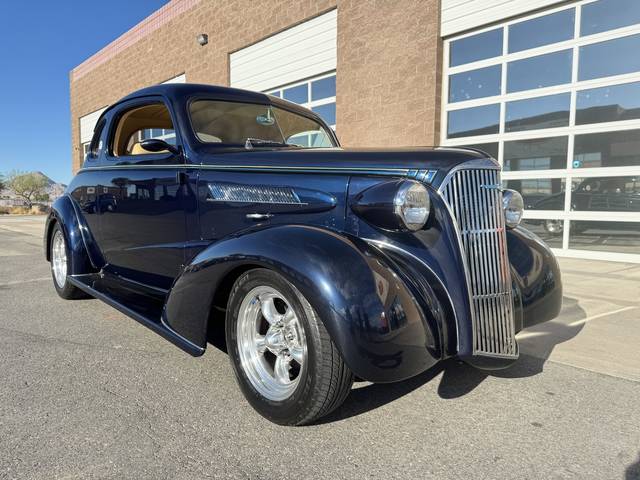
Values
Read the market for a Master in two halves, because there are two markets and they barely speak to each other. The market block beneath this guide shows you the site's own current listings and recorded sales; what it cannot show you is which population each car belongs to. Your first job with any figure is to sort the car in front of it: original-style car or rod, wood-era or steel-era, Deluxe or base, coupe or sedan. Averages taken across those divides describe no car that exists.
Within the original-car market, the condition spread is enormous and it is driven by structure, not shine. The gap between a project and a driver is the price of the wood, the babbitt and the Knee-Action work described in the problem areas, and it routinely exceeds the gap between a driver and a genuinely fine car, because the fine car's premium is mostly paint, trim and interior — visible, finite work. That is why a scruffy but structurally sound, honestly original sedan is frequently the best value in the whole market, and why a gleaming car with soft sills or a knocking engine is the worst: you are paying the top of the spread for the cheapest part of the restoration. Coupes, cabriolets and the coupe-pickup carry a real premium over sedans in equal condition, earned by scarcity of survivors rather than by any mechanical difference. Deluxe trim adds a modest premium on steel-era cars, where it is mostly equipment; on the wood-era cars the Knee-Action question matters more than the badge. Rods follow build logic, not Master logic: value tracks the quality and documentation of the build, the desirability of the drivetrain fitted, and whether the car is finished and sorted, and a half-finished rod is worth a fraction of either a finished rod or the original car it began as.
Asking prices and achieved prices part company predictably at the top of the market. Restored sedans are frequently advertised at figures that assume the restoration cost is recoverable; it is not, and recorded sales sit below the optimistic asks, while the best original and the rarest bodies sell quietly and quickly at strong money because the buyers for them know how few exist. Negotiate from the fault list, not from the advert: every item in the inspection section has a job price attached in this guide, and a seller who understands these cars expects the arithmetic. What you should never do is pay a steel-era price for a wood-era risk you have not probed, or an original-car price for a car whose engine number says the heart of it is postwar.
Parts and ownership
Ownership is the Master's strongest suit. The Chevrolet six is one of the best-supported pre-war engines in the hobby: a dedicated trade of American specialists stocks everything from Carter W-1 rebuild kits, gaskets and ignition consumables to torque-tube bushing and seal kits, kingpin sets, brake hydraulics and full wiring harnesses, and the Vintage Chevrolet Club of America and the marque forums hold the accumulated knowledge — jet aiming in the sump troughs, shim practice on babbitt bearings, Knee-Action fixtures — that no manual prints. Mechanical parts are easy. The parts that discipline you are body and trim: year-specific grilles, die-cast that pits, wood-era framing that must be made rather than bought off a shelf, and correct cloth for a retrim. Complete cars are worth more than pretty cars for exactly this reason.
Running one asks for rhythm rather than money. You change oil often and keep it to the mark, because the dippers forgive nothing. You set valve clearances hot and check them regularly. You grease the chassis on schedule, check Knee-Action oil on the cars that have it, exercise the car rather than storing it — seals, brakes and fuel systems all decay faster at rest than in use — and you keep ethanol-blended fuel fresh or treated, draining the carburettor for a winter lay-up. You drive it the way it was built to be driven: 45–55 mph cruising, generous following distances, mechanical sympathy in first gear. Insurance and club registration are cheap, the car fits in a normal garage, and a competent home mechanic with a shop manual, a torque wrench and a feeler gauge can do nearly everything except the babbitt work, the Knee-Action rebuilds and the wood — which is a fair summary of the whole car: simple everywhere except where it is specialist, and honest about which is which.
Which one to buy
- The all-rounder: a 1937–38 Master Deluxe. The all-steel body, the 216 engine, hydraulic brakes and the handsome grille, in the years when the formula is complete. Buy it with the Knee-Action units rebuilt or honestly priced, and you have the Master at its best.
- The driver buy: a 1940–42 Master Deluxe or Special Deluxe. The conventional front end, the column shift, sealed-beam lamps and, for 1941–42, the 90 hp engine make these the easiest Masters to live with and to keep right. Less romance, more driving.
- The value buy: a Master 85 or plain Master sedan, 1937–40. The same engine and shell as the Deluxe with plainer trim and, on the early cars, the simpler beam axle. The market discounts them more than the driving experience justifies.
- The character buy: a Business Coupe, Sport Coupe or Coupe-Pickup. Scarcer bodies with real presence and, in the coupe-pickup's case, genuine rarity. You pay a premium and accept a smaller buyer pool when you sell; buy the most complete one, because coupe-specific trim is the hardest to replace.
- The brave buy: a 1934–36 car with proven wood. The prettiest grilles and the most period feel in the range, bought only after the awl test, with hydraulic brakes if you take the 1936 car. Sound wood makes it a delight; unprobed wood makes it the most expensive cheap car you will ever own.
- The rod buy: a finished, documented street rod. If you want V8 performance in the Master's shape, buy somebody else's completed, sorted build and inspect the fabrication, cooling and brakes — never a half-finished project priced on its parts list.
The overriding rule: buy structure and paperwork, not shine — on a Master, the wood, the babbitt, the front end and the engine number decide what the car is worth, and every one of them can be checked before you pay.
See the 6 Master cars currently listed.
For sale now
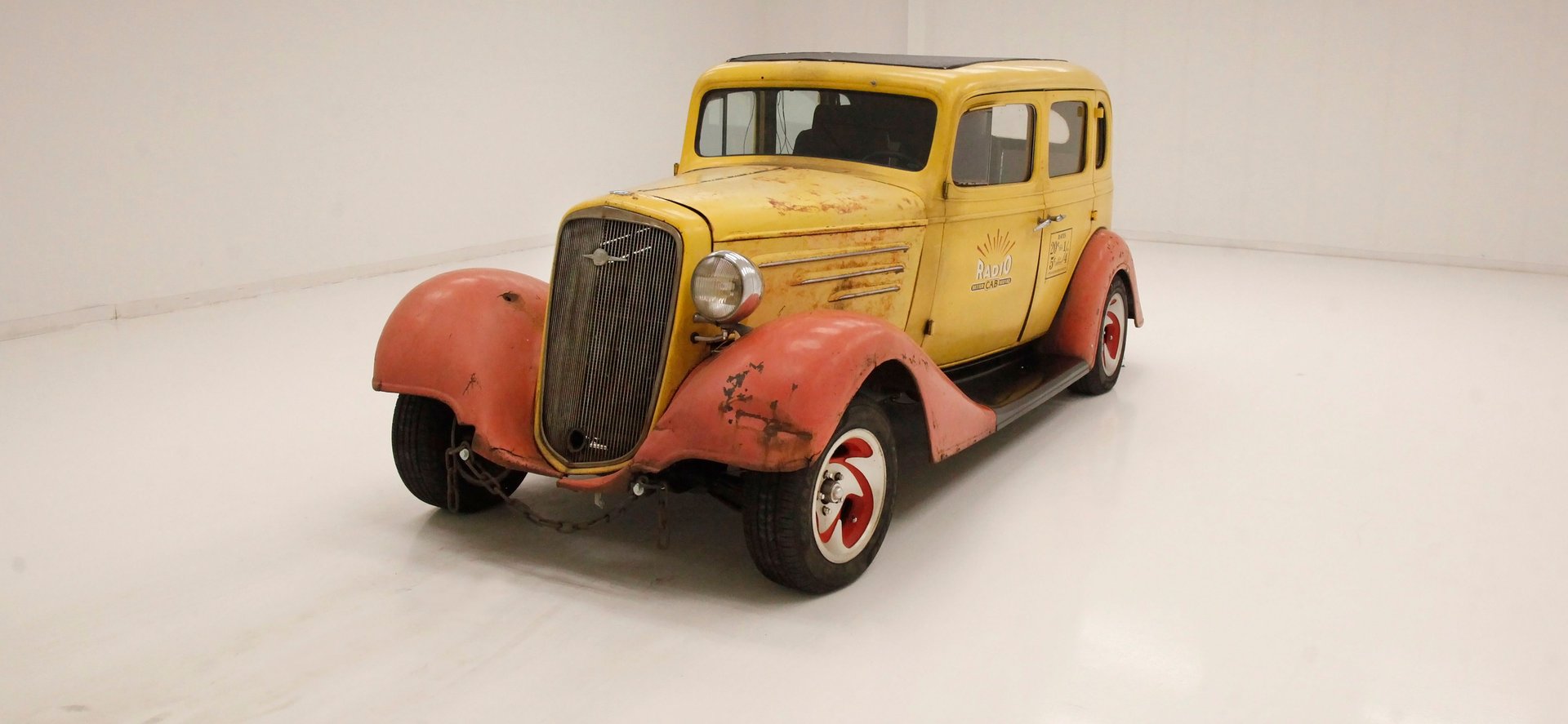 $12,900 · 79% below typical
Expand
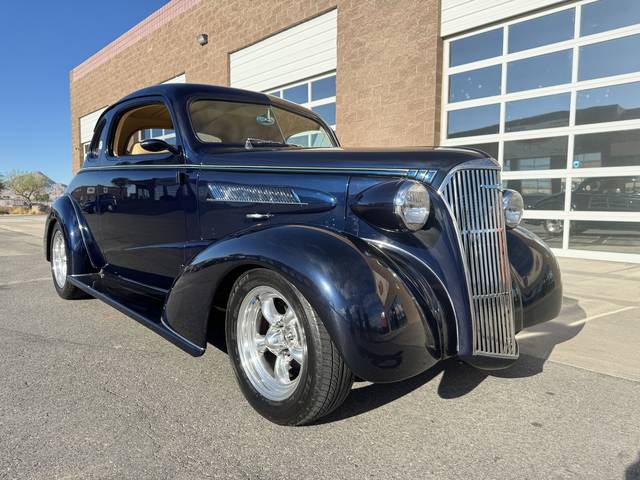 $50,679 · 17% below typical
Expand
What they sell for: Master sale prices.