
Chevrolet Fleetline buyer's guide
Chevrolet Fleetline -- the model's own buyer's guide: variants, values and what to check.
Years listed: 1947-1950 · Series: Full Size
Overview and history
The Chevrolet Fleetline is the fastback version of America's best-selling post-war car, and that sentence explains both why you want one and what to watch for. Between 1941 and 1952 Chevrolet sold essentially the same mechanical package — an overhead-valve straight six, a three-speed manual (and, from 1950, an automatic), a separate frame, a torque-tube rear axle and hydraulic drum brakes — under two silhouettes. The notchback cars were the Styleline (and before the war, the Master Deluxe and Special Deluxe). The cars whose roofline swept unbroken from the windshield header to the rear bumper were the Fleetline. Nothing underneath is exotic, and almost everything that goes wrong goes wrong slowly, audibly and visibly. That makes the Fleetline one of the most inspectable classics you can buy — provided you actually inspect it, because many cars have lived on deferred maintenance, cosmetic restoration over structural rust, and engine swaps the seller may not know about.
The name was period marketing at its most confident: in 1941 a "fleetliner" was modernity — streamlined diesel trains and ocean liners. GM styling chief Harley Earl understood that the 1940s buyer wanted that shape in the driveway, and Chevrolet — the volume division — got its streamliner as an upmarket sub-series rather than a separate model line. The Fleetline launched for 1941 as a four-door sedan on the Special Deluxe. For 1942 the defining body arrived: the two-door Aerosedan, a genuine fastback in which roof, rear deck and rear fenders resolve into one continuous curve. Stand behind an Aerosedan and there is no conventional trunk-lid outline — the slope continues until the bumper stops it. It is the body most buyers mean by "Fleetline" today.
War stopped the story almost as soon as it started. Civilian production ended in early 1942, and when cars returned in late 1945 they were warmed-over 1942 designs — GM needed cars in showrooms faster than it could tool new ones. The 1946, 1947 and 1948 Fleetlines are therefore developments of the pre-war car: same body shell, same 116-inch wheelbase, same 216.5-cubic-inch six, with grille and trim changes distinguishing the years. These cars dominate the surviving population and this site's records too. Treat the pool honestly: a small sample of 10 Fleetline records in total — 4 listed for sale and 6 recorded sold when the brief was drawn — spanning three 1947 cars, one 1948, two 1949 and four 1950 cars. That snapshot is far too small to support grand claims about the whole 1941–52 run; where this guide cites the pool, it says so, with the number attached.
The second generation is a different car wearing the same idea. For 1949 Chevrolet got its all-new post-war body: lower, fenders integrated into the body sides, and a one-piece curved windshield for 1950. The wheelbase stayed at 115 inches and the mechanical recipe barely changed, which is why the 1949–52 cars feel so much more modern while costing much the same to keep. Range logic also simplified: Fleetline was purely a roofline designation within the Special and Deluxe series — fastback slope, Fleetline; notchback, Styleline — in two-door and four-door forms either way. Two developments close the story: Powerglide arrived for 1950 paired with a larger 235.5-cubic-inch six (see Engines); and fashion moved on, the pillarless hardtop displacing the fastback. Chevrolet kept the Fleetline for 1951 and 1952 in Deluxe form only, in shrinking numbers, and then dropped it.
What should you expect one to be like to own? A Fleetline is a 45–55 mph car, happiest at 50. The ride is genuinely good by 1940s standards, the steering slow and light rather than precise, the brakes adequate when — and only when — they are in proper order, and the cabin spacious in front and compromised in a fastback's rear. Parts support is among the best in the hobby, because the same six served Chevrolet cars and trucks in enormous numbers. The Fleetline-specific problem is the fastback body itself: its rear structure, curved glass, one-year trim and sloping quarters are not shared with the notchback majority, and they are where a cheap car becomes an expensive one. Buy the body first, the mechanics second.
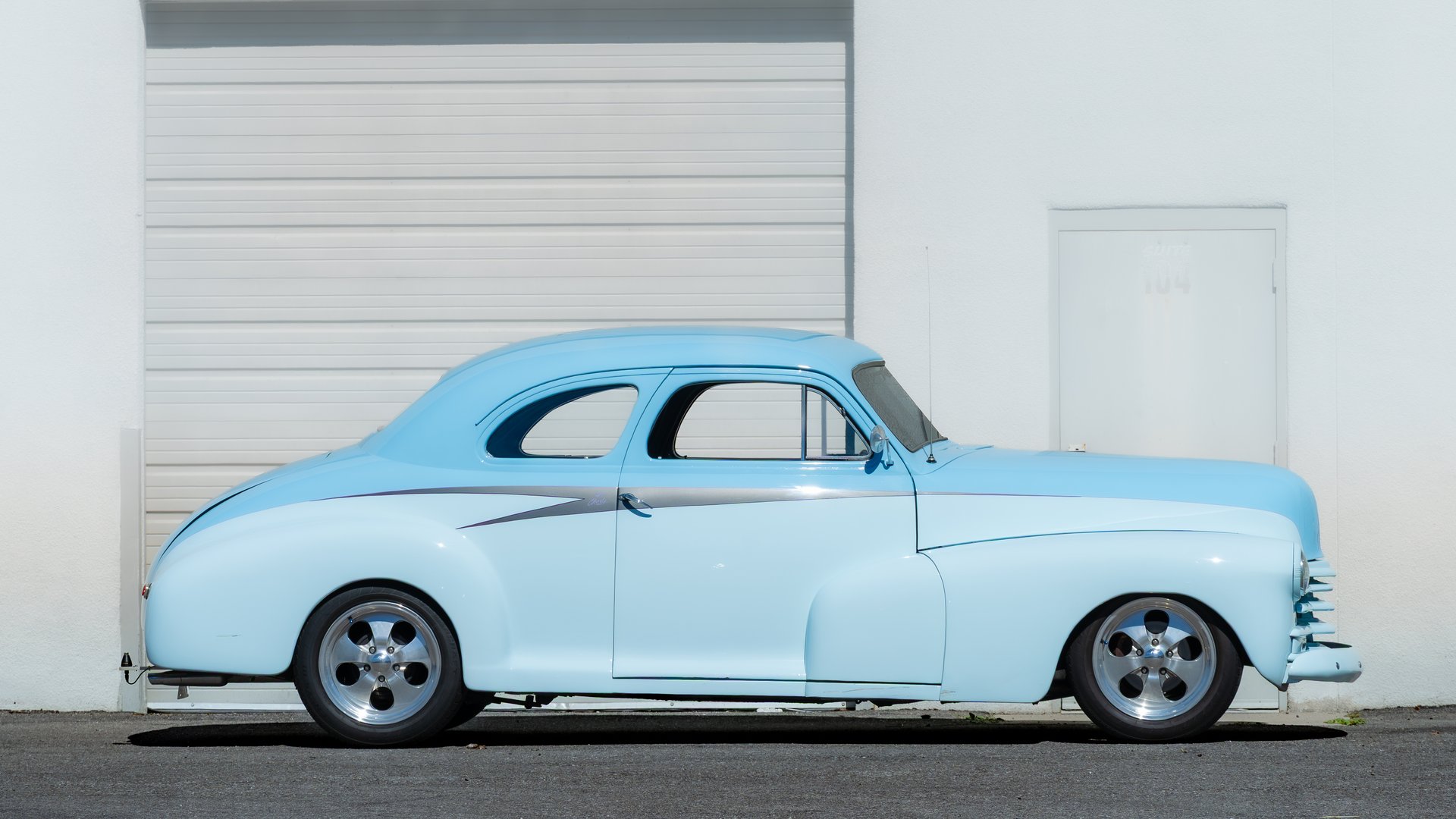
The models
The Fleetline range divides into three acts — the short pre-war introduction, the long 1946–48 run of the pre-war body, and the 1949–52 new-body cars — and the first buying skill is placing the car in the right act, because trim, glass and panels do not interchange across the divides. Within each act the hierarchy ran Special below Deluxe, and the Fleetline sat at or near the top of it: it was never the poverty-specification car, and the cheaper Fleetmaster and Stylemaster lines did not offer the Aerosedan body. If a seller describes a base-model Fleetline, something in the description is loose.
| Model | Years | Engine | Output | Built | Character |
|---|---|---|---|---|---|
| Fleetline four-door sedan (Special Deluxe) | 1941–42 | 216.5 cu in six | 90 hp | Not published separately by body in a form you should trust without a factory source | The original Fleetline: sloped-rear sedan that tested the streamliner idea |
| Fleetline Aerosedan (two-door fastback) | 1942, 1946–48 | 216.5 cu in six | 90 hp | The volume fastback of the pre-war body; tens of thousands a year post-war | The icon. Two-door fastback, small trunk opening, the shape collectors picture |
| Fleetline Sport Sedan (four-door fastback) | 1946–48 | 216.5 cu in six | 90 hp | Smaller numbers than the Aerosedan | Same slope with four-door practicality; rear doors make it the usable family fastback |
| Fleetline Special two- and four-door fastback | 1949–50 | 216.5 cu in six | 92 hp | One year of overlap before Special fastbacks faded | New-body fastback without the Deluxe trim; plainer interior, same shell |
| Fleetline Deluxe two- and four-door fastback | 1949–52 | 216.5 cu in six (manual); 235.5 cu in six (Powerglide, 1950–52) | 92 hp manual; 105 hp automatic | The standard late Fleetline; commonest survivor in two-door form | The developed car: better body, Powerglide option, the easiest Fleetline to live with |
| Fleetline Deluxe (final years) | 1951–52 | 216.5 / 235.5 cu in six | 92 / 105 hp | Sharply falling as fastback demand collapsed | Rarest late cars by production; buy on condition, not rarity |
A note on the "Built" column: Chevrolet published production by series and model year far more readily than by fastback body style, and the figures repeated in adverts mix factory totals with plain invention. This guide prints no precise figure it cannot stand behind. What is solid is the shape of the story — Aerosedans sold in large numbers in 1946–48, new-body Deluxe fastbacks sold well in 1949–50, and fastback volume fell away hard in 1951–52. A seller justifying a premium with a specific low production number owes you the factory source. No source, no premium.
The pre-war cars, 1941–42
The 1941 Fleetline four-door is the connoisseur's footnote: a Special Deluxe sedan with a reshaped, sloping rear, built for one full year and a truncated 1942 season. The 1942 range added the Aerosedan two-door, which immediately outsold it — the full fastback simply looked faster and newer. Pre-war cars carry early details, notably the vacuum-assisted "Vacuum Gearshift" shift and year-specific trim. Survival is thin, restoration costs match the post-war cars, and trim is materially harder to find. Buy a 1941–42 car because you specifically want a pre-war car, not because the seller calls it rarer and therefore better.
The post-war pre-war body, 1946–48
This is the Fleetline heartland. The 1946 cars are 1942 cars with a new grille; the 1947 cars revise it; the 1948 cars change it again, with a vertical centre bar that makes a 1948 easiest of the three to identify from the front. Underneath, all three years are the same car: 116-inch wheelbase, the 216 six rated at 90 hp, three-speed manual, torque tube, and the fastback offered as the two-door Aerosedan and the four-door Sport Sedan, both in the Fleetline series above Fleetmaster. Interiors were mohair or broadcloth, dashboards painted metal with an Art Deco flavour, and options were heaters, radios, bumper guards and whitewall tyres rather than anything mechanical.
Two identity traps live here. The first is year-swapping: because the three years are so similar and period title practices were loose — cars were often titled by year of sale — a "1947" Aerosedan may carry 1946 or 1948 trim, or be a different model year altogether. The serial plate and engine number settle identity; the grille settles only what grille someone fitted. The second trap is the word "coupe." Sellers routinely list Aerosedans as coupes — this site's own pool does it, describing a 1950 fastback as a Deluxe Coupe. An Aerosedan is a two-door sedan with a full rear seat under a sloping roof; a Chevrolet coupe of the same year is a different, notchback Styleline body. Glass, rear quarters and roof panels differ entirely, and a price justified by coupe rarity is a price justified by a body the car does not have. Always identify a Fleetline by its roofline — unbroken slope, fastback; distinct horizontal trunk deck, not a Fleetline at all.
The new-body cars, 1949–52
The 1949 redesign kept the fastback idea in a thoroughly modern suit: the car sits lower, running boards are gone, fenders flow into the doors, and the rear slope is integrated into a body that finally looks of its decade. Two-door and four-door fastbacks were offered in Special and Deluxe trim for 1949–50; the Special faded and the 1951–52 cars are Deluxe only. The 1950 cars are the generation's sweet spot for many buyers: one-piece windshield, the Powerglide option with its 235, and styling still close to the clean 1949 original. The 1951–52 cars are detail revisions, the 1952s the last fastbacks Chevrolet built in this era.
Mechanically the new-body cars reward the buyer: Bendix-type brakes in place of the earlier Huck design, a better-sealed body, and from 1950 the Rochester carburettor replacing the Carter (see Engines). They also introduce the model's most consequential option decision. A manual 1949–52 car has the 216 with its splash-lubricated rods; an automatic 1950–52 car has the 235, delivering meaningfully more torque through the converter. Neither is "the wrong engine" — but a car converted from one to the other (a later full-pressure 235 or 261 truck engine, or a small-block V8 where a six once sat) is a modified car that must be priced and inspected as one. The engine number, stamped on a pad by the distributor, is the first thing to read on any late Fleetline: if it identifies a 1953-or-later full-pressure 235, the car may be a better driver, but it is not the engine it was born with, and the price should not pretend otherwise.
Finally, a correction to a listing habit you will meet constantly: there was no Fleetline station wagon. Chevrolet's 1949–52 wagons — the steel "Tin Woodie" Styleline Deluxe and its predecessors — were notchback bodies, never fastbacks, for the obvious reason that a wagon cannot be a fastback. A record describing a "Fleetline Tin Woodie wagon" has conflated two models; the car may be a good wagon, but it is outside this guide's subject and outside Fleetline values. Check the body, not the label.

Engines and gearboxes
Every Fleetline left the factory with Chevrolet's overhead-valve inline six, the "Stovebolt": 216.5 cu in for all manual cars, 235.5 cu in for Powerglide cars from 1950. That simplicity is deceptive. The 216 is an engine from an earlier lubrication era — splash-fed rods with poured babbit bearings — living into the 1950s, and understanding its lubrication system is the difference between an engine that runs happily for decades and one that destroys its crankshaft on its first sustained highway run. This section takes the two engines in turn, then the gearboxes, then the swap problem, because the question is rarely "which engine should it have?" and usually "which engine does it actually have, and what condition is it in?"
The 216.5-cubic-inch Stovebolt six
The 216 displaces 216.5 cu in (about 3.5 litres) from a bore of 3.50 inches and a stroke of 3.75 inches. It is a long-stroke, low-revving, low-compression engine: compression around 6.5:1 in post-war form, rated output 90 hp for 1946–48 and 92 hp for the 1949–52 manual cars, with the useful rev range effectively over by 3,400 rpm. Construction is conventional — cast-iron block and head, four main bearings, solid lifters, a single downdraught carburettor (Carter W-1 on early cars, the Rochester Model B taking over from 1949), six-volt electrics, and a camshaft-driven distributor, oil pump and fuel pump.
The lubrication system is the engine's defining feature and its defining risk. The main and camshaft bearings receive pressure-fed oil, as does the rocker shaft. The connecting-rod big ends do not. Each rod cap carries a small dipper, and at the bottom of each stroke the dipper plunges into a trough of oil maintained in the sump by the pump's spray nozzles, scooping oil into the bearing by splash. The rod bearings are not modern shell inserts: the bearing metal — babbit — is poured directly into the rod and cap and machined to size, with shims providing adjustment as it wears. A healthy 216 driven sympathetically runs for a very long time, but the system has three hard limits. First, sustained high rpm starves the rod bearings: splash supply does not scale with speed the way pressure feed does, and a 216 held at modern freeway pace is living on borrowed time. Second, oil level and cleanliness are survival matters: a low sump empties the troughs, and dirty oil scores babbit that cannot be swapped like a shell in an afternoon. Third, wear is adjusted, not renewed: once the poured metal is worn through, cracked or melted, the fix is re-pouring and line-machining the rods — specialist work at roughly $1,800–3,500 for a rod set, before the engine is reassembled.
Valve gear is the other routine commitment. Solid lifters mean periodic lash adjustment — every 10,000 miles or so, and on any car you buy, immediately, because you do not know when it was last done. Opened-up clearances clatter; clearances closed up by seat recession leave an exhaust valve running hot until it burns. Budget a lash check and compression test into your first month; a professional adjustment and tune typically runs $350–700, and it transforms cars sellers describe as "running rough, probably needs a tune-up" — sometimes honestly, sometimes as camouflage for the low compression the test then reveals.
Carburetion generates more misdiagnosis than any other 216 system. The Carter W-1's weaknesses are a worn throttle shaft that leaks air and makes idle mixture unadjustable, a tired accelerator-pump cup causing a flat spot on tip-in, and a float and needle that flood after heat soak. The Rochester Model B's signature fault is a heat-warped top cover, whose hesitation gets blamed on ignition. The distinguishing sequence is always the same — verify fuel delivery (these pumps deliver roughly 2.5–4 psi; more is a fault and will push past the needle), verify the choke fully opens hot, check for throttle-shaft air leaks with a spray test at idle, and only then open the carburettor. A quality rebuild with the shaft bushed runs about $300–600; a fuel pump is $60–140 in parts. Do not let a seller sell you an "engine problem" that is a carburettor — and do not buy a carburettor story that is actually a burnt valve. The compression test comes first, every time.
The 235.5-cubic-inch Powerglide six
For 1950, Deluxe models ordered with Powerglide received a larger six: 235.5 cu in (about 3.9 litres), bore 3.5625 inches on the same 3.75-inch stroke, rated at 105 hp. Chevrolet enlarged the engine for the automatic because the torque converter absorbs power and an automatic car cannot be helped over a hill with a well-timed downchange. This first 235 is not yet the famous full-pressure engine of 1953 onward: it retains splash-assisted rod lubrication in early form, with inserted bearings appearing through the period — which is why you must identify the exact engine in the car rather than reasoning from the badge. Chevrolet's six evolved in steps: splash 216, early 235, then the full-pressure 235 with insert bearings throughout, an engine that looks near-identical from ten feet away and is materially stronger and easier to rebuild. Swaps forward were common in period and remain common now.
In the car, the 235/Powerglide combination is smoother, quieter at a cruise and noticeably stronger on grades than the 216 manual, at the cost of response: the converter's slip is the character of the drive, not a fault in it. Expect leisurely standing starts and a single perceptible shift from reduction to direct drive — on early Powerglides the transmission starts in direct in Drive unless Low is selected or the throttle is floored, so a car that pulls away as if in a high gear is behaving as designed. Engine braking is weak enough to demand respect for the drum brakes on descents. A healthy cast-iron Powerglide that leaks a little, shifts without a bang and does not slip under full-throttle load is a good transmission; one that slips, flares or delays engagement is a specialist rebuild at roughly $1,800–3,200 plus removal and refitting. Price an automatic car with a sick transmission as a manual-car price minus that rebuild, or walk away.
Identifying what six is actually fitted takes five minutes. Read the stamped engine number on the pad behind the distributor: its codes encode year, plant and original application (car 216, car 235, truck engine). Check the block casting date, look for the later full-pressure engine's revised covers, and note the oil-filter arrangement — an accessory bypass filter on most early cars rather than full-flow filtration. A truck 261 (visually a 235 with more inside it) is another frequent swap and, like the full-pressure 235, makes a better driver while ending originality. None of these swaps is a reason to reject a car bought as a driver at a driver's price. All of them are a reason to reject a car bought as an original at an original's price.
Gearboxes: the three-speed manual and the torque tube
The standard gearbox is Chevrolet's three-speed synchromesh manual, column-shifted, with synchromesh on second and top and a sliding first gear — select first at a standstill or a crawl, with a graunch if you do not. Early cars carry the "Vacuum Gearshift," in which engine vacuum assists the linkage: when the vacuum cylinder, hoses or control valve perish, the shift becomes heavy and vague, and owners historically disconnected the assist and drove with a purely mechanical (and heavier) change. A heavy shift on a 1941–48 car is therefore a diagnosis, not a character trait: check the vacuum hardware before condemning synchromesh rings. On all years, worn linkage bushings produce the classic two-handed hunt for gears; a rebush runs about $250–550 and transforms the car. Jumping out of top on the overrun points to worn engagement dogs or a tired detent and means a gearbox-out rebuild at roughly $900–1,600 plus the clutch work you will do while it is out. The clutch is a conventional single dry plate; a full kit with release bearing and flywheel skim runs about $700–1,200 fitted.
Behind the gearbox, all Fleetlines drive through a torque tube: the shaft runs enclosed inside a steel tube bolted to the rear axle and pivoting at a ball joint behind the gearbox, so the tube locates the axle and transmits its torque reaction while the springs simply carry weight. Hence no exposed universal joints to grease, pinion angle that never goes wrong, and jobs — an axle leak at the front of the tube, a worn centre bearing — that require separating the tube and sliding the axle back. Rear axles are sturdy hypoid units with ratios chosen for 50-mph cruising; the common complaint is a steady-speed whine from worn crown-wheel and pinion mesh, an axle rebuild at roughly $800–1,500 provided the whine is steady and the oil contains oil rather than metal. Rear axle seals leak onto the brake shoes when they go — any Fleetline with one grabby rear brake has an axle-seal leak until proven otherwise.
The Powerglide itself is a two-speed unit: a torque converter coupled to a single planetary gearset giving one reduction ratio plus direct drive, with manually selected Low and Reverse. There was no three-speed automatic in a Fleetline. Listings describing one (a description that appears even in structured listing data) have miscounted the converter's behaviour, described a later Turbo-Hydramatic swap without saying so, or copied an error. Look under the car: a cast-iron Powerglide is a large, heavy, finned iron case; a later aluminium Turbo-Hydramatic is visibly different and implies an engine swap as well. What is under the car is the specification. Everything else is copywriting.
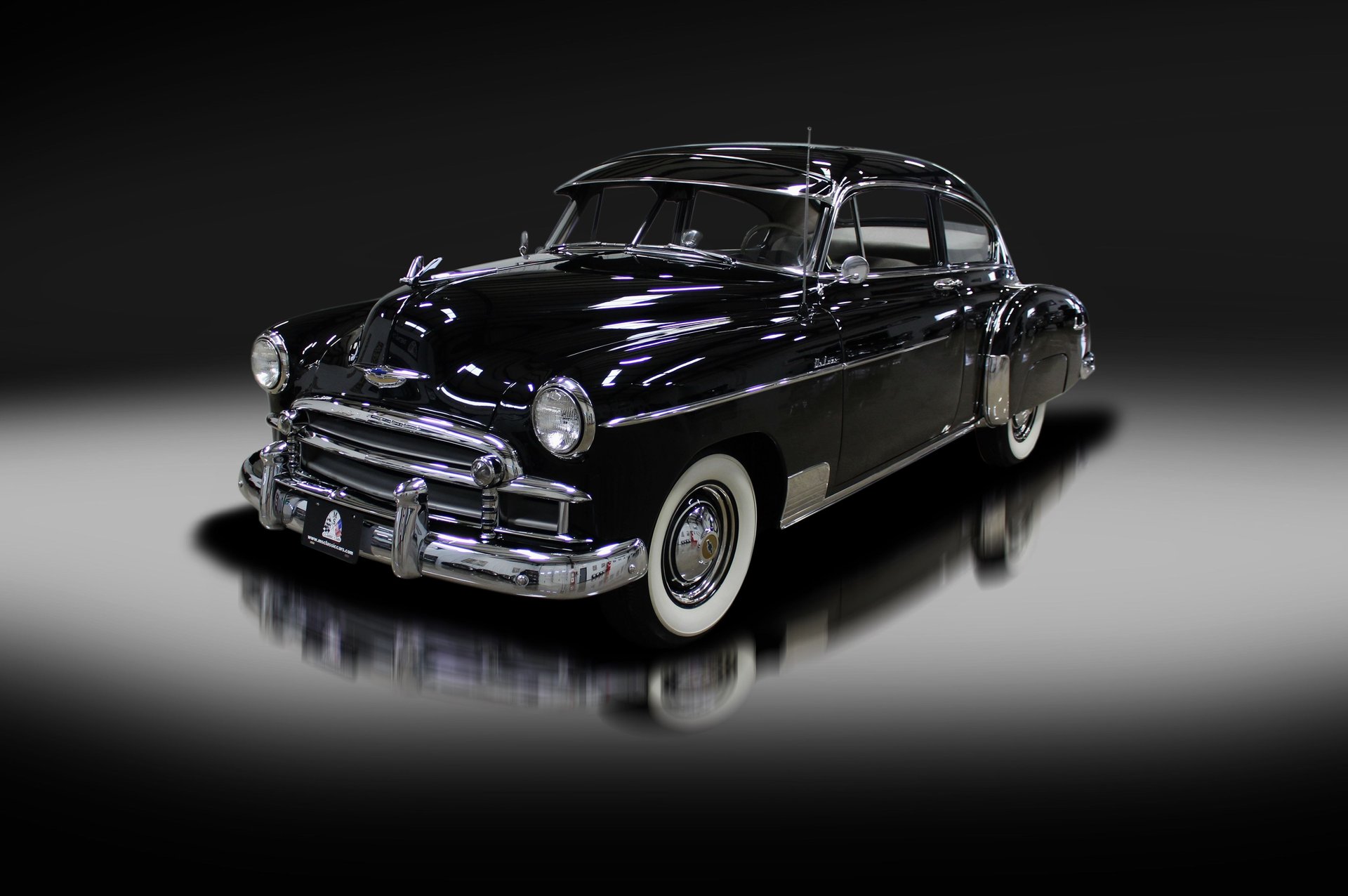
Problem areas
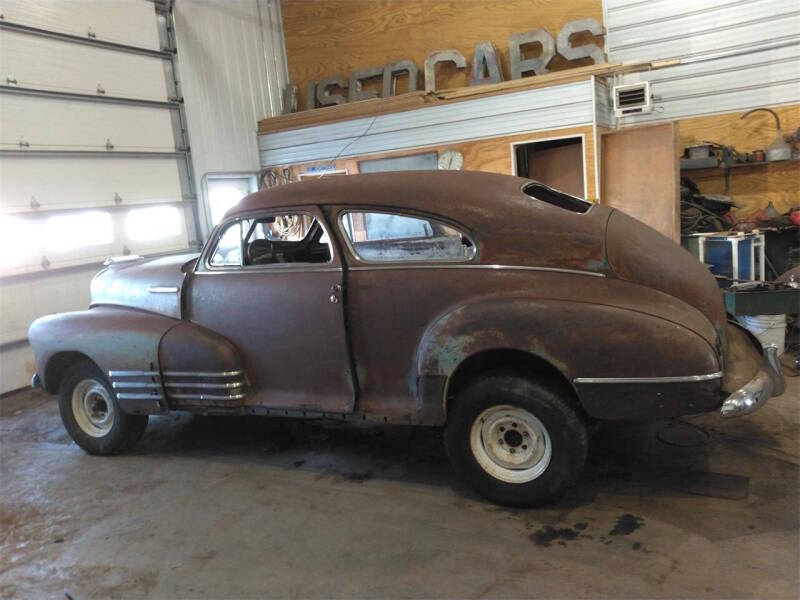
Problem areas separate into one that decides the car's value — rust in the fastback body — and a set of mechanical and electrical issues that decide running costs but almost never write it off. Work through them in that order. Note first what the site's own photo evidence can and cannot tell you: in the brief for this guide, only 4 Fleetlines carried examined photo notes; within that tiny sample rust was mentioned in 3 of the 4 and visible damage in 2 of the 4, with no smoke or leak mentions. Four cars prove nothing about the whole population — but that rust incidence is entirely consistent with everything below. Rust is not an edge case on this model. It is the case.
Rust: the map
A Fleetline body is a steel shell bolted to a separate frame, and both halves rust, in different places, with different consequences. Start with the frame, because a perfect body on a rotten frame is a parts car. The critical zones are the rear kick-up over the axle, the spring-hanger areas, the body-mount outriggers and the front crossmember. Surface rust is normal; perforation, flaking lamination and metal that answers a tap with a dull crunch rather than a ring are disqualifying until a welder has quoted the repair. Frame welding on a body-off basis runs to $2,500 and upward for serious sections, which is why frame condition is a walk-away gate on all but the cheapest projects.
The body map, front to back: front fenders rust at their trailing edges and around the headlamp buckets. The cowl sides and vent surround leak water into the front footwells, where it sits under rubber mats and rots the floor from the top down while the underside still looks sound — always lift the mats and press the floor; a floor that feels crisp like a biscuit tin is gone, however good its paint. Floors are the commonest structural repair: a professional floor-pan section runs about $800–1,800 per side, and a full floor is a body-off conversation. Sills (rocker panels) rust from the inside out, fed by blocked drain holes; bubbling at the rear of the sill is the visible tip of a longer failure. The door test settles the structure: open each door fully, lift it at its outer corner, feel for drop and creaking from the posts, then check the shut lines. Sagging posts mean the structure tying sill to pillar has thinned; pillar/sill reconstruction is $1,500–3,000 a side.
The fastback rear is the signature rust zone, and where Fleetline inspection diverges from Styleline inspection. The sloping quarters collect water at the base of the slope, the roof channels water down inside the C-pillar area, and the small, high trunk opening means the trunk floor and spare-wheel well hold water a notchback would shed. Rust starts at the lower rear quarters behind the wheels, spreads into the trunk floor edges and rear valance, and perforates first where you cannot see it without a torch and a mirror. Repair in the fastback's compound curves is coachwork, not panel-swapping: budget $1,200–2,800 per quarter, and treat filler-shaped quarters — found with a magnet that stops sticking — as a full-price deduction. Check also the roof around the rear window: the curved glass seals perish, water tracks under the headlining, and the roof's trailing edge rusts under bright trim that hides it. A stained headlining at the rear corners is a leak confession; price seal, headlining and hidden metal together, roughly $600–1,400 if caught early, much more if not.
Doors rust at their bottoms, as all doors of the era do, but four-door cars add four sets of hinges, seals and drain holes to maintain, and rear doors opened rarely and drained never. Aerosedan trunk lids are part of the slope and expensive to source straight; a rippled lid on an honest car is acceptable at the right price, while a lid that does not follow the roof curve suggests rear accident damage — measure the rear-window aperture diagonals if the shut lines look wrong. And remember the desert-car myth in reverse: a car advertised as "always in Arizona" may preserve its floors beautifully (the pool for this guide includes a Mesa, Arizona car) while its sun-rotted seals leak in its first wet winter with you — and it may have spent 1960–2005 somewhere it snowed. Origin stories are not inspection. The magnet, the torch, the lifted mat and the door test are inspection.
Engine, cooling and the babbit question
Engine problems divide into the lubrication-era risks already introduced and ordinary eighty-year-old wear. The headline test is oil pressure and rod noise together. A 216's gauge reads modestly even when healthy, so the gauge alone cannot clear the engine. What clears it is the combination: no rhythmic knock from low in the block that rises with load and fades on the overrun (the classic worn-rod signature), no knock at hot idle, clean oil at the correct level with no glitter, and no heavy breathing through the filler. A single deep knock on a cold start that vanishes in two seconds is usually oil drain-back and age; a knock that stays is a $2,500–4,500 engine-out rebuild conversation, and you should price the car as needing it until a specialist who knows babbit engines — not a generalist — tells you otherwise. Generalists misdiagnose these engines in both directions, condemning splash systems for low gauge readings and clearing knocking rods as "piston slap." The pre-purchase inspection that matters is by a shop that has rebuilt a 216 before. Ask directly; the answer is obvious when it is no.
Oil consumption and smoke need the same care. A 216 in good order uses some oil — period expectations were a quart in several hundred miles, and the road-draft tube breathes a visible haze at idle on many healthy engines. Blue smoke under acceleration points to rings and bores; on the overrun and at start-up, to valve guides; white vapour that smells sweet and does not clear is coolant, meaning head gasket or a cracked head after an overheating episode. A head-gasket job is $600–1,100 with a skim and crack test; a replacement head is a used-part hunt at $300–700 plus machining. Compression should be even across all six within about 10 per cent, around 110–130 psi tested warm with the throttle open; two adjacent low cylinders suggest the gasket between them, one low cylinder suggests rings or a burnt valve, and uniformly low figures suggest a tired engine that will still run for years at Fleetline speeds if its rods are quiet — tired is buyable, knocking is not.
Cooling faults masquerade as engine faults. A 216 that runs hot boils its fuel, pinks and loses power, and gets diagnosed as needing a rebuild when it needs a radiator re-core ($500–900), a correct thermostat, retimed ignition and a descaled block. Conversely, chronic overheating cracks heads and thins oil until it damages babbit, converting a cooling bill into an engine bill. The history question "has it ever overheated, and what was done?" is therefore an engine question. Fuel faults complete the picture: ethanol perishes original-spec pump diaphragms and carburettor soft parts (ethanol-rated kits are the fix, $80–160 in parts), and tank rust sheds flakes that block the pickup in a cycle mimicking ignition failure — random cutting out, restarting after a pause — whose cure is a tank clean or replacement ($350–750 fitted) rather than the third fuel pump the previous owner fitted. Vapour lock on hot restarts is a period trait managed with line routing, insulation and an electric booster pump ($120–250 fitted).
Chassis: suspension, steering, brakes and the torque tube
Front suspension changed character across the Fleetline's life, and you need to know which car you are under. Early cars use Chevrolet's "Knee-Action" suspension — a Dubonnet-type unit in which wheel carrier, spring and shock absorber live in a sealed housing requiring its specific oil; wear shows as camber change, oil weeping and a wheel that rocks top-to-bottom. Worn units are a specialist rebuild at roughly $900–1,600 the pair. Later cars use a conventional short-and-long-arm layout with kingpins: the same rock means kingpin wear, with shimmy at 35–45 mph, and an overhaul runs about $600–1,100 the pair fitted. On any Fleetline, grease is a service item, not a lifetime fill: a car whose many chassis grease points have plainly not seen a gun in years will have wear in every one, and a full chassis lube with inspection is $100–200 well spent in week one. Sagging rear leaf springs that leave the fastback sitting tail-down are common and visible in photographs before you travel; re-arched or reproduction springs run $400–800 the pair fitted. Do not accept "they all sit like that." They do not.
Steering is a worm-and-roller box with a long linkage full of joints. An inch or so of free play at the rim is period-normal; three inches is a system worn at every joint. The diagnostic order is box adjustment first (a screw-and-locknut the incompetent overtighten — test lock to lock), then tie-rod ends ($60–120 each in parts), then kingpins, whose wear mimics steering wear exactly. A steering-box rebuild runs about $450–850. Wander at speed is almost always the sum of small wears, which is why a car with a receipt naming the steering parts replaced is worth more than one with a tightened box and fresh grease over old joints.
Brakes are the safety gate, and the Fleetline spans two systems. Earlier cars use Huck-type brakes — a complicated self-energising design with articulated shoes — whose parts and adjustment knowledge are now specialised; later cars use the Bendix-type duo-servo design the whole industry adopted, with cheaper parts and universal knowledge. All are single-circuit hydraulics with drums all round: there is no redundancy, so every pipe, hose and cylinder is your only braking system. A full overhaul — shoes, cylinders, hoses, fluid, master cylinder — runs about $900–1,600 with labour, and a car with an unknown brake history needs it budgeted on day one. Specific traps: wheel cylinders weeping inside the drum and contaminating shoes (pull at least one front and one rear drum on inspection), steel lines rusted under clips, a pedal that sinks slowly at a standstill (master-cylinder seals bypassing internally — no external leak, no warning; $150–300 fitted), and rear shoes oiled by leaking axle seals. Handbrake cables seize and are routinely found disconnected; replacement is $180–400 fitted. Tyres belong here too: any tyre over seven years old by its date code is a replacement regardless of tread, at roughly $600–1,000 a set fitted in period sizes.
Interior, electrics and the details that date a restoration
The six-volt electrical system is the Fleetline's most mythologised feature, so be clear: six volts, properly maintained with heavy cables, clean earths and a healthy generator and regulator, starts a low-compression six perfectly well, in winter, as it did for millions of owners. Six volts badly maintained — thin modern cables, corroded earth straps, a tired battery — cranks slowly, dims the lights and gets blamed on the voltage. The fixes are cables of the correct heavy gauge ($80–180 a set), earth-strap renewal, generator service ($250–500 for a rebuilt generator fitted) and a quality battery ($150–250). Twelve-volt conversions are common and, done completely — alternator, gauges dealt with, bulbs changed — make a fine driver; done partially they fry gauges and leave a car that is neither system. Value a converted car as a driver, check the conversion's completeness, and never pay an originality premium for it.
Vacuum wipers surprise newcomers: they run from manifold vacuum, so they slow to a stop under full throttle and sweep furiously on the overrun. That is correct operation. Wipers dead at all speeds point to a perished hose, a failed wiper-motor diaphragm or a vacuum leak that also affects the Vacuum Gearshift on early cars and the idle — one leak, three symptoms. A rebuilt wiper motor runs about $150–280. Heaters are simple hot-water units whose matrixes leak onto the passenger floor — a wet front carpet with a sweet smell is heater matrix until proven otherwise ($200–450 to put right). Radios are AM valve sets, repairable at $300–600 and routinely dead; price them as dead.
Interior trim decides how a car feels and what a restoration costs. Original materials — mohair on early cars, cloth and vinyl on Deluxe cars — are reproducible, but a full interior (seats, door cards, headlining, carpets) in correct-style materials runs $3,500–7,000 professionally, which can exceed the whole value gap between a scruffy car and a tidy one. Inspect for the fastback specifics: headlining stained by rear-window leaks (see Rust), rear-seat springs collapsed where the sloping roof made the seat a parcel shelf for seventy years, and front seat frames cracked at their mounts. A bouncing speedometer needle is a dry cable ($40–90), not a gearbox fault. Glass is flat except for the curved screens and the fastback's rear window — flat side glass is cheap to have cut ($100–200 a pane), while curved rear glass is a used-part hunt with no reproduction guarantee, so a cracked fastback rear window is a serious deduction: confirm availability before you buy. Weather seals perish universally; a full set runs $400–800 in parts and transforms wind noise, leaks and rattles together — the highest-value cosmetic-mechanical job on the model.
Chrome and stainless trim close the survey. Side trim, grille bars and badging changed by year and are the first things lost, bent or replaced with the wrong year's part. Pot-metal parts (grille surrounds, handles, emblems) pit from within and cannot be polished back, and missing Fleetline-specific rear trim can take a season of swap-meet hunting to replace. Count the trim, photograph it, and treat "the trim is in the trunk" as unproven until you have laid it out and matched every piece to the car and year.

How to inspect one
Inspect a Fleetline in this order, without skipping ahead to the test drive, because every later step assumes the earlier ones passed. Bring a magnet in a cloth, a torch, a mirror on a stick, overalls, and a wire brush for the engine numbers. Allow ninety minutes. A seller who will not allow ninety minutes has inspected the car for you and reached a conclusion.
- Identity first. Read the serial plate and the engine number pad by the distributor, and compare both with the title. Confirm the engine is the 216 or 235 the car should have, or identify the swap (later 235, truck 261, V8) and reclassify the car as original or modified before any money talk. This settles the Models section's identity traps — the "coupe" that is a fastback sedan, the wrong year under a swapped grille, the wagon that is not a Fleetline at all.
- Cold start, arranged in advance. Insist the engine is cold. A warmed-up Fleetline hides choke faults, start-up rod knock, smoke and slow cranking. Watch the exhaust for thirty seconds, listen low at the block for knock, and note choke behaviour as it warms.
- The frame, lying down. Torch along both rails, the rear kick-up, spring hangers and outriggers, tapping suspect areas. Perforation here ends the inspection for any car priced above project level — the Rust section's frame gate, applied before you fall for the paint.
- Floors and sills from inside. Lift every mat. Press the floors, especially the front footwells under the cowl-vent leak path. Work the door test on every door — lift at the outer corner, feel for post movement, check the shut. On a four-door you do it four times.
- The fastback rear, slowly. Quarters with the magnet, trunk floor and spare well with the torch, rear-window surround and headlining corners for leak stains, and the trunk lid's fit to the roof curve. Filler here is priced as coachwork, not cosmetics.
- Engine health, warm. Fully warm, listen again for rod knock under light load, check oil for glitter and level, look for breathing at the filler, and watch the temperature gauge's trend at idle. Compression figures should be even across all six. This applies the babbit question from Problem areas: quiet and even is buyable; knocking is a rebuild-priced deduction.
- Carburettor and fuel, distinguished properly. Check throttle-shaft play, choke fully open hot, fuel-pump pressure if a gauge is available, and sediment in the filter or pump bowl. Apply the Engines sequence — delivery, choke, air leaks, then internals — so you do not buy a valve problem priced as a carburettor.
- Brakes, before the drive. Pedal height and firmness, a thirty-second hold to catch a sinking pedal (master-cylinder bypass), fluid level and colour, and a look inside at least one front and one rear drum for axle-seal contamination. A car that fails this step is trailered, not test-driven.
- Steering and suspension at the kerb. Rock each front wheel top-to-bottom (kingpins or Knee-Action wear) and side-to-side (linkage wear), turn lock to lock feeling for a tight centre (overtightened box), and bounce each corner. Cross-reference findings against the Chassis section before pricing them.
- The test drive, in the car's own world. Twenty minutes minimum at 30, 40 and 50 mph, listening for diff whine under light load versus driveline clunk on throttle application, feeling for the 35–45 mph shimmy of worn front-end parts, and braking firmly from 40, twice. On a Powerglide car, feel for slip or flare under full throttle and accept the converter's character as design, not fault.
- Electrics and the vacuum chain. Lights, charging, starter speed, heater and wipers — remembering that wipers stalling under full throttle was correct vacuum operation, while wipers dead at idle mean the leak chain from the Interior and electrics section. On an early car, feel the gearshift effort and ask whether the vacuum assist is connected.
- Trim, glass and seals audit. Lay out any loose trim and match it to the car and year. Confirm the curved rear glass is sound — the one pane you cannot easily replace. Check seals by their effects: dust lines, water stains, wind noise from the drive.
- Paperwork and history. Records naming babbit-literate work (valve lash, rod attention, dated brake overhaul) are worth money; a recent brake receipt moves the car up your list more than a recent polish. Ask directly about overheating history and how long the car has sat — five years of sitting needs the fuel, brake and tyre recommissioning budget whatever the odometer says.
- Decide by the body. Add up deductions in this list's order: structure, fastback rear, engine knock, brakes, then everything else. If the structure and slope are sound, almost everything else is a known bill at a known price. If they are not, no mechanical virtue rescues the car at a finished car's price.

Values
The build of this page appends the current market block beneath this guide — the cars listed now and the recorded sales — refreshed at every build, and that block is where the numbers live. This section deliberately contains none. It teaches instead how to read those numbers, and how Fleetline value is structured, because the spread between the cheapest and dearest car is driven less by year or trim than by three things the block cannot show you: the condition of the fastback body, the health of the babbit-era engine, and whether the car is a driver, a project or a verifiably restored car.
Start with the condition spread, wider on Fleetlines than on most classics of the era. At the bottom sit project cars: complete fastbacks with structural rust, seized or unknown engines and interiors needing everything. Their value is essentially the value of the shell, glass and trim minus the cost of the structure — which is why two projects that look similar in thumbnails can be honestly priced far apart once one has sound quarters and the other has filler. In the middle sit drivers: structurally sound, mechanically maintained, cosmetically honest cars. This is where most Fleetlines change hands and where your money buys the most car, because the driver premium over a project is smaller than the cost of turning the project into the driver. At the top sit restored cars, and here the word does heavy lifting: a body-off restoration with photographic evidence and an engine rebuilt by a known babbit specialist is genuinely scarce, while a cosmetic respray over an unrestored chassis is a driver wearing a restored car's price. The asking-versus-achieved gap lives in that distinction. Negotiate on evidence, and expect a seller with real evidence to concede less, correctly.
Variant premiums are real but modest, following shape and usability rather than rarity claims. The two-door Aerosedan and two-door new-body fastback carry the strongest demand, as the purest expression of the shape; the four-door fastbacks trade at a discount larger than the practical difference justifies, making them the value end of the range. Powerglide cars split the market: some buyers pay for the automatic's ease and historical interest, others discount for rebuild exposure, so an automatic takes longer to sell to a smaller pool rather than commanding a clean premium either way. Modifications cut both ways: a well-executed V8 or later-six conversion can be worth strong driver money to the driving buyer and near-project money to the originality buyer, from the same advertisement. There are two markets for a modified Fleetline, and knowing which one you are in is the whole negotiation.
The project-versus-driver gap is where Fleetline buyers most often lose money. The arithmetic of restoration — structure and quarters, engine with babbit work, brakes, interior — exceeds the finished value of all but the finest cars, especially unforgiving here because finished values are moderate while the fastback's coachwork bills are not. The market knows this, which is why sound drivers hold their money and projects are cheap. Buy the project only if the work itself is the hobby you are purchasing; buy the driver if the driving is. Let the appended market block set the range and your inspection set your position within it.
Parts and ownership
Ownership economics are dominated by a happy asymmetry: the mechanical package is one of the cheapest in the hobby to keep, and the fastback body and trim are the only genuinely scarce resources. Plan around that asymmetry and the car is inexpensive, predictable transport. Ignore it — buy a car missing its rear trim and cracked rear glass because "the engine is great" — and you will spend scarce-part money chasing the parts Chevrolet made fewest of.
Mechanical parts supply is excellent. The Stovebolt six served Chevrolet cars and trucks for decades: gaskets, water pumps ($80–180), fuel pumps, carburettor kits, ignition parts, clutch kits, brake parts, bearings and steering joints are catalogue items from the established early-Chevrolet specialists, typically in stock. Factory manuals are reprinted and the club knowledge base is deep. The two scarcities are skills, not parts. Babbit work — re-pouring and machining rods, line-boring, scraping bearings — is done by a shrinking number of machine shops, so identify your engine shop before you need it and expect the $1,800–3,500 rod figure to sit at the centre of any full rebuild budget of $2,500–4,500. Powerglide expertise for the early cast-iron unit is the second scarcity: choose a shop that has done an iron Powerglide before, at the $1,800–3,200 rebuild level noted earlier, rather than one learning on yours.
Running costs are low and mostly labour-shaped. Valve-lash adjustment, points, plugs and a carburettor check form the annual tune ritual ($350–700 professionally, far less as a learned home skill — and this is an ideal car to learn on). Chassis greasing at the many period grease points, oil changed on time rather than mileage, brake fluid renewal and coolant attention are the whole scheduled story. Storage is the Fleetline's quiet enemy: six months of sitting perishes brake seals, gums the carburettor, flat-spots tyres and lets seals take a set that leaks thereafter. A car driven monthly needs a fraction of the recommissioning of a car driven annually, so build your ownership plan around regular use.
Body and trim parts are where the asymmetry bites. Panels shared with notchback cars — front fenders, floors, sills — are reproduced or findable. Fastback-specific pressings — rear quarters in their full curve, the Aerosedan trunk lid, rear-window surrounds — are not comprehensively reproduced, so repairs are made by cutting, wheeling and welding, and good used fastback sheet metal commands real money. Glass follows the same split, and trim is year-specific and Fleetline-specific at the rear; a complete, correct trim set on the car is an asset to price into your offer, because assembling one afterwards costs more in time than in money. Budget the full weather-seal set ($400–800) early in ownership: it protects the interior and the floor structure you paid to verify, and it is the cheapest rust prevention you will ever buy.
Which one to buy
- The all-rounder: a 1949–50 Fleetline Deluxe two-door fastback, manual gearbox. New body, developed chassis and brakes, cleanest styling, and the 216 in its most supported form. The easiest Fleetline to buy well, keep and sell.
- The icon: a 1947–48 Fleetline Aerosedan. The purest fastback shape, with the strongest following and the deepest pool to choose from. Buy the best quarters and frame you can find; year detail matters far less than metal.
- The value buy: a 1949–52 Fleetline Deluxe four-door fastback. Same shell, engine and options as the two-door, persistently discounted for fashion rather than defect. The most Fleetline per unit of money in the range.
- The easy driver: a 1950–52 Fleetline Deluxe with Powerglide and its 235. For the buyer who wants the automatic's smoothness and the larger engine's torque — verified non-slipping, with the engine identified.
- The connoisseur's risk: a 1941–42 Fleetline. The rarest chapter and the hardest trim hunt, bought knowing a 1947 does everything as well. Only for the buyer who specifically wants this car.
- The project to buy — and the one to leave: buy the structurally sound, mechanically tired car; leave the shiny, structurally tired one. The engine is a known bill; the body is an open cheque. Fresh paint over soft sills and filler quarters is the most expensive Fleetline you will ever own, at any price.
The overriding rule: buy the fastback body — frame, quarters, sills, rear glass and trim — and let the Stovebolt be the negotiation, because every mechanical fault has a known price and a known fix, while the sloping rear that makes it a Fleetline is the one part money alone cannot quickly replace.
See the 7 Fleetline cars currently listed.
For sale now
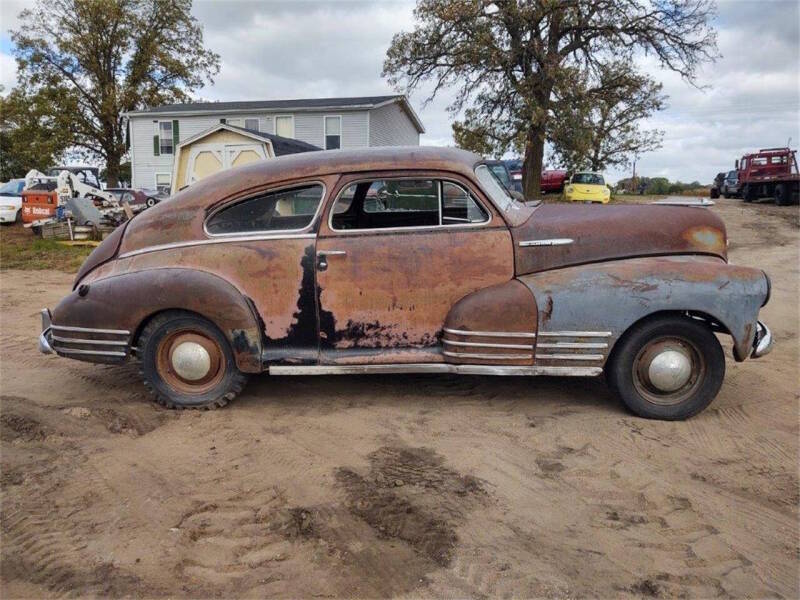 $4,800 · 75% below typical
Expand
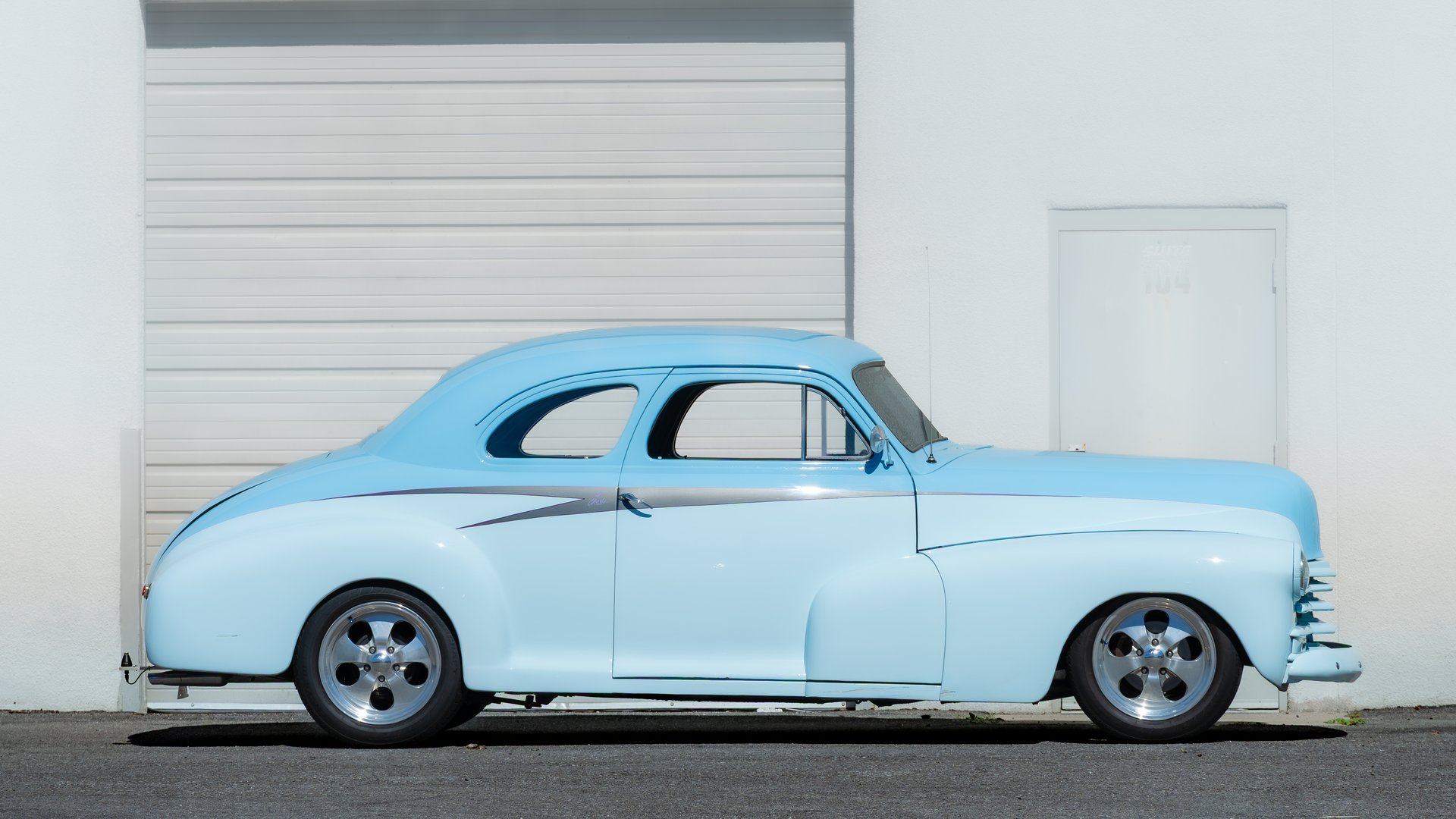 $32,995 · 70% above typical
Expand
 $4,000 · 79% below typical
Expand
What they sell for: Fleetline sale prices.