
Chevrolet Special Deluxe Coupe buyer's guide
Chevrolet Special Deluxe Coupe -- the model's own buyer's guide: variants, values and what to check.
Years listed: 1941-1941 · Series: Full Size
# Chevrolet Special Deluxe — Shopping Guide
Overview and history
The Chevrolet Special Deluxe is the top-trim Chevrolet of the last full years before the Second World War. Chevrolet introduced the name for 1940, above the Master Deluxe and the cheaper Master 85, and it ran through the shortened 1942 model year, when civilian production stopped in February 1942 as the factories turned to war work. Every car in Classic Listings' own pool for this guide — four records, all of them 1941 cars, two offered for sale and two recorded sold when the pool was drawn — is therefore from the single best year to buy: 1941, when the design was finished, the wheelbase was longest, and production was at full flood before the war cut everything off.
What you are buying is not a performance car, a luxury car in the Cadillac sense, or a rarity. You are buying the best-equipped version of the best-selling car in America, built by the million-car-a-year division of General Motors, with an overhead-valve six-cylinder engine at a time when Ford still sold a flathead V8 and Plymouth a flathead six, independent front suspension when that was still a selling point worth printing in a brochure, and a Fisher all-steel body with styling that had fully made the transition from the upright 1930s to the flowing, integrated-fender 1940s. The 1941 car in particular is the one collectors of pre-war Chevrolets argue for: the grille is a wide horizontal-bar design integrated into bulging front fenders, the headlamps are sealed-beam units faired into those fenders rather than perched on pods, the running boards have effectively disappeared under the doors, and the whole car looks lower, wider and more modern than a 1939 Chevrolet parked next to it, because it is.
Underneath, the formula is conservative in the way that makes an 85-year-old car still usable: a separate steel frame, a 216-cubic-inch overhead-valve inline six — the Stovebolt — driving the rear wheels through an enclosed torque tube, a three-speed manual gearbox with a vacuum-assisted column shift, coil-spring independent front suspension Chevrolet marketed as Knee-Action, leaf springs at the back, and hydraulic drum brakes on all four wheels. Nothing in that list is exotic, and that is the point: every wear part was made in enormous numbers, most of it is still reproduced, and any competent old-car mechanic already knows how it works.
The catch that decides whether a Special Deluxe is a good buy or an expensive lesson is that these cars have had eight decades to be used, stored badly, restored well, restored dishonestly, hot-rodded, re-engined and re-trimmed. The pool for this guide illustrates the spread perfectly: a burgundy coupe in Gordonsville, Tennessee that presents as a carefully kept, essentially stock car; a two-tone sedan that still looks like family transport; a Seattle coupe listed explicitly as a hot rod, whose six wears period-style Wayne speed equipment and twin carburettors; and an Arlington, Texas business coupe whose engine bay is filled not by a Stovebolt at all but by a 327 small-block V8. All four are legitimately "1941 Chevrolet Special Deluxe" on their paperwork, and they are four completely different purchases. The work of this guide is teaching you to tell which one you are standing in front of — because the seller's description, the badge and the body shape will not tell you on their own.
Buy the car for what it does well. A sorted Special Deluxe idles with that slow, sewing-machine Stovebolt beat, pulls from walking pace in top gear without complaint, and cruises at 45–55 mph in genuine comfort on seats sprung like armchairs. It will not keep up with modern highway traffic at 70 mph without gearing or engine changes, it will not stop like a modern car, and it will not forgive neglected cooling, neglected lubrication or a rusty frame. Judge it as a 1941 car, maintain it as a 1941 car, and it is one of the most liveable pre-war cars you can own.

The models
Special Deluxe is a trim series, not a single model, and the body style is where almost all of the character — and most of the value difference — lives. For 1940 you get the first-year car on a 113-inch wheelbase; for 1941 and 1942 the wheelbase grows to 116 inches, the body is roomier and the styling is the mature version. Chevrolet sold the series as a full family range on the same frame, 216 six and gearbox: two-door and four-door sedans for families, two coupes for style and for commercial travellers, a convertible for open air, and a wood-framed station wagon — always the expensive, low-production member of the family, and it remains so.
| Model | Years | Engine | Output | Built | Character |
|---|---|---|---|---|---|
| Special Deluxe Town Sedan (2-door sedan) | 1940–1942 | 216.5 cu in OHV six | 85 hp (1940); 90 hp (1941–42) | Not stated here — high-volume family body | The practical classic: coupe looks from the front, a real rear seat, a proper trunk |
| Special Deluxe Sport Sedan (4-door sedan) | 1940–1942 | 216.5 cu in OHV six | 85 hp (1940); 90 hp (1941–42) | Not stated here — high-volume family body | The roomiest, often best-kept survivor; the value way into the series |
| Special Deluxe Business Coupe | 1940–1942 | 216.5 cu in OHV six | 85 hp (1940); 90 hp (1941–42) | Not stated here | No rear seat as built — a salesman's car; the most commonly hot-rodded and re-engined body today |
| Special Deluxe Sport Coupe | 1940–1942 | 216.5 cu in OHV six | 85 hp (1940); 90 hp (1941–42) | Not stated here | The pretty one: small occasional rear seats, the flowing roofline everyone photographs |
| Special Deluxe Convertible Coupe | 1940–1942 | 216.5 cu in OHV six | 85 hp (1940); 90 hp (1941–42) | Low volume | Open car on the top trim; check the top mechanism and the extra body flex, not just the paint |
| Special Deluxe Station Wagon | 1940–1942 | 216.5 cu in OHV six | 85 hp (1940); 90 hp (1941–42) | Low volume | Wood-bodied wagon; the wood is structure as well as trim, and it is a specialist purchase |
A note on the production column: per-body-style figures quoted by sellers are frequently copied from secondary sources that disagree with each other, so treat any exact "one of only X built" claim for a sedan or coupe as unproven until the seller shows you the source. For the convertible and the wagon, low volume is real; for coupes and sedans, rarity is not part of the value case.
What does "Special Deluxe" actually get you over a Master Deluxe, since the mechanical car underneath is the same? Trim, mostly — and trim is exactly what is expensive to put back 85 years later: more stainless and chrome brightwork, the long hood-side spear with the Special Deluxe name on the 1941 car, better upholstery cloth, armrests, dual horns and a plusher cabin. A Master Deluxe and a Special Deluxe drive identically, so the badge premium is a premium for completeness and condition of trim. A Special Deluxe missing its unique brightwork or carrying a cheaply re-trimmed interior has lost the very thing you are paying extra for; conversely, a complete, correct sedan can be a better buy than a scruffy coupe, because the coupe premium buys you a shape, not a better car.
In the current pool the coupes dominate, which reflects the market rather than the original production mix: coupes are what collectors keep, restore and trade, while sedans were used as family cars until they wore out. Do not read that as "sedans are wrong." Read it as "a good sedan is under-demanded for how good a car it is," a point the Which one to buy section returns to.
Two identity traps belong here. The first is the re-badged car: because Special Deluxe trim adds value, Master Deluxe cars acquire Special Deluxe hood spears and badges. The Fisher Body style number on the cowl tag — which encodes series and body style — settles what the car was built as; the badges settle nothing. Check the tag before you pay a Special Deluxe price. The second trap is the reverse: a genuine Special Deluxe hot-rodded so thoroughly — V8, modern gearbox and axle, disc brakes — that what remains of the original car is the body shell and the title. That can be a fine car, but it must be inspected and priced as a one-off build, not as a collector Chevrolet. The Texas business coupe in the pool, with a 327 V8 under a polished scoop, is exactly that case.

Engines and gearboxes
The 216 Stovebolt six — what it actually is
Every Special Deluxe left the factory with the same engine: Chevrolet's 216.5-cubic-inch overhead-valve inline six, 3.50-inch bore by 3.75-inch stroke, cast-iron block and head, rated at 85 horsepower for 1940 and 90 horsepower for 1941–42. Overhead valves were Chevrolet's party trick in the low-price field — Ford and Plymouth both used side-valve engines — and the six is the direct ancestor of the engine family that powered Chevrolets, in grown 235 and 261 forms, into the 1960s. "Stovebolt" is a nickname from the slotted-head bolts used around the engine; enthusiasts use it for the whole family, and you should know the word because half the parts catalogues file this engine under it.
Understand three design features, because they generate most of the engine's failure modes and most of the myths. First, lubrication is a hybrid: pressurised oil to the main bearings, camshaft and valve gear, but the connecting-rod big ends are fed by dippers on the rod caps scooping oil from troughs in the sump — a splash system, refined but still splash. Second, the rod bearings on these engines are Babbitt bearings — a soft bearing metal poured and machined in place — rather than the modern replaceable shell inserts you may be expecting. Third, the engine is a low-speed, low-compression torque engine: it makes its power low down, it is redlined by design and by bearing type at speeds a modern driver would call a fast idle, and it will pull top gear at 20 mph without shuddering. Drive it that way and it is nearly unburstable. Rev it hard, run it low on oil, or lug it up a long grade at full throttle on a hot day until the splash system cannot keep up, and you wear the Babbitt — which is why so many 216s knock.
That gives you the correct way to judge any 216 you meet. A good one starts readily, idles evenly at very low rpm with a soft, regular beat, shows steady oil pressure, does not knock under light load, does not smoke blue on the overrun, and does not breathe heavily from the oil filler. A tired one knocks briefly on a hot restart, rattles its valve gear because clearances have opened up (the 216 uses mechanical valve adjustment — no hydraulic lifters hide neglect), and leaves oil everywhere, because a splash-lubricated engine with worn seals will mark its territory. Budget accordingly: a full professional rebuild, including Babbitt work or conversion to insert bearings by a specialist, is a $4,000–$8,000 job; a valve job, carburettor rebuild and ignition overhaul that transforms a merely neglected engine is $800–$1,800. The gap between those numbers is the gap between "tired" and "worn out," and the inspection section gives you the tests that separate them.
Carburation, ignition and cooling on the original car
Fuel is fed by a single Carter W-1 single-barrel downdraft carburettor on most cars, with a manual choke. The W-1 is simple, rebuildable and well supported — a rebuild kit is $40–$80 — and its characteristic faults are age faults: a worn throttle shaft that leaks air and makes the idle wander however you adjust the mixture screw, a hardened accelerator-pump cup that gives a stumble on tip-in, and a float and needle that cannot cope with ethanol-blended fuel left sitting in the bowl over winter. Ethanol attacks old rubber, cork and fuel-pump diaphragms, and it goes stale in months. If a car "ran fine when parked" and now will not, suspect the fuel system first and the ignition second, and do not let a seller crank a dry engine for minutes while you watch — that is how a stale-fuel problem becomes a washed-bore problem.
Ignition is a conventional Delco-Remy distributor with contact-breaker points, a vacuum advance unit and a 6-volt coil. Points, condenser, rotor and cap are all still available and cheap. The failure mode to know is the vacuum advance diaphragm: when it perishes, the engine loses its part-throttle advance, runs flat and hot at cruise, and owners blame the carburettor. The test is in the inspection section and takes a minute with a hand vacuum pump. Timing is set statically and checked with the octane selector on the distributor — a period device for variable fuel quality; on modern fuel you set it once, correctly, and leave it alone.
Cooling is a low-pressure cap, a large radiator, a four-blade fan and a water pump that also carries the fan. These engines run cool when the system is clean and marginal when it is not, because eighty years of scale in the block's water jacket cannot be seen from outside. Overheating on a test drive is almost never "they all do that." It is a silted radiator core, a thermostat stuck or removed (removing it makes a 216 run worse, not better — the rear cylinders run hot), a slipping belt, a worn water pump, or retarded ignition from that dead vacuum advance. A radiator recore is a $600–$1,200 job; treat a car that boils as a car with a bill attached, and a car that holds a steady temperature in traffic on a hot day as a genuinely good sign — that test cannot be faked.
The engines you will also find: 235 and 261 sixes, and small-block V8s
Because the Special Deluxe has been a hot-rod and restomod base for seventy years, many cars you inspect will not have a 216 at all, and you must identify what is actually under the hood before anything else. The benign swap is the later full-pressure Chevrolet six: the 235 (from 1953 in Powerglide cars, universal from 1954) and the truck 261. These look nearly identical to a 216 at a glance, but they have full-pressure lubrication to the rods, insert bearings and more power, and they are the swap the knowledgeable original-appearance owner chooses: the car still looks, sounds and drives like a period Chevrolet, only better. Identification is in the block casting numbers and the engine number stamped on the pad behind the distributor; a seller who calls a car "matching numbers original" while it carries a 235 has either not checked or hopes you will not. Price a 235 car as a well-sorted driver, not as an original car.
The bigger departure is the small-block V8 swap — 283, 327 or 350, exactly as in the Arlington business coupe in the pool, whose valve covers are lettered 327. A V8 swap is never just an engine: done properly it brings a modern gearbox, an open driveshaft and a later rear axle (the original torque tube cannot be retained), upgraded brakes, a 12-volt conversion, and steering and suspension work to carry the weight and speed. Done badly it brings a cut firewall, an overheating radiator that was never upsized, the original single-circuit drum brakes asked to stop twice the power, and improvised wiring. There is no middle verdict available from the advert: judge a V8 car entirely on the build, in person, system by system, plus a hard look at engine mounts, firewall clearance, exhaust routing past the steering box, and whether it holds temperature at idle for twenty minutes. A well-built V8 coupe is a usable, fast, enjoyable car — worth what well-built hot rods are worth, a fraction of build cost, and entirely unrelated to what an original convertible or wagon is worth. Do not let anyone blend the two markets when pricing one.
Period speed equipment is the third case, and the Seattle car in the pool is the textbook example: a Stovebolt six wearing a Wayne finned aluminium valve cover and twin carburettors. Wayne, McGurk, Fenton and Offenhauser all made equipment for these engines, and a car carrying genuine period parts, correctly set up, is desirable in its own right — the six responds well to twin carburettors, a split exhaust manifold and a mild cam. The trap is tuning: two carburettors that are not synchronised are worse than one good Carter. Buy a speed-equipped car running right on the day, demonstrated from cold, or price in a specialist tuning session at $300–$700.

Gearboxes: the vacuum-assist three-speed, and what replaces it
The factory gearbox is a three-speed manual with synchromesh on second and top, shifted from the steering column, with Chevrolet's vacuum-assisted shift: engine vacuum does most of the work of moving the linkage, so the lever floats between gears with fingertip effort when the system is healthy. When it is not — perished hoses, a leaking shift cylinder, a tired control valve — the shift becomes vague or obstructive, and generations of owners responded by disconnecting the vacuum system and shifting manually, which works but is heavy and imprecise, or by blaming the gearbox itself. The gearbox is rarely the problem. Worn synchromesh on second, jumping out of top on the overrun, and a noisy first gear (straight-cut and always audible) are the genuine internal faults; everything else is linkage, vacuum or clutch. The clutch is a conventional single dry plate; judder is oil contamination from a leaking rear main seal or a worn release mechanism, and a full clutch job is $700–$1,400 at old-car labour rates.
Drive goes back through the enclosed torque tube to a rear axle with a ratio in the low fours — gearing chosen for 50 mph cruising, which is why a stock car feels busy at modern highway speed. There was no factory automatic in this series: Powerglide does not arrive until 1950, so any Special Deluxe with an automatic has been converted, full stop, and the conversion's quality is part of what you are buying. Likewise the Borg Warner five-speed recorded against one car in the current pool is a modern overdrive conversion paired with that car's V8 — desirable for a driver, and conclusive proof the driveline is not original. An overdrive conversion is the single modification that most transforms a stock car's usability, turning 55 mph from a strain into a cruise. If you plan to tour, buy a car that already has it done well, or budget $2,500–$5,000 to have it done, rather than paying a premium for a "totally original" car you will then modify anyway.

Problem areas
Rust: the map, and the frame first
Rust decides the economics of every pre-war Chevrolet, because the mechanical parts are cheap and available and the body and frame are where the money goes. Start with the frame, not the shiny panels. The frame is a separate ladder-type chassis, and its vulnerable points are the rear kick-up over the back axle, the spring-hanger areas, the crossmembers under the body where road salt and mud sit, and any place a previous repair has plated over corrosion rather than cutting it out. Get the car on a lift or get yourself on the ground with a light and a screwdriver you are allowed to use: surface scale is normal on an 85-year-old frame, flaking, holed or soft metal at the kick-up or around the spring hangers is a structural conversation, and fresh black underseal applied over everything is a reason to slow down, not a reassurance. A frame repair done properly — cutting out and sectioning — is skilled work at $1,500–$4,000 depending on extent; a car needing it must be priced as a car needing it.
On the body, work the known map in order. Floor pans, especially the front footwells under the mats and the area under the rear seat, where water entering past window seals collects unseen. Door bottoms, which rot from the inside out because the drain holes block — open each door, look at the lower inner skin, and feel for filler with the flat of your hand. The trunk floor around the spare-wheel well and rear valance, and the lower rear quarters behind the back wheels. The cowl sides and lower windshield frame: water tracks down the A-posts, and rust at the base of the pillars is common and awkward to repair invisibly. The sill and rocker structure beneath the doors carries the same rot risk as any sill. Front fenders bubble at the headlamp buckets and trailing edge; rear fenders bubble at their lower front edge, exactly where the stone guards on the burgundy coupe in the pool are fitted — those guards are a period accessory, and they also cover the spot you most want to see, so look behind and beneath them as well as you are allowed to.
Two honest cautions about evidence. First, Classic Listings' own photo-note sample for this model is tiny — just 2 cars photo-examined, with rust mentioned in 1 of them and damage mentioned in both — which tells you almost nothing statistically except the right lesson: at this age you inspect the individual car in front of you, thoroughly, every time. Second, a restored car's paint is not evidence either way. What is evidence is panel fit, the seams and flanges you can see in the trunk, under the mats and inside the door bottoms, and a paper trail of restoration photographs. A seller who photographed the car in bare metal has given you the best rust evidence that exists; a thick file of parts invoices and no body photographs shows you the engine was rebuilt, not that the floors are sound.
Convertibles flex more and fight water around the top well for life — check the well, the floor beneath it and door alignment with the top up and down. A wagon's wood is structural: rot in the pillars and lower rails is a specialist joinery rebuild, and a wagon with bad wood is a multi-year project however good its engine sounds.
Engine, driveline and the wear you can hear
Most of this was set up in the engine section; here it is as a buyer's fault list. Bottom-end knock on a 216 is Babbitt wear until proven otherwise, and the distinguishing test is load and temperature: a rod knock is a sharp, rhythmic knock that is loudest under light load at moderate rpm and changes when you short out individual cylinders on a running engine (the knock quiets when its cylinder stops firing); a main-bearing rumble is lower, duller, and comes with low hot oil pressure. Either means the engine comes apart. Do not accept "it has always done that" — Babbitt does not heal, and a car priced as a driver with a knocking bottom end is mispriced by the cost of a rebuild.
Oil pressure is your other window into the bottom end. On a healthy 216 the gauge sits comfortably at cruise and drops at hot idle without dropping to nothing. A gauge that reads well cold and fades to near zero hot, with the engine quiet, may be a tired gauge or sender — but combined with any knock it is a verdict. Smoke sorts itself by colour and timing: blue on start-up that clears is valve guides and seals; blue under load is rings and bores; a puff on the overrun after a descent is oil drawn past the guides. White vapour on a cold morning is condensation; persistent white smoke with a falling coolant level is a head gasket or a cracked casting — usually from freezing with plain water in the jacket at some point in its life — which a compression test and a cooling-system pressure test will expose.
The driveline behind the engine has its own short list. The torque tube means the driveshaft is enclosed; clunks on take-up are universal-joint or spline wear at the front of the tube, or wear in the axle itself, diagnosed by rocking the car against the handbrake in gear and listening for where the slack is. Rear axle whine at a steady cruise that changes on and off the throttle is crown-wheel and pinion wear or incorrect mesh after an old repair; a constant howl is bearings. Neither is fatal, both are specialist jobs in the $800–$2,000 range, and both are strong negotiating points because a seller can hear them as plainly as you can.
Gearbox faults are usually vacuum-shift faults wearing a gearbox costume. With the engine running, the column shift should move with light effort and a slight, deliberate lag as the vacuum does the work. Synchromesh that crunches into second on a brisk change is worn synchromesh; a box that jumps out of top on a trailing throttle has wear in the gear engagement or selectors, and that one does not fix itself.
Suspension, steering and brakes: the Knee-Action front end
The independent front suspension is the part of a pre-war Chevrolet that most surprises a modern buyer, in both directions. When it is right, the car rides remarkably well — soft, level, far better than a beam-axle Ford of the same year. When it is worn, it is vague, it wanders, it wears the edges of its front tyres, and it clunks over broken surfaces. The wear points are the kingpins and bushings, the control-arm pivots and bushings, the shock absorbers, and the steering linkage joints. The test is the classic one: jack each front wheel, grip it at top and bottom and rock for kingpin and bearing play, then at the sides for steering play, and bounce each corner to check the damper recovers without a second bounce. A full front-end rebuild with kingpins, bushings and alignment is a $1,200–$2,500 job; the parts exist, the labour is the money.
Steering is an unassisted worm-type box, geared low: expect several turns lock to lock and real effort at parking speed. Play beyond an inch or two of free movement at the wheel rim before the wheels respond is wear in the box or linkage, usually worst at the straight-ahead position, where the car has spent its life. Adjustment takes up some of it; a box worn tight-loose-tight across its travel needs a rebuild. None of this is a reason to walk away from an otherwise good car; all of it is a reason to price the car as it is.
Brakes are hydraulic drums all round with a single-circuit master cylinder, and that last phrase is the safety headline of the whole car: one circuit, one leak, no brakes beyond the handbrake. Everything in the system is therefore maintenance-critical: the master cylinder, the wheel cylinders (which weep with age and contaminate the shoes), the steel lines (which corrode inside and out), and the flexible hoses (which perish and can collapse internally, acting as a one-way valve that holds a brake on). A car that pulls to one side under braking has a contaminated shoe, a seized cylinder or a collapsed hose until proven otherwise. A full brake overhaul is $800–$1,800 and is the first money you should plan to spend on any car whose brake history is unknown, before paint, before chrome, before anything. Many owners fit a dual-circuit master cylinder conversion; it is not original, and it is one of the most defensible safety modifications on the car. Do not mark a car down for it.
Tyres close this section. A Special Deluxe sits on tall, narrow cross-plies as built — 6.00-16 is the period size — and many cars now wear whitewall radials. Cross-plies in good condition are fine at period speeds; cracked sidewalls, flat spots and aged-out rubber are not fine at any speed. Check the date codes, not just the tread. A set of correct whitewalls is a $900–$1,600 purchase — another number to carry into negotiation when a car "needs nothing" but stands on ancient rubber.

Electrics, fuel system and the 6-volt reality
The original car is 6-volt, positive earth, with a generator. Six volts is not a defect; it is a system that demands good connections, because at half the voltage the same power needs twice the current and every corroded earth strap takes a doubled toll. The classic symptoms — slow cranking, dim lamps, a horn that apologises — are almost always connections, battery condition or generator brushes, not a reason to rip the system out. A heavy-duty 6-volt battery, clean earths including the engine-to-frame strap, and a healthy generator will start a good 216 in any weather the car should be out in. Many cars have been converted to 12 volts, usually with an alternator and often with an engine swap. That is acceptable if done completely — bulbs, gauges protected or converted, horn, wiper and heater motors, and the starter either retained knowingly (a 6-volt starter on 12 volts spins fast and lives a shorter, harder life) or changed. A half-done conversion, revealed by dead gauges and a glovebox full of blown bulbs, is a wiring project.
Wiring itself is the other age item: original cloth-braided insulation perishes and has often been patched in household cable. Look under the dash, at the headlamp conduits, at the tail-lamp wiring in the trunk. A correct replacement harness costs $400–$900 in parts; a car with a new harness has had one of the least glamorous and most valuable jobs done — give it credit.
The fuel system runs from a rear tank through a mechanical pump to the Carter. Tanks rust from inside when cars sit part-empty, and the debris travels: a car that runs ten minutes, fades, then runs again after a rest is often starving on a blocked filter or a tank outlet clogged with its own rust. Fuel pumps fail by diaphragm, especially on ethanol fuel. Vacuum windscreen wipers slow to a stop when you accelerate, because acceleration is when manifold vacuum disappears; that is how they were when new, and the correct check is that they work at cruise and idle, not on full throttle.
Interior, trim, glass and chrome
Inside, you are judging originality, completeness and the cost of putting right what is wrong. Upholstery is broadcloth or mohair-type fabric on closed cars, and it perishes by sunlight and by seat springs breaking through from below. A complete, correct retrim by a trimmer who knows pre-war work is a $3,500–$8,000 job; a cheap modern vinyl retrim is visibly wrong and subtracts value precisely because trim is the series' point. Headlinings sag and stain from old roof leaks. The dashboard carries painted and woodgrain-effect finishes that are difficult to reproduce casually, and period plastics — steering-wheel rims, knobs, clock faces — crack and discolour. Check the instruments work, in particular the fuel and temperature gauges, because you will rely on both on the drive home; check the clock only for charm.
Glass is mostly flat and therefore replaceable at reasonable cost, but the split windshield's centre divider seals leak, and laminated glass of this age delaminates at the edges into a milky border that is cosmetic on a side window and a visibility issue on a windshield. Window regulators wear and channels rot; a door glass that needs helping up is a fiddly rather than expensive job. Perished vent-window seals are a prime source of the water that rots the door bottoms from inside, which ties this section back to the rust map.
Chrome and stainless are the last cost centre. A full re-chrome of bumpers, grille surround and small parts can run $3,000–$7,000, and a damaged grille is a serious problem because good originals are scarce. Distinguish stainless trim (which polishes back and survives) from chrome-plated pot metal (which pits, blisters and is expensive to restore properly). Pitted pot metal is normal on an unrestored car; on a car sold as restored, it is evidence the restoration stopped where the bills got large. The two-tone sedan in the pool shows the honest version: a presentable car whose brightwork and add-on lamps say it has been kept going as a car, not rebuilt as a showpiece — nothing wrong with that, as long as the price knows it.

How to inspect one
Work in this order. It is designed so the checks that can kill the deal come first, and so each step uses what the problem-areas section explained.
- Paperwork and identity before paint. Read the serial plate and the Fisher Body cowl tag and confirm the car was built as a Special Deluxe and as the body style being sold. Note the engine number on the pad behind the distributor for later. If the tag says Master Deluxe, you are negotiating on a different car than the advert describes.
- Cold start, arranged in advance. Insist the engine is stone cold when you arrive. A 216 that starts cold on the choke, settles as you push the choke home and idles evenly has passed its first real test. A car presented already warm has had this test taken for you, by the seller, for a reason.
- Listen to the bottom end. At idle and at a fast idle, listen low at the side of the block. Then, on the road, listen under light load. Apply the knock tests from the problem areas: rod knock that quiets when its cylinder is shorted, main rumble with low hot oil pressure. Any confirmed bottom-end knock prices a rebuild into the car.
- Watch the gauges and the filler cap. Oil pressure cold and, later, fully hot at idle. Temperature behaviour across the whole test. With the engine warm, look for heavy breathing or oil mist from the filler — blow-by tells you about ring and bore wear that a quiet engine can hide.
- The vacuum-advance test. With the engine idling, disconnect and reconnect the vacuum pipe at the distributor, or apply a hand pump: the baseplate should move and the idle note should change. No movement means a perished diaphragm, a flat cruise and an overheating tendency — cheap to fix, valuable to find.
- Frame and rust map, underneath. On a lift if at all possible. Frame kick-up, spring hangers, crossmembers first; then floors, door bottoms, trunk floor and spare well, cowl and windshield base, sills under the doors, fender edges — the full map from the rust section, in that order, with mats lifted and the trunk emptied.
- Front-end play, wheel by wheel. Jack each front wheel: rock at top and bottom for kingpin and bearing play, at the sides for steering play, bounce each corner for the dampers. Then check the steering box's straight-ahead wear by rocking the wheel gently at centre and feeling where the play lives.
- Brakes, statically and then on the road. Pedal feel first: firm, high and repeatable, or sinking (master cylinder) and spongy (air or a swelling hose). Look at every wheel cylinder area for weeping and at the hoses for cracking. On the road, brake firmly from 40 mph in a straight line, hands light on the wheel: any pull is a fault to be diagnosed, not a quirk.
- The road test, long enough to get hot. Twenty minutes minimum, including traffic. A car that holds temperature in traffic, keeps oil pressure hot, shifts cleanly with the vacuum assist, pulls top gear from low speed without snatch, and cruises at 50 mph without wander or axle whine has passed the tests that cannot be faked. Note gear selection into second at speed — that is the synchromesh test.
- Electrics under load. Lamps, horn, charging behaviour on the ammeter, wipers at idle and at cruise (vacuum wipers pausing on acceleration is normal; dead at cruise is not). Slow cranking on a hot restart points at connections, battery or starter — identify which before you blame the 6-volt system itself.
- Trim completeness against the series. Walk the car against what a Special Deluxe should carry: hood spears with the name, side trim complete both sides, correct interior hardware, both horns, the full instrument set working. Price every missing unique piece as the scarce part it is, not as generic trim.
- Decide which of the four cars it is. Stock original, stock-appearance with a later six, period hot rod, or full V8 build — the four cases the pool itself contains. Then inspect and value it by the rules of that case, and no other. Most bad purchases of this model are a good car bought under the wrong case's rules.
Values
This section deliberately contains no prices. The market figures for cars currently listed and for recorded sales are computed from the site's own data and appended beneath this guide, refreshed as the market moves; what follows here is how to read those numbers for this model, because a Special Deluxe is one of the cars where a single median figure will mislead you more than it helps you.
The condition spread is enormous, and it is driven by the structure of the car. At one end sits the project: a complete but rusty, non-running coupe or sedan that has sat for decades. In the middle sits the honest driver — presentable paint, sound floors, a healthy engine, tired chrome and an interior that is original or sympathetically repaired. At the top sits the thoroughly restored car, and the restored car's price is anchored not by what buyers feel but by what restoration costs: a full body, paint, chrome, trim and mechanical restoration of a pre-war Chevrolet consumes several times the finished value of a sedan and a large multiple even of a good coupe's value, which is why properly restored cars are rare, why they ask strong money, and why buying one is almost always cheaper than commissioning one. When you read the appended figures, sort by condition before you compare anything else; a project and a restored car sharing a model name share almost nothing else.
Asking prices and achieved prices part company in predictable places. Sellers anchor on the best result they have seen for the best body style — usually a coupe, usually restored — and apply it to a sedan, a project, or a modified car. Auction results, which the recorded-sales block reflects, are the corrective: watch what modified cars actually achieve against stock cars, and sedans against coupes, rather than what any advert hopes. Long time-on-market is information too: a car that sits unsold for a season is telling you the market has inspected it — sometimes literally — and declined. That is not proof the car is bad, but it is proof the price is wrong for its condition and its case, in the four-case sense of the inspection section.
Variant premiums follow desirability and scarcity in that order. Convertibles and wagons carry real premiums, supported by low production and high restoration cost, and they hold them. Coupes carry a clear premium over sedans, supported by looks and demand rather than rarity — coupes were not rare — and the sport coupe sits above the business coupe in stock form, while a business coupe's value is the most likely of any body style to have been redirected by hot-rodding, for better or worse. Sedans are the discount of the range, and it is a discount on purchase price only, not on the car. Modified cars price on their own curve: a period-equipped six-cylinder car can hold a following of its own, a well-built V8 car sells for a fraction of its build cost, and an unfinished conversion is worth less than the stock project it began as, because the next owner inherits someone else's decisions.
The project-versus-driver gap deserves a number-free but firm statement, because it is where buyers of this model most often lose money: the gap in price between a project Special Deluxe and a good driver is consistently smaller than the cost of turning the project into that driver — in bodywork alone, usually, before chrome, trim and mechanics. Buy the driver unless you specifically want the work. Finally, negotiation reality: this is a thin, slow, enthusiast market, cars are individual, and a documented, honestly described car sells to the small pool of buyers who understand it. Bring evidence — the costed fault list from your inspection — rather than an opinion about the market, and expect a private seller with a good car and a fair price to be firmer than a dealer with a shiny car and a hopeful one.
Parts and ownership
Ownership is where the Special Deluxe repays its mass production. Chevrolet built these cars in numbers that created an entire support industry, and that industry is still there: the specialist pre-war Chevrolet suppliers — the names you will meet immediately are firms such as Chevs of the 40's and The Filling Station, alongside the general old-car trade — stock mechanical parts, brake and suspension components, gaskets, carburettor and ignition parts, rubber seals, glass, upholstery kits in correct-type materials, and a good range of reproduction trim. Engine parts for the 216, including the specialist knowledge around Babbitt bearings and the insert-bearing conversions, remain available through the Stovebolt community, which is large, organised and generous with information; the Vintage Chevrolet Club of America and the marque forums hold the accumulated workshop knowledge for every job described in this guide, usually with photographs.
What is scarce is not the mechanical car but the model-specific brightwork and body panels. Grilles, good pot-metal castings, hood spears and convertible- and wagon-specific parts trade in a small used market and price accordingly, which is why the inspection section treats trim completeness as a pricing item rather than a cosmetic one. Sheet metal is reproduced selectively — floors, rockers and repair panels are available; complete fenders and coupe quarters are a used-part search. A mechanically tired car with a complete body and trim is a straightforward proposition; a shiny runner missing its unique trim is a parts hunt with no guaranteed end.
Running one is a routine of short, regular jobs rather than big ones. Oil changes are frequent by modern standards — a couple of thousand miles, with an oil of a weight suited to a splash-lubricated engine and your climate — and valve clearances are a manual adjustment checked on a similar rhythm, because a 216 has no hydraulic lifters. Chassis points want a grease gun regularly; the front suspension and steering joints were designed to be greased, not sealed for life, and greased cars live demonstrably longer in the kingpins. Coolant should be a proper antifreeze mixture year-round, for corrosion protection as much as frost. Fuel wants managing: use the car, or store it with a full tank and stabiliser, because ethanol fuel is the most common cause of the "won't start in spring" call-out. A car with evidence of exactly this regime — a logbook, dated receipts, a greased underside rather than a pressure-washed one — is the car to buy.
Use specialists selectively. Any competent mechanic can do brakes, carburettor, ignition and suspension work from the factory shop manual, available in reprint and genuinely good. Reserve the specialists for Babbitt and engine-internal work, torque-tube driveline work, wagon wood, and trim and chrome, where the craft knowledge is the job. Agreed-value classic insurance is cheap for a car of this value, and the pre-war Chevrolet world is welcoming and full of people who have fixed the exact fault you are looking at.
Which one to buy
- The all-rounder: a 1941 Sport Coupe or Town Sedan, stock or stock-appearance with a 235. The best year, the prettiest or most practical shape, a complete trim set, and — with the later full-pressure six — an engine you can use harder without the Babbitt worry. This is the car most buyers actually want.
- The value buy: a sound Sport Sedan. Four doors, full Special Deluxe trim, the roomiest cabin in the range, and a price held down by sedan prejudice rather than any fault in the car. The best-documented, least rusty sedan you can find is the most usable Special Deluxe per unit of money in the series.
- The purist's buy: a complete, unrestored or sympathetically preserved original car, any body style. Original interior, identity matching the cowl tag, a 216 that starts cold and pulls cleanly. Preservation cars cannot be manufactured later; a complete one is worth a premium over a shinier car with a story.
- The driver's buy: a car with an overdrive conversion, dual-circuit brakes and 12-volt electrics, done properly. If you intend to tour, these three modifications matter more than originality points, and buying them fitted and proven is far cheaper than commissioning them.
- The hot-rod buy: the period-equipped six or the well-built V8 coupe — bought as a build, not as a Chevrolet. Both are legitimate, enjoyable purchases at hot-rod money, inspected system by system. Never at original-car money, and never unfinished.
- The specialist buy: the convertible or the wagon. Buy either only with the top mechanism or the wood inspected by someone who knows that craft, and the premium justified by completeness — on both, the expensive part is the body style itself.
The overriding rule: buy completeness and structure over shine and story — a rust-free, trim-complete Special Deluxe with a tired engine is a good purchase at the right price, because the engine is the cheap, available part of this car; a shiny, freshly painted car with rust in the frame and floors and its Special Deluxe trim missing is a bad purchase at almost any price, because you are buying back, piece by piece and panel by panel, exactly what the badge promised and the car no longer has.
See the 3 Special Deluxe Coupe cars currently listed.
For sale now
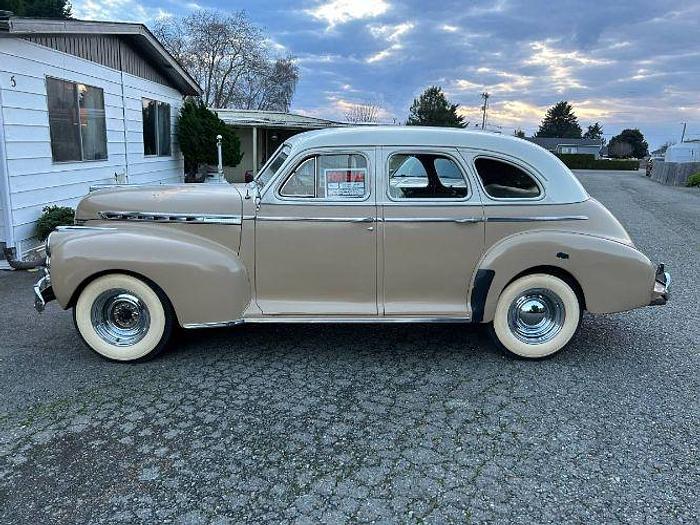 $12,000 · 66% below typical
Expand
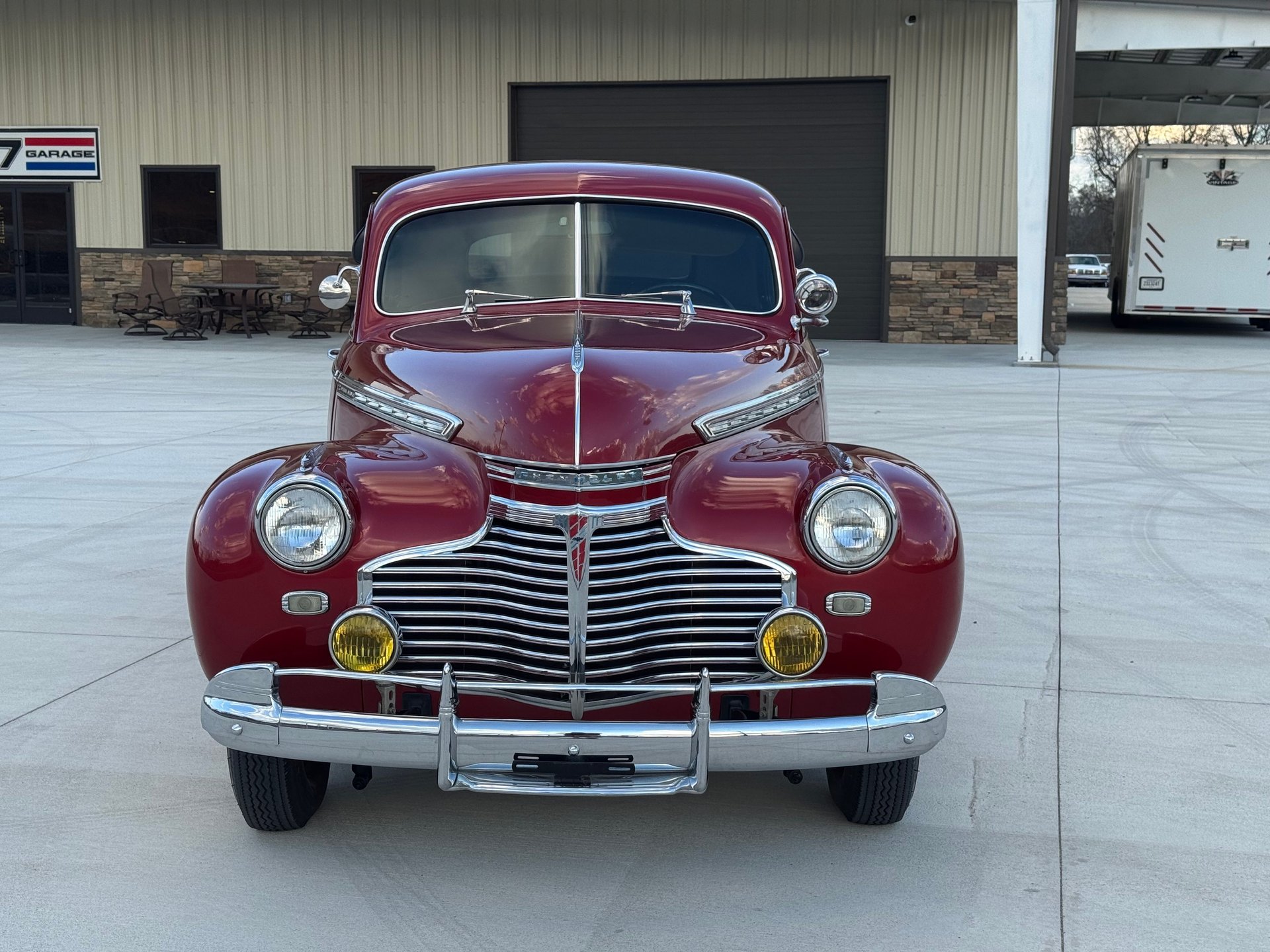 $28,500 · 20% below typical
Expand
What they sell for: Special Deluxe Coupe sale prices.