
Chevrolet Standard buyer's guide
Chevrolet Standard -- the model's own buyer's guide: variants, values and what to check.
Years listed: 1934-1935 · Series: Full Size
# Chevrolet Standard (1933–1936) — buyer's guide
Overview and history
The Chevrolet Standard is the cheapest six-cylinder closed car of the American Depression — and that is not an insult, it is the entire car. When Chevrolet launched it in 1933, first badged Mercury and then Standard, the pitch was brutally simple: a proper overhead-valve six, a Fisher body with No-Draft ventilation, full instrumentation and a 107-inch wheelbase, for less money than the bigger Master beside it in the showroom. Chevrolet advertised it as the cheapest six-cylinder enclosed car on the market, and for a family trading up from a four-cylinder car — or down from nothing at all — that was enough.
Understand what "cheaper" meant mechanically, because it defines every Standard you will ever inspect. The Master grew in 1933 onto a longer wheelbase with a new, taller-deck 206.8-cubic-inch six. The Standard kept the old 107-inch chassis and received a smaller, low-deck derivative of the same engine family: 181 cubic inches, 60 horsepower. For 1934, when the Master gained Dubonnet Knee-Action independent front suspension, the Standard kept a beam front axle on leaf springs. Correct the myth you will meet in adverts at once: no Standard of 1933–35 has Knee-Action, whatever the seller tells you — that hardware belongs to the Master, and its presence or absence under the front wings is one of the quickest ways to tell whether the car in front of you is what its badge claims. The Standard's savings were taken in wheelbase, engine size, suspension and trim, never in the basic formula: separate frame, torque-tube drive, mechanical brakes and a three-speed manual gearbox.
For 1935 the gap narrowed in the one place it mattered. The 181 was dropped entirely and the Standard received the full 206.8-cubic-inch engine, rated at 74 horsepower against the Master's 80, on an X-member chassis with bigger brakes — under bodywork that looks, at a glance, identical to the 1934 car. The 1935 Standard is therefore the sleeper of the range: Master power in the lighter, simpler, cheaper chassis. For 1936 the Standard moved to a 109-inch box-girder frame, gained a steel roof and a wider body range, and shared the Master's 79-horsepower rating outright. A year later the name was gone, folded back into the Master line for 1937.
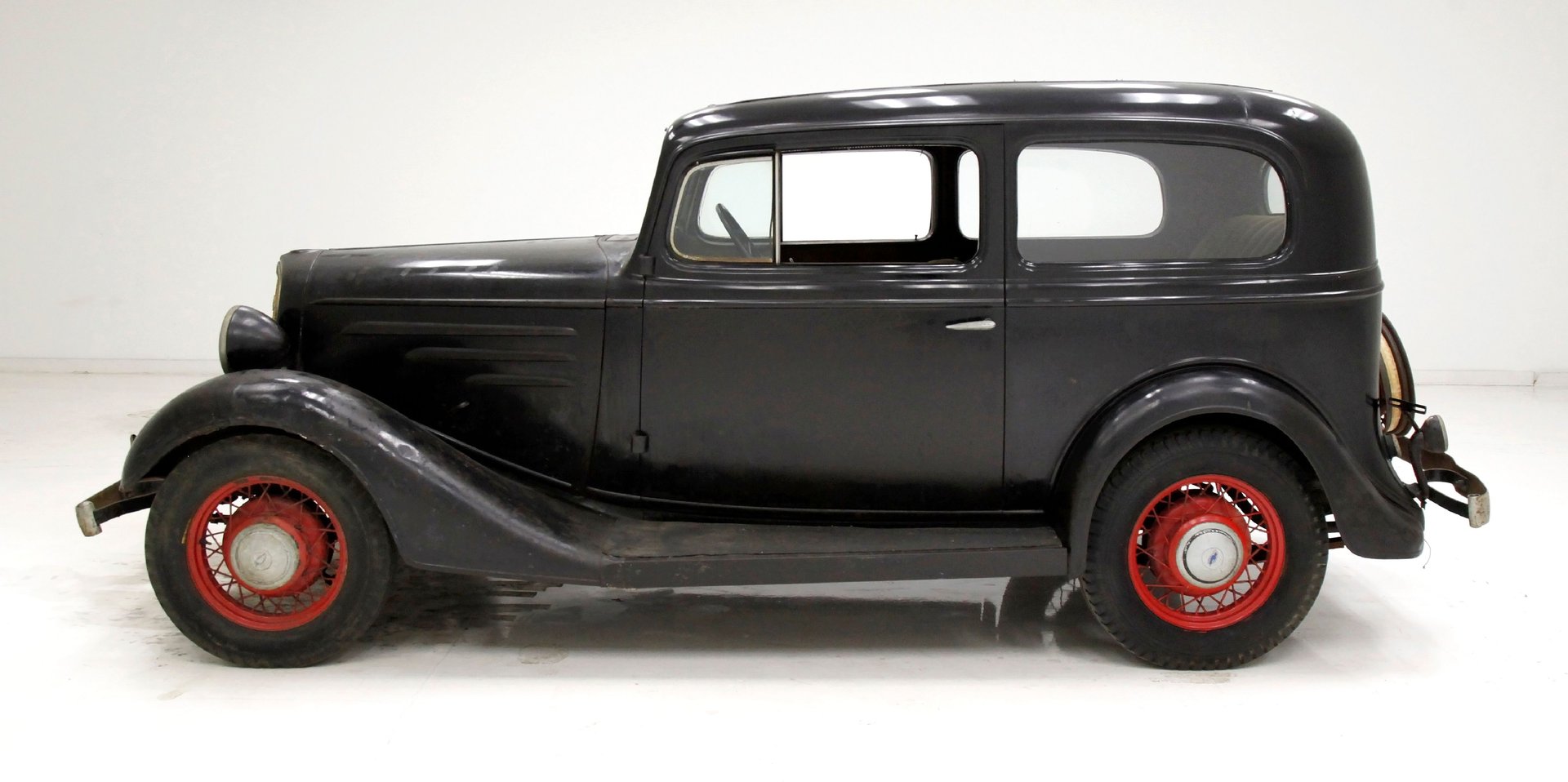
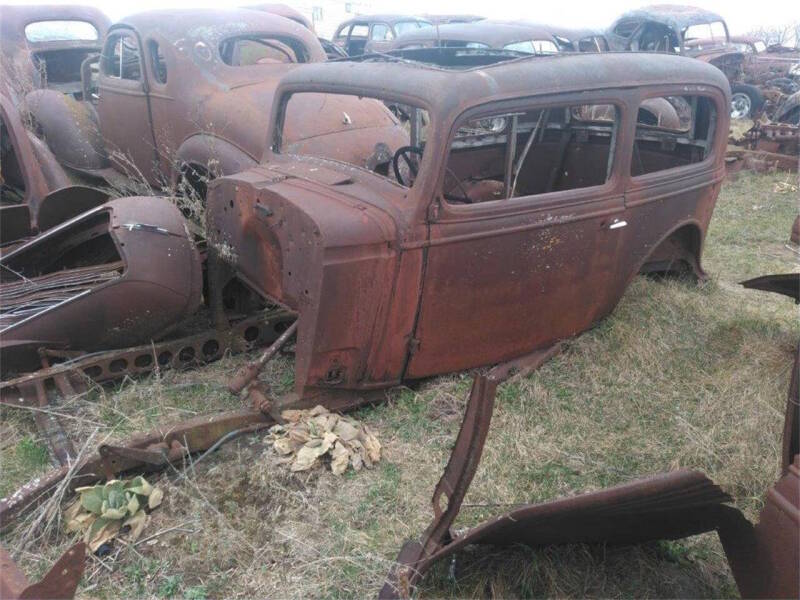
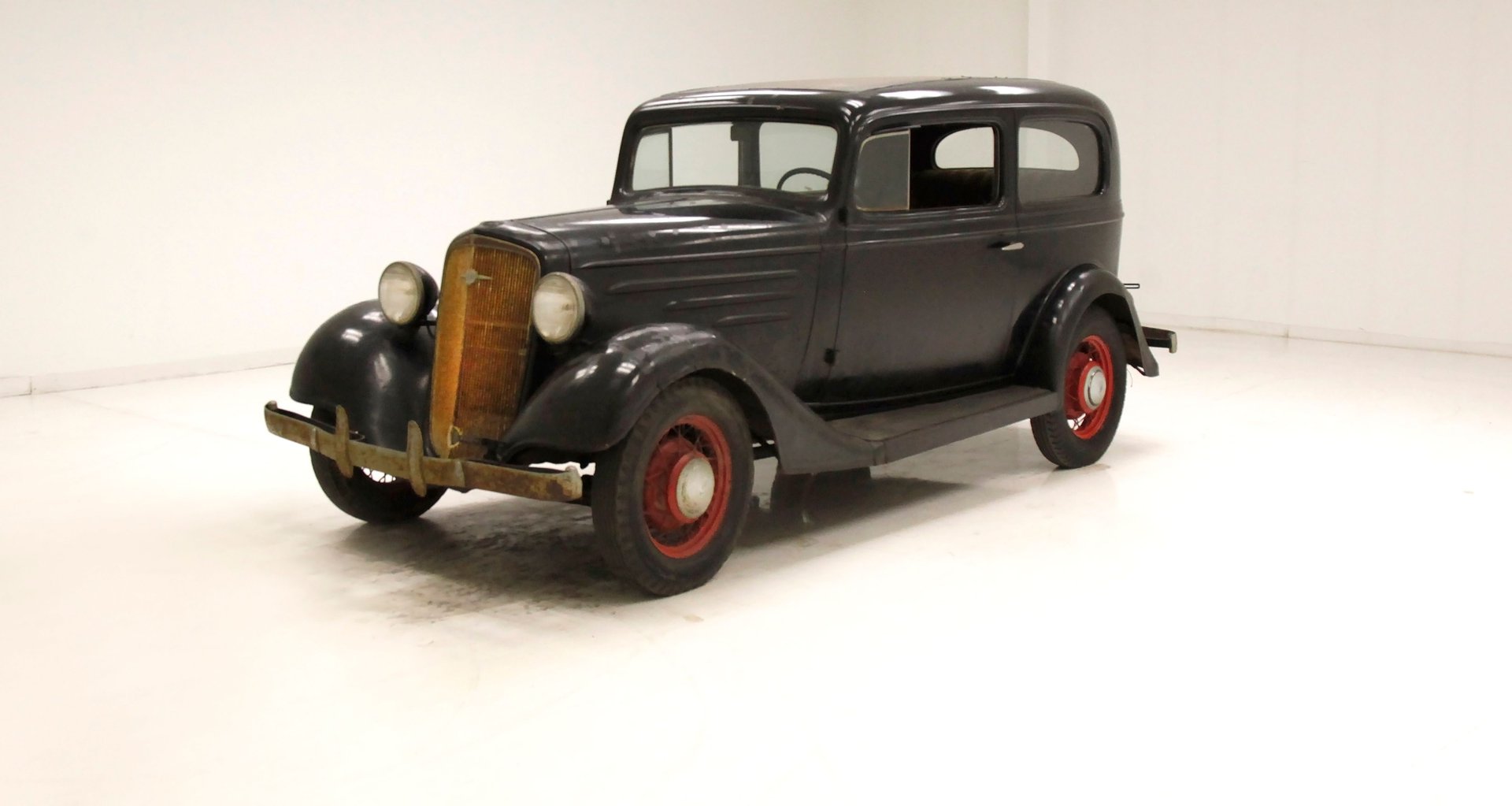
Survival has not followed original sales. These were working cars, bought by people who could least afford to garage them, and they were used up — through the Depression, through wartime scrap drives, through the postwar years when a tired 1930s sedan was worth its weight in steel. The Classic Listings pool tells that story in miniature: just three Standards at the time of writing, all black, all dealer-offered, two from 1935 and one from 1934 — a barn-find coach, a V8-swapped resto-mod and a stripped, rusted body shell. Of the two cars in the pool whose photos our examiners worked through in detail, rust is mentioned in both and visible damage in one. That is the honest shape of this market: original, complete, running Standards are the exception, and the car in front of you — not the model in the abstract — is what you are really buying.
Buy one for the right reasons. A Standard will not outrun a contemporary Ford V8 and was never meant to. What it offers is the purest form of the pre-war Chevrolet idea — a simple, torquey overhead-valve six in a light, honest car — at the lowest entry price in the range, provided the Fisher body's hidden woodwork, which decides everything on these cars, is sound.

The models
Chevrolet's early-1930s range is a ladder with two rungs, and the Standard is the lower one in every year of its life. Above it sits the Master — longer, heavier, better trimmed, and from 1934 independently sprung at the front. The engine, gearbox layout and Fisher body construction are shared family hardware; what your money bought as you climbed was size, ride and finish. Learn the Standard by its series letters, because Chevrolet changed the name's companions yearly while the car underneath evolved in steps — and because sellers routinely describe any 1930s Chevrolet six as a "Master," the word that sounds better in an advert.
The Series CC of 1933, launched as the Mercury and renamed Standard within the year, is the founding car: 107-inch wheelbase, the 181-cubic-inch low-deck six at 60 horsepower, and just three bodies — the two-door sedan Chevrolet's marketing called a coach, a coupe, and a coupe with rumble seat. All bodies were by Fisher, all carried No-Draft ventilation — the crank-operated vent panes in the front windows that were GM's answer to draughty cabins — and all were composite construction: thin steel skin over a structural hardwood frame, with a fabric-insert roof panel. Nothing about the car was experimental; every component was a cheaper, lighter version of something Chevrolet already built in volume.
The Series DC of 1934 — the first of the two years in the Classic Listings pool — keeps the 181 engine and the 107-inch chassis and widens the choice: four-door sedan, roadster and touring (phaeton) bodies join the coach and coupes. Two traps live in this year. First, the Master DA of the same year has the new 80-horsepower Blue Flame version of the big six and Knee-Action front suspension; the DC has neither, and a "1934 Standard with the 80-horsepower engine" is either a Master, an engine swap, or a mistake — the series letters and the engine itself, covered in the next section, settle which. Second, late in the 1934 season Chevrolet began fitting 1935-style Fisher bodies to DC chassis. A late DC can therefore wear the newer body while retaining the 1934 engine, frame and brakes, and it remains a DC — title year and body style alone will mislead you.
The Series EC of 1935 is the mechanical coming-of-age. The body and fenders look carried over, but underneath you get the 206.8-cubic-inch engine at 74 horsepower, an X-member frame in place of the earlier ladder arrangement, and larger brakes. Production was substantial — period records put total EC output at 201,773 cars, dominated by the coach — which makes the EC's scarcity today a survival story, not a production one. A sedan delivery joined the range this year, the commercial variant built from the coach shell. The pool's two 1935 cars bracket the model's modern fate: one is a resto-mod carrying a 350-cubic-inch V8 and an automatic gearbox — a hot rod in a Standard body, to be judged entirely as a modified car — and the other is a bare, engineless shell, which is what an unrestored Standard too often turns out to be.
The Series FC of 1936 closes the run with the most changes of any year: a new box-girder frame on a 109-inch wheelbase, an all-steel Turret Top roof replacing the fabric insert, cabriolet and sports sedan bodies added, the spare wheel moved into a compartment under the boot floor, 11-inch brake drums, and the 206.8 engine uprated to 79 horsepower at a 6.0:1 compression ratio — the same rating as the Master. If you want the most developed Standard, this is it; if you want the purest Depression bargain, it is the 1933–34 car. For 1937 the Standard name disappeared and its place at the bottom of the range was taken by a cheaper Master.
| Model | Years | Engine | Output | Built | Character |
|---|---|---|---|---|---|
| Standard Series CC (Mercury) | 1933 | 181 cu in OHV six | 60 hp | — | The founding bargain: three bodies, 107-inch chassis, cheapest enclosed six on the market |
| Standard Series DC | 1934 | 181 cu in OHV six | 60 hp | — | The range widens — sedan, roadster, phaeton join — but no Knee-Action and no Blue Flame engine; late cars wear 1935-style bodies |
| Standard Series EC | 1935 | 206.8 cu in OHV six | 74 hp | 201,773 (all bodies) | The sleeper: full-size engine, X-member frame and bigger brakes under near-identical bodywork |
| Standard Series FC | 1936 | 206.8 cu in OHV six | 79 hp | — | The developed car: 109-inch box-girder frame, steel roof, widest body choice, Master-matching power |
Within the EC year, period production figures show where the volume — and therefore today's survivors — concentrate: the five-passenger coach accounts for 126,138 cars and the five-passenger sedan for 42,049, the coupe for 32,193, while the sport roadster managed 1,176 and the phaeton just 217. Open Standards of any year are genuinely rare; closed cars are merely scarce. Treat any claimed production figure for a 1933, 1934 or 1936 body style with caution — the records are incomplete, and rarity asserted by a seller is not rarity proven.
Engines and gearboxes
Two engines power every Standard you will meet, and they are brothers, not strangers: both are first-generation Chevrolet overhead-valve inline sixes — the family later generations nicknamed the Stovebolt, after the slotted stove-type bolts that hold its covers on. Both run a cast-iron block and head, a three-main-bearing crankshaft, solid valve lifters with adjustable tappets, a single downdraught Carter W-1 carburettor, six-volt electrics with a generator, and — the defining feature you must understand before you judge any running car — poured babbitt bearings with splash-and-dipper lubrication for the connecting rods. Neither engine is the later 216 or 235: those are a redesigned, four-main-bearing engine from 1937 onward, and parts, knowledge and prices do not transfer freely between the generations. A Standard wearing a 216 is a swapped car, and you should price the swap, not the story.
The 181: design and identity
The 181-cubic-inch (3.0-litre) engine of the 1933 CC and 1934 DC is a destroked derivative of the original Chevrolet six: the same 3-5/16-inch bore as its bigger brother, but a 3-1/2-inch stroke in a lower-deck block, where the 206.8 uses a full 4-inch stroke in a taller block. Output is 60 horsepower, with 125 lb-ft of torque delivered low — between roughly 1,200 and 2,000 rpm — which is why these cars pull away cleanly at speeds where the tachometer, had Chevrolet fitted one, would barely have stirred. Compression is 5.2:1 in 1933 and 5.35:1 in 1934: figures that read as typos today and explain both the engine's tolerance of poor fuel and its modest specific output.
You identify an 181 in the car, not from the paperwork, by three physical tells that survive swaps and repaints. First, the water pump mounts on the cylinder head; on the 206.8 it mounts on the block. Second, the spark plugs stand vertical — at 90 degrees — where 1935-and-later big engines carry them angled. Third, the block is visibly shorter in deck height beside a 207. Check all three on any 1933–34 car: a DC wearing a block-mounted pump and angled plugs has received the later engine, which is a perfectly usable outcome but not an original car, and the price conversation changes accordingly.
The 181: how it wears and what it tells you
The 181 shares its lubrication architecture with the 207, and it is covered in full under that engine below — dippers on the rod caps scooping oil from troughs in the sump, a low-pressure pump feeding the three mains, babbitt throughout. Everything said there about oil weight, trough condition and bearing knock applies here unchanged. What differs is workload: 60 horsepower moving a lighter car is an unstressed life, and a 181 that has been kept in oil and water is a long-lived engine. Its characteristic complaints are the family's complaints — tappet clatter from neglected adjustment, a rod knock that appears first as a light tap under load at road speed and fades when you lift off, and oil consumption past worn valve guides that shows as blue smoke on the overrun after a downhill coast.
Because the 181 was made for only two model years in cars, its specific parts — pistons, its shorter connecting rods, head gaskets — are harder to source than 207 equivalents, a point developed in the parts section. The practical consequence at inspection is simple: a tired 181 is a more expensive problem than a tired 207, not because the rebuild differs, but because the shopping does. If the car in front of you is a 1933–34 and the engine is its original 181 in healthy order, that originality is worth real money in your negotiation — in your favour when it is worn, and in the seller's when it is demonstrably sound.
The 206.8: design and identity
The 206.8-cubic-inch (3.4-litre) engine — you will see it rounded to 207 — arrived in the Standard for 1935, but it had powered the Master since 1933, growing from 65 horsepower to the 80-horsepower Blue Flame tune of the 1934 Master DA. In the EC Standard it is rated at 74 horsepower at 3,200 rpm with 150 lb-ft of torque. Two explanations circulate for the six-horsepower gap to the Master, and both may hold part of the truth: period references credit the Master with a different intake manifold, and the ratings were taken at different engine speeds — 3,200 rpm for the Standard, 3,300 for the Master. Do not let a seller bill an EC as "detuned and therefore strangled": on the road the lighter Standard gives away little or nothing to its bigger brother. For 1936 the FC's compression rose from 5.6:1 to 6.0:1 and the rating converged at 79 horsepower for both ranges.
Identity checks mirror the 181's, in reverse: block-mounted water pump, angled spark plugs, taller deck. The Blue Flame cylinder head — larger valves and a combustion-chamber shape that raised compression without detonation — belongs to the 1934-onward big engine story, and the 1935 repair literature describes the head's water distribution in detail: small copper nozzles pressed into the head direct the coldest coolant at the valve seats. A head that has been swapped, skimmed repeatedly or repaired around those passages is a negotiation point, because good early heads are finite.
The 206.8: oiling, babbitt and the Carter W-1
Now the system that decides whether any first-generation Chevrolet six lives or dies. The oil pump delivers low-pressure oil to the three main bearings and, on the 1935 engine, through distributor pipes and nozzles in the sump that keep the splash troughs filled and aimed. The connecting-rod big ends are not pressure-fed at all: a dipper on each rod cap plunges into its trough once per revolution, scoops oil into the bearing and flings the surplus around the crankcase to lubricate bores, pistons and camshaft. The bearings themselves are babbitt — white metal poured directly into the rods and caps and machined to fit — with clearance set by shims, not by selecting a shell from a catalogue.
Three ownership truths follow. First, oil weight matters in a way it never does in a modern engine: oil that is too thick when cold does not flow back into the troughs fast enough between dipper passes at speed, and the rods starve on a full sump. Period recommendation was a light oil — 20-weight class — and experienced owners run a modern 10W-30 rather than a heavy straight grade, whatever the "old cars need thick oil" folklore says. Second, the troughs and nozzles are service items: troughs rust, distort and collect sludge in a car that has sat, nozzle heights drift, and the 1935 factory manual insists on checking nozzle alignment with a gauge because a mis-aimed jet starves its dipper as surely as a failed pump. Any engine that has stood for years gets its sump dropped and this system inspected before it is run at speed — budget the labour, it is cheap insurance against a thrown rod. Third, babbitt has a finite life and a recognisable death: a deep, rhythmic knock under load that quietens on the overrun is rod babbitt failing, and the cure is a repour and line-bore by a specialist — a $2,500–5,000 operation within a full engine rebuild that typically totals $6,000–10,000 done properly. There is no additive, oil or adjustment that substitutes.
The Carter W-1 single-barrel downdraught carburettor — Chevrolet's fitment across 1932–36 in a family of numbered variants — is a simple, rebuildable instrument whose faults are age faults: a worn throttle spindle drawing air and defeating idle adjustment, a perished accelerator-pump cup causing a flat spot on tip-in that owners blame on ignition, and a float needle that no longer seats, flooding the manifold on a hot restart. Kits are available and a competent rebuild runs $250–450 including labour. Ignition is a conventional Delco-Remy coil-and-points system with centrifugal advance; points, condensers and caps are service consumables, and a weak spark at cranking speed on a six-volt car is more often tired cables, dirty grounds and a marginal battery than a failed coil — test in that order before you buy parts.
Gearboxes: the three-speed manual
Every original Standard carries the same basic gearbox: a three-speed, floor-shifted manual with synchromesh — Chevrolet's Synchro-Mesh — on second and top, and an unsynchronised first gear. Period shop literature distinguishes the Standard's unit from the Master's fuller-synchromesh box, and on the road you drive it the period way: first is for starting and for crawling, engaged at a standstill or with a double-declutch at walking pace; second and top change cleanly when the synchroniser cones are healthy. Drive is through a single dry-plate clutch to an enclosed torque tube that locates the semi-floating rear axle — there is no open propeller shaft and no universal-joint pair to inspect, but the tube's front bushing and the axle's pinion seal do the same jobs and leak in the same telltale places.
Wear announces itself in a fixed vocabulary. Jumping out of second on the overrun is the signature fault — worn engagement dogs and synchro components — and it is a gearbox-out repair, $800–1,800 in specialist labour and parts if gears themselves survive. A crunch into second on quick changes, hot or cold, is tired synchromesh; a box that changes sweetly when rushed is either healthy or recently rebuilt, and receipts should say which. The clutch should take up progressively without judder; judder on a torque-tube car also implicates engine mounts and a worn tube bushing, so do not let a seller close the question with "it just needs a clutch." One absolute: no Standard left the factory with an automatic gearbox, and no 1930s Standard left it with a V8. The pool's resto-mod 1935 car carries both a 350 V8 and an automatic, which makes it a street rod for a different buyer — judge its build quality as a modified car and never pay original-car money for it.
Problem areas
Every Standard problem you will ever pay for grows from one of three roots: the body is wood wearing a steel skin, the brakes and much of the chassis are adjusted rather than sealed for life, and the engine's bottom end is lubricated by a system that punishes neglect and long storage. Work through the systems in that order, because the order is also the order of cost. A bad engine in a sound body is a project; a sweet engine in a rotten body is a parts car with a pulse. The pool makes the point without commentary: of the two Standards whose photographs were examined in detail for this guide, rust is mentioned in the notes for both, and visible damage in one — and the third pool car is a body shell with no engine, chassis or interior at all.
The Fisher body: wood first, rust second
A 1933–35 Standard body is a hardwood structure — sills, pillars, door frames, roof rails, floor framing — to which Fisher nailed and screwed thin steel panels. The 1936 FC replaces the fabric roof insert with a steel Turret Top but remains a wood-framed body underneath. The steel gets the attention in photographs and the wood decides the car's fate, because wood rots from the inside out, invisibly, wherever water has sat: the bottoms of the door pillars, the sill ends, the lower door frames, the header rail above the windscreen where the roof insert leaks, and the framing around the rear quarters. Rot mechanism matters here: the fabric roof insert and the window channels admit water, the wood holds it against the steel, and the two destroy each other — wood softens and loses its screws, panels lose their support and begin to move, gaps open, more water enters. By the time a door visibly sags, the framing behind it has usually been soft for years.
Test the wood, not the paint. Lift each door by its rear edge: movement at the hinges beyond a fraction of play, or a door that must be lifted to latch, is framing or hinge-post rot until proven otherwise. Press a blunt probe — an awl with modest hand pressure — into any wood you can reach: door-frame bottoms with the trim flexed back, sill wood from underneath, the framing visible inside the boot and behind the rear seat. Sound hardwood resists and rings; rotten wood accepts the probe like cork and smells of mildew when disturbed. Sight down the car's flanks for the profile evidence in the photographs above: even shut-lines and a level running board mean the structure is holding. Then price what you found honestly. Individual wood pieces are available as patterns and kits for the common bodies, but fitting structural wood is coachbuilding: a door frame or sill section fitted and finished typically runs $1,500–3,500 per side in specialist labour, and a body needing its full framing renewed is a $10,000–25,000 conversation before paint. That single fact explains the Standard market better than any other in this guide.
Rust in the steel follows water's map: floor pans and toe boards, the bottoms of the cowl sides, lower door skins, rear fender tails, running-board aprons and brackets, and the frame's rear kick-up over the axle. Surface rust on a barn car — like the rusted grille shell and bumper on the pool's 1934 coach — is cosmetic noise; perforation in floors, sills and body mounts is structural signal. The frame itself is a straightforward channel ladder (X-membered for 1935) and rots where mud packs: spring hangers, the rear crossmember and around body-mount outriggers. Tap-test suspect frame sections with a small hammer; scale that flakes in layers or a section that dents under the tap is done.

Engine, cooling and the cost of standing still
The engine section above gives you the architecture; here is how it fails in the cars actually offered for sale. The commonest Standard engine story is not wear but resurrection: a car parked decades ago, freed off, started on stale fuel and advertised as "runs." The splash system is your first concern — troughs silted or rusted, nozzles blocked, oil turned to sludge — because an engine can idle innocuously in a yard and starve its rods at 40 mph on your first drive. Insist on knowing whether the sump has been off. A seller who has done the troughs, fitted fresh oil of the right weight and can show you clean pressure to the mains has done the single most valuable job on the car; a seller who has merely "got it running" has transferred that risk to you.
Listen for the two knocks and learn to separate them. Tappet noise is a light, multiple clatter from the top of the engine, present hot and cold, cured by adjustment to the manual's clearances and fresh oil to the rocker gear — annoying, cheap, and often used to mask the other sound. Rod knock is single, deep and load-dependent: provoke it by opening the throttle in top gear at low road speed on your test drive, and by snapping the throttle at a fast idle stationary, when a worn rod answers with a distinct knock as load comes off. Main-bearing wear shows as a duller thud with falling oil pressure hot. Any of the bottom-end sounds moves the car into rebuild money — $6,000–10,000 for a proper babbitt-engine rebuild — and no discount smaller than that figure makes the arithmetic work.
Cooling is a thermo-syphon-assisted pumped system with a generous radiator that clogs from the bottom up with scale and solder bloom. Overheating on a Standard is rarely the pump — though the head-mounted pump on the 181 wears its bushings and weeps from the gland — and usually a silted radiator core, a slipping fan belt, retarded ignition or a mixture weakened by carburettor wear, in roughly that order of likelihood. A car that boils after fifteen minutes of running needs a radiator recore budgeted at $600–1,200 if its tanks are sound. Check the water for oil and the oil for water, check the head gasket's fire ring line for weeping between head and block, and treat a freshly painted engine with suspicion: paint is the cheapest way to sell a tired motor, and the honest barn engine in the pool's 1934 car wears its patina openly.
Brakes, steering, suspension and axle
The brakes are four-wheel mechanical drums, cable-and-rod operated, and they are the system where period design and modern expectation are furthest apart. In perfect adjustment they stop the car adequately from its natural cruising speeds; in average survivor adjustment they are long, heavy and uneven, and the test reports of the day already noted the pedal effort required. Everything in the linkage wears and stretches: cables fray and elongate, bell-crank pivots oval their bores, cross-shaft bushings develop lost motion, and the result is a pedal that travels far to deliver unequal braking — one front wheel grabbing, the car pulling under braking, a handbrake that holds on hope. None of this is exotic and all of it is labour: a full mechanical-brake overhaul with cables, linings, drum machining and linkage rebushing typically runs $900–1,800, and it transforms the car. What you must not do is accept "they all do that" for a car that pulls violently or has a pedal near the floor — drive it, brake firmly from 30 mph in a straight line on a quiet road, and feel for pull, pulsation and fade on a second stop. Hydraulic conversion kits exist and many touring cars wear them; a converted car is safer and less original, and the guide's position is simply that you should know which you are buying and pay accordingly.
The Standard's front suspension is a beam axle on semi-elliptic leaf springs — the simplicity that distinguishes it from the Knee-Action Master is also its ownership gift, because wear concentrates in kingpins, spring shackles and bushings, all cheap and all testable: jack each front wheel and rock it top-and-bottom for kingpin play, lever it for wheel-bearing play, and bounce each corner to judge the friction shock absorbers, whose resistance is adjustable and usually set to "none" by decades of neglect. Steering is a worm-type box driving a drag link; play at the wheel rim beyond an inch or two implicates the box, the drag-link ends and the tie-rod ends in that order, and a car that wanders on a straight road is usually wearing all three. At the rear, the torque tube and semi-floating axle fail quietly: pinion and axle seals weep, axle bearings rumble at road speed, and the tube's front bushing wear shows as clutch judder and driveline shunt. Springs sag asymmetrically on cars that carried loads; measure sill height side to side and compare.

Electrics, fuel system and instruments
Six volts, positive earth conventions of the period, a generator and a cut-out or regulator: the system is simple and its failures are resistance failures. Slow cranking is the classic complaint and the classic misdiagnosis — owners buy starters and batteries when the cure is cleaning every earth strap and cable terminal, and fitting cables of proper six-volt gauge, since thin twelve-volt replacement cables starve the starter of current. Test by cranking with the headlamps on: lamps that die to a glow point at connections and battery, lamps that stay bright while the starter drags point into the starter itself. A generator that does not charge shows on the ammeter — the Standard carries full instrumentation, so use it: charge at cruising speed, discharge at idle with lamps lit is the healthy pattern.
The fuel system runs from a rear tank through a mechanical pump to the Carter W-1. Tanks rust from the inside after long standing and shed scale that blocks filters and needle valves intermittently — a car that runs for ten minutes and starves, recovers after a rest and repeats, is telling you about its tank, not its pump. Budget $400–800 for tank cleaning and sealing or replacement, and treat a boat-tank or demijohn rigged in the boot as a statement about the whole car's maintenance. Instruments themselves are robust, but note the dating evidence they carry: 1934 gauges have black faces with white figures, 1935 gauges cream faces with brown figures, and the 1935 car moves its instruments to the centre of the dash — a 1934-titled car with cream centre gauges is one of those late DC cars with a 1935 body, or a car with a story, and either way you now know to ask.
Interior, glass and trim
Interiors were mohair or cloth in closed cars, leather in open ones, and survival is binary: original interiors are either remarkable survivors or gone entirely, with little between. Seat springs collapse, door cards warp with the same water that attacks the framing, and headlinings stain from the roof insert downward — read a stained headlining as a leak history, not a cosmetic flaw. Re-trimming a closed Standard in correct-style materials runs $3,500–7,000 for seats, cards and headlining; open cars cost more and need top work besides. Trim is the Standard's quiet advantage: as the cheaper range it carries less brightwork than a Master, but what it has — grille shell, headlamp shells, hubcaps, the single-year details — is increasingly hard to find un-pitted, and rechroming a grille shell alone can run $600–1,200. Window regulators seize, the No-Draft vent panes lose their pivots and seals, and safety glass of the period delaminates at the edges into a milky border that is cosmetic on a driver and a deduction on a show car. Count every piece of glass, because flat glass is cheap to cut but curved and vent-pane glass is not.
How to inspect one
Inspect a Standard in this order and do not let the seller rearrange it: identity first, wood second, engine third, everything else after. Bring a torch, a small magnet, an awl for probing wood, a tyre gauge, a notebook and a friend to work the pedals and steering while you watch from outside. Allow an hour. A seller who will not allow the sump history questions, the door-lift test or a proper road drive is giving you information — record it and price it.
- Settle the identity before anything else. Read the series from the car's data and confirm it against the metal: a Standard sits on a 107-inch wheelbase (109 for 1936), carries a beam front axle — not Knee-Action — and, for 1934–35, wears the gauge faces described in the electrics section: black with white figures for 1934, cream with brown figures, centre-mounted, for 1935. Check the cowl vent's opening direction and the headlamp shells (painted for 1935) against the title year, remembering the late-1934 DC cars wearing 1935-style bodies.
- Identify the engine physically. Water pump on the head and vertical spark plugs mean the 181; pump on the block and angled plugs mean the 206.8. A 1933–34 car with the big engine, or any Standard with a 216 or a V8, is a swapped car — fine to buy, wrong to price as original. Note the engine number and whether the Carter W-1 carries its brass identification tag.
- Do the door test on every door. Lift each door at its rear edge, feel for hinge-post movement, then open and close it watching the latch meet its striker. A door that drops, lifts into place or shows a widening shut-line gap toward the sill sends you straight to step 4 with your suspicions confirmed.
- Probe the wood everywhere you can reach. Awl-test door-frame bottoms, sill wood from beneath the car, pillar bases, the header rail if trim allows, and framing inside the boot and behind the rear seat, exactly as the body section describes. Cork-soft wood in any structural piece reprices the car; soft wood in several places ends the inspection for most buyers.
- Read the steel over the wood. Crouch and sight along both flanks, then work the rust map: floors, toe boards, cowl bottoms, door bottoms, rear quarters, running-board brackets. Bubbling low on the body means water has been working on steel and wood together. Use the magnet on fenders and lower panels to find filler, and tap-test the frame at spring hangers and the rear kick-up.
- Check the roof insert and its evidence trail. A perished, shrunken or ill-fitting fabric insert (1933–35) is a leak with a history: look for headlining stains, mildew smell, stiff or stained door cards. On a 1936 steel-roof car, check the roof seams and gutters instead.
- Interrogate the engine's standing history. Ask directly: how long parked, was the sump dropped, were the oil troughs and nozzles cleaned and checked, what oil is in it now? The answers — and the seller's reaction to the questions — separate a recommissioned car from a merely restarted one, per the engine problem section.
- Start it cold, and listen in sequence. You want the first start of the day. Note cranking speed on the six-volt system (slow points you to cables and earths first), oil pressure behaviour on the gauge as it warms, tappet clatter that should settle with adjustment history, and any deep knock as you blip the throttle and load comes off — the rod-knock test from the problem areas.
- Work the gearbox and clutch stationary, then moving. First should engage cleanly at a standstill; second and top should change without crunch at normal hand speed. On the drive, load second gear and lift off sharply several times: jumping out of second on the overrun is the signature gearbox fault and a four-figure repair.
- Drive it at its natural pace for at least twenty minutes. A Standard cruises happily at 40–50 mph. Use top gear at low speed under load to provoke bottom-end knock, coast downhill and accelerate to check for blue smoke on the overrun (valve guides), watch the temperature gauge's whole story, and note steering wander, brake pull and driveline shunt as separate symptoms with separate causes.
- Brake it properly, twice. From 30 mph, brake firmly in a straight line: note pedal travel, pull to either side, and any pulsation. Repeat immediately to judge fade. Then test the handbrake on a slope. Mechanical brakes in full adjustment pass this test modestly; anything alarming is linkage, cables or linings asking for the $900–1,800 overhaul — price it in, do not excuse it.
- Finish underneath and in the paperwork. On a lift or with the car safely raised: frame condition, spring and shackle wear, kingpin play by rocking each front wheel, torque-tube and axle leaks, exhaust, tank condition and fuel-line bodges. Then match title, series and engine evidence to the car you have just inspected, and count the trim, glass and spares actually present. Your offer is built from the wood, the bottom end and the brakes — in that order.
Values
The Standard's market is thin, and thin markets reward readers over guessers. The Classic Listings pool at the time of writing holds just three cars — two offered for sale and one recorded sold — and all three are black, dealer-handled Standards from 1934–35. A sample that small cannot carry a price curve; what it can do is show you the market's shape, because the three cars are a barn-find original, a V8 resto-mod and a bare shell, and those are the three species you will meet everywhere. The numbers the build appends below this guide — the current listings and recorded sales — are the live evidence; this section teaches you how to read them.
The first lesson is that condition spread on a Standard is not a slope, it is a cliff, and the cliff is the body wood. Two cars with identical paint and identical engines can be a sound, tourable car and a structural restoration case, separated by framing you cannot see in a photograph. That is why asking prices for these cars scatter so widely and why achieved prices scatter further: the informed buyer discounts invisible wood ruthlessly, and the uninformed buyer pays for paint. When you compare the appended figures, compare like with like — original closed cars against original closed cars — and treat any price achieved by a modified car as evidence about the modified market only. A 350 V8 and an automatic gearbox move a Standard into street-rod territory, where value follows build quality and taste, not rarity or originality.
Second, asking and achieved prices part company fastest at the bottom of the market. A shell or a rotten project has a value set by its panels, trim and title, and sellers anchored on what complete cars fetch will sit unsold until reality or an auction resets the figure; the recorded-sales block, not the listing block, is where project values are truly written. At the top, a demonstrably original car — sound wood, its correct 181 or 207 engine with the sump history documented, brakes overhauled — earns a premium that is rational, because the buyer is purchasing the three expensive jobs already done. Open cars carry their own premium where the closed cars cannot follow: with period production of the phaeton in the low hundreds and the roadster barely over a thousand, a genuine open Standard is rare in a way no coach can claim, and the market knows it.
Third, read the project-versus-driver gap as a labour calculation, not a discount hunt. The gap between a project Standard and a driving one is routinely smaller than the cost of the woodwork, engine and brake work that separates them — which means the project is often the expensive car bought slowly. Negotiate from the inspection, itemised: wood sections, a babbitt rebuild, a brake overhaul and a re-trim all carry the recognisable costs set out in this guide, and a seller facing a buyer who can name them, in order, with figures, negotiates differently. In a market this small, patience is also a price tool: the right car appears irregularly, and the wrong one is available every week.
Parts and ownership
Ownership of a Standard is a tale of two parts catalogues: the mechanical catalogue, which is generous, and the body catalogue, which is where you will spend your ingenuity. Start with the good news. The first-generation six shares its service ecosystem with the Master and with Chevrolet trucks of the same years, and the hobby infrastructure around early Chevrolets — the Vintage Chevrolet Club of America above all — is deep. Carter W-1 rebuild kits, ignition consumables, water-pump and fuel-pump rebuild parts, gaskets, brake linings and cables, kingpin and shackle kits, and six-volt electrical components are all obtainable from the established early-Chevrolet specialists, and a competent local machine shop can handle the conventional machining. The specialist work is the babbitt: repouring rods and mains and line-boring is a shrinking trade, so identify your babbitt shop before you need one, and expect to ship the block or rods to them.
The 181 asks more of you than the 207. Two model years of car production means its pistons, rods and some gaskets are reproduced patchily or not at all, and you will hunt NOS and good used stock; the 207 benefits from the Master's volume and a longer run. Budget accordingly and, when you buy a 1933–34 car, treat a spare 181 short engine in the sale as genuine value. Body and trim are the long game: structural wood is available as kits and patterns for the common closed bodies from specialist wood shops, but open-car wood and trim are largely make-or-find. Grille shells, headlamp shells, hubcaps, instruments and the small brightwork are swap-meet and salvage parts — the pool's rusted shell exists in the market precisely because shells feed the survivors — and rechroming is a budget line, not an afterthought.
Running one is period motoring with period chores, none of them onerous and all of them non-negotiable. You keep the oil light and fresh — a modern 10W-30 suits the splash system better than heavy oil — and you change it often, because the system has no full-flow filter to forgive neglect. You adjust tappets, grease the chassis points, check brake cable adjustment and keep the cooling system descaled as routine services measured in hundreds of miles-to-thousands, not in modern intervals. You drive at the car's pace: 40–50 mph cruising, mechanical brakes planned ahead, and journey times from another era. Insurance and registration for pre-war cars are cheap through the classic schemes; your real annual cost is storage, because a wood-framed body stored damp is a body consuming itself. Dry storage is not a preference with a Standard. It is the maintenance item on which all the others depend.
Which one to buy
- The all-rounder: a 1935 Series EC coach or sedan with its 206.8 engine. The full-size engine, X-member frame and bigger brakes in the lighter car, with the volume body styles whose wood kits and parts are easiest to find. This is the Standard to tour in.
- The purist's bargain: a 1933–34 Series CC/DC with its original 181. The cheapest enclosed six of its day in its most honest form. Buy it only with the engine physically verified — head-mounted pump, vertical plugs — and pay the premium for documented originality, or not at all.
- The most developed car: a 1936 Series FC. Steel roof, 109-inch frame, 79 horsepower and the widest body choice, including the cabriolet. The least Depression-bargain character, the most usable car.
- The rarity play: a genuine open car — roadster or phaeton, any year. Period production in the hundreds-to-low-thousands makes these the only Standards with true scarcity. Verify the body is a genuine open body and not a cut-down closed car before rarity enters the price.
- The honest project: a complete, unmolested closed car with sound wood and a tired engine. Engines can be rebuilt by known specialists for known money; completeness and framing are what you cannot buy later. A car with rotten wood and a sweet engine is the reverse of this, and is a parts car.
- Not an original Standard at all: the V8 resto-mod. Buy one, if you like it, as a street rod on build quality — and never let its price be quoted to you as evidence of what an original Standard is worth.
The overriding rule: buy the wood, then the engine, then everything else — a Standard with sound framing and a worn engine is a car; a Standard with rotten framing is a photograph of a car, at any price.
See the 3 Standard cars currently listed.
For sale now
 $2,500 · 65% below typical
Expand
 $11,900 · 65% above typical
Expand
What they sell for: Standard sale prices.