
Chevrolet Stylemaster buyer's guide
Chevrolet Stylemaster -- the model's own buyer's guide: variants, values and what to check.
Years listed: 1946-1948 · Series: Full Size
Overview and history
You are looking at the car that restarted Chevrolet. The Stylemaster is the base series of the 1946–1948 Chevrolet range — Series DJ for 1946, EJ for 1947, FJ for 1948, all sold as the Stylemaster 1500 — and it is, underneath the new badges and grilles, the 1942 Master Deluxe carried back into production because that is the tooling Chevrolet has when civilian building resumes after the war. There is nothing cynical in that. Demand in 1946 is effectively unlimited, every car built is sold, and the formula is proven: a 116-inch-wheelbase chassis, a separate steel body on a channel frame, and Chevrolet's overhead-valve 216.5 cu in six driving the rear wheels through a three-speed manual gearbox and an enclosed torque-tube driveshaft.
Position it correctly before you shop. The Stylemaster is the entry car. Above it sits the Fleetmaster — same body shell, same engine, better upholstery, more brightwork, and access to the convertible and station wagon bodies the Stylemaster never offers. Within the Fleetmaster line sits the Fleetline fastback sub-series, the style leader. So a Stylemaster is not a de-contented rarity to apologise for; it is the volume postwar Chevrolet in its simplest trim, and its plainness is now part of its honesty. What you do not get, in any year, is choice of running gear. One engine, one gearbox, rear-wheel drive. Every variation between cars is body style, condition, and — this matters enormously today — how much of the original car is still in it.
Correct the three myths that distort almost every Stylemaster advertisement. First, there is no factory automatic: Powerglide does not arrive until 1950, so an automatic Stylemaster is a converted Stylemaster, full stop. Second, there is no factory V8 and no factory 12-volt electrics — both arrive at Chevrolet in 1955 — so a V8 under the bonnet or a 12-volt battery under the floor tells you a previous owner rebuilt the car's mechanical identity, not that you have found a rare option. Third, the car is not rare. Chevrolet builds Stylemasters in very large numbers across the three years — period compilations disagree at the margins, so this guide prints no precise total rather than invent one, but the order of magnitude is hundreds of thousands. You never pay a scarcity premium for a Stylemaster. You pay for condition, originality and body style, in that order.
What the car is like to own follows from what it is. Performance is gentle: 90 hp moving a full-size six-seat body gives you leisurely acceleration and a comfortable cruising speed well below modern motorway pace, set by short rear gearing and an engine happiest at moderate revs, for reasons the engines section explains. The ride is soft, the steering slow and heavy at parking speeds, the brakes four hydraulic drums that demand anticipation, and the vacuum windscreen wipers fade exactly when you climb a hill in the rain. None of that is a defect. It is 1946, intact. A buyer who wants those traits improved is shopping for a modified car and should say so honestly, because stock and modified Stylemasters are two different purchases with two different checklists and value logics — and this guide treats them separately throughout.
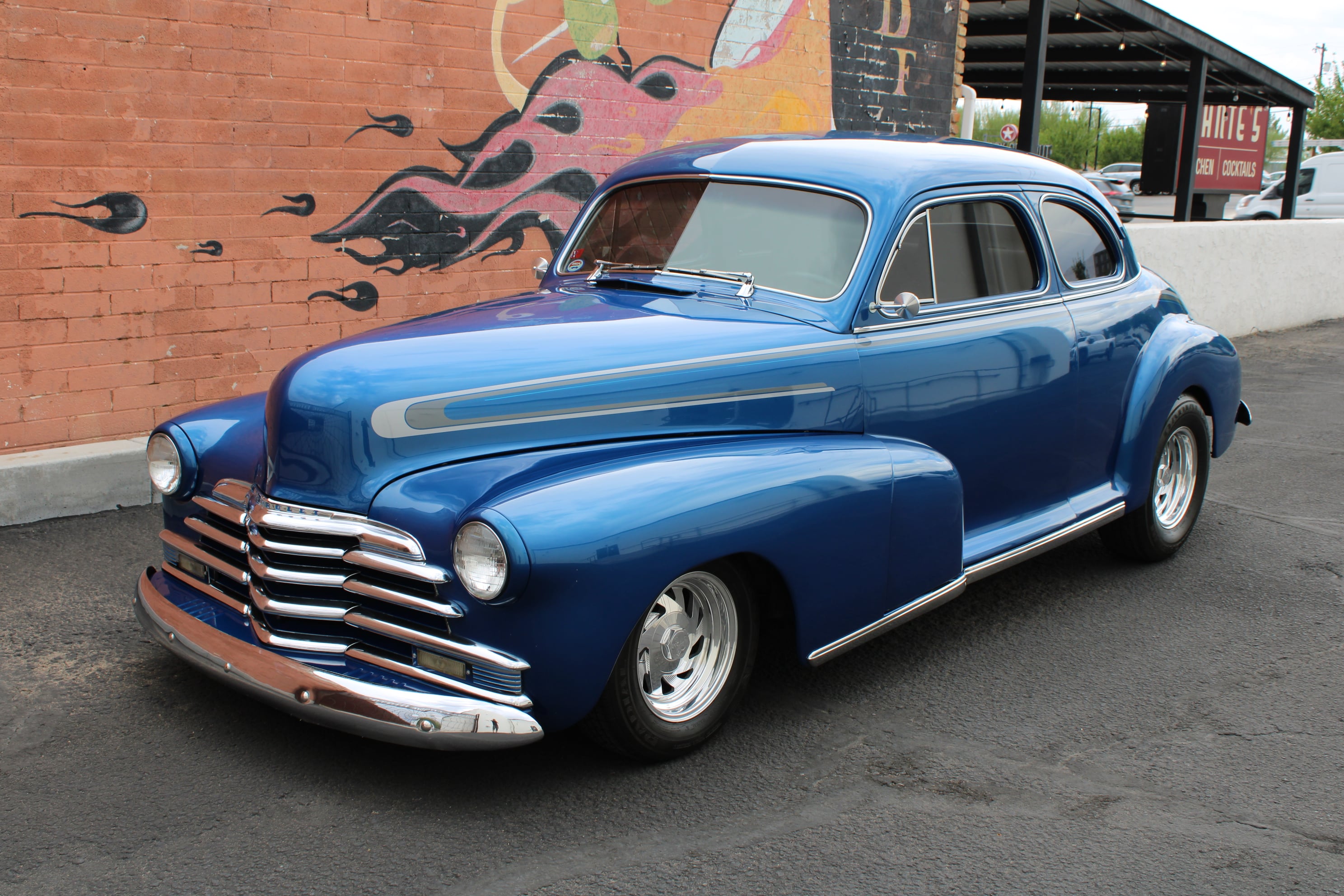
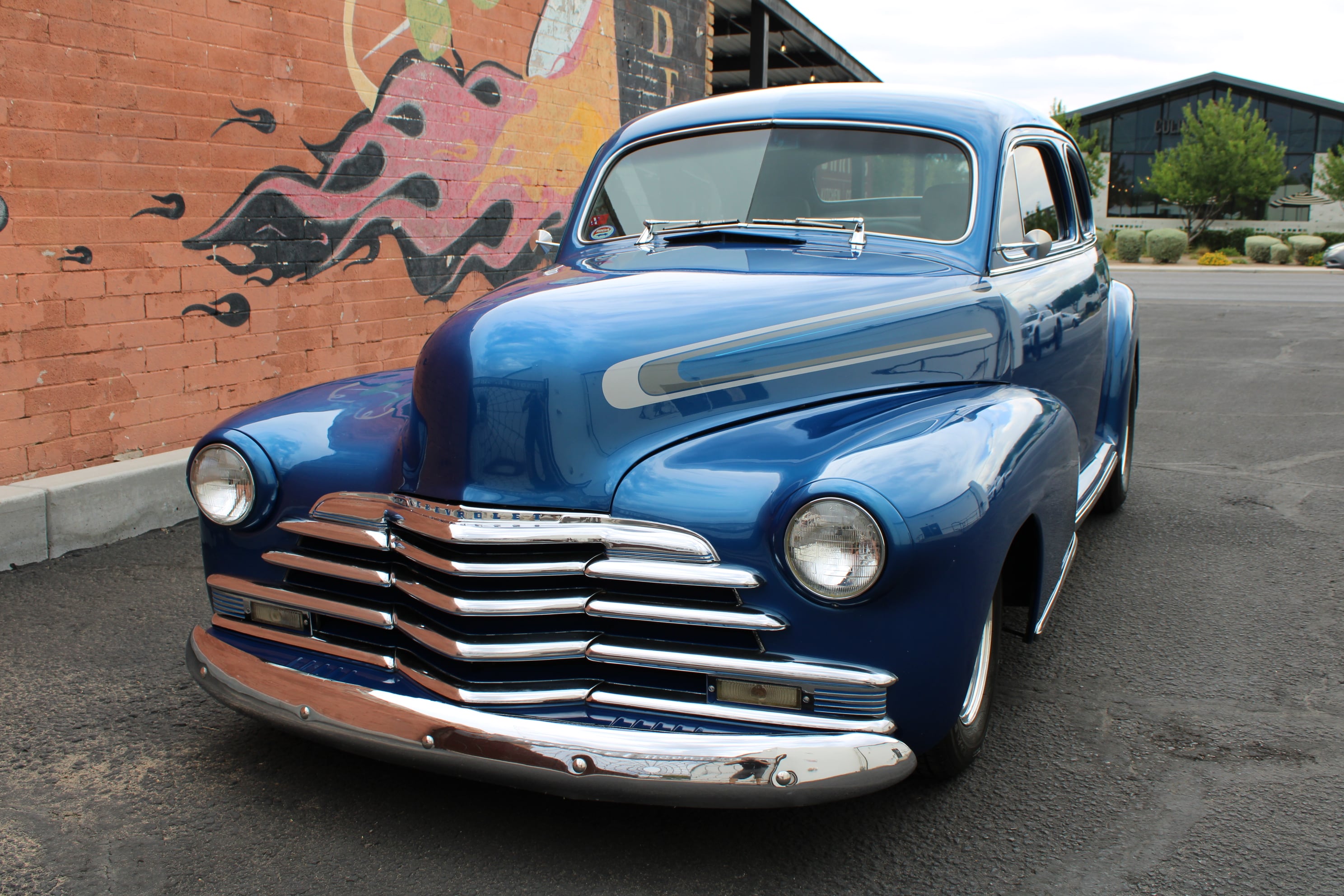
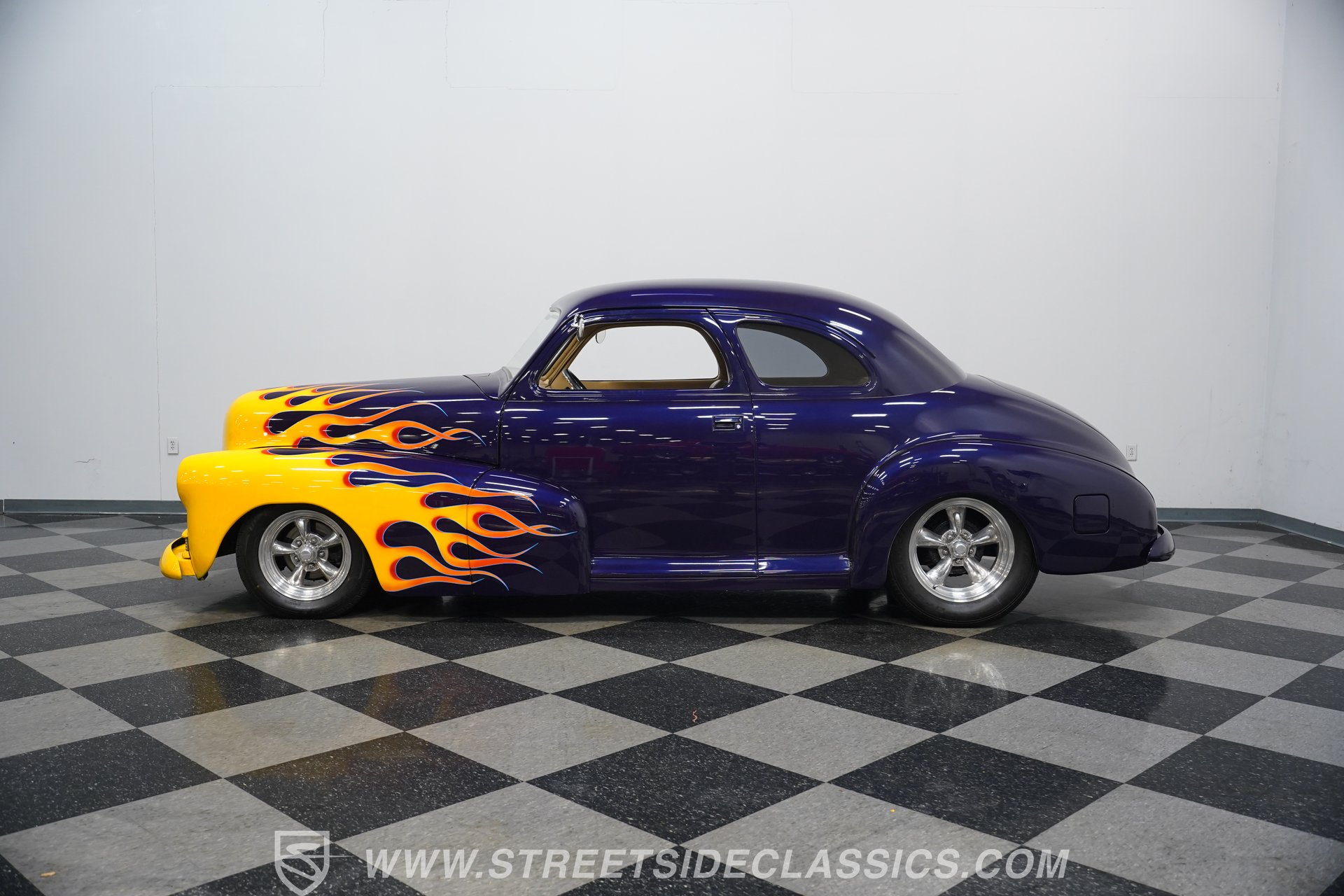
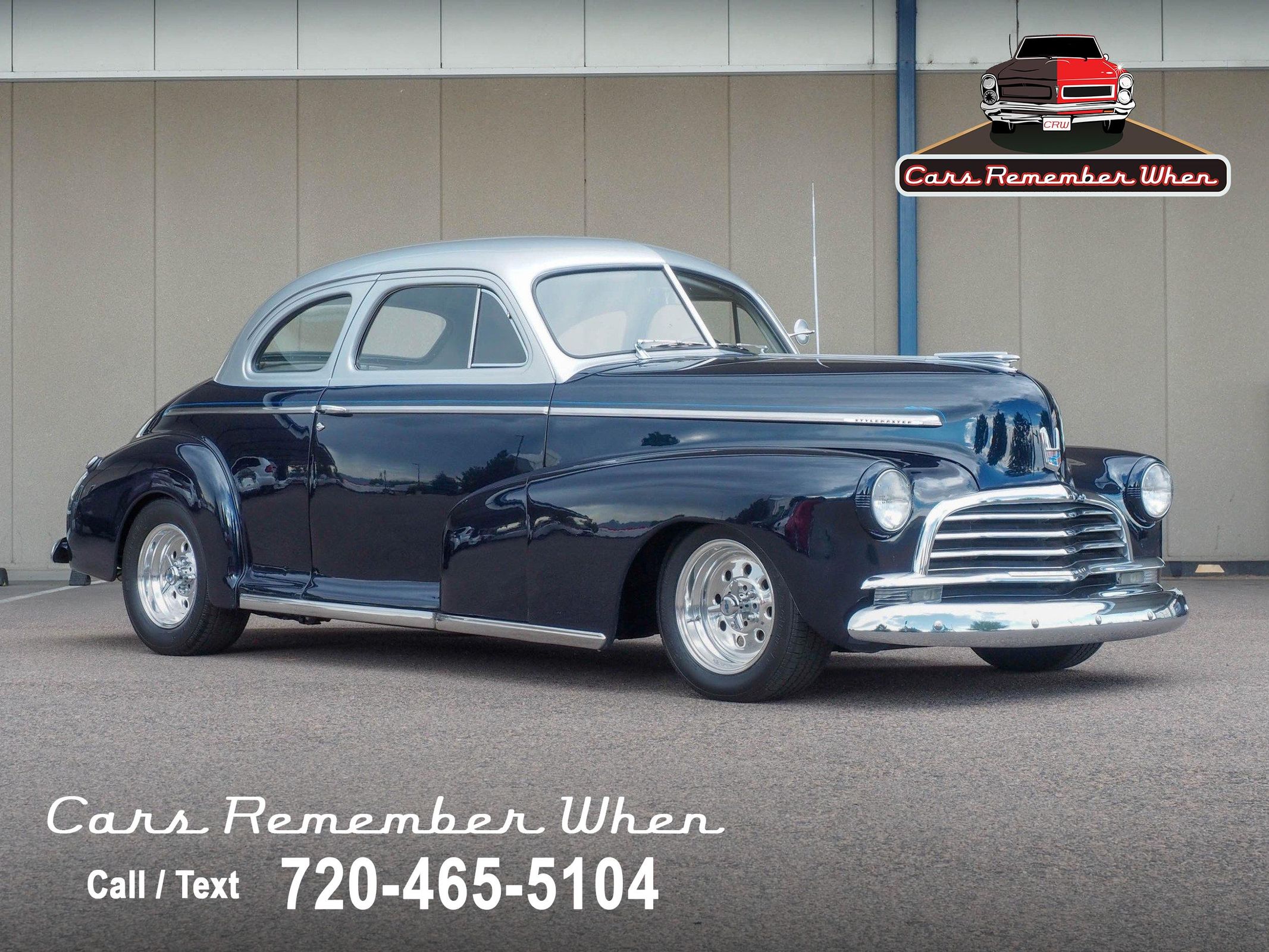
The site's own pool makes that split vividly. At the time this guide was prepared the store holds just seven Stylemasters — three for sale and four recorded sold, all dealer-sourced, spread across 1946, 1947 and 1948 with 1947 most common — and in the photographs the modified cars outnumber the stock ones: lowered coupes on modern alloy wheels, a flamed coupe with a V8 where the six should be, a red restomod sedan, a lowered sedan delivery. One listing is even filed with an automatic gearbox, which no factory built. Read the pool as the market in miniature: unmolested Stylemasters are now the minority of what is offered, and your first job in any purchase is establishing which kind of car you are standing in front of.

The models
The range is short and the mechanical specification never changes, so the table below is really a body-style table. Every US-market Stylemaster of 1946–1948 leaves the factory with the same 216.5 cu in six, the same 90 hp factory rating and the same three-speed manual gearbox. What you choose is the shape, the seating and how much work the body will need.
| Model | Years | Engine | Output | Built | Character |
|---|---|---|---|---|---|
| Business Coupe | 1946–1948 | 216.5 cu in OHV six | 90 hp | Not separately published in a form worth quoting precisely | The salesman's car: front seat only, a platform and a huge boot where the rear seat would be; the lightest and plainest Stylemaster |
| Sport Coupe / 5-Passenger Coupe (Club Coupe for 1948) | 1946–1948 | 216.5 cu in OHV six | 90 hp | Not separately published in a form worth quoting precisely | The desirable one: a small rear seat under the sloping roof; the coupe profile most buyers picture, and the body the hot-rodders took first |
| Town Sedan (2-door) | 1946–1948 | 216.5 cu in OHV six | 90 hp | Not separately published in a form worth quoting precisely | Two-door family car with a full rear seat and a notchback profile; roomier than the coupe, less chased, often the value buy |
| Sport Sedan (4-door) | 1946–1948 | 216.5 cu in OHV six | 90 hp | Not separately published in a form worth quoting precisely | The practical family Stylemaster: four doors, full seating, the most car per purchase in today's market and the least fashionable |
| Sedan Delivery | 1946–1948 | 216.5 cu in OHV six | 90 hp | Commercial production, always a small minority | The panel-bodied commercial on the passenger chassis; genuinely scarce as a stock car because so many survivors were hot-rodded |
A note on the Built column, because this guide does not invent figures. Chevrolet's period production was recorded by series and body style and modern compilations disagree in detail, so any suspiciously precise per-body-style total a seller quotes you is decoration, not evidence. What is reliable, and all you need, is the ordering: sedans were the volume bodies, coupes were built in smaller numbers, and the sedan delivery was always a commercial sideline. Verify identity from the serial plate and engine number — the checks are in the inspection section — never from a production-rarity story.
Year identification is grille-deep, and you should learn it because sellers and titles get model years wrong. The 1946 Series DJ car carries the grille closest to the 1942 design. The 1947 Series EJ car gets a revised grille with a more horizontal emphasis. The 1948 Series FJ car adds a vertical centre bar to the grille — the quickest single tell in the range — and renames the five-passenger coupe the Club Coupe. Beyond the grille, changes are trim detail. There is no mechanical year to chase: buy the best car, not the latest badge.
The Business Coupe deserves a paragraph because it is the most misdescribed. It has no rear seat. In its place sits a flat load platform, and the boot is effectively one long cargo space — a working car for travelling salesmen, whose surviving interiors should show a front bench, a plain headlining and cargo wear behind the seats. A Business Coupe that has acquired a rear seat has been converted, usually from coupe parts; that is not a crime, but it is not original, and it should not be priced as the scarcer unmolested article. Check the body-style code on the serial plate against what you are sitting in.
The Sport Coupe — five-passenger coupe in 1946–47 language, Club Coupe in 1948 — is the emotional centre of the range: long bonnet, sloping roof, a small rear seat that suits children and short journeys. It is also the body the custom and hot-rod world has consumed in the largest numbers for seventy years, which cuts both ways. Stock coupes are the hardest Stylemasters to find unmodified, and modified coupes the easiest to find badly modified, because the flowing fenders that make the car beautiful make it a favourite canvas. Inspect a coupe's roof, rear quarters and fender lines for the filler custom work leaves behind, whether or not the car now presents as stock.
The two sedans are where the honest value sits. The Town Sedan gives you the two-door silhouette with a real rear seat and a squarer, roomier roofline than the coupe; the Sport Sedan adds rear doors, is the easiest Stylemaster to live with, and — because fashion ignores four-doors of this era — is usually the cheapest way into a sound car. Neither sedan was ever a fastback: the Aerosedan belongs to the Fleetline sub-series of the Fleetmaster line, so a "Stylemaster fastback" in an advertisement is a misbadged Fleetline or a confused seller, and either way its paperwork now gets checked twice. Equally, there is no Stylemaster convertible and no Stylemaster station wagon; those bodies are Fleetmaster-only. An advertisement claiming otherwise is wrong about the car in front of it, which is the most useful information an advertisement can give you.
The Sedan Delivery is the odd one out, and the pool contains one, presented — typically — as a lowered street machine rather than the working panel van it was. As built, it is a two-door panel body on the Stylemaster chassis with a bare cargo bay and the same six and three-speed. Genuinely stock deliveries are scarce and commercially interesting; modified ones are common and must be judged purely as builds. Either way, check the long panel sides with your palm and your eyes at an angle: a delivery's flanks are the largest unbroken panels on any Stylemaster, and ripples, filler and rust repairs announce themselves there more honestly than anywhere else.
Engines and gearboxes
The 216.5 cu in Thriftmaster six — the only factory engine
Every stock Stylemaster runs the same engine: Chevrolet's overhead-valve inline six of 216.5 cu in (3.5 litres), the engine family nicknamed the Stovebolt, in the form Chevrolet calls the Thriftmaster. Bore is 3.5 in, stroke 3.75 in, compression a gentle 6.6:1, and the factory rating is 90 hp at about 3,300 rpm with 174 lb-ft of torque low in the rev range. It is a cast-iron block and head, four main bearings, solid mechanical valve lifters that you adjust with feeler gauges on a service schedule, a single downdraft one-barrel Carter W-1 carburettor under an oil-bath air cleaner, Delco-Remy points ignition, and a mechanical fuel pump whose second, vacuum, section also powers the windscreen wipers. Judged as what it is — a low-stress engine designed in the 1930s for durability on poor fuel — it is a good one. Judged by its lubrication system, it is an engine with one defining limitation you must understand before you buy, because it sets how the car may be driven and how you interpret every noise it makes.
The 216 does not pressure-feed its connecting-rod bearings the modern way. The oil pump pressure-feeds the main bearings, camshaft and rocker gear, but the big ends are lubricated by a combined splash-and-jet system: dippers on the rod caps scoop oil from troughs in the sump at low speed, and at higher speed a row of nozzles squirts oil at the dippers as they pass. The rod bearings themselves are poured babbitt — soft bearing metal cast directly into the rod and cap and fitted by shimming and scraping, not the replaceable shell inserts a modern engine uses. Three consequences follow. First, oil viscosity matters: oil too thick when cold does not squirt or splash where it should, which is why period recommendations are light grades, and why a 216 run on heavy modern oil by a well-meaning owner deserves extra suspicion, not less. Second, sustained high revs are the enemy. The system is adequate at the moderate speeds the gearing encourages, and marginal when a car is flogged at motorway pace for hours; the classic 216 failure is a rod bearing, announced by a deep knock under load, after exactly that treatment. Third, a rebuild is a specialist job: re-pouring or converting rods, aiming the oil jets correctly on reassembly, and setting babbitt clearances with shims is work for a shop that knows these engines by name, and a general "engine rebuild" invoice that mentions none of those is not evidence the bottom end was done at all. Budget a proper 216 bottom-end rebuild at $3,500–6,500 at a specialist, and treat a car priced as "rebuilt" without that paperwork as a car with an old engine.
Oil pressure readings frighten buyers who expect modern numbers. A healthy 216 shows modest pressure, low at hot idle, and the correct test is not the gauge in isolation but pressure, silence from the bottom end, and clean oil together. The engine has no full-flow oil filter as standard — filtration, where fitted, is a bypass accessory canister — so oil intervals are short and sludge is a real inspection item under the rocker cover. Valve lash is the other routine item: a correctly kept 216 ticks faintly and evenly, a silent one may be set too tight (which burns valves), and a clattering one is telling you adjustment — or rocker and shaft wear — is overdue. A top-end refresh with the rocker shaft rebuilt and valves and guides attended to runs $1,200–2,500 before any bottom-end work, and is money well spent on a car that otherwise checks out.
The Carter W-1 is simple and rebuildable, and most running faults blamed on it are not its fault. Its real failure modes are a worn throttle shaft that leaks air and makes idle mixture unadjustable, a tired accelerator pump that gives a stumble on tip-in, a sticking choke, and varnish from fuel standing in a car used monthly rather than weekly. A rebuild runs $250–500 fitted and set up — but test before you condemn: a flat spot that arrives hot and disappears cool points at fuel vaporisation, not the carburettor, and a misfire under load is ignition until proved otherwise. Points, condenser, plugs and leads are consumables; a full ignition service with timing set and vacuum and centrifugal advance checked runs $150–400 and transforms more of these cars than any other single spend. A distributor with a seized centrifugal mechanism or dead vacuum canister makes a sound engine feel gutless and run hot, and sellers misdescribe the result as "needs a tune" or, worse, "needs a rebuild."
The 235 question — the swap you will meet most
Because the later Chevrolet 235.5 cu in six bolts into the same space, uses the same family architecture and looks nearly identical at a glance, a large minority of cars advertised as Stylemasters carry one — and the 235 is two different engines wearing one displacement. The early 235, built through 1952, is a splash-oiling engine like the 216, with dipper rods and babbitt: it gives you a little more torque and no reliability transformation whatsoever. The full-pressure 235 — fitted to Powerglide cars for 1953 and to all cars from 1954 — has insert rod bearings, pressure oiling throughout, and a genuinely better claim to sustained-speed durability. Telling them apart is a core Stylemaster skill. The splash engines carry a tall pushrod cover that wraps up around the spark plugs and a small triangular plate with a curved external oil line low on the side of the block; the full-pressure engine's flank is clean of that plate and line. The engine number, stamped on the pad beside the distributor, settles the year and application when decoded against a Chevrolet reference — decode it, because "235" in an advertisement may mean either engine, a truck engine, or occasionally a 261, the larger truck six that also fits and also gets swapped in.
Price a swap as a swap. A well-executed full-pressure 235 conversion is a legitimate, period-flavoured upgrade, worth at least as much as a tired original 216 to a buyer who intends to drive, and less than a healthy original engine to a buyer paying for originality. An early splash 235 dressed up as a "full-pressure upgrade" is worth less than either, because the seller has demonstrated something about the rest of the description. What a swap must never do is pass unnoticed: check that the ancillaries match the story — water pump and pulley alignment, fan clearance, throttle and choke linkages, engine mounts — because a swap done by swapping only the block leaves a trail of small misfits you will spend your ownership correcting.
V8s and restomod drivetrains — a different car
The pool's flamed coupe shows the other direction these cars go: a small-block Chevrolet V8 with a modern alternator, air conditioning and power brakes, in a bay designed for a narrow six. Nothing about that is automatically wrong — the bay accepts a small-block readily and the hobby has sixty years of practice — but you are no longer buying a 1946 Chevrolet in any mechanical sense, and the stock-car sections of this guide no longer apply to the drivetrain. What you inspect instead is engineering quality. Look at mounts and steering: does the exhaust clear the steering box, is there a Mustang II-pattern front clip or a complete chassis swap (S-10 chassis conversions exist under these bodies), and if so, who welded it and how do the welds look? Look at cooling: a V8 making three times the stock power through a radiator aperture sized for 90 hp needs an electric fan, a shroud and evidence the car has sat in traffic on a hot day without distress. Look at the back end: stock torque-tube axles do not survive behind V8s, so a converted car should have an open driveshaft and a later axle, properly located. And look at the brakes, because a car that accelerates like 1995 and brakes like 1946 is a trap with good paint. A V8 Stylemaster is priced as a build — parts list, builder, miles since completion — and any seller who prices one as a "rare factory V8" has ended the negotiation before it starts: no such car exists.
Gearboxes
The factory gearbox is a three-speed manual with synchromesh on second and top only, shifted from the column, with Chevrolet's vacuum-assist shift booster fitted to ease the lever movement. First gear is unsynchronised: you engage it at a standstill, or you double-declutch, and a seller who demonstrates a crunch into first at 15 mph is demonstrating technique, not a fault — but crunching into second or top, baulking, or jumping out of top gear on the overrun is wear in the synchroniser cones, dogs or bearings, and a gearbox rebuild on this simple box runs roughly $900–1,800 in parts and labour once it is out of the car. The vacuum booster is the character item. It works from engine vacuum through a cylinder and control valve on the shift linkage; when its seals age it leaks, and the symptoms are a shift that becomes heavy, slow or reluctant, sometimes with a hiss at the column and an idle that changes as you move the lever. Diagnose it before anyone sells you a gearbox: disconnect and plug the vacuum feed and shift the car manually — if the box itself selects cleanly, the fault is in the booster and its hoses, a repair in the low hundreds, not a transmission. The clutch is a single dry plate with mechanical linkage, so pedal free play is set at the linkage, a dragging clutch is usually adjustment or oil contamination rather than mystery, and a replacement clutch fitted runs about $600–1,100 including the labour of separating a torque-tube driveline — which is also why driveline jobs on this car are quoted with the rear axle and tube in mind, not as a modern gearbox-out exercise.
Behind the gearbox sits the enclosed torque tube: the driveshaft runs inside a rigid tube that locates the rear axle and transmits its thrust to the gearbox casing, with a single universal joint at the front. It is a quiet, durable arrangement whose wear points are that front joint, the bushing and seal at the rear of the tube (oil migrating along the tube, or a rumble that peaks at a particular road speed, are the tells), and the pinion and axle bearings. Rear gearing is short — roughly four-to-one — which is why the car feels willing at 30 mph and busy at 60, and why sustained-speed ambitions belong to the 235-swapped and re-geared cars, not to a stock 216 on its original axle.
Problem areas
Rust: the map
Rust decides Stylemaster purchases, because everything mechanical on this car is rebuildable by a known community of specialists and almost everything structural is your money in a welder's hands. Learn the map and walk it in the same order every time. Start with the floor pans, front and rear: water enters past dried window and cowl seals, sits under mats and deadening, and eats the pans from the top down, so a floor that looks sound from underneath in shiny underseal is unproven until you have lifted the mats and pressed from inside. The battery lives under the front floor on the passenger side, and its tray and the floor around it corrode from acid as well as weather — check that area specifically. Move outward to the rocker panels and running boards: the rockers carry the body's stiffness between the wheels, rot from the inside, and show first as bubbling at the lower door edges and softness where the running board meets the sill. Professional replacement of a rocker section, inner and outer, runs $800–2,000 a side in metal and labour before paint; floors are $1,500–3,500 a side fitted and finished. Numbers like that, multiplied across a car, are the difference between a driver and a donation.
Continue the map upward and backward. Door bottoms trap water behind their skins and rust from inside — look along the lower edge with the door open and feel for the filler that smooths a repaired edge. Front fenders rust at their rear lower edges where they meet the cowl and trap road dirt, and around the headlamp buckets. The cowl itself, and the vent flap in its top, leak and rust, and a rusty cowl is serious because it is structural, hard to reach and feeds water straight onto the front floor. Rear fenders bolt on — a mercy — but their mounting flanges and the body ledges beneath them rot, and the rear quarters behind the wheels hold mud in a pocket designed by optimism. The boot floor and the spare-wheel well collect every leak the rear window and boot seal allow, and the sedan delivery's long flat floor and panel seams do the same job over a larger area. The roof rarely rots except around the drip rails and the windscreen aperture, but where it does — a car that has lived outside under trees — the repair is skilled and slow. Finally the frame: the channel chassis is strong and usually survives better than the body, but check the rear kick-up over the axle, the spring hanger areas and any place a previous owner has plated, because a plated frame rail is a question, not an answer. The distinguishing test for the whole map is the magnet-and-fingernail discipline: a thin fridge magnet slides over filler and sticks to steel, and your fingernail finds the edge of a repair your eye forgives. Paint is the cheapest liar on an old Chevrolet; the metal underneath is the car.

The 216 in old age: bearings, sludge and tired top ends
The engines section explains the splash-oiling system; this is what it looks like at seventy-five years old. The headline failure is big-end knock from worn babbitt, and you distinguish it from the harmless noises by load and temperature: babbitt knock is a deep, dull thud from low in the engine, worst under load at low-to-moderate revs, present hot, and it does not go away when you short out individual plug leads one at a time the way a single-cylinder fault does — actually shorting the lead to the offending cylinder often softens it, which is your confirmation. A light top-end tick is lifters or rocker wear; a knock that follows load is the bottom end, and it reprices the car by the cost of the specialist rebuild quoted in the engines section. Second on the list is sludge and wear from the bypass-only filtration and long oil intervals: pull the rocker cover mentally before you pull it literally — ask for the oil, look at its colour and level, and shine a torch through the filler at the rocker gear. Heavy black deposits, a milky emulsion from short-trip condensation, or oil like treacle all say the same thing about the last decade of maintenance. Third is the worn top end: rocker shafts groove where the rockers ride, valve guides wear and give you blue smoke on start-up and on the overrun after a downhill coast, and valve seats, cut for leaded fuel, recede slowly on unleaded unless hardened seats were fitted at a rebuild — ask, and if the answer is a shrug, budget as though they were not. Fourth is oil leaks, which on this engine are a system, not an event: rocker cover, pushrod cover, timing cover, rear main rope seal and the torque-tube seals all weep with age, and the correct question is not "does it leak" (it does) but "how much, from where, and is any of it the rear main," because a rear main on a torque-tube car is a driveline-out job at $800–1,500 in labour alone.
Cooling and fuel: the hot-running pair
A 216 that runs hot is almost never a bad engine; it is a neglected cooling system meeting a warm day. The radiator core silts up over decades, the water pump wears, the thermostat sticks, the fan belt slips, and retarded timing pours extra heat into the exhaust side. The test that separates causes is pattern: fine at 40 mph but creeping up in traffic means an airflow or core-capacity problem; heating steadily with speed and load means circulation or timing; heating with coolant loss and bubbles in the header tank means a head gasket or a cracked casting, and that is a different purchase. A radiator recore runs $600–1,200 and a water pump $150–350 fitted — both normal old-age spends; a head gasket, with the head checked for flatness and cracks while off, is $900–1,800 done properly. On the fuel side, the pump's diaphragm ages and cracks (fuel smell; fuel in the oil in the worst case; weak delivery and starvation on long climbs in the common case), the tank collects rust that sheds into the filter and the Carter W-1's small passages, and modern ethanol fuel attacks old rubber and cork and varnishes a car that sits. A car that starts on a prime, runs, and dies after two minutes is reporting a delivery fault, not ignition — test with a gravity feed from a can before you buy parts, and price a tank clean or replacement ($400–900) into any car that has stood for years.
Front suspension, steering and brakes
The front suspension is an independent coil-spring layout located by kingpins, and its wear is all in the open if you look. Kingpin and bushing wear shows as play when you rock the front wheel top-to-bottom with the car jacked under the lower arm; worn wheel bearings growl and show as play in every direction; tired coil springs let the car sit nose-down and uneven, and you should measure sill height side to side rather than trust your eye. A kingpin and bushing job is $500–1,000 a side in parts and labour at a shop that owns the reamers. The steering is a manual box with a long linkage of joints, every one of which adds play: centre the wheel, rock it, and count the free movement before the road wheels respond — a small amount is period, a quarter-turn is a shopping list of tie-rod ends, drag link wear and box adjustment, roughly $400–1,000 to put right depending on how much is adjustment and how much is parts. The brakes are hydraulic drums all round on a single-circuit master cylinder, of the older Huck pattern with manual adjustment at each wheel. Three facts follow. Pedal feel depends on adjustment, so a long pedal may be $0 of adjustment or $800 of cylinders and shoes — distinguish by pulling a front and a rear drum before purchase on any car you are serious about, because the inside of the drums is where the truth lives: scored drums, leaking cylinders, oil-soaked shoes and perished flexible hoses are all visible there and nowhere else. A single-circuit system has no redundancy, so a perished hose or a rusty steel line is a safety item, not a bargaining chip: a full hydraulic overhaul — master and wheel cylinders, hoses, lines as needed, shoes and machining — runs $900–1,800 and is the first spend on any newly bought stock car. And the handbrake is a mechanical linkage to the rear drums that stretches and seizes; test it on a slope, because a Stylemaster that will not hold itself is telling you about the rear brakes too.
Electrics: six volts, honestly assessed
The stock car is 6-volt, negative earth, generator-charged, and its reputation for dim lights and slow cranking is mostly a maintenance verdict, not a design one. A healthy 6-volt system with clean, heavy-gauge cables, bright earth connections — engine-to-frame and battery-to-body straps included — a correctly set regulator and a good battery starts the car promptly and runs the lights adequately. The failures are resistance failures: corroded terminals, a thin modern cable where a heavy one belongs, painted-over earth points after a restoration, a generator with worn brushes, a regulator whose points are burnt. Diagnose with a voltmeter, not folklore: full battery voltage at the starter under cranking, and charging voltage in the high sevens at the battery with the engine revved. A generator rebuild runs $250–500, a regulator $75–200, and correct heavy cables less than either — which is why "it needs a 12-volt conversion" is usually wrong, and why the conversion itself, done badly, is a problem area: a proper conversion changes the battery, charging system, bulbs, gauges' voltage supply, coil and often the starter strategy, and a car with some changed and some not is an electrical riddle you solve at your own expense. If a converted car is on your list, demand the list of what was changed, and check the fuel gauge and heater motor first — they are where half-done conversions confess.
Interior, glass and trim
The Stylemaster's interior is plain by design — cloth upholstery in muted patterns, painted and woodgrained dash surfaces, rubber mats in the working cars — and plain is expensive to restore correctly because nobody reproduces all of it. Seat springs collapse and covers split along their seams; a full retrim in correct-style cloth runs $3,500–7,500 depending on how much is kit and how much is a trimmer's bench time, and headlinings, door cards and windlace add to it. Steering wheel and knob plastics craze and crack with age and sun; the instruments are simple and usually repairable, with the fuel gauge and its tank sender the most common failure pair (test by earthing the sender wire: a gauge that swings to full has a dead sender, one that does nothing has a dead gauge or no feed). Side glass is flat and cheap to have cut, but the windscreen rubbers and vent-window seals are the water leaks that rot the floors in the rust section — trace every wet floor upward before you blame the panel below it. Brightwork is the last trap: modest in quantity, but the grille assembly is large, intricate and expensive to replate, with a full grille restoration at $800–2,000 and bumpers $400–800 each. Judge brightwork as a bill you either pay or live with, and remember that a painted grille — as on the red restomod in the pool — is usually a bill someone else declined to pay.
Modified cars: where builds go wrong
Because so much of the surviving pool is modified, give modification its own failure list. Front-clip conversions (Mustang II-pattern and others) fail at the welds and at geometry: look for cracked paint around the clip rails, uneven front tyre wear that betrays alignment the design cannot hold, and steering that binds lock to lock. Chassis swaps fail at the body mounts — a body on an S-10 or similar frame with perished or improvised mounts moves, squeaks and cracks its paint at the mount points. V8 conversions fail at cooling and clearance, covered in the engines section, and at the rear axle, where a stock torque-tube axle behind a V8 is a countdown. Brake upgrades fail by imbalance: front discs with stock rear drums and no proportioning attention lock the rears or dive the nose, and the test is a series of firm stops from 40 mph, not the seller's assurance. Wiring fails everywhere at once, because a 12-volt rewire done with crimp connectors and no diagram is a fault that reproduces. None of this condemns modification; it prices it. A good build is documented, aligned, cool-running and honestly described. A bad build is a stock car's problems plus a stranger's decisions, at a modified car's price.
How to inspect one
Work in this order, cold car first, and do not let the seller warm it up before you arrive — a warm engine hides the cold-start smoke, the choke behaviour and half the noises this checklist listens for.
- Identity before beauty. Find the serial plate on the front door hinge pillar and read the series code: DJ says 1946, EJ says 1947, FJ says 1948. Then read the engine number stamped on the pad beside the distributor and note whether the engine is a 216, an early splash-oiling 235 or a full-pressure 235 — the tall pushrod cover and the triangular side plate with its curved oil line from the engines section settle that at a glance. If the serial year, the title year and the grille disagree with each other, stop and resolve it now; everything else you inspect hangs off what the car actually is.
- The grille and brightwork pass. Stand in front and judge the grille bar by bar, the headlamp rims, the bumper and its guards. The 1948 car's vertical centre bar confirms the year from step 1. Remember the parts section's warning: this brightwork is the expensive cosmetic on the car, and a painted grille is a declined replating bill.
- The rust walk. Follow the rust map from the problem areas in order: lift the mats and press the front and rear floors, check the battery tray area under the front floor, work the rocker panels and running boards with your palm, open every door and read its bottom edge, then the boot floor and spare well, then the cowl and the lower rear edges of the front fenders. Take a thin magnet for the fenders, quarters and door skins. Score the car on what you find, not on its paint.
- Panel truth. Sight down each flank at an angle in good light. Separate fenders and a bolted body forgive a lot, but ripples in the rear quarters, a wavy sedan-delivery flank, or filler edges around a coupe's roof tell you about old custom work or old damage. Check door gaps and how each door shuts: a door that needs lifting to latch is worn hinges or a tired body, and on this car those are different bills.
- Cold start. With the engine stone cold, set the choke as the seller directs and start it. Watch the exhaust: a puff of blue that clears is valve guides; blue that persists is rings or worse; white that smells sweet and persists is coolant. Listen at the same moment — the first ten seconds are when a babbitt bottom end, starved of its splash feed overnight, speaks most honestly.
- Oil and top end. Dip the oil and read its level, colour and smell; petrol in the oil points at the fuel pump diaphragm from the problem areas. Remove the filler cap and look at the rocker gear with a torch for sludge. A healthy top end ticks faintly and evenly; silence can mean tight valves, and a racket means adjustment or rocker shaft wear.
- The load test for the bottom end. Warm the car fully, then drive it and load the engine at low revs in top gear, gently, up a mild incline. The deep, dull thud under load described in the problem areas is the babbitt test, and it outranks every other impression the engine gives you. Note the oil pressure gauge hot at idle and at speed, and judge it by the pattern in the engines section, not by modern expectations.
- Cooling under real conditions. On the same drive, watch the temperature gauge in traffic and after a climb. Note which pattern from the cooling section the car follows — traffic-only creep, load-related rise, or coolant loss — because each pattern is a different repair and a different price conversation. Check the radiator cap only when cold, and look for rust-coloured water, oil emulsion or bubbles.
- Gearbox, vacuum shift and clutch. Shift through all gears at a crawl and at speed. Second and top should engage cleanly with synchromesh help; first is engaged stationary, and a crunch there while rolling is technique. Note whether the column shift feels assisted or heavy and whether the idle changes as you move the lever — the vacuum booster test from the engines section. Feel for clutch drag, judder and the free play in the mechanical linkage.
- Steering, suspension and the straight-line tests. On a quiet, flat road, centre the wheel and measure the free play before the wheels answer. Rock each front wheel on a jack for kingpin play if the seller permits, and in any case watch for uneven front tyre wear that reports it. Then brake firmly several times from 40 mph: the car should stop straight, the pedal should be firm and consistent, and on a modified car this is also where disc conversions and mismatched axles confess.
- The underside. Get the car on a lift or over a pit if you are serious — this step is not optional at Stylemaster money. Read the frame at the rear kick-up and spring hangers, the torque tube and its rear seal, the rear axle for leaks, the brake lines and hoses, the exhaust, and every plate or patch added by a previous owner. Photograph what you find; the underside is where project cars and driver cars separate.
- Paperwork and the modified-car audit. Match the title to the serial plate. For a stock car, ask what engine work is documented and whether hardened valve seats were fitted. For a modified car, change the questions: what engine, what front suspension, what axle, what brakes, who built it, how many miles since? A build with answers and receipts is a product. A build with adjectives is a project wearing a driver's price.
Values
Read the Stylemaster market as two markets sharing one name, because the stock car and the modified car are not priced on the same scale and comparing across the divide is how buyers overpay. The stock market is a condition market. Originality and metal drive it: a complete, honest, running car with sound floors, rockers and cowl sits at the top of the stock range almost regardless of body style, a cosmetically tired but structurally sound driver sits in the middle where most real transactions happen, and a rusty project is worth a small fraction of either — not because projects are unloved, but because the welding bill described in the problem areas is larger than the gap, and every informed buyer knows it. Within the stock market, body style moves the premium in a predictable order: coupes carry the strongest demand, the sedan delivery carries a scarcity premium when it is genuinely stock, the two-door Town Sedan follows, and the four-door Sport Sedan is the value end — the most complete car for the money, bought by people who intend to use it. Year, by contrast, moves almost nothing. A 1948 is not worth more than an identical 1946, and any seller pricing a year premium is pricing a story.
The modified market is a build market. Value follows the quality and documentation of the work — engine, front suspension, brakes, cooling, paint and trim — and swings far wider than the stock market in both directions. A well-built, well-documented restomod coupe can outrun every stock Stylemaster; an undocumented build with a famous engine and anonymous everything else is worth less than the sum of its parts, because the next owner inherits every unasked question from step 12 of the inspection. Taste is a cost centre here: flames, extreme lowering and idiosyncratic interiors narrow the next buyer's pool to people who share the taste, and the market prices that narrowing honestly even when the build quality is high.
Use the listings and recorded sales on this site as your evidence, and read them the way the inspection section teaches you to read a car. Compare like with like — stock against stock, build against build, coupe against coupe — and weight completed sales over asking prices, because asking prices here are often set by adding a restoration's invoices together, and invoices measure what was spent, not what a car is worth. The spread between a project and a driver is your negotiating map: when a seller asks driver money for a car your rust walk scored as a project, the difference is not an insult to negotiate over, it is the welding and brightwork bills, itemised. Finally, remember the supply fact from the overview: these cars were built in large numbers and survive in large numbers. There is always another Stylemaster, and the discipline that fact gives you — walk away from the wrong car at the wrong price — is worth more than any negotiation tactic.
Parts and ownership
Ownership is easy where the car is mechanical and hard where it is cosmetic. Mechanical service parts for the 216 and its running gear are well supported by the early-Chevrolet specialist trade: Carter W-1 kits, ignition consumables, water pumps, clutch components, brake cylinders, shoes, hoses and suspension wear parts are all obtainable, much of it reproduced, and the gearbox and torque-tube driveline are simple enough that any competent older-car shop can work on them with the factory manual open. The genuine specialist items are the engine's internals — babbitt rod work, correctly aimed oil jets, rocker shaft rebuilding — and for those you go to the small number of shops that advertise early Chevrolet six work by name, book in advance, and expect the job to take the time it takes. The ownership point is that the expertise exists and is findable, which is more than many cars of 1946 can claim.
Body and trim are the thin ice. Front and rear fenders, being bolt-on and shared across the 1946–48 range and much of the Fleetmaster line, circulate in the used market; floor pans and rocker sections are reproduced as repair panels; but complete grilles, good brightwork, correct Stylemaster-only trim pieces and sedan-delivery panels are used-parts hunts, priced by patience. Glass is the exception — flat side glass is cut locally, and windscreen rubbers are reproduced — while interior trim in correct cloth patterns is a trimmer's job rather than a catalogue order, as the problem areas set out. Before you buy any car missing brightwork or trim, spend an evening checking that the missing pieces actually exist for sale somewhere; on a base-trim car, the plain parts are sometimes the hardest to find precisely because nobody saved them.
Running one is a rhythm, not a burden. Oil changes are frequent by modern standards because the filtration is bypass-only; valve lash is checked and set on schedule because the lifters are solid; the chassis wants regular greasing at its many points; coolant, brake fluid and gearbox and axle oils are all simple, accessible jobs. Fuel is modern unleaded with the valve-seat caveat from the problem areas — a car with hardened seats is a car you simply drive; a car without them is a car you monitor for rising lash and falling compression. Tyres in the original 6.00-16 bias-ply size are available from the classic trade, and radials transform the steering weight and road manners at the cost of the period look — your choice, but make it a choice, not an accident of what the previous owner fitted. Insurance, club support and event eligibility are all straightforward: the Vintage Chevrolet Club community covers these cars deeply, and almost every mechanical question you will ever have has been answered by someone who owns the same engine in a truck. Store the car dry, drive it properly monthly rather than in weekly short trips, and the Stylemaster repays you with the thing it was built for: unhurried, uncomplicated use.
Which one to buy
- The originality buyer: a stock Sport Coupe or Club Coupe with its 216, three-speed and 6-volt system intact and documented — the hardest car to find, because the custom world took the coupes first, and worth waiting for rather than settling for a de-modified example.
- The driver who tours: a full-pressure 235-swapped Town Sedan or Sport Sedan, bought openly as a swap and priced as one — the strongest mechanical specification ever fitted to this body in period style, in the roomiest and cheapest shells.
- The value buyer: the four-door Sport Sedan in sound, honest, running condition. The market's fashion discount on four-doors is your subsidy, and the car underneath is identical where it matters.
- The traditionalist on a budget: a stock Business Coupe — plain, light, characterful, and cheaper than the five-passenger coupe beside it, provided you do not need the rear seat it never had.
- The commercial-vehicle collector: a genuinely stock Sedan Delivery, verified by its serial plate and its unmodified cargo body — scarce enough that verification, not negotiation, is your main task.
- The restomod buyer: the best-documented V8 build you can find, with named components, receipts and miles since completion — and the discipline to pay for the documentation, not the paint.
- The project buyer: the rusty coupe at project money, bought with the rust map walked and the welding priced — a fine purchase at a project's price, a catastrophe at a driver's.
The overriding rule: buy the metal and the identity, because everything else on a Stylemaster — engine, gearbox, brakes, electrics, trim — is rebuildable by people you can find, while rusty structure and a car that is not what its papers claim cost more than the purchase price to put right.
See the 5 Stylemaster cars currently listed.
For sale now
 $36,995 · 6% above typical
Expand
 $42,900 · 23% above typical
Expand
What they sell for: Stylemaster sale prices.