
Ford Coupe buyer's guide
Ford Coupe -- the model's own buyer's guide: variants, values and what to check.
Years listed: 1937-1947 · Series: Full Size
Overview and history
"Coupe" is not a model Ford ever sold. It is a body style — a closed two-door with a short roof and a long rear deck — that Ford fitted to almost every chassis it built between the wars, and on this site it is filed as a single model name across all of them. That makes this guide different: you are buying into a fifteen-year span of Ford history, and the first job is knowing which slice of it is in front of you.
Be precise about the scope, because our own listings define it. We currently track 14 Ford Coupes, six offered for sale and eight recorded as sold, every one of them a dealer listing. The years actually present are 1932 (two cars), 1934 (three), 1937 (one), 1938 (one), 1940 (five), 1941 (one) and 1947 (one) — no 1933, 1935, 1936, 1939, 1942 to 1946 or 1948 cars at all. Five of the 14 are filed under the Model B series (the 1932 and 1934 cars) and nine under Full Size (1937 to 1947).
The arc underneath is simple. In 1932 Ford put a V8 — the flathead, valves in the block, 221 cubic inches — into a low-priced car for the first time, and the Deuce coupe became the most wanted body on that chassis almost immediately. Through the 1930s the styling streamlined year by year, the brakes went hydraulic in 1939, the headlamps were sealed into the fenders for 1940, and the 1940 Deluxe coupe became the second great icon of the line. Civilian production stopped for the war, and the 1946 to 1948 cars — our pool holds a 1947 — are the prewar design warmed over, with the larger 239-cubic-inch V8 finally standard in the Ford car. In 1949 the all-new shoebox Ford ended the run, and with it the separate-frame, transverse-spring architecture every car here shares.
The second fact, and the one that shapes everything below, is that these coupes are the foundation stock of hot rodding. The 1932 coupe is the definitive hot rod; the 1934 and 1940 coupes are close behind. That means survival is heavily skewed: unmodified, as-built coupes are the minority of what comes to market, and the pool proves it. Of the six cars in our listings with a gearbox recorded, every single one is an automatic — three-speed or four-speed — in a range that left the factory with nothing but a three-speed manual. The colours tell the same story: alongside black, the pool holds purple metallic, a blue and silver two-tone, yellow and wineberry, none of them factory finishes. Read every listing on that basis: the default assumption is a built car, and a claimed-original car is the one that has to prove itself.
So there are really two markets sharing one badge. One is the original-car market: steel body as Ford built it, flathead power, mechanical or early hydraulic brakes, judged on originality and condition. The other is the street-rod market: the same silhouettes over swapped engines, automatic gearboxes, independent front suspension and air conditioning, judged on the quality and documentation of the build. The money, the faults and the inspection differ in each, and the most expensive mistake in this field is paying original-car money for a rod, or rod money for an unverified build. The inspection below therefore centres on the two questions that settle which market a car belongs in: is the body original steel, reproduction steel or fibreglass, and what exactly is under it.

The models
Ford sold the coupe in Standard and Deluxe trim in most years, and in more than one roof shape, so "coupe" on a title can mean several different bodies. The table covers the years present in our listings, with the engine the car carried as built — not necessarily the engine it carries now.
| Years | As built | Engine as built | Output as built | Coupe bodies | Character today |
|---|---|---|---|---|---|
| 1932 | Model B / Model 18 | 200.5 cu in four, or 221 cu in flathead V8 | about 50 hp (four), 65 hp (V8) | Five-window (Standard), three-window (Deluxe) | The Deuce; the most rodded, most reproduced car in this guide |
| 1934 | Model 40 | 221 cu in flathead V8 | 85 hp | Five-window and three-window | The gangster-era coupe; skirted fenders, strong rod following |
| 1937 | Model 78 / Model 74 | 221 cu in flathead V8, or 136 cu in V8-60 | 85 hp, or 60 hp | Five-window coupe and club coupe | First of the fully streamlined cars; V8-60 cars are the slow lane |
| 1938 | Standard / Deluxe | 221 cu in flathead V8, or 136 cu in V8-60 | 85 hp, or 60 hp | Five-window coupe | Deluxe heart-shaped grille; Standard cars plainer and rarer now |
| 1940 | Standard / Deluxe | 221 cu in flathead V8, or 136 cu in V8-60 | 85 hp, or 60 hp | Business coupe, coupe with auxiliary seats | The prewar high point; sealed-beam lamps, column shift |
| 1941 | Special / Deluxe / Super Deluxe | 221 cu in flathead V8, or 226 cu in L-head six | about 90 hp either | Five-window coupe | Wider, softer-riding car; the six is a real alternative, not a poor relation |
| 1947 | Deluxe / Super Deluxe | 239 cu in flathead V8, or 226 cu in L-head six | 100 hp (V8), 90 hp (six) | Sedan coupe (long roof) | Postwar carryover of the 1941 to 1942 design; the pool's newest shape |
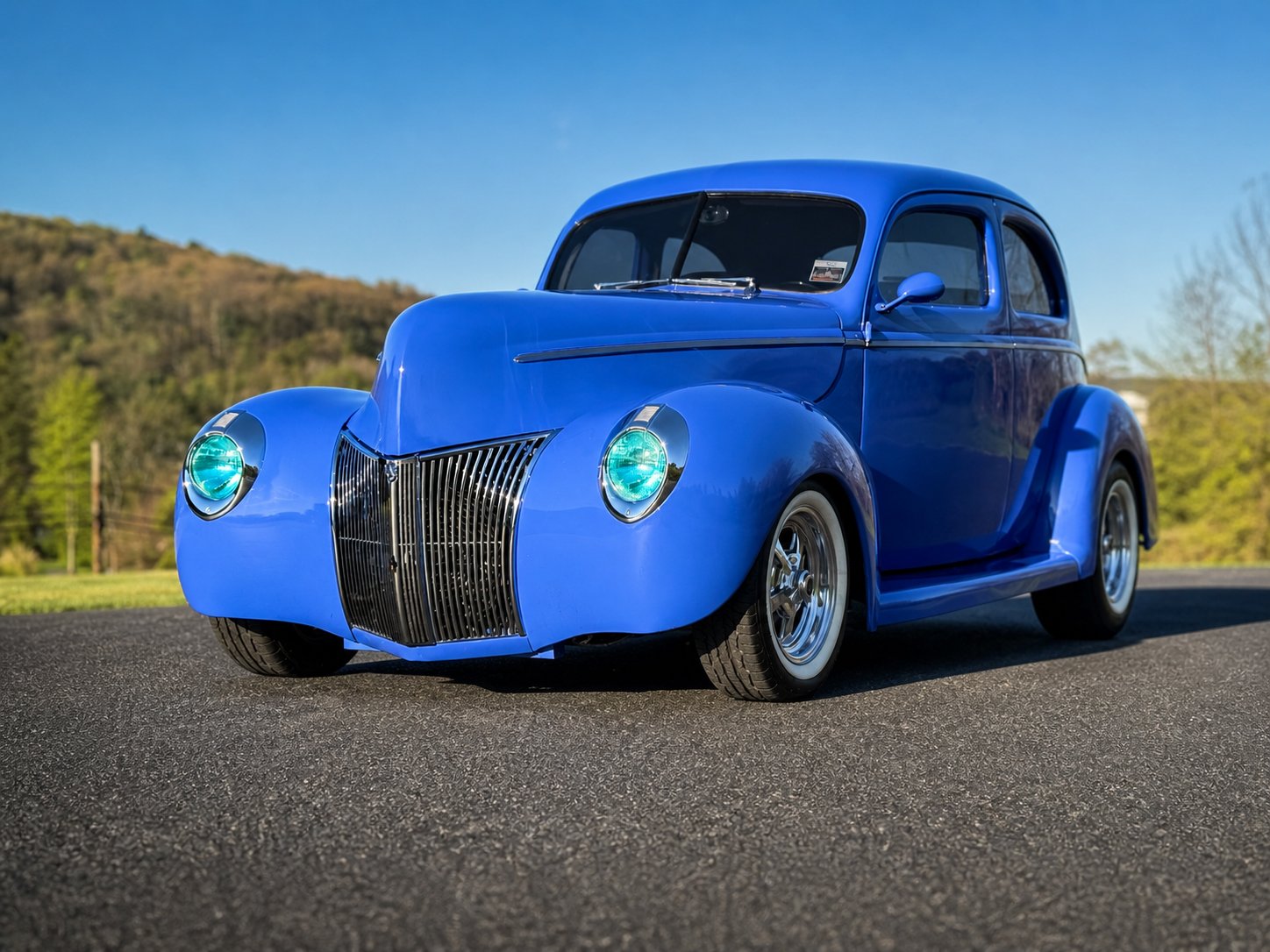
1932: the Deuce. Two different cars hide under the year. The Model B is the four-cylinder car, an improved Model A engine of 200.5 cubic inches; the Model 18 is the V8 car, and it is the V8 that made history. The five-window coupe was the Standard body; the three-window, with no quarter windows and a longer door, was the Deluxe. Both sit on a 106-inch wheelbase with mechanical brakes and transverse leaf springs. Because the Deuce is the hot rod icon, it is also the most reproduced: fibreglass and fresh steel bodies exist in quantity, which is why the steel-versus-glass test in the problem areas matters more on a 1932 than on anything else here.
1933 and 1934: Model 40. The wheelbase grew to 112 inches, the styling went skirted and streamlined, and the V8 climbed to 85 hp by 1934. Our pool holds 1934s only — three of them, the second-largest year group — filed, as the 1932s are, under the Model B series heading on this site; mechanically a 1934 is a Model 40, a bigger, stiffer car than the Deuce, and the three-window body continued alongside the five-window.
1935 to 1938: the streamliners. The grille moved into the body, the roof became all steel, and the three-window body was dropped after 1936, leaving the five-window coupe as the single offering. The pool picks the run up at 1937 — the year the headlamps moved into the fender tops and the V8-60 arrived as the economy engine: 136 cubic inches, 60 hp, a smaller flathead that is pleasant in a light car and overworked in a heavy one. The 1938 in the pool is a Deluxe-pattern car, recognisable by its heart-shaped grille; Standard 1938s wear a plainer grille carried over from 1937. All of these cars still stop on mechanical brakes and carry the torque-tube driveline described below.
1939 to 1941: the modernised cars. Hydraulic brakes arrived for 1939 — the single biggest drivability step in this guide — followed for 1940 by sealed-beam headlamps faired into the fenders and a column gear change. The 1940 coupe came as a business coupe, with storage space where the rear seat would be, and as a coupe with small folding auxiliary seats in the back. Five of the 14 cars in our pool are 1940s, the largest single year. The 1941 car is bigger again — wider body, longer wheelbase — and the first Ford car offered with the 226-cubic-inch L-head six as a full alternative to the V8, at much the same power.
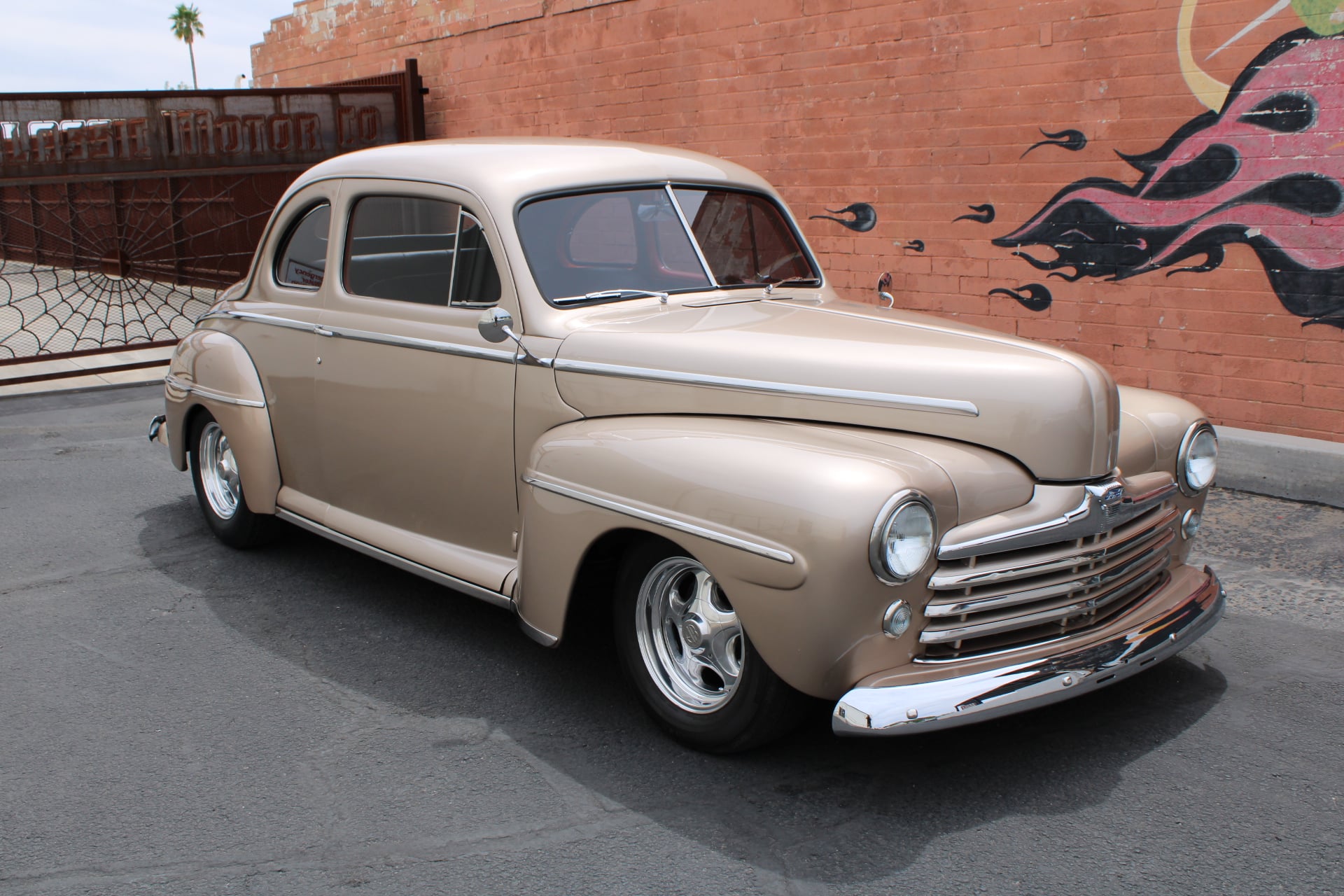
1946 to 1948: the postwar cars. Ford restarted with the 1942 design, cleaned up the grille, and fitted the 239-cubic-inch flathead — the Mercury-size engine — as the Ford car's V8 from 1946, rated at 100 hp. The coupe in these years is the sedan coupe: a longer, more formal roof with a small rear quarter window, closer to a two-door sedan than to the tight 1930s coupes. Our pool's 1947 is exactly this shape. These are the heaviest, softest and most usable cars here, and because they were less fashionable with rodders for decades, they are also where unmodified survivors are most often found.
Engines and gearboxes
The flathead V8: 221 and 239
The engine that built this field is the Ford flathead V8: an L-head design, valves in the block alongside the cylinders, exhaust ports that pass through the water jacket on their way out, three main bearings, and a distributor driven from the front of the camshaft. The 221-cubic-inch version powered every V8 Ford car from 1932 to 1942, growing from 65 hp in 1932 to 85 hp from 1934 onward and about 90 hp by 1941. The 239 that replaced it in the postwar Ford car — our 1947's engine as built — is the same architecture with a larger bore, rated at 100 hp: it looks like a 221 because it is one, bored out.
Identification is a skill in itself, because flatheads were swapped between cars for seventy years. The 1932 to 1936 engines carry their water pumps in the heads and are called 21-stud engines, for the 21 studs holding each head. From 1937 the pumps moved to the front of the block; the 1937 to 1938 engines are also 21-stud, and the 1938 to 1948 engines are 24-stud — a stud count is the quickest honest dating test at a viewing, so count the head fasteners before you believe a year claim. The distributor changed just as often: a coil-topped unit on the early cars, the diverter or helmet distributor through the mid-1930s, a two-bolt distributor from 1937 to 1941, and the flat crab distributor, mounted low at the front, on 1942 to 1948 engines. Each generation takes different ignition parts, pumps and gaskets, and a mixed engine — late block, early heads — is common and workable as long as you know that is what you have.
A healthy flathead starts readily, idles with a soft, even lope and pulls without fuss; it will never feel powerful, and it should not feel strained at a 55 mph cruise in a light coupe. What it must not do is run hot — the cooling section below explains why temperature behaviour is the flathead's whole report card. Carburation is by a single two-barrel downdraft unit: the Stromberg 97 and the Ford 94 (built by Chandler-Groves and Holley) are the famous names. A flat spot on tip-in is usually accelerator-pump or float-level trouble, not a condemned carburettor; flooding and a fuel smell at hot restart point to a needle valve held open by dirt, or to ethanol fuel boiling in the bowl after shutdown — a heat-soak problem modern fuel has made worse. Ignition faults mimic fuel faults: a weak coil or tired condenser gives a misfire under load that owners chase through three carburettor rebuilds, and the distinguishing test is substitution — a known-good coil and condenser settle the argument in minutes.
A proper stock flathead rebuild — machining, new pistons, bearings, valve work with hardened seats for unleaded fuel, pumps and gaskets — runs roughly $6,500 to $11,000 at a specialist, and a documented recent rebuild is one of the few pieces of paperwork that genuinely adds value to a stock car. Ask who did the machining, whether the block was crack-tested, and whether the centre exhaust area was checked, because that is where these blocks die.
The other factory engines: the four, the V8-60 and the 226 six
The Model B four of 1932 is a 200.5-cubic-inch L-head four of about 50 hp, developed from the Model A engine with a counterweighted crank and pressure feed to the main bearings. It is simple, torquey at walking pace and entirely outclassed by the V8 even in period; a 1932 coupe still carrying its four is a rarity. Parts support is good through the Model A trade, and a rebuild is a $4,000 to $7,000 job at a specialist who knows babbit bearings.
The V8-60, fitted to 1937 to 1940 cars, is a scaled-down flathead: 136 cubic inches, 60 hp, lighter than the 221 and sweeter-spinning, but with so little torque that a loaded coupe on a long grade is hard work. V8-60-specific internals are markedly harder to find than 221 parts, and in the rod world it was usually the first thing removed. If a 1937 to 1940 car is advertised as a V8-60 survivor, verify the engine physically: the 60 is visibly smaller, with its own 17-stud heads, and most claimed survivors turn out to be 221 swaps.
The 226-cubic-inch L-head six of 1941 to 1947 is the quiet achiever: about 90 hp, smooth, understressed, and in period nearly as quick as the V8. It never acquired the V8's mythology, so six-cylinder postwar coupes were cheaper when new and used, and — the useful consequence — far less likely to have been rodded hard. A stock 1947 six coupe is one of the most honest ways into this whole field.
What is usually in there now: the swap engines
Open the hood of most coupes in our pool and you will not find any of the engines above. You will find an overhead-valve V8 fitted decades after the car was built, and identifying it correctly is worth more than any opinion about its condition. The commonest swap in American rodding is the Chevrolet small-block, 350 cubic inches above all: distributor at the back of the engine, exhaust ports evenly spaced. Ford's own small-blocks — the 289, 302 and 351 Windsor — carry the distributor at the front, the one-glance distinction from the Chevrolet. Early traditional rods may carry a Chrysler early Hemi (331, 354 or 392 cubic inches, huge valve covers with the plug leads through the top), an Oldsmobile Rocket or a Cadillac V8; modern builds increasingly carry a Chevrolet LS, recognisable by its coil packs on the valve covers and absence of a distributor altogether. None is the engine the title year suggests, and the rule is absolute: price the engine that is in the car, identified by you, not the engine in the listing headline.
A swap engine is judged like any used engine, plus the swap itself. Cold-start it and watch the exhaust: blue smoke on start-up that clears is valve stem seals ($600 to $1,200 a set fitted on a small-block Chevrolet); blue smoke under load is rings and bores, a rebuild conversation at $4,500 to $8,500 for a stock-type small-block rebuild. Check for the swap-specific shortcuts: engine mounts welded to the frame without gussets, a steering shaft hard against an exhaust manifold, a sump a finger's width from the crossmember, wiring run unfused from the battery. The engine itself is rarely the problem in a rod. The installation is.

Gearboxes and the driveline
As built, every car in this guide has the same answer: a three-speed manual with sliding gears, a floor change to 1939 and a column change from 1940, driving through an enclosed torque tube to a banjo-type rear axle with a transverse leaf spring. The gearbox is strong and its synchromesh — on second and third only — wears, so a stock car that crunches into second on a cold box is showing normal age, while one that jumps out of gear under load needs a rebuild at roughly $1,200 to $2,200 plus the clutch. The torque tube is the part modern buyers misread: a rigid tube enclosing the propeller shaft, carrying driving thrust to the chassis at its front ball joint, so the rear axle, spring and driveline come out and go in as one system. Worn centre bearings rumble at cruise speed, and a leaking front ball joint coats the underside in oil.
In the rod world the driveline is usually replaced wholesale, and our pool's gearbox records — every recorded car an automatic — reflect exactly that. The common fits are General Motors automatics: the three-speed Turbo-Hydramatic 350 and 400, and the four-speed overdrive 700R4 (later called the 4L60). Ford automatics — the C4 and C6 three-speeds and the AOD overdrive — appear behind Ford engines. Learn the one lethal detail of the 700R4: its throttle-valve cable is not a kickdown cable but a pressure control, and a misadjusted or disconnected cable drops line pressure and burns the clutch packs in a few miles of driving. On any 700R4 car, confirm the cable is connected, correctly bracketed at the carburettor or throttle body, and that the shifts are firm and early rather than soft and late; a rebuild runs $1,800 to $3,000 fitted, and "it shifts a little soft" on a test drive is that bill introducing itself. Rear axles follow the same pattern: the Ford 8-inch and 9-inch are the standard swaps, the 9-inch identified by its removable third member and by the two vertical nuts at the bottom of the carrier that a socket cannot reach — you need a wrench, and that small fact has identified more 9-inch axles than any casting number. A noisy 9-inch third member is a $900 to $1,800 rebuild; a whining stock banjo axle is a specialist job at similar money.
Problem areas
A 1932 to 1947 Ford coupe is between 79 and 94 years old, and most survivors have been rebuilt at least once by somebody whose standards you cannot see from the photographs. Our own photo notes illustrate the limits of reading it from a listing: we have examined the photo sets of 6 of the 14 cars in detail, and rust was noted on 2 of the 6, visible damage on 1 of the 6, and none of the 6 carried a note of smoke or leaks. Treat those figures honestly — six cars is a small sample, dealer photographs flatter, and the absence of a rust note is not evidence of a rust-free car, only that the photographs did not show it.
The body: original steel, reproduction steel or fibreglass
This is the defining check of the whole guide, because the body is where the money is and because three different things are sold under the same description. An original Ford steel body left the factory as a set of stampings with factory spot welds, factory seams, wood framing in the early cars, and a serial number stamped into the chassis — not the body — that ties the car to its title. A reproduction steel body, of the kind Brookville and others produce for the 1932 cars especially, is new steel built to the original shapes: honest, durable, worth less than original steel in the original-car market, and often straighter than a patched original. A fibreglass body — Wescott's is the respected name — is a moulded shell, usually steel-reinforced around the doors and hinges, immune to rust, and worth the least of the three. None of the three is a reason to walk away. Paying for the wrong one is.
The tests are simple; do all of them. First, the magnet: a thin fridge magnet in a cloth, run over every panel. On steel it holds everywhere except over filler; on fibreglass it holds only where the shell is steel-reinforced, typically around door frames and cowl structure — a pattern that itself gives the game away, strong at the edges and dead in the middle of every panel. Second, look inside: open the trunk, look up inside the rear quarters and behind the door trims if the seller allows. Fibreglass shows its lay-up inside — a rough, mat-textured surface, sometimes with visible strands — where steel shows stampings, spot welds and factory seams. Third, the edges: door and decklid edges on a glass body are thick and slightly rounded where steel edges are thin and crisp. Fourth, and decisive on any car claimed as original: the serial number. On 1932 to 1948 Fords it is stamped into the top of the left frame rail, most accessibly in the engine bay near the steering box. It should match the title. A car titled as a 1932 Ford whose frame carries no legible Ford stamping is a reproduction chassis, a glass body, or both — possibly a perfectly good street rod, but not an original car, and it must not be priced as one. Skipping this verification is how five-figure mistakes happen.
Rust, on a steel car, follows the water and the trapped mud, and the map is consistent across all the years here. Start with the lower cowl sides and the front floor where they meet. Door bottoms rot from the inside because the drain holes block; run a fingertip along the bottom edge of each door for bubbling under the paint, then check the drains are clear. Floor pans go under the mats and under any sound-deadening a builder has glued down — glued-down insulation over original floors is a question, not an answer. The trunk floor and the panel below the trunk opening (the tail pan) rot together, fed by a perished trunk seal. Rear wheelhouses and lower rear quarters trap mud, and on the early cars the wood framing — subrails, door frames, roof structure on the 1932 to 1934 bodies — rots inside the steel skin, so a dropped door and a roof that flexes when you press it are wood findings, not adjustment findings. Replacing rotted body wood is specialist work at $2,500 to $6,000 for a meaningful section, and the most under-declared fault on early coupes. Steel panel repair with welded sections runs roughly $800 to $2,500 per area fitted and painted, and a car needing floors, cowl, door bottoms and a tail pan is a body-off conversation: budget $12,000 to $25,000 for structural bodywork and paint before you have touched the mechanicals.
Two period modifications deserve their own warning. Chopped tops — the roof lowered, an inch-count every seller quotes — were the defining customising move on these coupes, and a chop is only as good as its glass and its welding: check that the windshield and door glass are real glass cut to fit (not perspex), that the doors close without lifting, that the roof skin is not rippled with filler, and that you fit under the lowered roof with the seat the car actually has. A bad chop costs $4,000 to $9,000 to put right, and some cannot be put right at all.

Chassis, suspension and brakes
The factory chassis is a ladder frame with a deep X-member at its centre from 1933 onward, and its failure points are consistent: cracking around the crossmember ends and spring hangers, rust thinning at the rear kick-up over the axle, and — on cars that have lived hard — a frame no longer square, which shows as uneven panel gaps that no door adjustment will even out. On a lift, sight along both rails, look for welded repairs at the front crossmember, and check the body mounts: crushed or rusted-out mounts let the body sit down on the frame, closing door gaps at the back and opening them at the front — a fault routinely misdiagnosed as door trouble. Straightening and repairing a damaged early Ford frame is $2,000 to $5,000 of specialist work; a reproduction chassis is the alternative, and its presence is not a defect — undisclosed, it is a misdescription.
The stock running gear is Henry Ford's final architecture: solid axles front and rear on transverse leaf springs, located at the front by radius rods. Wear shows as wander and shimmy, and the causes are checkable: kingpin and bushing wear (rock the top of each front wheel in and out and feel for play), worn spring shackles, and a steering box with play at the straight-ahead that adjustment only partly cures. A kingpin and bushing job is $700 to $1,400 a side fitted; a steering box rebuild is $600 to $1,200. Brake history splits the range in two. The 1932 to 1938 cars have mechanical brakes — rods and cables pulling on expanding shoes — which work when perfectly adjusted and fade as cables stretch and linkages wear; a mechanical-brake car that pulls to one side is telling you about unequal adjustment or a seized cross-shaft, and a full overhaul is $800 to $1,800. The 1939 onward cars have hydraulic brakes, but with a single-circuit master cylinder as built: one leak anywhere means no brakes anywhere, which is why a dual-circuit conversion is the first safety job on a driven car, at $500 to $1,100 fitted.
On rods, the front end is usually the Mustang II pattern: an independent front suspension derived from the Mustang II and Pinto design, sold as kits by Heidts, Total Cost Involved and others, with rack-and-pinion steering and disc brakes. It is a sound design and a transformation in drivability — when installed correctly. The failure mode is the installation: crossmembers welded to thin or rusty rails without boxing plates, welds with the beaded look of a home welder run cold, and geometry set by eye, giving bump steer (the car darting over bumps) and uneven front tyre wear. Get the car on a lift and look at the welds and boxing before you drive it hard; correcting a badly installed front clip is $3,500 to $7,500, the most common big bill in the street-rod field. At the rear, check how the swapped axle is located — parallel leaf springs, a four-link, or ladder bars — and look for cracked brackets, elongated bolt holes and pinion angle set by guesswork, which announces itself as a driveline vibration that comes in at one road speed and leaves at another.
The stock car: flathead cooling, fuel and electrics
If the car is stock, the flathead's cooling system is your whole examination. The design carries an inherent weakness: the centre exhaust ports on each bank are siamesed — the middle cylinders share a port — and that port passes through the water jacket, concentrating heat in the centre of the block. Add two water pumps of modest capacity, a radiator sized for 85 hp at 1930s speeds, and in early cars an unpressurised system, and you have a small cooling margin that ninety years of silt, scale and tired radiators have eaten into. The symptoms in ascending order: a gauge that climbs in traffic but recovers on the move (airflow and fan margin — check the fan, shroud and radiator core for blocked tubes); a car that boils after shutdown (heat soak on a marginal system — a recore or quality reproduction radiator is $700 to $1,500 fitted); and the serious one, a history of overheating, because overheated flatheads crack — classically around that centre exhaust port, into the water jacket. A crack test is not optional on a stock car with any overheating story, because a cracked block turns a $6,500 rebuild into a replacement-block search. The distinguishing test between a cooling problem and a head-gasket problem is a combustion-gas test at the radiator neck, plus checks for coolant in the oil and oil in the coolant.
The 6-volt electrical system, positive earth, is the other stock-car system that punishes neglect. Six volts means double the current for the same work, so every connection matters twice as much: most "starter motor" and "generator" failures on these cars are earth-strap and cable failures, cured with $80 to $200 of heavy cables and clean earths rather than rebuilt units. Dim headlamps at idle, a lazy starter when hot, and an ammeter living on the discharge side are connection findings until proved otherwise. The generator and its cutout or regulator are simple and rebuildable at $300 to $600. Fuel systems suffer the modern-fuel problem in its purest form: ethanol attacks the cork and early rubber in the pump and carburettor, and a car that sits lays down varnish in the tank. A stock car that has stood needs the tank cleaned or replaced ($400 to $1,000), the lines blown through and the pump rebuilt with ethanol-tolerant parts ($150 to $350) before it will run cleanly for more than a week.
The rod: cooling, wiring and plumbing
A rod's problem areas are the mirror image of the stock car's: the components are modern and reliable, and the system integration is where they fail. Cooling is first again, because the swap engine makes two to four times the flathead's heat in the same small engine bay, often behind the same narrow grille opening. The classic presentation is a car that cruises at temperature and cooks in traffic: the electric fan is undersized or unshrouded, the aluminium radiator is a universal unit mounted at an angle with air spilling around it, or the lower hose collapses under pump suction at speed because its internal spring was left out. The test is in the inspection section — twenty minutes of idling and slow running — and the cures run from $250 for a shroud and fan done properly to $900 to $1,600 for a correctly sized radiator and fan package fitted. An engine that has been boiled repeatedly should be compression-tested whatever the seller says about it being fine now.
Wiring is the rod fault with the worst consequences and the cheapest tell. Look behind the dashboard: a good build uses a proper aftermarket harness (Painless and Ron Francis are the long-standing names) with a labelled fuse panel, relays for the fan and headlamps, and grounds run as wires, not hopes. A bad build is a nest of Scotch-lock connectors, unfused feeds from the battery and household-grade crimps — a fire risk, not a cosmetic flaw, in a car whose body may be fibreglass. A full rewire with a quality harness is $1,500 to $3,500 fitted, and it is the correct deduction on any rod whose wiring you would not trust in your own garage. Plumbing follows the same logic: fuel lines should be steel or properly rated hose, routed away from exhaust heat, with the filter and any electric pump accessible; braided show hose with tired ends, rubber line run over a manifold, and a tank venting into the trunk are all walk-and-fix items. Exhausts on rods cook floors and melt wiring where they pass too close to the body — on the lift, trace the system front to back and look for heat-discoloured floor metal and looms routed within a hand's width of a pipe. Finally, air conditioning: check it blows cold at idle, and that its condenser is not the reason the engine runs hot — on a marginal cooling package, it often is.
Interior, glass and trim
Interiors divide by the same line as everything else. In a stock car, judge originality and completeness: seat frames and springs survive well, the mohair and broadcloth trims of the 1930s cars do not, and a correct retrim in period materials is $4,000 to $9,000 for a coupe cabin — which is why a sound original interior is worth real money. Deluxe trim is the scarcity: the brightwork, the clock, the wood-grained dash finish and the correct knobs and handles were thrown away during decades of rodding, and replacing them is a swap-meet hunt, not a catalogue order. In a rod, the interior is a build-quality display: look at how the headliner fits at the chopped pillars, whether the seats are mounted to structure or to floor skin, and whether the heater and air conditioning actually deliver air through their vents. Safety glass deserves a minute in both worlds: original side glass in early cars may be plate glass or early laminated glass gone milky and delaminated at the edges — an originality point and a safety item, at $150 to $400 a pane cut and fitted.
How to inspect one
Allow two hours, not one: an hour on the car where it stands, and a lift inspection before money moves — on a car of this age the lift is the best money in the purchase. Bring a thin magnet wrapped in cloth, a torch, and a notebook, and write down what the car actually is as you go.
- Start with the title and the frame serial. Find the serial stamped into the top of the left frame rail in the engine bay and match it to the title, digit by digit. A match on an original Ford rail is the foundation of an original-car claim; no legible stamping, or a stamping on a reproduction chassis, moves the car into rod territory for pricing whatever the seller calls it — the body section above explains why.
- Settle the body: steel or glass. Run the magnet sweep from the body section over every panel, knock-test the quarters and roof, and look inside the trunk and up inside the rear quarters for stampings and spot welds versus fibreglass mat texture. Write the answer down — original steel, reproduction steel or fibreglass — because steps 3 to 12 are priced differently for each.
- Sweep for filler and rust. Magnet again, slowly, over the lower cowl, door bottoms, lower rear quarters and tail pan: a magnet that weakens or lets go is marking filler. Press the floors from inside, lift the mats, open the trunk and lift everything in it. On a 1932 to 1934 car, push up gently on the roof centre and work the doors for drop — the wood-structure test from the body section. Bubbling paint on a steel car is rust introducing itself; on a glass car, look instead for star cracks and gelcoat crazing around hinges and latches.
- Get underneath. On the lift: sight along the frame rails, check the crossmember ends, rear kick-ups and body mounts — factory-style seams and honest age on a stock car; on a rod, the Mustang II crossmember welds and frame boxing from the chassis section. Trace the exhaust for floor clearance, the fuel lines for routing and material, and the brake lines for age and chafing. Perforation in the rails is structural and reprices the car on the spot.
- Identify the engine yourself. Count head studs on a flathead — 21 or 24 — and note the distributor position and water pump location to date it, as the engines section sets out. On an overhead-valve engine, use the distributor test: at the back means Chevrolet pattern, at the front means Ford Windsor pattern, no distributor with coil packs means LS. Record the engine that is fitted, not the engine in the advertisement.
- Cold start, then listen. Insist the engine is cold when you arrive. A flathead should catch readily and settle; a swap engine should start without a smoke screen. Blue smoke at start-up that clears is stem seals; smoke that stays under load is rings. Listen at the flathead's exhaust manifolds for the tick of a cracked manifold or blown gasket, and for bottom-end knock.
- The cooling test — the flathead's report card, and the rod's. Let the car idle for fifteen to twenty minutes, then drive it slowly in traffic if you can. A stock car whose gauge climbs steadily at idle has the marginal system described in the cooling section; a rod that cooks at idle has the undersized fan or radiator package described there. Check the coolant afterwards for oil sheen, and the oil filler cap for mayonnaise emulsion. Any overheating story from the seller means a combustion-gas test at the radiator neck before you proceed.
- Brakes, honestly tested. On a 1932 to 1938 car, remember you are testing mechanical brakes: they should pull the car up straight with firm pedal effort, and any pull to one side is the linkage finding from the brakes section. On a hydraulic car, check the master cylinder arrangement — single circuit as built, dual circuit as it should be on a driven car — and brake hard from 40 mph: straight, no judder, no pedal that sinks under sustained pressure.
- Gearbox behaviour. A stock three-speed should engage second without a crunch once warm and stay in gear under load. An automatic should engage drive and reverse promptly and shift firmly; soft, late shifts on a 700R4 car point straight at the throttle-valve cable problem in the gearboxes section — a rebuild priced into your offer, not a quirk. Note driveline vibration at a single road speed — the pinion-angle tell from the chassis section.
- Electrics under load. On a stock 6-volt car, start it hot after the drive — the test that weak earths and tired cables fail — and run the headlamps at idle to watch the ammeter. On a rod, work everything at once: fan, lights, wipers, air conditioning. Then look behind the dashboard with the torch: a labelled fuse panel and a proper harness pass; Scotch-locks and unfused battery feeds fail, at the rewire money quoted in the rod section.
- Road manners. Fifteen minutes minimum, over bumps as well as smooth road. A stock car should track straight with modest wander; shimmy at one speed is kingpins, shackles or wheel balance, in that order of cost. A rod should not bump-steer, dart on braking, or tramline — if it does, you are back at the front-clip installation findings, and the correction money there applies.
- Interior, glass and fit, last. Sit in the car — on a chopped car, check your own headroom and sightlines first. Work every window, check side glass for the milkiness and delamination from the interior section, test the heater (and the air conditioning on a rod) whatever the weather, and close every panel: doors, hood and trunk should shut without lifting or slamming on a sound body, steel or glass.
Values
Read the market block that follows this guide — the current listings and the recorded sales for these cars — with one idea fixed in your mind: there are two markets here wearing one badge, and they price on different evidence. An original steel coupe, flathead-powered and verifiably what it claims to be, is priced as a collectible: scarcity, originality and condition drive it, and the comparison set is other verified original cars. A street rod is priced as a built object: the quality of the body it started from, the specification of the running gear, the standard of the paint and trim, and above all the documentation of the build drive it, and the comparison set is other finished rods. The same silhouette can sit in either market, and a listing that blurs the two — rod specification wearing original-car language — is the most common overpricing pattern in this field. Your first valuation act is not looking at numbers; it is assigning the car to its market using the identification in this guide.
Within the rod market, learn the build-cost fallacy and use it in negotiation. Sellers price rods by what the build cost, and the market does not care: a finished rod almost never returns its build cost, because the second owner did not choose the colour, the engine or the interior and prices them at a discount for that. Receipts still matter — a thick, dated build file with photographs of the body before paint is the strongest evidence of quality there is, and it supports the top of the rod range as proof of workmanship, not as an invoice to be repaid. Within the original market the gradient runs the other way: an unrestored, verifiably original car can outprice a restored one, because originality cannot be bought back at any price.
Condition spread is wide in both markets, and it is the spread, not the headline figure, that should guide an offer. At the bottom sit projects: incomplete rods, stalled restorations and cars whose body identity is unresolved. These trade at a steep discount to finished cars — wider than the cost of finishing them, because the buyer inherits every unknown the seller is escaping. In the middle sit honest drivers, where most transactions happen and where the asking-to-achieved gap is most negotiable: dealer asking prices — and every car currently in our listings is a dealer car — are opening positions with retail margin in them, while recorded sales show what buyers actually paid. At the top sit the exceptional cars — verified original steel with history, or show-standard rods with full build files — and they make their own prices, slowly. A top-end car that has sat unsold for months is not necessarily overpriced, and a cheap one that sells in a day usually had a reason.
Three practical rules close the section. First, let recorded sales, not asking prices, anchor your sense of any variant: asking prices measure hope, achieved prices measure the market. Second, never pay the original-steel premium without the frame serial and the magnet test behind it. Third, price the faults you found in the inspection off the finished-car figure, using the job costs given in this guide: a car needing front-clip correction, a rewire and cooling work is not a finished car at a discount, it is a project with good paint.
Parts and ownership
Ownership splits along the same line as everything else here, and in both directions the news is better than buyers expect. For the stock car, the early Ford parts trade is one of the deepest in the old-car world: specialists such as Van Pelt Sales for flathead knowledge and parts, C and G Early Ford Parts, Dennis Carpenter and Bob Drake for reproduction body, trim and rubber parts, and the Mac's Antique Auto Parts catalogue operation between them cover most of what a 1932 to 1948 coupe consumes. Service items, brake parts, gaskets, water pumps, kingpin kits and suspension wear parts are order-today items at ordinary money. The genuinely scarce stock items are the ones already flagged: V8-60 internals, early 21-stud engine parts in good order, Deluxe trim and brightwork, correct instruments, and good original sheet metal for one-year-only panels.
For the rod, parts are a non-issue at the component level: the Chevrolet and Ford small-blocks, the Turbo-Hydramatic and Ford automatics and the Ford 9-inch axle are among the best-supported drivetrains ever made, and the rod industry supplies everything from complete chassis (Total Cost Involved, Heidts and others) to wiring harnesses and air conditioning kits by mail order. The ownership risk in a rod is not supply but specification: you own the combination the builder chose, and your first month should include writing it down — engine and gearbox identity, axle ratio, brake and front-clip sources, harness maker — because every parts counter from now on will need it. A car that arrives with that list already made was owned properly.
Running a coupe of this era asks a different rhythm from a later classic. The stock car wants its transverse springs and shackles greased, its mechanical brakes (on pre-1939 cars) kept in adjustment, its 6-volt connections cleaned as routine service, and its cooling system flushed and watched as a standing item, not a repair. Fuel is a management item in both worlds: modern ethanol petrol degrades in weeks, attacks period fuel-system materials, and boils at lower temperatures than the fuel these carburettors were tuned for, so drive the car regularly and keep the tank full in storage. Budget honestly for the first year: catching up deferred maintenance on a running stock coupe runs roughly $2,000 to $5,000 before you improve anything, and a rod with unknown systems wants a similar sum on the unglamorous list — fluids, hoses, belts, brake hydraulics, tyres aged out rather than worn out — before it is a car you trust. Insurance is straightforward agreed-value business; insurers will want photographs and, on a rod, the specification list above. One paperwork point bears repeating: these cars are titled by their frame serial, so keep the title, the frame stamping photograph and any build documentation together as a single file. It is the car's identity, and it transfers with the car.
Which one to buy
- The icon: a steel 1932 three-window or five-window. The definitive car of this guide and of American rodding. Buy it verified — frame serial, magnet test, body history — and buy the best body you can find. Everything else about a Deuce can be fixed; a misdescribed body cannot be un-bought.
- The traditionalist: a flathead-powered 1934 or 1940. A 221 (or 239-swapped) coupe with period speed equipment is the most characterful driving experience in this guide. The cooling system is the whole inspection — pass it and enjoy the car.
- The driver: a 1940 Deluxe coupe, rod or stock. The best all-round prewar package: hydraulic brakes, sealed beams, handsome from every angle, and the deepest market in the pool — five of our 14 cars are 1940s.
- The value buy: a 1946 to 1948 sedan coupe. The 239 V8, the softest ride, the most room, and the least fashionable shape — which is why honest, unmodified examples, six-cylinder cars included, remain the cheapest route into a genuinely original coupe in this guide.
- The turn-key rod: a documented build on any year. If your pleasure is driving rather than building, buy the finished car with the build file, the specification list and the lift inspection behind it, and let the first owner keep the build-cost lesson described in the values section.
- The project to avoid at finished money: the unverified car. Fresh paint, no file, no legible frame serial, body material untested. Whatever year it wears, it is priced on claims, and claims are not a specification.
And the rule that overrides all of the above: buy the verified body and the documented car, in the market the evidence puts it in. Engines, gearboxes, brakes, wiring and cooling are all fixable at prices this guide has given you. A body that is not what it was sold as, and a history that does not exist, are the two things no amount of money spent afterwards will put right.
See the 5 Coupe cars currently listed.
For sale now
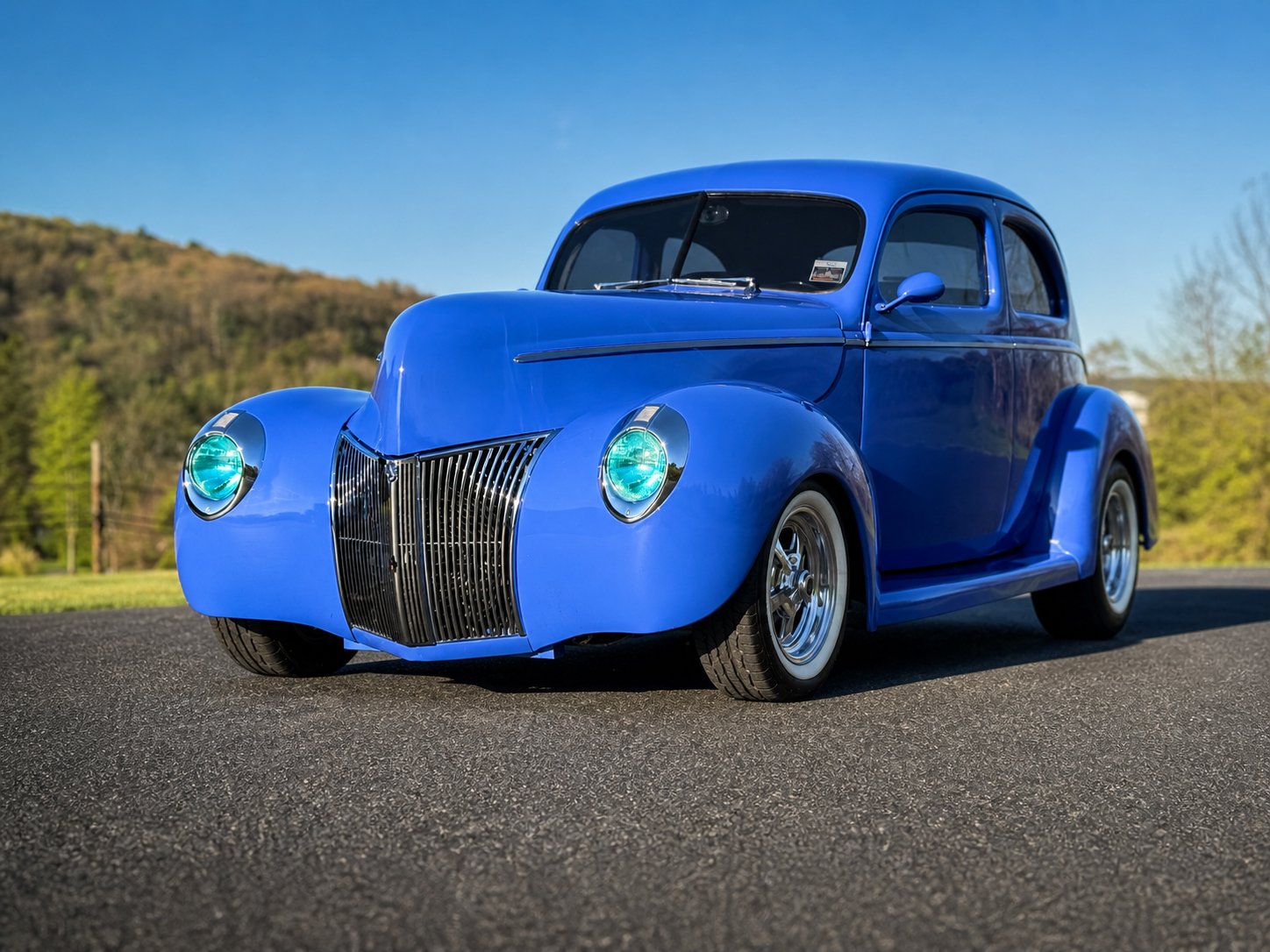 $33,490 · 44% below typical
Expand
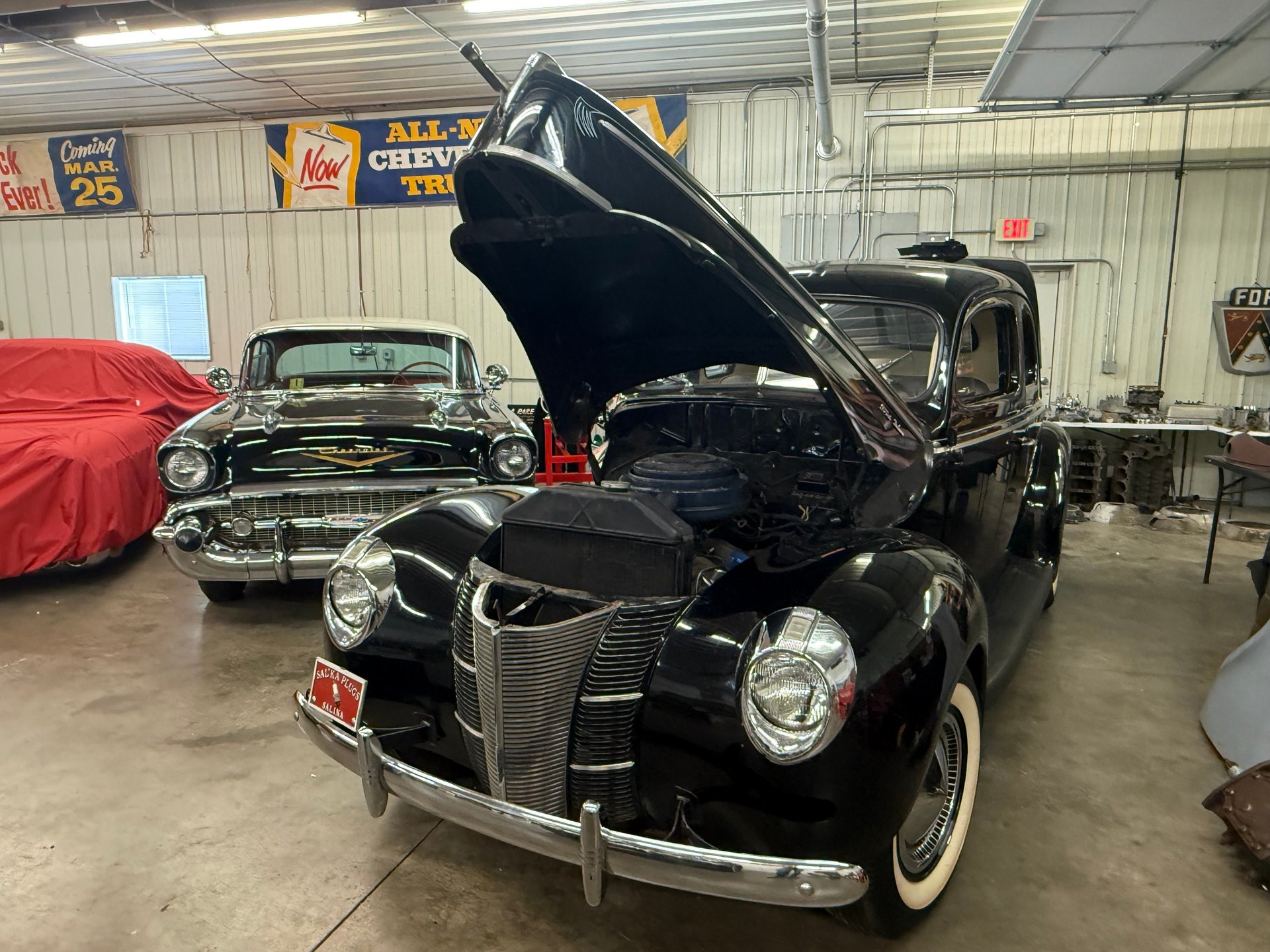 $57,500 · 3% below typical
Expand
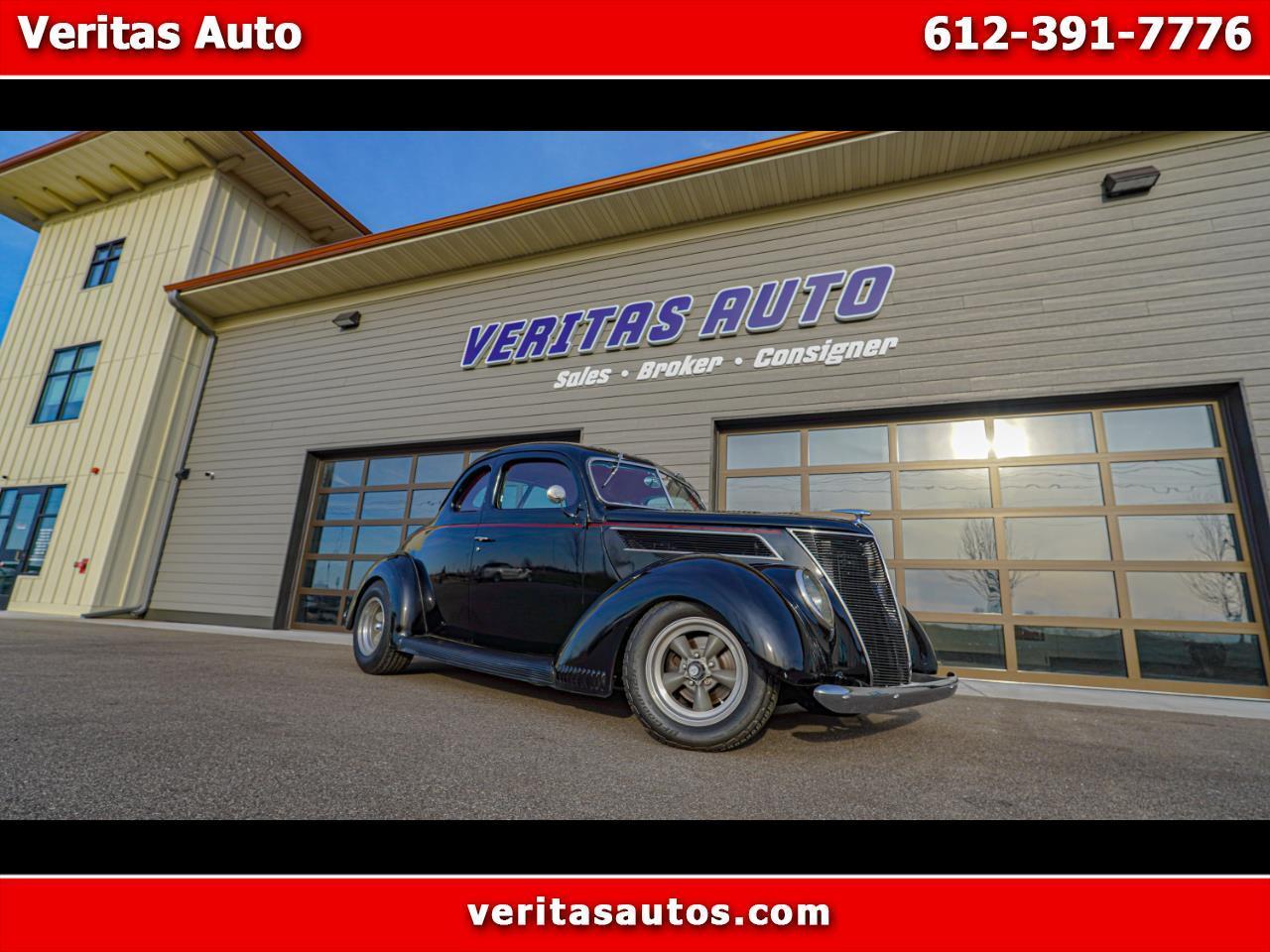 $39,900 · 33% below typical
Expand
What they sell for: Coupe sale prices.