
Ford Crestline buyer's guide
Ford Crestline -- the model's own buyer's guide: variants, values and what to check.
Years listed: 1954-1954 · Series: Full Size
Overview and history
The Crestline is the top Ford of 1952 to 1954 — the flagship trim line of the first all-new post-war Ford body, sitting above the Mainline and Customline, and the car Ford used to fight Buick-trimmed Chevrolets and Plymouth Belvederes for the buyer who wanted the best low-priced car in the showroom. It lasted exactly three model years. For 1955 the name was retired and the Fairlane took its place at the top of the range, which is why the Crestline is easy to overlook: it is neither the famous '49–'51 "shoebox" nor the Fairlane and Thunderbird era that followed. Buy one with your eyes open and that in-between status is the appeal. You get genuinely early-fifties Ford engineering — a flathead V8 in the first two years, Ford's first overhead-valve V8 in the last — in a handsome, well-trimmed car that the market has never chased the way it chases a '55–'57 anything.
The 1952 Ford was a complete redesign: integrated pontoon-style fenders, a one-piece curved windshield — a first for Ford — and a new overhead-valve six as standard. The Crestline line at launch was narrow and glamorous: the Victoria hardtop, the Sunliner convertible and the Country Squire wagon. A Fordor sedan joined for 1953, and for 1954 Ford added the car everyone remembers, the Skyliner — a Victoria with a tinted transparent acrylic panel over the front seats. Engines define the three years more than styling does. The 1952 and 1953 cars are the last flathead Fords, the 239 side-valve V8 in its final form; the 1954 car brings an all-new overhead-valve Y-block V8, a bored-out six and ball-joint front suspension in place of kingpins. A 1954 Crestline is mechanically a different car from a 1952 in a similar suit, and this guide treats them that way throughout.
Correct two myths before you shop. First, the Crestline is not a separate model, and certainly not a Mercury in disguise: it is a trim series of the standard 115-inch-wheelbase Ford, sharing its shell, chassis and drivetrains with the Mainline and Customline. That is good news for parts support — but it also means Crestline trim can be, and has been, added to a lesser car. The data plate settles what a car was born as; the trim settles nothing. Second, no Crestline left the factory with 12 volts or disc brakes. Every car here is six-volt, positive-ground, drum-braked and generator-charged, and a good one is bought and enjoyed on those terms.
What survives skews hard towards the Victoria hardtop: it was the image car, saved at a higher rate than the sedans, and it dominates listings today. Convertibles survive in smaller numbers and wagons in smaller numbers still, because a Country Squire worked for a living. The spread between restored showroom cars and honest, faded originals — not the model year — is what will decide your ownership experience.
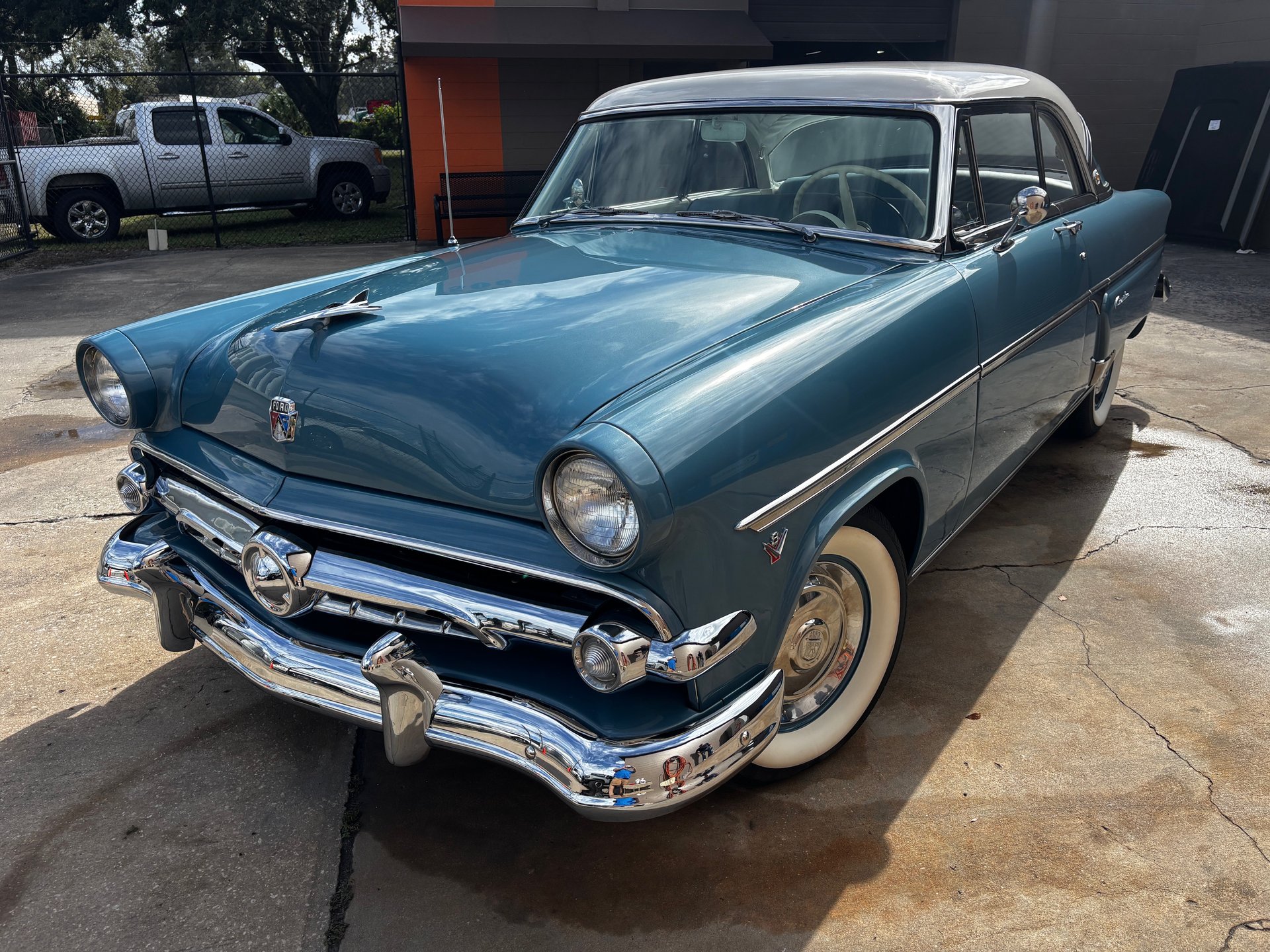
The models
The Crestline range is a trim line, so "models" here means body styles — but they differ enough in structure, rarity and risk that you shop for them as separate cars. Every Crestline shares the 115-inch wheelbase, the same basic chassis and the same engine and gearbox choices; what changes is the body from the cowl back, the trim, and how the car was used when new.
| Model | Years | Engine | Output | Built | Character |
|---|---|---|---|---|---|
| Victoria hardtop | 1952–1954 | 215 six / 239 flathead V8 (1952–53); 223 six / 239 Y-block V8 (1954) | 101 hp / 110 hp; 115 hp / 130 hp | The volume Crestline in every year; the hardtop was the image car and the best seller of the line | The all-rounder: pillarless hardtop style, closed-car rigidity, the easiest Crestline to find and to sell |
| Sunliner convertible | 1952–1954 | As Victoria | As Victoria | A minority of production each year; a Sunliner paced the 1953 Indianapolis 500 | The glamour car: power top, reinforced frame, the highest trim and weather-sealing stakes |
| Country Squire wagon | 1952–1954 | As Victoria | As Victoria | Low production and worked hard; genuine survivors are scarce | The family flagship: all-steel wagon with simulated wood panelling, three-row family duty, tailgate and roof rust decide everything |
| Fordor sedan | 1953–1954 | As Victoria | As Victoria | Sold respectably as the formal flagship sedan, saved at a far lower rate than the hardtop | The quiet one: same trim and drivetrains in a four-door shell; the value route into a Crestline |
| Skyliner hardtop | 1954 only | 223 six / 239 Y-block V8 | 115 hp / 130 hp | 13,344 built for 1954 | The glass-top Victoria: tinted acrylic roof panel over the front seats, huge period novelty, specific leak and crazing checks |
The Victoria is the Crestline most buyers should start with. The pillarless hardtop carried the line's image and got the best of everything: the richest two-tone schemes, the full-length side spear, and interior combinations the sedans did not always offer. Structurally it is a closed car with a proper steel roof, avoiding both the convertible's scuttle shake and the Skyliner's roof-panel problems. In 1952 form it is the last word in flathead style; in 1954 form, the most modern-driving Crestline you can buy.
The Sunliner is the same car with the roof replaced by a power-operated folding top, and everything that implies: a reinforced frame, a hydraulic top mechanism, and a well, bows and weatherstrips that become service items with real costs. A Sunliner paced Indianapolis in 1953, which tells you where Ford pitched it. Check it like a convertible, not like a Victoria with a soft top: frame condition, top hydraulics and water management decide the car's worth.
The Country Squire needs one correction applied firmly, because sellers get it wrong in the flattering direction. By 1952 the Squire was an all-steel wagon: the "wood" is simulated — woodgrain panelling with contrasting framing applied to steel — not structural timber. That changes the inspection: you check a steel wagon for rust in the tailgate, roof, floor and rear quarters, and check decorative panelling that is difficult and expensive to reproduce convincingly. Squires worked for a living for decades, so unworked survivors are the rarest Crestlines of all.
The Fordor sedan, added for 1953, is the overlooked car. It carries full Crestline trim, the same engines and the same options in a formal four-door body, and because four-door fifties cars were saved at a fraction of the hardtop rate, a good Fordor is both rarer on the ground today and cheaper to buy than the equivalent Victoria. If you want the Crestline experience — the trim, the V8, the options — rather than the hardtop silhouette, this is where the value sits.
The Skyliner is a 1954-only proposition and a genuine piece of Ford history: a Victoria whose steel roof panel over the front seats is replaced by a green-tinted transparent acrylic panel, so the front-seat passengers sit under glass. In period it was a showroom sensation and a hot, leaky, glare-prone car to live with; today it is the most collectible Crestline and the one with the most specific inspection in this guide. The panel crazes, the seals perish, and a significant number of Skyliners had their panels painted over or replaced with steel by tired owners — a Skyliner whose roof you cannot see through needs its identity and its price both re-examined.
Options cut across all five bodies: Ford-O-Matic, overdrive on the manual, power steering (from 1953), power brakes, power windows and seat, heater, radio, whitewalls and two-tone paint. A heavily optioned car is nicer to own and more complicated to keep — check that fitted options work, because a Crestline with dead power windows and a dead power top is a list of invoices wearing a nice suit.

Engines and gearboxes
Four engines cover the range in two pairs. The 1952–53 cars offer the 215-cubic-inch Mileage Maker overhead-valve six or the 239-cubic-inch flathead V8. The 1954 cars offer a bored-out 223 six or the new 239 Y-block overhead-valve V8. Gearboxes are shared across all three years: a three-speed manual, the same manual with Borg-Warner overdrive, or Ford-O-Matic automatic. Learn which pair of engines a car has before anything else, because the two V8s share nothing but displacement and a badge — not parts, not behaviour, not faults.
The Mileage Maker sixes: 215 (1952–53) and 223 (1954)
The six was Ford's standard engine and a modern one by 1952 standards: overhead valves in an era when Chevrolet's six was also overhead-valve but Ford's own V8 was not, seven main bearings' worth of smoothness in character if not in count, and a reputation for economy that gave the engine its Mileage Maker name. The 215 makes 101 hp; the 223 of 1954, bored out from the same architecture, makes 115 hp and noticeably better torque. In the car, a six-cylinder Crestline is a gentle thing — adequate, quiet, unstressed — and the six is the engine most likely to have survived unmodified and un-rebuilt, because nobody hot-rodded it and nobody over-revved it.
The six runs a single-barrel Holley carburettor and Ford's Load-O-Matic distributor, and that pairing is the first thing to understand. The Load-O-Matic has no centrifugal advance at all: ignition advance is controlled entirely by vacuum, metered through a spark control valve in the carburettor, so carburettor and distributor are a matched set. A car fitted with a later or incorrect carburettor — a common "fix" over seventy years — loses its advance curve and presents as a flat spot and a hesitation that no tuning cures, because the part that is wrong is the pairing, not the adjustment. Test the valve and the distributor diaphragm with a hand vacuum pump before letting anyone sell you a rebuild of either. Service faults are otherwise honest wear: mechanical valve clearances that need periodic checking, a carburettor that wears at the throttle shaft and gives an idle that will not settle, and oil leaks at the valve and side covers. A compression test settles a six in ten minutes: even numbers and a clean cold start are what you are buying.
The 239 flathead V8 (1952–53): the last of the line
The flathead in a 1952–53 Crestline is the final development of the engine that made Ford's reputation: 239 cubic inches, side valves in the block, 110 hp, and twenty years of production learning behind it. It is smooth, torquey at low speed, quiet, and utterly characteristic — the exhaust note alone explains the following. It is also an engine with known, specific weaknesses that you inspect for by name, because a flathead that has them is an engine-out rebuild and a flathead that does not is one of the most durable lumps ever made.
Heat is the flathead's governing problem, and it is a design consequence, not a defect in a particular car. The exhaust passages run through the water jacket inside the block, so the coolant absorbs exhaust heat that an overhead-valve engine sheds outside it; the engine carries two water pumps, one per bank, and two thermostats; and the cooling system was sized for 1930s expectations. Everything that reduces cooling margin — a furred radiator core, a slipping fan belt, retarded timing, a lean mixture, a missing fan shroud panel — shows up as a temperature gauge that climbs in traffic and on grades. A healthy flathead in a sound car runs at temperature and stays there; a car that boils has a cause, and your job is to find which one before purchase, because chronic overheating is what cracks blocks. The classic flathead crack runs in the block between the centre exhaust valve seats and the adjacent cylinder bores, invisible until the engine is stripped and crack-tested. You cannot see it on a viewing. What you can do is pressure-test the cooling system, look for combustion gas in the coolant, check for milky oil and unexplained coolant loss, and treat any flathead with an overheating history and no documented cause as a rebuild waiting for a date.
The fuel system gives the second classic fault: vapour lock. The mechanical pump sits on top of the engine in the heat, and modern fuel vaporises more readily than 1952 petrol; the car runs perfectly, stops hot, and refuses to restart until it cools. Period and modern cures — an electric pusher pump near the tank, insulated lines, a phenolic carburettor spacer — are common and legitimate. The carburettor is the Holley 94 two-barrel, simple and rebuildable, prone to throttle-shaft wear and flooding from a perished float. Ignition is by a front-mounted distributor in cramped company with the fan and radiator: points and condenser are serviceable but awkward, which is why they get skipped, which is why so many flatheads run below their best. A woolly flathead is usually timing, points and mixture, in that order — all cheap, all diagnosable.
Budget honestly for the worst case. A full flathead rebuild by a specialist — crack testing, machining, bearings, pistons, valve work in the block — runs $4,000–$8,000 depending on what the block needs, and a cracked block adds the cost of finding another. Routine work is far cheaper: a carburettor rebuild $250–$500, water pumps $150–$350 the pair fitted, a radiator recore $400–$800. Parts supply is superb — this engine has an industry behind it — so cost, not availability, is the variable.
The 239 Y-block V8 (1954): Ford goes overhead-valve
For 1954 Ford replaced the flathead with an all-new overhead-valve V8, the Y-block, named for the deep-skirted block whose sides extend below the crankshaft centreline, giving a Y-shaped cross-section and a very stiff bottom end. Same 239 cubic inches, but 130 hp, higher compression, a two-barrel Holley, and a completely different character: freer-revving, more powerful at the top end, and the ancestor of the 272, 292 and 312 Y-blocks that followed. In a Crestline it makes the 1954 car the quickest and most relaxed cruiser of the three years. It also has its own signature fault list, different from the flathead's in every particular.
The Y-block's known weakness is top-end oiling. Oil reaches the rocker shafts through small passages fed from the camshaft bearings; they sludge and restrict, the shafts run short of oil, and rockers and shaft wear, announcing themselves as top-end clatter that does not respond to valve adjustment. The period cure, still found today, is an external oiler kit: copper lines teeing oil pressure from near the filter up to the valve covers. Finding one fitted is not a walk-away — it is evidence the fault was managed — but check what it was managing: pull a valve cover if permitted and look for scored shafts and worn rocker arms. A top-end rebuild runs $600–$1,500; neglected, the wear extends to valves and guides. The second signature is the exhaust crossover in the intake manifold, routing exhaust heat under the carburettor: it cooks the paint off the manifold's centre — cosmetic, and nearly universal — and contributes to hot-start percolation, which owners often cure with crossover-blocking intake gaskets. Rear main rope seals weep; a damp bellhousing is normal, a drip that marks its territory is a $500–$900 seal job.
The Load-O-Matic warning from the six applies here with equal force: the Y-block's distributor is vacuum-advance only, paired to its Holley carburettor's spark control valve, and a mismatched carburettor produces the same incurable-feeling flat spot. Valve lash is mechanical and adjustable at the rockers — budget a setting session into any purchase, $150–$300 at a shop that knows the engine, and be suspicious of a Y-block that has never had it done. A full Y-block rebuild costs roughly what a flathead rebuild costs, $4,500–$8,500 through a specialist, with the advantage that the Y-block's faults are wear, not cracks: the castings are strong, and a sound block is a sound foundation.
Gearboxes: manual, overdrive and Ford-O-Matic
The standard gearbox is a three-speed manual with synchromesh on second and top, shifted from the column. Its faults are age faults: worn synchromesh that crunches into second, a sloppy column linkage — usually bushes and adjustment, $100–$300, not a rebuild — and a juddering clutch ($600–$1,100 to replace). Learn the distinction: with the engine off, the lever should find each gear cleanly; slop at the lever is linkage, crunch on the move is synchromesh, and the two are priced very differently.
The overdrive option adds a Borg-Warner overdrive unit to the back of the same three-speed, giving an electrically engaged overdrive top that drops engine speed at cruise — the single most useful option for modern road use, transforming a car geared for 1950s highways. Engagement is by solenoid, governed by a governor switch, with a kickdown switch under the accelerator pedal and a lockout cable under the dash. Faults are almost always electrical, not mechanical: a failed solenoid ($150–$350 for a replacement), a dirty governor contact, a perished kickdown switch, or wiring that has been disturbed. Test it on the road test exactly as the inspection section describes: it should engage above roughly 25–30 mph when you lift off momentarily, and kick down when you floor the pedal. An overdrive that does not engage is a diagnosis, not a disaster — but price the diagnosis in.
Ford-O-Matic is Ford's torque-converter automatic, built to Borg-Warner design, and fitted to the majority of Crestlines you will find. In Drive it starts in its intermediate ratio and shifts once to top unless you floor it or select Low, which feels odd to a modern driver and is entirely correct. Its faults are age faults: hardened seals that delay engagement when cold — a car that needs a few seconds to take up drive on a cold morning has a rebuild in its future, at $1,800–$3,200 through a shop that knows early automatics — leaks from the pan, selector shaft and converter housing, and shift quality ruined by a misadjusted throttle linkage, which controls line pressure and shift timing and must be set by the book. Fluid specification matters on these early units; confirm what a rebuilder specifies for the individual box. And never buy an automatic car you have not driven from stone cold, because a warm Ford-O-Matic hides its worst behaviour. A tired automatic is the most expensive common fault in this guide after a cracked flathead block.

Problem areas
A Crestline's problems are the problems of a seventy-year-old, body-on-frame, six-volt American car, concentrated in predictable places. Nothing here is exotic — there is no fragile injection system, no unobtainable electronics — but the bill is decided by rust first, chrome second, and the specific engine faults covered above third. Work through the systems in that order.
Rust: the map
The structure is a separate ladder frame with a steel body bolted to it, and the two rot independently, so you inspect both. Start with the body sills — the rocker panels below the doors. They are the first structural casualty: they collect road dirt and moisture behind their outer skin, rot from the inside out, and by the time paint bubbles appear on the surface the inner structure is usually worse than the outside suggests. Press firmly along the whole length, look from underneath with a light, and be honest about what soft metal means: sill repair done properly is cutting out and welding in new sections, $800–$2,000 a side depending on how far the rot has travelled into the floor edges and body mounts, and it is the most common big bill on these cars.
Floors come next. The front floor pans rot where water sits under carpets and sound deadening — lift every carpet the seller allows, and if none may be lifted, treat the underside view as your evidence and price the uncertainty. The trunk floor and spare-wheel well rot from leaks at the rear window and trunk seal: a trunk that smells damp has been wet, and the well is where the metal pays for it. Door bottoms fill with water when their drain holes block, and rust out along the lower skin and frame — open each door and look at the underside edge, not the painted face. Front fenders rot at the heel, behind the front wheel, where mud packs against the cowl, and at the headlamp brow where the lamp bucket traps moisture. Rear quarter panels rot ahead of and behind the rear wheel arch, and on hardtops the base of the roof pillars and the window apertures deserve a close look, because a pillarless body funnels water into places a sedan does not have. Windshield and rear-window surrounds rot under their seals and stainless trim, and the repair is glass-out welding — budget $600–$1,500 for a surround repair with the glass removed and refitted, before any paint blending.
Body-specific areas matter as much as the generic map. On the Sunliner, the convertible top well behind the rear seat and the floor beneath it are the car's sump: a top that has leaked for years rots the well and the rear floor invisibly from inside the trim. On the Country Squire, add the tailgate — a heavy, double-skinned panel that rots along its lower edge and around its window — the roof, which on a wagon is a large, lightly supported panel that holds water at its seams, and the rear floor under the cargo deck. On the Skyliner, the roof aperture itself: the acrylic panel's seal is a water management system for the whole front roof, and a perished seal leaks into the headlining, the windshield pillars and eventually the front floor, so a Skyliner with damp carpets has a roof problem until proven otherwise.
Then read the frame. Surface rust on a ladder frame is cosmetic; suspicion belongs at the body-mount outriggers, the spring hangers, the steering-box mounting, and anywhere mud has sat in a boxed section. Perforated outriggers or cracked hangers mean a body-off conversation, and at Crestline values that usually ends the purchase. Read the underside for old repairs too: underseal laid thick over rot, pop-riveted patches, filler in sills — a magnet that will not hold, or a dull thud instead of a metallic ring, tells you where the filler lives. None of it condemns a car automatically; all of it belongs in the price.
Front suspension, steering and brakes: kingpins, then ball joints
The chassis splits cleanly by year, and the split is one of the real reasons to prefer a 1954. The 1952–53 cars use a kingpin front suspension: coil springs, a forged axle-beam's worth of forged uprights pivoting on kingpins in bushes. The design is strong and rebuildable, and entirely dependent on grease. Period service schedules called for chassis lubrication at roughly thousand-mile intervals, and a kingpin that was greased lives almost indefinitely, while one that was not wears its bushes oval and gives you play at the wheel, shimmy, and tyres worn on their shoulders. The test is in the inspection section: jack under the lower arm so the spring is loaded as designed, then rock the wheel top and bottom and feel for movement at the pin. A kingpin and bush overhaul runs $500–$1,000 a side fitted, and it transforms a vague car — but it is a known cost, not a surprise. The 1954 cars replaced kingpins with ball-joint front suspension, Ford's headline chassis improvement for the year: sealed-for-service joints, less routine lubrication, better geometry control and a noticeably more modern feel at the wheel. Ball joints wear too — check for play with the suspension loaded and unloaded as the joint design requires — but replacement is a standard workshop job, $250–$600 a side, and the 1954 front end asks far less of its owner between services.
Steering on all cars is a manual box with a linkage of tie rods, a drag link and an idler arm, every joint of which can add play. Total lost motion at the steering wheel rim beyond a couple of inches means wear somewhere in the chain, and the diagnostic discipline is to have a helper rock the wheel while you watch each joint in turn from underneath: the joint that moves late is the worn one. Steering boxes wear in the straight-ahead position and can be adjusted within limits; a box at the end of its adjustment with a tight spot off-centre is a rebuild, $400–$800. Power steering, optional from 1953, is a linkage-assist system with a control valve on the linkage and a hydraulic ram: it leaks from hoses and valve seals with age, whines when low or aerated, and adds cost to every steering repair, but a working system makes a Crestline genuinely easy to place in modern traffic. Test it lock to lock at idle for noise, notchiness and leaks, and budget $600–$1,200 to reseal and re-hose a tired system.
Brakes are drums all round with a single-circuit hydraulic system, and that single circuit is the most important safety fact in this guide. A failed hose, cylinder or line on a single-circuit car means no brakes, not half brakes. On any Crestline you buy, the entire hydraulic system is a service item regardless of what the seller says has been done: master cylinder, four wheel cylinders, flexible hoses, and a hard look at every steel line, especially where lines run along the frame in clips that trap moisture. A full hydraulic overhaul with quality parts runs $600–$1,200, and it is not negotiable money — it is the price of the car being safe. Within the drums, check for scored drums (replacements are available but add up), contaminated shoes from leaking cylinders or axle seals, and a handbrake that actually holds — the rear-cable mechanisms seize from disuse. Pedal feel tells the truth: a pedal that sinks slowly at a stop is a master cylinder or a leak, a pedal that needs pumping is air or adjustment, and a car that pulls under braking has a cylinder, hose or contamination fault on one side. Some owners convert to a dual-circuit master cylinder, sometimes with front discs; a well-executed conversion is a safety improvement and not a value crime on these cars, but inspect it as engineering, not as a badge — you want correct pedal geometry, a proper proportioning arrangement and tidy plumbing, and you walk away from a conversion that looks improvised, because brakes are the wrong place for improvisation.
Rear suspension is a live axle on leaf springs: check for sagging springs (measure ride height side to side — a low corner is a spring, not a shock absorber), worn shackle bushes and leaking dampers. An axle that whines on the overrun or clunks on take-up has differential wear or universal-joint play; U-joints are cheap, a differential rebuild at $800–$1,500 is not, and the road test separates them.
Interior, trim and glass
The Crestline's cabin was its showroom advantage, and trim condition is where restoration money disappears fastest, because the mechanical parts are cheap and shared while the trim is specific. Seats were trimmed in cloth and vinyl combinations unique to the line, in two-tone schemes matched to the paint. Original-pattern material is reproduced for the popular combinations, but a full interior retrim — seats, door cards, headlining, carpets — runs $3,000–$7,000 at a trimmer depending on materials and how much of the structure needs rebuilding, because seventy-year-old seat foam disintegrates into dust and leaves the covers sitting on springs. Sit in every seat: a driver's seat that feels like a hammock needs foam and webbing, not just a cover. Door cards warp from door leaks, headlinings stain from window-seal leaks, and every stain is a leak with a history — find the leak before you price the trim.
Brightwork is the second trim bill. A Crestline carries a lot of it: grille, bumpers, side spears, window surrounds and dozens of small die-cast pieces. Stainless polishes and straightens; pot-metal pits, and pitting cannot be polished out — it is filled and rechromed, at prices that make small parts disproportionately expensive. Rechroming a bumper runs $400–$800; a grille can cost more; a full car's brightwork is a four-figure commitment. Inventory the trim piece by piece: a car with all its Crestline-specific trim present and straight, even if dull, is worth more than a shinier car with pieces missing, because missing die-cast trim is found at swap meets on their timetable, not yours.
Glass is mostly flat or simply curved and available; the exception, again, is the Skyliner's acrylic roof panel. Acrylic crazes with age and ultraviolet exposure — a network of fine cracks that turns the panel milky — and it scratches, leaks at its seals, and makes the cabin hot in summer sun, which is why period owners fitted the snap-in headliner panel Ford offered and why some panels were painted. A clear, uncrazed panel with supple seals is genuinely rare and valuable; a crazed panel is a negotiation; a painted-over or steel-replaced panel means the car has lost the feature it exists for, and it should be priced as a Victoria with a story. On Sunliners, the top itself: canvas and vinyl tops perish, rear windows yellow and split, and a full top replacement with pads and window runs $1,500–$3,000 fitted; the hydraulic pump, lines and rams that operate it add their own leaks and costs, and a top that needs help by hand has a hydraulic fault, not a personality.
Electrics: six volts, positive ground
Every Crestline is six-volt, positive-ground, generator-charged, and the system is not a defect to be corrected but a specification to be maintained. Six-volt systems move twice the current of a 12-volt system for the same work, which makes them brutally sensitive to resistance: every corroded earth strap, dirty terminal and tired cable drops voltage the starter motor can feel. The classic six-volt Ford complaint — slow cranking, especially hot — is almost never a failed starter; it is voltage lost in cables and earths, and the cure is cleaning, proper heavy-gauge cables and sound connections, a few hours and $50–$150 in parts, not a conversion. Test any car from cold and again hot after the road test: a car that cranks eagerly in both states has a healthy system; one that labours hot needs the resistance hunt, and you should price in the possibility of a starter or generator rebuild at $200–$450 each if cleaning does not cure it.
Charging is by engine-driven generator with a vibrating-contact voltage regulator, and both are rebuildable by any competent auto electrician. A charging system that overcharges boils the battery and blows bulbs; one that undercharges leaves you with a flat battery after night driving with the lights on. Put a voltmeter on the battery during the inspection — you are looking for a charging voltage comfortably above battery voltage at a fast idle with lights on, and for the ammeter to behave as the car is loaded. Tube radios draw heavily and warm up slowly, heater fans and wipers — electric on these cars, not vacuum, in most applications — all compete for the same modest generator output, which is a period characteristic to accept rather than a fault to fix. The 12-volt conversion question will come up; conversions are common, usually done to support modern accessories or easier starting, and a neatly executed one does not harm a driver-quality car. But understand what you are buying either way: an original six-volt car with clean connections starts perfectly well, and a badly executed conversion — original bulbs in converted sockets, gauges fed the wrong voltage, a butchered harness — is worse than either honest alternative. Judge the execution, never the voltage.
The rest of the electrics are switches, motors and age. Power window and seat mechanisms slow with dried grease and tired wiring. Heater cores leak into the passenger footwell — a sweet smell and a misting windshield on a warm engine is a core, $300–$700 fitted — and heater valves seize. Horn rings, turn-signal switches and clocks fail in small, diagnosable, individually affordable ways. None of it is frightening; all of it adds up, which is why the inspection counts every switch.
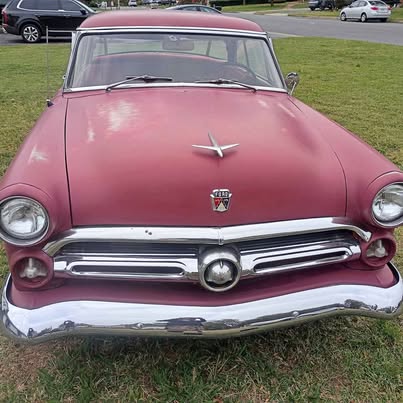
How to inspect one
Inspect in this order: identity first, structure second, the engine the car actually has third, and cosmetics last. A Crestline that fails early on this list does not get cheaper later in it.
- Settle the identity before the condition. Read the data plate and the serial number, and decode the year, engine and body style from them. The plate must agree with the car in front of you: a 1952–53 car should carry the flathead or the 215 six, a 1954 car the Y-block or the 223 six, and the body code should match the body. A "Crestline" whose plate decodes as a Customline is a trimmed-up lesser car; a Skyliner whose roof is steel is a Victoria with a panel problem; a '54 with a flathead, or a '52 with a Y-block, is an engine swap — possibly a good car, never an original one, and priced as the former. This one check protects you from the most expensive mistake in the whole guide.
- Read the car in daylight, dry, from twenty feet. Two-tone paint should break where the factory broke it, the side spear should run straight through both doors and fenders, and the reflections down each flank should flow without ripples. Panel gaps on a hardtop tell you about both structure and accident history. Note every trim piece that is missing, bent or wrong now, while you are looking at the whole car — the trim inventory from the problem areas section starts here.
- Do the sill and floor test. Crouch and press along both rocker panels, then get the car on a lift or use a light and a mirror underneath: sills, floor edges, body mounts, trunk floor and spare-wheel well. Tap suspect areas with a screwdriver handle — sound metal rings, rot crunches, filler thuds. The seller's reaction to a lift inspection tells you as much as the lift does.
- Check the frame at its weak points. Body-mount outriggers, spring hangers, steering-box mounting, and any boxed section that traps mud. Perforation here changes the category of the car from driver to project; do not let a shiny top side talk you out of what the underside said.
- Open and close everything, twice. Doors should shut with even gaps and no lift-and-slam; on a Victoria, wind every window fully down and up and watch the front and rear glass meet as they should, because hardtop glass alignment is where pillarless bodies show their age. On a Sunliner, run the top through a full cycle and watch for hesitation, leaks and a frame that lands unevenly. On a Skyliner, examine the roof panel against the light for crazing and check the headlining and front carpets for water staining.
- Cold-start the engine — genuinely cold. Arrange it in advance and touch the exhaust manifold when you arrive. A flathead should start on the choke and settle to a quiet, even idle; a Y-block should start cleanly and any top-end clatter should fade as oil arrives — clatter that stays is the rocker-oiling story from the engines section, happening in front of you. Blue smoke at start-up that clears is valve seals; smoke that persists under load is rings and bores. Watch the temperature gauge's whole journey from here to the end of the road test.
- Pressure-test and interrogate the cooling system, above all on a flathead. With the engine warm, look for bubbles in the radiator, a cooling system that pressurises instantly from cold (combustion gas), milky oil, and unexplained coolant loss. Ask directly about overheating history and what was done about it. The flathead crack test from the engines section cannot be done at the kerbside, so the cooling system's behaviour is your evidence — gather all of it.
- Test the front suspension the way the year demands. On a 1952–53 car, jack under the lower arm to load the spring, then rock each front wheel top-to-bottom and feel for kingpin play; on a 1954, check the ball joints for play loaded and unloaded. Then have a helper rock the steering wheel while you watch the linkage joint by joint from underneath. You are separating a $150 linkage bush from a $1,000 kingpin overhaul, and the tests are different because the suspensions are different.
- Drive it from cold, long enough to get everything hot. At least twenty minutes, including a hill and a stretch at 50–60 mph. The manual should take second without a crunch once warm. An overdrive car must engage when you lift off above about 25–30 mph and kick down when you floor it. Judge a Ford-O-Matic from this cold start: time its engagement into Drive and Reverse now, before it warms up and starts behaving. Note temperature behaviour in traffic after the fast stretch — that sequence is the flathead's examination.
- Brake it hard, hands light on the wheel. From 40 mph, the car should stop straight with a firm pedal that neither sinks nor needs pumping. Any pull, sink or second pump is a hydraulic fault, and on a single-circuit system every hydraulic fault is a full-system overhaul in the budget, per the problem areas section. Test the handbrake on a slope.
- Work every electrical item, then restart it hot. Lights, indicators, wipers, heater fan, radio, horn, power windows and seat where fitted, top motor on a Sunliner. Then, with everything hot, switch off and restart: the six-volt hot-crank test from the problem areas section, done at the moment it can fail. A car that will not restart hot in front of its seller has just saved you from owning the problem silently.
- Finish with the paper and the parts. Title matching the serial number, restoration documentation, receipts for engine work — on a flathead, a receipt mentioning crack testing is worth real money — and an inventory of what comes with the car: spare trim, the correct carburettor if a substitute is fitted, Skyliner sunshade panels, wagon or convertible pieces. Parts in hand are value; promises to find them are not.

Values
Read the market below this guide — the live listings and the recorded sales — as the numbers, and use this section as the instruction for reading them. The Crestline market has a wide condition spread, and it is the spread, not any single figure, that carries the information.
Condition is the first divider, and it moves value more than model year does. A restored, straight, fully trimmed Victoria with a sorted engine and working options sits at the top of the range; a faded, honest original with good structure sits in the middle, trading on the originality the restored car has replaced; and a project — even a complete, running project — sits far below both, because the cost of paint, chrome and trim on a car of this era is the dominant expense and everyone in the market knows it. The gap between a driver and a project is not a discount for cosmetics; it is the trim and paint bill, priced in advance by a buyer who has done it before.
The second divider is engine originality. A 1954 car with its Y-block is worth more than a 1954 car with a flathead swapped in, and a 1952–53 car with a matching-era flathead beats the same car with a later engine: the market prices a car whose engine agrees with its plate. An overdrive car commands a real premium over a three-speed car. An automatic is valued for its ease, not its rarity — Ford-O-Matic was common, and a tired one is a liability, so the box's condition, not its presence, decides the premium.
Body style is the third divider, and the hierarchy is stable. The Sunliner commands the top of the market for a Crestline of a given condition — open cars of this era are scarcer and costlier to restore. The Skyliner sits beside it: rarer in absolute terms, but judged far more harshly on the state of its roof panel, because the panel is the car. The Victoria is the volume car and the benchmark. The Country Squire is thinly traded and hard to value from a handful of sales — a straight Squire is scarce enough to reward a strong seller, and a rough one is a project only a committed buyer should price. The Fordor sedan is the value buy: same trim, same engines, a smaller audience, and prices that reflect the audience rather than the car.
Asking and achieved figures diverge in the usual direction: optimistically priced cars linger, correctly priced cars move. A car advertised with a large restoration spend and no documentation sells slowly, because the market credits invoices, not adjectives. A car with a known engine fault — a flathead with an overheating history, a Y-block with persistent top-end noise, an automatic that delays cold — is discounted by buyers who have priced the repair. And a car whose trim is complete achieves a stronger result than a shinier car with missing pieces: trim is the hard part. When you compare a candidate against the recorded sales, match it on condition first, then body style, then engine and gearbox — and treat any car cheaper than its apparent peers as a car whose fault you have not found yet. Go back to the inspection list and find it.
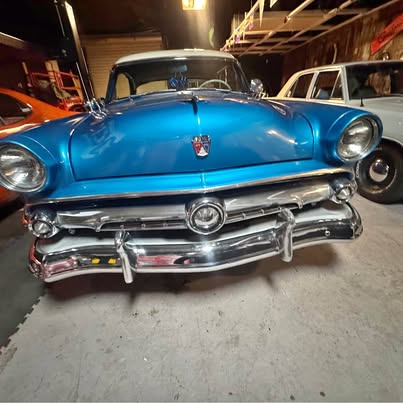
Parts and ownership
Ownership is easy where it matters and expensive where it does not. The easy part is everything mechanical and shared: the standard Ford of these years was built in hundreds of thousands, so engine parts, gearbox internals, bushes, brake components, gaskets and bearings are all stocked by the specialist trade at ordinary prices — flathead rebuild kits, Y-block gasket sets, Ford-O-Matic overhaul kits, kingpin sets, ball joints, wheel and master cylinders. Tyres are a catalogue item too, and there is no reason to accept ancient rubber on a car of this age.
The expensive part is everything Crestline-specific. Side trim, die-cast badges and emblems, the grille's individual pieces, the Skyliner's roof-panel seals, Sunliner top mechanisms and wagon tailgate hardware are all line-specific, and they are found through the swap-meet and specialist-breaker network, at their prices, on their timetable. The clubs are the route into that network: the Early Ford V-8 Club covers the flathead era and its members include many of the people who reproduce and stock the parts you need, while Ford-specific clubs and the 1952–54 Ford community's own vendors are the source for Y-block and trim parts. Before you buy a car missing a piece, ask a club member or a specialist whether the piece exists — the answer for most things is yes, the price and the lead time are the variables, and the difference between a part that exists at a price and a part that does not exist at all is worth knowing before you commit.
Maintenance rewards a routine rather than heroic intervention. Grease the chassis at short intervals on a 1952–53 kingpin car — the period thousand-mile schedule is the price of the suspension's longevity — and check a 1954's ball joints at service. Change oil frequently by modern standards: clean oil is the cheapest insurance against both flathead sludge and the Y-block's rocker-oiling problem. Keep the cooling system fresh, because both V8s are punished by neglect here, and never let a car sit for months with old fuel in the carburettor — it gums the float valve and invites vapour lock. Winter storage wants the car dry and aired, fuel stabilised, the battery on a six-volt trickle charger, and the tyres rolled occasionally so they do not flat-spot.
Insure the car on agreed-value classic cover, with the restoration record ready for a restored car. A sorted Crestline is a genuine touring car: an overdrive or Ford-O-Matic car holds modern traffic speeds comfortably, and the brakes — maintained as a complete system — are adequate for the speeds the car was built for. Keep the pace that suits a single-circuit, drum-braked, six-volt car, carry points, a condenser and a spare fuel-pump diaphragm in the toolkit, and keep it honest rather than chasing it to modernity.
Which one to buy
- The all-rounder: a 1954 Victoria with the Y-block and overdrive. The most modern-driving Crestline, the best suspension in the line, and the overdrive that makes modern roads comfortable. Buy the straightest, best-trimmed example your budget reaches; trim and chrome cost more than engine work.
- The value buy: a 1952 or 1953 Fordor sedan with the flathead and overdrive, or a 1953 Victoria. Same trim, same character, less demand than the hardtop image cars. Judge it on rust and cooling history — it must start cold cleanly and stay at temperature.
- The driver with a story: a faded original Victoria, any year, with a sound frame. Often the honest car. Original paint and interior are features, not faults, if the structure is sound; budget for a hydraulic overhaul and ignition service, and drive it.
- The open car: a Sunliner, if you will inspect it as a convertible. Frame, top hydraulics and water management decide the car. A sorted Sunliner is the best driving Crestline there is; an unsorted one is the most expensive. Buy the best top mechanism you can find, not the best paint.
- The collector's car: a 1954 Skyliner with a clear, uncrazed roof panel. The only Crestline that is genuinely rare in absolute numbers, and the only one whose signature feature can be lost by crazing or painting. Do not compromise on the panel; a Skyliner without it is a Victoria carrying a premium it cannot defend.
- The project: a Country Squire, or any Crestline with missing trim. Only if you have the network, the patience and the budget for trim — because the Squire's reward is a car almost no one else has, and the price of admission is parts hunting, not welding.
The overriding rule: buy the soundest structure and the most complete trim you can afford, in the body style you actually want, and let the engine choice follow — a flathead that stays cool and a Y-block that oils its rockers are both fine engines, and neither of them can rescue a rotten shell or replace a missing grille.
See the 3 Crestline cars currently listed.
For sale now
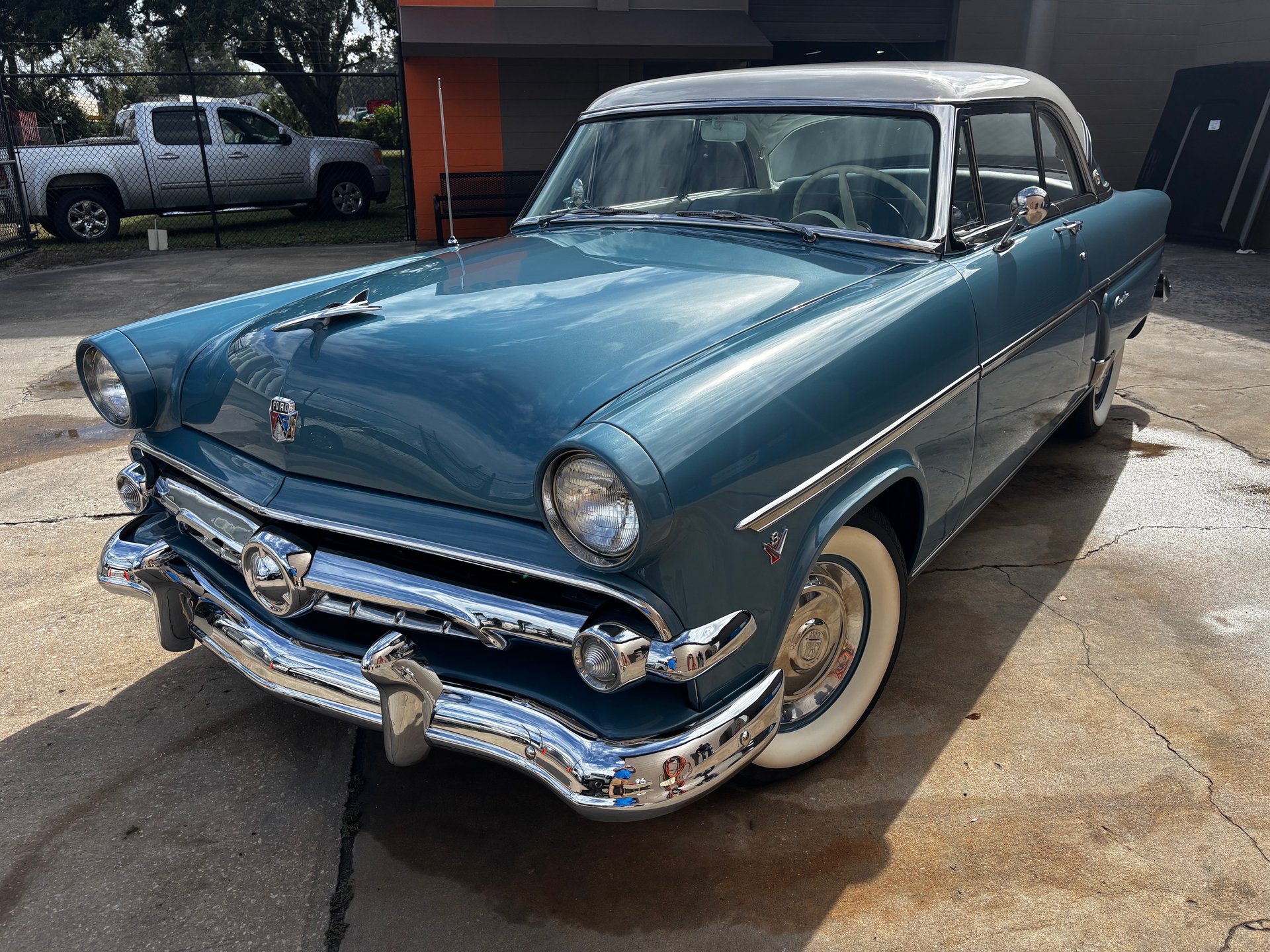 $35,000 · 88% above typical
Expand
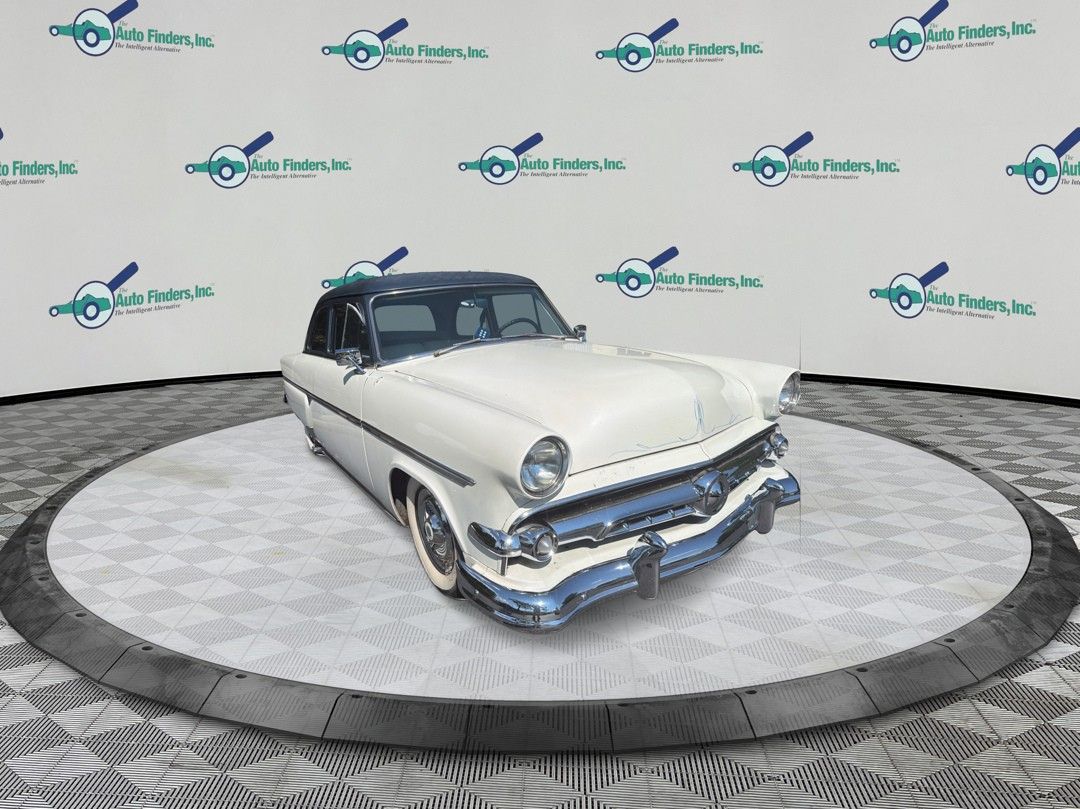 $17,998 · 3% below typical
Expand
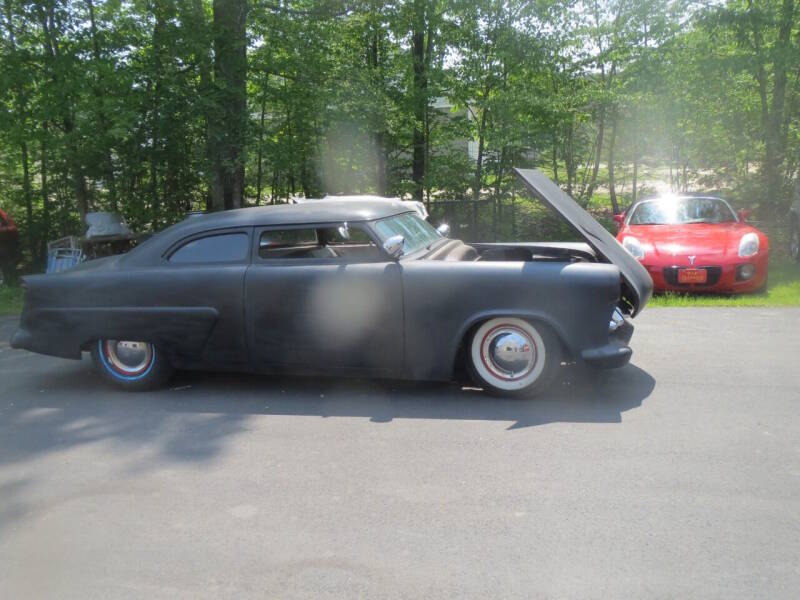 $7,500 · 60% below typical
Expand
What they sell for: Crestline sale prices.