
Nissan D21 buyer's guide
Nissan D21 -- the model's own buyer's guide: variants, values and what to check.
Years listed: 1986-1991 · Series: Pickup
Overview and history
The Nissan D21 is the pickup most Americans know simply as the Hardbody. Nissan introduced it for the 1986 model year — early build cars are often described as 1986.5 models — as the replacement for the Datsun 720, and it stayed in United States production through 1997, when the first Frontier replaced it. That twelve-year run, with only detail changes along the way, is the first thing to understand about buying one now: a D21 is not a short-lived experiment but a mature, conservatively engineered truck that Nissan had a decade to sort out, and the differences between the first and last cars are mostly engines, trim and small equipment changes rather than anything structural.
The nickname is not marketing fluff pasted on later. Hardbody referred to the styling and to the double-walled cargo bed — a bed built with an inner and outer skin, which looked tougher and resisted dents from loads sliding around better than a single-walled bed. The same double-wall construction is also, thirty years on, one of the places rust hides, which tells you most of what you need to know about this truck in one sentence: the things that made it strong are the things to inspect hardest.
Underneath, the D21 is deliberately old-fashioned. A separate steel ladder frame carries a double-wishbone front suspension sprung by torsion bars, a live rear axle on leaf springs, recirculating-ball steering and a part-time four-wheel-drive system on 4x4 models with a proper low range. There is nothing clever in the chassis, and that is the point. Everything is sized for work, everything can be unbolted, and almost everything that wears can be replaced in a home garage with ordinary tools. The same basic platform also carried the first Pathfinder, the WD21, which is why so many chassis, brake and four-wheel-drive parts cross over.
Most United States trucks were built at Nissan's Smyrna plant in Tennessee, alongside Japanese-built examples in the early years. The range sold here was simple: regular cab and extended King Cab bodies, short and long beds on the regular cab, two- and four-wheel drive, a four-cylinder engine as standard and a V6 as the step up, and trim levels that ran from a vinyl-seated work truck to the well-equipped SE. In other markets the D21 lived even longer and carried diesel engines and crew-cab bodies the United States never officially received; this guide concentrates on the trucks sold new in North America, because those are the trucks in our listings and the trucks you will actually go and see.
What happened to the D21 afterwards defines today's buying problem. These were cheap, useful trucks, so they were used as trucks — loaded, towed with, parked outside and serviced when something stopped working rather than before. V6 4x4s were lifted, fitted with oversize tyres and used off road, and a great many were scrapped during the years when a Hardbody was worth less than a major repair. The survivors divide sharply: a thinning number of straight, original, unrusted trucks, mostly from the dry South and West, and a large population of honest but tired work trucks whose frames, beds and timing components now decide whether they are transport or scrap. Mileage alone tells you almost nothing — these engines routinely outlast the bodies around them — so condition, and above all frame condition, is the whole game.
The models
Every United States D21 is a pickup on the same frame, and the choices that matter are cab, drive, engine and trim, in that order. Decide the cab and drive you need first, because you cannot change them later; the engine you can live with more flexibly, and trim is mostly equipment.
| Model | Years | Engine | Output | Built | Character |
|---|---|---|---|---|---|
| Standard / base 4x2 | 1986–1997 | 2.4 four-cylinder | 106–134 hp | Not published as a single series figure | The work truck; vinyl, steel wheels, the cheapest way in |
| XE 4x2 and 4x4 | 1986–1997 | 2.4 four-cylinder, V6 optional on later cars | 106–153 hp | Not published as a single series figure | The mid trim; cloth, better instruments, most survivors are XEs |
| SE 4x2 and 4x4 | 1986–1997 | V6 on most SE 4x4s, four-cylinder on some 4x2s | 140–153 hp | Not published as a single series figure | The top trim; alloys, graphics, sports seats on 4x4s |
| King Cab (all trims) | 1986–1997 | 2.4 four-cylinder or V6 | 106–153 hp | Not published as a single series figure | Longer cab, jump seats, longer wheelbase; the most usable D21 |
(Outputs are the period United States ratings: the early Z24i four and VG30i V6 at the bottom of the range, the later KA24E four and VG30E V6 at the top. Nissan did not publish a clean United States production split by trim in the sources a buyer can check, so no build figure is quoted here rather than an invented one.)
Cabs and beds. The regular cab came with a short bed of about six feet or a long bed of about seven feet; the long-bed car rides on a longer wheelbase, carries more, rides a little better loaded and is noticeably harder to park. The King Cab, Nissan's name for the extended cab, puts a pair of small side-facing jump seats and useful dry storage behind the front seats on a wheelbase shared with the long-bed regular cab. For almost anyone buying a D21 to use rather than to collect, the King Cab is the body to have: the extra cab space transforms the truck on a wet day, and the jump seats are fine for children and short trips and miserable for adults, which is true of every extended-cab truck of the period.
Two-wheel drive versus four. The 4x2 is the simpler, lighter, cheaper truck: lower ride height, less to wear, better fuel economy and no transfer case, front differential or locking hubs to maintain. The 4x4 sits higher on the same basic suspension layout, adds a two-speed transfer case with low range, a front differential and drive shafts, and either manual or automatic locking front hubs depending on year and specification. A 4x4 that has genuinely never been off road is the exception; assume any 4x4 has been used as one and inspect it that way. The premium for four-wheel drive is real and permanent — a clean 4x4 is always easier to sell — but it buys capability many owners never use and maintenance they always pay for.
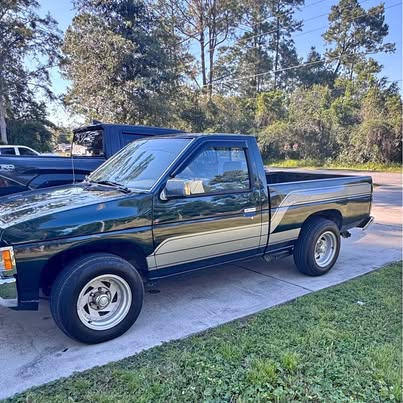
Trim: base, XE and SE. Base trucks are honest and spartan: vinyl bench or basic buckets, minimal instruments, steel wheels, often no air conditioning on early cars, and frequently a life of commercial work behind them. The XE is the centre of the market — cloth trim, a fuller instrument cluster with a tachometer on many cars, styled steel or alloy wheels, sliding rear window and air conditioning commonly fitted. The SE is the flagship: on 4x4s it usually means the V6, alloy wheels, fender flares, graphics packages, a sportier interior and most of the option list already ticked. Late SE V6 4x4 King Cabs in period colours with the factory graphics intact are the trucks collectors of nineties Japanese pickups look for first, and they are priced accordingly. Beware badge inflation: trim badges, SE wheels and graphics are all bolt-on or stick-on, so judge a claimed SE by its equipment and its VIN plate, not by its decals.
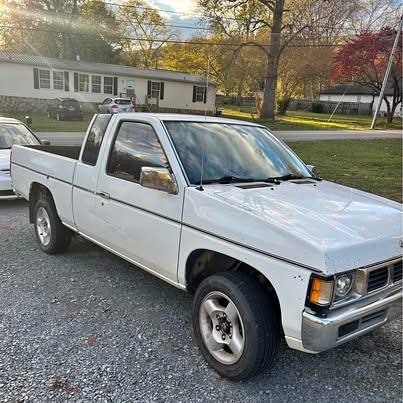
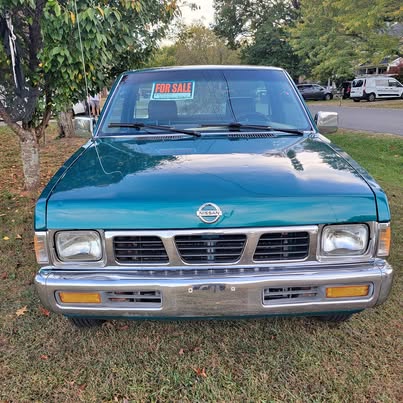
The shape of the years. The 1986–1989 trucks are the early cars: Z24i four or VG30i V6, the original dashboard, simpler equipment and, now, the oldest frames. The 1990 model year brought the important mechanical change — the KA24E four and the VG30E multi-point-injected V6 — and from here the trucks are quicker, smoother and easier to keep in tune. Small styling revisions followed in the early nineties, most visibly a revised grille and front end, and the cabin was tidied again for the final years. The V6 was dropped after the mid-nineties, so the last trucks, 1996 and 1997, are four-cylinder only. Of the eight D21s currently in our listings, the years run from 1986 to 1996 and the centre of gravity is exactly where you would expect — 1993 and 1994 cars are the most numerous — and seven of the eight are manuals, which matches the wider market for survivors: the manual gearbox was the default choice and it is the one buyers still prefer.
Engines and gearboxes
Three engines did almost all the work in the United States D21, and they divide the range cleanly in two: the 1986–1989 trucks with the Z24i four and the VG30i V6, and the 1990-on trucks with the KA24E four and the VG30E V6. Learn which engine is in front of you before anything else, because their service needs are opposites — the four-cylinder cars have a timing chain you listen to, the V6 cars have a timing belt you must have paperwork for.
The fours: Z24i and KA24E
The Z24i (1986–1989) is a 2.4-litre single-overhead-cam four from Nissan's Z engine family, fitted in the D21 with throttle-body fuel injection — a single injector unit sitting where a carburettor would, spraying into the intake. It makes about 106 hp and a useful spread of low-speed torque, and it is a famously unkillable engine in the bottom end: the crank, rods and block will outlast several of everything bolted to them. Its party trick is the cylinder head, which carries eight spark plugs — two per cylinder, one on the intake side and one on the exhaust side, a leftover of the NAPS-Z emissions-era combustion design. A plug change is therefore eight plugs, two sets of leads and twice the chance of finding a cross-threaded or seized plug that a previous owner simply skipped; ask when all eight were last changed, and pull one from each bank if the seller allows it.
Throttle-body injection is simple and its faults are simple too. A Z24i that idles roughly, hesitates off idle or cuts out at junctions is usually suffering from vacuum leaks at perished hoses and the throttle-body base gasket, a clogged injector, a tired oxygen sensor or ignition parts past their date — not from a failed computer. The distinguishing test is patience: spray around the intake joints on a running engine and listen for the idle changing, check for spark quality on both plug banks, and read the flashing-code diagnostics the ECU will give you from under the seat before replacing anything. Head gaskets can fail on high-mileage Z24s, usually announcing themselves as a slow coolant loss, a misfire on a cold start that clears, or bubbling in the radiator — confirm with a chemical block test rather than guessing. A full Z24i top-end refresh with a head gasket, skim and valve work typically runs $900–1,600 at a shop; a throttle-body rebuild or replacement injector is a $200–450 job. Neither should scare you off a straight truck.
The KA24E (1990–1997) replaced it and is the engine most D21 buyers will meet. Also a 2.4-litre single-overhead-cam four, but with three valves per cylinder (twelve valves in total), multi-point fuel injection — an injector per cylinder — and about 134 hp, it is smoother, stronger everywhere and better on fuel. It comes from the KA family that went on to power the 240SX and the Altima, it shares their reputation for a strong bottom end, and in a light pickup it makes the D21 feel genuinely adequate rather than merely willing. Cold start should be instant, the idle should settle cleanly, and the engine should pull without hesitation to its redline. The KA24E's one defining weakness is its timing chain arrangement, covered in detail in the problem areas below: a single long chain drives the camshaft, guided by plastic-faced rails and held tight by an oil-pressure tensioner, and when the guides wear or break the chain rattles, and in the worst case wears through the timing cover into a water passage. Listen hard on every cold start. Everything else on the KA is routine: distributor cap, rotor and leads wear like any period ignition; the idle air control and auxiliary air valves gum up and cause a wandering or high idle that a clean usually cures; exhaust manifold studs at the ends of the manifold can snap and give a cold ticking that quietens as the engine warms — a $250–600 job depending on how many studs and how much access they need. A KA24E with clean oil, a quiet chain and no coolant loss is a 250,000-mile engine, and many have done it.
The V6s: VG30i and VG30E
The V6 was the D21's answer to buyers who towed, hauled at altitude or simply wanted the strongest small truck Nissan could sell them. Both versions are 3.0-litre, single-overhead-cam-per-bank V6s from the VG family — the same basic engine that powered the 300ZX and the Maxima — with an iron block, alloy heads and a timing belt driving both camshafts.
The VG30i (1986–1989) uses throttle-body injection like the early four and makes about 140 hp. It is torquey, smooth and mechanically tough, and its running faults are the same vacuum, sensor and ignition story as the Z24i's, with two additions: the engine bay is much fuller, so every job takes longer, and the throttle body and its injectors are specific to this application and getting scarcer. The VG30E (1990–1995) switched to multi-point injection, gained power to about 153 hp, and is the V6 to have — cleaner running, better economy and easier diagnosis. Both engines share the family's defining service item: the timing belt. The VG is an interference engine, meaning that if the belt breaks, the pistons meet the valves. The belt, its tensioner and ideally the water pump and front seals that live behind it are a service job on a schedule — period recommendations cluster around 60,000 miles — and on any VG truck you buy, the only acceptable evidence is an invoice with a date and a mileage. A sticker alone, a seller's memory alone, or "my mechanic said it looked fine" are not evidence. A belt service with tensioner, water pump and seals runs $700–1,200 at a shop; a belt failure means a cylinder-head rebuild at $1,800–3,500, if the pistons escaped. Price an undocumented VG as if the belt is due the day you buy it, because it is.
Other VG habits are consistent across both versions. The exhaust manifold studs, particularly at the rear of each bank, corrode and snap; the tick on a cold start that fades as things expand is the classic symptom, and extraction in the truck is fiddly enough that the job runs $400–900 a side at shop rates. Coolant hoses at the back of the engine and the small bypass hoses get forgotten because they are hard to see, then fail at twenty-five years old; budget a full hose set into any recommissioning. Hydraulic lifters can tick on engines that have had lazy oil changes and usually quieten with clean oil and use. Oil leaks from the cam covers and the front crank seal are common and mostly cosmetic. None of this is fatal; all of it is leverage when you are negotiating.
Gearboxes, transfer case and axles
The standard gearbox, and the one in seven of the eight D21s in our current listings, is a five-speed manual. Four-cylinder trucks use Nissan's FS5W71C five-speed; V6 trucks use the stronger FS5R30A. Both are conventional, generally durable boxes whose enemies are age, low oil and hard use rather than any design flaw. Judge them the same way: the change should be clean into every gear hot and cold, with second gear synchromesh the first to show wear as a crunch on a hurried downchange; a whine in fifth, or a rumble in neutral with the clutch out that disappears when you press the clutch, points to worn bearings, and a box-out bearing refresh runs $800–1,500 while a full rebuild is $1,500–2,500. Clutch life depends entirely on use — a work truck can eat one in 60,000 miles and a highway truck can double that — and a replacement clutch fitted is $900–1,500, more on a 4x4 where the transfer case and front drive come apart first. A high bite point, judder pulling away or slip in a high gear on a hill are the three signs to test for deliberately.
The automatic option, fitted to a minority of trucks, is a four-speed with overdrive and lock-up — the RL4R01A family, with the electronically controlled RE4L01A on later cars. It is a strong, unremarkable box that tolerates use well and neglect badly: fluid that is dark and burnt-smelling, a flare between second and third, a delayed engagement of drive or reverse from cold, or a shudder as the lock-up engages are all warnings. A fluid and filter service at $200–350 sometimes rescues an early-stage flare; a rebuild is $2,200–3,500, which on an ordinary four-cylinder truck can exceed what the truck is worth, so an automatic D21 must change gear perfectly on the test drive or be priced as a rebuild with a truck attached.
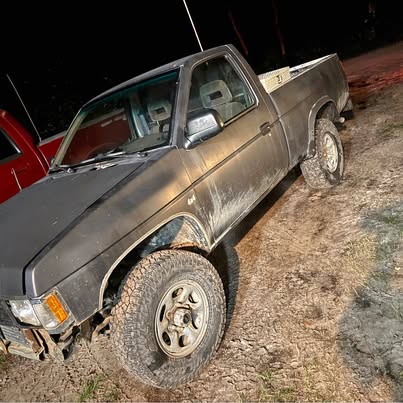
Four-wheel-drive trucks use Nissan's TX10 transfer case, a part-time unit with high range, neutral and low range, engaged by a floor lever. There is no centre differential, so four-wheel drive must never be used on dry sealed surfaces — a truck that winds up, hops and bangs on tight turns on tarmac is behaving normally in 4WD and telling you the previous owner may have been abusing it that way for years. Test low range on a loose surface: engagement should be positive, and a rhythmic clicking or jumping out of gear under load suggests a stretched transfer chain or worn engagement parts, a $700–1,400 repair. Front hubs are manual on many trucks — get out, turn the dials, drive — and automatic on others; automatic hubs that fail to engage, or that click and ratchet on turns, are a common and relatively cheap fix at $150–400 a side with quality manual-hub conversions widely available. The front differential and the rear axle — a C200 or the heavier H233B depending on model and year — are strong; listen for a steady speed-related whine that changes between power and overrun, check the breather is clear, and treat milky diff oil after water crossings as a service-now item rather than a death sentence.
Problem areas
A D21 rarely dies from its engine. It dies from its frame, from a timing component that was ignored, or from a pile of medium-sized jobs that together cost more than the truck. Work through this section in the order it is written — structure first, then the engine-specific traps, then the running gear — because that is the order in which the money is at risk.
Frame and body rust: the geography
The D21's frame is a steel ladder frame, and its rust follows a map so consistent you can learn it once and use it on every truck you view. Salt and mud are thrown up by the wheels, sit in ledges and seams, and rot the frame from the inside of its rails and the top of its members — exactly where a glance from the side cannot see. Geography matters: a truck that has lived in Florida, the Gulf states or the dry West may have a frame that rings like a bell, while a truck from the salt belt can look presentable in photographs and be structurally finished underneath. The states a truck has lived in matter more than the state it is photographed in; ask, and check the title history where you can.
Start at the back, because the worst of it is at the back. The rear frame kick-up over the axle, the leaf-spring hangers and shackles, and the crossmembers around the spare wheel and fuel tank are the classic failure zone. Mud packs around the spring hangers, the spare wheel traps damp against its crossmember, and the frame rails narrow and collect debris where they rise over the rear axle. Perforation here is not cosmetic: the spring hangers carry the rear suspension, and a hanger tearing out of a rotten rail is a structural failure, not an MOT advisory. Prod with a screwdriver, with the seller's permission, and tap with a small hammer — sound frame steel rings, rotten steel thuds and flakes. A single localised repair section, cut out and welded properly, runs $600–1,500; a frame with perforation in several zones is a parts truck, whatever the engine sounds like, because multi-section frame fabrication at $2,500–5,000-plus quickly exceeds the value of all but the best SE 4x4s.
Cab mounts and the middle of the frame come next. The rubber cab mounts perish and the steel brackets and the frame pads beneath them corrode; a cab that sits visibly crooked, doors that have dropped or misaligned, or a clunk over bumps from under the cab all point here. Mounts themselves are cheap parts, $150–350 a set, but seized and corroded hardware turns the job into a day's labour at $500–1,000 fitted. The front of the frame — the horns behind the bumper, the steering-box mounting area and the torsion-bar crossmember — collects accident damage as well as rust. A steering box bolted to a flexing, corroded rail gives vague, wandering steering that no alignment will fix, so put a hand on the box while an assistant rocks the wheel and watch for the box itself moving. Check the torsion-bar crossmember and its adjusters too: seized adjusters mean ride height cannot be set, and a snapped torsion bar, while rare, leaves one front corner on the floor.
The body rots in its own places. The double-walled bed that gave the truck its name traps moisture between its skins: look along the bed floor seams, around the wheel tubs, at the front bed panel behind the cab and along the lower bed sides behind the rear wheels, where road spray is thrown. Bed floors rust over the crossmembers in lines that mirror the supports underneath — press along those lines. Cab rust starts in the floor pans under the mats (water enters past perished windshield seals and blocked cowl drains and sits there), the rocker panels and lower cab corners behind the doors, the bottoms of the doors themselves where drain holes block, and the lower windshield frame. King Cab cars add the rear cab corners and the panel under the rear window. A cab floor repair panel fitted and painted runs $600–1,400 a side; rockers and cab corners $500–1,200 a side done properly; a bed floor is usually repaired by patching or, on work trucks, by fitting a used bed at $400–1,000 plus paint, which is why so many D21s wear a bed that is a slightly different shade from the cab. None of these alone kills a truck with a sound frame. All of them together, on a truck with frame rust too, describe a parts car.
Two cover-ups to learn. Fresh black underseal or stone-chip blown uniformly over the whole underside the week before sale is a warning, not a feature — sound frames have patchy, aged, honest coatings. And filler in the lower bed sides and cab corners announces itself to a magnet wrapped in cloth and to a fingertip run along the panel edge: factory steel edges are crisp and even, filler edges are thick and wavy.
Engine-specific failures: chain, belt and studs
KA24E timing-chain guide failure is the signature mechanical failure of the later four-cylinder truck, and it has a mechanism worth understanding. The single timing chain runs from the crankshaft up to the camshaft, sliding against fixed guide rails faced with plastic and pressed by a tensioner that relies on engine oil pressure. With age and mileage the plastic facings wear and grow brittle, the chain stretches slightly, and cold starts — when oil pressure takes a moment to reach the tensioner — let the chain slap against the guides. The symptom is a rattle from the front of the engine on a cold start. A rattle that lasts a second or two on a high-mileage engine is common; a rattle that lasts several seconds, or that is present on every start, or that you can also hear at a hot idle, is the guides asking to be replaced. Left alone, two things happen: a guide breaks up and its pieces fall into the sump, and the slack chain saws into the aluminium timing cover — in the worst case through into the water passage behind it, at which point coolant and oil mix. That gives you the distinguishing test that separates this from a head-gasket failure: a KA with milky oil or coolant loss, a long cold-start rattle in its history and chain debris or a scored cover found on inspection has a timing-cover failure; a KA with none of the rattle history and a positive chemical block test has a head gasket. The fix, done once and done completely — chain, both guides, tensioner, sprockets as needed, cover if scored — runs $900–1,800 at a shop and less in parts for a home mechanic, and a truck with an invoice for that job is worth more than a quieter truck with no paperwork, because a quiet engine today tells you nothing about the state of its guides.
VG30 timing-belt neglect is the V6 equivalent, and it is simpler and more brutal. The belt does not usually warn you; it sheds teeth or snaps, and because the VG30 is an interference engine the result is bent valves. There is no test that distinguishes a good belt from a tired one by ear, and visual inspection through a cover tells you only about the outside of the belt. The only defence is documentary: belt, tensioner and water pump changed together, on schedule, with an invoice. Everything else about the VG — the snapped exhaust studs, the forgotten rear coolant hoses, the ticking lifters — is negotiable money. The belt is a cliff edge.
Z24i and VG30i throttle-body and vacuum faults cause more misdiagnosis than any other D21 problem. These engines meter air and fuel with eighties electronics surrounded by nineties-perished rubber. A high or hunting idle, a stall at junctions or a flat spot is, in order of likelihood, split vacuum hoses, a leaking throttle-body base gasket, a gummed idle-air passage, a worn throttle shaft, a tired oxygen sensor or a failing injector — and only after all of those, the ECU. Sellers will tell you a truck "needs a computer"; it almost never does. Budget $150–500 to sort the rubber, gaskets and sensors on an early truck and treat a genuinely faulty ECU — testable by substitution with a known-good unit — as the exception. On the Z24i, also check that both ignition circuits are firing: an engine running on only its intake-side or exhaust-side plugs will still run, roughly and weakly, and the fault — a coil, a module or a set of leads — is cheap once identified with a spark tester on all eight leads.
Cooling-system neglect cuts across all three engines. Radiators silt up, fan clutches freewheel when they should drive and lock when they should slip, thermostats stick, and the small coolant hoses at the back of the VG are forgotten entirely. A D21 that runs hot in traffic but cool on the road points to the fan clutch or a blocked radiator core; one that overheats under load at speed points to flow — radiator, water pump or a collapsing hose. A new radiator is $250–550 fitted, a fan clutch $150–350, a full hose set $200–400 in parts; an overheating event ignored is a head gasket at $900–1,600, which is why the temperature behaviour on the test drive matters more than the seller's reassurance.
Suspension, steering and brakes
The front suspension is a double-wishbone layout sprung by torsion bars, and its wear items are ball joints, wishbone bushes, shock absorbers and the torsion bars' ride-height setting. Worn upper ball joints are the item to test properly: jack the front up under the lower arm so the suspension is loaded as designed, then lever the wheel top-to-bottom and watch the joint — play judged with the suspension hanging free gives false readings on this design. A set of ball joints fitted runs $400–800 a side including alignment; wishbone bushes $300–600 a side. A truck sitting nose-down or unevenly side to side may simply need its torsion bars adjusted — the adjusters are at the crossmember under the cab — but seized adjusters or a bar that has sagged unevenly turn a free adjustment into a $300–700 job. Rear leaf springs sag, crack leaves (look along each leaf for a step or a fresh rust line across it) and wear their bushes and shackles; a re-bushed, re-arched or replacement spring set is $400–900 fitted, and a truck that sits tail-down under no load is telling you its springs are done.
Steering is a recirculating-ball box with a linkage full of joints, and the classic D21 fault is play at the wheel from a worn idler arm, centre link and tie-rod ends accumulating on top of a box that needs its adjustment taken up. Have an assistant rock the wheel while you watch each joint in turn from underneath: the joint that moves late is the worn one. An idler arm is $150–350 fitted, a full set of linkage joints $500–1,000, and a rebuilt steering box $600–1,100 — but remember the frame check from the rust section: a box mounted on rotten steel mimics all of it. Power-steering pumps groan and leak from their front seals and hoses; a groan only at full lock is normal, a groan through the range with frothy fluid is air from a leaking suction hose, usually a cheap fix.
Brakes are front discs and rear drums, with rear-wheel anti-lock on many later trucks. The system is conventional and the parts are cheap; the faults are age faults. Calipers seize after standing, rear wheel cylinders weep into the drums, the load-sensing proportioning valve above the rear axle — which varies rear brake effort with load — seizes or leaks and is often bypassed badly, and steel brake lines corrode along the frame rail, particularly where they run beside the fuel tank. A full hydraulic refresh with lines, hoses, calipers, cylinders and fluid runs $800–1,600 at a shop and is non-negotiable money on a truck that has sat. A pedal that sinks slowly at a standstill is a master cylinder at $200–400 fitted; a truck that pulls under braking is a seized caliper or a collapsed hose, not an alignment problem. Check the parking brake holds on a slope — stretched cables and seized rear mechanisms are common, and it is a legal requirement, not a nicety.
Electrics, interior and the small things that add up
D21 electrics are simple and their failures are connection failures. The main fusible links near the battery corrode and cause total or intermittent electrical death that gets blamed on alternators and starters; check and clean them first. Alternators and starters themselves are ordinary and rebuildable, $200–450 each fitted. Instrument clusters lose their fuel and temperature gauges to cracked solder joints and bad earths — a dead gauge is a cluster or earth fault until proved otherwise, not a sender. On four-wheel-drive trucks the 4WD indicator and hub engagement get sticky from disuse: a truck whose hubs and transfer lever have been exercised monthly rarely gives trouble, and one that has sat in 2WD for a decade often needs a day of freeing off.
Inside, the D21 is durable vinyl and hard plastic on base trucks, cloth on XE and SE, and the wear is predictable: the driver's seat bolster and cushion collapse, the dash top cracks in sun-state trucks (a cracked dash is cosmetic but expensive to make right, with good used dashes getting scarce), door cards pull away, window regulators — manual or electric — wear and slow, and headliners in King Cabs sag. Seat re-foaming and a cover runs $250–600 a seat; a full retrim is rarely justified outside an SE restoration. Heater and air-conditioning faults matter more: the blower resistor pack fails and takes speeds with it (a $30–80 part), heater cores leak into the passenger footwell and are a dashboard-out job at $600–1,100, and period air conditioning that has been empty for years needs seals, a receiver-drier and possibly a compressor before it will hold a charge — $500–1,200 to recommission properly. Test the heater on every viewing, whatever the weather, and treat working factory air on a southern truck as real added value, because most no longer have it.
Finally, the fuel system. Tanks rust from the outside where straps and mud hold damp against them, filler necks corrode, in-tank pumps and sender units fail, and fuel lines along the frame perish and rust. A sender that lies, a pump that is noisy, or a smell of fuel at the back of the truck are all jobs in the $250–700 range, and a holed tank on a truck you intend to keep is a replacement, not a patch. None of these small systems kills a D21 alone. Together — and they do arrive together, on a truck that has been neglected as a whole — they are the difference between a cheap truck and an expensive one wearing a cheap truck's price tag.
How to inspect one
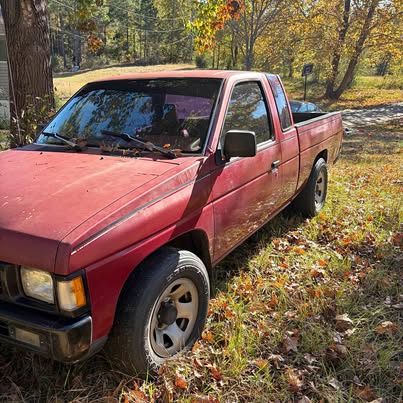
Allow an hour, bring a torch, a small hammer or the handle of a screwdriver for tapping frame steel, a magnet wrapped in cloth, and a jack if the seller cannot provide one. Insist on seeing the truck cold, outside, and underneath as far as you can get. On a D21 the inspection is a funnel: the frame decides whether you continue at all, the engine's timing components decide what you will spend, and everything else is negotiation.
- Paperwork and identity first. Match the VIN on the title to the plate on the dashboard, visible through the windshield, and to the door-jamb label. Confirm the engine matches the year — a Z24i or VG30i in a pre-1990 truck, a KA24E or VG30E in a 1990-on truck — and treat a mismatch as a question to be answered, not a detail. On a V6, ask for the timing-belt invoice now; if there is none, note the belt service as money off, per the engines section.
- The cold start, standing outside. Have the seller start it while you stand at the front with the hood up. On a KA24E, listen for the timing-chain rattle described in the problem areas and time it: a second is wear to monitor, several seconds is a chain job to price. On any engine, watch for blue smoke at start-up (valve seals), white smoke that persists (coolant), and listen for the V6's cold exhaust-stud tick that fades as it warms.
- Under the truck: the frame decides. Work the rust map from the problem areas in order — rear kick-up over the axle, spring hangers and shackles, spare-wheel and fuel-tank crossmembers, cab mounts, then forward to the torsion-bar crossmember and steering-box mounting. Tap and prod. Perforation at the spring hangers or in several zones ends the inspection; walk away politely and keep your deposit.
- Bed and cab rust. Press along the bed floor over its crossmembers, check the bed wheel tubs and the front bed panel, then lift the cab mats and check the floor pans, rockers and lower door edges with the magnet. Damp carpets in a supposedly dry-stored truck mean a windshield or cowl leak and floor rust starting — find the source, not just the stain.
- Fluids and leaks. Engine oil: level, colour, and on a KA24E, any sign of coolant emulsion — remembering the timing-cover test in the problem areas before calling it a head gasket. Coolant: rusty water means a neglected system. Gearbox, transfer and diff oils if you can reach the plugs. Power-steering fluid frothy or low means a leak to find.
- Suspension and steering, loaded. Jack under the lower front arms so the suspension sits loaded, lever each front wheel and watch the ball joints as described in the problem areas. Then rock the steering wheel with an assistant underneath watching the idler arm, centre link and tie-rod ends, and check the steering box itself does not move on its mountings.
- The test drive: gearbox and clutch. Fifteen minutes, including a hill and a fast road. The manual should take every gear cleanly, hot; test second-gear synchromesh on a downchange, and load the clutch in a high gear on the hill to provoke slip. An automatic must engage drive and reverse promptly and change without flare — if it does not, price the rebuild, as the engines section sets out.
- Four-wheel drive, on a loose surface. Engage the hubs, select 4WD high and low, and drive on gravel or dirt. Engagement should be positive, low range should pull without clicking or jumping out, and the truck should then come back to 2WD cleanly. Never test this on dry tarmac, and distrust any seller who suggests it.
- Brakes and stance. Brake firmly from speed: straight, no judder, no pull. Test the parking brake on a slope. Then stand back and read the stance — nose or tail down points to torsion bars or leaf springs respectively, per the suspension section — and look down each flank for ripples and mismatched paint.
- Heat and electrics. Let it idle hot and watch the temperature gauge stay steady. Run the heater on every fan speed, test the air conditioning if fitted, and work every electrical item: lights, wipers, washers, windows, gauges. A dead gauge is a cluster or earth fault until proved otherwise; a dead blower speed is the resistor pack.
- Engine, warm. With the engine hot, listen again: the KA's chain should be silent, the V6's exhaust tick should have gone, lifters should have quietened. Check for leaks that only show hot and under pressure, and for a pressurised, rock-hard top hose on a cold engine the next morning if you get a second viewing — an early sign of combustion gas in the coolant.
- Interior and the small things, last. Sit in the driver's seat and feel for a collapsed cushion, check the dash for cracks, the King Cab jump seats and belts if fitted, and the headliner. A sound, original interior is the hardest part of a D21 to replace, so weight it — but only after the frame, the chain or belt, and the brakes have passed.
Values
The D21 market is a condition market far more than a model market, and the computed listings and sales figures appended below this guide will teach you more if you read them through that lens. Two trucks with the same year, cab and badge can sit at opposite ends of the range because one has a sound south-western frame, a documented timing service and a straight bed, and the other has a patched frame, no history and a bed held together by its liner. When you compare prices, compare frames and paperwork first and photographs second.
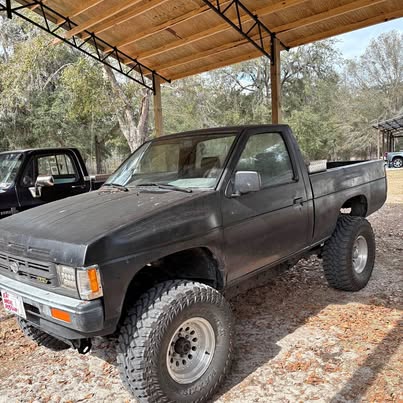
The spread within any variant is driven by a short list of things, in a fairly consistent order. Frame condition dominates everything: a genuinely rust-free frame is the single attribute buyers pay the most for, because it is the one thing that cannot be economically created from a rotten truck. Next comes the timing evidence — a KA24E with a recent chain, guides and tensioner invoice, or a VG30 with a recent belt, tensioner and water-pump invoice, removes the largest single unknown in the purchase. Then cab and drive: King Cabs are worth more than regular cabs in equivalent condition because they are more usable, and four-wheel drive carries a lasting premium over two-wheel drive, largest on V6 SE trucks and smallest on tired four-cylinder work trucks where the extra hardware is a liability to the buyer who just wants a runner. Originality and presentation follow: factory graphics intact on an SE, an unmodified suspension, standard wheels and an uncracked dash all mark out the trucks that collectors of the nineties Japanese scene are beginning to compete for, while lift kits, cut arches and non-standard engines narrow a truck's market even when the work was expensive.
Asking prices and achieved prices are not the same thing on a D21, and the gap is widest at the bottom of the market. Cheap trucks are frequently advertised optimistically by sellers pricing the engine's reputation rather than the frame's condition, and they sit; the trucks that sell quickly are either honestly cheap projects, described as projects, or genuinely sorted trucks priced by sellers who can show invoices. Auction results for the best SE V6 4x4s and exceptional low-mileage survivors have pulled away from the general run of classified prices in recent years, which is a familiar pattern when a work vehicle starts to be collected — the top of the market detaches first, while ordinary trucks continue to trade on condition and usefulness. Do not let a headline result for a concours SE convince you that a base four-cylinder with a patched frame has appreciated; it has not, and it will not until it is repaired, at which point the repair will have cost the difference.
The project-versus-driver gap is the most useful number to hold in your head, even though it is a gap and not a price. A project D21 — running, but needing a chain or a belt service, brakes, tyres and rust work — carries the cost of all of those jobs inside its discount, and sellers routinely under-discount, because each job looks small alone. Add the jobs honestly, using the ranges in this guide, and you will often find the sorted truck at the higher price is the cheaper purchase over the first year. Conversely, a non-running truck with a sound frame and a complete, original specification can be the best value in the market for a buyer who can do the work, because the frame is the part you cannot buy your way out of. Negotiation follows from evidence: a frame photograph, a timed cold-start rattle, a missing belt invoice and a quote for the brake refresh are worth more than any general claim that the truck is overpriced.
Parts and ownership
The D21 is one of the easiest eighties and nineties vehicles to keep, for a simple reason: Nissan built pickups on this platform in large numbers for over a decade, the Pathfinder shared much of the hardware, and the mechanical design is conventional enough that the general parts trade, not just Nissan specialists, still supports it.
Easy: engine service items for all three engines — filters, plugs (remember the Z24i takes eight), belts, hoses, water pumps, thermostats — plus ignition consumables, clutches, brake discs, pads, drums, shoes, calipers and wheel cylinders, shock absorbers, ball joints, steering linkage joints, leaf-spring bushes, alternators, starters and radiators. Most of it is order-today, fit-this-weekend, at prices in line with any mainstream vehicle of the age, and the KA24E in particular benefits from sharing its family with the 240SX and Altima, which keeps both standard and knowledge-rich performance suppliers interested in it.
Harder and dearer: VG30 throttle-body components for the early VG30i, which are application-specific and increasingly scarce; good uncracked dashboards and clean SE interior trim; factory graphics sets; rust-free used beds and bed panels in the salt belt, where every local truck rotted the same way; H233B axle parts in some ratios; and correct early Z24i emissions and vacuum components, where the surviving stock is mostly used. Frame repair sections are a fabrication job rather than a catalogue part, priced per truck. A quality repaint costs what a quality repaint costs on any vehicle, which is why the standing advice in this guide is to buy the body and the frame and fix the mechanics.
Running costs. A sorted D21 is a genuinely cheap classic to run: fuel economy in the high teens to low twenties for a four-cylinder two-wheel-drive truck driven gently, less for a V6 4x4 on oversize tyres; servicing that any competent independent shop can handle, with the timing-chain and timing-belt items in this guide the only scheduled jobs that need planning; and insurance in line with other utility classics. The budget line that catches new owners is the first year of catching up. A running, driving truck with deferred maintenance honestly needs $1,500–3,500 spent in its first year on the timing evidence, brakes, fluids, hoses and tyres before you improve anything, and recommissioning a truck that has sat for years — fuel system cleaned end to end, tank inspected, every brake component renewed, all fluids and perished rubber replaced — runs $3,000–6,000 at a shop. Trucks that have sat suffer most in the fuel and brake systems, because modern fuel attacks old rubber and leaves deposits in tanks and throttle bodies while brake fluid absorbs water and corrodes cylinders from inside. Buy a truck in regular use over a truck that has been asleep, even at a higher price; on a D21, use is maintenance.
Which one to buy
- The all-rounder: KA24E King Cab 4x2, 1990–1997. The strongest combination of engine, cab space, simplicity and parts support in the range. If you want one D21 to use as a truck and keep indefinitely, this is it.
- The value buy: a four-cylinder regular-cab work truck with a sound frame. Base trucks are the cheapest D21s and the most abused, but a straight-framed one is the same mechanical package as an XE under the vinyl. Buy the frame, accept the specification.
- The classic of the range: SE V6 4x4 King Cab. The flagship — VG30E power, factory graphics, the full specification — and the truck the nineties-Japanese-truck collectors want. Verify the timing-belt invoice as ruthlessly as the frame; an undocumented SE is a project wearing flagship money.
- The early truck: Z24i or VG30i, 1986–1989. For the buyer who wants the original Hardbody and likes simple throttle-body injection. Budget for every piece of rubber on the engine, check all eight plugs on the four, and pay only for body and frame condition.
- The one to avoid: any D21, of any specification, with perforation in the rear frame or spring hangers. It is not a cheap truck; it is a parts truck priced as a cheap truck.
And the rule that overrides all of the above: buy the frame, then the timing paperwork, then everything else. Engines, gearboxes, brakes, springs and interiors are all fixable at prices you can plan for from this guide. A rotten frame is the one thing about a D21 that money cannot make original again — and it is the first thing to check, every time.
See the 4 D21 cars currently listed.
For sale now
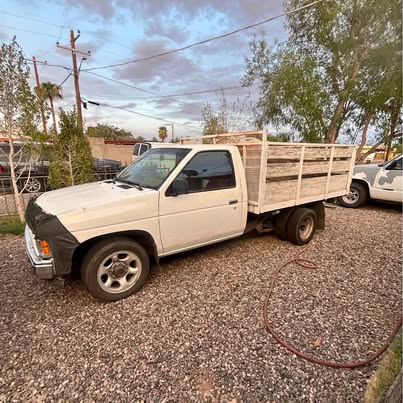 $3,500
Expand
$2,850Expand
What they sell for: D21 sale prices.