
Nissan Hardbody buyer's guide
Nissan Hardbody -- the model's own buyer's guide: variants, values and what to check.
Years listed: 1988-1993 · Series: Pickup
Overview and history
The Nissan Hardbody — the D21 pickup, in factory code — is the truck that carried Nissan through the last great decade of the simple compact pickup. It replaced the 720 pickup in the middle of the 1986 model year, and it stayed in American showrooms, essentially unchanged in its bones, through 1997, when the Frontier took over for 1998. Most American-market trucks were built at Nissan's plant in Smyrna, Tennessee. That is a long production run for one design, and it is the first thing to understand as a buyer: a 1987 and a 1997 Hardbody are the same truck wearing different grilles, powered by engines from the same two families, and separated mainly by how they have been treated.
The name is the truck's own biography. "Hardbody" was Nissan's period advertising word for the D21, widely traced to its double-walled cargo bed and its squared, muscular styling — flat panels, sharp creases, flared arches and not a rounded corner anywhere. The styling was a deliberate break with the soft, seventies shape of the 720, and it has aged the way good industrial design ages: a clean early truck on steel wheels looks as right now as it did new. Underneath, the formula was conservative even by 1986 standards — a separate steel ladder frame, double-wishbone front suspension on torsion bars, a live rear axle on leaf springs, and engines Nissan had already proven in its cars and in the 720. Nothing about a D21 is exotic. That is precisely its appeal, and precisely its trap, because a truck this simple invites owners to fix nothing at all for thirty years.
The D21's running mate matters to you as an owner: the WD21 Pathfinder, launched alongside it, is the same truck from the firewall forward — same engines, same front suspension, same four-wheel-drive system, much of the same cab hardware. That shared volume is why mechanical parts support for the Hardbody remains far better than its age suggests, a point the parts section returns to.
These were working trucks, bought cheap and used hard. They hauled, commuted, hunted, fished, learned teenagers to drive a manual gearbox, and were then parked in fields and behind barns when something finally broke. Very few were garaged, fewer were serviced on the book, and almost none were rustproofed after the factory. So the market today splits cleanly in two: a thin top layer of genuinely preserved trucks — usually southern, usually four-cylinder King Cabs that spent their lives as second vehicles — and a deep bottom layer of honest, worn, modified and rusting work trucks in every state of repair from daily driver to parts donor. There is very little in between, and the inspection section of this guide is built for that reality.
Judge every Hardbody by its frame first, its engine second and its cosmetics last. The mechanicals are among the toughest Nissan ever built and almost everything mechanical can be fixed at home with ordinary tools. The frame cannot be un-rusted, and on this truck the frame — not the engine, not the mileage — is what decides whether you are buying a classic compact pickup or a very charismatic parts pile.
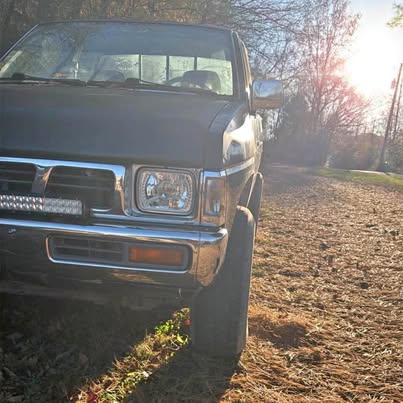
The models
Every Hardbody is a D21. The badges and trim names changed over eleven years, but the range always organised itself the same way: two cab styles, two bed lengths on the regular cab, two-wheel drive or part-time four-wheel drive, a four-cylinder or a V6, and trim that ran from vinyl-floored work spec up to the comparatively plush SE. Nissan never published a clean variant-by-variant production split for the American D21 that a buyer can rely on, so the table below carries no built column rather than an invented one — outputs are the period US figures.
| Model | Years | Engine | Output | Character |
|---|---|---|---|---|
| Base / E, Z24i | 1986–1989 | 2.4 four (Z24i), throttle-body injection | 106 hp | The early work truck; simple, slow, honest |
| Base / XE, KA24E | 1990–1997 | 2.4 four (KA24E), multi-point injection | 134 hp | The core of the market; the default Hardbody |
| V6, VG30i | 1986–1989 | 3.0 V6 (VG30i), throttle-body injection | 136 hp | Early V6; torque for towing and 4WD |
| V6 SE / XE, VG30E | 1990–1995 | 3.0 V6 (VG30E), multi-point injection | 153 hp | The flagship; quickest and best-equipped D21 |
| Four-cylinder only | 1996–1997 | 2.4 four (KA24E) | 134 hp | The run-out years; V6 dropped, newest trucks |
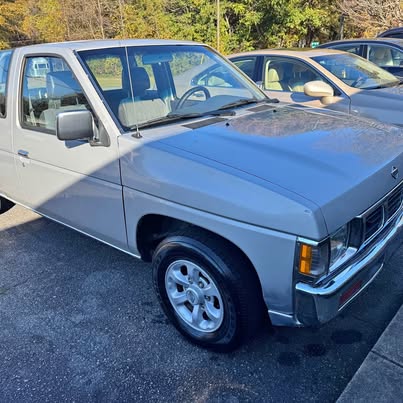
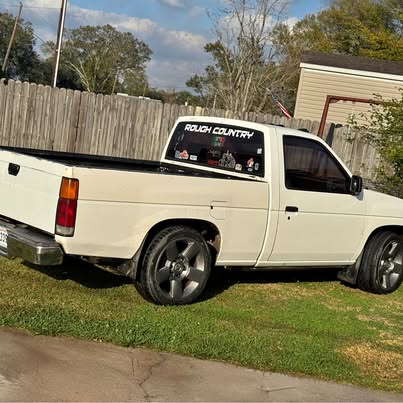
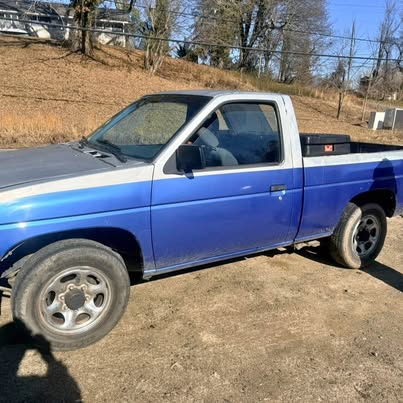
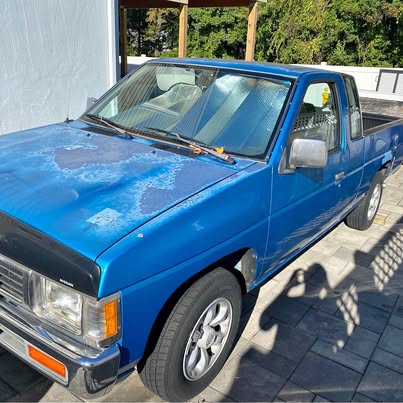
Cabs and beds. The regular cab came with a standard bed of about six feet or a long bed of about seven feet; the long-bed truck is the genuine half-ton-style worker of the range and the one contractors actually bought. The King Cab is an extended cab with a small rear bench and fold-down jump seats behind the front seats — fine for children, tools and short hops, not a place an adult rides by choice — and it kept the standard-length bed. King Cabs dominate the surviving market and are the easiest Hardbody to live with: the extra cab space is where your coat, your dog and your groceries go in a truck with no other storage. A regular-cab short-bed is the lightest, simplest truck and the one the lowering and mini-truck scene adopted, which cuts both ways — many were modified, and unmodified ones are getting scarce.
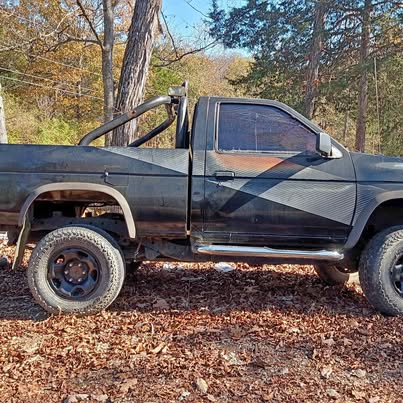
Two-wheel drive versus four-wheel drive. The 2WD truck sits low, steers lightly and is the better road vehicle in every way. The 4WD truck rides on the same torsion-bar front suspension cranked to a taller stance, carries a two-speed part-time transfer case, and was bought to work off pavement — which means most survivors have. A 4WD badge is worth a premium only when the system underneath still works and the frame carrying it is sound; a rusty 4WD is worth less than a clean 2WD, whatever the badge says.
Trim: base, XE and SE. Base trucks — badged simply, or as the E in some years — are vinyl, steel wheels and a five-speed manual, and they wear their honesty well. The XE is the volume trim: cloth seats, better trim, air conditioning commonly fitted, and the specification most King Cabs were sold in. The SE is the sport flagship, most often a V6 King Cab 4WD with bucket seats, alloy wheels, a tachometer and the option of a limited-slip rear axle. SE equipment is nice to have but adds nothing to durability; buy an SE for its specification, not because the trim makes it a better truck.
The year split that actually matters. The range divides at 1990, when both engines changed: the Z24i four gave way to the KA24E, and the VG30i V6 to the VG30E. The later engines are stronger, smoother and easier to fuel and diagnose, and the 1990-on trucks are the default recommendation in this guide. The other split is at the end: the V6 left the range after 1995, so the newest trucks — 1996 and 1997 — are four-cylinder only. A seller describing a 1997 V6 Hardbody is describing a badge, an engine swap or a mistake, and the engine itself settles which: the V6 has a wide vee under a plenum marked with its displacement family, the KA24E is a tall single-cam four with its plugs in a row. Check the engine, not the listing title — Marketplace titles on these trucks routinely carry trim, colour and equipment the truck in the photographs does not have.
Engines and gearboxes
The fours: Z24i and KA24E
The four-cylinder is the Hardbody engine — most trucks have one, most survivors have one, and the guide's advice is built around it. Both versions are single-overhead-cam, chain-driven and fundamentally long-lived. Neither makes the truck fast. Both make it nearly indestructible if the oil has been changed at all.
Z24i (1986–1989). The early four is a 2.4-litre carried over from the 720, fuelled by a single throttle-body injector — essentially an electronic carburettor sitting where a carburettor would sit — and rated at 106 hp. Its virtues are simplicity and tolerance: there is very little on a Z24i that a home mechanic cannot test with a multimeter and a fuel-pressure gauge, and it will run, badly and for years, in states of tune that would stop a later engine. Its vices are age and thirst relative to its pace. Hard starting and a rich, hunting idle on a Z24i are usually vacuum leaks at perished hoses and the throttle-body base gasket, a tired coolant-temperature sensor telling the ECU the engine is cold when it is not, or low fuel pressure from a dying in-tank pump — in that order, and all cheap. What kills a Z24i is overheating: a neglected cooling system, a warped head and a blown head gasket, announced by coolant loss with no visible leak, bubbles in the radiator neck and oil that looks like café latte. A Z24i truck is a fine buy at Z24i money; it is not a truck to pay KA24E money for.
KA24E (1990–1997). The later four is the engine to have. Still a 2.4-litre single-cam, but with three valves per cylinder, proper multi-point injection and 134 hp, it pulls a Hardbody with genuine ease, cruises at modern highway speed without strain and returns economy the early truck cannot match. It is the same family Nissan fitted to the early 240SX and the Stanza, which is why parts and knowledge are everywhere. A healthy KA24E starts instantly, idles flat and clean, and pulls without a flat spot. The faults it does have are specific, and each has a test.
The timing chain is the first. The KA24E runs a single chain with plastic-faced guides and a hydraulic tensioner fed by engine oil pressure. A brief rattle for a second or two on a cold start, while the tensioner pumps up, is common on a high-mile engine and not a verdict. A rattle that continues at idle, or a slapping noise from the front of the engine, is worn guides — and it matters beyond the noise, because a slack chain whips against the timing cover and can wear through into a coolant passage, at which point oil and coolant mix and the repair stops being a chain kit and becomes a cover as well. The check costs nothing: cold-start the truck yourself, stand at the front wing and listen. A chain, guides and tensioner job is roughly $600–1,200 in parts and labour at a general shop, less at home; price it into any truck that rattles, and treat a seller's "they all do that" as confirmation, not reassurance.
The distributor is the second. On the KA24E the crank-angle sensor lives inside the distributor, reading an optical disc. Heat kills it slowly, and the classic presentation is a truck that runs perfectly cold, cuts out when fully hot, and restarts twenty minutes later as if nothing happened — a fault sellers describe as an electrical gremlin and buyers misdiagnose as a fuel pump for months. The distinguishing test is spark during the failure: no spark on a hot no-start, returning as the engine cools, is the sensor until proven otherwise. A replacement distributor is a few hundred dollars and an hour's work, but the pattern must be recognised first, or you will buy a fuel pump, then an ECU, then a distributor.
The rest of the KA24E list is maintenance, not design. Exhaust manifold studs fatigue and snap — most often at the ends of the manifold — giving a ticking on cold start that fades as the manifold expands and seals; look for soot at the manifold face and broken stud ends before blaming a lifter. The EGR system carbons up and gives a stumble just off idle. The idle-air control valve gums up and gives a wandering or stalling idle that a clean, not a replacement, usually cures. And like the Z24i, it dies by overheating if the radiator, hoses and water pump are ignored — a KA24E with a documented cooling-system refresh is worth more than one with a shiny intake.
The V6s: VG30i and VG30E
The 3.0-litre V6 — the VG family Nissan used across its range, from the Maxima to the Pathfinder — turns the Hardbody into a genuinely capable truck: real towing torque, relaxed highway work and, in the 4WD SE, the specification most collectors now chase. The early VG30i (1986–1989, 136 hp) uses throttle-body injection like the Z24i and shares its simplicity. The VG30E (1990–1995, 153 hp) has multi-point injection, more power everywhere and better manners, and it is the V6 to buy.
One fact governs V6 ownership, and it is the opposite of the fours: the VG30 runs a timing belt, not a chain, and it is an interference engine. A belt that snaps or strips does not leave you at the roadside with a bill for a belt; it leaves you with bent valves and a cylinder-head rebuild. Nissan's belt interval on these engines is long — up to 105,000 miles on later service schedules, with many specialists advising 60,000–90,000 on a truck of this age regardless of what the book allows — but the interval is meaningless on a truck with no history. If the seller cannot show you a belt invoice with a date and a mileage, the belt is due, today, at your expense: budget roughly $700–1,200 for belt, tensioner, idlers and the water pump that lives behind the same covers and should always be changed with it. Then look for the silver lining — a truck with a recent, invoiced belt, pump and coolant service has had exactly the maintenance a VG30 needs, and that invoice is worth a premium over a lower-mileage truck with none.
The V6's signature nuisance is the same as the four's, only louder: exhaust manifold studs snap from heat cycling, manifolds themselves can crack, and a cold-start tick that quietens as things warm up is the sound of both. On a VG30 the manifolds are buried and the labour is the bill — broken-stud extraction and manifold work runs roughly $500–1,500 depending on access and how many studs have gone — so listen to every V6 from stone cold, and look down the sides of the engine with a torch for soot tracks at the manifold faces. Injector and harness issues give the VG30E its other classic fault, a single-cylinder misfire that moves or comes and goes with heat; the connectors on top of the engine perish and corrode, and cleaning and re-pinning a connector is a different bill from a set of injectors, so the misfire must be pinned to a cylinder and a cause before parts are bought. A good VG30E should be smooth, quiet and dry. Oil leaks from cam covers and the front crank seal are common, cosmetic-grade if slight, and a useful sign the truck has at least had oil in it.
Gearboxes and the four-wheel-drive system
Most Hardbodys are manual, and the five-speed is the right gearbox for the truck. Four-cylinder trucks use Nissan's FS5W71C five-speed, the V6 the stronger FS5R30A; both are durable, both shift with a long, deliberate truck throw, and both are judged the same way. Second-gear synchromesh wears first — a crunch or baulk changing down into second on a cold box that disappears warm is wear you can live with for years; a box that crunches hot, jumps out of gear under load, or whines in every gear but fourth is a rebuild, roughly $1,200–2,500 exchanged or rebuilt, and a reason to renegotiate rather than walk away, because everything else on the truck is this fixable. Clutch hydraulics are the cheap first check for any gear-selection complaint: the master and slave cylinders are external, inexpensive and a known cause of a dragging clutch blamed on the gearbox. A clutch itself is a $600–1,100 job fitted. On a 4WD, also engage low range on the test drive — a transfer case that has not been shifted in a decade can be seized at the linkage, which is a linkage bill, or silent at the chain, which is not.
The automatic is a four-speed with overdrive and lock-up, the RE4R01A family in V6 trucks. It suits the V6's torque and makes a pleasant cruiser, but it is the minority choice, it saps the four-cylinder's limited pace, and on a thirty-year-old truck its condition is a pure judgement call: fluid that is red and sweet-smelling, shifts that are prompt and clean hot and cold, and no flare between gears. Brown, burnt-smelling fluid and a lazy or slipping change mean a rebuild in the $2,000–3,500 range — more than many of these trucks are worth whole, which is why an automatic truck must be bought on how it drives on the day, with no benefit of the doubt.
Four-wheel drive is a part-time system: rear-wheel drive on the road, a transfer case — Nissan's TX10 — offering four-high and four-low for loose surfaces only, and free-wheeling front hubs, automatic-locking on most trucks. The system itself is tough; its enemies are disuse and rust. Test all of it, on dirt or gravel, never on dry pavement: engage four-high and feel for engagement, drive a slow full-lock turn and feel for the wind-up that proves the front axle is pulling, shift to low and confirm the ratio, then disengage and reverse a few feet to let automatic hubs unlock, listening for the click. A hub that will not engage, a case that will not shift, or a front driveshaft with torn boots and dry joints are all negotiable repairs — but a 4WD truck whose system you could not test is a 2WD truck with extra weight, and it should be priced as one.
Problem areas
A Hardbody rarely hides one problem; it presents a pattern. These trucks were cheap, worked hard and maintained lightly, so the car in front of you is usually sound in the ways its last owner cared about and neglected in all the others. Work through the problems in the order below — frame, running gear, body, systems — because that is the order in which they decide the truck's value. Almost everything in the last three sections is fixable at predictable money. The first section is not.
Rust: the frame map
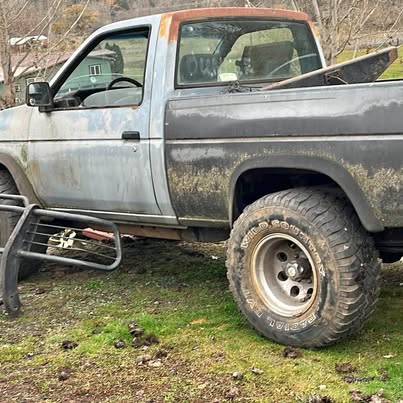
Rust is the Hardbody's terminal condition, and on a D21 it is the frame — not the body — that dies first and matters most. The ladder frame's rails and crossmembers trap road mud and salt-laden slush in their sections and around every bracket, and they rot from the inside out: paint and underseal can look presentable over metal that has thinned to foil. A truck with shiny wings and a rotten frame is a parts truck. A truck with scruffy panels and a sound frame is a project. Learn to tell them apart before you look at anything else.
The rear frame, around the spring hangers and crossmembers. The worst of it, and the first place to look. The rear half of the frame carries the leaf-spring hangers and shackles, the spare-wheel carrier crossmember and the bed mounts, and it lives in the spray of the rear wheels. Prod — with the seller's permission — around the front and rear spring hangers, along the rails above the axle, and across the rear crossmembers. Flaking in layers, metal that dents under a screwdriver, or a hanger that moves when you heave on the spring are all walk-away findings on a truck priced as a driver: proper frame repair here is sectioning and welding by a fabricator, priced per truck, commonly $1,500–4,000 for a rear half done safely, and it only makes sense on an otherwise exceptional truck. Surface scale that rings solid under a hammer tap is normal at this age and is a clean, treat and protect job, not a defect to price as welding.
The middle: cab mounts, torsion-bar crossmember and fuel-tank area. The crossmember that carries the torsion-bar anchors is a mud shelf and a known rot point; a rotten anchor mount is structural and shows as a front end that will not hold its ride height. Cab mount brackets and the frame beneath the cab floor rust where the cab traps moisture against the rail. The fuel tank, its straps and the filler neck alongside the rail corrode together — a fuel smell at the rear of the cab on a truck with a sound tank is usually the filler neck or its vent hoses, and a tank-strap failure on the road is a genuine hazard, so straps are a check, not a detail.
Body rust: bed, cab and the water path. The famous double-walled bed is a double-edged design: the inner and outer walls trap moisture between them, and beds rust at the wheel tubs, along the floor seams and at the front panel, often worst exactly where the double wall hides it. Lift any bed mat or liner — a liner in a thirty-year-old work truck is a claim, not a feature, until you have seen the floor under it. Cab rust follows the water: rocker panels and cab corners first, floor pans where a perished windshield seal and blocked cowl drains have been filling the footwells, door bottoms where the drain slots block, and the bottoms of the front wings behind the wheels. None of this is structural in the frame's sense, and repair panels and patch work are ordinary body-shop fare — $800–2,500 a side for sills and cab corners cut out, welded and painted is a realistic planning figure — but body rust is the truck's diary. A cab that has rusted through its floors has been wet inside for years, and the wiring, seat frames and heater in the electrics section below will tell the same story.
The fresh-underseal trap. It applies to trucks exactly as it does to classic cars. Honest thirty-year-old underseal is patchy, chipped at the edges and dirty. A uniform coat of fresh black stone-chip blown over the whole underside the week before sale — rails, hangers, brake lines, tank straps, the lot — is a cover-up until the seller proves otherwise, because nobody re-underseals a sound frame for the buyer's benefit. Fresh underseal does not condemn a truck, but it moves the burden of proof: prod twice as hard, and pay for a lift.
Suspension, steering, brakes and driveline
The front suspension is double wishbones working against torsion bars, and its wear items are ball joints, bushings and the torsion bars' own adjusters. Torsion bars do not wear out, but their anchor adjuster bolts seize solid with rust, and a truck that sits nose-down or uneven is usually sagging on tired bars, worn bushings or both — ride height is adjusted at the anchors, so a truck that has been "levelled" by cranking one bar hard to mask a fault sits wrong and handles wrong. Rock each front wheel at twelve and six o'clock for ball-joint and bearing play, and at three and nine for steering play, and then find where the play lives before pricing it: on these trucks the steering wears at the centre link and the idler arm as often as at the tie-rod ends, and an idler arm is a cheap bolt-on where a steering box is not. The box itself, when it finally wears, gives play at the straight-ahead that no adjustment fully removes — a sector-shaft adjustment buys time, not a cure.
At the rear, leaf springs sag, crack leaves — most often the main leaf near its eye — and wear their bushings until the axle steers the truck over bumps. Look along each pack for a leaf that sits out of line or a gap at the centre bolt, check the shackles and hangers as part of the frame check, and bounce each rear corner: a truck that sits level unladen and squats dramatically on one side under load has a spring, not a shock absorber, problem. Shock absorbers themselves are cheap and almost always overdue; budget a set as routine recommissioning rather than negotiating over them.
Brakes are front discs and rear drums, with a load-sensing proportioning valve on the rear circuit of many trucks that rusts and seizes where it sits on its frame bracket — a rear brake imbalance or a rear circuit that barely works is the valve as often as the wheel cylinders. What actually stops old Hardbodys is sitting: seized calipers, perished flexible hoses, a tired master cylinder and rear drum hardware frozen into place. A full hydraulic refresh — calipers or rebuild kits, hoses, wheel cylinders, master cylinder, fluid — is roughly $600–1,500 in parts and labour and should be assumed on any truck that has stood. Judge the discs for a rust band and a lip, and test the handbrake on a slope; it works on the rear drums and a weak one is its own small job of cables and adjustment.
Driveline wear is honest and audible. Universal joints dry out and give a clunk on taking up drive and a vibration at speed that comes and goes with throttle; the centre support bearing on two-piece shafts sags and rumbles. Rear axles — the smaller C200 under most four-cylinder 2WD trucks, the much larger H233B under V6 and 4WD trucks — are strong; a whine that rises with road speed is bearings or a worn gear set, and an axle that has run dry is the usual cause. The optional limited-slip in the H233B is a clutch-pack unit whose clutches wear out silently over the decades: a one-wheel spin on wet grass from a truck sold as limited-slip tells you the pack is done, and a rebuild is a specialist job to price in, not a fluid change.
Cab, bed and interior
The Hardbody cabin is vinyl, cloth and hard plastic, and it survives sun and work better than most — which means its condition is a reliable record of the truck's life. Dash pads crack in the sun belt; a cracked dash is cosmetic, common and expensive to make perfect, so a crack-free dash on a southern truck is a genuine plus and a dash cover is a question. Bench seats collapse on the driver's side first, exactly as on any work truck: sit in the driver's seat, feel for the frame through the pad, and check the seat frame and its mounts for the rust that floor water causes. King Cab jump seats and their trim are the scarcest interior parts in the range, because they were used hard and thrown away; a complete, intact King Cab rear is worth noting.
The heater and ventilation are simple and mostly durable, but test the blower on every speed and the heater for heat on every viewing: a heater core that leaks fogs the windshield with a sweet smell and dampens the passenger footwell carpet — and a wet footwell carpet is also your floor-rust warning, so the two checks are the same check. Air conditioning, where fitted, will almost certainly need work on a truck of this age: early trucks left the factory on R12 refrigerant, later ones on R134a, and a system that "just needs a charge" needs a charge because it leaks. Budget a proper leak-find, seals and a recharge — roughly $400–1,000 depending on what has died — and never pay air-conditioned money for a system you have not felt blow cold.
Bed condition prices the truck's working past. A straight bed floor with honest scratches is the best sign there is; a floor beaten into waves, wheel tubs hammered flat and a tailgate that will not latch describe a truck that earned its living, which is fine at the right price and fatal at the wrong one. Tailgates bend in the middle from being stood on and loaded against, and their handle and latch mechanisms seize — a tailgate that opens cleanly, sits flat and latches both sides is a small, telling victory. Check the bed mounts while you are there: perished mount rubbers give a bed that thumps over bumps and sits visibly crooked against the cab.
Electrics and fuel system
Thirty-year-old truck electrics fail at connections, grounds and switches, not in the middle of wires — and the Hardbody adds one trap of its own: the ECU lives under the seat, in exactly the place cab water collects. A truck with rusty floors and intermittent running faults may simply have a corroded ECU and connectors being slowly eaten from below. The same ECU gives you a gift, though: these trucks predate standardised OBD-II diagnostics, but the ECU carries a self-diagnosis mode, read as flashing lights on the unit itself, and a seller who knows the truck can show you a clean bill from it. On a 1996 or 1997 truck, expect proper OBD-II and read the codes with any scanner.
Work every switch. Window winders and electric windows, the wiper linkage — which wears sloppy and parks the blades badly — the blower speeds, the washers, the horn, the lights and the notoriously honest fuel gauge: senders corrode in the tank and gauges lie low or wander, and the test is a known quantity of fuel against the needle, not the seller's assurance. Charging faults are usually the alternator's brushes and regulator after decades of service; a battery light that glows faintly at idle is the alternator introducing itself. Aftermarket wiring is the rule, not the exception — light bars, stereos, trailer sockets, alarm systems — and it is judged by its workmanship: fused, routed and taped additions are fine; wires twisted together under the dash and a battery terminal carrying five ring terminals are the truck's future electrical faults, already installed.
The fuel system ages as a set. In-tank pumps weaken and give a truck that starts and idles but starves and surges under load — a fuel-pressure test under load, not at idle, is the distinguishing check. Filler necks and vent hoses rust and perish at the rear of the cab. Injectors on the multi-point engines rarely fail outright; the throttle-body trucks suffer more from vacuum leaks and tired sensors than from the injector itself. And any truck that has stood needs the tank judged: rust and varnish inside a tank will defeat every new part downstream of it, and a tank clean or replacement belongs in the recommissioning budget of any long-parked truck, alongside every rubber fuel hose on it, because modern ethanol fuel is unkind to thirty-year-old rubber.
How to inspect one
Allow an hour, bring a torch, a screwdriver for prodding (with the seller's permission), a magnet and a friend to work the steering while you watch the linkage. If the truck passes you, pay for a lift inspection before money changes hands — on a Hardbody the frame verdict lives underneath, and a lift hour is the cheapest certainty in the whole purchase.
- Start with the paperwork and the identity. Match the VIN on the title to the plate on the dashboard and the door-jamb sticker. Confirm the engine in the truck matches the listing: a tall single-cam four is a Z24i or KA24E (multi-point injection hardware and a plenum mark the KA24E; a single throttle body marks the Z24i), a wide vee under a plenum is a VG30. A "V6" listing with a four under the hood, or a 1996–97 truck described as a V6, is a listing error at best — and the price conversation restarts from the truck that actually exists.
- Cold start, and listen at the front. Insist the engine is cold. A KA24E should start at once and settle; stand at the front wing and listen for timing-chain rattle that continues past the first two seconds — that is the chain-and-guides conversation from the engine section. A V6 that ticks loudly from a manifold and quietens as it warms is telling you about studs. Watch for blue smoke on start-up (valve seals) and under load later (rings).
- The belt question, on any V6. Ask for the timing-belt invoice — date and mileage — before you discuss anything else about a VG30 truck. No invoice means the belt, tensioner and water pump are due at your cost; say so, price it at roughly $700–1,200 fitted, and move on. This single question separates maintained V6s from gambles.
- Underneath: the frame decides. Torch and screwdriver along both rails, front to back. Spend longest at the rear — spring hangers, shackles, the rails above the axle, the spare-wheel crossmember — then the torsion-bar crossmember, cab mounts and tank straps. Layered flaking, soft metal or a moving hanger ends the inspection on a driver-priced truck. Read the underseal as you go: patchy and honest is factory age; a fresh uniform black coat over everything is a question, not an answer.
- Bed and cab rust. Lift the bed liner or mat and judge the floor, the wheel tubs and the front panel. Then the cab: rockers, cab corners, door bottoms, and lift the footwell carpets for the water tracks that start at the windshield seal. Wet carpet plus a sweet smell is the heater-core check from the problem areas — do both at once.
- Front end by hand. Rock each front wheel at twelve and six for ball joints and bearings, at three and nine for steering play, and have your friend rock the steering while you watch the centre link and idler arm to find where the play lives. Check the truck's stance from twenty feet: nose-down or one-corner-down is torsion bars, bushings or a spring, and each has a different price.
- Springs, shocks and driveline underneath. Look along each leaf pack for a cracked or displaced leaf, check shackle bushings, bounce each corner, and spin what you can reach: universal joints dry and notchy, a sagging centre bearing and torn front driveshaft boots on a 4WD all go on the list. Check the rear axle for a limited-slip tag if the truck is sold as having one.
- The test drive. Fifteen minutes minimum, including a highway stretch and, for a 4WD, a gravel or dirt patch. A manual box should select every gear cleanly, with second-gear synchromesh the known wear point; an automatic should shift promptly hot with no flare, and its fluid should be red, not brown and burnt. A four-cylinder should pull cleanly without the flat spot of a vacuum leak or the starvation surge of a weak fuel pump. Brake hard from speed: straight, no judder, and a handbrake that holds on a slope at the end.
- Four-wheel drive, tested or discounted. On loose ground: four-high engaged, a slow full-lock turn to feel the front axle pull, low range selected and confirmed, then disengage and reverse to free automatic hubs, listening for the click. Anything you could not test is equipment you do not pay for.
- Heat, electrics and the seat test. Idle it hot and watch the temperature gauge stay put. Run the heater and blower on every speed, feel for air conditioning that actually blows cold if it is being sold as working, and work every window, wiper, washer, light and the horn. Read any ECU fault codes the seller can show, or scan a 1996–97 truck. Then sit in the driver's seat and feel for the frame through the pad — the seat is the truck's own record of its mileage, whatever the odometer claims.
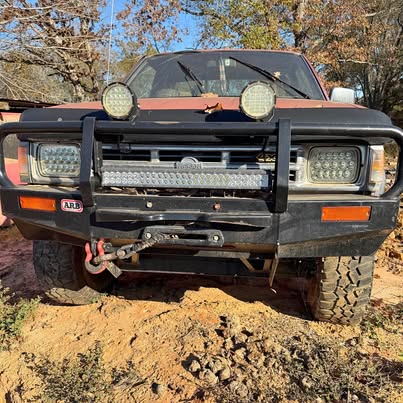
- Modifications, audited. Lifts, big tyres, light bars, winches, stereos: each is checked as workmanship, not equipment. Is the winch bumper mounted to sound frame? Do oversize tyres clear at full lock without cutting? Is added wiring fused? A well-built truck is a plus; a hacked one is a list of other people's shortcuts you are about to own.
- Title and story, last. Clean title in the seller's name, matching the VIN you checked in step 1. Trucks at the bottom of this market change hands on open titles and handshake stories; a cheap truck with a title problem is not cheap, it is unsellable — by you, later, at the worst moment.
Values
The build below this guide carries the current listings and recorded-sales figures for the Hardbody, refreshed as the market moves — read those numbers with the structure of this market in mind, because the Hardbody's spread is not really about age or mileage. It is about three things, in this order: the frame, the specification, and the story.
Frame condition is the whole ballgame. A genuinely rust-free frame — a lifelong southern or western truck, verified underneath and not asserted in the listing — supports the top of the market on its own, because every buyer who has inspected three rusty trucks knows what the fourth one is worth. A truck with documented, professionally repaired frame sections sits a clear step below an unrepaired sound frame, however good the welding, and a truck with active hanger or crossmember rot is a parts truck whatever its engine and paint are doing, and should be priced as one: engine, gearbox, cab and bed sold separately in your head, minus the work of separating them.
Specification sets the second tier. Four-wheel drive carries a real premium over two-wheel drive in the same condition, the V6 SE King Cab 4WD is the specification the collector end of the market wants, and the KA24E King Cab is the specification the driver end wants — and both premiums evaporate when the truck underneath is tired. The early Z24i and VG30i trucks trade at a discount to their 1990-on equivalents in like condition, not because they are worse trucks but because the later engines are easier to live with. The run-out 1996–97 trucks earn a small premium for being newest and for OBD-II diagnostics, and lose the V6 option entirely. Modifications move value in both directions at once: quality off-road equipment on a sound truck can hold value with the right buyer, while a lift, a body hack or a wiring loom full of additions narrows the buyer pool to people who wanted exactly that truck — and a narrowed pool is a slower sale at a softer figure, whichever side of the deal you are on.
Asking prices at the bottom of this market are fiction more often than fact. Work trucks are listed optimistically by sellers pricing the truck they remember, and the negotiation reality is that condition findings from a proper inspection — a belt with no invoice, a chain that rattles, hangers that flake — are the currency the deal is actually settled in. Bring the inspection list, price each item from the ranges in this guide, and the gap between asking and achieved usually explains itself. The reverse also holds: when a preserved, documented, rust-free truck appears at a fair figure, it does not sit. The top of this market moves quickly and quietly, and hesitation is its own cost.
Parts and ownership
The Hardbody is one of the best-supported older trucks you can own, for one structural reason: Nissan built the same mechanical package into the WD21 Pathfinder in large numbers, and the engines lived second lives in cars. The KA24E is shared with the early 240SX and the Stanza; the VG30 family powered Pathfinders, Maximas, pickups and vans for over a decade. Breakers' yards, parts counters and owners' forums all know these engines well, and almost nothing mechanical is truly extinct.
Easy: service items, filters, plugs, belts and hoses; brake discs, pads, calipers, drums and hydraulics; clutch kits and clutch hydraulics; ball joints, tie-rod ends, idler arms and bushings; shock absorbers and leaf-spring hardware; water pumps, alternators, starters and radiators; universal joints and centre bearings; timing-chain kits for the fours and belt kits for the V6. Order today, fit this weekend, at prices close to modern-truck money — this is the ownership experience most Hardbody buyers actually have.
Harder and dearer: rust-free body panels and beds in the rust belt (a good bed or a straight tailgate is a find, and priced like one), King Cab jump seats and rear trim, crack-free dash pads, factory alloy wheels in sets, the H233B limited-slip unit and its rebuild, VG30 exhaust manifolds and unbroken studs, automatic gearboxes worth rebuilding rather than replacing, and anything to do with repairing a frame properly — repair sections are limited, and good frame work is fabrication, bought by the hour. A quality repaint of a whole truck starts where it starts on any vehicle, which is why this guide keeps repeating the same advice: buy the frame and the body, and fix the mechanics.
Running costs. A sorted Hardbody is a realistic daily driver: fuel economy in the low-to-mid twenties on a four-cylinder 2WD driven gently, less on a V6 4WD, servicing any competent general mechanic can handle, and no part of routine maintenance that needs a specialist. The budget line that catches new owners is the first year, and it is the same one that catches every old-truck buyer: catching up deferred maintenance on a running truck — brakes, fluids, hoses, belts, tyres, the timing belt on a V6 or the chain kit on a rattling four — honestly costs $1,500–4,000 before you improve anything. Recommissioning a truck that has sat for years runs more: the fuel system cleaned end to end, the tank judged, every brake component inspected, every seal and fluid renewed, $3,000–6,000 at a shop, less with your own labour, which these trucks reward — there is very little on a D21 that a careful home mechanic with a factory manual cannot do on a driveway. Insurance is ordinary, registration is ordinary, and the truck asks for one thing in return: to be used. Hardbodys that are driven weekly stay alive; Hardbodys that sit grow the faults in this guide.
Which one to buy
- The all-rounder: KA24E King Cab, 2WD, five-speed manual, 1990–1997. The strongest four, the useful cab, the simplest running gear and the best parts support in the range. If you want one Hardbody to drive, work and keep, this is it.
- The worker: regular-cab long-bed, four-cylinder. The genuine load carrier, usually the cheapest honest truck in the market because nobody collects it. Buy it on frame and bed floor, and it will out-work everything else in this guide.
- The off-roader and collector pick: V6 SE King Cab 4WD, 1990–1995. The flagship specification — VG30E torque, the big H233B rear axle, the SE cabin. Buy it only with a timing-belt invoice and a tested transfer case, and it is the Hardbody most likely to be sought after in ten years.
- The value buy: an early Z24i or VG30i truck at early-truck money. Simpler fuel systems, honest pace, and a discount against the later trucks that the engines do not deserve. The right early truck, rust-free, beats the wrong late truck every time.
- The newest truck: 1996–1997 four-cylinder. The freshest frames and interiors in the range and proper OBD-II diagnostics — but four-cylinder only, whatever a listing claims.
- The one to walk away from: any truck, any specification, with rotten spring hangers or a soft torsion-bar crossmember at driver money. Engines, gearboxes, brakes and belts are all fixable at prices you can plan for. The frame is the truck.
And the rule that overrides all of the above: buy the frame, not the engine, not the mileage and not the story. A sound frame under a tired KA24E is a truck you can improve every weekend for years. A rotten frame under a perfect V6 is a parts donor with good marketing — and it is the one thing about a Hardbody that can never be made original again.
See the 4 Hardbody cars currently listed.
For sale now
$1,000Expand
What they sell for: Hardbody sale prices.