
Nissan pickup buyer's guide
Nissan pickup -- the model's own buyer's guide: variants, values and what to check.
Years listed: 1989-1995 · Series: Pickup
Overview and history
The Nissan pickup this guide covers is two trucks wearing one idea. The first and by far the longer-lived is the D21, sold in the United States from the 1986 model year to 1997 and known everywhere — on the street, in the classifieds, and eventually in Nissan's own marketing — as the Hardbody. The second is its successor, the D22 Frontier of 1998 to 2004, which kept the Hardbody's basic recipe, its engines' architecture and much of its hardware while wrapping them in a rounder, larger body. Because the two overlap so heavily in engineering, and because a buyer cross-shopping thirty-year-old Nissan trucks will inevitably look at both, this guide treats the D21 as the core subject and the D22 Frontier as the succession, in proportion. If you are looking at a truck built before 1998, everything here is about your truck. If you are looking at a 1998–2004 Frontier, the engines, rust map and inspection routine carry over with the differences flagged as they come up.
The Hardbody arrived in late 1985 as a clean-sheet replacement for the Datsun-badged 720 pickup, and its name came straight from its styling: hard, flat, squared-off panels with sharp creases, designed under Nissan's California studio influence and a deliberate contrast to the soft shapes that followed in the 1990s. Where the 720 had looked like a scaled-down work truck, the D21 looked styled — flush glass, a bluff grille, slab sides and wheel arches drawn with a ruler. US-market trucks were built at Nissan's plant in Smyrna, Tennessee, which matters today because it means the trucks were specified for American use from the start: emissions equipment, gearing and trim all suit the market you are buying in, and parts were distributed accordingly.
The formula underneath the styling was conservative to the point of stubbornness, and that is precisely why these trucks survive. A separate ladder frame. Independent front suspension on torsion bars. A live rear axle on leaf springs. A choice of tough, unstressed four-cylinder engines or a V6 borrowed from Nissan's passenger-car line, a five-speed manual or a four-speed automatic, rear-wheel drive or part-time four-wheel drive with low range. Nothing in the truck was clever, and almost nothing in it was fragile. Nissan sold the D21 for eleven years with only detail changes — engines updated, trim shuffled, safety equipment added — because the basic truck was right and because the compact-pickup market it served valued durability over novelty.
That market context matters to a buyer now. Through the late 1980s and early 1990s the Hardbody fought the Toyota pickup, the Ford Ranger, the Chevrolet S-10 and the Mitsubishi Mighty Max for the same customers: tradesmen who needed a cheap truck that would not die, young buyers who needed cheap transport that could also carry a motorcycle or a couch, and — this is the strand that shapes today's market most — the mini-truck scene, which adopted the Hardbody wholesale as a platform for lowered, customised street trucks. A large share of surviving D21s passed through that culture at some point, and a large share of what you must inspect for flows from it.
On our own site the D21 is the whole of the current picture: we track nine Nissan pickups for sale as this guide is written, every one of them a Hardbody-era truck from 1991 to 1996, every one sourced from Facebook Marketplace, split evenly between manual and automatic gearboxes among the listings that state one. That is a fair snapshot of where these trucks now trade — private sellers, working-truck money, and condition that varies far more than specification. The D22 Frontier that followed for 1998 traded some of the Hardbody's toughness of image for comfort and size, gained a proper crew-cab variant late in its run, and carried the line to 2004, when the much larger D40 Frontier replaced it. The Frontier is covered here as the succession rather than the subject: it is the truck to buy if the Hardbody formula appeals but you want a newer, roomier, more civilised version of it, and its specific engines and faults get their own treatment below.
What defines the buying decision, on either generation, is not the badge or the trim. It is rust — in the frame first, the bed second, the cab third — and, on trucks that have lived the mini-truck life, modification. The mechanicals are among the most forgiving of any vehicle this site covers: the engines are understressed, the gearboxes are strong, and almost every mechanical fault announces itself honestly and fixes at working-truck prices. A Hardbody with a sound frame and a tired engine is a project with a future. A shiny Hardbody with a rotten frame is scrap wearing a nice shirt. Keep that order of priorities in mind through everything that follows.
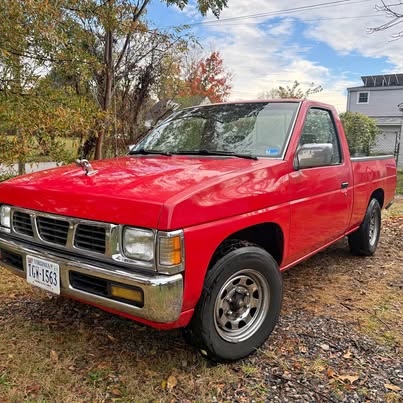
The models
Every D21 is a compact pickup on a ladder frame, but the range spreads wider than the single name suggests. You choose along five axes: cab (regular cab or the extended King Cab), bed (short or long on regular cabs), drive (2WD or 4WD), engine (four-cylinder or V6), and trim (base, XE and SE, with the trim names shifting slightly over the years). The D22 Frontier repeated the pattern and added a Crew Cab with four full doors from 2000 — the first compact crew cab sold in the US — plus the Desert Runner, a 2WD truck built on the 4WD chassis with the V6 and the raised stance.
Badging needs care, because sellers use the names loosely. Before 1998 there is no such thing as a Frontier, whatever a listing says: a truck advertised as a 1994 or 1996 "Frontier" is a D21 Hardbody with the wrong name in the advert, and the VIN plate and the truck's square styling settle it in seconds. Equally, "Hardbody" was never a trim level — it is the nickname for the whole D21 generation, so a seller presenting it as a special edition is decorating, not informing. The D21 was also sold simply as the "Nissan Truck" in some years and markets; the badges on the tailgate vary, the truck underneath does not.
| Model | Years | Engine | Output | Built | Character |
|---|---|---|---|---|---|
| D21 standard cab 2WD | 1986–1989 | 2.4 four (Z24i), throttle-body injection | 106 hp | Not reliably published | The early base truck; simple, slow, honest |
| D21 standard / King Cab 2WD | 1990–1997 | 2.4 four (KA24E), multi-point injection | 134 hp | Not reliably published | The core Hardbody; the one most buyers should target |
| D21 standard / King Cab 4WD | 1990–1997 | 2.4 four (KA24E) | 134 hp | Not reliably published | Four-cylinder 4x4; light, capable, undergeared on big tyres |
| D21 V6 models (XE/SE) | 1986–1989 | 3.0 V6 (VG30i), throttle-body injection | 136 hp | Not reliably published | Early V6; smooth, thirsty for its pace |
| D21 V6 models (XE/SE) | 1990–1995 | 3.0 V6 (VG30E), multi-point injection | 153 hp | Not reliably published | The flagship Hardbody; SE 4WD is the collector's pick |
| D22 Frontier XE/King Cab | 1998–2004 | 2.4 four (KA24DE), twin-cam | 143 hp | Not reliably published | The succession's workhorse; revvier four, bigger cab |
| D22 Frontier V6 (XE/SE) | 1998–2004 | 3.3 V6 (VG33E) | 170 hp | Not reliably published | More torque everywhere; Desert Runner and Crew Cab live here |
| D22 Frontier SC | 2001–2004 | 3.3 V6 supercharged (VG33ER) | 210 hp | Not reliably published | Factory supercharger; the fast Frontier, and the thirstiest |
Nissan has never published a clean, trustworthy production breakdown by variant for these trucks, and the figures that circulate online mix markets and generations, so the table leaves the column honestly blank rather than inventing numbers. What is certain is that the D21 was built in large volume for over a decade in Tennessee and sold worldwide in far larger numbers under names including Navara and Terrano's sibling lines — volume is why parts survive and why you have choice as a buyer.
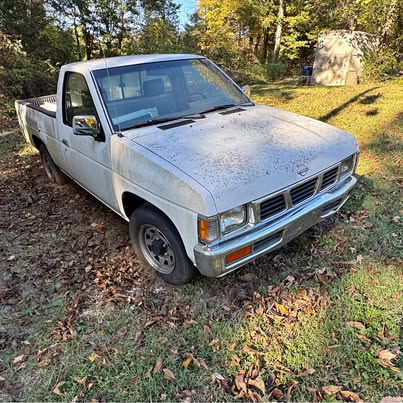
The four-cylinder trucks are the heart of the range and the majority of survivors. The early Z24i cars (1986–89) feel their age: the throttle-body engine is willing but flat, and the trucks lack the later cars' refinement. The 1990 update to the KA24E transformed the four-cylinder Hardbody into a genuinely pleasant truck — smoother, stronger, better on fuel — and a 1990-onwards four-cylinder 2WD with a manual gearbox is the sweet spot of the whole range for most buyers: cheap to buy, cheap to run, tough enough to work, and light enough to be fun. The 4WD four-cylinder is a real off-road tool with low range, but it is working hard on motorway grades and over-tyred examples are miserable.
The V6 trucks were the range-toppers, and the SE 4WD with the VG30E is the Hardbody the emerging collector market wants: the strongest engine, the best trim, the squared styling at its most complete. The V6 is smoother and far more relaxed than the four, tows better, and makes a 4WD truck feel properly engineered rather than adequate. Against that, it drinks more, its engine bay is crowded, and its timing belt is a service item the fours do not have. V6 2WD trucks exist and make fine cruisers, but they sit in an odd spot in the market — neither the economy buy nor the desirable 4x4.
The Frontier succession deserves its own paragraph because buyers conflate the two. The D22 (1998–2004) is bigger in every dimension, with a more car-like interior, the twin-cam KA24DE four and the enlarged VG33E V6. It rides better, crashes better and carries more. It is also heavier, its styling is generic where the Hardbody's is iconic, and the mini-truck and emerging classic scenes care about it far less — which cuts both ways: less scene tax on price, less future collectability. The Crew Cab (2000 onwards) is genuinely useful and was a market first. The supercharged SC (2001 onwards) is a period curiosity: a factory Eaton blower on the 3.3, real pace, real thirst, and a premium that buys you bragging rights more than transport. The Desert Runner (1999–2000) — V6, 2WD, on the 4WD frame with its stance and skid plates — is the connoisseur's Frontier, built for high-speed dirt rather than rock work.
Engines and gearboxes
Three engine families power everything in this guide: the four-cylinder line that runs Z24i to KA24E to KA24DE, and the V6 line that runs VG30i to VG30E to VG33E and its supercharged variant. They share a philosophy — iron blocks, conservative outputs, long service lives — but they differ in the one detail that costs money if you get it wrong: the fours drive their camshafts by chain, and the V6s drive theirs by belt. Learn which engine is in front of you before anything else, because the maintenance logic, the failure modes and the inspection tests are different for each.
The fours: Z24i, KA24E and KA24DE
The Z24i (1986–89) is the carry-over engine, a 2.4-litre single-cam four from the NAPS-Z family, recognisable by its twin spark plugs per cylinder — eight plug leads on a four-cylinder engine is the instant tell — and by its throttle-body injection, a single injector unit sitting where a carburettor would. Output is a modest 106 hp, and the delivery matches: adequate around town, breathless on grades, happiest unloaded. Its virtues are simplicity and toughness. Its faults are age faults: the throttle-body unit's injector and pressure regulator age, vacuum hoses perish by the dozen on an emissions-era engine, and the twin-plug ignition system doubles the plug and lead count you service. A Z24i that starts cleanly, idles without hunting and pulls without a flat spot is a good one; most running faults trace to vacuum leaks and tired ignition parts rather than the engine itself.
The KA24E (1990–97) is the Hardbody's defining engine and the one to understand in depth. A 2.4-litre single overhead cam four with three valves per cylinder — twelve valves total, an unusual layout chosen for torque and emissions — multi-point fuel injection, an iron block and an alloy head, making 134 hp with a torque curve tuned for truck work: it pulls from low revs, tolerates lugging, and revs just enough. Properly oiled, KA24Es routinely pass 250,000 miles, and the bottom end is rarely the reason one dies. The engine's known weakness sits at the front of the block: the timing chain guides. The KA runs a long chain with plastic-faced guides and a hydraulic tensioner, and with age and mileage the guide faces wear through. The classic presentation is a rattle from the front of the engine on a cold start that fades as oil pressure builds — the chain slapping a worn guide before the tensioner takes up the slack. Ignore it long enough and the chain wears through the guide into the timing cover itself, which can eventually let the chain eat into a water passage and mix coolant with oil; that is the catastrophic end of a cheap fault. The test is your ears at a genuinely cold start, and the fix — chain, guides, tensioner and sprockets as a kit — is a front-of-engine job in the region of $900–1,800 at a shop, or a long weekend for a competent home mechanic. A seller who can show an invoice for chain work has removed the KA's one real bill from your future. The other KA habits are minor: the distributor's internal seals weep oil with age, valve clearances are set by shim and rarely checked (a tappy top end that does not clear with an oil change deserves a clearance check), and the engine leaks modestly from the front crank seal and rocker cover on high-milers. None of it is fatal; all of it is negotiation.
The KA24DE (1998–2004 Frontier) is the twin-cam development of the same block: sixteen valves, 143 hp, a revvier character and a flatter need for revs to do its best work. It shares the KA family's chain-drive layout and, in milder form, its guide-wear habit, so the cold-start rattle test applies unchanged. In the heavier Frontier it works harder than the KA24E did in the Hardbody, and a four-cylinder Frontier on large tyres or with a lift is a slow vehicle by any measure. Judged as an engine, though, it is the same honest unit: oil, chain guides, and little else to fear.
The V6s: VG30i, VG30E, VG33E and the supercharged VG33ER
The VG family is Nissan's long-serving 60-degree V6, fitted across everything from the 300ZX to the Pathfinder, and in the trucks it trades the fours' simplicity for smoothness and torque. The VG30i (1986–89) is the throttle-body version, 136 hp, identifiable by the carburettor-like single-point injection unit under a round air cleaner. The VG30E (1990–95 in the D21) moved to multi-point injection and 153 hp, and is the strongest engine ever fitted to a Hardbody from the factory — smooth, torquey, and well matched to the 4WD running gear. In the Frontier, the VG33E enlarged the design to 3.3 litres and 170 hp, with torque that makes the D22 feel effortless where the four strains, and the VG33ER (2001–04) added an Eaton supercharger for 210 hp, at the cost of premium fuel, real thirst and a blower that will eventually want its own service.
One fact governs all of them: the VG engines use a timing belt, and they are interference engines — if the belt breaks, pistons meet valves and the repair is a cylinder-head rebuild at minimum. Belts age by time as well as mileage, so on any VG truck the question is never just "how many miles" but "when was the belt last changed, and where is the invoice." A truck with no belt history gets the job priced in immediately — belt, tensioner, idlers and the water pump it drives past, roughly $700–1,400 fitted — and a wise buyer simply does it in the first month regardless of stories. The belt is also the diagnostic key to the V6's other habits: oil leaks from the cam and crank seals contaminate the belt and shorten its life, so a VG that leaks at the front is a VG whose belt is on a countdown. Beyond the belt, the VG's record is strong. Exhaust manifold studs break with heat cycles, giving a ticking on cold starts that fades as the manifold expands — annoying, occasionally expensive if the studs must be drilled from the head, but not structural. Hydraulic lifters can tick on neglected oil. The VG30E's crowded engine bay makes every job slower than the same job on a four, which is the real cost of V6 ownership: not parts, but hours.
Gearboxes and four-wheel drive
The standard gearbox is a five-speed manual, and it is the right choice in these trucks: strong, simple, with a shift action that stays acceptable even at high mileage. Judge it on synchromesh — second gear, cold, is the first to crunch — and on bearing whine in the intermediate gears. Clutches are conventional, moderately priced to replace (budget $700–1,200 fitted), and frequently already replaced once on a working truck; a high, late bite point with slip under load in fourth is the tell. The four-speed automatic fitted to a large share of trucks — four of our nine current listings state an automatic — is a durable Nissan unit that fails by neglect rather than design: dark, burnt-smelling fluid and delayed engagement of drive or reverse are the warnings, a fluid and filter service is the first remedy, and a rebuild is a $2,200–3,500 conversation. On a test drive the auto should shift cleanly without flaring; a truck that hunts between gears on grades is telling you about fluid, not necessarily about doom.
Four-wheel drive is a proper part-time system on both generations: a transfer case with 2WD high, 4WD high and 4WD low, engaged by lever, driving the front axle through locking hubs — manual on many trucks, automatic-locking on others. It is not for use on dry tarmac, and a seller who demonstrates it locked on a paved lot is showing you misuse, not capability. Test it on gravel or dirt: engage low range, confirm it pulls, listen for chain stretch in the transfer case as a slap or whine under load, and check the front hubs lock and release. The front suspension it drives through is independent, on torsion bars — which is why ride height on these trucks is adjusted by winding the bars, a fact that matters greatly in the next section. The rear is a live axle on leaf springs on every variant, with spring and hanger condition part of the rust inspection. The system as a whole is over-engineered for the trucks' weight, and genuine 4WD failures are rare compared with rusted shift linkages, perished vacuum lines on auto hubs and simple disuse: a transfer lever that will not move on a truck that has lived in 2WD for a decade usually frees with lubrication and patience, not parts.
Problem areas
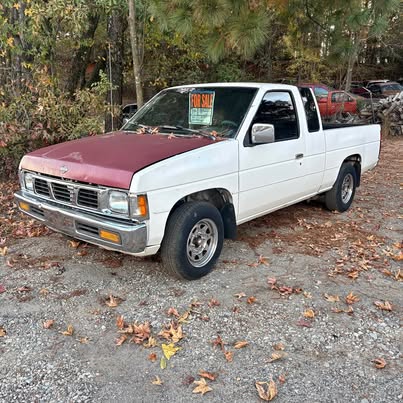
Ask any long-term Hardbody owner what kills these trucks and the answer is one word: rust. Not the cosmetic kind — the structural kind, in the frame, in a truck whose mechanical parts will outlast three bodies if the steel lets them. Everything in this section follows that priority. Read the frame first, the modifications second, and treat the mechanical wear items as what they are: a priced list, not a set of surprises. Note what our own listings quietly confirm about the population: every one of the nine trucks we currently track is a private Marketplace sale from the Southeast and the Pacific Northwest, at working-truck money — these are vehicles that have lived outdoors and worked, and the inspection standard should be set accordingly.
Rust: the frame, the bed and the cab
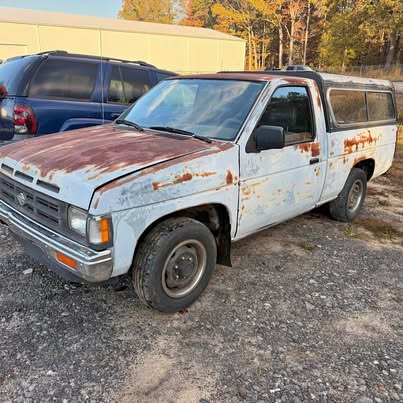
The frame is the truck. The D21's ladder frame rots from the inside out and from the rear forwards, and the sequence is so consistent you can walk it. Start at the very back: the rear frame rails around the leaf-spring hangers and shackles take road salt and mud thrown by the rear wheels, trap it against the spring mounts, and perforate there first. A spring hanger pulling away from a rotten rail is the single most common structural death of a Hardbody, and it is a fabrication repair, not a patch — priced per car by a welder, and easily into four figures per side done properly. Move forward: the rails under the bed trap debris between frame and bed floor; the section behind the cab, where the frame steps and flexes, cracks as well as rusts on trucks that have carried loads or been lowered and raised; and the front rails and crossmember around the torsion-bar mounts corrode where mud packs in. The test is a hammer and a screwdriver, with the seller's permission, plus your eyes: surface scale on a frame is normal at this age and treatable, but flaking layers, soft spots that dent under a prod, and holes at any hanger or mount are walk-away findings on a truck at this money, because the repair costs approach the truck's whole value. Fresh black underseal blown over the rear rails the week before sale is a confession, not a cure — exactly as with any chassis, nobody re-coats a sound frame for your benefit.
The bed rots in its own pattern. The bed floor rusts along its seams and above the wheel tubs, where water sits under load liners and bed mats; a plastic drop-in liner is a rust incubator and also a curtain — lift it, or walk. The front panel of the bed, hard against the cab, traps leaves and water. The bed's mounting points rot with the frame beneath them, so a bed that sits unevenly or moves when you rock it is reporting frame news, not bed news. Tailgates bend, rust along the bottom edge and lose their latches. A replacement used bed in sound condition is the usual cure for a bad one, and beds interchange across years — but a good bed on a bad frame is lipstick, and the order of inspection never changes.
The cab follows the water like any steel body. Cab mounts rust where they meet the frame, and a cab that has dropped on a collapsed mount shows in door gaps and a steering column that no longer aligns sweetly. Floors rust from wet carpets — the windshield seal and the cowl drains leak, the water sits under the sound deadening, and the floor perforates from above, invisibly, until a heel goes through carpet that looked fine. Rockers and cab corners go at the bottom edges. The cowl and firewall rust around the battery tray, where acid helps the water. None of these alone kills a truck the way a frame does, but together they price the difference between a driver and a parts donor: floor and rocker welding is $800–2,000 a side at a shop by the time paint is included, and it is money you spend knowing the frame verdict came first.
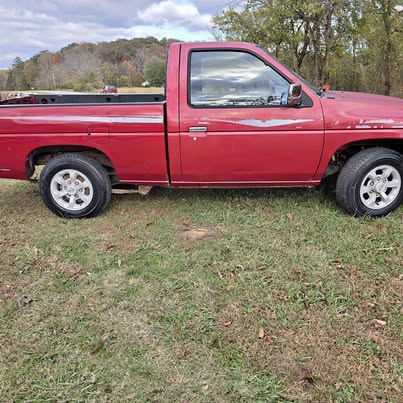
The modified truck: mini-truck culture and what it leaves behind
The Hardbody was a cornerstone of the mini-truck scene, and a large minority of survivors were lowered at some point in their lives. Lowering itself is not a sin — a truck dropped properly on spindles, blocks and quality parts, and kept aligned, can be a sound buy. The sin is in the methods, and your job is to read them off the truck.
The front of a D21 lowers by winding down the torsion bars, which costs nothing and, done to excess, ruins everything: a truck slammed on its bars alone rides on its bump stops, chews its front tyres on the inner edges, and has had its bars' splines and adjusters stressed for years. Better drops use lowering spindles or control arms to keep geometry. At the rear, lowering blocks between axle and leaf springs are the honest method; the dishonest ones are removed leaves, heated springs, and — the finding that should end negotiations — a frame notch: to get a very low truck clearance over the rear axle, builders cut a C-shaped notch into the frame rail above the axle, sometimes boxed and welded properly, sometimes cut and left, sometimes covered by the bed so you must look from underneath. A notched frame is a weakened frame, full stop, and on a truck you intend to load or tow it is a structural defect whatever the scene calls it. Also hunt for: a body drop (the cab and bed lowered over the frame, with the bed floor raised or cut — look for a bed floor that sits oddly high or wears a raised tunnel), air suspension or hydraulics (compressors, tanks, lines and wiring added under the bed or in the cab; abandoned systems leave holes, chafed lines and electrical archaeology), cut or heated springs anywhere, wheel tubs cut into the bed, and shaved or filled bodywork hiding filler where handles and trim used to be. Then read the frame extra carefully on any ex-show truck, because the same hands that notched it may have plated over rust with filler and fresh paint. The rule is symmetrical: a stock truck is worth a premium precisely because none of these questions needs asking, and a modified truck must be priced as if the worst plausible version of its modifications is true until you have been underneath and proved otherwise.
Suspension, steering, brakes and the 4WD hardware
The front suspension is torsion bars, upper and lower arms and ball joints, and it wears like any worked truck front end: ball joints and tie-rod ends develop play, idler arms wear and make the steering wander, and torsion-bar adjusters seize. None of it is exotic and a full front-end refresh with alignment is a few hundred dollars in parts. Judge it by rocking each front wheel and by the drive — a Hardbody should track straight and steer without a dead zone in the middle. On 4WD trucks add the front CV boots: split boots fling their grease and then the joints wear, and clicking on full lock is the audible receipt. Rear leaf springs sag, crack leaves (look along the pack for a leaf sitting out of line) and wear their bushes; a truck that has carried real loads sits down at the back and deserves springs, not just new shackles. Brakes are disc front and drum rear, cheap and simple, but trucks that sit grow seized rear wheel cylinders, perished flex hoses and rust-banded front discs; a full hydraulic refresh is $600–1,500 fitted and should be assumed on any truck that has been parked for years. The 4WD hardware itself, as the engines section said, fails mostly by disuse and corrosion: linkages seize, automatic hubs stop locking, transfer-case chains stretch on trucks that have been run in 4WD on hard surfaces. All testable on the day, all in the checklist below.
Cooling, fuel and the truck that has sat
The third strand of problems is neither rust nor modification but time, and it applies to almost every truck at this end of the market, because cheap trucks get parked. Cooling systems suffer first and worst. A radiator that has run rusty water for a decade silts up from the bottom, and the truck then runs hot on grades while behaving in town — the classic pattern that sends owners chasing thermostats and water pumps when the radiator is the fault. Heater cores clog the same way and leak into the passenger footwell, which loops back to the cab-floor rust above: a sweet smell in the cab and a damp passenger carpet are a heater core announcing itself. Rubber hoses perish throughout, and on a truck that has sat, every hose is a suspect regardless of appearance, because they fail from the inside. Budget a full cooling refresh — radiator, hoses, thermostat, pump where the belt drive gives access anyway — into any long-parked truck, in the region of $500–1,100 in parts and labour depending on engine.
Fuel systems follow the same story. Steel tanks rust internally once condensation has had years to work, and the rust then eats fuel pumps and blocks filters and injectors in sequence; a truck that runs but keeps killing filters is telling you the tank is the disease and the filters are the symptom. Modern ethanol fuel attacks the old rubber lines and leaves varnish in tanks and throttle bodies, so a truck woken after years needs its fuel dropped, its lines replaced and its tank inspected before any other running fault is diagnosed — half the "won't run right" Hardbodies in the classifieds are fuel-system cars, not engine cars. The Z24i and VG30i throttle-body units add their own age faults: injectors that dribble, pressure regulators that drift, and idle air controls that gum up, all presenting as hunting idle and hot-start trouble that owners misdiagnose as ignition. On the injected engines, a tired fuel pump shows as a truck that starts and idles but starves under load — test pressure before condemning anything electronic, exactly as with any injection system of the period. None of this is expensive by the standards of this guide's frame repairs, but it is the difference between a truck that recommissions in a month of weekends and one that fights you for a year, and it is why a truck in regular recent use is worth a premium over a lower-mileage truck that has slept for five years.
Interior, electrics and the small stuff
The Hardbody interior is vinyl, cloth and hard plastic in descending order of trim, and it ages by sun rather than wear. Dashboards crack across the top in southern trucks — our listings cluster in Georgia, the Carolinas, Virginia and Kentucky, so expect it — and a cracked dash is cosmetic but very visible, with good used dashes getting scarcer. Seat vinyl splits on the driver's bolster, bench seats sag, and the King Cab's jump seats are for children and enemies. Door cards warp, window regulators slow and manual window winders strip. Electrics are simple and mostly sound: the failures are earths, tired alternators, blower motors and switches, and the wiring modifications left by decades of stereo and alarm installs — under-dash archaeology is a real inspection item on a mini-truck-era vehicle, because a hacked loom is a future fire and fault-finding nightmare in one. Air conditioning, where fitted, is conventional and repairable; budget for a compressor or a re-gas on any truck where it blows warm, and treat working cold air as a genuine plus on a southern truck. Finally, the instruments: odometer readings on trucks of this age and market are claims, not facts — judge mileage by pedal rubbers, seat and steering-wheel wear, and the frame's condition, and be aware that instrument clusters swap between these trucks in minutes.
How to inspect one
Allow an hour, bring a torch, a screwdriver or small hammer for prodding the frame (with the seller's permission), a magnet in a cloth, and a friend to work the steering while you watch the front end. Do the steps in this order: the early ones can end the viewing cheaply, and the expensive questions come before the pleasant ones.
- Paperwork and identity first. Match the VIN on the title to the plate on the dashboard and the door-jamb sticker. Confirm the year from the VIN and the truck in front of you, not the advert — remember that any "Frontier" dated before 1998 is a mislabelled D21, and any specification claim should be checked against the truck, because badges and tailgates swap freely on these.
- The rear frame rails. Go straight to the known killer. Torch and prodder along both rear rails, around the spring hangers and shackles, and where the rails pass under the bed. Flaking, softness or holes at a hanger ends the inspection: thank the seller and leave. This step outranks everything else on the truck.
- The rest of the frame. Work forwards: rails under the bed, the section behind the cab (look for cracks as well as rust), cab mounts, and the front rails and torsion-bar crossmember. On any truck that sits low or ever did, get under the rear axle and look for a frame notch above it — the C-cut described in the problem areas. A notched, plated or filler-covered frame reprices the truck to parts value.
- The bed. Lift any drop-in liner or mat. Check the floor seams, the wheel tubs, the front panel and the mounts. Rock the bed: movement means mount or frame trouble beneath. Check the tailgate's bottom edge and latches.
- Cab floors and rockers. Lift the carpets or mats on both sides and prod the floors, especially under the pedals and seats where water sits. Check rocker panels and cab corners with the magnet, run a fingertip along every door bottom, and look at the battery tray and the firewall below it.
- Cold start, ears open. Insist the engine is cold. On a four-cylinder (KA24E or KA24DE), listen at the front of the engine for chain rattle in the first seconds — the guide-wear signature from the engines section. On a V6, listen for the cold tick of broken exhaust manifold studs. Watch for blue smoke (oil) and judge the idle once warm.
- The V6 belt question. On any VG-engined truck, ask when the timing belt was last changed and ask to see the invoice. No invoice means the job — belt, tensioner, water pump — goes into your offer arithmetic on the spot, and into the truck's first month if you buy it. Check for oil leaks at the front of the engine, which shorten belt life.
- Under the bonnet generally. Oil level and condition, coolant colour (rusty coolant means a neglected cooling system, and the KA chain's worst-case failure mixes the two fluids — a milky dipstick or oil filler cap on a four-cylinder is a serious finding), belt and hose condition, and the state of the wiring: factory looms are tidy, and added spaghetti means added questions.
- Front end and steering. Rock each front wheel top-to-bottom and side-to-side for ball-joint and bearing play while your friend works the steering; watch the idler arm and tie rods for lost movement. On 4WD trucks, check the CV boots for splits and grease.
- The 4WD test. On dirt or gravel, never dry tarmac: engage 4WD high and low, confirm both pull, confirm the hubs lock and release, and listen for transfer-case chain slap under load. A lever that will not move at all is usually seized linkage — a fixable fault, but price it as one.
- The test drive. Fifteen minutes, mixed roads. The manual should shift without second-gear crunch; the automatic should engage drive and reverse promptly and shift without flaring. Feel for steering wander, brake pull and judder, and driveline shunt. A four-cylinder 4WD on big tyres will be slow — distinguish slow-by-gearing from slow-by-illness by how cleanly it pulls.
- Suspension stance. Stand back and look: level, or down at the rear (sagged springs or a life of loads), or down at the front (bars wound or tired). Look down each flank for ripples and read the tyre wear — inner-edge front wear on a lowered truck confirms the geometry story.
- Interior and electrics. Sit in the driver's seat, check the dash top for cracks, work every switch, the blower on all speeds, the wipers, lights and horn. Run the air conditioning if fitted. Look under the dash for cut and spliced wiring from old stereos, alarms and air-suspension controls.
- The modification audit, last and honestly. If the truck is or was modified, list what you found — notch, blocks, removed leaves, cut tubs, added wiring, raised bed floor — and price the truck as a modified truck even if the seller calls it "back to stock." Then decide with the frame verdict from step 2 in front of you, because that verdict outranks every other impression of the day.
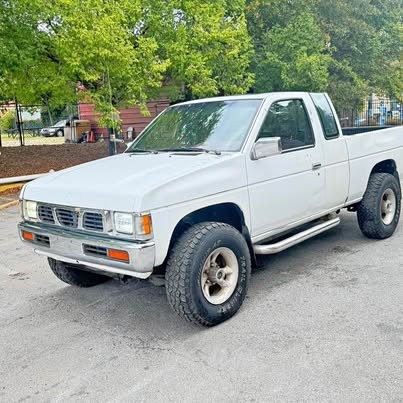
Values
The market for these trucks is really three markets wearing one name, and reading it well means knowing which one a given truck belongs to. The first market is the working-truck market: high-mileage Hardbodies bought as cheap transport and tools, where the truck is priced against any other running pickup and condition means "starts, stops, legal." The second is the honest-survivor market: straight, unmodified, rust-light trucks bought by people who remember them, where originality and a sound frame do the pricing. The third, smallest and fastest-moving is the collector and scene market for the best specifications — above all the V6 SE 4WD Hardbody, and clean short-bed trucks with the right stance — where nostalgia and mini-truck culture bid against each other. The same model year can sit in any of the three, and the spread between a parts-grade truck and a genuinely fine one is wider, proportionally, than for almost any other vehicle of the era, precisely because the mechanicals are cheap and the frame is everything: buyers pay for steel and originality, not for a rebuilt engine.
Our current listings illustrate the working end of that spread honestly: nine trucks, all Hardbody-era, all private Marketplace sales, none of them presented as show vehicles. Treat asking prices in this market as opening positions. These are old, cheap trucks sold by private sellers, and the gap between asking and achieved is routinely bridged by the inspection findings in this guide — a frame that prods soft, a timing belt with no invoice, a chain that rattles cold. Each verified fault is a legitimate, quantified deduction, and sellers of trucks at this level generally know it. Conversely, a truck that passes the frame check with a documented belt or chain service and no modification history is genuinely scarce, and those do not linger: the time to hesitate over a good one is short.
Within the range, the premiums are consistent. The V6 4WD trucks carry the strongest money, with the SE trim at the top. Unmodified trucks outrun modified ones of the same specification, because the buyer pool for stock is everyone and the pool for someone else's project is that person's taste. King Cabs outrun regular cabs for usability, except in the scene market, where the short-bed regular cab is the icon. The Frontier succession trades a step below the equivalent Hardbody on character and a step above it on usability — a Crew Cab Frontier is worth its money to a family in a way no Hardbody can match, and the supercharged SC carries a curiosity premium that is real but thin, with few buyers chasing it at any moment. Project-versus-driver arithmetic is unforgiving: frame welding, a bed, paint and a mechanical refresh will together exceed the finished value of all but the best specifications, so a project only makes sense bought at parts money or bought for love. The build of this page appends the current listings and recorded-sales picture beneath this guide; read those figures against the three markets above, not as a single number for "a Nissan pickup," because no such single number honestly exists.
Parts and ownership
Ownership is where the Hardbody's volume and simplicity pay you back. Nissan built these trucks in large numbers for a long time, the Pathfinder of the same era shares a great deal of the running gear, and the aftermarket adopted the truck for both work and the mini-truck scene — so the mechanical parts situation is about as good as a thirty-year-old vehicle gets.
Easy: service items, filters, plugs and ignition parts for all engines, timing chain kits for the KA fours, timing belt kits for the VG sixes, clutches, brake discs, pads, drums and hydraulics, ball joints, tie rods, idler arms, leaf springs and bushes, shocks, CV boots and joints, radiators, water pumps, alternators and starters. Most of it orders today at prices close to modern-truck money, and most of it fits with hand tools by a competent home mechanic — the four-cylinder engine bay in particular is roomy and honest to work in.
Harder and dearer: body and frame parts are the pinch, because rust consumes the supply. Sound used beds, tailgates and rust-free cabs command real money and travel poorly; frame repair sections are a fabricator's job rather than a catalogue order. Good uncracked dashboards, clean original seat trim, King Cab jump-seat parts and model-specific exterior trim are thinning out. The VG33ER's supercharger and its specific parts are specialist territory. V6 exhaust manifolds with intact studs are worth having. None of this stops you owning the truck; it argues for buying the truck whose body and frame do not need the scarce parts.
Running costs. Fuel consumption is period truck: the four-cylinder trucks are respectable, the V6s are thirsty, and the supercharged Frontier is thirsty with premium fuel on top. Insurance is cheap-truck insurance. The honest first-year budget on a newly bought, running example is the deferred-maintenance catch-up — fluids, belts or chain work as applicable, brake hydraulics, tyres and the front-end wear items — realistically $1,500–3,500 at shop rates before you improve anything, and less if you work at home, which these trucks unusually reward. Recommissioning a truck that has sat for years adds the fuel system end to end, every rubber hose and seal, and the brakes complete. A sorted Hardbody is a realistic daily driver and work truck today, not a fair-weather toy — which is, in the end, the entire point of the design.
Which one to buy
- The all-rounder: a 1990–97 KA24E truck, 2WD, manual. The transformed four-cylinder, the roomy engine bay, chain drive with one known job, and the cheapest ownership in the range. In King Cab form it does everything most buyers actually need.
- The value buy: a four-cylinder 4WD. The same honest truck with low range and real off-road ability, overlooked next to the V6 and priced accordingly. Check the hubs and the transfer case work, and accept the pace.
- The flagship: a VG30E SE 4WD. The best Hardbody Nissan built — the strongest engine, the best trim, the collector's specification. Buy it on frame condition and belt history, and expect to pay the range's strongest money for a good one.
- The cruiser: a V6 2WD. Smooth, relaxed and cheaper than the 4WD flagship, for buyers who want the Hardbody shape without off-road hardware to maintain.
- The family pick: a Frontier Crew Cab V6 (2000–04). Four real doors, the torquey VG33E, and usability no D21 can match — the succession's strongest argument.
- The curiosity: a Frontier SC or Desert Runner. The factory-supercharged truck for pace, the Desert Runner for stance and dirt-road speed. Buy either for what it is, with its premium kept in proportion.
- The scene truck: a short-bed regular cab — bought with open eyes. The mini-truck icon, and the variant most likely to carry notches, cut work and history. The inspection in this guide was written for exactly this truck.
And the rule that overrides all of the above: buy the frame, then the originality, then the engine — in that order. Every mechanical fault on these trucks has a price and a fix; a rotten or notched frame has neither that makes sense at this money. The least rusty, least modified truck you can find, in the specification you can live with, is the right Nissan pickup, whichever badge the tailgate wears.
See the 5 pickup cars currently listed.
For sale now
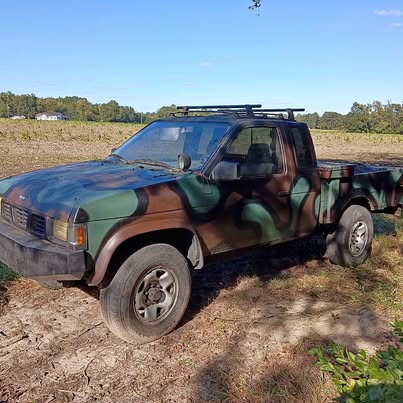 $3,500
Expand
What they sell for: pickup sale prices.