
Nissan Pickup buyer's guide
Nissan Pickup (1986–1997) — Pickup, Hardbody, D21, King Cab: what's listed, and what they sell for.
Years: 1986–1997 · Models: Pickup, Hardbody, D21, King Cab
Overview and history
The Nissan Pickup this guide covers is the D21 — the truck American buyers know as the Hardbody. It went on sale in the United States in mid-1986 as an early 1987 model (early trucks are titled as 1986s, which is why the year range starts there) and ran, with remarkably little fundamental change, through 1997, when the Frontier replaced it. In a market where Ford, Chevrolet and Toyota redesigned their compact trucks around it, Nissan simply kept building the same square, tough, honest pickup for eleven years — and that stubbornness is exactly why so many survive, and why buyers keep hunting them down.
The name came from the styling. Where the 720 pickup it replaced had soft, rounded panels, the D21 wore flat, double-walled bodywork with crisp creases and flared arches — a "hard body" look that Nissan's marketing turned into the truck's identity. Underneath it was equally conservative: a separate ladder frame, torsion-bar independent front suspension, a leaf-sprung live rear axle, and a choice of two engines — a 2.4-litre four or a 3.0-litre V6. Most US trucks were built at Nissan's plant in Smyrna, Tennessee, which matters today because Smyrna trucks spent their lives in the same salt-and-humidity climate as the buyers now shopping for them.
The D21's sibling tells you a lot about it: the original Pathfinder (WD21) is this truck with a wagon body, sharing the frame architecture, engines, gearboxes and front suspension. Parts, knowledge and fixes cross over freely between the two, which doubles the support base for both.
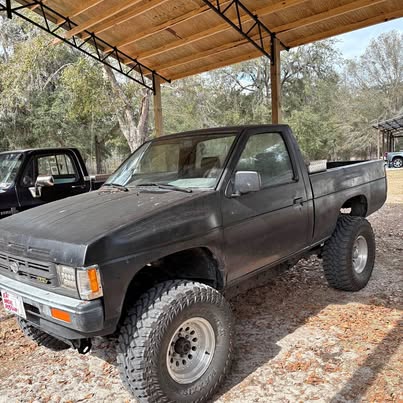
The range is simple to read. There are two cabs — a regular cab and the extended King Cab with its small rear bench and jump space — two bed lengths, two-wheel drive or part-time four-wheel drive, and trim levels that climb from a vinyl-seated base truck through XE to the V6-powered SE. Of the trucks in our current listings, manuals outnumber automatics roughly two to one, and the King Cab is the single most common configuration — a fair picture of the surviving population, because the extended-cab trucks were bought as personal vehicles more often than as pure work tools and were treated accordingly.
Context matters for understanding what you are buying. The D21 arrived as the Japanese compact truck matured from an economy appliance into a mainstream American vehicle, and it competed head-on with the Toyota Pickup, the Ford Ranger, the Chevrolet S-10 and Mitsubishi's Mighty Max (also sold as the Dodge Ram 50). Nissan's pitch was value and durability rather than novelty: more standard equipment than a Toyota at a lower price, and a V6 when most rivals' top engine was a four. It worked — Hardbodys were everywhere in late-eighties and nineties America, on job sites, in high-school car parks and under camper shells on interstates. That ubiquity is the buyer's friend today. It means the knowledge base is enormous, every fault in this guide has been diagnosed in public a thousand times, and there is no question you can ask about a D21 that an owner's forum has not already answered with photographs.
These were cheap trucks bought to work, and most were used exactly that way. That history defines today's market just as it does for any working classic: the mechanicals are fundamentally durable and simple enough for a home mechanic, and the difference between a good Hardbody and a money pit is almost entirely the condition of one component that cannot be unbolted and replaced — the frame. Everything in this guide flows from that fact. Read the rust section twice.
The models
Every US-market D21 is badged simply "Pickup" on the tailgate paperwork and "Hardbody" in the culture; Nissan never gave it a model name in the States the way it did abroad (Navara in most other markets). What varies is cab, drive, trim and engine, and the combinations are what you are actually shopping among. Listings muddle the names — you will see the same truck advertised as a Pickup, a Hardbody, a D21 or a King Cab — so identify a truck by its cab, engine and drive, never by the word the seller chose.
| Model | Years | Engine | Output | Built | Character |
|---|---|---|---|---|---|
| Regular Cab 2WD | 1986–1997 | 2.4 four (Z24i, then KA24E) | 106–134 hp | — | The work truck; lightest, simplest, cheapest |
| King Cab 2WD | 1986–1997 | 2.4 four (Z24i, then KA24E) | 106–134 hp | 16 of our 44 listings | The personal-use truck; extra cab space, best survivor rate |
| Regular Cab / King Cab 4WD | 1986–1997 | 2.4 four or 3.0 V6 | 106–153 hp | — | Part-time 4WD, torsion-bar front end, the off-road favourite |
| XE | 1986–1997 | 2.4 four or 3.0 V6 | 106–153 hp | — | The mid trim: cloth, carpets, better instruments, most options |
| SE V6 | 1986–1995 | 3.0 V6 (VG30i, then VG30E) | 145–153 hp | — | The flagship; V6 power, sport trim, the collector's pick |
Nissan did not publish a clean US production split by variant for the D21, and any source that gives you one to the unit is guessing — treat the built column honestly as unrecorded and judge rarity from what actually surfaces for sale: four-cylinder two-wheel-drive trucks are plentiful, V6 4WD King Cabs are genuinely scarce.
The regular cab is the truck in its purest form: a bench seat, a six-foot bed (a seven-foot long bed was also offered early on), and the least equipment to go wrong. Two-wheel-drive regular cabs are the lightest D21s and feel it — with the later KA24E engine they are perfectly adequate everyday transport. As pure work trucks they were also used hardest, so a tidy one is rarer than the production numbers suggest.
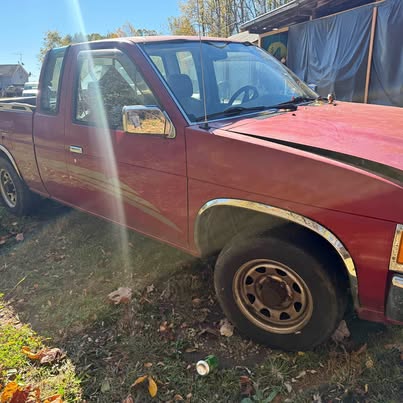
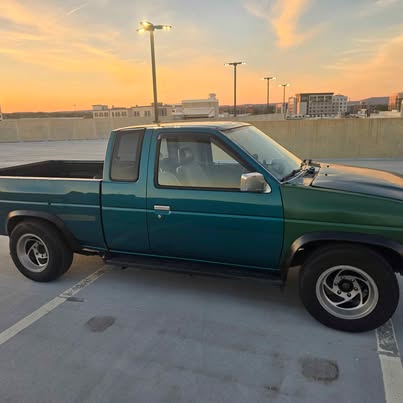
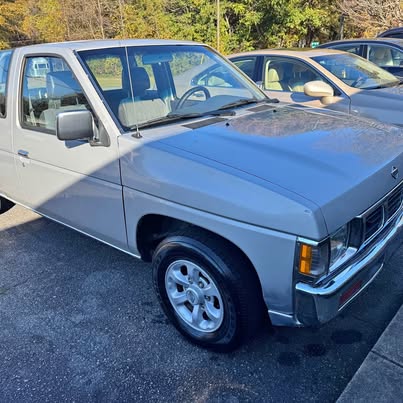
The King Cab adds roughly a foot of cab behind the seats, with a small rear bench or jump seats depending on year and trim. It is the configuration to want for real life: room to recline the seat, lockable space for tools and shopping, and a noticeably more relaxed driving position for tall drivers. King Cabs dominate our listings — 16 of 44 trucks — and dominate the good end of the market too, because they were more often second vehicles and weekend trucks rather than site transport.
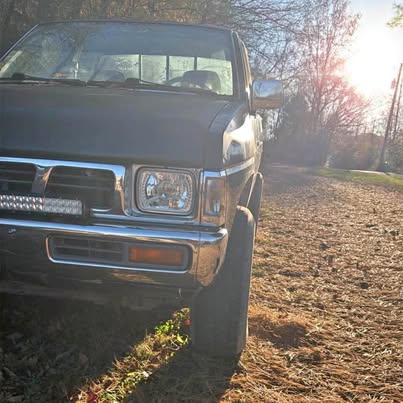
The 4WD trucks use a part-time system with a two-speed transfer case and automatic or manual locking front hubs depending on year. They sit taller, ride on the same torsion-bar front suspension cranked for height, and are the basis of a small but devoted off-road following — the D21's frame, simple axles and Pathfinder-shared parts make it a cheap, capable trail truck. The penalty is weight, fuel consumption and one more driveline to inspect.
Trim: base, XE and SE. Base trucks have vinyl trim, minimal instruments and steel wheels. XE is the volume trim — cloth seats, carpet, a fuller gauge cluster, and most of the options list (air conditioning, sliding rear window, alloy wheels on later cars) was fitted to XEs. SE is the sport flagship, almost always V6-powered, with bucket seats, graphics packages on early cars and the heaviest option load. Badges migrate between trucks and sellers misuse them freely; the VIN plate and the engine under the hood settle what a truck actually is.
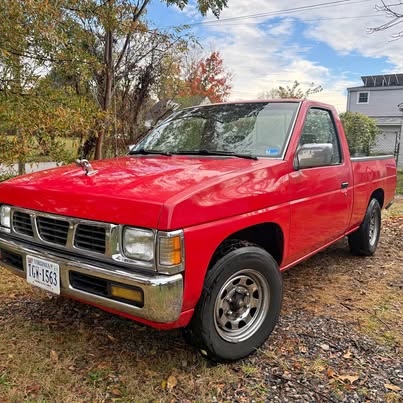
The facelifts that matter. The D21 changed gently. The 1990 model year is the big mechanical break: the Z24i four and VG30i V6 gave way to the KA24E four and VG30E V6, both stronger and both with multi-point or improved injection (detailed in the next section). A 1993 refresh tidied the grille and hood line. For 1994 the dashboard was redesigned — a softer, rounder instrument panel replacing the original angular dash — and interiors improved generally. For 1996, OBD-II diagnostics arrived and the V6 was dropped from the pickup line: 1996 and 1997 trucks are four-cylinder only. A late truck is therefore a simpler truck, which for many buyers is the point.
Engines and gearboxes
Two engine families cover the whole eleven-year run, and the 1990 model year divides them cleanly. Learn which side of 1990 a truck sits on and you know its engine, its fuel system and most of its likely faults.
The fours: Z24i (1986–1989) and KA24E (1990–1997)
The Z24i is a 2.4-litre single-overhead-cam four from Nissan's Z family, fitted with throttle-body injection — a single injector unit sitting where a carburettor would, spraying into the intake. It makes about 106 hp, and its party trick is eight spark plugs: twin plugs per cylinder, a Nissan emissions-era design (NAP-Z) that burns the mixture more completely. It is a tough, understressed engine that tolerates neglect better than most, but it is slow, and its age shows in the ancillaries rather than the internals: perished vacuum hoses, a worn throttle-body injector, tired plug leads — all eight of them — and distributor wear. A Z24i that idles roughly and hunts is almost never worn out; it is leaking air somewhere or being fed badly. Budget a weekend of hoses, plugs, leads and filters on any early truck before you judge the engine at all.
The KA24E replaced it for 1990 and is the engine most buyers should want. Also a 2.4-litre single-cam four, it uses multi-point fuel injection and makes 134 hp — a difference you feel immediately, with better starting, better economy and cleaner running. The KA family went on to power the 240SX and Altima in twin-cam form and has a deep aftermarket and knowledge base. Its one designed-in weakness is the timing chain hardware: the chain is long, runs plastic-faced guides and a hydraulic tensioner, and on high-mileage or oil-neglected engines the guides wear and crack. The symptom is a distinctive rattle from the front of the engine for a second or two on a cold start, as the tensioner waits for oil pressure — and if it is ignored, a rattle that stays. A chain, guide and tensioner job is a known quantity at roughly $600–1,200 in parts and labour at an independent shop, less if you do it yourself, and documented recent chain work is worth paying for. Let a KA24E rattle on, though, and the chain can jump or the broken guide can drop debris into the sump — the cheap job becomes an engine. Oil consumption on a tired KA is usually valve-stem seals and tired rings in that order; blue smoke on start-up that clears is seals, smoke under load is rings.
Both fours share the same ownership rules: they are chain-driven (no belt interval to fear), they run happily on regular fuel, and they die from overheating and oil neglect, not from design faults. A warped head from a cooked KA or Z is the usual terminal event on a neglected truck, so the cooling system — radiator, hoses, thermostat, fan clutch — deserves the same forensic attention as the engine itself.
Fuel systems, across all four engines. The throttle-body trucks (Z24i, VG30i) meter fuel through a single-point unit that is simple, rebuildable and increasingly elderly: worn injector seals, a tired fuel-pressure regulator and perished vacuum lines produce the hot-start and hunting-idle complaints these trucks are known for, and a throttle-body reseal kit plus a day of hose replacement cures most of them for the price of a tank of fuel. The multi-point trucks (KA24E, VG30E) use conventional port injection that rarely troubles anyone; when a multi-point truck runs badly, look first at the basics — fuel filter, pump output, a mass-airflow sensor contaminated by an over-oiled aftermarket air filter — before condemning injectors. On any D21 that has sat, assume the tank holds varnish and the rubber lines are perishing from ethanol; a truck that starts on a remote bottle but not its own tank is telling you the whole story.
The V6: VG30i (1986–1989) and VG30E (1990–1995)
The 3.0-litre VG V6 was Nissan's prestige engine of the era — the same family that powered the 300ZX — and in the D21 it turns a working truck into something genuinely quick by compact-truck standards. The early VG30i uses throttle-body injection and makes about 145 hp; the 1990-on VG30E uses multi-point injection and makes about 153 hp, with noticeably sharper response. Either pulls a King Cab 4WD along with an ease the fours cannot match, tows better, and sounds like a sports car doing it.
The VG has one non-negotiable service item, and it is the single most important engine fact in this guide: it is driven by a timing belt, and it is an interference engine. If the belt breaks, pistons meet valves and the repair is a cylinder-head rebuild at best. The belt, tensioner and — while the front of the engine is apart — the water pump are a service job on a mileage and age interval; on any V6 truck with no documented belt history, that job, roughly $500–900 at a shop, goes into the purchase price before you drive the truck anywhere. Sellers who say "the belt was done" without an invoice or a dated sticker on the timing cover have told you nothing.
The VG's other signature fault is broken exhaust manifold studs, especially on the rear cylinders. The manifolds cycle heat into studs that corrode in the head, the studs snap, and the result is a ticking exhaust leak on a cold start that quietens as the manifold expands and seals. Listen for it on every cold start: a light tick that fades in two minutes is usually a stud, not a lifter. The fix ranges from an awkward extraction with the manifold off to drilling a snapped stud out of the head — $300–800 depending on how many have gone and whether the head has to come off — so count the tick as money. VG engines also weep oil from valve covers and the front crank seal with age, and the throttle-body VG30i shares the Z24i's vacuum-hose senility. None of this is fatal; all of it is negotiable.
Gearboxes and four-wheel drive
The standard gearbox is a five-speed manual (the FS5W71C family), fitted to the large majority of surviving trucks — 30 of the 44 in our listings are manuals. It is a light, pleasant box with a long throw and honest synchromesh; second gear synchro wear is the first sign of age or abuse, felt as a crunch or a baulk on quick downchanges into second, especially cold. Clutches are conventional, cheap and long-lived if the truck has not towed; a high bite point and slip under load in fourth or fifth is the test, and a clutch replacement is a $600–1,100 shop job. Manual gearboxes and transfer cases that have been run low on oil whine in the indirect gears — drive in fifth at a steady cruise and listen.
The automatic option is a four-speed with overdrive and a lock-up torque converter (the RE4R01A family in most applications). It suits the V6 particularly well and is a durable unit when its fluid has been changed; the failure pattern is age — delayed engagement when cold, flaring between gears, dark burnt fluid on the dipstick. A rebuild is a $1,800–3,000 conversation, so fluid colour and shift quality on the test drive price the truck. Automatics are the minority — 13 of our 44 listings — and a good one makes the most relaxing Hardbody of all.
Four-wheel drive is a part-time system: a chain- or gear-driven two-speed transfer case (the TX10 family) sends drive to the front axle only when you select it, on loose surfaces only. Front hubs are automatic-locking on many trucks and manual on others; automatic hubs that fail to engage, or that click and chatter on turns, are a known age item and a cheap fix. The system itself is strong. What kills 4WD D21s is not the transfer case but the front suspension and steering wear described in the next section, and frames too rotten to align.
Problem areas
A Hardbody's problems sort into one that ends trucks and several that merely cost money. The frame is the truck: everything else — engine, gearbox, cab, bed — bolts to it, and it is the one major component with no parts-counter replacement. Work through this section in the order given, because that is the order in which faults should kill a purchase.
Frame rust: the map
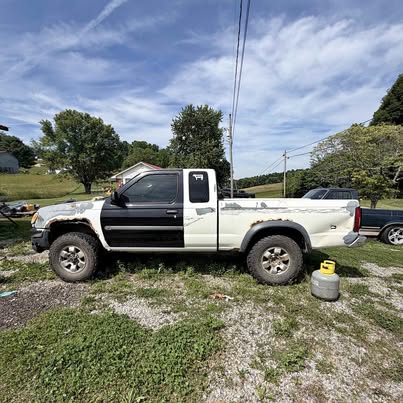
The D21 frame is a conventional ladder frame, part-boxed in section, and it rusts from the inside out in predictable places. Nissan's rustproofing was average for the era, the trucks were cheap enough to live outside and work in winter, and the surviving population is now thirty-plus years old. Our current listings cluster in the Southeast — North Carolina, Tennessee, Florida, Georgia and Kentucky lead the list — which flatters the national picture: a Southern truck may have a genuinely sound frame, while a truck that lived in the salt belt can be structurally finished under shiny paint. Where a truck has lived matters more than how its body looks. Work the frame in this order:
The rear frame rails and spring hangers. The single most common terminal failure. The rails around the rear leaf-spring hangers and shackles trap mud and road salt against the frame, and the metal perforates from inside the rail where you cannot see it until it is advanced. Get under the truck behind the cab and ahead of the rear axle, and again around the rear hangers and the spare-wheel crossmember, with a torch and a screwdriver, and prod. Surface scale that rings when tapped is treatable; metal that flakes in layers, dents under the screwdriver or shows daylight is a frame that needs cutting and plating — fabrication work at roughly $800–2,500 per side done properly, if a welder will take it on at all — and on a cheap truck it is a walk-away.
The boxed sections and crossmembers. The frame's boxed portions hold moisture that enters through drain and access holes and cannot dry. Rust swells between the inner and outer walls and eventually bursts the seams. Check every crossmember, especially the one under the cab rear mounts and the fuel-tank crossmember, and look along the top face of the rails where the bed sits — hidden from above by the bed floor, which is why sellers' photographs never show it.
Cab mounts and the front clip area. The cab mount brackets and the frame horns at the front, around the torsion-bar crossmember, corrode next. A cab that sits visibly crooked on the frame, doors that have dropped out of alignment with no accident history, and a gap between cab and bed that differs side to side all point at mount or frame trouble underneath. The torsion-bar crossmember matters doubly: the bars anchor the front suspension into it, and a rotten anchor is a safety failure, not a cosmetic one.
Learn to read cover-ups. Factory undercoating on a D21 is thin and patchy after thirty years. A frame freshly blown over in uniform thick black — rails, crossmembers, brake lines, the lot — the week before a sale is a question, not an answer: nobody rustproofs a sound frame for the next owner's benefit. Prod through it. Fresh patches of plate welded over rail sections, angle iron sistered along a rail, or expanding foam in a rail end are all confessions. A seller who will not let you under the truck, or who insists the frame is "solid for its age" without letting you tap it, has told you what you need to know.
Body and bed rust
The body rusts too — it is simply not what kills these trucks, because panels can be patched, replaced or lived with in a way a frame cannot.
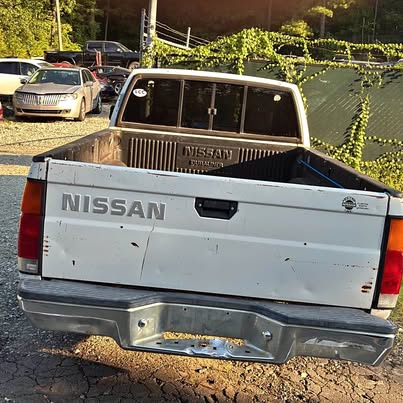
The bed. The double-walled bed floor rusts along its seams and around the wheel tubs, and the front bed panel corrodes where leaves and grit pack between bed and cab. Lift any bed liner — a drop-in plastic liner on a thirty-year-old truck is hiding the floor, and sellers know it. A bed floor perforated at the seams is a patch-and-paint job; a bed whose mounting points and front crossmember area have gone is structural again, because the bed bolts to the frame you have just inspected. Check the tailgate bottom edge and its hinges; gates rot from the inside and good used ones are getting scarce.
Cab corners, rockers and floors. The rear cab corners behind the doors, the rocker panels under the doors, and the floor pans where water sits under wet carpet are the standard trio. Windscreen seals and the cowl vents leak with age, water runs down behind the dash and into the front footwells, and the floor rots under sound-looking carpet. Lift the carpets or at least press the floors hard from above and below. Cab corner and rocker repair sections exist and a side is a $500–1,500 cut-out, weld and paint job; floors are flat work any body shop can do. None of it is fatal — but add it up, because three "small" rust jobs are a big bill.
Front wings and inner arches. The front fenders rust at the rear lower edge behind the wheel, where mud packs against the inner arch, and around the arch lip. Bolt-on wings make this the cheapest rust on the truck to fix properly. Doors rot along the bottom edge when their drain slots block; run a fingertip along every door bottom and feel for bubbling under the paint.
Front suspension, steering and driveline
The D21 front end is an independent torsion-bar design with upper and lower arms and ball joints, and on 4WD trucks it works hard. The wear list is conventional but comprehensive: upper and lower ball joints, tie-rod ends, idler arm, centre link and pitman arm all develop play with miles, and the symptom is the classic one — vague steering, wander at highway speed, uneven front tyre wear and clunks over bumps. None of it is exotic, and a full front-end refresh in parts is a few hundred dollars, but a truck that needs all of it plus alignment is a $700–1,500 shop bill, so rock each front wheel at 12 and 6 o'clock and at 3 and 9 and price what you find. The idler arm is the most common single culprit for wander on these trucks.
Torsion bars themselves rarely fail, but their adjusters seize, and a truck sitting nose-down or uneven side to side has tired bars, a seized adjuster or — check first — the rotten crossmember anchoring them. Ride height is adjustable by design on this suspension, so a level truck tells you someone has maintained it; a sagging one asks questions.
At the rear, leaf springs sag, crack leaves and eat their bushings; a truck that sits tail-down under no load or leans to one side is showing you spring or hanger trouble — and the hangers are the frame-rust area already covered, so read the two together. Shock absorbers are cheap and almost always tired. The rear axle itself (a C200 unit on many fours, the stronger H233B on V6 and 4WD trucks) is durable; whine under load and slop at the pinion are age, not design. On 4WD trucks add front CV boots — split boots are a when, not an if, at this age — hub function, and transfer-case engagement to the list. Universal joints on the propshafts chirp and clunk when dry; a clunk on taking up drive is usually a $40 joint, not a gearbox.
Brakes are disc front, drum rear, and the parts are cheap; the costs are the usual recommissioning ones — seized calipers, rusted hard lines (check the line along the frame rail while you are under there; a burst line on a test drive is a memorable experience), perished flex hoses and a tired master cylinder. A full hydraulic refresh is an $800–1,800 shop job. The rear drums carry the handbrake, so a handbrake that barely holds is its own adjustment or shoes job, not a caliper verdict.
Interior, electrics and the small stuff
D21 interiors were built to a price and age accordingly, but they are honest: what you see is what you get, and nothing inside the cab is catastrophically expensive except time.
Seats and trim. Bench seats sag and split at the driver's bolster; the foam collapses long before the vinyl gives up, and a sitting position like a hammock is the norm on a worked truck. King Cab jump seats and rear benches survive better simply because nobody sits in them. Seat covers on a listing photograph mean the seat underneath is worse than average. Dashboard tops crack in sun-state trucks — a cracked dash on a Florida or Tennessee truck is normal, priced in, and lived with or capped; the 1994-on rounder dash cracks less but is harder to find used. Door cards warp, window winders and regulators wear, and the sliding rear window's latch is broken on a large fraction of all trucks ever built.
The heater and air conditioning. Test both on every viewing. Blower motors wear out and heater cores leak — a sweet smell and misting windscreen on a warm truck is a heater core, a dash-out job you do not want to buy unknowingly. Air conditioning was a common option and a working system is a genuine selling point in the South; a dead one is usually a compressor, a leak and a recharge — $400–1,000 to put right properly — and "just needs a recharge" means it leaks.
Electrics. Period Nissan electrics fail at connections: corroded earth points, tired alternators, and gauge clusters whose fuel and temperature senders drift. A wandering fuel gauge is a sender, cheap and annoying in equal measure. Switchgear is simple and mostly still available. The one electrical item to verify on any truck is the charging system — a voltmeter across the battery at idle with the lights on settles it in a minute — because a truck that has been jump-started for the photos will strand you by the weekend.
The rest. Fuel tanks rust along their seams and straps on salt-belt trucks; a weeping tank is a replacement, not a repair. Exhausts are consumables and cheap. Radiators clog and their plastic tanks (on later trucks) crack with age; overheating history is what warps KA and VG heads, so a new radiator in the history file is a good sign, and a recent head gasket is a question about why. Windscreens are available; body rubber is patchier. And check the spare wheel carrier under the bed — the winch mechanism seizes solid, usually discovered at the worst possible moment.
Steering box, brake lines and the inspection-failure list
Three smaller systems account for a disproportionate share of failed inspections and roadside misery on these trucks, and all three are cheap to check and dear to ignore.
The steering box. The D21 uses a recirculating-ball steering box rather than a rack. Boxes wear at the centre of their travel — straight ahead, where the truck has spent its life — producing the classic pattern of play at the wheel with tightness on lock. A small amount adjusts out at the box; a box adjusted tight enough to remove centre play that then binds on lock is worn out, and a rebuilt or good used box is the fix. Power steering pumps whine when low or tired, and the high-pressure hose weeps with age. None of this is D21-specific, but on a truck already carrying ball-joint and idler-arm play, box wear is the item that turns "a bit vague" into "genuinely unpleasant at highway speed," so assess the steering as a system and price it as one.
Brake and fuel hard lines. The steel lines run along the inside of the frame rail — the same environment that rots the frame — and they corrode in sympathy with it. A line that lets go under a hard stop removes most of your braking in one pedal press. While you are under the truck for the frame check, trace the lines end to end: heavy scaling, flaking or a line already replaced in copper (a tell-tale of a previous failure) all belong in the budget. Replacing a full set of hard lines is a day of labour and modest parts — a $400–900 shop job — and it is money well spent on any salt-belt survivor.
Load-sensing valve and rear brakes. A proportioning valve in the rear brake circuit, linked to the axle on many trucks, adjusts rear braking to load; its linkage seizes and its seals weep with age, giving either a rear circuit that locks early on an empty truck or one that barely works at all. On the test drive, an empty truck that locks its rear wheels under firm braking is showing you this valve, not bad driving. Rear drum self-adjusters seize too, which is why so many D21s arrive with a long brake pedal that a simple adjuster service transforms.
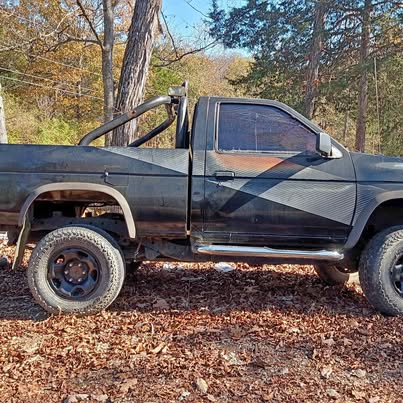
How to inspect one
Allow an hour, and bring a torch, a screwdriver for prodding (with the seller's permission), a magnet wrapped in cloth, and a code reader if the truck is a 1996 or 1997. The order below is deliberate: the steps that can end the purchase come first, while you still have the energy to walk away.
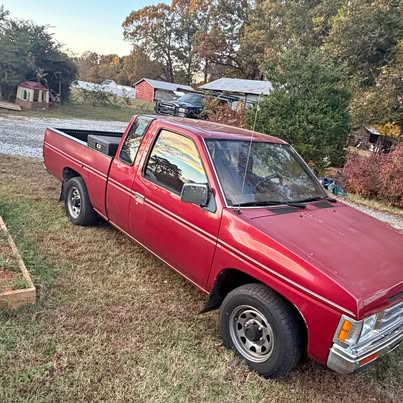
- Paperwork and identity first. Match the VIN on the title to the plate on the dashboard and the sticker on the driver's door jamb. Confirm the engine matches the story: count the plug leads — a Z24i has eight — and on a truck sold as a V6, look for the V6. Check the year carefully around the breaks that matter: 1990 (engine change), 1994 (new dashboard), 1996 (four-cylinder only). A truck whose parts do not match its year has a history worth hearing before you pay for it.
- The frame, before anything else. Under the truck with the torch, working the rust map from the problem areas section: rear rails and spring hangers first, then the boxed sections, crossmembers, cab mounts and torsion-bar crossmember. Prod with the screwdriver. Perforation at the hangers or in the rails is structural — this step decides whether the inspection continues at all. Read fresh underseal as a question, and prod through it.
- Cold start. Insist the engine is cold when you arrive. A KA24E should start cleanly; a rattle from the front of the engine for a second is the timing-chain tensioner filling — a rattle that stays is chain and guide wear priced into the offer. On a V6, listen for the cold ticking of a broken exhaust stud that fades as it warms, and watch for blue smoke: on start-up only is stem seals, under load later is rings.
- The V6 belt question. On any VG30 truck, ask for the timing belt invoice or the dated sticker on the timing cover. No evidence means the belt is due in your budget, not the seller's word — and an interference engine gives no second chances. Price the job in and have it done before you rely on the truck.
- Bed and body. Lift any bed liner and read the bed floor seams and wheel tubs. Check the front bed panel, tailgate bottom, cab corners, rockers and door bottoms with the magnet and a fingertip. Lift the carpets and press the floors. Add the rust jobs up honestly — three small ones are one big bill.
- Front end. Rock each front wheel at 12 and 6 o'clock for ball joints, then at 3 and 9 for steering play, and have a helper rock the steering wheel while you watch the idler arm and centre link from underneath. Check the truck sits level: nose-down or a lean means torsion bars, a seized adjuster, springs — or the crossmember problem from step 2.
- The test drive. Fifteen minutes minimum, including a highway stretch. The manual should change cleanly, with second-gear synchromesh the test on downchanges; the automatic should engage promptly and shift without flare. A four should pull cleanly without hesitation — flat spots are fuel and air leaks, not character. Brake hard from speed: straight stop, no judder, no pulling. Listen for axle whine under load and propshaft clunks on take-up.
- Four-wheel drive, if fitted. On a loose surface, engage 4WD high and low. It should select without violence, drive without chattering from the front hubs, and disengage cleanly. Check the front CV boots while the wheels are turned. A 4WD system that "has never been used" has usually never been maintained either.
- Heat, cooling and electrics. Let it idle hot. Temperature should sit steady; a climbing gauge on a truck with a tired radiator and fan clutch is an overheating story waiting for its second chapter — and overheating is what warps these heads. Run the heater (sweet smell or misting screen means heater core) and the air conditioning. Work every window, light, gauge and the wipers. Put a voltmeter on the battery at idle with the lights on if you can.
- Underneath, the second pass. Now the consumables: brake hard lines along the frame rail, flex hoses, exhaust, fuel tank seams and straps, oil leaks at the valve covers and front crank seal, gearbox and transfer-case weeps, and the spare-wheel carrier — wind it down, because a seized one is useless. A dry truck at this age has usually been resealed recently; ask what was done.
- Interior last. Sit in the driver's seat and feel for collapsed foam, not just split vinyl. Check the King Cab rear space if you will use it. Judge the dashboard, door cards and headlining as a set: a sound original interior is the hardest part of a D21 to recreate, so weight it more than its repair cost suggests.
- The stance photograph. Stand back and take the side picture. Level, even, arches matching over both wheels, cab square to the bed. Then decide with the frame verdict from step 2 in front of you: everything after step 2 is negotiable money; step 2 is the truck.
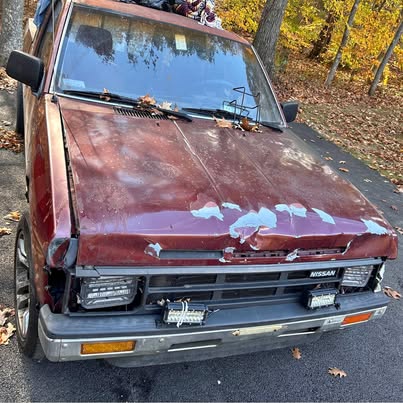
Values
The market block beneath this guide carries the live figures from our own listings — what is for sale now, at what asking prices, and what has sold. This section teaches you how to read those numbers, because on a D21 the spread inside a single model year is wider than the spread between model years, and the headline figure for "a Hardbody" means almost nothing on its own.
Condition is the market. These were inexpensive working trucks, and the value ladder is brutally simple. At the bottom sit parts trucks and frame-suspect runners, worth what their engines, beds and trim will yield. In the middle sits the honest driver — sound frame, tired cosmetics, everything working — which is where most transactions happen and where the value is. At the top sit the genuinely preserved trucks: low-mileage, Southern, original-paint King Cabs and V6 SEs that were garaged toys rather than tools. The gap between a driver and a preserved truck is a multiple, not a percentage, and it is driven almost entirely by the frame and the interior, the two things that cannot be bought back.
What carries a premium. The V6 SE is the collector configuration and prices like it, especially as a 4WD King Cab — the scarcest useful D21 there is. King Cabs outprice regular cabs in equal condition because buyers want to live with them. Four-wheel drive adds money in snow and trail country and very little in the flat South. The 1990-on KA24E and VG30E trucks carry a small premium over the throttle-body early trucks for their extra power and manners. Originality pays: unmodified trucks with their factory wheels, trim and graphics intact are worth more than lifted, swapped or personalised ones, because the modifiers' market is smaller than the preservers' market and shrinking as clean trucks vanish.
Asking versus achieved. The D21 market is a private-seller market — every one of our current listings comes from a marketplace seller rather than a dealer — and private asking prices on working trucks are opening bids, not verdicts. Sellers anchor on the best truck they have seen advertised; buyers should anchor on the frame they have inspected. Expect negotiation to do real work, and expect the honest sentence in any negotiation to be the one about the rear rails: a seller with a genuinely solid frame on a good truck knows what he has, and a seller who will not let you look is discounting the truck for you in advance.
Project versus driver. The trap in this market is the cheap runner with a perforated frame: it costs little to buy and a fortune to make structural, and unlike a Mercedes or a Porsche there is no finished value at the end that repays fabrication. The arithmetic that works is the reverse — pay the driver's premium for a sound frame and honest mechanics, and spend your improvement money on the cosmetics and consumables that actually respond to it. Rust-free Southern trucks carry a real premium over salt-belt equivalents and earn it; a plane ticket and a drive home is a rational part of a Hardbody purchase.
Parts and ownership
The D21 is one of the easiest classic trucks to keep, for a structural reason: Nissan built the same basic truck for eleven years, shared most of it with the first Pathfinder, and sold both in enormous numbers across North America. The used-parts pool is deep, the knowledge base is wide, and nothing about routine ownership requires a specialist.
Easy: service items, filters, plugs (all eight on a Z24i), brake discs, pads, drums and hydraulics, clutch kits, water pumps, radiators, alternators, starters, shock absorbers, ball joints, tie-rod ends and most steering wear parts, exhaust systems, and timing-chain kits for the KA24E. Order today, fit this weekend, at prices close to modern-car money. The Pathfinder crossover means breakers' yards are full of your front suspension, your gearbox and your interior trim.
Harder and dearer: timing-belt service on the V6 is cheap in parts but the labour is the bill, and broken manifold studs can turn a small job into head work. Body panels are the growing problem — good rust-free beds, tailgates and front wings are consumed by the same rust that kills the trucks, and clean used panels in the Southeast are hunted. King Cab-specific trim, early dashboard parts and unbroken interior plastics are scarcer than mechanical parts. Frame repair is fabrication, priced per truck, not a parts purchase at all. Glass and most rubber seals remain available; the sliding rear window's hardware is a used-parts hunt.
Running costs. A sorted Hardbody is a realistic daily driver: fuel consumption in the high teens to low twenties for a four-cylinder two-wheel-drive truck, worse for a V6 4WD, insurance in line with any older truck, and servicing any competent home mechanic can do on a driveway — the engines predate sealed-for-life everything, and even the injected trucks are simple by modern standards. Tools are ordinary metric hand tools; the factory service manuals are widely circulated and genuinely good, and the Pathfinder overlap means a Haynes or Chilton for either vehicle covers most jobs on both. There is no job on a D21, short of frame fabrication and automatic-gearbox internals, that a determined home mechanic cannot do with a manual, a weekend and a parts order — which is a large part of why the trucks survive: they never needed a dealer's permission to be repaired. The budget line that catches new owners is the first year: catching up deferred maintenance on a working truck — chain kit or belt, fluids throughout, brakes, front-end wear, tyres — honestly costs real money before you improve anything, and recommissioning a truck that has sat for years adds a fuel system clean-out (modern ethanol fuel attacks old rubber and leaves varnish in tanks), every brake component inspected, and all seals and hoses renewed. Buy a truck in regular use over one that has been asleep, even at a higher price: on a D21 the sleeping truck's frame has been rusting the whole time it rested.
Which one to buy
- The all-rounder: King Cab XE, KA24E, 2WD. The injected four, the usable cab, the volume trim, a manual gearbox. Cheap to buy, cheap to run, easy to sell on. If you want one Hardbody to use every day, this is it.
- The value buy: an early Z24i regular cab with a proven frame. The throttle-body trucks are the cheapest D21s of all because buyers chase the later engines — but a solid-framed early truck with sorted vacuum hoses and fresh plugs is most of the Hardbody experience for the least money.
- The hauler: V6 SE King Cab. The VG30E's torque transforms towing and load work, and the SE is the best-equipped cab. Buy the timing-belt evidence with it, or budget the job on day one.
- The trail truck: 4WD, four or V6. Part-time four-wheel drive, Pathfinder-shared parts, a frame that takes real use. Judge it by its front end and its rails, and expect the CV boots and hubs to want attention.
- The keeper: a preserved, original, Southern V6 SE 4WD King Cab. The scarcest configuration in the best condition is the one appreciating while you drive it. Verify its Southern life in the rear rails, not in the seller's story.
And the rule that overrides all of the above: buy the frame, and let everything else be negotiable. Engines, gearboxes, brakes, interiors and paint are all fixable at prices you can plan for. A perforated frame costs more to put right than the finished truck will be worth — and it is the one thing about a Hardbody that can never be made original again.
Listed now
On Classic Listings today: 22 cars are listed here; 7 for sale and 2 marked sold; average asking price $2,864; asking range $900 to $4,500; sold cars average $7,000.
See the 22 Pickup cars currently listed.
The market — recorded sales
Recorded-sale figures: 2 recorded sales · median $7,000 · range $6,200 to $7,800 (Sep 2024 – Sep 2026)
Based on 2 recorded sales — too few for a benchmark value.
| Date | Car | Sale price | Source |
|---|---|---|---|
| Sep 25, 2026 | 1990 Pickup | $7,800 | Cars & Bids |
| Apr 10, 2026 | 1989 Pickup | $6,200 | Cars & Bids |
Dates are the sale date where the source states one; otherwise the date the sale was recorded here.
For sale now
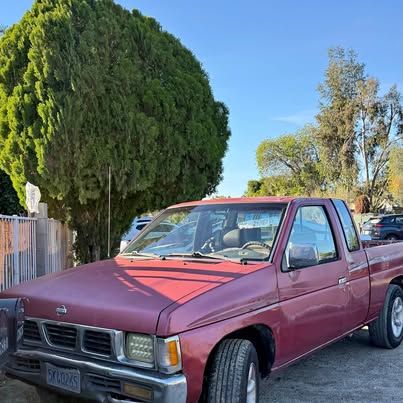 $4,500
Expand
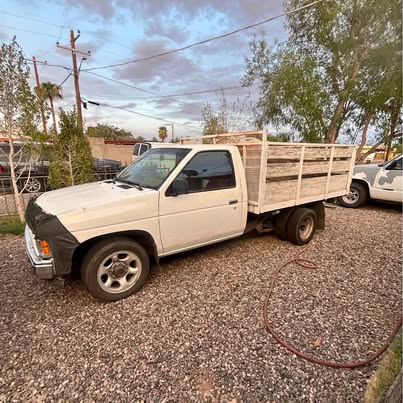 $3,500
Expand
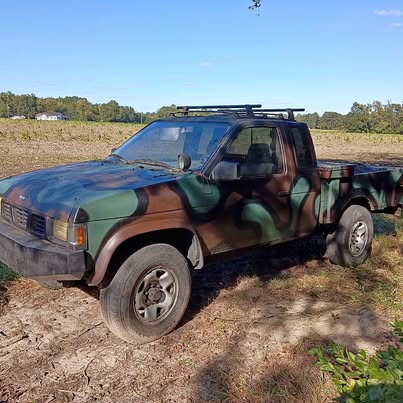 $3,500
Expand
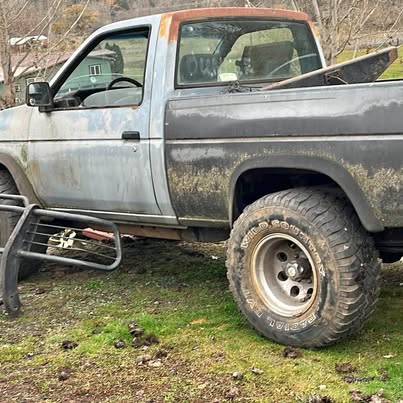 $1,000
Expand
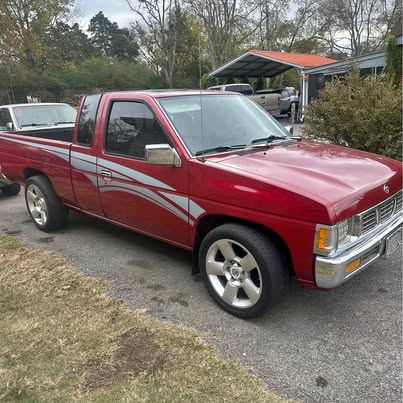 $3,800
Expand
$900Expand
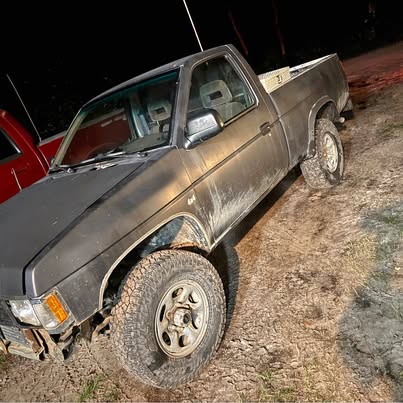 $2,850