
Plymouth Barracuda Convertible buyer's guide
Plymouth Barracuda Convertible -- the model's own buyer's guide: variants, values and what to check.
Years listed: 1968-1971 · Series: Barracuda
Overview and history
The Barracuda Convertible is not one car. It is two completely different cars, built on two different platforms, that happen to share a name, a badge and a folding roof — and if you shop for one without understanding that, you will compare cars that have nothing in common but the brochure. The first is the 1967–1969 car: a compact, Valiant-based A-body convertible, light, simple and, in 340 Formula S form, genuinely quick for its size. The second is the 1970–1971 car: the wider, heavier, purpose-built E-body, sold in Barracuda and high-performance 'Cuda trim, and home to the 440 Six-Barrel and the 426 Hemi. There is no convertible in the first-generation 1964–1966 range at all — those cars are fastback coupés only — and there is no convertible after 1971. Anyone offering you a 1966 or a 1972 Barracuda Convertible is offering you a mistake, a conversion, or a car you should walk away from.
Start with the name. Plymouth launches the Barracuda on 1 April 1964, a fortnight before Ford's Mustang, as a fastback derivative of the Valiant compact — but it is a coupé, and it stays a coupé for three model years. The convertible arrives only with the second generation for 1967, when Plymouth gives the Barracuda its own sheet metal and a three-body range: fastback, notchback coupé and convertible. That 1967–1969 A-body car is the convertible for the buyer who wants a usable, relatively affordable classic: torsion-bar front suspension, a live rear axle on leaf springs, and a parts base shared with the vast A-body family — Darts, Valiants, Dusters — that Chrysler built in the millions.
The E-body car of 1970 is a rupture, not a facelift. Chrysler designs the new Barracuda and its Dodge Challenger sibling specifically as pony cars, wider and lower than the A-body, with a shorter wheelbase on the Barracuda — 108 inches, against the Challenger's 110 — and engine bays deliberately sized for big-block power. The convertible continues for just two model years, 1970 and 1971, and then Plymouth drops it, along with every other Chrysler convertible of the era, under the combined pressure of anticipated federal rollover regulation that never quite arrives in the feared form, rising insurance costs, air conditioning reducing the appeal of open cars, and a pony-car market already contracting. That two-year window, and the tiny proportion of E-body production it represents, is the whole reason the 1970–1971 cars — above all the 'Cuda versions — occupy a different market universe from the A-body cars.
Correct the biggest myth now, because it distorts almost every advertisement you will read. Not every E-body convertible is a 'Cuda, and not every car with 'Cuda badges, billboard stripes and a Shaker bonnet started life as one. 'Cuda is a specific performance model with its own VIN sequence, not a trim pack you can add with decals. The base Barracuda convertible with a 318 shares a body shell with the Hemi car and almost nothing of its value or specification. The same discipline applies to the A-body: Formula S is a defined package — engine, suspension, tachometer, trim — not a stripe kit. In both generations, identity is settled by the VIN, the fender tag and, where it survives, the broadcast sheet, never by what the car is wearing today.
The site's own current pool shows you the split in miniature. At the time this guide was prepared the store holds just two Barracuda Convertibles, both for sale: a gold 1968 A-body car in Maryland, listed as a 340 Formula S, and a red 1971 E-body car in Utah — one manual, one automatic between them. Read them as illustrations of the two families, not as a sample. The photo record is thinner still: two cars photo-examined, with no mentions of rust, smoke, leaks or damage recorded — a sample of two, from listing photographs, which tells you only that neither car's published pictures advertise a problem. It is not evidence about condition; the sections that follow assume you verify everything in person.

The models
Lay the range out by platform first and by engine second, and it stops being confusing. A-body convertibles, 1967–1969: base Barracuda Convertible, the Formula S performance package centred on the 340, big-block 383 cars above it, and a handful of 440 'Cuda-badged cars at the top in 1969. E-body convertibles, 1970–1971: base Barracuda Convertible, the luxury-trimmed Gran Coupé for 1970 only, and the 'Cuda Convertible as the performance model. Six-cylinder cars exist in both generations and are the cheapest way in; they are also the cars most often re-engined later — a converted car can be a fine driver and is never an investment-grade original.
| Model | Years | Engine | Output | Built | Character |
|---|---|---|---|---|---|
| Barracuda Convertible (six / small V8) | 1967–1969 | 225 Slant Six; 273 V8; 318 V8 from 1968 | 145 hp (225); 180 hp (273 2-barrel); 230 hp (318) | The bulk of A-body convertible production; total A-body convertible output across three years was in the low tens of thousands, with no clean per-engine split worth quoting | The honest cruiser: light, simple, cheap to run, and the correct buy if you want the shape without the performance-car bills |
| Barracuda Formula S Convertible | 1967–1969 | 273 Commando (1967); 340 (1968–1969); 383 also offered under Formula S umbrella | 235 hp (273 Commando); 275 hp (340); 300 hp (383, 1968 rating) | A small minority of A-body convertibles; 340 cars are the sought-after subset | The driver's A-body: heavy-duty suspension, quicker steering, tachometer — the 340 car in particular punches far above its size |
| Barracuda 383 / 'Cuda 440 Convertible (A-body) | 1967–1969 | 383 B V8; 440 RB V8 (1969, 'Cuda 440) | 280–330 hp (383, by year and carburation); 375 hp (440) | Very small numbers; the 1969 'Cuda 440 convertible is a genuinely rare car | Big-block weight in a compact shell: fast in a straight line, nose-heavy, and bought for rarity and torque rather than balance |
| Barracuda Convertible / Gran Coupé (E-body) | 1970–1971 (Gran Coupé 1970 only) | 225 Slant Six; 318; 340 and 383 also available in base body | 110–230 hp by engine in period net-transition ratings; 318 at 230 hp gross | E-body convertibles were a small fraction of production in both years — a few thousand cars a year across all engines | The cruiser E-body: all the looks and presence, none of the 'Cuda premium; Gran Coupé adds leather and overhead console trim for 1970 |
| 'Cuda Convertible | 1970–1971 | 340; 383; 440 Magnum; 440 Six-Barrel; 426 Hemi | 275 hp (340); 335 hp (383); 375 hp (440 Magnum); 390 hp (440 Six-Barrel, commonly quoted 385–390); 425 hp (426 Hemi, rated) | Small hundreds per engine per year at the top of the range; Hemi convertibles are reported at 14 built for 1970 and 11 for 1971 | The performance flagship and the collector car: heavy, thirsty, violent in a straight line, and priced by identity and documentation above all else |
Treat the Built column with suspicion. Chrysler's records give good totals for some combinations and none for others, and convertible-by-engine splits repeated online often trace back to a single enthusiast estimate copied for thirty years. The figures above are orders of magnitude except where a number is genuinely documented — the Hemi counts, small enough to have been reconstructed car by car. Rely on the ordering: sixes and 318s are common, 340s uncommon, big-blocks rare, and any Hemi claim demands paperwork of a standard no other variant requires.
The A-body years divide by styling rather than substance. The 1967 car introduces the body. For 1968 it gains side marker lights, revised trim, and — the change that matters — the 340 replaces the 273 Commando as the Formula S engine; the gold car in this guide's pool is a 1968, listed as a 340 Formula S, the specification most A-body buyers would choose with hindsight. For 1969 the 340 and 383 continue and Plymouth adds the 'Cuda package as a named model, including the 440 car — a tight fit requiring its own exhaust manifolds and an engine bay you inspect with a torch and patience. Across all three years the convertible mechanism, glass and structure are essentially common: the rust map in the problem-areas section applies to every A-body year.
The E-body years divide more sharply. The 1970 car has a cleaner flank and the full engine range from Slant Six to Hemi, plus the Gran Coupé variant and the optional Shaker bonnet scoop on 'Cuda, which shakes with the engine because it is mounted to the air cleaner, not the bonnet. The 1971 car is identified at a glance by its quad headlamps in two pods, the decorative gills pressed into the front wings, and, on 'Cudas, the famous billboard rear-quarter graphics. The 1971 year is also the last for the convertible, the last for the Hemi, and the last year of high-compression muscle-car engines — a triple finality that explains much of the 1971 premium, and none of which makes a neglected 1971 a better car than a sorted 1970. Buy the car in front of you, not the mythology around its year.
One naming trap applies across both E-body years. Plymouth sells the performance car as the 'Cuda — a separate model line with VINs beginning BS, against the base Barracuda's BH and the Gran Coupé's BP. Those two letters, in the VIN, on the fender tag and in the body numbers, are worth more than every badge on the car combined. A base convertible re-engined with a 440 and dressed as a 'Cuda is a tribute, priced as a tribute, however well built; a genuine 'Cuda with a replacement engine is a subtler case, covered in the identity checks below. Neither is a reason to walk away automatically. Both are reasons to pay the price of the car that actually exists.

Engines and gearboxes
Every engine in this guide is a Chrysler unit of the period, carburetted, iron-blocked and pushrod-operated, and every one is well understood by any competent American V8 specialist. What differs is not whether they can be fixed — they all can — but what they cost to run, how they fail when neglected, and how much of the car's value depends on the engine being the one the car was born with. Read this section in that order: character first, failure modes second, originality last.
The Slant Six: the engine that will not die, and why you will probably still swap it
The 225-cubic-inch Slant Six — the G-series, canted 30 degrees to allow a low bonnet line — is one of the most durable engines Chrysler ever built: seven main bearings on later versions in spirit if not in early form, a forged crankshaft in early cars, simple gear-driven camshaft timing with no chain to stretch in the earliest specification, and a single-barrel Holley or Carter carburettor you can rebuild on a kitchen table. In the A-body it gives 145 horsepower in gross period rating; in the E-body, by 1971, emissions tuning and rating changes make it feel softer than that figure suggests. It suits the base convertible honestly: light, economical by period standards, and smooth at cruising speed.
Its faults are age faults. The exhaust manifold cracks at the centre branches and ticks when cold, quieting as it warms — distinguishable from a valvetrain tick precisely by that temperature behaviour. The automatic choke ages badly and produces the classic hot-restart flood. Valve stem seals harden and give a puff of blue smoke on start-up, which on this engine, with clean plugs and good compression, is a seal job and not a rebuild. The serious trap is not mechanical: a six-cylinder convertible is the cheapest shell, so it is the car most often converted to V8 power. A proper conversion — mounts, torsion bars, brakes, radiator, driveshaft, rear axle — is a legitimate driver. An engine-only swap leaves six-cylinder suspension and brakes under V8 weight and power, and you detect it from exactly those mismatches, plus a VIN that still says six.
The LA small-blocks, 273 and 318: the honest V8s
The LA — lightweight A — small-block family gives the range its volume V8s. The 273, standard V8 in the early A-body cars, comes as a 180-horsepower two-barrel and as the 235-horsepower Commando with a four-barrel Carter AFB, higher compression and a lumpier camshaft. The 318 replaces it from 1968 in the A-body and continues into the E-body, a 230-horsepower two-barrel engine of legendary indifference to abuse: cast crankshaft, hydraulic lifters, mild camshaft, and a bottom end that tolerates neglect that would kill a more highly tuned unit. Both engines use a single Carter or Holley two-barrel in base form, a timing chain — not a belt; there is no timing belt anywhere in this guide — and Chrysler's reliable electronic ignition only from the early 1970s, so most A-body cars you meet started life on contact-breaker points and many still run them.
Failure modes are shared and specific. The nylon-toothed camshaft timing gear fitted in some years sheds its teeth with age and heat, the chain jumps, and the engine stops or runs with retarded valve timing that owners misdiagnose as carburation for months; any LA of unknown history gets a chain-and-gears set as preventive work, a $400–800 job with labour. The rear main seal leaks onto the exhaust crossover. The exhaust manifolds crack and the heat-riser valve seizes, cooking the choke or, seized shut, overheating the carburettor into hot-running flat spots. None of this is exotic. A 318 car that starts cleanly, holds 40 psi-plus of oil pressure hot at cruising speed, and does not smoke under load is an engine you budget to service, not to rebuild.
The 340: the small-block that behaves like a big one
The 340, offered 1968–1971 in these convertibles, is the connoisseur's engine and the one around which the Formula S and the small-block 'Cuda reputations are built. Forged crankshaft, high-flow heads with 2.02-inch intake valves, a windage tray, a high-lift camshaft — in 1968, with the manual gearbox, a hotter camshaft still — and a Carter AVS four-barrel carburettor. Rated at 275 horsepower gross, a figure period testers widely believed conservative. It revs where the 318 will not, weighs far less than a big-block over the front axle, and in the light A-body convertible makes the best-balanced fast car in this entire guide.
It is also the engine most likely to have been thrashed, modified or removed. Check the casting numbers and date codes, and the damper and pulleys, against a 318 dressed up — the two engines are externally near-identical, and a 318 with 340 badges and an AVS is the commonest small-block misdescription you will meet. The honest test is the engine-number stamping and casting numbers, checked against the year, not the seller's parts invoices. Mechanically, budget for the same timing-chain and manifold issues as any LA, plus valve-guide wear on hard-used heads. A full 340 rebuild to stock specification runs $6,000–10,000 at a specialist; a Hemi it is not, but it is not a budget engine either.
The B and RB big-blocks: 383 and 440
The 383 B-series and the raised-deck 440 RB are the torque engines. The 383 appears in the A-body from 1967 — a tight fit requiring specific exhaust manifolds — and in the E-body as the standard 'Cuda big-block, at 335 horsepower in four-barrel form with a Carter AVS. The 440 Magnum, at 375 horsepower with a single Carter AFB or AVS, is the E-body's volume performance engine; the 440 Six-Barrel — three two-barrel Holley carburettors on an aluminium intake, the centre carburettor doing ordinary work and the vacuum-operated outboards opening under load — is rated around 385–390 horsepower and is the engine most buyers actually dream about, because it is nearly Hemi-quick, far less temperamental, and was built in meaningfully larger numbers.
Big-block failure modes centre on heat, weight and carburation. The Six-Barrel's outboard carburettors stick, leak at their base gaskets and go out of adjustment; a car that hesitates then surges as the outboards open has a linkage and vacuum-diaphragm problem, not an ignition problem, and the distinction is a road test at steady throttle followed by a progressive one. All big-blocks run hot in the E-body's tight bay with a marginal radiator and a failed viscous fan drive; overheating on a test drive is a cooling-system rebuild — radiator, fan clutch, water pump, hoses, $800–1,800 — until proven otherwise. In the A-body, add access: the cars are nose-heavy, manual steering is heavy work at parking speed, and even a plug change is an exercise in patience. None of this should put you off. All of it should be priced in.
The 426 Hemi: a different discipline
The 426 Hemi — hemispherical combustion chambers, dual Carter AFB four-barrels, forged internals, rated at 425 horsepower and universally understood to make more — is not an engine you buy casually in a convertible, because the Hemi convertible cars are among the most valuable American production cars in existence and the market around them contains every species of claim. Mechanically it is robust but maintenance-hungry: valve clearances needing periodic attention on solid-lifter specification, a thirst for fuel and correct ignition timing, and a sensitivity to gentle use — short, cold, rich running fouls plugs and dilutes oil. The buying discipline is documentation first, engine second: VIN, fender tag, broadcast sheet and expert verification precede any discussion of the engine's health, and a car whose paperwork cannot bear scrutiny is not a Hemi convertible at any price, whatever is under the bonnet. If you are seriously in this market, take marque-specialist inspection as a condition of purchase.
Gearboxes: TorqueFlite and the A833
Two automatics and two manuals cover the range. The TorqueFlite 904 serves sixes and small-blocks; the heavier TorqueFlite 727 serves big-blocks, the Hemi and high-output applications, and is identifiable by its deeper, differently shaped sump pan. Both are three-speed, hydraulically controlled, and among the strongest automatics of the era — but both are now fifty years old, and the failure pattern is consistent: hardened seals give lazy, flaring shifts when cold that improve as the fluid warms, which is a rebuild announcing itself, not a fluid change curing anything. Budget $2,000–3,500 for a proper TorqueFlite rebuild with a new torque converter. Check the fluid on the dipstick — it should be red and smell sweet, not brown and burnt — and insist on a cold start for the gearbox test, because a seller who warms the car up before you arrive is hiding exactly this.
The manual cars use Chrysler's A833 four-speed — the heavy-duty 18-spline version behind Hemis and 440s, the 23-spline unit elsewhere — or, in base cars, a three-speed manual. The A833 is strong, with two characteristic faults: worn synchronisers, worst on second gear, that crunch on a fast downchange but accept a slow one — the test that distinguishes wear from a dragging clutch — and sloppy external linkage, above all worn Hurst shifter bushings, which masquerades as gearbox wear and costs almost nothing to fix. The Pistol Grip shifter on 1970–1971 cars is correct and desirable; its presence proves nothing about the gearbox behind it. A clutch is $800–1,500 fitted, and a heavy or juddering clutch is a negotiating point, not a walk-away — unlike the automatic's cold flare, which is.

Problem areas
A Barracuda Convertible's problems divide into the problems every old Chrysler has, the problems convertibles add, and the problems rarity creates. The first group is manageable with money and a manual. The second — structure and weather sealing — decides whether a car is a driver or a restoration. The third — identity, originality and unobtainable trim — decides what the car is worth, and it is the group sellers are least reliable about. Work through them in that order, and do not let a strong engine talk you out of what a weak floor is telling you.
Rust and structure: the map, and why the convertible version is stricter
Both bodies are unitary construction — there is no separate chassis to save a rusty shell — and both rely on the floor, sills, torsion-bar crossmember and subframe rails as structure. The convertible removes the roof, which on a coupé contributes more stiffness than most buyers realise, and replaces it with reinforcement in the sills, floor and seat-belt anchor areas. That makes convertible rust a structural question sooner than the identical blister would be on a coupé, and it is why this section comes first and runs longest.
Start underneath, because that is where these cars die. The front subframe rails rot from the inside out, worst where they pass under the floor collecting salt and mud, and the torsion-bar crossmember — the member the front suspension's spring loads feed into — corrodes at its ends and around the torsion-bar sockets. A perforated crossmember is not a welding afternoon; it is a structural repair with suspension loads removed and geometry re-established, $2,500–5,000 done properly, and the commonest reason an apparently tidy A-body is actually a parts car. Prod with a screwdriver — with the seller's permission, firmly — at the rail undersides, crossmember ends and rear spring-hanger boxes. Surface scale is normal at this age. Perforation, flaking layers and fresh underseal over either are not: underseal on a car for sale is a question, and the answer you want is photographs of the metal before it was applied.
The floor pans rot from the inside, fed by convertible leaks — the vicious circle at the heart of this model: the roof leaks, the carpets stay wet, the floor rusts under sound-deadening you cannot see through, and the first symptom is a smell, not a hole. Lift every carpet you can and press the floor hard along the seat risers and rear footwells. The boot floor follows the same pattern, fed by a leaking rear window and perished seals; lift the spare wheel and look at the well and the extensions behind the rear wheels. A boot floor is $1,200–2,500 with paint; a boot floor plus both rear quarters is a restoration budget, and a car needing all three is a project whatever its paint looks like.
The visible rust map is predictable. Rear wheel arches and the lower rear quarters behind them, where inner and outer skins trap mud. The bottoms of the front wings behind the wheels. Door bottoms, along the hem flange — open the door and look at its underside, not its face. The cowl and windscreen surround, worst on the E-body around the base of the A-pillars, where water sits under the bright trim and a repair means screen out and weld work in a highly visible place. And the top well, where the folded roof lives in a well that collects water by design and drains through holes that block by neglect. Put your hand in, roof folded, and feel for standing water, silt and corrosion: a dry, clean well is one of the best signs on the whole car, because it means somebody maintained its drains.
Panel availability divides the generations. A-body repair panels are reproduced and obtainable, because the family is vast. E-body panels are reproduced too, but convertible-specific pressings, the top well and some reinforcements are harder, dearer and sometimes only available as used cuts from a donor car. Either way, paint is the multiplier: a structurally sound car in tired original paint beats a shiny car over fresh filler every time, and a magnet dragged in a sock along the quarters, sills and door bottoms — it falls off over filler — remains the cheapest inspection tool in this guide.
The convertible top: frame, hydraulics, fabric and seals
The folding roof is a powered mechanism on most of these cars — manual operation exists on base cars — built around a scissor frame, a hydraulic pump and rams on powered cars, or an electric motor drive on some specifications, latched at the windscreen header and sealed by a system of rubber weatherstrips that were marginal when new. Operate it, fully, at least twice, up and down, and watch rather than listen to the seller. The frame should rise evenly on both sides; a top that twists as it rises has a bent frame member, a failing ram or low hydraulic fluid, in ascending order of cost. Hydraulic leaks show as fluid in the top well and behind the rear seat, where pump and rams live; a pump rebuild or ram reseal is $400–1,200, a replacement frame — if you can find a straight one — is a four-figure hunt.
Fabric is the visible part and the least important structurally. Tops perish at the folds, split at the rear quarters where the frame stresses them, and lose their rear windows — plastic windows yellow and crack; glass windows survive but stress their surrounding fabric. A quality replacement top, fitted, with pads and a new rear window, runs $1,500–3,000, and fitting is a specialist job: a badly fitted top on a straight frame leaks and drums, and you will pay a trimmer to refit what a generalist fitted badly. Treat a new top on a car for sale as a plus only if the frame underneath it demonstrably works.
Seals decide whether the car is usable. Perished header seals drip onto your knees; perished side-rail seals admit water that runs inside the doors and into the rear quarters; a shrunken boot seal fills the boot. A full weatherstrip set is a few hundred dollars in parts and a day of fitting, and it transforms a car — but it cannot compensate for a frame that does not pull the top down squarely, or for door glass that no longer aligns with the side rails. Sit inside with the top up and look along every glass edge for daylight. Then, if the seller permits, a gentle hose test tells you more in two minutes than an hour of looking: water at the header is adjustment and seals; water at the A-pillar base is the cowl rust from the section above, and it is not a trim bill.
Finally, flex. A convertible with tired structure shakes: the screen frame trembles over bumps, the doors move in their apertures, and the car corkscrews over diagonal ramps. Drive over a rough surface at low speed, top down, fingertips on the door top and screen frame. Movement you can feel is normal in degree; clunks, sill creaks and a door that needs lifting to close are structure talking, and they send you back underneath with the screwdriver.
Suspension, steering and brakes: torsion bars, tired rubber and marginal stopping
The front suspension is Chrysler's torsion-bar system: longitudinal bars, upper and lower control arms, an anti-roll bar on performance cars, and recirculating-ball steering, manual or power-assisted. It is durable and adjustable for ride height — which is also its trap, because winding the adjusters up is how tired bars and worn bushes are disguised as a level car — and entirely dependent on rubber bushes now decades old. Budget a front-end rebuild — ball joints, bushes, tie-rod ends, idler and pitman arms — at $1,200–2,500 with alignment on any car without proof of the work, and test by bouncing each front corner, listening for knocks over low-speed bumps, and checking the front tyres for shoulder wear.
The torsion bars rarely break but do sag and, at their rear sockets, sit in the corrosion zone already described. Rear suspension is a live axle on leaf springs — the Chrysler 8¾-inch axle on most V8 cars, the smaller 7¼-inch unit behind sixes and mild small-blocks, and the Dana 60 behind Hemi and some 440 four-speed E-bodies. The 8¾ whines on worn ring-and-pinion sets and leaks at the pinion seal; springs sag and crack leaves at the eye. A car that sits low at the rear and bottoms over bumps needs springs, $400–900 a pair fitted, not shock absorbers alone — though those will be tired too.
Brakes are the era's weak point and the first safety spend. Many A-body cars left the factory with drums all round; front discs were optional, then increasingly standard on performance cars and standard practice on E-body 'Cudas. Drums in good order stop the car adequately once; they fade, pull when contaminated or unevenly adjusted, and demand a driver who plans ahead. Test from 50 mph with your hands light on the wheel: a pull is a seized caliper or wheel cylinder, a collapsed flexible hose, or contaminated linings — each a repair, not a characteristic. Perished flexible hoses — three, including the rear-axle hose everyone forgets — are a $150 preventive job you do in the first week of ownership regardless. A disc conversion on a drum A-body is $1,000–2,000 in kit form and the single best usability upgrade the car accepts; it changes value little either way, so buy the car you like and convert it, rather than overpaying for a claimed factory-disc car you have not verified from the fender tag.
Steering deserves its own sentence, because Chrysler power steering of the period is famously over-assisted and vague, and buyers mistake the vagueness for wear. The test is free play at the wheel with the engine running — more than about two inches at the rim is wear in the box, coupler or linkage — and leaks from pump and box, which are reseal jobs, not replacements. The coupler's rubber disc perishes and introduces a clunk and a dead spot just off centre; it is cheap, and it transforms the car.
Interior, trim and electrics: the cost of completeness
Convertible interiors suffer what coupé interiors are spared: ultraviolet light, rain when the top or the owner is caught out, and heat cycles that split vinyl seams and crumble foam. Dash pads crack across their top surface; the E-body's Rallye instrument cluster — standard on 'Cuda, optional elsewhere — carries gauges whose senders and voltage limiter fail, giving the classic pattern of fuel and temperature gauges that read together, both wrong, because they share a limiter. That pattern is a $50 limiter, not two senders and a gauge set, and it is the kind of distinction this guide exists to teach. Seat foams collapse on the driver's side first; seat covers, foams and a carpet set for either generation run $1,500–3,500 in parts before fitting, and correct-grain vinyl matters to value on the rare cars and not at all on a driver.
Trim is where completeness gets expensive. Convertible-specific brightwork — top-boot trim, header mouldings, the stainless around the top well — is not reproduced comprehensively for either generation, and a car missing pieces of it is missing parts you may hunt for a year. The A-body shares much with Dart and Valiant convertibles; the E-body shares with the Challenger convertible, which helps, at E-body prices. Check the small things in person: window regulators that wind smoothly — the rear quarter windows are a fiddly mechanism and a common failure — door glass that has not dropped in its channel, and a heater that works, because the heater core lives behind the dashboard and its replacement, $600–1,200 in labour-weighted cost, is the job every seller hopes you will not test on a summer viewing. Test it anyway. A sweet smell and a misting windscreen on a warm engine is the core, leaking.
Electrics are simple and therefore honest. The dashboard ammeter carries the full charging load and its connections loosen, heat and, in the worst cases, scorch the bulkhead connector — look behind the dash and at the bulkhead plug for melted plastic and green corrosion, the source of half the intermittent faults on any Mopar of the era. Alternators and regulators are cheap. The top's electrical feed, switch and circuit breaker are a system of their own: a top that works only when helped by hand is electrical or hydraulic, and you distinguish them by listening — a pump that runs strongly while the top crawls is hydraulics; a pump that clicks, cuts out and retries is the breaker and the feed. Test wipers, washers, lights and horn too, not because any is expensive, but because a car on which three small things do not work is a car whose owner stopped maintaining it — and that pattern predicts the big things.

How to inspect one
Inspect in this order and do not let the seller reorder it for you. Identity first, because it caps what the car can ever be worth; structure second, because it decides whether the car should be bought at all; the roof third, because it is this model's defining system; mechanical condition last, because engines and gearboxes are the most fixable things on the car. Take a torch, a magnet in a sock, a screwdriver, and a friend to work switches and pedals while you watch.
- Settle the identity before the bonnet opens. Read the VIN plate — on the dashboard, visible through the windscreen — and decode the first letters: on E-body cars, BS is a 'Cuda, BH a Barracuda, BP a Gran Coupé; on A-body cars, the VIN and fender tag together establish year, plant, engine as built and body style. Match the VIN to the title exactly. Then find the fender tag on the inner wing and, on E-body cars, check the partial VIN stampings on the cowl and radiator support against the dash plate. A car whose numbers do not agree is not automatically dishonest — panels get replaced — but the burden of explanation is the seller's, and an unexplained mismatch ends the viewing for any car priced on identity.
- Check the engine the car was born with against the engine it has. The fender tag and VIN tell you the original engine. Now read the engine in the car: casting numbers and date on the block, and the stamped pad where fitted. A 318 dressed as a 340, a base car wearing a 440, a 'Cuda with a replacement block — each is a legitimate car at its own price and a misdescription at any other. Photograph every number; verify them at home, not under sales pressure.
- Go underneath before you go anywhere else. Torch and screwdriver, as in the rust section: front rails, torsion-bar crossmember ends and sockets, floor edges, rear spring hangers, boot-floor extensions. You are applying the rust map from the problem areas, in order, and you are looking for perforation and for fresh underseal over sins. Refuse, politely, to be hurried past this step; it is the step that decides the car.
- Lift every carpet and look in every well. Front and rear footwells, under the boot spare wheel, and your hand into the folded-top well feeling for water, silt and corrosion. Smell the interior as you do it — mildew is a leak with a history, and a leak with a history is a floor with a future.
- Work the roof, twice, and sit inside with it up. Full cycles, watching for twist and hesitation; then header latches, side-glass alignment, daylight at the seals, and the rear window's condition. Check for hydraulic fluid behind the rear seat and in the top well. The roof test from the problem-areas section settles frame, hydraulics and seals in five minutes — spend all five.
- Cold-start the engine — genuinely cold, arranged in advance. You want the first start of the day: choke behaviour, start-up smoke and how long it lasts, oil pressure as it warms, ticks that fade (manifold crack) against ticks that stay (valvetrain). A warmed-up car on your arrival moves this car down your list by itself; the TorqueFlite test below is void without a cold start too.
- Read the fluids and the evidence. Engine oil for level, colour and fuel smell; automatic transmission fluid red and sweet, not brown and burnt; coolant present and not rusty water; brake fluid at level. Then the bulkhead connector and ammeter wiring for heat damage, per the electrics section — two minutes that predict a year of intermittent faults.
- Test the gearbox cold, then hot. Automatic: engagement into drive and reverse without delay or thump, shifts that do not flare, kickdown that works. Manual: second-gear synchroniser on a brisk downchange, linkage slop against clutch drag, using the distinguishing tests from the gearboxes section. Note exactly which behaviour you saw; "the gearbox felt odd" negotiates nothing, "it flares on the two-three shift when cold" negotiates a rebuild.
- Drive it properly: steering, suspension and brakes in one loop. Low-speed bumps for knocks, fingertips on the door top and screen frame for structural flex, hands light at 50 mph for brake pull, and a firm stop from speed if the car and the road allow. Check the tyre shoulders afterwards — they record the geometry the seller may have adjusted the torsion bars to hide.
- Test everything electrical and everything with water in it. Heater on hot — smell and windscreen misting give away the core; wipers, washers, lights, horn, gauges read as a set, remembering the shared voltage-limiter pattern. If a hose is available, the two-minute leak test from the roof section; if not, say so in your notes and price the uncertainty.
- Audit completeness like a parts buyer. Top boot and its fittings, header and top-well trim, spare wheel and jack, correct air cleaner and valve covers for the engine claimed, Rallye cluster where claimed, broadcast sheet if the seller's price leans on it. List what is missing and check availability before you value the car, not after — convertible-specific trim is the hunt described in the interior section.
- Write the verdict in numbers before you discuss price. Structure: sound, repairable, or project. Roof: works, needs fabric, needs frame or hydraulics. Mechanical: service, repair list, or rebuild. Identity: matching, explained, or unresolved. Add the repair costs from the problem-areas section to the asking price and compare that total — not the asking price — with the other cars you are considering.
Values
The market for these cars is really three markets wearing one name, and the first skill in reading it is refusing to average them. The A-body convertible market is a classic-car market: condition-led, comparatively liquid, and priced against other usable 1960s convertibles. The E-body Barracuda convertible market is a smaller, dearer version of the same thing. The 'Cuda convertible market — and above all the big-block and Hemi end of it — is a collector market, priced on identity, documentation and originality, in which two cars that look identical in photographs can sit in different value universes because one has a broadcast sheet and matching numbers and the other has a story. The computed figures appended to this guide tell you where asking prices sit today; your job is to work out which market the car in front of you actually trades in, because sellers routinely price cars from the market above the one they own.
Condition spread is widest where structure is concerned, and it is not linear. A structurally sound A-body driver and an identical-looking car needing a crossmember, floors and quarters are separated not by the cost of the welding but by the cost of everything the welding disturbs — paint, trim, downtime and the restoration logic that says while you are there, you do the rest. Project cars are therefore cheaper than the arithmetic suggests, and properly restored cars are dearer than the sum of their bills, because the buyer is purchasing certainty and immediacy. In the 'Cuda market the spread has a second axis: documentation. Originality that can be proved commands the premium; originality that is merely claimed commands a viewing and a discount for the risk.
Asking and achieved prices part company most visibly at the top of the market and in tribute cars. A base convertible dressed as a 'Cuda will be advertised near 'Cuda money and will trade, eventually, near dressed-base-car money; the gap is the seller's education, and it can take a season. Genuine, documented cars sell closer to asking because their buyers are fewer, better informed and competing for a fixed, tiny supply. At the A-body end, asking prices are softer and negotiation is normal, particularly on six-cylinder and 318 cars. In all three markets, the car that has been for sale for six months is telling you its price is wrong, not that its moment is coming.
Variant premiums follow identity and rarity, in that order. The 340 premium in both generations is real and earned — it is the driver's engine — while the six-cylinder discount is the market correctly pricing both the performance and the probability that you will want to convert the car. The 1971 premium over 1970 in E-body cars is a final-year premium, strongest on 'Cudas and weakest where condition differs: a sorted 1970 beats a tired 1971 at the same money, whatever the production figures say. Manual gearboxes add interest and, on performance cars, money; on cruisers they narrow the buyer pool and the premium largely disappears. Colour moves prices at the margins — period high-impact colours on E-body cars are genuinely sought after — but no colour rescues weak structure, and no unfashionable colour should discount a sound car for a buyer who intends to drive it.
The project-versus-driver gap is where this model punishes optimism hardest, because convertible restoration adds roof, seals and interior water damage to the ordinary bill, and because a project E-body consumes money at 'Cuda-adjacent rates for parts and paint while returning, if it started life as a base car, a base car's value. The rational buys sit at the two ends: the honest project, bought at project money with the structure honestly assessed, and the finished driver, bought at a premium over build cost that is still less than your own restoration would total. The irrational buy, in this model above most, is the shiny middle: fresh paint, unexamined underside, undocumented identity. The figures below this section will move; the structure of the market that produces them will not, and it is the structure you are learning to read.
Parts and ownership
Ownership is easier than the car's rarity suggests, because underneath the convertible bodywork sits some of the most ordinary mechanical hardware America ever produced. Engine parts for the Slant Six, the LA small-blocks and the big-blocks are available everywhere American V8s are serviced: gaskets, bearings, timing sets, water pumps, carburettor kits for the Carter AFB and AVS and the Holley two-barrels, ignition parts, and complete rebuild components, much of it from mainstream suppliers rather than marque specialists. The TorqueFlite and A833 gearboxes are supported by a deep specialist trade that rebuilds them daily. Suspension and brake consumables are reproduced in full for both generations, and the A-body in particular benefits from sharing its underpinnings with a family of cars built in the millions — Dart and Valiant parts books are a legitimate second source for much of what an A-body convertible needs.
Body and trim are the dividing line, as they are on most convertibles. Service panels — floors, quarters, sills, arches — are reproduced for both generations, E-body pressings having been tooled during that market's boom years; convertible-specific structure, top-well parts and some reinforcements are scarcer and sometimes sourced as used cuts. Glass is available; side glass for convertibles, with its specific shapes and frames, deserves a check before purchase rather than an assumption. Weatherstrips, top fabrics, rear windows, pads and boot covers are reproduced by the soft-trim trade and are a solved problem at the prices quoted in the problem-areas section. Bright trim, badges, and interior small parts divide by generation: A-body items are shared widely and cheaply, E-body items are reproduced extensively but at E-body prices, and 'Cuda-specific pieces carry the 'Cuda premium whether they are rare or merely labelled.
Running one is a matter of rhythm rather than expense. These are carburetted cars that dislike storage: fuel goes stale, carburettors gum, and a car used monthly gives less trouble than a car polished quarterly. Budget for an annual service, brake fluid every two years — the flexible hoses from the inspection section are part of the same discipline — coolant on schedule, and gearbox fluid checked for colour as a habit. Fuel consumption is period-normal, which is to say heavy: a 318 cruises in the high teens per Imperial gallon on a good day, a 340 drinks more, a big-block considerably more, and a Hemi is a car you fuel without arithmetic. Insurance on an agreed-value classic policy is straightforward for A-body and base E-body cars; for a documented 'Cuda it is a professional valuation, and you keep the documentation file — broadcast sheet, tag and number photographs — with the car and copied elsewhere.
The ownership trap is not cost but custody. A convertible lives or dies by being kept dry: garaged, drains clear, top well checked after every wash and wet drive, carpets lifted once a season to confirm the floors are dry. That ten-minute habit is the difference between a car that holds its structure for another fifty years and one that resumes rusting the week you buy it. Join the marque clubs and registers — their communities maintain exactly the decoding knowledge this guide tells you to verify, and their classifieds are where convertible-specific trim actually surfaces. Buy parts when you see them, not when you need them.
Which one to buy
- The all-rounder: a 1968–1969 A-body 340 Formula S Convertible. The best balance in the entire guide — the driver's engine in the lighter shell, heavy-duty suspension as standard, A-body parts prices, and a car you can use weekly without a collector's anxiety. Verify the Formula S identity and the 340's numbers, buy on structure, and you have the Barracuda Convertible at its most rational.
- The value buy: a sound 318 A-body or base E-body Convertible. All of the shape and most of the experience for cruiser money. The 318 is the toughest engine here, the cars are the least likely to have been thrashed, and a structurally honest example in an unfashionable colour is the cheapest ticket into either generation. Spend the saving on brakes, weatherstrips and a properly fitted top.
- The collector: a documented 1970–1971 'Cuda Convertible, 383 or 440. Buy the paperwork as much as the car — VIN, fender tag, broadcast sheet, numbers that agree — and have a marque specialist verify identity before money moves. The 440 Six-Barrel is the connoisseur's pick within the pick: nearly Hemi pace, greater usability, and a market that rewards documentation above drama.
- The brave buy: a six-cylinder convertible, bought as a six. Cheap, charming and honest at six-cylinder money — and a trap at any price that assumes a V8 conversion you have not costed. Buy it to enjoy it as it is, with the structure checked as rigorously as on any 'Cuda, and it is a delightful car. Buy it as a conversion project and you will spend 'Cuda money building a tribute.
- The one to avoid: the undocumented tribute at genuine-car money. Fresh billboard stripes, a big engine of unknown origin, numbers that do not agree and a seller whose answer to every identity question is a story. However well it drives, you are paying for a car that does not exist, and the market will remind you of that on the day you sell.
The overriding rule: buy structure and identity, and let the engine be third — a sound, honestly identified car with the wrong engine is a good buy at its price, and a rusty or misidentified car with the right engine is a bad buy at any price.
See the 2 Barracuda Convertible cars currently listed.
For sale now
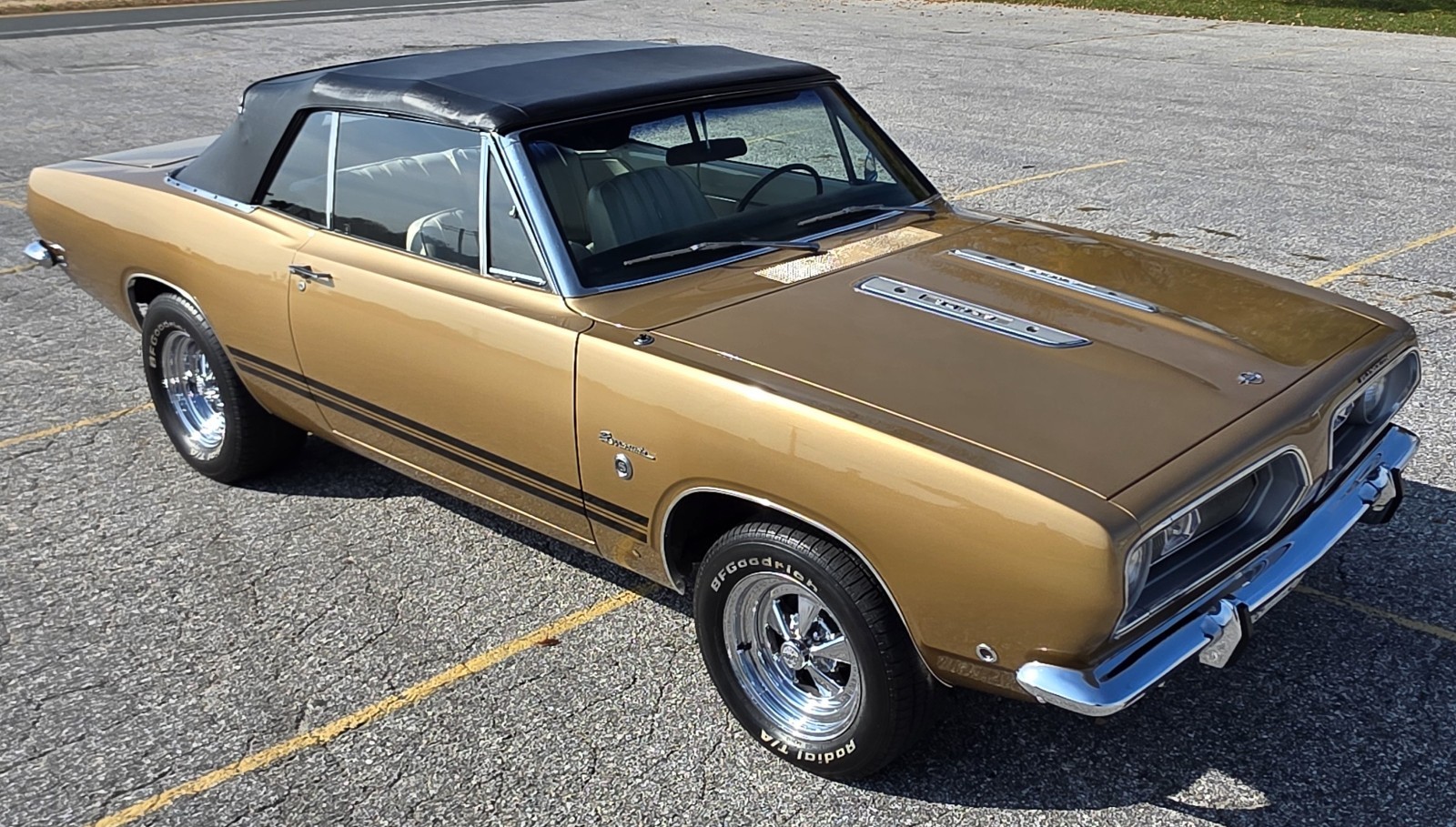 $55,000 · 69% below typical
Expand
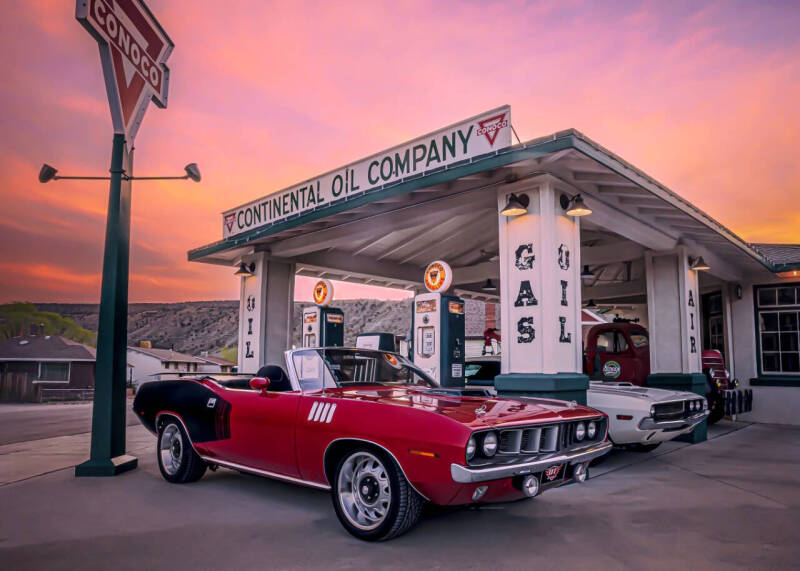 $305,000 · 69% above typical
Expand
What they sell for: Barracuda Convertible sale prices.