
Plymouth Barracuda Fastback buyer's guide
Plymouth Barracuda Fastback -- the model's own buyer's guide: variants, values and what to check.
Years listed: 1965-1965 · Series: Barracuda
# Plymouth Barracuda Fastback
Overview and history
You are looking at the car that beat the Mustang to market by sixteen days and lost the history books anyway. Plymouth launches the Barracuda on 1 April 1964 as a fastback version of the Valiant A-body, and the fastback is not a trim level or an option package — for the first three model years it is the only Barracuda there is. That matters when you stand in front of one now, because a 1964, 1965 or 1966 Barracuda Fastback is a complete, self-contained idea: a compact, economical platform wearing one enormous, dramatic piece of rear glass and a sloping roof that turns a sensible Valiant into something genuinely striking. From 1967 the idea changes. The second-generation Barracuda grows up, gets its own wider body, and offers three shapes — notchback coupe, convertible and fastback — so a 1967–1969 Fastback is one choice among three, the sportiest and, to most eyes now, the most desirable of the set. Same name, same A-body roots, two quite different cars. Learn to tell them apart at a glance before you learn anything else, because parts, values, driving feel and what breaks are not interchangeable between them.
The first generation runs from the mid-year 1964 launch through 1966 on the 106-inch-wheelbase Valiant chassis, unibody construction, torsion-bar front suspension and a live rear axle on leaf springs — pure Chrysler A-body engineering, shared with the Valiant and the Dodge Dart. Its party trick is utility disguised as glamour. The rear seat folds flat, a lockable panel behind it opens into the boot, and you get a continuous load floor roughly seven feet long under that glass. Plymouth markets it for skis, surfboards and camping gear, and it is honestly good at it. The glass itself is the largest single piece of automotive glass fitted to an American production car at the time, developed with Pittsburgh Plate Glass, and it defines the car from every rear angle. If the glass is cracked, delaminated at the edges or badly scratched on the car in front of you, stop and price that problem first — it is not a windscreen you order overnight.
The second generation arrives for 1967 on a 108-inch wheelbase, wider track, and styling that owes nothing visible to the Valiant. The fastback roofline is sleeker and less extreme, the huge wraparound glass gives way to a smaller, more conventional curved backlight, and the car is engineered from the start to accept big-block power — something the narrow first-generation engine bay never does gracefully. This is the generation that gives you the Formula S handling package in mature form, the 383 and later 440 and Hemi ’Cuda story at the top of the range, and the 1969 swansong before the entirely new E-body Barracuda of 1970 replaces it. That 1970 car is a different guide and a different market; nothing in this guide’s inspection advice for A-body structure should be carried across to it unchecked.
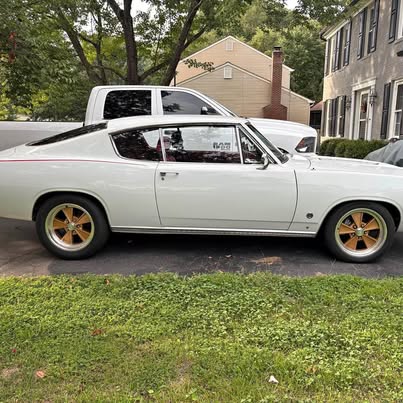
Why buy one now, rather than the Mustang it is always compared with? Rarity without obscurity — far fewer are built, yet the mechanicals are ordinary, well-understood Chrysler hardware — plus character, and a folding-seat load bay that makes it genuinely usable. On this site the Fastback pool is small — three cars recorded, one each from 1965, 1966 and 1967 in the year histogram, in white, black and deep purple metallic, all automatics — so you will likely travel, wait, or both. That makes the inspection discipline in this guide more important, not less: with so few to choose from, the temptation is to forgive the car in front of you faults you would walk away from on a Mustang. Do not.

The models
Read this section as two ranges, not one. The first-generation Fastback (1964–1966) is a single body style with a ladder of engines and one significant sporting package. The second-generation Fastback (1967–1969) is a body style within a range, and its story is told by engine and package together — a 318 fastback and a 383 Formula S fastback share a roofline and almost nothing about how they drive, what they cost to run, or what a buyer should pay attention to. In both generations, badging is the least reliable evidence in front of you. Plymouth fits Formula S badges, stripes and Commando callouts liberally in period, and owners have added them liberally ever since. The fender tag, the VIN and, where it survives, the broadcast (build) sheet settle identity; badges only raise the question.
The VIN is your first check and you can do it on the spot. First-generation cars carry the VIN on a plate on the driver’s door hinge pillar; second-generation cars move it to the driver’s side of the dashboard, visible through the windscreen, with a duplicate on the door pillar. Decode the model and engine digits against a year-correct chart before you decode anything else, then find the fender tag under the bonnet — screwed to the inner wing on most cars — which records scheduled build date, engine, transmission, axle, colours and options in coded form. A missing fender tag is common and is not by itself a condemnation, but a missing tag plus a high-value claim (Formula S, big-block, numbers-matching) plus no paperwork is a combination you price as the ordinary car, not the claimed one. “Numbers-matching” on a Mopar of this era means the partial VIN stamping on the engine block pad and, where applicable, the transmission case matches the car’s VIN sequence — on later second-generation cars in particular, check the pad near the oil pan rail or by the distributor depending on engine family, with a torch and a rag, not from the seller’s photograph. On earlier cars, where stampings are less consistent, date codes and casting numbers that fall before the car’s build date are the supporting evidence, and honest sellers describe them as “correct” rather than “matching.”
| Model | Years | Engine | Output | Built | Character |
|---|---|---|---|---|---|
| Barracuda Fastback (base) | 1964–1966 | 170 cu in Slant Six / 225 Slant Six / 273 V8 2-bbl | 101 hp (170) / 145 hp (225) / 180 hp (273 2-bbl), period gross | Part of ~126,000 first-gen Barracudas in total, all fastbacks; exact fastback-only split is total production | The honest original: Valiant economy under glamorous glass; the six is slow and unburstable, the 273 2-bbl is the sweet everyday car |
| Barracuda Fastback Formula S | 1965–1966 | 273 Commando V8 4-bbl | 235 hp, period gross | Small minority of first-gen production; no reliable standalone factory count widely published | The first sporting Barracuda: Commando power plus heavy-duty suspension, tachometer and wider wheels; verify by tag and hardware, never by badges alone |
| Barracuda Fastback (base) | 1967–1969 | 225 Slant Six / 273 V8 / 318 V8 | 145 hp (225) / 180 hp (273) / 230 hp (318), period gross | Part of second-gen production across three body styles; fastback is one of three | The grown-up car: wider, quieter, better trimmed; 318 is the durable all-rounder most buyers should actually seek |
| Barracuda Fastback Formula S | 1967–1969 | 318 / 340 / 383 V8 depending on year | 230 hp (318) / 275 hp (340) / 300–330 hp (383), period gross | Minority of second-gen production | The handling car: heavy-duty suspension, sway bar, upgraded brakes and wheels; the 340 Formula S is the driver’s pick of the whole Fastback story |
| Barracuda ’Cuda Fastback | 1969 | 340 / 383 / 440 V8 | 275 hp (340) / 330 hp (383) / 375 hp (440), period gross | 1969 only, low thousands across body styles | The muscle flagship in its first year under the ’Cuda name: stripes and scoops over Formula S hardware; the 440 is fast, nose-heavy and the hardest to keep cool and stopped |
| Barracuda Fastback Gran Coupe / Mod Top and special trims | 1969 (Gran Coupe overlay; Mod Top 1969) | Mostly 318 / 340 V8 | As base engines | Very small numbers | Trim stories, not performance stories: luxury overlay or the famous floral Mod Top vinyl; originality of the trim itself is the entire value question |
Treat every production figure in that table with the caution the factory record deserves. Chrysler’s period reporting is good on totals by model year and patchy on splits by body style, engine and package combined, and the internet has filled the gaps with numbers repeated until they look like facts. Where this guide says “small minority” or “low thousands,” that is the honest state of the published record, not coyness — do not let a seller convert a vague rarity claim into a premium without a tag, a registry reference or paperwork that actually decodes.
Year changes in brief: 1965 brings the Formula S; 1966 squares the styling and is the most developed first-generation car; 1967 is the new body with the 383; 1968 brings the 340 and the 318 replaces the 273; 1969 formalises the ’Cuda, adds the 440 and multiplies one-year-only trim. One myth to kill here, because it inflates asking prices: there is no first-generation big-block Barracuda from the factory. Every 1964–1966 car leaves the factory with a Slant Six or a 273 small-block. A first-generation car presented with a 383, 400 or 440 is a conversion, however well done, and you judge and price it as a conversion — engineering quality, cooling, brakes and paperwork — never as a rare factory variant. The reverse trap exists in the second generation: a genuine 383 or 440 car re-engined with a 318 in the 1970s and still wearing its badges. The VIN engine digit and the fender tag expose both directions of the swap in two minutes. Do them before the test drive, not after you have fallen for the car.

Engines and gearboxes
Every Fastback engine is a known Chrysler quantity, and that is the car’s great strength. There are no exotic failure-prone experiments here: a leaning six, two closely related small-block V8 families, and — in the second generation only — the big-block wedges. What separates a good example from a money pit is rarely the design; it is sixty years of heat cycles, deferred valve work, wrong carburettors, and cooling systems asked to do more than they were built for. Work through the families in the order you will meet them.
The Slant Six — 170 and 225
The Slant Six leans 30 degrees to the passenger side to lower the bonnet line and make room for its long intake runners, and that lean is the first thing a newcomer misreads as a broken engine mount. It is correct. The 170 cu in version (101 hp, period gross) powers the earliest base cars and is adequate only if your expectations are period-correct; the 225 (145 hp) is the six to have, with torque that suits the TorqueFlite automatic and a reputation for durability that is earned — seven main bearings’ worth of bottom-end conservatism in spirit, a simple gear-driven cam, and a tolerance for neglect that no V8 in this guide matches. Most sixes breathe through a single-barrel carburettor — Carter BBS or Holley 1920 depending on year and market — and drive through the lighter-duty running gear described below.
The six’s real enemies are age, not design. The aluminium intake and cast-iron exhaust manifold expand at different rates and the exhaust manifold cracks, classically around the centre ports and the choke stove area, giving you a ticking that is loud cold and quieter hot as the crack closes — the opposite pattern to a lifter tick, which helps you separate them: stand at the passenger-side wing on a cold start, listen for a sharp exhaust tick in rhythm with one cylinder, and watch for soot tracking at the manifold joints. A cracked manifold is a $150–400 part plus stud grief, not an engine rebuild, so do not let it panic you or let a seller use a “tappage” story to explain it away. The other signature job is the valve stem seals and, on high-mileage engines, worn valve guides: blue smoke on start-up after sitting that clears as you drive points to seals draining oil down the guides overnight; smoke that worsens on the overrun — foot off, downhill, then back on the throttle — points the same way, while smoke under steady load is rings and costs real money ($2,500–4,500 for a proper rebuild with machining). Do a compression test on any six you are serious about; even numbers matter more than hero numbers, and one low hole that rises with a spoonful of oil in the bore is rings, while one that does not is a valve. Finally, check the lean’s practical consequence: the distributor sits low on the side of the block and collects road water and oil; misfires in damp weather on a six are distributor cap, leads and low-tension connections far more often than anything mysterious.
The LA small-block — 273, 318 and 340
The 273 is the defining first-generation V8 and the engine in the pool’s featured 1967 Formula S claim — a numbers-matching 273 Commando with the 904 automatic, in the seller’s description. Launched in 1964, the LA (“lightweight A”) 273 uses a thin-wall casting, wedge heads and, in early form, mechanical lifters and an adjustable rocker train that later hydraulic engines drop. In 2-barrel form it makes 180 hp and is a sweet, free-revving everyday engine. In Commando form — four-barrel Carter AFB carburettor, higher compression (10.5:1 in the classic specification), a hotter cam, dual-point distributor in early applications and a low-restriction exhaust — it makes 235 hp and turns the light first-generation car into a genuinely brisk machine. The 318 that replaces it as the staple from 1968 is not a bored-out afterthought; it is the durability pick, 230 hp in 2-barrel form, with hydraulic lifters, forgiving manners and the deepest parts support of any engine in this guide. The 340 (1968–1969 in this range) is the connoisseur’s small-block: high-winding, forged crank in early form, big-valve heads, a Carter AVS four-barrel in most applications, and 275 hp that period testers widely regard as understated. If you test one car back-to-back, test a 340 Formula S — it sets the standard the rest of the range is judged by.
Small-block diagnosis is systematic if you stay calm. Oil pressure first: a healthy LA shows strong pressure cold and a gauge that still holds respectably hot at idle; a needle that sinks as the oil warms, with a rumble from the bottom end under light load, is main-bearing wear, and no oil grade fixes it. The rear main seal leaks on a large share of surviving cars — a drip from the bellhousing inspection area after a run is common and, on its own, a $600–1,100 seal-and-sump job rather than a crisis — but distinguish it from rocker-cover gaskets leaking down the back of the block, which costs almost nothing: clean, run, and look from the top before you condemn the bottom. Timing chains stretch with age and mileage, retarding the cam and softening low-end response; the test is to rock the crank pulley against the distributor rotor’s movement — excessive free play before the rotor moves confirms slack — and a chain set is a $400–800 fitted job that transforms a tired-feeling 318. The Commando’s Carter AFB and the 340’s AVS both suffer the same age pattern: worn throttle shafts drawing air and defeating idle mixture adjustment, and accelerator-pump seals hardened by modern ethanol fuel. If the car idles fast no matter what you do with the screws and stalls on a hot restart after a fuel-station stop, think vapour and percolation in a hot carburettor plus a weak pump shot before you think ignition — and budget $350–700 for a proper carburettor rebuild by someone who knows Carter metering rods, not a generic “tune-up.”
One identity trap belongs here: a Commando is defined by internals, compression and carburettion, not by its chrome air cleaner — block codes and the fender tag are the evidence. Early mechanical-lifter 273s also need periodic valve-lash checks; ask when they were last set.
The B and RB big-blocks — 383 and 440, second generation only
The 383 B-series wedge is the big-block that fits the second-generation brief: from 1967 in progressively more honest installations, 270–330 hp depending on year and tune, with a Carter AVS or Holley four-barrel, and torque that makes the fastback feel effortless in a way no small-block does. It is a tough engine — forged crank in most performance applications, a deep-skirt block, and hydraulic lifters — whose problems in this chassis are packaging problems: heat, weight and access. Exhaust manifolds are close to everything, plug changes are a patience test, and the cooling system that copes with a 318 on a mild day will find its limit behind a 383 in traffic. The 440 RB (raised-block) arrives in the 1969 ’Cuda 440 and makes 375 hp with a single four-barrel; it is the headline car and the hardest to live with. Plymouth has to compromise the installation to fit it — power steering is not available in the classic 440 A-body installation because there is simply no room, the car is markedly nose-heavy, and under-bonnet heat is a permanent management exercise. Respect it, test it thoroughly, and do not buy one as your only classic unless that compromise is exactly what you want.
On any big-block car, spend your inspection time on heat evidence. Look for a radiator that has been “upgraded” with no fan shroud, an electric fan wired as a confession that the mechanical system cannot cope, coolant staining at the core plugs, and a heater that blows lukewarm because the matrix is silted with the same neglect. A temperature gauge that climbs steadily at idle and falls when you move is airflow; one that climbs under load on a hill is capacity or circulation — radiator flow, water pump impeller, collapsed bottom hose, or head-gasket gas pressurising the system. The sniff test and a block tester that samples vapour above the coolant for combustion gas settle the head-gasket question in minutes; do it on a big-block before money moves, because a gasket job on a 383/440 with manifold studs that have lived in heat for fifty years routinely grows from $1,200–2,000 into stud extraction and head work. Big-blocks also eat front tyres and front suspension bushes faster than small-block cars for the simplest reason — mass — so the suspension checks in the problem-areas section carry double weight here.
Gearboxes — TorqueFlite automatics and the manual options
Most Fastbacks you meet will be automatic, and the pool reflects that: all three recorded cars are automatics. The TorqueFlite is one of the great period automatics, but you must know which one is in the car. The A904 (later 904) is the light-duty unit behind sixes and small-blocks including the 273 — the featured 1967 car’s “original 904” description is exactly what a 273 car should have. The A727 (727) is the heavy-duty unit behind big-blocks and heavy-duty small-block applications. They are not interchangeable in strength, weight or parts, and a 904 behind a later big-block swap is a mismatch to price, not a detail. Identification is by case and pan shape and by the numbers on the case rail; learn the pan outlines before you view, because “727” is claimed for ordinary 904 cars with suspicious frequency. A healthy TorqueFlite engages Drive and Reverse promptly from cold without a clunk or a flare, shifts cleanly under light throttle, kicks down decisively, and does not hunt between gears at a steady cruise. Delayed engagement first thing in the morning that improves as the box warms is converter drain-back and tired seals — driveable, common, and a negotiation point — while slipping under load, dark burnt-smelling fluid, or a box that will not hold a gear is a rebuild at $1,800–3,200 fitted. Always pull the dipstick: bright red and sweet is serviced; brown and burnt is a bill with a date on it.
Manual cars use Chrysler’s A833 four-speed in performance applications — one of the strongest period four-speeds, with the Hurst shifter in later sporting form — and lighter three- and four-speed units in economy applications, plus a column-shift three-speed in the earliest base cars. An A833 that jumps out of gear on the overrun, baulks into second when cold and worse when hot, or whines in every gear except direct is showing synchro and bearing wear; a rebuild runs $1,200–2,200 plus clutch. Clutches are conventional and honest: a high bite point with slip under load in a high gear is a worn plate ($700–1,200 fitted with hydraulics/mechanical linkage attention as applicable), while judder from rest is oil contamination, a warped flywheel face, or tired engine mounts letting the powertrain rock. Rear axles are the Chrysler 7¼-inch unit behind light-duty applications — adequate for a six, marginal behind a worked V8 — and the 8¾-inch axle behind V8 and performance cars, identifiable by its removable carrier (no rear cover plate; the centre section unbolts from the front). An 8¾ with a Sure-Grip limited-slip is the desirable fitment; test it with one rear wheel’s behaviour on loose ground or by the tag and paperwork, and listen for the axle on a light-throttle cruise: a whine that changes pitch between drive and coast is pinion/ring-gear wear, while a rumble that follows road speed is a wheel or axle bearing. Axle work runs $800–1,800 depending on whether you are doing bearings or a full carrier set-up, and it is specialist work — gear meshing done badly sings forever.
Problem areas
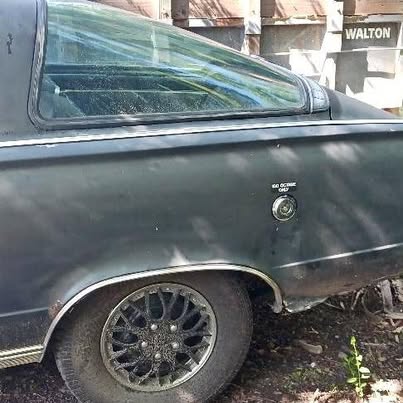
This is the section that decides what you pay. A Fastback’s mechanicals are rebuildable almost without exception; its structure, glass and trim are where bargains turn into restorations. Work in the order below — body first, because no engine rebuild rescues a car whose front subframe rails are lace — and use the site’s own evidence honestly: this site has photo-examined only 1 Fastback in the current pool, with no rust, smoke, leak or damage mentions recorded in that single examination. A sample of one proves nothing in either direction, so the inspection burden stays entirely on the car in front of you and the checks below.
Rust and structure: the A-body map
The Barracuda is a unibody. There is no separate chassis to save it, and the torsion-bar front suspension hangs its loads off the front subframe rails and crossmember, so corrosion in the front structure is a safety and geometry problem, not a cosmetic one. Start at the front and work back with a torch, a small magnet in a cloth (it protects paint and still betrays thick filler), and a screwdriver you ask permission to use firmly on suspect underseal — never on clean painted surfaces. The torsion-bar crossmember and the anchor points where the bars’ rear ends react their load are the first look: heavy scaling, perforated edges or previous plated repairs here mean the car has been carrying its front suspension on weakened metal, and proper structural repair runs $1,500–3,500 a side depending on how far the rot has travelled into the floor and rails. Move outward to the inner wings and the tops of the front rails around the suspension mounts and battery tray; battery acid plus trapped mud makes the tray corner a classic perforation point, and bubbling under the tray is rarely confined to the tray.
Floors are next, and the fastback gives you a gift: lift the rear seat base, fold the seat, and look at the load floor and the panel joints from inside as well as underneath. Water enters past the huge rear glass seal on first-generation cars and past the rear window and boot seals on second-generation cars, runs downhill invisibly under carpet and underfelt, and rots the floor from the top down while the underside still looks presentable. A car that smells musty with new carpet fitted is telling you its history in that order. Check the front footwells where they meet the firewall and the toe boards (heater leaks and windscreen leaks both drain here), the spare-wheel well (standing water, tide marks, a drain hole punched through rust rather than cleared), and the lower rear quarters behind the rear wheels, where road spray packs mud between the outer skin and the inner structure and rots both. Sills — rocker panels — carry side structure: jack the car correctly, look along the sill line for waviness that betrays a skin over filler, and tap along its length; a dull thud where the rest rings is filler until proven otherwise. Replacement sill and floor work is ordinary fabrication, but it is priced by the hour: budget $1,000–2,500 a side for proper sill replacement with paint, and treat “just needs sills for the test” as the opening line of a longer story.
Doors, boot lid and bonnet rot at their lower edges and hem flanges where the folded skin traps moisture; open every panel, look at the bottom edge from below, and check shut lines with your fingertips — a door that drops as it opens is worn hinges or a weakened A-post, and the cure ranges from hinge pins at $100–300 to structural post work at ten times that. Around the glass is the fastback-specific trap. On first-generation cars the enormous rear glass sits in a rubber seal over a flange that stays wet; lift what trim you may, look for lifting, cracked sealant, rust staining bleeding from under the seal, and water tracks inside the load bay. Removing and resealing that glass is specialist work ($600–1,200 with a new seal, glass out and flange repair extra), and a cracked first-generation backlight is a sourcing project, not a line item — confirm availability and price before you buy a car that needs one, because the whole purchase can hinge on that single part. Second-generation rear glass is smaller and more available, but its channel rots the same way, and windscreen pillars on both generations blister from the inside out where foam and sealant hold water against the steel.
Front suspension, steering and brakes
The torsion-bar front end is simple, strong and entirely dependent on rubber and adjustment. The bars themselves rarely break; what fails is everything around them. The car’s ride height is set by the torsion-bar adjusters, so a car sitting low at the front is not automatically “tired springs” in the coil-spring sense — it may be maladjustment, a sagging or incorrectly indexed bar, or a crossmember too corroded to hold its setting. Measure from the ground to a datum on each side and compare; a side-to-side difference you can see is a difference you investigate, not admire as character. Ball joints (upper and lower), tie-rod ends and the idler arm wear in the usual way and announce themselves as wander, tramlining and a steering wheel that will not centre — with the front wheels unloaded, rock each wheel top-and-bottom for ball-joint play and side-to-side for steering linkage play, and separate the two before you price the job: a full front-end refresh with joints, bushes and alignment runs $900–1,800 in parts and labour, and it transforms a vague car, so it is a legitimate negotiation figure, not a walk-away on its own.
Rubber bushes perish with age and oil contamination: lower control-arm bushes, strut-rod bushes and the leaf-spring eye and shackle bushes at the rear. Cracked, extruded or oil-swollen bushes let the geometry move under braking — the test is a firm stop from 30 mph in a straight line with a light grip on the wheel: a car that darts or needs correction is moving somewhere it should not, and bushes, a sticking caliper or drum, and worn steering are the three suspects you separate on the ramp. Rear leaf springs sag and occasionally crack a leaf by the eye; a fastback sitting tail-down with the springs flattened or inverted in their arch needs springs ($400–800 a pair fitted) and the honesty to ask what heavy loads or tired dampers contributed. Dampers themselves are cheap and routinely ignored: bounce each corner and watch it settle — more than one free oscillation is a dead damper — and look for oil weeping down the body of the unit.
Steering boxes (manual and power) wear at the sector adjustment and leak from their seals. Play at the steering wheel rim beyond roughly an inch of free movement before the road wheels respond, with the linkage proven tight, is box wear or adjustment; adjustment taken too far makes the steering tight and notchy at centre, which sellers occasionally present as “sporty.” Power-steering cars add pump whine (fluid level and aeration first, pump wear second), hose weepage, and the Federal/Thompson pump variations whose parts are not all interchangeable — identify which pump is fitted before ordering anything. Brakes divide the range sharply. Base cars run four-wheel drums, 9- or 10-inch depending on application, which are adequate when perfectly maintained and alarming when not: a long pedal, pulling to one side, or a car that needs a double pump is a hydraulic system asking for a full overhaul ($600–1,200 for cylinders, hoses, shoes and machining across the car) and you should grant it before regular use, not after the first wet downhill. Disc-brake cars (optional and Formula S-associated fitments, more common and more useful on the second generation) use single-piston sliding or fixed multi-piston calipers depending on year — confirm what is actually fitted, because pads, seals and rotors are not interchangeable between the systems, and seized pistons from standing show as a hot wheel, a burnt smell and a pull after a few miles. On every car, regardless of brakes, replace your mental price for the flexible hoses, the master cylinder and the steel lines as a set if they are original-looking: fifty-year-old brake hydraulics are a safety system running on borrowed time, and a full hydraulic renewal at $800–1,500 is the best money you will spend on any Fastback.
Engines in service: cooling, fuel and oil systems
Beyond the engine-family faults in the previous section, three systems cut across all engines. Cooling first, because A-bodies run marginal in modern traffic: radiators silt internally, water-pump bearings weep from the tell-tale hole long before they fail, viscous fan drives go lazy (the fan freewheels when it should be pulling), and heater matrices clog in sympathy. A car that runs cool on the open road and boils in a queue needs airflow and fan attention; a car that runs hot everywhere needs circulation and capacity attention; a car that loses coolant with no visible leak needs a pressure test of the system and a block test for combustion gas — do not accept “they all use a bit” on a car whose expansion evidence you have not seen. Figure $300–600 for a radiator recore or quality replacement, $150–300 for a pump, and treat an overheating big-block as a system rebuild, not a thermostat swap.
Fuel systems suffer from modern petrol and standing. Ethanol attacks original hoses, pump cups and needle tips and absorbs water that rusts steel tanks from inside; the debris blocks filters and jets in a cycle owners chase as “carb trouble.” Orange dust in a clear filter is tank rust, and the cure is tank cleaning or replacement ($400–900) plus lines and a carburettor clean. Mechanical pumps weaken and starve the engine only at high demand — which is why a car can idle beautifully in the yard and fade on your test-drive hill. Oil leaks beyond the rear main are usually rocker covers, sump and timing-cover seals: trivial individually, but oil on a hot manifold is a fire risk, so “it leaks a bit” always needs a location, not a shrug.
Interior, glass and trim
Fastback interiors are where restoration economics bite hardest, because the model-specific pieces are not the shared Valiant pieces. The folding rear seat mechanism, its hinges, latches and the security panel behind it are fastback-specific: operate the fold yourself, check the panel locks, and look for cracked hinges and missing trim screws that speak of a hard life or a careless retrim. The huge first-generation rear glass turns the load bay into a greenhouse — original upholstery there is sun-rotted on top surfaces even on garaged cars, and rear seat top edges and the parcel/load trim crumble to the touch. Seat foams collapse on the driver’s side first (sit in both front seats; a passenger seat that feels a generation younger confirms original foams), vinyl splits along its stitching, and headlinings sag as their listing wires and clips age. A full quality retrim in correct materials runs $3,000–6,000; a serviceable original interior with honest wear is worth more to most buyers than a cheap shiny retrim in wrong grain and wrong colour, so grade what is there, do not just grade shininess.
Dashboards crack in the sun, gauge voltage limiters fail (fuel and temperature gauges reading high or dying together points to the $30–80 limiter before either sender), and heater controls use perishable vacuum hoses — test every control, fan speed, lamp and gauge on your inspection.
Electrics and charging
Chrysler electrics of this era are simple and, by now, almost entirely a story of resistance: corroded bulkhead connections, tired grounds, and an ammeter circuit that routes the car’s full charge current through the dashboard — a known weakness across period Mopars. The bulkhead connector on the firewall is the first suspect for intermittent everything: it lives in heat and weather, its terminals corrode and loosen, and the symptoms (gauges flickering, lights dimming at idle, a car that dies when you hit a bump and restarts on the key) mimic far more expensive faults. The test is methodical, not mystical: with the engine running and loads on, feel for a hot bulkhead connector and measure voltage drop across it — more than a few tenths of a volt under load is a connection consuming the difference as heat. A full charging check takes five minutes with a multimeter: battery at rest around 12.6 volts, charging at 13.8–14.4 volts at a fast idle with lights on; a car charging at 15+ volts is cooking its battery (regulator fault), and one stuck at battery voltage is not charging at all (alternator, regulator or the wiring between them). None of this is exotic — which is precisely the point. On a Fastback, electrical gremlins are almost always connections and grounds you can find with a meter and patience, and a seller who has replaced the alternator, regulator, battery and starter chasing an intermittent fault has usually been treating a $20 connector as four separate coincidences.
How to inspect one
Inspect in this order and do not let the seller reorder it for you. The sequence runs identity before cosmetics, structure before mechanics, and cold evidence before warm impressions, because a warm, polished car hides exactly the faults this list is built to catch. Take a torch, a magnet in a cloth, a multimeter, a tyre gauge, a rag, and a friend whose only job is to watch lights and exhaust while you work controls.
- Identity before admiration. Decode the VIN (door pillar on first-generation cars, dashboard plate on second-generation), then the fender tag, then — on any car claiming Formula S, Commando, big-block or numbers-matching status — the engine block pad and date codes. Photograph every plate. A car whose identity does not decode as claimed is priced as what it decodes as, and this step happens before you open a door.
- Cold engine, first look. Insist on a stone-cold engine (touch the exhaust manifold; a seller who has “just warmed it up for you” has edited your evidence). Check oil level and colour on the dipstick, coolant level and colour in the radiator — never open a hot system — automatic transmission fluid colour and smell on the dipstick, and brake fluid level. Milky oil, rusty coolant or burnt transmission fluid each open a line of inquiry you follow to its end.
- The glass and the water story. On a first-generation car, spend two full minutes on the rear glass: edges for delamination, surface for wiper-like scratches, seal for lifting and cracked sealant, and the load bay below it for water tracks and tide marks. On a second-generation car, do the same for the rear window channel and boot seal. Lift carpets and the rear seat where permitted; a dry car at this step is worth real money.
- Structure walk, front to back. Torsion-bar crossmember and anchors, front rails and inner wings, battery-tray corner, footwells and toe boards, floors from inside and underneath, sills with the magnet and tap test, spare-wheel well, lower rear quarters, and door bottoms and hinges. You are applying the rust map from the problem-areas section in order; any perforation in the crossmember, rails or posts moves the car from “driver” to “project” pricing on the spot.
- Panel truth pass. Walk the whole car with the magnet, read every shut line, look down each flank at a shallow angle for ripples, and check for overspray on rubbers and wiring, patchy fresh underseal, and welds sitting on rust. Note every finding in writing — your notes are your negotiation, and your memory after a test drive is not.
- Cold start, listening in order. Start it yourself. First five seconds: oil pressure light or gauge response, rattles that fade (hydraulic lifters or chain) versus rattles that stay (bearings). Next thirty seconds: exhaust tick cold at the manifold (the Slant Six crack test from the engines section), smoke colour and duration — brief blue puff on a car that sat is stem seals; continuing blue is deeper; white that smells sweet and persists is coolant until proven otherwise. Watch the exhaust while your friend blips the throttle.
- Static systems sweep. Every light, every gauge against your infrared reading if you brought the thermometer, heater fan on all speeds, defrost, wipers and washers, horn, reversing lights, and the ammeter’s behaviour at idle and fast idle with lights on. Feel the bulkhead connector for heat after a few minutes of running with loads on — the electrics section explains why this humble connector outranks every shiny new component in the engine bay.
- Suspension and steering on the ground and unloaded. Ride height side to side, bounce test at each corner, then with the front unloaded (ask for the seller’s jack and stands or do this at a pre-purchase inspection on a lift) rock each front wheel top-and-bottom and side-to-side to separate ball-joint from linkage play. Look at bush condition, leaf-spring arch and damper weepage while you are there.
- The test drive — route with a purpose. Fifteen minutes minimum, including a sustained hill or fast stretch (fuel-pump and cooling evidence), a traffic queue (fan, temperature and TorqueFlite behaviour hot), a firm straight-line stop from 30 mph (brake pull, geometry movement), full-lock turns both ways (CV-like clicking does not apply here — listen instead for spring, bearing and tyre-contact noises), and a loose or wet patch if one exists to feel axle behaviour. Note steering centre play, wander, shift quality cold versus hot, kickdown, and any whine that changes between drive and coast.
- Hot restart and heat soak. At the end of the drive, switch off, wait five minutes — the percolation and hot-starter window — and restart. A car that cranks slowly hot, needs throttle theatre to catch, or boils its fuel has shown you three of the most common Fastback ownership irritations in one test. Then idle it for two minutes and watch the temperature gauge’s direction, not just its position.
- Leak census, hot. Torch under the car: rear main versus rocker-cover oil (look from the top first), sump, timing cover, power-steering hoses, axle pinion seal, wheel cylinders or calipers at each backing plate, and coolant at core plugs, pump tell-tale and hose joints. Every leak gets a location and a likely job price from the earlier sections; “somewhere underneath” is not a finding.
- Paperwork and the second decode. Title/VIN agreement with the plates you photographed in step 1, service and rebuild invoices that match the components actually fitted, carburettor and axle identities confirmed against what the car should carry, and — for any premium claim — the registry, tag decode or build-sheet evidence in hand, not promised. If the paperwork and the car disagree, believe the car, price the car, and let the seller keep the story.
If a seller refuses steps 1, 4 or 6 — identity, structure, cold start — you have your answer without needing the other nine. Leave politely and wait for the next car; with a pool this small, patience feels expensive, but a rotten crossmember is more expensive.
Values
No figures live in this section on purpose: the computed market block beneath this guide carries this site’s current listings and recorded sales, refreshed as the pool changes, and any number printed here would be stale before it was useful. What this section gives you instead is how to read that block like a buyer rather than a spectator — because on a model recorded in such small numbers here (three cars in the current pool, two offered for sale and one sold at the time the brief was drawn), a single car entering or leaving the pool swings every average, and the discipline below matters more than the arithmetic.
Start with the condition spread, which on Fastbacks is wider than the model spread. A structurally sound, honestly presented driver with tired paint and a correct engine routinely represents better value than a cosmetically dazzling car over filler and a tired crossmember, yet asking prices often rank them the other way round because photographs rank them the other way round. When you compare two cars in the market block, compare them in this guide’s order — structure, glass, identity, mechanics — and let the price gap justify itself against those headings. The asking-versus-achieved gap is the second lesson: Fastbacks are a thin, enthusiast market, sellers anchor on the best ’Cuda or Mustang-adjacent result they have seen, and cars sit. A car listed for months without moving is the market speaking; recorded sales, not listings, are the evidence of what the next buyer actually pays, and the gap between the two on this model is where your negotiation lives. Do not be embarrassed to offer against achieved evidence with your inspection notes in hand — that is not lowballing, it is pricing.
Variant premiums follow verifiability, not romance. A documented Formula S, a decoded Commando, a tag-proven 340 or 383 car earns its premium because the next buyer can verify it too; the same car on badges and assertion earns none, and you should pay none, because you will not be able to collect it on resale. The 1969 ’Cuda 440 sits at the top of the Fastback value ladder on rarity and headline power, with the 340 Formula S as the premium most drivers can actually exploit, the first-generation Formula S as the early car with a genuine premium, and honest six-cylinder and 318 cars as the value floor — desirable, usable and priced by condition almost alone. Colour and trim move individual cars — an intact Mod Top is its own market, and a colour change over an interesting original colour usually subtracts — and originality of unrepeatable parts is worth more than fresh generic consumables, however shiny.
The project-versus-driver gap is where Fastback buyers most often miscalculate. A project fastback looks cheap because the expensive headings are invisible in photographs: structural welding, glass sourcing, a retrim, brake hydraulics and an engine refresh together routinely exceed the price difference to a sorted driver, before your time is counted at all. Buy a project only if the work itself is the hobby you are purchasing, the car’s identity or specification is genuinely scarce, and the structure is either sound or honestly priced as the restoration it is. Otherwise the rule of this market is unromantic and reliable: the best Fastback is the most structurally honest, best-documented driver you can reach, bought against recorded-sale evidence, with money held back for the brake, bush and cooling work almost every example needs in its first season.
Parts and ownership
Ownership is one of this car’s strengths, provided you buy into the Chrysler ecosystem rather than expecting Mustang-level reproduction coverage for every nut. Mechanical parts support is deep: Slant Six, LA small-block and big-block service parts — gaskets, pumps, ignition, carburettor kits for the Carter BBS, AFB and AVS and the Holley units, timing sets, bearings and seals — are available from mainstream Mopar suppliers and much is shared with the vast Valiant, Dart, Charger and truck population. TorqueFlite 904 and 727 service parts and rebuild kits are similarly well covered, A833 parts are supported by specialists, and the 8¾ axle has an active aftermarket including gear sets and Sure-Grip units. Where support thins is exactly where the problem-areas section warned you: body and trim. First-generation rear glass, fastback-specific folding-seat hardware, year-specific grilles, mouldings and badges, correct interior materials and one-year 1969 pieces are hunt-and-wait parts sourced through specialists, marque clubs, swap meets and donor cars. Join the club ecosystem early — the Plymouth and Mopar clubs and their registers carry the decoding knowledge, the parts stashes and the warnings about which reproduction piece does not fit — and treat a membership as a running cost as real as insurance.
Running a Fastback is home-mechanic territory. Routine service is oil and filter every 3,000–4,000 miles in modern use, valve-lash checks on early mechanical-lifter 273s at the intervals the manual sets (and whenever the top end goes quiet in the wrong way), points and condenser service or a well-chosen electronic conversion — if you convert, keep the points plate in the glovebox; a failed module on a Sunday is a points refit at the roadside — coolant renewal every two years, brake fluid every two years without exception on a car with elderly hydraulics, and TorqueFlite fluid and filter attention on schedule with the dipstick read at every fuel stop until you know your car’s habits. Expect fuel consumption in the teens for V8 cars driven as intended, better for a gently driven six, and budget tyres in the correct load rating for a car whose previous owner may have fitted whatever was cheap in the right diameter. Insurance through a classic agreed-value policy, with your identity photographs and decode notes filed alongside, closes the loop you opened in inspection step 1: the same evidence that priced the car protects it. Garaging matters more than for most classics because of the glass and the water paths — a first-generation car stored outside needs its rear seal and drains inspected every season, and a car cover over a wet load bay is a rot incubator, not protection. Used this way — serviced on time, driven regularly enough to keep seals and brakes exercised, and stored dry — a Fastback is not a fragile thoroughbred. It is a simple, strong, well-supported American car whose ownership costs concentrate predictably in the headings this guide has already priced for you.
Which one to buy
- The all-rounder: a second-generation 318 Fastback, automatic or manual. The durable small-block, the mature body, the deepest parts support and a price set by condition rather than mythology — this is the Fastback to buy if you want to drive one regularly and sleep well.
- The driver’s pick: a 1968–1969 340 Formula S Fastback. The balanced performance car of the whole story; pay the premium only with the tag, codes and hardware verified as the inspection section sets out.
- The early-car choice: a 1965–1966 first-generation Formula S with the 273 Commando. The huge glass, the light chassis and the genuine sporting package in one car — buy the best rear glass and the driest load bay you can find, and verify Commando identity from codes, not chrome.
- The value buy: an honest Slant Six or 273 2-barrel first-generation car. Slow by modern measure, charming, unstressed and priced by structure and glass alone; the cheapest way into the shape that started it all, and a fine car if speed was never your point.
- The headline car: a 1969 ’Cuda 440 Fastback. Buy it knowingly — no power steering in the classic installation, permanent heat management, nose-heavy balance — and only with big-block identity and cooling evidence proven cold, hot and under load.
- The character buy: a documented 1969 Gran Coupe or intact Mod Top car. You are buying trim originality, not performance; the roof or the luxury overlay must be genuinely intact, because reproducing it faithfully ranges from difficult to impossible.
The overriding rule: buy structure, glass and identity first, engine second, cosmetics last — a Fastback with a sound crossmember, honest floors, good rear glass and a VIN and fender tag that decode as claimed is the right car at almost any mileage, and no engine, colour or badge rescues the opposite.
See the 1 Barracuda Fastback cars currently listed.
What they sell for: Barracuda Fastback sale prices.