
Plymouth Barracuda Hardtop buyer's guide
Plymouth Barracuda Hardtop -- the model's own buyer's guide: variants, values and what to check.
Years listed: 1970-1972 · Series: Barracuda
Overview and history
You are not buying a shape. You are buying a shell, a set of numbers stamped and tagged onto that shell, and whatever engine happens to sit between its front rails — and on a Barracuda hardtop those three things vary so much in value and in character that two cars which look identical across a show field can be entirely different purchases. This guide covers the pillarless hardtop coupes: the notchback A-body cars of 1967 to 1969 and the E-body cars of 1970 to 1974. Read the shell first, the paperwork second and the engine third, and you will understand this market better than most of the people selling in it.
The Barracuda begins on 1 April 1964, a fortnight before the Ford Mustang, as a Valiant with a fastback roof and the largest rear window ever fitted to a production car. That first generation, 1964 to 1966, is a fastback only, and it matters here because it establishes the formula — ordinary Plymouth running gear under a distinctive roof, the cheap version and the quick version sharing almost everything except pace — that never leaves the model. The hardtop arrives with the second generation in 1967. The A-body is restyled and, crucially, its engine bay is widened, because Plymouth wants big-block V8s in a compact car and the first car's bay would not take them. You now choose between a fastback, a convertible and a notchback coupe with no pillar between the door glass and the rear quarter window — the hardtop of this guide, and often the prettiest of the three: a formal roofline and none of the fastback's compromises in rear headroom and boot access.
The third generation, launched for 1970, is the car most buyers picture. The Barracuda moves to the new E-body platform, shared with the Dodge Challenger but on a shorter 108-inch wheelbase against the Challenger's 110. The fastback disappears; the range is a hardtop coupe and, for 1970 and 1971 only, a convertible. Three tiers sit under that roofline: the base Barracuda, the luxury Gran Coupe with its overhead console, and the 'Cuda, now a separate performance model rather than a package. For two years the engine list runs from a slant six to the 426 Hemi, a breadth no rival quite matches. The 1971 car is a one-year look — four headlamps, gilled front wings on the 'Cuda — and the last year of the big engines. From 1972 the range contracts around emissions rules and insurance premiums: the Hemi and the 440s go, the convertible goes, and by 1974, the final year, the biggest engine is the 360 small-block. The name dies with the first fuel crisis, unmourned at the time and intensely collected ever since.
Understand what the hardtop body does to the ownership proposition. With no B-pillar, the structure leans on the roof rails, the screen pillars, the sills and the floor for stiffness that a pillared coupe gets partly from its centre post. A sound hardtop feels tight and shuts its long doors with a single clean sound. A tired one flexes, and it tells you so through door gaps that change between a car sitting on flat ground and a car jacked at one corner, and through glass that will not seal twice in the same place. Everything in the problem-areas section flows from that single structural fact and from the way these unibodies rust.
The other thing to hold in your head is the naming trap, because it runs through every advertisement you will read. Before 1970, a 'Cuda is a performance package on a Barracuda — the Formula S of 1965 to 1969, then the 'Cuda 340, 'Cuda 383 and 'Cuda 440 models of 1969. From 1970, 'Cuda is a model in its own right, with its own VIN series and its own value line. A seller who calls a 1968 car a 'Cuda is using period-correct shorthand for the package. A seller who calls a 1971 slant-six car a 'Cuda is either careless or hoping you are. The VIN settles which you are dealing with, every time, and this guide returns to that test repeatedly because money depends on it.

The models
Read the range as three ranges wearing one badge. The 1967 to 1969 A-body cars are compact, comparatively light and still closely related to the Valiant underneath. The 1970 and 1971 E-body cars are the full muscle-era statement, with the widest engine choice and the strongest values. The 1972 to 1974 E-body cars keep the shape and the chassis but lose the big engines, and they buy and sell as a different proposition. Within each range, trim decides less than engine, and engine decides less than paperwork. A documented car beats a claimed car at every level of this market.
On the A-body, the base hardtop comes with the 225 slant six or the small-block V8s, a pleasant, simple coupe that shares its mechanical life with millions of Darts and Valiants. The Formula S is the thinking buyer's A-body: from 1965 it bundles the Commando V8 (the 273, later the 340), firmer suspension, wider wheels and a tachometer, and in 1968 and 1969 it gives you the 340 in a car light enough for the engine to feel genuinely quick. The 383 big-block cars of 1967 to 1969 are rarer and faster in a straight line, and the 1969 'Cuda 440 puts the 440 Magnum into the A-body with heavy-duty everything and no interest in corners.
On the E-body, the base Barracuda is a style purchase: six-cylinder and 318 cars dominate the surviving stock, and they deliver the look and most of the driving feel for the least money. The Gran Coupe adds the overhead console and plusher trim, and it is the connoisseur's quiet buy — rarer than the base car, less chased than the 'Cuda, and often better kept. The 'Cuda is where the money concentrates: standard engine a 383 Magnum in 1970 and 1971, with the 340, the 440 four-barrel, the 440 Six Barrel and the 426 Hemi above it. The AAR 'Cuda of 1970 is a homologation special built around the 340 Six Barrel, with its own suspension tune, side exhausts and that fibreglass bonnet; every AAR is a hardtop, and 2,724 were built. The 1972 to 1974 cars simplify to Barracuda and 'Cuda, the 'Cuda keeping the performance suspension and the biggest available engine — the 340 to 1973, the 360 for 1974.
A word of honesty about production figures, because this table refuses to invent them. Plymouth published production by model and body style for some years and not others, and hardtop-specific splits for individual engine combinations are not published for most of the range. Where a figure is genuinely known and hardtop-specific — the AAR — it is given; everywhere else the table says so rather than dressing a guess in a comma. Treat any seller who quotes a suspiciously precise rarity figure for an ordinary variant with scepticism, and ask to see the source.
| Model | Years | Engine | Output | Built | Character |
|---|---|---|---|---|---|
| Barracuda hardtop (A-body) | 1967–1969 | 225 six; 273, 318 V8 | 145 hp (six) to 230 hp (318), gross | Hardtop split not published | The honest compact coupe; simple, light, Valiant-bred |
| Barracuda Formula S hardtop | 1967–1969 | 273 Commando, then 340 | 235 hp (273) to 275 hp (340), gross | Hardtop split not published | The driver's A-body; handling to match the pace |
| 'Cuda 383 / 'Cuda 440 (A-body) | 1969 (383 from 1967 as Formula S option) | 383, 440 big-blocks | 330 hp (383) to 375 hp (440), gross | Low hundreds for the 440; exact split not published | Straight-line specials; heavy nose, heavy brakes needed |
| Barracuda hardtop (E-body) | 1970–1974 | 198/225 six; 318, 340, 360 V8 | 100 hp net (six, later cars) to 275 hp gross (340) | Hardtop split not published | The style buy; the shape without the tariff |
| Gran Coupe hardtop | 1970–1971 | 318, 383 V8 | 230 hp to 335 hp (383 Magnum), gross | Hardtop split not published | Luxury trim, overhead console; the quiet rarity |
| 'Cuda hardtop | 1970–1971 | 383 Magnum; 340; 440; 440 Six Barrel; 426 Hemi | 335 hp to 425 hp (Hemi), gross | Hardtop split not published for most engines | The performance model; paperwork is half the value |
| AAR 'Cuda hardtop | 1970 | 340 Six Barrel | 290 hp, gross | 2,724, all hardtops | Trans-Am homologation special; one year only |
| 'Cuda hardtop (late E-body) | 1972–1974 | 340, then 360 | 240 hp net (340) to 245 hp net (360) | Hardtop split not published | The usable late car; emissions-era, easier to live with |
Two cautions belong with the table. First, outputs before 1972 are SAE gross figures — measured on a bench, without accessories — and outputs from 1972 are SAE net, so a 1971 340 at 275 hp and a 1972 340 at 240 hp are nearly the same engine wearing two different rulers; do not let a seller charge you for the ruler. Second, the model name on the boot lid is the weakest evidence on the car. Badges are cheap, sold by every reproduction house, and migrate. The VIN plate on the dashboard, visible through the windscreen, and the fender tag under the bonnet are the evidence: read those two items before you read anything the seller has written.

Engines and gearboxes
Every engine in this guide is a Chrysler design of real longevity. What kills them is fifty years of heat cycles, deferred oil changes and amateur carburettor work. Judge each on oil pressure hot, on how it breathes through the oil filler, and on whether its numbers belong in the car at all — in that order.
The slant six: 170, 198 and 225
The leaning tower of power, as owners call it, is canted 30 degrees to clear a low bonnet line, and in Barracuda hardtops you meet it as the 225 in the A-body cars and the 198 and 225 in the E-body base cars. It is a long-stroke, undersquare engine with a reputation for surviving neglect that is entirely deserved. Output is modest: around 145 hp gross for the 225 in the sixties, falling to roughly 100 hp net in the emissions years. It will cruise all day, it will not accelerate in any sense a modern driver recognises, and in an E-body it works hard enough that fuel economy is no better than a gently driven 318. That last point corrects a myth: the six-cylinder E-body is not the economical choice, it is merely the slow one.
What goes wrong is peripheral. The single-barrel Holley 1920 or Carter BBS carburettor wears its throttle shaft and draws air, giving you a hunting idle that no mixture screw will cure; a quality rebuild runs $250 to $600 in parts and labour, and it transforms the car. Exhaust manifolds crack between the centre ports, and on a cold start the tick that fades as the engine warms is that crack opening and closing, not a lifter — distinguish the two by holding a length of hose to your ear and moving it along the manifold, because a lifter tick localises at the rocker cover and a manifold tick at the flange. The distributor sits low where road water finds it, so a six that misfires in rain wants plug leads and a cap before it wants anything expensive. None of this is serious money, which is exactly the point of the six: it is the cheapest engine in the guide to keep, in a car whose body will consume whatever budget you actually have.
The LA small-blocks: 273, 318, 340 and 360
The LA family is the heart of the range. The 273 comes as a mild two-barrel or as the Commando with a four-barrel Carter AFB and higher compression. The 318, from 1967 in the A-body and standard V8 in the E-body, is the fleet engine: hydraulic lifters, a two-barrel Carter BBD, 230 hp gross in its early form, and a bottom end that tolerates astonishing abuse. The 340, 1968 to 1973, is a different animal in the same clothes — forged crankshaft in the early years, big-valve heads with 2.02-inch intake valves, a windage tray and a factory rating of 275 hp gross that every period road test suggested was understated. The 360, which closes the range in the 1974 'Cuda, is a longer-stroke, cast-crank engine tuned for torque and emissions, rated around 245 hp net and better suited to an automatic than to heroics.
Failure modes are shared and specific. Timing chains stretch on all of them, and the nylon-toothed cam sprocket fitted to quieter variants sheds its teeth into the sump with age; the test is to rock the crank pulley back and forth while watching the distributor rotor — more than a few degrees of crank movement before the rotor answers means the chain is slack, and a chain and sprocket set fitted runs $600 to $1,200 in labour and parts. Rear main seals weep: budget $700 to $1,400 with the gearbox out. Do not pay a forged-crank premium for an early 340 on a seller's word — the numbers are on the crank itself and visible only with the sump off, so treat the claim as unverifiable at a viewing. Carburetion is the standing irritation: the Carter AVS and, from 1971, the spread-bore Thermoquad, whose phenolic resin float bowl warps with heat and whose well plugs weep fuel into the manifold, giving you a car that floods on a hot restart and stinks of petrol at traffic lights. A Thermoquad rebuilt by a specialist who reseals the wells runs $400 to $800, and a car that starts cleanly hot has usually had exactly that work. Freeze plugs rot inside neglected cooling systems, and the ones behind the engine mounts are engine-out work — look for rusty weeping at the block sides and price an engine-out refresh, $2,500 to $4,500 in labour alone, into any car showing it.
Oil pressure tells the truth about all four. A warm LA at idle with 15 to 20 psi on a mechanical gauge and 50-plus at cruise is healthy. A car whose oil light flickers hot at idle, and whose seller blames the switch, is showing you worn bearings or a tired pump until a gauge proves otherwise — bring the gauge and run the test yourself.
The B and RB big-blocks: 383, 440 and the Six Barrel cars
The 383 is a B-series, low-deck engine; the 440 is the raised-deck RB. Both use the same architecture of deep-skirt block and wedge heads, with the 440 Six Barrel — three Holley two-barrels on an aluminium manifold, the centre carburettor doing the cruising and the outboards opening under vacuum at full throttle — as the party piece of 1969 to 1971. Ratings run from 335 hp gross for the 383 Magnum to 375 hp for the 440 four-barrel and 390 hp for the Six Barrel. In an A-body these engines are a tight fit that cooks its own starter motor and makes plug changes an exercise in patience; in the E-body they sit in a bay designed for them.
Heat is the big-block's tax on everything. Exhaust manifolds crack, manifold bolts snap in the heads, and the starter fails hot, giving you the classic symptom of a car that cranks eagerly cold and clicks after a fuel stop. Fit a modern gear-reduction starter — $250 to $450 in parts — and the problem ends, but ask why the seller has not. Six Barrel cars add their own diagnostics: the outboard carburettors are vacuum-operated, so a car that feels flat at full throttle usually has perished vacuum diaphragms or linkage out of adjustment rather than a tired engine, and the test is to check that the diaphragms hold vacuum from a hand pump. A Six Barrel setup rebuilt and set up properly costs $1,200 to $2,500 at a specialist, and a car that pulls cleanly through the transition has had that money spent. Underneath, both engines are stout: listen for a deep knock under load, check for coolant in the oil and oil in the coolant, and treat any big-block that runs cool, pulls cleanly and shows steady hot oil pressure as fundamentally sound whatever its cosmetics say.
Identity matters more here than condition, because a 383 car with a 440 dropped in is a common and honest modification, while a 318 car dressed as a 440 car is a fraud problem. The stamped pad by the distributor at the front of the block carries the displacement and build data, and the partial VIN stamped on the rail of the block above the sump should match the car's VIN. Read both, with a wire brush and a torch, before money is discussed.
The 426 Hemi
The street Hemi of 1970 and 1971 is a 426-cubic-inch RB with hemispherical combustion chambers, two Carter AFB four-barrels, solid lifters, a forged rotating assembly and a factory rating of 425 hp gross that was, like the 340's, a polite fiction in the downward direction. Almost all street Hemis are hardtops; the convertibles are a handful of cars that trade in a different world. Mechanically it is not exotic to run — it is a big, understressed engine with a valvetrain that needs its clearances set periodically, a dual-point distributor that rewards owners who understand dwell, and a heat output that tests the standard cooling system on a summer day. A Hemi that idles with a mechanical clatter is normal; one with a deep knock, low hot oil pressure or a history of overheating faces an engine-out rebuild at specialist money, $25,000 and upward for a proper job, and that figure belongs in your negotiation, not in your hopes.
The Hemi section of any buying conversation is really about paper. A genuine car carries R in the VIN's engine position for 1970 and 1971, an E74 code on the fender tag, a reinforced body with torque boxes and a skid plate on the K-member, and — at Hemi money — a broadcast sheet and a paper trail that survives scrutiny by the marque registries. The 1968 Hurst-built Hemi Barracudas, code BO29, are factory drag cars whose mythology leaks into the market for ordinary cars: if a street hardtop's story involves 1968, Hurst and a Hemi in the same sentence, you are being sold a story, not a car.
Gearboxes and axles
The TorqueFlite is the automatic: the lighter A904 behind sixes and small-blocks, the A727 behind big-blocks, Hemis and most 340s, and it is one of the strongest automatic gearboxes of its era. A healthy TorqueFlite shifts firmly, kicks down without a flare of revs, and shows you cherry-red fluid that does not smell burnt. Brown fluid, a delay engaging drive on a cold morning that clears as the box warms — the classic sign of hardened internal seals shrinking — and a flare on the two-three shift are the symptoms that matter, and a full rebuild by a shop that knows the box runs $1,800 to $3,200 fitted. Manuals are the A833 four-speed, with the Hurst shifter and, in 1970 and 1971 E-bodies, the famous pistol-grip lever, and three-speeds — the column-shift A903 in early cars and the floor-shift A230 later — behind sixes and 318s. The A833's wear shows as balky synchromesh on second and third when cold and as jumping out of gear on the overrun when the detents and synchro keys are tired; a rebuild runs $1,500 to $2,800 in parts and labour. Behind everything sits either the light 7¼-inch axle in six-cylinder and small A-body cars, the 8¾-inch in most performance applications, or the Dana 60 in Hemi and 440 four-speed E-bodies. The 8¾ is identified by its drop-out centre section with no rear cover, and its Sure-Grip limited-slip unit wears until one wheel spins uselessly — test it on a loose surface or by turning one raised wheel and watching the other answer.
Problem areas
Everything in this section is about whether the specific car in front of you is worth owning at any specification. These are unibody cars built to a price, rustproofed to the standard of their decade — which is to say, barely — and the hardtop body removes the B-pillar that helps a coupe survive both corrosion and time. Work through it with a magnet wrapped in cloth, a torch, a screwdriver you are prepared to be unpopular with, and a trolley jack.
Rust: the Mopar map
Start where the car's strength lives, because on a Barracuda the structure and the suspension are the same conversation. The front suspension is carried on a K-member bolted to the front frame rails, and the inner ends of the torsion bars anchor in a crossmember that runs under the front floor. That torsion-bar crossmember is the single most important piece of metal on the car. It rots from the inside where it traps road dirt and water against the floor, and it carries the anchor sockets for the bars: a crossmember perforated or soft around those sockets is not a cosmetic repair, it is the front suspension losing its mounting, and welding in a replacement is structural work at $1,500 to $3,500 fitted, before anything else the car needs. Press on it with the screwdriver along its full length, and walk away from any car whose seller will not let you.
From there, work the map in order. The front frame rails rot where the K-member bolts up and where the bumper brackets trap mud at their front ends; the rails are the car's alignment reference, and a rail repaired badly shows up later as a car that will not align. The front inner wings rust around the battery tray, which leaks acid onto the metal below it. The cowl and the lower windscreen channel rust under the screen seal, and the water that gets in runs down inside the A-posts and into the front floors — a car with bubbles at the base of the screen is telling you about the cowl, not the paint. Floors go first at the front footwells, and the test is to lift the carpets — a seller who has glued the carpets down has answered your question — and to look at the same seams from underneath, where underseal is often laid over rust to sell the car. A full floor and crossmember programme on an E-body, done properly with reproduction panels, is $4,000 to $9,000 in parts and labour; on an A-body the panels are scarcer and the bill is no smaller.
The rear half has its own geography. Rear frame rails rust where the spring hangers mount and where the rails kick up over the axle, and a rail soft at the front spring hanger is a car whose rear suspension is attached to rust. The boot floor rusts from the inside out, because the rear window and the boot seal leak into it for decades, and its extensions trap mud against the quarter panels. Quarters rot in the lower rear section behind the wheel, in the wheel-arch lip, and along the bottom edge where the quarter meets the sill. Sills — rocker panels — carry real load on a hardtop, and they rot from the inside; a sill that crunches or a door gap that closes as the car is lifted, in the jack test described in the inspection section, is structure that needs cutting out, at $1,000 to $2,500 a side for the welding alone. Door bottoms rust along the hem flange, and on the 1971 cars the pressed gills in the 'Cuda's front wings are a dirt trap that rots the wing from behind the pressing. On A-body cars add the notchback's rear window channel, which leaks into the parcel shelf and the boot.
Put the pattern together and you have the rule of this section: surface bubbles are never the problem, they are the announcement. The problem is the panel behind the panel, and the honest way to price a rusty Barracuda is to assume every visible repair doubles once the car is opened. In the small sample of cars listed on this site whose photographs we have examined in detail — five cars — rust was noted in two and visible damage in two, a fair miniature of the wider market: the cars that do not show corrosion in photographs have not thereby proved its absence.
The hardtop body: glass, seals and alignment
A pillarless side window arrangement is a sealing problem that the factory solved when every rubber was new and every regulator was tight, and that fifty years then unsolved one component at a time. On the E-body, the door glass is frameless and meets the rear quarter glass edge to edge, with the roof-rail weatherstrip above both; the A-body notchback works the same way at a smaller scale. In both, the seal depends on the glass being in exactly the right place in three dimensions, held there by regulators, guides and rollers that wear. The nylon rollers in the quarter-window mechanism crack and crumble, the quarter glass drops or tilts, and from that moment the car leaks at the top rear corner of the door glass and whistles at speed. Rebuilding a quarter-window mechanism with reproduction rollers and guides runs $150 to $400 in parts per side and a day of careful labour the first time you do it, and the adjustment afterwards is the difference between a car you can wash and a car you cannot.
Door alignment is the other half of the same system. The hardtop's doors are long and heavy, their hinges wear, and a door that has dropped on its hinges will not seal at the roof rail however new the rubber is. Open the door halfway and lift its rear edge: movement at the hinge is wear you can feel, and hinge pin and bush kits are cheap parts — $40 to $100 a side — wrapped in labour that involves supporting a door you really do not want to drop. Then check the gaps with the car on flat ground and again with one front corner lifted on a jack. A sound shell barely changes. A shell whose door gap narrows visibly, or whose door will not latch cleanly while the car is lifted, is flexing because its sills, floor or crossmember have lost section to rust, and no amount of glass adjustment will fix a sealing problem whose cause is structural. Half the hardtops advertised with a leak have a structure problem wearing a weatherstrip costume.
Weatherstrips are reproduced for the E-body in full and for the A-body in most profiles, and a complete car set runs $400 to $900 in parts. Fit them only after the glass is adjusted, because new, plump rubber against misaligned glass makes the doors hard to shut. The roof-rail channels that hold the weatherstrip rust under the rubber, particularly at the rear, and that rust is invisible until the strip is peeled back — peel it back, at least at the corners, on any car you are serious about. Finally, the bright trim that frames the glass is much of it hardtop-specific and, for the A-body notchback especially, genuinely scarce; a car missing its quarter-window or roof-rail mouldings is missing parts you may search for a year, and that scarcity belongs in the price.
Torsion-bar suspension, steering and brakes
Chrysler's front suspension is a double-wishbone layout sprung by longitudinal torsion bars, one per side, running from the lower control arm back to the crossmember anchors described above. It is durable, adjustable for ride height, and completely intolerant of worn rubber. The lower control arm pivots on a shaft pressed into the K-member, and when its bushing fails the arm moves fore and aft under braking, the alignment wanders and the car develops a clunk over sharp bumps that owners chase through three sets of shock absorbers. A full front-end rebuild — ball joints, tie-rod ends, idler arm, control-arm and strut-rod bushings — runs $800 to $1,800 in parts, and fitting it, with the torsion bars out and the ride height reset, is a weekend of heavy work or $1,200 to $2,500 in labour. Torsion bars themselves fatigue and sag, and they are handed — left and right bars are marked and are not interchangeable — so a car sitting low on one side wants its ride height checked at the factory measuring points before you conclude a bar has failed; a single new or good used bar runs $150 to $350. The adjustment bolts seize in the anchor arms, and a bolt that snaps during a ride-height adjustment turns a small job into a crossmember job, which is one more reason the crossmember's condition governs everything.
Steering is a recirculating-ball box, manual or power-assisted. Play at the wheel comes from the box itself, from the coupling joint on the column, and from the idler arm and centre link, and the way to apportion blame is to have an assistant rock the wheel while you watch each joint from underneath: the joint that moves late is the worn one. A rebuilt steering box runs $350 to $700 exchange, and the power-steering high-pressure hose that weeps onto the exhaust manifold is a fire risk you fix the week you buy the car, not the year. Brakes divide by era: most A-bodies and base E-bodies run drums all round, performance cars run front discs — four-piston fixed Kelsey-Hayes calipers on the A-body performance cars, single-piston sliding calipers on the E-body — and the failure modes are seized calipers, perished flexible hoses that balloon under pressure, and a single-circuit master cylinder on the earliest cars that turns any one failure into total failure. A car still on a single-circuit system wants the dual-circuit conversion on safety grounds alone, $300 to $600 in parts, and any car that pulls under braking wants its hoses and calipers inspected before its alignment is blamed. At the rear, leaf springs sag and their eye bushings perish; an axle that whines on the overrun has a worn pinion bearing or a poor gear mesh, and an 8¾ that clunks on taking up drive has backlash or a worn Sure-Grip. None of these is a reason to reject a car. All of them are reasons to price it correctly.
Electrics, cooling and the interior
Chrysler electrics of this era are simple and their enemies are resistance and heat. The bulkhead connector, where the engine harness passes through the firewall, carries the full charging current on the early cars and cooks its terminals, giving you flickering lights, a bouncing ammeter and eventually a no-charge car; the cure is cleaning and tightening the terminals or bypassing the ammeter circuit with a proper fused feed. The ballast resistor on the ignition circuit fails open and stops the car dead — it cranks, fires while cranking and dies the moment you release the key, which is the diagnostic signature — and experienced owners carry a spare that costs $10 to $25 because the part is small and the embarrassment is large. Voltage regulators fail toward overcharging, which boils the battery and blows bulbs; a charging voltage much above 14.5 volts at the battery settles it.
Cooling deserves its paragraph because big-block cars run hot by reputation and mostly by neglect. The radiators silt up, and a car that creeps upward in traffic but cools at speed has an airflow or radiator-capacity problem, while a car that heats at speed under load has a circulation or combustion problem — a blown head gasket pushing gas into the water jacket will push coolant out of the overflow and leave bubbles in the top tank with the engine running, and that test, done cold with the cap off, separates the two causes in five minutes. A recored or quality aluminium radiator runs $400 to $900, and neither it nor a water pump at $80 to $200 in parts is money wasted on a car you intend to drive in summer.
Inside, the hardtop's enemies are sun and water. Dash pads crack along the speaker grille and the defroster slots, and a reproduction E-body pad runs $500 to $1,000 fitted; A-body pads are scarcer. Seat foam collapses on the driver's outer bolster, vinyl splits along its seams, and a full interior retrim in the correct grain and pattern runs $3,000 to $7,000. The overhead console in the Gran Coupe, the Rallye instrument cluster in the performance cars, and the one-year 1971 trim pieces are the interior items that are hard to replace, so inventory them on the car in front of you rather than assuming the catalogue will save you. Water in the interior, finally, is never just an interior problem: it arrives through the screen channel, the cowl vents or the hardtop glass, and it leaves through the floor, taking the floor with it — which is where this section began.
How to inspect one
Inspect in this order, because the order is a funnel: identity first, because it is free and can end the viewing in five minutes; structure second, because it decides whether the car is a car; mechanicals last, because on a Barracuda they are the cheapest part of any rescue. Take a torch, a cloth-wrapped magnet, a mechanical oil-pressure gauge, a vacuum hand pump, a jack and stands, and a friend to rock steering wheels and press pedals while you watch from underneath.
- Read the VIN plate through the windscreen on the driver's side of the dashboard. The series letters tell you what the car was born as — a Barracuda or a 'Cuda are different series — and the engine digit tells you what engine it left the factory with. Write it down; you will compare everything else against it.
- Read the fender tag on the driver's inner wing under the bonnet. Decode the engine code, the gearbox code, the scheduled build date and the paint and trim codes, and check they agree with the VIN and with the car in front of you. A missing tag is not fatal on a cheap car; a missing tag on a car priced as a rare variant ends the negotiation about its rarity.
- Find the body numbers. On the E-body, a partial VIN is stamped on the cowl panel and on the radiator support. Stamps that match the VIN tie the shell to the paperwork; stamps that have been ground, filled or restamped tell you the shell has a past the seller is not describing.
- Look for the broadcast sheet — under the rear seat springs, behind the seat backs, above the glovebox or under the carpet. You may not find one, but on any car carrying a premium for its specification, the sheet or equivalent documentation is part of what the premium buys.
- Do the sill-jack test from the rust section. Jack one front corner slowly and watch the door gap and the door latch. A gap that closes, or a door that will not open and shut cleanly while the car is lifted, means the structure is flexing, and you now inspect the sills, floor and torsion-bar crossmember as a structural case, not as cosmetics.
- Get underneath and work the rust map in order: torsion-bar crossmember around the bar anchors, front rails at the K-member, cowl drains and front floors, rear rails at the spring hangers, boot floor and its extensions. Prod with the screwdriver where the torch shows scale or fresh underseal — fresh underseal over the crossmember on an otherwise unrestored car is a question, and the seller's answer should be permission to scrape, not a speech.
- Test the hardtop glass as a system. Wind every window up and down twice; the quarter glasses must rise level and meet the door glass at the roof rail. Then run a low-pressure hose over the roof rails and screen while your friend sits inside with the torch: leaks at the top rear corner point to quarter-glass alignment, leaks at the screen corners point to channel rust.
- Check door hinges and latches. Lift each door at its rear edge for hinge play, shut it from six inches and listen: a sound hardtop door closes once, with a single note. A door that needs a slam and a lift is telling you about hinges, strikers or a flexing shell.
- Cold-start the engine — insist on genuinely cold, overnight cold, and treat a pre-warmed engine as a withheld fact. Watch the exhaust: blue smoke on start-up that clears is valve-stem seals; blue smoke under load is rings; white vapour that smells sweet and does not clear is coolant.
- Fit your oil-pressure gauge and run the engine to full temperature. Record idle and cruise-pressure figures, then watch the temperature gauge in traffic and at a fast cruise, because the pattern of any overheating — traffic only, or under load — separates the cooling causes as the problem-areas section explains. Check the charging voltage at the battery while you are there.
- Drive it for at least twenty minutes, long enough for the gearbox to be fully warm. A TorqueFlite must shift firmly cold and hot; a manual must take second and third cleanly and stay in gear on the overrun. Brake from speed with a light grip on the wheel, and feel for pull, for a sinking pedal, and for the fore-and-aft clunk of a worn lower control-arm bushing under the first firm stop.
- Finish with the paperwork, read against the car: title in the seller's name, its VIN matching the plate you read at step one, and any registry or decoding documentation the price depends on. If the price depends on a document, the viewing is not over until you have read the document, not a photograph of it.

Values
The Barracuda hardtop market is several markets stacked inside one silhouette, and the first skill in reading it is refusing to average them. A slant-six E-body, a 340 A-body Formula S and a documented Hemi 'Cuda share a badge and almost nothing else: different buyers, different depth of demand, different sensitivity to originality. When you see a headline result for the model, ask which of those markets produced it before you let it anywhere near the car you are considering. The market summary and recorded-sales material published with this guide gives you the current shape of listings and achieved results; your job is to place a specific car inside that shape.
Condition spread is the second lesson, and on these cars it is wider than on most. The gap between a project and a finished car is not a percentage of the finished car's worth — it is the cost of the bodywork, paint, trim and assembly that separates them, and on a hardtop that cost is dominated by the shell. The car with a sound, original shell and tired mechanicals is the valuable one, because engines are rebuilt every week and shells are restored at multiples of the engine bill. Read the spread from the shell outward, never from the badge inward. A rare variant in a rotten shell is a parts source and a five-year project; a common variant in a superb shell is a car you can drive, show and sell.
Originality is the third driver, and it is graded, not binary. At the top of the market, matching-numbers drivetrains, a surviving broadcast sheet, a legible fender tag and documented history each add their own layer of premium, and the layers compound — which is why the identity steps in the inspection section matter in proportion to the price being asked. In the middle of the market, originality matters as correctness rather than as matching numbers: the right engine family, the right colour family, honest presentation. At the driver end it barely matters at all, and a well-executed engine swap in a sound shell can be the rational purchase. Know which layer you are shopping in before you decide what to forgive.
Variant premiums follow scarcity of the right kind. The Hemi and Six Barrel E-bodies sit at the top because they were few, fast and famous. The AAR carries its one-year, all-hardtop production and its Trans-Am story. The 1971 cars carry a premium over the identical 1970 specification for the one-year face, and the Gran Coupe a quiet one for rarity and trim. Colour moves money inside every variant: the high-impact colours — the violets, oranges and bright greens offered for a season or two — draw more bidders than the browns and golds, provided the fender tag says the car was born in them. A colour change into a fashionable shade earns back only part of that premium; a tag that proves the shade is original earns all of it.
Finally, negotiation reality. Asking prices in this market are set by the best comparable a seller can find, and achieved prices are set by the best comparable a buyer can prove, so bring achieved results — recorded sales of the same variant, in the same condition layer — rather than opinions. Cars with fresh cosmetic restoration over unphotographed metal are the market's standing trap: the discount for unknown structure should be larger than the premium for shiny paint, and if the seller will not let you test the structure, the negotiation is already over and you have won it by leaving. Projects are priced by optimism and bought by arithmetic; do the arithmetic from the finished car's achieved level, subtract the body programme honestly, and let the remainder set your offer.
Parts and ownership
Ownership is an exercise in knowing which catalogue you are shopping from, because the E-body and the A-body live in different parts worlds. The E-body is one of the best-served American cars of its era: the Challenger shares its platform, and between the reproduction houses you can buy floor pans, quarters, frame-rail sections, torsion-bar crossmembers, boot floors, glass, weatherstrips and interior kits off the shelf. A full sheet-metal programme for an E-body shell runs $2,500 to $6,000 in panels before labour, and a complete weatherstrip set $400 to $900. The A-body is served a level down: mechanical parts are everywhere because the Valiant and Dart sold in millions, but A-body-specific sheet metal and, above all, hardtop-specific glass trim and notchback rear-window surrounds are thin on the ground, and some pieces are simply not reproduced. On an A-body hardtop, the trim on the car is worth more than the trim in the catalogue, because there may be no trim in the catalogue.
Mechanical parts are the easy half of ownership for both bodies. The slant six and the LA small-blocks share their service items with decades of Chrysler production: water pumps at $80 to $200, alternators, starters and carburettor kits are all ordinary purchases, and a TorqueFlite rebuild at $1,800 to $3,200 fitted is priced like the common gearbox it is. Big-block service parts are nearly as easy, with the exception of correct exhaust manifolds, which crack, are reproduced imperfectly and command real money used — $400 to $1,000 for a good pair of the performance castings. Hemi ownership adds a specialist layer, at prices that assume you knew what you were buying.
The consumables of hardtop ownership are specific to the body. Budget for weatherstrips, window rollers and regulator parts as a set, $600 to $1,200 in parts for a full glass-and-seal refresh on an E-body, and for the labour of adjustment that makes them work. Torsion-bar cars need an alignment shop that understands ride height is set at the bars before the geometry is set at the eccentrics; a shop that aligns the car at whatever height it arrives will hand you back a car that steers oddly and wears its front tyres, and the correct sequence — height, then geometry — costs no more than the wrong one.
Running costs beyond parts are honest. Fuel consumption runs from the low twenties in a gently driven six on a long run to figures in the low teens, and below, for a big-block used as intended. Insurance through the classic schemes is ordinary for the base and small-block cars and a specialist conversation for a Hemi or an AAR, where agreed value and garaging conditions do the work. Storage matters more than mileage: these cars rust from the inside of their seams outward, and a dry garage is worth more to a hardtop's survival than any wax, because the seams catalogued in the problem areas hold damp for weeks after a wet run. Join the marque clubs and the model registries early — for the rare variants the registry is both a parts network and the closest thing the market has to a memory.
Which one to buy
- The all-rounder: a 1968 or 1969 Formula S hardtop with the 340 and a four-speed or TorqueFlite. Compact enough to use, quick enough to enjoy, served by the Valiant parts world.
- The value buy: a 1970 or 1971 base Barracuda or Gran Coupe hardtop with a 318 or 383. The full E-body shape and interior, the easiest parts supply in this guide, and a shell-first purchase at the level where sound cars still change hands between enthusiasts rather than investors.
- The driver's E-body: a 1972 to 1974 'Cuda with the 340 or 360. The shape, the chassis and the performance suspension without the muscle-era tariff, and an emissions-era engine that tolerates modern fuel and modern traffic with the least complaint.
- The serious car: a 1970 or 1971 'Cuda with the 440 Six Barrel. Most of the Hemi's theatre, a wider choice of cars, and a drivetrain a competent Chrysler shop can maintain. Pay for documentation, and verify the Six Barrel induction is the car's own specification, not a later addition priced as one.
- The blue-chip: a documented 1970 or 1971 Hemi 'Cuda hardtop. Bought as much as an asset as a car, and bought correctly only with the VIN, the fender tag, the body stamps and the paper trail all agreeing. At this level you are not inspecting a car, you are auditing one.
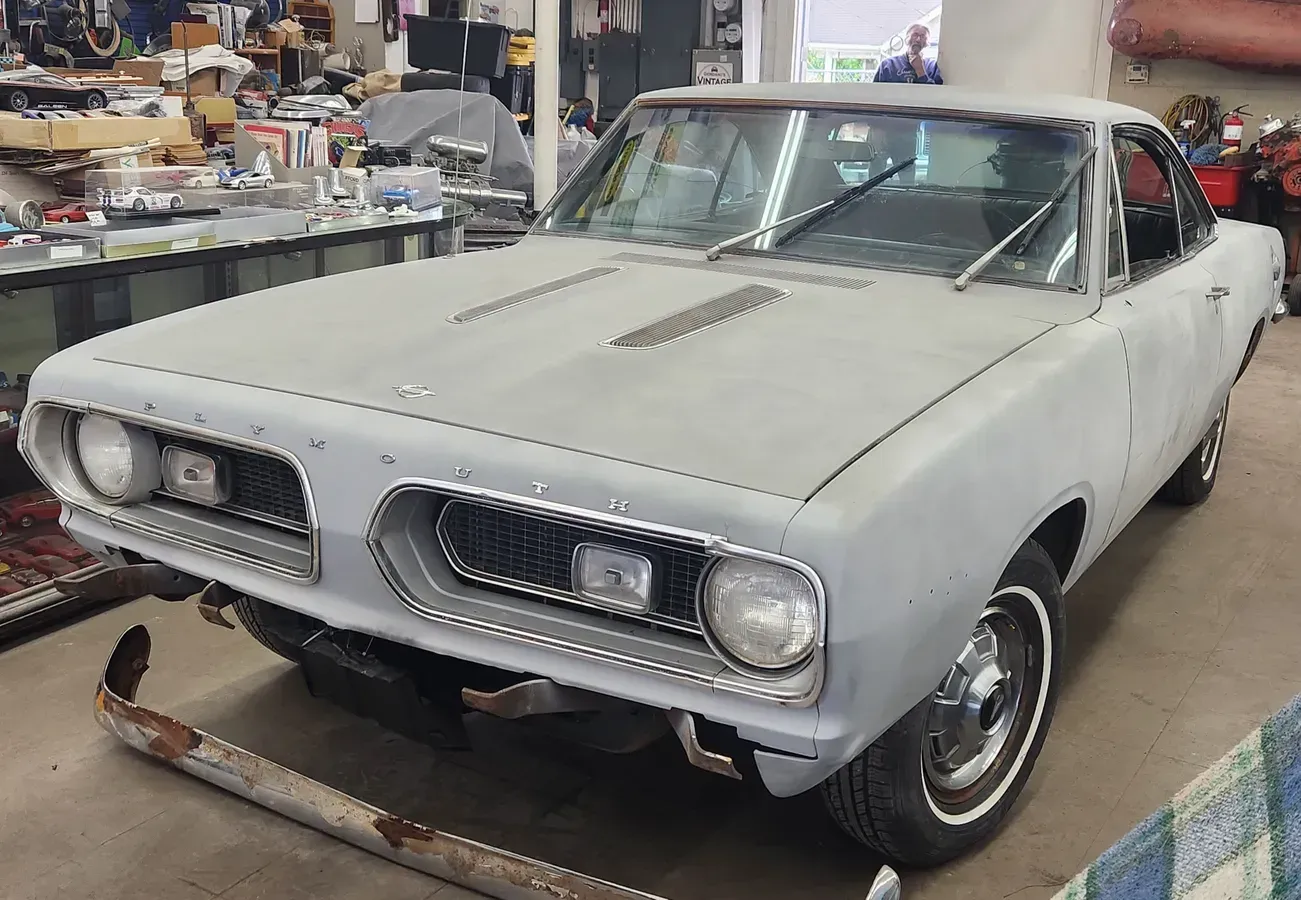
- The character buy: a slant-six or 273 A-body hardtop in honest, original condition. Slow, simple, charming and cheap to keep. A survivor like the primer-grey 1967 photographed for this guide, bought at survivor money with its structure verified, is a better purchase than a restored car with a hidden past.
The overriding rule: buy the shell, then the paperwork, then the engine — in that order, at every price level. A sound, honestly documented hardtop with the wrong engine is a good car you can improve; a rotten or misdescribed shell with the right engine is an expensive education.
See the 6 Barracuda Hardtop cars currently listed.
For sale now
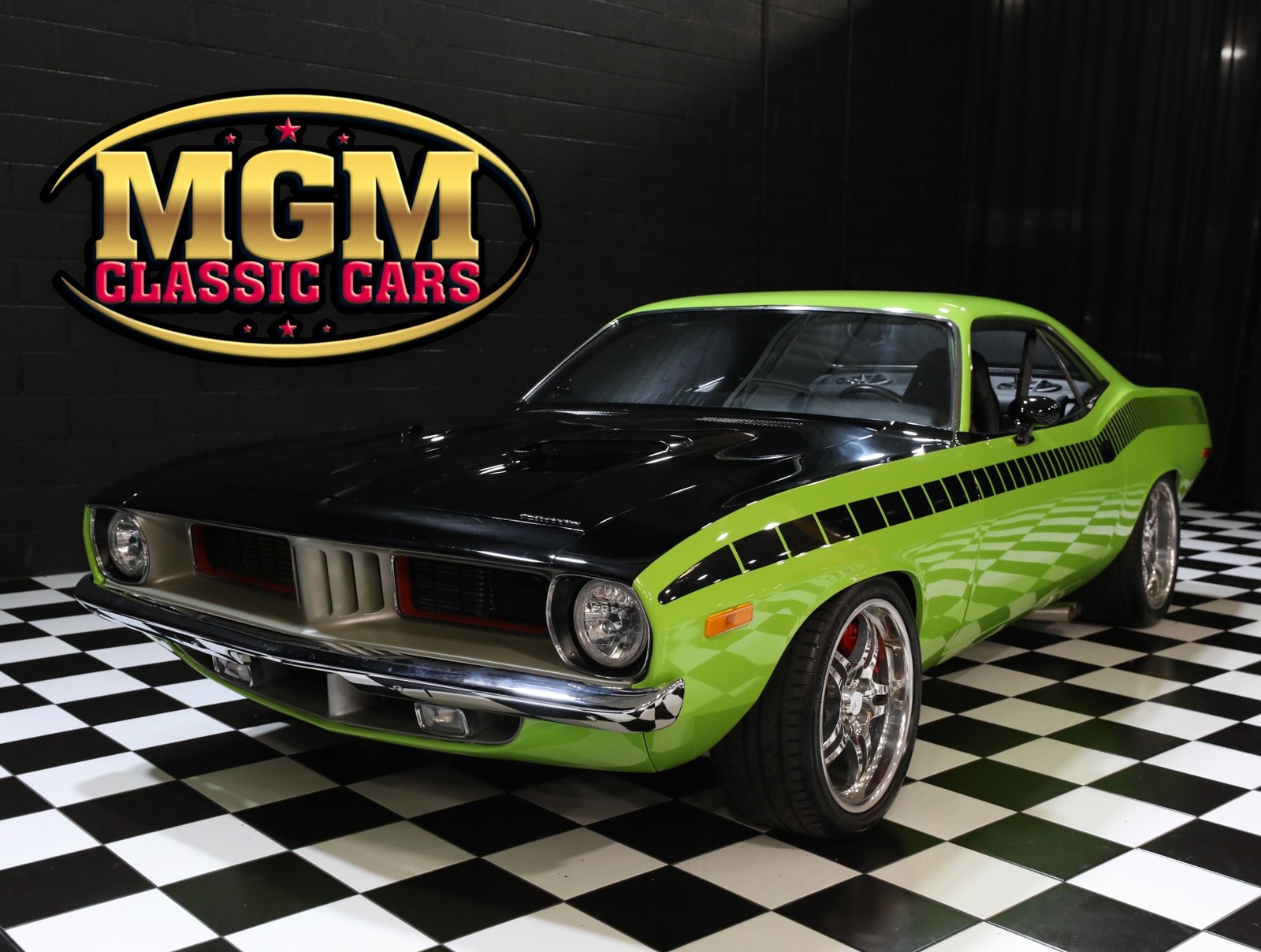 $89,995 · 20% below typical
Expand
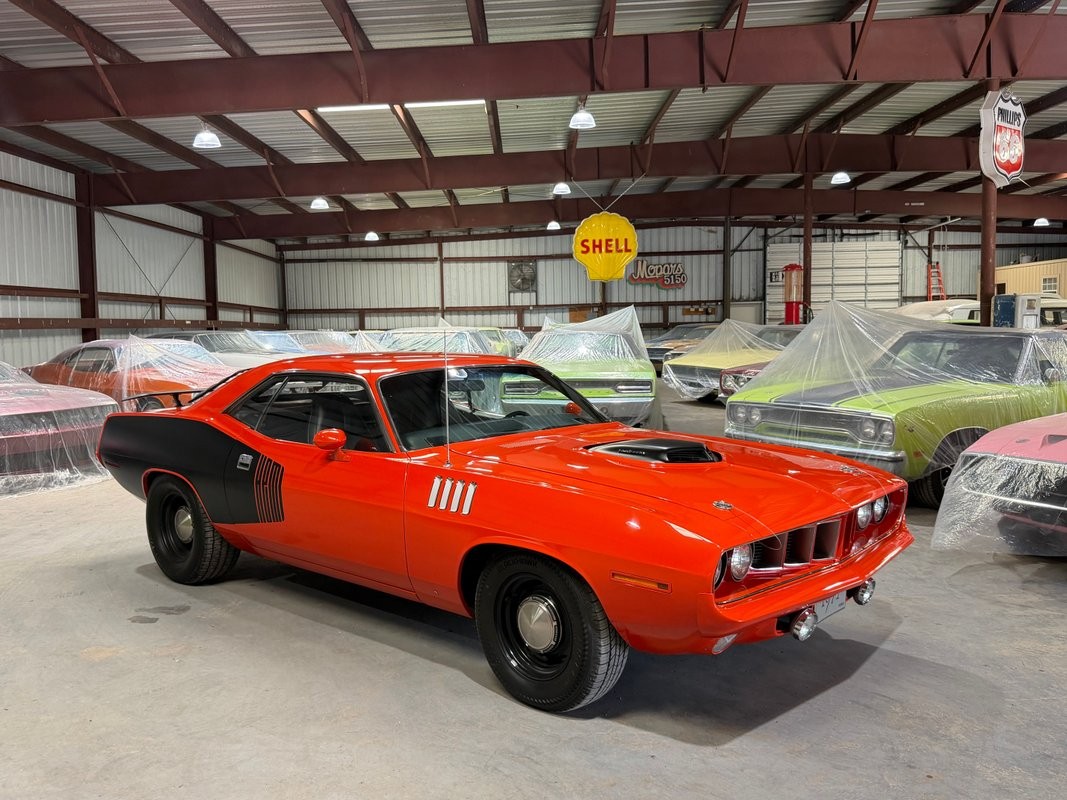 $179,900 · 60% above typical
Expand
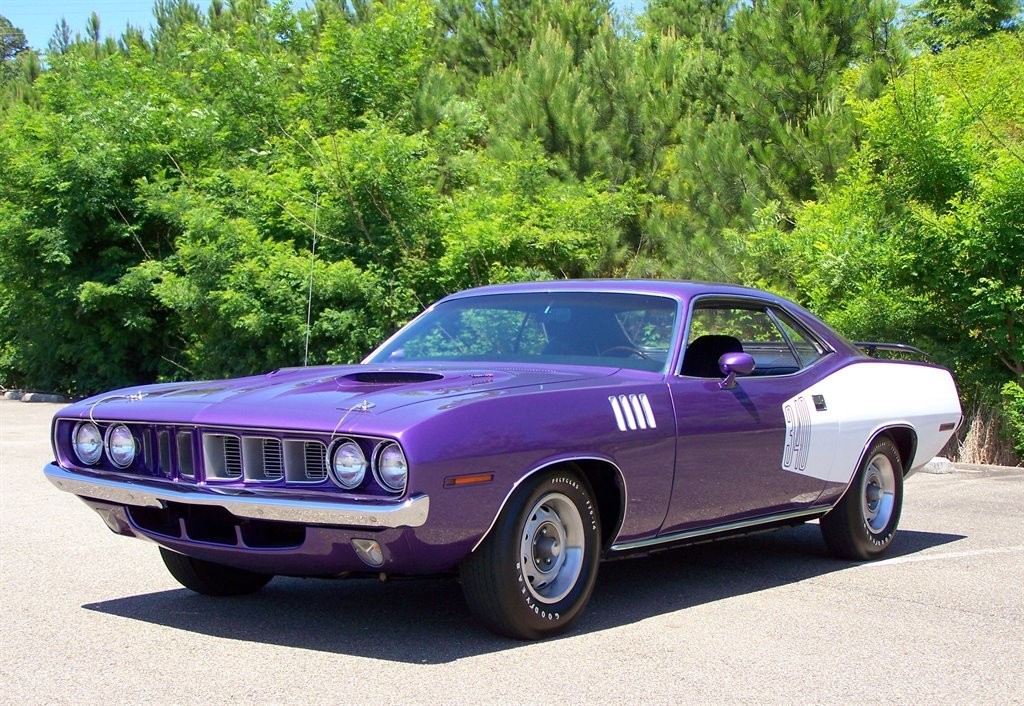 $158,890 · 42% above typical
Expand
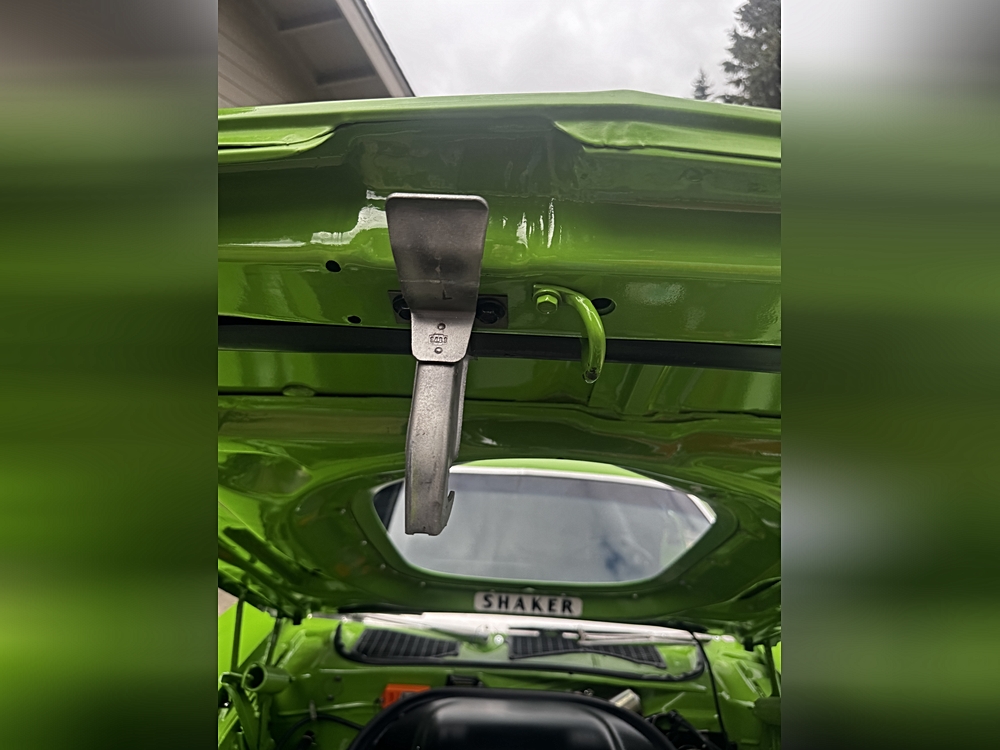 $165,000 · 47% above typical
Expand
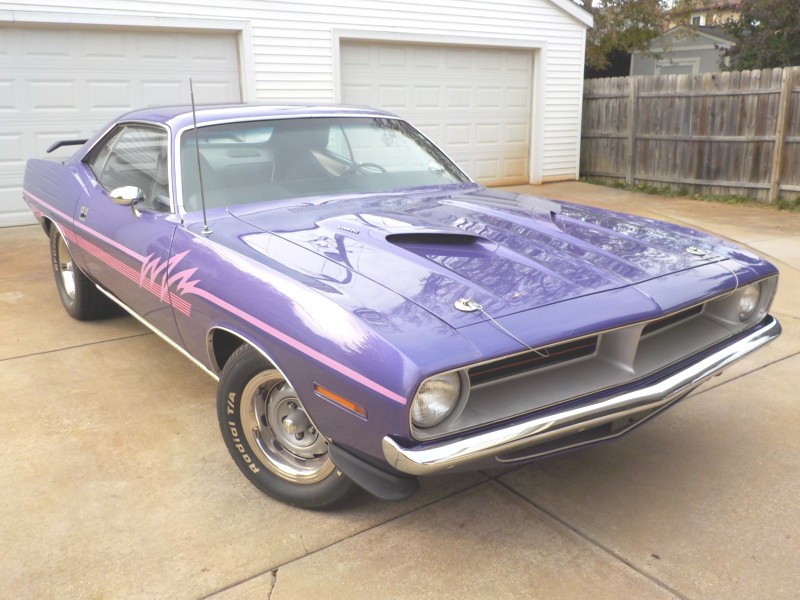 $70,000 · 38% below typical
Expand
What they sell for: Barracuda Hardtop sale prices.