
Plymouth Barracuda Coupe buyer's guide
Plymouth Barracuda Coupe -- the model's own buyer's guide: variants, values and what to check.
Years listed: 1970-1971 · Series: Barracuda
# Plymouth Barracuda Coupe — Buyer's Guide
Overview and history
You are looking at the third-generation Barracuda, the E-body car Plymouth built from 1970 to 1974, and specifically at the two-door hardtop coupe — the body style that carries almost the entire market, from a slant-six shopping car to the 426 Hemi 'Cuda. Understand first what the E-body changes versus the car it replaces. The 1964–1969 Barracuda is an A-body: a Valiant underneath, narrow, light, built around sixes and small V8s. For 1970 Plymouth starts again with a dedicated pony-car platform shared with the Dodge Challenger. The E-body is wider, lower and heavier, with a 108-inch wheelbase — two inches shorter than the Challenger's, all of the difference ahead of the windscreen, which is why the Barracuda looks stubbier and, to most eyes, meaner. The width is the point: the engine bay is engineered from the outset to take Chrysler's big-block RB V8s and the 426 Hemi without the shoehorn work the A-body demands. This is a car designed around its biggest engines, and everything about buying one flows from that.
The timing is both glorious and cruel. The coupe arrives for 1970 at the peak of the muscle-car era, and by the end of 1971 the Hemi, the 440s and the convertibles are gone, killed by insurance surcharges, emissions rules and collapsing demand. The 1972 facelift brings a new grille, round tail lamps and federally driven changes underneath; 1973 adds impact bumpers, and 1974 is a slimmed range of 318 and 360 coupes. So the coupe splits into two eras: the 1970–1971 muscle artefacts the market prices as collectibles, and the 1972–1974 cars — same shell, softer engines, far lower entry cost. Decide which purchase you are making before you look at a single car.
One structural fact governs everything else: the coupe is a unibody. There is no separate chassis frame. The K-member that carries the engine and torsion-bar front suspension bolts to the body, the rear leaf springs hang from rails pressed into the floor, and the shell itself is the structure — so rust is never merely cosmetic, because the metal that rots holds the suspension on. Identity, meanwhile, is stamped and riveted all over the car, and the gap between a genuine big-engine 'Cuda and a six-cylinder Barracuda dressed as one is the largest single money question in this market. Buy the shell and the paperwork first, the engine second.
The models
The coupe range is a ladder of three trim levels, and the VIN's first four characters tell you which rung a car was born on. BH23 is a Barracuda, BP23 is a Gran Coupe, BS23 is a 'Cuda. That prefix is stamped at the factory and cannot be optioned up later — a fact worth more than any badge, stripe or seller's story, and the first thing you check on any car (the inspection section walks you through it).
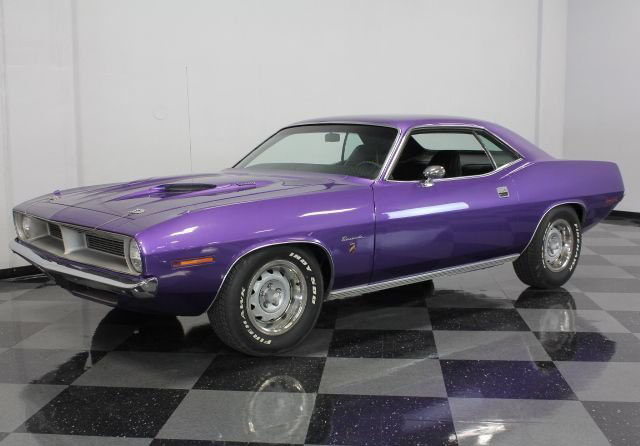
The base Barracuda (BH23) is the volume car. It is the one you find with the 225 Slant Six, the 318 V8, bench or basic bucket seats, drum brakes and an automatic column shift — but the ladder is porous, because Plymouth lets you order most engines in most shells in 1970–1971. A BH23 car can carry a 383 from new, and plenty of honest, interesting coupes wear the plain badge. The Gran Coupe (BP23) is the luxury trim, 1970–1971 only: overhead console, leather-faced seats, extra sound deadening, woodgrain trim. It is a trim package, not a performance model — the myth to correct here is that Gran Coupe means fast. It does not. Most are 318 or 383 cars, and their value lies in rarity and specification, though the package could combine with big engines and a Shaker, as the purple car in these photographs shows.
The 'Cuda (BS23) is the performance line, a model in its own right, not an option pack. The 383 big-block is the base engine in 1970–1971, with the 340 added as the entry 'Cuda engine for 1971, heavy-duty suspension, and the 440 four-barrel, 440 Six Barrel and 426 Hemi above. The AAR 'Cuda, for 1970 only, is the homologation special built so Plymouth could race the 340 in the SCCA Trans-Am series under Dan Gurney's All American Racers banner: a unique 340 Six Barrel engine, a fibreglass bonnet with a functional fresh-air scoop, side-exit exhausts, a ducktail spoiler, and staggered tyre sizes — wider at the rear, a first on an American production car. For 1972–1974 the 'Cuda name survives with 340 (later 360) power, but the big-blocks are gone and the cars are softer, heavier-bumpered and far more affordable.
Styling changes give you the year at a glance, and year identity drives value, so learn them. The 1970 car has a single headlamp each side in a wide grille and a full-width tail panel. The 1971 car — one year only — has four headlamps, decorative gills pressed into the front wings, a divided grille, and the optional billboard stripe wrapping the rear quarters with the engine size written into it. The 1972–1974 cars return to single headlamps in a narrower grille, gain round tail lamps, and from 1973 wear large impact bumpers. Inside, look for the standard dash or the optional Rallye cluster with tachometer, and on 1970–1971 four-speed cars the Hurst Pistol Grip shifter — one of the era's defining details, and one of the first things missing on a tired car.
| Model | Years | Engine | Output | Built | Character |
|---|---|---|---|---|---|
| Barracuda (BH23) | 1970–1974 | 225 Slant Six / 318 V8 | 145 hp / 230 hp (gross) | The volume seller | Honest entry point; sixes are slow, 318 is the sweet driver |
| Barracuda 383 (BH23) | 1970–1971 | 383 big-block | 290–335 hp (gross) | Low thousands | The sleeper: big-block torque without the 'Cuda tax |
| Gran Coupe (BP23) | 1970–1971 | 318 / 383, rarely bigger | 230–335 hp (gross) | Low production vs Barracuda | Luxury trim, overhead console; buy on spec and rarity |
| 'Cuda 340 (BS23) | 1971–1973 | 340 small-block | 275 hp gross; 240 hp net (1972 on) | Thousands per year | The handler: lightest nose, revs, the driver's pick |
| 'Cuda 360 (BS23) | 1974 | 360 small-block | 245 hp (net) | Final-year only | Last of the line; torquey, undervalued, one year only |
| AAR 'Cuda (BS23) | 1970 | 340 Six Barrel | 290 hp (gross) | 2,724 | Trans-Am homologation special; verify everything |
| 'Cuda 383 (BS23) | 1970–1971 | 383 big-block | 335 hp (gross) | Volume 'Cuda | The standard muscle 'Cuda; strong, simpler than a 440 |
| 'Cuda 440 (BS23) | 1970–1971 | 440 / 440 Six Barrel | 375 / 390 hp (gross) | Low thousands | Deep torque, heavy nose; Six Barrel is the icon |
| 'Cuda 426 Hemi (BS23) | 1970–1971 | 426 Hemi | 425 hp (gross) | 652 (1970), 108 (1971) coupes | The summit; documentation is the car, engine is second |


Engines and gearboxes
Every engine in this car is a known Chrysler quantity with a long service history in other models, which is good news for parts and knowledge. What matters here is how each behaves in the E-body, what breaks, and how you tell a genuine installation from a swap. Ratings for 1970–1971 are SAE gross — bare engine, no ancillaries — and from 1972 the industry switches to SAE net, installed with exhaust and ancillaries, which is why the later figures look like a collapse when the real drop is smaller. Never compare a 1971 gross figure with a 1973 net figure and conclude the engine lost a third of its power.
The Slant Six and the 318
The 225-cubic-inch Slant Six is the base engine, named for its 30-degree slant, which makes room for long intake runners and keeps the bonnet line low. It makes about 145 gross horsepower, pulls the coupe adequately around town and runs out of breath on the highway, and it is close to unburstable if the oil has been changed at all. Its habits are specific: the exhaust manifold cracks with age and heat cycles, ticking when cold and quietening as it warms; the solid lifters need periodic lash adjustment, so a silent six may simply be a neglected one with tight clearances; and the single-barrel Carter or Holley carburettor wears its throttle shaft, giving a wandering idle you chase in circles until you wiggle the shaft and feel the play. In a coupe, the six matters mostly as an identity baseline: a very large share of the clones and tribute cars you will meet started life as six-cylinder BH23 cars, because they were cheap and plentiful. A genuine six-cylinder coupe in honest condition is a fine, cheap classic. A six-cylinder coupe wearing 'Cuda badges is a car to price as a six-cylinder coupe, whatever is under the bonnet now.
The 318 LA small-block is the default V8 and the most common engine in the coupe population: 230 gross horsepower, a two-barrel carburettor, hydraulic lifters, and a tolerance for indifferent maintenance the bigger engines do not share. It is not fast, but it is sweet — light, smooth, happy on regular fuel, and cheap to rebuild because every part exists. Its faults are age faults, not design faults: a stretched timing chain with the original nylon-toothed cam sprocket shedding teeth into the sump, hardened valve-stem seals giving a puff of blue smoke on start-up after sitting, and exhaust manifold bolts snapping in the heads. If you want a coupe to drive rather than to show, a sorted 318 is the rational heart of the range.
The 340 — and the AAR's Six Barrel
The 340 is the enthusiast's small-block and the engine that makes the E-body handle. Introduced in 1968, it is a high-revving, oversquare LA with a forged crankshaft in the early years, big-valve heads, a high-lift cam and a four-barrel carburettor — Carter AVS on most, Thermoquad later — rated at 275 gross horsepower, a figure period testers widely believed conservative. In the coupe it gives near-big-block pace with a noticeably lighter nose, and the car steers, brakes and changes direction better for it. Its common failures are the LA family failures — timing chain stretch, stem-seal smoke, rear main seal weeps — plus AVS heat soak and worn valve guides on engines that have lived at high rpm. From 1972 the 340 is detuned and rated 240 net; for 1974 the 360 replaces it, a longer-stroke, cast-crank LA making 245 net horsepower with more low-end torque and less appetite for revs. The 360 is a good, undervalued engine; it is simply not a 340, and you should not pay a 340 price for one.
The AAR 'Cuda's 340 Six Barrel is a separate engine in everything but block architecture. Three two-barrel Holley carburettors sit on an Edelbrock aluminium intake manifold; the centre carburettor does the everyday running and the outboard pair open progressively under vacuum when you use the throttle. Plymouth rates it at 290 gross horsepower. The block is a special casting with extra material in the main-bearing webs, the heads and valvetrain are revised, and the exhaust exits through low-restriction mufflers ahead of the rear wheels. The system's signature fault is the outboard carburettors: vacuum diaphragms perish, linkage goes out of adjustment, and the car develops a flat, bogging transition exactly when the outer barrels should arrive — a fault owners misdiagnose as ignition for years. The test is simple and is in the inspection section: the outboards must open cleanly and progressively on a hard run, with no bog and no surge. AAR identity is a paperwork exercise as much as a mechanical one — the car must be a 1970 BS23 with the 340 code in the VIN and the AAR package on the tag and broadcast sheet, because the bonnet, spoiler, stripes and exhaust that make an AAR visually are all bolt-on parts that fit any coupe.
The big-blocks: 383, 440 and 440 Six Barrel
The 383 B-series wedge is the standard 'Cuda engine for 1970–1971 and the optional punch in a plain Barracuda. In four-barrel form it makes 335 gross horsepower (the two-barrel version, 290) with a single Carter or Holley four-barrel, hydraulic lifters and a forged crank. It is the simplest route to real muscle in this shell: torquey, durable, cheaper to rebuild than anything above it, and light enough — by big-block standards — not to ruin the car. Its known weaknesses are shared with the 440: valve-stem seals that harden and smoke, a nylon timing gear that ages out, exhaust manifolds that crack or blow at the flange, and a appetite for fuel that no tuning will fix. The 383 also suffers an identity indignity: because it was the base 'Cuda engine, sellers describe 383 cars vaguely and buyers overlook them for 440s. That is your opportunity, addressed in the final section.
The 440 RB — raised block, longer stroke — is the heavyweight. The four-barrel version makes 375 gross horsepower in 1970 (370 for 1971) and the Six Barrel, with three Holley two-barrels on an aluminium intake, makes 390. The 440's character is torque: it pulls from idle in a way the 340 never will, and it makes the coupe feel like a much bigger car. It also brings big-block realities. The nose is heavy and the steering knows it. Under-bonnet heat is serious, and cooling — a 26-inch radiator on big-block cars, a proper shroud, a healthy viscous fan clutch — is a system you assess as a whole, not a radiator you glance at. Six Barrel cars add the multi-carburettor maintenance described for the AAR: a centre carburettor that idles and cruises, vacuum-operated outboards that must open in sequence, and a linkage-and-diaphragm service that is fiddly rather than difficult. A 440 that runs cleanly on all six barrels, pulls without a bog and does not overheat in traffic is a sorted car. Most are one of the three, and your inspection should test all of them deliberately.
On both big-blocks, check what age attacks first: oil pressure hot at idle (a worn engine shows it here before anywhere), lifter tick from a collapsed hydraulic lifter or worn cam lobe, and blue smoke on overrun from guides and seals. These engines tolerate surprising neglect, then present the whole bill at once.
The 426 Hemi
The 426 Hemi is the reason this model's name carries the weight it does. Hemispherical combustion chambers, two Carter AFB four-barrels, a solid-lifter camshaft, forged internals and a rating of 425 gross horsepower that was a polite fiction for insurance purposes — a healthy street Hemi meets or beats the claim. In the coupe it is rare air: 652 Hemi 'Cuda coupes for 1970 and 108 for 1971, few enough that registries track individual histories. Everything about a Hemi car differs in kind, not degree. The solid lifters need periodic lash adjustment; the dual carburettors need synchronising; every component costs specialist money. A proper Hemi rebuild runs in the $15,000–25,000 range and upward, and a Hemi with the wrong block, wrong heads or a restamp is a six-figure argument. You do not buy a Hemi coupe from photographs. You buy it with a marque expert beside you, the broadcast sheet in hand, and every number checked against it.
Gearboxes
Three transmissions cover the range, and the choice changes the car's character as much as the engine does. The A727 TorqueFlite is the automatic: a three-speed box fitted behind 340s, all big-blocks and Hemis, with the lighter A904 behind Slant Sixes and 318s. The TorqueFlite is one of the strongest automatics of the era, and its failures are usually maintenance failures — burnt fluid, worn bands and clutches giving flare on the 2–3 shift, front-pump seal leaks. One Mopar trap matters above all: the kickdown linkage is not merely a kickdown. It controls throttle pressure, and therefore line pressure, throughout the box's operation. A car run with it disconnected or badly misadjusted burns its clutches in short order — and sellers do disconnect it when the linkage binds. On any automatic car, verify the linkage is connected, moves through its full arc with the throttle, and that shifts are firm and prompt. A 727 rebuild runs roughly $1,800–3,000; a 904 slightly less.
The manual choice is the A833 four-speed, with the Hurst shifter — Pistol Grip on 1970–1971 cars, a ball-topped lever later — and a three-speed manual as the base fitment on lesser cars. The A833 is a famously strong box with a distinctive, mechanical shift: long throws, positive gates, and synchromesh that complains if you rush a worn example. Wear shows as crunching on the 2nd-gear downchange, jumping out of gear on overrun (worn synchro and selector parts), and a whine from tired bearings. Linkage adjustment cures more A833 complaints than rebuilds do — the Hurst mechanism has adjustable stops and rods that bend and wear at their clips — so drive before you condemn. A full A833 rebuild is roughly $1,200–2,200 plus the clutch. Behind Hemi and 440 four-speed cars you will also meet the Dana 60 rear axle, a huge, near-unbreakable unit fitted in place of the standard Chrysler 8¾-inch axle; four-speed Hemi and 440 cars should have it, and its absence on a car claimed to be one is an identity question, not a detail. The 8¾ itself is a strong axle whose centre section unbolts as a unit; its faults are gear whine from wear or a bad set-up after a ratio swap, pinion seal leaks, and axle-shaft end-play from worn bearings. Sure-Grip limited-slip was optional across the range — check for it by the tag on the centre section and by behaviour, not by the seller's word.

Problem areas
Rust: the map
Rust is the E-body's defining problem, and it follows a map you can learn before you ever crouch beside a car. Start with the structure, because on a unibody the structure is the car. The front suspension hangs from torsion bars anchored in a crossmember welded to the floor; the bar anchor sockets and the crossmember rot from inside, fed by water and mud trapped above them, and a car whose anchors are soft has its front suspension attached to rust. Press and pry here on a lift, not with your eyes. The front frame rails around the K-member mounts and the steering-box area crack and corrode, particularly on big-block cars launched hard for fifty years. At the rear, the rails at the leaf-spring hangers, the shock crossmember, and the trunk floor and its drop-off extensions all go early — the extensions are mud traps by design, filled from the wheel side and never cleaned. A trunk floor sound from above can sit over extensions that crumble at a screwdriver's touch, so look from underneath, always.
The floor pans rot at the lowest points and along the seams, worst under the pedals and under the rear seat where water from a leaking rear window collects unnoticed. The cowl is the E-body's speciality: leaves and debris enter the plenum, hold moisture against the firewall and cowl sides, and rot the structure around the wiper pivots and the heater box — rust that hides behind the dash and announces itself as water on the front carpets and, eventually, a windscreen frame you can flex. Cars with vinyl roofs carry a second hidden map: moisture sits under the vinyl and rots the roof skin and the rear-window channel, so bubbling at the base of the C-pillars or around the rear glass on a vinyl-roof car means the damage is already structural-adjacent, and the only honest assessment involves the trim coming off. Add the cosmetic map on top: lower rear quarters behind the wheels, wheel-lip edges, the bottoms of the front wings behind the wheels, door bottoms, the tail panel around the lamps, the battery tray and the inner wing beneath it (acid-assisted), and the bonnet's leading edge and the Shaker cut-out's rim on N96 cars.
Learn the economics as you learn the map, because they decide which cars are viable. A floor pan, trunk floor or lower quarter patch is a bounded job — reproduction panels fit reasonably, and a competent shop welds a section for hundreds to low thousands of dollars per panel plus paint. Torsion-bar crossmember, frame-rail and cowl reconstruction is another order of work: structural, jig-dependent, and $3,000–8,000 per major area before paint. The rule follows absolutely: a coupe with a tired engine and a sound shell is a project; a coupe with a strong engine and a rotten shell is a parts car wearing a price tag. Engines unbolt. Shells do not.
Fresh paint is the rust map's camouflage, and E-bodies wear it constantly. Run a weak magnet — or a paint-depth gauge, better — over the quarters, rockers, door bottoms and around the rear window; filler announces itself in dead spots and thick readings. Look for overspray on rubbers and masking lines in the door shuts. None of this condemns a car: most surviving coupes have had rust repair, and good documented repair is a selling point. Undocumented perfection is the thing to distrust.

Identity, tags and the clone problem
No section of this guide will save you more money than this one. The coupe's value spread between a slant-six Barracuda and a Hemi 'Cuda is the widest of any American car of the era, and the cars share a shell — so the market is full of transformations, tributes, clones and outright fakes, at every level of honesty. Your defence is a chain of factory markings, and you check every link.
The VIN plate sits on the driver's side of the dash, visible through the windscreen. Decode it before anything else: the first characters give the model — BH for Barracuda, BP for Gran Coupe, BS for 'Cuda — the next two give the body (23, the two-door hardtop), and the fifth character gives the factory engine. The codes you need are G for 318, H for 340, L for 383, U for 440 four-barrel, V for 440 Six Barrel, Z for 426 Hemi, with C covering the Slant Six. A car advertised as a factory Hemi whose VIN's fifth character is not Z is not a factory Hemi car, whatever engine sits in it today, and no story about dealer installs or factory mistakes changes that. Check the plate itself: it should carry correct Chrysler rosette rivets, crisp stamping, and no sign of having been transferred — a VIN plate with fresh rivets, scratches around its edges or a dash pad that has clearly been disturbed is a walk-away signal until an expert clears it.
The fender tag — the metal plate screwed to the driver's inner front wing — carries the car's build specification in option codes: engine (E55 for 340, E63 for 383, E86 for 440, E87 for 440 Six Barrel, E74 for Hemi), transmission (D21 for four-speed manual, D32 for TorqueFlite), paint and trim codes, and options such as N96 for the Shaker. Tags are reproduced, and a reproduction tag made to match a build sheet is legitimate restoration practice — but a tag made to invent a specification is fraud's favourite tool, so the tag alone never settles anything. Cross-check it against the body numbers: partial VINs are stamped into the cowl area and the radiator support, and they must match the dash VIN's sequence. Then check the engine: on 1970–1971 cars the engine block carries a partial VIN stamping on a machined pad by the oil pan rail, and the TorqueFlite carries a matching stamping on its bellhousing edge. Numbers-matching means those stampings match the car — and on a Hemi or Six Barrel car, matching numbers are a large part of what you are paying for. A warranty or replacement block, unstamped or differently stamped, is not a disgrace, but it is priced as one, and a seller who discovers this fact at the same time you do is telling you something about the car's history.
The broadcast sheet — often found tucked in the seat springs, behind the glovebox or above the fuel tank — is the most valuable document a coupe can have: it lists the car as built, code by code, and it is far harder to fake convincingly than a tag. Cars with a sheet, a correct tag, matching body stamps and matching drivetrain numbers are the documented cars, and the market pays for that chain precisely because so many cars have lost it. AARs, Shaker cars, billboard cars and High Impact colour cars all attract the same treatment: the visual equipment bolts on, so assume nothing you can see is original until a code says so. This requires sequence, not paranoia: VIN first, tag second, body stamps third, drivetrain stamps fourth, documents last. If the chain breaks, price the car at the level the chain supports.
Engines, cooling and fuel
Engine problems divide into the LA small-block set, the wedge big-block set, and the Hemi's own world, but the shared E-body systems fail first and fool you fastest. Cooling is the headline. Big-block coupes generate more heat than the standard system sheds in traffic, and fifty years of silted radiator cores, collapsed hoses, missing shrouds and seized viscous fan clutches have narrowed the margin further. A car that creeps upward at idle but cools on the move has an airflow problem — fan clutch, shroud, or a radiator that flows water but not air through a debris-clogged core. A car that overheats under load has a circulation or combustion problem — a blocked core, a slipping water-pump impeller, or head-gasket leakage pressurising the system, which you test with a chemical block-test kit at the filler neck in five minutes. Do that test on every big-block car; sellers who have dosed the system with sealant know why you are doing it.
Fuel systems suffer the modern-fuel disease. Ethanol-blended petrol attacks the rubber in original pumps, needle valves and hoses, and goes stale in a stored car within months, varnishing jets and sticking chokes. Carter AVS and Thermoquad carburettors add age faults of their own: the Thermoquad's plastic main body warps and leaks internally when overheated, giving hot-start flooding and a rich cruise no jet change cures, and the AVS's air-valve adjustment drifts until the secondaries arrive with a bog. Six Barrel systems multiply this by three carburettors and add the vacuum diaphragm failure already described: the outboards never open, and the car feels like a strong four-barrel with a strange hesitation at full throttle. Budget $600–1,200 to have a Six Barrel set rebuilt and set up as a system; piecemeal attention to one carburettor at a time is how owners spend that money twice.
Oil tells you the engine's internal truth if you read it in the right order. Blue smoke at start-up after sitting, clearing within a minute, is valve-stem seals — a weekend job on an LA or a wedge, seals replaceable in situ with the heads on, and no reason to reject a car. Blue smoke under acceleration is rings and bore wear, which is a rebuild conversation. Low hot idle oil pressure — the factory gauge is vague, so screw in a mechanical gauge — points to bearing wear on high-mileage engines and is the single best predictor of an imminent rebuild bill. A small-block rebuild to standard specification runs roughly $5,000–9,000; a big-block $7,000–12,000; a Hemi, as noted, far beyond either. Lifter tick on a hydraulic engine that fades with rpm is usually a lazy lifter or low pressure; a tick that sharpens with rpm on a solid-lifter Hemi means the lash is out, and lash ignored becomes a camshaft.
Gearboxes, axles and driveline
The TorqueFlite's failure pattern is honest and progressive: shifts that flare announce worn clutches; delayed engagement into Drive or Reverse from cold announces hardened seals; dark, burnt-smelling fluid announces both are well advanced. Check the fluid before the test drive, and check the kickdown linkage as described in the engines section — a car run with it disconnected may have a cosmetically fine gearbox with its clutch packs already spent. Manual cars wear at the linkage first: sloppy changes with missed gates are usually the Hurst mechanism's worn rods, clips and bushings, a few hundred dollars in parts, while a box that crunches into second on the downchange regardless needs synchro work inside, and one that jumps out of third on overrun needs the box out and open. Clutch judder means oil contamination (rear main seal, again) or a warped flywheel; neither kills a deal, both are a day's labour.
At the rear, the 8¾-inch axle whines for two reasons — honest gear wear, a steady note that follows road speed, or a bad set-up after a ratio change, which howls on drive and goes quiet on coast, or vice versa. The second pattern is the commoner and the more annoying, because the fix is a specialist gear set-up at $800–1,500, not a fluid change. Universal joints click and clunk on take-up when worn; a vibration that arrives at one road speed and leaves at another is usually a UJ or a bent or rebalanced-wrong propshaft, often after a gearbox swap. On Dana 60 cars, add one check: the Dana should be there. A claimed four-speed 440 or Hemi sitting on an 8¾ has a story to explain, and the explanation affects the price.
Suspension, steering and brakes
The front suspension is Chrysler's torsion-bar system: longitudinal bars spring the car, and ride height is set at the bar anchors — so a coupe sitting nose-down is often one adjustment from correct, while a coupe sitting correctly may hide a sagging bar someone has wound up to compensate. The wear points are the ball joints (the lowers carry the load and fail the safety test), the strut-rod bushings that perish into a clunk under braking, tie-rod ends and the idler arm. The recirculating-ball steering box wears in the straight-ahead position into a dead zone you steer around unconsciously — so test it consciously: wheels straight, rock the wheel, and have a helper watch each linkage joint in turn to separate box wear from linkage wear. Power steering adds a pump (whine on lock is low fluid or a dying pump) and hoses that weep with age. A full front-end refresh with joints, bushings and an alignment runs roughly $1,500–3,000 and transforms these cars — so price a vague, wandering coupe as needing it rather than fearing it.
Brakes split by specification. Front discs with a dual-circuit master cylinder are the desirable set-up, standard on later and higher cars, optional early; four-wheel drums on base cars are adequate when perfect and miserable when merely old. The age faults are uniform: wheel cylinders and calipers seizing from moisture in old fluid, rubber hoses ballooning internally so a brake drags or pulls, and a master cylinder that sinks the pedal slowly at a standstill as its seals bypass. Pulling under braking on a disc car is usually a seized caliper or a collapsed hose, not alignment. The handbrake is seized on a majority of project cars and belongs in your safety check, not your afterthoughts. A full overhaul with hoses, cylinders, calipers and master runs roughly $1,000–2,000, and on any car that has sat, assume it is needed until receipts prove otherwise.
Electrics, interior and trim
Chrysler electrics of this era have one famous structural weakness, and you check it on every car: the charging circuit runs the alternator's full output through the bulkhead connector on the firewall and through the ammeter in the dash. The bulkhead terminals corrode, resistance rises, heat builds, and the connector melts — in bad cases, it is a fire risk, and in all cases it gives you dim lights, a bouncing ammeter and intermittent everything. Pull the bulkhead connector apart on any car you are buying (it unclips from the engine side) and look for green corrosion and heat-discoloured terminals. The ballast resistor on the firewall is the other classic: it fails open and the engine cranks, fires, and dies the instant you release the key — carry a spare in the glovebox of any car you own, because it is a $15 part that immobilises the car. From 1972–1973 electronic ignition replaces points; its control box fails with heat and age, giving a no-spark or a cut-out when hot that returns when cool, a fault owners chase through coils and distributors for months. The test is substitution with a known-good box, and the fix is cheap — but only once you know.
The interior is where originality goes to be spent. High-back bucket seats split their vinyl at the seams and collapse their foam; reproduction covers and foams are excellent and cost roughly $1,500–3,000 to buy and fit per car, so a tired interior is a negotiation point, not a rejection. Rallye dash gauges fail individually and are repairable. Headliners sag, Gran Coupe overhead consoles crack around their lamp housings, door cards warp at their lower edges from window-seal leaks, and rear side panels fade at different rates from the seats — a mismatch that tells you which pieces are original. Trim is the scarcity problem: the 1971 grille, the one-year-only wing gills, and good original Shaker components are the expensive, hunted parts, while 1970 and 1972–1974 brightwork is better reproduced. Price a car needing a 1971 grille as a car needing a search, not a purchase.

How to inspect one
Inspect in this order — identity, structure, then mechanicals — because the first two decide whether the mechanicals matter. Take a magnet or paint gauge, a torch, a mechanical oil-pressure gauge, a block-test kit, and a helper.
- Start with the VIN plate, before the bonnet opens. Read the model prefix and the fifth-character engine code through the windscreen and compare them with the advertisement, word for word. Check the rosette rivets and the plate's condition. If the car is not what the VIN says it was born as, you are now inspecting a different, cheaper car — continue only on that basis.
- Decode the fender tag and hunt the broadcast sheet. Photograph the tag, decode the engine, gearbox, paint and option codes, and ask directly for the broadcast sheet and any registry or decode documentation. Check the tag's paint detail: it sits half in factory paint, and a tag in uniform fresh paint with new screws earns questions, not accusations.
- Match the body stamps. Find the partial VIN stampings on the cowl and the radiator support and confirm they agree with the dash plate's sequence. A mismatch here ends the inspection of any car priced on originality — this is the check the clone problem section explains, and it takes five minutes.
- Read the shell from underneath. On a lift, work the rust map in order: torsion-bar crossmember and anchors (pry, do not just look), front rails at the K-member and steering box, floor pans, spring-hanger rails, trunk extensions from below. The crossmember test settles the car's structural honesty the way a sill test settles lesser cars; softness here reprices or ends the deal.
- Read the topside rust map. Magnet or gauge across the lower quarters, rockers, door bottoms, wheel lips and around the rear window — slowly and suspiciously on a vinyl-roof car, where C-pillar bubbling means hidden rot. Open the boot and lift the mat: the trunk floor from above, the extensions' tops, and any sealant smeared where seams should be.
- Check the engine's numbers and its cold behaviour. On a numbers-sensitive car, find the block's partial-VIN pad by the oil pan rail and the gearbox stamping, and match them. Then, engine genuinely cold (insist on it), start it: watch for start-up smoke (seals) versus sustained smoke (rings), listen for lifter tick and whether it fades, and note the choke and fast-idle behaviour.
- Test the cooling system under provocation. With the engine hot, run the block-test fluid at the filler neck, check for a shroud and a working viscous fan, squeeze hoses for softness or crunch, and then let the car idle in place for ten minutes while you watch the gauge. Big-block cars that cannot idle without climbing are telling you their price.
- Screw in the mechanical oil gauge. Hot idle pressure and pressure at a steady cruise rev tell you more about bearing condition than any seller's history. Note both figures. On a Hemi or any solid-lifter car, listen at the rocker covers for the even, mechanical chatter of correct lash versus one loud voice — a single tight or loose valve.
- Drive it long enough to test the transitions. Twenty minutes minimum, mixed roads. On a Six Barrel car, use full throttle from a rolling start and feel for the outboard carburettors arriving cleanly — a bog or surge is the diaphragm-and-linkage fault from the problem areas, priced accordingly. On an automatic, demand a kickdown downchange; on a manual, test the second-gear downchange and overrun in third for jump-out.
- Work the steering, suspension and brakes as systems. Wheels straight, rock the wheel for the dead zone while your helper watches the linkage joints one by one. Brake firmly from speed, hands light: pulling means caliper or hose, and a pedal that sinks at the next stop means master cylinder. Listen over broken surfaces for strut-rod clunks and ball-joint knocks, and confirm the handbrake holds on a slope.
- Run every electrical load, then look at the bulkhead connector. Lights, blower, wipers, gauges, horn — then engine off, unclip the bulkhead connector and inspect for green terminals and heat damage, the single highest-value electrical check on the car. Note whether ignition is points or electronic, and on an electronic car ask whether it has ever cut out hot; that answer, plus a spare control box, is worth having.
- Finish with the paper, not the car. Broadcast sheet, tag decode, title history, dated restoration receipts, registry entries. Add up what the car needs from steps 4–11, in writing, with this guide's repair ranges, and compare that total with the asking price before you negotiate a point. The car you inspected — not the car in the advertisement — is the car you are pricing.

Values
Read this market in layers, because a Barracuda Coupe is not one market but several stacked on the same shell, and the build's market block beneath this guide — the live listings and recorded sales for the model — means something different at each layer. The first layer is identity. A documented BS23 'Cuda with matching numbers sits in a different market from a BH23 Barracuda, which sits in a different market from a BH23 car dressed as a 'Cuda, even if all three wear the same engine today. When you compare a car against the recorded sales, compare it only with cars of the same verified identity, or the comparison is fiction. The second layer is documentation. Within any identity tier, the broadcast sheet, the matching stampings and a traceable history move a car to the top of its band, and their absence moves it down by more than the cost of any mechanical fault — because mechanical faults can be fixed and lost paperwork cannot.
The third layer is specification, and it is where the premiums concentrate. Factory High Impact colours, the Shaker hood, the four-speed gearbox, the billboard stripe on a 1971 car that was born with it, and the Six Barrel and Hemi engines each carry a premium that is real, durable and entirely dependent on the codes proving the car left the factory that way. The same equipment added later adds enjoyment and almost no money. Learn to split every asking price into shell, identity, specification and condition, and you will see immediately which part of the price a seller is asking you to take on trust. Condition is the fourth layer, and on E-bodies it is dominated by one variable: the shell. The spread between a structurally sound, honestly repaired coupe and a cosmetically shiny coupe over rotten rails is the widest spread in the car's market, wider than the spread between engine options within a tier — the opposite of what the advertisements, which photograph paint and not crossmembers, would have you believe.
Era shapes the fifth layer. The 1970–1971 cars carry the muscle-era premium and the auction attention; the 1972–1974 cars trade in a quieter market where condition and drivability outweigh codes, and where the gap between asking and achieved prices is often widest because sellers anchor to the earlier cars. Across all eras, asking prices are aspirations and the recorded sales beneath this guide are the evidence: weight the achieved figures, note how long comparable cars sat before selling, and treat a car advertised repeatedly at the same figure as the market having already voted. Projects follow their own arithmetic — a project coupe is worth its shell, identity and reusable parts minus the restoration you can price from the problem-areas section, and the commonest error in this market is paying a driver price for a project because the engine ran on the day. Finally, the restomod layer: well-built modified cars have their own genuine market, priced on build quality and drivability, but it is a different book from the originality market and a car cannot be valued from both at once. Decide which book you are buying from, and pay from that one.
Parts and ownership
Ownership is easier than the car's rarity suggests, because Chrysler built these engines and gearboxes by the million across two decades, and the reproduction industry has adopted the E-body completely. Mechanical parts are a non-issue: engine internals for the LA, B and RB families, TorqueFlite and A833 service parts, brake and suspension consumables, and steering components are all available off the shelf from generalists and Mopar specialists alike — Mancini Racing, Brewer's Performance for four-speed parts, Firm Feel for steering and suspension upgrades that cure the original vagueness. A water pump or a set of ball joints is a phone call, not a quest.
Body and trim divide sharply by year, as the problem areas warned. AMD and others reproduce the structural and skin panels — floor pans, trunk floors, quarters, wings, bonnets including the Shaker pressing — to a standard that makes shell rescue viable, with panels typically in the hundreds of dollars each and the money in the fitting and paint rather than the steel. Interior soft trim is equally well served, with correct-grain vinyl seat kits, foams, carpets and headliners reproduced faithfully. The scarcity sits in year-specific brightwork and plastics: the 1971 grille and wing gills, good tail panels, correct dated glass, original Shaker baseplates and scoops, Gran Coupe overhead consoles, and NOS anything. On those parts the market is swap meets, specialist breakers and patience, and a car missing them should be bought as if they cost real money and real time — because they do.
Running one is straightforward if you respect three habits. First, drive it: the carburettor varnishing, brake seizing and seal drying that dominate the problem lists are storage diseases, and a coupe used monthly needs a fraction of the attention of one woken twice a year; when it must sit, store it with stabilised or ethanol-free fuel and a full tank. Second, keep the two cheap spares on board — a ballast resistor and, on electronic-ignition cars, a control box — because the car's two classic roadside immobilisations are five-minute fixes with the part in hand and a recovery truck without it. Third, insure and record it as the identity market demands: agreed-value cover reflecting the car's verified tier, photographs of the VIN, tag, body stamps and broadcast sheet stored away from the car, and every receipt kept. Other running costs are period-American simple: fuel consumption in the low-to-mid teens per gallon for a gently driven small-block and single figures for a worked big-block, servicing any competent mechanic can do, and original-size tyres from the classic-tyre specialists. The expensive E-body is the one bought wrong, not the one owned right.
Which one to buy
- The all-rounder: a 1970–1971 'Cuda 383 four-barrel. The standard muscle 'Cuda: real big-block pace, the BS23 identity, simpler and cheaper to run than a 440, and priced below the headline cars. Buy the best shell you can find and let others pay for callouts.
- The driver's pick: a 340 'Cuda, 1971–1973. The lightest nose and the best balance, an engine that loves to rev, and — in the 1972–1973 cars — the softest prices in the 'Cuda range. If you drive your classics, this is the coupe you will enjoy most per mile.
- The value buy: a 318 Barracuda coupe with a sound shell. The same shape, the same interior, a sweet and nearly free-to-run engine, and an entry price that leaves budget to make the car genuinely good. The rational first E-body.
- The sleeper: a BH23 Barracuda with a factory 383. Big-block torque without the 'Cuda premium, overlooked because the badge is plain. Verify the L code in the VIN — a factory big-block Barracuda is a genuinely uncommon car.
- The collector: a documented AAR 'Cuda. One year, one purpose, 2,724 built, and a driving experience nothing else in the range replicates. Buy only with the full identity chain intact; an AAR without paperwork is a 340 coupe with a fibreglass bonnet.
- The summit: a numbers-matching Hemi 'Cuda coupe, 1970 or 1971. Buy it with an expert, buy it on documents, and understand that you are purchasing a registry-tracked artefact that happens to be a car. At this level the inspection never really ends — and neither does the company you keep.
- The project to buy: any coupe, any engine, with a sound crossmember, sound rails and an honest title. Structure and identity are the two things money cannot easily add later; engines, trim and paint are shopping.
The overriding rule: buy the shell and the VIN, not the engine and the paint — a sound, honestly identified coupe with the wrong engine is a good car at the right price, and a rotten or misidentified coupe with the right engine is a bad car at any price.
See the 3 Barracuda Coupe cars currently listed.
For sale now
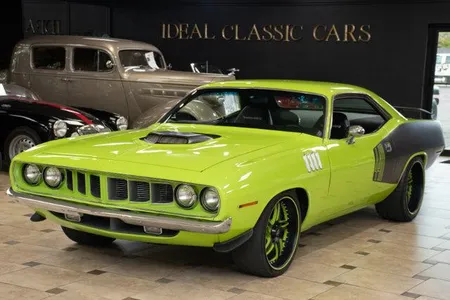 $119,983 · 28% above typical
Expand
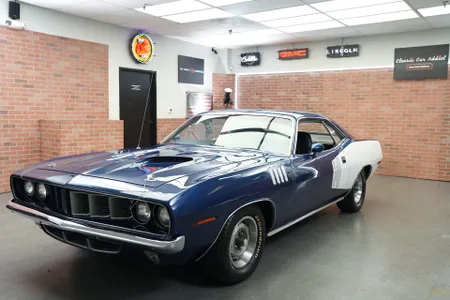 $90,294 · 4% below typical
Expand
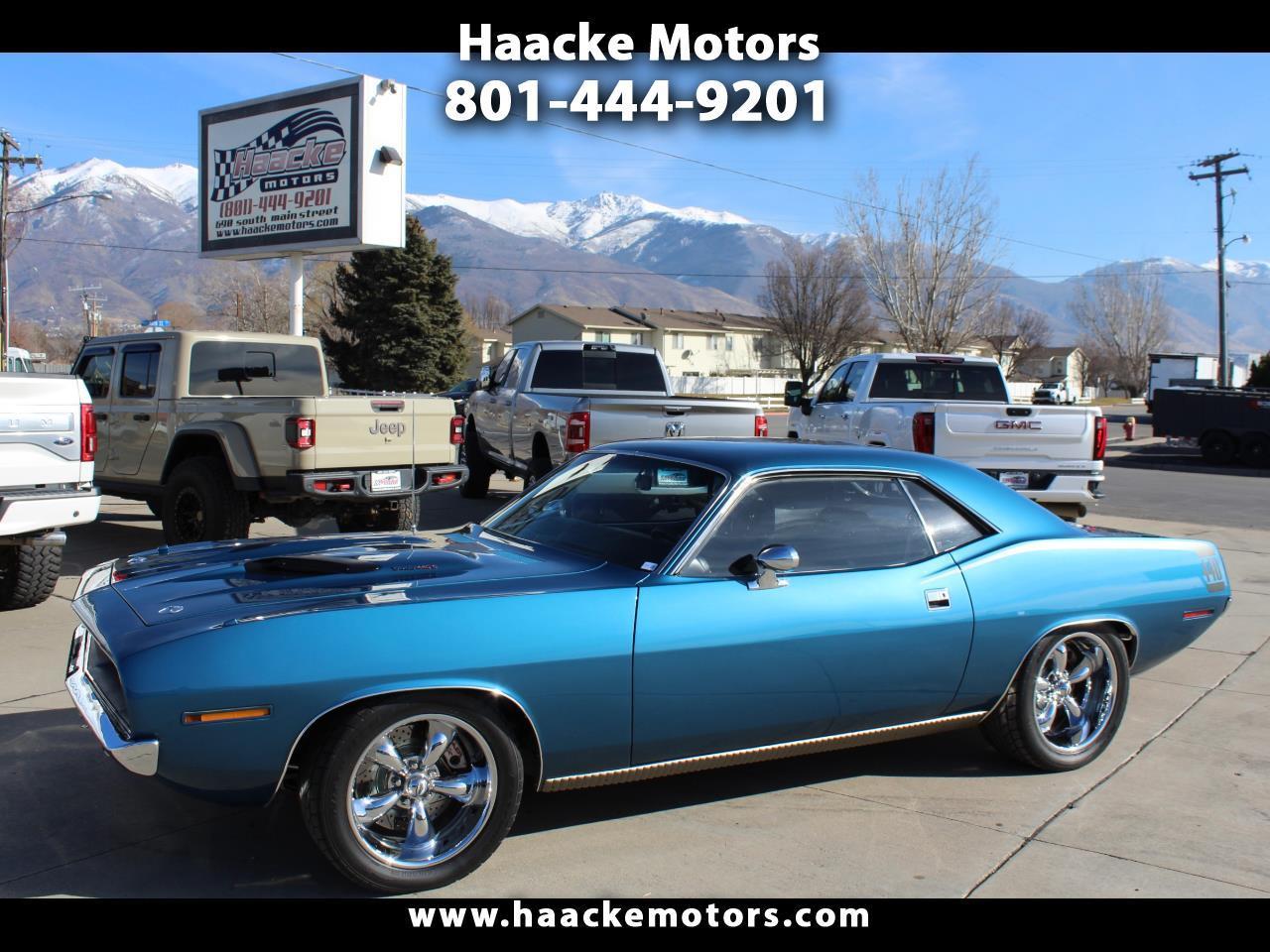 $135,000 · 44% above typical
Expand
What they sell for: Barracuda Coupe sale prices.