
Ford Pickup buyer's guide
Ford Pickup -- the model's own buyer's guide: variants, values and what to check.
Years listed: 1936-1947 · Series: Full Size
# Ford Pickup (1932–1947): Buyer's Guide
Overview and history
You are not buying one model here, and the first honest thing this guide can do is tell you so. On this site, "Pickup" is a generic label the store applies to vintage Ford trucks, and the pool of cars behind it is small and specific: nine dealer-listed trucks, spanning 1933 to 1947, with two from 1936, two from 1947, and single examples from 1933, 1934, 1940, 1941 and 1946. Seven of the nine sit in the store's Full Size series and two in its Model B series. That pool is a fair cross-section of what the classic market actually trades in pre-1948 Ford pickups, so this guide scopes itself to those trucks: the flathead-era Ford light truck from the Model B of 1932 through the last of the pre-F-Series pickups in 1947. It does not cover the 1948-on Bonus Built F-1, which is a different truck — open driveline, different cab, different parts world — and it does not cover the heavier Ford trucks, the car-based sedan deliveries, or the Australian utes.
Understand what these trucks are. A Ford pickup of 1933 or 1947 was a working tool built to a price, sold to farmers, tradesmen and delivery firms who expected it to earn its keep and be repaired in the field with hand tools. It has a separate steel ladder frame, a steel cab, a steel or wood-floored bed, beam axles front and rear hung on transverse leaf springs, and — in almost every case you will meet — Henry Ford's flathead V8, the engine that defined cheap performance for a generation. Nothing on it is complicated. Almost everything on it is old, and most of what is old has also worked for a living, which is the single fact that governs buying one: the trucks that survive in presentable condition are a small, self-selected minority of the trucks built, and the difference between a good one and a money pit is almost never the paint. It is the frame, the cab structure and the state of an engine design that was already elderly when the last of these trucks left the line.
The history in outline is simple. Ford put a pickup bed on its light commercial chassis from the Model T era onward, and the Model A of 1928–31 made the formula familiar. For 1932 Ford restyled the range as the Model B and, in the same stroke, introduced the flathead V8 — a 221-cubic-inch side-valve V8 offered at a four-cylinder price, which is why these trucks matter historically and why the V8, not the four, is the engine the market wants. The 1933–34 Model 40 trucks refined the styling; the 1935–37 trucks softened it and gained a more modern cab; the 1938–39 trucks are the last with mechanical brakes and the first with the teardrop styling that leads directly to the handsome 1940–41 models, the high point of pre-war Ford truck design. War stopped civilian production in early 1942. When trucks returned for 1946–47 they were essentially the 1942 design warmed over — but with one important mechanical upgrade, the larger 239-cubic-inch flathead, and those post-war trucks are the most usable of the whole run.
Why buy one now? Because a sorted pre-war Ford pickup is a genuinely usable classic: it cruises at modern secondary-road speeds, it carries things, parts support is among the best in the entire old-vehicle world, and every mechanic over sixty knows the flathead by heart. Because the same simplicity that makes it usable makes it inspectable — you can assess almost everything that matters with a magnet, a torch, a compression gauge and your own eyes. And because the traps are well mapped. The trucks in the store's own photo-checked sample tell the usual story: of the five trucks with examined photo notes, three carry rust mentions and two carry damage mentions. That is not a scandal; it is the normal condition of ninety-year-old working vehicles, and this guide exists to help you tell the honest wear from the structural rot.
One identity warning before anything else, because it colours every section that follows. Old Ford trucks are among the easiest vehicles in the world to misdescribe, innocently or otherwise. Cabs, beds, front clips and engines swap freely across a fifteen-year span of production; titles were issued loosely, sometimes against the engine number rather than the frame; trucks were re-engined with later flatheads as a matter of routine maintenance; and a truck's paperwork year and its build year part company often enough that you should expect it. The frame stamp settles identity, as the inspection section explains. Buy the truck that is in front of you, verified by its numbers — never the truck described in the advertisement.
The models
Because the store's Pickup label spans several distinct generations, the honest way to organise these trucks is by generation, and the table below does exactly that. Read the year on any listing against the generation row, not against the word "Pickup": a 1934 and a 1946 share a nameplate philosophy and an engine architecture, but they differ in brakes, electrics detail, cab construction, gearing and the entire feel of driving them.
| Generation | Years | Engine | Output | Built | Character |
|---|---|---|---|---|---|
| Model B / Model 18 | 1932 | 200.5 cu in four (Model B) or 221 cu in flathead V8 (Model 18) | 50 hp (four); 65 hp (V8) | Not published separately for pickups | The original; V8 performance at a four-cylinder price, primitive everything else |
| Model 40 | 1933–34 | 221 cu in flathead V8 (four available early) | 75 hp (1933); 85 hp (1934) | Not published separately for pickups | Prettier, faster, still mechanical brakes and a crash gearbox |
| 1935–37 trucks | 1935–37 | 221 cu in flathead V8 | 85 hp | Not published separately for pickups | Softer styling, better cab, the classic mid-thirties workhorse |
| 1938–39 trucks | 1938–39 | 221 cu in flathead V8; 136 cu in V8-60 in some light commercials | 85 hp; 60 hp (V8-60) | Not published separately for pickups | Teardrop styling; hydraulics arrive for 1939; V8-60 is the economy oddity |
| 1940–41 trucks | 1940–41 | 221 cu in flathead V8; 226 cu in flathead six from 1941 | 85 hp (V8); 90 hp (six) | Not published separately for pickups | The styling peak; sealed-beam lights, column-era refinement, the connoisseur's pre-war truck |
| 1942–47 trucks | 1942, 1946–47 | 239 cu in flathead V8; 226 cu in flathead six | 100 hp (V8); 90 hp (six) | Not published separately for pickups | The 1942 design carried through the war; post-war trucks are the most usable of the run |
A note on the "Built" column, because you will see precise pickup production figures quoted in advertisements and forum posts: Ford's surviving production records are organised by total model-year output and by body style in ways that do not yield a clean, verifiable pickup-only figure for most of these years, and figures in circulation often conflate all commercial bodies — pickups, panel deliveries, stake trucks — or all Ford production outright. This guide prints no figure it cannot stand behind. Treat any seller who quotes you an exact, low production number for a specific year of pickup as marketing until he produces a documentary source; rarity claims are a standard lever on these trucks, and the common years are not rare in any sense that should move a price.
The generations in more detail. The 1932 Model B pickup is the rarest and most collectible of the group, and the most compromised as a vehicle: 65 hp, mechanical brakes, a gearbox with no synchromesh anywhere, and cooling that was marginal when new. The four-cylinder Model B engine is cheaper to buy and slower in every dimension; the market pays for the V8 and so should you, unless a four-cylinder truck is priced as the curiosity it is. The 1933–34 Model 40 is the same mechanical package in a more resolved body — the 1934's 85 hp rating, achieved with a Stromberg two-barrel carburettor and higher compression, makes it the driver's pick of the early trucks. Watch for 1933–34 trucks described by their grille year alone: the two years differ in detail, panels interchange, and the frame number, not the grille, tells you which you have.
The 1935–37 trucks are the volume pre-war Ford pickup and the value heart of this guide. The styling is the archetypal thirties truck — upright cab, separate fenders, a bed that looks like a bed — the engine is the mature 85 hp 221, and every weakness of the design was understood by the trade within a few years of new. The 1938–39 models move the styling toward the forties; the important dividing line is 1939, when hydraulic brakes finally replaced the mechanical system Ford had clung to years after its rivals abandoned it. A 1938 on mechanical brakes is not a worse truck, but it is a different ownership proposition, and the brakes section below treats the two systems separately for exactly that reason. The V8-60, Ford's little 136-cubic-inch economy V8, appears in some light commercials of the late thirties: it is smooth, gutless in a loaded truck, and its parts support is a fraction of the 221's. Admire it in someone else's truck.
The 1940–41 trucks are the ones the market loves most, and standing in front of one you see why: the 1940's sealed-beam headlamps faired into the fenders and the clean grille give it a finished, almost car-like face, and the 1941 refines it further and adds the option of the new 226-cubic-inch flathead six. That six is the sleeper of the whole range — smoother than you expect, torquey, cheaper to run, and historically undervalued because the market reflexively pays for eight cylinders. The 1942 truck is a one-year, war-shortened design with a flatter, more modern face; civilian production stopped in February 1942 and the survivors are scarce, though scarcity here reflects interruption, not desirability. The 1946–47 trucks resume that 1942 design with the 239 engine standard in V8 form, and they are the pragmatic buy: the strongest engine, the most developed chassis, the best parts availability, and styling that still reads as properly vintage.
Across all generations, specification is simple. Wheelbases cluster around the half-ton light-commercial chassis; bodies are the pickup bed in the overwhelming majority, with panel delivery and stake variants sharing the mechanicals. Trim is barely a concept — one cab, painted steel, a bench seat, painted grille and bumpers on commercials where the cars got chrome. Anything that looks like a trim level on a pre-war Ford truck has usually been added by a later owner, which is not a criticism, but price it as an addition, not as originality.


Engines and gearboxes
The flathead V8: 221 and 239
The engine you will almost certainly buy is the Ford flathead V8, and you need to understand its architecture before you can judge one, because its virtues and its failure modes both follow from the design. It is a side-valve — flathead — V8: the valves sit in the block beside the cylinders, not in the heads, and the cylinder heads are flat slabs that do nothing but close the bores and carry the spark plugs and water outlets. Displacement for the main run of production is 221 cubic inches (bore 3.0625 in, stroke 3.75 in), rated at 65 hp in 1932, 75 hp for 1933, and 85 hp from 1934 through the early forties. The post-war truck engine is the 239-cubic-inch version (3.1875 in bore), introduced in the 1939 Mercury car line and standardised in Ford trucks from 1946, rated at 100 hp. There is also the 136-cubic-inch V8-60 of the late thirties, a scaled-down economy engine you should treat as a specialist's choice for the reasons given in the models section.
The flathead's defining quirks are three. First, the exhaust passages run through the water jacket inside the block — the exhaust ports are siamesed and the hot gases travel a long path surrounded by coolant, which is why these engines put an unusual heat load into their cooling systems and why "flatheads run hot" is a half-truth with a real mechanism behind it. Second, the water pumps (there are two, one per bank, driven off the front of the engine) double as the front engine mounts on many years, so pump wear is also mount wear. Third, the ignition distributor sits at the front of the engine, driven off the camshaft nose, tucked under the fan and pumps where it is awkward to service — the early "diver helmet" distributor and the later two-piece "crab" distributor of 1942-on both live there, and both are precision items whose condition governs how the engine runs more than any carburettor adjustment.
By year, the details that matter: 1932–36 engines (the "21-stud" family, named for the head studs) use babbit-poured main bearings in their earliest form and a single-throat or early two-barrel carburettor depending on year; 1937 brought insert main bearings and improved cooling with pumps in the block rather than the heads; 1938–42 engines are the "24-stud" 221, the most developed form of the small engine, with the Stromberg 97 or the Ford/Holley 94 two-barrel carburettor on a cast-iron intake; the 239 (the 59A family in its post-war form) adds displacement, better breathing and the crab distributor, and it is the engine most often retro-fitted into earlier trucks — a point in a truck's favour for usability, a deduction for originality, and a fact you establish from the engine number and casting marks, not from the seller's memory. Carburation across the range is a single two-barrel downdraught unit: Stromberg 97 on mid-thirties cars and trucks, the Chandler-Groves/Ford 94 design from 1938. Both are simple, both are rebuildable forever, and both suffer the same age faults — worn throttle shafts drawing air, warped castings, perished accelerator-pump leather — detailed in the problem areas.
Judging a flathead in front of you: it should start from cold on the choke with a characteristic even, burbling idle; a flathead with a sharp, regular misfire has a valve, ignition or compression fault, because the design has no inherent lumpiness to hide behind. Oil pressure on a healthy insert-bearing engine reads usefully on the gauge at hot idle; on the early babbit engines, low hot pressure is common and less diagnostic, which is one more reason the early trucks demand an experienced eye. Cooling is the make-or-break system: a sorted flathead with a clean radiator, correct thermostats (one per bank, in the outlets), good pumps and a sound fan holds temperature in traffic; an unsorted one boils, and repeated boiling is what cracks blocks, as the next section explains. Budget honestly for engine work if it comes: a carburettor rebuild runs $150–400, a distributor rebuild $250–600, a water-pump pair $200–450 in parts, and a full professional flathead rebuild — rebore, crank grind, new pistons, valve job in the block, insert bearings — lands between $4,500 and $9,000 depending on region and how much machining the block needs. A cracked block discovered after purchase converts that rebuild into a replacement-engine hunt, which is why the inspection section makes crack detection a step of its own.
The fours and the flathead six
The Model B four-cylinder — 200.5 cubic inches, 50 hp, a development of the Model A engine — powered the cheapest 1932–34 commercials and survives in pickups only occasionally. It is rugged, torquey at walking pace, and hopeless at modern road speeds; its babbit bearings, splash-and-pressure lubrication and three-bearing crank are Model A practice, and Model A specialists are its support network. Buy one only as a deliberate piece of minimalism.
The engine the market underrates is the 226-cubic-inch flathead six, the G-series, offered in trucks from 1941 and common in the 1946–47s. It makes 90 hp, pulls cleanly from low revs, runs cooler than the V8 by design — its exhaust does not run through the block the same way and it has a single conventional water pump — and it is cheaper to rebuild, having one head, one bank of valves and far less machining surface. Its weaknesses are flathead weaknesses (valves in the block, modest breathing) plus six-specific ones: long crankshafts whip if bearings wear, and manifolds crack. If your plan is to drive the truck rather than display the engine bay, a six-cylinder 1946–47 is not a consolation prize; it is arguably the rational truck. The market's V8 premium is about sound and mythology, and you are allowed to let other people pay it.
Gearboxes and the driveline behind them
Every truck in this guide left Ford with a three-speed manual gearbox. Hold that fact firmly, because the store's own records for these trucks describe automatic transmissions — no automatic was offered in a Ford truck of this era at any price, and a record saying otherwise is a data-entry error, not a rare option. (Ford's first automatic, the Ford-O-Matic, arrived in cars for 1951.) What you get instead is a sliding-gear three-speed: synchromesh on second and top on most years (the earliest boxes are plainer), no synchromesh on first, and a shift that is floor-mounted on the earlier trucks. First gear is a starting and hill gear — you select it at a standstill, double-declutching if you must take it on the move — and top gear is direct drive. The box itself is strong; its enemies are worn synchromesh cones (crunching into second is the tell), jumping out of top on the overrun (worn detents, worn input bearing, or a bent fork), and oil that has not been changed since the Eisenhower administration.
Behind the gearbox, the driveline is pure early Ford. Drive passes through an enclosed torque tube to a banjo-type rear axle — so called for the shape of its centre housing — with the pinion supported in the torque tube and axle ratios chosen for work, typically in the high-threes to low-fours, which is why these trucks feel busy at 55 mph and why a later overdrive or a ratio change is the most common drivability modification you will encounter. The axle is durable; its seals are not, and hypoid-era habits die hard — the banjo axle wants the correct lubricant and its pinion seal and axle seals weep with age as a matter of course. Universal joints live inside the torque tube and announce wear as a driveline snatch on take-up. A gearbox rebuild by a specialist runs $800–1,800 in parts and labour; a banjo axle reseal and bearing refresh, $600–1,400; neither is ruinous, and both are cheaper than any bodywork in the next section. Clutches are conventional single-plate, mechanically or rod-operated depending on year, with a carbon or early roller release bearing; a slipping clutch under load in top gear is a $500–900 replacement job including the flywheel skim, and the test for it is in the inspection checklist.

Problem areas
Frame and cab: the rust map
Everything expensive on these trucks is made of steel that was thin when new and has now had ninety years to get thinner. Start with the frame, because the frame is the truck: a ladder of two channel rails with riveted crossmembers, and rust attacks it at predictable addresses. The worst is the kick-up over the rear axle and the rail sections around the spring hangers, where mud thrown by the wheels packs against the steel and stays wet; probe there with a screwdriver, not a fingertip, and treat flaking, laminar rust — steel separating into leaves — as structural failure, not surface blemish. The front crossmember that carries the transverse spring and the engine's front mounts corrodes where it traps dirt against the rails. Rivets loosen as the metal between them swells with rust ("rust jacking"), and a frame that has been plated over in patches has usually been plated over the evidence; ask what is under the plates, and price the truck as if the answer is bad. A bent frame is the other killer: these trucks were overloaded as a way of life, and a frame that has sagged or twisted shows itself in uneven panel gaps, a bed that does not sit square on the cab, and doors that latch on one side and bind on the other. Sight down the rails from behind the truck and measure the diagonals if you are serious; frame straightening and rail repair by a competent shop runs $1,500–4,000 before any bodywork begins, and a frame past saving ends the conversation, because a replacement frame for a pre-war Ford truck is a fabrication project, not a parts order.
The cab rusts in a map you can learn by heart. The cowl sides and the lower cowl where it meets the floor collect water that enters around the windshield and the cowl vent; the cowl vent itself, a flap on top of the cowl on most years, leaks by design when its seal dies, and it drenches the floor and the toe boards — check the vent seal and look for the rust trail beneath it. Floor pans rot from the inside out, fed by that vent, by leaking door seals and by wet boots; lift every mat and prod the floor around the seat riser and the transmission cover. Door bottoms rust where the skin folds over the frame and traps moisture; doors also carry structural wood in the early trucks, and a door that feels light, flexes at the handle, or shows screw heads erupting through the skin has rotten wood inside it — a carpentry repair, $400–1,000 per door in specialist hands, before paint. Cab corners behind the doors and the rear cab panel below the window trap mud thrown up by the rear wheels; the cab mounting blocks and their bolts rot where the cab sits on the frame, and a cab sitting visibly low or crooked has usually lost a mount. The roof and drip rails suffer on trucks stored outside: the windshield frame and header panel rust from condensation, and water staining on the headliner card or rust weeping from the header screws is the visible symptom. Windshield frames on the opening-windscreen models corrode in their channels and are genuinely hard to source; budget $500–1,200 to restore a bad one. None of this is exotic. A cab needing floors, corners, cowl patches and door bottoms is a $4,000–10,000 welding bill at shop rates before paint, which is why the overriding rule in the final section is what it is.
The bed deserves its own paragraph because buyers look at it last and it costs like the cab. Early beds have a wood floor — pine or oak boards over steel cross-sills — and the wood rots from the underside, invisibly, where it sits on the sills; get underneath and look up. The steel bed sides rust along the stake pockets and the lower rub rail, the front bed panel rusts where it meets the cab and traps leaves, and the tailgate — the single most abused panel on any pickup — is bent, bowed and rusted at its lower edge on nearly every unrestored truck. Replacement bed wood kits run $350–800; a reproduction tailgate $300–600; patching bed sides is ordinary welding but the hours add up. A truck with a flat steel plate welded over the bed floor has had its bed floor question answered in the cheapest possible way; ask why.
The flathead's mechanical enemies
The flathead V8's serious failure mode is the cracked block, and you must understand the mechanism to inspect for it. The exhaust valve seats sit in the block in the path of those long, water-jacketed exhaust passages; decades of heat cycling, aggravated by any history of overheating, crack the block in the valve-seat area and along the deck between the valve pocket and the cylinder bore. A crack into a bore or a water passage is terminal for that block in economic terms; the classic symptoms are a truck that overheats without explanation, blows coolant, shows combustion gas in the radiator, or has one spark plug that steam-cleans itself whiter than its neighbours. There is no cheap test that proves a negative, but the inspection section's cold-start and cooling checks catch most active cracks. Sellers of flatheads have said "they all run hot" since about 1955; the truth is that a flathead with a clean radiator, sound pumps, correct timing and its thermostats fitted runs at temperature, and one that boils has a fault — a scaled or silted block (the water jackets fill with sediment that only a full strip and boil-out removes), a slipping fan belt, retarded ignition, a collapsing lower radiator hose, or a crack. Distinguish them in that order of cost before you accept the expensive explanation, and never accept overheating as character.
Overheating's accomplice is the cooling system's age. Radiators on these trucks are copper-and-brass and rebuildable, but a core that has been soldered repeatedly and flows poorly is a $700–1,400 recore. Water pumps wear their bushings and seals; a pump that weeps from its drain hole or whose shaft rocks is done, and because the pumps carry the engine on many years, worn pumps also misalign the fan. The front-mounted distributor is the other great flathead service item: its advance mechanism wears, its bushings wear and scatter the timing, its condenser fails with heat, and the coil — a dedicated unit adapted to the distributor on early engines — weakens with age. A flathead that starts well cold, falters hot, and restarts after a rest is describing ignition heat failure, usually the coil or condenser, far more often than fuel trouble. The carburettor gets blamed for all of it: the Stromberg 97 and Ford 94 both suffer worn throttle shafts (an air leak that no mixture screw will tune out — test by spraying around the shaft at idle and listening for a change), sticking power valves and perished pump leathers that cause the classic flat spot on acceleration. Fuel delivery is by a mechanical pump on the engine, and modern ethanol fuel eats older pump diaphragms and carburettor gaskets; a truck that has sat for years on stale fuel needs the whole fuel path — tank, lines, pump, carburettor — cleaned before diagnosis means anything. The tank itself rusts from the inside and sheds scale that blocks the pickup; budget $250–500 for a tank clean and seal or replacement. Finally, valves: side-valve engines wear their guides and burn exhaust valves, and early engines use solid lifters with adjustment by grinding valve stems — a valve job is block-out work, $1,200–2,500 as part of a larger rebuild, and low compression spread across all cylinders on a high-mileage engine is simply wear announcing the rebuild the price should already reflect.
Chassis: springs, steering and brakes
The suspension is a beam axle at each end on a single transverse leaf spring — Henry Ford's signature, retained on trucks through 1947. It is simple and it wears at the kingpins and their bushings, at the spring shackles and their bushings, and at the spring leaves themselves, which sag, crack at the centre bolt, and lose their arch asymmetrically so the truck leans. Worn kingpins give you steering wander that no alignment will cure; the test is to jack a front wheel and rock it top-to-bottom — play there is kingpin or wheel bearing, and the inspection section separates the two. A kingpin and bushing job runs $400–900 in parts and machine work. Shock absorbers, where fitted, are lever-arm Houdaille units that leak and lose damping; they are rebuildable at $150–300 each, and a truck bouncing unchecked on its springs is telling you they are empty. The steering box is a worm-and-roller or worm-and-sector unit that wears in the straight-ahead position; play at the wheel rim beyond a couple of inches, after the linkage is proven tight, is box wear, and adjustment on a worn box just moves the tight spot. Rebuilt boxes and parts run $500–1,200. Drag link and tie-rod ends are simple ball-and-socket items, cheap individually, and their collective wear is what makes an old truck feel like it is thinking about steering rather than doing it.
Brakes divide the range in two. Trucks through 1938 use Ford's mechanical system — rods and cables pulling on internal-expanding brakes, with a cross-shaft and equalisers that must be adjusted as a system. Properly set up on round drums with good linings, mechanical brakes stop a light truck adequately; neglected, with stretched cables, worn clevis pins at every joint (each one adding lost motion), and oval drums, they are genuinely dangerous, and the adjustment is skilled work — $600–1,500 to go through the whole system with drums machined and every pivot freed and bushed. From 1939, hydraulic brakes (Lockheed-type, single circuit) transform stopping and simplify maintenance, but introduce their own age faults: wheel cylinders that seize and weep, a master cylinder that bypasses internally (the pedal sinks slowly under sustained pressure — test it standing still), perished flexible hoses that balloon or block, and steel lines rusted from the outside in northern climates. A full hydraulic overhaul — cylinders, master, hoses, lines as needed, shoes and drums — runs $900–2,000 and is the first money you should spend on any truck you intend to drive. There is no dual circuit and no servo on any truck in this guide; stopping distances are period stopping distances, and you drive accordingly. The handbrake on hydraulics-era trucks operates the rear brakes mechanically and its cables seize; on mechanical-brake trucks the handbrake is part of the main system and its condition is braking condition.
Bed, wood, interior and the small systems
The interior is spartan and mostly durable: a steel dash, a bench seat on springs, rubber mats, cardboard door and headliner panels. What fails is the seat springs and padding ($400–900 to rebuild and retrim in period style), the cardboard panels (warped by the same water that rusted the floor — always ask where the water came from), and the instruments, which are simple, rebuildable, and often lying: a fuel gauge that reads wrong is usually the sender in the tank, and an ammeter tells you more truth about a 6-volt system than any voltmeter conversion. Window regulators wear their gears and the glass channels rot; doors drop on worn hinge pins, which you feel as a lift-and-slam close. None of this is expensive individually; all of it together is the difference between a truck that feels sorted and one that feels like a project, and sellers price the feeling.
Electrics are 6-volt, positive earth (ground), with a generator and a cutout or regulator depending on year. The system's reputation for dim lights and slow cranking is mostly a maintenance verdict: the design works when every earth strap is clean, the battery cables are the heavy gauge 6 volts demands, and the generator brushes and regulator are sound. Voltage drop is the diagnostic — measure at the component, not at the battery. A truck converted to 12 volts has usually been converted because the 6-volt system was neglected, and the conversion's quality ranges from excellent to a fire waiting for a warm day; trace it, and price the bad ones as rewiring jobs ($800–2,000 for a full harness, which is available and is often the honest answer for any truck with brittle, cloth-braided original wiring). Vacuum windscreen wipers stall under acceleration on every truck so equipped — that one really is character, driven by low manifold vacuum at open throttle — and electric conversions are common and harmless. The starter is a Bendix-drive unit that engages with a characteristic clunk; slow cranking hot is usually cable resistance or a tired starter, $200–450 to rebuild, not an engine fault.


How to inspect one
Work in this order, cold truck first, and do not let the seller warm it up before you arrive — a warm engine hides cold-start faults, and a truck that has been pre-warmed for a viewing has told you something already.
- Numbers before paint. Find the frame stamp — on these trucks the serial number is stamped into the top of the frame rail, on the driver's side near the front crossmember and steering area, and repeated at other points along the rail on many years. Wire-brush it, read it, and compare it with the title. Expect the title year and the truck to disagree on some old trucks; a disagreement you can explain from the number is a paperwork exercise, while a frame number that does not match the paperwork at all is a walk-away. Note the engine's casting and number evidence too, and decide whether the engine is the year and size the truck claims — the 239-in-an-early-truck swap described in the engines section is common and legitimate, but it must be priced as what it is.
- Frame first, on your back. With a torch and a screwdriver, work the rust map from the problem areas: the kick-up over the rear axle, the spring-hanger areas, the front crossmember, every crossmember joint. Prod, do not tap politely. Laminar, leafing rust or a screwdriver that sinks is structural. Sight down the rails and check the bed sits square to the cab.
- The cab structure. Open both doors and look at the bottoms, inside and out; lift the mats and prod the floors around the seat riser and transmission cover; check the cowl sides low down, the cab corners behind the doors, and under the cowl vent for the rust trail that betrays a leaking vent seal. Sit in the seat and bounce: a cab that moves independently of the truck has lost a mount. On early trucks, flex each door gently — the wood test from the problem areas.
- The bed from underneath. Get under the bed and look up at the floor wood and cross-sills; rot hides from above. Check the stake pockets, the front bed panel behind the cab, and the tailgate's lower edge and hinges. A steel plate over the floor means the question has been pre-answered; ask by whom, and when.
- Cold start. Choke out, and listen. A healthy flathead fires promptly and settles to an even burble. Note blue smoke at start (valve guides and rings, forgivable in degree), smoke that persists under load (rings and bores, expensive), and any sharp regular misfire — the flathead has no lumpiness to hide one behind.
- The cooling interrogation. From cold, watch the warm-up: the temperature should climb and settle, not creep indefinitely. After a run, look for bubbles in the radiator at fast idle, coolant weeping from pump drain holes, a lower hose that feels soft enough to collapse, and any cylinder whose plug reads steam-cleaned white against its neighbours — the crack evidence from the problem areas, checked in the order of cost given there. A truck that boils in a fifteen-minute test has a fault; "they all do that" is not a diagnosis.
- Compression and oil pressure. If the seller permits — and a serious seller of a flathead permits — take compression readings across all eight (or six, or four) cylinders and compare the spread rather than worshipping the absolute numbers; one low hole beside healthy neighbours is a valve or a crack, a uniformly low set is wear. Confirm the oil gauge reads honestly at hot idle.
- Kingpins and front end. Jack each front wheel and rock it top-to-bottom: play that changes when an assistant presses the brake is wheel bearing; play that does not is kingpin and bushing wear. Then rock for steering linkage play and watch the spring shackles for sideways slop.
- The brake test, by system. On a hydraulic truck (1939-on), hold firm pedal pressure for a full minute: a pedal that sinks is a master cylinder bypassing internally, whatever the seller says about bleeding. Pump and check every wheel for weep marks inside the drums' backing plates. On a mechanical-brake truck (1938 and earlier), judge the system as a system: pedal travel, evenness of pull on a gentle stop, and how much adjustment is left at the rods — a truck at the end of its adjustment is a full brake job, priced accordingly.
- The road test. Drive it long enough to get fully hot — twenty minutes minimum. Learn the gearbox as you go: a crunch into second is synchromesh wear, jumping out of top on the overrun is the detent and bearing story from the engines section. Load the clutch in top gear at low speed; slip is slip. Listen for banjo-axle whine that changes between drive and overrun, feel for torque-tube snatch as you take up drive, and watch the temperature gauge the whole way — the road test is the cooling system's real examination.
- Electrics in the dark of the cab. Lights on, engine idling: dim is a measurement problem, so note whether the ammeter shows charge, whether the lights brighten with revs (normal generator behaviour), and whether the wiring you can see is cloth-braided and crumbling or a modern harness. Note any 12-volt conversion and judge its workmanship, not its existence.
- Paper and story, last. Receipts for engine work, photographs of restoration stages, club history, prior titles. A documented truck with a known engine rebuild is worth a premium you can justify; a story with no paper is worth nothing at all. Reconcile the story with the numbers from step 1 — where they conflict, the numbers win.

Values
Read this market as a condition market wearing a year market's clothes. Advertisements sort these trucks by year and by how they photograph, and the casual buyer assumes a handsome 1940 must sit above a scruffy 1947 and a rare early truck above both. The achieved results — the numbers in the recorded-sales block beneath this guide, which is where every figure on this page lives — tell a more useful story: the spread between the best and worst truck of the same year is routinely wider than the spread between years, because what is actually being traded is the state of a frame, a cab and a flathead, and those vary independently of the badge. Learn to price the metal, not the model year, and you are already ahead of most of the room.
Within a year, the drivers of value are consistent. Originality of the major numbers — frame, engine, cab — supports the top of the range, with a documented, correctly dated engine worth more than a shinier truck running a later transplant. Structural honesty outranks cosmetic finish: a truck in old, faded paint over a sound frame and an uncracked block is the connoisseur's buy and increasingly priced like one, because everyone in this market has now met the freshly painted truck with leafing rails. The V8 commands its premium over the six, and the six's discount is the thinking driver's opportunity, for the mechanical reasons the engines section sets out. The pre-war styling years, 1940–41 especially, carry a genuine premium for their looks, and the post-war trucks trade a little of that romance for usability and are priced a notch more sensibly as a result. Early trucks, 1932–34, are thinly traded: few change hands, results are scattered, and a single strong auction outcome for an exceptional example tells you little about the next ordinary one.
The project-versus-driver gap is where this market punishes optimism hardest. A non-running project truck looks cheap beside a sorted driver until you cost the sequence honestly — brakes before it moves, cooling before it runs for long, welding before it is safe, and an engine whose condition a non-runner cannot demonstrate at any price. In practice the gap between a project and a driver is almost always smaller than the cost of converting one into the other, and the recorded results reflect it: projects change hands for what they are, which is a frame, a cab and a set of numbers with liabilities attached. Asking prices, meanwhile, run ahead of achieved results across this whole corner of the market, because sellers price the truck they remember restoring rather than the truck in front of you; the recorded-sales block is your corrective, and a seller who will not discuss it is telling you how the negotiation will go. Buy in winter, buy from estates and long ownerships where the story can be checked, and remember that the cheapest route to a good pre-war Ford truck has never changed: buy the best one somebody else already finished, and let their receipts be your discount.
Parts and ownership
Ownership of a pre-war Ford truck is one of the easiest propositions in the classic world, because the support industry for early Ford V8s is enormous, mature and competitive. Several long-established American suppliers catalogue nearly everything mechanical for these trucks: full engine internals for the 221 and 239 flatheads, carburettor and distributor rebuild kits and exchange units, water pumps, brake components for both the mechanical and hydraulic systems, kingpin and shackle kits, wiring harnesses made to the original patterns, bed wood kits, rubber seals, glass and a growing range of reproduction sheet metal — floor pans, cab corners, door skins and patch panels among them. Expect to pay $60–150 for a water pump, $40–90 for a brake wheel cylinder, $80–200 for a kingpin kit, and $350–800 for a bed wood kit; none of it requires fabrication, and most of it arrives within the week. The flathead six and the Model B four are supported a tier below the V8 — service parts readily, trim and the odd casting with patience — and the V8-60 sits a tier below that, which is a real ownership cost and one more reason it belongs to specialists.
What is genuinely hard: good original sheet metal for the early cabs, opening-windshield frames, un-cracked early blocks (a known-good 21-stud core changes hands between enthusiasts rather than through catalogues), and year-specific small trim that was never reproduced because commercials were too humble to justify the tooling. The club and swap-meet circuit is the supply chain for those items — the early Ford V8 world is organised, literate and welcoming, with marque clubs, a deep bench of specialist machinists who still pour babbit and grind flathead cranks, and forums where a casting number is identified within the hour. Join before you buy, not after: the same network that finds your parts also knows the trucks, and more than one buyer has been quietly warned off a misdescribed example by a club member who recognised it.
Running one is period motoring with period obligations. The flathead wants its oil changed often, its valve clearances and ignition timing checked on a rhythm modern cars have abolished, its kingpins and shackles greased regularly — the chassis has grease nipples because it expects to be greased — and its cooling system treated as a service item, not a sealed mystery. Mechanical-brake trucks want their brake adjustment checked as routinely as their tyre pressures. None of it is difficult, all of it is frequent, and the trucks repay it by being honest: they deteriorate gradually, audibly and visibly, and almost never strand you without a warning you chose to ignore. Store one dry, run it monthly rather than seasonally if you can, use fuel stabiliser if it must sit, and keep the battery on a maintainer — a 6-volt system forgives neglect even less than a modern one. Insure it on an agreed-value classic policy, and keep the photographs and receipts that make the agreed value arguable.
Which one to buy
- The all-rounder: a 1946–47 with the 239 V8. The strongest engine, hydraulic brakes, the most developed chassis and the best parts support, in a truck that still looks and feels properly pre-war. If you intend to drive rather than tinker, start here.
- The value buy: a 1946–47 with the 226 six. The market's V8 reflex discounts the smoother, cooler-running, cheaper-to-rebuild engine. Same truck, same brakes, same parts world, less mythology in the price.
- The stylist's pick: a 1940–41 V8. The prettiest face Ford ever put on a truck, the mature 221, hydraulic brakes, and a premium you pay for looks that are, for once, worth paying for — provided the frame and cab pass the inspection the looks will try to talk you out of.
- The honest workhorse: a 1935–37 V8. The archetypal thirties pickup at the range's most sensible money. Mechanical brakes are its tax: budget to have the system gone through properly and learn to drive the stopping distances it gives you.
- The collector's truck: a 1932–34 Model B or Model 40 V8. The historically significant trucks, and the most demanding to own well — babbit-era engines, mechanical brakes, the thinnest parts support of the group. Buy one because it is what you want, with your eyes open, not because a seller calls it rare.
- The one to admire from a distance: anything with a V8-60, and any project with a cracked block or a leafing frame. The little engine's support is thin and a project whose structure and block are both suspect is not a cheap truck; it is an expensive education.
The overriding rule: buy the frame, the cab structure and the block — the paint, the chrome and the story are free, because on a ninety-year-old working truck they are worth exactly what they cost the seller to invent. Every other fault in this guide is a negotiation; those three are the truck.
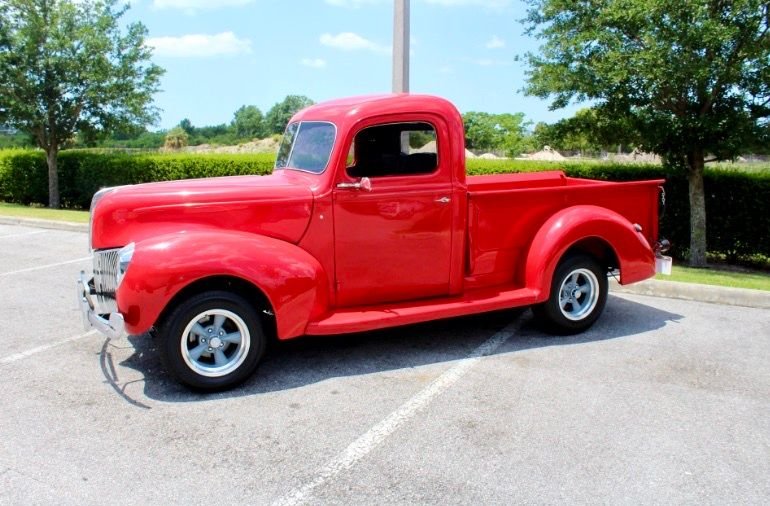
See the 4 Pickup cars currently listed.
For sale now
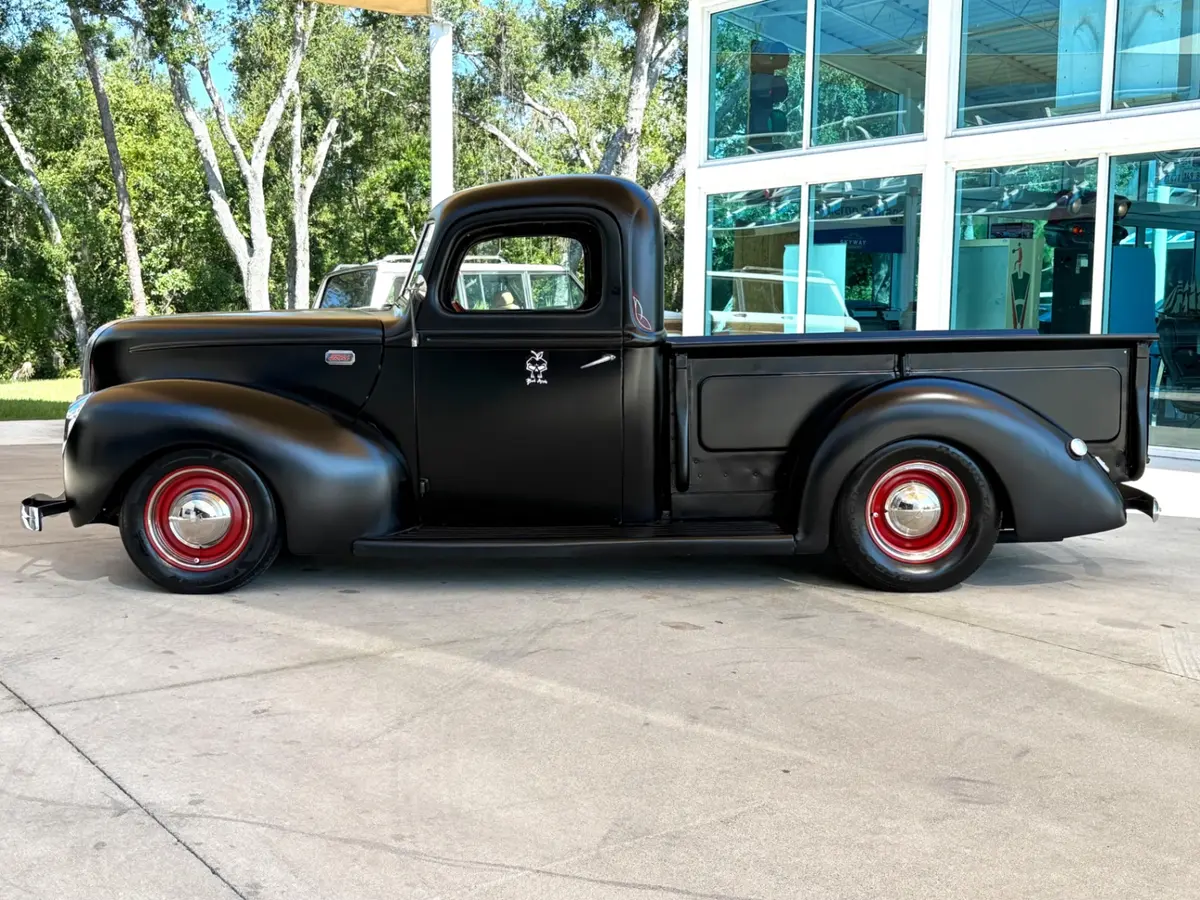 $38,397 · 13% below typical
Expand
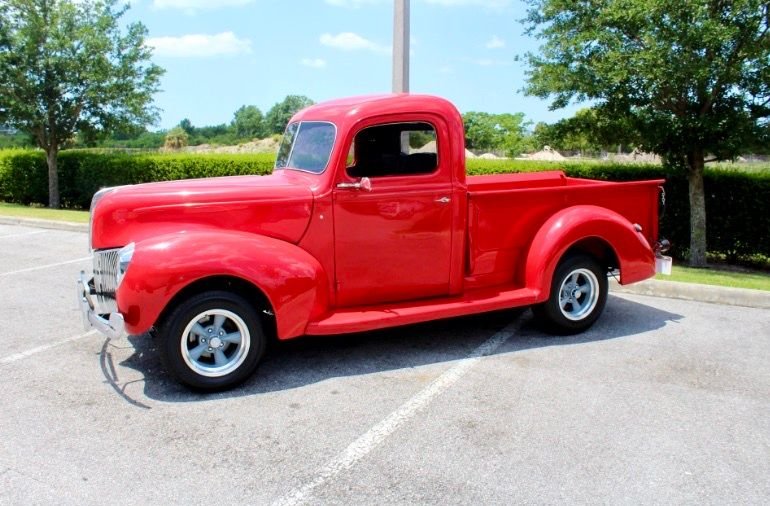 $36,000 · 19% below typical
Expand
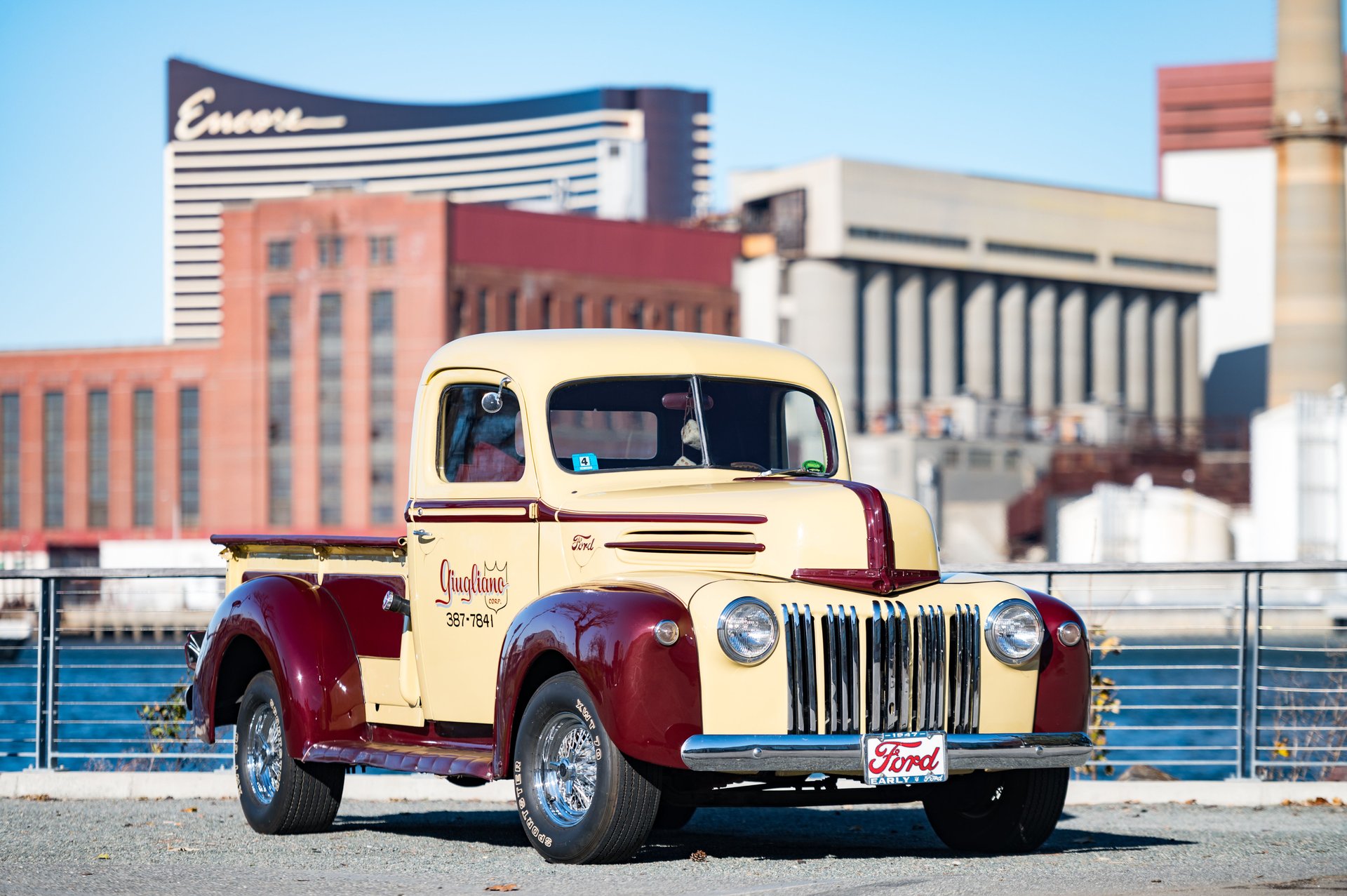 $55,000 · 24% above typical
Expand
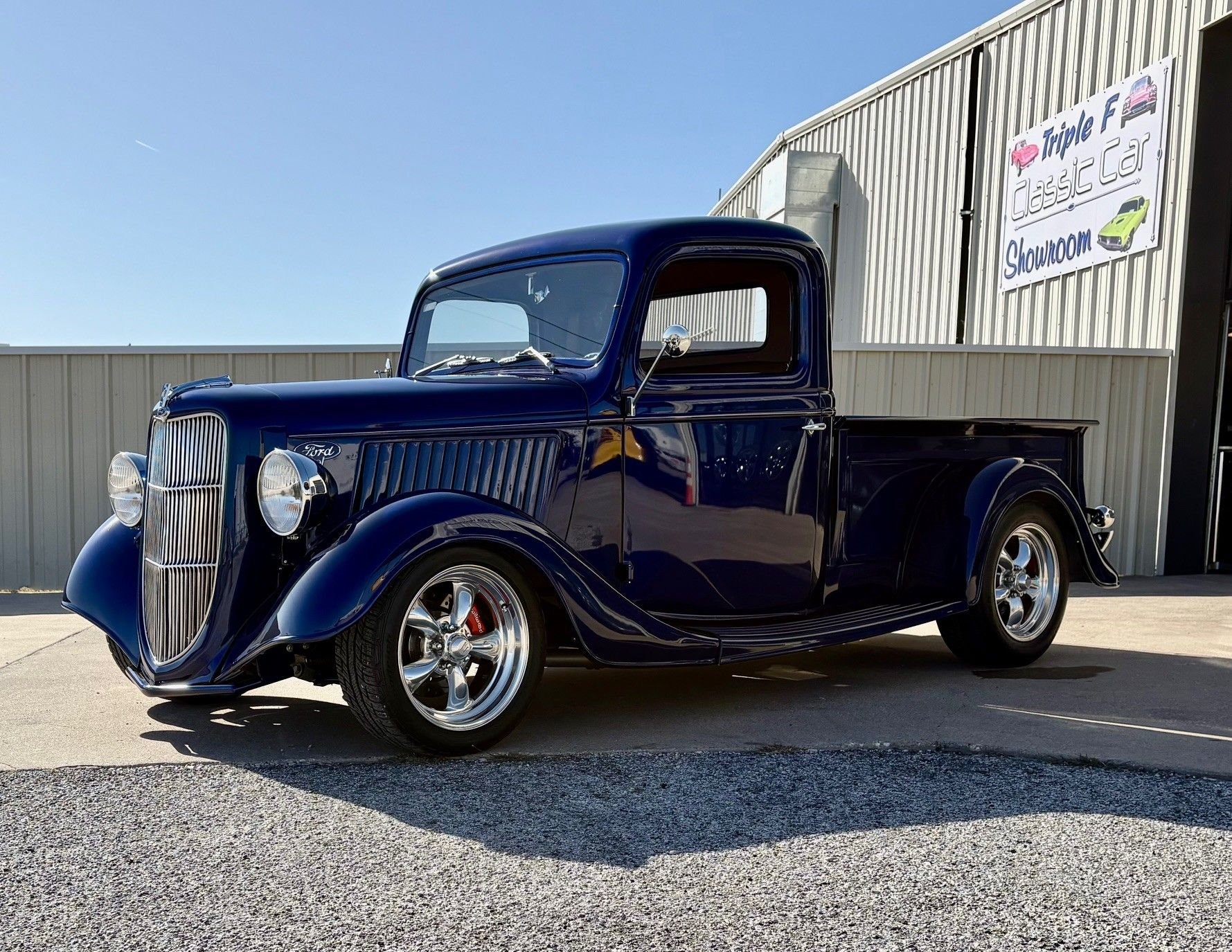 $89,900 · 103% above typical
Expand
What they sell for: Pickup sale prices.