
Ford Ranch Wagon buyer's guide
Ford Ranch Wagon -- the model's own buyer's guide: variants, values and what to check.
Years listed: 1955-1959 · Series: Full Size
# Ford Ranch Wagon — Shopping Guide
Overview and history
The Ranch Wagon is the working Ford, not the show Ford. When Ford launched the name for 1952, it marked the moment the station wagon stopped being a wooden-bodied luxury built in small numbers and became an all-steel utility car you bought off the same order form as a sedan. The Ranch Wagon was the cheapest way into a Ford wagon: a two-door, steel-bodied load carrier in the entry-level Mainline line, with a flat floor, a folding rear seat and trim deliberately kept plain enough to hose out. That formula — the least expensive wagon in the range, sold on usefulness rather than chrome — is what the name means for most of its life, and it is what you are buying today.
The early cars, 1952 to 1954, are the last of the flathead era and the first of the modern one at the same time. The 1952–53 cars carry the 215-cubic-inch Mileage Maker six or the 239 flathead V8 in its final seasons; for 1954 the flathead is gone, replaced by the overhead-valve 239 Y-block, and the six grows to 223 cubic inches. Ford also fits ball-joint front suspension for 1954, a genuine step that makes these cars steer and hold alignment noticeably better than the kingpin cars before them. The 1955 restyle brings the wraparound windscreen, the longer, lower body and the Y-block V8s in 272 and 292 form that define the mid-fifties Ranch Wagon, and 1956 adds the move to 12-volt electrics. For 1957 the car is all-new again — longer, lower, wider, with the single headlamps and the kicked-up rear fins — and the range gains the Del Rio, a plusher two-door Ranch Wagon with Country Squire ambitions. The 1958 cars add the FE-series big-block V8s and stacked quad headlamps; the 1959 cars, the last of the fifties line, are the widest and most flamboyant of all, and the Ranch Wagon is by then offered in two-door and four-door form.
After 1960 the name settles into its long second life as the base trim level of Ford's full-size wagon range, sitting under the Country Sedan and the wood-grained Country Squire through the sixties and into the seventies, gaining the dual-action Magic Doorgate tailgate along the way in 1966. Those later cars are honest machines and share most of what this guide says about engines, rust and running gear, but the cars that come to market as classics — and every Ranch Wagon currently listed on this site — are the fifties two-doors. That is where this guide concentrates.
One warning before anything else, because it shapes every viewing you will make: the surviving Ranch Wagon population has been heavily customised. Of the three cars in this site's current pool, all three are modified — lowered, re-wheeled, repainted in non-stock colours, and in the recorded cases fitted with modern transmissions no fifties Ford ever left the factory with. That is not a reason to walk away; a well-built restomod Ranch Wagon is a usable, characterful car. It is a reason to buy the car in front of you on its own evidence — its shell, its build quality, its paperwork — and never on the assumption that anything on it is original until you have proved it.

The models
The Ranch Wagon never stands alone in the catalogue. It is always the bottom rung of a wagon ladder, and knowing what sat above it tells you what equipment, trim and engines a given car could have had — and what a seller claiming a "top-spec Ranch Wagon" is really describing.
For 1952–54 the ladder is simple. The Ranch Wagon is the only two-door wagon and the cheapest wagon Ford makes; above it sit the four-door Country Sedan and the Country Squire, the Squire carrying the woodgrain appliqué and the plusher interior. The Ranch Wagon itself is a Mainline-trim car: painted rather than chromed details in places, plain vinyl and cloth, rubber mats in the load area on early cars. For 1955–56 the structure is the same but the trim lines move up — the Ranch Wagon aligns with the Customline series — and in 1956 Ford adds the Parklane, a one-year-only two-door wagon in Fairlane trim, effectively the Ranch Wagon's body with the top trim level, aimed squarely at Chevrolet's Nomad. A Parklane is not a Ranch Wagon and should not be priced or badged as one; it is rarer and carries Fairlane side trim and interior.
The 1957–58 range is the one to learn carefully, because it is the most confused in adverts. The base two-door is the Ranch Wagon. Above it, the Del Rio Ranch Wagon adds two-tone paint, better interior trim and more brightwork on the same two-door shell — it is a trim level, not a different car. The four-door wagons are the Country Sedan (six- and nine-passenger) and the Country Squire. Sellers regularly describe any 1957 two-door Ford wagon as a Del Rio; the data plate and the trim itself settle it, not the badge on the tailgate, which is easily swapped. For 1959 the Ranch Wagon line broadens: two-door and four-door Ranch Wagons at the base, Country Sedans above, Squire at the top, all on the new wider body with quad lamps and the Galaxie-influenced styling. Through the sixties the Ranch Wagon becomes four-door only and stays the base full-size wagon; if you are shopping the later cars, the same rule applies — Ranch Wagon means base trim, six-passenger, plain specification, whatever engine the first owner ordered.
Engines cut across all of this. A Ranch Wagon could be ordered with the six or with any of the year's V8s, so the badge tells you nothing about what is under the bonnet. A six-cylinder two-door is the honest workhorse; a 312-powered 1957 car is a genuinely quick wagon by period standards. You decode the car from its serial number and its engine, covered in the inspection section — never from the seller's description.
| Model | Years | Engine | Output | Built | Character |
|---|---|---|---|---|---|
| Ranch Wagon (Mainline) | 1952–1954 | 215/223 six; 239 flathead V8 (1952–53); 239 Y-block (1954) | 101–130 hp | Not separately published | The original formula: cheapest all-steel two-door wagon Ford made |
| Ranch Wagon (Customline) | 1955–1956 | 223 six; 272 and 292 Y-block V8 | 120–200 hp | Not separately published | The mid-fifties staple; 1956 cars gain 12-volt electrics |
| Parklane | 1956 | 223 six; 272/292 V8 | 137–200 hp | Not separately published | One-year Fairlane-trim two-door; Ford's Nomad answer, not a Ranch Wagon |
| Ranch Wagon | 1957–1958 | 223 six; 272, 292, 312 Y-block; 332/352 FE (1958) | 144–300 hp | Not separately published | The finned cars; the most customised and most misdescribed survivors |
| Del Rio Ranch Wagon | 1957–1958 | As Ranch Wagon | As Ranch Wagon | Not separately published | Same shell, plusher trim and two-tone paint; verify by plate, not badge |
| Ranch Wagon (2-dr and 4-dr) | 1959–1960 | 223 six; 292 Y-block; 332/352 FE | 145–300 hp | Not separately published | Widest, most flamboyant fifties cars; quad lamps, huge tailgate glass |
| Ranch Wagon (full-size, 4-dr) | 1961–1970s | 240 six; 289/302/351 small-block; 390/429 big-block by year | Varies by year | Not separately published | Base full-size wagon under Country Sedan and Squire; Magic Doorgate from 1966 |
A note on the figures in that table: period outputs are Ford's gross ratings, measured to the optimistic standards of the day, and production was recorded by body series in ways that do not separate every wagon trim cleanly — so where a separate Ranch Wagon build figure is not genuinely published, the table says so rather than inventing one. On this site's own evidence the surviving pool is tiny and skewed: the three cars currently listed are a 1955, a 1957 and a 1959, all from dealers, and all modified. Treat any claim of rarity or originality for a specific car as a claim to be proved from that car's plate and stampings.

Engines and gearboxes
The Mileage Maker sixes: 215 and 223
The six is the engine the Ranch Wagon was designed around, and it deserves more respect than the market gives it. The 215-cubic-inch overhead-valve six in the 1952–53 cars and the enlarged 223 that replaces it for 1954 are simple, understressed engines: seven main bearings are not part of the deal — these are conventional period sixes — but the bottom end is strong, the valve gear is accessible, and the whole engine can be serviced with hand tools. Output is modest, 101 hp from the 215 and up to the mid-140s from later 223s in fifties tune, and in a wagon that weighs the best part of two tons loaded, modest means leisurely. What it does not mean is fragile. A 223 that has had oil changes will run indefinitely.
What kills them is neglect of the simple things. The single-barrel carburettor — a Holley single-throat on most years — wears its throttle shaft and sucks air, giving you a lumpy idle that no amount of mixture adjustment cures; rock the throttle linkage at idle and listen for the note to change. The mechanical fuel pump's diaphragm hardens with modern fuel and either leaks into the sump, raising the oil level and thinning it, or starves the carburettor on long climbs; smell the dipstick for petrol. Valve clearances on the solid-lifter cars drift and nobody adjusts them, so a six that ticks loudly at hot idle is usually a maintenance debt, not a death rattle — but budget a top-end service on any car where it has plainly not been done. Cooling is marginal when the radiator core is silted: these cars run a pressurised system of only a few pounds, and a six that creeps up in traffic but cools at speed has a flow problem, not a head-gasket problem, until you prove otherwise.
The flathead V8: 239 (1952–53 only)
Only the first two years of Ranch Wagon carry the flathead, and if you buy one you are buying into the oldest technology in this guide. The 239 flathead is smooth, torquey and thoroughly understood by the hobby, but it runs hot by design — the exhaust passages through the block heat the coolant — and it is intolerant of a neglected cooling system. The twin water pumps, the thermostats in the top hoses, and the radiator's condition are the whole game. Cracks between valve seats and bores are the classic flathead failure and the reason any flathead car must be compression-tested and, ideally, run long enough to prove it does not pressurise its cooling system. Parts support is excellent because the hot-rod world lives on this engine, but a cracked block turns a cheap wagon into an engine-out project. Price a flathead Ranch Wagon as if the cooling system needs a full rebuild — radiator, pumps, hoses, flush — because on most survivors, it does.
The Y-blocks: 239, 272, 292 and 312
The Y-block is the defining Ranch Wagon engine of the fifties, and it has one famous weakness you must understand properly, because it is also the most misdiagnosed. The design takes its name from its deep-skirted block. It is a strong, torquey overhead-valve V8 — 239 in 1954, then 272 and 292 from 1955, with the 312 as the top option for 1956–57 — but its rocker shafts are fed oil through passages that sludge up when oil changes are skipped, and the result is starved, clattering rocker gear and accelerated wear at the top of the engine while the bottom end stays perfect. The period fix, still seen on cars today, is an external oiling kit: copper lines run from the oil gallery up to the rocker covers. A car wearing one is not a bodge to be ashamed of; it is evidence the problem was recognised and dealt with. But check that the kit is actually delivering — pull a rocker cover on a running engine and you should see oil at every rocker. A Y-block that is quiet at the top, holds 40 psi or better of hot oil pressure at cruising speed, and does not smoke is a healthy engine, whatever its mileage.
The other Y-block signatures are leaks and breathing. The rear main seal is a rope-type seal that weeps with age; a drip at the back of the sump is normal on a used car and a steady stream is a gearbox-out or engine-out job, so grade it honestly — a few spots on the driveway after a run is a $0 annoyance, a clutch contaminated with oil on a manual car is a real bill. The road-draft tube on early cars vents crankcase fumes under the car and coats everything in oil mist, which sellers call rustproofing and you should call a clue that the engine is breathing hard if the mist is heavy and pulsing. Carburation is a two-barrel on most 272s and 292s and a four-barrel — commonly the Holley 4000, the "teapot" — on higher-output cars; the teapot is a fine carburettor when rebuilt by someone who knows it and a source of flat spots and leaks when the float bowls warp. Exhaust manifolds crack, particularly the crossover arrangement's heat-riser valve, which seizes and cooks one bank's intake charge, causing a rough, rich idle that gets blamed on the carburettor. Before you let anyone sell you a carburettor rebuild, free off and test the heat riser.
Identity matters with Y-blocks because they swap freely. A 272, 292 and 312 look near-identical from outside; the casting numbers and the crankshaft flange differ, and the only honest way to know what you are buying is to check the block casting code and, on a claimed 312, verify rather than trust. The myth to correct here: a "Thunderbird engine" badge or valve-cover script proves nothing — Thunderbird covers bolt onto any Y-block, and thousands of 272s wear them.
The FE big-blocks: 332 and 352 (1958 onward)
For 1958 Ford adds the FE series — 332 and 352 cubic inches — and the Ranch Wagon becomes a genuinely fast, heavy car. The FE is a big, durable engine with hydraulic lifters, a single four-barrel carburettor on most wagon installations, and enormous low-speed torque that suits the wagon's weight and the Fordomatic's gearing. Its weaknesses are weight-related and age-related rather than fundamental: exhaust manifold bolts seize and snap in the heads, and drilling them out in the car is miserable work, so listen for the ticking of a manifold leak on a cold start and price the repair — $400–$1,200 if bolts snap, more if a manifold is cracked. The FE also hides its identity well: a 352 and the later 390 share architecture, and sellers confuse or exaggerate them; the stroke differs, and a measurement through a plug hole with a rod and a degree of patience settles what the casting numbers suggest.
Oil leaks from the intake manifold end seals and rocker covers are routine FE housekeeping. The real FE test is heat: a big engine in a wagon nose with a marginal radiator will creep in traffic, and an FE that has been repeatedly overheated will have soft head gaskets in its future. Run it to full temperature, let it idle for ten minutes, and watch the gauge and the top hose pressure.
The later engines: 240 six, small-blocks and the big-blocks of the sixties
If your search widens to the sixties cars, the engine room changes completely and mostly for the better. The base engine becomes the 240-cubic-inch Big Six, a seven-main-bearing design that is smoother and tougher than the 223 it replaces and the correct engine for a working wagon you intend to use rather than polish. The volume V8 is the small-block family — 289, then 302, with the 351 Windsor joining later — and these are the easiest Ranch Wagon engines of all to own: hydraulic lifters, an enormous parts catalogue shared with the Mustang world, and no vices beyond the usual Ford habits of rocker-cover leaks and a distributor drive gear that resents the wrong oil pump. At the top of the range sit the FE in 390 form and, later, the 429 from the 385-series family; in a four-door wagon these make a heavy, effortless tow car, and they carry the same FE inspection points as the 352 above — manifold bolts, heat, and identity, because a 390 badge on a 352 is as common in the sixties as a Thunderbird cover on a 272 was in the fifties. The through-line for a buyer is simple: the later the car, the more conventional the engine and the cheaper its upkeep, and the less any of it matters compared with the shell. Nobody ever scrapped a sixties Ranch Wagon because a 302 wore out; they scrapped them because the tailgate, the rear floor and the frame mounts rotted, which is why the rust section of this guide applies to a 1969 car word for word as it does to a 1955.
Gearboxes: three-speed manual, overdrive, Fordomatic and Cruise-O-Matic
The standard gearbox is a three-speed manual with column change — "three on the tree" — with synchromesh on the top two gears only. It is strong and simple; wear shows as jumping out of second gear on the overrun, a worn linkage that makes the column change vague and crunchy, and a clutch that judders from oil contamination (see the Y-block rear main, above). The optional Borg-Warner overdrive is the one to have for real road use: it gives you an electrically engaged overdrive on second and top, dropping cruising revs substantially, and it works by a governor, a solenoid and a kickdown switch — all testable, all repairable, and all commonly disconnected by confused previous owners. If the overdrive does not engage, check the wiring and the fuse before condemning the unit; a complete, working overdrive system adds real usability to a six-cylinder car in particular.
The Fordomatic is a two-speed automatic (with a low range you select manually) fitted to most V8 wagons; it is smooth, slow and robust, but its bands and its air-cooled converter on early cars dislike neglect. From 1958 the Cruise-O-Matic gives three speeds and is the better drive. On any automatic car, the fluid tells the story: it should be red and sweet-smelling; brown, burnt-smelling fluid with slow, flaring changes means a rebuild is in the car's future at $1,800–$3,200, and you should price it in rather than hope. Check also for the classic wagon fault — the car that will not hold on a hill in Park because the parking pawl has been abused by owners who never used the handbrake on a two-ton car.
Finally, the modern-transmission trap, which this site's own pool illustrates: the recorded pool cars include a six-speed automatic and a five-speed manual — neither existed in a fifties Ford. Those are restomod drivetrains, and they change the inspection entirely. You are no longer checking a Fordomatic; you are checking someone's conversion: the crossmember fabrication, the shifter linkage or electronics, the speedometer drive solution, the cooling for the transmission, and whether the conversion is documented. A documented, well-sorted modern drivetrain is a selling point. An undocumented one is an open-ended question you will pay to answer.
Problem areas
Rust: the wagon map
A Ranch Wagon rusts like the sedan it is based on, plus everywhere a wagon's extra length, glass and tailgate add traps of their own. Start underneath, because that is where the money is. The floor pans go first at the front footwells, where wet carpet sits against the steel, and at the rear load floor, where decades of cargo, leaking tailgate seals and a blocked spare-wheel well hold water against metal that was barely painted at the factory. Press the load floor around the spare-wheel well with your palm and a torch: the well itself rusts from the inside, and a car can present a tidy cargo area while the well is lace. The rocker panels — the sills — carry the body's strength between the axles; rust here starts at the drain holes and the rear ends where the front of the rear wheel throws water, and bubbling at the bottom of the front wing behind the wheel is the visible tip of a sill that is rotten inside. A sill repair done properly, cutting out and sectioning, runs $1,000–$2,500 a side; a sill covered in fresh underseal over filler is worth nothing and hides everything, so take a magnet and a small screwdriver to any car whose underside looks newly black.
The tailgate is the wagon-specific disaster area. The gate's bottom edge, its hinge pockets and the panel below the rear window collect every drop of water that runs off the rear glass, and the gate rusts from the inside out — by the time blisters show on the outer skin, the inner frame is usually worse. Open the gate, look along its bottom edge with a torch, and operate it through its full arc: a gate that drops heavily, binds, or whose window (on cars with a retractable rear window) will not wind smoothly is telling you about swollen, rusting internals. The rear quarters behind the wheels, the lower rear valance, and the dog-leg where the rear door or quarter panel meets the wheel arch are the next tier. On two-door cars the long rear side glass makes the C-pillar and the drip rails critical: check the roof rails and the top of the windscreen frame, because a wagon roof is a large, gently crowned panel that ponds water at its edges, and rust at the windscreen surround means glass out, welding, and a headlining disturbance — $800–$2,000 before paint if it is caught, far more if the pillars are involved.
The chassis itself is a separate, perimeter frame on these cars, which is good news and bad news. Good: the frame can be inspected on a lift, and surface rust is common and harmless. Bad: the frame rusts at the body mounts, at the rear kick-up over the axle, and inside the front crossmember, and a rotten mount means the body is no longer properly attached. Get the car on a lift and look at every body mount cushion and the steel around it; a car that sits visibly low or uneven at one corner may have a collapsed mount rather than a tired spring. Also check the inner front wings and the radiator support panel, which rot at their lower edges and are frequently bodged with pop-riveted patches. On this site's own photo evidence, incidentally, you can calibrate your expectations: of the three Ranch Wagons currently listed and photo-examined, none carries a photo note mentioning rust — but all three are restored or customised cars photographed for sale, which tells you about the pool, not about the model. The un-restored cars you meet in barns and yards are where this map earns its keep.

Front suspension, steering and brakes
The 1952–53 cars use kingpin front suspension; from 1954 Ford fits ball joints, and the distinction matters at inspection. Kingpins wear and give you play you can feel by rocking the front wheel top-to-bottom with the car jacked; worn kingpins and bushes make the car wander and wear its front tyres on the edges, and a ream-and-bush job is a specialist press job, not a driveway one. Ball-joint cars wear their lower joints first under the wagon's weight; check for play the same way, and check the rubber boots, because a split boot on an otherwise sound joint is a joint on borrowed time. On both designs, the coil springs sag — a Ranch Wagon that sits nose-down or lists is usually on tired springs, and measuring the ride height against the workshop-manual figure tells you more than the seller's opinion. Idler arms, tie-rod ends and the steering box itself wear together: with the engine off and the car on the ground, have a helper rock the steering wheel while you watch the linkage; lost motion at the box is adjustable to a point, lost motion at three joints is a parts bill of $300–$700 plus alignment. Power steering, where fitted, is a linkage-type system with a control valve that leaks and a ram that weeps; a groan on full lock and fluid on the valve are normal used-car findings, a puddle is not.
The brakes are the safety item you do not negotiate. All fifties Ranch Wagons run drum brakes all round and, until the later sixties cars, a single-circuit hydraulic system — one failed hose or cylinder and you have the handbrake and the gears. The drums are adequate when maintained and treacherous when not: pull up straight from 40 mph on your test drive, feel for a pull to one side (a seized or contaminated cylinder), a pedal that sinks slowly at a stop (a master cylinder bypassing internally), and a pedal that is hard and wooden (a seized wheel cylinder or, on power-brake cars, a failed booster). Wheel cylinders weep with age and contaminate the shoes; budget a full hydraulic overhaul — master, cylinders, hoses, fluid — at $600–$1,400 on any car whose brake history is unknown, and treat it as the first job, not a someday job. Many cars have been converted to a dual-circuit master cylinder and some to front discs; both are worthwhile upgrades, but inspect the conversion like any other modification — proportioning, pedal ratio, and hose routing done wrong are worse than honest original drums.
Rear axle, springs and the load floor's revenge
The rear axle is a conventional live axle on leaf springs, with a Ford-built or Dana-type unit depending on year, and it is strong. What fails is what seventy years does to any axle: pinion seals weep, axle shaft seals leak oil onto the rear brakes (pull a rear drum on any car that pulls under braking — oil-soaked shoes are the usual cause), and wheel bearings rumble. A whine that comes in on the drive and disappears on the overrun is pinion bearing or mesh wear; it will live for years like that or get worse quickly, and a rebuild at $800–$1,800 is the honest cure. The leaf springs are the wagon's working parts and they sag, especially on cars that have carried loads or sat with a full cargo area for decades; a wagon that sits tail-down has tired springs or, worse, a bent or cracked leaf — look along the spring pack for a leaf that does not follow the curve of its neighbours. Shackle bushes perish and let the axle steer the car subtly from the rear, which feels like vague handling you cannot align away. Finally, remember the load floor's revenge: heavy cargo dents the floor and cracks its spot-welded seams, and water follows. A floor that drums and flexes under your weight in the cargo area has lost its seams, not just its paint.
Interior, glass and wagon-specific trim
The Ranch Wagon's plainness is now its vulnerability. Base-model vinyl, simple door cards and rubber load-area mats were never reproduced with the enthusiasm lavished on Country Squire woodgrain or Fairlane brocade, so a torn, sun-rotted base interior can be harder to put right than a fancy one. Check the front seat's springs and foam by sitting in it — a collapsed driver's side is normal and re-trimming a bench properly runs $1,200–$2,500 in period-style materials. The folding rear seat mechanism must fold flat and latch; its hinges seize and its catches bend. Headlinings sag and stain from the same roof leaks described in the rust section, and a fresh headlining on a car with rusty roof rails is money spent in the wrong order.
Glass and seals are where wagon ownership gets expensive quietly. The long rear side glass, the tailgate window and the wraparound screens on 1955–59 cars are all obtainable but none are cheap, and the rubber seals are the difference between a dry car and a rotting floor. Budget on replacing perished seals — hardened, cracked window rubbers that leak are the single most common cause of the floor rust in the first section. The tailgate window regulator, manual or electric, strips its gears; an electric rear window that needs a helping hand is a regulator or motor job, and on a custom car it may be a conversion of unknown parentage. Brightwork on a Ranch Wagon is sparse by design, which means the pieces it does have — window surrounds, grille, tailgate hardware — carry disproportionate weight in how the car presents; pitted pot-metal and missing tailgate handles are negotiation points, not afterthoughts.
On the pool's current evidence, damage is the one flagged item: of the three cars photo-examined for this site, one carries a damage mention in its photo notes. That ratio says nothing statistical about the model — the sample is three cars — but it is a fair reminder that these wagons were bought to work, and accident history is part of their normal biography. Look for it the standard way: uneven shut-lines, overspray on rubbers, non-matching panel sheen, and a magnet that goes dead over repaired quarters.
Electrics: six volts, generators and old looms
Cars through 1955 are six-volt, positive-earth, with a generator; from 1956 Ford moves to 12 volts. Neither system is a problem when healthy and both are miserable when bodged. On a six-volt car, everything depends on cable condition and earths: slow cranking is usually resistance — corroded terminals, a tired earth strap, thin modern replacement cables — not a weak starter, and the test is a voltmeter at the starter terminal while cranking, not a new battery bought on hope. Dim headlamps at idle that brighten with revs are normal generator behaviour; headlamps that stay dim are earths and connections. The voltage regulator's points stick and either boil the battery or let it go flat, and a car that "always needs a charge" is usually a regulator or a slipping generator belt away from being fine. On any car, fifties wiring insulation hardens and cracks, and previous owners add accessories with twist-and-tape joints; a loom that has been chopped about is a fire risk and a fault-finding nightmare, and re-looming a car properly is a $1,500–$3,000 job you should price into a car whose under-dash area looks like a bird's nest. Test every electrical consumer at viewing — heater fan, wipers (vacuum-operated on early cars, and they slow on acceleration by design, which is a feature of the system, not a fault), lights, horn, gauges — and treat "they all worked last year" as "they do not work."

Modified cars: reading a build
Because so much of the surviving population is modified, you need a method for judging a build, and it is different from judging an original car. Start with stance and structure: a lowered car should sit level, with suspension travel remaining and no evidence of cut springs bottoming on their seats, and any car on modern large-diameter wheels needs its steering and suspension checked for the extra load those wheels put through fifty-year-old joints and boxes. Look at how the modifications were executed rather than what they are — welds on a replacement crossmember or an engine-mount conversion should be continuous and even, wiring for a modern gearbox or an electric fan should be fused, loomed and routed away from heat, and a cooling system asked to cope with a modern engine should be visibly uprated, not the original radiator with hope attached. Ask for the build file: receipts, the identity of the engine and gearbox actually fitted, and the source of the conversion parts. A seller who built the car well can usually document it well, because the same care produced both. The red flags are the opposite — a modern drivetrain with no paperwork, a speedometer that does not work because nobody solved the drive, warning lights deleted rather than resolved, and fresh paint over a car whose underside has plainly never been touched. None of that makes the car unsellable; all of it makes it cheaper than the car it is presented as. Price a modified Ranch Wagon as a shell plus a build you can verify, and let the unverifiable parts of the build be worth nothing in your offer until they have proved themselves on your test drive and your lift.
How to inspect one
Work in this order. It is arranged so the cheap, decisive tests come first and the car disqualifies itself early if it is going to.
- Start with the paperwork and the plate. Match the title to the car in front of you, then find the serial/data plate — on fifties cars it sits on the driver's door jamb area — and decode the serial's engine letter and the plate's trim and colour codes against a year-specific chart. A car whose plate says six-cylinder and whose engine bay holds a V8 is a conversion; that may be fine, but it must be priced and described as one.
- Do the cold walk-around. Sight down each side for ripples, check every shut-line, and run a magnet over the sills, rear quarters, dog-legs and tailgate bottom — the rust map from the problem-areas section. Note where the magnet goes dead: that is filler, and filler in a sill or a quarter is a structural conversation, not a cosmetic one.
- Open the tailgate and work it. Lower and raise it through its full travel, check the window operation, and inspect the gate's bottom edge, hinge pockets and the load floor around the spare-wheel well with a torch. This is the wagon-specific test no sedan buyer makes, and it catches the rot sedans never suffer.
- Get underneath, or get it on a lift. Floors, sills from below, frame at the body mounts and rear kick-up, front crossmember, fuel and brake lines, and every leak's source. Refuse to judge a Ranch Wagon from kerb height; the frame-and-mount check settles whether the body is properly attached to the car.
- Cold-start it yourself. The car must be stone cold — a warmed-up car hides Y-block rocker clatter at its worst and flathead starting faults entirely. Listen for top-end clatter that fades (oil feed), exhaust manifold ticks that fade as the metal expands, and watch for blue smoke on start-up (valve seals) versus continuous smoke (rings or breathing).
- Check the Y-block's oil story, if it has one. Dipstick for level and fuel smell, filler cap for mayonnaise and sludge, and — with permission — a rocker cover off a running engine to see oil reaching every rocker. Note any external oiling kit and confirm it is connected and delivering, per the engines section.
- Test the cooling system under load. Drive it to full temperature, then let it idle ten minutes. Gauge behaviour, top-hose pressure, coolant colour and any bubbling in the header tell you whether the radiator and, on a flathead car, the whole system are up to the job.
- Drive it properly — at least twenty minutes. Use every gear, or on an automatic, check the changes are clean without flare, kickdown works, and the car holds in Park on a slope. On an overdrive car, get above 30 mph and confirm engagement and kickdown release. Listen for axle whine on drive and overrun, and feel for rear-steer vagueness from worn spring bushes.
- Brake test from speed. Straight-line stops from 40 mph, a slow pedal-sink test at a standstill, and a look at the pedal feel. Any pull, sink or wooden pedal puts the full hydraulic overhaul from the problem-areas section into your budget before you negotiate.
- Steering and suspension check. Rock the wheel with a helper watching the linkage, bounce each corner, and look at front tyre wear for alignment evidence. Kingpin cars (1952–53) and ball-joint cars wear differently, but both confess through play and tyre shoulders.
- Run every electrical consumer. Lights, wipers, heater, horn, gauges, tailgate window if electric. On a six-volt car, crank it hot as well as cold — hot cranking is where marginal cables and starters fail — and check the charge warning behaviour at idle.
- Audit the modifications, because most survivors have them. List everything non-stock — engine, gearbox, suspension, wheels, brakes, electrics — and for each one ask: is it documented, is it competently executed, and can I maintain it? The pool's own cars, with their modern gearboxes and lowered suspension, are the norm, not the exception. A documented conversion you understand is worth more than an undocumented one you don't, whatever the spec sheet says.
Values
The Ranch Wagon market is two markets wearing one name, and reading the figures appended below this guide — the live listings and recorded sales the build attaches — means knowing which market a given car belongs to. The first market is the original car: a stock or sympathetically restored fifties two-door, valued on its shell, its correctness and its engine, with the six-cylinder cars at the foot of the ladder and the big-engine 1957–59 cars at the top. The second market is the custom and restomod car, which is most of what actually comes up for sale — all three cars in this site's current pool are modified — and which is valued on build quality and specification, almost without reference to what the car left the factory with. Comparing an asking price from one market against a car from the other is the commonest beginner's mistake with these wagons.
Within the original-car market, the condition spread is enormous and is driven almost entirely by the shell. A rust-free, running, driving Ranch Wagon with tired paint and interior is a fundamentally different proposition from a shiny car over repaired sills and quarters, and the price gap between them understates the real gap, because the shiny car's bill is still coming. Project cars price accordingly: an engineless or rotten two-door is worth its parts and its title, and the gap between project money and driver money is smaller than the cost of crossing it — welding, paint and trim on a wagon, with its acreage of panels and glass, is never the cheap route to a nice car. Buy the best shell you can afford and let someone else have crossed the welding bridge.
Asking prices and achieved prices part company predictably. Dealer asking prices for polished customs sit at the top of the range and move slowly; private sales of honest drivers settle lower and faster. The recorded-sales block below is the corrective — read the achieved figures against the specification, not the year alone, because with this model the specification is the value: a documented modern-drivetrain build, a 312 car, or a genuinely rust-free original will each command a premium for a different reason, and a flame-painted car with an undocumented drivetrain will struggle to realise a stock car's money despite costing more to build. Variant premiums are modest and specific: Del Rio trim adds a little, the one-year Parklane (a different model, properly) adds more, and originality premiums apply only where originality survives — which, in this pool, is rare enough that you should verify it twice before paying it.
Parts and ownership
Ownership is the Ranch Wagon's strongest suit, because the car is a fifties Ford and the fifties Ford ecosystem is one of the deepest in the hobby. Mechanical parts for the 223 six, the Y-blocks and the FE are widely stocked — gaskets, bearings, water pumps, carburettor kits, brake hydraulics, suspension bushes and steering joints are all routine mail-order items, and the flathead enjoys hot-rod-industry support on top of that. Reproduction rubber seals, weatherstrips and many trim clips exist because the sedan and wagon share so much; wagon-specific glass, tailgate hardware and load-area trim are the thinner end of the catalogue, and NOS or good used is often the route. Sheet metal is patch-panel rather than full-panel for most wagon areas — floor pans, sill sections and lower quarters are available, full tailgates are not — which is another way of saying the rust advice in this guide is also a parts-availability statement.
Running one is straightforward if you keep the period disciplines. Oil changes on a Y-block are not a suggestion but the mechanism by which its rocker gear lives; use the short interval the engine was designed around, keep the cooling system flushed and the mixture right, and grease the chassis points that later cars sealed for life. Fuel is modern petrol in a car designed for leaded fuel: hardened valve seats are the durable answer on a rebuilt head, and ethanol-compatible carburettor parts and fuel pump diaphragms are the practical answer everywhere else. Tyres in the original sizes, or a sensibly chosen modern radial equivalent, transform the steering and braking compared with perished crossplies — but check the date codes on any car you buy, because old tyres on a two-ton wagon are a safety item, not a patina feature. Insurance and club support run through the general early-Ford and V8 Ford world, where the Ranch Wagon is welcomed as the useful cousin. Budget realistically: a sorted car asks for a few hundred dollars a year in consumables and small parts; a car bought with deferred maintenance asks for the brake overhaul, the seals and the top-end service in year one, and the guide's figures in the problem sections are the honest shape of that bill.
Which one to buy
- The all-rounder: a 1955–56 Ranch Wagon, 292 V8, Fordomatic or overdrive manual. The prettiest balance of the early styling, Y-block torque, and — in the 1956 car — 12-volt electrics. The easiest fifties Ranch Wagon to live with.
- The character buy: a 1952–54 car, six or flathead. The purest form of the original idea and the cheapest way in. Buy it for what it is — a working antique — and budget the cooling system on a flathead car before anything else.
- The value buy: a six-cylinder 1957–59 car. The finned styling everyone wants, at money the V8 cars have left behind, with the toughest engine in the range. Slow, honest, and increasingly the smart money.
- The performance pick: a 312-powered 1957 car, or a 352 FE 1958–59. Genuinely quick by period standards — but verify the engine is what it is claimed to be from the casting numbers, because Y-block and FE identities are the most exaggerated in the hobby.
- The restomod route: a documented custom build. Most of the market, including every car in this site's current pool. Buy the documentation and the shell, treat the specification as a bonus, and never pay an originality premium on a modified car.
- The later car: a sixties Ranch Wagon. Four doors, base trim, real space, and the Magic Doorgate from 1966. The connoisseur's working wagon, bought on the same rust-and-shell rules as everything above.
The overriding rule: buy the shell, not the story. A Ranch Wagon's value lives in its floors, sills, tailgate and frame mounts — everything else, engines included, unbolts. A rust-free car with the wrong engine is a good car; a rotten car with the right one is a welding project wearing a price tag.
See the 3 Ranch Wagon cars currently listed.
For sale now
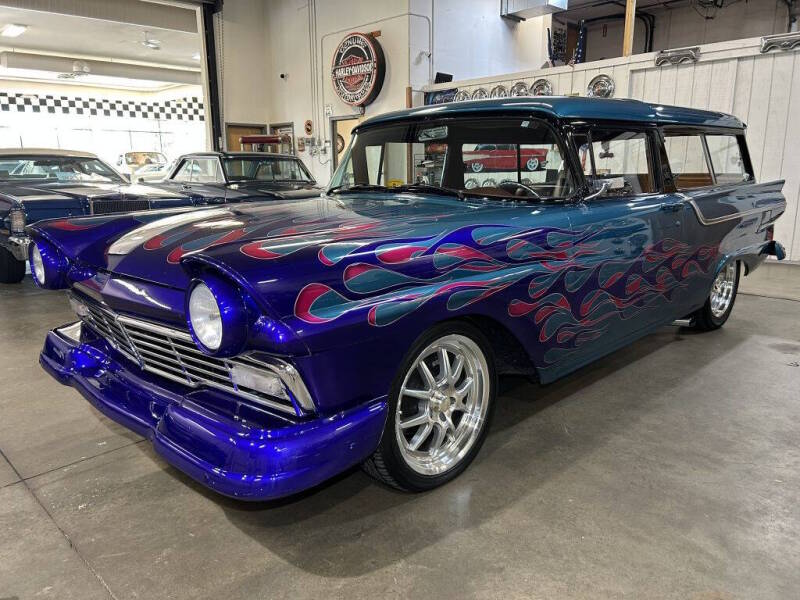 $34,990 · 47% below typical
Expand
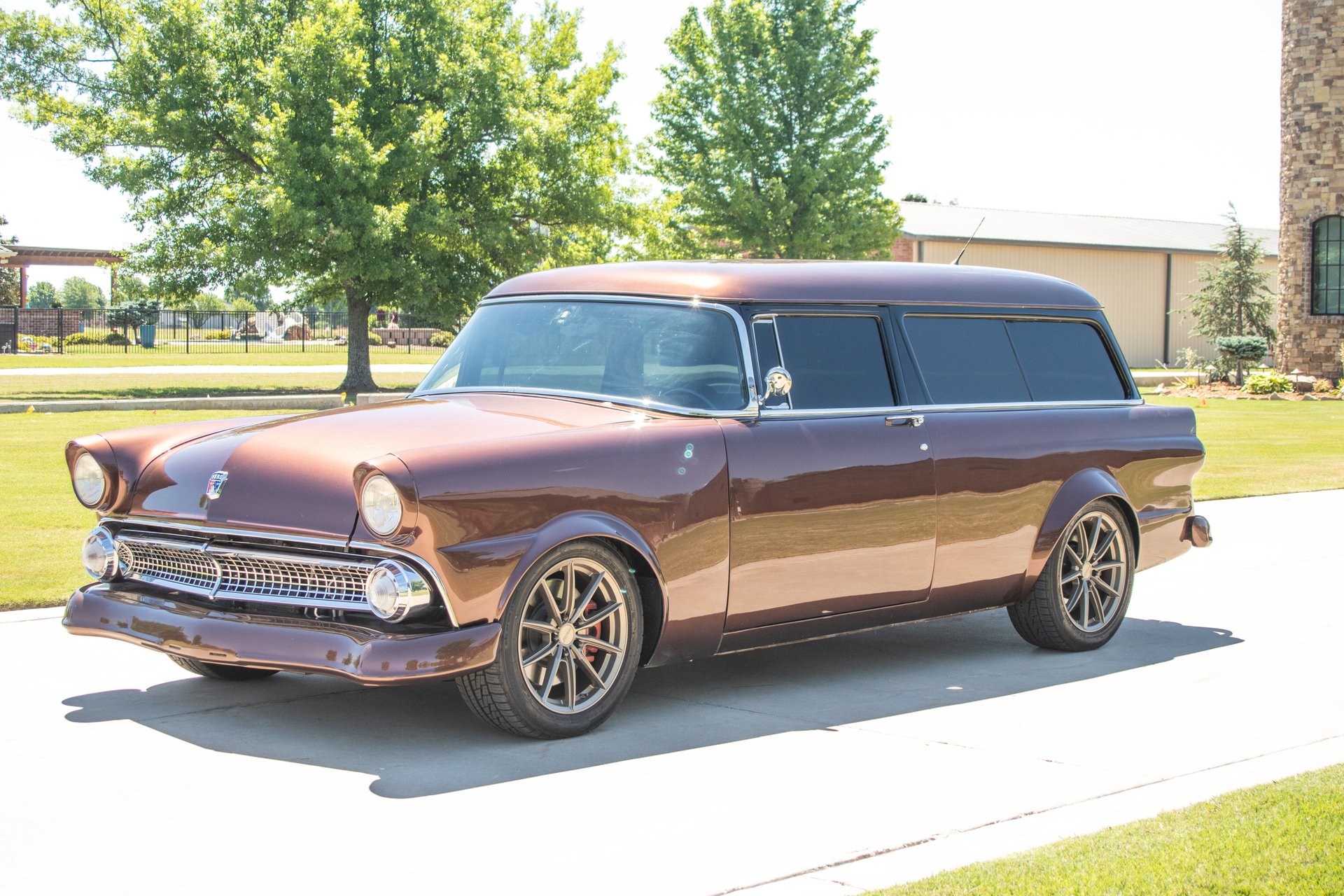 $38,900 · 41% below typical
Expand
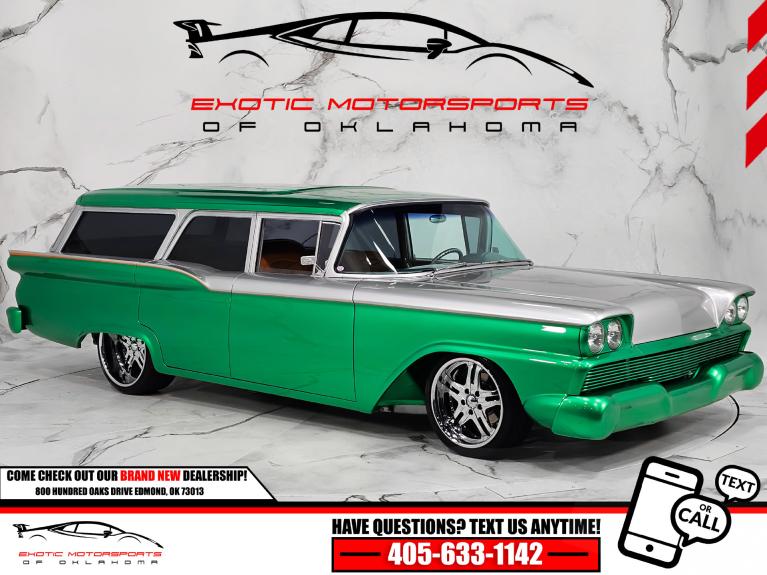 $124,998 · 89% above typical
Expand
What they sell for: Ranch Wagon sale prices.